Словари

Словарь английского языка | Значения слов, определения и примеры

adjective
/rɪˈlaɪ.ənt/
зависимый (zavisimyy)

depending on someone or something for support

"The country is too reliant on imported goods."

"Страна слишком зависит от импортных товаров." (Strana slishkom zavisit ot importnykh tovarov.)
noun
/ˈrɛl.ɪk/
реликвия (relikviya)

an object surviving from an earlier time, often of historical or religious interest

"The museum displayed relics from the ancient civilization."

"Музей выставил реликвии древней цивилизации." (Muzey vystavil relikvii drevney tsivilizatsii.)
noun
/rɪˈliːf/
облегчение (rileef)

a feeling of reassurance and comfort after stress or discomfort

"She felt a huge sense of relief after hearing the good news."

"Она почувствовала огромное облегчение после того, как услышала хорошие новости." (Ona pochuvstvovala ogromnoye oblegchenie posle togo, kak uslyshala khoroshye novosti.)
noun
/rɪˈliːf treɪn/
поезд помощи (poyezd pomoshchi)

a train that carries emergency supplies and aid to disaster-affected areas

"The relief train arrived with food and medical supplies for the flood victims."

"поезд помощи прибыл с едой и медицинскими припасами для жертв наводнения." (poyezd pomoshchi pribyl s yedoy i meditsinskimi pripasami dlya zhertv navodneniya)
verb
/rɪˈliːv/
облегчать (oblegchat)

to make pain, distress, or difficulty less severe or serious

"The medicine helped relieve his headache."

"Медикамент помог облегчить его головную боль." (Medikament pomog oblegchit ego golovnuju bol.)
adjective
/rɪˈliːvd/
облегчённый (oblegchyonny)

feeling happy and less worried after something stressful has been removed or resolved

"She felt relieved after hearing the good news."

"Она почувствовала облегчение после того, как услышала хорошие новости." (Ona pochuvstvovala oblegchenie posle togo, kak uslyshala khoroshie novosti.)
noun
/rɪˈlɪdʒ.ən/
религия (religiya)

a system of faith and worship involving belief in a higher power

"Freedom of religion is a fundamental human right."

"Свобода вероисповедания — это основное право человека." (Svoboda veroispovedaniya — eto osnovnoe pravo cheloveka.)
adjective
/rɪˈlɪdʒəs/
религиозный (religiozny)

relating to or believing in a religion or faith

"She is a very religious woman who prays every day."

"Она очень религиозная женщина, которая молится каждый день." (Ona ochen' religioznaya zhenshchina, kotoraya molitsya kazhdyj den'.)
relinquish definition card — visual illustration of the meaning
verb
/rɪˈlɪŋkwɪʃ/
отказаться (otkazatsya)

to give up or let go of something voluntarily

"He had to relinquish control of the company after the merger."

"Он должен был отказаться от контроля над компанией после слияния." (On dolzhen byl otkazat'sya ot kontrolya nad kompaniyey posle sliyania.)
noun
/ˈrɛlɪkwɛri/
реликварий (reliquariy)

a container for holy relics

"The ancient reliquary was decorated with gold and precious stones."

"Древний реликварий был украшен золотом и драгоценными камнями." (Drevniy reliquariy byl ukrashen zolotom i dragotsennymi kamnyami.)
verb/noun
/ˈrɛlɪʃ/
наслаждаться / приправа (naslazhdat'sya / priprava)

to greatly enjoy; also a condiment or sauce

"She relished the opportunity to travel abroad."

"Она с наслаждением восприняла возможность поехать за границу." (Ona s naslazhdeniem vosprinimala vozmozhnost' poekhat' za granitsu.)
noun
/rɪˈlʌktəns/
неохотность (neokhotnost)

unwillingness or hesitation to do something

"His reluctance to speak made the meeting awkward."

"Его неохотность говорить сделала встречу неловкой." (Ego neokhotnost' govorit' sdelala vstrechu nelovkoy.)
adjective
/rɪˈlʌktənt/
неохотный (neokhotnyy)

unwilling or hesitant to do something

"She was reluctant to speak in front of the large audience."

"Она была неохотна говорить перед большой аудиторией." (Ona byla neokhotna govorit' pered bol'shoy auditoriyey.)
adverb
/rɪˈlʌk.tənt.li/
неохотно (neohotno)

in an unwilling manner; with hesitation or resistance

"She reluctantly agreed to help with the project."

"Она неохотно согласилась помочь с проектом." (Ona neokhotno soglasilas' pomoch' s proyektom.)
verb
/rɪˈlaɪ/
полагаться (polagat'sya)

to depend on with confidence

"You can always rely on her to help you out."
"Ты всегда можешь полагаться на неё, чтобы она тебе помогла." (Ty vsegda mozhesh' polagat'sya na neyo, chtoby ona tebe pomogla.)
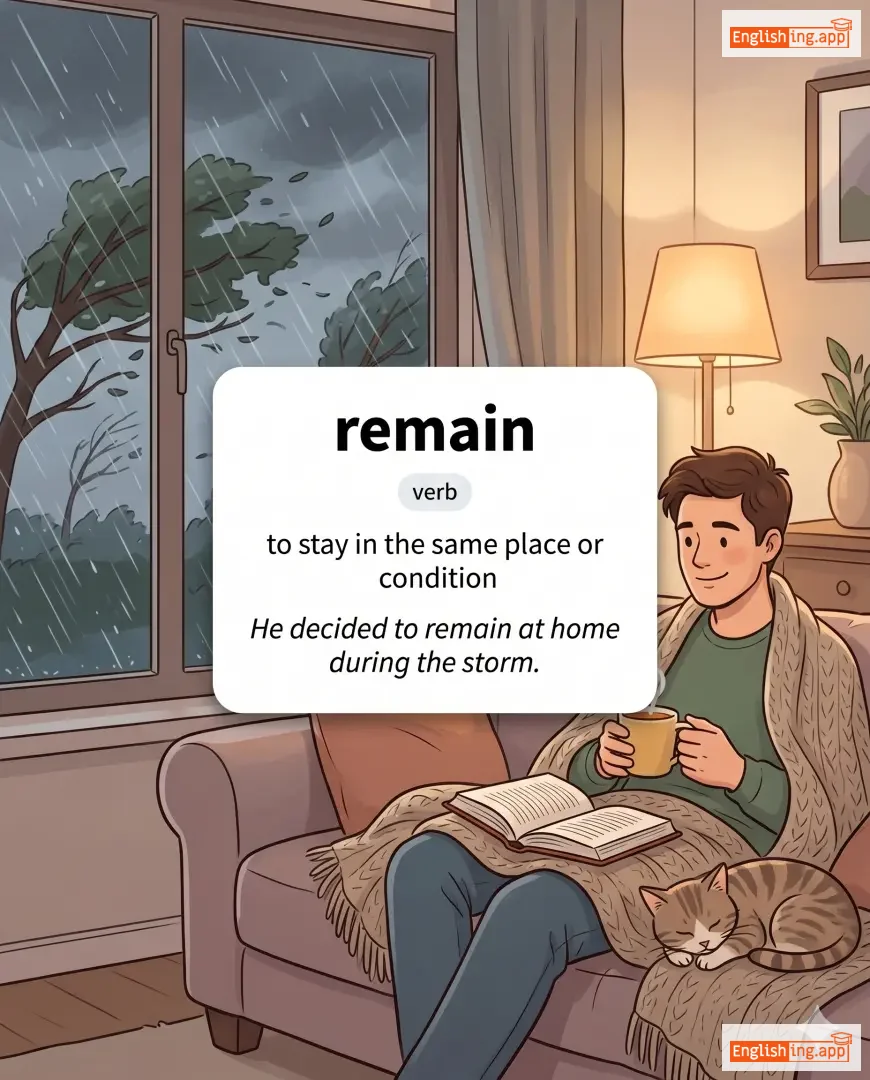
remain definition card — visual illustration of the meaning
verb
/rɪˈmeɪn/
оставаться (ostavat'sya)

to stay in the same place or condition

"He decided to remain at home during the storm."

"Он решил остаться дома во время шторма." (On reshil ostatsya doma vo vremya shtorma.)
noun
/rɪˈmeɪndər/
остаток (ostatok)

the part that is left after the main part is gone or used

"He ate most of the cake and left the remainder on the plate."

"Он съел большую часть торта и оставил остаток на тарелке." (On s'yel bol'shuyu chast' torta i ostavil ostatok na tarelke.)
adjective
/rɪˈmeɪnɪŋ/
оставшийся (ostavshiysya)

still existing or left after others are gone or dealt with

"There were only a few remaining tickets for the concert."

"Осталось всего несколько билетов на концерт." (Ostalos' vsego neskol'ko biletov na kontsert.)
noun
/rɪˈmeɪnz/
остатки (ostatki)

the parts, pieces, or substances that are left after the rest has been used or removed

"The remains of the meal were left on the table."

"Остатки еды остались на столе." (Ostatki edy ostalis' na stole.)
noun/verb
/rɪˈmɑːrk/
замечание (zamechanie)

something that is said; a comment

"She made a remark about the weather."

"Она сделала замечание о погоде." (Ona sdelala zamechanie o pogode.)
adjective
/rɪˈmɑːrkəbl/
замечательный (zamechatel'nyy)

worthy of attention; striking

"Her remarkable performance impressed everyone."

"Ее выдающееся выступление произвело впечатление на всех." (Eye vidayushcheesya vystuplenie proyzvelo vpechatleniye na vsekh.)
adverb
/rɪˈmɑːrkəbli/
необычным образом (neobychnym obrazom)

in a way that is worthy of attention or notice; surprisingly

"She did remarkably well in the competition."

"Она удивительно хорошо справилась на конкурсе." (Ona udivitel'no khorosho spravilas' na konkurse.)
adjective
/rɪˈmiːdiəbl/
исправимый (ispravimy)

capable of being corrected or cured

"The mistake was serious but still remediable."

"Ошибка была серьезной, но все еще исправимой." (Oshibka byla seryoznoy, no vse eshchyo ispravimoy.)
adjective
/rɪˈmiːdiəl/
исправительный (ispravitelnij)

intended to correct or improve a situation, especially related to learning or health

"The school offers remedial classes in mathematics."

"Школа предлагает дополнительные занятия по математике." (Shkola predlagaet dopolnitel'nye zanyatiya po matematike.)
noun
/ˈrɛmɪdi/
средство (sredstvo)

a treatment or solution for a problem or illness

"The doctor prescribed a remedy for the cough."

"Доктор прописал средство от кашля." (Doktor propisal sredstvo ot kashlya.)
remember definition card — visual illustration of the meaning
verb
/rɪˈmɛmbər/
помнить (pomnit')

to recall to the mind; to keep in memory

"I can't remember the last time we met."

"Я не могу вспомнить последний раз, когда мы встречались." (Ya ne mogu vspomnit' posledniy raz, kogda my vstrechalis'.)
noun
/rɪˈmɛmbrəns/
память (pamyat)

the act of remembering or honoring someone or something

"A service was held in remembrance of the fallen soldiers."

"Была проведена служба в память о погибших солдатах." (Byla provedena sluzhba v pamyat' o pogibshikh soldatakh.)
verb
/rɪˈmaɪnd/
напоминать (napominat')

to cause someone to remember something

"Please remind me to call her tomorrow."

"Пожалуйста, напомни мне позвонить ей завтра." (Pozhaluysta, napomni mne pozvonit' yey zavtra.)
noun
/rɪˈmaɪndər/
напоминание (napominanie)

something that helps you remember a fact, event, or action that you need to do or recall

"He set a reminder to call his mother on her birthday."

"Он установил напоминание, чтобы позвонить своей матери на ее день рождения." (On ustanovil napominanie, chtoby pozvonit' svoey materi na yeyo den' rozhdeniya.)
noun
/ˌrɛmɪˈnɪsəns/
воспоминание (vospominanie)

a story or memory about past events

"He shared a reminiscence of his childhood days in the village."

"Он поделился воспоминанием о своих детских днях в деревне." (On podelilsya vospominaniem o svoikh detskikh dnyakh v derevne.)
adjective
/ˌrɛmɪˈnɪsənt/
напоминающий (napominayushchiy)

Tending to remind one of something; suggestive of something in the past.

"The smell of rain is reminiscent of my childhood in the village."

"Запах дождя напоминает мне о моем детстве в деревне." (Zapakh dozhdya napominaet mne o moyem detstve v derevne.)
adjective
/rɪˈmɪs/
небрежный (nebrezhnyy)

Negligent in performing a duty or responsibility.

"The manager was remiss in not checking the financial reports carefully."

"Менеджер был небрежен, не проверив финансовые отчеты тщательно." (Menedzher byl nebrezhen, ne proveryv finansovye otchety tchatel'no.)
noun
/rɪˈmɪʃən/

A temporary or permanent decrease or disappearance of disease symptoms; forgiveness of sins or debts.

"The patient’s cancer is in remission after the treatment."

verb
/rɪˈmɪt/
отправить деньги / прощать (otpravit' den'gi / proshchat')

To send money in payment or as a gift; to cancel or refrain from exacting a debt or punishment.

"He promised to remit the payment by the end of the week."
"Он пообещал перевести оплату до конца недели." (On poobeshchal perevesti oplatu do kontsa nedeli.)
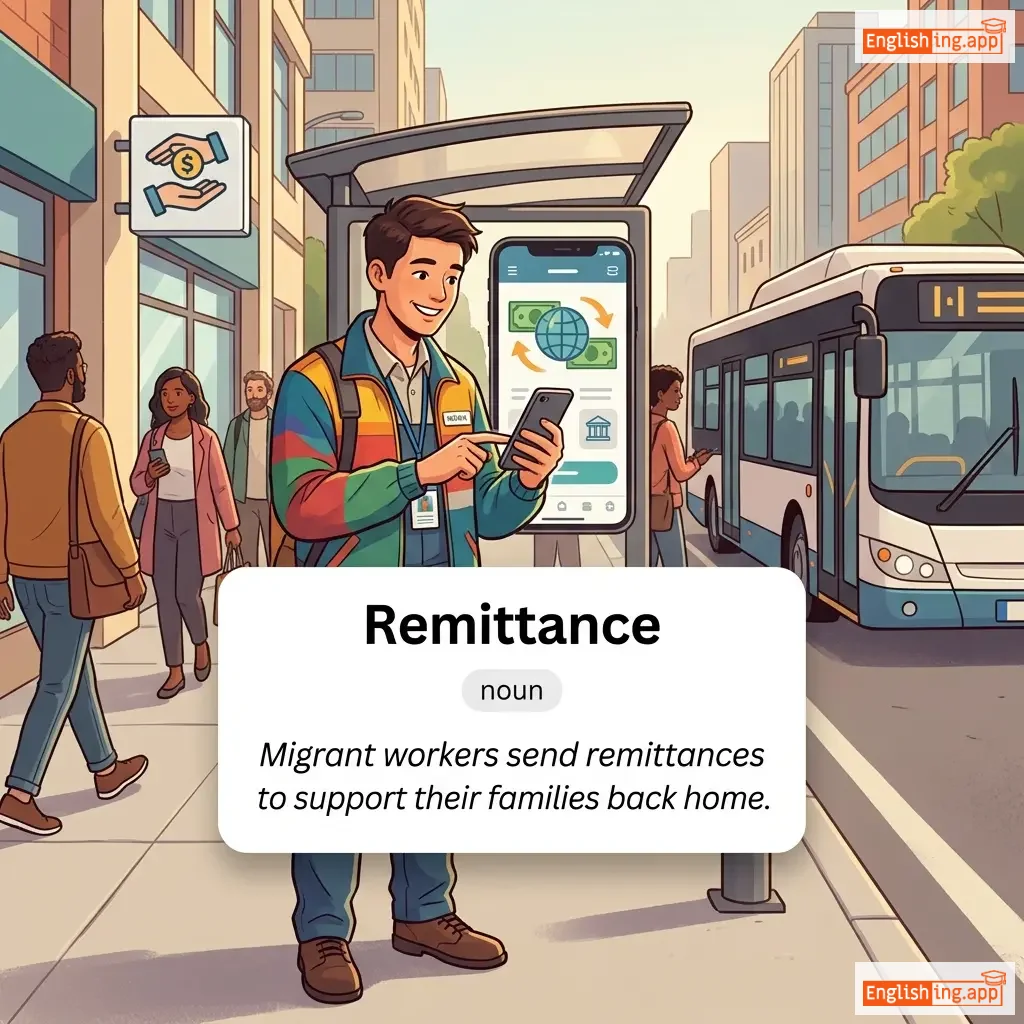
Remittance definition card — visual illustration of the meaning
noun
/rɪˈmɪtəns/
перевод / денежный перевод (perevod / denezhnyy perevod)

A sum of money sent, especially by mail or electronic transfer, as payment or gift.

"Migrant workers send remittances to support their families back home."

"Мигранты отправляют переводы, чтобы поддержать свои семьи на родине." (Migranti otpravlyayut perevody, chtoby podderzhat' svoi sem'i na rodine.)
noun
/ˈrɛmnənt/
остаток (ostatok)

A small remaining part of something that once existed or was larger.

"The old house still had remnants of its former glory."
"Старый дом всё ещё сохранял остатки своей былой славы." (Staryy dom vsyo eshchyo sokhranyal ostatki svoey byloy slavy.)
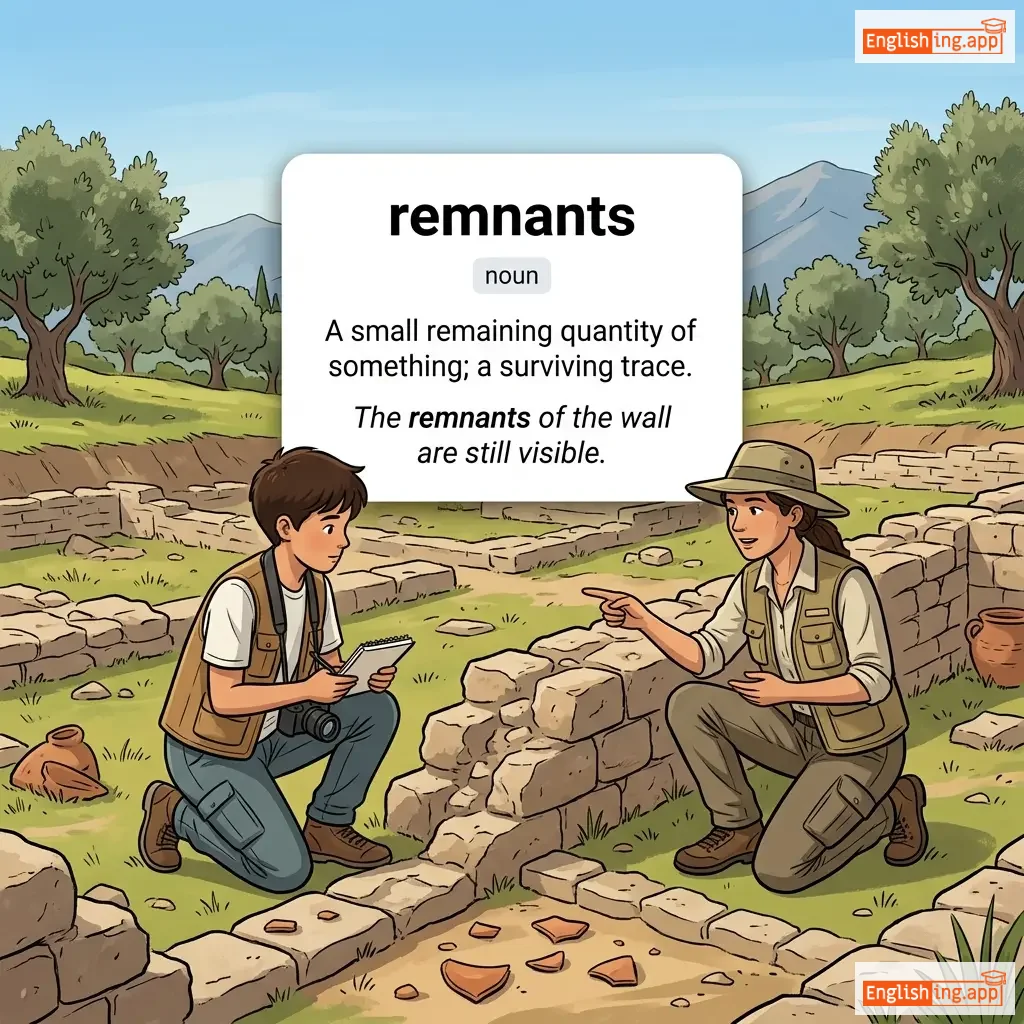
remnants definition card — visual illustration of the meaning
noun
ˈremnənts
останки (ostanki)

A small remaining quantity of something; a surviving trace.

"The remnants of the wall are still visible."

"Останки стены всё ещё видны." (Ostanki steny vsyo yeshchyo vidny.)
verb
/ˌriːˈmɒdəl/
перестроить (perestroit')

To change the structure or form of something, especially a building.

"They decided to remodel their kitchen last summer."

"Они решили переделать свою кухню прошлым летом." (Oni reshilí peredelat' svoju kukhnyu proshlym letom.)
noun
/rɪˈmɒnstrəns/
протест (protest)

A forceful protest or objection.

"The workers’ remonstrance against unfair treatment was ignored."

"Протест рабочих против несправедливого обращения был проигнорирован." (Protest rabochikh protiv nespravedlivogo obshcheniya byl proigнорirovan.)
noun/adjective
/rɪˈmɒnstrənt/
протестующий (protestuyushchiy)

A person who makes a forceful protest (noun); protesting or objecting (adjective).

"He was a remonstrant voice in the assembly."
"Он был протестующей голосом на собрании." (On byl protestuyushchey golosom na sobranie.)
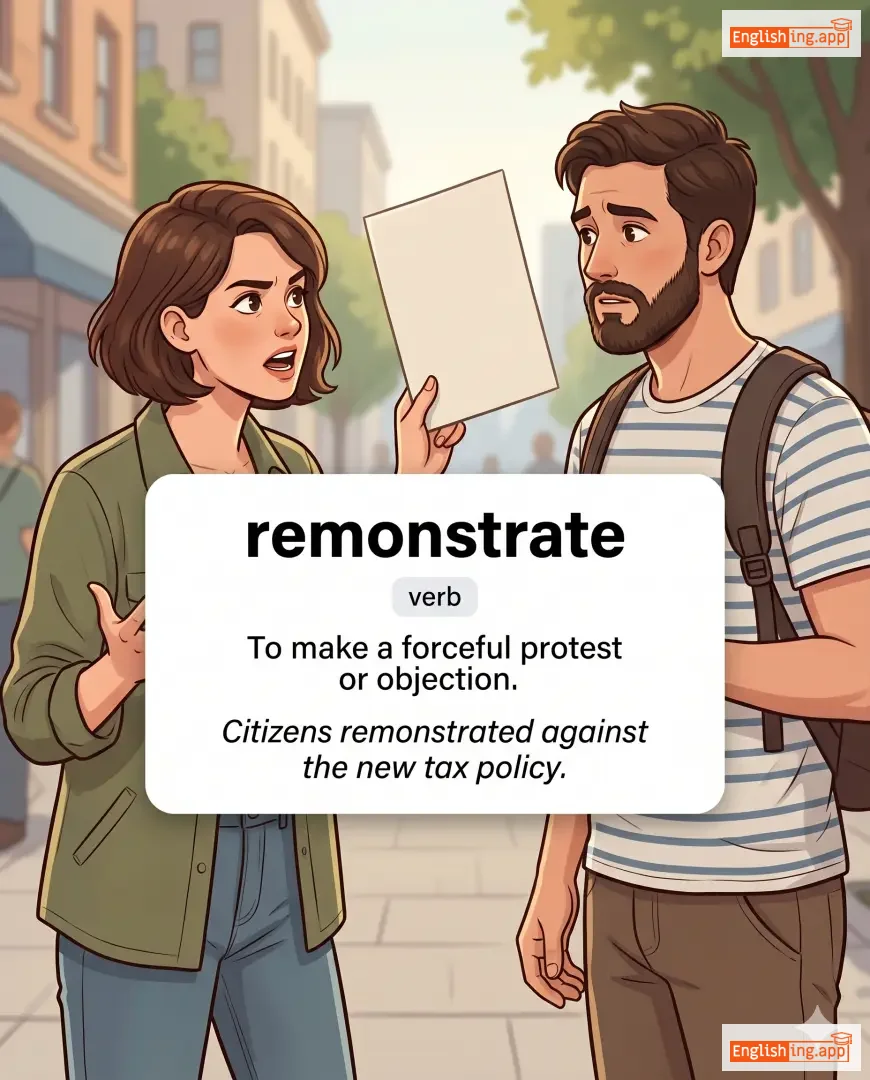
remonstrate definition card — visual illustration of the meaning
verb
/rɪˈmɒnstreɪt/
протестовать (protestovat)

To make a forceful protest or objection.

"Citizens remonstrated against the new tax policy."

"Граждане протестовали против новой налоговой политики." (Grazhdane protestovali protiv novoy nalogovoy politiki.)
noun
/rɪˈmɔːrs/
раскаяние (raskayanie)

A deep feeling of regret or guilt for a wrong committed.

"He was filled with remorse after lying to his friend."

"Он был полон раскаяния после того, как соврал своему другу." (On byl polon raskayaniya posle togo, kak sovral svoemu drugu.)
adjective
/rɪˈmoʊt/
удалённый (udalyonny)

Situated far from the main centers of population; distant.

"They stayed in a remote village during their trip."

"Они остановились в удалённой деревне во время своей поездки." (Oni ostanovilis' v udalyonnoy derevne vo vremya svoey poezzdki.)
adjective
/rɪˈmoʊtɪd/
удаленный (udalennyy)

placed at a distance; made remote

"The system was remoted to a secure location."

"Система была удалена в безопасное место." (Sistema byla udalena v bezopasnoe mesto.)
adjective
/rɪˈmuːvəbəl/
съемный (syemny)

able to be removed or taken away

"This phone has a removable battery."

"У этого телефона съемная батарея." (U etogo telefona syomnaya batareya.)
noun
/rɪˈmuːvəl/
удаление (udaleniye)

the act of taking something or someone away or out of a place

"The removal of old furniture made the room look spacious."
"Удаление старой мебели сделало комнату более просторной." (Udalenie staroy mebeli sdelalo komnatu boleye prostornoy.)
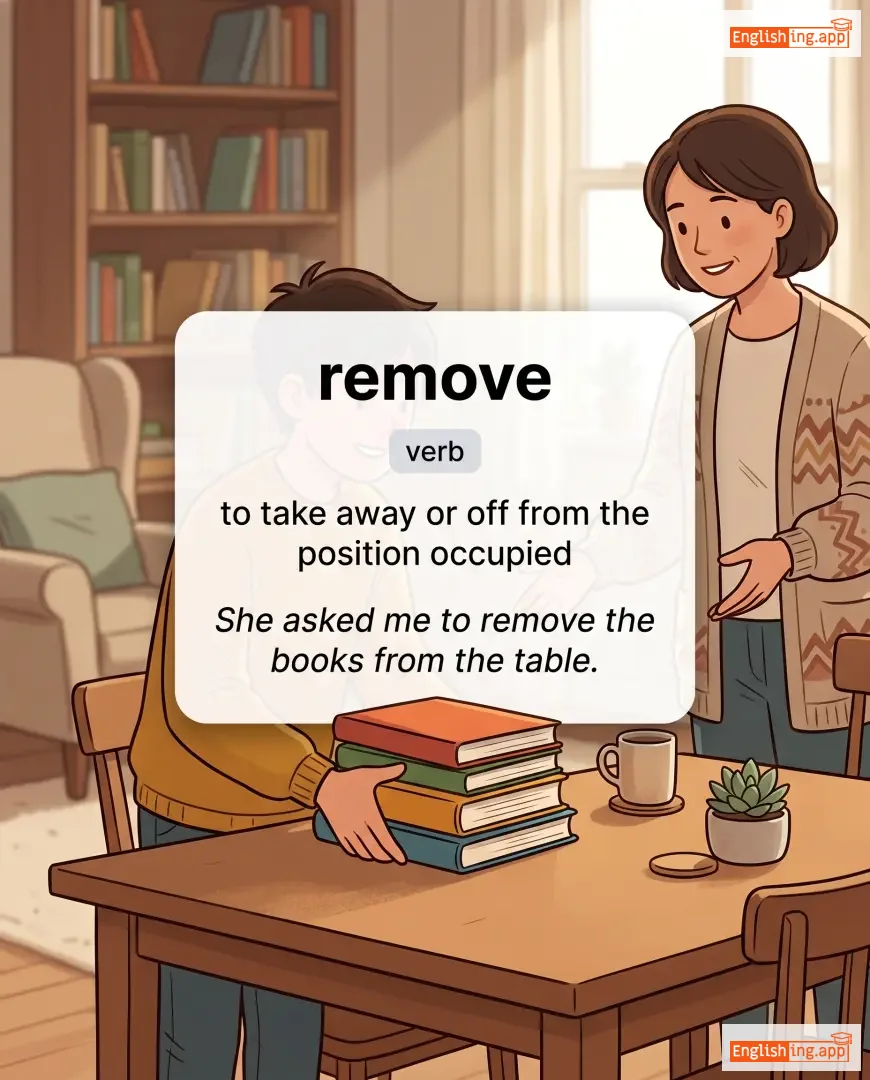
remove definition card — visual illustration of the meaning
verb
/rɪˈmuːv/
убирать (ubirat)

to take away or off from the position occupied

"She asked me to remove the books from the table."

"Она попросила меня убрать книги с стола." (Ona poprosila menya ubrat' knigi s stola.)
verb
/rɪˈmjuːnəreɪt/
оплачивать (oplachivat)

To pay someone for services or work done.

"The company will remunerate employees fairly for their overtime."

"Компания будет справедливо вознаграждать сотрудников за их сверхурочные." (Kompaniya budet spravedlivo voznagrazhdat' sotrudnikov za ikh sverkhurochnye.)
noun
/rɪˌmjuːnəˈreɪʃən/
вознаграждение (voznagrazhdenie)

Money paid for work or a service.

"The remuneration for this job is quite generous."

"Вознаграждение за эту работу довольно щедрое." (Voznagrazhdenie za etu rabotu dovol'no shchedroye.)
adjective
/rɪˈmjuːnərətɪv/
прибыльный (pribyl'nyy)

Financially rewarding or profitable.

"He chose a remunerative career in medicine."

"Он выбрал прибыльную карьеру в медицине." (On vybral pribyl'nuyu kar'yeru v meditsine.)