Словари

Словарь английского языка | Значения слов, определения и примеры

noun
/ruːˈtiːn/
рутина, последовательность регулярно выполняемых действий (rutina, posleduyushchaya postupatel'nost' regulyarno vypolnyaemykh deystviy)

a sequence of actions regularly followed; a fixed program

"She follows a strict morning routine before work."

"Она следит за строгой утренней рутиной перед работой." (Ona sledit za strogoi utrekney rutinoy pered rabotoy.)
adverb
/ruːˈtiːnli/
регулярно (regulyarno)

as part of a regular procedure; habitually

"The staff routinely checks the equipment for safety."
"Персонал регулярно проверяет оборудование на безопасность." (Personal regulyarno proveryayet oborudovaniye na bezopasnost'.)
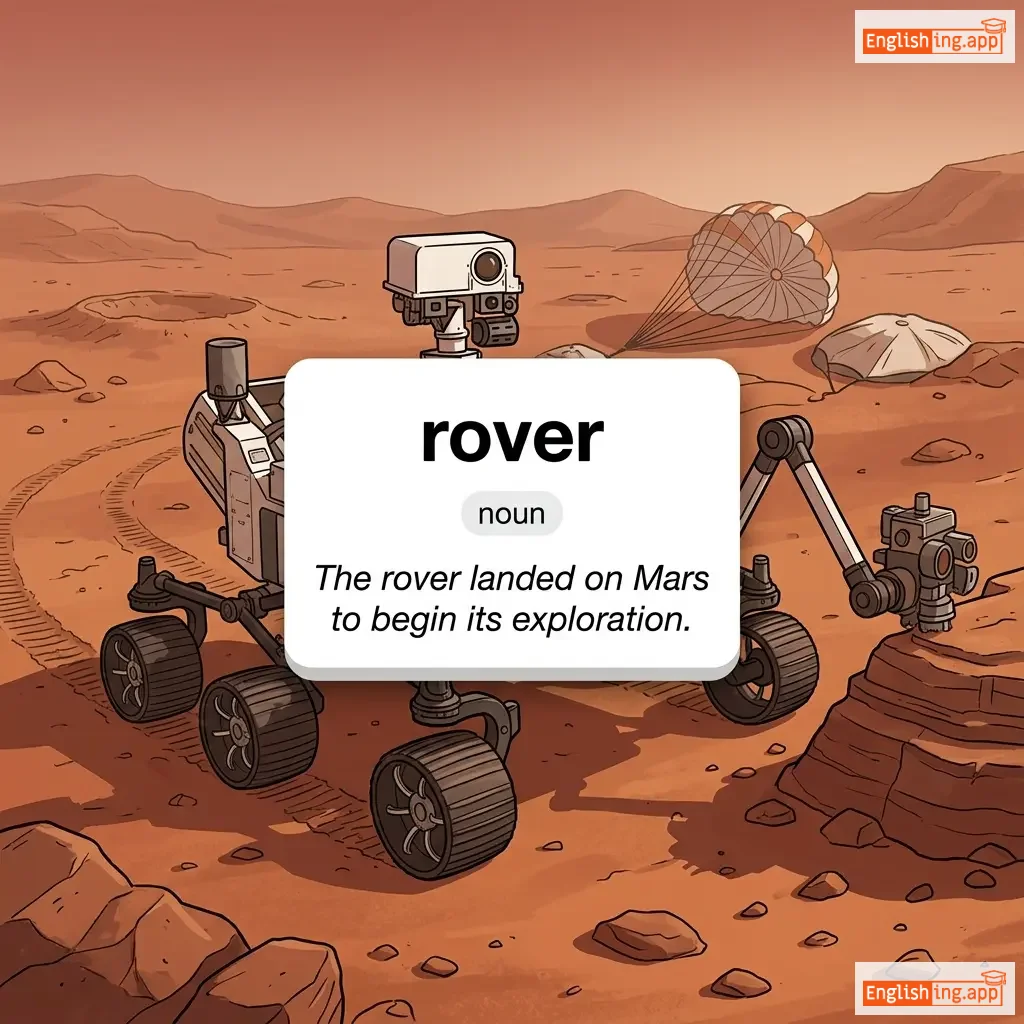
rover definition card — visual illustration of the meaning
noun
ˈrəʊvə
ровер (rover)

A vehicle for driving over rough terrain, especially one driven by remote control over extraterrestrial terrain.

"The rover landed on Mars to begin its exploration."

"Ровер приземлился на Марсе, чтобы начать свою исследовательскую работу." (Rover prizemlilsya na Marse, chtoby nachat' svoyu issledovatelskuyu rabotu.)
noun, verb
/raʊ/ (argument), /roʊ/ (line of things)
ряд / ссора (ryad / ssora)

A line of things or people; also, a noisy quarrel; to propel a boat with oars.

"They had a loud row about money."

"Они устроили громкую ссору по поводу денег." (Oni ustroili gromkuyu ssoru po povodu deneg.)
adjective
/ˈraʊdi/
шумный (shumnyy)

Noisy and disorderly; rough and disruptive

"The rowdy crowd made it hard to hear the speaker."

"Шумная толпа сделала невозможным услышать оратора." (Shumnaya tolpa sdelala nevozmozhno uslyshat' oratora.)
adjective
/ˈrɔɪəl/
королевский (korolevskiy)

relating to a king, queen, or other member of a royal family

"They attended a royal ceremony at the palace."
"Они посетили королевскую церемонию в дворце." (Oni posetili korolevskuyu tseremoniyu v dvorce.)
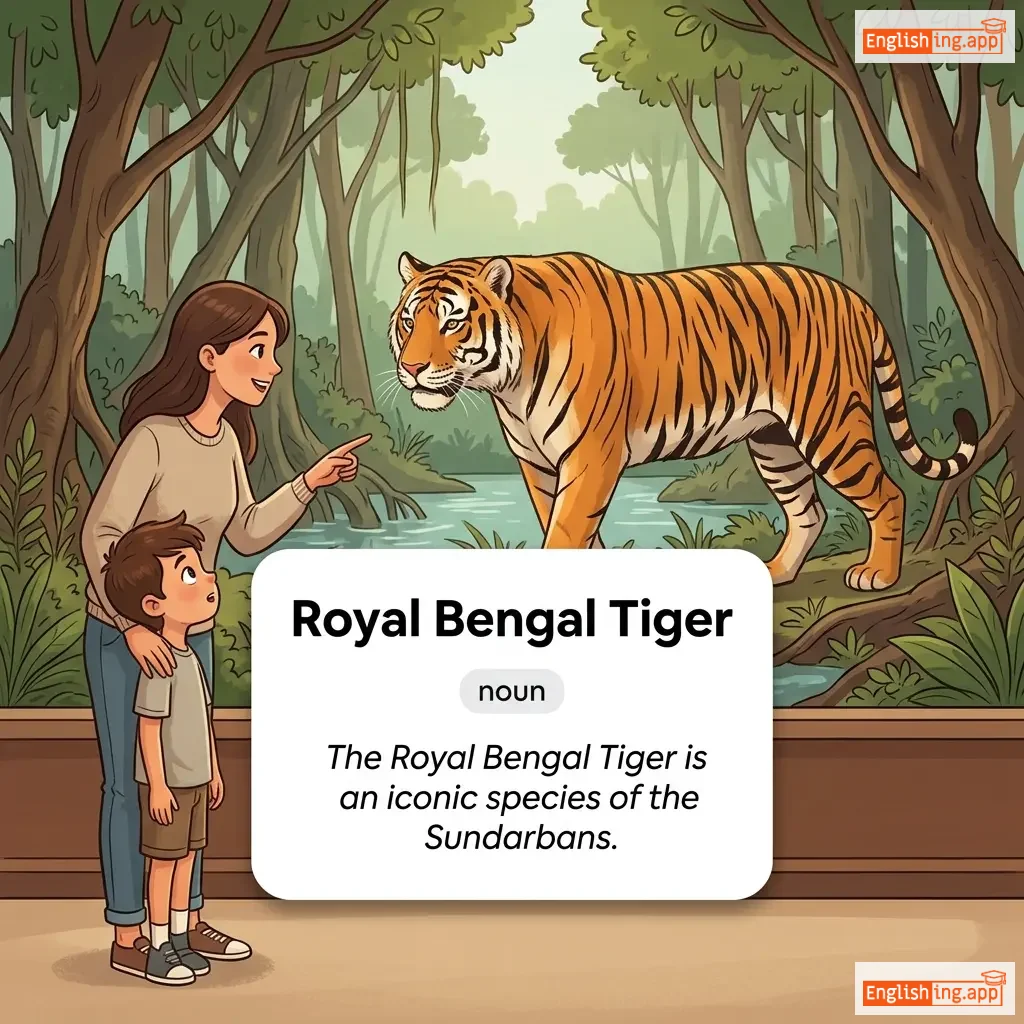
Royal Bengal Tiger definition card — visual illustration of the meaning
noun
ˈrɔɪəl ˈbɛŋɡəl ˈtaɪɡər
Королевский бенгальский тигр (Korolevskiy bengalskiy tigr)

A subspecies of tiger found primarily in India and Bangladesh, known for its distinctive orange coat with black stripes.

"The Royal Bengal Tiger is an iconic species of the Sundarbans."

"Королевский бенгальский тигр является иконой Сундарбана." (Korolevskiy bengalskiy tigr yavlyaetsya ikonoy Sundarbana.)
noun
/ˈrɔɪəlti/
царская семья / роялти (авторский гонорар) (royalty)

Members of a royal family or payment made to the owner of a patent, copyright, or natural resource.

"The author receives a royalty for every book sold."
"Автор получает роялти за каждую проданную книгу." (Avtor poluchayet royalti za kazhduyu prodannuyu knigu.)
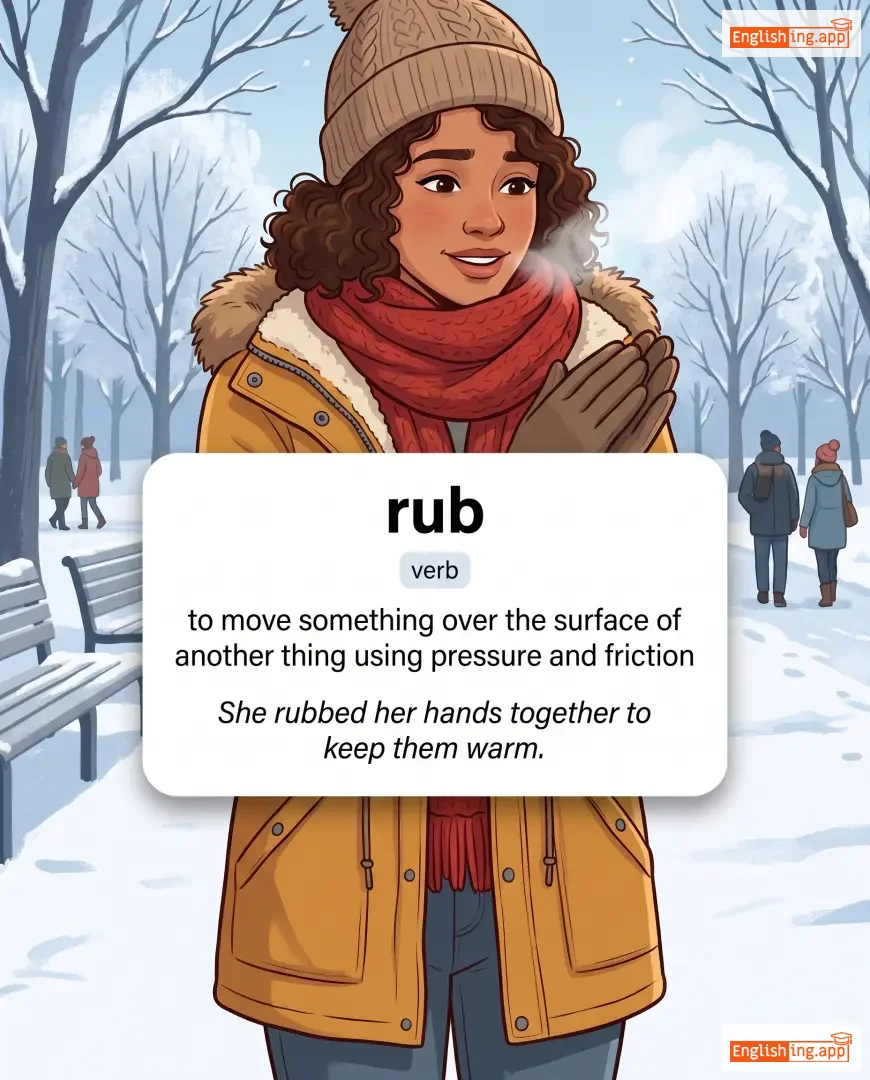
rub definition card — visual illustration of the meaning
verb
/rʌb/
тереть (teret')

to move something over the surface of another thing using pressure and friction

"She rubbed her hands together to keep them warm."

"Она терла руки вместе, чтобы держать их в тепле." (Ona terla ruki vmeste, chtoby derzhat' ikh v teple.)
noun
/ˈrʌbər/
счастье (schastye)

a tough elastic substance made from the latex of tropical plants or synthetically, used for making tires, boots, and other products.

"The tires are made of natural rubber."

"Она не могла скрыть своего счастья, когда получила награду." (Ona ne mogla skryt' svoego schast'ya, kogda poluchila nagradu.)
noun
/ˈrʌbɪʃ/
мусор (musor)

Waste material or unwanted things; something worthless

"He threw the broken toys into the rubbish bin."

"Он выбросил сломанные игрушки в мусорное ведро." (On vybrosil slomannye igrooshki v musornoe vedro.)
noun
/ˈrʌbəl/
руины (ruiny)

Broken stone, bricks, or debris from a collapsed building or structure.

"The rescue team searched through the rubble after the earthquake."

"Спасательная команда искала среди обломков после землетрясения." (Spasatel'naya komanda iskala sredi oblomkov posle zemletryaseniya.)
adjective
/ˈruːbɪkənd/
рубинового оттенка лицо (rubikand)

Having a healthy reddish complexion.

"The old man’s rubicund face showed he was in good health."
"Рубиновое лицо старика показывало, что он был в хорошем здоровье." (Rubinovoye litso starika pokazyvalo, chto on byl v khoroshem zdorov'ye.)
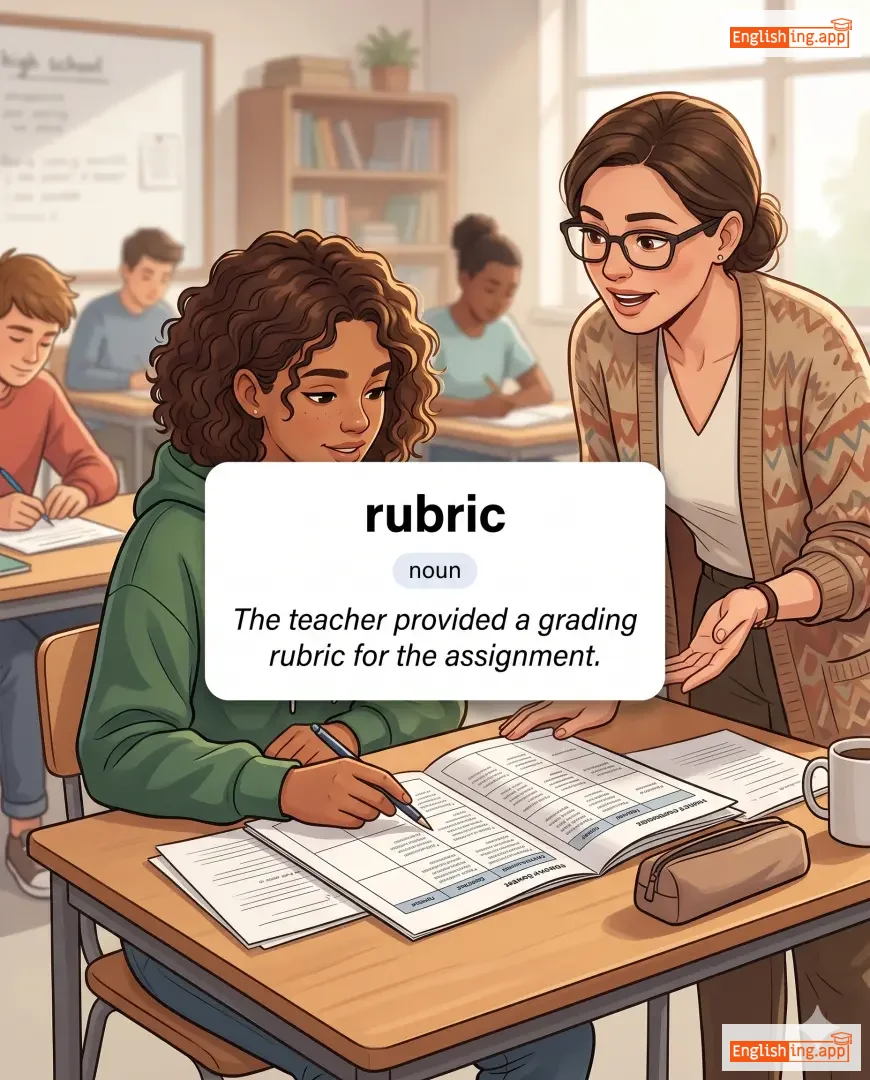
rubric definition card — visual illustration of the meaning
noun
/ˈruːbrɪk/
рубрика / директива (rubrik)

A set of instructions, rules, or a heading in a document, often used for grading criteria.

"The teacher provided a grading rubric for the assignment."

"Учитель предоставил рубрику для оценки задания." (Uchitel' predostavil rubriku dlya otsenki zadaniya.)
noun
/ˈruː.bi/
рубин (Rubi)

a precious red gemstone; a deep red variety of corundum

"The ruby ring was her most treasured possession."

"Кольцо с рубином было её самым дорогим достоянием." (Koltso s rubinom bylo eyo samym dorogim dostoyaniem)
noun
/rʌk/
толкотня; беспорядочная толпа (tolkotnya; besporyadochnaya tolpa)

a situation where a crowd of people are pushing against each other; a disorderly crowd

"There was a ruck at the football match."

"На футбольном матче была толкотня." (Na futbol'nom matche byla tolkotnya)
adjective
/ˈrʌdi/
румяный (rumyany)

Having a healthy red color in the face.

"She had a ruddy complexion from working outdoors."

"У неё был румяный цвет лица от работы на улице." (U neyo byl rumyanyy tsvet litsa ot raboty na ulitse.)
adjective
/ruːd/
грубый (grubyy)

Not having or showing respect; impolite

"It was rude of him to interrupt the conversation."

"Он был груб, прерывая разговор." (on byl grub, preryvaya razgovor.)
adverb
/ˈruːdli/
грубо (grubo)

in an impolite or discourteous manner

"He rudely interrupted the speaker during the presentation."

"Он грубо перебил докладчика во время презентации." (On grubo perebil dokladchika vo vremya prezentatsii.)
noun
/ˈruːdnəs/
грубость (rud-nes)

the quality of being impolite, discourteous, or offensive in behavior or speech

"His rudeness shocked everyone at the dinner party."

"Его грубость потрясла всех на ужинной вечеринке." (Ego grubost' potryasla vsekh na uzhinnoy vecherinke.)
noun
/ˈruːdɪmənt/
основы (osnovy)

A basic principle, element, or fundamental part of something.

"He learned the rudiments of music before joining the band."

"Он изучил основы музыки перед тем, как присоединиться к группе." (On izuchil osnovy muzyki pered tem, kak prisoyedinit'sya k gruppe.)
adjective
/ˌruːdɪˈmɛntəri/
основной (osnovnoy)

Involving or limited to basic principles; elementary or simple.

"The village school provided only a rudimentary education."
"Сельская школа предоставляла только основное образование." (Selskaya shkola predostavlyala tol'ko osnovnoe obrazovanie.)
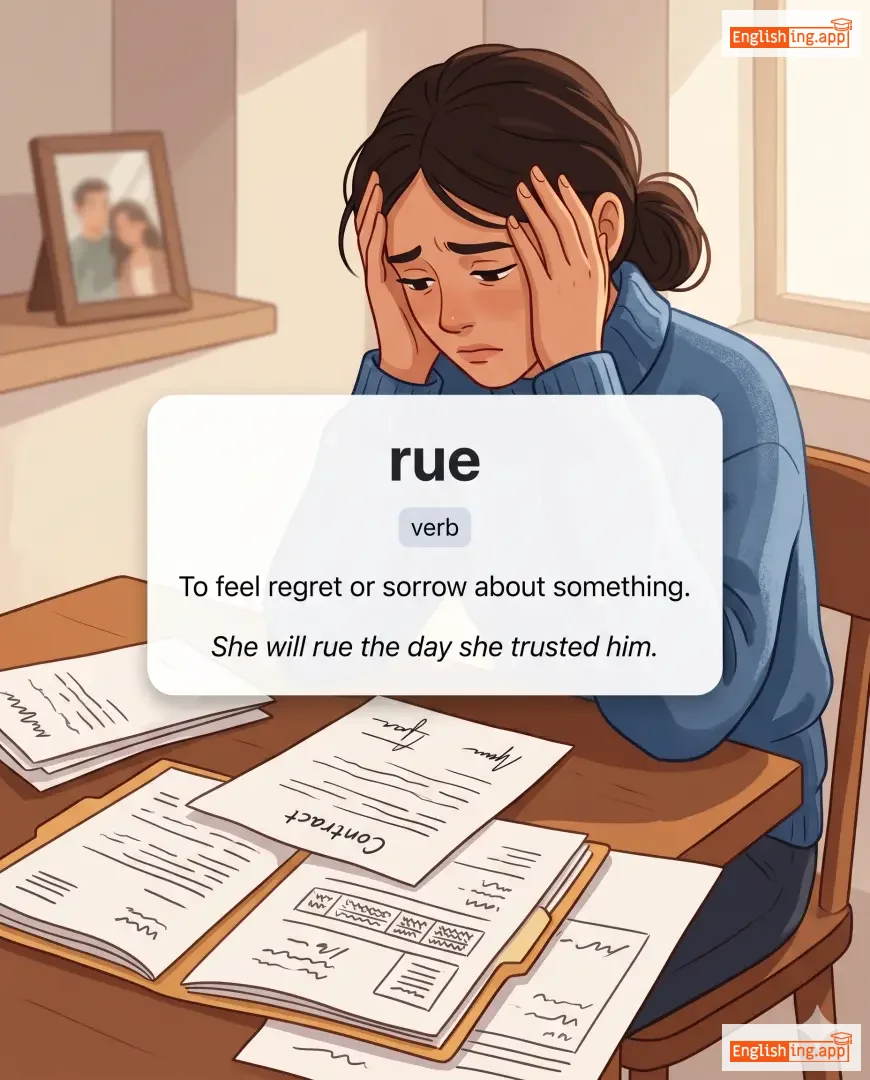
rue definition card — visual illustration of the meaning
verb
/ruː/
сожалеть (sozhalet')

To feel regret or sorrow about something.

"She will rue the day she trusted him."

"Она будет сожалеть о том дне, когда доверилась ему." (Ona budet sozhalet' o tom dne, kogda doverilas' yemu.)
adjective
/ˈruːfəl/
сожаление (sozhalenie)

Expressing sorrow, regret, or pity.

"He gave a rueful smile after losing the match."

"Он улыбнулся с сожалением после того, как проиграл матч." (On ulybnulsya s sozhaleniyem posle togo, kak proigral match.)
noun
/ˈrʌfiən/
отморозок (otmorozok)

A violent or lawless person; a bully.

"The ruffians vandalized the shop late at night."

"Отморозки вандализировали магазин поздно ночью." (Otmorozki vandalizirovali magazin pozdno noch'yu.)
verb
/ˈrʌf.l̩/

to disturb the smoothness of something; to annoy or upset someone

"The wind ruffled her hair."

adjective
/ˈrʌɡ.ɪd/
шероховатый и неровный; с неровной поверхностью; крепкий и сильный (sherokhovatyj i njerovnyj; s njerovnoj poverkhnost'yu; krepkij i sil'nyj)

rough and uneven; having a rough irregular surface; tough and strong

"The hikers crossed the rugged mountain terrain."

"Путники пересекли трудный горный ландшафт." (Putniki peresekli trudnyj gornyj landshaft.)
verb
/ˈruːɪn/
разрушать (razrushat)

to destroy or severely damage something so that it no longer works or is of no use.

"Heavy rain ruined the wedding decorations."

"Сильный дождь разрушил свадебные украшения." (Sil'nyy dozhd' razrushil svadebnye ukrasheniya.)
noun
/ruːl/
правило (pravilo)

an accepted principle or instruction that states what is allowed or what must be done.

"There are strict rules about safety in the lab."

"В лаборатории есть строгие правила безопасности." (V laboratorii yest' strogiye pravila bezopasnosti.)
noun
/ˈruːlər/
правитель; линейка (pravitel; lineyka)

A person who governs or controls a country; a straight-edged tool used for measuring or drawing lines

"The ruler drew a straight line on the paper while the king was a powerful ruler of his kingdom."

"Рулер провел прямую линию на бумаге, в то время как король был могущественным рулером своего королевства." (Ruler provel pryamuyu liniyu na bumage, v to vremya kak korol byl mogushchestvennym rulerom svoego korolevstva.)
noun
/ruːlz/
правила (pravila)

explicit principles or regulations governing conduct or procedure within a particular area of activity

"The teacher reminded the students to follow the classroom rules."
"Учитель напомнил студентам следовать правилам в классе." (Uchitel' napomnil studentam sleduyushchikh pravilam v klasse.)
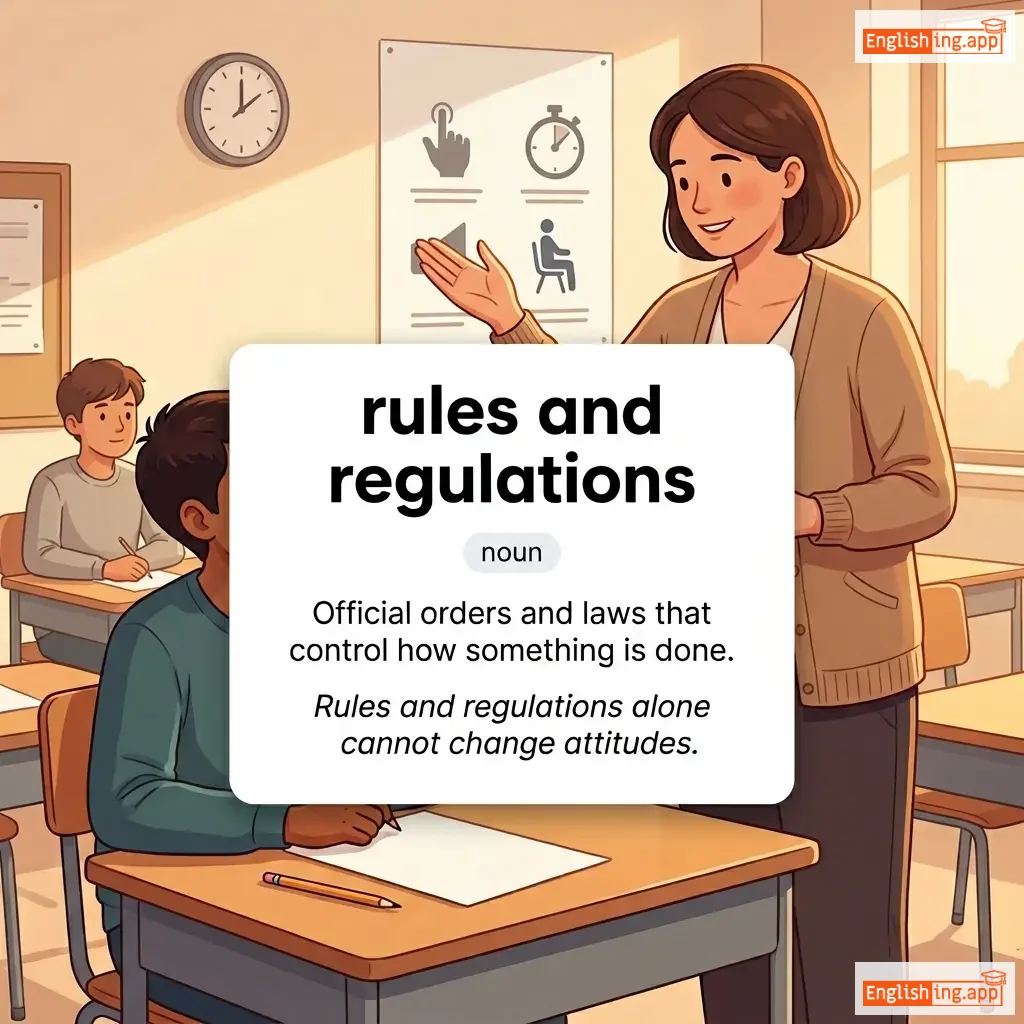
rules and regulations definition card — visual illustration of the meaning
noun
ruːlz ənd ˌrɛɡjʊˈleɪʃənz
правила и регламенты (pravila i reglamenty)

Official orders and laws that control how something is done.

"Rules and regulations alone cannot change attitudes."

"Правила и регламенты не могут изменить отношение сами по себе." (Pravila i reglamenty ne mogut izmenit' otnoshenie sami po sebe.)
noun
/ˈruːlɪŋ/
постановление (postanovlenie)

an official decision made by a judge or authority.

"The court’s ruling favored the defendant."

"Постановление суда было в пользу обвиняемого." (Postanovlenie suda bylo v pol'zu obvinyaemogo.)
verb
/ˈrʌm.bəl/
счастье (schast'ye)

to make a continuous deep, resonant sound

"Thunder rumbled in the distance."

"Она не могла скрыть своего счастья, когда получила награду." (Ona ne mogla skryt' svoego schast'ya, kogda poluchila nagradu.)
noun
/ˈruː.mɪ.nənt/
жвачные животные (zhvachnye zhivotnye)

a cud-chewing mammal, such as a cow or sheep

"Cows are ruminants that chew cud."

"Корова — жвачное животное, которое пережевывает жвачку." (Korova — zhvachnoe zhivotnoe, kotoroe perezhivayut zhvachku.)
verb
/ˈruː.mɪ.neɪt/
размышлять, жевать жвачку (razmyshlyat, zhevat zhvachku)

to think deeply about something; to chew cud (for animals)

"She sat alone to ruminate on her decision."

"Она сидела одна, размышляя о своем решении." (Ona sidelа odna, razmyshlyaya o svoem reshenii.)
verb
/ˈrʌm.ɪdʒ/
перебирать что-то в беспорядке (perebirat' chto-to v besporyadke)

to search through something in a disorderly way

"He rummaged through the drawer for his keys."

"Он роился в ящике, ищя свои ключи." (On roilsya v yashchike, ishchya svoi klyuchi.)
noun
/ˈruːmər/
слух (slukh)

a currently circulating story or report of uncertain or doubtful truth.

"There’s a rumor that the company will merge next year."

"Ходит слух, что компания объединится в следующем году." (Khodit slukh, chto kompaniya ob'yedinit'sya v sleduyushchem godu.)
noun
/ˈruːmər/
слух; сплетня; новость (slukh)

a currently circulating story or report of uncertain or doubtful truth; gossip

"There's a rumour that the company will close next month."

"Существует слух, что компания закроется в следующем месяце." (sushchestvuet slukh, chto kompaniya zakroetsya v sleduyushchem mesyatse)
noun
/rʌmp/
задняя часть; ягодицы; нижняя часть спины (ramp)

the hindquarters or buttocks; the lower back area

"The horse injured its rump during the fall."

"Лошадь повредила свою заднюю часть во время падения." (Loshad' povredila svoyu zadyanyu chast' vo vremya padenya.)
verb
/ˈrʌmpəl/
мять (myat')

to make something untidy or wrinkled by creasing or crumpling

"She accidentally rumpled her dress while packing."

"Она случайно помяла своё платье, пока упаковывала вещи." (Ona sluchayno pomyala svoyo plat'ye, poka upakovivala veshchi.)
noun
/ˈrʌmpəs/
шум; беспорядок; суматоха (shum; besporyadok; sumatoha)

a noisy disturbance; an uproar or commotion

"The children caused quite a rumpus in the playground."

"Дети вызвали настоящий переполох на игровой площадке." (Deti vyzvali nastoyashchiy perepoloch na igrovoy ploshchadke.)
run definition card — visual illustration of the meaning
verb
/rʌn/
счастье (schastye)

to move swiftly on foot by taking steps faster than walking

"He runs every morning to stay fit."

"Она не могла скрыть своего счастья, когда получила награду." (Ona ne mogla skryt' svoego schast'ya, kogda poluchila nagradu.)
adjective
/ˈrʌn daʊn/
обветшалый (obvetshalyy)

in a poor condition; worn out or neglected

"They live in a run-down house at the edge of town."

"Они живут в обветшалом доме на окраине города." (Oni zhivut v obvetshalom dome na okraine goroda.)
adjective
/ˈruːnɪk/
связанный с рунами (svyazannyy s runami)

relating to or consisting of runes; mysterious or magical

"The old stone had strange runic carvings on it."

"Старый камень имел странные рунические надписи." (Staryy kamen' imel strannyye runicheskiye nadpisi.)
noun
/ˈrʌnər/
счастье (schastye)

a person who runs, especially in races or for exercise

"The runner crossed the finish line with a big smile."

"Она не могла скрыть своего счастья, когда получила награду." (Ona ne mogla skryt' svoego schast'ya, kogda poluchila nagradu.)
noun
/ˈrʌnɪŋ/
бегать (begat)

the action or sport of running

"Running every morning keeps me healthy."

"Бегать каждое утро помогает мне оставаться здоровым." (Begat kazhdoe utro pomogayet mne ostavat'sya zdorovym.)
noun/verb
/ˈrʌptʃər/
разрыв (razryv)

to break or burst suddenly; a crack, split, or break in something

"The pipe ruptured due to high pressure."

"Трубопровод лопнул из-за высокого давления." (Truboprovod lopnul iz-za vysokogo davleniya.)
adjective
/ˈrʊərəl/
сельский (selskiy)

relating to the countryside rather than the town

"He prefers the peaceful life of a rural village."
"Он предпочитает спокойную жизнь в сельской деревне." (On predpochitayet spokoynuyu zhizn' v selskoj derevne.)
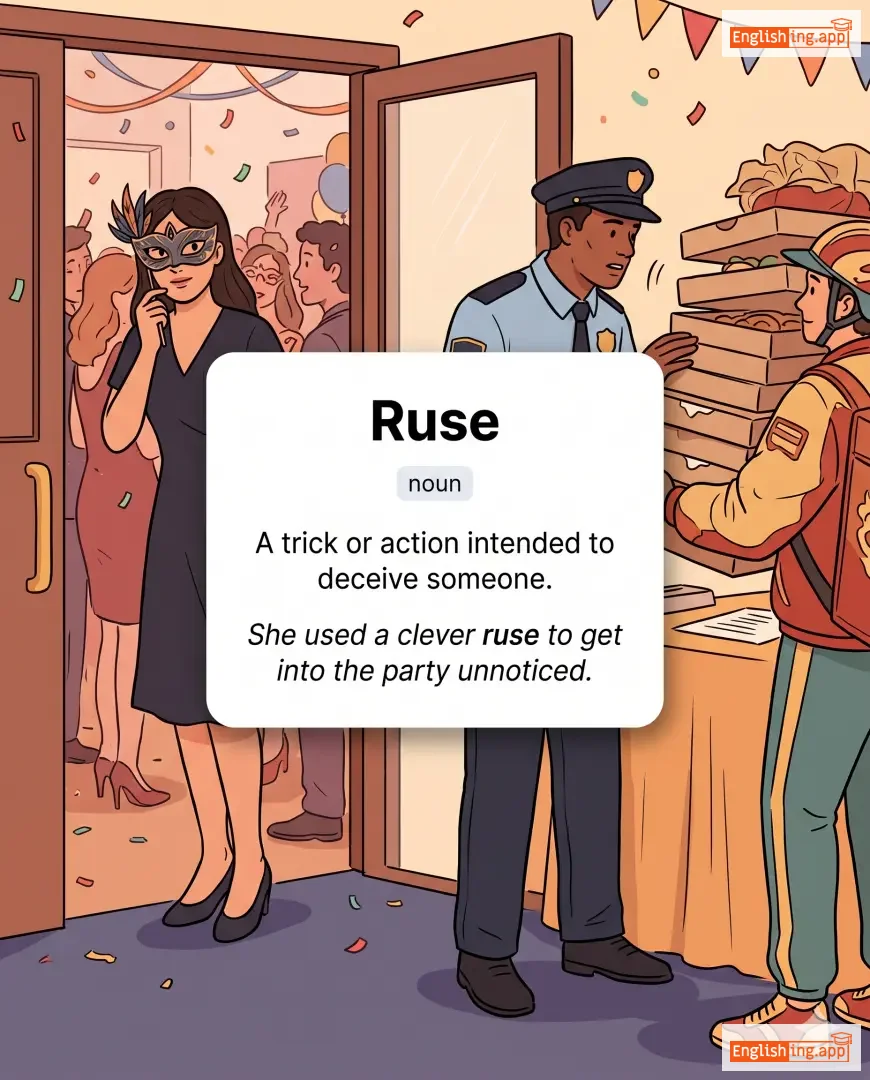
Ruse definition card — visual illustration of the meaning
noun
/ruːz/
уловка (ulovka)

A trick or action intended to deceive someone.

"She used a clever ruse to get into the party unnoticed."

"Она использовала умную уловку, чтобы незаметно попасть на вечеринку." (Ona ispol'zovala umnuyu ulovku, chtoby nezametno popast' na vecherinku.)