Словари

Словарь английского языка | Значения слов, определения и примеры

noun
/ˌrɛspɪˈreɪʃən/
дыхание (dykhaniye)

The process of breathing or the exchange of gases in living organisms.

"Respiration is essential for all living beings."

"Дыхание важно для всех живых существ" (Dykhaniye vazhno dlya vsekh zhivykh sushchestv)
verb
/rɪˈspaɪər/
дышать (dyshat')

To breathe in and out; to inhale and exhale.

"Plants also respire to release energy."

"Растения также дышат, чтобы выделить энергию." (Rasteniya takzhe dyshat, chtoby vydelit' energiyu.)
noun
/ˈrɛspɪt/
передышка (peredishka)

A short period of rest or relief from something difficult or unpleasant.

"The weekend provided a welcome respite from work."

"Выходные дали долгожданный отдых от работы." (Vykhodnye dali dolgoshdannyy otdykh ot raboty.)
adjective
/rɪˈsplɛndənt/
великолепный (velikolepny)

Shining brilliantly; dazzling in appearance or effect

"The bride looked resplendent in her wedding gown."
"Невеста выглядела великолепно в своем свадебном платье." (Nevesta viglyadela velikolepno v svoem svadebnom plat'ye.)
respond definition card — visual illustration of the meaning
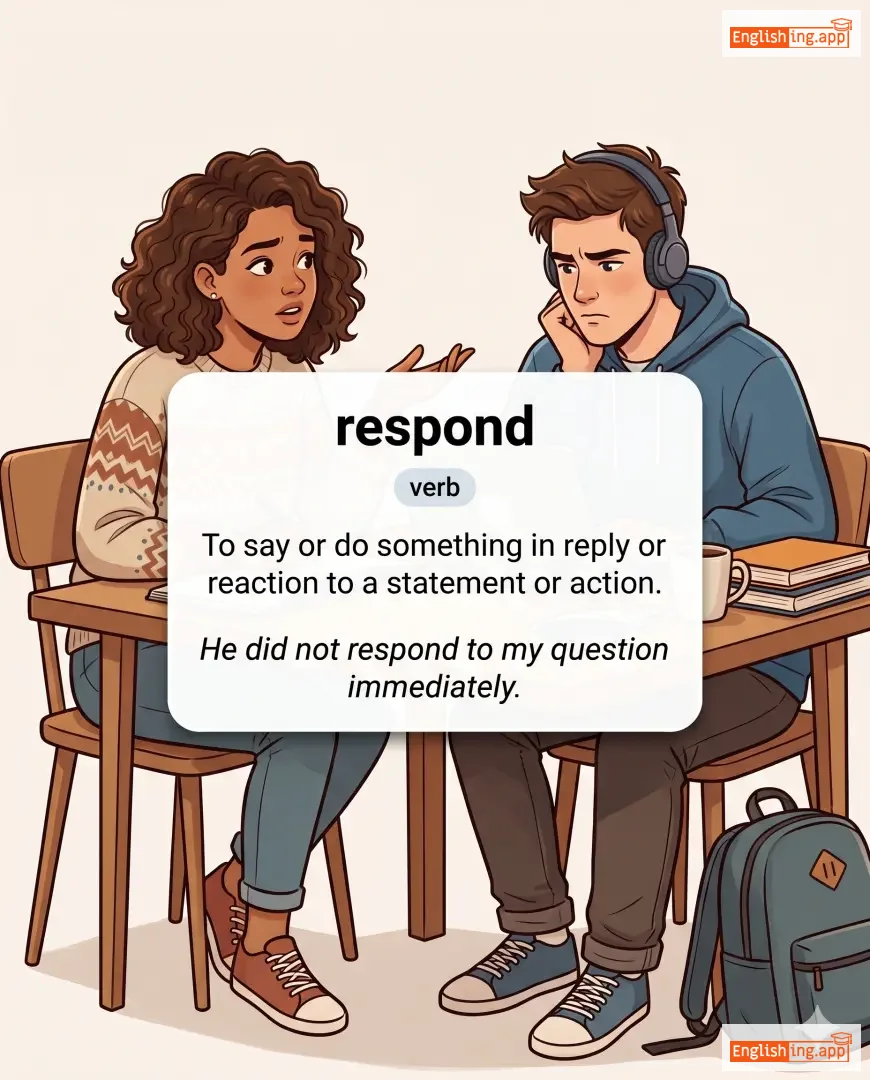
verb
/rɪˈspɒnd/
отвечать (otvechat)

To say or do something in reply or reaction to a statement or action.

"He did not respond to my question immediately."

"Он не ответил на мой вопрос сразу." (On ne otvetil na moy vopros sradu.)
noun
/rɪˈspɒndənt/
респондент (responent)

A person who replies to something, especially in a survey or legal case

"The survey had over 1,000 respondents."

"Опрос собрал более 1000 респондентов." (Opros sobrál bolee 1000 respondentov.)
noun
/rɪˈspɒns/
ответ (otvet)

a reaction to something that has been said or done

"Her response to the question was both thoughtful and clear."
"Её ответ на вопрос был как продуманный, так и ясный." (Eyo otvet na vopros byl kak produmannyy, tak i yasnyy.)
responsibility definition card — visual illustration of the meaning
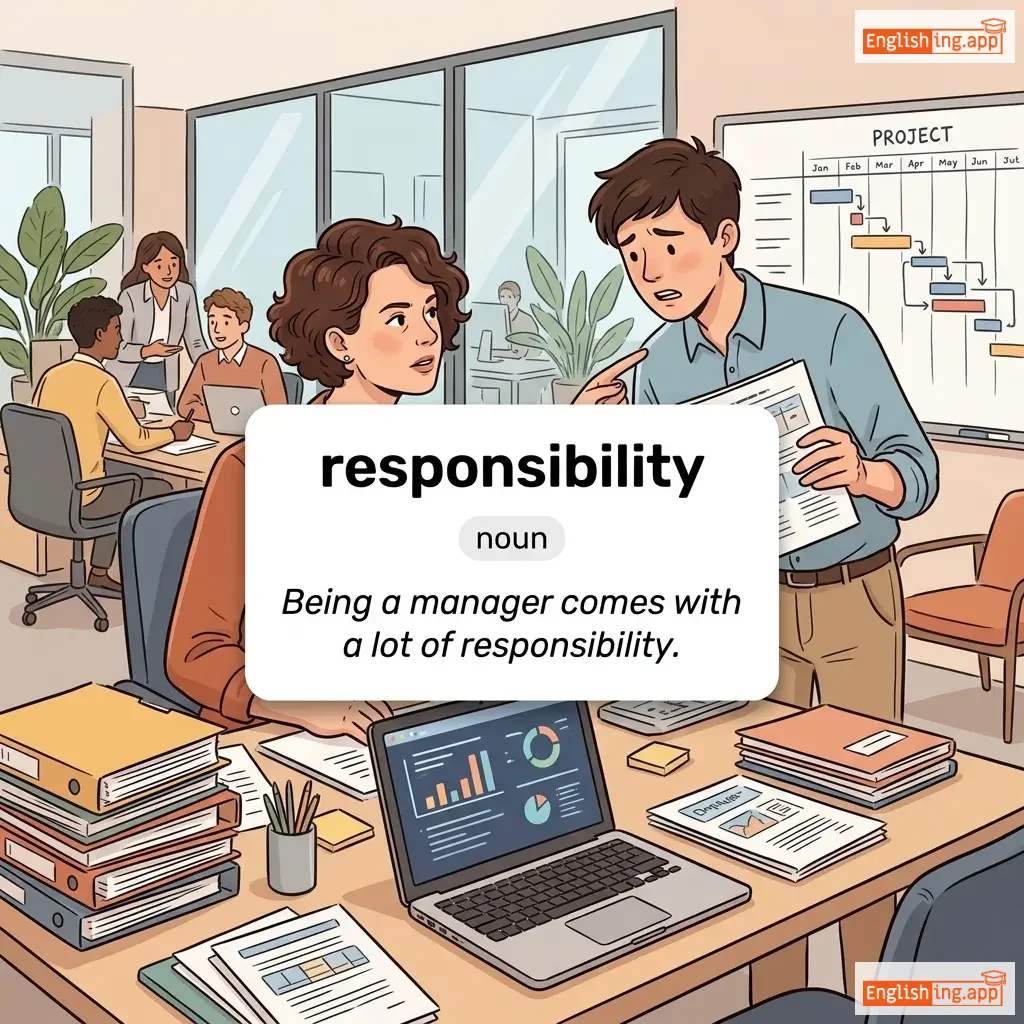
noun
/rɪˌspɒnsɪˈbɪləti/
ответственность (otvetstvennost)

the state or fact of having a duty to deal with something or having control over someone

"Being a manager comes with a lot of responsibility."

"Быть менеджером означает большую ответственность." (Byt' menedzherom oznachaet bol'shuyu otvetstvennost'.)
adjective
/rɪˈspɒnsɪbl/
ответственный (otvetstvenny)

having an obligation to do something or being the cause of something

"She is responsible for managing the project."

"Она ответственна за управление проектом." (Ona otvetstvenna za upravlenie proyektom.)
adjective
/rɪˈspɒnsɪv/
откликающийся (otklikayushchiesya)

Reacting quickly and positively to something

"The website is fully responsive on all devices."

"Вебсайт полностью откликается на всех устройствах." (Vebsayt polnost'yu otklikayetsya na vsekh ustroystvakh.)
noun
/rɪˈspɒnsɪvnəs/
реактивность (reaktivnost)

The quality of reacting quickly and positively

"The manager appreciated her responsiveness to customer feedback."

"Менеджер оценил её реактивность на обратную связь от клиентов." (Menedzher otsenil yeye reaktivnost' na obratnuyu svyaz' ot klientov.)
🛌

rest

noun, verb
/rɛst/

to cease work or movement in order to relax or recover strength

"He needs to rest after the long journey."

noun
/ˈrɛst(ə)rɒnt/
ресторан (restoran)

a place where meals are prepared and served to customers

"We went to the restaurant for dinner."
"Мы пошли в ресторан на ужин." (My poshli v restoran na uzhin.)
resting place definition card — visual illustration of the meaning
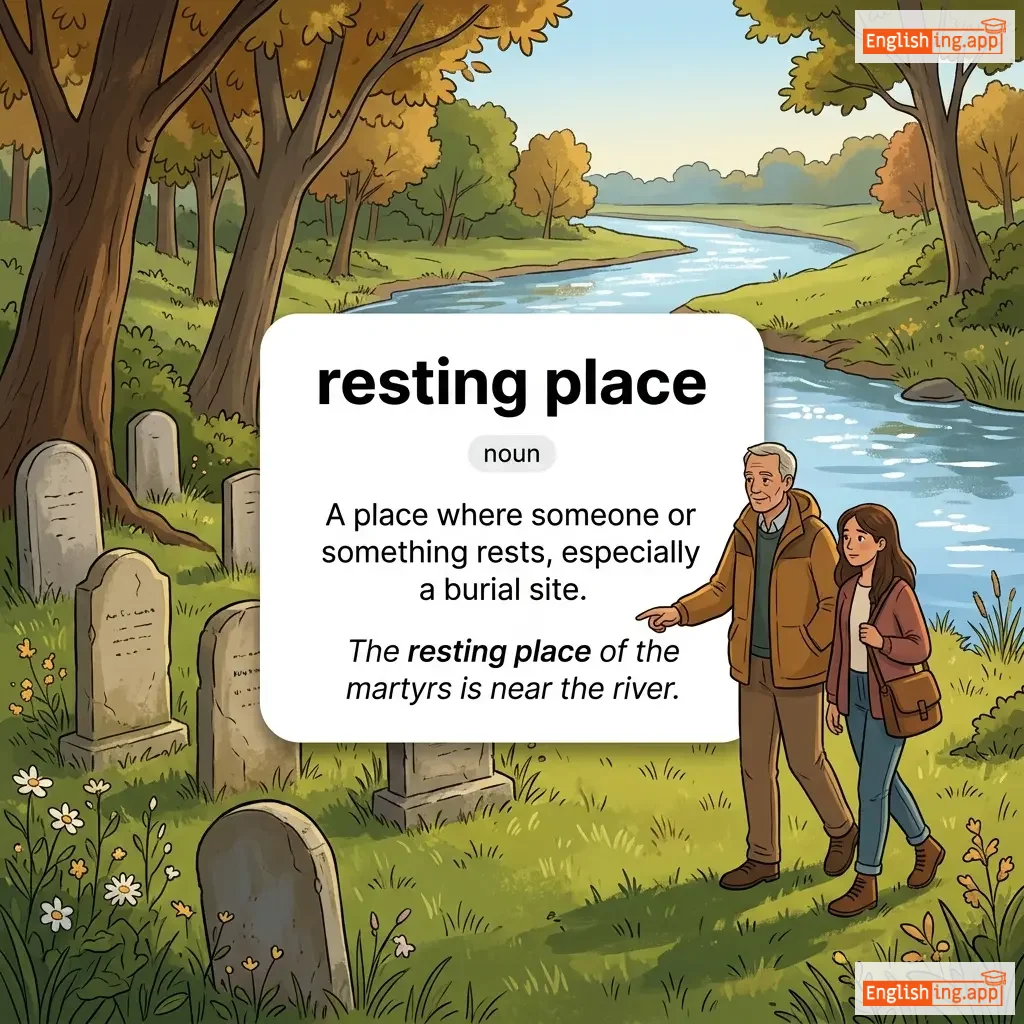
noun
ˈrɛstɪŋ pleɪs
место покоя (mesto pokoya)

A place where someone or something rests, especially a burial site.

"The resting place of the martyrs is near the river."

"Место покоя мучеников рядом с рекой." (Mesto pokoya muchenikov ryadom s rekoй.)
noun
/ˌrɛstɪˈtjuːʃən/
возмещение ущерба (vozmeshchenie ushcherba)

The act of restoring something to its rightful owner or compensating for loss

"The court ordered restitution to the victims of the fraud."

"Суд постановил возмещение ущерба жертвам мошенничества." (Sud postanovil vozmeshchenie ushcherba zhertvam moshenichestva.)
adjective
/ˈrɛstɪv/
неспокойный (nespokoynyy)

unable to stay still or silent; restless and impatient

"The crowd grew restive as they waited for the concert to begin."

"Толпа стала неспокойной, ожидая начала концерта." (Tolpa stala nespokoynoy, ozhidaya nachala kontserta.)
adjective
/ˈrɛstləs/
счастье (schast'ye)

unable to relax or remain still; constantly in motion

"He felt restless during the long meeting."

"Она не могла скрыть своего счастья, когда получила приз." (Ona ne mogla skryt' svoego schast'ya, kogda poluchila priz.)
noun
/ˈrest.ləs.nəs/
беспокойство (bespokoystvo)

the inability to rest or relax as a result of anxiety or boredom

"His restlessness during the long meeting was obvious to everyone."
"Его беспокойство во время длинной встречи было очевидно для всех." (Ego bespokoystvo vo vremya dlinnoj vstrechi bylo ochevidno dlya vsekh.)
restoration definition card — visual illustration of the meaning
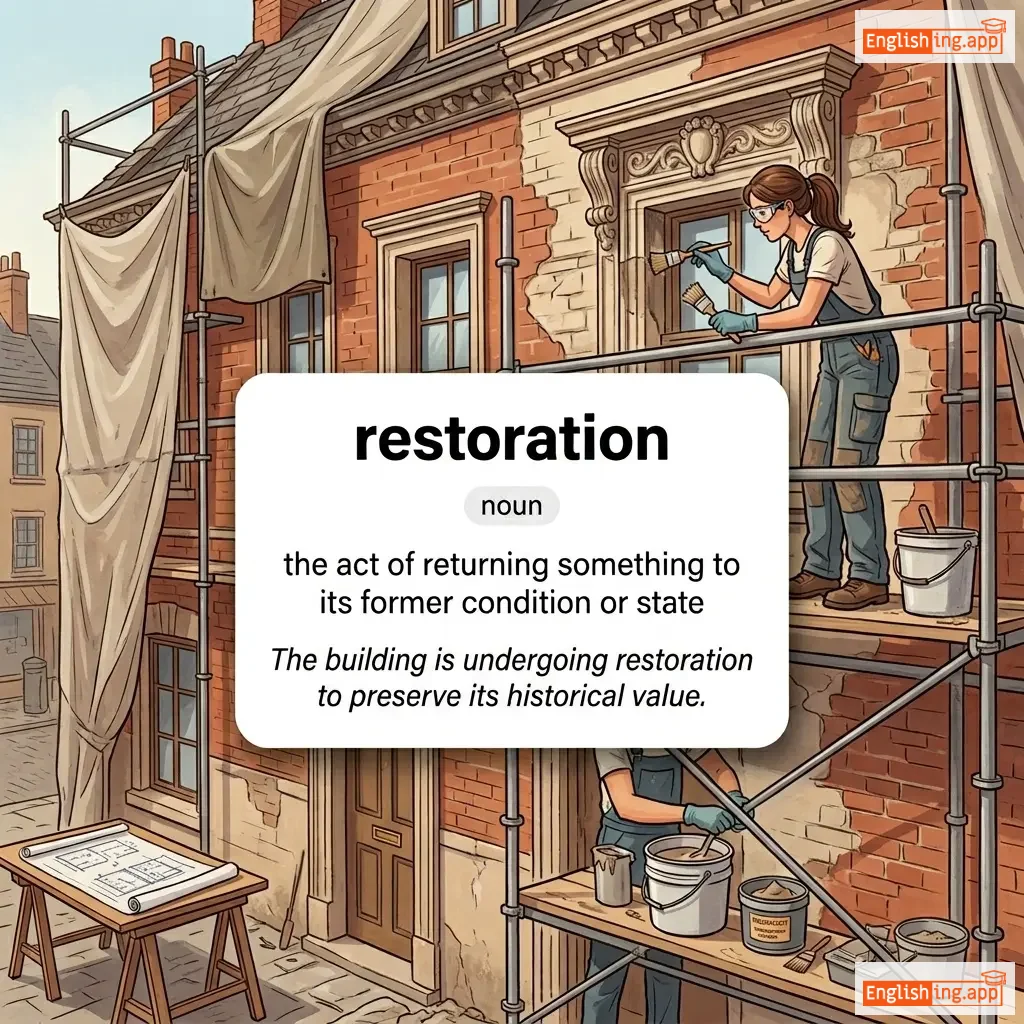
noun
/ˌrɛstəˈreɪʃən/
реставрация (restavratsiya)

the act of returning something to its former condition or state

"The building is undergoing restoration to preserve its historical value."
"Здание проходит реставрацию для сохранения его исторической ценности." (Zdanie prokhodit restavratsiyu dlya sokhraneniya ego istoricheskoy tsennosti.)
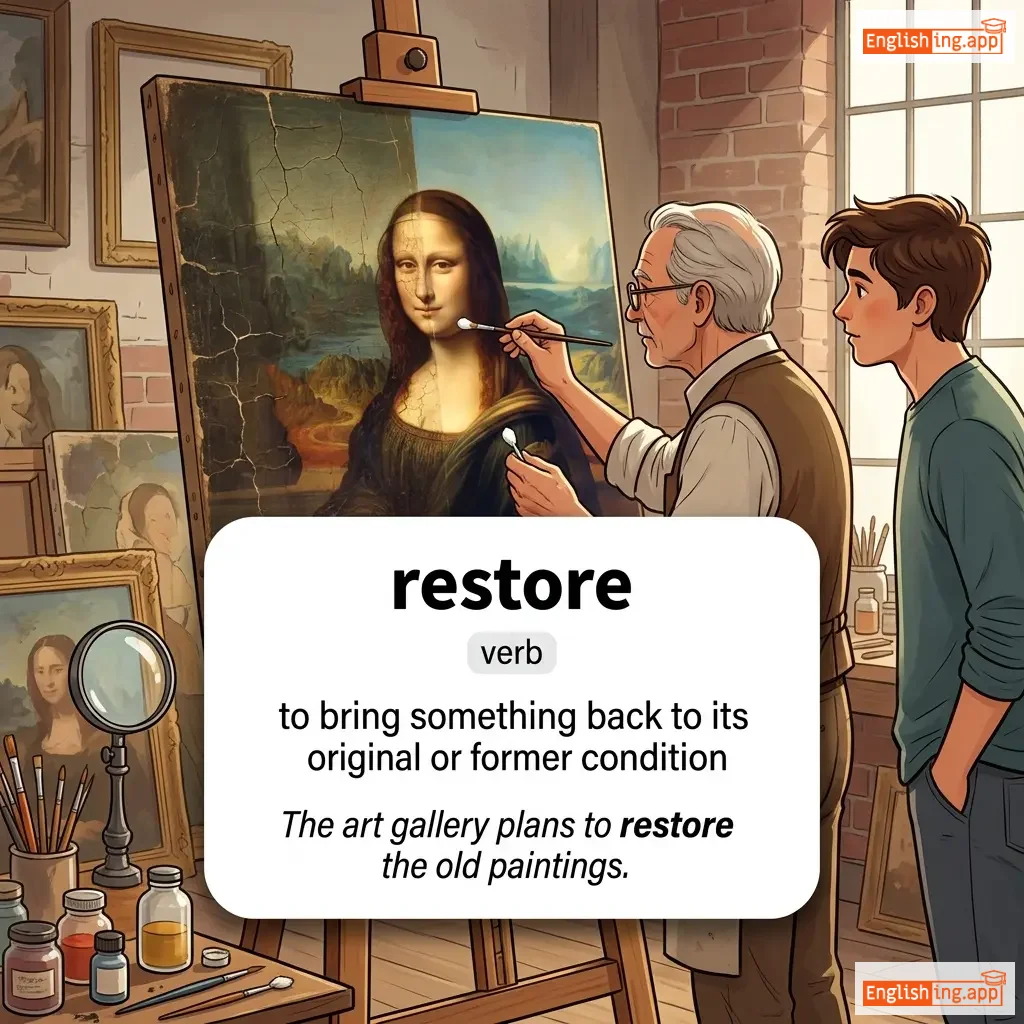
restore definition card — visual illustration of the meaning
verb
/rɪˈstɔː/
восстановить (vosstanovit')

to bring something back to its original or former condition

"The art gallery plans to restore the old paintings."
"Художественная галерея планирует восстановить старые картины." (Kudozhestvennaya galereya planirovet vosstanovit' starye kartiny.)
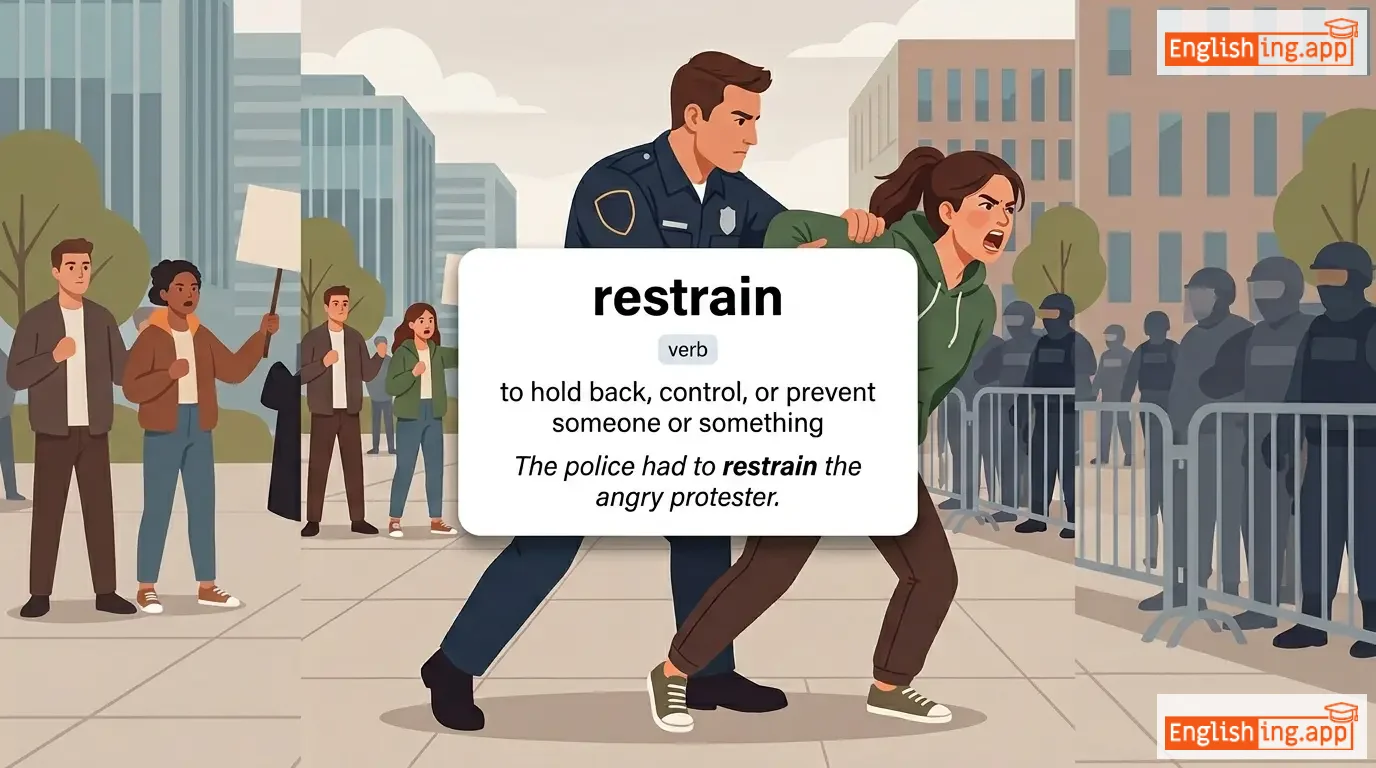
restrain definition card — visual illustration of the meaning
verb
/rɪˈstreɪn/
сдерживать (sderzhivat')

to hold back, control, or prevent someone or something

"The police had to restrain the angry protester."

"Полиция должна была сдержать агрессивного протестующего." (Politsiya dolzhna byla sderzhat' agressivnogo protestuyushchego.)
adjective
/rɪˈstreɪnd/
сдержанный (sderzhannyy)

characterized by reserve or self-control; held back

"Her restrained reaction surprised everyone."

"Её сдержанная реакция удивила всех." (Eyo sderzhannaya reaktsiya udivila vsekh.)
noun
/rɪˈstreɪnt/
сдержанность (sderzhannost)

the act of holding back or controlling; self-control

"He showed great restraint in not responding to the insult."

"Он проявил большую сдержанность, не ответив на оскорбление." (On proyavil bol'shuyu sderzhannost', ne otvetiv na oskorbleniye.)
verb
/rɪˈstrɪkt/
ограничивать (ogranichivat)

To limit the size, amount, or range of something.

"The government decided to restrict the use of plastic bags."

"Правительство решило ограничить использование пластиковых пакетов." (Pravitel'stvo reshilo ogranichit' ispol'zovanie plastikovykh pakетов.)
adjective
/rɪˈstrɪk.tɪd/
ограниченный или контролируемый; подверженный ограничениям (ogranichennyy ili kontrolirovannyy; podverzhennyy ogranicheniyam)

limited or controlled; subject to restrictions

"Access to this area is restricted to authorized personnel only."

"Доступ к этой области ограничен только для авторизованного персонала." (Dostup k etoy oblasti ogranichen tol'ko dlya avtorizovannogo personala.)
noun
/rɪˈstrɪkʃən/
ограничение (ogranichenie)

a rule or law that limits or controls something

"The new restrictions will affect the business hours."
"Новые ограничения повлияют на рабочие часы." (Novye ogranichenie povliyayut na rabochie chasy.)
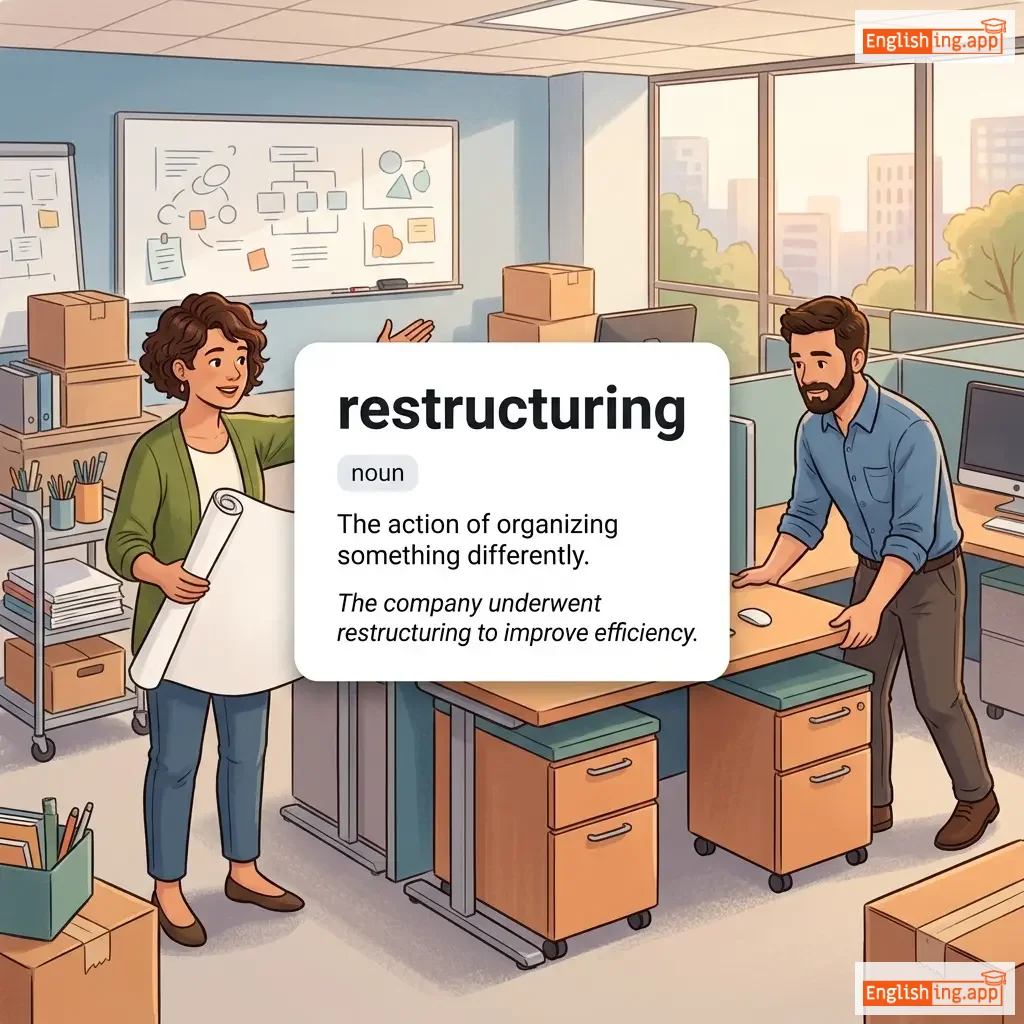
restructuring definition card — visual illustration of the meaning
noun
ˌriːˈstrʌk.tʃər.ɪŋ
реорганизация (reorganizatsiya)

The action of organizing something differently.

"The company underwent restructuring to improve efficiency."

"Компания прошла через реорганизацию для повышения эффективности." (Kompaniya proshla cherez reorganizatsiyu dlya povysheniya effektivnosti.)
noun
/rɪˈzʌlt/
результат (rezultat)

a consequence, effect, or outcome of something

"The result of the test was excellent."

"Результат теста был отличным." (Rezultat testa byl otlichnym.)
resume definition card — visual illustration of the meaning
verb, noun
/rɪˈzjuːm/ (verb), /ˈrɛzjʊmeɪ/ (noun)
возобновить / резюме (vozobnovit / rezjume)

to begin again after a pause; or a summary of one’s qualifications and work experience

"She resumed her studies after a two-year break."

"Она возобновила учебу после двухлетнего перерыва." (Ona vozobnovila uchebu posle dvukhletnego pereryva.)
noun
/rɪˈzʌmpʃən/
возобновление (vozobnovlenie)

The act of starting something again after a pause or interruption.

"The resumption of classes after the holidays brought excitement among students."

"Возобновление занятий после каникул принесло волн excitement среди студентов." (Vozobnovlenie zanyatiy posle kanikul prineslo volln excitement sredi studentov.)
verb
/rɪˈsɜːrdʒ/
возрождаться (vozrozhdatsya)

To rise, increase, or become active again after a decline.

"Interest in traditional crafts has begun to resurge."
"Интерес к традиционным ремеслам начал возрождаться." (Interes k traditsionnym remeslam nachal vozrozhdatsya.)
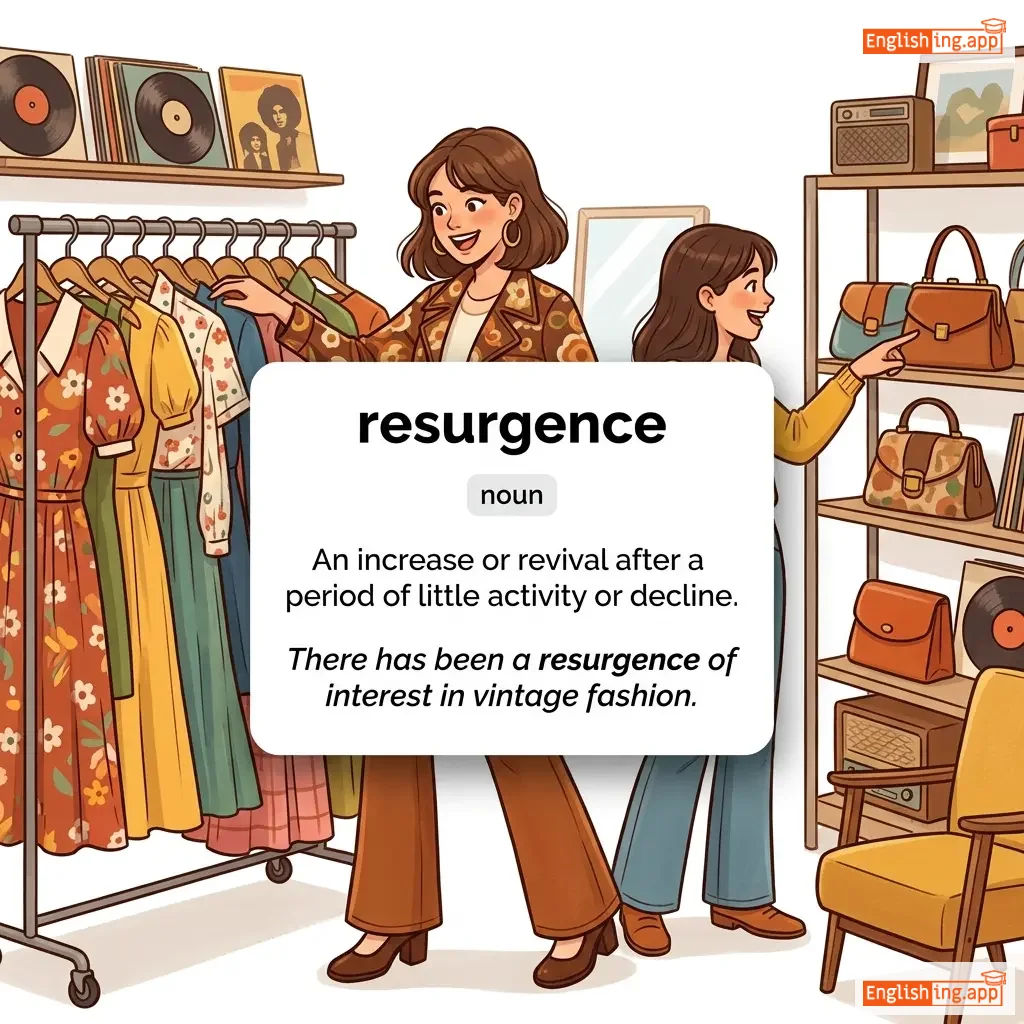
resurgence definition card — visual illustration of the meaning
noun
/rɪˈsɜːrdʒəns/
возрождение (vozrozhdeniye)

An increase or revival after a period of little activity or decline.

"There has been a resurgence of interest in vintage fashion."

"Наблюдается возрождение интереса к винтажной моде." (Nablyudaetsya vozrozhdeniye interesa k vintazhnoy mode.)
adjective
/rɪˈsɜːrdʒənt/
воскресающий (voskresayushchiy)

Becoming strong, active, or popular again.

"The resurgent economy gave hope to many businesses."

"Воскресающая экономика дала надежду многим бизнесам." (Voskrayushchaya ekonomika dala nadezhdu mnogim biznesam.)
verb
/ˌrɛzəˈrɛkt/
воскресить (voskresit)

To bring back to life or revive something from the past.

"The director decided to resurrect the old play for a new audience."

"Режиссер решил воскресить старую пьесу для новой аудитории." (Rezhissyor reshil voskresit' staruyu p'yesu dlya novoy auditorii.)
verb
/rɪˈsʌsɪteɪt/

to revive someone from unconsciousness or apparent death

"The doctors tried to resuscitate the patient after the heart attack."

noun, verb
/ˈriːteɪl/
розничная торговля (roznichnaya torgovlya)

the sale of goods to the public in small quantities for use or consumption rather than for resale

"The company specializes in the retail of clothing and accessories."

"Компания специализируется на розничной продаже одежды и аксессуаров." (Kompaniya spetsializiruetsya na roznichnoy torgovle odezhdy i aksessuarov.)
noun
/ˈriːteɪlər/
розничный продавец (roznichnyy prodavets)

a person or business that sells goods to consumers rather than to other businesses

"The retailer offers discounts on electronic products."

"Розничный продавец предлагает скидки на электронную продукцию." (Roznichnyy prodavets predlagaet skidki na elektronnuю produktsiyu.)
verb
/rɪˈteɪn/
удерживать (uderzhivat')

to keep possession of something

"The company decided to retain its experienced employees."

"Компания решила сохранить своих опытных сотрудников." (Kompaniya reshila soxranit' svoikh opytnykh sotrudnikov.)
noun
/rɪˈteɪnər/
аванс / ретейнер (avans / retayner)

a fee paid in advance to secure someone's services, or a device that holds something in place

"The lawyer asked for a retainer before taking the case."

"Адвокат потребовал аванс перед тем, как принять дело." (Advokat potreboval avans pered tem, kak prinjat' delo.)
verb
/rɪˈtælieɪt/
отомстить (otomstit')

to make an attack in return for a similar attack

"The army retaliated after the enemy attack."

"Армия отомстила после атаки противника." (Armiya otomstila posle ataki protivnika.)
noun
/rɪˌtæl.iˈeɪ.ʃən/
месть (mest')

the action of returning a military attack; counterattack; revenge for an injury or wrong

"The country threatened retaliation against any act of aggression."
"Страна пригрозила ответными мерами против любого акта агрессии." (Strana prigrozila otvetnymi merami protiv lyubogo akta agressii.)
retaliatory definition card — visual illustration of the meaning
adjective
/rɪˈtæl.i.ə.tɔːr.i/
репрессивный (repressivny)

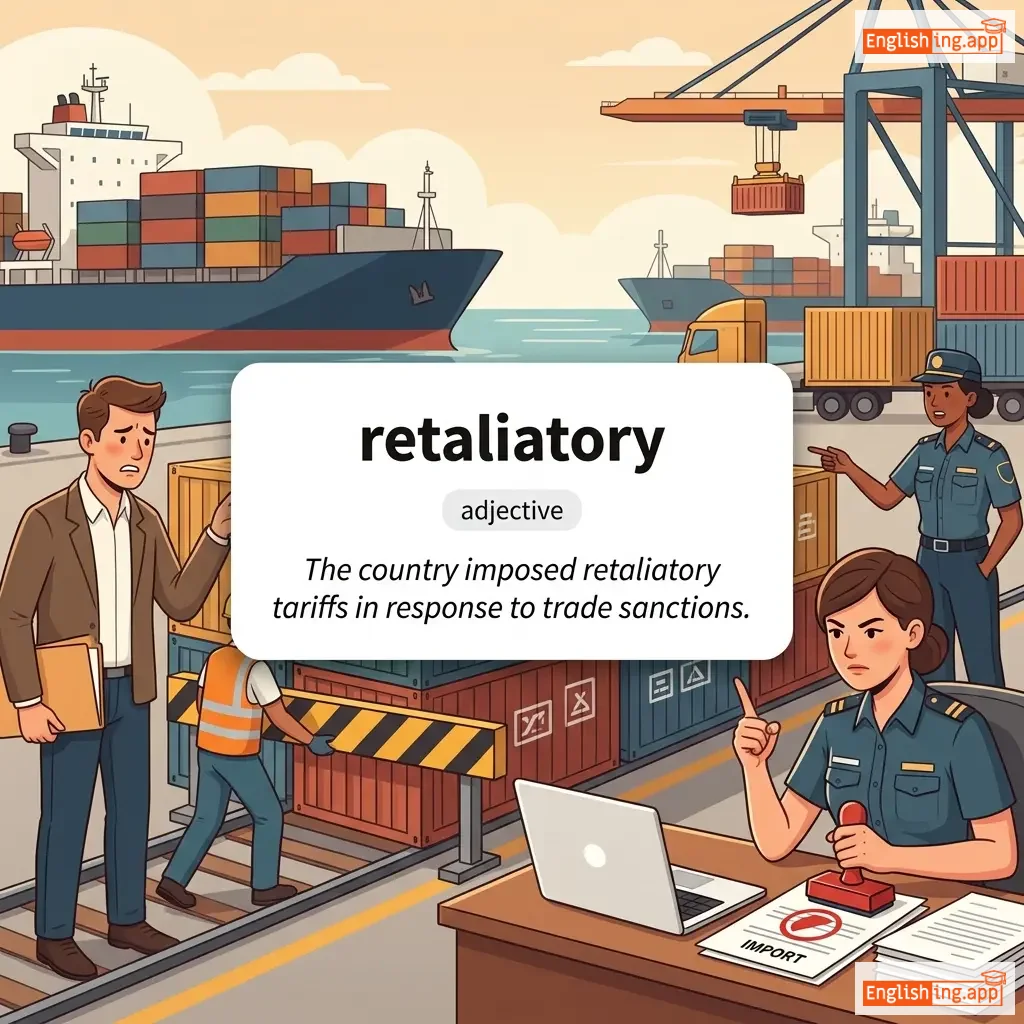
Taking action in response to another's action, characterized as punitive, revengeful, or counteractive.

"The country imposed retaliatory tariffs in response to trade sanctions."

"Страна ввела репрессивные тарифы в ответ на торговые санкции." (Strana vvela repressivnye tarify v otvet na torgovye sanktsii.)
verb
/rɪˈtɑːrd/
задерживать / замедлять (zaderzhivat' / zamedlyat')

to delay or slow down the progress of something

"Lack of funds may retard the development of the project."

"Недостаток средств может замедлить развитие проекта." (Nedostatok sredstv mozhet zamedlit' razvitie proyeka.)
verb
/rɛtʃ/
счастье (schastye)

to make the sound and movement of vomiting without bringing anything up

"The smell of spoiled food made him retch violently."
"Запах испорченной еды заставил его рвать." (Zapakh isporchennoy yedy zastavil ego rvati.)
retention definition card — visual illustration of the meaning
noun
/rɪˈtɛnʃən/
удержание (uderzhanie)

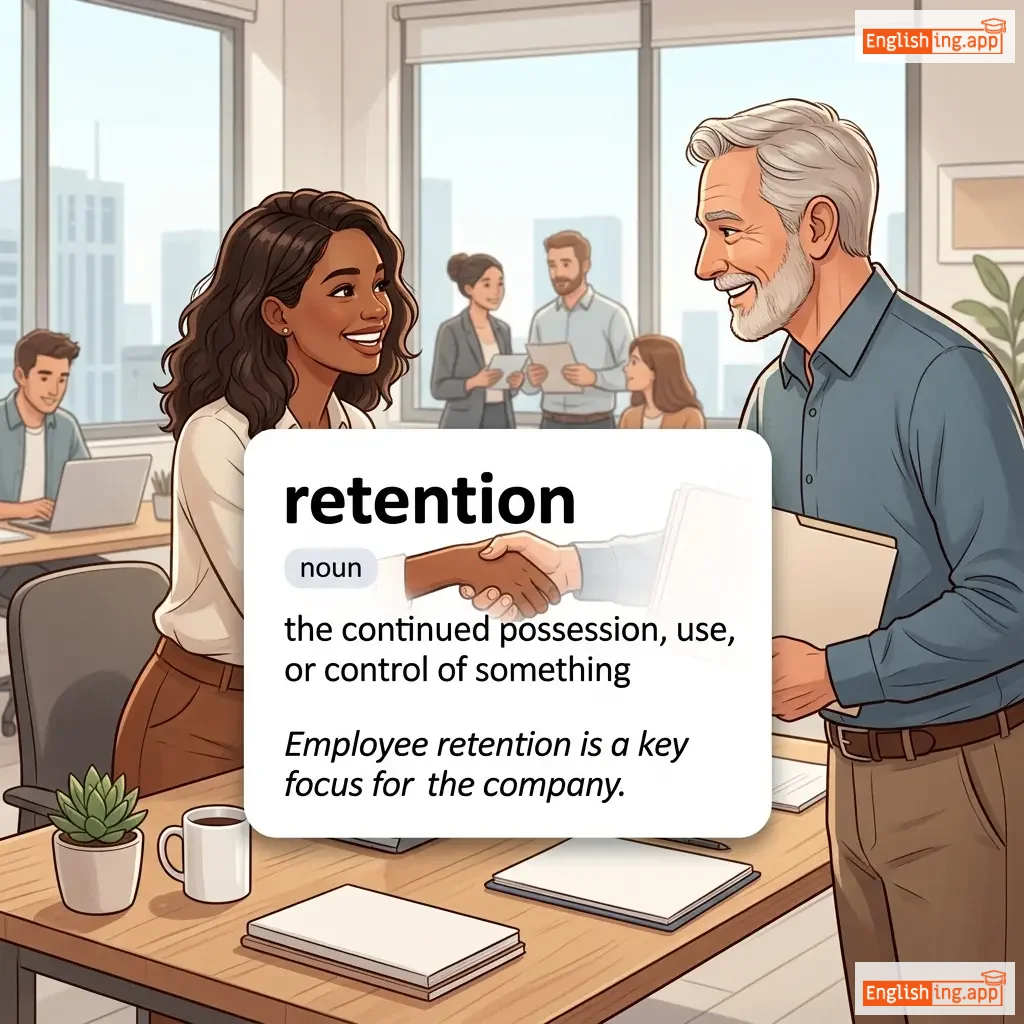
the continued possession, use, or control of something

"Employee retention is a key focus for the company."

"Удержание сотрудников является ключевым аспектом для компании." (Uderzhanie sotrudnikov yavljayetsya klyuchevym aspektom dlya kompanii.)
retentive definition card — visual illustration of the meaning
adjective
/rɪˈtɛntɪv/
запоминающий (zapominayushchiy)

having the ability to remember things easily or keep something for a long time

"She has a highly retentive memory."

"У нее очень хорошая память." (U nee ochen' khoroshaya pamyat'.)
noun
/ˈrɛtɪsəns/
сдержанность (sderzhannost)

the quality of being reserved or unwilling to speak freely

"His reticence made it difficult to know what he was thinking."
"Его сдержанность затрудняла понимание того, о чем он думал." (Yego sderzhannost' zatrudnyala ponimanie togo, o chem on dumal.)
reticent definition card — visual illustration of the meaning
adjective
/ˈrɛtɪsənt/
сдержанный (sderzhannyy)

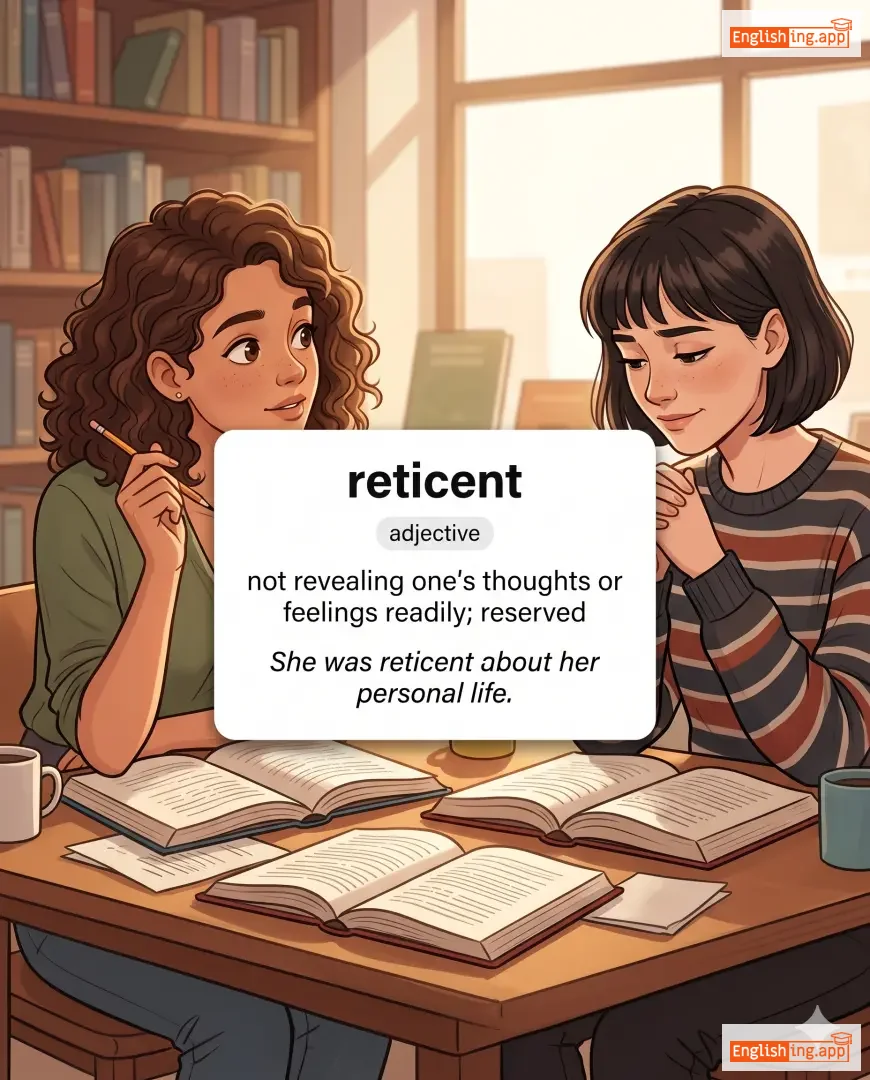
not revealing one's thoughts or feelings readily; reserved

"She was reticent about her personal life."

"Она была сдержанна относительно своей личной жизни." (Ona byla sderzhanna otnositel'no svoey lichnoy zhizni.)
adjective
/rɪˈtɪkjʊlət/
сетчатый (setchatyy)

Having a net-like pattern or structure.

"The leaf had a reticulate pattern of veins."

"Лист имел сетчатый рисунок вен." (List imel setchatyy risunok ven.)
noun
/ˈrɛtɪnjuː/
свита (svita)

A group of attendants or followers accompanying an important person.

"The king entered the hall followed by his retinue."

"Царь вошел в зал, за ним следовала его свита." (Tsar' voshel v zal, za nim sleduyushchaya ego svita.)