Словари

Словарь английского языка | Значения слов, определения и примеры

proposal definition card — visual illustration of the meaning
noun
/prəˈpəʊzəl/
предложение (predlozhenie)

a formal suggestion or plan put forward for consideration or discussion

"She submitted a proposal for the new project to the board."

"Она представила предложение по новому проекту совету." (Ona predstavila predlozhenie po novomu proyektu sovetu.)
propose definition card — visual illustration of the meaning
verb
/prəˈpoʊz/
предложить (predlozhit')

to suggest a plan or idea for consideration or discussion

"I propose that we meet tomorrow to discuss the project."

"Я предлагаю встретиться завтра, чтобы обсудить проект." (Ya predlagayu vstretit'sya zavtra, chtoby obsudit' proyekt.)
adjective
/prəˈpoʊzd/
предложенный (predlozhennyy)

suggested or put forward for consideration or discussion

"The proposed changes will improve the system."

"Предложенные изменения улучшат систему." (Predlozhennyye izmeneniya uluchshat sistemy.)
noun
/ˌprɒpəˈzɪʃən/
предложение, план (predlozhenie, plan)

A statement, idea, or plan put forward for consideration or discussion.

"The company made a business proposition to the investors."

"Компания сделала бизнес-пропозицию инвесторам." (Kompaniya sdelala biznes-predlozhenie investoram.)
verb
/prəˈpaʊnd/
предлагать (predlagat')

To put forward an idea, theory, or point for consideration.

"The professor propounded a new theory on climate change."
"Профессор предложил новую теорию изменения климата." (Professor predlozhil novuyu teoriya izmeneniya klimata.)
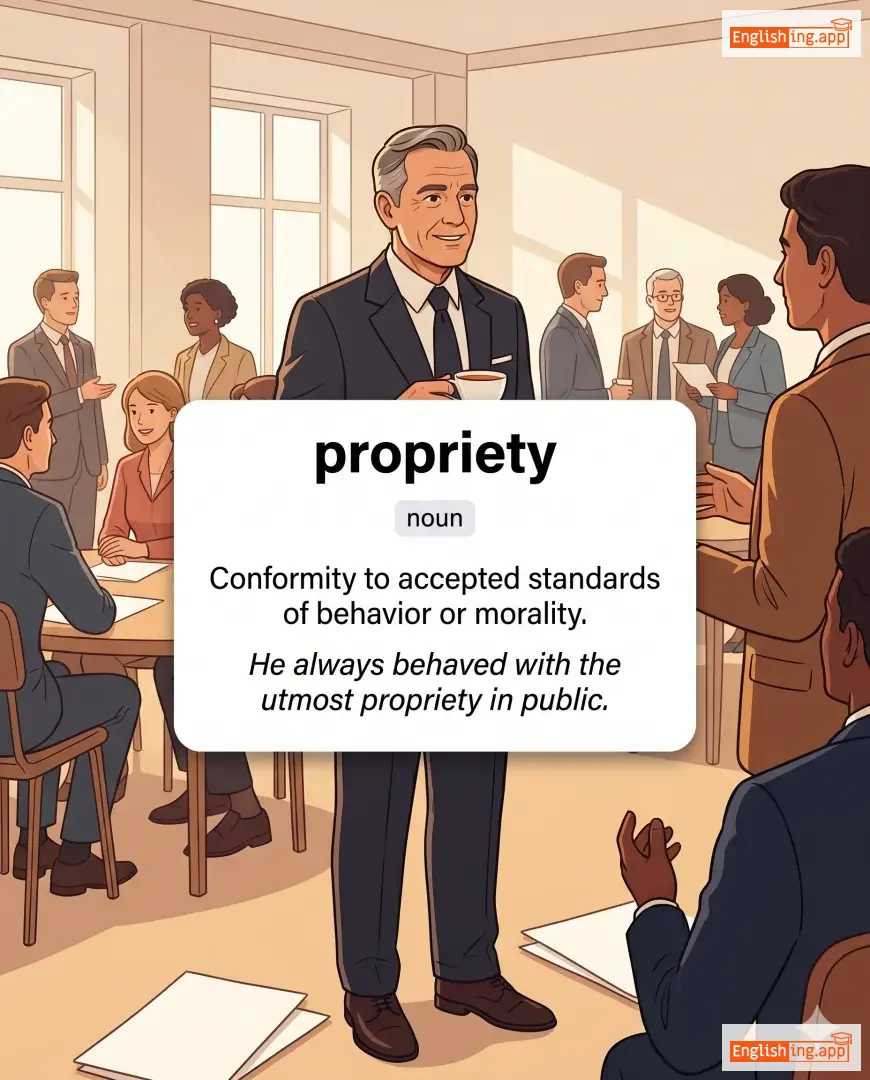
propriety definition card — visual illustration of the meaning
noun
/prəˈpraɪəti/
порядочность (poryadochnost)

Conformity to accepted standards of behavior or morality.

"He always behaved with the utmost propriety in public."
"Он всегда вел себя с величайшей порядочностью на публике." (On vsegda vel sebya s velichayshey poryadochnost'yu na publike.)
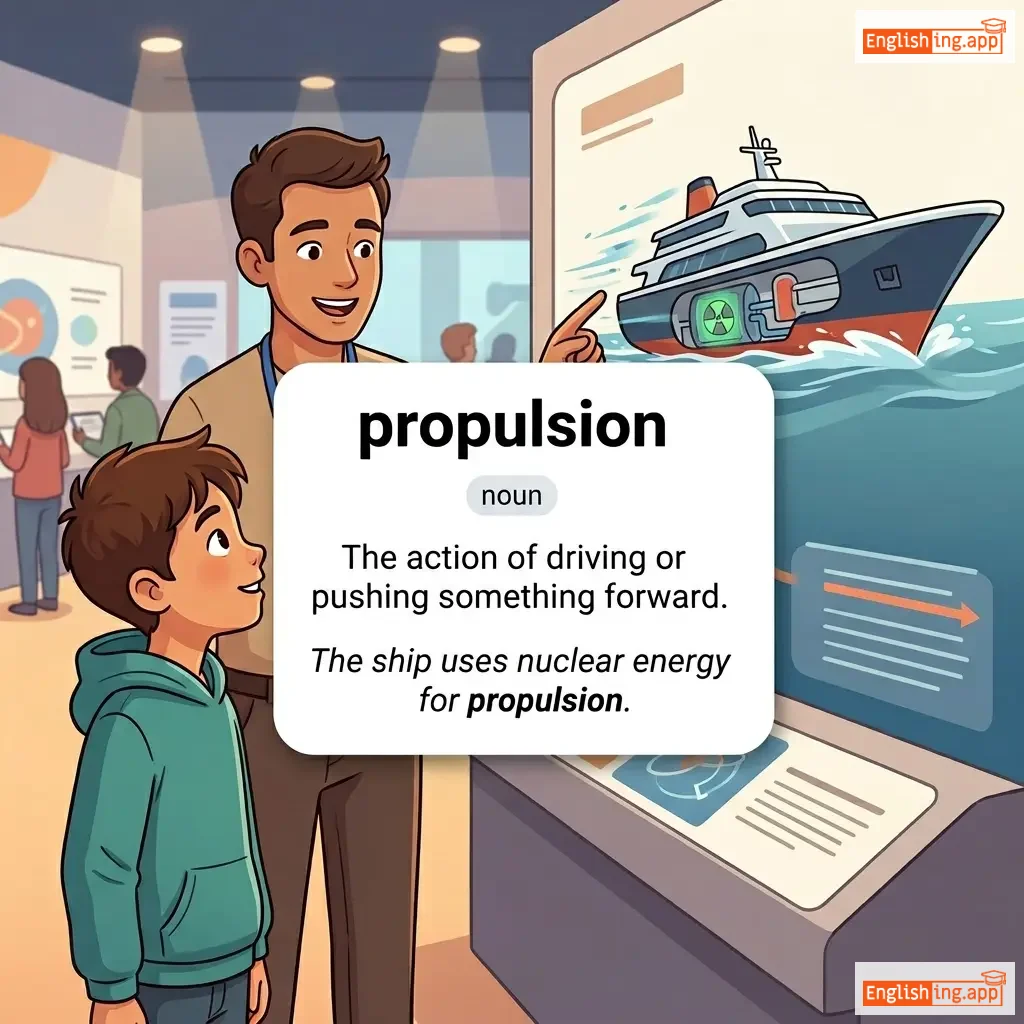
propulsion definition card — visual illustration of the meaning
noun
/prəˈpʌlʃən/
движущая сила (dvizhushchaya sila)

The action of driving or pushing something forward.

"The ship uses nuclear energy for propulsion."

"Корабль использует ядерную энергию для движения." (Korabl' ispol'zuyet yadernuu energiyu dlya dvizhena.)
adjective
/prəˈpʌlsɪv/
приводящий в движение (privoodyashchiy v dvizhene)

Having the power to drive or push something forward.

"The propulsive force of the rocket lifted it off the ground."

"Двигательная сила ракеты подняла ее с земли." (Dvigatelnaya sila rakety podnyala yeye s zemli.)
verb
/prəˈroʊɡ/
отсрочить заседание (otsrochit' zasedanie)

to discontinue a session of a parliament or assembly without dissolving it

"The president decided to prorogue parliament until the crisis was resolved."

"Президент решил отложить парламент до того, как кризис будет решен." (Prezident reshil otlozhit' parlament do togo, kak krizis budet reshen.)
adjective
/proʊˈzeɪ.ɪk/
прозаичный (prozaitchny)

ordinary, dull, or lacking imagination

"The teacher’s explanation was accurate but rather prosaic."

"Объяснение учителя было точным, но довольно прозаичным." (Ob'yasneniye uchitelya bylo tochnym, no dovol'no prozaichnym.)
noun
/proʊˈsiː.ni.əm/
просцениум (proscenium)

the part of a theater stage in front of the curtain; the arch framing the stage

"The actors bowed at the proscenium before leaving the stage."
"Актеры поклонились перед просцениумом, прежде чем покинуть сцену." (Akhtery poklonilis' pered prosceniumom, prezhde chem pokinut' stseny.)
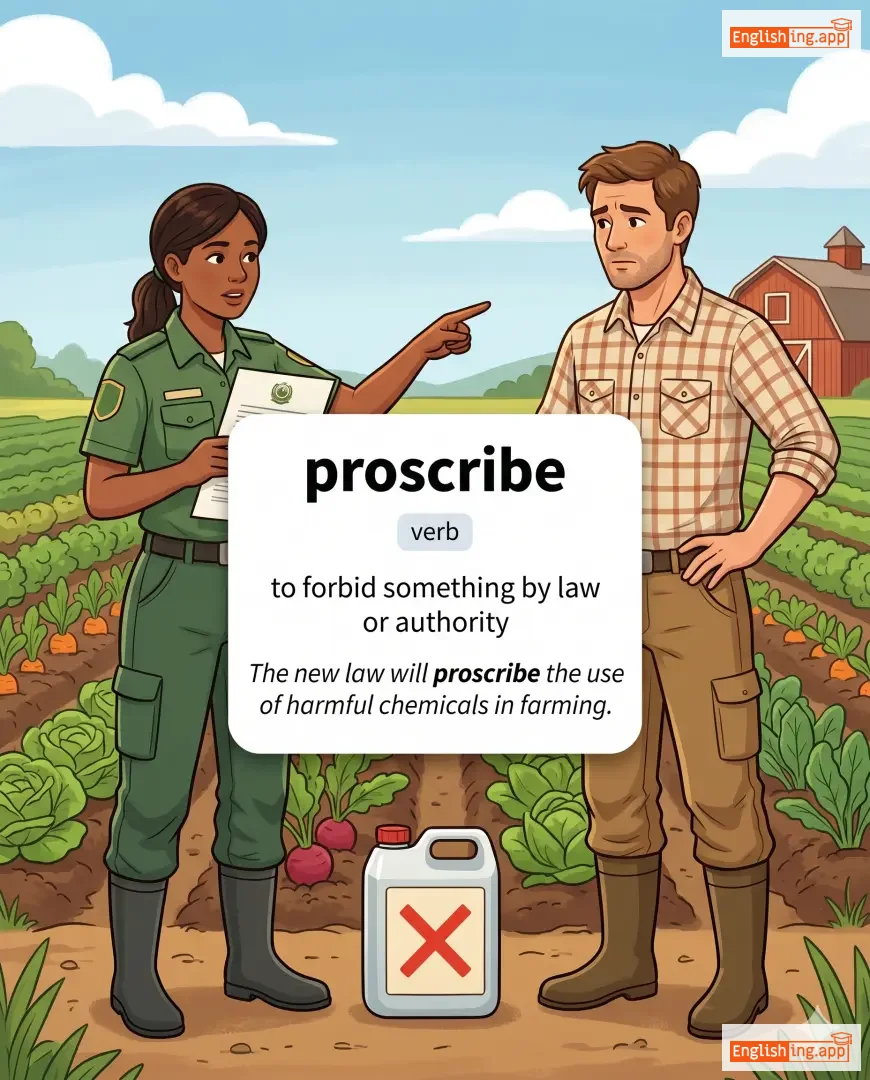
proscribe definition card — visual illustration of the meaning
verb
/proʊˈskraɪb/
запрещать (zapreshchat)

to forbid something by law or authority

"The new law will proscribe the use of harmful chemicals in farming."

"Новый закон запретит использование вредных химикатов в сельском хозяйстве." (Novyy zakon zapretit ispol'zovaniye vrednykh khimikov v selskom khozyaystve.)
noun
/proʊˈskrɪp.ʃən/
запрещение (zapreshchenie)

the act of forbidding something, especially by law

"The proscription of child labor is an important human rights achievement."

"Запрещение детского труда является важным достижением прав человека." (Zapreshchenie detskogo truda yavylyaetsya vazhnym dostizheniem prav cheloveka.)
verb
/ˈprɒsɪkjuːt/
предъявить обвинение (predyavit obvinenie)

to institute legal proceedings against someone

"The lawyer decided to prosecute the case after gathering sufficient evidence."

"Адвокат решил возбудить дело после сбора достаточных доказательств." (Advokat reshil vozbudit delo posle sbora dostatochnykh dokaza-tel'stv.)
noun
/ˌprɒsɪˈkjuːʃən/
обвинение (obvinienie)

The act of bringing a criminal charge against someone and pursuing legal action in court.

"The prosecution presented strong evidence against the defendant."

"Обвинение представило убедительные доказательства против обвиняемого." (Obvinienie predstavylo ubeditel'nye dokazatel'stva protiv obvinyaemogo.)
noun
/ˈprɑsɪˌkjuːtər/
прокурор (prokuror)

a lawyer who represents the government in criminal cases

"The prosecutor argued that the defendant was guilty of the crime."

"Прокурор утверждал, что обвиняемый виновен в преступлении." (Prokuror utverzhdal, chto obvinyaemyy vinoven v prestuplenii.)
noun
/ˈprɒsɪlaɪt/
просветитель (proselyte)

A person who has converted from one belief, opinion, or religion to another.

"She became a proselyte after converting to a new faith."

"Она стала просветителем после того, как приняла новую веру." (Ona stala proselyte posle togo, kak prinyala novuyu veru.)
verb
/ˈprɒsəˌlaɪtaɪz/
пытаться обратить (pytat'sya obratit')

To try to persuade someone to convert to a different belief or religion.

"They tried to proselytize the villagers with their new ideas."

"Они пытались проселитизировать жителей деревни своими новыми идеями." (Oni pytalis' proselytizirovat' zhiteley derevni svoimi novymi ideyami.)
noun
/ˈprɒsədi/
просодия (prosodiya)

The patterns of rhythm and sound used in poetry and speech.

"The professor explained how prosody affects the mood of a poem."

"Профессор объяснил, как просодия влияет на настроение стихотворения." (Professor obyasnil, kak prosodiya vliyayet na nastroenie stikhotvoreniya.)
prospect definition card — visual illustration of the meaning
noun
/ˈprɒspɛkt/
перспектива (perspektiva)

The possibility or likelihood of some future event occurring.

"The prospect of traveling abroad excited her."

"Перспектива путешествия за границу взволновала её." (Perspektiva puteshestviya za granitsu vzvolnovala yeyo.)
adjective
/prəˈspɛktɪv/
перспективный (perspektivny)

likely or expected to happen in the future; potential

"The company is meeting with prospective clients next week."

"Компания встретится с перспективными клиентами на следующей неделе." (Kompaniya vstretitsya s perspektivnymi klientami na sleduyushchey nedele.)
noun
/ˈprɒspɛktər/
поискатель минералов (poiskatel' mineralov)

a person who searches for mineral deposits, especially gold

"The prospector spent years in the mountains searching for gold."

"Проспектор провел годы в горах, ища золото." (Prospektor provel gody v gorakh, ishchya zoloto.)
prospects definition card — visual illustration of the meaning
noun
/ˈprɒs.pekts/
перспективы (perspektivy)

The possibility or likelihood of some future event occurring.

"The prospects for growth look promising."

"Перспективы роста выглядят обещающими." (Perspektivy rosta vyglyadyat obeshchayushchimi.)
noun
/prəˈspɛktəs/
проспект (prospekt)

a printed document that advertises or describes a school, business, or investment offering

"The university sent out a prospectus to attract new students."

"Университет отправил проспект, чтобы привлечь новых студентов." (Universitet otpravil prospekt, chtoby privlech' novykh studentov.)
verb
/ˈprɒspər/
преуспевать (preuspevat)

to succeed or flourish, especially in financial or business matters

"With hard work and determination, she managed to prosper in her career."

"С упорным трудом и решимостью, она смогла преуспеть в своей карьере." (S upornym trudom i reshimost'yu, ona smogla preuspet' v svoey kar'ere.)
prosperity definition card — visual illustration of the meaning
noun
/prɒˈspɛrɪti/
процветание (protsvetanie)

the state of being successful, especially financially

"Education is often seen as the key to prosperity."

"Образование часто считается ключом к процветанию." (Obrazovanie chasto schitaetsya klyuchom k protsvetaniyu.)
adjective
/ˈprɒspərəs/
процветающий (prosperayushchiy)

successful in material terms; flourishing financially or in general well-being

"The town became prosperous after the new trade route opened."

"Город стал процветающим после того, как открылась новая торговая дорога." (Gorod stal protsvetyvayushchim posle togo, kak otkrylas' novaya torgovaya doroga.)
adjective/verb
/ˈprɒstreɪt/
поверженный (poverzhennyy)

lying stretched out on the ground with one's face downward, often as a sign of submission or exhaustion

"He lay prostrate on the ground after the long battle."

"Он упал поверженным на землю после долгой битвы." (On upal poverzhennym na zemlyu posle dolgoy bitvy.)
protagonist definition card — visual illustration of the meaning
noun
/prəˈtæɡənɪst/
протагонист (protagonist)

the main character or leading figure in a story, drama, or other work

"The protagonist of the novel struggles with her inner conflicts."

"Протагонист романа борется со своими внутренними конфликтами." (Protagonist romana boretsya so svoimi vnutrennimi konfliktami.)
adjective
/ˈproʊtiən/
многообразный (mnogobrazny)

tending or able to change frequently or easily; versatile

"She is a protean artist who experiments with many styles."
"Она многогранная художница, которая экспериментирует с разными стилями." (Ona mnogogrannaya khudozhnitsa, kotoraya eksperimentiruyet s raznymi stilyami.)
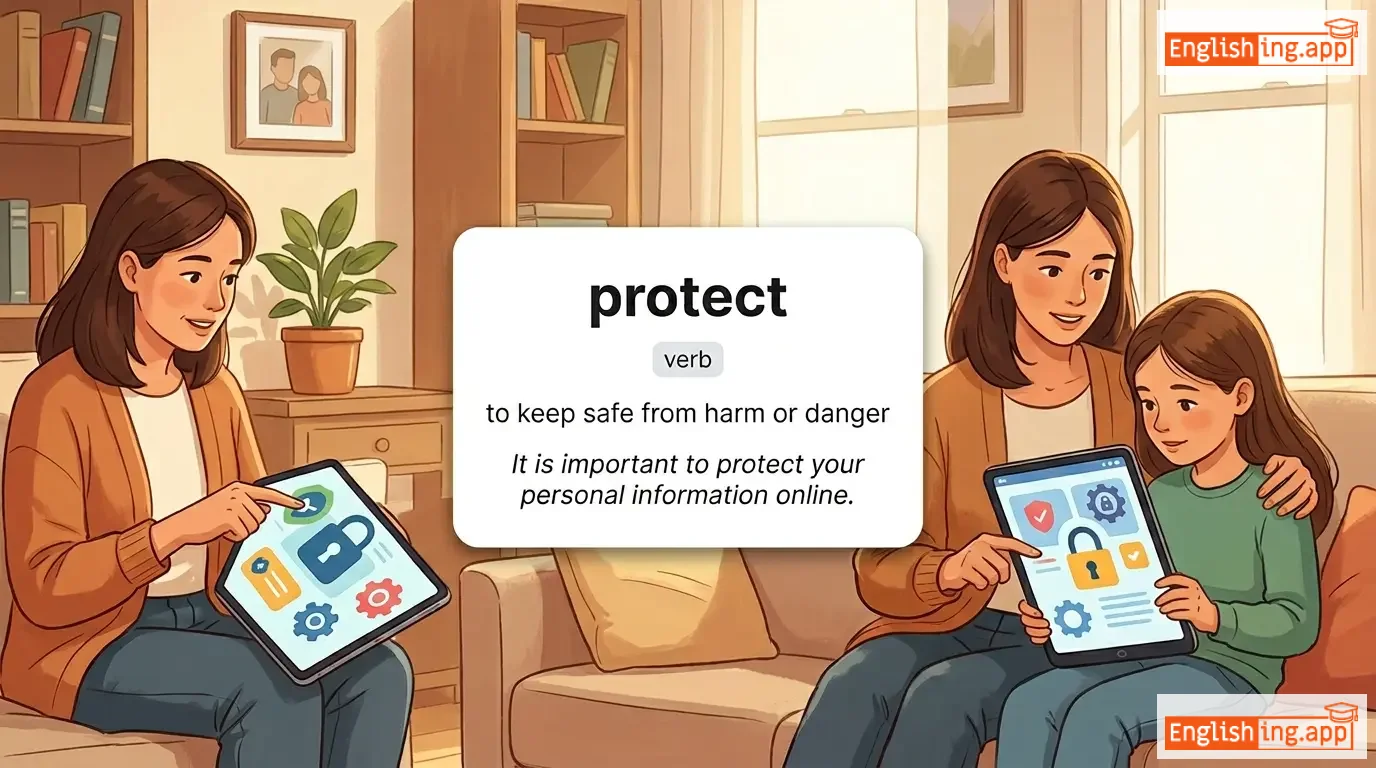
protect definition card — visual illustration of the meaning
verb
/prəˈtɛkt/
защищать (zashchishchat')

to keep safe from harm or danger

"It is important to protect your personal information online."
"Важно защитить вашу личную информацию в Интернете." (Vazhno zashchitit' vashu lichnuyu informatsiyu v internete.)
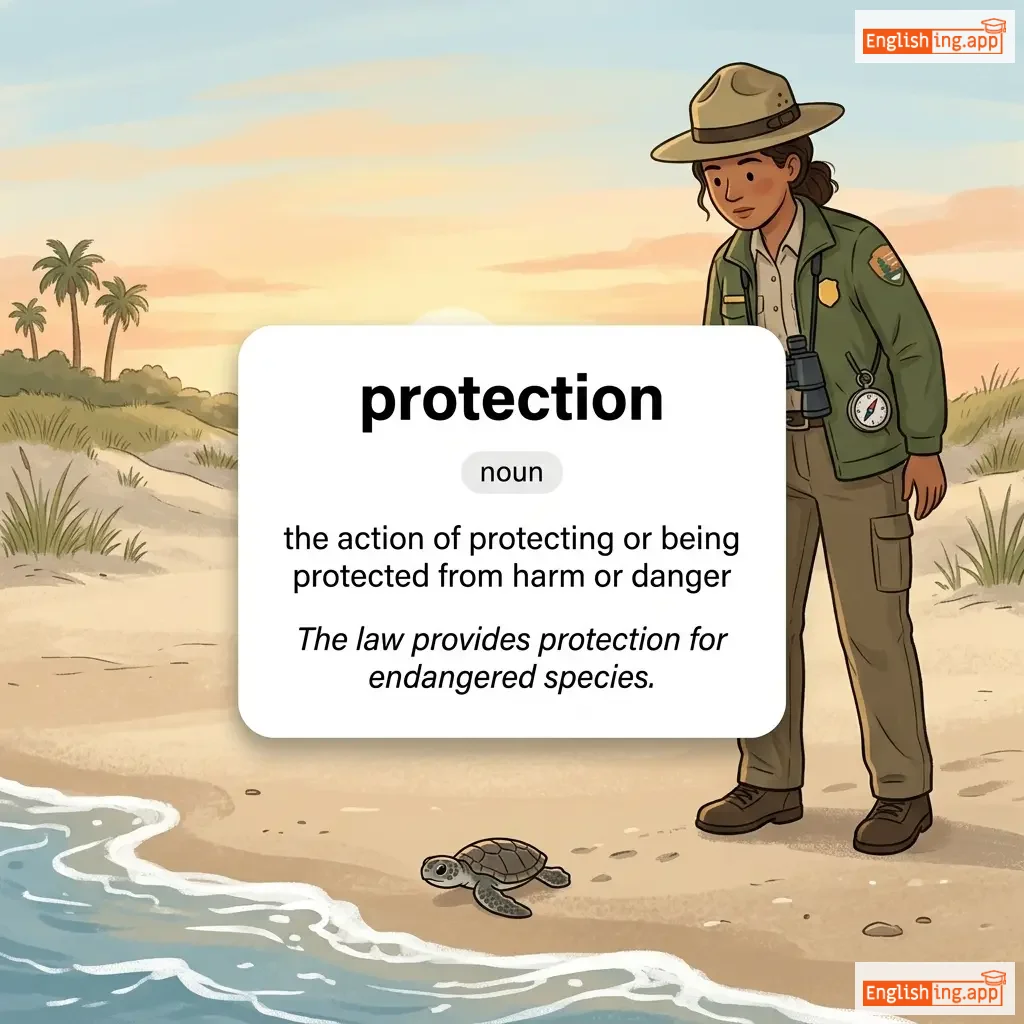
protection definition card — visual illustration of the meaning
noun
/prəˈtɛkʃən/
счастье (schastye)

the action of protecting or being protected from harm or danger

"The law provides protection for endangered species."
"Она не могла скрыть свое счастье, когда получила награду." (Ona ne mogla skryt' svoe schast'ye, kogda poluchila nagradu.)
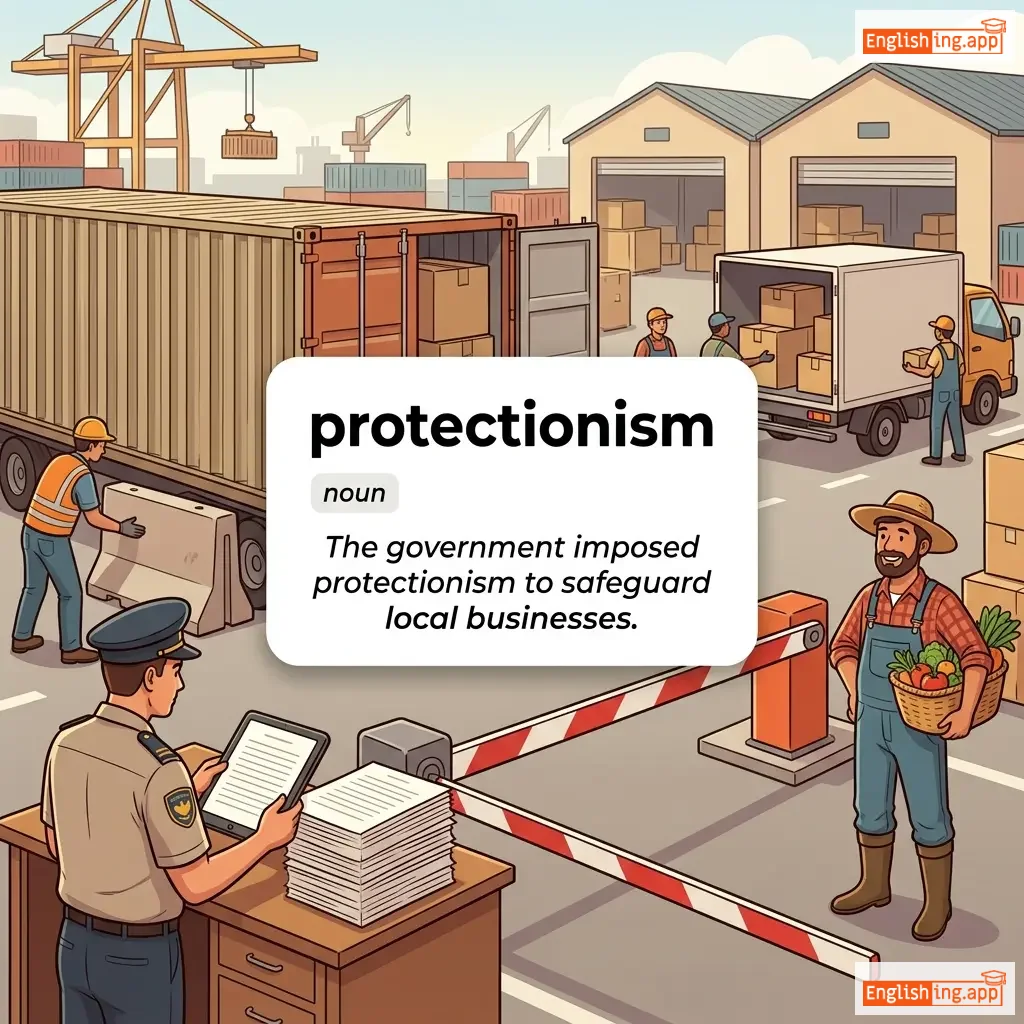
protectionism definition card — visual illustration of the meaning
noun
/prəˈtɛk.ʃəˌnɪz.əm/
протекционизм (proteksionizm)

A trade policy that restricts imports to safeguard domestic industries through trade restriction, economic nationalism, or isolationism.

"The government imposed protectionism to safeguard local businesses."

"Правительство ввело протекционизм, чтобы защитить местные предприятия." (Pravitelstvo vvelo protektsionizm chtoby zashchistit mestnye predpriyatiya.)
adjective
/prəˈtɛktɪv/
защитный (zashchitnyy)

giving or capable of giving protection; shielding from harm or danger

"She wore a protective helmet while riding her bike."

"Она носила защитный шлем, когда каталась на велосипеде." (Ona nosila zashchitnyy shlem, kogda katalas' na velosipede.)
noun
/prəˈtɛktər/
защитник (zashchitnik)

a person or thing that protects someone or something

"The dog was seen as the family's protector."

"Собаку воспринимали как защитника семьи." (Sobaku vosprinimali kak zashchitnika sem'i.)
noun
/prəˈtɛktərət/
протекторат (protektorat)

A state that is controlled and protected by another.

"The small country became a protectorate of the empire."

"Маленькая страна стала протекторатом империи." (Malenkaya strana stala protektoratom imperii.)
noun
/ˈproʊtəˌʒeɪ/
протеже (proteje)

a person who is guided and supported by an older and more experienced person

"The young artist was the protege of a famous painter."

"Молодой художник был протеже известного художника." (Molodoy khudozhnik byl protezhe izvestnogo khudozhnika.)
noun
/ˈproʊtiːn/
белок (belok)

a molecule composed of amino acids essential for bodily functions

"Proteins are essential for building and repairing tissues in the body."
"Белки необходимы для построения и восстановления тканей организма." (Belki neobkhodimy dlya postroeniya i vosstanovleniya tkani organizma.)
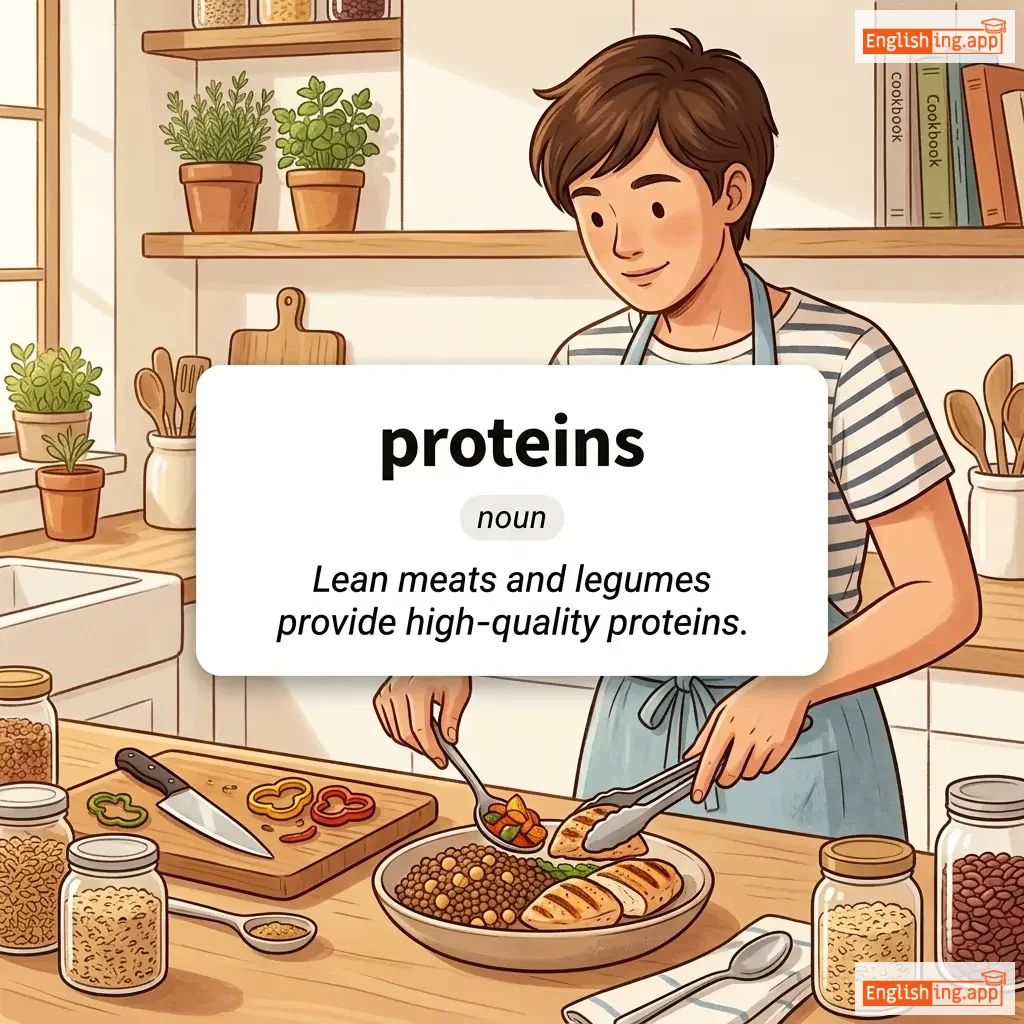
proteins definition card — visual illustration of the meaning
noun
/ˈprəʊ.tiːnz/
протеины (proteiny)

Large biomolecules consisting of amino acids that perform essential functions in living organisms, including building and repairing tissues.

"Lean meats and legumes provide high-quality proteins."
"Постные мясо и бобовые обеспечивают высококачественные белки." (Postnye myaso i bobovyye obespechivayut vysokokachestvennyye belki.)
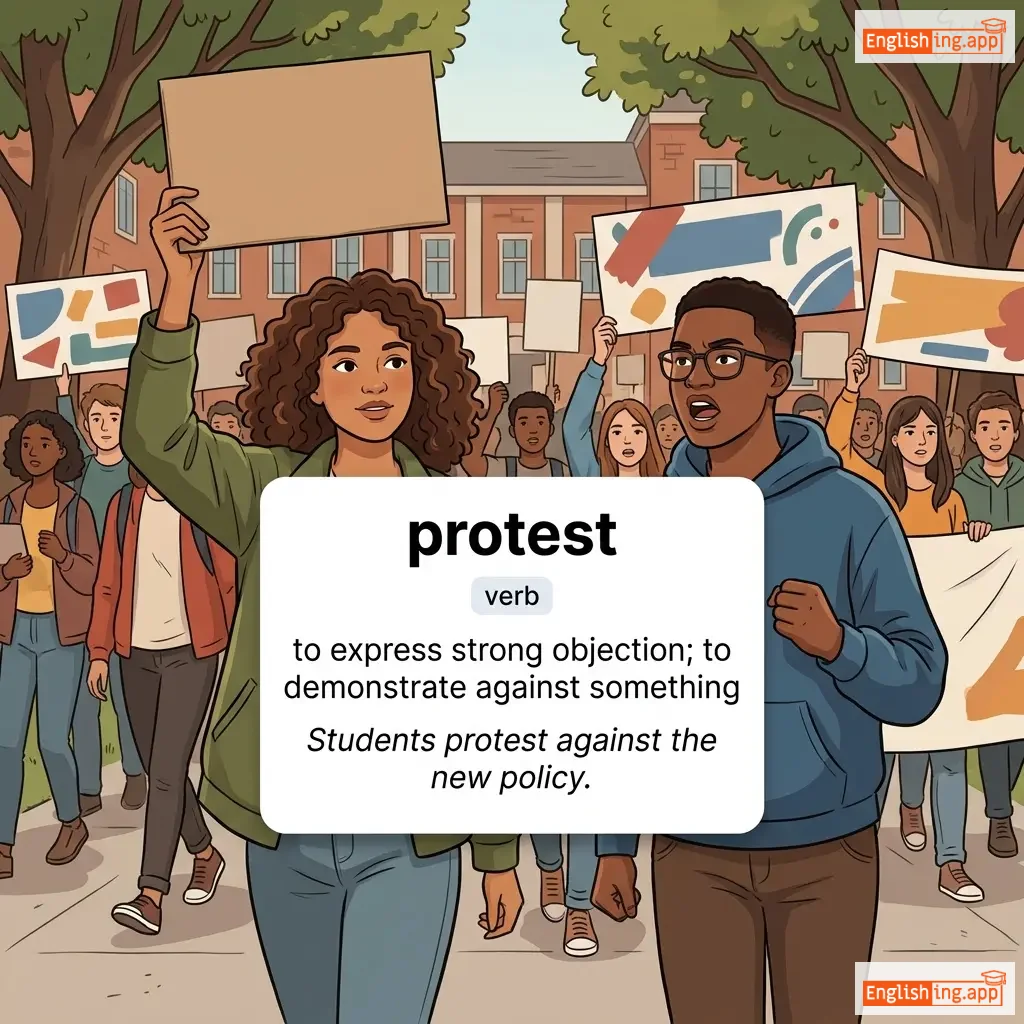
protest definition card — visual illustration of the meaning
noun
/ˈproʊtɛst/
протест (protest)

a statement or action expressing disapproval of or objection to something.

"Thousands gathered in the square to protest the new law."

"Тысячи собрались на площади, чтобы протестовать против нового закона." (Tysyachi sobralis' na ploshchadi, chtoby protestovat' protiv novogo zakona.)
noun
/ˈprɑːtɪstənt/
протестант (protestant)

a member of the Christian church that separated from the Roman Catholic Church during the Reformation

"Martin Luther was a key figure in the Protestant Reformation."

"Мартин Лютер был ключевой фигурой в протестантской Реформации." (Martin Lyuter byl klyuchevoy figuroy v protestantskoy Reformatsii.)
noun
/prəˈtɛstər/
протестующий (protestuyushchiy)

a person who takes part in a protest or demonstration

"The protester spoke passionately about the cause."

"Протестующий страстно говорил о причине." (Protestuyushchiy strastno govoril o prichine.)
noun
/ˈproʊtəkɔːl/
протокол (protokol)

an official procedure or system of rules

"The security team followed strict protocol during the event."

"Команда безопасности следовала строгому протоколу во время мероприятия." (Komanda bezopasnosti sledovala strohmu protokolu vo vremya meropriyatiya.)
noun
/ˈproʊtoʊˌmɑːrtɚ/
первый мученик (pervyy muchenik)

The first martyr in a cause or religion, often referring to the first Christian martyr.

"St. Stephen is known as the protomartyr of Christianity."

"Святой Стефан известен как протоматир христианства." (Svyatoy Stefan izvesten kak protomartyr khristianstva.)
noun
/ˈproʊtoʊˌplæzəm/
протоплазма (protoplazma)

The living substance inside a cell, including the cytoplasm and nucleus.

"Scientists observed the movement of protoplasm under the microscope."

"Учёные наблюдали за движением протоплазмы под микроскопом." (Uchyonye nablyudali za dvizhением protoplazmy pod mikroskopom.)
noun
/ˈproʊtəˌtaɪp/
прототип (prototip)

The first model or version of something, used as a sample for testing or improvement.

"The company built a prototype of the new smartphone before mass production."

"Компания построила прототип нового смартфона до массового производства." (Kompaniya postroila prototip novogo smartfona do massovogo proizvodstva.)
verb
/proʊˈtrækt/
продлить (prodlyit)

To prolong or extend in time or duration.

"Negotiations were protracted for several months."

"Переговоры продлились несколько месяцев." (Peregovory prodlilis' neskol'ko mesyatsev.)
protracted definition card — visual illustration of the meaning
adjective
/prəˈtræktɪd/
затянувшийся (zatyanuvshiysya)

Lasting for a long time or longer than expected.

"The negotiation turned into a protracted process."

"Переговоры превратились в затянувшийся процесс." (Peregovory prevratilis' v zatyanuvshiysya protsess.)
verb
/proʊˈtruːd/
выступать (vystupat)

To stick out or extend beyond a surface.

"A nail was protruding from the wooden board."

"Гвоздь выступал из деревянной доски." (Gvozdy vystupal iz derevyannoy doski.)
noun
/prəˈtruːʒən/
выступ (vystup)

Something that sticks out or projects from a surface.

"The protrusion on the wall made it difficult to move the furniture."

"Выступ на стене затруднил перемещение мебели." (Vystup na stene zatrudnil peremeshchenie mebeli.)