Словари

Словарь английского языка | Значения слов, определения и примеры

adjective
/prəˈdɪdʒəs/
колоссальный (kolossal'nyy)

remarkably or impressively great in extent, size, or degree

"The team made a prodigious effort to complete the project on time."

"Команда сделала колоссальные усилия, чтобы завершить проект вовремя." (Komanda sdelala kolossal'nye usiliya, chtoby zavershit' proyekt vovremya.)
noun
/ˈprɒdɪdʒi/
вундеркинд (vunderkind)

a person, especially a young one, with exceptional talents or abilities

"Mozart was a child prodigy in music."

"Моцарт был детским вундеркиндом в музыке." (Mozart byl detskim vunderkindom v muzike.)
verb
/prəˈdjuːs/
производить (proizvodit')

to make or manufacture from components or raw materials

"They produce high-quality goods."

"Они производят высококачественные товары." (Oni proizvodjat vysokokachestvennye tovarı.)
noun
/prəˈdjuːsə/
продюсер (prodyuser)

a person, company, or country that makes or grows something

"He is a film producer."

"Он продюсер фильма." (On prodyuser fil'ma.)
noun
/ˈprɒdʌkt/
продукт (produkt)

an item or substance that is manufactured or produced

"This is a new product launched by the company."

"Это новый продукт, который был выпущен компанией." (Eto novyy produkt, kotoryy byl vypushchen kompaniyey.)
noun
/prəˈdʌkʃən/
производство (proizvodstvo)

the process of manufacturing or creating something

"The production of this film took over a year."

"Производство этого фильма заняло больше года." (Proizvodstvo etogo fil'ma zanyalo bol'she goda.)
adjective
/prəˈdʌktɪv/
продуктивный (produktyvny)

producing or achieving a significant amount of results, work, or output

"She had a very productive day at the office."

"У неё был очень продуктивный день в офисе." (U neyo byl ochen' produktivnyy den' v ofise.)
productivity definition card — visual illustration of the meaning
noun
/ˌprɒdʌkˈtɪvɪti/
продуктивность (produktivnost)

the rate at which work is done or goods are produced, especially in relation to the time and resources used

"Improving employee productivity is vital for business growth."

"Увеличение производительности сотрудников жизненно важно для роста бизнеса." (Uvelichenie proizvoditel'nosti sotrudnikov zhiznenno vazhno dlya rosta biznesa.)
adjective
/prəˈfeɪn/
профанный, неуважительный (profnij, neuvazhitel'nyj)

showing disrespect or contempt for sacred things; irreverent or vulgar

"His jokes were considered too profane for the ceremony."

"Его шутки были признаны слишком неприличными для церемонии." (Ego shutki byli priznany slishkom neprilichnymi dlya tseremonii.)
profess definition card — visual illustration of the meaning
verb
/prəˈfes/
заявлять (zayavlyat)

to declare or claim openly; to state one's belief

"He professes his love for classical music."

"Он заявляет о своей любви к классической музыке." (On zayavlyaet o svoey lyubvi k klassicheskoy muzyke)
noun
/prəˈfɛʃən/
профессия (professiya)

a paid occupation, especially one requiring specialized education or training

"Medicine is considered a noble profession."

"Медицина считается благородной профессией." (Meditsina schitayetsya blagorodnoy professiey.)
adjective
/prəˈfɛʃənl/
профессиональный (professional'nyy)

relating to a job that requires special training or education

"She is a professional dancer who performs internationally."

"Она профессиональная танцовщица, которая выступает на международной арене." (Ona professional'naya tantsovshchitsa, kotoraya vystupaet na mezhdunarodnoy arene.)
noun
/prəˈfɛsər/
профессор (professor)

a senior teacher or academic at a college or university

"The professor explained the theory clearly."

"Профессор четко объяснил теорию." (Professor chetko ob'yasnil teoriyu.)
verb
/ˈprɒfər/
предложить, представить (predlozhit, predstavit)

to offer something for acceptance; to present

"She proffered her hand as a sign of friendship."

"Она протянула свою руку как знак дружбы." (Ona protyanula svoju ruku kak znak druzhby.)
proficiency definition card — visual illustration of the meaning
noun
/prəˈfɪʃənsi/
компетенция (kompetenciya)

a high degree of skill or expertise in a particular field

"She has great proficiency in English grammar."

"У неё высокая компетентность в английской грамматике." (U nee vysokaya kompetentnost' v anglijjskoy gramatike.)
proficient definition card — visual illustration of the meaning
adjective
/prəˈfɪʃənt/
квалифицированный (kvalifitsirovannyy)

skilled and competent in doing something

"She is proficient in both English and Spanish."

"Она квалифицирована как в английском, так и в испанском." (Ona kvalifitsirovana kak v angliyskom, tak i v ispanskom.)
noun
/ˈproʊˌfaɪl/
профиль (profil)

a description or representation of someone or something; an outline

"He updated his profile on the company website."

"Он обновил свой профиль на сайте компании." (On obnovil svoj profil na sajte kompanii.)
noun, verb
/ˈprɒfɪt/
прибыль (pribyl)

financial gain, especially the difference between the amount earned and the amount spent

"The company made a huge profit this quarter."

"Компания получила большую прибыль в этом квартале." (Kompaniya poluchila bol'shuyu pribyl' v etom kvartale.)
profitability definition card — visual illustration of the meaning
noun
ˌprɒf.ɪ.təˈbɪl.ɪ.ti
рентабельность (rentabel'nost')

The degree to which a business or activity yields profit or financial gain.

"Increasing sales and reducing costs boosted profitability."

"Увеличение продаж и сокращение затрат повысили рентабельность." (Uvelichenie prodazh i sokrashchenie zatrat povysili rentabel'nost'.)
adjective
/ˈprɒfɪtəbl/
прибыльный (pribyl'nyy)

yielding profit or financial gain

"The company has become highly profitable after the new strategy was implemented."

"Компания стала очень прибыльной после внедрения новой стратегии." (Kompaniya stala ochen' pribyl'noy posle vnedreniya novoy strategii.)
noun
/ˌprɑːfɪˈtɪr/
спекулянт (spekulyant)

a person who makes excessive profits, especially unfairly or illegally

"The government punished war profiteers."

"Правительство наказало спекулянтов войны." (Pravitel'stvo nakazalo spekulyantov voyny.)
noun
/ˈprɑːflɪɡəsi/
расточительство (rastochitel'stvo)

reckless wastefulness or extravagance

"His profligacy with money led him to bankruptcy."

"Его расточительство привело его к банкротству." (Ego rastochitel'stvo privelo ego k bankrotstvu.)
adjective
/ˈprɑːflɪɡət/
растрачивающий (rastrachivayushchiy)

recklessly extravagant or wasteful in resources

"The king was known for his profligate lifestyle."

"Король был известен своим расточительным образом жизни." (Korol' byl izvesten svoim rastochitel'nym obrazom zhizni.)
profound definition card — visual illustration of the meaning
adjective
/prəˈfaʊnd/
глубокий (glubokiy)

very great or intense; showing deep insight or understanding

"Her speech had a profound impact on the audience."
"Ее речь оказала глубокое влияние на аудиторию." (Eyo rech' okazala glubokoye vliyaniye na auditoriyu.)
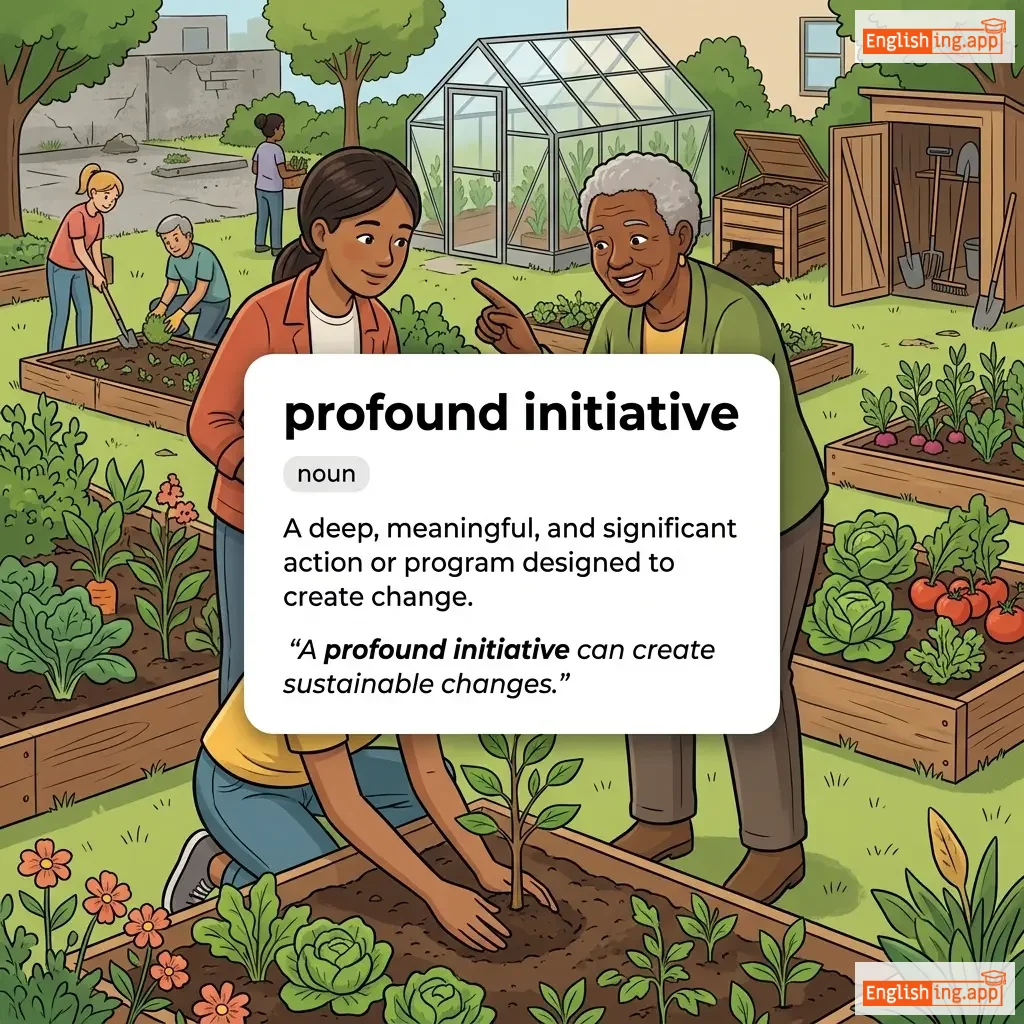
profound initiative definition card — visual illustration of the meaning
noun
prəˈfaʊnd ɪˈnɪʃətɪv
глубокая инициатива (glubokaya initsiativa)

A deep, meaningful, and significant action or program designed to create change.

"A profound initiative can create sustainable changes."

"Глубокая инициатива может создать устойчивые изменения." (Glubokaya initsiativa mozhet sozdать ustoychivye izmeneniya.)
profundity definition card — visual illustration of the meaning
noun
/prəˈfʌndɪti/
глубина (glubina)

great depth of insight, knowledge, or emotion

"The essay impressed the judges with its clarity and profundity."

"Эссе произвело впечатление на судей своей ясностью и глубиной." (Esse proizvelo vpechatlenie na sudey svoey yasnost'yu i glubinoy.)
adjective
/prəˈfjuːs/
обильный (obil'nyy)

existing or given in large amounts; abundant

"He offered profuse thanks for their timely help."

"Он выразил обильную благодарность за своевременную помощь." (On vyrazil ob'ylnuyu blagodarnost' za svoevremennuyu pomoshch'.)
noun
/prəˈfjuːʒən/
изобилие (izobilie)

an abundance or large quantity of something

"Spring brought a profusion of wildflowers to the valley."

"Весна принесла в долину изобилие диких цветов." (Vesna prinesla v dolinu izobilie dikikh tsvetov.)
noun
/proʊˈdʒɛnɪtər/
предок (predok)

a direct ancestor; a person or thing that originates something

"Researchers traced the custom back to a common progenitor."
"Исследователи проследили обычай до общего предка." (Issledovateli prosledili obychay do obshchego predka.)
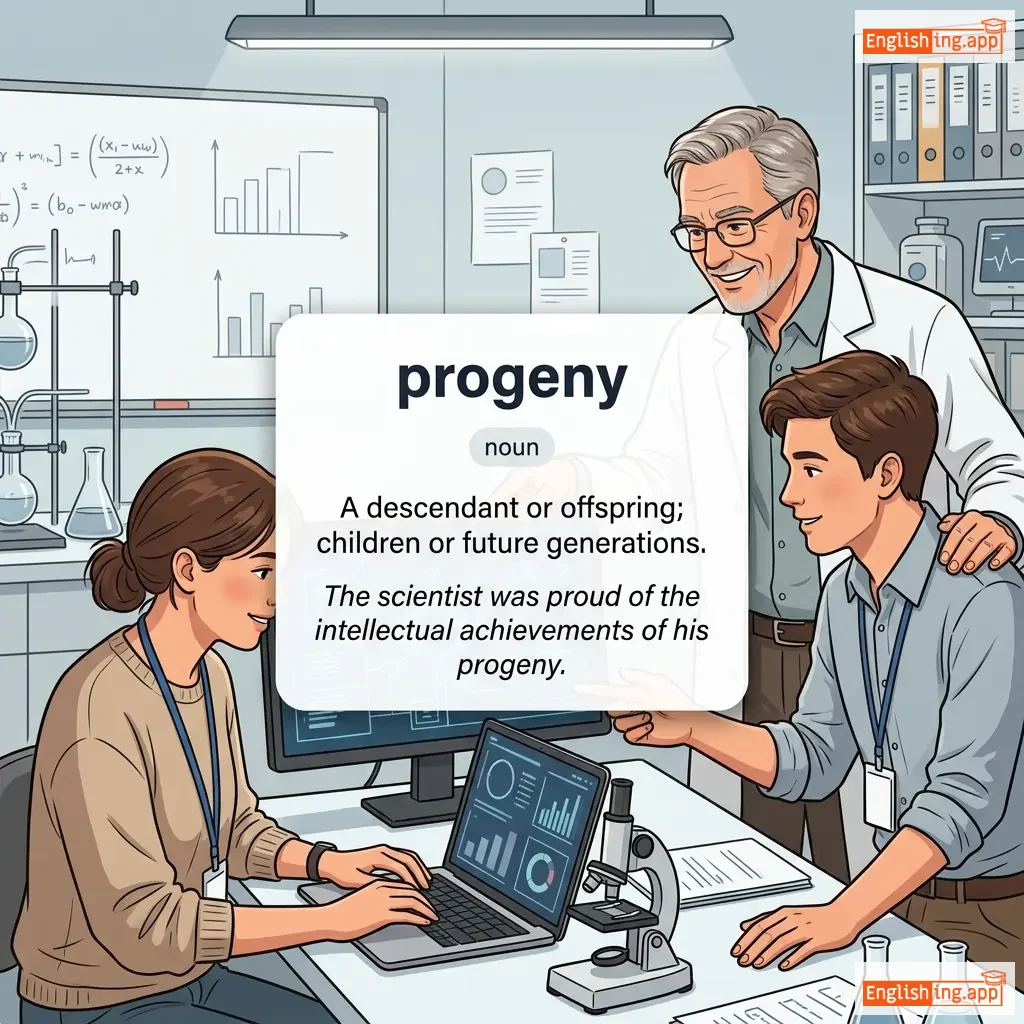
progeny definition card — visual illustration of the meaning
noun
/ˈprɒdʒəni/
потомство (potomstvo)

A descendant or offspring; children or future generations.

"The scientist was proud of the intellectual achievements of his progeny."

"Учёный гордился интеллектуальными достижениями своего потомства." (Uchonyi gordilsya intellektual'nymi dostizheniyami svoego potomstva.)
adjective
/ˈprɒɡnəθəs/
прогнатичный (prognatichny)

Having jaws that project forward beyond the rest of the face.

"The fossil displayed a distinctly prognathous skull structure."

"Ископаемое продемонстрировало структуру черепа с явно выраженным прогнатизмом." (Iskopaemoe prodemonstrirovalo strukturu cherepa s yavno vyrazhennym prognatizmom.)
noun
/prɒɡˈnoʊsɪs/
прогноз (prognoz)

A forecast of the likely outcome of a disease or situation.

"The doctor gave a positive prognosis for the patient's recovery."

"Доктор дал положительный прогноз для восстановления пациента." (Doktor dal polozhitelny prognoz dlya vosstanovleniya patsiyenta.)
verb
/prɒɡˈnɒstɪkeɪt/
прогнозировать (prognozirovat)

To foretell or predict future events, especially based on current signs.

"Experts attempted to prognosticate the outcome of the election."

"Эксперты пытались прогнозировать исход выборов." (Eksperty pytalis prognozirovat iskhod vyborov.)
noun
/prɒɡˌnɒstɪˈkeɪʃən/
прогноз (prognoz)

The act of foretelling or predicting future events.

"The astrologer's prognostication fascinated the audience."

"Прогноз астролога очаровал аудиторию." (Prognoz astrologa ocharoval auditoriyu.)
noun
/ˈprəʊɡræm/
программа (programma)

a planned series of events or activities

"The program starts at 9 AM sharp."

"Программа начинается ровно в 9 утра." (Programma nachinayetsya rovno v 9 utra.)
noun
/ˈproʊɡræmɪŋ/
программирование (programmirovanie)

the process of writing computer code to create software or applications

"He spends most of his time learning computer programming."

"Он проводит большую часть своего времени, изучая компьютерное программирование." (On provodit bol'shuyu chast' svoego vremeni, izuchaya komp'yuternoye programmirovanie.)
noun
/ˈprəʊɡræmɪŋ/
программирование (programmirovanie)

the process of designing and writing computer programs

"He has been learning programming for several months now."
"Он учит программирование уже несколько месяцев." (On uchit programmirovanie uzhe neskol'ko mesyatsev.)
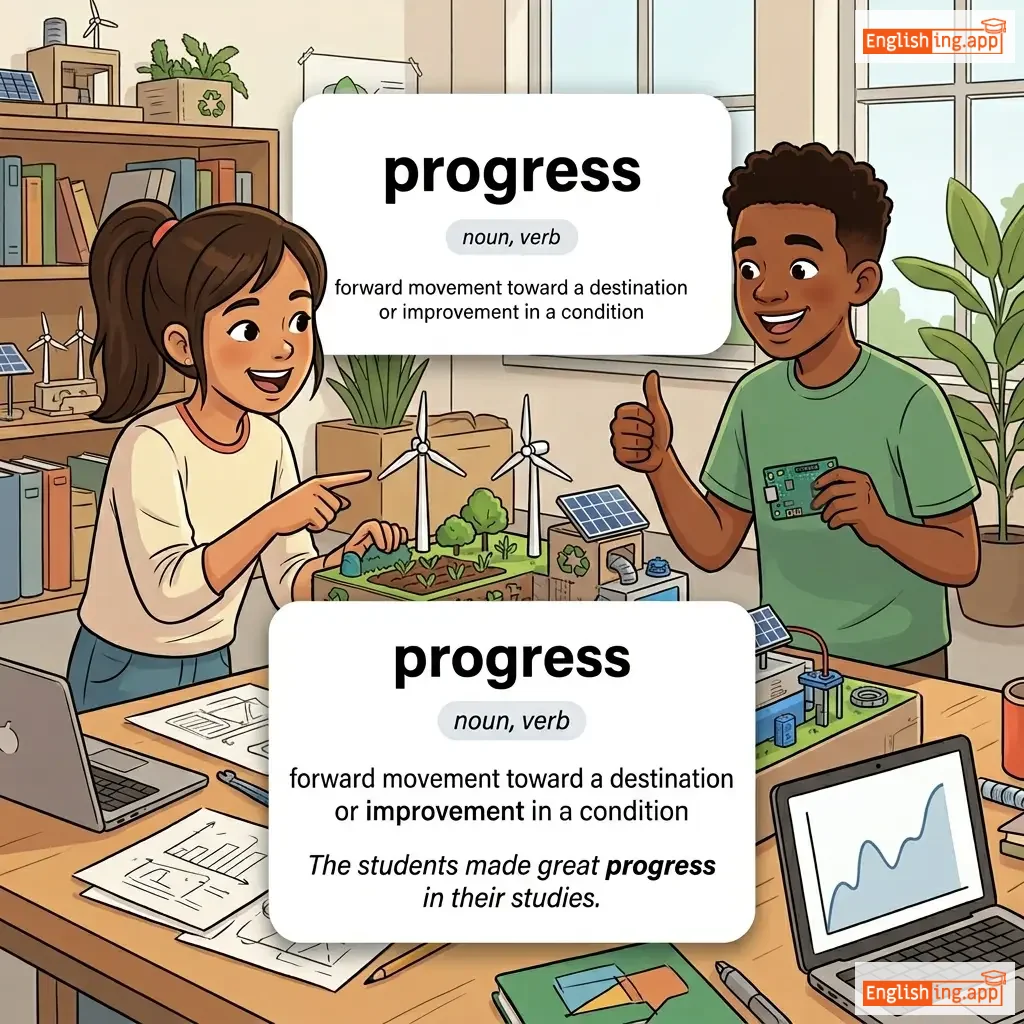
progress definition card — visual illustration of the meaning
noun, verb
/ˈprəʊɡrɛs/ (noun), /prəˈɡrɛs/ (verb)
прогресс (progress)

forward movement toward a destination or improvement in a condition

"The students made great progress in their studies."
"Студенты сделали большие успехи в учебе." (Studenty sdelali bol'shie uspekhi v uchebe.)
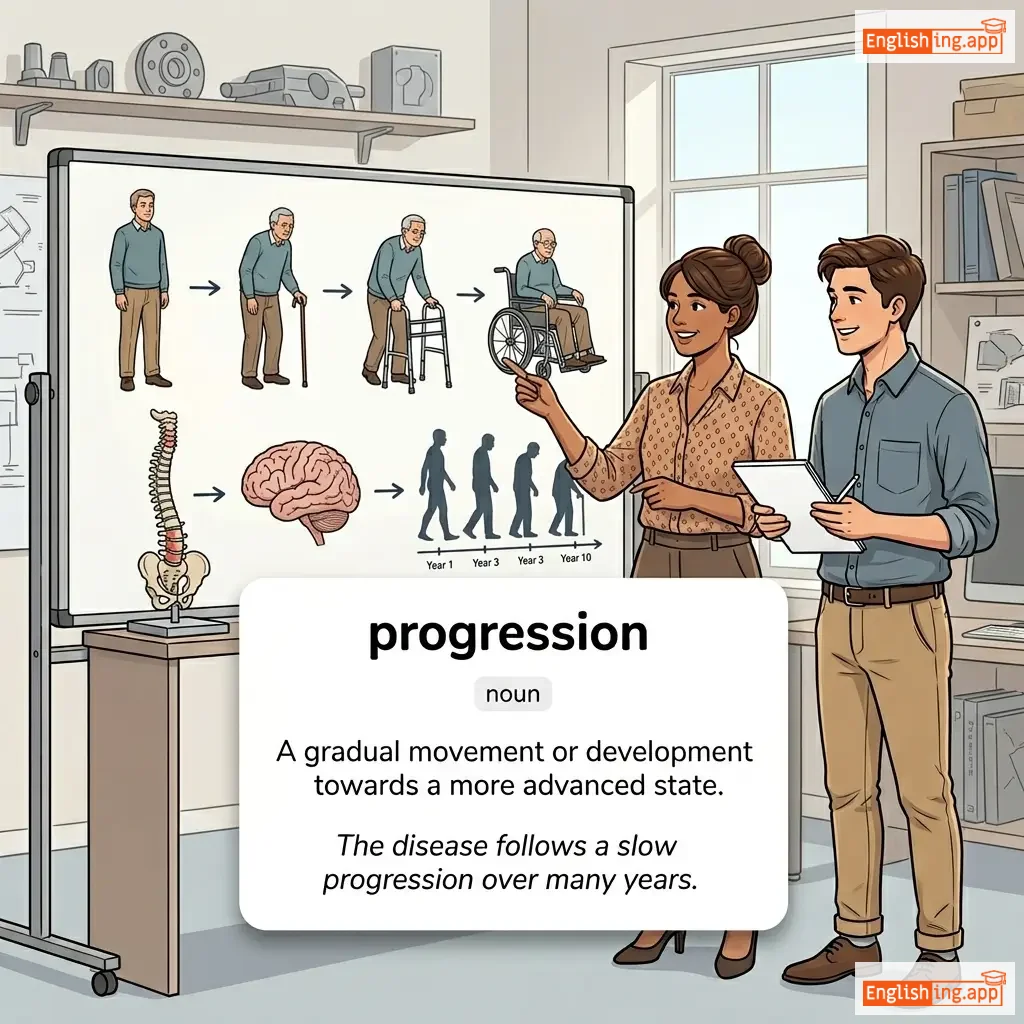
progression definition card — visual illustration of the meaning
noun
/prəˈɡrɛʃən/
прогрессия (progressiya)

A gradual movement or development towards a more advanced state.

"The disease follows a slow progression over many years."

"Болезнь проходит медленную прогрессию в течение многих лет." (Bolezn' prokhodit medlennuyu progressiyu v techenie mnogikh let.)
adjective
/prəˈɡrɛsɪv/
прогрессивный (progressivnyj)

favoring or implementing new and modern ideas or policies; moving forward or improving

"She holds progressive views on social justice and equality."

"У нее прогрессивные взгляды на социальную справедливость и равенство." (U nee progressivnye vzglyady na sotsial'nuyu spravedlivost' i ravenstvo.)
verb
/prəˈhɪbɪt/
запрещать (zapreshchat)

to formally forbid something by law, rule, or authority

"Smoking is strictly prohibited inside the hospital."

"Курение строго запрещено в больнице." (Kurenie strogo zapreshcheno v bol'nitse.)
noun
/ˌproʊɪˈbɪʃən/
запрещение (zapreshchenie)

The act of forbidding something by law or authority.

"The government announced the prohibition of smoking in public places."

"Правительство объявило о запрете курения в общественных местах." (Pravitel'stvo ob'yavilo o zaprete kureniya v obshchestvennykh mestakh.)
noun
/ˌproʊɪˈbɪʃənɪst/
запретник (zapretnik)

A person who supports or advocates prohibition, especially of alcohol.

"The prohibitionist campaigned against the sale of liquor in the town."
"Запретник вел кампанию против продажи алкоголя в городе." (Zapretnik vel kampaniyu protiv prodazhi alkogolya v gorode.)
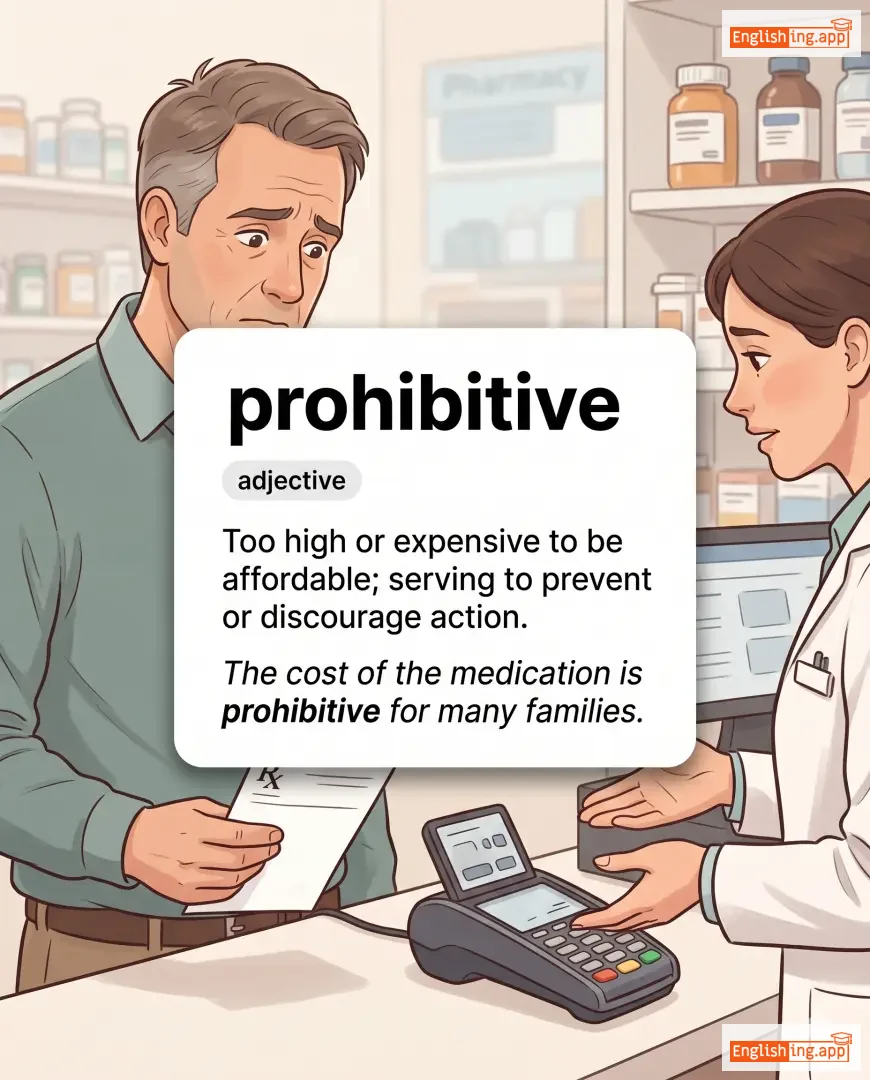
prohibitive definition card — visual illustration of the meaning
adjective
/prəˈhɪbɪtɪv/
непо́сильно дорогой (neposil'no dorogoy)

Too high or expensive to be affordable; serving to prevent or discourage action.

"The cost of the medication is prohibitive for many families."

"Стоимость лекарства является непосильной для многих семей." (Stoimost' lekarstva yavylyaetsya neposil'noy dlya mnogikh semey.)
adjective
/prəˈhɪbɪtɔːri/
запрещающий (zapreshchayushchiy)

Serving or tending to prohibit or forbid.

"The prohibitory laws were strictly enforced in the region."
"Запрещающие законы были строго применены в регионе." (Zapreshchayushchie zakony byli strogo primeneny v regione.)
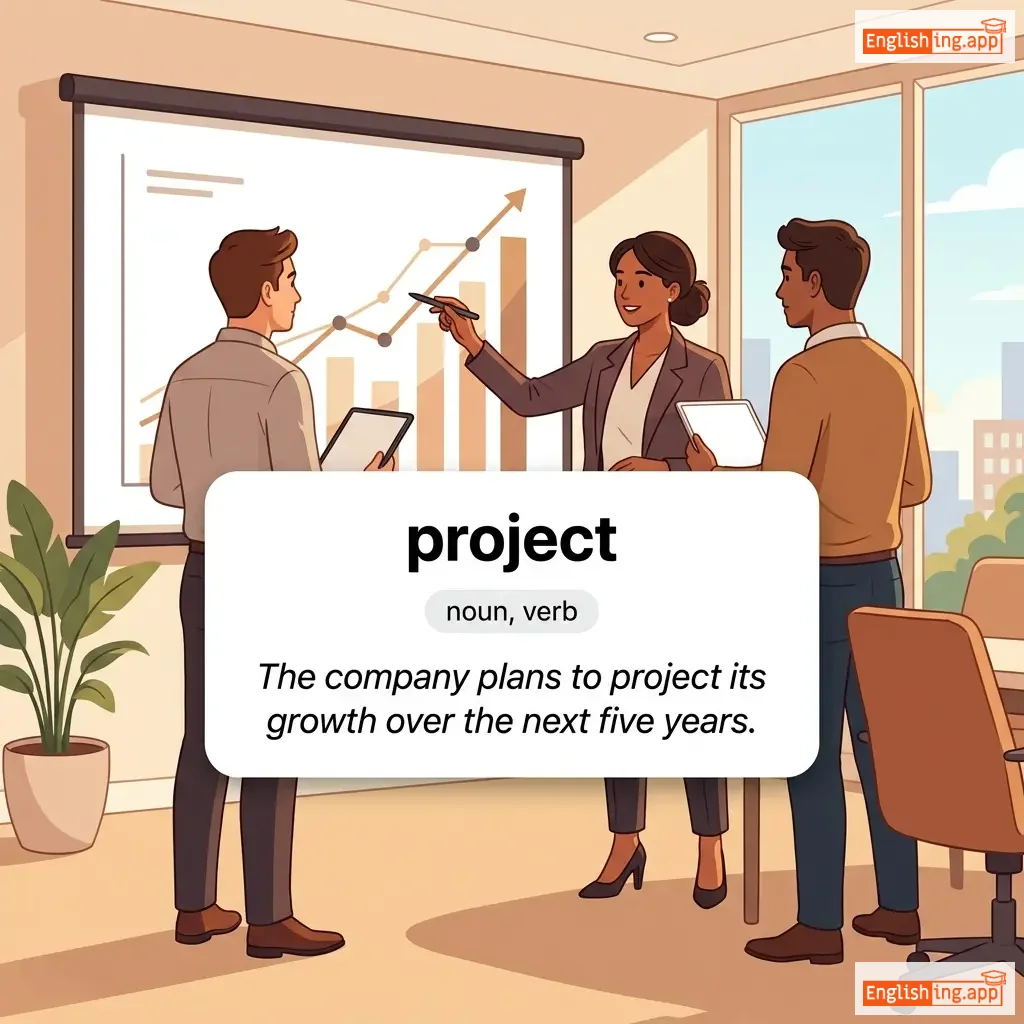
project definition card — visual illustration of the meaning
noun, verb
/ˈprɒdʒɛkt/ (noun), /prəˈdʒɛkt/ (verb)

As a noun: a planned task or assignment. As a verb: to plan, estimate, or extend something outward.

"The company plans to project its growth over the next five years."

noun
/prəˈdʒɛktaɪl/
снаряд (snaryad)

An object fired, thrown, or propelled, especially from a weapon.

"The soldier dodged the incoming projectile."

"Солдат увернулся от приближающегося снаряда." (Soldat uvernylsya ot priblizhayushchegosya snaryada.)
projection definition card — visual illustration of the meaning
noun
/prəˈdʒɛkʃən/
проекция (proekciya)

An estimate or forecast of a future situation based on current trends.

"The sales projection shows a steady increase in revenue."

"Прогноз продаж показывает устойчивый рост доходов." (Prognoz prodazh pokazyvayet ustoichivyy rost dokhodov.)
projects definition card — visual illustration of the meaning
noun
ˈprɒdʒ.ekts
проекты (proyekty)

Individual or collaborative enterprises that are carefully planned to achieve a particular aim.

"These projects aim for technological breakthroughs."

"Эти проекты направлены на технологические прорывы." (Eti proyektı napavleny na texnologicheskie proryvy.)
noun, adjective
/ˌproʊlɪˈtɛəriən/
пролетарий (proletariy)

Relating to the working class, especially those who do not own property.

"The movement was rooted in proletarian struggles."

"Движение было укоренено в пролетарских борьбах." (Dvizhenie bylo ukorenenno v proletarskikh bor'bakh.)