Словари

Словарь английского языка | Значения слов, определения и примеры

verb
/præns/
гордо шагать (gordo shagath)

To move with high, springy steps, often to show off or attract attention.

"The horse pranced around the field gracefully."

"Лошадь гордо шагала по полю." (Loshad' gordo shagala po polyu.)
noun
/præŋk/
шутка (shutka)

A trick that is intended to be funny but not harmful.

"They played a harmless prank on their friend during the party."

"Они сыграли безвредную шутку с другом на вечеринке." (Oni sygrali bezvrednuyu shutku s drugom na vecherinke.)
verb
/preɪt/
болтать глупости (boltát' gluposti)

to talk foolishly or at tedious length about something

"He would prate endlessly about his minor achievements."

"Он бы без конца болтал о своих незначительных достижениях." (On by bez kontsa boltál o svoikh neznačitel'nykh dostiženiakh.)
👶🗣️

prattle (prætl)

verb
/ˈprætəl/
болтать (boltát)

to talk at length in a foolish or inconsequential way

"The children would prattle on about their games."

"Дети болтали о своих играх." (Deti bol'tali o svoikh igrah.)
noun
/prɔːn/
креветка (krevetka)

a large marine crustacean similar to shrimp but typically bigger

"The chef prepared delicious prawn curry with coconut milk."

"Шеф приготовил вкусное карри с креветками и кокосовым молоком." (shef prigotovil vkusnoe karri s krevetkami i kokosovym molokom.)
verb
/preɪ/
молиться (molit'sya)

to speak to a deity, especially for help or thanks

"Every night, she prays for her family’s safety."

"Каждую ночь она молится за безопасность своей семьи." (Kazhduyu noch' ona molitsya za bezopasnost' svoey sem'i.)
noun
/ˈprɛər/
молитва (molitva)

a solemn request for help or expression of thanks addressed to God or another deity

"She recited a prayer before the meal."

"Она прочитала молитву перед едой." (Ona prochitala molitvu pered edoy.)
verb
/priːˈɛmpt/

to act in advance to prevent an anticipated event from happening; forestall

"The government moved to pre-empt a crisis by introducing new policies."

verb
/priːtʃ/
проповедовать (propovedovat)

to deliver a religious or moral talk, often in a church setting

"The pastor preached about forgiveness and kindness."
"Пастор проповедовал о прощении и доброте." (Pastor propovedoval o proshchenii i dobrote.)
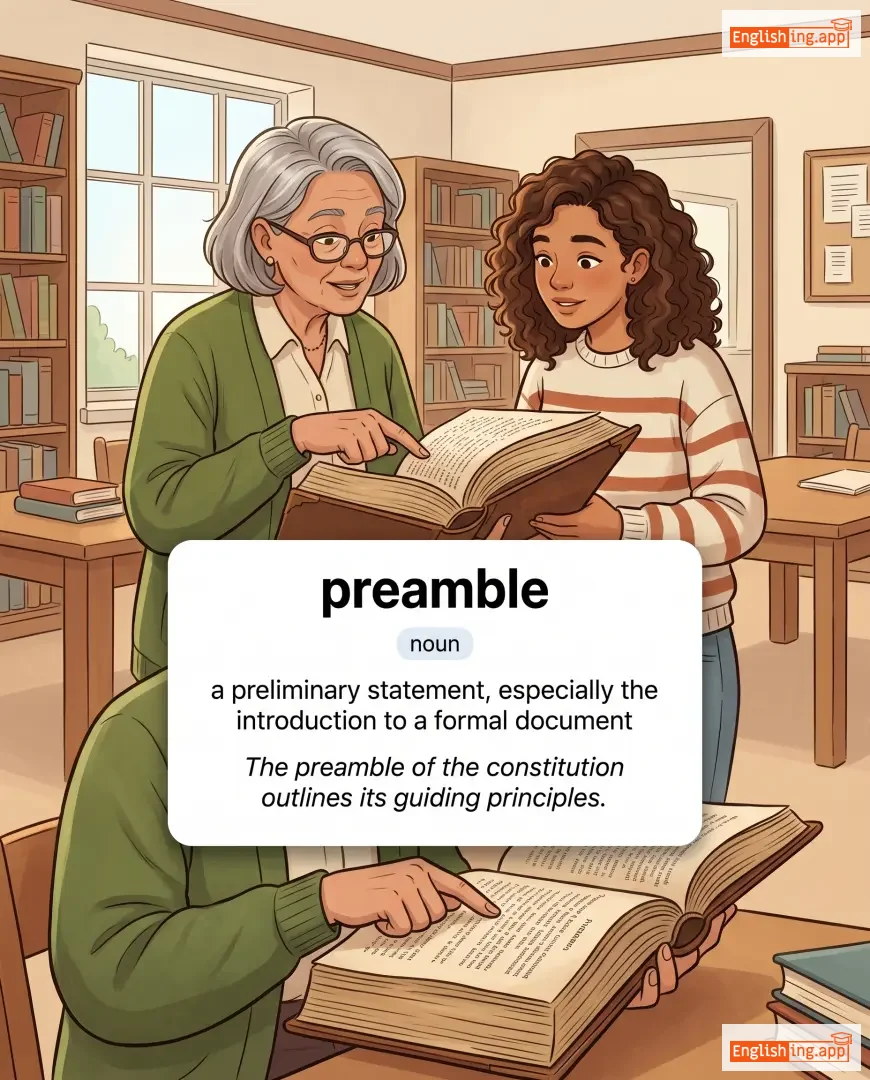
preamble definition card — visual illustration of the meaning
noun
/ˈpriːˌæmbəl/
преамбула (preambula)

a preliminary statement, especially the introduction to a formal document

"The preamble of the constitution outlines its guiding principles."
"Преамбула конституции описывает ее основные принципы." (Preambula konstitutsii opisyvayet yeye osnovnye printsipy.)
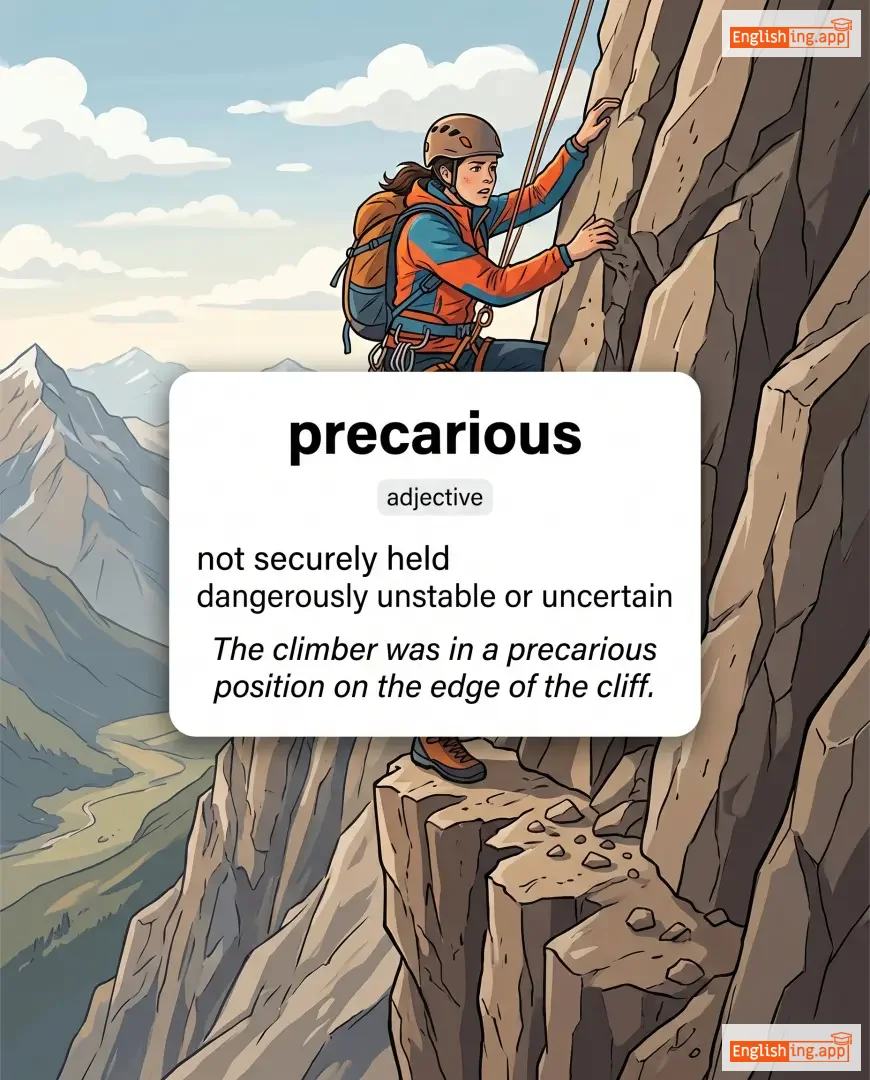
precarious definition card — visual illustration of the meaning
adjective
/prɪˈkɛəriəs/
неустойчивый / опасный (neustoychivyy / opasnyy)

not securely held; dangerously unstable or uncertain

"The climber was in a precarious position on the edge of the cliff."

"Альпинист находился в опасной ситуации на краю скалы." (Al'pinist nakhodilsya v opasnoy situatsii na krayu skaly.)
noun
/prɪˈkɔːʃən/
предосторожность (predostorozhnost')

a measure taken in advance to prevent harm or danger

"You should take precaution when crossing a busy road."
"Вы должны соблюдать осторожность при переходе оживленной дороги." (Vy dolzhny soblyudat' ostorozhnost' pri perekhode ozhivlyonnoy dorogi.)
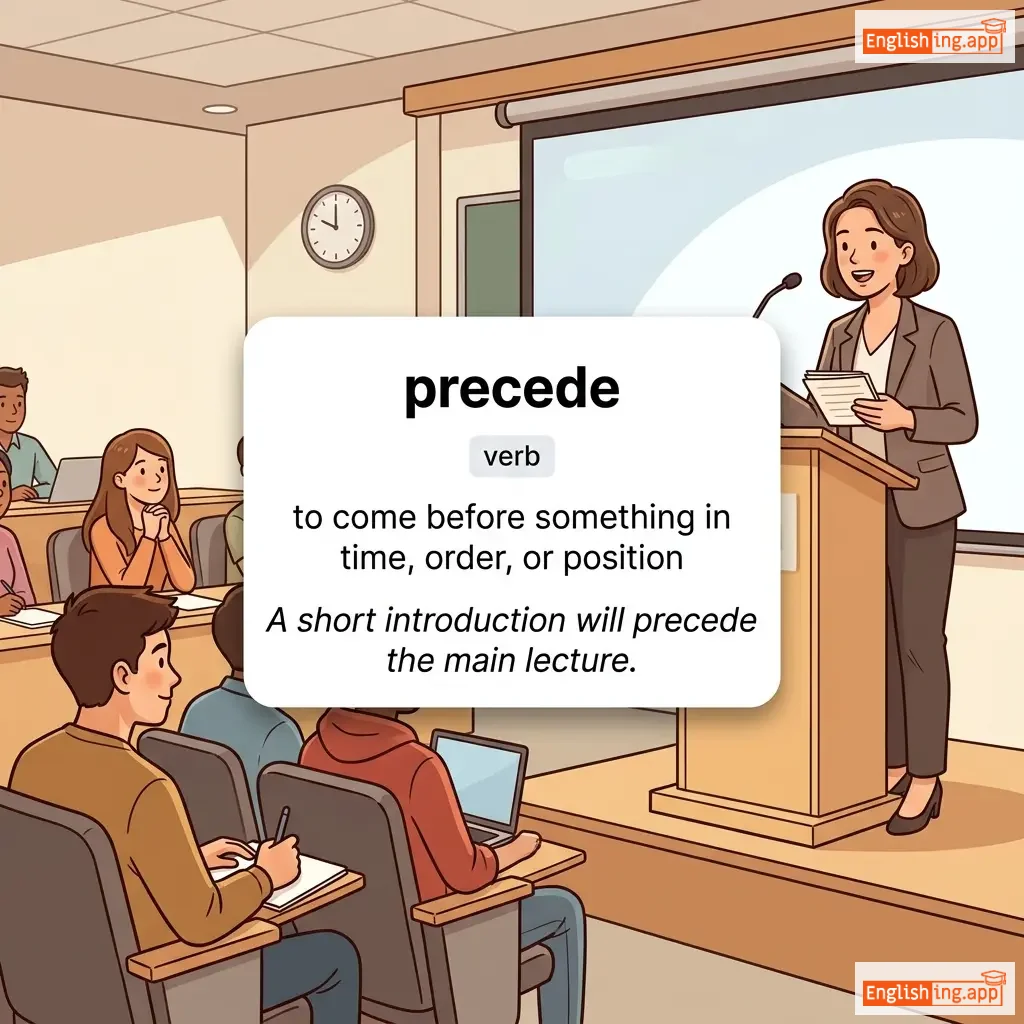
precede definition card — visual illustration of the meaning
⏮️

precede

verb
/prɪˈsiːd/

to come before something in time, order, or position

"A short introduction will precede the main lecture."

verb
/prɪˈsiːdɪd/
предшествовал (predshestvoval)

came before something in time, order, or position

"Dark clouds preceded the heavy rainfall."

"Темные облака предшествовали сильному дождю." (Temnye oblake predshestvovali sil'nomu dozhdyu.)
noun
/ˈprɛsɪdəns/ or /prɪˈsiːdəns/
приоритет (prioritet)

the condition of being considered more important than someone or something else; priority

"Safety takes precedence over speed in this factory."

"В этой фабрике безопасность имеет приоритет перед скоростью." (V etoy fabrice bezopasnost imeet prioritet pered skorost'yu.)
noun
/ˈprɛsɪdənt/
прецедент (pretsedent)

An earlier event or decision that serves as a guide or example for future similar situations.

"The judge’s ruling set a new precedent for similar cases."

"Решение судьи установило новый прецедент для подобных дел." (Resheniye sud'i ustanovilo novyy pretsedent dlya podobnykh del.)
adjective
/ˌprɛsɪˈdɛnʃəl/
прецедентный (pretsedentnyy)

Relating to, or serving as, a precedent; having authority as an example.

"The court’s decision has precedential value."

"Решение суда имеет прецедентное значение." (Reshenie suda imeet pretsedentnoe znachenie.)
noun
/ˈpriːsɛpt/
принцип (printsip)

A general rule intended to regulate behavior or thought.

"Honesty is a fundamental precept in all religions."

"Честность — это основополагающий принцип во всех религиях." (Chestnost' — eto osnovopologayushchiy printsip vo vsekh religiyakh.)
noun
/prɪˈsɛʃən/
прецессия (pretsessiya)

The slow movement of the axis of a spinning body around another axis, often referring to Earth's rotation.

"Astronomers study the precession of the equinoxes."

"Астрономы изучают прецессию равноденствий." (Astronomyi izuchayut pretsessiyu ravnodenstviy.)
noun
/ˈpriːsɪŋkt/
район (rayon)

A district or area within the boundaries of a city, often for police or electoral purposes.

"She went to vote at her local precinct."

"Она пошла голосовать в свой местный район." (Ona poshla golosovat' v svoy mestnyy rayon.)
noun
/ˌprɛsiˈɒsɪti/
избыточная утонченность (izbytochnaya utonchennost')

Excessive refinement or affected elegance in language, style, or behavior.

"The author's preciosity made the novel difficult to read for some audiences."

"Пресиозность автора сделала роман трудным для чтения для некоторых читателей." (Preziosnost' avtora sdelala roman trudnym dlya chteniya dlya nekotorykh chitateley.)
adjective
/ˈprɛʃəs/
драгоценный (dragotsennyi)

of great value; highly esteemed or cherished

"This ring is very precious to my grandmother."

"Это кольцо очень дорого для моей бабушки." (Eto kol'tso ochen' dorogo dlya moyey babushki.)
noun
/ˈprɛsɪpɪs/
пропасть (propast')

A very steep cliff or a situation of great danger.

"The hikers stood at the edge of the precipice, gazing into the valley below."

"Туристы стояли на краю пропасти, глядя в долину внизу." (Turisty stoyali na krayu propasti, glyadya v dolinu vnutri.)
noun/adjective
/prɪˈsɪpɪtənt/
преципитант (precipitant)

As a noun: a substance that causes a substance to be deposited from a solution; as an adjective: acting hastily or impulsively.

"The chemist added a precipitant to the solution to observe the reaction."
"Химик добавил преципитант в раствор, чтобы наблюдать реакцию." (Khimik dobavil precipitant v rastvor, chtoby nablyudat' reaktsiyu.)
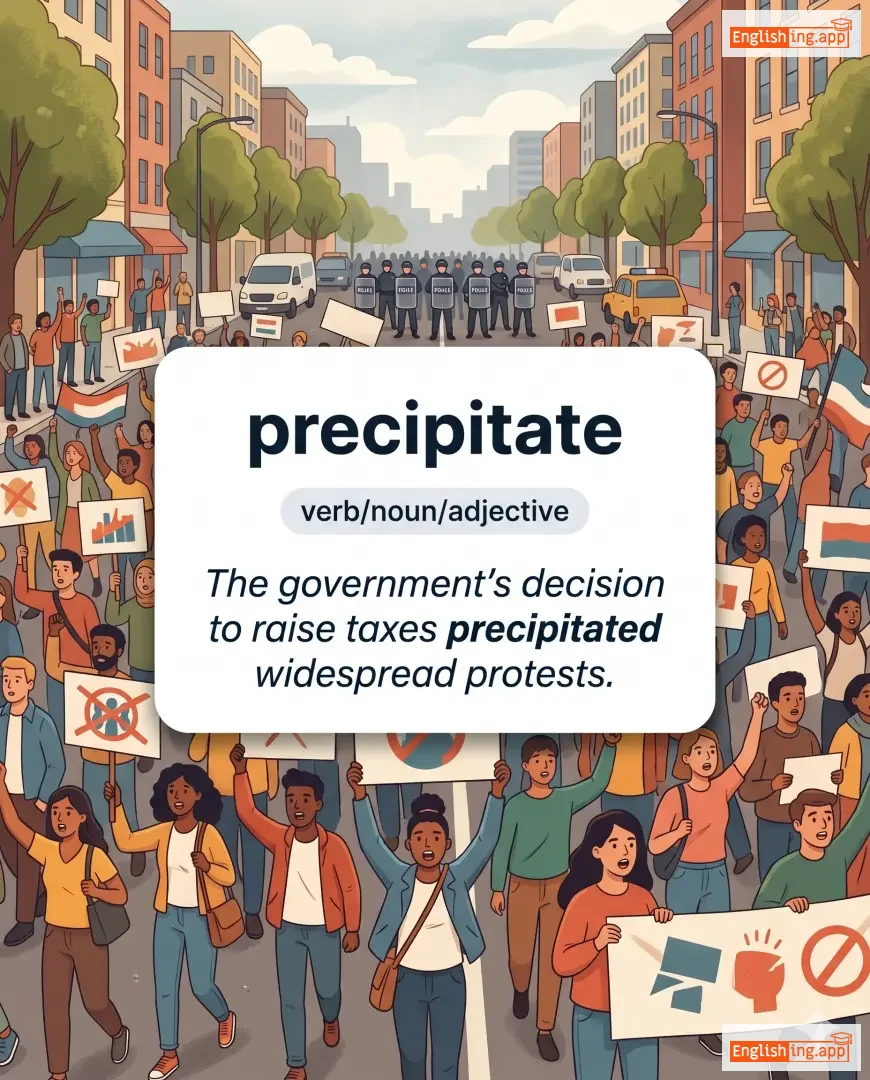
precipitate definition card — visual illustration of the meaning
verb/noun/adjective
/prɪˈsɪpɪteɪt/
ускорить / спровоцировать (uskorit / sprovozhirovat)

As a verb: to cause an event or situation, often suddenly or prematurely; as a noun: a solid formed in a chemical solution; as an adjective: done hastily.

"The government's decision to raise taxes precipitated widespread protests."
"Решение правительства увеличить налоги спровоцировало массовые протесты." (Resheniye pravitel'stva uvelichit' nalogi sprovozhirovalo massovyye protesty.)
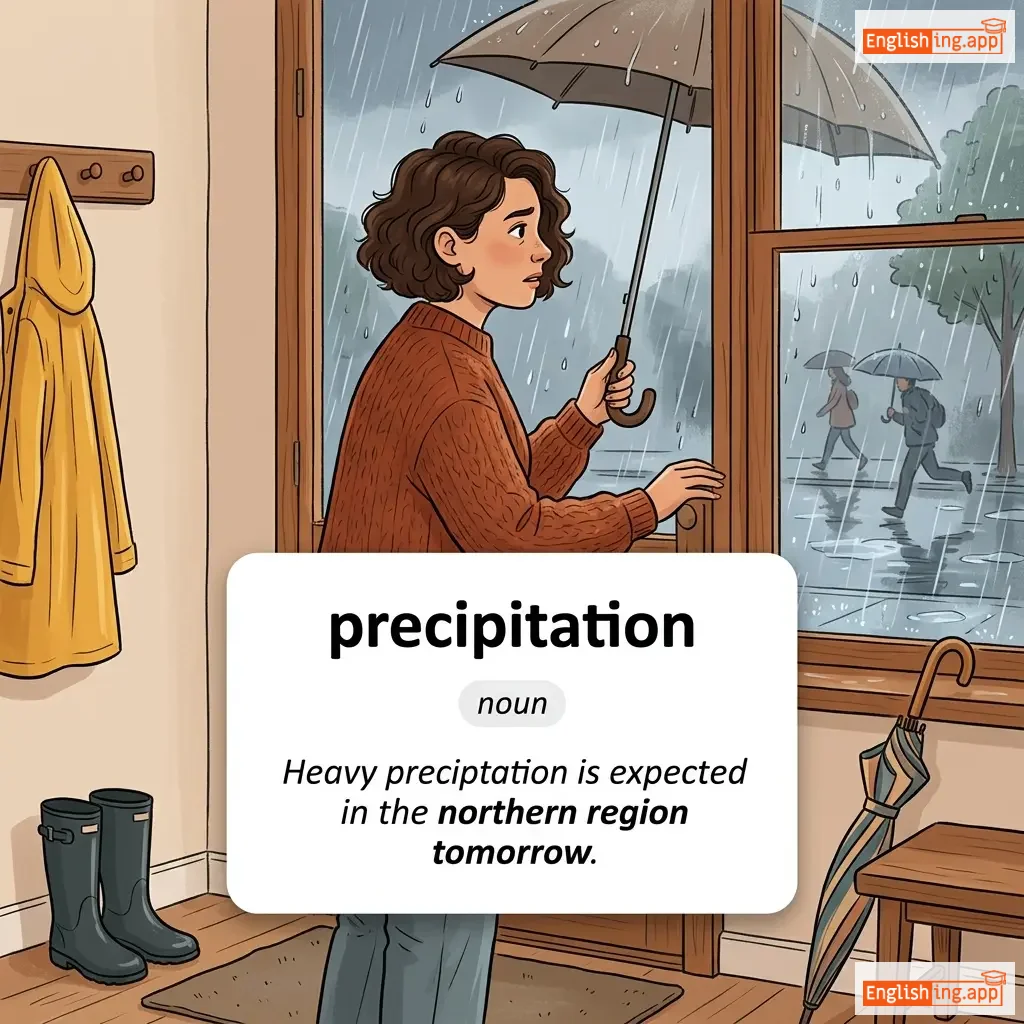
precipitation definition card — visual illustration of the meaning
noun
/prɪˌsɪpɪˈteɪʃən/
осадки (osadki)

Moisture that falls from the atmosphere as rain, snow, sleet, or hail; or the process of being precipitated.

"Heavy precipitation is expected in the northern region tomorrow."

"Завтра ожидаются сильные осадки в северном регионе." (Zavtra ozhidayutsya sil'nye osadki v severnom regione.)
adjective
/prɪˈsɪpɪtəs/
крутой или резкий (krutoy ili rezkiy)

Extremely steep or sudden; done quickly without careful consideration.

"The hikers struggled to climb the precipitous slope."

"Туристы с трудом поднялись на крутой склон." (Turisty s trudom podnyalis' na krutoy sklon.)
noun
/ˈpreɪsiː/
краткое изложение (kratkoe izlozhenie)

a short summary of a text or speech

"She wrote a précis of the lecture for her classmates."

"Она написала краткое изложение лекции для своих одноклассников." (Ona napisalа kratkoe izlozhenie lektsii dlya svoikh odnoklassnikov.)
adjective
/prɪˈsaɪs/
точный (tochnyy)

Marked by exactness and accuracy of expression or detail.

"She gave precise instructions for the experiment."
"Она дала точные инструкции для эксперимента." (Ona dala tochnye instruktsii dlya eksperimenta.)
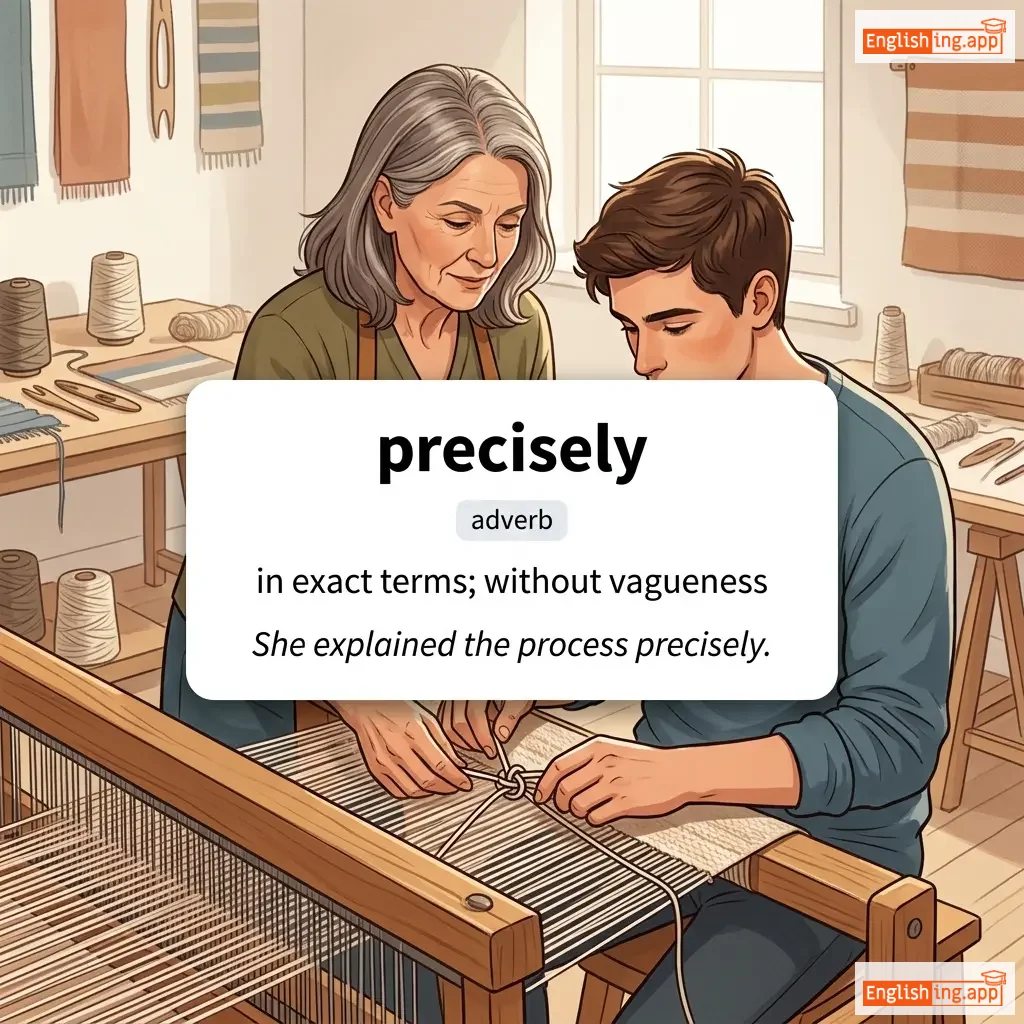
precisely definition card — visual illustration of the meaning
adverb
/prɪˈsaɪsli/
точно (tochno)

in exact terms; without vagueness

"She explained the process precisely."
"Она объяснила процесс точно." (Ona ob'yasnila protsess tochno.)
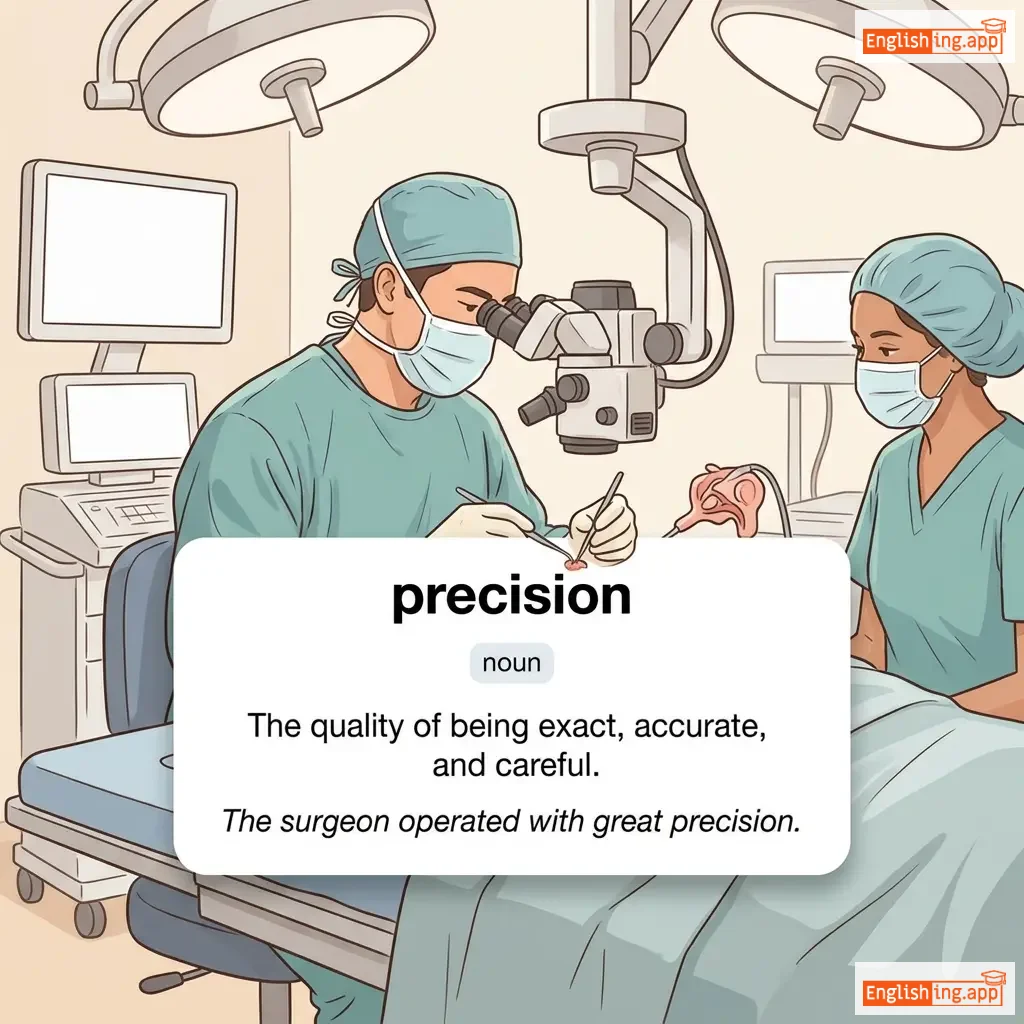
precision definition card — visual illustration of the meaning
noun
/prɪˈsɪʒən/
точность (tochnost)

The quality of being exact, accurate, and careful.

"The surgeon operated with great precision."
"Хирург оперировал с большой точностью." (Khirurg operiroval s bol'shoy tochnost'yu.)
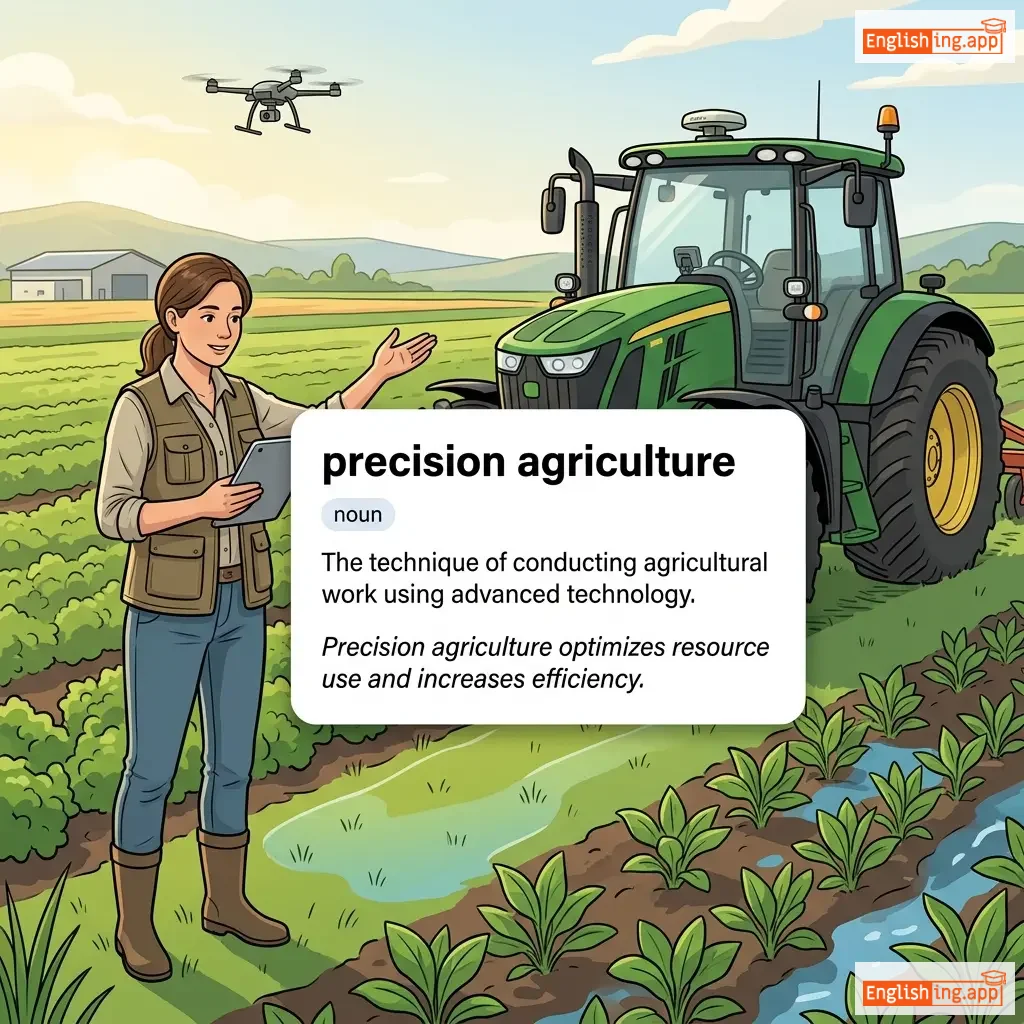
precision agriculture definition card — visual illustration of the meaning
noun
prɪˈsɪʒ.ən ˈæɡ.rɪ.kʌl.tʃər
прецизионное сельское хозяйство (pretsizionnoe selskoe khozyaystvo)

The technique of conducting agricultural work using advanced technology.

"Precision agriculture optimizes resource use and increases efficiency."

"Прецизионное сельское хозяйство оптимизирует использование ресурсов и повышает эффективность." (Pretsizionnoe selskoe khozyaystvo optimiziruet ispol'zovanie resursov i povyshaet effektivity.)
verb
/prɪˈkluːd/
предотвращать (predotvrashchat)

To prevent something from happening; to make impossible.

"Heavy rain precluded the possibility of a picnic."

"Сильный дождь предотвратил возможность пикника." (Sil'nyy dozhd' predotvratil vozmozhnost' piknika.)
adjective
/prɪˈkoʊʃəs/
раноразвивающийся (ranorazvivayushchiesya)

Showing advanced development or maturity at an unusually early age.

"The precocious child was reading novels at the age of five."

"Ранний ребенок читал романы в пять лет." (Ranniy rebenok chital romany v pyat' let.)
precursor definition card — visual illustration of the meaning
noun
/ˈpriːˌkɜrsər/
предшественник (predshestvennik)

Something or someone that comes before another and indicates the approach of something else.

"The steam engine was a precursor to modern trains."

"Паровая машина была предшественником современных поездов." (Parovaya mashina byla predshestvennikom sovremennykh poyezdov.)
noun
/ˈprɛdətər/
хищник (khishchnik)

An animal that hunts and kills other animals for food.

"Lions are powerful predators in the savannah."

"Львы - мощные хищники в саванне." (L'vy - moshchnye khishchniki v savanne.)
adjective
/ˈprɛdəˌtɔri/
хищник/эксплуататор (khishchnik/eksploitator)

Relating to animals that prey on others; exploiting or victimizing others for personal gain.

"The predatory bird swooped down on its prey."

"Хищная птица бросилась на свою добычу." (Khishchnaya ptitsa brosilas' na svoyu dobychu.)
noun
/ˈprɛdəˌsɛsər/
предшественник (predshestvennik)

A person who held a position or office before the current holder.

"The new CEO thanked her predecessor for his service."

"Новый генеральный директор поблагодарил своего предшественника за его службу." (Novyj general'nyj direktor poblagodaril svoego predshestvennika za ego sluzhbu.)
verb
/priːˈdɛstɪn/
предопределить (predopredelit)

to determine or decide something in advance, often regarded as being fixed by fate or divine will

"They believed their paths were predestined by fate."

"Они верили, что их пути были предопределены судьбой." (Oni verili, chto ikh puti byli predopredeleny sud'boy.)
verb
/ˌpriːdɪˈtɜːrmɪn/
предопределить (predopredelit)

to establish or decide something in advance

"The outcome of the match seemed predetermined."
"Результат матча казался предопределённым." (Rezultat matcha kazalsya predopredelyonnym.)
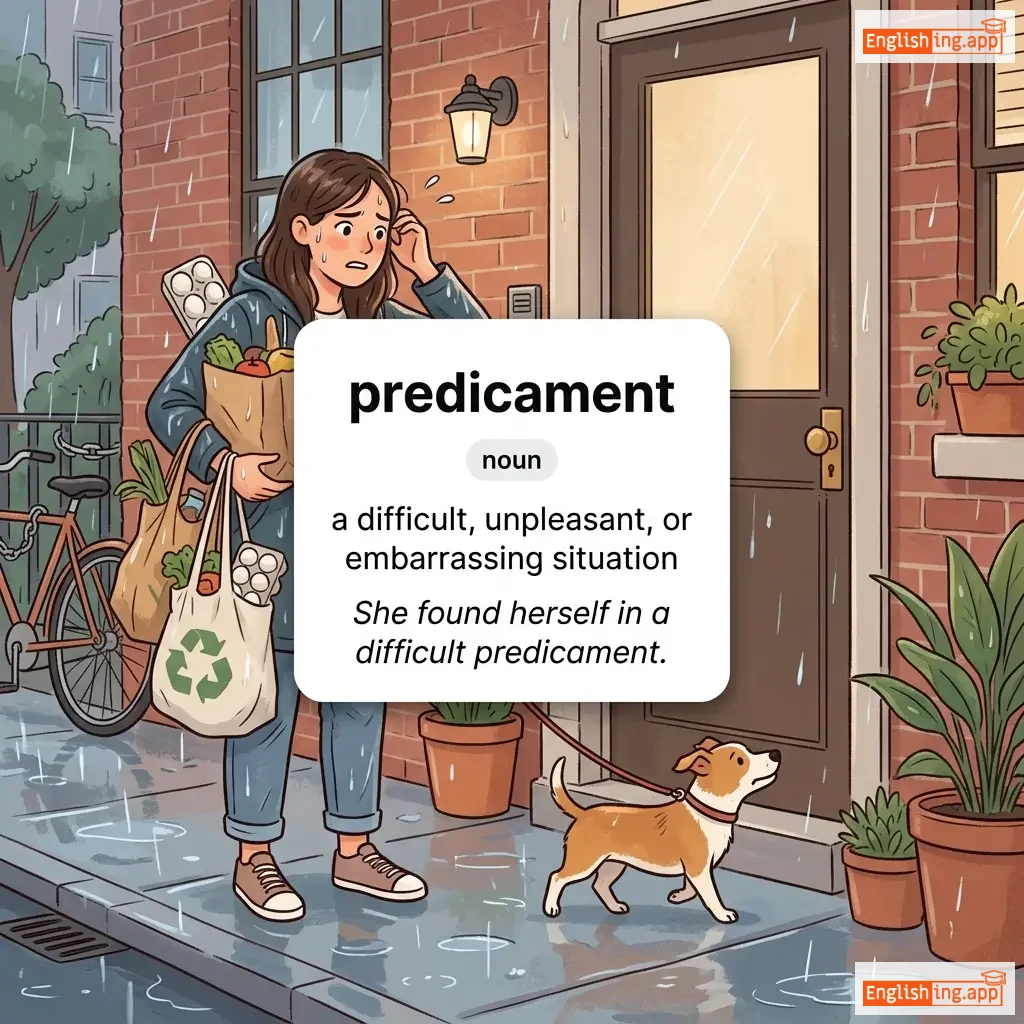
predicament definition card — visual illustration of the meaning
noun
/prɪˈdɪkəmənt/
трудная ситуация (trudnaya situatsiya)

a difficult, unpleasant, or embarrassing situation

"She found herself in a difficult predicament."

"Она оказалась в трудной ситуации." (Ona okazalas v trudnoy situatsii.)
noun/verb
/ˈprɛdɪkət/ (noun), /ˈprɛdɪkeɪt/ (verb)
предикат / основывать на (predikat / osnovyvat na)

noun: the part of a sentence that tells something about the subject; verb: to base or establish something on a particular idea

"His theory is predicated on sound research."

"Его теория основана на надежных исследованиях." (Ego teoriya osnovana na nadezhnykh issledovaniyakh.)
verb
/prɪˈdɪkt/
предсказать (predskazat)

to say what will happen in the future based on knowledge or reasoning

"Experts predict a rise in fuel prices."

"Эксперты предсказывают рост цен на топливо." (Eksperty predskazyvayut rost tsen na toplo.)
adjective
/prɪˈdɪktəbəl/
предсказуемый (predskazuemyy)

able to be predicted or foreseen

"His reactions were predictable based on his past behavior."

"Его реакции были предсказуемы на основе его прошлого поведения." (Ego reaktsii byli predskazuemy na osnove ego proshlogo povedeniya.)
noun
/prɪˈdɪkʃən/
предсказание (predskazanie)

A statement about what will happen in the future based on knowledge or evidence.

"Her prediction about the weather turned out to be accurate."

"Ее предсказание о погоде оказалось точным." (Eyo predskazanie o pogode okazalos' tochnym.)
noun
/ˌpriːdɪˈlɛkʃən/
предпочтение (predpochtanie)

A strong liking or preference for something.

"She has a predilection for classical music."

"У неё есть склонность к классической музыке." (U nee yest' sklonnost' k klassicheskoy muzike.)
verb
/ˌpriːdɪˈspoʊz/
предрасполагать (predraspolagat')

To make someone more likely to behave in a certain way or be affected by something.

"His genetics may predispose him to diabetes."

"Его гены могут предрасположить его к диабету." (Ego geny mogut predraspolozhit' ego k diabety.)
adjective
/ˌpriːdɪˈspoʊzd/
склонный (sklonnij)

Likely or inclined to be affected by something in advance.

"She is predisposed to trust people easily."
"Она склонна легко доверять людям." (Ona sklonnaya legko doveryat' lyudyam.)
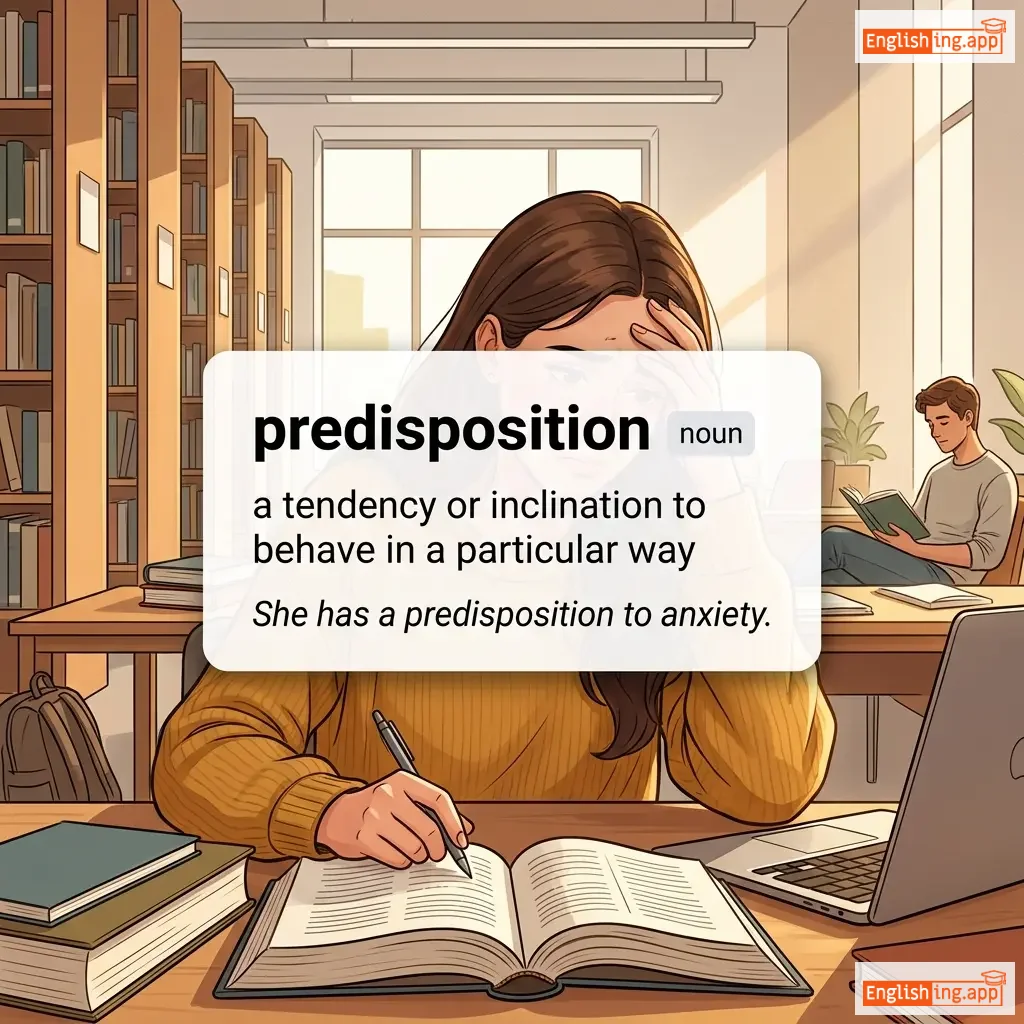
predisposition definition card — visual illustration of the meaning
noun
/ˌpriːdɪspəˈzɪʃən/
предрасположенность (predraspolozhennost)

a tendency or inclination to behave in a particular way

"She has a predisposition to anxiety."

"У нее есть предрасположенность к тревоге." (U nee yest' predraspolozhennost' k trevoge.)
noun
/prɪˈdɒmɪnəns/
преобладание (preobladanie)

The state of being greater in number, strength, or importance.

"The predominance of online shopping has changed retail forever."

"Преобладание онлайн-покупок изменило розничную торговлю навсегда." (Preobladanie onlayn-pokupok izmenilo roznichnuyu torgovlyu navsegda.)