Словари

Словарь английского языка | Значения слов, определения и примеры

persuasiveness definition card — visual illustration of the meaning
noun
/pərˈsweɪ.sɪv.nəs/
убедительность (ubeditel'nost')

The quality of being able to persuade someone to do or believe something.

"His persuasiveness helped secure the deal."

"Его убедительность помогла заключить сделку." (Ego ubeditel'nost' pomogla zaklyuchit' sdelku.)
adjective
/pɜːrt/
озорной, но привлекательный (ozornoy, no privlekatel'nyy)

attractively lively or cheeky in manner or style

"She gave a pert reply that made everyone laugh."

"Она дала дерзкий ответ, который рассмешил всех." (Ona dala derzkiy otvet, kotoryy rassmeshil vsekh.)
verb
/pərˈteɪn/
касаться (kasatsya)

to relate or have reference to something

"The rules pertain to all students in the school."

"Правила относятся ко всем студентам в школе." (Pravila otnosyatsya ko vsem studentam v shkole.)
adjective
/ˌpɜːrtɪˈneɪʃəs/
упорный (upornyy)

holding firmly to an opinion, purpose, or course of action; stubbornly persistent

"The pertinacious lawyer refused to give up the case."
"Упорный адвокат отказался отказаться от дела." (Upornyy advokat otkazalsya otkazat'sya ot dela.)
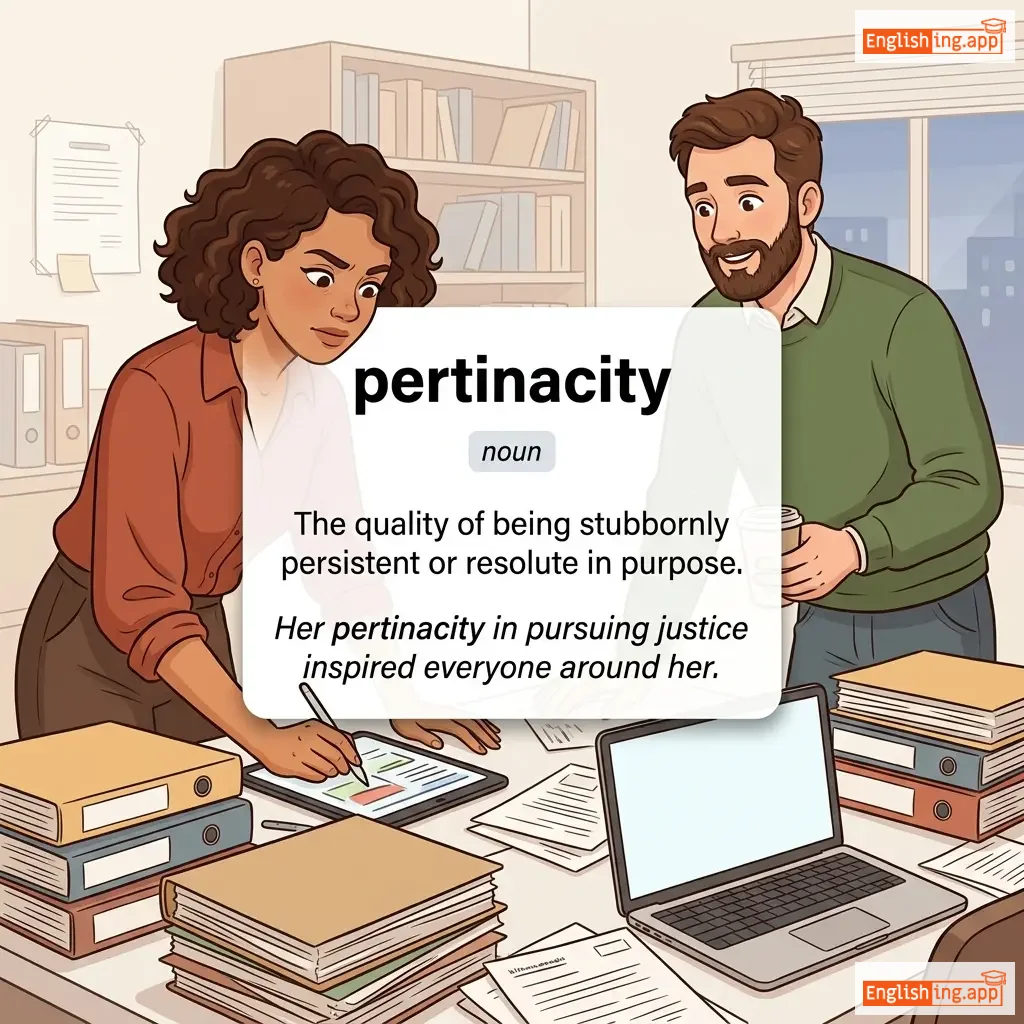
pertinacity definition card — visual illustration of the meaning
noun
/ˌpɜːrtɪˈnæsɪti/
упорство (uporstvo)

The quality of being stubbornly persistent or resolute in purpose.

"Her pertinacity in pursuing justice inspired everyone around her."

"Её упорство в стремлении к справедливости вдохновляло всех вокруг." (ee uporstvo v stremlenii k spravedlivosti vdohnavlyalo vsekh vokrug)
adjective
/ˈpɜːrtɪnənt/
актуальный (aktualnyy)

Relevant or applicable to a particular matter.

"She asked a pertinent question during the meeting."

"Она задала актуальный вопрос на встрече." (Ona zadala aktual'nyj vopros na vstreche.)
noun
/ˈpɜːrtnəs/
дерзость (derzost)

boldness or forwardness in speech or behavior; sauciness

"Her pertness during the meeting surprised everyone."

"Ее дерзость на встрече удивила всех." (Eyo derzost' na vstreche udivila vsekh.)
verb
/pərˈtɜːrb/
потревожить (potrevozhit)

To disturb or unsettle greatly in mind.

"The sudden noise perturbed the students during the exam."

"Внезапный шум потревожил студентов во время экзамена." (Vnezapnyy shum potrevizhyl studentov vo vremya ekzamen.)
noun
/ˌpɜːrtərˈbeɪʃn/
пертурбация (perturbatsiya)

A state of anxiety, disturbance, or disorder.

"The announcement caused a perturbation in the financial markets."

"Объявление вызвало пертурбацию на финансовых рынках." (Ob'yavlenie vyzvalo perturbatsiyu na finansovykh rynkakh.)
adjective
/pərˈtɜːrbd/
взволнованный (vzvolnovannyy)

feeling anxious, unsettled, or disturbed

"He looked perturbed after hearing the bad news."

"Он выглядел взволнованным после того, как услышал плохие новости." (On viglyadel vzvolnovannym posle togo, kak uslyshal plokhie novosti.)
noun
/pəˈruːzl/
внимательное чтение (vnimatel'noe chtenie)

The action of reading or examining something carefully.

"The contract was given to the lawyer for perusal."

"Контракт был передан юристу для внимательного чтения." (Kontrakt byl peredan yuristu dlya vnimatel'nogo chteniya.)
verb
/pəˈruːz/
счастье (schastye)

to read something carefully and thoroughly; sometimes used to mean to browse casually

"She sat down to peruse the contract before signing it."

"Она не могла скрыть своего счастья, когда получила награду." (Ona ne mogla skryt' svoego schast'ya, kogda poluchila nagradu.)
verb
/pəˈveɪd/
проникать (pronikat)

to spread through and be present in every part of something

"The smell of fresh flowers pervaded the entire room."

"Запах свежих цветов наполнил всю комнату." (Zapakh svezhikh tsvetov napolnil vsyu komnatu.)
noun
/pəˈveɪʒən/
распространение (rasprostranenie)

the act of spreading through or being present everywhere in something

"There was a pervasion of hope throughout the community."
"Было распространение надежды по всей общине." (Bylo rasprostranenie nadezhdy po vsei obshchine.)
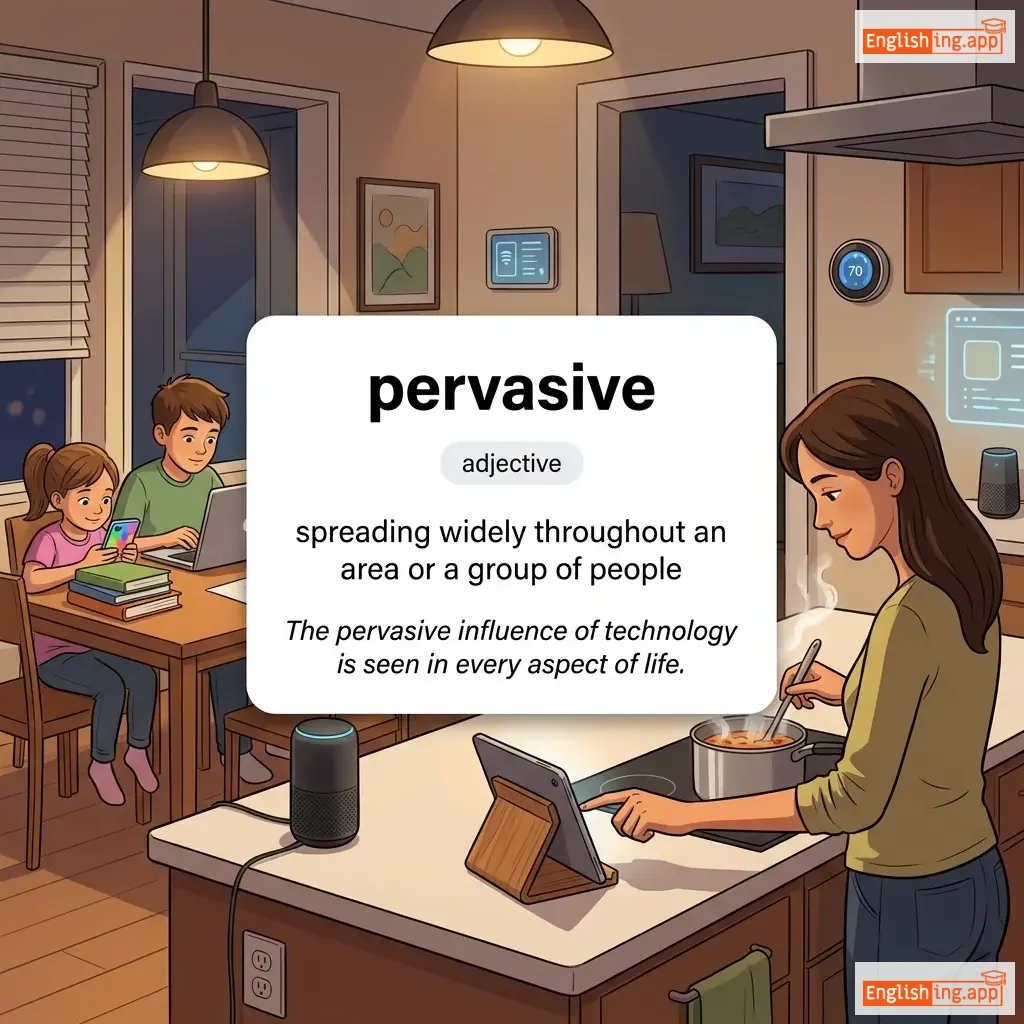
pervasive definition card — visual illustration of the meaning
adjective
/pərˈveɪsɪv/
пагубный (pagubnyy)

spreading widely throughout an area or a group of people

"The pervasive influence of technology is seen in every aspect of life."

"Всеобъемлющее влияние технологий видно во всех аспектах жизни." (Vseobyemlyushchee vliyanie tekhnologiy vidno vo vsekh aspektakh zhizni.)
adjective
/pərˈvɜːrs/
извращенный (izvrashchyonnyy)

showing a deliberate desire to behave in a way that is unreasonable, contrary, or unacceptable

"He took a perverse pleasure in upsetting his colleagues."

"Он получал извращенное удовольствие от того, чтобы расстраивать своих коллег." (On poluchal izvraschyonnoe udovol'stvie ot togo, chtoby rasstraivat' svoikh kolleg.)
noun
/pərˈvɜːrʒən/
извращение (izvrashchenie)

The act of distorting or corrupting the original meaning, purpose, or state of something.

"The regime’s censorship was seen as a perversion of free speech."

"Цензура режима была воспринята как извращение свободы слова." (Tsentzura rezima byla vosprinimena kak izvrashchenie svobody slova.)
noun
/pərˈvɜːrsəti/
перверзность (perverznost)

A deliberate and obstinate desire to behave in an unreasonable or unacceptable way.

"Out of sheer perversity, he refused to follow the simple instructions."

"Из-за чистой упрямости он отказался следовать простым инструкциям." (Iz-za chistoy upryamosti on otkazalsya sleduvat' prostym instruktsiyam.)
verb/noun
/pərˈvɜːrt/

As a verb: to distort the meaning or purpose of something; as a noun: a person with abnormal or immoral sexual behavior.

"He tried to pervert the truth to escape punishment."

adjective
/ˈpɜːrviəs/
проницаемый (pronitsaemyy)

Allowing water, air, or other substances to pass through; permeable.

"The soil here is pervious to rainwater."

"Земля здесь проницаема для дождевой воды." (Zemlya zdes' pronitsaema dlya dozhdevoy vody.)
noun
/ˈpesɪˌmɪzəm/
пессимизм (pessimizm)

A tendency to see the worst aspect of things or believe the worst will happen.

"Her constant pessimism made it hard to stay optimistic."

"Её постоянный пессимизм мешал оставаться оптимистичной." (Yeyo postoyannyy pessimizm meshchal ostavat'sya optimistichnoy.)
noun
/ˈpes.ə.mɪst/
пессимист (pessimist)

a person who tends to see the worst aspect of things or believes that the worst will happen; someone who lacks hope or confidence in the future

"Being a pessimist, he always expected the worst outcome."
"Будучи пессимистом, он всегда ожидал худший результат." (Buduchi pessimistom, on vsegda ozhidal khudshij rezul'tat)
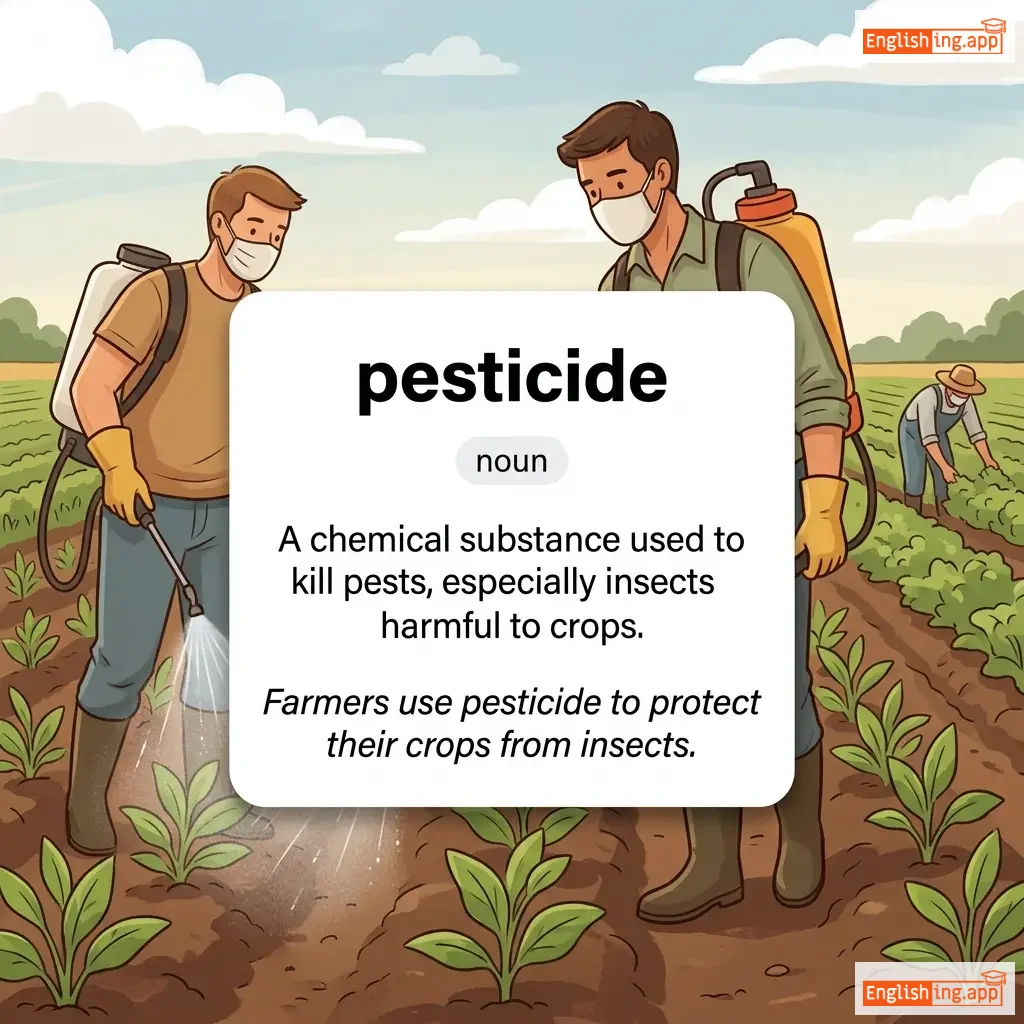
pesticide definition card — visual illustration of the meaning
noun
/ˈpɛstɪsaɪd/
пестицид (pestitsid)

A chemical substance used to kill pests, especially insects harmful to crops.

"Farmers use pesticide to protect their crops from insects."
"Фермеры используют пестициды для защиты своих посевов от насекомых." (Fermery ispol'zuyut pestitsidy dlya zashchity svoikh posevov ot nasekomykh.)
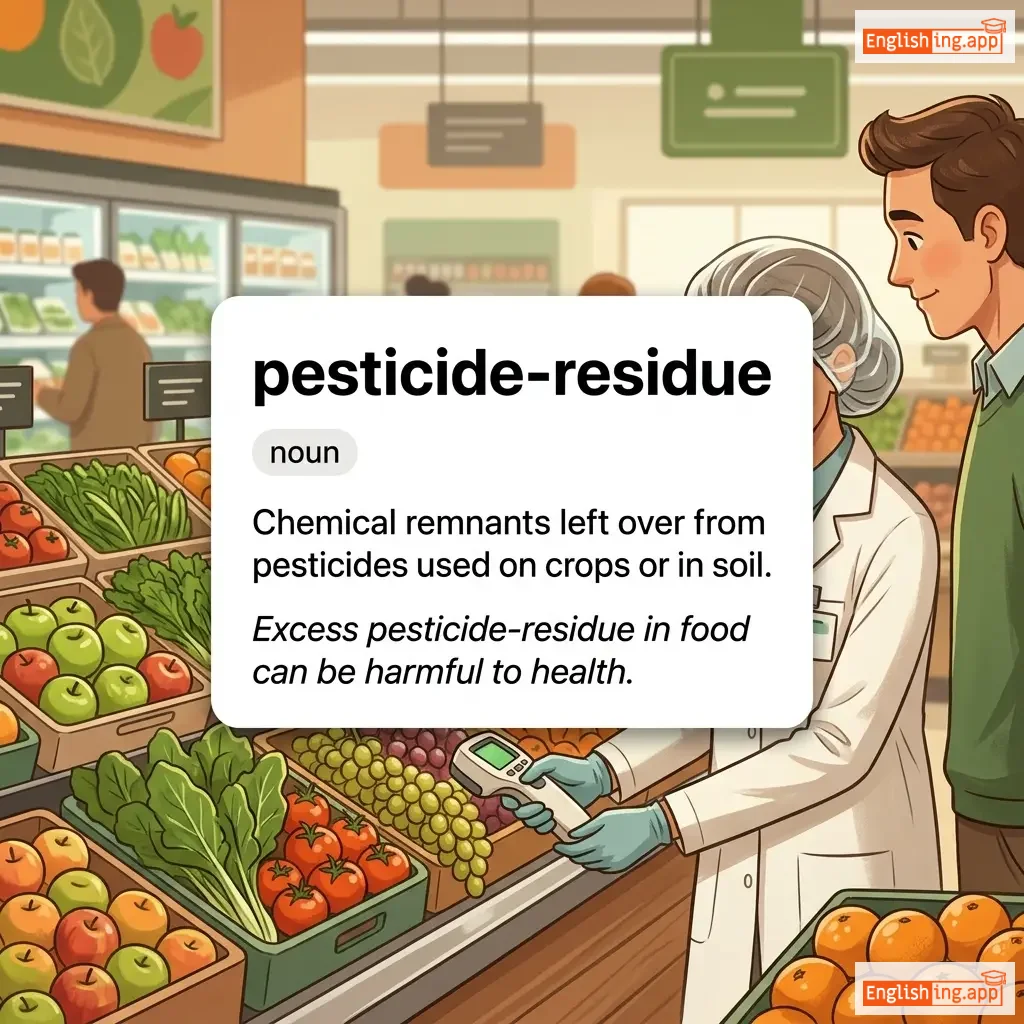
pesticide-residue definition card — visual illustration of the meaning
noun
/ˈpɛs.tɪ.saɪd ˈrɛz.ɪ.djuː/
остатки пестицидов (ostatki pestitsidov)

Chemical remnants left over from pesticides used on crops or in soil.

"Excess pesticide-residue in food can be harmful to health."
"Избыточные остатки пестицидов в пище могут быть вредными для здоровья." (Izbytochnye ostatki pestitsidov v pishche mogut byt' vrednymi dlya zdorov'ya.)
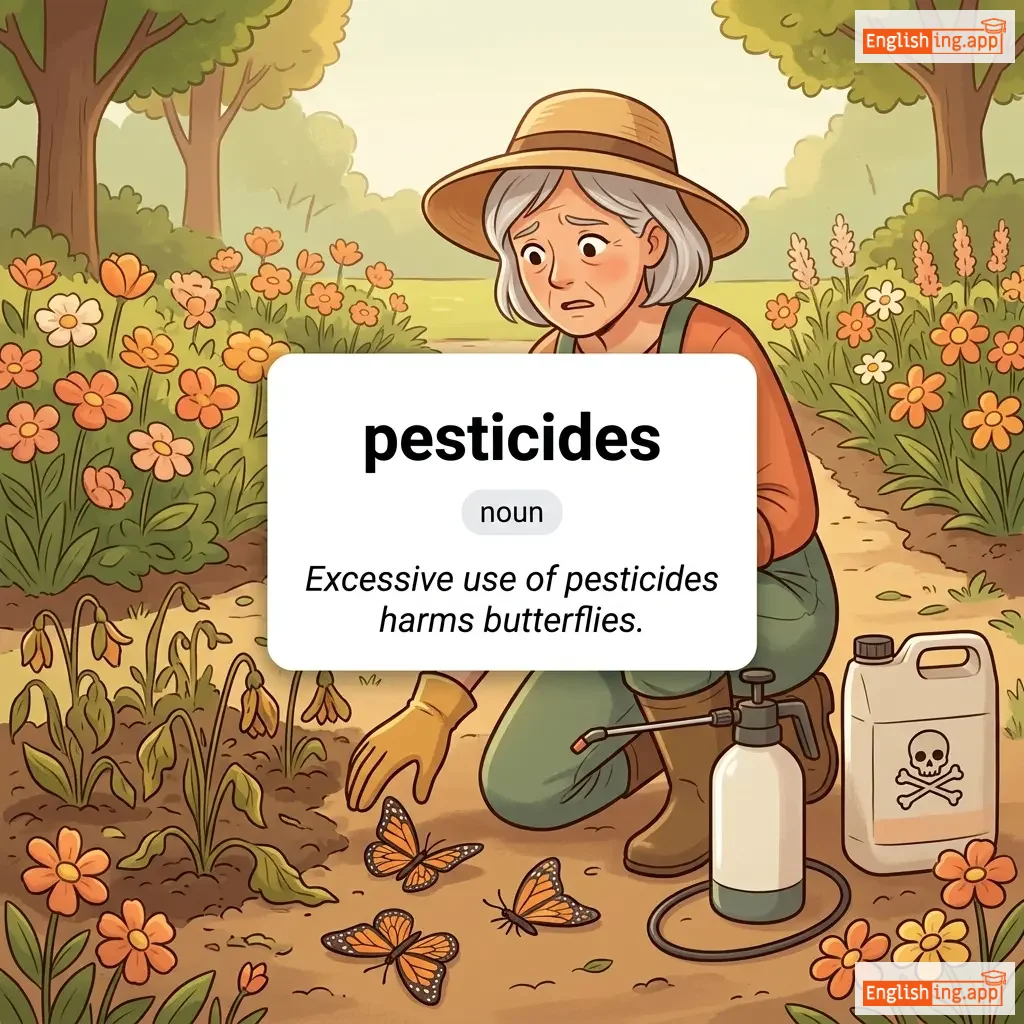
pesticides definition card — visual illustration of the meaning
noun
ˈpɛstɪsaɪdz
пестициды (pesticidy)

Chemical substances used to kill pests, but harmful to beneficial insects like butterflies.

"Excessive use of pesticides harms butterflies."

"Чрезмерное использование пестицидов вредно для бабочек." (Chrezmernoe ispol'zovanie pestitsidov vredno dlya babochek.)
noun
/ˈpɛstɪləns/
чума (chuma)

A deadly or virulent epidemic disease that spreads rapidly.

"The medieval city was devastated by a pestilence."

"Средневековый город был опустошен чумой." (Srednevekovyy gorod byl opustoshyon chumoy.)
adjective
/ˈpɛstɪlənt/
пестицидный (pestitsidny)

Causing or tending to cause death or destruction; harmful or pernicious.

"The pestilent atmosphere of the swamp made people sick."

"Пестилентная атмосфера болота заставляла людей болеть." (Pestilentnaya atmosfera bolota zastavlyala lyudey bolet'.)
adjective
/ˌpɛstɪˈlɛnʃəl/
пестилентный (pestilentnyy)

Relating to or causing pestilence; very harmful, troublesome, or dangerous.

"The pestilential smell of the garbage filled the street."

"Пестилентный запах мусора заполнил улицу." (Pestilentnyy zapakh musora zapolnil ulitsu.)
noun
/ˈpɛsəl/
пестик (pestik)

A heavy tool with a rounded end used for crushing or grinding substances in a mortar.

"She used a pestle to grind the spices."
"Она использовала пестик для измельчения специй." (Ona ispol'zovala pestik dlya izmel'cheniya spetsiy.)
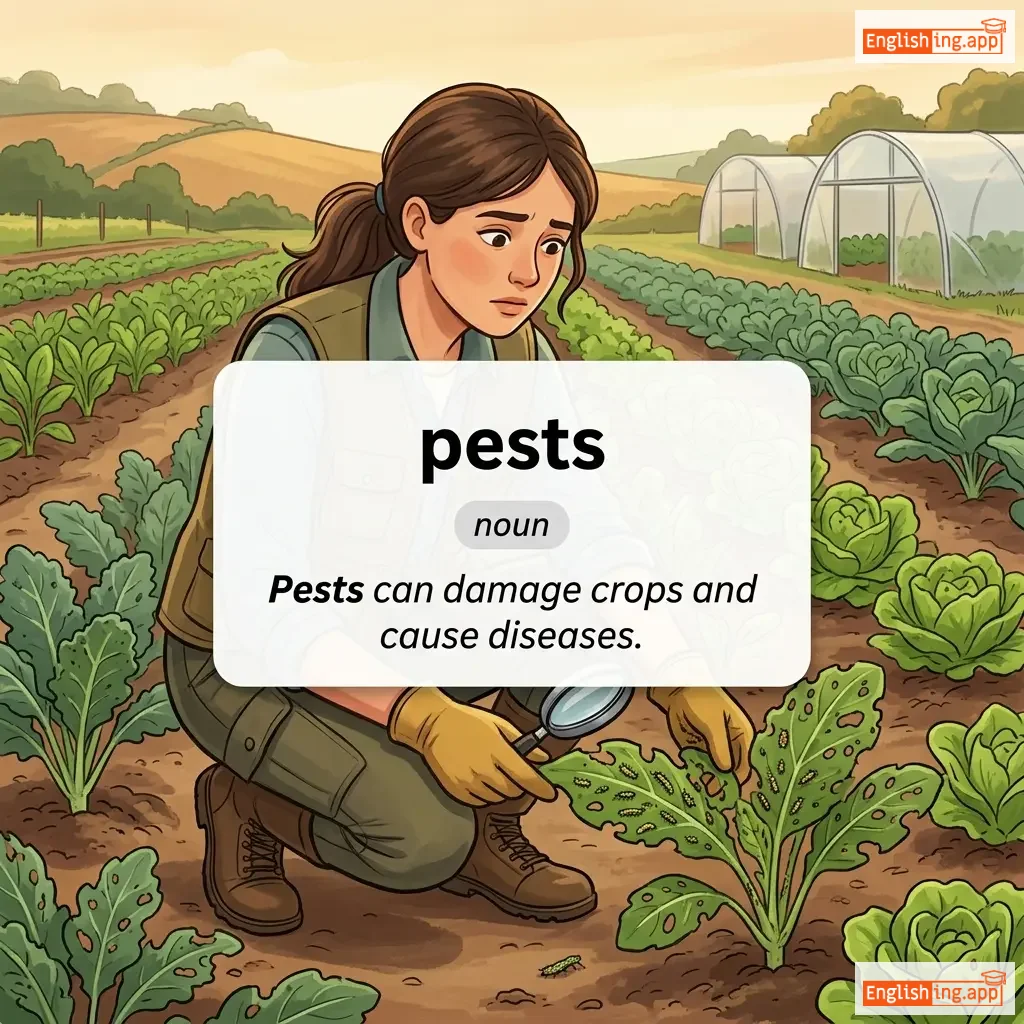
pests definition card — visual illustration of the meaning
noun
pɛsts
вредители, паразиты (vrediteli, parazity)

Harmful or troublesome creatures, especially insects or small animals that damage crops, food, or living spaces.

"Pests can damage crops and cause diseases."

"Вредители могут повреждать растения и вызывать болезни." (Vrediteli mogut povrezhdat' rastenija i vyzyvat' bolezni.)
noun
/pɛt/
питомец (pitomets)

a domesticated animal kept for companionship or pleasure

"My dog is my favorite pet."

"Моя собака - мой любимый питомец." (Moya sobaka - moy lyubimy pitomets.)
noun
/ˈpetəl/
лепесток (lepestok)

One of the colored segments of a flower that forms the corolla

"Each petal of the daisy was white with a yellow center."

"Каждый лепесток ромашки был белым с желтым центром." (Kazhdyi lepestok romashki byl belym s zheltým tsentrom)
verb
/ˈpiːtər/
постепенно угасать (postepenno ugasat)

to diminish gradually and come to an end; to fade or dwindle away

"The excitement of the event began to peter out after a few hours."

"Волнение от события начало угасать через несколько часов." (Volevanie ot sobytiya nachalo ugasat' cherez neskol'ko chasov.)
noun
/pəˈtɪʃən/
петиция (petitsiya)

a formal written request, typically signed by many people, appealing to authority about a cause

"They signed a petition to improve road safety in the area."

"Они подписали петицию за улучшение безопасности на дорогах в этом районе." (Oni podpisali petitsiyu za uluchshenie bezopasnosti na dorogakh v etom rayone.)
verb
/ˈpɛtrɪfaɪ/
окаменеть (okamenet')

to make someone so frightened that they are unable to move or think; to turn into stone

"The loud noise petrified the little child."

"Громкий шум ошеломил маленького ребенка." (Gromkiy shum oshelomil malen'kogo rebenka.)
noun
/ˈpɛtrəˌɡræf/
описание горных пород (opisanie gornykh porod)

a description or representation of rocks, especially in detailed scientific writing

"The scientist studied the petrograph to understand the rock composition."

"Ученый изучал петрограф, чтобы понять состав породы." (Ucheny izuchal petrograph, chtoby ponyat sostav porody.)
noun
/ˈpetɪkoʊt/
панталон (pantalon)

an undergarment worn by women under a dress or skirt

"She wore a white petticoat under her dress."

"Она носила белую панталону под своим платьем." (Ona nosila beluyu pantalonu pod svoim platyem.)
verb
/ˈpɛtɪˌfɒɡ/
спорить о мелочах (sporit' o melochakh)

to argue or quibble over trivial matters; to engage in petty, dishonest practices

"The lawyer was accused of trying to pettifog instead of addressing the real issue."

"Адвокат был обвинен в том, что пытался спорить о мелочах, вместо того чтобы заняться реальной проблемой." (Advokat byl obvinen v tom, chto pytalsya sporit' o melochakh, vmesto togo chtoby zanyat'sya real'noj problemoj.)
adjective
/ˈpɛti/
незначительный (neznachitel'nyy)

Of little importance or trivial; also describes a person overly concerned with small or unimportant matters.

"She often gets upset over the most petty things."

"Она часто расстраивается из-за самых незначительных вещей." (Ona chasto rasstraivayetsya iz-za samykh neznaachitel'nykh veshchey.)
noun
/ˈpɛtjʊləns/
петулянтность (petuljantnost)

The quality of being childishly sulky or bad-tempered.

"His petulance during the meeting annoyed everyone."

"Его петуранс на встрече раздражал всех." (Yego petuljants na vstreche razdrazhal vsekh.)
adjective
/ˈpɛtjʊlənt/
капризный (kaprizny)

Childishly sulky or bad-tempered.

"The child became petulant when denied more candy."

"Ребёнок стал капризным, когда ему не дали больше конфет." (Rebyonok stal kapriznym, kogda emu ne dali bolshe konfet.)
noun
/ˈfeɪlæŋks/
фаланга (falanga)

A group of people or things arranged in a compact, close formation; also an ancient Greek military formation.

"A phalanx of reporters waited outside the courthouse."

"Фаланга репортеров ждала снаружи у суда." (FALANGA REPORTEROV ZHDALA SNARUZI U SUDa.)
noun
/ˈfænˌtæzəm/
привидение (prividenie)

an illusion, ghost, or figment of the imagination

"The child claimed to see a phantasm in the old house."

"Ребёнок утверждал, что видел привидение в старом доме." (Rebyonok utverzhdal, chto videl prividenie v starom dome.)
adjective
/ˌfæntæzməˈɡɒrɪkəl/
фантасмагорический (fantasmagoricheskiy)

Having a fantastic, dreamlike, or surreal appearance, often shifting or illusory.

"The movie created a phantasmagorical vision of another world."

"Фильм создал фантасмагорическое видение другого мира." (Film sozdaval fantasmagoricheskoe videnie drugogo mira.)
adjective
/ˌfærɪˈseɪɪkəl/
фарисейский (faryseyjskiy)

Excessively concerned with formal rules or outward show of morality, often in a hypocritical way.

"His pharisaical behavior made people doubt his sincerity."

"Его фарисейское поведение заставило людей сомневаться в его искренности." (Yego faryseyiskoye povedeniye zastavilo lyudey somnevatsya v yego iskrennosti.)
noun
/ˈfærɪsiː/
лицемерный человек (litsemernıy chelovek)

A member of an ancient Jewish sect; by extension, a self-righteous or hypocritical person.

"He acted like a pharisee, judging others while ignoring his own faults."

"Он вел себя как фарисей, осуждая других, но игнорируя свои собственные ошибки." (On vel sebya kak farisey, osuzhdaya drugikh, no ignoriruya svoi sobstvennye oshibki.)
noun
/ˌfɑːrməkəˈpiːə/
фармакопея (farmakopeya)

An official book listing medicinal drugs, their effects, and directions for use.

"The doctor referred to the pharmacopoeia to check the drug's proper dosage."

"Доктор обратился к фармакопее, чтобы проверить правильную дозу лекарства." (Doktor obratilsya k farmakopee, chtoby proverit' pravil'nuyu dozu lekarstva.)
noun
/ˈfɑːrməsi/
аптека (apteka)

A place where medicinal drugs are prepared and sold.

"I went to the pharmacy to buy antibiotics."

"Я пошел в аптеку купить антибиотики." (Ya poshel v apteku kupit' antibiotiki.)
noun
/feɪz/
фаза (faza)

a distinct period or stage in a process of development

"We are in the final phase of the project."
"Мы находимся на последней фазе проекта." (My nakhodimsya na posledney faze proekta.)
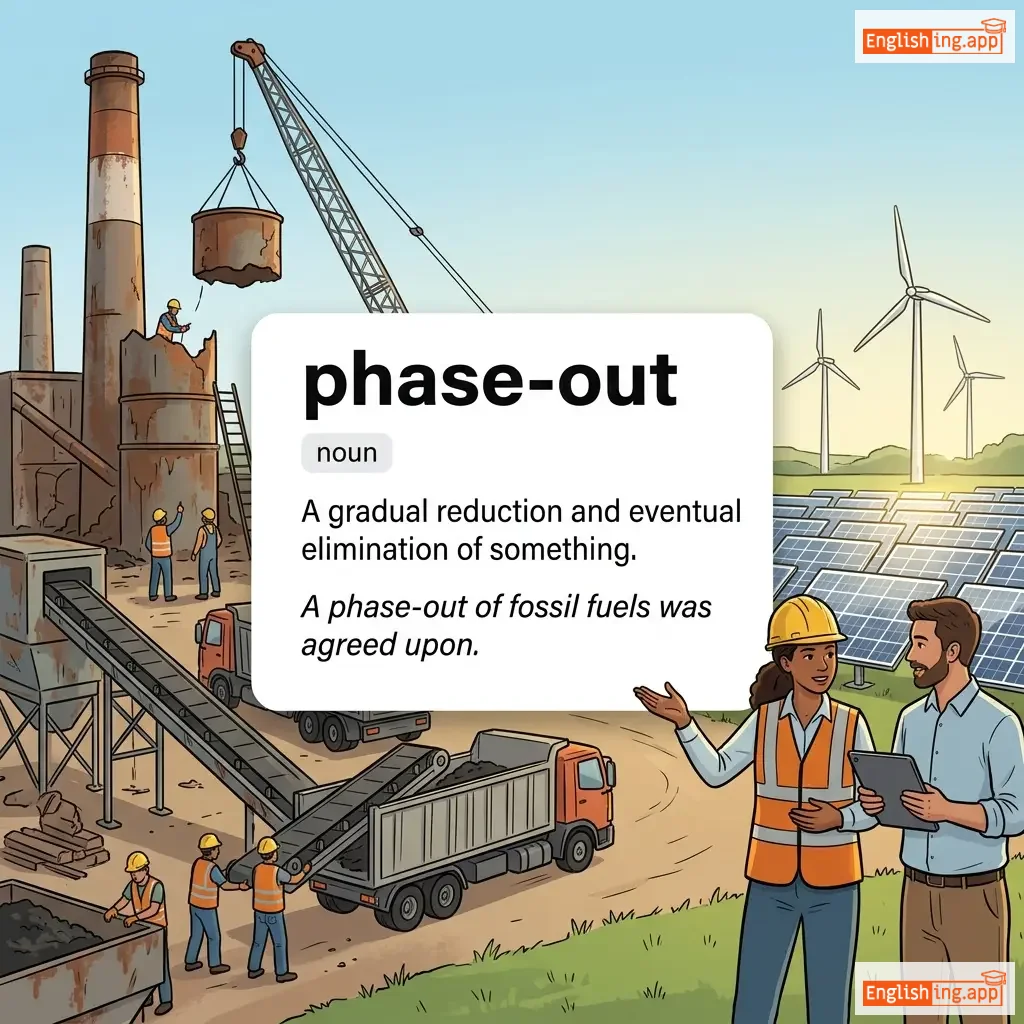
phase-out definition card — visual illustration of the meaning
noun
ˈfeɪz.aʊt
поэтапное сокращение (poetapnoe sokrashchenie)

A gradual reduction and eventual elimination of something.

"A phase-out of fossil fuels was agreed upon."

"Было принято решение о поэтапном отказе от ископаемого топлива." (Bylo prinato reshenie o poetapnom otkaze ot iskopayemogo topliva.)