Словари

Словарь английского языка | Значения слов, определения и примеры

noun
/ˈɔːrθədɑːksi/
ортодоксия (ortodoksiya)

traditional or generally accepted beliefs and practices

"The religious leader defended the orthodoxy of the faith."

"Религиозный лидер защищал ортодоксию веры." (Religioznyy lider zashchishchal ortodoksiya very.)
adjective
/ɔːrˈθɑːɡənl/
ортогональный (ortogonal'nyy)

at right angles; independent or unrelated

"In mathematics, two vectors are orthogonal if their dot product is zero."

"В математике два вектора ортогональны, если их скалярное произведение равно нулю." (V matematike dva vektora ortogonal'nyy, esli ikh skalarnoye proizvedeniye ravno nulyu.)
noun
/ɔːrˈθɑːɡrəfi/
орфография (orfografiya)

The conventional spelling system of a language.

"English orthography can be confusing for learners."

"Английская орфография может быть запутанной для учащихся." (Angliyskaya orfografiya mozhet byt' zaputannoy dlya uchashchikhsya.)
adjective
/ˌɔːrθəˈpiːdɪk/
связанный с коррекцией деформаций костей или мышц (svyazannyy s korrektsiyey deformatsiy kostey ili myshts)

Relating to the correction of deformities of bones or muscles.

"She visited an orthopedic surgeon for her back pain."
"Она обратилась к ортопеду из-за болей в спине." (Ona obratilas' k ortopedu iz-za boley v spine.)
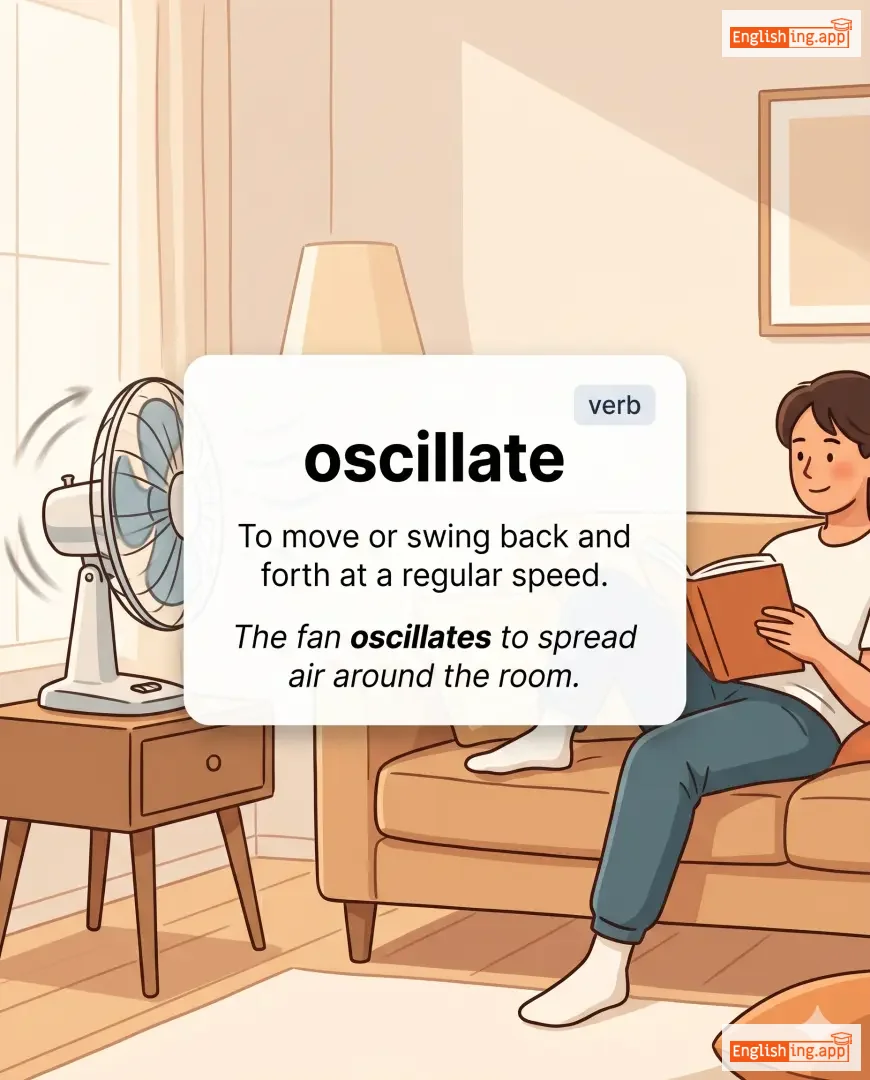
oscillate definition card — visual illustration of the meaning
verb
/ˈɑːsɪleɪt/
счастье (schast'ye)

To move or swing back and forth at a regular speed.

"The fan oscillates to spread air around the room."

"Она не могла скрыть свою радость, когда получила награду." (Ona ne mogla skryt' svoyu radost', kogda poluchila nagradu.)
noun
/ˌɑːsɪˈleɪʃən/
колебание (kolebaniye)

The movement back and forth at a regular speed.

"The oscillation of the pendulum controls the clock."

"Колебания маятника управляют часами." (Kolebaniya mayatnika upravlyayut chasami.)
verb
/ˈɑːskjʊleɪt/
целовать (tselovat)

To kiss.

"They osculated under the mistletoe during the party."

"Они поцеловались под омелой на вечеринке." (Oni potselovalis' pod omeloy na vecherinke.)
adjective
/ˈɒsiəs/
костный (kostnyj)

consisting of or turned into bone; bony

"The fossil showed osseous structures of the ancient creature."

"Окаменелость показала костные структуры древнего существа." (Okamenelost' pokazala kostnye struktury drevnego suschestva.)
adjective
/ˈɑːsɪˌfaɪd/
превращенный в кость, жесткий (prevrashchyonnyy v kost', zhestkiy)

Turned into bone or become rigid; unwilling to change.

"The company had an ossified management structure that resisted innovation."

"Компания имела жесткую структуру управления, которая сопротивлялась инновациям." (Kompaniya imela zhestkuyu strukturu upravleniya, kotoraya soprotivlyalas' innovatsiyam.)
verb
/ˈɒsɪfaɪ/
оссифицировать (ossifitsirovat)

to turn into bone or become rigid and inflexible

"With age, some tissues tend to ossify."

"С возрастом некоторые ткани начинают осифицироваться." (S vozrastom nekotorye tkani nachinayut ossifitsirovatsya.)
adjective
/ɒˈstɛnsəbl/
очевидный (ochevidnyy)

stated or appearing to be true, but not necessarily so

"His ostensible reason for leaving was illness, but many doubted it."

"Его очевидная причина для ухода была болезнь, но многие сомневались в этом." (Ego ochevidnaya prichina dlya ukhoda byla bolezn', no mnogiye somnevayalis' v etom.)
adjective
/ɒˈstɛnsɪv/
остенсивный (ostensivny)

clearly demonstrative or pointing out; explicitly shown

"The teacher gave an ostensive example to clarify the concept."

"Учитель привел остенсивный пример, чтобы разъяснить концепцию." (Uchitel' privyol ostensivnyy primer, chtoby raz'yasnit' kontseptsiyu.)
noun
/ˌɒstɛnˈteɪʃən/
показуха (pokazukha)

excessive display of wealth or knowledge intended to attract admiration or envy

"The billionaire’s party was full of ostentation and luxury."

"Вечеринка миллиардера была полна показухи и роскоши." (Vecherinka milliardera byla polna pokazukhi i roskoshi.)
ostentatious definition card — visual illustration of the meaning
adjective
/ˌɒstɛnˈteɪʃəs/
претенциозный (pretentsioznyy)

Characterized by a showy or pretentious display intended to impress others.

"He wore an ostentatious gold chain to the party."

"Он носил на вечеринке претенциозную золотую цепочку." (On nosil na vecherinke pretentsioznuyu zolotuyu tsepochku.)
noun
/ˈɒstrəsɪzəm/
остракизм (ostrakizm)

The act of excluding someone from a group or society.

"The student faced ostracism after breaking the rules."
"Студент столкнулся с острикатизмом после того, как нарушил правила." (Student stolknulsya s ostrakizmom posle togo, kak narushil pravila.)
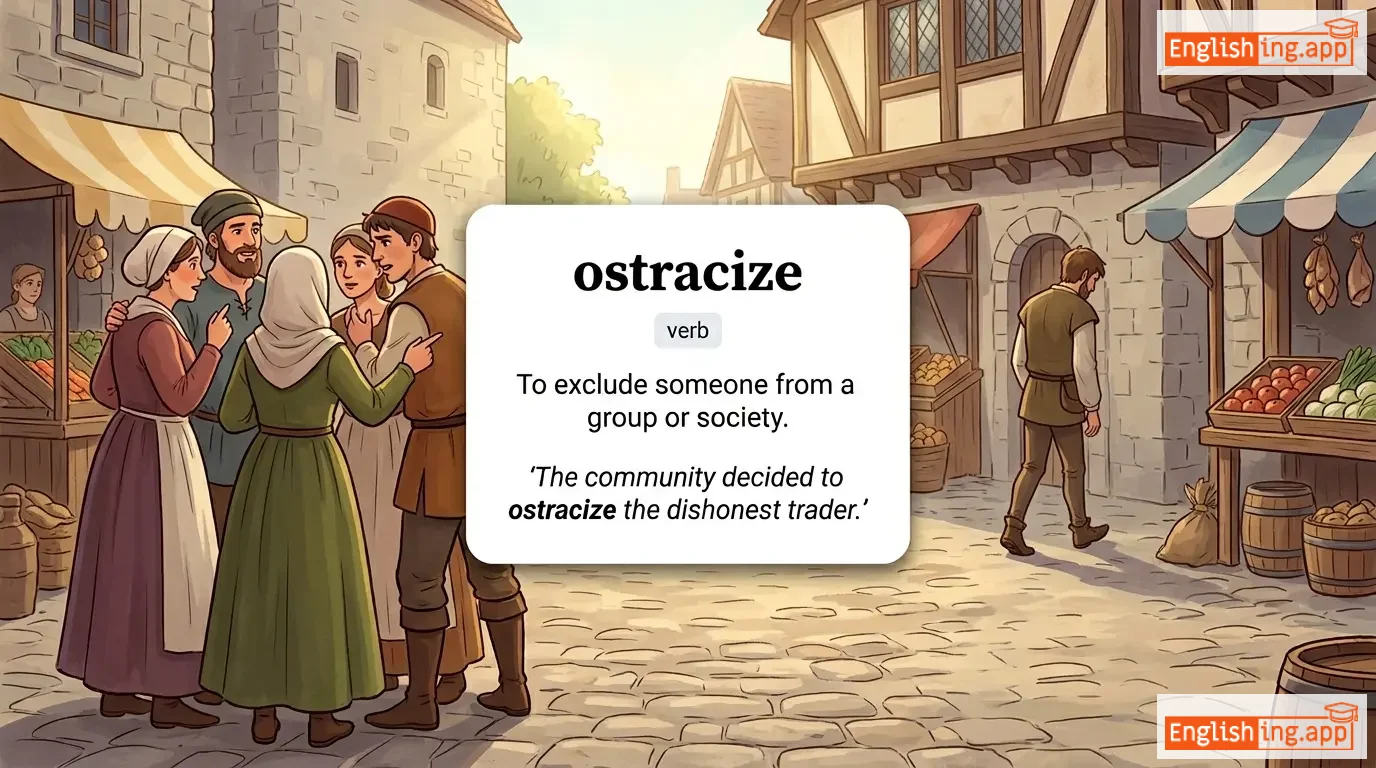
ostracize definition card — visual illustration of the meaning
verb
/ˈɒstrəsaɪz/
остранить (ostranit)

To exclude someone from a group or society.

"The community decided to ostracize the dishonest trader."

"Сообщество решило остранить нечестного торговца." (Soobshchestvo reshilo ostranit nechestnogo torgovtsa.)
noun
/ˈɒs.trɪtʃ/
страус (straus)

a large flightless bird native to Africa with long legs and neck

"The ostrich is the world's largest bird."

"Страус - самая большая птица в мире." (Straus - samaya bol'shaya ptitsa v mire)
adjective
/ˈʌðər/
другой (drugoy)

used to refer to something different from the one already mentioned or known

"I don't want this one, I will take the other one."

"Я не хочу это, я возьму другое." (Ya ne khochu eto, ya voz'mu drugoye.)
pronoun
/ˈʌðərz/
другие (drugie)

people or things distinct from the ones already mentioned or known

"I like to spend time with others."

"Мне нравится проводить время с другими." (Mne nravitsya provodit' vremya s drugimi.)
adverb
/ˈʌðərwaɪz/
иначе (inache)

in a different or other way

"We need to hurry; otherwise, we'll miss the train."

"Нам нужно поторопиться, иначе мы опоздаем на поезд." (Nam nuzhno potoropitsya, inache my opozdaem na poezd.)
noun
/ˈɒt.ər/
выдра (vyra)

a mammal with webbed feet that lives near water and feeds on fish

"The playful otter swam gracefully in the river."

"Игривая выдра плавала грациозно в реке." (Igrivaya vydra plavala gratsiozno v reke.)
modal verb
/ɔːt/
следует (sleduet)

Used to indicate duty, correctness, or moral obligation.

"You ought to respect your elders."

"Тебе следует уважать старших." (Tebe sleduyet uzhashchat' starshikh.)
pronoun
/aʊər/
наш (nash)

belonging to or associated with the speaker and one or more other people

"This is our house."

"Это наш дом." (Eto nash dom.)
pronoun
/aʊərz/
наш (nash)

belonging to or associated with us

"This victory is ours."

"Эта победа наша." (Eta pobeda nasha.)
pronoun
/aʊərˈsɛlvz/
мы сами (my samyi)

used by the speaker to refer to themselves and one or more others as the object of the verb

"We should help ourselves before helping others."

"Мы должны помочь себе, прежде чем помочь другим." (My dolzhny pomoch' sebe, prezhde chem pomoch' drugim.)
verb
/aʊst/
отстранить (otstranit)

To remove someone from a position or place of power or authority.

"The rebels ousted the dictator from power."

"Повстанцы отстранили диктатора от власти." (Povstantsy otstranili diktatora ot vlasti.)
adverb
/aʊt/
наружу (naruzhu)

moving or appearing away from the inside or center; not at home or present

"He stepped out of the room quietly."

"Он тихо вышел из комнаты." (On tikho vyshel iz komnaty.)
adjective
/ˌaʊt ən ˈaʊt/
полный (polnyy)

complete; absolute; used to emphasize something extreme

"The speech was an out-and-out lie."

"Речь была полной ложью." (Rech' byla polnoy lozh'yu.)
noun
/ˈaʊt.breɪk/
вспышка (aut-breyk)

a sudden occurrence or eruption of something, especially disease or violence

"The outbreak of flu affected many students in the school."

"Вспышка гриппа повлияла на многих учащихся в школе." (Vspyshka grippa povliyala na mnogikh uchashchikhsya v shkole.)
adjective
/ˌaʊt əv ðə ˈweɪ/
удалённый или необычный (udalyonnyy ili neobychnyy)

remote or unusual; not in a convenient or usual location

"They stayed in an out-of-the-way village."

"Они остались в удалённой деревне." (Oni ostalis' v udalennoy derevne.)
noun
/ˈaʊt.saɪ.dər/
аутсайдер (outsajder)

a person who does not belong to a particular group; someone not accepted by a group

"As an outsider, he found it difficult to understand their traditions."

"Как аутсайдер, ему было трудно понять их традиции." (Kak aoutsayder, emu bylo trudno ponyat' ikh traditsii.)
noun
/ˈaʊtˌbreɪk/
вспышка (vspishka)

a sudden start or occurrence of something unpleasant, like disease or violence

"There was an outbreak of flu in the city."

"В городе произошла вспышка гриппа." (V gorode proizoshla vspyshka grippa.)
noun
/ˈaʊtbɜːrst/
внезапный всплеск эмоций или гнева (vnezapnyy vsplesk emotsiy ili gneva)

a sudden release of strong emotion or activity

"She had an angry outburst during the meeting."

"Она выразила свой гнев во время собрания." (Ona vyrazila svoy gnev vo vremya sobraniya.)
noun
/ˈaʊtkæst/
изгой (izgoy)

a person who is rejected or excluded from society or a group

"He felt like an outcast at school."

"Он чувствовал себя изгоем в школе." (On chuvstvoval sebya izgoem v shkole.)
noun
/ˈaʊtkʌm/
результат (rezultat)

the result or consequence of an action or situation

"The outcome of the project was beyond expectations."

"Результат проекта превзошел ожидания." (Rezultat proyekte prevzoshyel ozhidaniya.)
noun
/ˈaʊtˌkraɪ/
протест (protest)

A strong expression of public anger or disapproval.

"The decision sparked an outcry among the citizens."

"Решение вызвало протест среди граждан." (Reshenie vyzvalo protest sredi grazhdan.)
adjective
/ˌfæʃ.ənd/
устаревший (ustarevshiy)

obsolete; no longer current

"This computer software is completely outdated."

"Это программное обеспечение полностью устарело." (Eto programmnoye obespecheniye polnost'yu ustarelo.)
verb
/ˌaʊtˈduː/
превзойти (prezoyti)

To do better than someone else; to surpass.

"She always tries to outdo her classmates in exams."

"Она всегда пытается превзойти своих одноклассников на экзаменах." (Ona vsegda pytayetsya prevzoiti svoikh odnoklassnikov na ekzamenakh.)
adjective
/ˈaʊtdɔːr/
на свежем воздухе (na svezhem vozdukhe)

situated, existing, or done outside a building

"We planned an outdoor picnic for the weekend."

"Мы запланировали пикник на свежем воздухе на выходные." (My zaplanirovali piknik na svezhem vozdukhe na vykhodnye.)
adverb; noun
/ˌaʊtˈdɔːrz/
на открытом воздухе (na otkrytom vozdukhe)

outside a building; the natural environment outside

"We spent the whole afternoon outdoors enjoying the fresh air."

"Мы провели весь день на открытом воздухе, наслаждаясь свежим воздухом." (my proveli ves den na otkrytom vozdukhe, naslazhdaias svezhim vozdukhom)
adjective
/ˈaʊtər/
внешний (vneshniy)

situated on or toward the outside; external

"The outer layer of the jacket is waterproof."

"Внешний слой куртки водоотталкивающий." (Vneshniy sloy kurtki vodoottalkivayushchij.)
noun
/ˈaʊtˌfɪt/
наряд (naryad)

A set of clothes worn together, often for a particular occasion.

"She wore a beautiful outfit to the party."

"Она носила красивый наряд на вечеринку." (Ona nosila krasivyj naryad na vecherinku.)
adjective
/ˈaʊtˌɡoʊɪŋ/
общительный (obshchitel'nyy)

Friendly and sociable; inclined to mix with others.

"He is an outgoing person who loves meeting new people."

"Он общительный человек, который любит встречаться с новыми людьми." (On obshchitel'nyy chelovek, kotoryy lyubit vstrechatsya s novymi lyud'mi.)
noun
/ˈaʊtˌɡroʊθ/
развитие (razvitiye)

something that grows out of something else; a natural development or result

"The new policy was an outgrowth of years of debate."

"Новая политика стала развитием многолетних дебатов." (Novaya politika stala razvitiem mnogoletnikh debatov.)
noun
/ˈaʊtɪŋ/
поездка (poezdka)

a short trip or excursion, often for leisure or enjoyment

"They had a lovely outing at the beach last weekend."

"Они провели замечательную поездку на пляже в прошлые выходные." (Oni proveli zamechatelnuyu poezdku na plyazhe v proshlye vykhodnye.)
adjective
/ˌaʊtˈlændɪʃ/
странный (strannyy)

Looking or sounding bizarre or unfamiliar; strange.

"He wore an outlandish costume to the festival."

"Он носил странный костюм на фестивале." (On nosil strannyy kostyum na festivale.)
verb
/aʊtˈlæst/
выжить дольше, чем (vyzhit' dol'she, chem)

to continue longer than; to endure beyond someone or something else

"The old castle has outlasted many generations."

"Старый замок пережил многие поколения." (Staryy zamok perezhil mnogiye pokoleniya.)
noun, verb
/ˈaʊtlɔː/
изгой (izgoy)

as a noun: a person who breaks the law and lives outside its protection; as a verb: to make something illegal

"The government decided to outlaw the harmful practice."

"Правительство решило запретить вредную практику." (Pravitelstvo reshilo zapretit vrednuyu praktiku)
noun
/ˈaʊtlet/
выход (vykhod)

a means by which something is released, expressed, or distributed

"Art is a great outlet for emotions."

"Искусство — отличный выход для эмоций." (Iskusstvo — otlichnyy vykhod dlya emotsiy.)
noun, verb
/ˈaʊtlaɪn/
план, схема (plan, shema)

a general description or plan that gives the main ideas without details; to describe something briefly or highlight main points

"The teacher asked us to outline our research project before writing the report."

"Учитель попросил нас составить план нашего исследовательского проекта, прежде чем писать отчет." (Uchitel' poprosil nas sostavit' plan nashego issledovatelskogo proekta, prezhde chem pisat' otchet.)