Словари

Словарь английского языка | Значения слов, определения и примеры

olfactory definition card — visual illustration of the meaning
adjective
/ɑːlˈfæktəri/
обонятельный (olfactory)

Relating to the sense of smell.

"The perfume activated her olfactory nerves immediately."
"Парфюм сразу активировал её обонятельные нервы." (Parfyum srazu aktiviroval yeyo obonyatelnyye nervy)
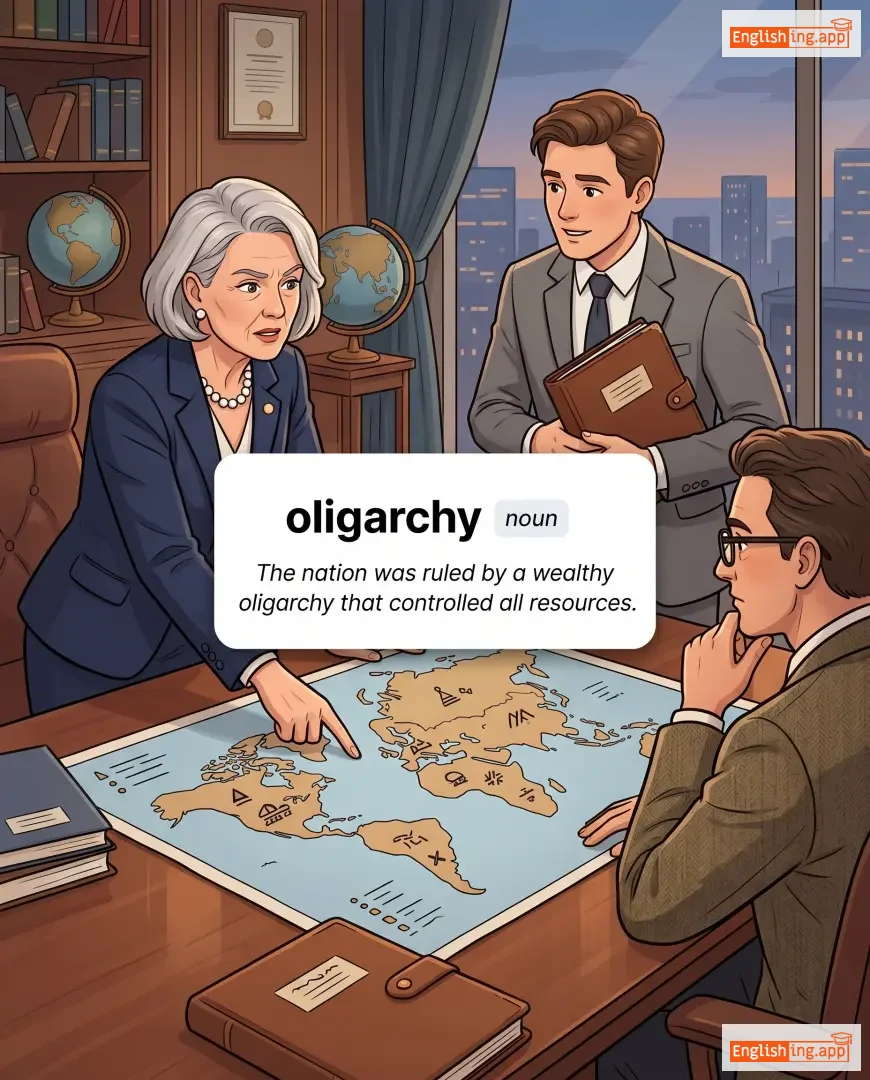
oligarchy definition card — visual illustration of the meaning
noun
/ˈɑːlɪˌɡɑːrki/
олигархия (oligarkhiya)

A small group of people having control of a country, organization, or institution.

"The nation was ruled by a wealthy oligarchy that controlled all resources."

"Страну управляла богатая олигархия, контролировавшая все ресурсы." (Stranu upravlyala bogataya oligarkhiya, kontrolirovavshaya vse resursy.)
noun
/ˈɑː.lɪv/
олива (oliva)

a small oval fruit with a hard pit, typically green or black, used for eating or making oil

"Olive oil is considered one of the healthiest cooking oils available."

"Оливковое масло считается одним из самых полезных для здоровья масел для готовки." (Olivkovoye maslo schitayetsya odnim iz samykh poleznykh dlya zdorov'ya masel dlya gotovki.)
noun
/ˈɒlɪv bɑːb/
оливковый барбус (olivkovy barbus)

A small freshwater fish with olive-colored body and barbels

"The olive barb is commonly found in South Asian rivers."

"Оливковый барбус обычно встречается в реках Южной Азии." (olivkovy barbus obychno vstrechayetsya v rekakh yuzhnoy azii)
noun
/ˈɒlɪv brɑːntʃ/
оливковая ветвь (olivkovaya vetv)

A symbol of peace or reconciliation; an offer to end conflict.

"He extended an olive-branch to his rival after years of hostility."

"Он протянул оливковую ветвь своему сопернику после многих лет вражды." (On protyanul olivkovuyu vetv' svoemu sooperniku posle mnogikh let vrazhdy.)
adjective
/əˈlɪmpɪk/
олимпийский (olimpiyskiy)

related to the Olympic Games, a major international sporting event

"She trained hard to compete in the Olympic Games."

"Она усердно тренировалась, чтобы участвовать в Олимпийских играх." (Ona usyerdno trenirovalas', chtoby uchastvovat' v Olimpiyskikh igrakh.)
Olympic Games definition card — visual illustration of the meaning
noun
əˈlɪm.pɪk ɡeɪmz
олимпийские игры (olimpiyskiye igry)

The world's largest international sports competition held every four years, bringing together athletes from different countries to compete in various sports.

"The Olympic Games bring together the world's top athletes."

"Олимпийские игры собирают лучших спортсменов мира." (Olimpiyskiye igry sobirayut luchshikh sportsmenov mira.)
noun
/əˈlɪmpɪks/
Олимпийские игры (Olimpiyskiye igry)

an international sports competition held every four years with athletes from many countries

"The Olympics bring athletes from all over the world together."

"Олимпийские игры собирают спортсменов со всего мира." (Olimpiyskiye igry sobirayut sportsmenov so vsego mira.)
noun
/ˈɒm.lət/
омлет (omlet)

a dish made from beaten eggs cooked in a frying pan and often folded around a filling

"She made a cheese omelet for breakfast."

"Она приготовила сырный омлет на завтрак." (ona prigotovila syryj omlet na zavtrak.)
noun
/ˈoʊ.mən/
предвестие будущего удачи или неудачи (predvestie budushchego udachi ili neudachi)

an event regarded as a sign of future good or bad luck

"Many people consider a black cat crossing your path a bad omen."

"Многие люди считают, что черная кошка, пересекающая ваш путь, - это плохой знак." (Mnogie lyudi schitayut, chto chernaya koshka, peresekayushchaya vash put', eto plokhoy znak.)
adjective
/ˈɒmɪnəs/
угрожающий (ugrozhayushchiy)

Giving the impression that something bad or unpleasant is going to happen.

"Dark clouds gave an ominous sign of an approaching storm."

"Темные облака дали угрожающий знак приближающейся бури." (Temnye oblake dali ugrozhayushchiy znak priblizhayushcheysya buri.)
noun
/əˈmɪʃən/
опущение (opushchenie)

The act of leaving out or excluding something; something that has been left out.

"Her omission of important details caused confusion."

"Ее опущение важных деталей вызвало путаницу." (Eyo opushchenie vazhnykh detalei vyzvalo putanitsu.)
omit definition card — visual illustration of the meaning
verb
/oʊˈmɪt/
опускать (opuskать)

to leave out or exclude; to fail to include something

"Please don't omit any important details from your report."

"Пожалуйста, не упустите важные детали в своем отчете." (Pozhaluysta, ne upustite vazhnyye detali v svoem otchete.)
noun
/ɒmˈnɪpətəns/
всемогущество (vsemozhestvo)

The quality of having unlimited power or authority.

"Many religions describe God’s omnipotence as absolute."
"Многие религии описывают всемогущество Бога как абсолютное." (Mnogie religii opisyvayut vsemozhestvo Boga kak absolyutnoe.)
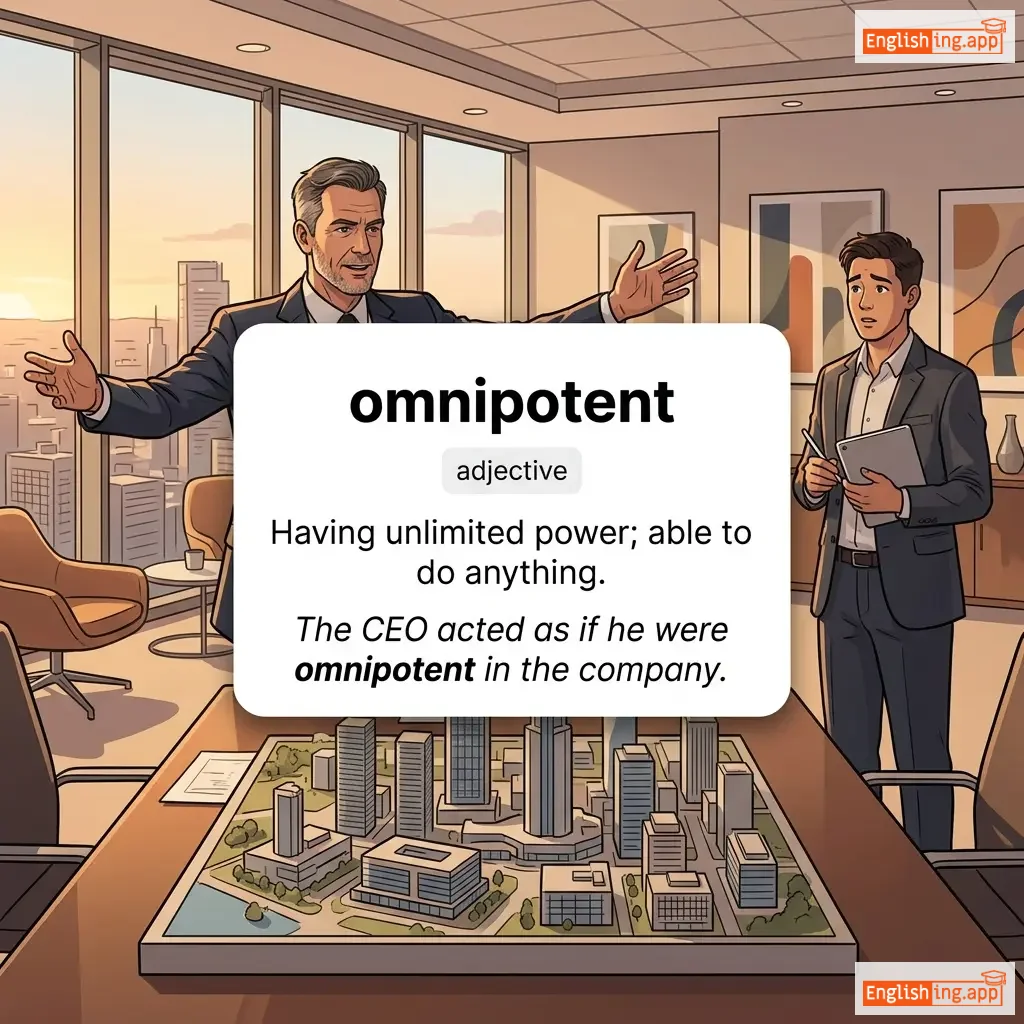
omnipotent definition card — visual illustration of the meaning
adjective
/ɒmˈnɪpətənt/
всемогущий (vsemogushchiy)

Having unlimited power; able to do anything.

"The CEO acted as if he were omnipotent in the company."

"Генеральный директор вел себя так, как будто он был всемогущим в компании." (General'nyy direktor vel sebya tak, kak budto on byl vsemogushchim v kompanii.)
omnipresent definition card — visual illustration of the meaning
adjective
/ˌɒmnɪˈprɛzənt/
вездесущий (vezdesushchiy)

present everywhere at the same time

"In the digital age, social media feels omnipresent in our lives."

"В цифровую эпоху социальные сети ощущаются как повсеместные в нашей жизни." (V tsifrovuyu epokhu sotsial'nye seti oshchushchayutsya kak povsemyestnye v nashey zhizni.)
noun
/ɒmˈnɪʃəns/
всеведение (vsemiedenie)

the state of knowing everything

"The novel's narrator has an air of omniscience, revealing every character's thoughts."

"Рассказчик романа обладает аурой всеведения, раскрывая мысли каждого персонажа." (Rasskazchik romana obladaet auroi vsemiedenia, raskryvaya mysli kazhdogo personazha.)
adjective
/ɒmˈnɪʃənt/
всезнающий (vseznayushchiy)

having complete or unlimited knowledge and awareness

"Some religions describe God as omniscient and all-powerful."

"Некоторые религии описывают Бога как всезнающего и всемогущего." (Nekotorye religii opisyvayut Boga kak vseznayushchego i vsemogushchego.)
adjective
/ɒmˈnɪvərəs/
всеядный (vse-yadny)

eating both plants and animals

"Humans are generally considered omnivorous creatures."

"Люди обычно считаются всеядными существами." (Lyudi obychno schitayutsya vseyadnymi sushchestvami.)
preposition
/ɒn/
на (na)

physically in contact with and supported by a surface

"The book is on the table."

"Книга на столе." (Kniga na stole.)
adverb
/wʌns/
один раз (odin raz)

on one occasion only; at a time in the past

"She visited Paris once last year."

"Она посетила Париж один раз в прошлом году." (Ona posetila Parizh odin raz v proshlom godu.)
1️⃣

one (van)

pronoun, noun, adjective
/wʌn/
один (odin)

the number equivalent to the sum of zero and one; a single person or thing

"Only one student answered the question."

"Только один студент ответил на вопрос." (Tol'ko odin student otvetil na vopros.)
noun
/wʌn θɜːd/
одна треть (odna treti)

one part of something that is divided into three equal parts

"One-third of the class was absent today."

"Одна треть класса была сегодня отсутствует." (Odna tret' klassa byla segodnia otsutstvuet.)
onerous definition card — visual illustration of the meaning
adjective
/ˈəʊnərəs/
трудный (trudnyj)

involving a great deal of effort, difficulty, or burden

"Fulfilling the contract proved to be an onerous task for the company."

"Выполнение контракта оказалось трудной задачей для компании." (Vypolnenie kontrakta okazalos trudnoj zadachej dlya kompanii.)
adjective
/ˈɒnɡəʊɪŋ/
в процессе (v protsesse)

continuing; still in progress

"The ongoing project will finish next month."

"Текущий проект будет завершён в следующем месяце." (Tekushchiy proyekt budet zavershyony v sleduyushchem mesyatse.)
noun
/ˈʌnjən/
лук (luk)

a round vegetable with a strong smell and flavor, usually used in cooking

"I chopped an onion to make the soup."

"Я нарезал лук, чтобы сделать суп." (Ya narezал luk, chtoby sdelat' sup.)
adjective/adverb
/ˈɒnˌlaɪn/
онлайн (onlayn)

connected to or available through the internet

"I prefer shopping online rather than going to stores."

"Я предпочитаю делать покупки онлайн, а не ходить по магазинам." (Ya predpochitayu delat pokupki onlayn, a ne khodit po magazinam.)
adjective/adverb
/ˈoʊnli/
только (tolko)

without others; solely

"He is the only person who knows the secret."
"Он единственный человек, который знает секрет." (On yedinstenniy chelovek, kotoryy znayet sekret.)
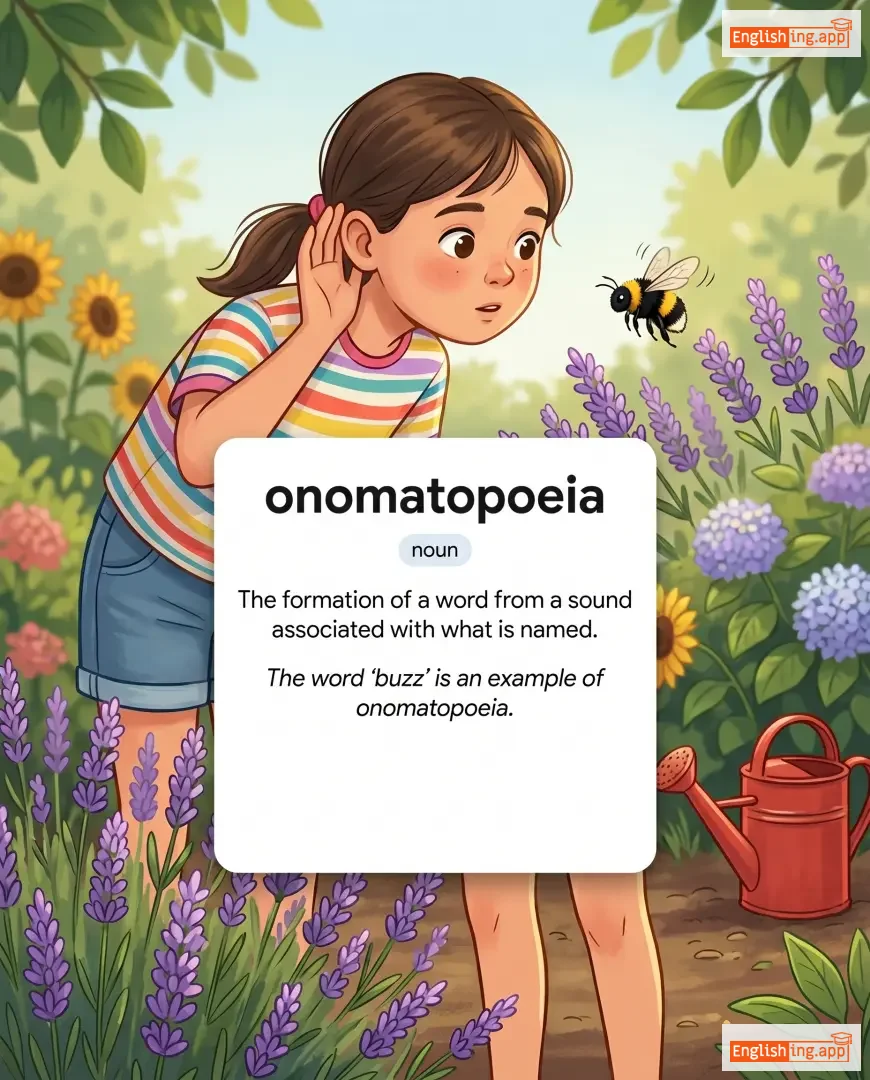
onomatopoeia definition card — visual illustration of the meaning
noun
/ˌɒn.əˌmæt.əˈpiː.ə/
ономатопея (onomatopeya)

The formation of a word from a sound associated with what is named.

"The word 'buzz' is an example of onomatopoeia."

"Слово 'жужжание' является примером ономатопеи." (Slovo 'zhuzhzhanie' yavyayetsya primerom onomatopeyi.)
noun
/ˈɒn.rʌʃ/
напор (napor)

A sudden powerful forward or downward rush or flow.

"The onrush of water swept away the bridge."

"Напор воды унес мост." (Napor vody unes most.)
noun
/ˈɒn.sɛt/
начало (nachalo)

The beginning of something, especially something unpleasant.

"The onset of winter brought cold winds and snow."

"Начало зимы принесло холодные ветра и снег." (Nachalo zimy prineslo kholodnye vetra i sneg.)
noun
/ˈɒn.slɔːt/
наступление (nastupleniye)

A fierce or destructive attack.

"The village faced an onslaught of enemy forces."

"Деревня столкнулась с нападением вражеских войск." (Derevnya stolknulas' s napadeniem vragikh voysk.)
preposition
/ˈɒntu/
на (na)

moving to a position on the surface of something

"She jumped onto the table to get the book."

"Она прыгнула на стол, чтобы взять книгу." (Ona prignula na stol, chtoby vzyat' knigu.)
noun
/ˈəʊ.nəs/
ответственность (otvetstvennost')

A duty or responsibility, especially a heavy one.

"The onus is on the government to provide relief to the victims."

"Ответственность за оказание помощи жертвам лежит на правительстве." (Otvetstvennost' za okazanije pomoshchi zhertvam lezhit na pravitel'stve.)
verb
/uːz/
просачиваться (prosachivatsya)

to slowly flow or leak out through small openings or pores

"Blood began to ooze from the small cut."

"Кровь начала просачиваться из маленькой царапины." (Krov' nachala prosachivatsya iz malen'koy tsarapiny.)
noun
/ˌoʊpəˈlɛsəns/
опалесценция (opalescentsiya)

a milky or pearly appearance of a surface like that of an opal

"The pearl had a gentle opalescence under the light."

"У жемчужины был мягкий опалесцирующий блеск при свете." (U zhemchuzhiny byl myagkiy opalesciruyushchiy blesk pri svete.)
adjective
/ˌoʊpəˈlɛsənt/
опаловый (opalovy)

showing or reflecting a milky, iridescent light like an opal

"The opalescent sky glowed with shades of pink and blue."
"Опалесцентное небо светилось розовыми и синими оттенками." (Opalescentnoe nebo svetilos' rozovymi i sinimi ottenkami.)
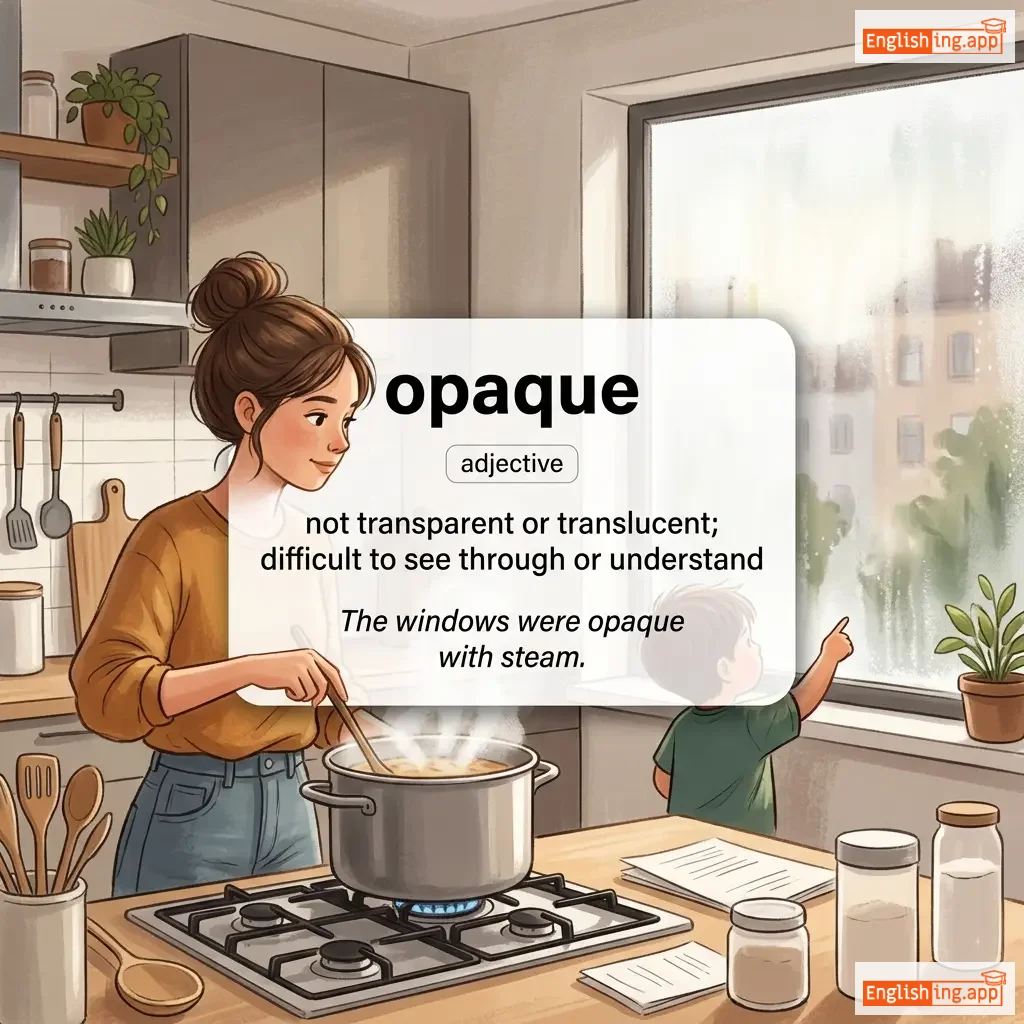
opaque definition card — visual illustration of the meaning
adjective
/oʊˈpeɪk/
непрозрачный (neprozrachny)

not transparent or translucent; difficult to see through or understand

"The windows were opaque with steam."

"Окна стали непрозрачными от пара." (Okna stali neprozrachnymi ot para.)
🔓

open

verb, adjective
/ˈoʊ.pən/

to move something so that it is no longer closed; not closed

"She opened the window to let in fresh air."

adjective
/ˈoʊ.pən ˈhæn.dɪd/
щедрый; либеральный (shchedryy; liberal'nyy)

Generous; liberal; giving freely;

"He is very open-handed with his money and always helps those in need."

"Он очень щедрый со своими деньгами и всегда помогает нуждающимся." (On ochen' shchedryy so svoimi dengami i vsegda pomogayet nuzhdayushchimsya.)
adjective
/ˈoʊ.pən ˈhɑrt.ɪd/
открытое сердце; щедрый и искренний; тепло воспринимающий; (otkrytoye serdtse; shchedryy i iskrenniy; teplo vosprinimayushchiy;)

Kind and generous; sincere and honest; warmly receptive;

"She welcomed the strangers with an open-hearted smile and invited them for dinner."

"Она встретила незнакомцев с открытым сердцем и пригласила их на ужин." (Ona vstretila neznakomtsev s otkrytym serdtsem i priglasila ikh na uzhin.)
noun
/ˈoʊpənɪŋ/
открытие (otkrytie)

an act or instance of beginning something

"The opening of the new store was a huge success."

"Открытие нового магазина стало большим успехом." (Otkrytie novogo magazina stalo bol'shim uspekhom.)
adverb
/ˈəʊpənli/
открыто (otkryto)

in a way that is not secret or hidden

"He spoke openly about his past mistakes."

"Он открыто говорил о своих прошлых ошибках." (On otkryto govorit o svoikh proshlykh oshibkakh.)
noun
/ˈɒpərə/
опера (opera)

a dramatic performance in which the actors sing most of their lines

"We watched a beautiful opera at the theater last night."
"Мы посмотрели красивую оперу в театре прошлой ночью." (My posmotreli krasivuyu operu v teatre proshloy noch'yu.)
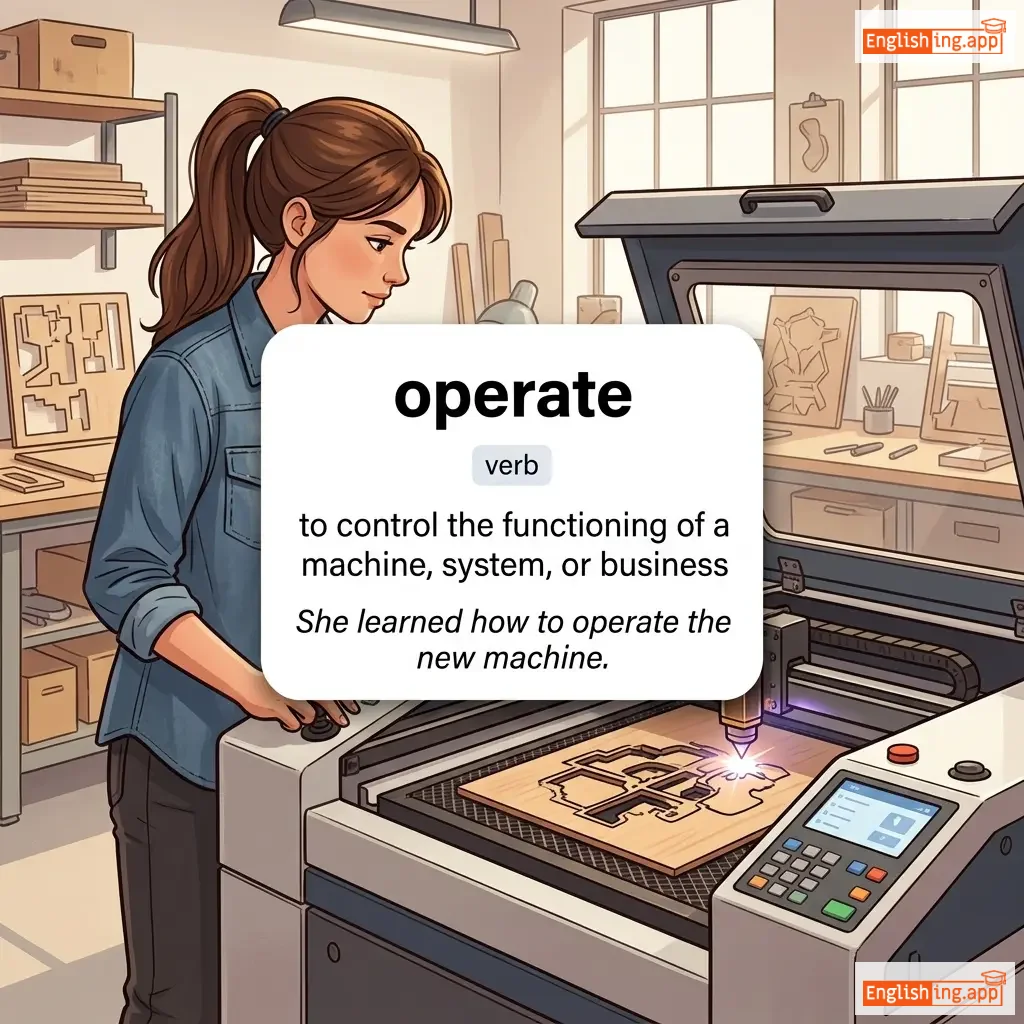
operate definition card — visual illustration of the meaning
verb
/ˈɑːpəˌreɪt/
управлять (upravlyat')

to control the functioning of a machine, system, or business

"She learned how to operate the new machine."

"Она научилась управлять новой машиной." (Ona nauchilas' upravlyat' novoy mashinoy.)
verb
/ˈɒpəreɪtɪŋ/
оперирующий (opiruyushchiy)

to control or manage the functioning of something

"The company has been operating in this market for five years."

"Компания работает на этом рынке уже пять лет." (Kompaniya rabotayet na etom rynke uzhe pyat' let.)
noun
/ˌɒpəˈreɪʃən/
операция (operatsiya)

an act or process of functioning or operating

"The hospital performed a successful operation."
"Больница провела успешную операцию." (Bol'nitsa provela uspeshnuyu operatsiyu.)
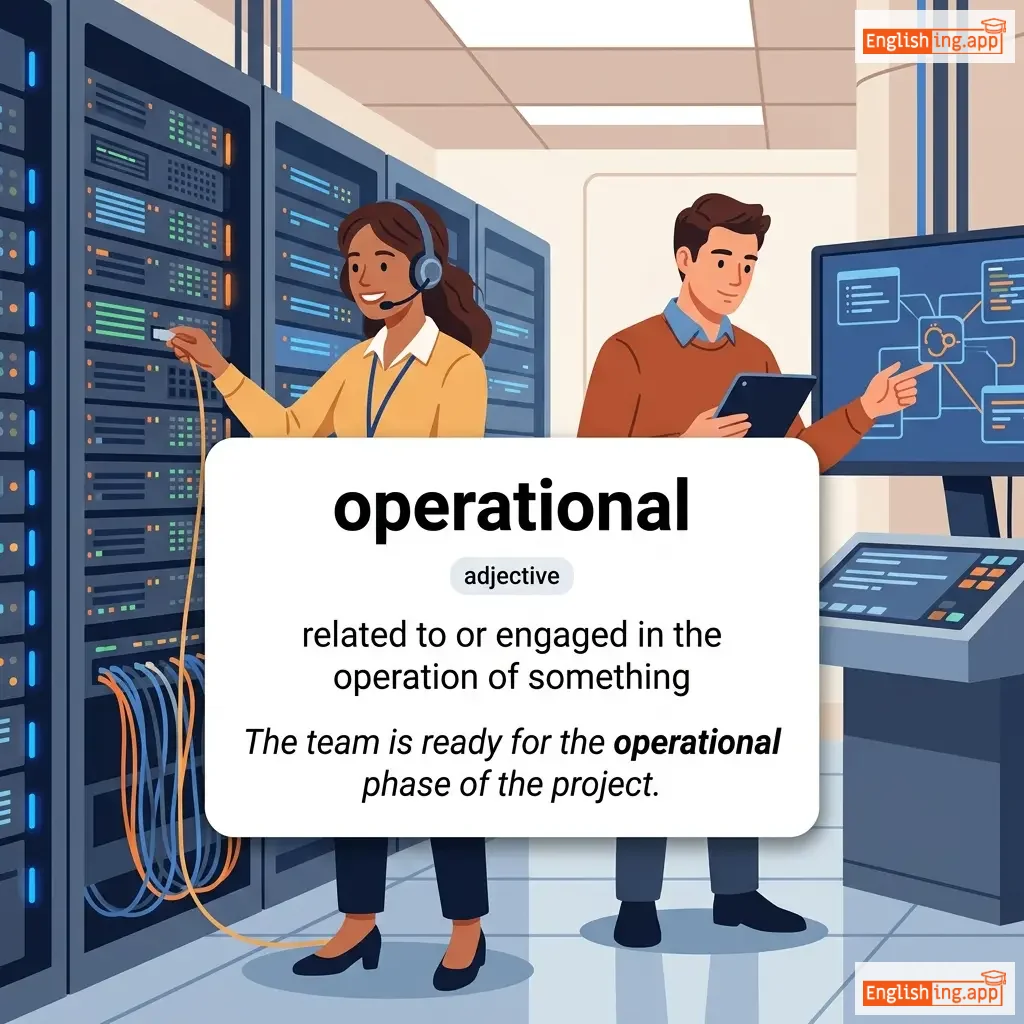
operational definition card — visual illustration of the meaning
adjective
/ˌɒpəˈreɪʃənl/
операционный (operatsionny)

related to or engaged in the operation of something

"The team is ready for the operational phase of the project."

"Команда готова к операционному этапу проекта." (Komanda gotova k operatsionnomu etapu proyекта.)
adjective
/ˈɒpərətɪv/
оперативный (operativnyy)

functioning, having effect, or relating to a secret agent or worker

"The new law is now operative across the country."

"Новый закон теперь действует по всей стране." (Novyy zakon teper' deystvuyet po vsey strane.)
noun
/ˈɒpəreɪtər/
оператор (operator)

a person who operates equipment, a business, or controls something

"The machine operator ensured that everything ran smoothly."

"Оператор машины обеспечил, чтобы всё работало гладко." (Operator mashiny obespechil, chtoby vsyo rabotalo gladko.)