Словари

Словарь английского языка | Значения слов, определения и примеры
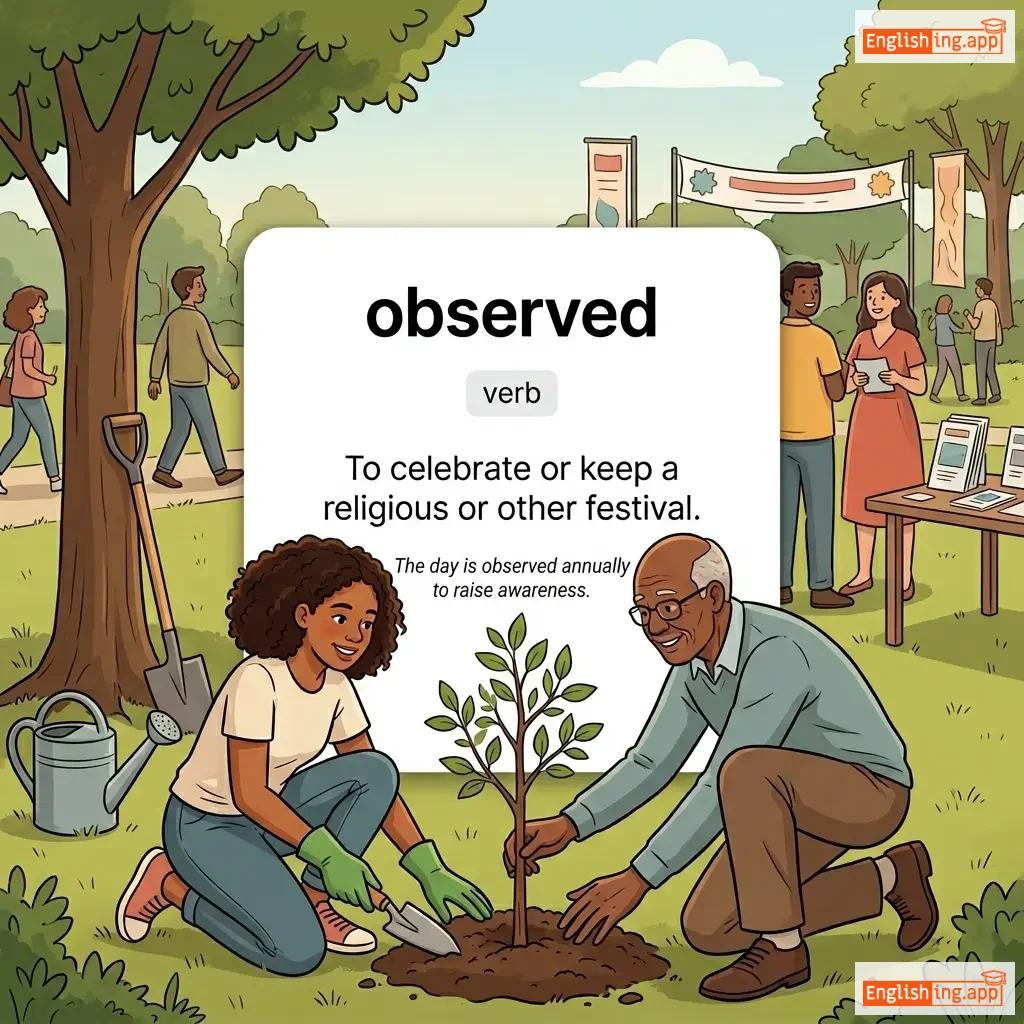
observed definition card — visual illustration of the meaning
verb
əbˈzɜːrvd
праздновать (prazdnovat')

To celebrate or keep a religious or other festival.

"The day is observed annually to raise awareness."

"Этот день празднуется ежегодно для повышения осведомленности." (Etot den' prazdnuyetsya ezhegodno dlya povysheniya osvedomlennosti.)
noun
/əbˈzɜːvər/
наблюдатель (nablyudatel)

a person who watches or notices something

"The observer took notes during the meeting."

"Наблюдатель сделал заметки во время встречи." (Nablyudatel sdelal zametki vo vremya vstrechi.)
verb
/əbˈsɛs/
одержимость (odyerzhiomost')

To preoccupy or fill the mind of someone continually and to an excessive degree.

"She tends to obsess over small details."

"Она склонна зацикливаться на мелочах." (Ona sklonna zaklikivatsya na melochakh.)
noun
/əbˈsɛʃən/
одержимость (oderzhimost)

An idea, thought, or concern that continually preoccupies or intrudes on a person's mind.

"His obsession with success drove him to work day and night."

"Его одержимость успехом заставляла его работать день и ночь." (Yego oderzhimost' uspekhom zastavlyala yego rabotat' den' i noch'.)
adjective
/əbˈsɛsɪv/
навязчивый (navyazchivyy)

Relating to or characterized by an obsession; thinking about something too much.

"He has an obsessive interest in cleanliness."

"У него навязчивый интерес к чистоте." (U nego navyazchivyy interes k chistote.)
noun
/əbˈsɪdiən/
обсидиан (темная стекловидная вулканическая порода) (obsidian (temnaya steklovidnaya vulkanicheskaya poroda))

A hard, dark, glasslike volcanic rock formed by rapid solidification of lava.

"The knife was made from sharp obsidian."
"Нож был сделан из острого обсидиана." (Nozh byl sdelan iz ostrogo obsidiana.)
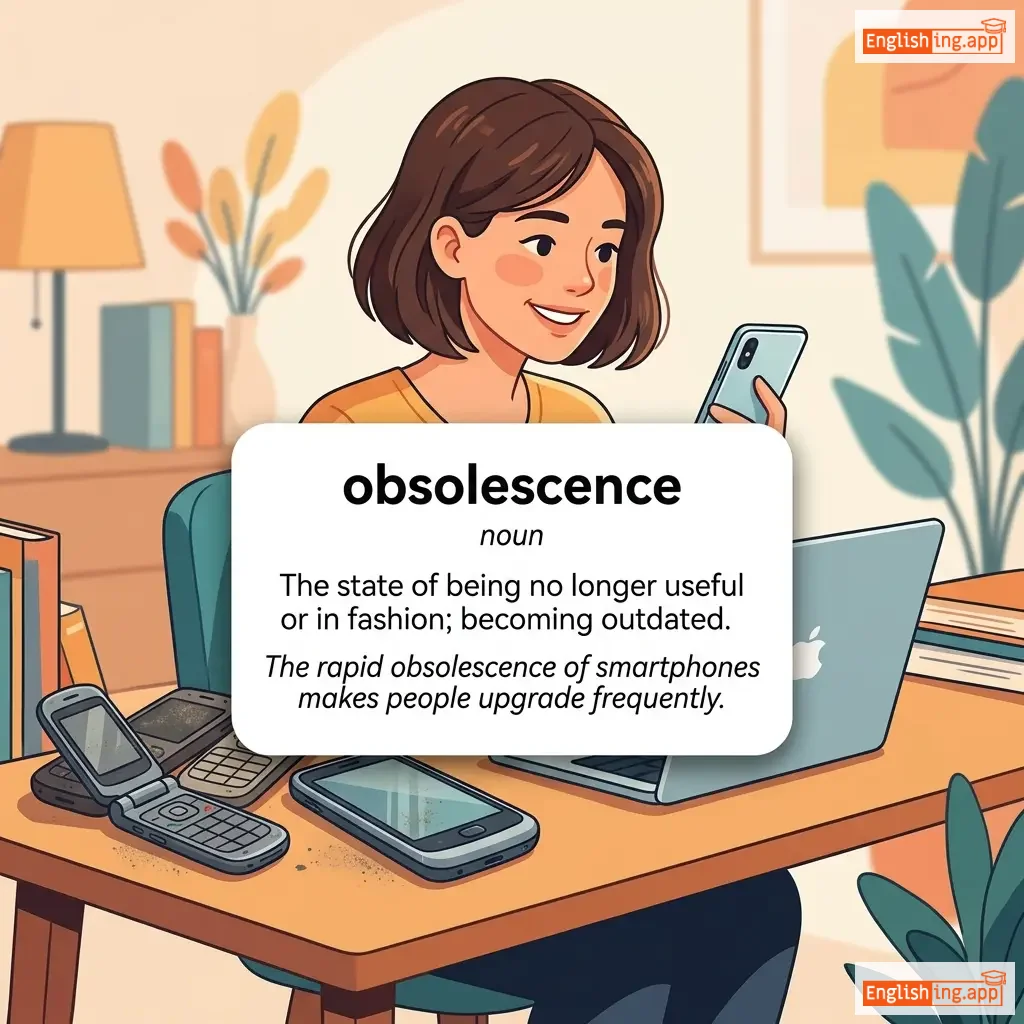
obsolescence definition card — visual illustration of the meaning
noun
/ˌɒbsəˈlɛsəns/
обсолесценция (obsolescentziya)

The state of being no longer useful or in fashion; becoming outdated.

"The rapid obsolescence of smartphones makes people upgrade frequently."

"Быстрая обсолесценция смартфонов заставляет людей часто обновлять устройства." (Bystraya obsolescentziya smartfonov zastavlyaet lyudey chasto obnovlyat' ustroystva.)
adjective
/ˌɒbsəˈlɛsnt/
устаревающий (ustarevayushchiy)

Becoming outdated or on the way to becoming obsolete.

"The obsolescent technology could not compete with modern devices."

"Устаревающая технология не могла конкурировать с современными устройствами." (Ustarevayushchaya tekhnologiya ne mogla konkurirovat' s sovremennymi ustroystvami.)
adjective
/ˌɒbsəˈliːt/
устаревший (ustarevshiy)

No longer in use or out of date.

"Floppy disks are now completely obsolete."
"Флоппи-диски теперь полностью устарели." (Floppy-diski teper' polnost'yu ustareli.)
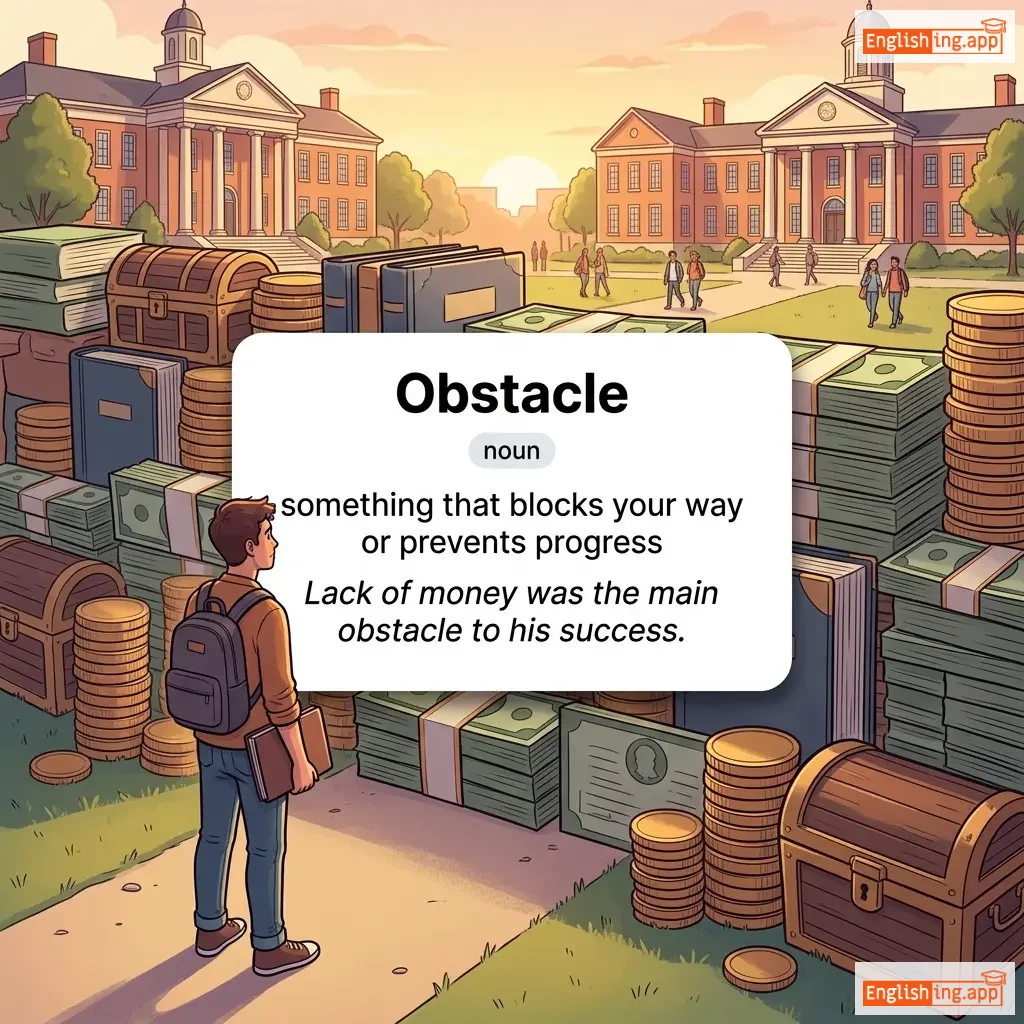
Obstacle definition card — visual illustration of the meaning
noun
/ˈɒbstəkəl/
препятствие (prepyatstvie)

something that blocks your way or prevents progress

"Lack of money was the main obstacle to his success."
"Отсутствие денег было главным препятствием для его успеха." (Otsutstvie deneg bylo glavnym prepyatstviem dlya yego uspekha.)
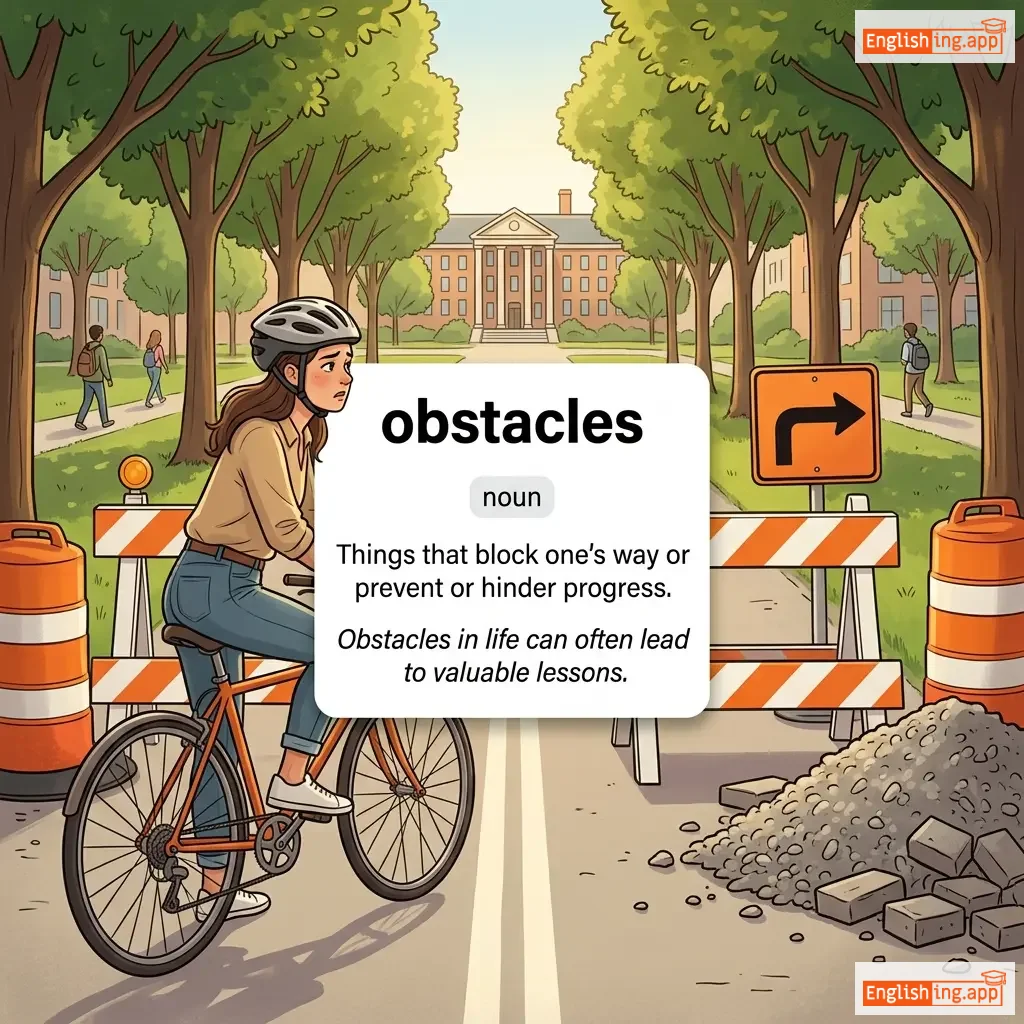
obstacles definition card — visual illustration of the meaning
noun
/ˈɒbstəkəlz/
препятствия (prepyatstviya)

Things that block one's way or prevent or hinder progress.

"Obstacles in life can often lead to valuable lessons."

"Препятствия в жизни часто приводят к ценным урокам." (Prepyatstviya v zhizni chasto privedut k tsennym urokam.)
noun
/ˌɒbstəˈtrɪʃən/
акушер-гинеколог (akusher-ginekolog)

A doctor specializing in pregnancy, childbirth, and women's reproductive health.

"The obstetrician monitored the mother’s health throughout the pregnancy."

"Акушер-гинеколог следил за здоровьем матери на протяжении всей беременности." (Akusher-ginekolog sledil za zdorov'em materi na protyazhenii vsei beremennosti.)
noun
/əbˈstɛtrɪks/
акушерство (akusherstvo)

The branch of medicine dealing with childbirth and care of women giving birth.

"She is studying obstetrics to become a specialist in childbirth."
"Она учится на акушерку, чтобы стать специалистом по родам." (Ona uchitsya na akusherku, chtoby stat' spetsialistom po rodam.)
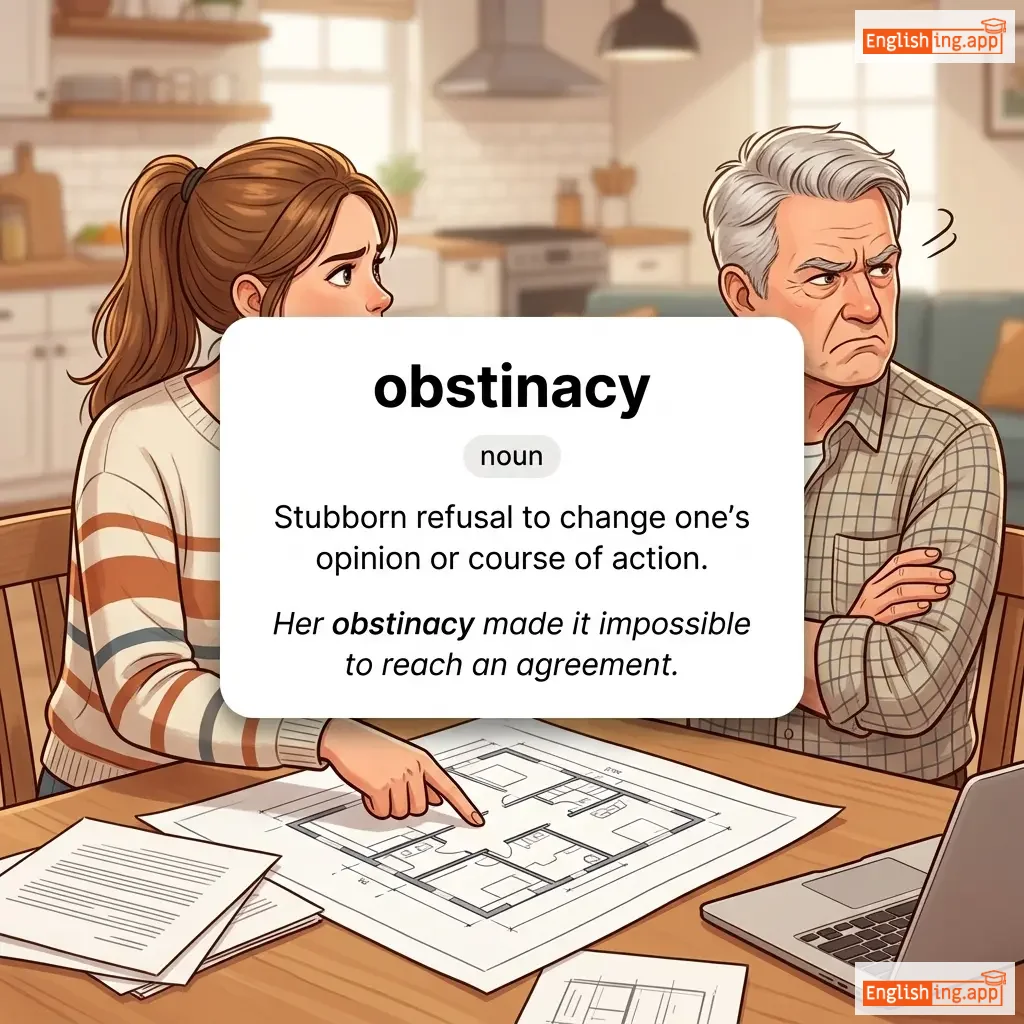
obstinacy definition card — visual illustration of the meaning
noun
/ˈɒbstɪnəsi/
упрямство (upryamstvo)

Stubborn refusal to change one’s opinion or course of action.

"Her obstinacy made it impossible to reach an agreement."
"Ее упрямство сделало невозможным достичь соглашения." (Eyo upryamstvo sdelalo nevozmozhnym dostich' soglasheniya.)
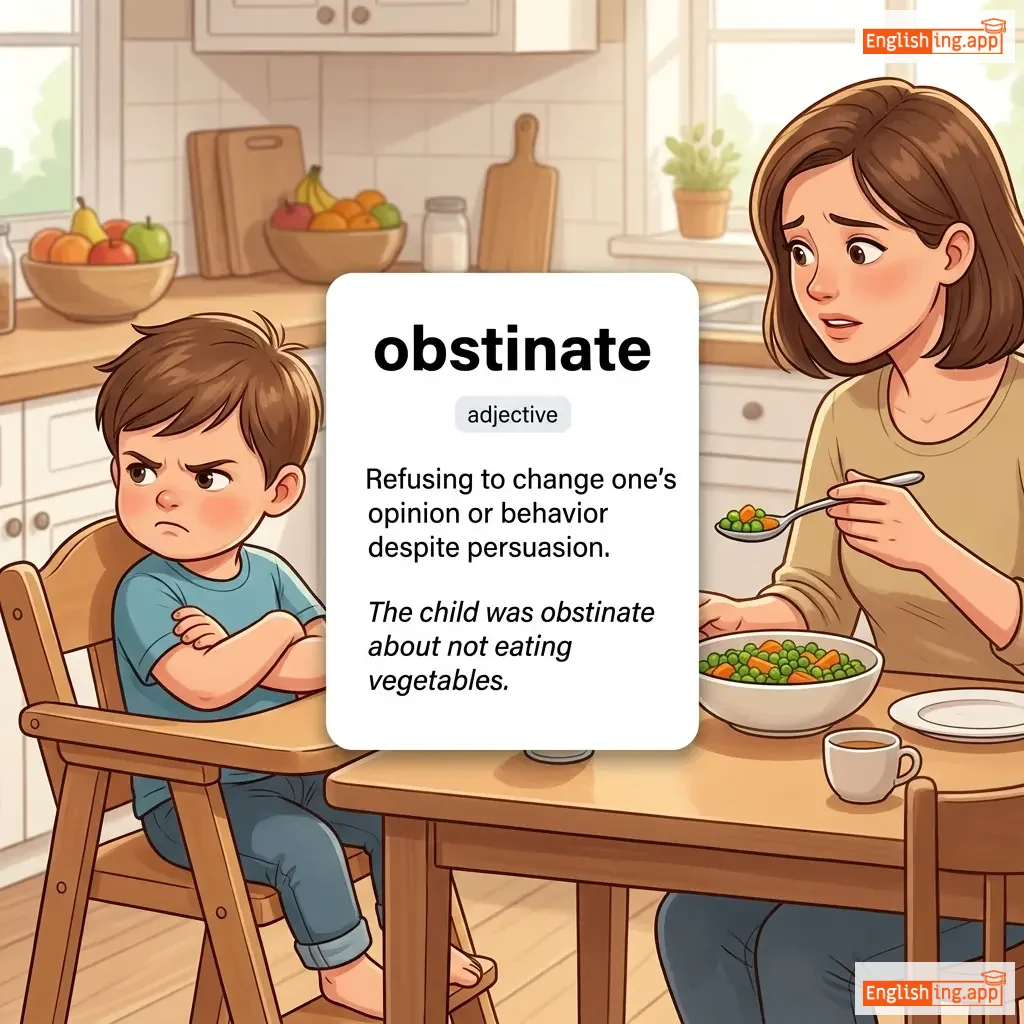
obstinate definition card — visual illustration of the meaning
adjective
/ˈɒbstɪnət/
упрямый (upryamy)

Refusing to change one’s opinion or behavior despite persuasion.

"The child was obstinate about not eating vegetables."

"Ребёнок был упрям в том, чтобы не есть овощи." (Rebyonok byl upryam v tom, chtoby ne yest' ovoshchi.)
adjective
/əbˈstrɛpərəs/
шумный и трудный для контроля (shumnyy i trudnyy dlya kontrolya)

Noisy and difficult to control.

"The obstreperous students disrupted the class."
"Шумные студенты нарушили урок." (Shumnye studenty narushili urok.)
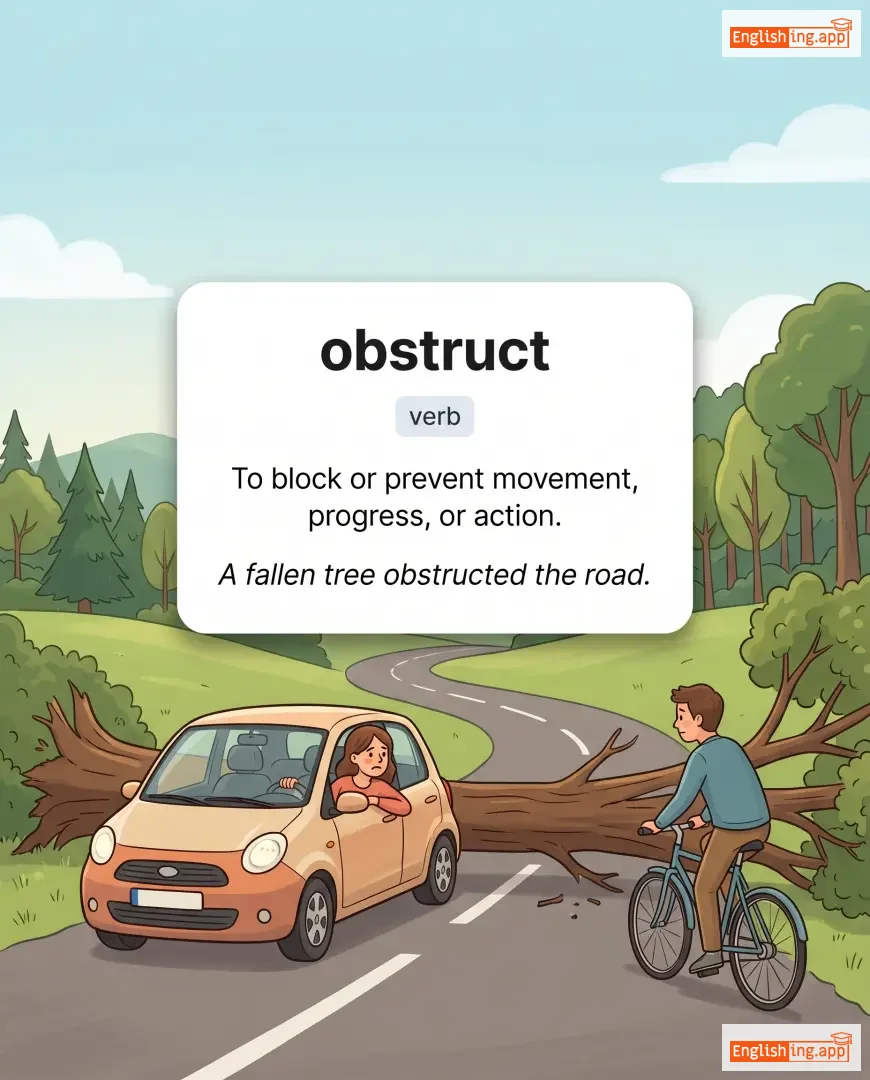
obstruct definition card — visual illustration of the meaning
verb
/əbˈstrʌkt/
препятствовать (prepyatstvovat)

To block or prevent movement, progress, or action.

"A fallen tree obstructed the road."

"Павшее дерево препятствовало дороге." (Pavshee derevo prepyatstvovalo doroge.)
noun
/əbˈstrʌkʃən/
препятствие (prepyatstvie)

Something that blocks or gets in the way; the action of obstructing.

"There was an obstruction on the railway track."

"На железной дороге было препятствие." (Na zheleznoy doroge bylo prepyatstvie.)
noun
/əbˈstrʌkʃənɪst/

a person who deliberately delays or prevents progress by being uncooperative or oppositional

"The obstructionist in the committee kept delaying the decision-making process."

adjective
/əbˈstrʌk.tɪv/
обструктивный (obstruktiv)

deliberately creating difficulties or preventing progress; hindering or blocking something

"The obstructive policies hindered economic growth."

"Обструктивные политики препятствовали экономическим росту." (Obstruktivnye politiki preduprezhdovali ekonomicheskomu rostu)
obtain definition card — visual illustration of the meaning
verb
/əbˈteɪn/
получить (poluchit)

to get, acquire, or secure something

"She managed to obtain a scholarship for her studies."

"Она смогла получить стипендию для учебы." (Ona smogla poluchit stipendiyu dlya ucheby.)
verb
/əbˈtruːd/
вторгаться (vtorgatsya)

to force oneself or one's ideas into a situation uninvited or inappropriately

"He didn’t want to obtrude into their private conversation."

"Он не хотел вторгаться в их личный разговор." (On ne khotel vtorgatsya v ikh lichnyy razgovor.)
adjective
/əbˈtruːsɪv/
назойливый (nazoylivyy)

noticeable in an unpleasant or unwelcome way; intrusive

"The advertisement was so obtrusive that it ruined the user’s experience."

"Реклама была настолько назойливой, что испортила опыт пользователя." (Reklama byla nastol'ko nazoylivoy, chto isportila opyt pol'zovatelya.)
adjective
/əbˈtjuːs/
тупой (tupoy)

slow to understand; annoyingly insensitive; also refers to an angle greater than 90° and less than 180°

"He was too obtuse to realize the insult."

"Он был слишком туп, чтобы понять оскорбление." (On byl slishkom tup, chtoby ponyat' oskorblenie.)
verb
/əbˈvɜːrt/
перевернуть (perevernut)

To turn something so as to face in a different direction; in logic, to convert a proposition by negating both subject and predicate.

"The teacher asked the students to obvert the statement for practice."
"Учитель попросил студентов преобразовать утверждение для практики." (Uchitel' poprosil studentov preobrazovat utverzhdenie dlya praktiki.)
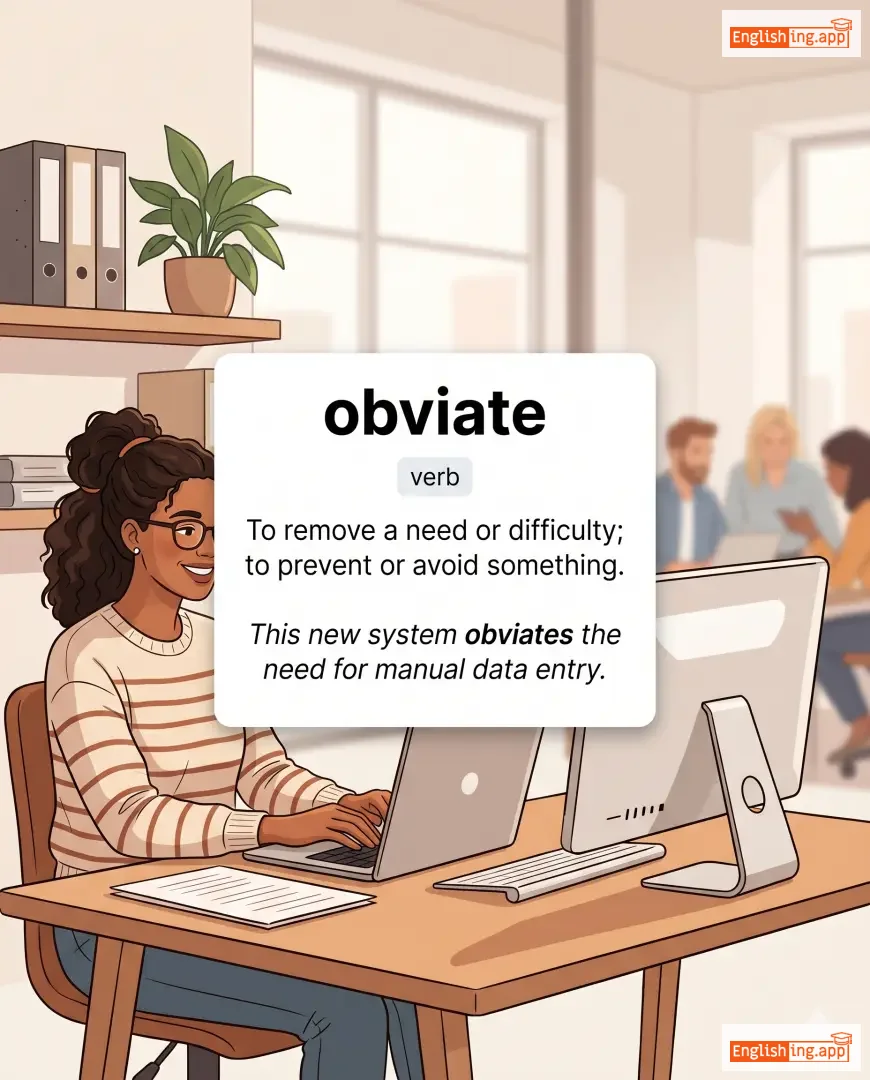
obviate definition card — visual illustration of the meaning
verb
/ˈɑːbvieɪt/
исключать (isklyuchat')

To remove a need or difficulty; to prevent or avoid something.

"This new system obviates the need for manual data entry."

"Эта новая система исключает необходимость вручную вводить данные." (Eta novaya sistema isklyuchayet neobkhodimost' vruchnuyu vvodit' dannye.)
adjective
/ˈɒb.vi.əs/
очевидный (ochevidny)

easily perceived or understood; clear and apparent

"It was obvious that she was upset after the meeting."

"Было очевидно, что она была расстроена после встречи." (Bylo ochevidno, chto ona byla rasstroena posle vstrechi.)
adverb
/ˈɒbviəsli/
очевидно (ochevidno)

in a way that is easily perceived or understood; clearly

"Obviously, he didn’t read the instructions."

"Очевидно, он не прочитал инструкции." (Ochevidno, on ne prochital instruktsii.)
noun
/əˈkeɪʒən/
случай (sluchay)

A particular time or event; a special or important happening.

"Her wedding was a joyful occasion for the whole family."

"Ее свадьба была радостным случаем для всей семьи." (Eyo svad'ba byla radostnym sluchayem dlya vsej sem'i.)
adjective
/əˈkeɪʒənəl/
случайный (sluchayny)

happening or done sometimes but not regularly or often

"He makes occasional visits to his hometown."

"Он делает случайные визиты в свой родной город." (On delaet sluchaynye vizity v svoy rodnoy gorod.)
adverb
/əˈkeɪʒənəli/
иногда (inogda)

from time to time; now and then

"I occasionally go for a walk in the park."

"Я иногда гуляю в парке." (Ya inogda gulayu v parke.)
noun
/ˈɒksɪdənt/
Запад (Západ)

The countries of the West, especially Europe and America.

"The Occident has a long history of philosophical thought."
"Запад имеет долгую историю философской мысли." (Západ imeet dolguyu istoriyu filosofskoy mysli.)
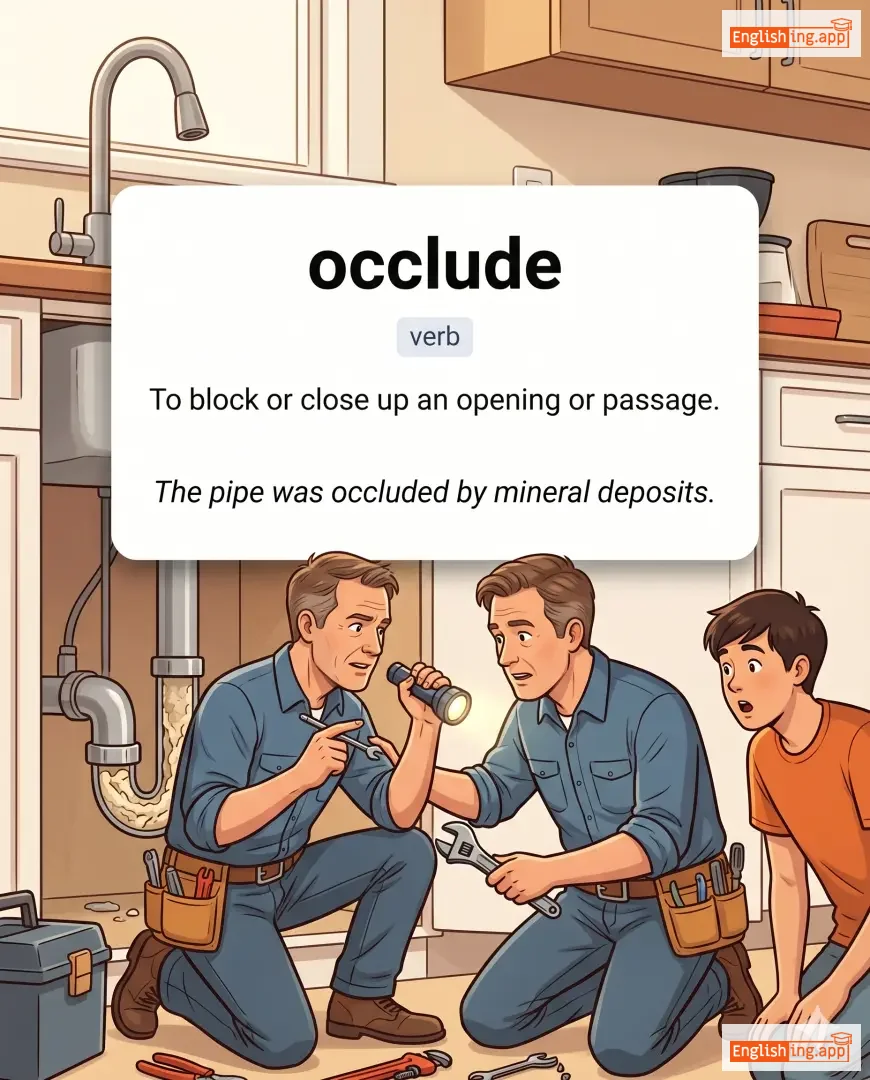
occlude definition card — visual illustration of the meaning
verb
/əˈkluːd/
закрывать (zakryvat)

To block or close up an opening or passage.

"The pipe was occluded by mineral deposits."

"Трубопровод был заблокирован минеральными отложениями." (Truboprovod byl zablokirovan mineral'nymi otlozheniyami.)
occult definition card — visual illustration of the meaning
adjective
/əˈkʌlt/
оккультный (okkul'tny)

Relating to mysterious, supernatural, or magical powers and practices.

"She had always been fascinated by the occult and its hidden knowledge."

"Она всегда была очарована оккультизмом и его скрытыми знаниями." (Ona vsegda byla ocharovana okkultizmom i ego skrytymi znaniyami.)
noun
/ˈɒkjʊpənt/
житель (zhitel)

A person who resides in or is present in a house, vehicle, seat, or place.

"The car had three occupants at the time of the accident."

"В автомобиле было три пассажира на момент аварии." (V avto mobile bylo tri passazhira na moment avarii.)
noun
/ˌɒkjʊˈpeɪʃən/
профессия (professiya)

a job or profession; the action or state of occupying a place

"Her occupation is a teacher at a local school."

"Её профессия — учитель в местной школе." (Eyo professiya — uchitel v mestnoy shkole.)
adjective; verb (past participle)
/ˈɒkjʊpaɪd/
занятый; оккупированный (zanyatyi; okkupirovannyi)

being in use or taken; filled or lived in; controlled or held by force

"The room is occupied, so please wait outside."
"Комната занята, пожалуйста, подождите снаружи." (Komnata zanyata, pozhaluysta, podozhdite snaruzhi)
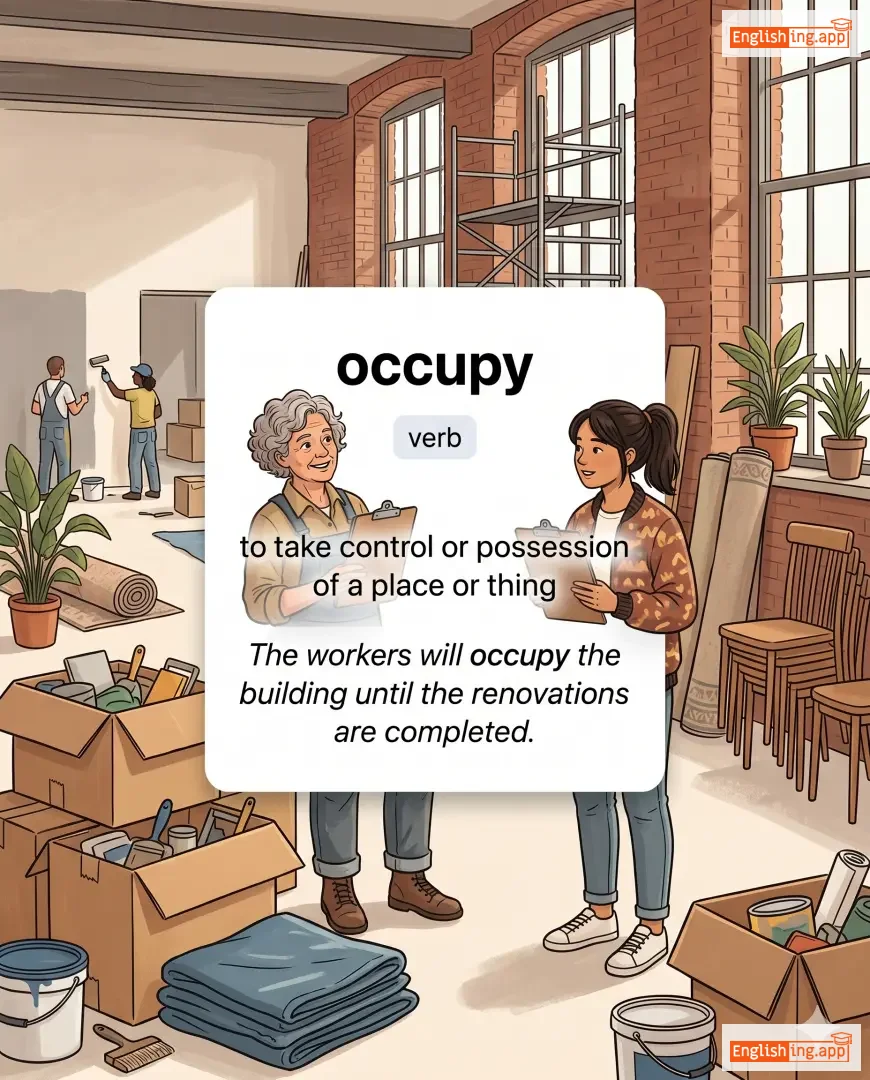
occupy definition card — visual illustration of the meaning
verb
/ˈɒkjʊpaɪ/
занять (zanyat)

to take control or possession of a place or thing

"The workers will occupy the building until the renovations are completed."
"Рабочие займут здание, пока ремонт не будет завершён." (Rabochie zaimut zdanie, poka remont ne budet zavershen.)
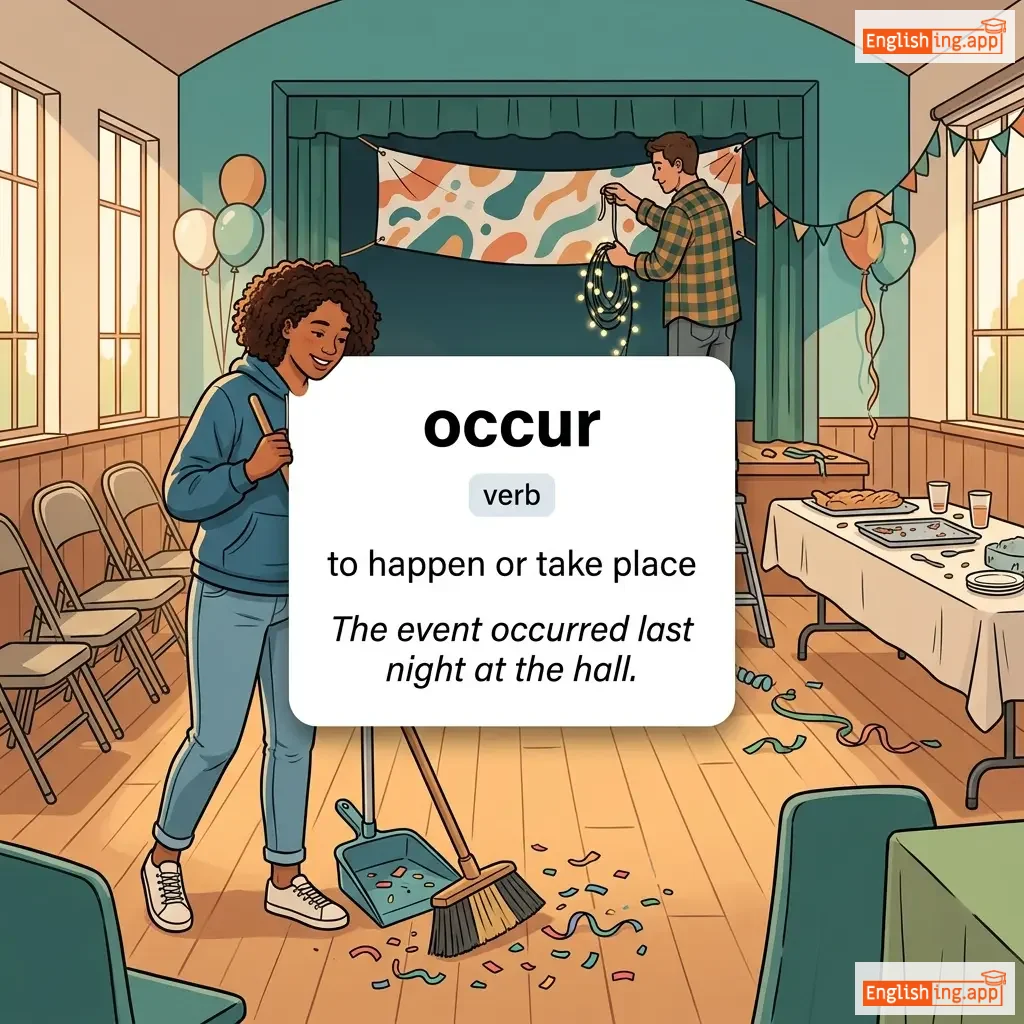
occur definition card — visual illustration of the meaning
verb
/əˈkɜːr/
происходить (proiskhodit)

to happen or take place

"The event occurred last night at the hall."

"Событие произошло прошлой ночью в зале." (Sobytiye proizošlo proshloy noch'yu v zale.)
noun
/əˈkʌrəns/
происшествие (proisshestvie)

An incident, event, or something that happens.

"The occurrence of such storms is rare in this region."
"Появление таких штормов в этом регионе редкость." (Poyavlenie takih shtormov v etom regione redkost)
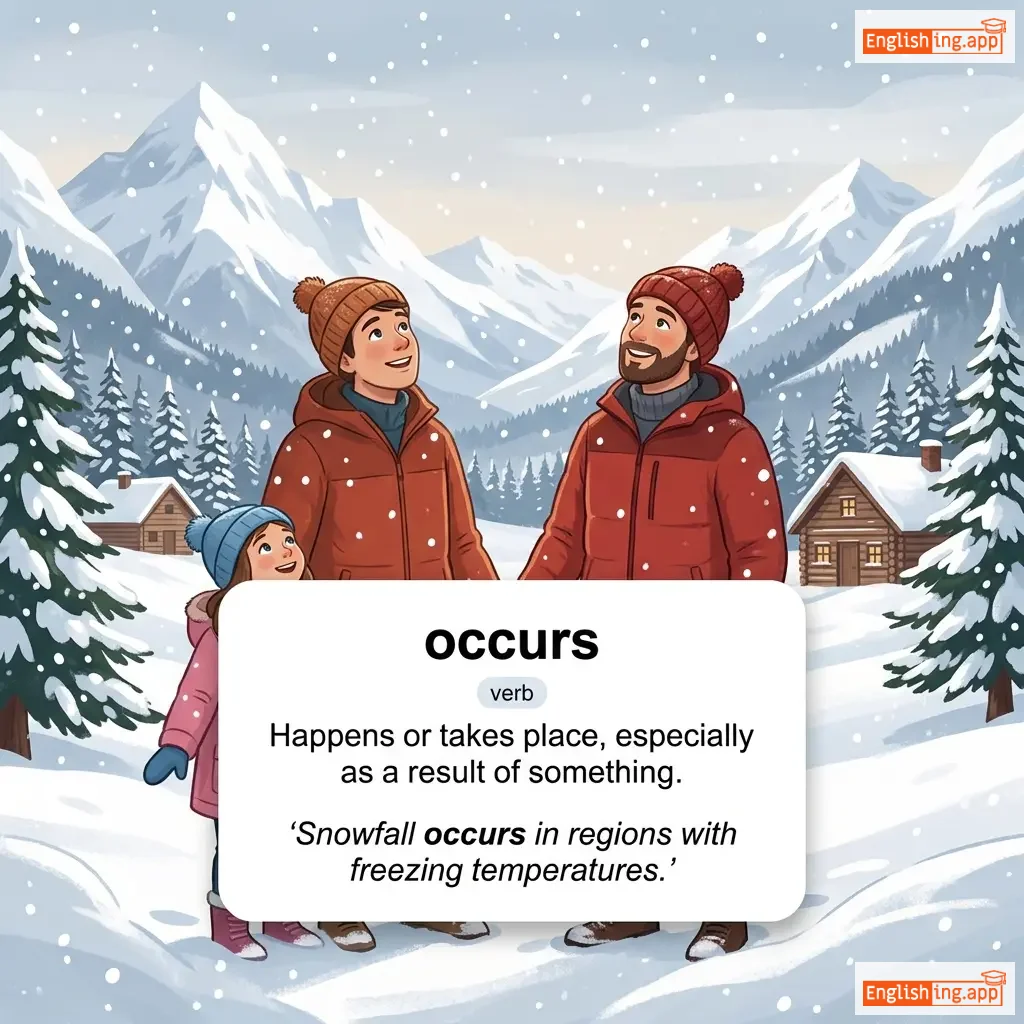
occurs definition card — visual illustration of the meaning
verb
অকার্স
происходит (proiskhodit)

Happens or takes place, especially as a result of something.

"Snowfall occurs in regions with freezing temperatures."
"Снегопад происходит в регионах с температурой ниже нуля." (Snegopad proiskhodit v regionakh s temperatury nizhe nulya.)
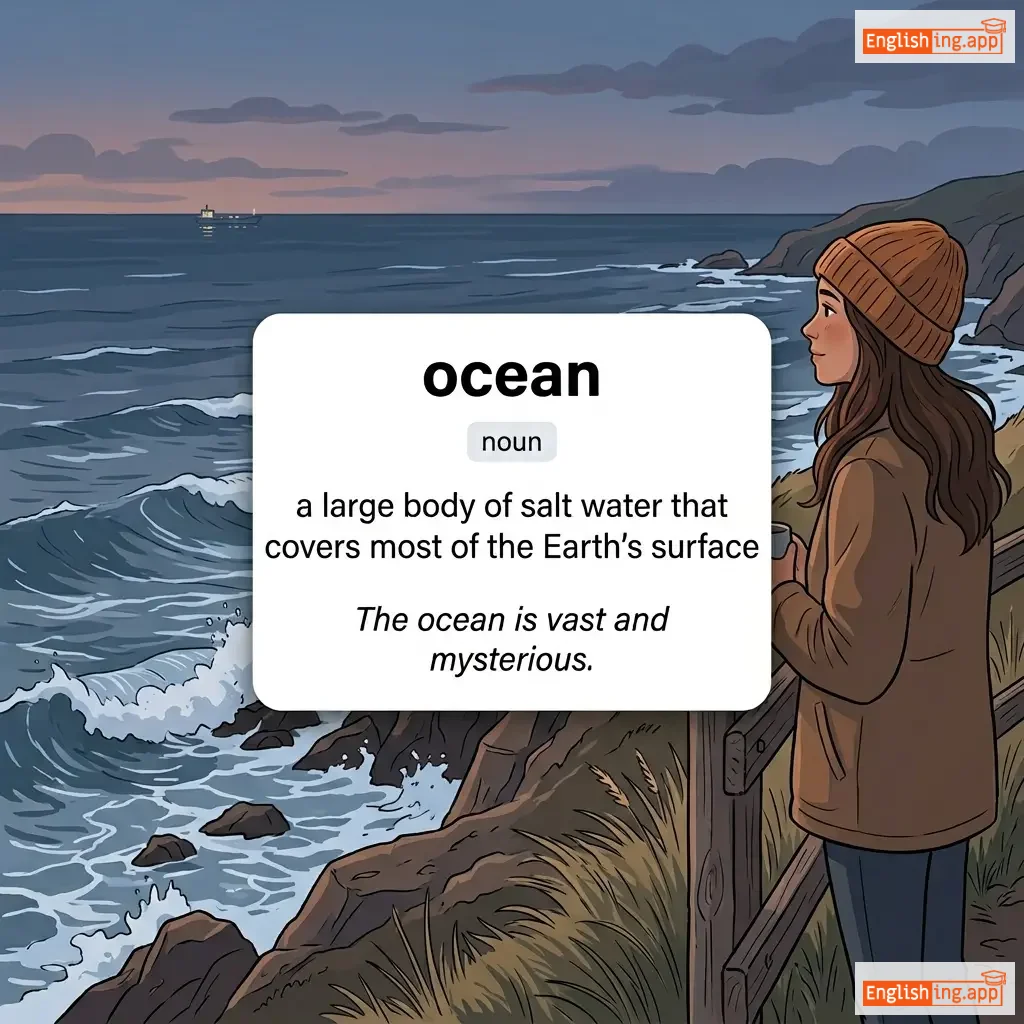
ocean definition card — visual illustration of the meaning
noun
/ˈoʊʃən/
океан (okean)

a large body of salt water that covers most of the Earth's surface

"The ocean is vast and mysterious."
"Океан огромен и загадочен." (Okean ogromyen i zagadochen.)
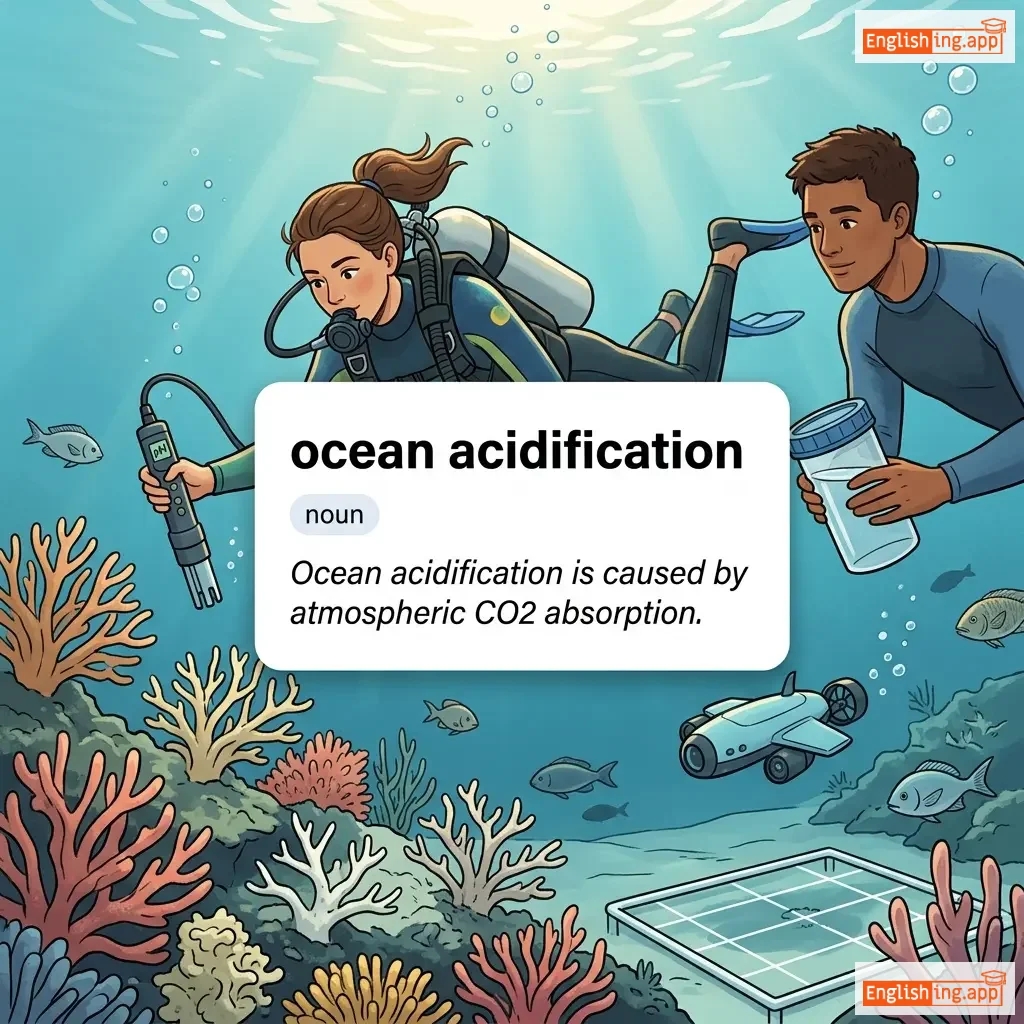
ocean acidification definition card — visual illustration of the meaning
noun
ˈoʊʃən əˌsɪdɪfɪˈkeɪʃən
кислотification океана (kislotifikatsiya okeyana)

The ongoing decrease in the pH of the Earth's oceans, caused by the absorption of carbon dioxide from the atmosphere.

"Ocean acidification is caused by atmospheric CO2 absorption."
"Кислотность океанов вызвана поглощением CO2 из атмосферы." (Kislonost' okeanov vyzvana pogloshcheniem CO2 iz atmosfery.)
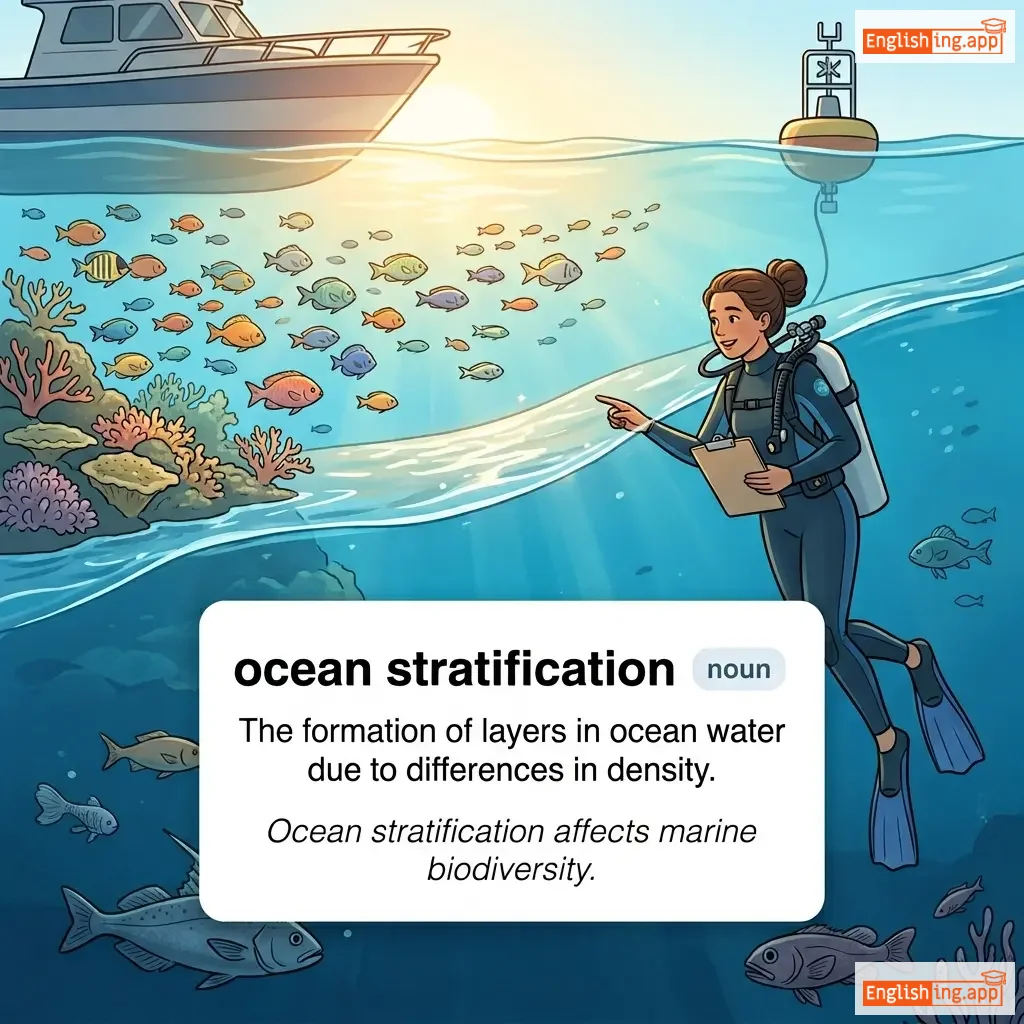
ocean stratification definition card — visual illustration of the meaning
noun
ˈoʊʃən ˌstrætɪfɪˈkeɪʃən
океанская стратификация (okeanskaya stratifikatsiya)

The formation of layers in ocean water due to differences in density.

"Ocean stratification affects marine biodiversity."

"Стратификация океана влияет на морское биоразнообразие." (Stratifikatsiya okeana vliyayet na morskoye bioraznoobrazie.)
noun
/ˈɒktəɡən/
восьмиугольник (vos'miugol'nik)

A polygon with eight sides and eight angles.

"The stop sign is shaped like an octagon."

"Знак стоп имеет форму восьмиугольника." (Znak stop imeet formu vos'miugol'nika.)
noun
/ˈɒktɪv/

A series of eight musical notes, or the interval between one musical pitch and another with double its frequency.

"The singer's voice could easily reach the higher octave."

noun
/ɒkˈteɪvoʊ/
октаво (размер книги, получаемый путем складывания листа бумаги в восемь частей) (oktavo)

A size of book page resulting from folding a sheet of paper into eight leaves (sixteen pages).

"The old library contained rare octavo editions of Shakespeare."

"Старая библиотека содержала редкие издания в октаве Шекспира." (Staraya biblioteka soderzhala redkie izdaniya v oktave Shekspira.)
noun
/ɒkˈtoʊbər/
октябрь (oktyabr)

the tenth month of the year in the Gregorian calendar

"The weather becomes cooler in October."

"В октябре погода становится прохладнее." (v oktyabre pogoda stanovitsya prokhladnee)
noun
/ˌɒktədʒəˈnɛəriən/
октогенарий (oktogenariy)

A person who is between 80 and 89 years old.

"The octogenarian still jogs every morning to stay healthy."

"Октогенарий все еще бегает каждое утро, чтобы оставаться здоровым." (Oktogenariy vse eshche begayet kazhdoe utro, chtoby ostavatsya zdorovym.)
adjective
/ˈɒkjʊlər/
окулярный (okulyarnyy)

Relating to the eye or vision.

"The patient was referred to a specialist for ocular treatment."

"Пациент был направлен к специалисту для окулярного лечения." (Patsiyent byl napravlen k spetsialistu dlya okulyarnogo lecheniya.)