Словари

Словарь английского языка | Значения слов, определения и примеры

noun
/ˈnoʊmæd/
кочевник (kochevnik)

A person who has no permanent home and moves from place to place.

"The desert was once home to nomads who lived by herding animals."
"Пустыня когда-то была домом для кочевников, которые жили, занимаясь скотоводством." (Pustynya kogda-to byla domom dlya kochevnikov, kotorye zhili, zanimayas' skotovodstvom.)
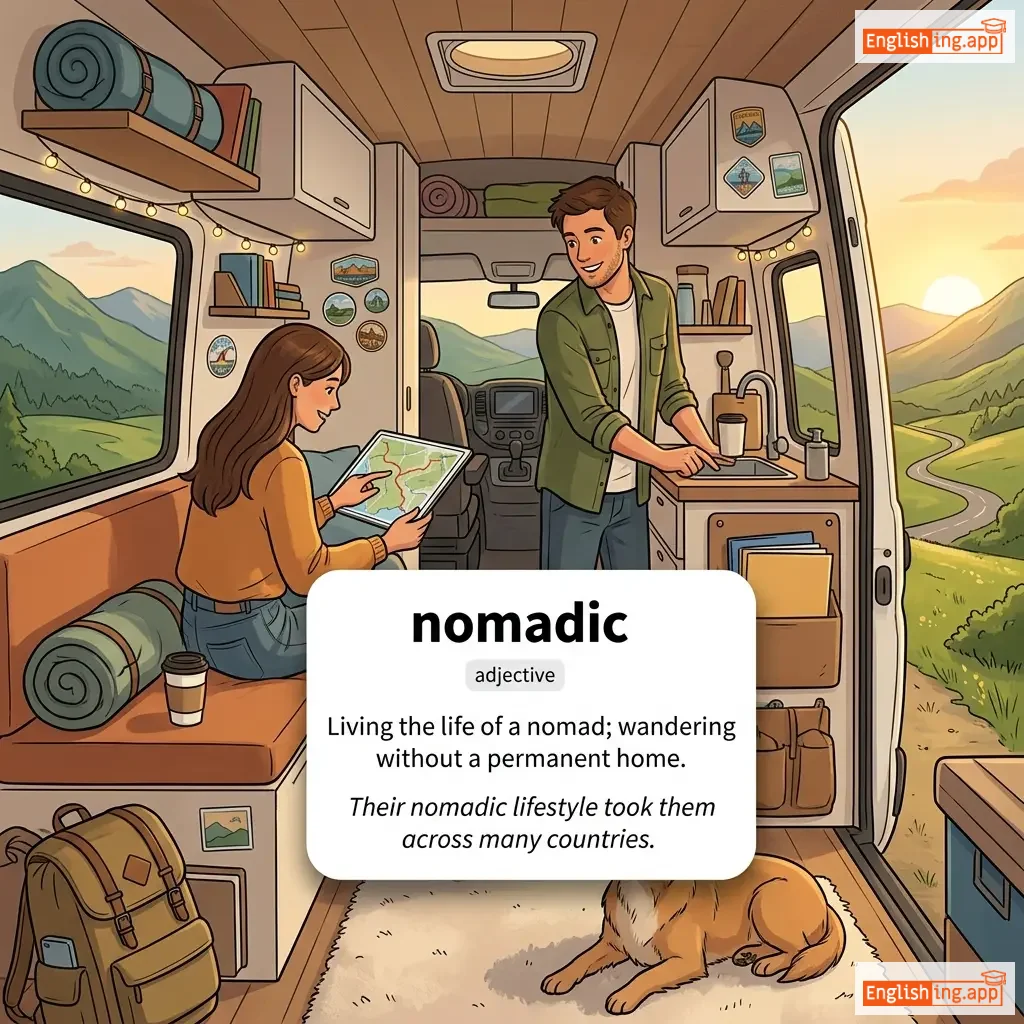
nomadic definition card — visual illustration of the meaning
adjective
/noʊˈmædɪk/

Living the life of a nomad; wandering without a permanent home.

"Their nomadic lifestyle took them across many countries."

noun
/ˈnoʊmənˌkleɪtʃər/
номенклатура (nomenklatura)

A system of names or terms used in a particular science, art, or field.

"The chemical nomenclature can be difficult for beginners to understand."

"Химическая номенклатура может быть сложной для понимания новичками." (Khimicheskaya nomenklatura mozhet byt' slozhnoy dlya ponyatiya novichkami.)
adjective
/ˈnɒmɪk/
связанный с законом (svyazannyy s zakonom)

Relating to laws, rules, or systems.

"The philosopher discussed the nomic necessity of natural laws."

"Философ обсуждал номическую необходимость естественных законов." (Filosof obshchuzhdal nomicheskuyu neobkhodimost' estestvennykh zakonov.)
adjective
/ˈnɒmɪnəl/
номинальный (nominal'nyy)

Existing in name only; very small in amount.

"He was the nominal leader of the group but had no real power."
"Он был номинальным лидером группы, но не имел реальной власти." (On byl nominal'nym liderom gruppy, no ne imel real'noy vlasti.)
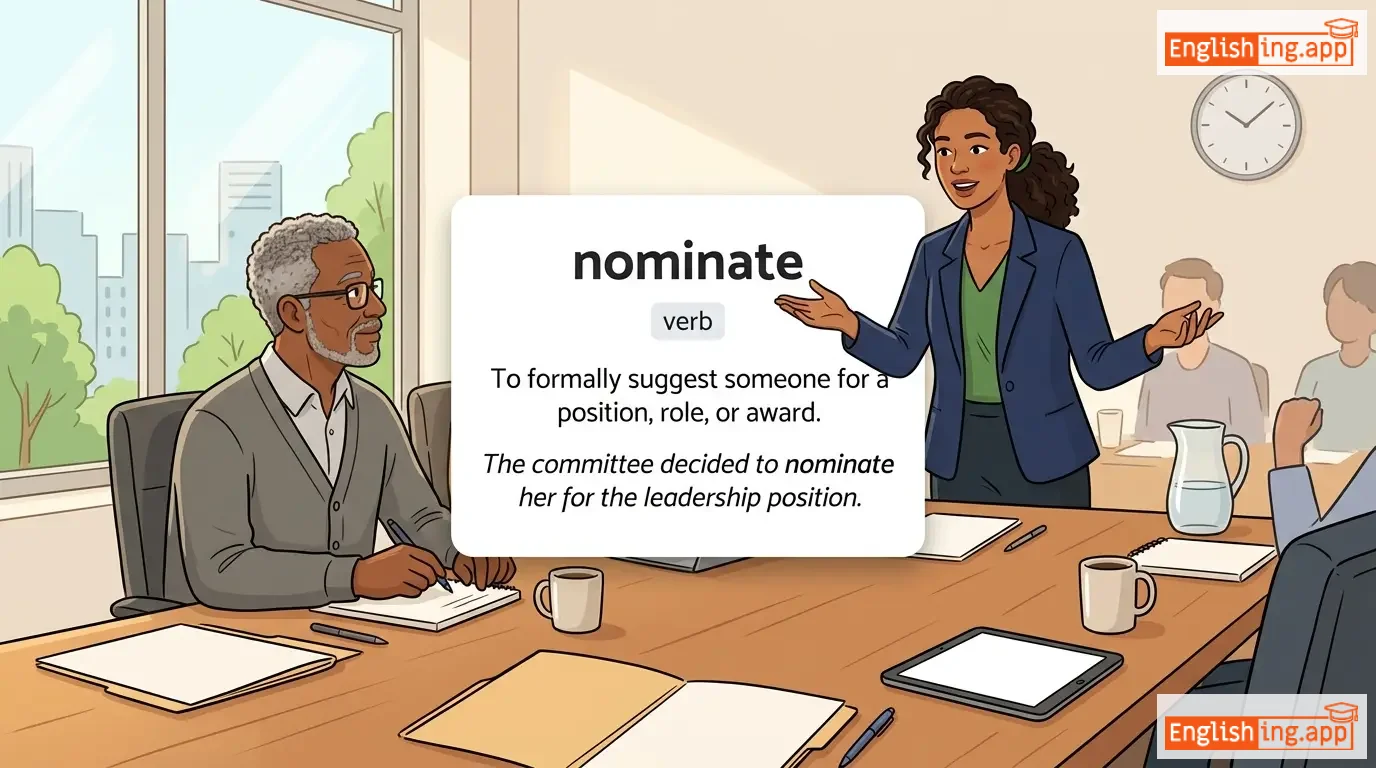
nominate definition card — visual illustration of the meaning
verb
/ˈnɒməˌneɪt/
выдвигать (vydvigat)

To formally suggest someone for a position, role, or award.

"The committee decided to nominate her for the leadership position."

"Комитет решил выдвинуть её на должность лидера." (Komitet reshíl vydvinut' yeyu na dolzhnost' lidera.)
noun
/ˌnɒməˈneɪʃən/
номинация (nominatsiya)

The act of formally proposing someone for a role, position, or award.

"Her nomination for the award surprised everyone."

"Её номинация на премию удивила всех." (Yeyo nominatsiya na premiyu udivila vsekh.)
noun
/ˌnɒmɪˈniː/
номинированный (nominirivannyy)

a person who is formally suggested or chosen for a position, award, or role

"She was the nominee for the Best Actress award."

"Она была номинирована на премию за лучшую актрису." (Ona byla nominirovana na premiyu za luchshuyu aktrisu.)
noun
/ˌnɒn ˈsɛkwɪtər/
нелепое замечание (nelepoe zamechanie)

a statement or conclusion that does not logically follow from the previous statement

"His comment about the weather was a complete non sequitur during the budget discussion."

"Его комментарий о погоде был полным нелепым замечанием во время обсуждения бюджета." (Ego kommentarij o pogode byl polnym nelepyim zamechaniem vo vremya obsuzhdeniya byudzheta.)
noun, adjective
/nɒn ˈkɒmbətənt/
некомбатант (necombatant)

a person not engaged in fighting during a war, such as civilians or medical staff

"The Red Cross workers were treated as non-combatants in the conflict."
"Работники Красного Креста были признаны некомбатантами в конфликте." (Rabotyki Krasnogo Kresta byli priznany necombatantami v konflikte.)
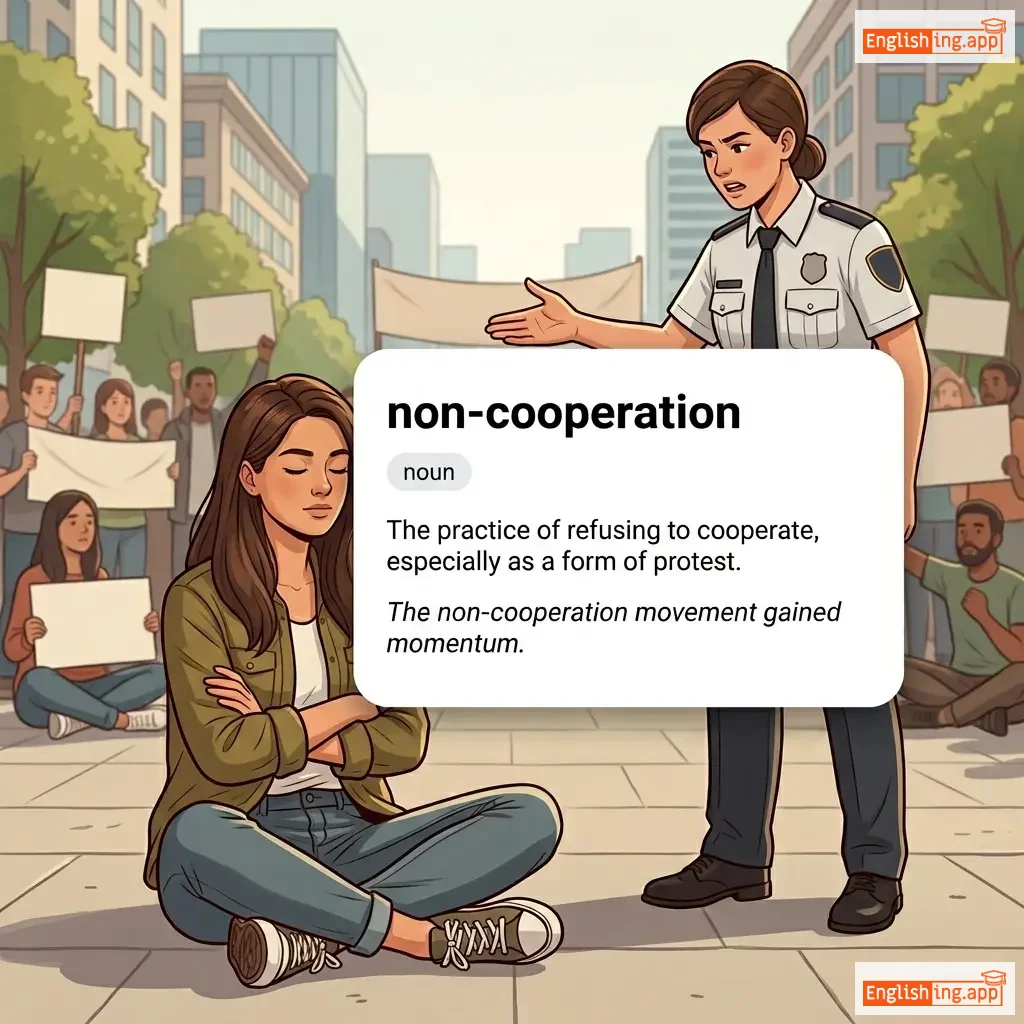
non-cooperation definition card — visual illustration of the meaning
noun
ˌnɒn.kəʊˌɒp.ərˈeɪ.ʃən
неповиновение (nepovinovenie)

The practice of refusing to cooperate, especially as a form of protest.

"The non-cooperation movement gained momentum."

"Движение неповиновения набрало обороты." (Dvizhenie nepovinoveniya nabralo oboroty.)
adjective
/ˌnɒn ɪɡˈzɪstənt/
не существующий (ne sushchestvuyushchiy)

not real or not present; lacking existence

"The supposed evidence turned out to be non-existent."

"Предполагаемое доказательство оказалось не существующим." (Predpolagaemoye dokazatel'stvo okazalos' ne sushchestvuyushchim.)
noun; adjective
/ˌnɒnˈprɒfɪt/
некоммерческий (nekommercheskii)

an organization that does not operate for profit and reinvests surplus to achieve social goals; not intended to make financial profit

"She works for a non-profit that provides free education to underprivileged children."

"Она работает в некоммерческой организации, которая предоставляет бесплатное образование." (ona rabotaet v nekommercheskoi organizatsii kotoraya predostavlyaet besplatnoe obrazovanie)
noun, adjective
/ˌnɒn ˈrɛzɪdənt/
нерезидент (nerezident)

a person who does not live in a particular country or place permanently

"Non-resident students often pay higher tuition fees."

"Нерезиденты часто платят более высокие сборы за обучение." (Nerezidenty chasto platyat bolee vysokie sbory za obuchenie.)
adverb
/ˌnɒnˈstɒp/
без остановки; непрерывно (bez ostanovki; nepreryvno)

continuing without stopping; without interruption

"The train traveled non-stop from London to Paris."
"Поезд ехал без остановки из Лондона в Париж." (Poyezd yekhal bez ostanovki iz Londona v Parizh.)
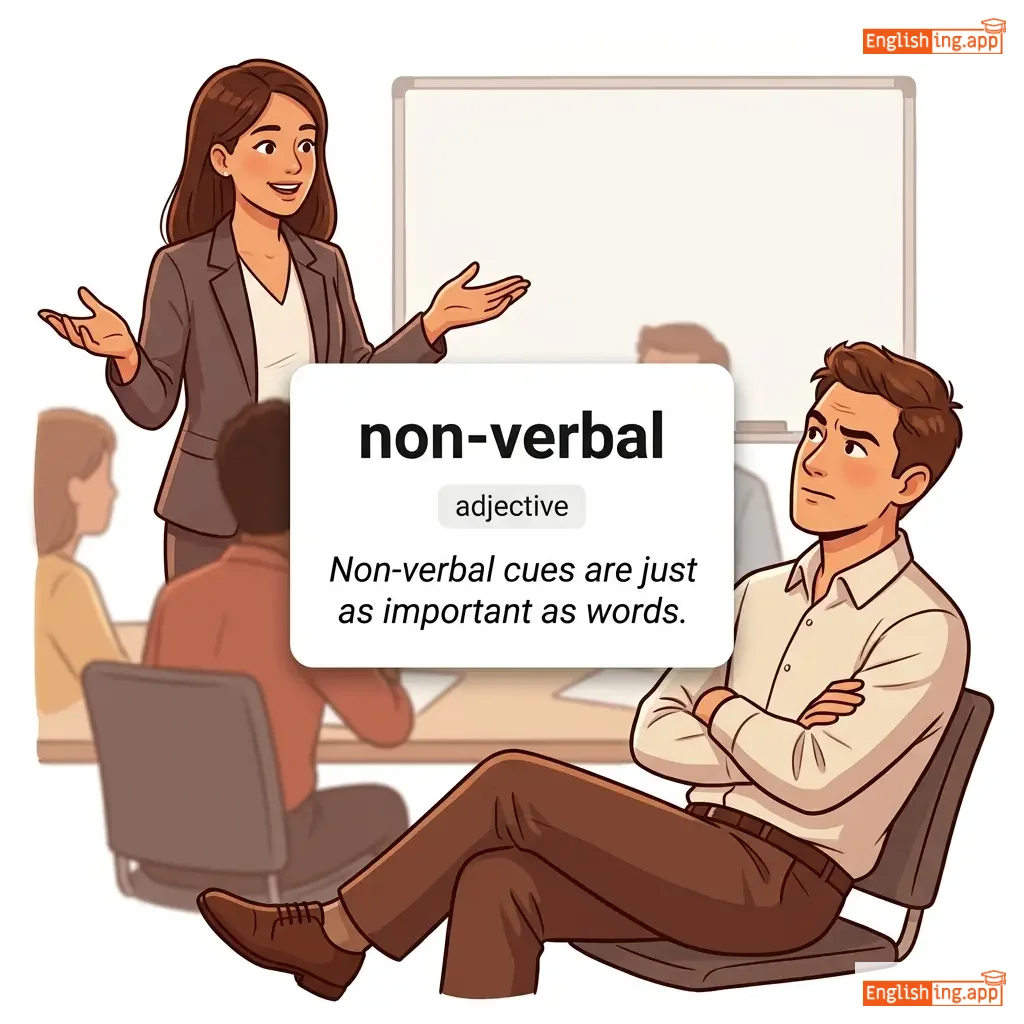
non-verbal definition card — visual illustration of the meaning
adjective
/ˌnɒnˈvɜː.bəl/
Не использующие слова или речь; передается через жесты, язык тела или выражения лица. (Ne ispol'zuyushchie slova ili rech'; peredayetsya cherez zhesty, yazyk tela ili vyrazheniya litsa.)

Not involving or using words or speech; communicated through gestures, body language, or facial expressions.

"Non-verbal cues are just as important as words."

"Невербальные сигналы так же важны, как и слова." (Neverbal'nye signaly tak zhe vazhny, kak i slova.)
noun
/ˈnɒn.ɪʤ/
несовершеннолетие (nonage)

the period of being under the legal age of majority; youth or immaturity

"During his nonage, all legal decisions were made by his guardian."

"Во время его несовершеннолетия все юридические решения принимались его опекуном." (Vo vremya ego nesovershennoletiya vse yuridicheskie resheniya prinimaliysya ego opekunom)
noun
/ˈnɒnʃələns/
беззаботность (bezzabotnost)

A relaxed and calm state, showing lack of concern or interest.

"She answered the tough questions with surprising nonchalance."

"Она ответила на трудные вопросы с удивительной беззаботностью." (Ona otvetila na trudnyye voprosy s udivitel'noy bezzabotnost'yu.)
adjective
/ˈnɒnʃələnt/
невозмутимый (nonshalant)

Appearing calm, casual, and unconcerned.

"He gave a nonchalant shrug and walked away."

"Он невозмутимо пожал плечами и ушёл." (On nevozmutimo pozhal plechami i ushel.)
adjective
/ˌnɒnkəˈmɪtl̩/

Not expressing or showing a clear opinion, decision, or commitment.

"She gave a noncommittal reply when asked about her future plans."

adjective
/ˌnɒndɪˈskrɪpt/
непримечательный (neprimetchatel'nyy)

Lacking distinctive or interesting features; dull and unremarkable.

"He lives in a nondescript apartment building on the edge of town."

"Он живет в непримечательном многоквартирном доме на окраине города." (On zhivet v neprimetchatel'nom mnogokvartirnom dome na okraine goroda.)
pronoun
/nʌn/
никто (nikto)

not any; no one; not one

"None of the students passed the exam."

"Никто из студентов не сдал экзамен." (Nikto iz studentov ne sdal ekzamen.)
noun
/nɒnˈentəti/
неважная личность (nevazhnaya lichnost)

A person or thing of no importance or significance.

"Once a powerful leader, he is now treated as a political nonentity."

"Когда-то могущественный лидер, теперь его считают политической нонэнтити." (Kogda-to mogushchestvennyy lider, teper' ego schitayut politicheskoy nonentity.)
adverb
/ˌnʌnðəˈlɛs/
тем не менее (tem ne menee)

in spite of that; nevertheless

"It was raining, but nonetheless, they went hiking."

"Шел дождь, но тем не менее они пошли в поход." (Shel dozhd, no tem ne menee oni poshli v pokhod.)
adjective
/ˌnɒnpəˈreɪl/
несравненный (nesravnennyi)

Having no equal; unrivaled or matchless.

"Her beauty was considered nonpareil in the region."

"Её красота считалась несравненной в этом регионе." (eyo krasota schitalas nesravnennoy v etom regione)
verb
/ˌnɒnˈplʌs/
загнать в тупик (zagnat' v tupik)

To surprise and confuse someone so much that they are unsure how to react.

"The unexpected question seemed to nonplus the speaker."

"Неожиданный вопрос, похоже, поставил оратора в тупик." (Neozhidannyi vopros, pokhozhe, postavil oratora v tupik.)
verb
/ˌnɒnˈplʌst/
озадаченная (ozadachennaya)

Past tense of nonplus; surprised and confused.

"She was completely nonplused by his sudden decision."

"Она была полностью озадачена его неожиданным решением." (Ona byla polnost'yu ozadachennaya yevo neozhidannym resheniyem.)
verb
/ˌnɒnˈplʌst/
озадаченный (ozadachenny)

Past tense of nonplus; surprised and unsure how to react.

"He stood nonplussed at the strange remark."

"Он стоял озадаченный перед странным замечанием." (On stoyal ozadachennyy pered strannym zamechaniyem.)
adjective
/ˌnɒnˈprɒfɪt/
некоммерческая организация (nekommiercheskaya organizatsiya)

an organization that does not aim to make a profit, often serving a social or charitable purpose.

"She works for a nonprofit organization that helps children."

"Она работает в некоммерческой организации, которая помогает детям." (Ona rabotayet v nekommiercheskoy organizatsii, kotoraya pomogayet detyam.)
noun
/ˈnɒnsəns/
чепуха (chepukha)

Words or ideas that have no meaning or make no sense.

"His explanation was pure nonsense."

"Его объяснение было чистой чепухой." (Ego obyasnenie bylo chistoy chepukhoy.)
adjective
/ˌnɒnˈtrɪviəl/
нетривиальный (netrivial'nyy)

Not simple or easy; requiring effort or significant thought.

"Solving the equation turned out to be a nontrivial task."
"Решение уравнения оказалось нетривиальной задачей." (Reshenie uravneniya okazyvalos' netrivial'noy zadachey.)
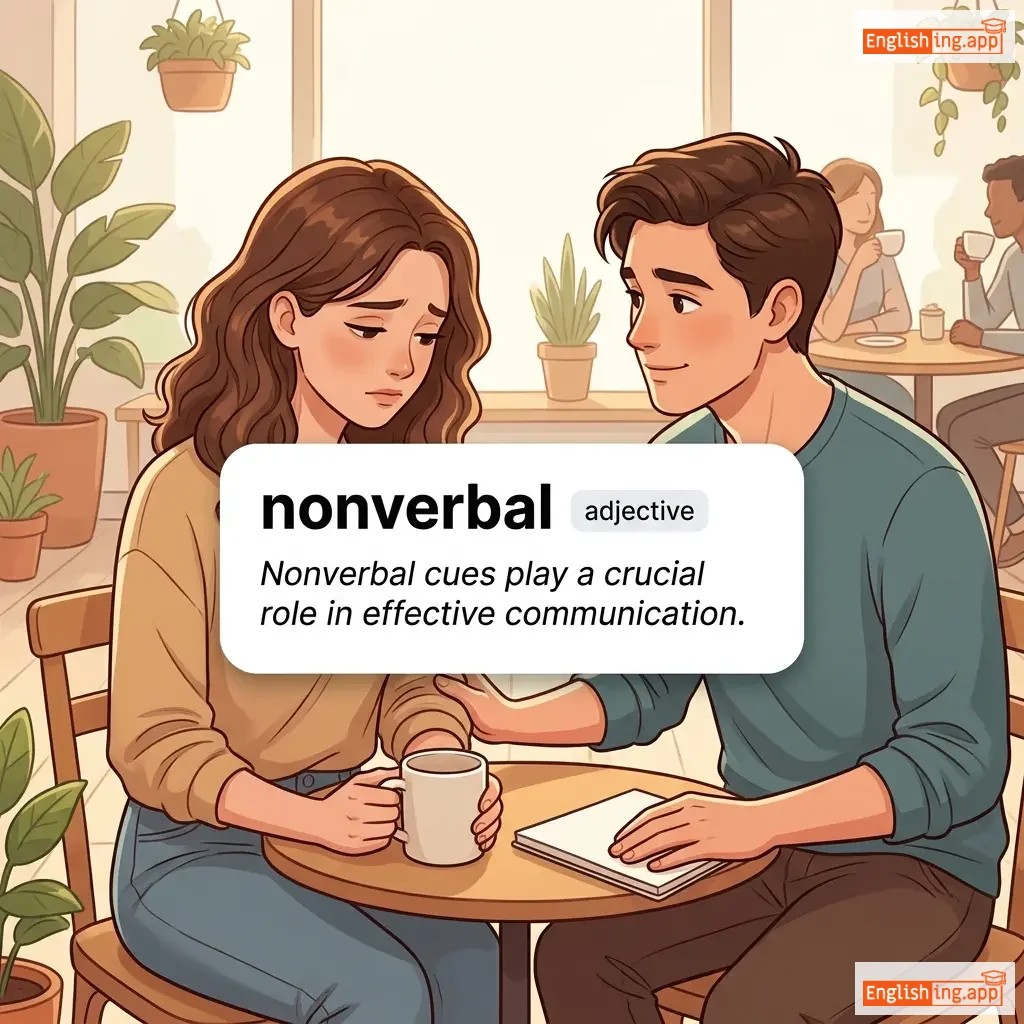
nonverbal definition card — visual illustration of the meaning
adjective
ˌnɒnˈvɜːr.bəl
невербальный (neverbal'nyi)

Communication using body language, facial expressions, or gestures instead of words

"Nonverbal cues play a crucial role in effective communication."

"Невербальные сигналы играют важную роль в эффективной коммуникации." (Neverbal'nye signaly igrayut vazhnuyu rol' v effektivnoy kommunikatsii.)
noun (plural)
/ˈnuːdəlz/
лапша (lapsha)

long, thin strips of dough made from flour, water, or eggs, cooked and eaten as food

"She cooked noodles with vegetables for dinner."

"Она приготовила лапшу с овощами на ужин." (ona prigotovila lapshu s ovoshchami na uzhin)
noun
/nuːn/
полдень (polden)

12 o'clock in the daytime; midday

"The meeting will start at noon."

"Встреча начнется в полдень." (Vstrecha nachnyotsya v polden.)
noun
/nuːs/
петля (petlya)

A loop with a running knot, used especially for trapping or hanging.

"The cowboy tied a noose to catch the wild horse."

"Ковбой завязал петлю, чтобы поймать дикого коня." (Kovboy zavyazal petlyu, chtoby poymat' dikogo konya.)
🚫➡️🚫

nor (нор)

conjunction
/nɔːr/
ни (ni)

used to introduce a negative clause after a negative statement

"He didn't call, nor did he send a message."

"Он не позвонил, ни не отправил сообщение." (On ne pozvonil, ni ne otpravil soobshchenie.)
noun
/nɔːrm/
норма (norma)

An accepted standard or a usual practice.

"Wearing uniforms is the norm in many schools."

"Ношение формы — это норма во многих школах." (Nosheniye formy — eto norma vo mnogikh shkolakh.)
adjective
/ˈnɔː.məl/
нормальный (normal'nyy)

conforming to a standard; usual, typical, or expected

"It is normal to feel nervous before an interview."

"Это нормально чувствовать нервозность перед интервью." (Eto normal'no chuvstvovat' nervoznost' pered interview.)
noun
/ˈnɔːrməlsi/
нормальность (normal'nost')

The condition of being normal; a return to usual or expected conditions.

"After the flood, the town struggled to regain a sense of normalcy."

"После наводнения город пытался восстановить ощущение нормальности." (Posle navodneniya gorod pytalsya vosstanovit' oshchushchenie normal'nosti.)
verb
/ˈnɔːrməlaɪz/
нормализовать (normalizovat)

to bring something back to a normal or standard condition; to make something conform to a standard

"The government took steps to normalize relations with neighboring countries."

"Правительство предприняло шаги для нормализации отношений с соседними странами." (Pravitelstvo predprinyalo shagi dlya normalizatsii otnosheniy s sosednimi stranami)
adverb
/ˈnɔːməli/
обычно (obychno)

in a usual or expected way

"I normally wake up at 7 AM."

"Я обычно просыпаюсь в 7 утра." (Ya obychno prosypayus' v 7 utra.)
⚔️

Norman

noun
/ˈnɔːrmən/

A member of a people of mixed Scandinavian and Frankish origin who settled in Normandy, or relating to their culture.

"The Normans conquered England in 1066."

adjective
/ˈnɔːrmətɪv/
нормативный (normativnyy)

relating to rules, standards, or norms that govern behavior or beliefs

"The study focused on the normative aspects of cultural behavior."

"Исследование сосредоточилось на нормативных аспектах культурного поведения." (Issledovanie sosredotochilos na normativnykh aspektakh kul'turnogo povedeniya.)
noun
/nɔːrθ/
север (sever)

the direction toward the top of a map or the opposite of south

"We traveled north to reach the mountains."

"Мы путешествовали на север, чтобы добраться до гор." (My puteshestvovali na sever, chtoby dobrat'sya do gor.)
noun
/ˌnɔːrθˈiːst/
северо-восток (severo-vostok)

the direction between north and east; a region or area located in that direction.

"The storm is moving toward the northeast."

"Шторм движется на северо-восток." (Shtorm dvizhutsya na severo-vostok.)
adjective
/ˈnɔːðərn/
северный (severnyy)

relating to the north or situated in the north

"The northern part of the country is known for its cold climate."

"Северная часть страны известна своим холодным климатом." (Severnaya chast' strany izvestna svoim kholodnym klimatom.)
adverb
/ˈnɔːθwədz/
на север (na sever)

towards the north; in a northerly direction

"The birds migrate northwards in spring."

"Птицы мигрируют на север весной." (Ptitsy migriruyut na sever vesnoy.)
noun, adjective, adverb
/ˌnɔːrθˈwest/
северо-запад (severo-zapad)

the direction that is between north and west; situated in or moving toward this direction

"Seattle is located in the northwest of the United States."

"Сиэтл находится на северо-западе Соединенных Штатов." (Sietl nakhoditsya na severo-zapade Soedinennykh Shtatov.)
noun
/noʊz/
нос (nos)

the part of the face that contains the nostrils and is used for breathing and smelling

"He has a sharp nose and can smell things from far away."

"У него острый нос, и он может чувствовать запахи издалека." (U nego ostry nos, i on mozhet chuvstvovat' zapakhi izdaleka.)
noun
/noʊz rɪŋ/
кольцо для носа (kol'tso dlya nosa)

a piece of jewelry worn through a piercing in the nose

"She got a small gold nose ring for her birthday."

"Она получила маленькое золотое кольцо для носа на свой день рождения." (Ona poluchila malen'koye zolotoye kol'tso dlya nosa na svoy den' rozhdeniya.)