Словари

Словарь английского языка | Значения слов, определения и примеры

noun
/ˈnuː.kʌm.ər/
новый прибывший (novyy pribyvshiy)

a person who has recently arrived in a place or joined a group

"The newcomer was warmly welcomed by the team."

"Новый прибывший был тепло встречен командой." (Novyy pribyvshiy byl teplo vstrechen komandoy.)
adverb
/ˈnjuːli/
недавно (nedavno)

in a new or recent manner

"She has newly renovated her house."

"Она недавно отремонтировала свой дом." (Ona nedavno otrepairovala svoi dom.)
noun
/nuːz/
новости (novosti)

newly received or noteworthy information, especially about recent events

"The news about the storm spread quickly."

"Новости о шторме быстро распространились." (Novosti o shtorme bystro rasprostranilis'.)
noun
/ˈnjuːzˌlɛtər/
рассылка (rassylka)

a printed or electronic report containing news or information about a company or organization

"The company sends a weekly newsletter to its employees."

"Компания отправляет своим сотрудникам еженедельную рассылку." (Kompaniya otpravljayet svoim sotrudnikam ezhenedel'nuyu rassylku.)
noun
/ˈnjuːzˌpeɪpər/
газета (gazeta)

a printed publication (usually daily or weekly) containing news, articles, advertisements, and correspondence

"I read the newspaper every morning."

"Я читаю газету каждое утро." (Ya chitayu gazetu kazhdoe utro.)
noun
/nuːt/
тритон (triton)

a small amphibian with a long tail that lives both in water and on land

"The newt swam gracefully in the pond."

"Тритон плавал грациозно в пруду." (Triton plaval gratsiozno v prudu)
adjective
/njuːˈtoʊniən/
относящийся к законам Ньютона (otnosyashchijsya k zakonam Nyutona)

relating to the laws of motion and gravitation formulated by Sir Isaac Newton

"The scientist explained the Newtonian laws of motion."

"Учёный объяснил законы движения Ньютона." (Uchyonij ob'jasnil zakony dviženiya Nyutona.)
adjective
/nɛkst/
следующий (sleduyushchiy)

immediately following in time, order, or place

"The next train leaves at 9:00 AM."

"Следующий поезд отправляется в 9:00 утра." (Sleduyushchiy poyezd otpravlyaetsya v 9:00 utra.)
noun
/ˈnɛksəs/
нексус (neksus)

a connection or series of connections linking two or more things

"The town was a nexus for trade routes in the region."

"Город был несущественным узлом для торговых путей в регионе." (Gorod byl nesushchestvennym uzlom dlya torgovykh putey v regione.)
noun
/nɪb/
кончик пера (konchik pera)

the pointed end of a pen used for writing or drawing

"He dipped the nib into the ink before writing."

"Он погрузил кончик пера в чернила перед тем, как писать." (On pogruzil konchik perа v chernila pered tem, kak pisat'.)
verb
/ˈnɪbəl/
грызть (gryzt')

to take small bites of food

"The rabbit nibbled on a carrot."

"Кролик откусывал морковку." (Krolik otkusyval morkovku.)
adjective
/naɪs/
милый (milyi)

pleasant, kind, or enjoyable

"She is a very nice person to work with."

"Она очень приятный человек, с которым приятно работать." (Ona ochen' priyatnyi chelovek, s kotorym priyatno rabotat'.)
adverb
/ˈnaɪsli/
хорошо (khorosho)

in a pleasant, kind, or satisfactory manner; carefully and appropriately

"She explained the problem nicely so everyone could understand."

"Она хорошо объяснила проблему, чтобы все поняли." (ona khorosho obyasnila problemu chtoby vse ponyali)
noun
/ˈnaɪsəti/
тонкость (tonkost)

a fine or subtle detail, or a refined, delicate aspect of something

"The lawyer explained the legal niceties of the case."

"Адвокат объяснил юридические тонкости дела." (Advokat ob'yasnil yuridicheskie tonkosti dela.)
Niche definition card — visual illustration of the meaning
noun
/niːʃ/
ниша (nisha)

a comfortable or suitable position in life or employment

"He has found his niche in the marketing industry."

"Он нашел свою нишу в маркетинговой индустрии." (On nashel svoiu nishu v marketingovoi industrii.)
noun
/ˈnɪkəl/
никель (nikel)

a small coin, typically worth five cents in the United States

"He found a nickel on the ground."

"Он нашел никель на земле." (On nashel nikel' na zemle.)
noun
/ˈnɪk.neɪm/
прозвище (prozvishche)

a familiar or humorous name given to a person instead of their real name

"His nickname is 'Tiger' because he's so brave."

"Его прозвище — 'Тигр', потому что он очень смелый." (Ego prozvishche — 'Tigr', potomu chto on ochen' smelyi.)
noun
/niːs/
племянница (plemyannitsa)

the daughter of one's brother or sister

"My niece is studying at the university this year."

"Моя племянница учится в университете в этом году." (Moya plemyannitsa uchitsya v universitete v etom godu)
noun
/naɪˈdʒel.ə/
черный тмин (chernyy tmin)

small black seeds with a nutty, slightly bitter flavor, also known as black cumin or black seed

"Sprinkle nigella seeds on top of the bread before baking."

"Посыпьте семена черного тмина на хлеб перед выпечкой." (Posyp'te semena chernogo tmina na khleb pered vypechkoj.)
adjective
/ˈnɪɡərdli/
скупой (skupoy)

unwilling to spend or give; stingy or miserly

"He was too niggardly to leave a decent tip."

"Он был слишком скуп, чтобы оставить нормальный чай." (On byl slishkom skup, chtoby ostavit' normal'nyy chay.)
verb
/ˈnɪɡəl/

to cause slight but persistent annoyance, discomfort, or worry

"A small doubt niggled at her mind."

noun
/naɪt/
ночь (noch)

the time of darkness between one day and the next, when most people sleep

"She loves going for walks at night."

"Ей нравится гулять ночью." (Ey nravitsya gulyat' noch'yu.)
noun
/naɪt kwiːn/
царица ночи (tsaritsa nochi)

a fragrant white flower that blooms at night and releases strong sweet scent

"The night queen flowers filled the garden with their sweet fragrance."

"Цветы царицы ночи наполнили сад своим сладким ароматом." (tsvety tsaritsy nochi napolnili sad svoim sladkim aromatom)
noun
/naɪt ˈdʒæz.mɪn/
ночной жасмин (nochnoy zhasmin)

a fragrant flowering tree that blooms at night with small white flowers

"The night-jasmine tree blooms only after sunset with its tiny white flowers."

"Дерево ночного жасмина цветет только после заката своими маленькими белыми цветами." (derevo nochnogo zhasmina tsvetet tolko posle zakata svoimi malen'kimi belymi tsvetami.)
noun
/ˈnaɪt.fɔːl/
сумерки (sumyerki)

the time when night begins; dusk

"They decided to return home before nightfall."

"Они решили вернуться домой до наступления сумерек." (Oni reshili vernut'sya domoy do nastupleniya sumerek.)
noun
/ˈnaɪ.tɪŋ.ɡeɪl/
соловей (solovey)

small songbird known for its beautiful singing, especially at night

"The nightingale sang sweetly in the moonlight."

"Соловей пел сладко в лунном свете." (Solovey pel sladko v lunom svete)
noun
/ˈnaɪtˌmɛər/

a frightening or unpleasant dream; a very distressing experience.

"Last night, she had a terrifying nightmare."

noun
/ˈnaɪɪˌlɪzəm/
нихилизм (nihilizm)

The rejection of all religious and moral principles, often in the belief that life is meaningless.

"The philosopher was criticized for promoting nihilism."

"Философа раскритиковали за продвижение нигилизма." (Filosofa raskritikovali za prodvizhenie nigilizma.)
noun
/ˈnaɪəlɪst/
нигилист (nigilist)

A person who rejects all religious and moral principles, often believing that life is meaningless.

"He was called a nihilist for rejecting all social norms."

"Его называли нигилистом за отказ от всех социальных норм." (Ego nazyvali nigilistom za otkaz ot vsekh sotsial'nykh norm.)
noun
/nɪl/
ноль (nol)

Nothing; zero.

"The score remained nil after the first half."

"Счёт остался ноль после первого тайма." (Schyot ostalsya nol' posle pervogo tayma.)
adjective
/ˈnɪmbəl/
проворный (provorniy)

Quick and light in movement or thought.

"The dancer’s nimble steps impressed the audience."

"Ловкие шаги танцовщицы впечатлили зрителей." (Lovkie shagi tantsovščitsy vpečatlili zriteley.)
noun
/naɪn/
девять (devyat)

the number that is one more than eight

"She has nine books in her collection."

"У нее девять книг в коллекции." (U nee devyat knig v kollektsii.)
noun
/ˈnɪn.i/
тупица (tupitsa)

a silly or foolish person; someone who lacks common sense

"Don't be such a ninny, use your brain!"
"Не будь таким тупицей, используй свой мозг!" (Ne bud' takim tupitsey, ispol'zuy svoy mozg!)
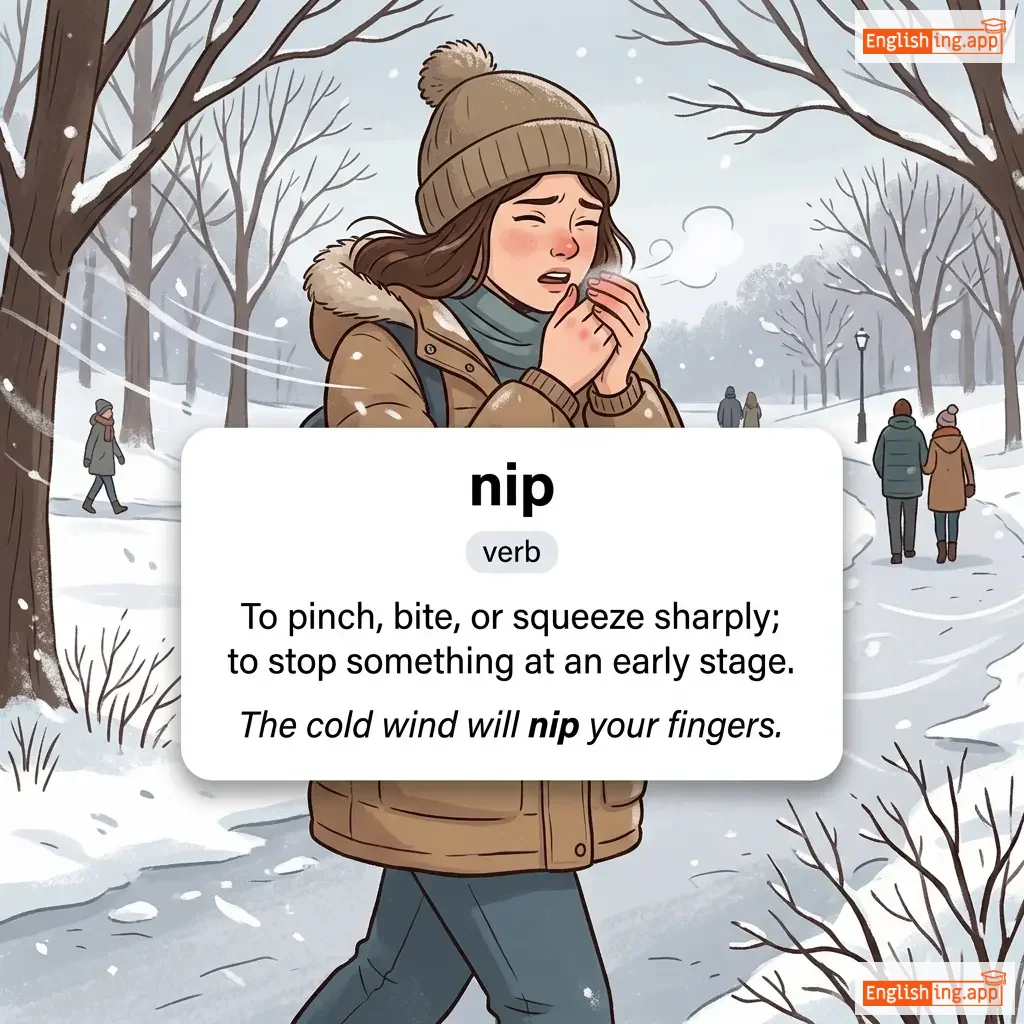
nip definition card — visual illustration of the meaning
verb
/nɪp/
щипать (shchipat')

To pinch, bite, or squeeze sharply; to stop something at an early stage.

"The cold wind will nip your fingers."

"Холодный ветер ущипнет твои пальцы." (Kholodnyi veter uschipnet tvoi pal'tsy.)
adjective
/ˈnɪp.i/
холодно; прохладно; быстро и ловко в движении (kholodno; prokhladno; bystro i lovko v dvizhanii)

cold; chilly; quick and agile in movement

"It's quite nippy outside today, you should wear a jacket."

"На улице довольно холодно сегодня, тебе стоит надеть куртку." (Na ulice dovol'no kholodno segodnya, tebe stoit nadet' kurtku.)
🕉️

nirvana

noun
/nɪərˈvɑːnə/

A state of perfect happiness, peace, and freedom from suffering; in Buddhism, the ultimate goal of liberation.

"Meditation helps some people seek nirvana in their lives."

noun
/nɪt/
яйцо вшей (yaytso vshay)

The egg or young form of a louse or other parasitic insect.

"The teacher noticed nits in the child’s hair."

"Учитель заметил яйца вшей в волосах ребенка." (Uchitel' zametil yaytsa vshey v volosakh rebenka.)
verb
/ˈnɪtˌpɪk/

To find and criticize small or unimportant faults in someone or something.

"She tends to nitpick about every little detail."

adverb
/noʊ/
нет (net)

used to give a negative response or to show disagreement

"She said no to the invitation."
"Она сказала нет приглашению." (Ona skazala net priglasheniyu.)
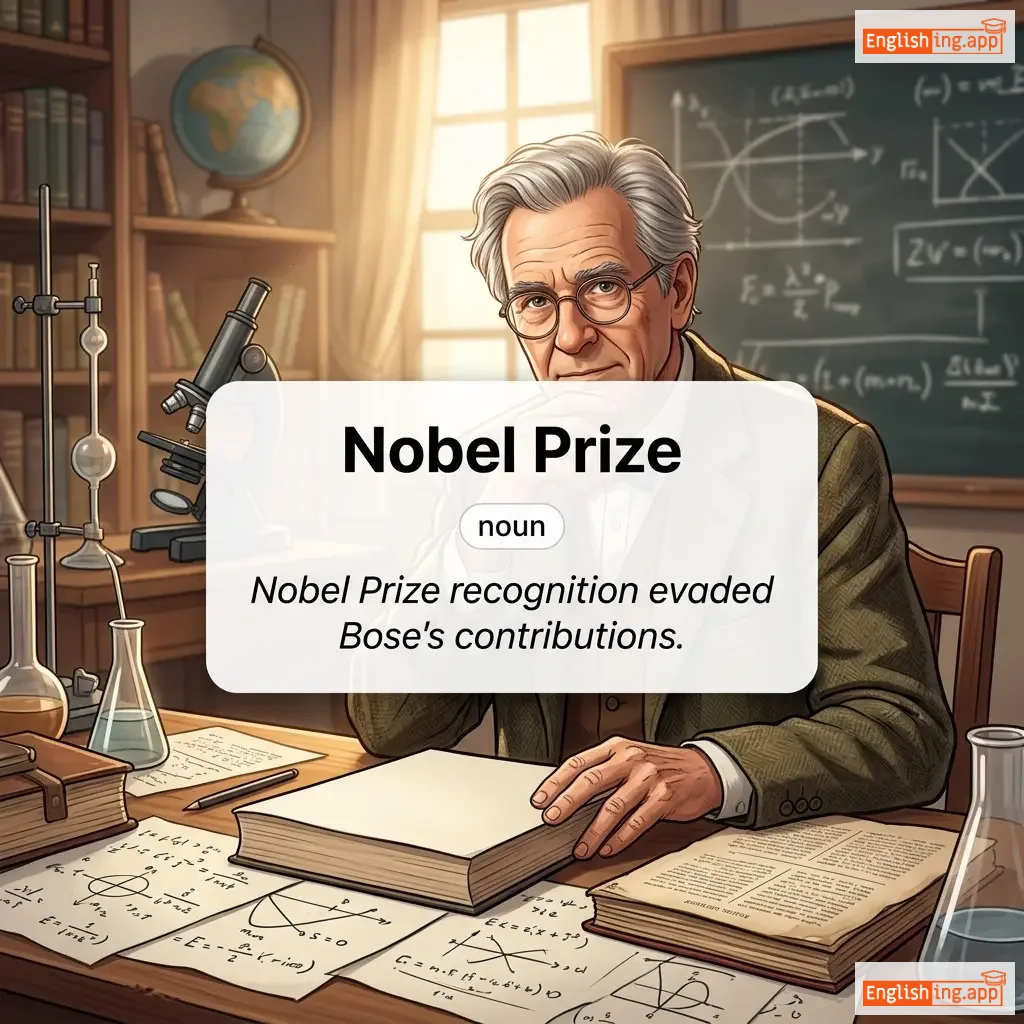
Nobel Prize definition card — visual illustration of the meaning
noun
noʊˈbel praɪz
Нобелевская премия (Nobelevskaya premiya)

Any of six international prizes awarded annually for outstanding work in physics, chemistry, physiology or medicine, literature, economics, and the promotion of peace.

"Nobel Prize recognition evaded Bose's contributions."

"Признание Нобелевской премии избегало вкладов Бозе." (Priznanie Nobelievskoi premii izbegalo vkladov Boze.)
noun
/nəʊˈbɪləti/
благородство (blagorodstvo)

the quality of being noble in character or the group of people belonging to the aristocracy

"The king praised her for her nobility and courage."

"Царь похвалил её за её благородство и мужество." (Tsar' pokhvalil yeyo za yeye blagorodstvo i muzhestrvo.)
adjective
/ˈnoʊbəl/
обладающий или демонстрирующий высокие личные качества, высокие моральные принципы или высокий социальный статус (obladayushchij ili demontiruyushchij vysokie lichnye kachestva, vysokie moral'nye printsipy ili vysokij sotsial'nyj status)

Having or showing fine personal qualities, high moral principles, or being of high social rank.

"He is admired for his noble character and generosity."

"Его восхищают за его благородный характер и щедрость." (Ego voskhishchayut za ego blagonorodnyj kharakter i shchedrost'.)
pronoun
/ˈnoʊˌbɑːdi/
никто (nikto)

no person; not anyone

"Nobody came to the party."

"Никто не пришел на вечеринку." (Nikto ne prishel na vecherinku.)
adjective
/nɒkˈtɜːrnəl/
ночной (nochnoy)

Active at night and sleeping during the day.

"Owls are nocturnal animals that hunt at night."
"Совы — ночные животные, которые охотятся ночью." (Sovy — nochnye zhivotnye, kotorye okhotyatsya nochyu.)
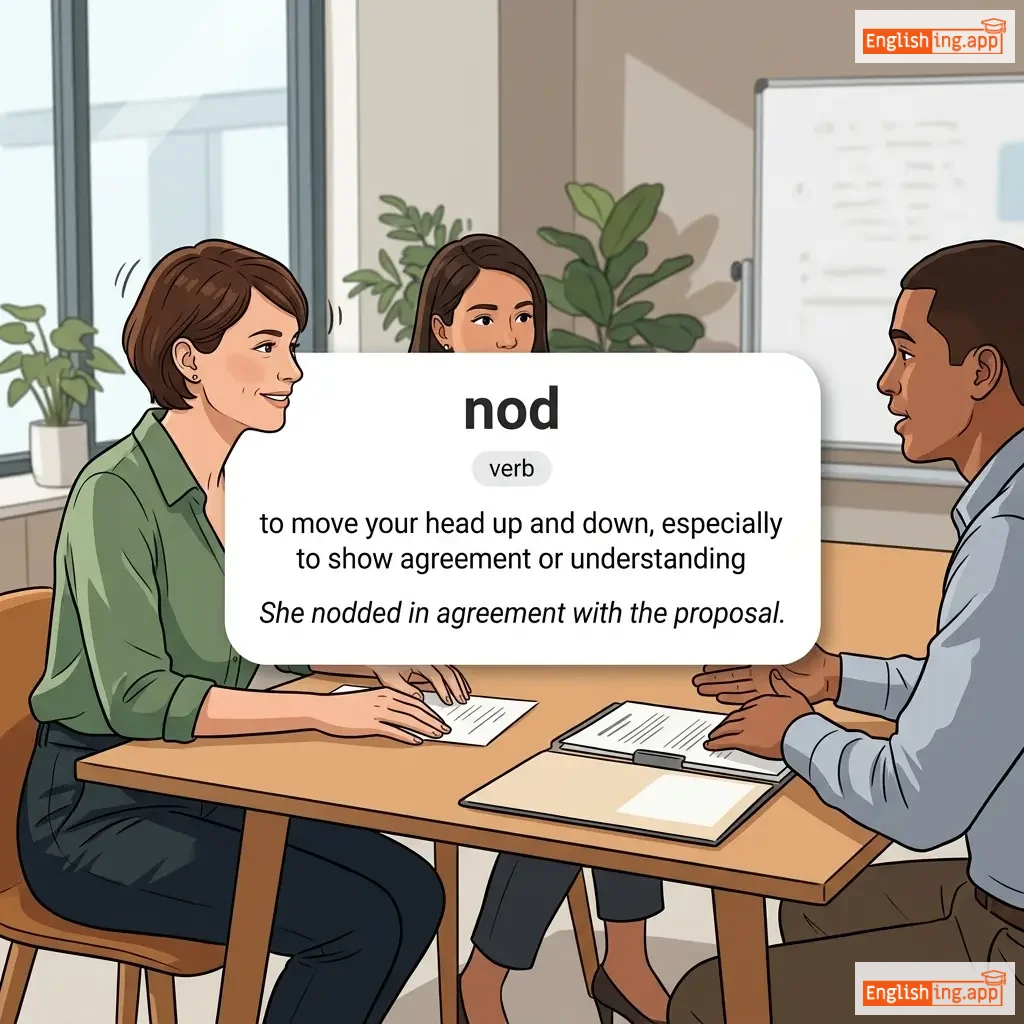
nod definition card — visual illustration of the meaning
verb
/nɒd/
кивнуть головой (kivnut golovoy)

to move your head up and down, especially to show agreement or understanding

"She nodded in agreement with the proposal."

"Она кивнула в знак согласия с предложением." (Ona kivnula v znak soglasiya s predlozheniyem.)
noun
/nɔɪz/
шум (shum)

a sound, especially when it is unwanted, unpleasant, or loud

"The noise from the construction site was unbearable."

"Шум с строительного участка был невыносим." (Shum s stroitel'nogo uchastka byl nevyinosim.)
adjective
/ˈnɔɪzləs/
беззвучный (bezzvuchny)

Completely silent; without any noise.

"The cat made a noiseless leap onto the table."

"Кошка сделала бесшумный прыжок на стол." (Koshka sdelała besshumnyy pryzhok na stol.)
adverb
/ˈnɔɪzɪli/
шумно (shumno)

in a way that makes a lot of noise; loudly

"The children were playing noisily in the playground."

"Дети играли шумно на игровой площадке." (Deti igrali shumno na igrovoy ploshchadke.)
adjective
/ˈnɔɪsəm/
зловонный (zlovonnyy)

Having an extremely unpleasant smell; offensive or harmful.

"The dump emitted a noisome odor that spread through the town."

"Свалка испустила зловонный запах, который распространился по городу." (Svalka ispustila zlovonnyy zapakh, kotoryy rasprostranilsya po gorodu.)
adjective
/ˈnɔɪzi/
шумный (shumnyy)

Making a lot of loud sounds; full of noise.

"The children were noisy during the party."

"Дети были шумными на вечеринке." (Deti byli shumnymi na vecherinke.)