Словари

Словарь английского языка | Значения слов, определения и примеры

adjective
/ˈnɔːtɪkəl/
морской (morskoy)

relating to ships, sailors, or navigation on water

"He studied nautical charts before setting sail."

"Он изучал морские карты перед тем, как отплыть." (On izuchal morskie karty pered tem, kak otplyt'.)
adjective
/ˈneɪvəl/
морской (morskoy)

relating to a country's navy or military ships

"The country invested heavily in naval defense."

"Страна сделала большие инвестиции в морскую оборону." (Strana sdelala bol'shie investitsii v morskuyu oboronu.)
noun
/ˈneɪ.vəl fɔːrs/
военно-морские силы (voenno-morskie sily)

the branch of a nation's armed services that conducts military operations at sea

"The naval force protected the country's coastline from enemy attacks."

"Военно-морские силы защитили побережье страны от вражеских атак" (Voyenno-morskie sily zashchitili poberezhe strany ot vrazheskikh atak)
noun
/neɪv/
главный неф церкви (glavny nef tserkvi)

the central part of a church building intended to accommodate the congregation

"The choir sang beautifully in the church nave."

"Хор прекрасно пел в нефе церкви." (Khor prekrasno pel v nefe tserkvi.)
👶

Navel

noun
/ˈneɪvəl/

the small hollow or raised area in the middle of the stomach, also called the belly button

"The baby’s navel was carefully cleaned after birth."

adjective
/ˈnæv.ɪ.ɡə.bəl/
плавучий (plavuchiy)

Able to be sailed on or through by ships or boats.

"The river is navigable for large cargo ships."
"Река пригодна для больших грузовых судов." (Reka prigodna dlya bol'shikh gruzovikh sudov.)
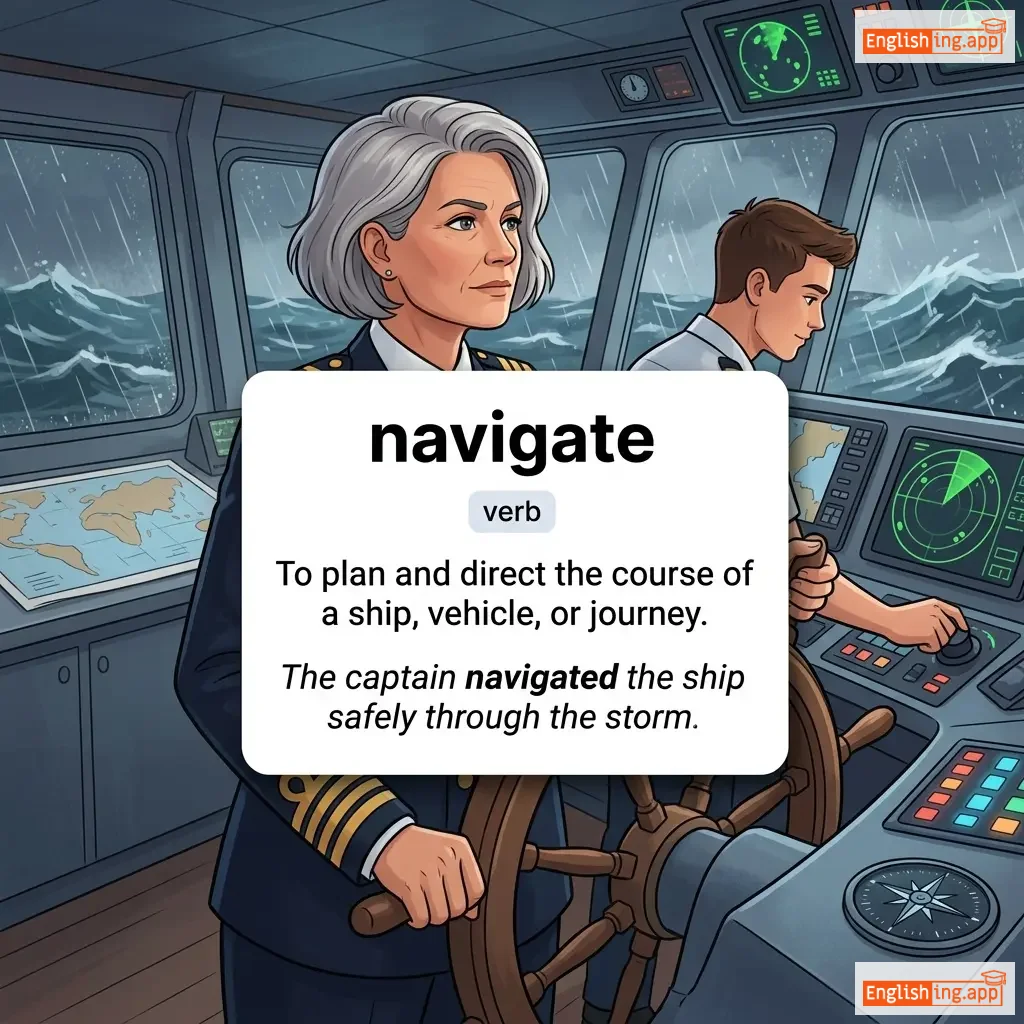
navigate definition card — visual illustration of the meaning
verb
/ˈnæv.ɪ.ɡeɪt/

To plan and direct the course of a ship, vehicle, or journey.

"The captain navigated the ship safely through the storm."
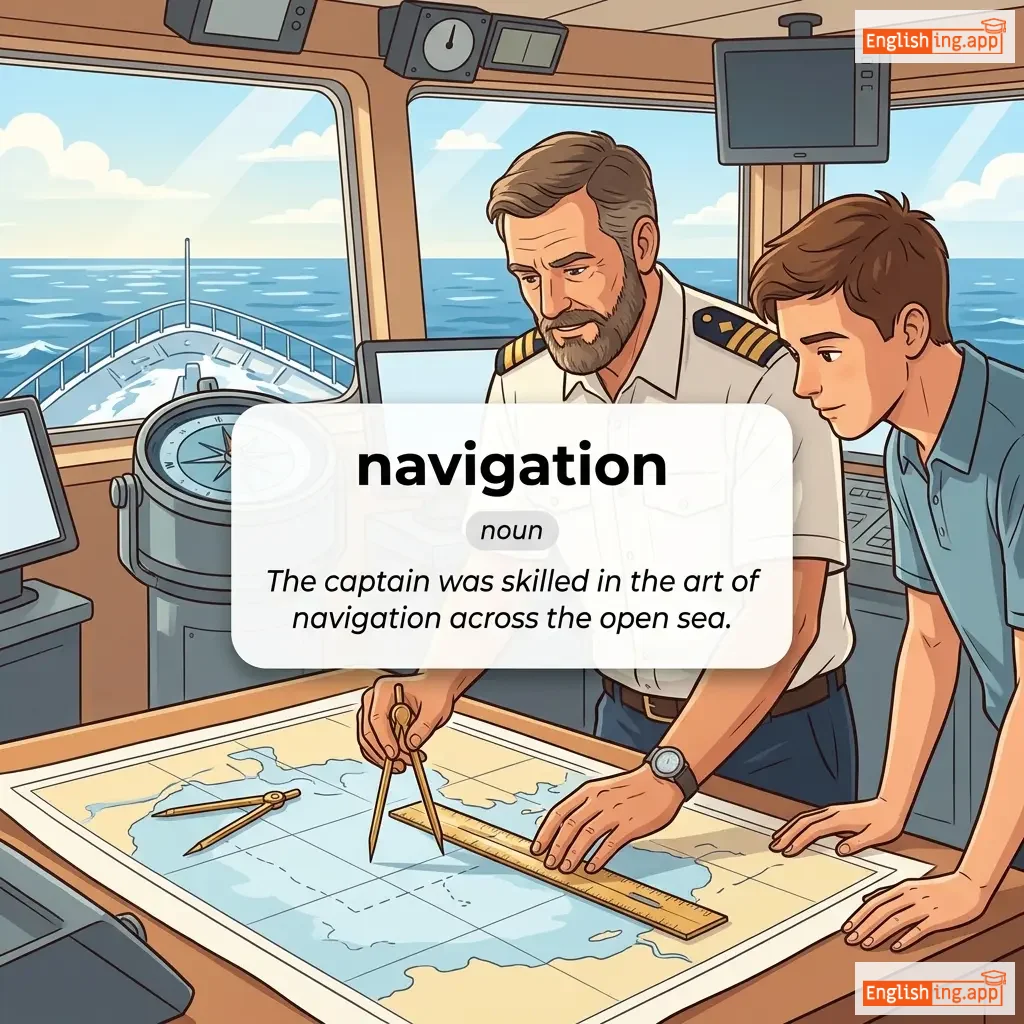
navigation definition card — visual illustration of the meaning
noun
/ˌnævɪˈɡeɪʃən/
навигация (navigatsiya)

the process or activity of accurately determining one's position and planning and following a route

"The captain was skilled in the art of navigation across the open sea."

"Капитан был мастером в искусстве навигации через открытое море." (Kapitan byl masterom v iskusstve navigatsii cherez otkrytoye more.)
noun
/ˈneɪvi/
военно-морской флот (voyenno-morskoy flot)

the branch of armed forces that conducts military operations at sea

"He joined the navy after graduating from college."

"Он поступил в военно-морской флот после окончания колледжа." (On postupil v voyenno-morskoy flot posle okonchaniya kolledzha.)
noun
/ˈneɪˌseɪ.ɪŋ/
негативное высказывание (negativnoe vyskazivanie)

The act of expressing negative or pessimistic views.

"His constant naysaying discouraged the team."

"Его постоянное негативное высказывание разочаровывало команду." (Ego postoyannoe negativnoe vyskazivanie razocharovyvalo komandu.)
noun
/ˌɛn.biː.esˈpiː/
неразрывный пробел (nerazryvnyy probel)

a non-breaking space character in HTML used to prevent an automatic line break at its position

"Use   in HTML to add a space that won't break into a new line."

"Используйте   в HTML, чтобы добавить пробел, который не разрывает строку." (Ispol'zuyte   v HTML, chtoby dobavit' probel, kotoryy ne razryvayet stroku.)
noun
/niːp/
низкий прилив (nizkiy prilyv)

A tide just after the first or third quarters of the moon when the difference between high and low tide is least.

"During a neap tide, the water level change is minimal."

"Во время низкого прилива изменение уровня воды минимально." (Vo vremya nizkogo prilyva izmenenie urovnya vody minimalno.)
preposition
/nɪə(r)/
близко (blizko)

At or to a short distance away; close in space, time, or relationship.

"There is a park near my house."

"Есть парк недалеко от моего дома." (Yest park nedaleko ot moyego doma.)
adverb
/ˈnɪərbaɪ/
рядом; в окрестностях (ryadom; v okrestnostyakh)

close to; not far away; in the neighborhood

"There is a grocery store nearby."

"Недалеко есть продуктовый магазин." (Nedaleko yest' produktovyy magazin.)
adjective
/ˈnɪəˌbaɪ/
рядом (ryadom)

close to a particular place or person

"The nearest gas station is nearby."

"Ближайшая автозаправка рядом." (Blizhayshaya avtobenzinovka ryadom.)
adverb
/ˈnɪəli/
почти (pochti)

almost, but not completely

"She nearly missed the bus."

"Она почти пропустила автобус." (Ona pochtit propustila avtobus.)
Neat definition card — visual illustration of the meaning
adjective
/niːt/
аккуратный (akkuratnyy)

tidy, orderly, and well-arranged; simple and elegant

"His handwriting is very neat and easy to read."

"Его почерк очень аккуратный и легко читаемый." (Ego pocherk ochen' akuratnyy i legko chitayemyy.)
adverb
/ˈniːtli/
аккуратно; чисто (akkuratno; chisto)

in a tidy and orderly way; carefully and precisely

"She arranged the books neatly on the shelf."

"Она аккуратно разместила книги на полке." (Ona akkurnato razmestila knigi na polke.)
noun
/ˈneb.jʊ.lə/
туманность (tumannost')

A cloud of gas and dust in outer space, sometimes visible in the night sky.

"The Orion Nebula is one of the brightest in the sky."

"Орионская туманность — одна из самых ярких на небе." (Orionskaya tumannost' — odna iz samykh yarkikh na nebe.)
adjective
/ˈnɛbjələs/
туманный (tumannyy)

Unclear, vague, or ill-defined; resembling a cloud or haze.

"His plan for the future was still nebulous and hard to understand."

"Его план на будущее был всё ещё туманным и трудным для понимания." (Yego plan na budushcheye byl vse yeshchyo tumannym i trudnym dlya ponyatiya.)
adverb
/ˌnɛsəˈsɛrɪli/
необязательно (neobyazatel'no)

as a necessary result; inevitably

"It doesn’t necessarily mean you’re wrong."
"Это не обязательно означает, что вы ошибаетесь." (Eto ne obyazatel'no oznachaet, chto vy oshibayetes'.)
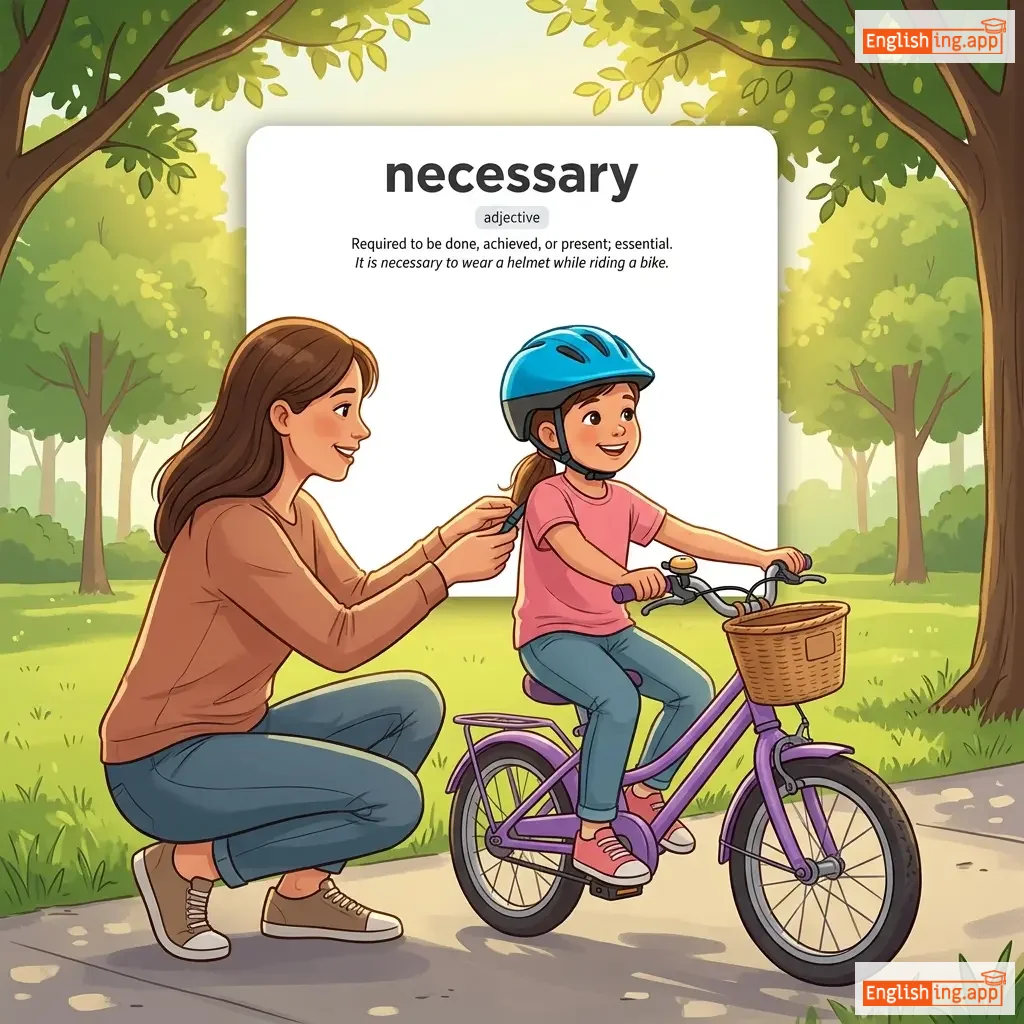
necessary definition card — visual illustration of the meaning
adjective
/ˈnɛsəsɛri/
необходимый (neseseri)

Required to be done, achieved, or present; essential.

"It is necessary to wear a helmet while riding a bike."

"Необходимо носить шлем во время езды на велосипеде." (Neobkhodimo nosit shlem vo vremya ezdy na velosipede)
verb
/nəˈsɛsɪteɪt/
сделать необходимым (sdelat' neobkhodimym)

To make something necessary or unavoidable.

"The heavy rains necessitated the cancellation of the event."
"Тяжелые дожди сделали отмену мероприятия неизбежной." (Tyazhelye dozhdi sdelali otmenu meropriyatiya neizbezhnoi.)
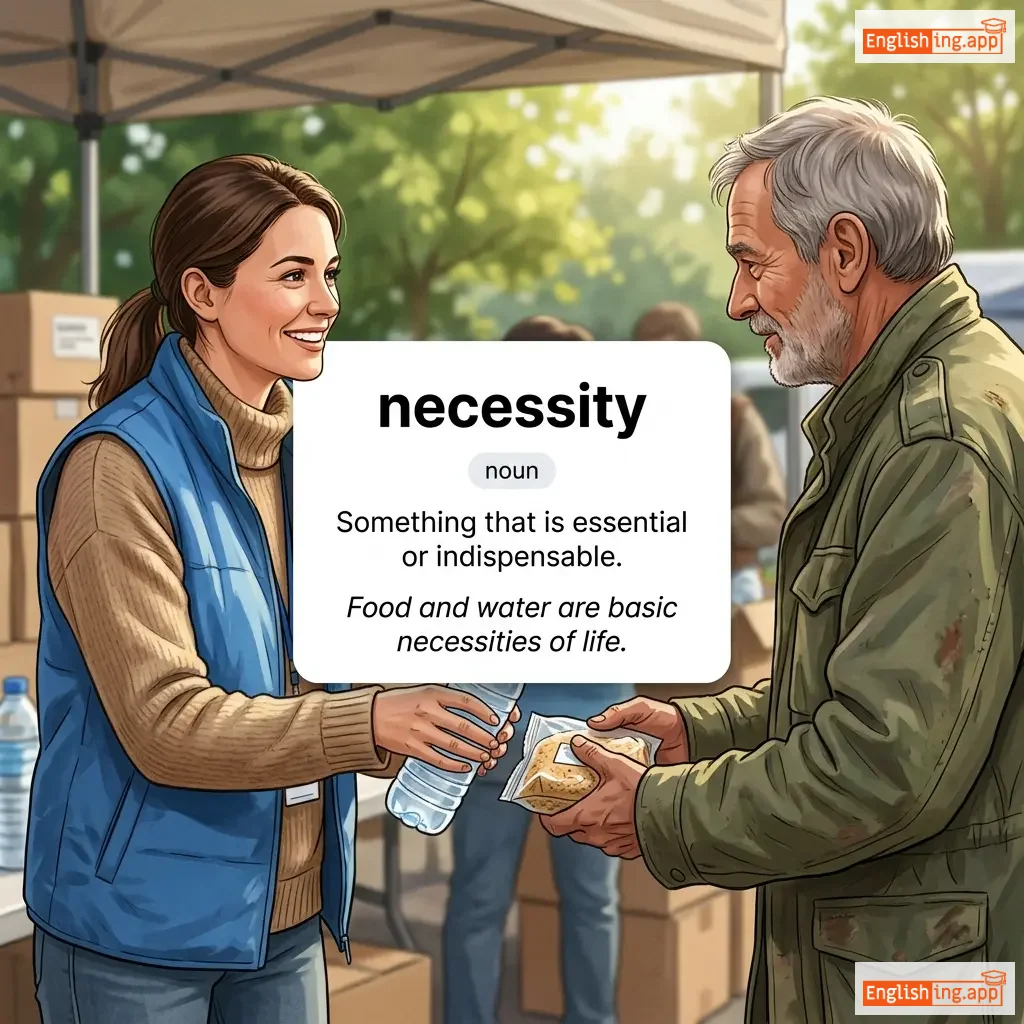
necessity definition card — visual illustration of the meaning
noun
/nəˈsɛsəti/
необходимость (neobkhodimost)

Something that is essential or indispensable.

"Food and water are basic necessities of life."

"Еда и вода являются основными необходимыми вещами в жизни." (Yeda i voda yavyayutsya osnovnymi neobkhodimymi veshchami v zhizni.)
noun
/nɛk/
шея (sheya)

the part of the body connecting the head and the shoulders

"She wore a necklace around her neck."

"Она носила ожерелье на своей шее." (Ona nosila ozherelye na svoey sheye.)
noun
/ˈnek.ləs/
ожерелье (ozherele)

a piece of jewelry that is worn around the neck

"She wore a beautiful diamond necklace to the party."

"Она носила красивое бриллиантовое ожерелье на вечеринке." (Ona nosila krasivoe briliantovoe ozherelie na vecherinke.)
noun
/ˈnɛkˌlaɪn/
вырез (vyrez)

the edge of a garment around the neck, especially as cut to form a particular shape

"The dress has a beautiful V-shaped neckline."

"Платье имеет красивый вырез в форме V." (Plat'ye imeet krasivyy vyrez v forme V.)
noun
/ˈnek.taɪ/
галстук (galstuk)

a strip of cloth worn around the neck under a shirt collar and tied in front

"He adjusted his necktie before the important meeting."

"Он подправил свой галстук перед важной встречей." (On podpravil svoi galstuk pered vazhnoy vstrechey.)
noun
/nɪˈkrɒlədʒi/
некрология (nekrologiya)

An obituary notice or a list of people who have recently died.

"The newspaper published a necrology of notable figures who passed away that year."

"Газета опубликовала некролог известных личностей, которые умерли в этом году." (Gazeta opublikovala nekrolog izvestnykh lichnostey, kotorye umerli v etom godu.)
noun
/ˈnɛkrəˌmænsər/
некромант (nekromancer)

a person who practices necromancy; a wizard or magician who claims to communicate with the dead

"The villagers feared the old necromancer who lived at the edge of the forest."

"Жители деревни боялись старого некроманта, который жил на краю леса." (Zhiteli derevni boyalis starogo nekromanta, kotoryi zhil na kraju lesa.)
noun
/ˈnɛkrəˌmænsi/
некромантия (nekromantiya)

the practice of communicating with the dead, often to predict the future

"Ancient texts described rituals of necromancy performed by priests."

"Древние тексты описывают ритуалы некромантии, проводимые священниками." (Drevnie teksty opisyvayut ritualy nekromantii, provodimye svyashchennikami.)
noun
/nəˈkrɒpəlɪs/
некрополь (nekropol)

a large ancient cemetery with elaborate tombs

"The archaeologists discovered artifacts in the necropolis of the ancient city."

"Археологи обнаружили артефакты на некрополе древнего города." (Arheologi obnaruzhili artefakty na nekropole drevnego goroda.)
noun
/nɛˈkroʊsɪs/
некроз (nekroz)

the death of body tissue due to disease, injury, or lack of blood supply

"The doctor explained that the patient’s wound showed signs of necrosis."
"Врач объяснил, что рана пациента показала признаки некроза." (Vrach obyasnil, chto rana patsienta pokazala priznak nekroza.)
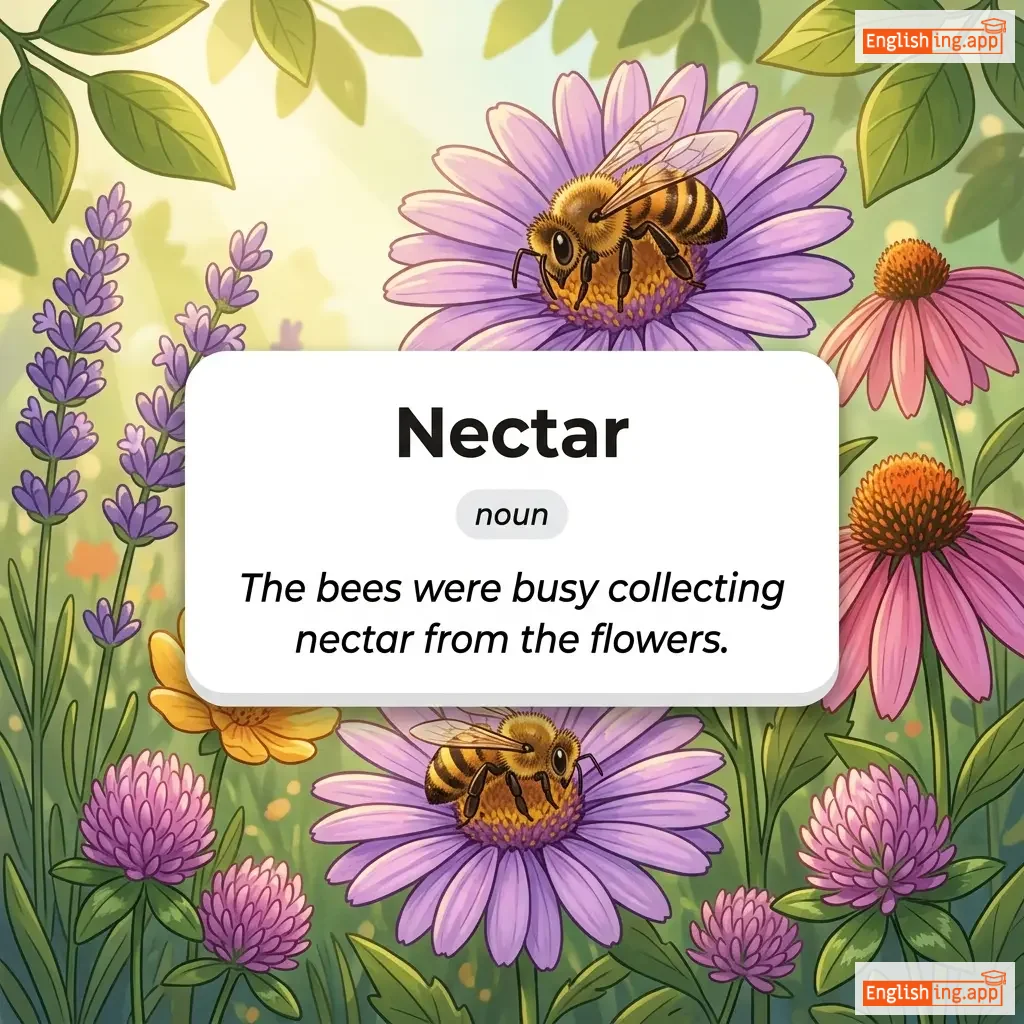
Nectar definition card — visual illustration of the meaning
noun
/ˈnɛktər/
нектар (nektar)

a sweet liquid produced by flowers and collected by bees; in mythology, the drink of the gods

"The bees were busy collecting nectar from the flowers."

"Пчелы были заняты сбором нектара с цветов." (Pchely byli zanyaty sbornom nektara s tsvetov.)
noun
/ˈnɛktəriːn/
нектарин (сорт персика с гладкой кожурой) (nektarin)

A smooth-skinned variety of peach.

"She bought a basket of fresh nectarines from the market."

"Она купила корзину с свежими нектаринами на рынке." (Ona kupila korzinu s svezhimi nektarinami na rynke.)
need definition card — visual illustration of the meaning
verb
/niːd/
нужда (nuzhda)

to require something or someone

"I need your help with this task."

"Мне нужна твоя помощь в этой задаче." (Mne nuzhna tvoya pomoshch' v etoy zadache.)
noun, verb
/ˈniː.dəl/
игла (igla)

a small thin metal tool with a point used for sewing or injecting; to provoke or annoy someone

"The nurse used a sterile needle for the injection."

"Медсестра использовала стерильную иглу для инъекции." (Medsestra ispol'zovala sterileyu iglu dlya in'ektsii.)
adjective
/ˈniːd.ləs/
ненужный (nidless)

unnecessary; not required; without purpose

"The argument was needless and could have been avoided."

"Аргумент был излишним и его можно было избежать." (Argument byl izlishnym i ego mozhno bylo izbezhat)
noun
/ˈniːdəlwɜːrk/
работа с иглой, вышивка (rabota s igloy, vishivka)

The craft of sewing, embroidery, or knitting done with a needle.

"Her grandmother taught her the art of needlework."

"Ее бабушка научила ее искусству работы с иглой." (Eyo babushka nauchila yeye iskusstvy raboty s igloy.)
adjective
/ˈniːdi/
нуждающийся (nuzhdayushchiesya)

Lacking the basic necessities of life; poor.

"The charity provides food and shelter for needy families."

"Благотворительность предоставляет еду и кров нуждающимся семьям." (Blagotvoritel'nost' predostavlyayet edu i krov nuzhdayushchimsya sem'yam.)
adjective
/nɪˈfɛəriəs/
злой, преступный или морально плохой (zloy, prestupnyy ili moral'no plokhoy)

Wicked, criminal, or morally bad.

"The police uncovered a nefarious plot to cheat investors."

"Полиция раскрыла зловещий заговор, чтобы обмануть инвесторов." (Politsiya raskryla zloveshchiy zagovor, chtoby obmanut' investorov.)
negate definition card — visual illustration of the meaning
verb
/nɪˈɡeɪt/

To cancel out or make ineffective; to deny the truth of something.

"The new evidence will negate the claims made earlier."

noun
/nɪˈɡeɪʃən/
отрицание (otricanie)

The act of denying something; the contradiction or absence of something.

"The theory is built on the negation of traditional beliefs."
"Теория основана на отрицании традиционных убеждений." (Teoriya osnova na otritsanii traditsionnykh ubezhdeniy.)
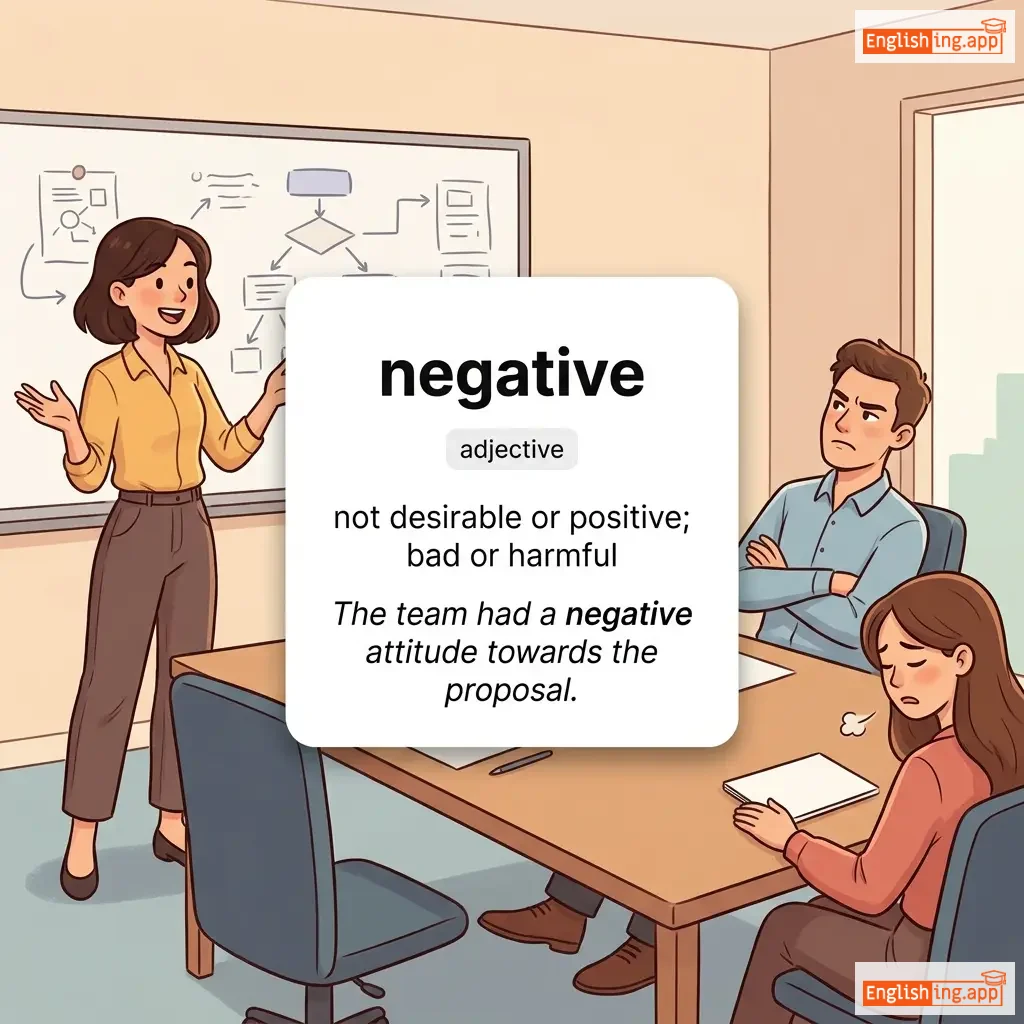
negative definition card — visual illustration of the meaning
adjective
/ˈnɛɡətɪv/
негативный (negativnyy)

not desirable or positive; bad or harmful

"The team had a negative attitude towards the proposal."
"Команда имела негативное отношение к предложению." (Komanda imela negativnoe otnoshenie k predlozheniyu.)
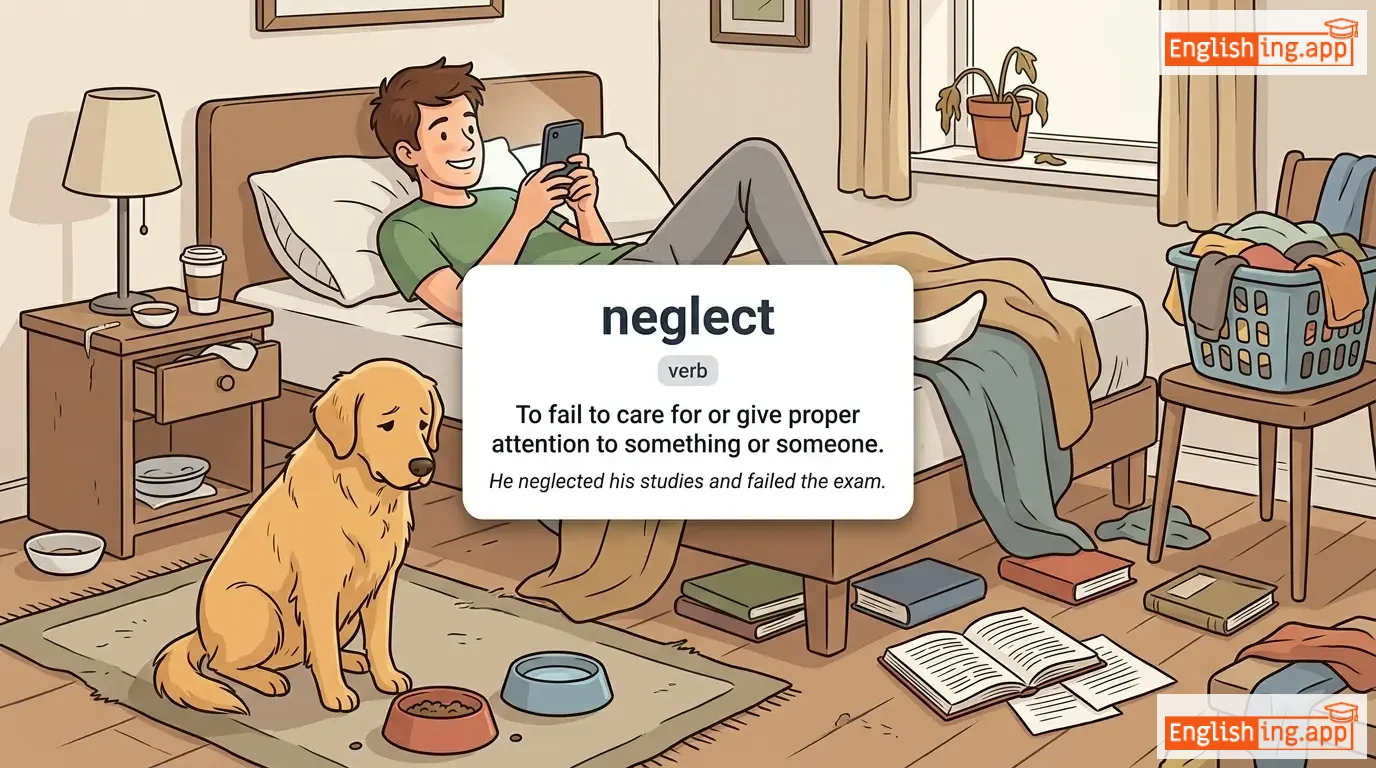
neglect definition card — visual illustration of the meaning
verb
/nɪˈɡlɛkt/
пренебрежение (prenebrezhene)

To fail to care for or give proper attention to something or someone.

"He neglected his studies and failed the exam."

"Он пренебрег учебой и не сдал экзамен." (On prenebreg ucheboy i ne sdal ekzamen.)
adjective
/nɪˈɡlɛktfʊl/
небрежный (nebrezhnyy)

Failing to give proper care or attention.

"The neglectful parent left the child alone for hours."

"Небрежный родитель оставил ребенка одного на несколько часов." (Nebrezhnyy roditel' ostavil rebenka odnogo na neskol'ko chasov.)
noun
/ˌnɛɡlɪˈʒeɪ/
легкий шелковый халат (legkiy shelkovyy khalat)

A woman's light dressing gown, often made of thin or silky material.

"She wore a silk negligee before going to bed."

"Она носила шелковый халат перед тем, как лечь спать." (Ona nosila shelkovyy khalat pered tem, kak lech' spat'.)
noun
/ˈnɛɡlɪdʒəns/
небрежность (nebrezhnost)

Failure to take proper care in doing something, often resulting in damage or harm.

"The accident was caused by the driver's negligence."

"Авария произошла из-за небрежности водителя." (Avariya proishla iz-za nebrezhnosti voditelya.)
adjective
/ˈnɛɡ.lɪ.dʒənt/
небрежный (nebrezhnyy)

Failing to take proper care in doing something; careless.

"The company was found negligent in providing workplace safety."

"Компания была признана небрежной при обеспечении безопасности на рабочем месте." (Kompaniya byla priznana nebrezhnoy pri obespechenii bezopasnosti na rabochem meste.)
adjective
/ˈnɛɡ.lɪ.dʒə.bəl/
незначительный (neznachitel'nyy)

So small or unimportant as to be not worth considering; insignificant.

"The cost of the error was negligible."

"Стоимость ошибки была незначительной." (Stoimost' oshibki byla neznačitel'noj.)