Словари

Словарь английского языка | Значения слов, определения и примеры

⬇️

nadir

noun
/ˈneɪdɪər/

The lowest point of a situation or condition.

"The company reached its nadir during the financial crisis."

noun, verb
/neɪl/
гвоздь (gvozdy)

a small metal spike driven into wood or other material, or to fasten or fix something with nails

"He nailed the wooden board to the wall."

"Он прибил деревянную доску к стене." (On pribyl derevyannuyu dosku k stene.)
adjective
/naɪˈiːv/
наивный (naivny)

Lacking experience, wisdom, or judgment; too trusting.

"She was naïve to believe every advertisement she saw."

"Она была наивной, веря каждому объявлению, которое она видела." (Ona byla naivnoy, verya kazhdomu ob'yavleniyu, kotoroye ona videla.)
noun
/naɪˈiːvteɪ/
наивность (naivete)

The quality of being naive; lack of experience, wisdom, or judgment.

"His naivete made him an easy target for manipulation."

"Его наивность делала его легкой мишенью для манипуляций." (Yego naivnost delala ego legkoy mishenyu dlya manipulyatsiy)
noun
/naɪˈiːvɪti/
наивность (naivnost)

The quality of being innocent, simple, and lacking experience or sophistication.

"Her naivety made her trust people too easily."

"Её наивность заставила её слишком легко доверять людям." (Eyo naivnost' zastavila yeye slishkom legko doveryat' lyudyam.)
adjective
/ˈneɪkɪd/
голый (golyy)

not covered by clothing or without protection

"The child was running naked in the yard."

"Ребенок бегал голым во дворе." (Rebenok begal golym vo dvore.)
name definition card — visual illustration of the meaning
noun
/neɪm/
имя (imya)

a word by which a person or thing is known or called

"His name is John."

"Его имя Джон." (Ego imya John.)
adjective
/ˈneɪmləs/
безымянный (bezymyannyy)

Without a name or not known by name.

"A nameless fear crept over him in the dark room."

"Безымянный страх охватил его в темной комнате." (Bezymyannyy strakh okhvatil ego v temnoy komnate.)
adverb
/ˈneɪmli/
то есть (to yest)

that is to say; to be specific

"The festival will be held in three cities, namely Dhaka, Chittagong, and Sylhet."
"Фестиваль пройдет в трех городах, то есть в Дакке, Читтагонге и Силхете." (Festival proydet v tryokh gorodakh, to yest v Dakke, Chittagonge i Silhete.)
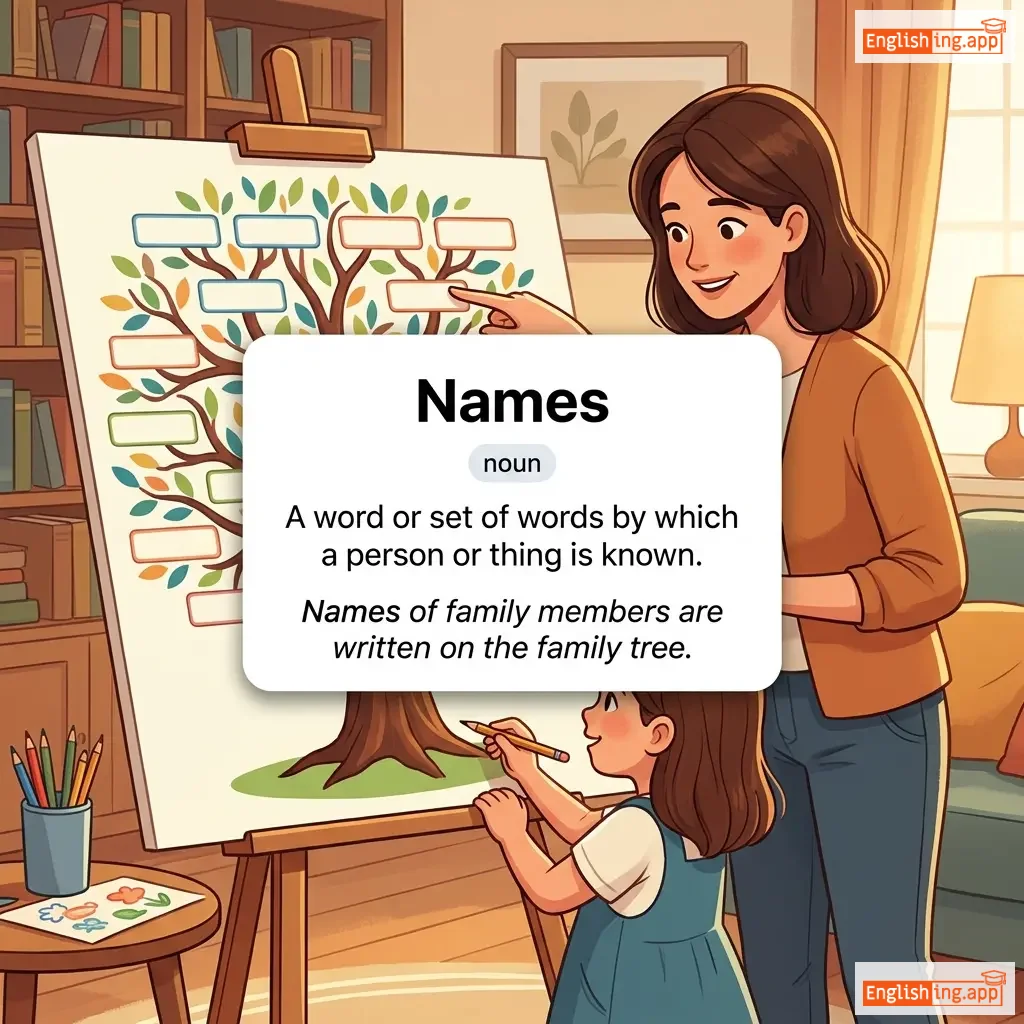
Names definition card — visual illustration of the meaning
noun
neɪmz
имя (imya)

A word or set of words by which a person or thing is known.

"Names of family members are written on the family tree."

"Имена членов семьи написаны на генеалогическом дереве." (Imena chlenov sem'i napisany na genealogicheskom dereve.)
nanotechnology definition card — visual illustration of the meaning
noun
ˌnæn.oʊ.tekˈnɒl.ə.dʒi
нанотехнология (nanotekhnologiya)

The branch of technology that deals with dimensions and tolerances of less than 100 nanometers.

"Nanotechnology is advancing medical treatments."

"Нанотехнология делает прорывы в медицинских исследованиях." (Nanotekhnologiya delayet proryvy v meditsinskikh issledovaniyakh.)
noun
/ˈnæp.kɪn/
салфетка (salfetka)

a piece of cloth or paper used for wiping the mouth and hands while eating

"She placed the napkin on her lap before starting dinner."

"Она положила салфетку на колени перед тем, как начать ужинать." (Ona polozhila salfetku na koleni pered tem, kak nachat' uzhinat'.)
noun
/ˈnæfθə/
нафта (nafta)

A flammable oil containing hydrocarbons, obtained from petroleum or coal tar, used as fuel or solvent.

"The factory stored barrels of naphtha for industrial use."

"Фабрика хранила бочки с нафтой для промышленного использования." (Fabrika khranila bochki s naftoy dlya promyshlennogo ispol'zovaniya.)
noun
/ˈnæpkɪn/
салфетка (salfetka)

a piece of cloth or paper used to wipe the mouth and hands while eating

"She placed a napkin on her lap before eating."

"Она положила салфетку себе на колени перед едой." (Ona polozhila salfetku sebe na koleni pered yedoy.)
narcissism definition card — visual illustration of the meaning
noun
/ˈnɑːrsɪsɪzəm/
нарциссизм (nartsissizm)

Excessive interest in or admiration of oneself.

"His constant selfies were a sign of his narcissism."

"Его постоянные селфи были признаком его нарциссизма." (Yego postoyannyye selfi byli priznakom yego nartsissizma.)
noun
/ˈnɑːrsɪsɪst/
нарциссист (nartsissist)

A person who has an excessive interest in or admiration of themselves.

"Everyone avoided him because he was a narcissist."

"Все избегали его, потому что он был нарциссистом." (Vse izbegali ego, potomu chto on byl nartsissistom.)
noun
/nɑːrˈsɪsəs/
цветок нарцисса (tsvetok nartsissa)

A type of flowering plant with yellow or white blooms, often associated with self-love from Greek mythology.

"A narcissus bloomed in the garden during spring."

"Нарцисс распустился в саду весной." (Nartsiss raspustilsya v sadu vesnoy.)
noun
/nɑːrˈkɒtɪk/
наркотик (narkotik)

A drug that dulls the senses and relieves pain, often causing sleep and sometimes addiction.

"The police seized a large amount of narcotic substances."

"Полиция изъяла большое количество наркотических веществ." (Politsiya izyalyalo bol'shoye kolichestvo narkoticheskikh veshchestv.)
verb
/ˈnæreɪt/
рассказывать (rasskazyvat)

To tell a story or describe events, often in detail.

"She will narrate the events of her journey to the audience."

"Она будет рассказывать о событиях своего путешествия аудитории." (Ona budet rasskazyvat' o sobytiyakh svoego puteshestviya auditorii.)
noun
/næˈreɪʃən/
повествование (povestvovanie)

The act of telling a story or describing events in detail.

"The movie’s narration was done by a famous actor."

"Наррация фильма была выполнена знаменитым актером." (Narratsiya fil'ma byla vypolnena znamenitym akterom.)
noun
/ˈnærətɪv/
нарратив (narrativ)

A spoken or written account of connected events; a story.

"The novel’s narrative explores themes of identity and freedom."

"Нарратив романа исследует темы идентичности и свободы." (Narrativ romana issleduet temy identichnosti i svobody.)
narrative style definition card — visual illustration of the meaning
noun
ˈnærətɪv staɪl
повествовательный стиль (povestvovatel'nyy stil')

The way in which a story is told, including the point of view and the voice of the narrator.

"Dickens' narrative style is engaging and emotional."

"Повествовательный стиль Диккенса захватывающий и эмоциональный." (Povestvovatel'nyy stil' Dikkensa zakhvatyvayushchiy i emosional'nyy.)
noun
/ˈnæreɪtər/
рассказчик (rasskazchik)

A person who tells the story in a book, play, or film.

"The narrator guided the audience through the complex plot."

"Рассказчик проводил аудиторию через сложный сюжет." (Rasskazchik provodil auditoriyu cherez slozhnyy syuzhet.)
adjective
/ˈnær.oʊ/
узкий (uzkiy)

limited in width or extent; not wide

"The narrow street made it difficult for cars to pass."

"Узкая улица затруднила движение автомобилей." (Uzkiy ulitsa zatrudnila dvizhiniye avto)
adjective
/ˌnæroʊˈmaɪndɪd/

Having a limited outlook or unwillingness to accept different opinions or ideas.

"She was too narrow-minded to consider other perspectives."

adverb
/ˈnæroʊli/
едва; с трудом (yedva; s trudom)

by a small margin; barely; in a limited way

"She narrowly escaped the accident."

"Она едва избежала аварии." (Ona yedva izbezhalа avarii.)
adjective
/ˈneɪzl/
назальный (nazal'nyj)

Relating to the nose; a sound produced through the nose.

"He spoke with a nasal voice due to his cold."

"Он говорил с носовым голосом из-за простуды." (On govorit s nosovym golosom iz-za prostudy.)
nascent definition card — visual illustration of the meaning
adjective
/ˈneɪsnt/
зарождающийся (zarozhdajushchijsja)

Just coming into existence and beginning to develop.

"The nascent technology has great potential."

"Зарождающаяся технология имеет большой потенциал." (Zarozhdajushchajasja tekhnologija imejet bol'shoj potencial.)
adjective
/ˈnæsti/
неприятный (nepriyatnyy)

very unpleasant, unkind, or offensive

"He made a nasty comment about her dress."

"Он сделал неприятный комментарий о её платье." (On sdelal nepriyatnyy kommentariy o yeё plat'ye.)
adjective
/ˈneɪtl/
относящийся к рождению (otnosyashchijsya k rozhdeniyu)

Relating to birth or the place of birth.

"She returned to her natal village after many years."

"Она вернулась в свою родную деревню после многих лет." (Ona vernulas' v svoyu rodnuyu derevnyu posle mnogikh let.)
noun
/næˈteɪʃən/
плавание (plavanie)

The act or sport of swimming.

"She took lessons in natation to improve her swimming skills."

"Она взяла уроки плавания, чтобы улучшить свои навыки плавания." (Ona vzyala uroki plavaniya, chtoby uluchshit' svoi navyki plavaniya.)
noun
/ˈneɪʃən/
нация (natsiya)

a large group of people united by common descent, history, culture, or language

"The nation celebrated its independence day with pride."

"Нация отметила свой день независимости с гордостью." (Natsiya otmetila svoy den' nezavisimosti s gordost'yu.)
adjective
/ˈnæʃənəl/
национальный (natsional'nyy)

relating to a nation, especially its culture, language, or government

"The national anthem was played at the ceremony."

"Национальный гимн был сыгран на церемонии." (Natsional'nyy gimn byl sygran na tseremonii.)
noun
/ˈnæʃənəl ˈænθəm/
государственный гимн (gosudarstvennyi gimn)

an official patriotic song of a country, performed at national events and ceremonies

"The national anthem was played before the international match."

"Перед международным матчем прозвучал государственный гимн." (Pered mezhdunarodnym matchem prozvuchal gosudarstvennyi gimn)
noun
/ˌnæʃəˈnæləti/
национальность (natsional'nost')

The status of belonging to a particular nation, either by birth or naturalization.

"Her nationality is Canadian, though she was born in France."

"Ее национальность канадская, хотя она родилась во Франции." (Yeyo natsional'nost' kanadskaya, khotya ona rodilas' vo Frantsii.)
nationalization definition card — visual illustration of the meaning
noun
/ˌnæʃ.ən.ə.laɪˈzeɪ.ʃən/
национализация (natsionalizatsiya)

The transfer of private property or business to government ownership.

"The nationalization of banks increased state control over finance."

"Национализация банков увеличила государственный контроль над финансами." (Natsionalizatsiya bankov uvelichila gosudarstvennyy kontrol' nad finansami.)
adverb
/ˈnæʃənəli/
на национальном уровне (na natsionalnom urovne)

at the level of a whole nation; in a way that involves or affects an entire country

"The policy was implemented nationally to ensure equal benefits for all citizens."

"Политика была внедрена на национальном уровне, чтобы обеспечить равные выгоды для всех граждан." (Politika byla vnedrena na natsionalnom urovne chtoby obespechit ravnye vygody dlya vsekh grazhdan)
adjective, adverb
/ˈneɪʃənˌwaɪd/
по всей стране (po vsey strane)

existing or happening throughout an entire nation

"The campaign received nationwide support."

"Кампания получила поддержку по всей стране." (Kampaniya poluchila podderzhku po vsey strane.)
adjective
/ˈneɪtɪv/
местный (mestnyy)

Belonging to a person by birth; originating in a particular place.

"He is a native speaker of Bengali."

"Он носитель бенгальского языка." (On nositel bengalskogo yazyka.)
adjective
/ˈnæti/
стильный (stil'nyy)

Neat, stylish, and fashionable in appearance.

"He looked very natty in his new suit."

"Он выглядел очень стильным в своем новом костюме." (On vyglyadel ochen' stil'nym v svoem novom kostyume.)
adjective
/ˈnætʃərəl/
натуральный (natural'nyy)

existing in or derived from nature; not made or caused by humankind

"She prefers to use natural ingredients in her cooking."

"Она предпочитает использовать натуральные ингредиенты в своей кухне." (Ona predpochitayet ispol'zovat' natural'nye ingredienty v svoey kukhne.)
noun
/ˈnætʃərəl dɪˈzæstər/
стихийное бедствие (stikhiynoye bedstviye)

a catastrophic event caused by natural processes of the Earth that results in significant damage, destruction, or loss of life

"The coastal town was devastated by a natural disaster."
"Прибрежный город был разрушен стихийным бедствием." (pribrezhnye gorod byl razrushen stikhiynym bedstviem)
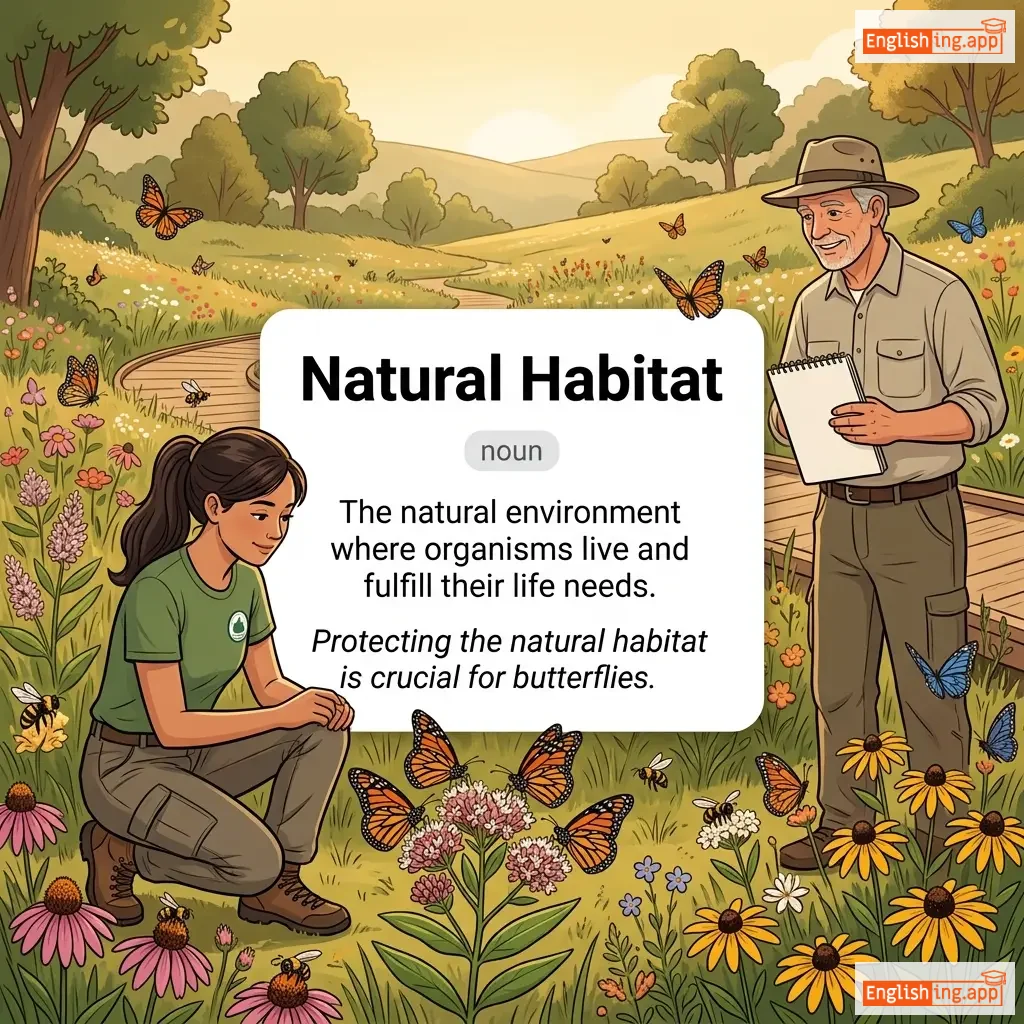
Natural Habitat definition card — visual illustration of the meaning
noun
ˈnætʃərəl ˈhæbɪtæt
естественная среда обитания (yestestvennaya sreda obitaniya)

The natural environment where organisms live and fulfill their life needs.

"Protecting the natural habitat is crucial for butterflies."

"Защита естественной среды обитания критически важна для бабочек." (Zashchita yestestvennoy sredy obitaniya kriticheski vazhna dlya babocek.)
adverb
/ˈnætʃrəli/
естественно (yestestvenno)

In a way that is normal, expected, or without effort.

"He spoke so naturally that everyone felt comfortable."
"Он говорил так естественно, что все чувствовали себя комфортно." (On govoril tak yestestvenno, chto vse chuvstvovali sebya komfortno.)
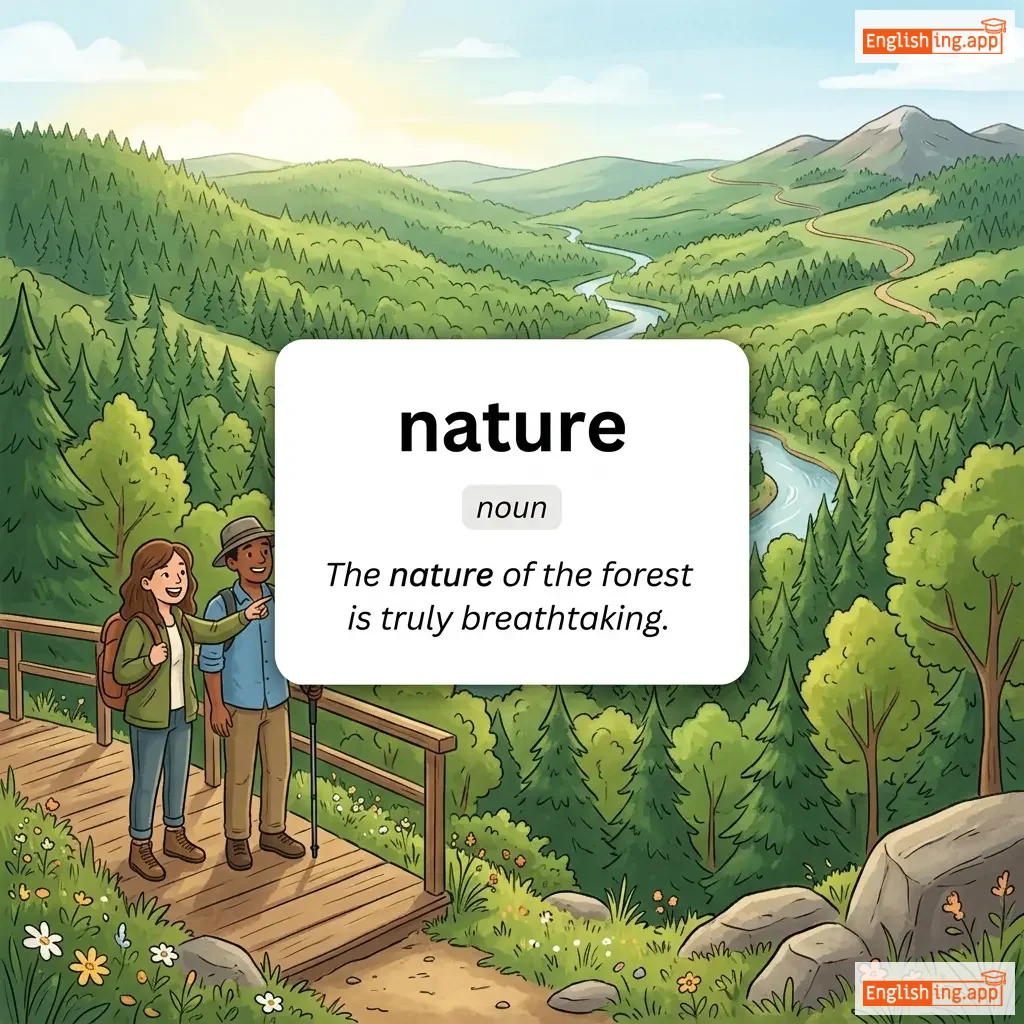
nature definition card — visual illustration of the meaning
noun
/ˈneɪtʃər/
природа (priroda)

the physical world and everything in it, including plants, animals, and the landscape

"The nature of the forest is truly breathtaking."

"Природа леса действительно захватывающая." (Priroda lesa deystvitel'no zakhvatyvayushchaya.)
Nature Enthusiasts definition card — visual illustration of the meaning
noun
ˈneɪʧər ɪnˈθjuːziæsts
энтузиасты природы (entuziasty prirody)

People who have a passionate interest in and love for the natural world and outdoor activities.

"Nature enthusiasts often visit Sajek Valley for its scenic beauty."

"Энтузиасты природы часто посещают долину Саджек из-за ее живописной красоты." (Entuziasty prirody chasto poseshaют dolinu Sadjek iz-za ee zhivopisnoy krasoty.)
adjective
/ˈnɔːti/
озорной (ozornoy)

Disobedient or mischievous, often in a playful or mildly bad way.

"The naughty child drew on the walls with crayons."

"Озорной ребенок рисовал на стенах мелками." (Ozornoy rebenok risoval na stenakh melkami.)
noun
/ˈnɔːziə/
тошнота (toshnota)

A feeling of sickness with an inclination to vomit.

"The strong smell of paint gave her a sudden nausea."

"Резкий запах краски вызвал у неё внезапную тошноту." (Rezkij zapah kraski vyzval u neyo vnezapnuyu toshnotu.)
verb
/ˈnɔːzieɪt/
вызывать тошноту (vyzyvat toshnotu)

To make someone feel sick, with an inclination to vomit.

"The spoiled food nauseated him quickly."

"Порченая еда быстро вызвала у него тошноту." (Porchenaya yeda bystro vyzvala u nego toshnotu.)
adjective
/ˈnɔːʃəs/
ощущать тошноту (oshchushchat toshnotu)

feeling like you are about to vomit; causing a feeling of sickness

"The smell of rotten food made her feel nauseous."

"Запах гниющей пищи заставил её почувствовать тошноту." (Zapakh gniyushchey pishchi zastavil yeye pochuvstvovat' toshnotu.)