Словари

Словарь английского языка | Значения слов, определения и примеры

noun
/ˌmiːtiəˈrɒlədʒi/
метеорология (meteorologiya)

The scientific study of the atmosphere and weather.

"He chose to specialize in meteorology to study weather patterns."

"Он выбрал специализацию по метеорологии, чтобы изучать погодные модели." (On vybral spetsializatsiyu po meteorologii, chtoby izuchat' pogodnye modeli.)
noun
/ˈmiːtər/
метр (metr)

A unit of length in the metric system equal to 100 centimeters; also, a device that measures quantity such as electricity or gas.

"The technician came to check the electricity meter."

"Техник пришел проверять электрический счетчик." (Tekhnik prishyol proveryat' elektricheskiy schetchik.)
noun
/ˈmɛθəd/
метод (metod)

A particular way or process of doing something.

"She explained the method of solving the problem."
"Она объяснила метод решения проблемы." (Ona ob'yasnila metod resheniya problemy.)
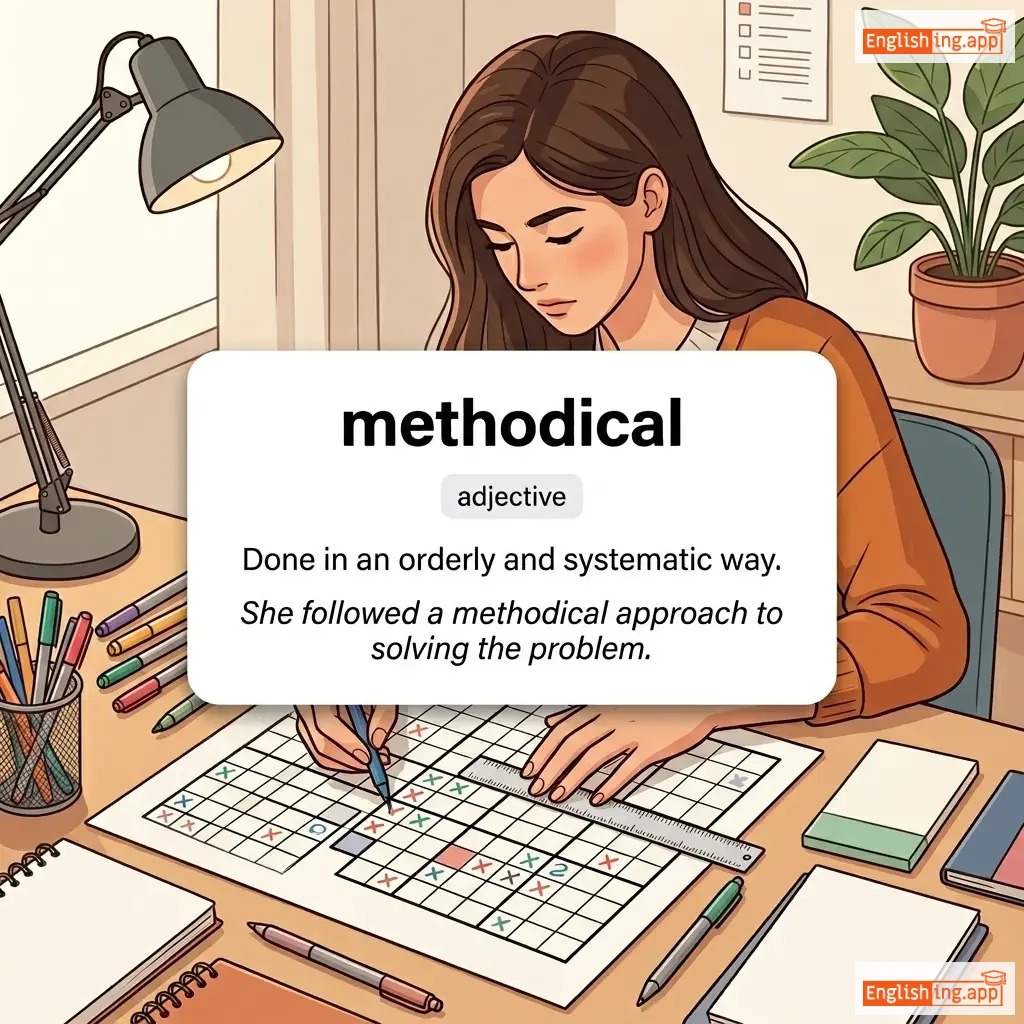
methodical definition card — visual illustration of the meaning
adjective
/məˈθɒdɪkəl/
методичный (metodichnyy)

Done in an orderly and systematic way.

"She followed a methodical approach to solving the problem."

"Она использовала методичный подход для решения проблемы." (Ona ispol'zovala metodichnyy podkhod dlya resheniya problemy.)
noun
/ˌmɛθəˈdɑlədʒi/
методология (metodologiya)

A system of methods used in a particular area of study or activity.

"The research was conducted using a new methodology."

"Исследование было проведено с использованием новой методологии." (Issledovanie bylo provedeno s ispol'zovaniem novoy metodologii.)
meticulous definition card — visual illustration of the meaning
adjective
/məˈtɪkjʊləs/
тщательный (tshchatel'nyy)

Showing great attention to detail; very careful and precise.

"The artist was meticulous in painting every tiny detail."

"Художник был тщателен в рисовании каждого маленького детали." (Khodzhik byl tshchatelen v risovanii kazhdogo malen'kogo detali.)
meticulousness definition card — visual illustration of the meaning
noun
mɪˈtɪkjʊləsnɪs
внимание к деталям (vnimanie k detalyam)

Great attention to detail; very careful and precise.

"His meticulousness made the project successful."

"Его метикулизм сделал проект успешным." (Ego metikulizm sdelal proyekt uspeshnym.)
noun
/mɪˈtɒnɪmi/
метонимия (metonimiya)

A figure of speech in which one word or phrase is substituted with another closely related word or concept.

"In the phrase 'the crown will decide,' 'crown' is a metonymy for monarchy."

"В фразе 'корона решит' 'корона' является метонимией для монархии." (V fraze 'korona reshit' 'korona' yavlyayetsya metonimiyey dlya monarkhii.)
adjective
/ˈmɛtrɪk/
метрический (metricheskiy)

Relating to the metric system of measurement; also, a standard of measurement used to assess performance.

"The company tracks success using clear performance metrics."

"Компания отслеживает успех, используя четкие показатели производительности." (Kompaniya otslezhivayet uspek, ispol'zuyya chetkie pokazateli proizvoditel'nosti.)
adjective
/ˈmɛtrɪkəl/
метрический (metricheskiy)

Relating to or composed in a regular rhythmic pattern of beats or meter, especially in poetry.

"The poet carefully followed metrical rules in his verses."

"Поэт тщательно следовал метрическим правилам в своих стихах." (Poet tchatel'no sledoval metricheskim pravilam v svoikh stikhakh.)
metrics definition card — visual illustration of the meaning
noun
ˈme.trɪks
метрики (metriky)

A system or standard of measurement; a set of numbers that give information about a particular process or activity.

"Metrics are crucial for evaluating performance."

"Метрики имеют решающее значение для оценки производительности." (Metniki imeyut reshayushchee znacheniye dlya otsenki proizvoditel'nosti.)
noun
/ˈmet.roʊ reɪl/
метро (metro)

an underground urban railway system; subway system

"The metro rail connects all major areas of the city efficiently."

"Метро соединяет все основные районы города эффективно." (Metro soedinyaet vse osnovnye rayony goroda effektiveno.)
noun
/ˈmɛtrəˌnoʊm/
метроном (metronom)

A device that produces regular ticks or beats to help musicians maintain tempo.

"She practiced the piano with a metronome to keep steady timing."

"Она тренировалась на пианино с метрономом, чтобы сохранить стабильное время." (Ona trenirovalas' na pianino s metronomom, chtoby sokhranit' stabil'noe vremya.)
noun
/məˈtrɒpəlɪs/
метрополия (metropoliya)

A large, important city that is a hub of culture, business, and population.

"New York is often described as a global metropolis."

"Нью-Йорк часто описывается как мировая метрополия." (N'yu-York chasto opisyvayetsya kak mirovaya metropoliya.)
adjective
/ˌmɛtrəˈpɑːlɪtən/
метрополитен (metropoliten)

Relating to a large city, its surrounding areas, or its lifestyle.

"She moved to a metropolitan area for better job opportunities."

"Она переехала в метрополитенскую зону для лучших рабочих возможностей." (Ona pereehala v metropolitenskuyu zonu dlya luchshikh rabochikh vozmozhnostey.)
noun
/ˈmɛtəl/
мужество (muzhestvo)

A person's ability to cope well with difficulties or to face demanding situations with courage.

"The young athlete showed his mettle in the final match."

"Молодой атлет проявил своё мужество в финальном матче." (Molodoy atlet proyavil svoyo muzhesctvo v final'nom matche.)
adjective
/ˈmɛtəlˌsʌm/
храбрый (khrabryy)

Full of courage and spirit; lively and spirited.

"The mettlesome young rider never backed down from a challenge."

"Храбрый молодой всадник никогда не отступал от вызова." (Khrabryy molodoy vsadnik nikogda ne otstupal ot vyzova.)
noun
/mjuːz/
переулок/узкая улица (pereulok/uzkaya ulitsa)

A row or street of houses or apartments that have been converted from stables or built to look like former stables.

"They rented a small flat in a quiet London mews."

"Они арендовали небольшую квартиру на тихом меусе в Лондоне." (Oni arendovali nebol'shuyu kvartiru na tikhom myuse v Londone.)
noun/adjective
/ˈmɛksɪkən/
счастье (schast'ye)

a native or inhabitant of Mexico; relating to Mexico or its people, culture, or language

"She enjoys Mexican food like tacos and enchiladas."

"Она не могла скрыть своего счастья, когда получила награду." (Ona ne mogla skryt' svoego schast'ya, kogda poluchila nagradu.)
noun
/maɪˈæzmə/
затхлый воздух (zathlyy vozdukh)

An unpleasant or unhealthy smell or atmosphere.

"A miasma of decay hung over the abandoned house."
"Миазма разложения висела над заброшенным домом." (Miyazma razlozheniya visela nad zabroshennym domom.)
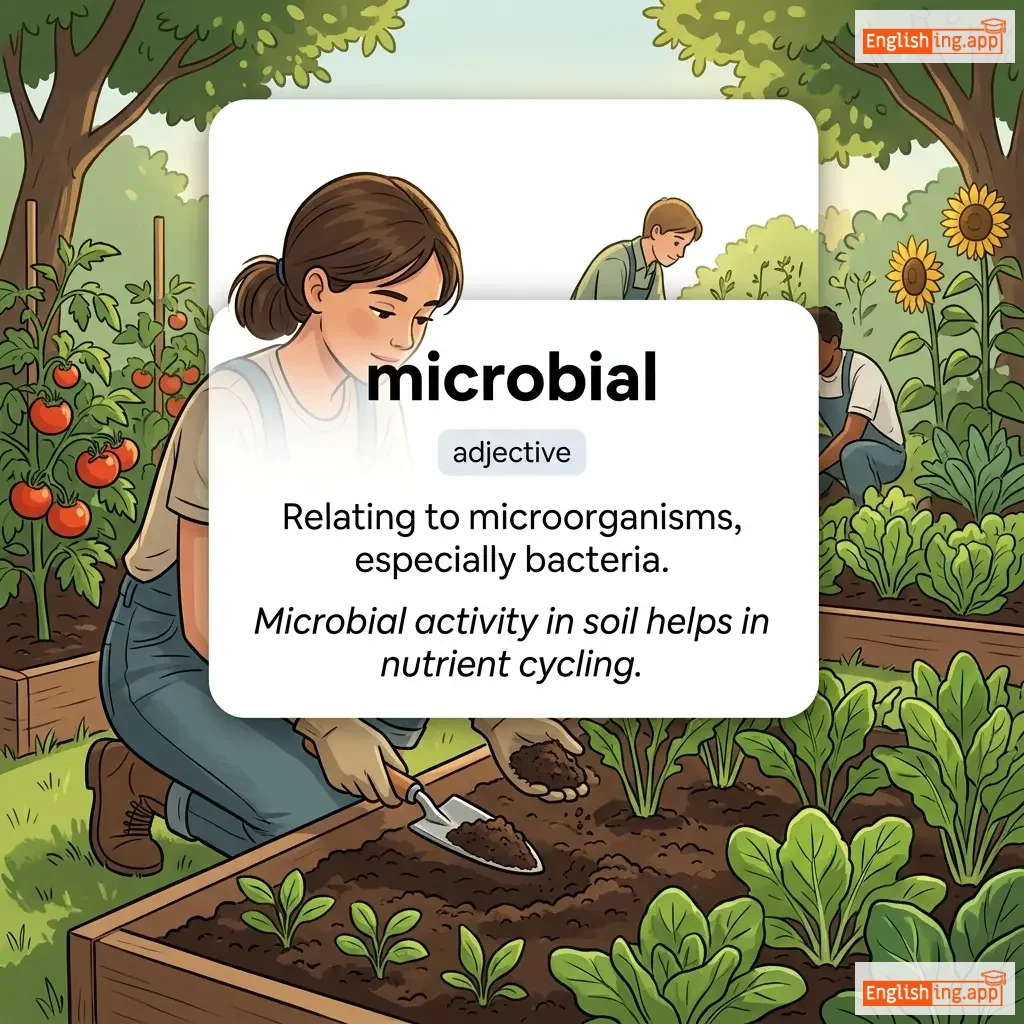
microbial definition card — visual illustration of the meaning
adjective
/maɪˈkroʊ.bi.əl/
связанный с микроорганизмами (svyazannyy s mikroorganizmami)

Relating to microorganisms, especially bacteria.

"Microbial activity in soil helps in nutrient cycling."

"Микробная активность в почве помогает в круговороте питательных веществ." (Mikrobnaya aktivnost' v pochve pomogaet v krugovorote pitatel'nykh veshchestv.)
microclimate definition card — visual illustration of the meaning
noun
/ˈmaɪ.krəʊˌklaɪ.mət/
микроклимат (mikroklimat)

The climate of a small, specific area that differs from the surrounding climate.

"The microclimate in valleys is often cooler than in surrounding areas."

"Микроклимат в долинах часто холоднее, чем в окружающих районах." (Mikroklimat v dolinakh chasto kholodnee, chem v okruzhayushchikh rayonkakh.)
noun
/ˈmaɪkrəˌkɒzəm/
микрокосм (mikrokosm)

A small, representative system having analogies to a larger system; a miniature version of something.

"The small town is a microcosm of the entire nation."

"Маленький город — это микрокосм всей нации." (Malen'kiy gorod — eto mikrokosm vsey natsii.)
noun
/maɪˈkrɒmɪtər/
микрометр (mikrometr)

A device used for measuring small distances with great accuracy.

"The engineer used a micrometer to measure the thickness of the wire."

"Инженер использовал микрометр, чтобы измерить толщину проволоки." (Inzhener ispol'zoval mikrometr, chtoby izmerit' tolshchinu provoloki.)
micronutrient definition card — visual illustration of the meaning
noun
ˈmaɪ.krəʊˌnjuː.tri.ənt
микронутриент (mikronutrient)

Essential nutrients required by the body in small amounts, including vitamins and minerals.

"Iron and zinc are essential micronutrients for growth."

"Железо и цинк являются важными микронутриентами для роста." (Zhelezo i tsink yavlyayutsya vazhnymi mikronutriyentami dlya rosta.)
micronutrients definition card — visual illustration of the meaning
noun
/ˈmaɪ.krəʊˌnjuː.tri.ənts/
микронутриенты (mikronutrienty)

Essential nutrients required in small amounts for proper body function, including vitamins and minerals.

"Micronutrients like iron and zinc are essential for immunity."

"Микронутриенты, такие как железо и цинк, необходимы для иммунитета." (Mikronutrienty, takie kak zhelezo i tsink, neobkhodimy dlya immuniteta.)
/ˈmaɪ.krəˌfoʊn/
микрофон (mikrofon)

A device that converts sound into an electrical signal, typically used to amplify or record voices or music.

"She spoke into the microphone during the presentation."

"Она говорила в микрофон во время презентации." (Ona govoryala v mikrofon vo vremya prezentatsii.)
noun
/ˈmaɪ.krəˌskoʊp/
микроскоп (mikroskop)

An optical instrument used for viewing very small objects, such as cells, by magnifying them.

"The scientist observed the bacteria under the microscope."

"Учёный наблюдал за бактериями под микроскопом." (Uchyonyy nablyudal za bakteriyami pod mikroskopom.)
adjective
/ˌmaɪ.krəˈskɑː.pɪk/
микроскопический (mikroskopicheskiy)

Extremely small and only visible with a microscope.

"The sample contained microscopic particles."

"Образец содержал микроскопические частицы." (Obrazets soderzhal mikroskopicheskie chastitsy.)
noun
/maɪˈkrɑː.skə.pi/
микроскопия (mikroskopiya)

The use of a microscope to observe small objects or organisms.

"Microscopy revealed the structure of the cells."

"Микроскопия выявила структуру клеток." (Mikroskopiya vyyavila strukturu kletok.)
noun
/ˈmaɪkroʊweɪv/
микроволновая печь (mikrovolnovaya pech)

an electric oven that uses electromagnetic radiation to heat food quickly

"She heated the leftover pizza in the microwave for two minutes."

"Она разогрела оставшуюся пиццу в микроволновке за две минуты." (ona razogrela ostavshuyusya pitstsu v mikrovolnovke za dve minuty)
adjective, preposition, noun
/mɪd/
середина (seredina)

being in the middle of something; the central part or point

"She joined the project in mid June."

"Она присоединилась к проекту в середине июня." (ona prisoedinilas k proektu v seredine iyunya)
noun
/ˈmɪd.deɪ/
полдень (polden)

The middle of the day; twelve o'clock in the daytime; noon

"The sun is brightest at midday when it's directly overhead."

"Солнце наиболее яркое в полдень, когда оно прямо над головой." (Solntse naibolee yarkoe v polden, kogda ono pryamo nad golovoy.)
noun/adjective
/ˈmɪdəl/
середина (seredina)

the central point, position, or part of something

"The park is in the middle of the city."

"Парк находится в центре города." (Park nakhoditsya v tsentre goroda.)
adjective
/ˈmɪd.əl.eɪdʒd/
средних лет (srednikh let)

being of an age between young and old; typically between 40-60 years old

"The middle-aged man started a new career."

"Мужчина средних лет начал новую карьеру." (Muzhchina srednikh let nachal novuyu kar'yeru.)
middle-class definition card — visual illustration of the meaning
adjective
/ˈmɪdəl klɑːs/
средний класс (sredniy klass)

belonging to the social group between the upper and working class, typically with moderate income and education

"They live a comfortable middle-class life in the city."

"Они ведут комфортную жизнь среднего класса в городе." (Oni vedut komfortnuyu zhizn' srednego klassa v gorode.)
noun
/ˈmɪdəlˌmæn/
посредник (posrednik)

A person who acts as a link between buyers and sellers, often in business deals.

"The farmer sold his crops directly, without a middleman."

"Фермер продал свои урожаи напрямую, без посредника." (Fermyer prodal svoi urozhaĭ napryamuyu, bez posrednika.)
noun
/ˈmɪdnaɪt/
полночь (polnoch)

twelve o'clock at night; the middle of the night

"He reached home just after midnight."

"Он вернулся домой прямо после полуночи." (On vernulsya domoy pryamo posle polnochi.)
noun
/mɪdst/
средина (sredina)

the middle part or position of something

"In the midst of chaos, she remained calm."

"В самой середине хаоса она оставалась спокойной." (V samoy seredine khaosa ona ostavalas' spokoynoy.)
noun
/ˌmɪdˈsʌm.ər/
середина лета (seredina leta)

The middle of summer, often around the summer solstice in June.

"We had a festival to celebrate midsummer."

"Мы устроили фестиваль, чтобы отметить середину лета." (My ustroili festival, chtoby otmetit' seredinu leta.)
adverb
/ˈmɪd.weɪ/
на полпути (na polputi)

in the middle of an event, process, or distance

"He stopped midway through his speech."

"Он остановился на полпути своего выступления." (On ostanovilsya na polputi svoego vystupleniya.)
noun
/ˈmɪd.waɪf/
акушерка (akusherka)

A person, typically a woman, trained to assist women during childbirth.

"The midwife stayed with the mother throughout her labor."

"Акушерка оставалась с матерью на протяжении всего ее труда." (Akusherka ostavalas' s materey na protyazhenii vsego yevo truda.)
noun
/miːn/
выражение лица (vyrazhenie litsa)

A person's appearance or manner, especially as an indication of their character or mood.

"His serious mien made everyone fall silent."

"Его серьезное выражение лица заставило всех замолчать." (Ego ser'yeznoe vyrazhenie litsa zastavilo vsekh zamolet'sya.)
noun
/mɪf/
маленькая ссора (malenkaya ssora)

A petty quarrel or annoyance.

"They had a slight miff over the seating arrangement."

"Они поссорились из-за расположения сидений." (Oni possorilis' iz-za raspolozheniya sideniy.)
modal verb/noun
/maɪt/
может быть / сила (mozhet byt / sila)

used to express possibility; power or strength

"She might come to the party if she finishes work early."

"Она может прийти на вечеринку, если она закончит работу рано." (Ona mozhet priyti na vecherinku, esli ona zakonchit rabotu rano.)
adjective
/ˈmaɪti/
могучий (moguchiy)

having great power or strength; very strong or impressive

"The mighty river flows through the heart of the country."

"Могучая река течет через сердце страны." (Moguchaya reka techet cherez serdtse strany)
noun
/ˈmaɪ.ɡrənt/
мигрант (migrant)

A person who moves from one place to another, especially to find work or better living conditions.

"Many migrants travel long distances to find employment."

"Многие мигранты путешествуют на большие расстояния, чтобы найти работу." (Mnogiye migranti puteshestvuyut na bol'shiye rasstoyaniya, chtoby nayti rabotu.)
🕊️

migrate

verb
/maɪˈɡreɪt/

To move from one region or habitat to another, especially regularly according to the seasons or for work.

"Birds migrate south during the winter."

noun
/maɪˈɡreɪʃən/
миграция (migratsiya)

the movement of people or animals from one place to another, often for better living conditions or seasonal reasons

"The annual migration of birds is a fascinating natural event."

"Ежегодная миграция птиц — это захватывающее природное явление." (Ezhegodnaya migratsiya ptits — eto zakhvatyvayushcheye prirodnoye yavleniye.)
adjective
/ˈmaɪɡrəˌtɔːri/
миграционный (migratsionny)

Relating to or characterized by migration, especially animals or people moving from one place to another.

"Migratory birds travel thousands of miles each year."

"Миграционные птицы путешествуют тысячи миль каждый год." (Migratsionnye ptitsy puteshestvuyut tysyachi mil' kazhdyy god.)