Словари

Словарь английского языка | Значения слов, определения и примеры

mentor definition card — visual illustration of the meaning
noun
/ˈmɛntɔːr/
наставник (nastavnik)

an experienced person who advises and guides someone less experienced

"She acted as a mentor for the new employees."

"Она была наставником для новых сотрудников." (Ona byla nastavnikom dlya novykh sotrudnikov.)
noun
/ˈmɛnjuː/
меню (menyu)

A list of food and drinks available at a restaurant or offered at a meal.

"The restaurant updated its menu with new dishes."

"Ресторан обновил свое меню с новыми блюдами." (Restoran obnovil svoe menyu s novymi blyudami.)
adjective
/ˈmɜːrkəntaɪl/
торговый (torgovyi)

related to trade or commerce

"The city grew rapidly due to its mercantile activities."

"Город быстро развивался благодаря своим торговым действиям." (Gorod bystro razvivalsya blagodarya svoim torgovym deistviyam.)
noun
/ˈmɜːrsəˌnɛri/
наемник (naemnik)

a professional soldier hired to serve in a foreign army; also used to describe someone motivated solely by money.

"The mercenary fought for whoever paid the highest wage."

"Наемник сражался за того, кто платил наибольшую зарплату." (Naemnik srazhalsya za togo, kto platil naibol'shuyu zarplatu.)
noun
/ˈmɜːrtʃənt/
торговец (torgovets)

a person or company involved in the trade of goods, especially in large quantities

"The merchant sold spices from distant lands."

"Торговец продавал специи из дальних стран." (Torgovets prodaval spetsii iz dal'nikh stran.)
adjective
/ˈmɜːrsɪfəl/
милосердный (miloserdnyy)

showing compassion or forgiveness towards someone one has the power to punish or harm.

"The judge was merciful and gave him a lighter sentence."

"Судья был милосердным и дал ему более мягкое наказание." (Sudiya byl miloserdnym i dal emu boleye myagkoye nakazaniye.)
adjective
/ˈmɜːrsɪləs/
бессердечный (besserdechniy)

showing no mercy or compassion; cruel and ruthless.

"The dictator was merciless in crushing the rebellion."

"Диктатор был бессердечен при подавлении восстания." (Diktator byl besserdechen pri podavlenii vosstaniya.)
adjective
/mɜːrˈkjʊriəl/
неустойчивый (neustoychivyy)

subject to sudden or unpredictable changes of mood or mind.

"She is known for her mercurial temperament."

"Она известна своим неустойчивым темпераментом." (Ona izvestna svoim neustoychivym temperamentom.)
noun
/ˈmɜːrsi/
милосердие (miloserdie)

compassion or forgiveness shown toward someone whom it is within one's power to punish or harm

"She showed mercy by letting him go."

"Она проявила милосердие, отпустив его." (Ona proyavila miloserdie, otpustiv ego.)
adjective
/mɪr/
простой (prostoy)

Used to emphasize how small or insignificant something is.

"It was a mere suggestion, not a command."

"Это было всего лишь предложение, а не приказ." (Eto bylo vsego lish' predlozheniye, a ne prikaz.)
adverb
/ˈmɪərli/
только (tol'ko)

Only; nothing more than.

"She was merely trying to help."

"Она просто пыталась помочь." (Ona prosto pytalas' pomoch'.)
meretricious definition card — visual illustration of the meaning
adjective
/ˌmɛrəˈtrɪʃəs/
притворный (pritvorny)

apparently attractive but having no real value or integrity.

"The design was flashy but meretricious."

"Дизайн был ярким, но притворным." (Dizayn byl yarkim, no pritvornym.)
merge definition card — visual illustration of the meaning
verb
/mɜːrdʒ/
объединять (ob'yedinyat')

to combine or join together to form one entity

"The two companies decided to merge their resources."

"Две компании решили объединить свои ресурсы." (Dve kompanii reshilí ob'yedinit' svoi resursy.)
noun
/ˈmɜːrdʒər/
слияние (sliyaniye)

The combination of two or more companies into a single entity.

"The merger of the two firms created the largest bank in the region."

"Слияние двух компаний создало крупнейший банк в регионе." (Sliyaniye dvukh kompaniy sozdalo krupneyshiy bank v regione.)
noun
/məˈræŋ/
меренга (десертный топпинг) (meren'ga (desertnyy topping))

A light dessert topping made from whipped egg whites and sugar.

"She decorated the pie with a fluffy meringue topping."

"Она украсила пирог воздушным меренговым слоем." (Ona ukrasila pirog vozdushnym meren'govym sloyem.)
Merit definition card — visual illustration of the meaning
noun/verb
/ˈmɛrɪt/
достоинство (dostoinstvo)

A quality or feature that deserves praise or reward; to deserve or be worthy of.

"The plan has the merit of being simple and practical."

"План имеет достоинство быть простым и практичным." (Plan imeyet dostoinstvo byt' prostym i praktichnym.)
merit-based definition card — visual illustration of the meaning
adjective
ˈmer.ɪt beɪst
основанный на заслугах (osnovannyy na zaslugakh)

Based on or determined by individual merit, ability, or achievement rather than other factors.

"Merit-based recruitment strengthens the workforce."

"Набор по заслугам укрепляет рабочую силу." (Nabor po zaslugam ukreplyayet rabochuyu silu.)
verb (past)
/ˈmɛrɪtɪd/
заслуженный (zazluzhenny)

Deserved or earned something.

"Her dedication merited recognition from the community."

"Ее преданность заслужила признание сообщества." (Eyo predannost' zasluzhila priznanije soobshchestva.)
noun
/ˌmɛrɪˈtɒkrəsi/
меритократия (meritokratiya)

A system in which advancement is based on individual ability or achievement.

"In a true meritocracy, the most capable people rise to leadership positions."

"В настоящей меритократии самые способные люди поднимаются на руководящие посты." (V nastoyashchey meritokratii samye sposobnye lyudi podnimayutsya na rukovodyashchie posty.)
adjective
/ˌmɛrɪˈtɔːriəs/
заслуженный (zasluzhennyy)

Deserving reward, praise, or recognition.

"She received a scholarship for her meritorious academic performance."

"Она получила стипендию за свои заслуженные академические достижения." (Ona poluchila stipendiyu za svoi zasluzhennyye akademicheskiye dostizheniya.)
noun
/ˈmɛr.meɪd/
русалка (rusalka)

A mythical sea creature with the head and torso of a woman and the tail of a fish

"The little girl loved stories about mermaids living under the sea."

"Маленькая девочка любила истории о русалках, которые жили под водой." (Malen'kaya devochka lyubila istorii o rusal'kakh, kotorye zhili pod vodoj.)
adverb
/ˈmerɪli/
весело (veselo)

in a cheerful and joyful manner

"The children played merrily in the garden."

"Дети играли весело в саду." (Deti igrali veselo v sadu.)
noun
/ˈmeɪsə/
меса (mesa)

An isolated flat-topped hill with steep sides, found in arid regions.

"The hikers stopped to admire the mesa rising above the desert floor."

"Путешественники остановились, чтобы полюбоваться месой, поднимающейся над песчаным полом пустыни." (Puteshestvenniki ostanovilis, chtoby polyubovatsya mesoy, podnimayushchiesya nad peschanym polom pustyni.)
verb, noun
/mɛʃ/
сетка, переплетать (setka, perepletat)

To fit or work together properly; or a material made of interlaced threads.

"The two gears mesh perfectly to keep the machine running smoothly."

"Два шестерёнки идеально соединяются, чтобы обеспечить плавную работу машины." (Dva shesteryonki ideal'no soyedinyayutsya, chtoby obespechit' plavnuyu rabotu mashiny.)
noun
/ˈmɛzməˌrɪzəm/
гипнотизм (gipnotizm)

A state of fascination or hypnotism.

"The magician held the audience in a state of mesmerism."
"Фокусник держал аудиторию в состоянии мезмеризма." (Fokusnik derzhal auditoriyu v sostoyanii mezmerizma.)
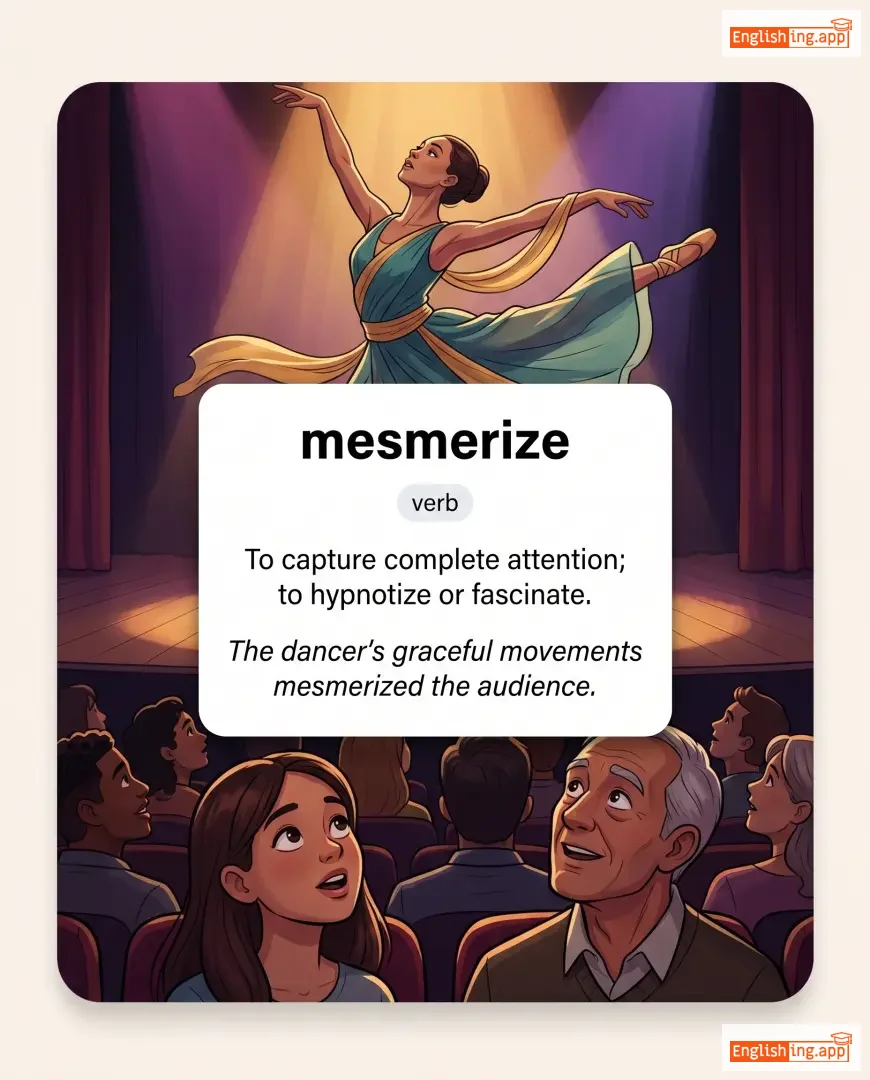
mesmerize definition card — visual illustration of the meaning
verb
/ˈmɛzməˌraɪz/
завораживать (zavorazhivat)

To capture complete attention; to hypnotize or fascinate.

"The dancer's graceful movements mesmerized the audience."
"Грациозные движения танцовщицы заворожили зрителей." (Gratsioznyye dviženiya tantsovščitsy zavorozhili zriteliy.)
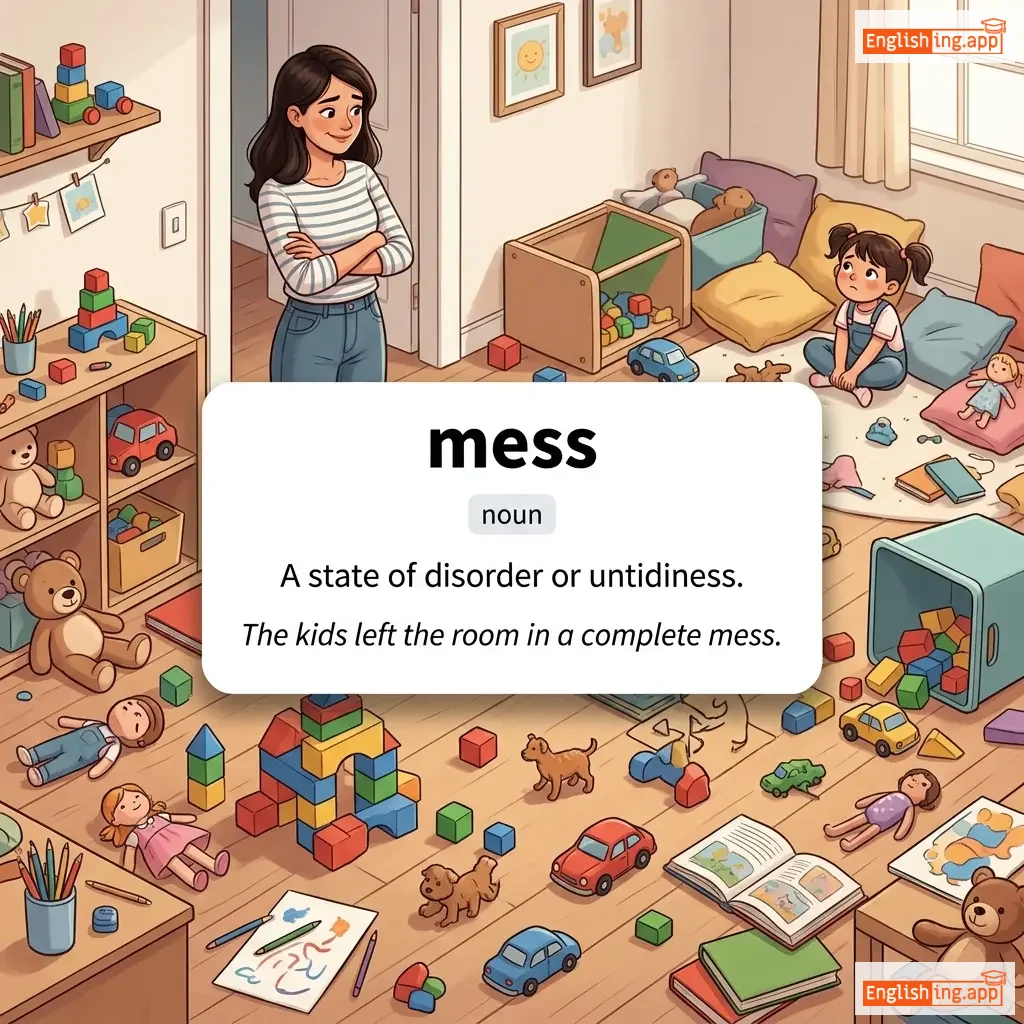
mess definition card — visual illustration of the meaning
noun
/mɛs/
беспорядок (besporyadok)

A state of disorder or untidiness.

"The kids left the room in a complete mess."

"Дети оставили комнату в полном беспорядке." (Deti ostavili komnatu v polnom besporyadke.)
noun
/ˈmɛsɪdʒ/
сообщение (soobshchenie)

A piece of information sent or communicated from one person to another.

"I received a message from my friend yesterday."

"Я получил сообщение от своего друга вчера." (Ya poluchil soobshchenie ot svoego druga vchera.)
noun
/ˈmes.ɪn.dʒər/
посланник (poslannik)

a person who carries messages or communications between parties

"The messenger delivered important battle plans to the commander."

"Посланник доставил командующему важные боевые планы." (Poslannik dostavil komanduyushchemu vazhnyye boevyye plany.)
adjective
/ˈmɛsi/
неопрятный (neopryatnyy)

untidy or dirty; disorganized or chaotic

"His room was so messy that he couldn’t find his keys."

"Его комната была такой неопрятной, что он не смог найти свои ключи." (ego komnata byla takoy neopryatnoy chto on ne smog nayti svoi klyuchi)
metabolic definition card — visual illustration of the meaning
adjective
ˌmet.əˈbɒl.ɪk
метаболический (metabolicheskiy)

Related to the chemical processes within living organisms to maintain life.

"A fast metabolic rate helps in weight management."

"Быстрая метаболическая скорость помогает контролировать вес." (Bystraia metabolicheskaia skorost' pomogaet kontrolirovat' ves.)
metabolism definition card — visual illustration of the meaning
noun
/məˈtæbəlɪzəm/
обмен веществ (obmen veshchestv)

The chemical processes that occur within a living organism in order to maintain life.

"Faster metabolism can help with weight management."

"Быстрый обмен веществ может помочь в контроле веса." (bystryy obmen veshchestv mozhet pomoch v kontrole vesha.)
metabolize definition card — visual illustration of the meaning
verb
məˈtæb.ə.laɪz
обрабатывать и использовать пищу для роста (obrabotat' i ispol'zovat' pishchu dlya rosta)

Process and use food for growth and to replace tissue, or process other substances in the body.

"The liver helps to metabolize toxins."

"Печень помогает метаболизировать токсины." (Pechen' pomogaet metabolizirovat' toksiny.)
metacognition definition card — visual illustration of the meaning
noun
ˌmɛt.ə.kɒɡˈnɪʃ.ən
метакогниция (metakognitsiya)

Awareness and understanding of one's own thought processes.

"Metacognition helps students improve their learning strategies."

"Метакогниция помогает студентам улучшить их стратегии обучения." (Metakognitsiya pomogaet studentam uluchshit' ikh strategii obucheniya.)
noun
/ˈmɛtəl/
металл (metall)

A solid material that is typically hard, shiny, malleable, fusible, and conductive, such as iron, gold, or aluminum.

"The ring was made of precious metal."
"Кольцо было сделано из драгоценного металла." (Kol'tso bylo sdelano iz dragotsennogo metalla.)
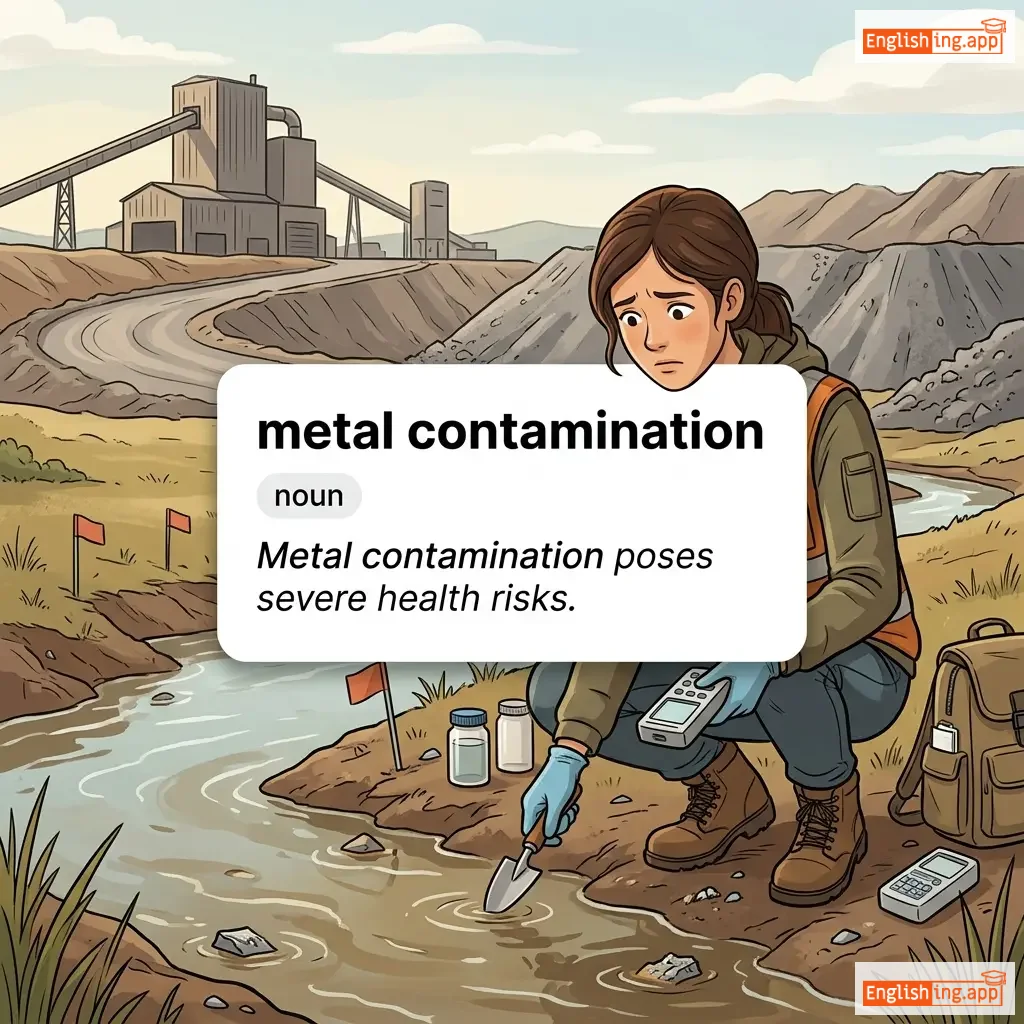
metal contamination definition card — visual illustration of the meaning
noun
ˈmetəl kənˌtæməˈneɪʃən
металлическое загрязнение (metallicheskoe zagryaznenie)

The presence of toxic metals in the environment that pose health and environmental risks.

"Metal contamination poses severe health risks."

"Металлическое загрязнение представляет собой серьезную угрозу для здоровья." (Metallicheskoe zagryaznenie predstavlyaet soboy seryoznuyu ugrozu dlya zdorov'ya.)
adjective
/ˌmɛtəˈlɜrdʒɪkəl/
металлургический (metallurgicheskiy)

Relating to metallurgy or the branch of science concerned with the properties of metals and their production.

"He studied metallurgical engineering at the university."

"Он изучал металлургическую инженерию в университете." (on izuchal metallurgicheskuyu inzheneriyu v universitete.)
noun
/ˈmɛtələ(r)dʒi/
металлургия (metallurgiya)

The science and technology of metals, including their extraction from ores and their processing.

"Metallurgy plays a vital role in industrial development."

"Металлургия играет важную роль в промышленном развитии." (Metallurgiya igraet vazhnuyu rol' v promyshlennom razvitii.)
verb
/ˌmɛtəˈmɔrfoʊz/
метаморфозировать (metamorphozirovat')

To change in form, structure, or substance; to transform completely.

"The caterpillar metamorphosed into a butterfly."
"Гусеница метаморфозировала в бабочку." (Gusenitsa metamorfizirovala v babochku.)
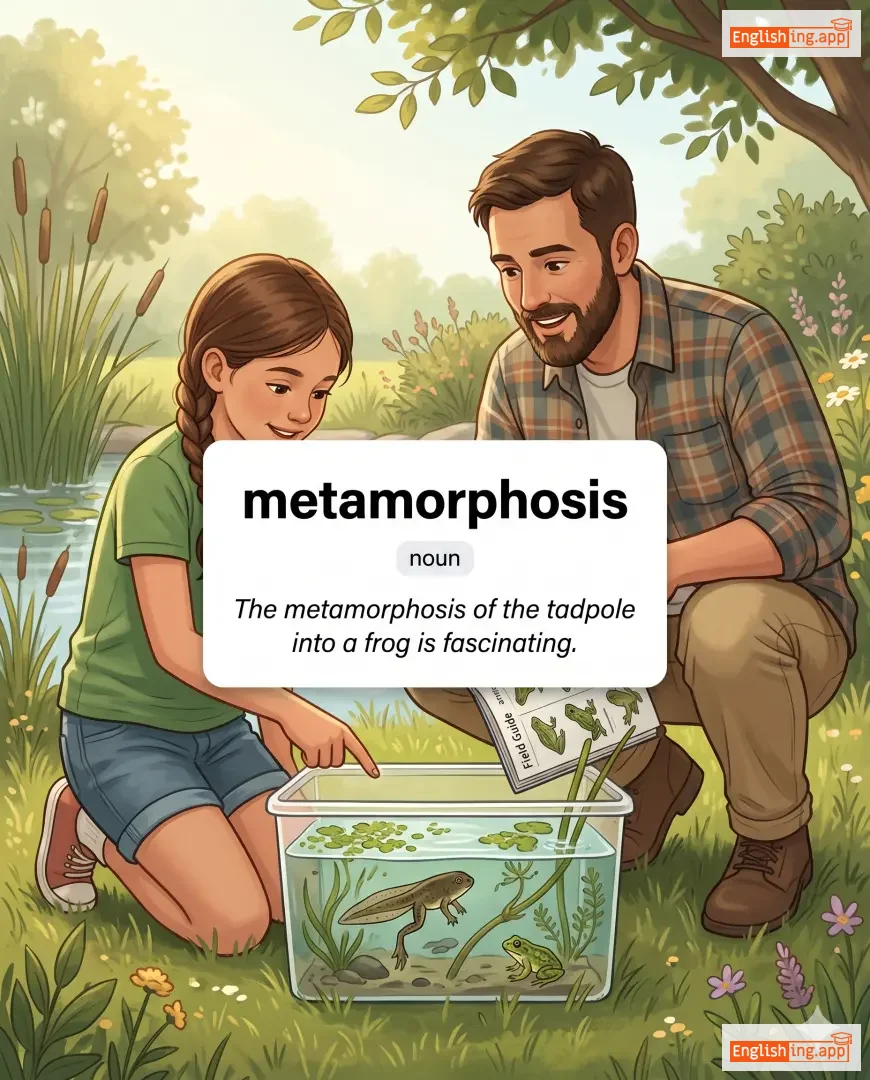
metamorphosis definition card — visual illustration of the meaning
noun
/ˌmɛtəˈmɔrfəsɪs/
метаморфоз (metamorfoz)

A process of transformation from one form to another, especially in biology, such as the change from a caterpillar to a butterfly.

"The metamorphosis of the tadpole into a frog is fascinating."

"Метаморфоз головастика в лягушку увлекателен." (Metamorphoz golovastika v lyagushku uvliekatielen.)
noun
/ˈmɛtəfɔːr/
счастье (schastye)

A figure of speech in which a word or phrase is applied to something to which it is not literally applicable.

"Time is a thief is a common metaphor for how quickly life passes."

"Она не могла скрыть своего счастья, когда получила награду." (Ona ne mogla skryt' svoego schast'ya, kogda poluchila nagradu.)
adjective
/ˌmɛtəˈfɔːrɪkəl/
метафорический (metaforicheskiy)

Characteristic of or relating to metaphor; figurative rather than literal.

"He used metaphorical language to describe his emotions."

"Он использовал метафорический язык, чтобы описать свои эмоции." (On ispol'zoval metaforicheskiy yazyk, chtoby opisat' svoi emotsii.)
noun
/ˈmɛtəfɔːrm/
форма метафоры (forma metafory)

A coined or rare term sometimes used to describe a hybrid form of metaphor and form in literature or art.

"The poet introduced a metaphorm to blend imagery with structure."

"Поэт представил метаформу, чтобы соединить образы с конструкцией." (Poet predstavil metaformu, chtoby soedinit' obrazy s konstrukciey.)
adjective
/ˌmɛtəˈfɪzɪkəl/
метафизический (metafizicheskiy)

Relating to the branch of philosophy that deals with the fundamental nature of reality and existence.

"He spent years studying metaphysical questions about life and being."

"Он провел годы, изучая метафизические вопросы о жизни и бытии." (On provel gody, izuchaya metafizicheskie voprosy o zhizni i bytiy.)
noun
/ˌmɛtəfɪˈzɪʃən/
метафизик (metafizik)

A person who studies or is an expert in metaphysics.

"The metaphysician debated the essence of reality with his peers."
"Метафизик обсуждал сущность реальности с коллегами." (Metafizik obshchuzhdal sushchnost' real'nosti s kollegami.)
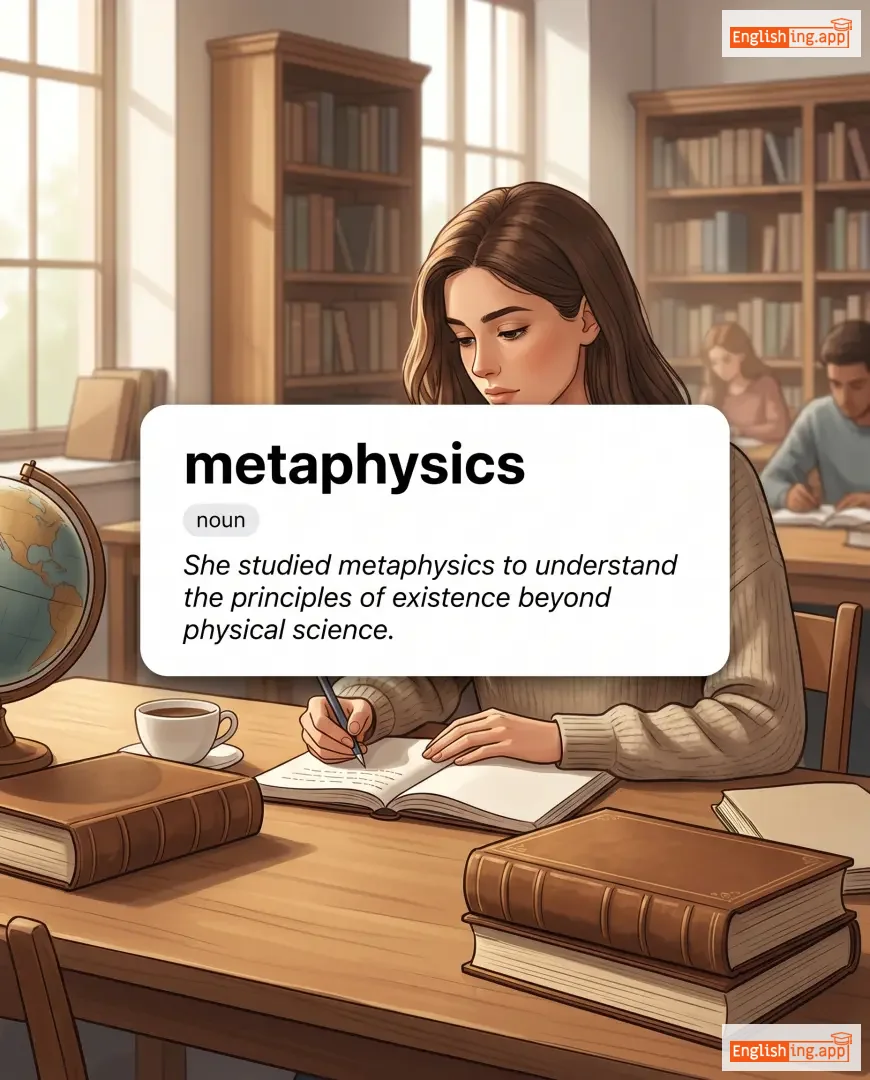
metaphysics definition card — visual illustration of the meaning
noun
/ˌmɛtəˈfɪzɪks/
метафизика (metafizika)

The branch of philosophy that deals with the fundamental nature of reality, existence, and the relationship between mind and matter.

"She studied metaphysics to understand the principles of existence beyond physical science."

"Она изучала метафизику, чтобы понять принципы существования, выходящие за пределы физической науки." (Ona izuchala metafiziku, chtoby ponyat' printsipy sushchestvovaniya, vykhodyashchie za predely fizicheskoy nauki.)
verb
/miːt/
назначать (naznachat)

To dispense or allot justice, punishment, or harsh treatment.

"The judge will mete out punishment according to the crime."

"Судья назначит наказание в соответствии с преступлением." (Sudya naznachit nakazanie v sootvetstvii s prestupleniem.)
noun
/ˌmɛtəmˌsaɪˈkoʊsɪs/
переселение души (pereselenie dushi)

The supposed transmigration of the soul, especially its reincarnation after death.

"Ancient philosophers often debated the idea of metempsychosis."

"Древние философы часто обсуждали переселение души." (Drevnie filosofy chasto obsuzhdali pereselenie dushi.)
adjective
/ˌmiːtiˈɔːrɪk/
связанный с метеорами; очень быстрый и часто временный. (svyazannyy s meteoramiy; ochen' bystryy i chasto vremennyy.)

Relating to meteors; very rapid and often temporary.

"The singer’s meteoric rise to fame surprised everyone."
"Метеорический подъём певца к славе удивил всех." (Meteoricheskiy pod'yem pevtsa k slave udivil vsekh.)
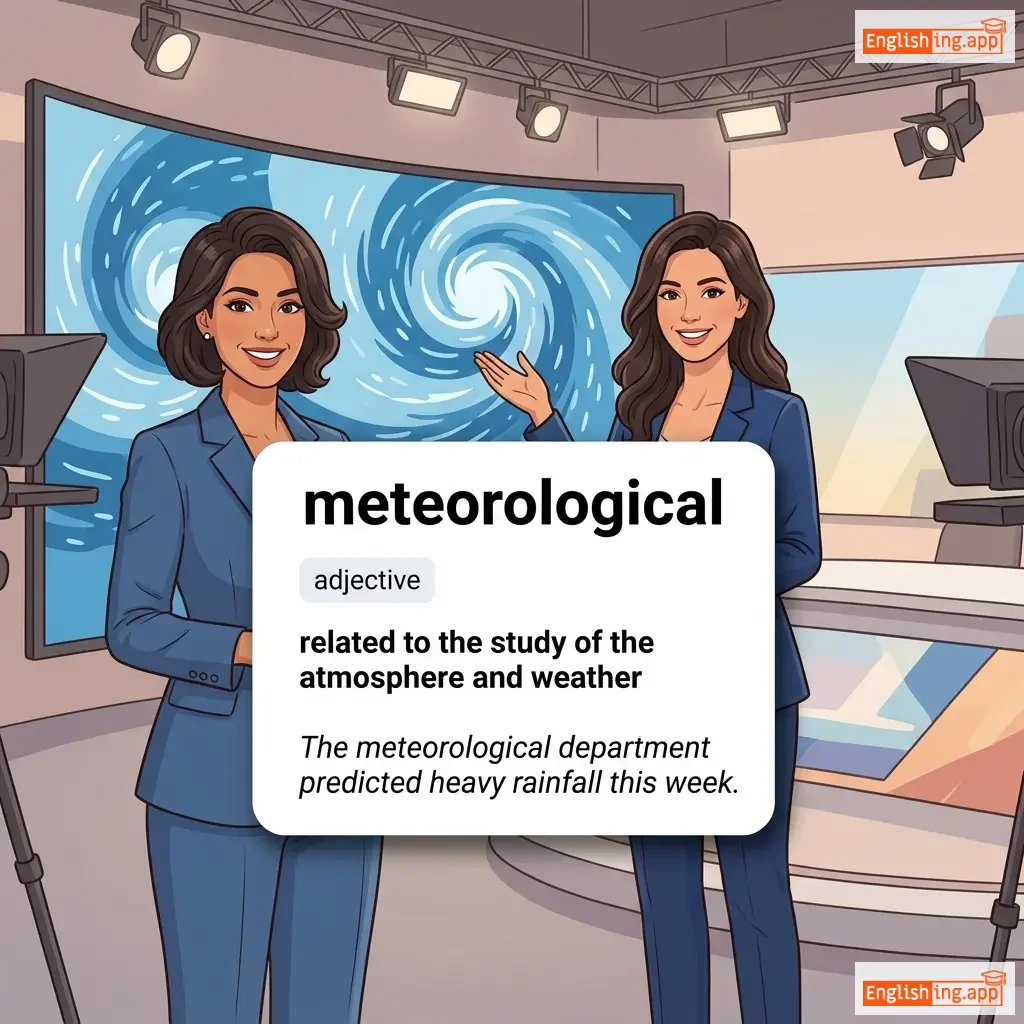
meteorological definition card — visual illustration of the meaning
adjective
/ˌmiː.ti.ə.rəˈlɒ.dʒɪ.kəl/
метеорологический (meteorologicheskiy)

related to the study of the atmosphere and weather

"The meteorological department predicted heavy rainfall this week."

"Метеорологический департамент предсказал сильные дожди на этой неделе." (Meteorologicheskiy departament predskazal silnye dozhdi na etoy nedele.)