Словари

Словарь английского языка | Значения слов, определения и примеры

multitasking definition card — visual illustration of the meaning
noun
ˈmʌltɪˌtɑːskɪŋ
выполнение нескольких задач одновременно (vypolnenie neskol'kikh zadach odnovremenno)

The practice of doing multiple tasks at the same time.

"Multitasking may reduce the quality of each individual task."

"Мультитаскинг может снизить качество каждой отдельной задачи." (Multitasking mozhet snizit' kachestvo kazhdoy otdelnoy zadachi.)
noun
/ˈmʌltɪtuːd/
множество (mnozhestvo)

A large number of people or things.

"A multitude of fans gathered at the stadium."

"Множество фанатов собрались на стадионе." (Mnozhestvo fanatov sobralis' na stadioe.)
adjective
/mʌm/
молчаливый; не говорить ничего; оставаться молчаливым (molchalivyy; ne govorit' nichego; ostavatsya molchalivym)

silent; saying nothing; keeping quiet

"He kept mum about the surprise party plans."

"Он молчал о планах сюрпризной вечеринки." (On molchal o planakh syurpriznoy vecherinki.)
verb
/ˈmʌmbəl/

To speak quietly and not clearly so that words are difficult to understand.

"He mumbled an apology before leaving."

mundane definition card — visual illustration of the meaning
adjective
/mʌnˈdeɪn/
обычный (obychny)

lacking interest or excitement; dull and ordinary

"She tried to escape her mundane routine by traveling."

"Она пыталась выбраться из своей скучной рутины, путешествуя." (Ona pytalas' vybrat'sya iz svoey skuchnoy rutiny, puteshestvuyaya.)
mundanity definition card — visual illustration of the meaning
noun
mʌnˈdeɪ.nɪ.ti
банальность (banal'nost')

The quality of being ordinary, routine, or lacking excitement.

"The mundanity of office life can be exhausting."

"Банальность офисной жизни может быть утомительной." (Banal'nost' ofisnoy zhizni mozhet byt' utomitel'noy.)
adjective
/mjuːˈnɪsɪpəl/
муниципальный (munitsipalny)

relating to a city or town or its local government

"The municipal authority is responsible for maintaining the park."

"Муниципальные власти отвечают за обслуживание парка." (Munitsipal'nye vlasti otvechayut za obsluzhivanie parka.)
noun
/ˌmjuːnɪsɪˈpæləti/
муниципалитет (munitsipalitet)

a city or town that has its own local government

"The municipality is planning to build a new library."

"Муниципалитет планирует построить новую библиотеку." (Munitsipalitet planiroyet postroit' novuyu biblioteku.)
noun
/mjuːˈnɪfəsəns/
щедрость (shchedrost)

great generosity or lavish giving

"The hospital was built thanks to the munificence of a wealthy donor."

"Больница была построена благодаря щедрости состоятельного донора." (Bol'nitsa byla postroena blagodarya shchedrosti sostoyatel'nogo donora.)
adjective
/mjuːˈnɪfɪsənt/
щедрый (shchedryy)

extremely generous; giving freely and abundantly

"She made a munificent donation to the orphanage."

"Она сделала щедрое пожертвование в сиротский дом." (Ona sdelala shchedroye pozhertvovaniye v sirotskij dom.)
noun
/ˈmjʊərəl/
фреска (freska)

A large painting or artwork applied directly to a wall or ceiling surface.

"The artist painted a mural on the side of the school building."

"Художник нарисовал мурал на стене школьного здания." (Khudozhnik narisoval mural na stene shkol'nogo zdaniya.)
noun, verb
/ˈmɜːrdər/
убийство (ubiystvo)

the unlawful killing of a person; to kill someone unlawfully and intentionally

"The detective investigated the murder that shocked the town."

"Детектив расследовал убийство, которое потрясло город." (Detektiv rassledoval ubiystvo, kotoroye potryaslo gorod.)
noun
/ˈmɜːrdərər/
убийца (ubiytsa)

a person who unlawfully kills another human being with intent

"The murderer was caught by the police within hours."

"Убийца был пойман полицией через несколько часов." (Ubiitsa byl pojman politsiej cherez neskol'ko chasov.)
adjective
/ˈmɜː(r)dərəs/
убийственный; с намерением убить; крайне жестокий; кровожадный (ubyistvennyy; s namereniem ubit'; kraine zhestokiy; krovokhory)

having the intent to kill; extremely violent; bloodthirsty

"The murderous look in his eyes frightened everyone."

"Убийственный взгляд в его глазах напугал всех." (Ubiystvennyy vzglyad v ego glazakh napugal vsekh.)
noun
/ˈmɜːkinəs/
мутность (mutnost)

The quality of being dark, gloomy, or unclear.

"The murkiness of the water made it hard to see the fish."

"Мутность воды затрудняла видимость рыб." (Mutnost' vody zatrudnyala vidimost' ryb.)
adjective
/ˈmɜːki/
мутный (mutnyy)

Dark, gloomy, and difficult to see through; obscure.

"We avoided swimming in the murky river."

"Мы избегали плавать в мутной реке." (My izbegali plavat' v mutnoy reke.)
verb
/ˈmɜːrmər/
бормотать (bormotat)

To say something in a low, soft, or indistinct voice.

"She murmured a prayer before going to sleep."

"Она бормотала молитву перед сном." (Ona bormotala molitvu pered snom.)
noun
/ˈmʌrɪn/
инфекционная болезнь скота (infektsionnaya bolezn skota)

An infectious disease that affects cattle and other animals, often fatal.

"The farmer lost many cows during the outbreak of murrain."

"Фермер потерял много коров во время вспышки мурейна." (Fermyer poteryal mnogo korov vo vremya vspyshki mureyna.)
noun
/ˈmʌsl/
мышца (myshtsa)

a band of fibrous tissue in the body that produces movement; physical strength

"He exercises daily to build strong muscles."
"Он тренируется каждый день, чтобы развить сильные мышцы." (On treniruetsya kazhdyy den', chtoby razvit' sil'nye myshcy.)
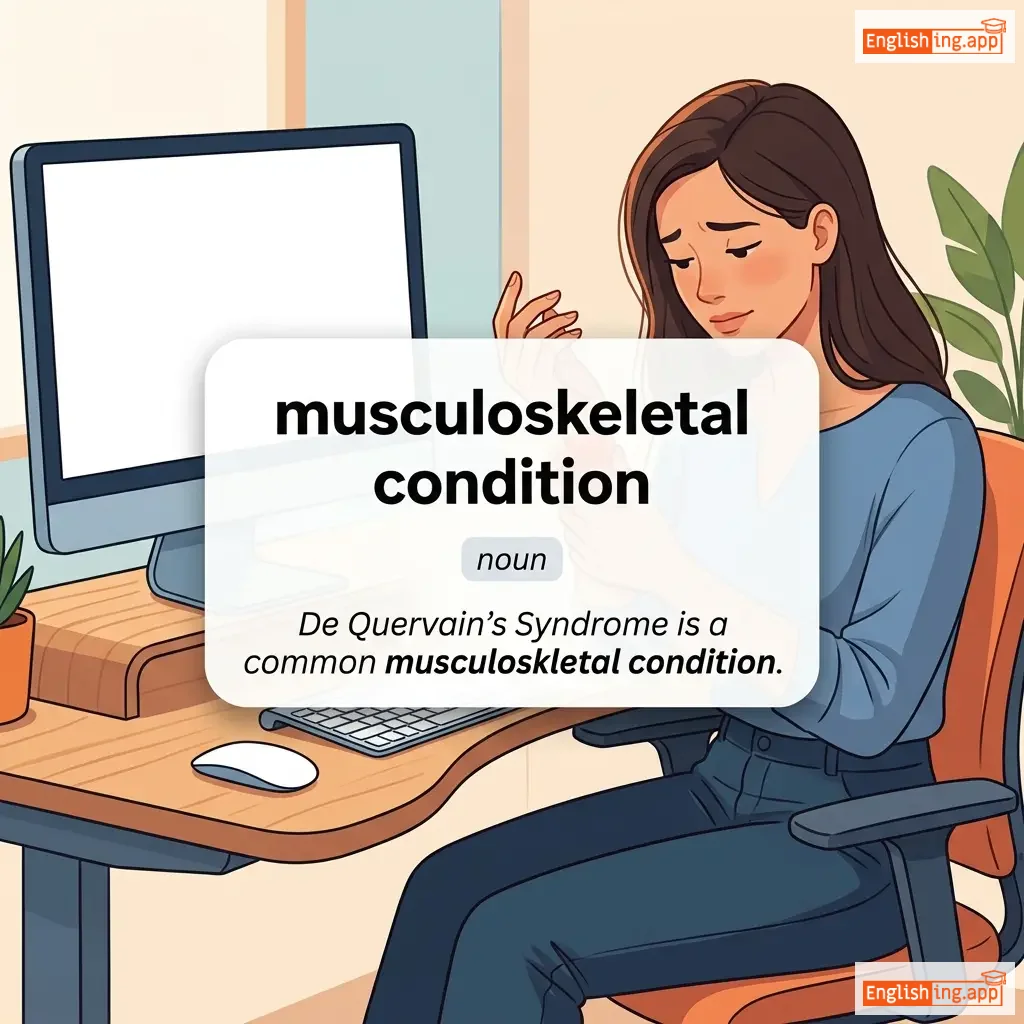
musculoskeletal condition definition card — visual illustration of the meaning
noun
মাসকুলোস্কেলেটাল কন্ডিশন
мускулоскелетное заболевание (muskuloskelenoe zabolevanie)

A disorder that affects the muscles, bones, joints, tendons, ligaments, or other structures that support the limbs, neck, and back.

"De Quervain's Syndrome is a common musculoskeletal condition."

"Синдром де Кервена — это распространенное мускулоскелетное заболевание." (Sindrom de Kervena — eto rasprostranennoye muskuloskeletnoe zabolevaniye.)
🤔

muse

verb, noun
/mjuːz/

to think deeply about something; a source of inspiration, especially for an artist or writer

"She sat by the window to muse about her future."

noun
/mjuˈziːəm/
музей (muzei)

a building in which objects of historical, scientific, artistic, or cultural interest are stored and exhibited

"We visited the art museum to see the new exhibition."

"Мы посетили художественный музей, чтобы увидеть новую выставку." (My posetili khudozhestvennyy muzey, chtoby uvidet' novuyu vystavku.)
noun
/ˈmʌʃruːm/
гриб (вид съедобного гриба) (grib)

a type of fungus with a round top and a short stem, some of which are edible

"We cooked a delicious soup with fresh mushrooms."

"Мы приготовили вкусный суп с свежими грибами." (My prigotovili vkusnyj sup s svezhimi gribami.)
noun
/ˈmjuːzɪk/
музыка (muzyka)

vocal or instrumental sounds combined to produce harmony, melody, or rhythm

"She loves listening to classical music."

"Она любит слушать классическую музыку." (Ona lyubit slushat' klassicheskuyu muzyku.)
adjective
/ˈmɪzɪkəl/
музыкальный (muzykal'nyy)

related to or consisting of music

"She has a very musical voice."

"У нее очень музыкальный голос." (U nee ochen' muzykal'nyy golos.)
noun
/mjuːˈzɪʃən/
музыкант (muzykant)

a person who plays a musical instrument or is musically talented

"He is a talented musician."

"Он талантливый музыкант." (On talantlivyj muzykant.)
noun
/mʌsk/
мускус (muskus)

a strong-smelling substance secreted by certain animals, used in perfumes and traditional medicine

"The perfume contained natural musk that gave it an exotic fragrance."

"В парфюме был натуральный мускус, который придавал ему экзотический аромат." (V parfyume byl natural'nyy musk, kotoryy pridaval emu ekzoticheskiy aromat.)
noun
/ˈmʌskɪt/
старинный тип ружья (starinnyy tip ruzh'ya)

a type of long gun used in the past, especially by infantry soldiers

"The soldiers carried muskets into the battlefield."

"Солдаты принесли мушкеты на поле боя." (Soldaty priniesli mushety na pole boya.)
adjective
/ˈmʌski/
мускусный (muskusny)

having a strong, sweet, earthy smell like musk

"The perfume had a musky fragrance."

"В парфюмерии был мускусный аромат." (V parfumerii byl muskushnyy aromat.)
noun
/ˈmʊzlɪm/
мусульманин (musul'manin)

a follower of Islam

"He is a devout Muslim."

"Он верный мусульманин." (On vernyy musul'manin.)
verb
/mʌst/
должен (dolzhen)

to be required or obligated to

"You must complete your homework before you go out."

"Ты должен закончить домашку, прежде чем выйти." (Ty dolzhen zakonchit' domashku, prezhde chem vyiti.)
noun
/ˈmʌs.tərd/
горчица (gorchitsa)

A pungent seed or condiment made from ground mustard seeds

"She added mustard seeds to the curry for extra flavor."

"Она добавила семена горчицы в карри, чтобы добавить больше вкуса." (ona dobavila semena gorchitsy v karri, chtoby dobavit' bolshe vkus.)
noun
/ˈmʌs.tərd liːf/
листья горчицы (listya gorchitsy)

green leafy vegetable from the mustard plant; edible leaves used in cooking

"We cooked mustard leaf with fish in a traditional Bengali curry."

"Мы готовили листья горчицы с рыбой в традиционном бенгальском карри." (My gotovili list'ya gorchitsy s ryboy v traditsionnom bengalskom karri.)
noun
/ˈmʌstərd ɔɪl/
горчичное масло (gorchichnoye maslo)

oil extracted from mustard seeds, commonly used for cooking and medicinal purposes

"We use mustard oil for cooking vegetables in our kitchen."

"Мы используем горчичное масло для приготовления овощей на нашей кухне." (My ispol'zuyem gorchichnoye maslo dlya prigotovleniya ovoshchey na nashey kukhne.)
noun
/ˈmʌs.tərd siːdz/
горчичные семена (gorchichnye semena)

small round seeds from the mustard plant, used as a spice and for making mustard condiment

"Mustard seeds are often tempered in hot oil to release their nutty flavor before adding to dishes."

"Семена горчицы часто обжариваются в горячем масле, чтобы раскрыть их ореховый вкус перед добавлением в блюда." (Semena gorchitsy chasto obzhariyvayutsya v goryachem masle, chtoby raskryt' ikh orekhovyy vkus pered dobavleniem v blyuda.)
verb, noun
/ˈmʌstər/
собирать / собирать мужество (sobirat / sobirat muzhectvo)

to gather people, especially soldiers; to summon courage or strength

"He mustered enough courage to face the challenge."

"Он собрал достаточно мужества, чтобы встретиться с вызовом." (On sobral dostatochno muzhestva, chtoby vstrechatsya s vyzovom.)
adjective
/ˈmʌsti/
заплесневелый, сырой или с запахом влаги (zaplesnevelyy, syroy ili s zapakhom vlagi)

having a stale, moldy, or damp smell

"The old books had a musty odor."

"Старые книги имели затхлый запах." (Staryye knigi imeli zatkhy zapakh.)
noun
/ˌmjuːtəˈbɪləti/
изменчивость (izmenchivost)

The quality of being changeable or capable of change.

"The mutability of fashion trends makes it hard to keep up."

"Изменчивость модных трендов усложняет следить за ними." (Izmenchivost modnykh trendov uslozhnyayet slezhit' za nimi.)
adjective
/ˈmjuːtəbl/
изменчивый (izmenchivyy)

Capable of change or alteration.

"Human emotions are mutable and can shift rapidly."

"Человеческие эмоции изменчивы и могут быстро меняться." (Chelovekskie emotsii izmenchivy i mogut bystro menyat'sya.)
noun
/ˌmjuːtəˈbɪləti/
мутабилинити (ошибка в написании) (mutabiliti (oshivka v napisanij))

A misspelled form of 'mutability', meaning the quality of being changeable.

"The document contained the misspelled word 'mutablility' instead of 'mutability'."

"Документ содержал слово с ошибкой 'mutablility' вместо 'mutability'." (Dokument soderzhal slovo s oshibkoy 'mutablility' vmesto 'mutability'.)
verb
/ˈmjuːteɪt/
мутировать (mutirovat')

To change or cause to change in form, nature, or character.

"The virus can mutate into a more dangerous strain."

"Вирус может мутировать в более опасный штамм." (Virus mozhet mutirovat' v bolee opasnyy shtamm.)
noun
/mjuːˈteɪʃn/
мутация, генетическое изменение (mutaciya, geneticheskoe izmenenie)

A change in form, structure, or nature, especially in genetics.

"Scientists discovered a genetic mutation that caused the disorder."

"Учёные обнаружили генетическую мутацию, которая вызвала расстройство." (Uchyonye obnaruzhili geneticheskuyu mutaciyu, kotoraya vyzvala rasstroystvo.)
adjective
/mjuːt/
немой (nemoy)

silent or unable to speak; not expressed in words

"She remained mute during the entire meeting."

"Она осталась немой на протяжении всей встречи." (Ona ostalas nemoy na protyazhenii vsej vstrechi.)
adjective
/ˈmjuːtɪd/
приглушенный (priglushennyy)

softened in sound, color, or effect; subdued

"The room was painted in muted shades of blue and grey."

"Комната была покрашена в приглушенные оттенки синего и серого." (Komnata byla pokrashena v priglushennye otnetki sinyego i serogo.)
verb
/ˈmjuːtɪleɪt/
искорёжить (iskoryezhit)

to inflict serious damage on something, often by cutting or tearing

"The ancient manuscript was mutilated by careless handling."

"Древний манускрипт был изуродован из-за небрежного обращения." (Drevniy manuskript byl izurodovan iz-za nebrezhnogo obrashcheniya.)
adjective
/ˈmjuːtɪnəs/
мятежный (myatezhny)

refusing to obey authority; rebellious

"The soldiers grew mutinous after months without pay."

"Солдаты стали мятежными после месяцев без оплаты." (Soldaty stali myatezhnymi posle mesyatsev bez oplaty.)
noun
/ˈmjuːtɪni/
мятеж (m'yatezh)

an open rebellion against authority, especially by soldiers or sailors

"The sailors staged a mutiny against their captain."

"Моряки устроили мятеж против своего капитана." (Moryaki ustroili m'yatezh protiv svoego kapitana.)
verb
/ˈmʌtər/
бормотать (bormotat)

to speak in a low or barely audible voice, often in dissatisfaction or irritation

"He muttered something under his breath as he walked away."

"Он пробормотал что-то под нос, когда уходил." (On probormotal chto-to pod nos, kogda ukhodyl.)
noun
/ˈmʌtn/
мясо барашка (myaso barashka)

meat from an adult sheep; lamb meat

"The restaurant serves delicious mutton curry with rice."

"Ресторан подает вкусное карри из мяса барашка с рисом." (Restoran podayet vkusnoye karri iz myasa barashka s risom.)
adjective
/ˈmjuːtʃuəl/
взаимный (vzaimnyy)

felt, shared, or done by two or more people equally

"They have mutual respect for each other."

"У них взаимное уважение друг к другу." (U nikh vzaimnoye uvazheniye drug k drugu.)