Словари

Словарь английского языка | Значения слов, определения и примеры

adjective, adverb, pronoun
/mɔːr/
больше (bol'she)

A greater or additional amount or degree.

"She wanted more time to finish the project."

"Она хотела больше времени, чтобы завершить проект." (Ona khotela bol'she vremeni, chtoby zavershit' proyekt.)
adverb
/mɔːrˈoʊvər/
к тому же (k tomu zhe)

Used to add information that supports or emphasizes what has already been said.

"The job is challenging; moreover, it requires excellent communication skills."

"Работа сложная; к тому же, она требует отличных навыков общения." (Rabota slozhnaya; k tomu zhe, ona trebuyet otlichnykh navykov obshcheniya.)
noun
/ˈmɔːreɪz/
нравы (nravy)

the essential or characteristic customs and conventions of a community

"Social mores often dictate how people behave in public."

"Социальные нравы часто диктуют, как люди ведут себя на публике." (Sotsial'nye nravy chasto diktuyut, kak lyudi vedut sebya na publike.)
adjective
/ˌmɔːrɡəˈnætɪk/
морганатический брак (morganaticheskiy brak)

relating to a marriage in which one partner, usually of lower social rank, does not share the titles or privileges of the other

"The prince entered into a morganatic marriage with a commoner."

"Принц вступил в морганатический брак с обычной женщиной." (Prints vstupil v morganaticheskiy brak s obychnoy zhenshchinoy.)
noun
/mɔːrɡ/
морг (morg)

a place where dead bodies are kept, especially to be identified or claimed

"The police took the body to the morgue for identification."

"Полиция отвезла тело в морг для идентификации." (Politsiya otvezla telo v morg dlya identifikatsii.)
adjective
/ˈmɔːrɪbʌnd/
умирающий (umirayushchiy)

in a dying state; near death or becoming obsolete

"The moribund industry was soon replaced by modern technology."

"Умирающая индустрия вскоре была заменена современной технологией." (Umirayushchaya industriya vskore byla zamenena sovremennoy tekhnologiey.)
noun
/ˈmɔːrnɪŋ/
счастье (schastye)

the early part of the day, typically from sunrise until noon

"I like to go for a run in the morning."
"Она не смогла скрыть своего счастья, когда получила награду." (Ona ne smogla skryt' svoego schast'ya, kogda poluchila nagradu.)
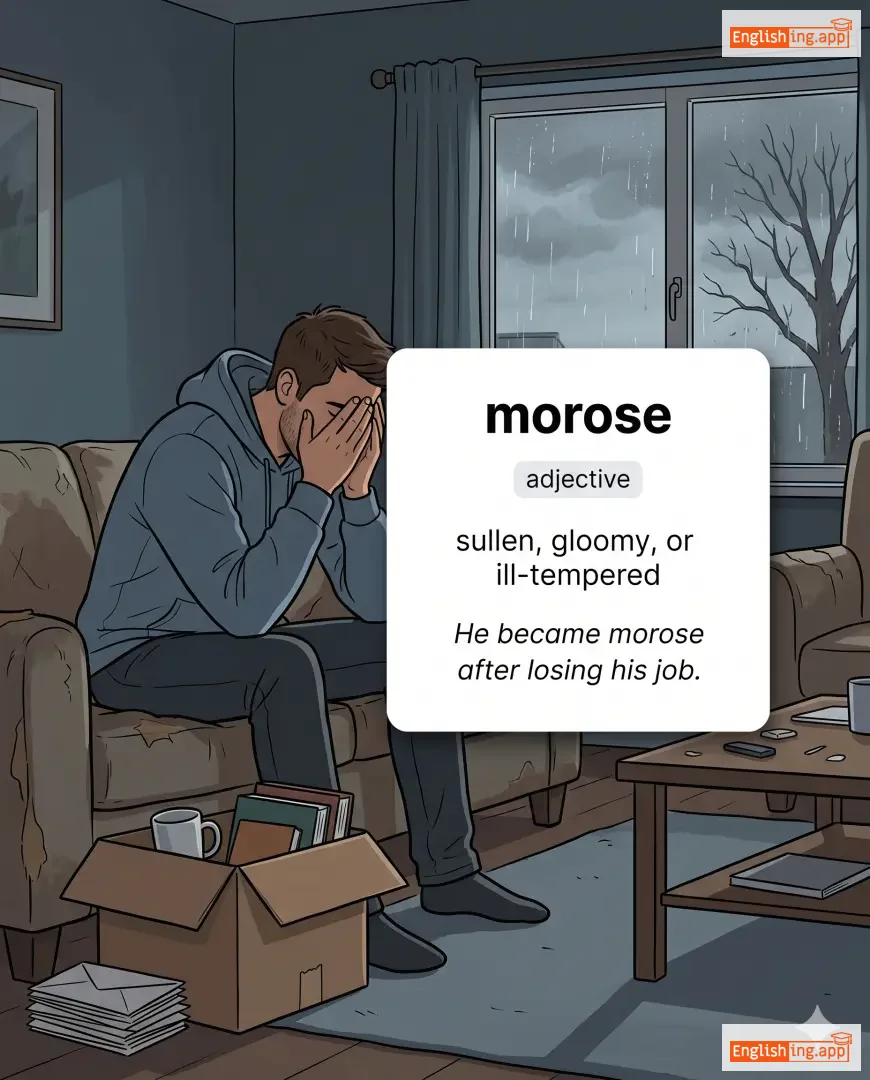
morose definition card — visual illustration of the meaning
adjective
/məˈroʊs/
мрачный (mrachnyy)

sullen, gloomy, or ill-tempered

"He became morose after losing his job."

"Он стал мрачным после потери работы." (On stal mrachnym posle poteri raboty.)
verb
/mɔːrf/
превращаться (prevrashchatsya)

to change smoothly from one form, shape, or character into another

"The caterpillar will morph into a butterfly."

"Гусеница превратится в бабочку." (Gusenitsa prevratitsya v babochku.)
morphological definition card — visual illustration of the meaning
adjective
ˌmɔː.fəˈlɒdʒ.ɪ.kəl
мorphological (morphological)

Related to the structure and formation of words; concerning morphology in linguistics.

"Morphological analysis helps AI understand word structures."

"Морфологический анализ помогает ИИ понять структуру слов." (Morfologicheskiy analiz pomogaet II ponyat strukturu slov.)
noun
/mɔːrˈfɑːlədʒi/
морфология (morfologiya)

the study of the form and structure of things, especially in language and biology

"Morphology studies the structure of words and how they are formed."

"Морфология изучает структуру слов и то, как они формируются." (Morfologiya izuchayet strukturu slov i to, kak oni formiruyutsya.)
adjective
/ˈmɔːtəl/
смертный; бренный; человеческий (smertnyy; brenny; chelovecheskiy)

subject to death; having a limited lifespan; human

"All human beings are mortal and will eventually die."

"Все люди смертны и в конце концов умрут." (Vse lyudi smertny i v kontse kontsov umrut.)
noun
/mɔːˈtæləti/
смертность (smertnost)

the state of being subject to death; the death rate of a population

"Advancements in medicine have reduced child mortality significantly."

"Достижения в медицине значительно снизили детскую смертность." (Dostizheniya v meditsine znachitel'no snizili detskuyu smertnost'.)
noun
/ˈmɔːrtər/
смесь для связывания кирпичей / маленькая пушка (smes' dlya svyazyvaniya kirpichey / malen'kaya pushka)

a mixture used in building to bond bricks or stones together; also, a small cannon for firing shells

"The workers applied mortar between the bricks."

"Рабочие нанесли раствор между кирпичами." (Rabochie nanesli rastvor mezhdu kirpichami.)
noun
/ˈmɔː.tər ænd ˈpes.əl/
мортир и пестик (mortir i pestik)

a bowl and grinding tool used to crush and grind spices, herbs, and other substances

"She ground the spices using a mortar and pestle."

"Она молола специи с помощью мортиры и пестика." (Ona molola spetsii s pomoshch'yu mortiry i pestika.)
noun
/ˈmɔːrɡɪdʒ/
ипотека (ipoteka)

a legal agreement where a person borrows money to buy property and pays it back over time

"They applied for a mortgage to buy their new house."

"Они подали заявку на ипотеку, чтобы купить новый дом." (Oni podali zayavku na ipoteku, chtoby kupit' novyi dom.)
noun
/mɔːrˈtɪʃən/
похоронный работник (pokhoronny rabotnik)

a person whose job is to prepare dead bodies for burial or cremation and to arrange funerals

"The mortician prepared the body for the funeral service."

"Похоронный работник подготовил тело для похоронной службы." (Pokhoronny rabotnik podgotovil telo dlya pokhoronnoy sluzhby.)
verb
/ˈmɔːrtɪfaɪ/
унизить (unizit)

to cause someone to feel great embarrassment or shame

"She was mortified when she tripped on stage."

"Она была поражена, когда споткнулась на сцене." (Ona byla porazheno, kogda spotknulas' na stse.)
noun
/moʊˈzeɪɪk/
мозаика (mozaika)

A picture or pattern produced by arranging together small pieces of stone, tile, or glass.

"The church ceiling was decorated with a beautiful mosaic."

"Потолок церкви был украшен красивой мозаикой." (Potolok tserkvi byl ukrashen krasivoy mozaikoy)
noun
/mɒsk/
мечеть (mechet)

A Muslim place of worship.

"They gathered at the mosque for the Friday prayer."

"Они собрались в мечети для пятничной молитвы." (Oni sobralis' v mecheti dlya pyatnichnoy molitvy.)
noun
/məˈskiːtəʊ/

a small flying insect known for biting and spreading diseases such as malaria

"The mosquito bit me while I was sleeping under the net."

noun
/məˈskiː.toʊ net/

a fine mesh fabric used to cover beds or windows to keep mosquitoes and other insects out

"We use a mosquito net to protect ourselves from insect bites."

noun
/mɔːs/
мох (moh)

a small flowerless plant that grows in clumps in moist places

"Green moss covered the old stone wall."

"Зеленый мох покрыл старую каменную стену." (zelyonyy mok pokryl staruyu kamennuyu stenu.)
adjective
/ˈmɒsi/
покрытый мхом; с мхом, растущим на нем (pokrytyy mkhom; s mkhom, rastushchim na nem)

covered with moss; having moss growing on it

"The old tree trunk was mossy and covered with green vegetation."

"Старый ствол дерева был покрыт мхом и покрыт зеленой растительностью." (Staryy stvol dereva byl pokryt mkhom i pokryt zelyonoy rastitel'nost'yu.)
adjective, adverb, pronoun
/moʊst/
большинство (bol'shinstvo)

the greatest in amount, degree, or number

"Most people like to relax on weekends."
"Большинство людей предпочитают отдыхать на выходных." (Bol'shinstvo lyudey predpochitayut otdykhat' na vykhodnykh.)
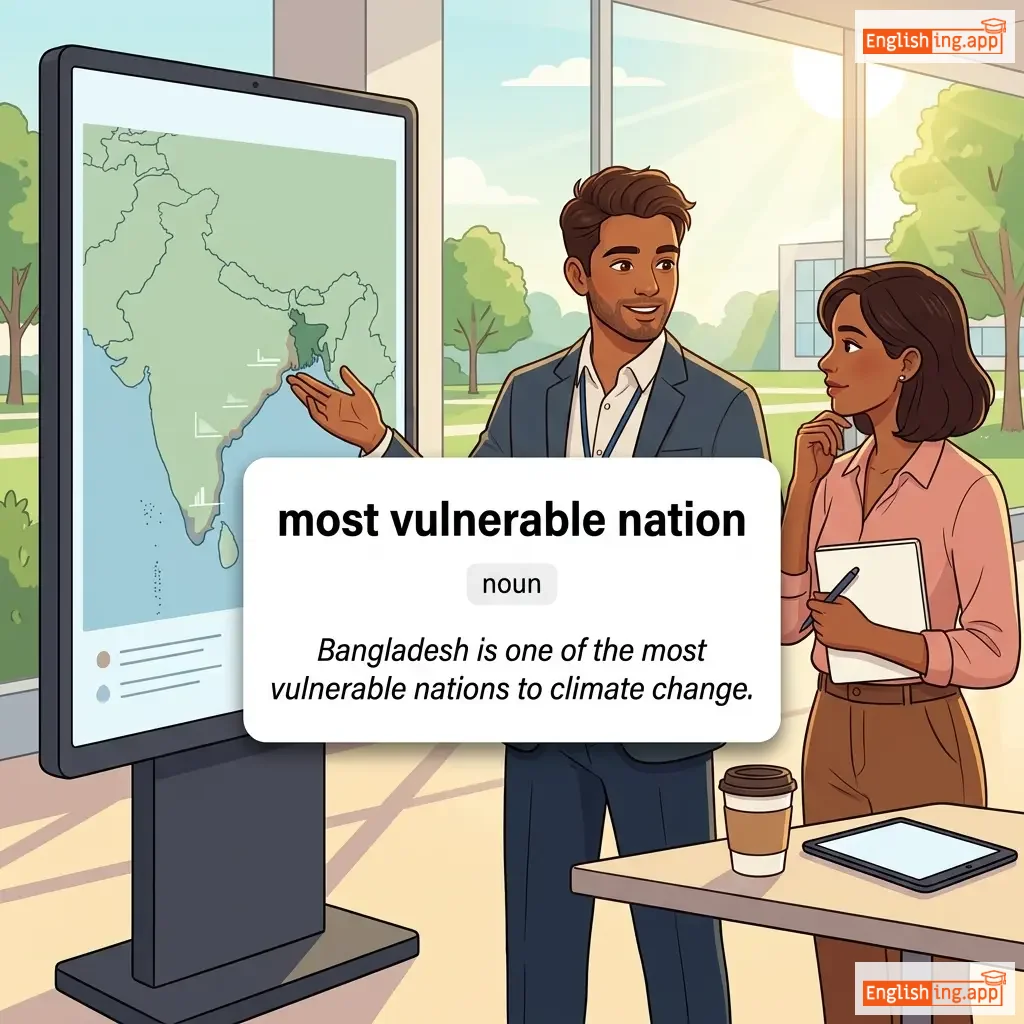
most vulnerable nation definition card — visual illustration of the meaning
noun
moʊst ˈvʌlnərəbəl ˈneɪʃən
нация с наибольшей уязвимостью (natsiya s naibolshey uyazvimmostyu)

A country that is highly exposed to risks and lacks adequate protection or resilience.

"Bangladesh is one of the most vulnerable nations to climate change."

"Бангладеш - одна из самых уязвимых стран для изменения климата." (Bangladesh - odna iz samykh uyazvimykh stran dlya izmeneniya klimata.)
adverb
/ˈmoʊstli/
в основном (v osnovnom)

for the most part; mainly

"She is mostly interested in art and literature."

"Она в основном интересуется искусством и литературой." (Ona v osnovnom interesuyetsya iskusstvom i literaturoy.)
noun
/moʊt/
частица (chastitsa)

A tiny particle or speck, especially of dust.

"A mote of dust floated in the sunlight."

"Пылинка плавала в лучах солнца." (Pylinka plavala v luchakh solnca.)
adjective
/ˈmɒθ ˌiːtən/
съедено молью (s'yedeno mol'yu)

Damaged or worn out, especially by moths or age.

"He wore a moth-eaten sweater on the cold day."

"Он носил съеденный молью свитер в холодный день." (On nosil s'yedennyy mol'yu sviter v kholodnyy den'.)
noun
/ˈmʌðər/
мать (mat)

a female parent

"Her mother is a kind and caring person."

"Ее мать - добрый и заботливый человек." (Yeyo mat' - dobryy i zabotlivyy chelovek.)
noun
/ˈmʌðər ˈlæŋɡwɪdʒ/
родной язык (rodnoy yazyk)

the first language a person learns from childhood; native language

"Children learn best when they are taught in their mother language."

"Дети лучше учатся на родном языке." (deti luchshe uchatsya na rodnom yazyke)
noun
/ˈmʌð.ər.hʊd/
материнство (materinstvo)

the state of being a mother; the qualities of a mother

"She embraced the joys and challenges of motherhood."

"Она приняла радости и трудности материнства." (Ona prinяла radosti i trudnosti materinstva.)
noun
/ˈmʌð.ər.lænd/
родина; родная страна (rodina)

the country where one was born or has citizenship; homeland

"He always spoke fondly of his motherland."

"Он всегда говорил с любовью о своей родине." (On vsegda govorit s lyubov'yu o svoey rodine.)
👩‍👧‍👦

Motherly (madrli)

adjective
/ˈmʌðərli/
материнский (materinskiy)

having qualities characteristic of a mother; caring and protective

"She showed motherly care and affection towards all the children."

"Она проявила материнскую заботу и привязанность ко всем детям." (Ona proyavila materinskuyu zabotu i privyazannost ko vsemm detyam.)
🎭

motif

noun
/moʊˈtiːf/

A recurring theme, subject, or idea in a work of art or literature.

"The motif of love is central to the novel."

adjective
/ˈmoʊtaɪl/
подвижный (podvizhny)

Capable of movement or locomotion.

"Certain bacteria are motile and can swim toward nutrients."

"Некоторые бактерии подвижны и могут плавать к питательным веществам." (Nekotorye bakterii podvizhny i mogut plavat k pitatel'nym veshchestvam.)
noun
/moʊˈtɪləti/
мобильность (mobil'nost')

The ability of an organism or cell to move independently.

"The motility of sperm is crucial for successful fertilization."

"Мотильность сперматозоидов важна для успешного оплодотворения." (Motil'nost' spermatozoyidov vazhna dlya uspeshnogo oplodotvoreniya.)
noun
/ˈmoʊʃən/
движение (dvizhene)

the act or process of moving; a change of place or position

"The motion of the car made her sleepy."

"Движение машины заставило её заснуть." (Dvizhenie mashiny zastavilo yey zasnut.)
verb
/ˈmoʊtɪveɪt/

To provide someone with a reason or incentive to do something.

"The coach motivated the players to give their best performance."

noun
/ˌmoʊtɪˈveɪʃən/
мотивировка (motivirovka)

the reason or drive for acting or behaving in a particular way

"She lost her motivation to continue the project."

"Она потеряла свою мотивацию продолжать проект." (Ona poteryala svoyu motivatsiyu prodolzhat' proyekt.)
noun
/ˈmoʊtɪv/
мотив (motiv)

a reason for doing something, especially one that is hidden or not obvious

"The police could not determine the motive behind the crime."

"Полиция не смогла определить мотив преступления." (Politsiya ne smogla opredelit motiv prestupleniya.)
adjective
/ˈmɒtli/
пёстрый (pyostryi)

Made up of different, often incongruous or diverse elements.

"The festival attracted a motley crowd of artists, musicians, and tourists."

"Фестиваль привлёк пёструю толпу художников, музыкантов и туристов." (Festival prilyok pyostruyu tolpu khudozhnikov, muzykantov i turistov.)
noun
/ˈmoʊtər/
мотор (motor)

a machine that produces motion or power to make something work

"The car’s motor stopped suddenly."

"Мотор автомобиля внезапно остановился." (Motor avtomobilya vnezapno ostanovilsya.)
noun
/ˈmoʊ.tər ˌsaɪ.kəl/
мотоцикл (mototsikl)

a two-wheeled vehicle powered by an engine

"He rides his motorcycle to work every day."

"Он ездит на своем мотоцикле на работу каждый день." (On ezdit na svoem mototsikle na rabotu kazhdyy den')
noun
/ˈmoʊ.tər ˈlɔː.ri/
грузовик с мотором (gruzovik s motorom)

a large motor vehicle used for transporting goods; truck

"The motor lorry delivered fresh vegetables to the market."

"Моторный грузовик доставил свежие овощи на рынок." (Motornyi gruzovik dostavil svezhie ovoshchi na rynok.)
noun
/ˈmoʊtərˌsaɪkəl/
мотоцикл (mototsikl)

a two-wheeled motor-powered vehicle designed for transportation

"He rides his motorcycle to work every morning."

"Он каждое утро ездит на работу на мотоцикле." (On kazhdoe utro ezdit na rabotu na mototsikle)
noun
/ˈməʊtərɪst/
автомобилист (avtomobilist)

a person who drives a motor vehicle, especially a car or motorcycle

"The motorist stopped to help after seeing the accident on the highway."

"Автомобилист остановился, чтобы помочь после аварии." (Avtomobilist ostanovilsya chtoby pomoch posle avarii)
verb
/ˈmɒtl/
пятнистый (pyatnisty)

To mark with spots or patches of color.

"The leaves were mottled with shades of yellow and brown."

"Листья были покрыты пятнами желтого и коричневого цвета." (List'ya byli pokryty pyatnami zheltogo i korichnevogo tsveta.)
adjective
/ˈmɒtld/
пятнистый (pyatnisty)

Marked with spots, streaks, or blotches of different shades or colors.

"The snake's mottled skin helped it blend into the forest floor."

"Пятнистая кожа змеи помогла ей слиться с лесным полом." (Pyatnistaya kozha zmei pomogla ei slitsya s lesnym polom.)
noun
/ˈmɒtəʊ/
девиз (deviz)

A short sentence or phrase that expresses a guiding belief or principle.

"Her motto in life is 'never give up.'"

"Её девиз в жизни - 'Никогда не сдавайся.'" (Eё deviz v zhizni - 'Nikogda ne sdavaysya.')