Словари

Словарь английского языка | Значения слов, определения и примеры
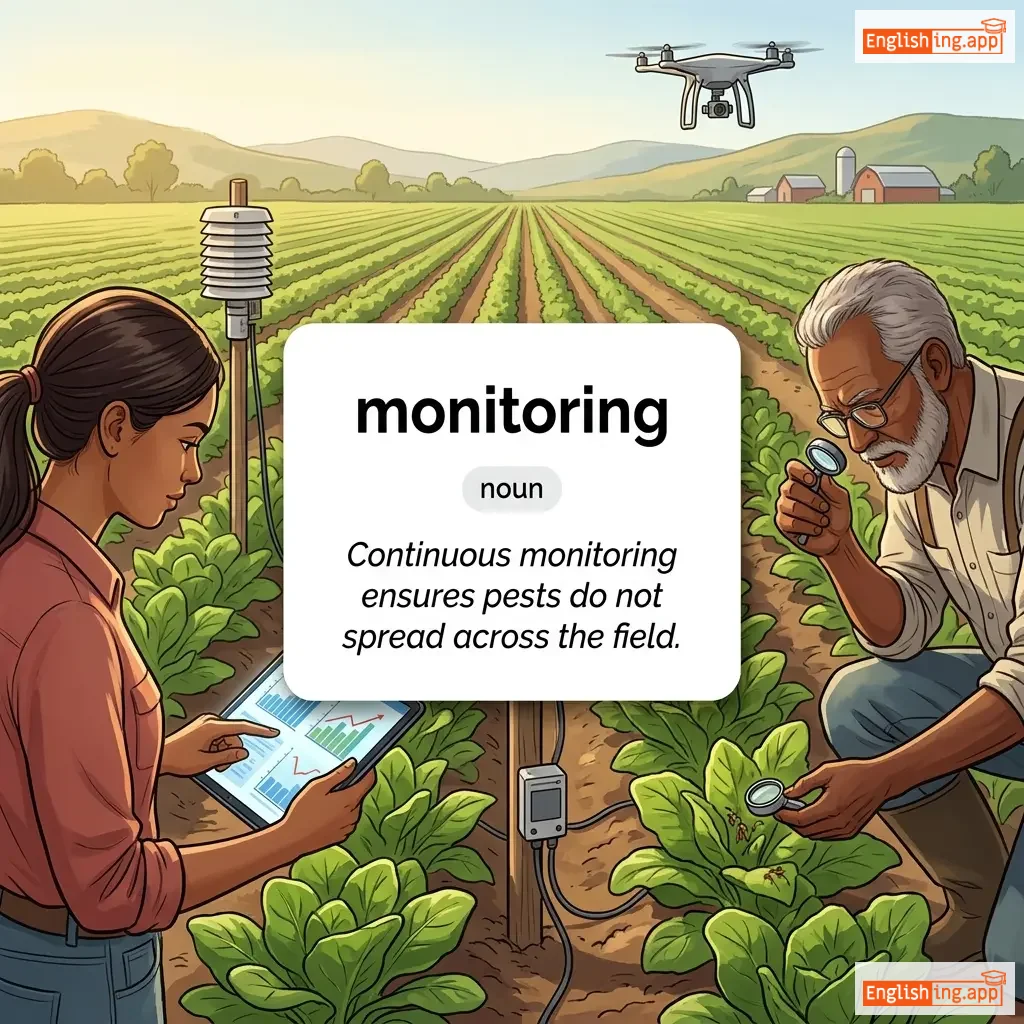
monitoring definition card — visual illustration of the meaning
noun
ˈmɒnɪtərɪŋ
мониторинг, постоянный контроль (monitoring, postoyanny kontrol)

The action of observing and checking the progress or quality of something over a period of time.

"Continuous monitoring ensures pests do not spread across the field."

"Непрерывный мониторинг гарантирует, что вредители не распространятся по полю." (Nepreryvny monitoring garantiye, chto vrediteli ne rasprostranyatsya po polyu.)
adjective
/ˈmɒnɪtəri/
предупреждающий (preduprezhdayushchiy)

Giving a warning or cautionary advice; serving to warn.

"His monitory tone made everyone cautious about their next move."

"Его предупредительный тон заставил всех насторожиться по поводу их следующего шага." (Yego preduprezhdayushchiy ton zastavil vsekh nastrozhitsya po povodu ikh sleduyushchego shaga.)
noun
/mɒŋk/
монах (monakh)

a member of a religious community living under vows of poverty, chastity, and obedience

"The monk lived a simple and peaceful life in the monastery."

"Монах жил простой и мирной жизнью в монастыре." (Monakh zhiv prosto i mirnoy zhiznyu v monastyre.)
noun
/ˈmʌŋki/
обезьяна (obez'yana)

a small to medium-sized primate with a long tail, known for its playfulness

"A monkey was jumping from tree to tree in the forest."

"Обезьяна прыгала с дерева на дерево в лесу." (Obezyana prygala s dereva na derevo v lesu)
adjective
/ˌmɒnəkrəˈmætɪk/

Consisting of or displaying only one color.

"The artist created a striking monochromatic painting in shades of blue."

noun/adjective
/ˈmɒnəkrəʊm/
монохром (monokhrom)

A photograph, painting, or screen image in black and white or varying tones of one color.

"The old film was shot entirely in monochrome."

"Старый фильм был снят полностью в монохроме." (Staryy film byl snyat polnost'yu v monokrome.)
noun
/ˈmɒnəkl/
монокль (monokl)

A single round lens for one eye, used to correct or enhance vision.

"The old gentleman wore a monocle at formal events."

"Пожилой джентльмен носил монокль на торжественных мероприятиях." (Pozhiloy dzhentlmen nosil monokl na torzhestvennykh meropriyatiyakh)
noun
/məˈnɒkrəsi/
монократия (monokratiya)

A system of government by a single person; autocracy.

"The nation suffered under decades of monocracy."
"Нация страдала от десятилетий монократии." (Natsiya stradala ot desyatiletiy monokratii.)
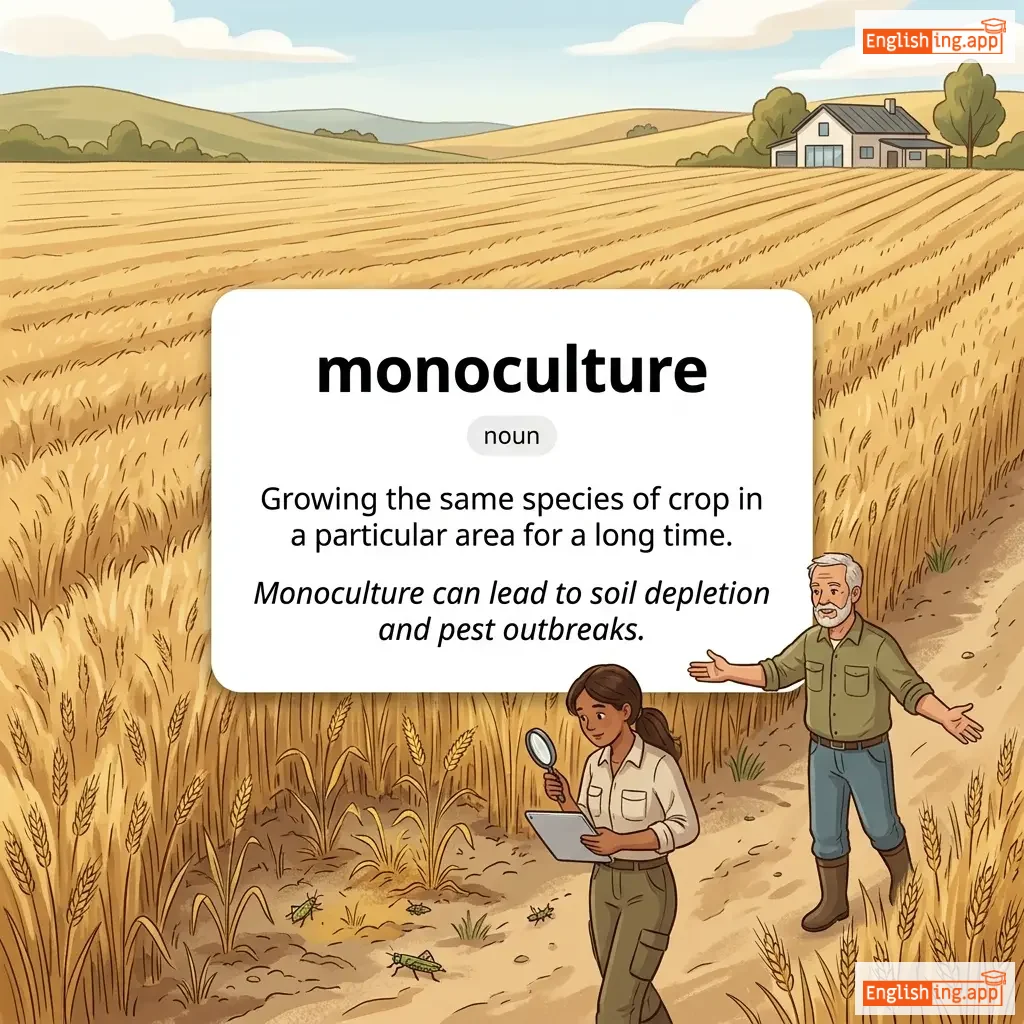
monoculture definition card — visual illustration of the meaning
noun
ˈmɒn.əˌkʌl.tʃər
монокультура (monokultura)

Growing the same species of crop in a particular area for a long time.

"Monoculture can lead to soil depletion and pest outbreaks."

"Монокультура может привести к снижению плодородия почвы и появлению вредителей." (Monokultura mozhet privesti k snizheniyu plodorodiya pochvy i poyavleniyu vrediteley.)
noun
/məˈnɒɡəmi/
моногамия (monogamiya)

The practice of being married to or in a relationship with only one person at a time.

"Many cultures encourage monogamy as the ideal form of marriage."

"Многие культуры поддерживают моногамию как идеальную форму брака." (Mnogie kultury podderzhivayut monogamiyu kak ideal'nuyu formu braka.)
noun
/ˈmɒnəɡræm/
мономограмма (monogramma)

A design consisting of two or more letters, typically a person's initials, combined or interwoven.

"The towel was embroidered with her monogram."

"Полотенце было вышито с её монограммой." (Polotentse bylo vyshito s yeye monogrammoy.)
noun
/ˈmɒnəɡrɑːf/
монография (monograph)

A detailed written study of a single specialized subject or aspect of it.

"The professor published a monograph on ancient pottery."

"Профессор опубликовал монографию по древней керамике." (Professor opublikoval monografiyu po drevney keramike.)
noun
/ˈmɒnəlɪθ/
монолит (monolit)

A large single upright block of stone, or a large, powerful, indivisible organization or system.

"The ancient monolith stood in the desert for centuries."

"Древний монолит стоял в пустыне веками." (Drevniy monolit stoyal v pustyne vekami.)
adjective
/ˌmɒnəˈlɪθɪk/
монолитический (monoliticheskiy)

Massive, uniform, and indivisible; resembling a large single stone or structure.

"The company maintained a monolithic structure resistant to change."

"Компания сохранила монолитную структуру, устоявшую перед изменениями." (Kompaniya sokhranila monolitnuyu strukturu, ustoyavshuyu pered izmeneniyami.)
noun
/ˈmɒnəˌlɒɡ/
монолог (monolog)

A long speech by one person, often in a play or performance.

"The actor delivered a powerful monologue on stage."

"Актер произнес мощный монолог на сцене." (Aktor proiznes moshchniy monolog na stsene.)
noun
/ˌmɒnəˈmeɪniə/
мономания (monomaniya)

Excessive concentration or obsession with a single subject or idea.

"His monomania for collecting stamps worried his family."
"Его мономания по сбору марок тревожила его семью." (Ego monomaniya po sboryu marok trevozhila ego semyu.)
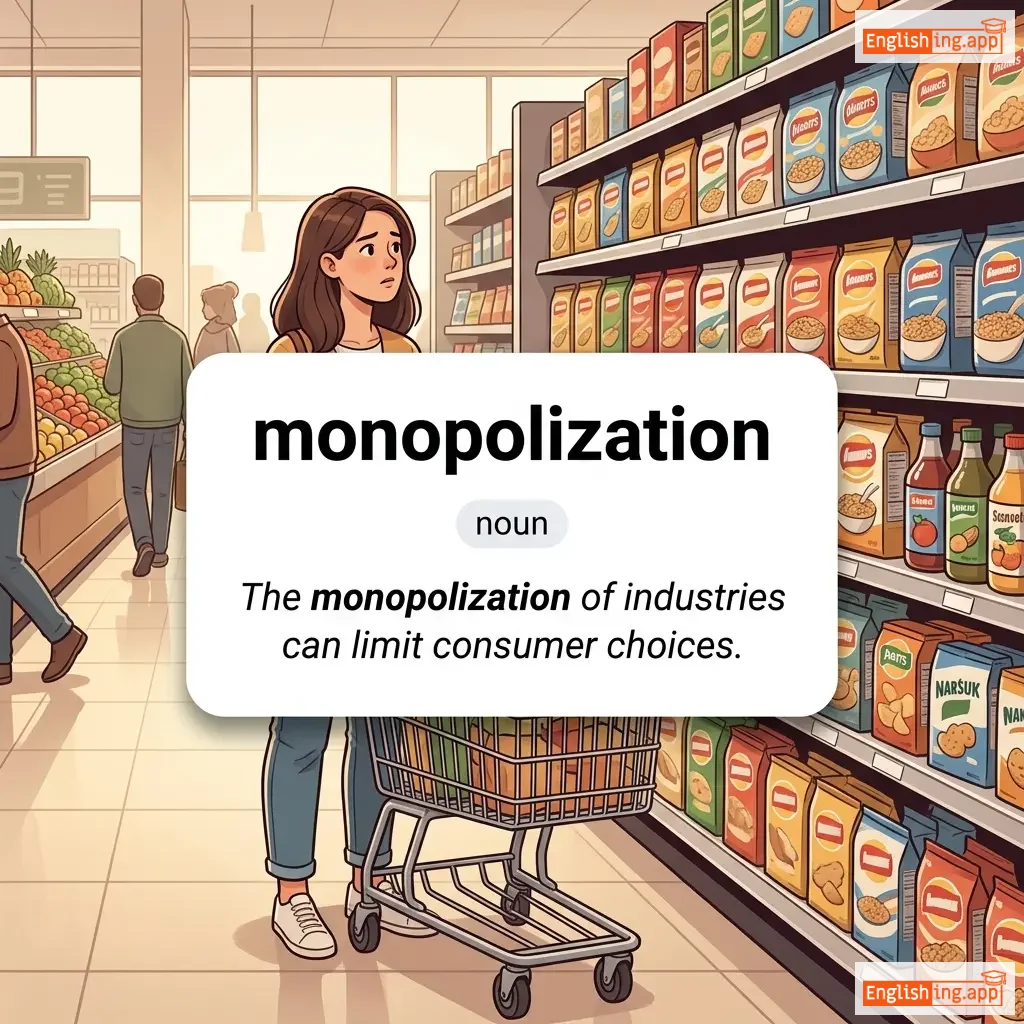
monopolization definition card — visual illustration of the meaning
noun
məˌnɒp.ə.laɪˈzeɪ.ʃən
монополизация (monopolizatsiya)

The process of gaining exclusive possession or control of a trade, commodity, or service.

"The monopolization of industries can limit consumer choices."
"Монополизация отраслей может ограничить выбор потребителей." (Monopolizatsiya otraslej mozhet ogranichit' vybor potrebiteley.)
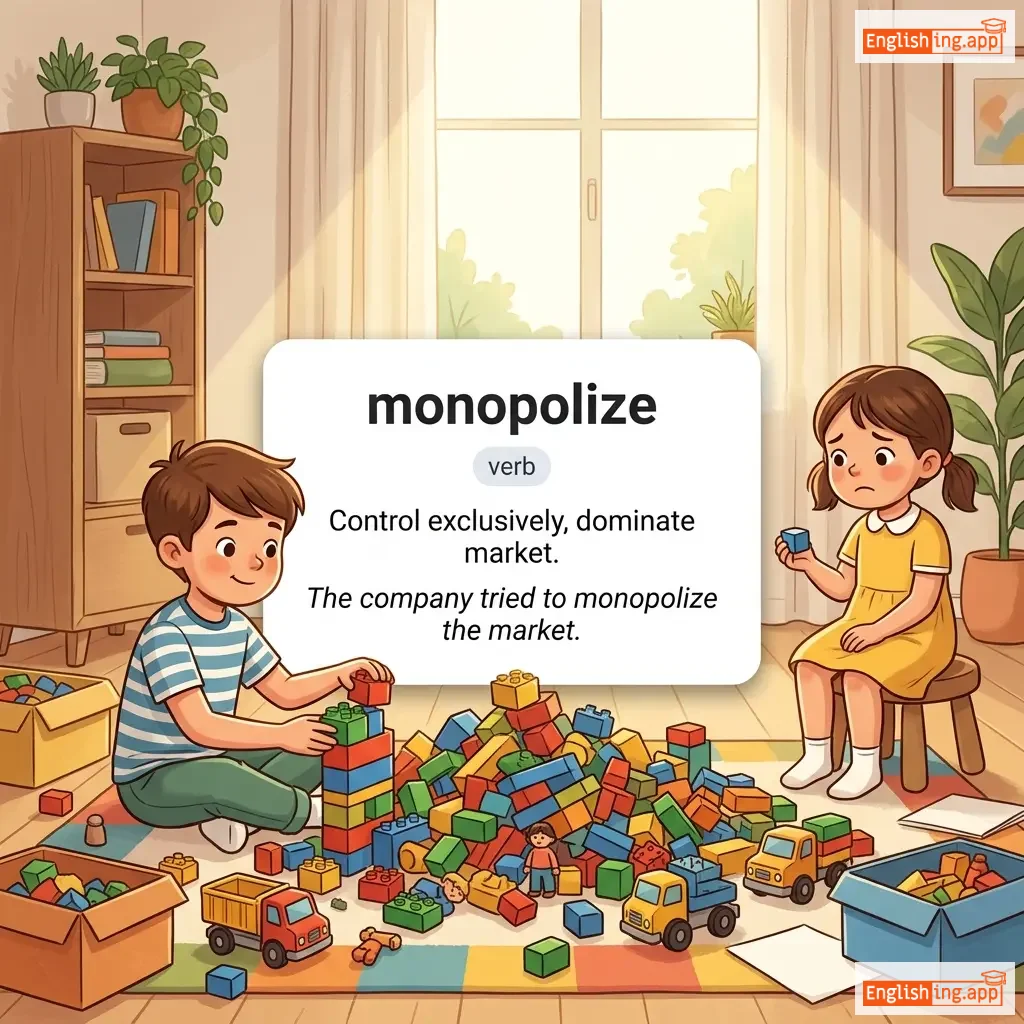
monopolize definition card — visual illustration of the meaning
verb
məˈnɒp.ə.laɪz
монополизировать (monopolizirovat)

Control exclusively, dominate market.

"The company tried to monopolize the market."
"Компания попыталась монополизировать рынок." (Kompaniya popytalas' monopolizirovat' rynok.)
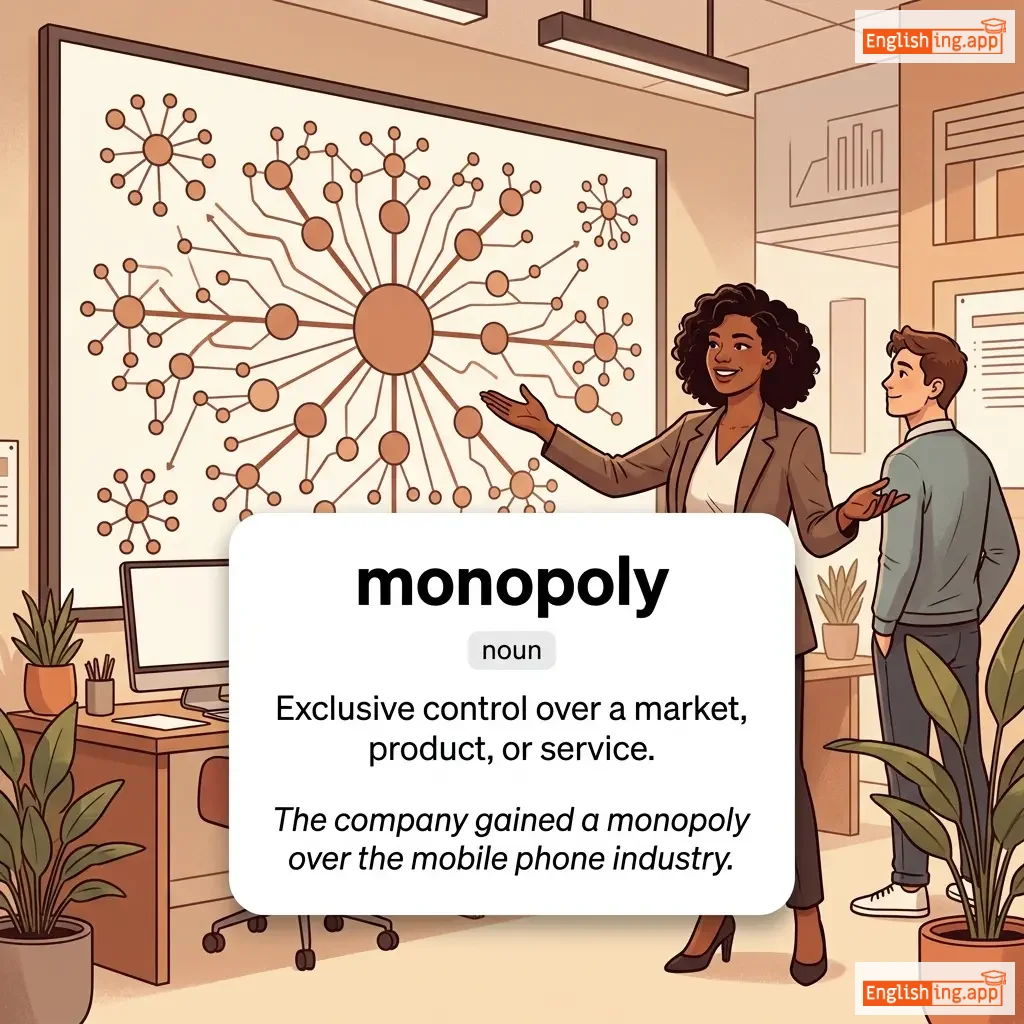
monopoly definition card — visual illustration of the meaning
noun
/məˈnɒpəli/

Exclusive control over a market, product, or service.

"The company gained a monopoly over the mobile phone industry."

noun
/ˈmɒnəˌsɪləbəl/
слово из одного слога (slovo iz odnovo sloga)

A word consisting of only one syllable.

"Words like 'yes' and 'no' are monosyllables."

"Слова как 'да' и 'нет' - моносиллаблы." (Slova kak 'da' i 'net' - monosillably.)
noun
mɒnəˈtɑːskɪŋ
выполнение одной задачи за раз (vypolnenie odnoi zadachi za raz)

The practice of dedicating oneself to a given task and minimizing potential interruptions until the task is completed or a significant period of time has elapsed.

"Monotasking can often lead to higher quality work."

"Монотаскинг часто приводит к более качественной работе." (Monotasking chasto privodit k bolee kachestvennoi rabote.)
noun
/ˈmɒnəˌθiːɪzəm/
монотеизм (monoteizm)

The belief in the existence of only one God.

"Islam and Christianity are religions based on monotheism."

"Ислам и христианство — это религии, основанные на монотеизме." (Islam i khristianstvo — eto religii, osnovannye na monoteizme.)
noun
/ˈmɒn.ə.təʊn/
монотон (monoton)

A continuous sound, especially of a person's voice, that does not rise and fall in pitch.

"The teacher's monotone made the lecture hard to follow."

"Монотон учителя сделал лекцию трудной для восприятия." (Monoton uchitelya sdelal lektsiyu trudnoy dlya vospriyatiya.)
adjective
/məˈnɒt.ən.əs/
монотонный (monotonnij)

Dull, tedious, and repetitious; lacking in variety and interest.

"The monotonous routine of office work tired him out."
"Монотонная рутина офисной работы утомила его." (Monotonnaya rutina ofisnoj raboty utomila ego.)
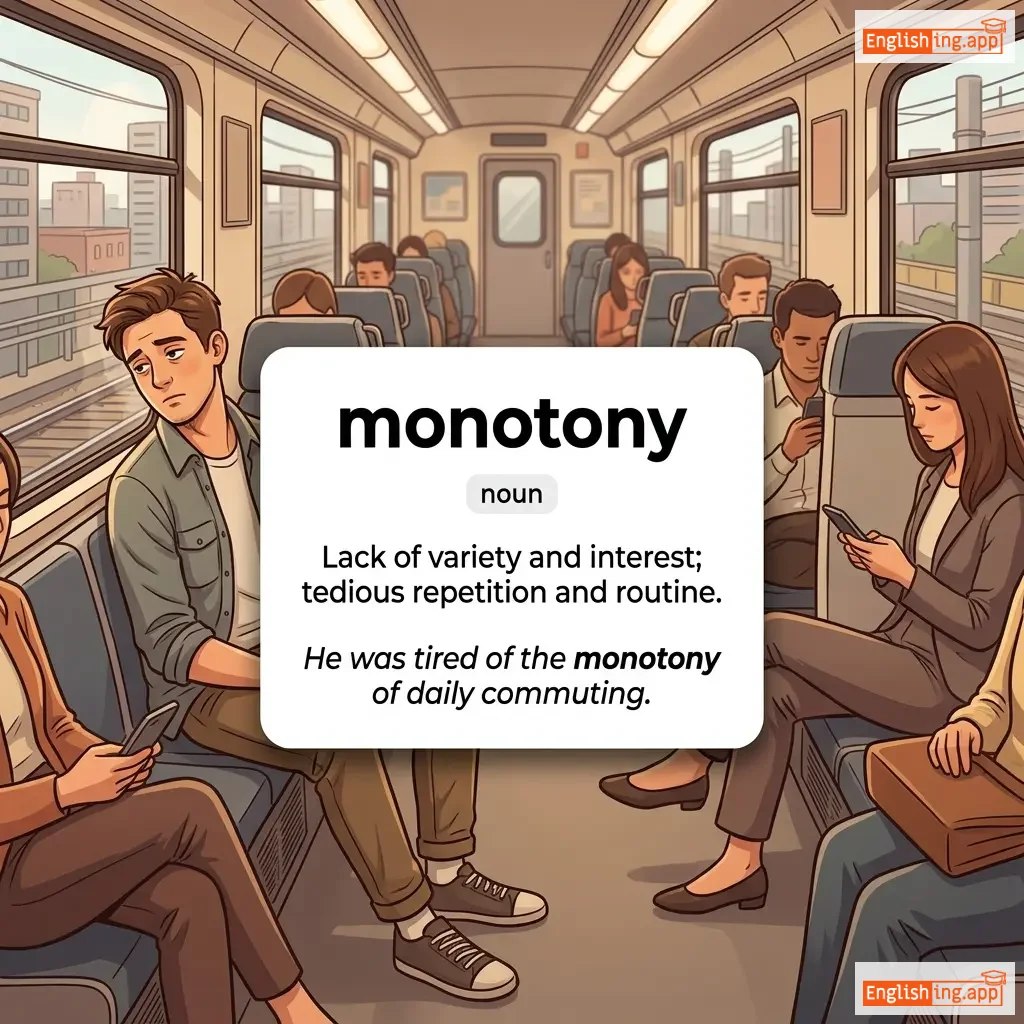
monotony definition card — visual illustration of the meaning
noun
/məˈnɒt.ə.ni/
монотонность (monotonnost)

Lack of variety and interest; tedious repetition and routine.

"He was tired of the monotony of daily commuting."

"Он устал от монотонности ежедневных поездок." (On ustal ot monotonnosti ezhednevnykh poezdok.)
noun
/ˈmɒnstər/
счастье (schastye)

an imaginary or large frightening creature

"The child was afraid that a monster was hiding under the bed."

"Она не смогла скрыть своего счастья, когда получила награду." (Ona ne smogla skryt' svoego schast'ya, kogda poluchila nagradu.)
adjective
/ˈmɒnstrəs/
монструозный; чрезвычайно большой; шокирующе злой или неправильный; ненормальный или ненатуральный (monstruozny)

extremely large; shockingly evil or wrong; abnormal or unnatural

"The monstrous crime shocked the entire community."

"Монструозное преступление шокировало всю общину." (Monstruoznoe prestuplenie shokirovalo vsyu obshchinu.)
noun
/mɒnˈtɑːʒ/
монтаж (montazh)

A sequence of film editing or a composite image made by combining several separate pictures.

"The film opened with a montage of city life."
"Фильм начался с монтажа городской жизни." (Fil'm nachalsya s montazha gorodskoy zhizni.)
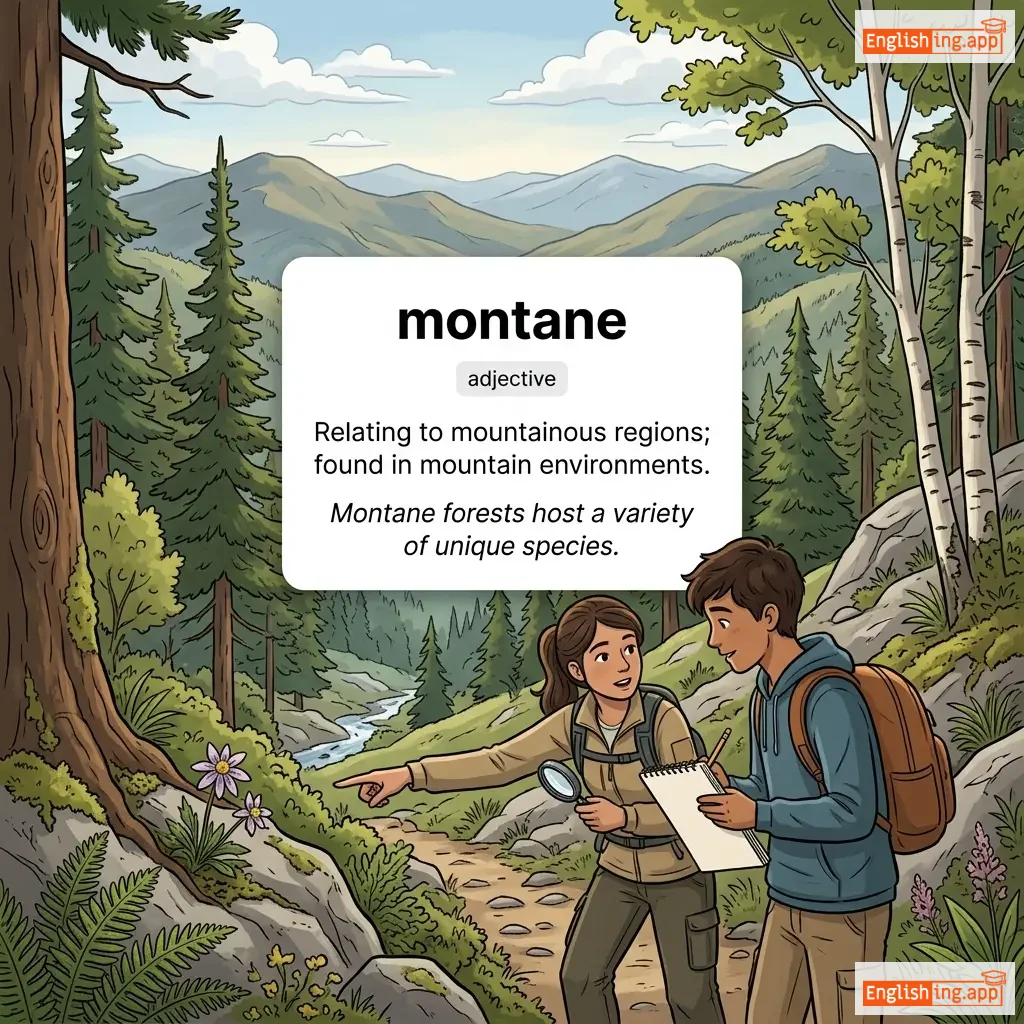
montane definition card — visual illustration of the meaning
adjective
/ˈmɒn.teɪn/
относящийся к горным регионам; найден в горных условиях (otnosiashchijsia k gornym regionam; naiden v gornykh usloviiakh)

Relating to mountainous regions; found in mountain environments.

"Montane forests host a variety of unique species."

"Горные леса являются домом для множества уникальных видов." (Gornye lesa iavliaiutsia domom dlia mnozhestva unikalkhikh vidov.)
noun
/mʌnθ/
месяц (mesyats)

a period of about four weeks or one-twelfth of a year

"She visits her grandparents once a month."

"Она посещает своих бабушку и дедушку раз в месяц." (Ona poseschayet svoikh babushku i dedushku raz v mesyats.)
adjective
/ˈmʌnθli/
ежемесячный (ezhemesyachnyy)

happening, done, or published once a month

"Employees receive their salary on a monthly basis."
"Сотрудники получают свою зарплату ежемесячно." (Sotrudniki poluchayut svoyu zarplatu ezhemesyachno.)
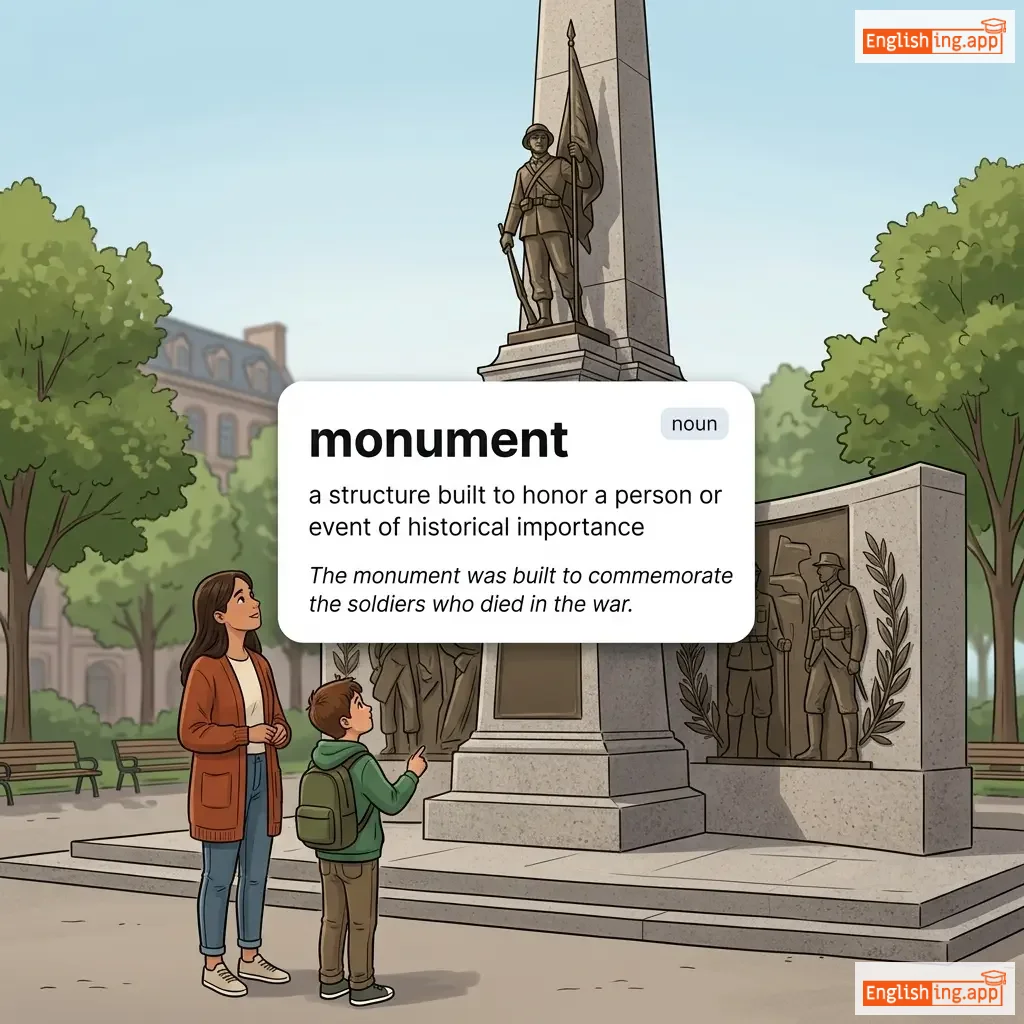
monument definition card — visual illustration of the meaning
noun
/ˈmɒnjumənt/

a structure built to honor a person or event of historical importance

"The monument was built to commemorate the soldiers who died in the war."

monumental definition card — visual illustration of the meaning
adjective
/ˌmɒn.jʊˈmen.təl/
монументальный (monumental'nyj)

Great in importance, extent, or size; resembling or serving as a monument.

"The project was a monumental achievement for the team."

"Этот проект был монументальным достижением для команды." (Etot proyekt byl monumental'nym dostizheniem dlya komandy.)
noun
/muːd/
настроение (nastroenie)

a temporary state of mind or feeling

"He was in a good mood after getting the job."

"Он был в хорошем настроении после того, как получил работу." (On byl v khoroshem nastroenii posle togo, kak poluchil rabotu.)
noun
/ˈmuːdi.nəs/
переменчивость настроения (peremenchivost' nastroeniya)

The state of being frequently subject to changes in mood, especially irritability or sadness.

"Her moodiness made it difficult to predict how she would react."

"Ее переменчивость настроения затрудняла предсказать, как она отреагирует." (Yeyo peremenchivost' nastroeniya zatrudnyala predskazat', kak ona otreagiruyet.)
noun
/muːn/
луна (luna)

the natural satellite of the earth, visible mainly at night by reflected light from the sun

"The moon shines brightly in the night sky."

"Луна ярко светит на ночном небе." (Luna yarko svetit na nochnom nebe.)
noun
/ˈmuːn.biːm/
лунный луч (lunnyy luch)

A ray of light from the moon.

"A moonbeam lit up the quiet forest clearing."

"Лунный луч осветил тихую поляну в лесу." (Lunnyy luch osvetil tikuyu polyanu v lesu.)
verb, noun
/mʊər/
привязывать / открытая земля (privyazyvat' / otkrytaya zemlya)

As a verb: to tie a ship so that it stays in place. As a noun: open, uncultivated land.

"The sailors moored the ship at the dock."

"Моряки пришвартовали корабль у причала." (Moryaki prishvartovali korabl' u prichala.)
💭

moot

adjective, verb
/muːt/

Adjective: subject to debate or irrelevant. Verb: to suggest an idea for discussion.

"The issue of funding became a moot point after the project was canceled."

adjective, noun
/ˈmɔːrəl/
моральный (moral'nyy)

Adjective: concerned with principles of right and wrong. Noun: a lesson about right and wrong from a story or experience.

"The moral of the story is that honesty is the best policy."

"Мораль этой истории заключается в том, что честность — лучшая политика." (Moral' etoy istorii zaklyuchayetsya v tom, chto chestnost' — luchshaya politika.)
noun
/məˈræl/
мораль (moral)

The confidence, enthusiasm, and discipline of a person or group at a particular time.

"The team's morale improved after their recent victory."

"Мораль команды улучшилась после их недавней победы." (Moral' komandy uluchshilas' posle ikh nedavney pobedy.)
noun
/ˈmɒrəlɪst/
моралист (moralist)

A person who teaches or promotes moral principles and values.

"The author was known as a strict moralist in his writings."

"Автор был известен как строгий моралист в своих произведениях." (Avtor byl izvesten kak strogiy moralist v svoikh proizvedeniyakh.)
noun
/məˈrælɪti/
моральность (moral'nost')

Principles concerning the distinction between right and wrong or good and bad behavior.

"Society's sense of morality changes over time."

"Чувство морали в обществе меняется со временем." (Chuvstvo morali v obshchestve menyayetsya so vremyannym.)
verb
/ˈmɒrəlaɪz/
морализировать (moralizirovat)

To comment on issues of right and wrong, often with an air of superiority.

"He tends to moralize about other people's choices."

"Он склонен морализировать по поводу выбора других людей." (On sklonyen moralizirovat' po povodu vibora drugikh lyudey.)
adverb
/ˈmɔːrəli/
морально (moral'no)

in accordance with principles of right and wrong behavior; ethically

"She felt morally obligated to help the refugees."

"Она чувствовала моральную обязанность помочь беженцам." (Ona chuvstvovala moral'nuyu obyazannost' pomoch' bezhentsam.)
noun
/məˈræs/
сложная ситуация (slozhnaya situatsiya)

A complicated or confused situation; a swampy or boggy ground.

"The project got stuck in a bureaucratic morass."

"Проект застрял в бюрократическом болоте." (Proyekt zastrjal v byurokraticheskom bolote.)
noun
/ˌmɔːrəˈtɔːriəm/
мораторий (moratoriy)

A temporary suspension or delay of an activity, law, or obligation.

"The government announced a moratorium on new mining licenses."

"Правительство объявило мораторий на новые лицензии на добычу полезных ископаемых." (Pravitel'stvo ob'yavilo moratoriy na novye litsenzii na dobychu poleznykh iskopayemykh.)
adjective
/ˈmɔːrbɪd/
ненормальный интерес к тревожным или неприятным темам (nenormalnyy interes k trevozhnym ili nepriyatnym temam)

Having an abnormal interest in disturbing or unpleasant subjects such as death or disease.

"She had a morbid fascination with crime stories."

"У неё было мёрби́дное увлечение криминальными историями." (U nee bylo morbidnoe uvlchenie kriminal'nymi istoriyami.)
adjective
/mɔːrˈdeɪʃəs/
язвительный или саркастический (yazvitel'nyy ili sarkasticheskiy)

Sharp or biting in style, tone, or remark; sarcastic.

"The critic’s mordacious review offended the author."

"Язвительная рецензия критика обидела автора." (Yazvitelnaya retsenziya kritika obidela avtora.)
adjective
/ˈmɔːrdənt/
язвительный, острый или саркастический (yazvitel'nyy, ostryj ili sarkasticheskiy)

Having a sharp, critical, or biting quality; especially in humor.

"Her mordant wit often left her friends speechless."

"Её едкое чувство юмора часто оставляло друзей без слов." (Yeyo yedkoye chuvstvo yumora chasto ostavlyalo druzey bez slov.)