Словари

Словарь английского языка | Значения слов, определения и примеры

noun
/ˌmɒdəˈreɪʃən/
умеренность (umerennost)

The avoidance of excess or extremes; keeping balance or within reasonable limits.

"He drinks wine in moderation."

"Он пьет вино в умеренных количествах." (On p'yot vino v umerennykh kolichestvakh.)
noun
/ˈmɒdəreɪtər/
модератор (moderator)

A person who leads or oversees discussions, debates, or forums to maintain order.

"The moderator asked each panelist to share their views."

"Модератор попросил каждого участника панели поделиться своими взглядами." (Moderator poprosil kazhdogo uchastnika paneli podelit'sya svoimi vzglyadami.)
adjective
/ˈmɒdən/
современный (sovremennyy)

relating to the present or recent times, not ancient or old-fashioned

"They live in a modern apartment with new facilities."

"Они живут в современной квартире с новыми удобствами." (Oni zhivut v sovremennoy kvartire s novymi udobstvami.)
noun
/məˈdɜːrnəti/
современность (sovremennost')

The quality or condition of being modern; up-to-date ideas, practices, or style.

"The city’s architecture reflects both tradition and modernity."
"Архитектура города отражает как традицию, так и современность." (Arhitektura goroda otrazhaet kak traditsiyu, tak i sovremennost'.)
modernization definition card — visual illustration of the meaning
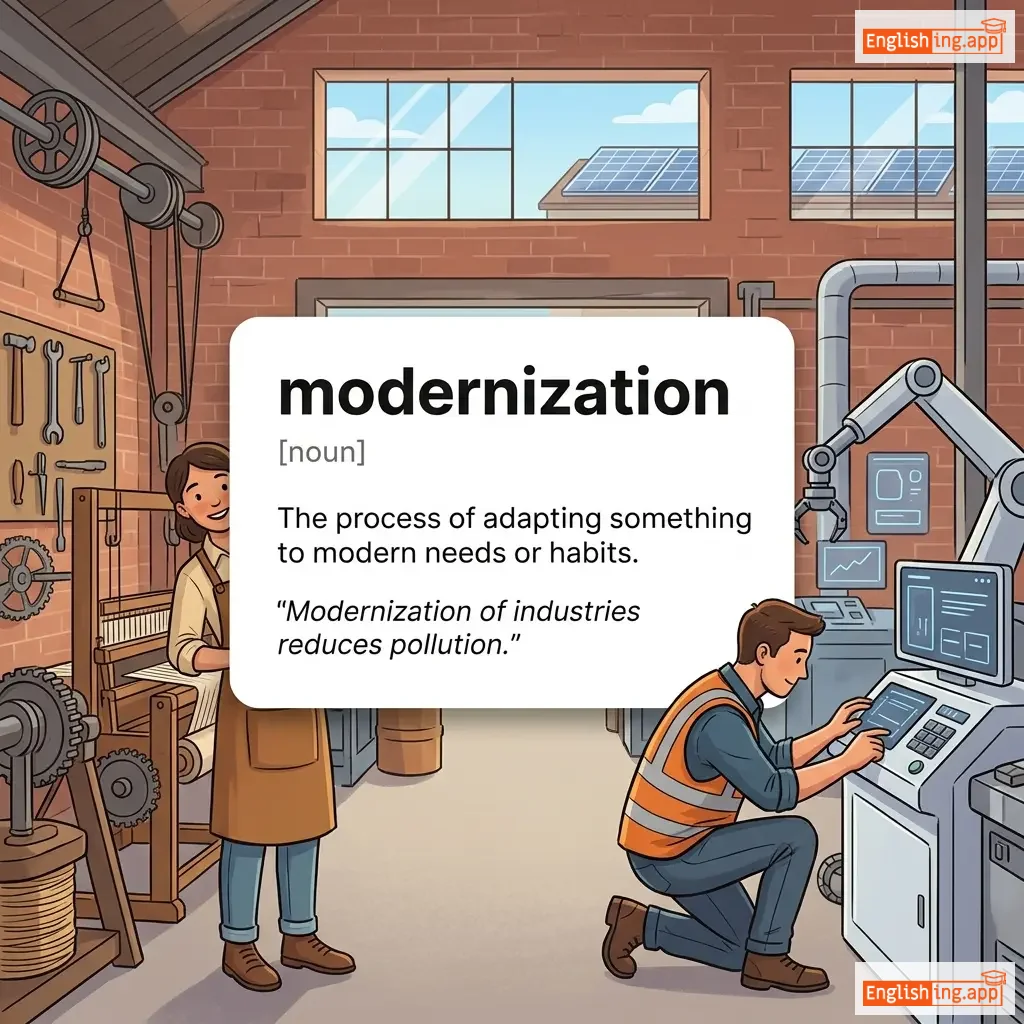
noun
/ˌmɒd.ən.aɪˈzeɪ.ʃən/
модернизация (modernizatsiya)

The process of adapting something to modern needs or habits.

"Modernization of industries reduces pollution."

"Модернизация промышленности уменьшает загрязнение." (Modernizatsiya promyshlennosti umenshayet zagryaznenie.)
verb
/ˈmɒdənaɪz/
модернизировать (modernizirovat')

To adapt something to modern needs or styles; to update or improve.

"The company plans to modernize its IT infrastructure."

"Компания планирует модернизировать свою ИТ-инфраструктуру." (Kompanija planirovet modernizirovat' svoju IT-infrastrukturu.)
adjective
/ˈmɒdɪst/

Having or showing a humble estimate of one’s importance; simple and not extravagant.

"She lives in a modest house in the countryside."

noun
/ˈmɒd.ə.sti/
скромность; смирение (skromnost'; smirenie)

the quality of being humble and not boastful about achievements

"Despite his success, he showed great modesty."

"Несмотря на успех, он проявил великую скромность." (Nesmotrya na uspekh, on proyavil velikuyu skromnost'.)
noun
/ˈmɒdɪkəm/
небольшое количество (nebol'shoe kolichestvo)

a small or moderate amount of something, especially something valuable or desirable

"She showed a modicum of patience during the long meeting."
"Она показала небольшое количество терпения во время долгого собрания." (Ona pokazala nebol'shoe kolichestvo terpeniya vo vremya dolgogo sobraniya.)
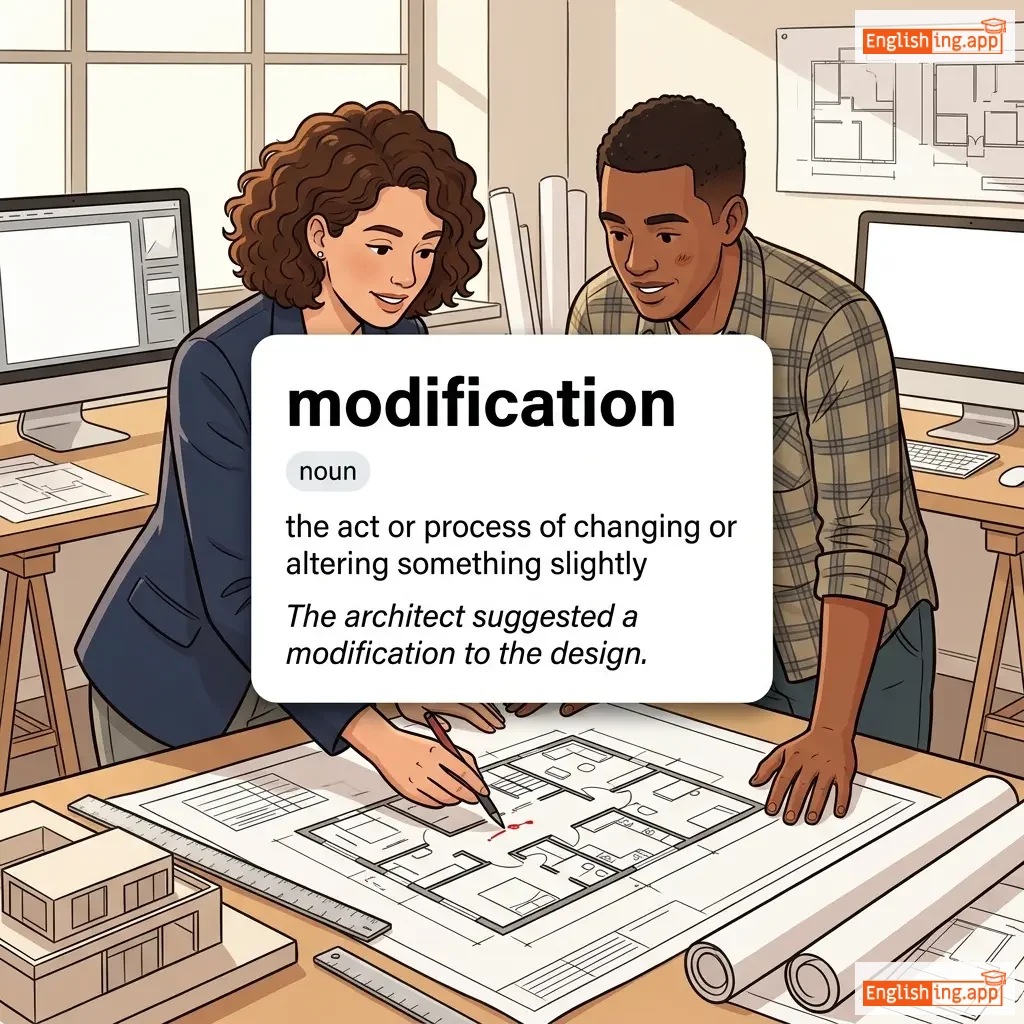
modification definition card — visual illustration of the meaning
noun
/ˌmɒdɪfɪˈkeɪʃən/
модификация (modifikatsiya)

the act or process of changing or altering something slightly

"The architect suggested a modification to the design."
"Архитектор предложил модификацию дизайна." (Arkhitektor predlozhil modifikatsiyu dizayna.)
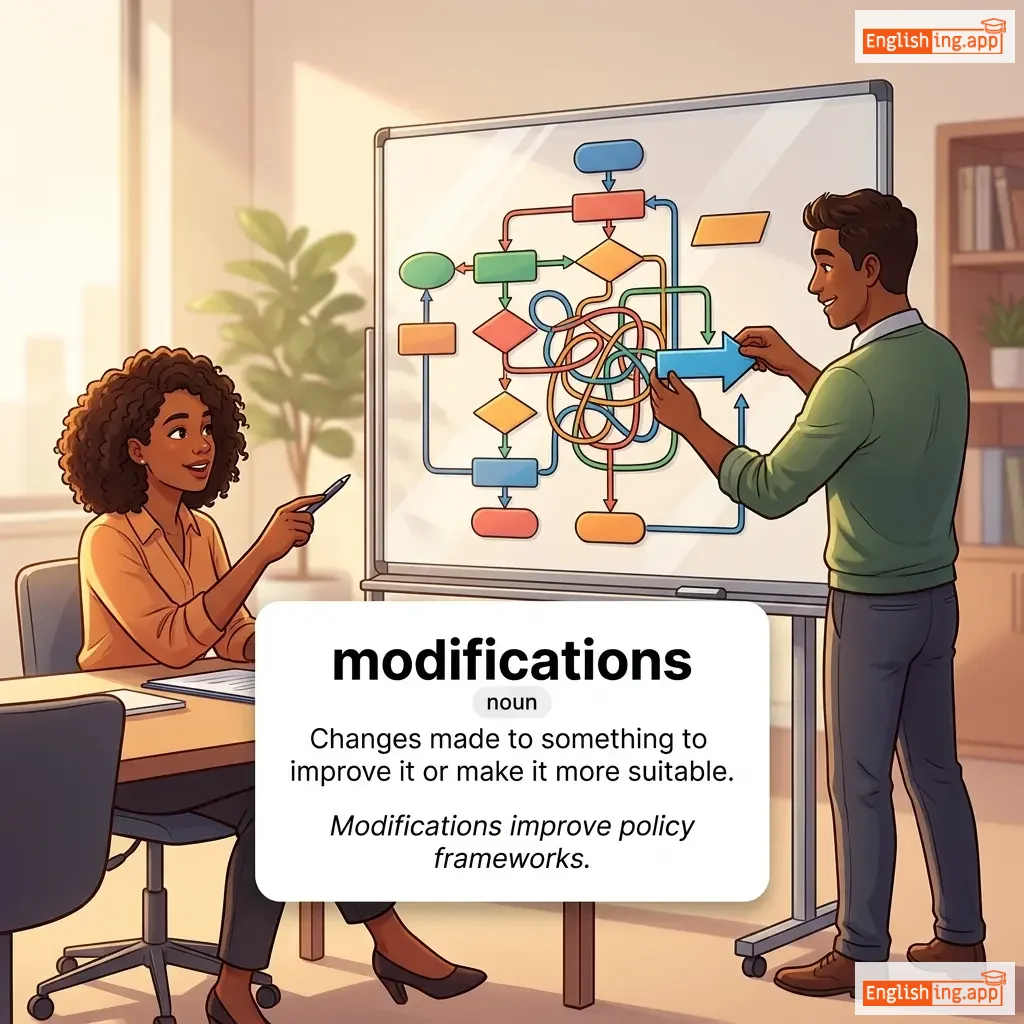
modifications definition card — visual illustration of the meaning
noun
ˌmɒd.ɪ.fɪˈkeɪ.ʃənz
модификации (modifikatsii)

Changes made to something to improve it or make it more suitable.

"Modifications improve policy frameworks."

"Модификации улучшают политические структуры." (Modifikatsii uluchshayut politicheskie struktury.)
noun
/ˈmɒdɪfaɪər/
модификатор (modifikator)

a word or element that changes, limits, or describes the meaning of another word; something that alters or adjusts

"In the phrase 'very cold', 'very' is a modifier of 'cold'."
"В выражении «very cold» слово «very» является модификатором слова «cold»." (V vyrazhenii very cold slovo very yavlyaetsya modifikatorom slova cold)
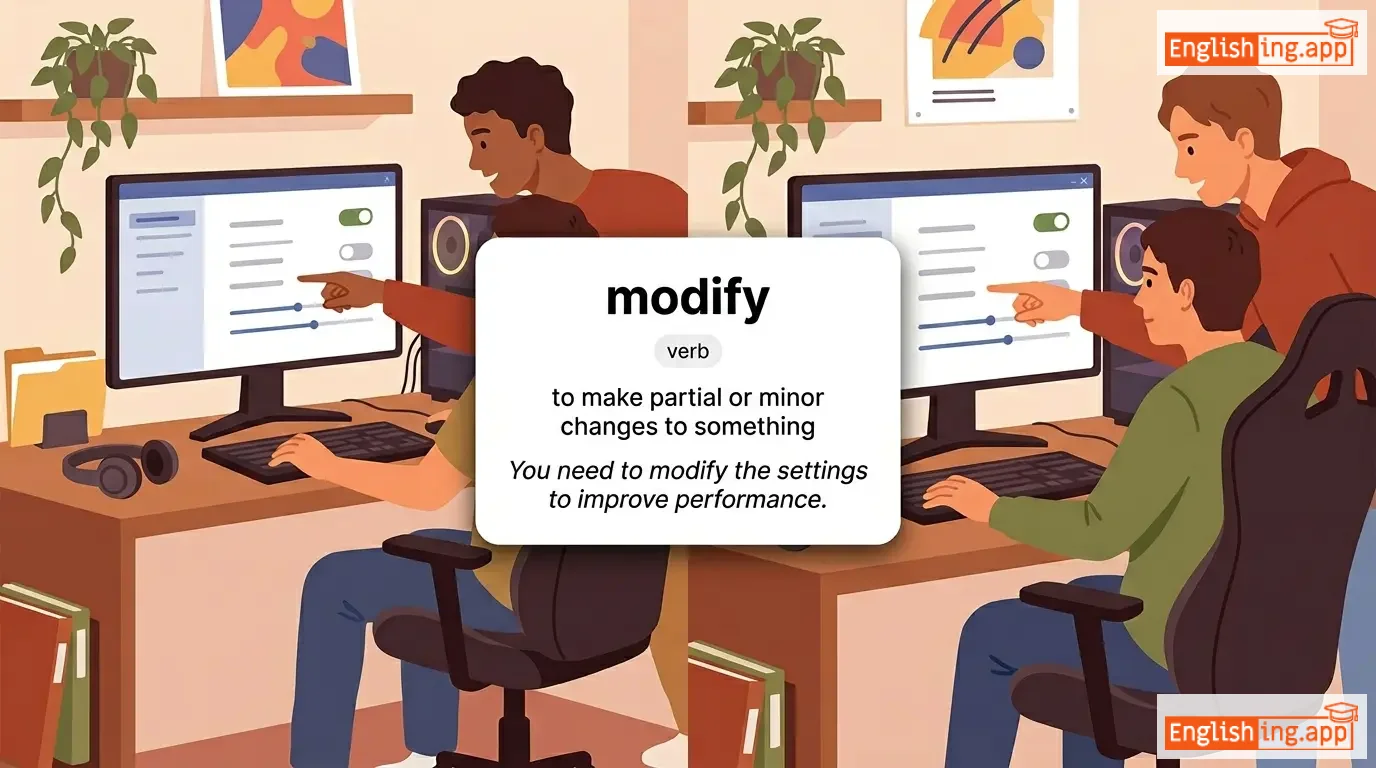
modify definition card — visual illustration of the meaning
verb
/ˈmɒdɪfaɪ/
модифицировать (modifitsirovat')

to make partial or minor changes to something

"You need to modify the settings to improve performance."

"Вам нужно изменить настройки, чтобы улучшить производительность." (Vam nužno izmenit' nastrojki, čtoby uluchšit' proizvoditel'nost'.)
adjective
/ˈməʊdɪʃ/
модный (modnyy)

conforming to or following current fashion or style

"She wore a modish outfit that caught everyone’s attention."
"Она носила модный наряд, который привлек внимание всех." (Ona nosila modnyy naryad, kotoryy privlekel vnimanie vsekh.)
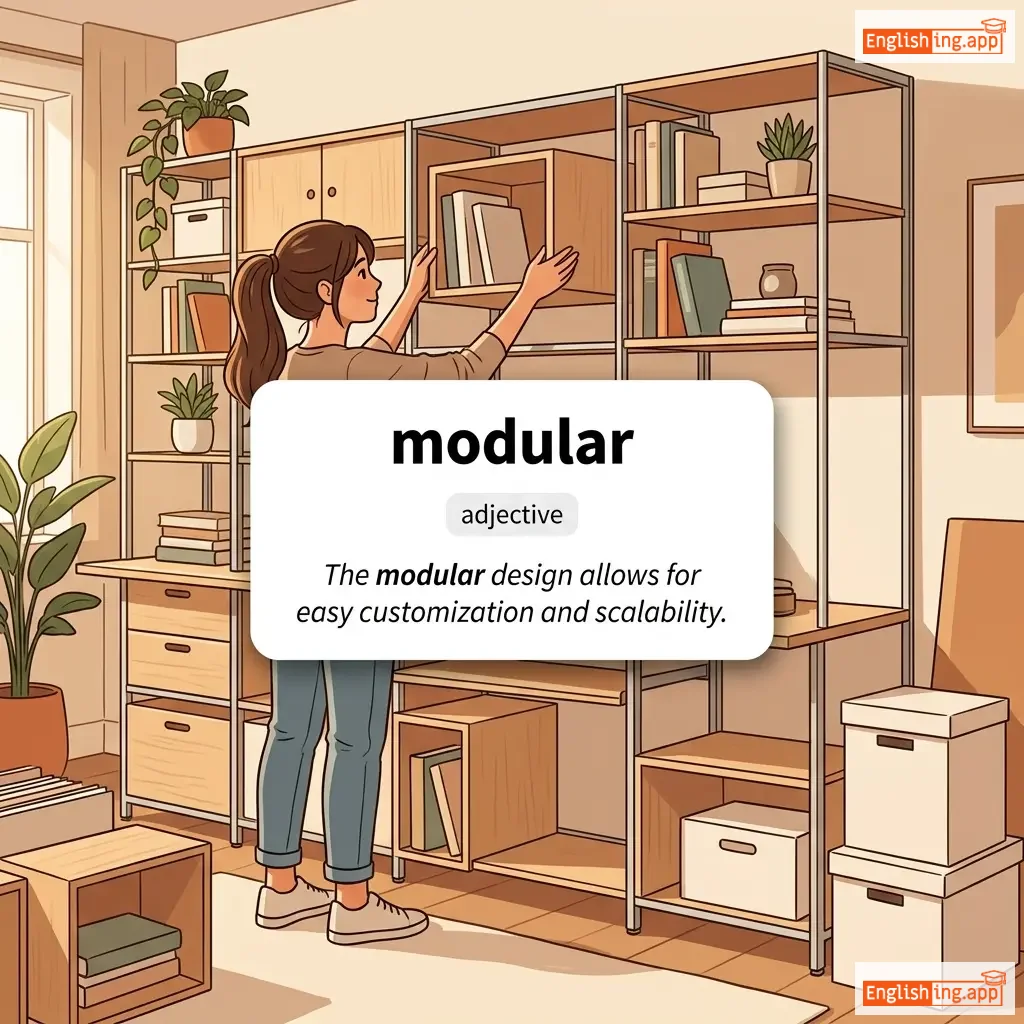
modular definition card — visual illustration of the meaning
adjective
/ˈmɒdʒʊlər/
модульный (modul'nyi)

Employing or involving a module or modules as the basis of design or construction.

"The modular design allows for easy customization and scalability."
"Модульный дизайн позволяет легко настраивать и масштабировать." (Modul'nyi dizain pozvolyaet legko nastroivat' i masshtabirovat'.)
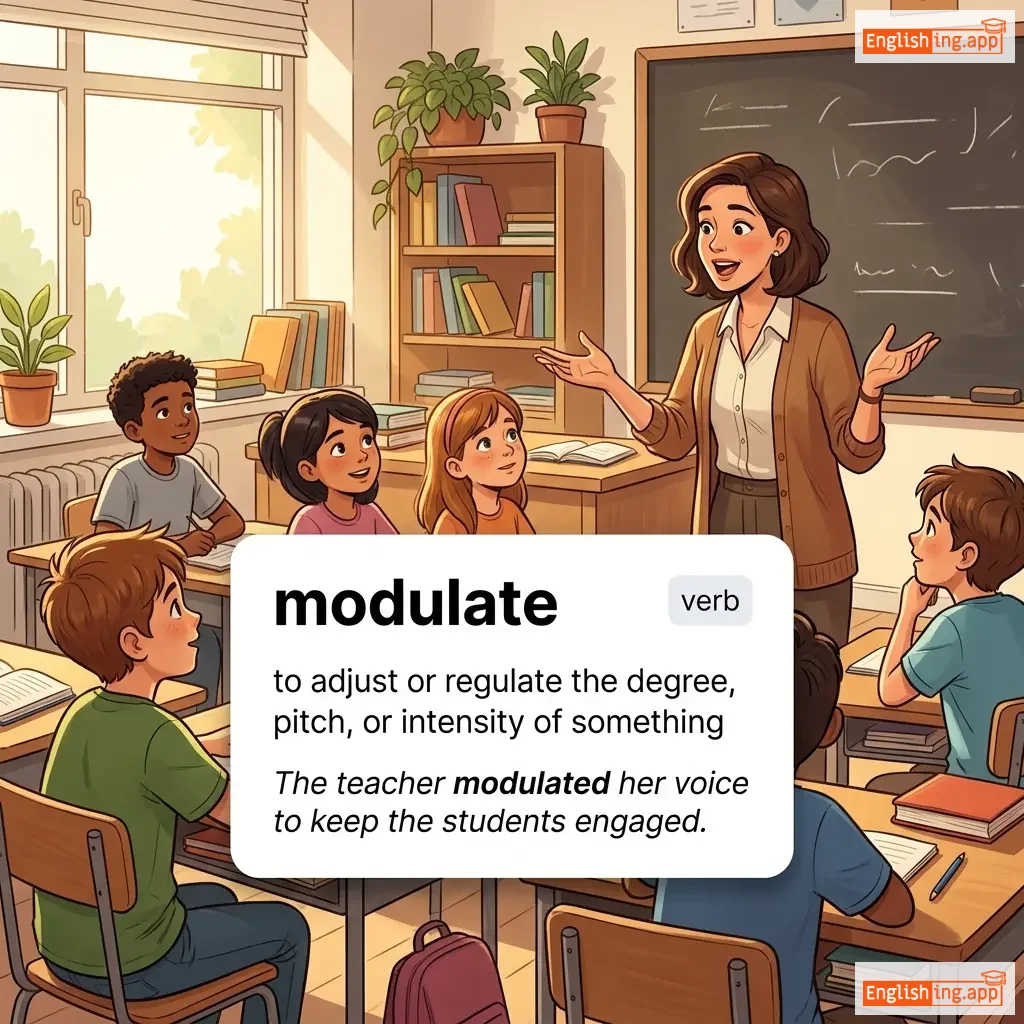
modulate definition card — visual illustration of the meaning
verb
/ˈmɒdjʊleɪt/
модулировать (modulirovat)

to adjust or regulate the degree, pitch, or intensity of something

"The teacher modulated her voice to keep the students engaged."
"Учитель отрегулировал свой голос, чтобы удержать студентов вовлеченными." (Uchitel' otreguliroval svoy golos, chtoby uderzhat' studentov vovlechenными.)
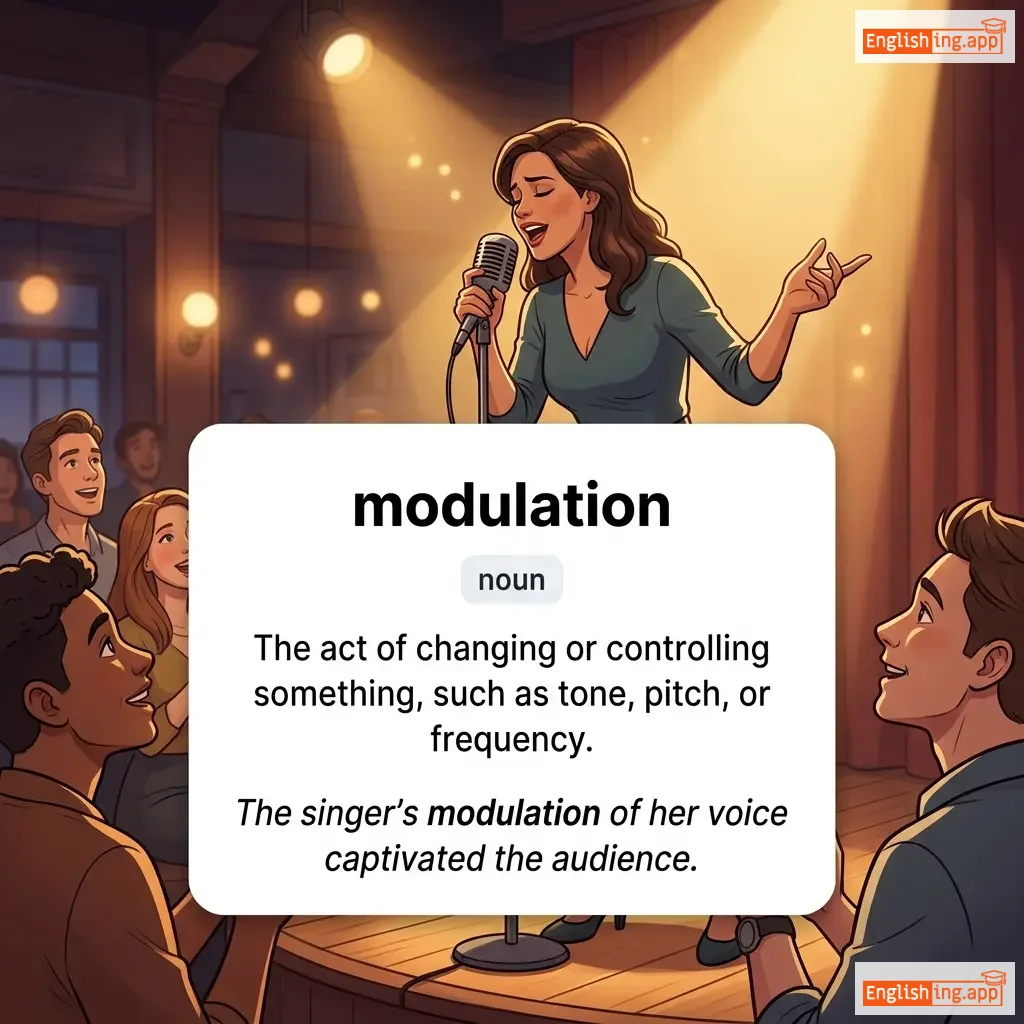
modulation definition card — visual illustration of the meaning
noun
/ˌmɒdjʊˈleɪʃən/
управление тоном или частотой (upravlenie tonom ili chastotoy)

The act of changing or controlling something, such as tone, pitch, or frequency.

"The singer’s modulation of her voice captivated the audience."

"Модуляция ее голоса захватила аудиторию." (Modulyatsiya yevo golosa zakhvatila auditoriyu.)
noun
/ˈmɒdjuːl/
модуль (modul)

a self-contained unit of a course or system, typically part of a larger whole

"The module on machine learning was difficult but informative."

"Модуль по машинному обучению был сложным, но информативным." (Modul po mashinnomu obucheniu byl slozhnym, no informativnym.)
noun
/ˈmoʊɡəl/
магнат (magnat)

A powerful or influential person, especially in business or media.

"He became a tech mogul by founding a billion-dollar company."

"Он стал технологическим магнатом, основав миллиардную компанию." (On stal tekhnologicheskim magnatom, osnovav milliardnuyu kompaniyu.)
noun
/ˈmɔɪəti/
половина или часть (polovina ili chast)

One of two equal parts; a half or portion.

"The estate was divided into two moieties between the heirs."

"Недвижимость была разделена на две части между наследниками." (Nedvizhimost' byla razdelena na dve chasti mezhdu naslednikami.)
noun
/ˈmɔɪs.tʃər/
влажность (vlazhnost)

water or dampness that exists in small amounts in the air or on a surface

"The skin cream helps retain moisture."

"Крем для кожи помогает удерживать влагу." (Krem dlya kozhi pomogaet uderzhivat' vlagu.)
noun
/ˈmoʊlə ˈkɑrplɪt/
мола карпик (mola karpik)

a small freshwater fish of the carp family, commonly found in South Asian rivers and ponds

"The mola carplet is a popular small fish used in Bengali cuisine."

"Мола карпик — популярная маленькая рыба, используемая в бенгальской кухне." (mola karpik populyarnaya malen'kaya ryba ispolzuemaya v bengalskoy kukhne)
noun
/ˈmoʊlər/
моляр (molyar)

A large tooth at the back of the mouth used for grinding food.

"The dentist had to extract his wisdom molar."

"Стоматологу пришлось извлечь его зуб мудрости." (Stomatologu prishlos' izvlech' ego zub mudrosti.)
noun
/məˈlæsɪz/
меласса (melassa)

thick, dark, sweet syrup made from sugar cane

"The recipe calls for molasses to give the bread a rich flavor."

"Рецепт требует мелассы, чтобы придать хлебу насыщенный вкус." (Retsept trebuyet melassy, chtoby pridayt khlebu nasyshchennyy vkus.)
noun
/ˈmoʊldɪŋ/
декоративная накладка (dekorativnaya nakladka)

A decorative strip or design, often used on walls, ceilings, or furniture.

"The wooden molding gave the room a classic look."

"Деревянный молдинг придал комнате классический вид." (Derevyannyy molding pridalsya komnate klassicheskiy vid.)
noun
/moʊl/
крот (krot)

a small burrowing mammal with tiny eyes and soft fur

"The mole dug tunnels under the garden."

"Крот вырыл туннели под садом." (Krot vyryl tunneli pod sadom.)
noun
/ˈmɒlɪkjuːl/
молекула (molekula)

The smallest unit of a chemical compound that retains its chemical properties.

"A water molecule is made up of two hydrogen atoms and one oxygen atom."

"Молекула воды состоит из двух атомов водорода и одного атома кислорода." (molekula vody sostoyit iz dveh atomov vodoroda i odnogo atoma kisloroda.)
verb
/məˈlɛst/
домогаться / подвергать сексуальному насилию (domogatsya / podvergat' seksual'nomu nasiliyu)

to assault or abuse someone, especially in a sexual or physical way

"The criminal was arrested for attempting to molest a child."

"Преступник был арестован за попытку домогаться до ребенка." (Prestuponnik byl arestovan za popytku domogatsya do rebenka.)
mollify definition card — visual illustration of the meaning
verb
/ˈmɒlɪfaɪ/
успокаивать (uspokaivat)

To calm or soothe someone's anger or anxiety.

"The manager tried to mollify the angry customers with discounts."

"Менеджер попытался успокоить разгневанных клиентов с помощью скидок." (Menedzher popytalsya uspokoit razgnevannykh klientov s pomoshch'yu skidok.)
verb
/ˈmɒlikɒdl/
баловать (balovat)

To treat someone in an overprotective and indulgent way.

"Parents should avoid mollycoddling their children too much."

"Родителям следует избегать слишком баловать своих детей." (Rodityelyam sleduyet izbegat' slishkom balovat' svoikh detey.)
verb
/məʊlt/
линять (linyat)

To shed old feathers, skin, or hair to make way for new growth.

"Birds molt their feathers once a year."

"Птицы линяют свои перья раз в год." (Ptitsy linayut svoi per'ya raz v god.)
adjective
/ˈməʊltən/
расплавленный (rasplavlennyy)

Made into liquid by heat; melted.

"The blacksmith poured molten metal into the mold."

"Кузнец налил расплавленный металл в форму." (Kuznets nalil raspavlennyy metall v formu.)
👩‍👧

mom (мама)

noun
/mɑːm/
мама (mama)

an informal word for mother

"My mom makes the best homemade food."

"Моя мама готовит лучшую домашнюю еду." (Moya mama gotovit luchshuyu domashnyuyu yedu.)
noun
/ˈmoʊmənt/
мгновение (mgnoveniye)

A very short period of time; a particular point in time.

"She paused for a moment before answering."

"Она остановилась на момент перед тем, как ответить." (Ona ostanovilas' na moment pered tem, kak otvetit'.)
adjective
/ˈmoʊmənˌteri/
кратковременный (kratkovremenny)

Lasting for only a short time.

"There was a momentary silence in the room."

"В комнате была кратковременная тишина." (V komnate byla kratkovremennaya tishina.)
adjective
/moʊˈmɛntəs/
значительный (znachitel'nyy)

Of great importance or significance, especially in its effect on the future.

"The signing of the agreement was a momentous event."
"Подписание соглашения было значительным событием." (Podpisaniye soglasheniya bylo znachitel'nym sobytiyem.)
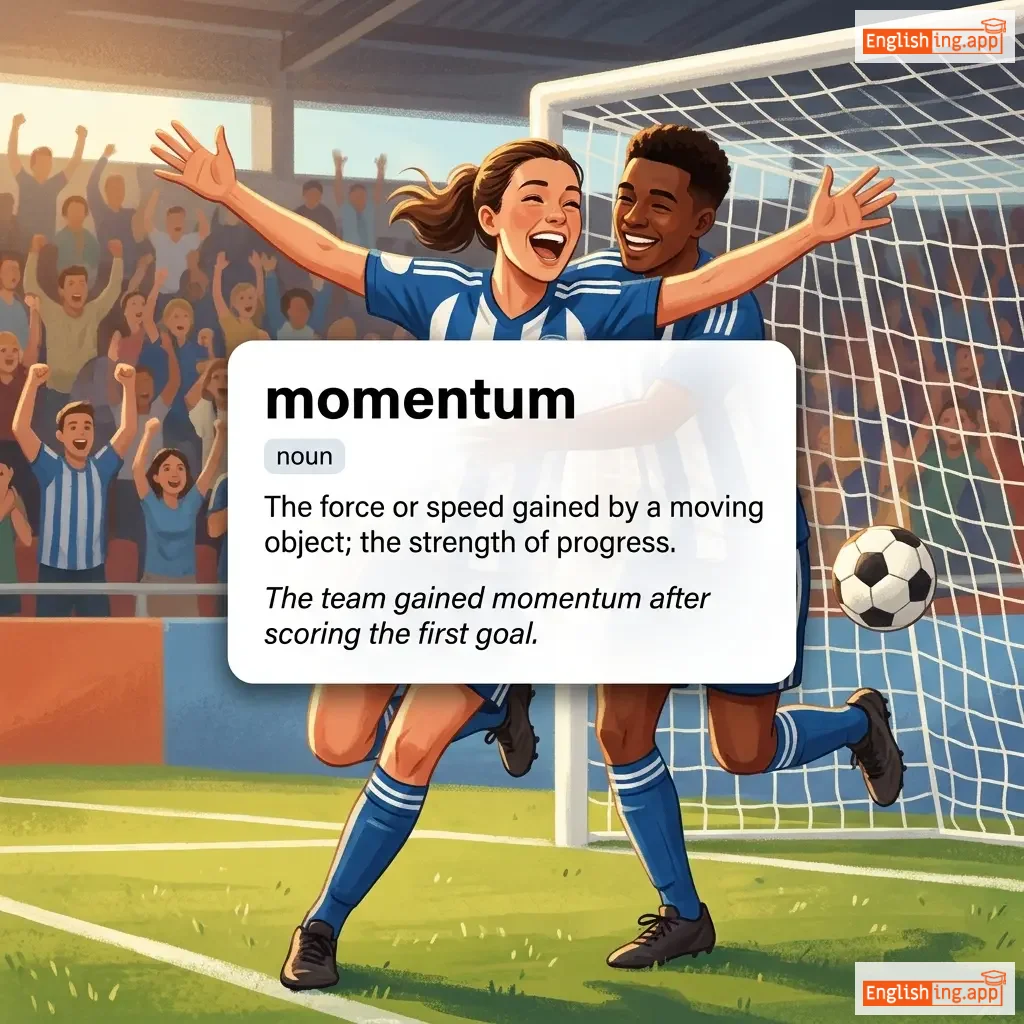
momentum definition card — visual illustration of the meaning
noun
/moʊˈmɛntəm/
импульс (momentum)

The force or speed gained by a moving object; the strength of progress.

"The team gained momentum after scoring the first goal."

"Команда набрала обороты после того, как забила первый гол." (Komanda nabrala oboroty posle togo kak zabila perviy gol.)
noun
/ˈmɒn.ɑːk/
монарх (monarh)

a sovereign ruler, especially a king or queen

"The monarch addressed the nation on television."
"Монарх обратился к нации по телевидению." (Monarh obratilsya k natsii po televizii.)
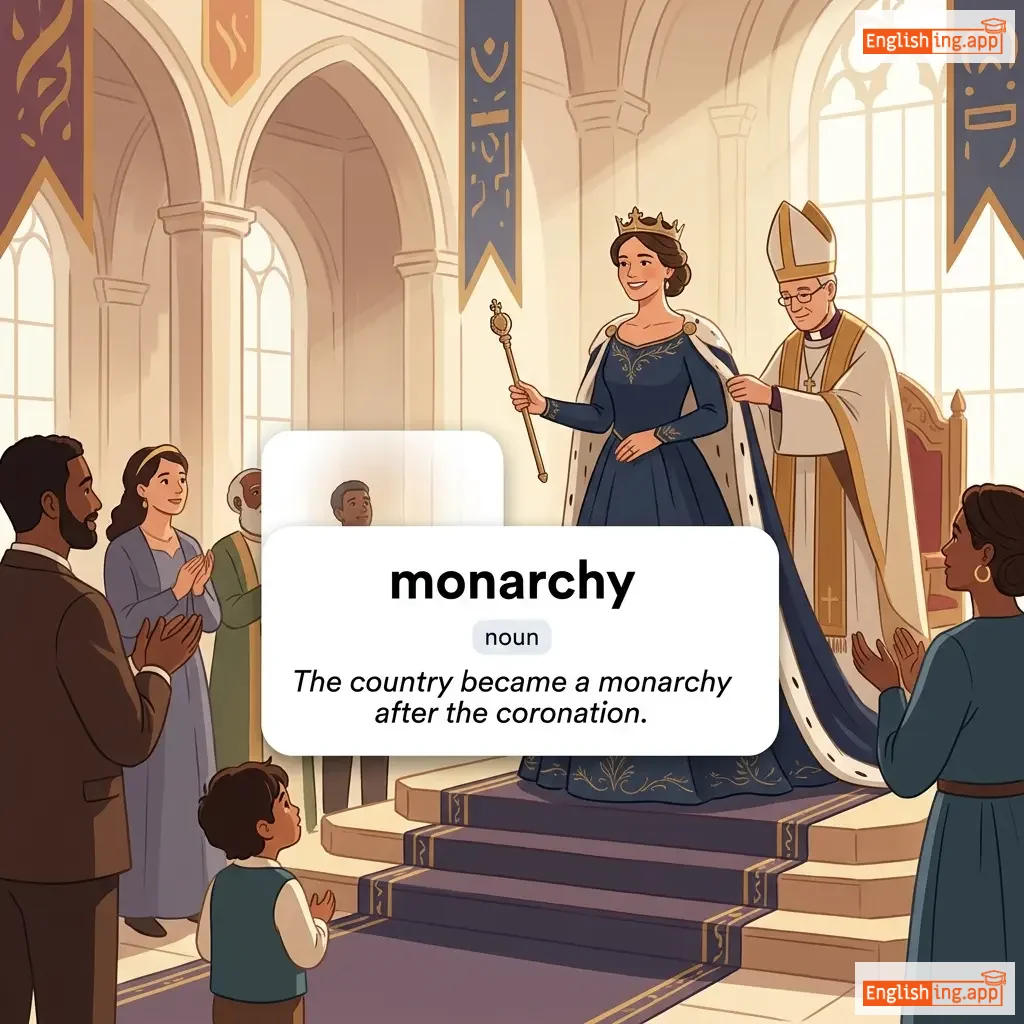
monarchy definition card — visual illustration of the meaning
noun
/ˈmɑːnərki/
монархия (monarhiya)

A system of government with a king or queen as head of state.

"The country became a monarchy after the coronation."

"Страна стала монархией после коронации." (Strana stala monarkhiyey posle koronatsii.)
noun
/ˈmɒnəstɛri/

A building or complex where monks or nuns live, work, and worship.

"The old monastery was surrounded by high stone walls."

adjective
/məˈnæstɪk/
монашеский (monasheskij)

Relating to monks, monasteries, or a life of religious seclusion.

"He chose to live a monastic life away from the city."

"Он выбрал монашескую жизнь вдали от города." (On vybral monasheskuyu zhizn' vdali ot goroda.)
noun
/ˈmʌn.deɪ/
понедельник (ponedelnik)

the first day of the working week following Sunday

"I start my new job on Monday."
"Я начинаю новую работу в понедельник." (ya nachinayu novuyu rabotu v ponedelnik)
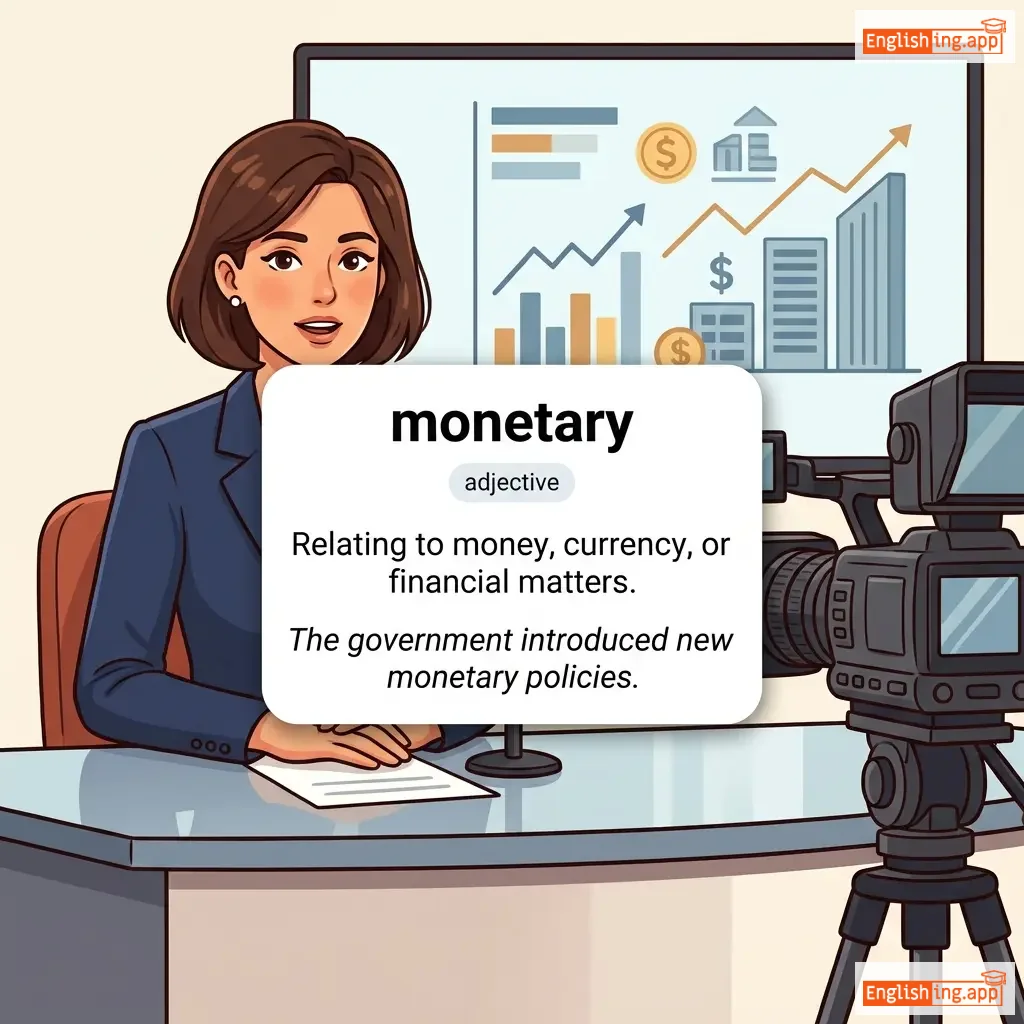
monetary definition card — visual illustration of the meaning
adjective
/ˈmʌnɪtəri/

Relating to money, currency, or financial matters.

"The government introduced new monetary policies."

monetization definition card — visual illustration of the meaning
noun
/ˌmɒn.ɪ.taɪˈzeɪ.ʃən/
монетизация (monetizatsiya)

The process of converting assets or services into money, involving commercialization, profit generation, and revenue creation.

"The monetization of digital content has created new income streams."

"Монетизация цифрового контента создала новые потоки дохода." (Monetizatsiya tsifrovogo kontenta sozdala novye potoki dokhoda.)
noun
/ˈmʌni/
счастье (schastye)

A medium of exchange in the form of coins and banknotes; wealth or financial resources.

"He saved enough money to buy a new car."

"Она не смогла скрыть свое счастье, когда получила приз." (Ona ne smogla skryt' svoe schast'ye, kogda poluchila priz.)
adjective
/ˈmʌnid/
богатый; обеспеченный; состоятельный (manid)

having much money; wealthy; rich

"She comes from a moneyed family with extensive real estate holdings."

"Она из богатой семьи с обширной недвижимостью." (ona iz bogatoy sem'i s obshirnoy nedvizhimost'yu.)
noun
/ˈmɒŋ.ɡuːs/
мангуст (mangust)

a small carnivorous mammal known for its ability to kill venomous snakes

"The mongoose quickly attacked the cobra to protect its young."

"Мангуста быстро напала на кобру, чтобы защитить своих детёнышей." (Mangusta bystro napala na kobru, chtoby zashchitit' svoikh detyonyshey.)
noun
/ˈmʌŋɡrəl/
смешанная порода собак (smeshannaya poroda sobak)

A dog of mixed breed; sometimes used to describe something mixed or of inferior quality.

"The stray dog was a friendly mongrel."

"Бездомная собака была дружелюбным монгрелом." (Bezdomnaya sobaka byla druzhelyubnym mongrelom.)
noun
/məˈnɪʃən/
предостережение (predosterezhenie)

A warning or caution, often of a religious or moral nature.

"The priest gave a monition against dishonesty."

"Священник дал предостережение против нечестности." (Svyashchennik dal predosterezhenie protiv nechestnosti.)
noun, verb
/ˈmɒnɪtər/
монитор, наблюдать (monitor, nablyudat)

to observe and check the progress or quality of something; also a device that displays information

"The teacher monitors the students during the exam."

"Учитель мониторит студентов во время экзамена." (Uchitel' monitorit studentov vo vremya ekzamina.)