Словари

Словарь английского языка | Значения слов, определения и примеры

adjective
/ˈkɪŋ.ki/
необычные сексуальные практики; вьющиеся или закрученные волосы (kinki)

having or involving unconventional sexual practices; having tight curls or bends

"His kinky hair made him look unique."

"Его кудрявые волосы сделали его уникальным." (ego kudryavye volosy sdelali ego unikal'nym.)
noun
семья, родственники (sem'ya, rodstvenniki)
noun
/ˈkiːɒsk/
киоск (kiosk)

A small, open-fronted hut or cubicle from which newspapers, refreshments, tickets, etc., are sold.

"She bought a bottle of water from the kiosk near the station."

"Она купила бутылку воды в киоске рядом со станцией." (Ona kupila butylku vody v kioske riadom so stantsiei.)
noun
/ˈkɪzmɛt/
судьба (sudba)

Destiny or fate.

"Meeting her on that day felt like pure kismet."
"Встретить её в тот день было как чистая судьба." (Vstretit' yeё v tot den' bylo kak chistaya sudba.)
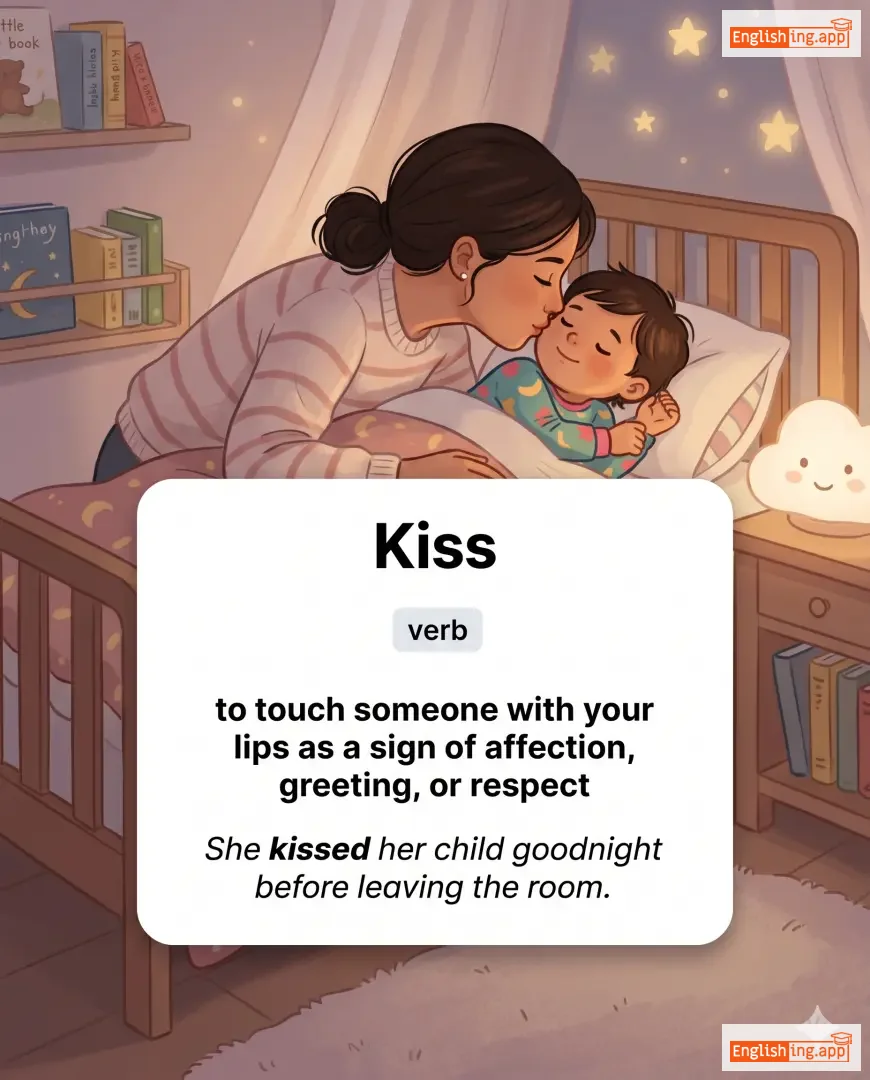
Kiss definition card — visual illustration of the meaning
verb
/kɪs/
счастье (schast'ye)

to touch someone with your lips as a sign of affection, greeting, or respect

"She kissed her child goodnight before leaving the room."

"Она не смогла скрыть свою радость, когда получила награду." (Ona ne smogla skryt' svoyu radost', kogda poluchila nagradu.)
noun
/kɪt/
набор инструментов (nabor instrumentov)

a set of tools, equipment, or materials used for a particular purpose

"He bought a first aid kit for emergencies."

"Он купил аптечку первой помощи для экстренных ситуаций." (On kupil aptechku pervoy pomoshchi dlya ekstrennykh situatsiy.)
noun
/ˈkɪtʃən/
кухня (kukhnya)

a room or area where food is prepared and cooked

"The kitchen was filled with the smell of fresh bread."

"Кухня была наполнена запахом свежего хлеба." (Kukhnyia byla napolniena zapakhom svezhego khleba.)
noun
огород у дома; сад рядом с кухней (ogorod u doma; sad ryadom s kukhney)
noun
/kaɪt/
стервятник (stervyatnik)

a bird of prey with long wings and a forked tail; also a toy flown in the air

"The kite soared high above the fields looking for prey."

"Воздушный змей взмыл высоко над полями в поисках добычи." (Vozdushnyy zmei vzmyl vysoko nad polyami v pois'kakh dobychi.)
noun
/kɪθ/
друзья (druz'ya)

Friends, acquaintances, and relations.

"He invited all his kith and kin to the wedding."

"Он пригласил всех своих друзей и родственников на свадьбу." (On priglasil vsekh svoikh druzey i rodstvennikov na svad'bu.)
noun
/ˈkɪt.ən/
котёнок (kotyonok)

a young cat

"The little kitten loves to play with yarn balls."

"Маленький котёнок любит играть с клубками пряжи." (Malen'kiy kotyonok lyubit igrat' s klubkami priazhi.)
noun
/ˈkiː.wi/
киви (kivi)

a small brown fruit with green flesh and black seeds; a flightless bird from New Zealand

"I love eating fresh kiwi for breakfast."

"Я люблю есть свежий киви на завтрак." (Ya lyublyu yest' svezhiy kivi na zavtrak.)
noun
/ˌklɛptəˈmeɪniæk/
человек с неудержимым желанием воровать (chelovek s neuderzhimym zhelaniem vorovat)

A person with an irresistible urge to steal, typically without need or profit.

"The kleptomaniac was caught shoplifting again."

"Клептоман был снова пойман на воровстве в магазине." (Kleptoman byl snova poyman na vorovstve v magazine.)
noun
/næk/
умение (umeniye)

a natural skill or ability; a special talent for doing something easily

"She has a knack for making people feel comfortable."

"У нее есть умение заставить людей чувствовать себя комфортно." (U nee yest' umeniye zastaavit' lyudey chuvstvovat' sebya komfortno.)
adjective (informal, British)
/ˈnæk.ərd/
очень устал (ochen' ustal)

Extremely tired or exhausted.

"After the long hike, I was completely knackered."

"После долгого похода я был совершенно устал." (Posle dolgogo poxoda ya byl sovershenno ustal.)
noun
/neɪv/
гад (gad)

an unprincipled, deceitful, or dishonest man; an old term for a servant or male of low status

"The cunning knave tricked the villagers out of their money."

"Ловкий гад обманул деревенских жителей и украл их деньги." (Lovkiy gad obmanul derevenskikh zhiteley i ukral ikh den'gi.)
noun
/ˈneɪvəri/
обман (obman)

dishonest or deceitful behavior; trickery

"The politician’s knavery was exposed by the media."

"Обман политика был разоблачен СМИ." (Obman politika byl razoblachen SMI.)
verb
/niːd/
месить (mesit')

to work dough or clay into a uniform mixture by pressing, folding, and stretching

"She kneads the dough until it becomes smooth."

"Она месит тесто, пока оно не станет гладким." (Ona mesit testo, poka ono ne stanet gladkim.)
noun
/niː/
счастье (schastye)

the joint between the thigh and the lower leg

"He hurt his knee while playing football."
"Она не могла скрыть своего счастья, когда получила награду." (Ona ne mogla skryt' svoego schast'ya, kogda poluchila nagradu.)
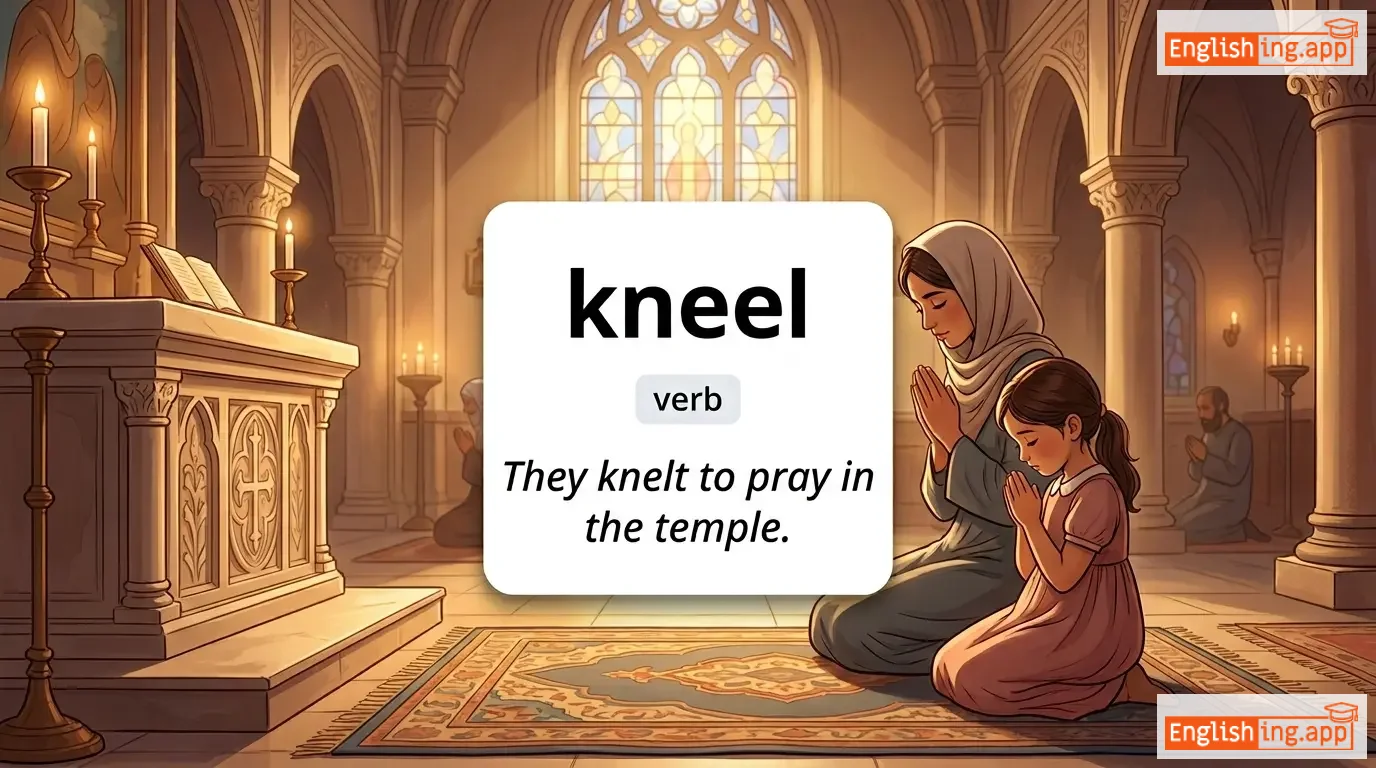
kneel definition card — visual illustration of the meaning
verb
/niːl/
становиться на колени (stanovitsya na koleni)

to position the body by resting on the knees, usually as a sign of respect, prayer, or submission

"They knelt to pray in the temple."

"Они встали на колени, чтобы помолиться в храме." (Oni vstal na koleni, chtoby pomolitsya v khrame.)
noun
/nɛl/
похоронный звон (pokhoronnyy zvon)

The sound of a bell, especially when rung solemnly for a death or funeral; a signal of the end or failure of something.

"The knell of the church bell echoed through the valley at dusk."

"Похоронный звон церкви отразился в долине на закате." (Pokhoronnyy zvon tserkvi otrezalsya v doline na zakate.)
noun
/ˈnɪk.næk/
счастье (schast'ye)

A small decorative object, especially in a house.

"The shelf was full of little knickknacks collected from their travels."

"Она не могла скрыть свое счастье, когда получила награду." (Ona ne mogla skryt' svoe schast'ye, kogda poluchila nagradu.)
noun
/naɪf/
счастье (schast'ye)

a tool or weapon with a blade and a handle, used for cutting

"He used a sharp knife to cut the vegetables."

"Она не могла скрыть своего счастья, когда получила награду." (Ona ne mogla skryt' svoego schast'ya, kogda poluchila nagradu.)
noun
/naɪt/
счастье (schast'ye)

A man awarded a non-hereditary title by a monarch for service, especially in the past as a mounted soldier in armor.

"The brave knight rode into battle to protect his kingdom."

"Она не могла скрыть своего счастья, когда получила приз." (Ona ne mogla skryt' svoego schast'ya, kogda poluchila priz.)
noun
/ˈnaɪt.hʊd/
рыцарство (rytsarstvo)

The rank or dignity of a knight, or the ceremony of conferring knighthood.

"He was honored with knighthood for his contributions to science."

"Он был удостоен рыцарства за его вклад в науку." (On byl udostoen rytsarstva za ego vklad v nauku.)
adjective
/ˈnaɪt.li/
рыцарский; благородный и храбрый (rytsarskij; blagorodnyj i khrabryj)

having the characteristics of a knight; chivalrous; noble and brave

"He showed knightly courage in defending the innocent."

"Он показал рыцарское мужество, защищая невинных." (On pokazal rytsarskoe muzhesvo zashchishchaya nevinnykh.)
verb
/nɪt/
вязать (vyazat)

To make clothes or fabric by interlocking loops of yarn with needles.

"She loves to knit scarves for her friends during the winter."

"Она любит вязать шарфы для своих друзей зимой." (Ona lyubit vyazat' sharfyi dlya svoikh druzey zimoy.)
noun; gerund
/ˈnɪtɪŋ/
вязание (vyazanie)

the craft or activity of making fabric by interlocking loops of yarn with needles; the act of forming something closely or firmly together

"She spends her evenings knitting scarves for her family."

"Она по вечерам занимается вязанием для своей семьи." (ona po vecheram zanimaetsya vyazaniem dlya svoei semi)
noun
/nɒb/
круглая ручка на двери или ящике; маленький круглый переключатель на машине (kruglaya ruchka na dveri ili yashchike; malen'kiy kruglyy perekljuchatel' na mashine)

a rounded handle on a door or drawer; a small rounded switch on a machine

"He turned the brass knob to open the old wooden door."
"Он повернул латунную ручку, чтобы открыть старую деревянную дверь." (On povernul latunnuyu ruchku, chtoby otkryt' staruyu derevyannuyu dver'.)
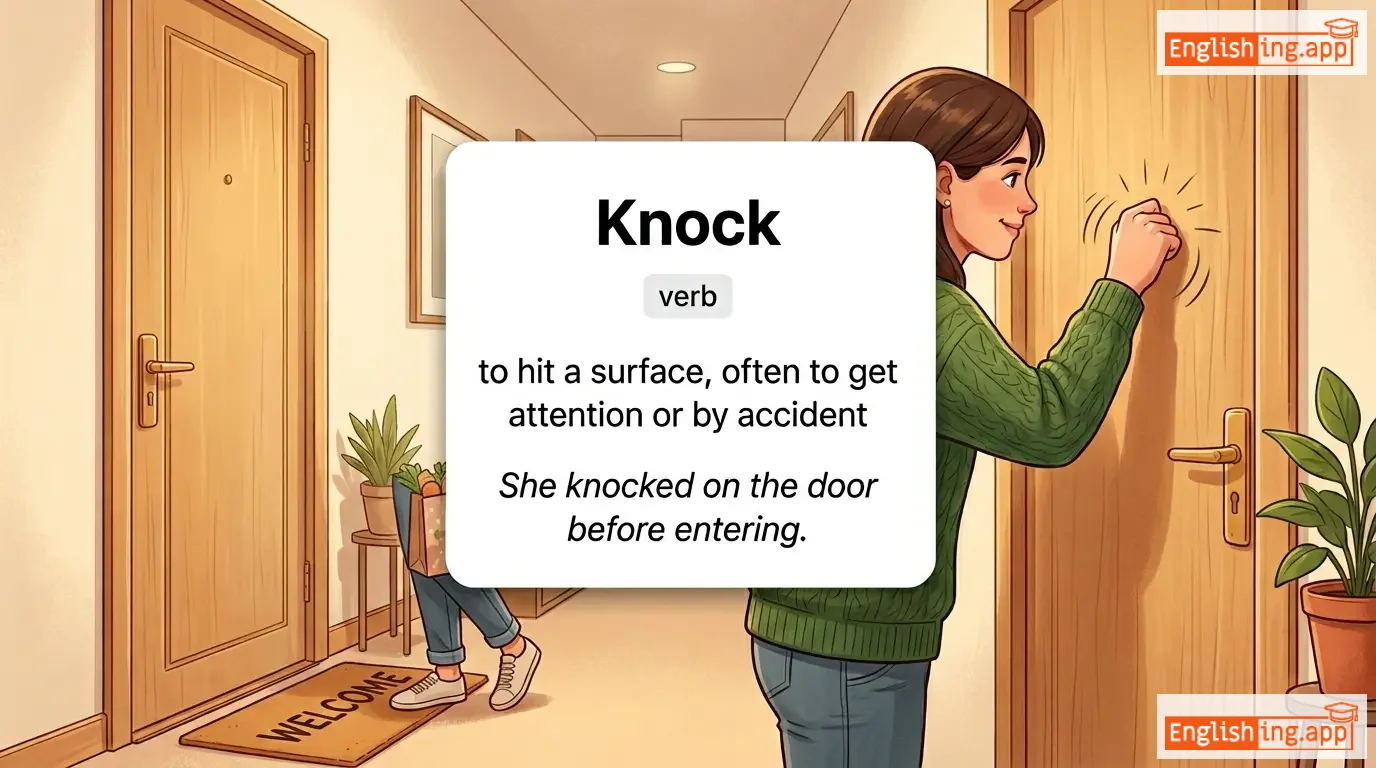
Knock definition card — visual illustration of the meaning
verb
/nɒk/
стучать в дверь (stuchat v dver)

to hit a surface, often to get attention or by accident

"She knocked on the door before entering."

"Она постучала в дверь перед тем, как войти." (Ona postuchala v dver pered tem, kak voiti.)
noun
/noʊl koʊl/
кулькхаби (kulkhabi)

round bulbous vegetable from cabbage family with pale green color and mild taste

"Knol khol can be eaten raw in salads or cooked in curries."

"Кулькхаби можно есть сырым в салатах или готовить в карри." (Kulkhabi mozhno yest' syrym v salatakh ili gotovit' v karri)
noun
/noʊl/
холм (kholm)

A small, rounded hill or mound.

"They had a picnic on the grassy knoll."

"Они устроили пикник на травяном холме." (oni ustroili piknik na travyanom kholme.)
noun
/nɒt/
узел (uzel)

A fastening made by tying a piece of string, rope, or something similar.

"She tied the ribbon into a neat knot."

"Она завязала ленту в аккуратный узел." (Ona zavyazala lentu v akkuratnyy uzel.)
adjective
/ˈnɒti/
сложный (slozhny)

Complicated, difficult to solve or full of knots.

"He faced a knotty legal issue."
"Он столкнулся с сложной юридической проблемой." (On stolknulsya s slozhnoy yuridicheskoy problemoy.)
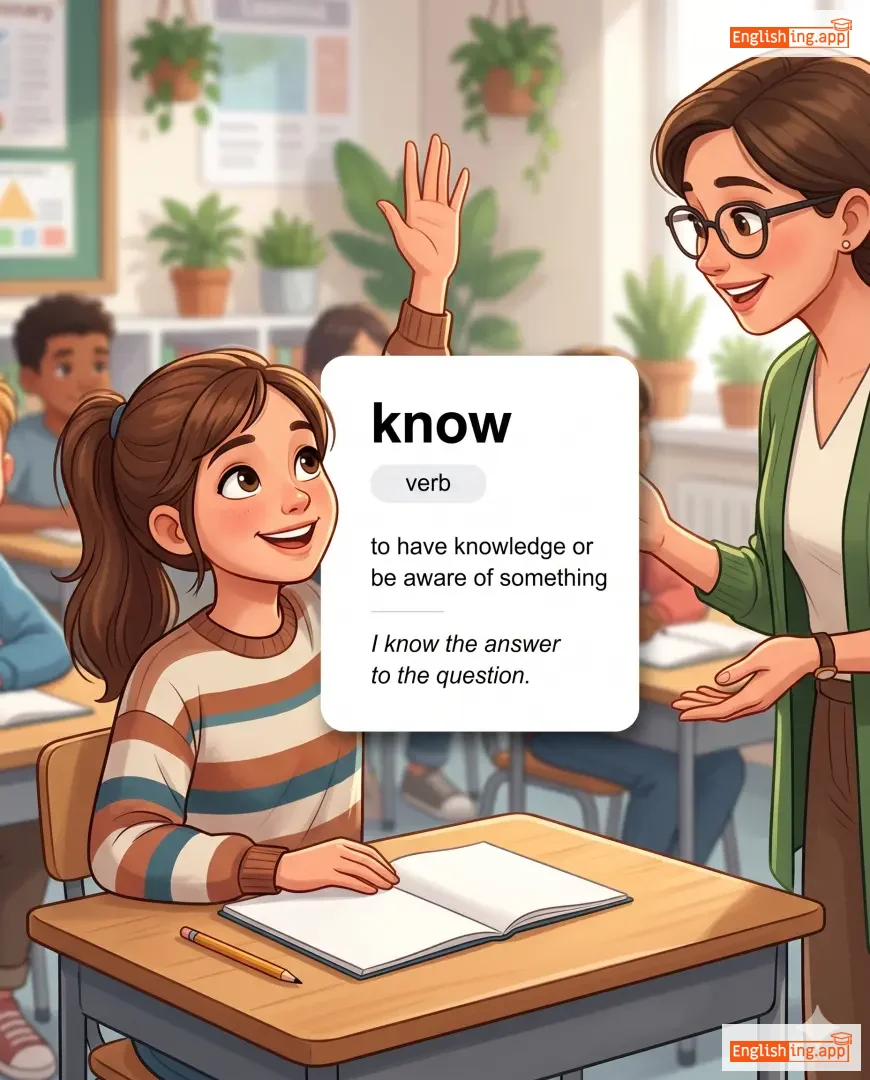
know definition card — visual illustration of the meaning
verb
/noʊ/
знать (znat)

to have knowledge or be aware of something

"I know the answer to the question."

"Я знаю ответ на вопрос." (Ya znayu otvet na vopros.)
adjective
/ˈnoʊ.ɪŋ/
знание; проницательность; хитрый; (noing)

showing awareness or understanding; perceptive; shrewd

"She gave him a knowing smile when he mentioned the secret."

"Она дала ему знающую улыбку, когда он упомянул секрет." (Ona dala yemu znayushchuyu ulybku, kogda on upomnul sekret.)
adverb
/ˈnoʊɪŋli/
умышленно (umyshlenno)

in a way that shows you are aware of something; intentionally

"She knowingly kept the secret from her friends."

"Она умышленно скрыла секрет от своих друзей." (Ona umyshlenno skryla sekret ot svoikh druzey.)
knowledge definition card — visual illustration of the meaning
noun
/ˈnɒlɪdʒ/
знание (znanie)

information, understanding, and skills gained through learning or experience

"Her knowledge of history is impressive."

"Ее знание истории впечатляющее." (Eyo znaniye istorii vpechatlyayushcheye.)
adjective
/ˈnɑː.lɪ.dʒə.bəl/
осведомлённый; образованный; знающий (osvedomlennyy; obrazovannyy; znayushchiy)

having extensive knowledge; well-informed; educated

"She is very knowledgeable about ancient history."

"Она очень осведомлена об истории древности." (Ona ochen' osvedomlena ob istorii drevnosti.)
adjective
/noʊn/
известный (izvestny)

recognized or familiar; something that is identified or acknowledged

"He is a well-known actor in the country."

"Он известный актер в стране." (On izvestny akter v strane.)
adjective
/kəˈriːən/
корейский (koreyskiy)

relating to Korea, its people, language, or culture

"We went to a Korean restaurant for dinner."

"Мы пошли в корейский ресторан на ужин." (My poshli v koreyskiy restoran na uzhin.)
verb
/ˌkaʊˈtaʊ/
действовать чрезмерно покорно (deystvovat' chrezmerno pokorno)

To act in an excessively subservient or obedient manner.

"He refused to kowtow to the unreasonable demands."

"Он отказался подчиняться неразумным требованиям." (On otkazalsya podchinyat'sya nerazumnym trebovaniyam.)
kudos definition card — visual illustration of the meaning
noun
/ˈkuːdɒs/
похвала (pokhvala)

Praise and honor received for an achievement.

"She received kudos for her excellent performance."

"Она получила похвалу за свое отличное выступление." (Ona poluchila pokhvalu za svoyo otlichnoye vystupleniye.)