Словари

Словарь английского языка | Значения слов, определения и примеры

adjective
/ɪnˈdɛtɪd/
обязанный (obyazannyy)

Owing gratitude or money to someone; obligated.

"I am deeply indebted to my teacher for her guidance."

"Я глубоко обязан своей учительнице за её руководство." (Ya gluboko obyazannyy svoey uchitelnitse za yeye rukovodstvo.)
adjective
/ɪnˈdiːsənt/
непристойный (nepristoinyi)

not conforming to accepted standards of behavior or morality; improper or offensive

"He was warned for making an indecent remark during the meeting."

"Его предупредили за непристойное замечание." (Ego predupredili za nepristoinoe zamechanie)
noun
/ˌɪndɪˈsɪʒən/
нерешительность (nereshitel'nost')

The inability to make a decision quickly or confidently.

"Her indecision caused a delay in the project."

"Её нерешительность вызвала задержку в проекте." (Eyo neresitel'nost' vyzvala zaderzhku v proyekte.)
adjective
/ˌɪndɪˈsaɪsɪv/
нерешительный (nereshitel'nyy)

Unable to make decisions quickly or firmly.

"He is too indecisive to be a good leader."

"Он слишком нерешительный, чтобы быть хорошим лидером." (On slishkom nereshitel'nyy, chtoby byt' khoroshim liderom.)
adjective
/ɪnˈdɛkərəs/
недостойный (niedostojnyj)

Not in keeping with good taste and propriety; improper.

"His indecorous behavior shocked the audience."

"Его недостойное поведение шокировало аудиторию." (Ego nedostojnoye povedeniye shokirovalo auditoriyu.)
adverb
/ɪnˈdiːd/
действительно (deystvitel'no)

used to emphasize or confirm a statement

"It was a long journey indeed."

"Это было долгое путешествие, действительно." (Eto bylo dolgoye puteshestviye, deystvitel'no.)
adjective
/ˌɪndɪˈfætɪɡəbl̩/
неутомимый (neutomimyj)

persisting tirelessly; incapable of being fatigued

"Her indefatigable spirit kept the team motivated during the long project."

"Её неутомимый дух поддерживал команду на протяжении всего долгого проекта." (Eё neutomimyj dukh podderzhival komandу na protyazhenii vsego dolgogo proekta.)
adjective
/ˌɪndɪˈfɛnsəbl̩/
необоснованный (neobosnovannyy)

not able to be protected or justified

"The minister’s remarks were considered indefensible by the public."

"Заявления министра были признаны необоснованными общественностью." (Zayavleniya ministra byli prinyaty neobosnovannymi obshchestvennost'yu.)
adjective
/ɪnˈdefɪnət/
неопределённый (neopredelyonny)

not clearly defined; uncertain; vague; unlimited in time

"The meeting has been postponed for an indefinite period."

"Встреча была отложена на неопределённый срок." (Vstrecha byla otlozhena na neopredelyonny srok.)
adverb
/ɪnˈdɛfɪnətli/
неопределённо (neopredeljonno)

for an unlimited or unspecified period of time

"The project has been postponed indefinitely."

"Проект был отложен на неопределённый срок." (Proyekt byl otlozhen na neopredeljonnyj srok.)
indelible definition card — visual illustration of the meaning
adjective
/ɪnˈdɛlɪbl̩/
неизгладимый (neizgladimy)

making marks that cannot be removed; unforgettable

"The trip left an indelible impression on all of us."

"Поездка оставила неизгладимое впечатление на всех нас." (Poezdka ostavila neizgladimoe vpechatlenie na vsekh nas.)
verb
/ɪnˈdɛmnɪfaɪ/
компенсировать (kompensirovat)

to compensate someone for harm or loss; to secure against future damage or cost

"The insurance company agreed to indemnify the client for the damages."

"Страховая компания согласилась компенсировать клиенту ущерб." (Strakhovaya kompaniya soglasilas' kompenzirovat' klientu ushcherb.)
noun
/ɪnˈdɛmnɪti/
компенсация / защита (kompensatsiya / zashchita)

Security or protection against financial loss or damage; compensation for loss or damage.

"The insurance policy provides indemnity against fire damage."

"Страховой полис предоставляет компенсацию за ущерб от пожара." (Strakhovoy polis predostavlyayet kompenstatsiyu za uscherb ot pozhara.)
noun
/ˌɪndɛnˈteɪʃən/
отступ (otstup)

A space left at the beginning of a line of text; a notch or deep recess on a surface.

"The teacher asked the students to use proper indentation in their essays."

"Учитель попросил студентов использовать правильный отступ в их эссе." (Uchitel' poprosil studentov ispol'zovat' pravil'nyj otstup v ikh esse.)
noun
/ɪnˈdɛntʃər/

A formal legal agreement, contract, or document, often relating to work or service.

"In the 18th century, many workers came under indenture to work overseas."

independence definition card — visual illustration of the meaning
noun
/ˌɪndɪˈpɛndəns/
независимость (nezavisimost)

The state of being free from outside control or not depending on others.

"The country celebrated its independence after years of struggle."

"Страна отпраздновала свою независимость после многих лет борьбы." (Strana otprazdnovala svoyu nezavisimost posle mnogikh let bor'by.)
independent definition card — visual illustration of the meaning
adjective
/ˌɪn.dɪˈpen.dənt/
независимый (nezavisimyy)

Free from outside control; not depending on others.

"She is an independent woman who runs her own business."

"Она независимая женщина, которая управляет собственным бизнесом." (Ona nezavisimaya zhenshchina, kotoraya upravlyaet sobstvennym biznesom.)
adjective
/ˌɪndɪˈskraɪbəbl/
неописуемый (neopisuemyj)

Too unusual, extreme, or great to be adequately described in words.

"The beauty of the sunset was indescribable."

"Красота заката была неописуемой." (Krasota zakata byla neopisuemoj.)
adjective
/ˌɪndɪˈstrʌktəbl/
неуничтожимый (neunistozhimy)

Impossible to destroy or break.

"The superhero's shield was said to be indestructible."

"Говорили, что щит супергероя был неуничтожимым." (Govori li, chto shchit supergeroya byl neunistozhimym.)
indeterminate definition card — visual illustration of the meaning
adjective
/ˌɪndɪˈtɜːrmənət/
неопределённый (neopredelyonny)

Not exactly known, defined, or established; vague or uncertain.

"The project was delayed for an indeterminate amount of time."

"Проект был отложен на неопределённое время." (Proyekt byl otlozhen na neopredelyonnoe vremya.)
index definition card — visual illustration of the meaning
noun, verb
/ˈɪndeks/
индекс (indeks)

A list of items arranged in order, or to arrange data systematically for reference.

"The book includes a detailed index at the end."

"Книга включает в себя подробный индекс в конце." (Kniga vklyuchayet v sebya podrobnый indeks v kontse.)
adjective/noun
/ˈɪndiən/
индийский (indiyskiy)

Relating to India, its people, or their culture.

"She loves Indian food, especially biryani."

"Ей нравится индийская еда, особенно бирьяни." (Yey nravitsya indijskaya yeda, osobenno biryani.)
noun
/ˈɪndɪkənt/
индикатор (indikator)

Something that indicates or points to a fact or condition.

"High fever is often an indicant of infection."

"Высокая температура часто является индикатором инфекции." (Vysokaya temperatura chasto yavylyaetsya indikatorom infektsii.)
indicate definition card — visual illustration of the meaning
verb
/ˈɪndɪˌkeɪt/
указать (ukazat)

To point out, show, or suggest something.

"The results indicate that the treatment was effective."

"Результаты показывают, что лечение было эффективным." (Rezultaty pokazivayut, chto lechenie bylo effektivnym.)
indicates definition card — visual illustration of the meaning
verb
ˈɪndɪkeɪts
указывает (ukazyvayet)

Point out; show; be a sign or symptom of; suggest as a desirable or necessary course of action.

"The rising trend indicates an urgent need for action."

"Растущая тенденция указывает на неотложную потребность в действиях." (Rastushchaya tendentsiya ukazyvayet na neotlozhnuyu potrebst' v deystviyakh.)
noun
/ˌɪndɪˈkeɪʃən/
индикация (indikatsiya)

A sign, piece of information, or signal that suggests something.

"Dark clouds are an indication of an approaching storm."

"Тёмные облака — это индикация приближающейся бури." (Tyomnye oblaká — eto indikátsiya priblizhayushcheysya buri)
adjective, noun
/ɪnˈdɪkətɪv/
индикативный (indikativnyy)

Serving as a sign or expression of something; in grammar, a mood used to make factual statements.

"His tone was indicative of his frustration."
"Его тон был индикативом его фрустрации." (Yego ton byl indikativom yego frustratsii.)
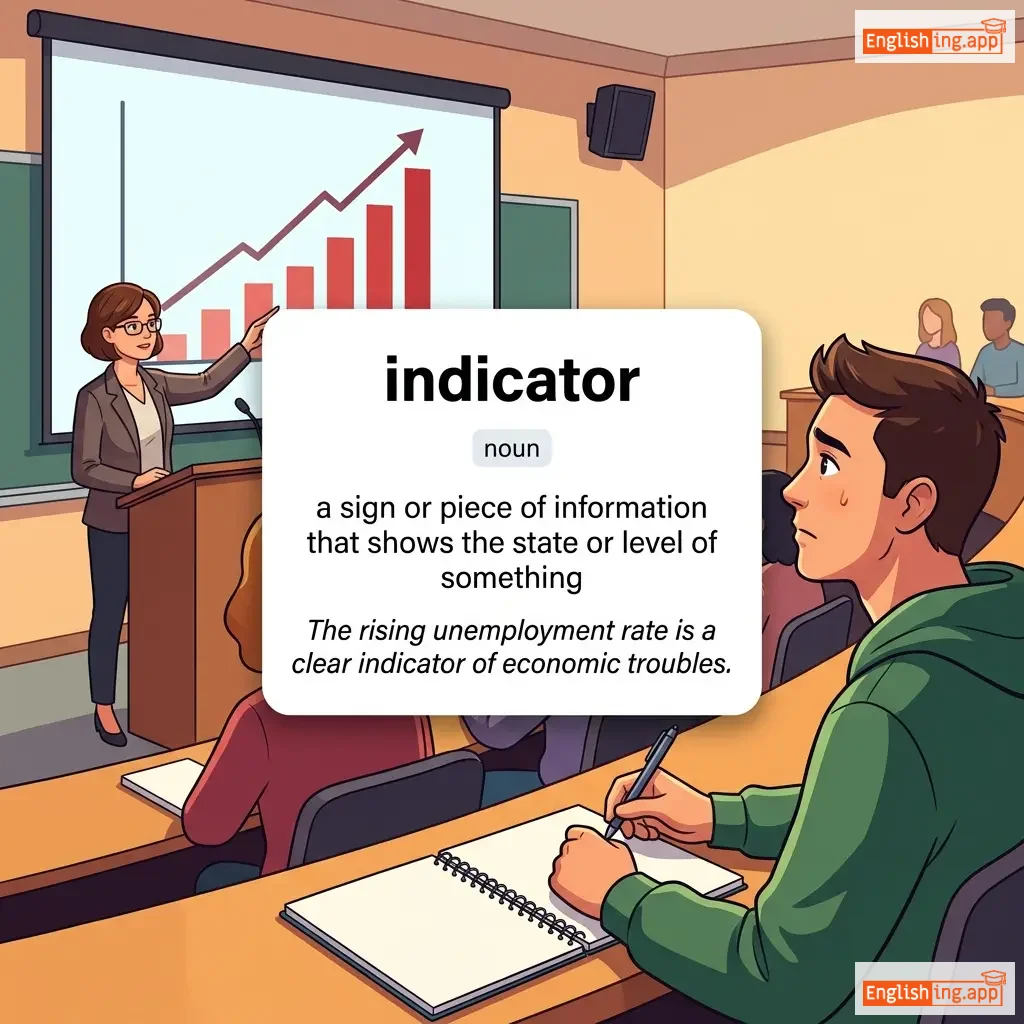
indicator definition card — visual illustration of the meaning
noun
/ˈɪndɪˌkeɪtər/
индикатор (indikator)

a sign or piece of information that shows the state or level of something

"The rising unemployment rate is a clear indicator of economic troubles."

"Растущий уровень безработицы — явный индикатор экономических проблем." (Rastushchiy uroven bezrabotitsy - yavnyy indikator ekonomicheskikh problem.)
noun (plural)
/ˈɪndɪˌsiːz/
индексы (indeksy)

plural form of index; statistical measures or reference points used for comparison

"Stock market indices fell sharply after the announcement."

"Индексы фондового рынка резко упали после объявления." (Indeksy fondovogo rynka rezko upali posle ob'yavleniya.)
verb
/ɪnˈdaɪt/
обвинять (obvinyat)

to formally accuse someone of committing a serious crime

"The grand jury decided to indict the politician for corruption."

"Великое жюри решило предъявить обвинение политику за коррупцию." (Velikoe zhuri reshilo pred'yavit' obvinienie politiku za korrupciyu.)
noun
/ɪnˈdaɪtmənt/
обвинительный акт (obvinitel'nyy akt)

a formal charge or accusation of a serious crime

"The indictment accused the company of multiple violations."

"Обвинительный акт обвинил компанию в нескольких нарушениях." (Obvinitel'nyy akt obvinil kompaniyu v neskol'kikh narusheniyakh.)
noun
/ɪnˈdɪfərəns/
безразличие (bezrazlichie)

lack of interest, concern, or sympathy

"He showed complete indifference to the suffering around him."

"Он показал полное безразличие к страданиям вокруг него." (On pokazal polnoe bezrazlichie k stradaniyam vokrug nego.)
adjective
/ɪnˈdɪf.ər.ənt/
безразличный (bezrazlichnyy)

having no particular interest or concern; not caring one way or another

"She was indifferent to the outcome of the match."
"Она была безразлична к результату матча." (Ona byla bezrazlichna k rezul'tatu matcha.)
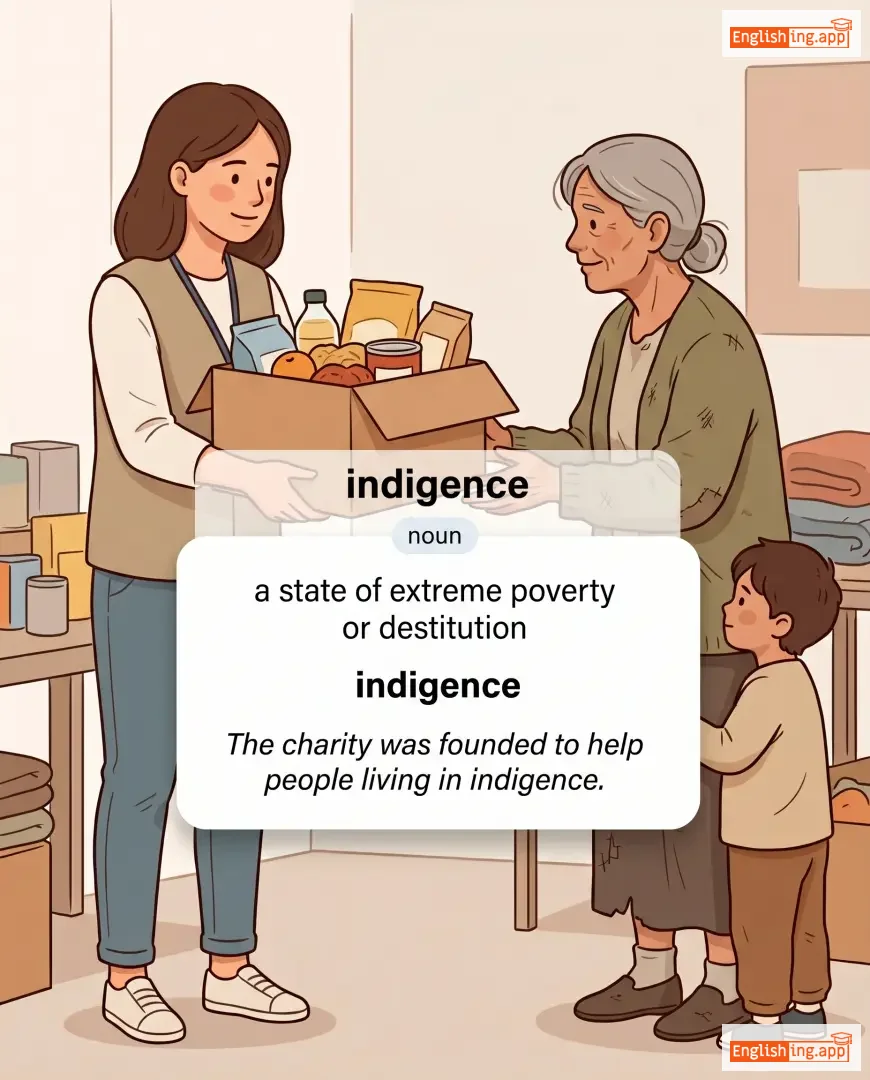
indigence definition card — visual illustration of the meaning
noun
/ˈɪn.dɪ.dʒəns/
нищета (nishcheta)

a state of extreme poverty or destitution

"The charity was founded to help people living in indigence."

"Благотворительная организация была основана для помощи людям, живущим в нищете." (Blagotvoritelnaya organizatsiya byla osnovana dlya pomoshchi lyudyam, zhivushchim v nishchete.)
indigenous definition card — visual illustration of the meaning
adjective
/ɪnˈdɪdʒ.ə.nəs/
коренной (korennoy)

originating or occurring naturally in a particular place; native

"These plants are indigenous to South America."

"Эти растения являются коренными для Южной Америки." (Ety rastenija javljajutsja korennymi dlya Yuzhnoj Ameriki.)
Indigenous Traditions definition card — visual illustration of the meaning
noun
ɪnˈdɪdʒɪnəs trəˈdɪʃənz
Коренные традиции (korennye traditsii)

Cultural practices, beliefs, and customs that have been passed down through generations among native peoples.

"Indigenous traditions in the Chittagong Hill Tracts are unique."

"Коренные традиции в Читтагонг Хилл Трактах уникальны." (Korennye traditsii v Chittagonh Hill Trakthakh unikany.)
adjective
/ˈɪn.dɪ.dʒənt/
нуждающийся (nuzhdayushchiesya)

lacking the necessities of life due to poverty; very poor

"The hospital offers free care to indigent patients."

"Больница предлагает бесплатную помощь нуждающимся пациентам." (Bol'nitsa predlagaet besplatnuyu pomoshch' nuzhdayushchimsya patsiyentam.)
adjective
/ˌɪn.daɪˈdʒes.tə.bəl/
неперевариваемый (neperevarivaemyy)

difficult or impossible to digest; hard to accept or understand

"The report was so long and detailed that it became almost indigestible."

"Отчёт был настолько длинным и подробным, что стал почти неперевариваемым." (Otchot byl nastol'ko dlinным i podrobnym, chto stal pochti neperevarivaemym.)
noun
/ˌɪndɪˈdʒɛstʃən/
несварение желудка (indidzhestshn)

Discomfort or pain in the stomach associated with difficulty in digesting food.

"He avoided spicy food because it often gave him indigestion."

"Он избегал острой пищи, потому что она часто вызывала у него несварение желудка." (On izbegal ostroy pishcha, potomu chto ona chasto vyzyvala u nego nesvarenie zheludka.)
adjective
/ɪnˈdɪɡnənt/
возмущённый (vozmuschchyonnyy)

Feeling or showing anger at something considered unfair or unjust.

"She was indignant when accused of cheating."

"Она была возмущена, когда её обвинили в мошенничестве." (Ona byla vozmuschchena, kogda yeye obvinili v moshennichestve.)
noun
/ˌɪndɪɡˈneɪʃən/
негодование (negodovanie)

Strong displeasure or anger caused by something unjust, offensive, or insulting.

"Public indignation grew after the unfair verdict."

"Общественное негодование возросло после несправедливого приговора." (Obshchestvennoe negodovanie vozroslo posle nespravedlivogo prigovora.)
noun
/ɪnˈdɪɡnɪti/
унижение (unizhenie)

Treatment or circumstances that cause one to feel shame or humiliation.

"He suffered the indignity of being ignored in the meeting."

"Он испытал унижение, будучи проигнорированным на встрече." (On ispyltal unizhenie, buduchi proignirovannym na vstreche.)
adjective
/ˈɪndɪɡoʊ bluː/
индиго-синий (indigo-siniy)

a deep blue color with a purplish tinge

"The indigo-blue sky looked magnificent at twilight."

"Индиго-синие небеса выглядели великолепно на закате." (Indigo-siniye nebesa vyglyadeli velikolepno na zakate.)
adverb
/ˌɪndəˈrɛktli/
косвенно (kosvenno)

in a way that is not direct; through an intermediate means or influence

"The policy affected small businesses indirectly."

"Политика косвенно повлияла на малый бизнес." (politika kosvenno povliyala na malyy biznes)
adjective
/ˌɪndɪˈsɜːrnəbl/
невидимый (nevidimy)

Impossible or difficult to see, notice, or distinguish.

"The difference between the two shades was almost indiscernible."

"Разница между двумя оттенками была почти невидимой." (Raznitsa mezhdu dvumya ottenkami byla pochti nevidimoy.)
noun
/ˌɪnˈdɪsəplɪn/
недисциплинированность (nedistsiplinirovannost)

lack of discipline or self-control; failure to obey rules or maintain order

"Indiscipline among the students disrupted the learning environment."

"Недисциплинированность студентов нарушила учебную обстановку." (Nedistsiplinirovannost studentov narushila uchebnuyu obstanovku)
adjective
/ˌɪndɪˈskriːt/
неосторожный (neostorozhnyy)

Not careful in what one says or does, likely to reveal secrets or offend.

"It was indiscreet of him to mention the plan in public."

"Было неосторожно с его стороны упомянуть план на публике." (Bylo neostorozhno s ego storony upomyanut' plan na publike.)
adjective
/ˌɪndɪˈskrɪmɪnət/
несправедливый (nespravedlivyy)

Done without careful judgment; random or haphazard.

"The indiscriminate use of pesticides harms the environment."

"Несправедливое использование пестицидов наносит вред окружающей среде." (Nespravedlivoe ispol'zovanie pestitsidov nanosit vred okruzhayushchey srede.)
adverb
/ˌɪn.dɪˈskrɪm.ɪ.nət.li/
индикриминативно (indikriminativno)

without making careful distinctions; randomly; without discrimination

"The company fired employees indiscriminately without considering their performance."

"Компания уволила сотрудников, не учитывая их производительность." (Kompaniya uvolila sotrudnikov, ne uchetyvaya ikh proizvoditel'nost'.)
indispensable definition card — visual illustration of the meaning
adjective
/ˌɪndɪˈspɛnsəbl/
необходимый (neobkhodimy)

Absolutely necessary; essential.

"Water is indispensable for human survival."

"Вода необходима для выживания человека." (Voda neobkhodima dlya vyzhivaniya cheloveka.)