Словари

Словарь английского языка | Значения слов, определения и примеры

adjective
/ɪnˈkɒmp(ə)rəbl/
несравненный (nesravnennyi)

Without an equal in quality or excellence; matchless.

"The view from the mountain was incomparable."

"Вид с горы был несравненно красив." (Vid s gory byl nesravnenno krasiv.)
noun
/ˌɪnkəmˌpætəˈbɪlɪti/
несовместимость (nesovmestimost)

the state of being unable to exist or work together harmoniously; lack of compatibility

"The project failed because of incompatibility between the two software systems."

"Проект провалился из-за несовместимости двух программных систем." (Proekt provalilsya iz za nesovmestimosti dvukh programmnykh sistem)
adjective
/ˌɪnkəmˈpætəbl/
несовместимый (nesovmestimyy)

Not able to exist or work together without conflict.

"Their personalities were completely incompatible."

"Их личности были совершенно несовместимы." (Ikh lichnosti byli sovershenno nesovmestimyy.)
noun
/ɪnˈkɒmpɪtəns/
некомпетентность (nekompetentnost')

Lack of ability, skill, or effectiveness in doing something.

"The project failed due to the manager’s incompetence."

"Проект потерпел неудачу из-за некомпетентности менеджера." (Proyekt poterpel neudachu iz-za nekompetentnosti menedzhera.)
adjective
/ɪnˈkɒmpɪtənt/

Lacking the necessary ability or skills to do something successfully.

"He was fired because he was incompetent at his job."

adjective
/ˌɪnkəmˈpliːt/
незавершённый (nezavershyonny)

Not finished, lacking some parts or not whole.

"Her report was incomplete and needed further details."

"Её отчёт был неполным, и требовались дополнительные детали." (Eyo otchet byl nepolnym, i trebovalis' dopolnitel'nye detali.)
noun
/ˌɪnkəmˈpliːtnəs/
неполнота (nepolnota)

the state of not being complete or whole; lack of necessary parts or fullness

"The incompleteness of the report caused delays in the project."

"Неполнота отчёта вызвала задержки в проекте." (Nepolnota otchyota vyzvala zaderzhki v proekte)
adjective
/ˌɪnkɒmprɪˈhɛnsəbl/
непонятный (neponyatny)

Impossible or very difficult to understand.

"The professor’s lecture was so fast it became incomprehensible."

"Лекция профессора была настолько быстра, что она стала неразборчивой." (Lektsiya professor'a byla nastol'ko bystra, chto ona stala nerazborchivoy.)
adjective
/ˌɪnkəmˈprɛsəbl/
несжимаемый (neszhimayemiy)

Not able to be pressed or squeezed into a smaller space.

"Liquids are generally considered incompressible."

"Жидкости обычно считаются несжимаемыми." (Zhidkosti obychno schitayutsya neszhimayemymi.)
adjective
/ˌɪnkənˈsiːvəbl̩/
невообразимый (nevoobrazimyi)

Impossible to imagine or believe; beyond comprehension.

"It seemed inconceivable that she could finish the marathon after such little training."

"Это казалось невообразимым, что она сможет закончить марафон после такого малого тренинга." (Eto kazalos' nevoobrazimym, chto ona smozhet zakonchit' marafon posle takogo malogo treninga.)
adjective
/ˌɪnkənˈkluːsɪv/
неопределённый (neopredelyonny)

Not leading to a definite result or decision.

"The investigation remained inconclusive due to a lack of evidence."

"Расследование осталось неопределённым из-за нехватки доказательств." (Rassledovanie ostalos' neopredelyonnym iz-za nekhvatki dokazatel'stv.)
adjective
/ɪnˈkɒŋɡruənt/
несоответствующий (nesootvetstvuyushchiy)

Not in harmony or keeping with the surroundings or other aspects.

"His casual outfit looked incongruent at the formal dinner."
"Его повседневная одежда выглядела несоответствующей на официальном ужине." (Ego povsednevnaia odezhda vyhlyadila nesootvetstvuiushchei na ofitsial'nom uzhine.)
incongruity definition card — visual illustration of the meaning
noun
/ˌɪnkənˈɡruːəti/
неконсистентность (nekonsistennost')

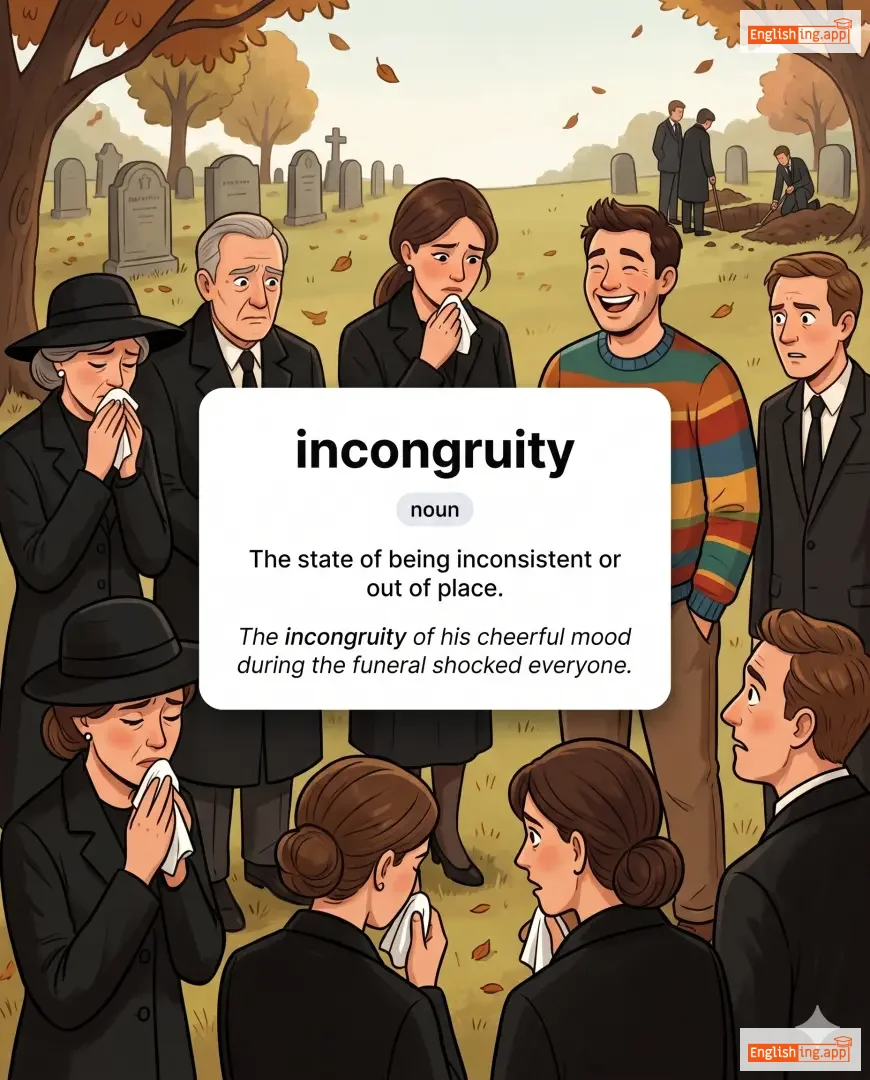
The state of being inconsistent or out of place.

"The incongruity of his cheerful mood during the funeral shocked everyone."

"Неконсистентность его веселого настроения во время похорон потрясла всех." (Nekonsistennost' ego vesyologo nastroeniya vo vremya pokhoron potryasla vsekh.)
adjective
/ɪnˈkɒŋɡruəs/
несоответствующий (nesootvetstvuyushchiy)

Not fitting in with or suitable for the surroundings.

"His jokes were incongruous during the serious meeting."
"Его шутки были несоответствующими во время серьезной встречи." (Yego shutki byli nesootvetstvuyushchimi vo vremya seryoznoy vstrechi.)
inconsequential definition card — visual illustration of the meaning
adjective
/ˌɪnˌkɒnsɪˈkwɛnʃəl/
незначительный (neznachitel'nyy)

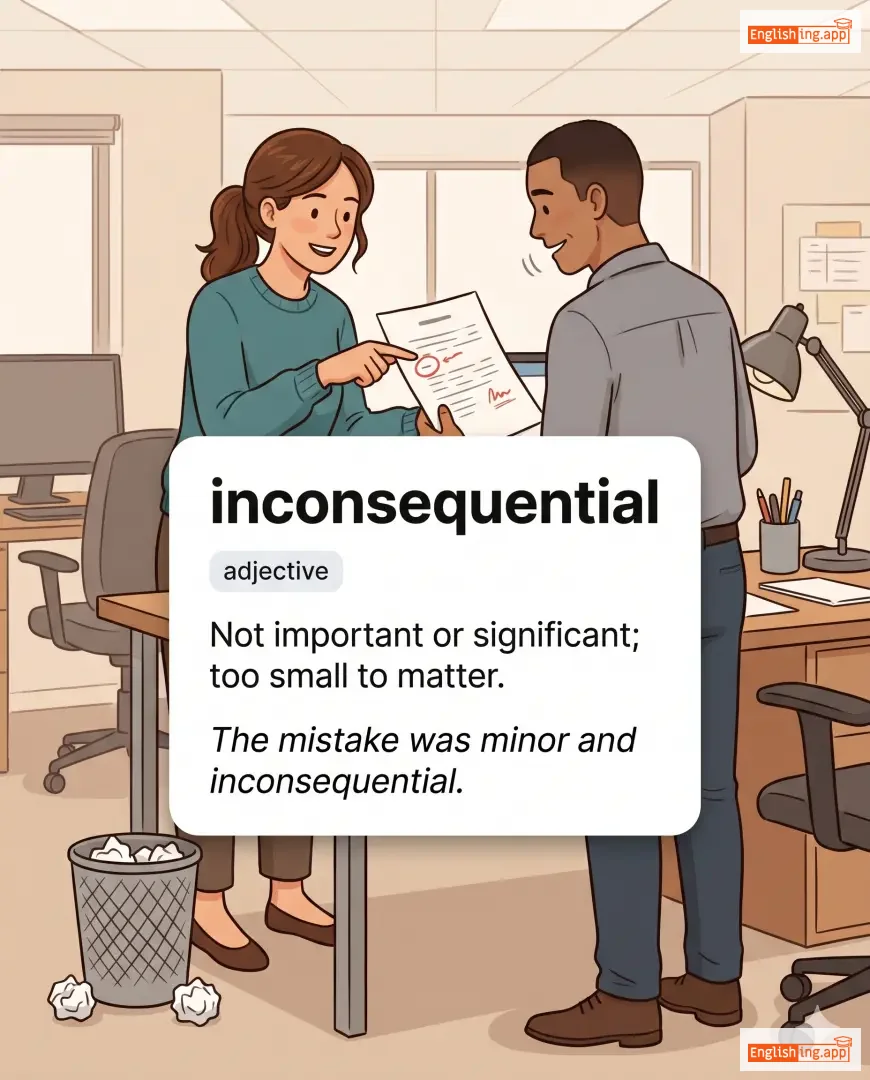
Not important or significant; too small to matter.

"The mistake was minor and inconsequential."

"Ошибка была незначительной и несущественной." (Oshibka byla neznačitel'noj i nesushhestvennoj.)
adjective
/ˌɪnkənˈsɪdərəbl/
незначительный (neznachitel'nyy)

Too small or unimportant to be worth considering.

"The donation was not inconsiderable, though smaller than expected."

"Пожертвование было незначительным, хотя и меньше, чем ожидалось." (Pozhertvovanie bylo neznačitel'nym, hotya i men'she, chem ozhidalos'.)
adjective
/ˌɪnkənˈsɪdərət/
бесчувственный (beshchuvstvenny)

Thoughtless; showing a lack of concern for others.

"It was inconsiderate of him to play loud music late at night."

"Он был бесчувственным, когда играл громкую музыку поздно ночью." (On byl besschuvstvennym, kogda igral gromkuyu muzyku pozdno noch'yu.)
noun
/ˌɪnkənˈsɪstənsi/
несоответствие (nesootvetstvie)

The quality of being contradictory, irregular, or not staying the same.

"There is an inconsistency between his words and actions."

"Существует несоответствие между его словами и действиями." (Sushchestvuet nesootvetstvie mezhdu ego slovami i deystviyami.)
adjective
/ˌɪnkənˈsɪstənt/
непоследовательный (neposledovatel'nyy)

Not staying the same throughout; lacking harmony or regularity.

"His answers were inconsistent and confusing."

"Его ответы были непоследовательными и запутанными." (Ego otvety byli neposledovatel'nymi i zaputannymi.)
noun
/ɪnˈkɒnstənsi/
непостоянство (nepostoyanstvo)

The quality of changing frequently or being unreliable.

"The inconstancy of the weather makes planning difficult."

"Непостоянство погоды затрудняет планирование." (Nepostoyanstvo pogody zatrudnyaet planirovanie.)
adjective
/ɪnˈkɒnstənt/
непостоянный (nepostoyannyy)

frequently changing; not consistent or dependable

"His inconstant moods made it difficult to work with him."

"Его непостоянное настроение затрудняло работу с ним." (Yego nepostoyannoe nastroenie zatrudnyalo rabotu s nim.)
adjective
/ɪnˈkɒntɪnənt/
неконтролируемый (nekontroliruemyy)

lacking control over urination or defecation; lacking self-restraint

"The patient was incontinent after surgery."

"Пациент был неконтролируемым после операции." (Patsient byl nekontroliruemym posle operatsii.)
adjective
/ˌɪnkɒntrəˈvɜːtəbl/
неопровержимый (neopoverzhimy)

impossible to deny or dispute; unquestionable

"The evidence was incontrovertible and proved his innocence."

"Доказательства были неопровержимы и доказали его невиновность." (Dokazatel'stva byli neopoverzhimy i dokazali ego nevinovnost'.)
noun, verb
/ˌɪnkənˈviːniəns/
неудобство (neudobstvo)

trouble or difficulty caused to someone; to cause trouble or difficulty to someone

"We apologize for any inconvenience caused by the delay."

"Мы приносим извинения за любые неудобства, вызванные задержкой." (My prinosim izvineniya za lyubye neudobstva vyzvannye zaderzhkoy)
adjective
/ˌɪnkənˈviːniənt/
неудобный (neudobny)

causing trouble, difficulties, or discomfort

"It was inconvenient for her to travel during the storm."

"Ей было неудобно путешествовать во время шторма." (Eyi bylo neudobno puteshestvovat' vo vremya shtorma.)
incorporate definition card — visual illustration of the meaning
verb
/ɪnˈkɔːpəreɪt/
включить (vklyuchit)

to include something as part of a whole; to form a legal corporation

"The teacher incorporated new technology into her lessons."

"Учитель включил новые технологии в свои уроки." (Uchitel' vklyuchil novye tekhnologii v svoi uroki.)
adjective
/ˌɪnkɔːrˈpɔːriəl/
бестелесный (bestelessnyy)

lacking a physical body; not composed of matter; intangible

"Ghosts are often described as incorporeal beings."

"Привидения часто описываются как невещественные существа." (Privideniya chasto opisyvayutsya kak neveshchestvennye sushchestva.)
adjective
/ɪnkəˈrɛkt/
неправильный (nepravil'nyy)

not correct or accurate

"The information you provided was incorrect."

"Предоставленная вами информация была неправильной." (Predostavlennaya vami informatsiya byla nepravil'noy.)
adjective
/ɪnˈkɒrɪdʒəbəl/
неисправимый (neispravimy)

incapable of being corrected, improved, or reformed

"He is an incorrigible optimist who never loses hope."

"Он неисправимый оптимист, который никогда не теряет надежды." (On neispravimy optimist, kotoryy nikogda ne teryayet nadezhdy.)
increase definition card — visual illustration of the meaning
verb
/ɪnˈkriːs/
увеличить (uvelichit)

to make something larger in size, number, or amount

"The company plans to increase its workforce next year."

"Компания планирует увеличить свою рабочую силу в следующем году." (Kompaniya planirovyet uvelichit' svoyu rabochuyu silu v sleduyushchem godu.)
verb
/ɪnˈkriːst/
увеличенный (uvelichenniy)

became greater in size, amount, or degree

"The company's revenue increased last year."
"Доход компании увеличился в прошлом году." (Dokhod kompanii uvelichilsya v proshlom godu.)
increasing definition card — visual illustration of the meaning
verb
/ɪnˈkriːsɪŋ/
увеличивать (uvelichivat)

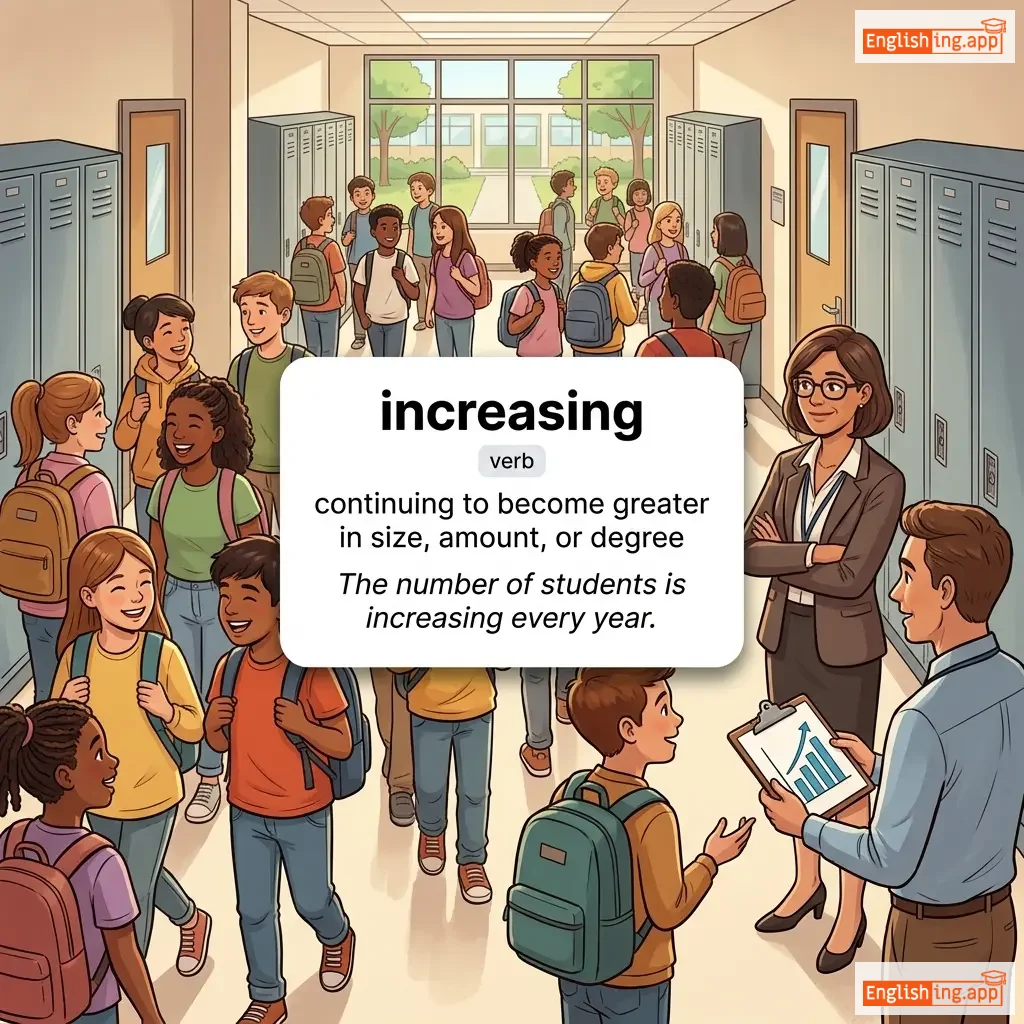
continuing to become greater in size, amount, or degree

"The number of students is increasing every year."

"Количество студентов увеличивается каждый год." (Kolicestvo studentov uvelichivaetsya kazhdyy god.)
adverb
/ɪnˈkriːsɪŋli/
все больше и больше (vse bolshe i bolshe)

more and more over time

"People are increasingly concerned about climate change."

"Люди все больше обеспокоены изменением климата." (Lyudi vse bolshe obespokoyeny izmeneniem klimata.)
adjective
/ɪnˈkrɛdəbl/
невероятный (neveroyatnyy)

so extraordinary that it is hard to believe; amazing

"The view from the mountain was incredible."

"Вид с горы был невероятным." (Vid s gory byl neveroyatnym.)
adverb
/ɪnˈkrɛdɪbli/
невероятно (neveroyatno)

to a great degree; extremely or unbelievably

"The view from the top of the mountain was incredibly beautiful."

"Вид с вершины горы был невероятно красив." (Vid s vershiny gory byl neveroyatno krasiv.)
noun
/ˌɪnkrɪˈdjuːləti/
неверие (neverie)

the state of being unwilling or unable to believe something

"She looked at him with incredulity after hearing the strange story."

"Она посмотрела на него с недоверием после того, как услышала странную историю." (Ona posmotrela na nego s nedoveriem posle togo, kak uslyshala strannuyu istoriyu.)
adjective
/ɪnˈkrɛdjələs/
недоверчивый (nedoverchivyy)

unwilling or unable to believe something

"He gave her an incredulous look when she claimed she could fly."

"Он бросил ей недоверчивый взгляд, когда она заявила, что может летать." (On brosil ey nedoverchivyy vzglyad kogda ona zayavila chto mozhet letat)
noun
/ˈɪŋkrɪmənt/
повышение (povyshenie)

an increase or addition, especially one of a series on a fixed scale

"Employees received an annual salary increment."

"Сотрудники получили ежегодное повышение заработной платы." (Sotrudniki poluchili ezhegodnoe povyshenie zarabotnoi platy.)
incremental definition card — visual illustration of the meaning
adjective
/ˌɪŋ.krɪˈmen.təl/
инкрементальный (inkrementalnyy)

Increasing gradually in small amounts or steps.

"The company made incremental improvements to the software."

"Компания сделала инкрементальные улучшения в программном обеспечении." (Kompaniya sdelała inkremental'nye uluchsheniya v programmnoy obespechenii.)
verb
/ɪnˈkrɪmɪˌneɪt/
инкриминировать (inkriminirovat)

to make someone appear guilty of a crime or wrongdoing

"The new evidence could incriminate the suspect in the robbery case."

"Новые доказательства могут инкриминировать подозреваемого в случае ограбления." (Novye dokazatel'stva mogut inkriminorovat' podozrevaemogo v sluchaye ogrableniya.)
noun
/ˌɪnkrʌˈsteɪʃən/
корка (korka)

a crust or hard coating formed on the surface of something

"The old pipes were blocked due to heavy incrustation of minerals."

"Старые трубы были заблокированы из-за сильной корки минералов." (Starye truby byli zablokirovany iz-za sil'noy korki mineralov.)
verb
/ˈɪnkjʊˌbeɪt/
инкубировать (inkubirovat')

to keep eggs, cells, or organisms at the right conditions for development

"The hen will incubate the eggs until they hatch."

"Курица будет инкубировать яйца до тех пор, пока они не вылупятся." (Kurytsa budet inkubirovat' yaytsa do tekh por, poka oni ne vylupyatsya.)
noun
/ˌɪnkjʊˈbeɪʃən/
процесс поддержания яиц, клеток или организмов в правильных условиях для их развития (protsess podderzhaniya yaits, kletok ili organizmov v pravil'nykh usloviyakh dlya ikh razvitiya)

the process of keeping eggs, cells, or organisms in the right conditions for development

"The incubation of the eggs lasted for three weeks."

"Инкубация яиц продолжалась три недели." (Inkubatsiya yaits prodolzhalas' tree nedeli.)
noun
/ˈɪnkjʊˌbeɪtər/
инкубатор (inkubator)

a device or environment that provides suitable conditions for eggs, cells, or infants to develop

"The premature baby was placed in an incubator for care."

"Недоношенного ребенка поместили в инкубатор для ухода." (Nedonoshenogo rebenka pomestili v inkubator dlya ukhoda.)
noun
/ˈɪŋkjʊbəs/
демон ночных кошмаров (demon nochnykh koshmarov)

An oppressive or nightmarish burden; in folklore, an evil spirit that lies upon sleeping people.

"Debt became an incubus that weighed heavily on the family."

"Долг стал демоном ночных кошмаров, который тяжело давил на семью." (Dolg stal demonim nochnykh koshmarov, kotoryy tyazhelo davil na sem'yu.)
inculcate definition card — visual illustration of the meaning
verb
/ˈɪŋkʌlkeɪt/
внедрять (vnedryat)

To teach or instill an idea, attitude, or habit persistently.

"Parents try to inculcate good manners in their children."

"Родители пытаются привить своим детям хорошие манеры." (Roditeli pytayutsya privit' svoim detyam khoroshiye manery.)
verb
/ˈɪŋkʌlpeɪt/
обвинять (obvinyat)

To blame or accuse someone of wrongdoing.

"The evidence seemed to inculpate the suspect in the crime."
"Доказательства, похоже, инкриминировали подозреваемого в преступлении." (Dokazatel'stva, pokhоже, inkriminiruvali podozrevaemogo v prestuplenii.)
incumbent definition card — visual illustration of the meaning
adjective
/ɪnˈkʌmbənt/
исполняющий обязанности (ispolnyayushchiy obyazannosti)

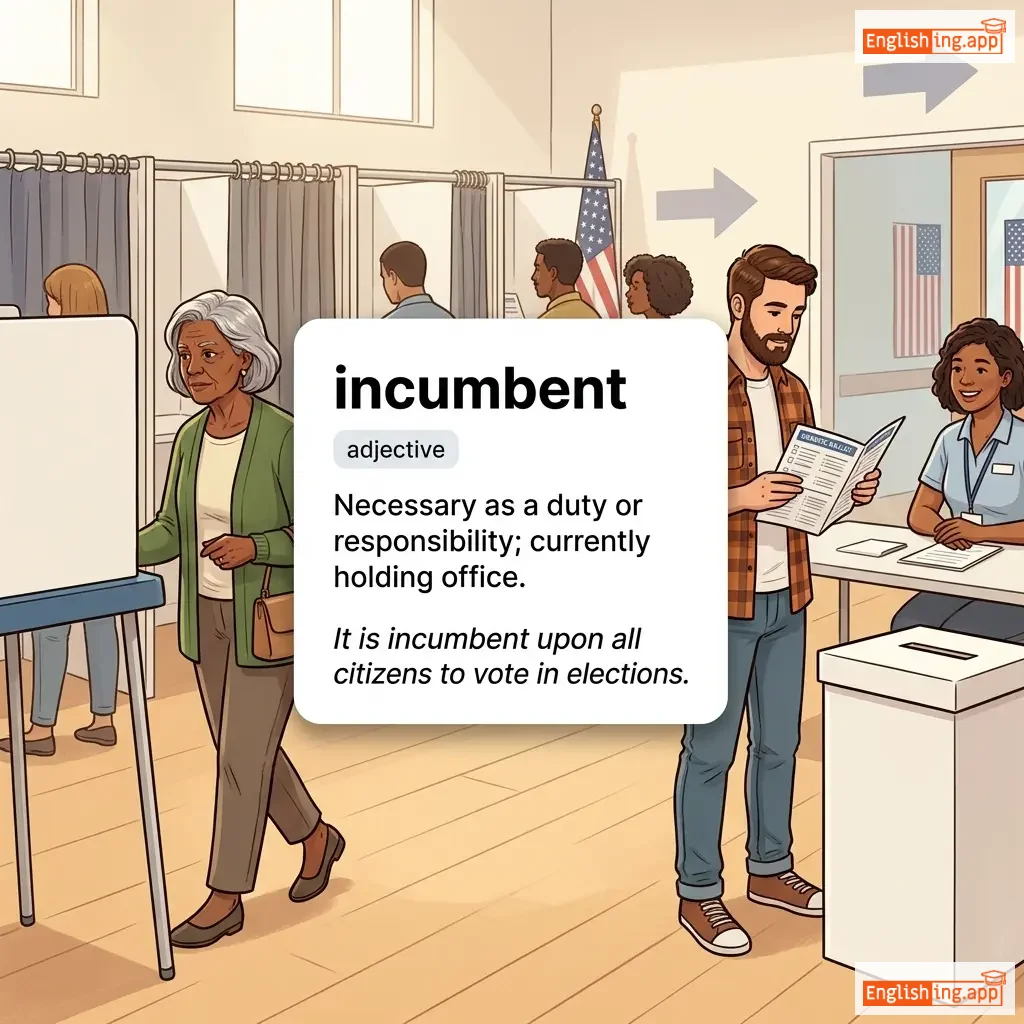
Necessary as a duty or responsibility; currently holding office.

"It is incumbent upon all citizens to vote in elections."

"Это обязанность всех граждан голосовать на выборах." (Eto obazannost' vsekh grazhdan golosovat' na viborah.)
verb
/ɪnˈkɜːr/
понести (ponesti)

To bring upon oneself something undesirable, usually as a result of actions.

"He incurred a fine for parking in the wrong place."
"Он понёс штраф за неправильную парковку." (On ponyos shtraf za nepravil'nuyu parkovku.)
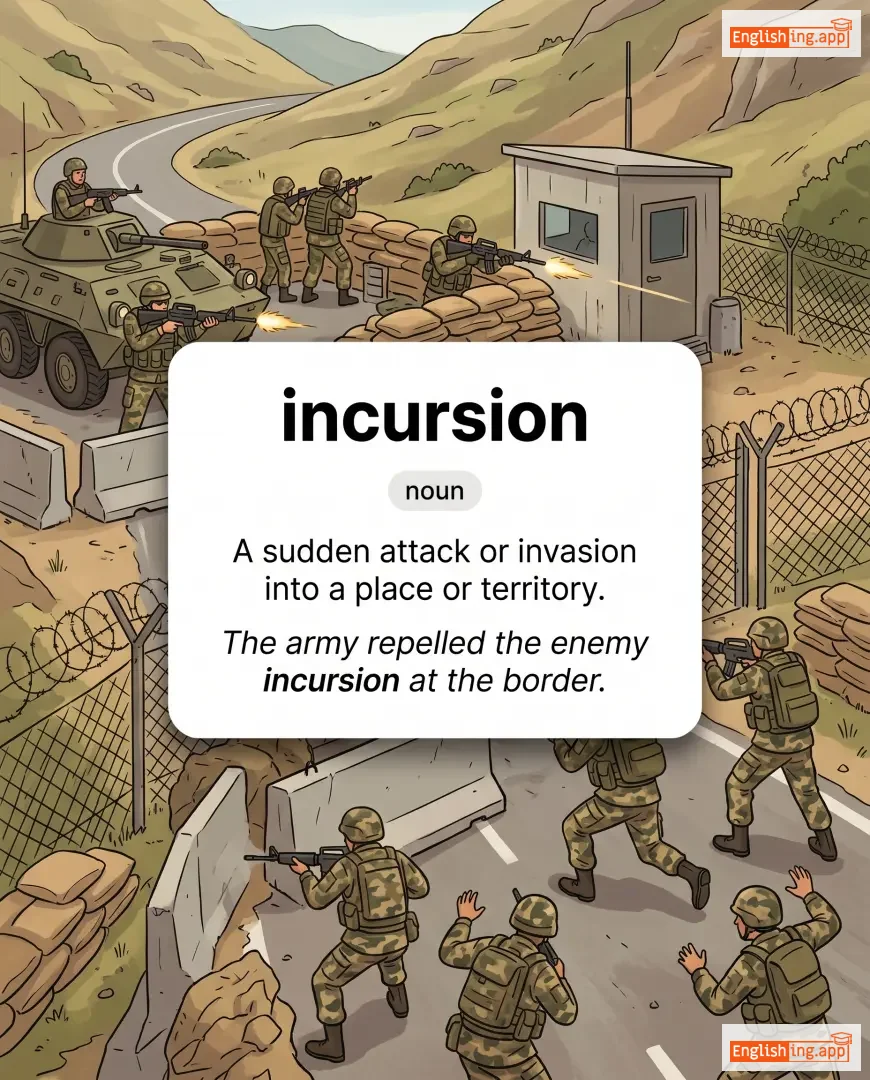
incursion definition card — visual illustration of the meaning
noun
/ɪnˈkɜːrʒən/
вторжение (vtorzhenie)

A sudden attack or invasion into a place or territory.

"The army repelled the enemy incursion at the border."

"Армия отразила вражеское вторжение на границе." (Armiya otrazila vrasheskoye vtorzhenie na granitse.)