Словари

Словарь английского языка | Значения слов, определения и примеры

adjective
/ˌɪnˈvɜːrs/
обратный (obratny)

Opposite in position, direction, order, or effect.

"There is an inverse relationship between price and demand."

"Существует обратная зависимость между ценой и спросом." (Sushchestvuet obratnaya zavisimost' mezhdu tsenoy i sprosom.)
adverb
/ɪnˈvɜːrs.li/
наоборот; противоположным образом (naoborot; protivopolozhnym obrazom)

in a way that is opposite or contrary; in reverse order or manner

"The price of goods is inversely related to their availability in the market."

"Цена товаров обратно пропорциональна их доступности на рынке." (Tsena tovarov obratno proporcionali naikh dostupnosti na rynke.)
noun
/ɪnˈvɜːrʒən/
инверсия (inversiya)

A reversal of the normal order, position, or relationship.

"In poetry, inversion is often used to create emphasis."

"В поэзии инверсия часто используется для создания акцента." (V poezii inversiya chasto ispol'zuyetsya dlya sozdaniya aktsenta.)
verb
/ɪnˈvɜːrt/
перевернуть (perevernut')

To turn something upside down or in the opposite position, order, or direction.

"He inverted the glass to let the water drain out."

"Он инвертировал стакан, чтобы вода стекала." (On invertiroval stakan, chtoby voda stekala.)
invest definition card — visual illustration of the meaning
verb
/ɪnˈvɛst/
инвестировать (investirovat)

to put money, time, or effort into something with the expectation of achieving a benefit

"He decided to invest in real estate to secure his future."

"Он решил инвестировать в недвижимость, чтобы обеспечить свое будущее." (On reshil investirovat' v nedvizhimost', chtoby obespechit' svoyo budushcheye.)
verb
/ɪnˈvɛs.tɪ.ɡeɪt/
расследовать (rassledovat)

to carry out a systematic inquiry to discover facts or information

"The police will investigate the incident thoroughly."

"Полиция будет тщательно расследовать происшествие." (Politsiya budet tchatel'no rassledovat' proisshestvie.)
noun
/ɪnˌvɛs.tɪˈɡeɪ.ʃən/
расследование (rassledovanie)

the process of inquiring into or examining something carefully to find the truth

"The investigation revealed new evidence about the fraud."

"Расследование выявило новые доказательства мошенничества." (Rassledovanie viyavilo novye dokazatel'stva moshenichestva.)
noun
/ɪnˈvɛstɪˌɡeɪtər/
счастье (schast'ye)

a person who carries out a formal inquiry or investigation

"The investigator gathered evidence from the crime scene."

"Она не могла скрыть своего счастья, когда получила награду." (Ona ne mogla skryt' svoego schast'ya, kogda poluchila nagradu.)
investing definition card — visual illustration of the meaning
verb
ɪnˈvɛst.ɪŋ
инвестирование (investirovanie)

The act of putting money into financial schemes, shares, property, or a commercial venture with the expectation of achieving a profit.

"Investing in stocks can generate long-term wealth."

"Инвестирование в акции может привести к долгосрочному богатству." (Investirovaniye v aktsii mozhet privedti k dolgосрochno bogatstvu.)
noun
/ɪnˈvɛstɪtʃər/
церемония посвящения (tseremoniya posvyashcheniya)

the formal ceremony of conferring authority, rank, or office

"The king held an investiture ceremony for the new knight."

"Король провел церемонию посвящения для нового рыцаря." (Korol' provel tseremoniya posvyashcheniya dlya novogo rytsarya.)
investment definition card — visual illustration of the meaning
noun
/ɪnˈvɛst.mənt/
инвестиция (investitsiya)

the action or process of putting money, time, or resources into something for future benefit

"Her investment in technology startups has paid off well."

"Её инвестиции в технологические стартапы принесли хорошие результаты." (Yeyo investitsii v tekhnologicheskiye startupy prinesli khoroshiye rezul'taty.)
noun
/ɪnˈvɛstər/
инвестор (investor)

a person or organization that puts money into financial schemes, property, or business ventures with the expectation of achieving a profit

"The investor funded the startup with a large sum of money."

"Инвестор профинансировал стартап крупной суммой денег." (Investor profinisiroval startup krupnoy summoy deneg.)
inveterate definition card — visual illustration of the meaning
adjective
/ɪnˈvɛtərət/
закоренелый (zakorenely)

having a long-established habit, activity, or interest that is unlikely to change

"He is an inveterate reader who spends hours in the library every day."

"Он закоренелый читатель, который проводит часы в библиотеке каждый день." (On zakorennelyy chitatel', kotoryy provodit chasy v biblioteke kazhdyy den'.)
invidious definition card — visual illustration of the meaning
adjective
/ɪnˈvɪdiəs/
завистливый (zavistlivyy)

likely to arouse resentment, envy, or anger in others

"The manager's invidious remarks created tension among the employees."
"Завистливые замечания менеджера создали напряженность среди сотрудников." (Zavistlivye zamechaniya menedzhera sozdayut napryazhennost' sredi sotrudnikov.)
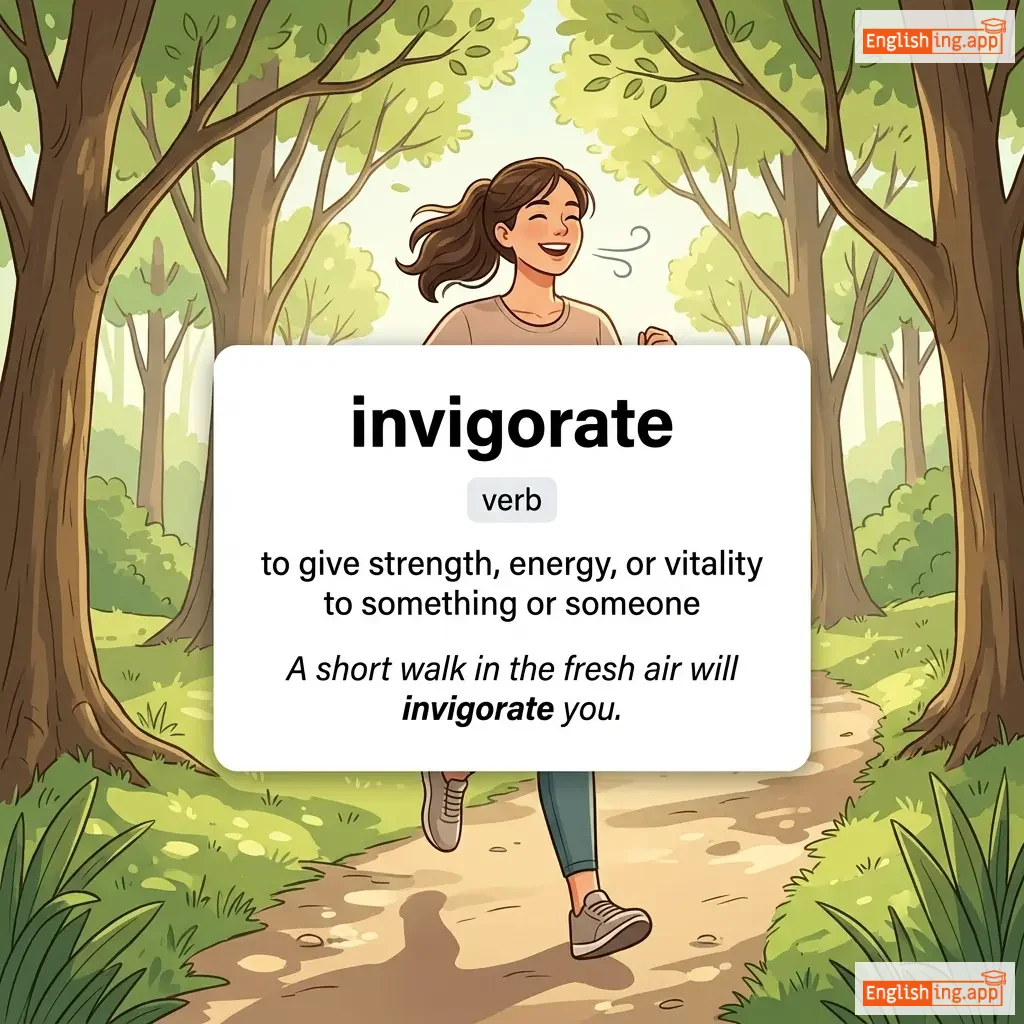
invigorate definition card — visual illustration of the meaning
verb
/ɪnˈvɪɡəreɪt/
вдохновить (vdokhnovit)

to give strength, energy, or vitality to something or someone

"A short walk in the fresh air will invigorate you."

"Небольшая прогулка на свежем воздухе придаст вам силы." (Nebol'shaya progulka na svezhem vozdukhe pridast vam sily.)
adjective
/ɪnˈvɪnsəbl/
непобедимый (nepobedimy)

too powerful to be defeated or overcome

"The team seemed invincible after winning ten matches in a row."

"Команда казалась непобедимой после того, как выиграла десять матчей подряд." (Komanda kazalas' nepobedimoy posle togo, kak vyigrala desyat' matchey podryad.)
adjective
/ɪnˈvaɪələbl/
неприкосновенный (neprikosnovennyy)

never to be broken, dishonored, or violated

"Human rights are considered inviolable in modern democracies."

"Права человека считаются неприкосновенными в современных демократиях." (Prava cheloveka schitayutsya neprikosnovennymi v sovremennykh demokratikh.)
adjective
/ɪnˈvaɪələt/
неприкосновенный (neprikosnovennyi)

free from violation, injury, or desecration; kept safe and untouched

"The ancient temple remained inviolate for centuries."

"Древний храм оставался неприкосновенным веками." (Drevniy khram ostavalsya neprikosnovennym vekami.)
adjective
/ɪnˈvɪzɪbəl/
невидимый (nevidimy)

unable to be seen; not visible to the eye

"The stars became invisible as the sun rose."

"Звезды стали невидимыми, когда взошло солнце." (Zvezdy stali nevidimymi, kogda vzoshlo solntse.)
noun
/ˌɪnvɪˈteɪʃən/
счастье (schast'ye)

a written or spoken request to attend an event or to participate in something

"She sent me an invitation to her wedding."

"Она не смогла скрыть своего счастья, когда получила награду." (Ona ne smogla skryt' svoego schast'ya, kogda poluchila nagradu.)
verb
/ɪnˈvaɪt/
пригласить (priglasit)

to ask someone to come to a place or event

"She invited her friends to the party."

"Она пригласила своих друзей на вечеринку." (Ona priglasila svoikh druzey na vecherinku.)
verb
/ɪnˈvaɪtɪd/
приглашённый (priglashyonnyi)

asked someone formally or politely to go somewhere or do something

"She was invited to the party."

"Её пригласили на вечеринку." (eyo priglasili na vecherinku)
noun
/ɪnˈvaɪtər/
приглашающий (priglashayushchiy)

a person who invites someone to an event, meeting, or place

"The invitor greeted all the guests warmly at the entrance."

"Приглашающий тепло встретил гостей у входа." (Priglashayushchiy teplo vstretil gostey u vhoda)
noun
/ˌɪnvəˈkeɪʃən/
молитва (molitva)

the act of calling upon a higher power for help, blessing, or inspiration

"The ceremony began with an invocation to the gods."

"Церемония началась с молитвы к богам." (Tseremoniya nachalas' s molitvy k bogam.)
noun
/ˈɪnvɔɪs/
счёт (schyot)

a list of goods sent or services provided, with the amount due for payment

"The company sent an invoice for the delivered products."

"Компания отправила счёт за доставленные товары." (Kompaniya otpravil schyot za dostavlennye tovaru.)
verb
/ɪnˈvoʊk/
взывать (vzyvat)

to call upon a higher power, authority, or principle for help, support, or justification

"The lawyer invoked the constitution to defend his client."

"Адвокат сослался на конституцию, чтобы защитить своего клиента." (Advokat soslalsya na konstitutsiyu, chtoby zashchitit' svoego klienta.)
adjective
/ɪnˈvɑːlənˌtɛri/
непроизвольный (neproizvol'nyy)

done without will or conscious control

"He gave an involuntary shiver when he heard the loud noise."

"Он невольно вздрогнул, услышав громкий звук." (On nevol'no vzdrognul, uslyshav gromkiy zvuk.)
noun
/ˌɪnvəˈluːʃən/
инволюция (involyutsiya)

a complicated or intricate form or state; in biology, the shrinking of an organ after its function has finished

"The story was full of involution, making it hard to follow."

"История была полна инволюции, что делало её трудно понимаемой." (Istoriya byla polna involyutsii, chto delalo yeye trudno ponimayemoy.)
verb
/ɪnˈvɑːlv/
включать (vklyuchat)

to include as a necessary part, or to engage someone in an activity

"The project will involve several departments working together."

"Проект будет включать несколько департаментов, работающих вместе." (Proyekt budet vklyuchat' neskol'ko departamentov, rabotayushchikh vmeste.)
adjective
/ɪnˈvɑːlvd/
вовлеченный (vovlechennyy)

complicated or engaged in something

"She was deeply involved in community service."

"Она была глубоко вовлечена в общественные работы." (Ona byla gluboko vovlechenna v obshchestvennye raboty.)
noun
/ɪnˈvɒlvmənt/
участие (uchastie)

the act of taking part in something

"His involvement in the project was crucial."

"Его участие в проекте было решающим." (Ego uchastie v proekte bylo reshayushchim.)
adjective
/ɪnˈvʌlnərəbl/
неуязвимый (neuyazvimy)

Impossible to harm, damage, or defeat.

"The fortress was thought to be invulnerable to attack."

"Крепость считалась неуязвимой к атакам." (Krepost' schitalas' neuyazvimoy k atakam.)
adverb
/ˈɪnwərdli/
внутренне (vnutrenne)

In the mind or spirit; not outwardly visible.

"She smiled outwardly but inwardly she was worried."

"Она улыбалась снаружи, но внутри была обеспокоена." (Ona ulybalas' snaruzi, no vnutri byla obespokoena.)
noun
/aɪˈoʊtə/
малое количество (maloe kolichestvo)

An extremely small amount.

"He did not show an iota of fear."

"Он не показал ни малейшего страха." (On ne pokazal ni malejshego straha.)
adjective/noun
/ɪˈrɑːki/
иракский (irakskiy)

relating to Iraq or its people

"The Iraqi culture is rich and diverse."
"Иракская культура богата и разнообразна." (Irakskiya kultura bogata i raznoobrazna.)
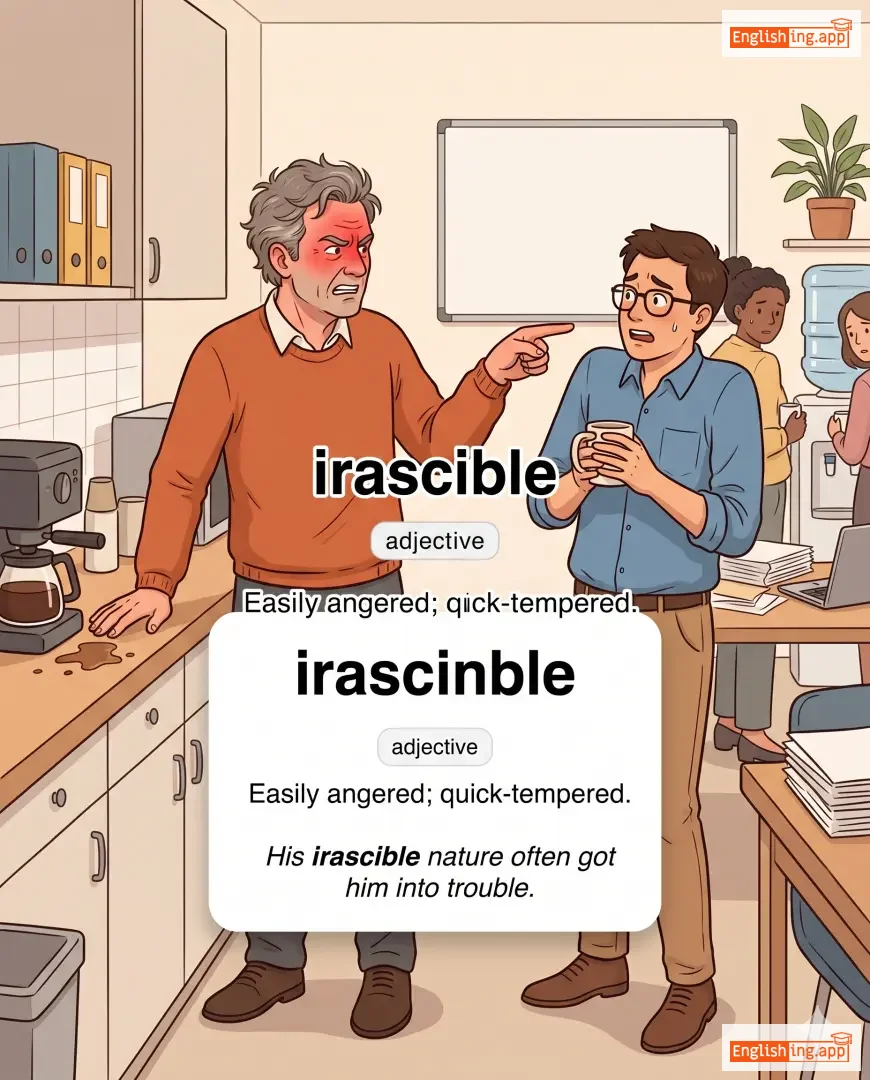
irascible definition card — visual illustration of the meaning
adjective
/ɪˈræsɪbl/
раздражительный (razdrazhitel'nyy)

Easily angered; quick-tempered.

"His irascible nature often got him into trouble."

"Его раздражительный характер часто приводил его в неприятности." (Yego razdrazhitel'nyy kharakter chasto privodil yego v nepriyatnosti.)
adjective
/aɪˈreɪt/
взбешённый (vzbeshyonny)

Extremely angry.

"The customer became irate after waiting for hours."

"Клиент стал взбешённым после того, как ждал несколько часов." (Klient stal vzbeshyonnym posle togo, kak zhdal neskol'ko chasov.)
noun
/aɪər/
гнев, ярость (gnev, yarost')

intense anger or rage

"The new policy provoked the ire of the employees."

"Новая политика вызвала гнев сотрудников." (Novaya politika vyzvala gnev sotrudnikov.)
noun
/ˌɪrɪˈdɛsəns/
играющие цвета (igrayushchie tsveta)

a play of lustrous, changing colors like those of a rainbow

"The butterfly's wings shimmered with iridescence."

"Крылья бабочки мерцали с игрой цветов." (Krylya babochki mertsali s igroy tsvetov.)
adjective
/ˌɪrɪˈdɛsənt/
переливчатый (perelivchatyy)

showing luminous colors that seem to change when seen from different angles

"She wore an iridescent dress that sparkled in the light."

"Она носила переливчатое платье, которое искрилось при свете." (Ona nosila perelivchatoe plat'ye, kotoroye iskrilos' pri svete.)
adjective/noun
/ˈaɪrɪʃ/
счастье (schastye)

relating to Ireland, its people, or its language

"The Irish countryside is very beautiful."

"Она не могла скрыть свое счастье, когда получила награду." (Ona ne mogla skryt' svoe schast'ye, kogda poluchila nagradu.)
verb
/ɜːrk/
раздражать (razdrazhat)

to annoy or irritate someone

"It irks me when people are late without calling."

"Меня раздражает, когда люди опаздывают без звонка." (Menya razdrazhayet, kogda lyudi opazdyvayut bez zvonka.)
adjective
/ˈɜːrksəm/
раздражающий (razdrazhayushchiy)

annoying or irritating

"Waiting in a long line is one of the most irksome tasks."

"Ожидание в длинной очереди — одна из самых раздражающих задач." (Ozhidanie v dlinnoi ocheredi — odna iz samykh razdrazhayushchikh zadach.)
noun/verb
/ˈaɪən/ or /ˈaɪərn/
железо / утюг (zhelezo / utyug)

a strong, hard metal used in construction; also to press clothes with heat

"He used an iron to smooth his shirt."

"Он использовал утюг, чтобы разгладить свою рубашку." (On ispol'zoval utyug, chtoby razgladit' svoyu rubashku.)
adjective
/ˈaɪərnˌklæd/
непоколебимый (ironclad)

impossible to change, break, or dispute; very strong and firm

"The company had an ironclad contract with its suppliers."

"Компания имела непоколебимый контракт с поставщиками." (Kompaniya imela nepokolebimyy kontrakt s postavshchikami.)
adjective
/aɪˈrɒnɪk/
ироничный, саркастичный (aironik)

happening in the opposite way to what is expected, often amusing or sarcastic

"It is ironic that the fire station burned down."

"Это иронично, что пожарная станция сгорела." (Eto ironichno, chto pozharnaya stantsiya sgorela.)
adjective
/aɪˈrɒnɪkəl/
ироничный (ironicny)

expressing irony; having the nature of irony

"Her ironical tone made everyone uncomfortable."

"Ее ироничный тон заставил всех чувствовать себя неудобно." (Eyo ironicnyj ton zastavil vsekh chuvstvovat' sebya neudobno.)
adverb
/aɪˈrɒnɪkli/
иронично (ironicno)

in a way that is contrary to what is expected or intended

"Ironically, the fire station burned down."

"Иронично, но пожарная станция сгорела." (Ironichno, no pozharnaya stantsiya sgrela.)
noun
/ˈaɪ.ərn.wʊd/
железное дерево (zheleznoye derevo)

a hard, dense wood from various trees; also the tree itself that produces small flowers

"The ironwood tree blooms with tiny white flowers."

"Железное дерево цветет с маленькими белыми цветами." (Zheleznoye derevo tsvyotet s malenkimi belymi tsvetami.)
noun
/ˈaɪrəni/
ирония (ironiya)

a situation that is strange or amusing because it is the opposite of what is expected; the use of words to convey the opposite meaning

"The irony of the situation was that the winner forgot his own prize."

"Ирония ситуации заключалась в том, что победитель забыл свой собственный приз." (Ironiya situatsii zaklyuchalas' v tom, chto pobeditel' zabyl svoy sobstvennyy priz.)