Словари

Словарь английского языка | Значения слов, определения и примеры

adjective
/ɪnˈtɒlərənt/
нетолерантный (netolerantnyy)

unwilling to accept or respect beliefs or behavior different from one's own

"He is intolerant of any opinion that differs from his own."
"Он не терпит никакого мнения, отличающегося от его собственного." (On ne terpit nikakogo mneniya, otlichayushchegosya ot ego sobstvennogo.)
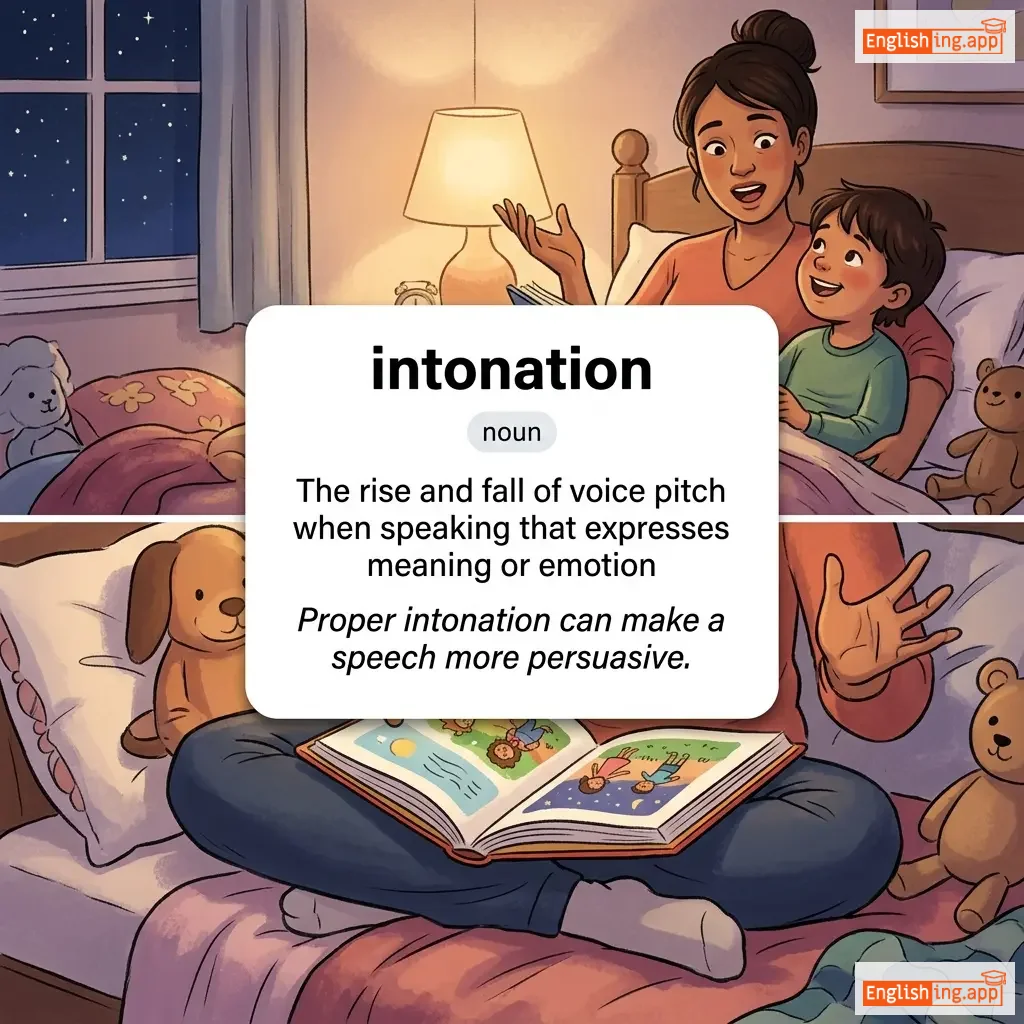
intonation definition card — visual illustration of the meaning
noun
ˌɪn.toʊˈneɪ.ʃən
интонация (intonaciya)

The rise and fall of voice pitch when speaking that expresses meaning or emotion

"Proper intonation can make a speech more persuasive."

"Правильная интонация может сделать речь более убедительной." (Pravil'naya intonaciya mozhet sdelat' rech' boleye ubeditel'noy.)
noun
/ɪnˈtɒksɪkənt/
интоксикант (intoksikant)

a substance, especially alcohol or a drug, that causes intoxication

"Alcohol is the most commonly used intoxicant in many cultures."

"Алкоголь - самый распространенный интоксикант в многих культурах." (Alkohol' - samyy raspredelennyy intoksikant v mnogikh kulturakh.)
verb
/ɪnˈtɒksɪkeɪt/
счастье (schast'ye)

to make someone lose control of their faculties or behavior due to alcohol or drugs

"The strong drink quickly intoxicated him."

"Она не могла скрыть своего счастья, когда получила награду." (Ona ne mogla skryt' svoego schast'ya, kogda poluchila nagradu.)
adjective
/ˌɪn.trəˈsɛl.jʊ.lər/
внутри клетки (vnutri kletki)

Located or occurring within a cell.

"The drug works by targeting intracellular bacteria."

"Лекарство действует, нацеливаясь на внутриклеточные бактерии." (Lekarstvo deystvuet, natselivayas' na vnutrikletochnye bakterii.)
intractable definition card — visual illustration of the meaning
adjective
/ɪnˈtræk.tə.bəl/
неуправляемый (neupravlyaemy)

Difficult or impossible to manage, control, or solve.

"The conflict has become an intractable problem."

"Конфликт стал неуправляемой проблемой." (Konflikt stal neupravlyaemoy problemoy.)
adjective
/ˌɪn.trəˈmjʊə.rəl/
внутри института (vnutri instituta)

Occurring within the walls of a single institution, especially a school or college.

"The college organizes intramural sports competitions every semester."
"Университет организует внутривузовские спортивные соревнования каждый семестр." (Universitet organizuyet vnutrivuzovskie sportivnye sorevnovaniya kazhdyy semestr.)
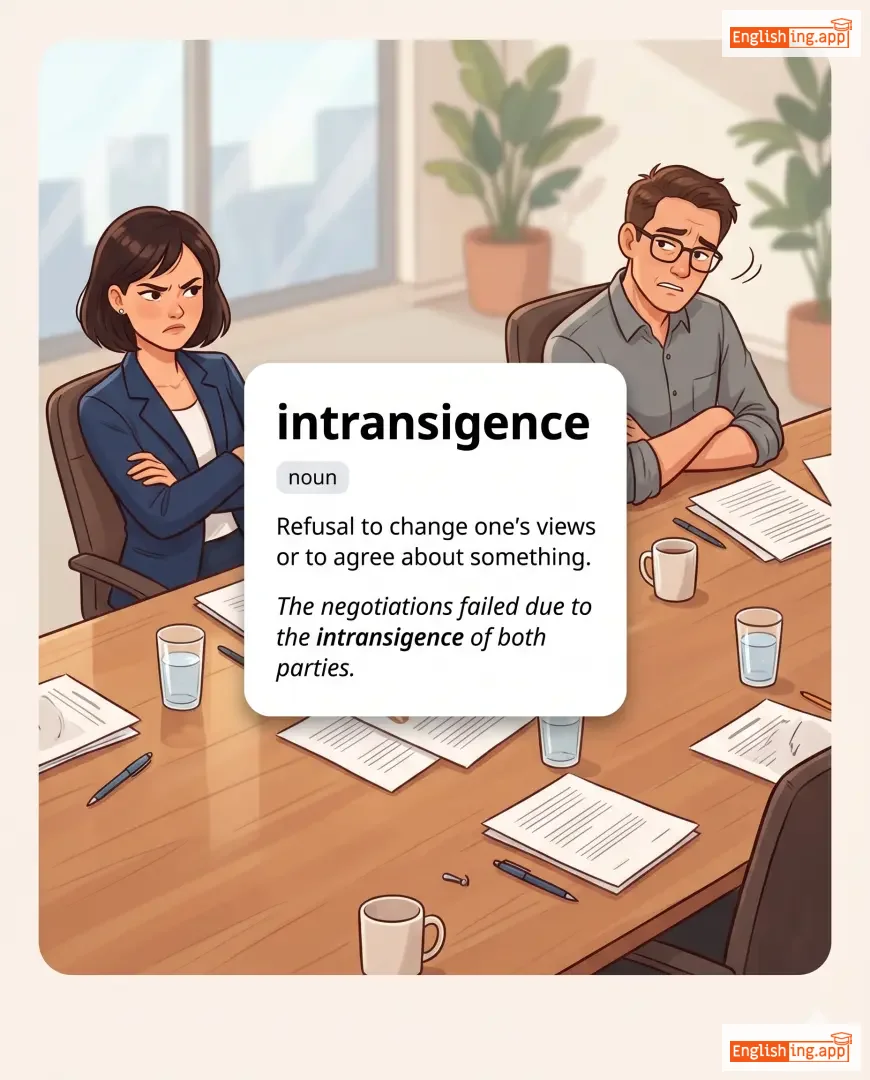
intransigence definition card — visual illustration of the meaning
noun
/ɪnˈtræn.sɪ.dʒəns/
неприклонность (nepriklonnost)

Refusal to change one's views or to agree about something.

"The negotiations failed due to the intransigence of both parties."
"Переговоры провалились из-за неприклонности обеих сторон." (Peregovory provalilis' iz-za nepriklonnosti obikh storon.)
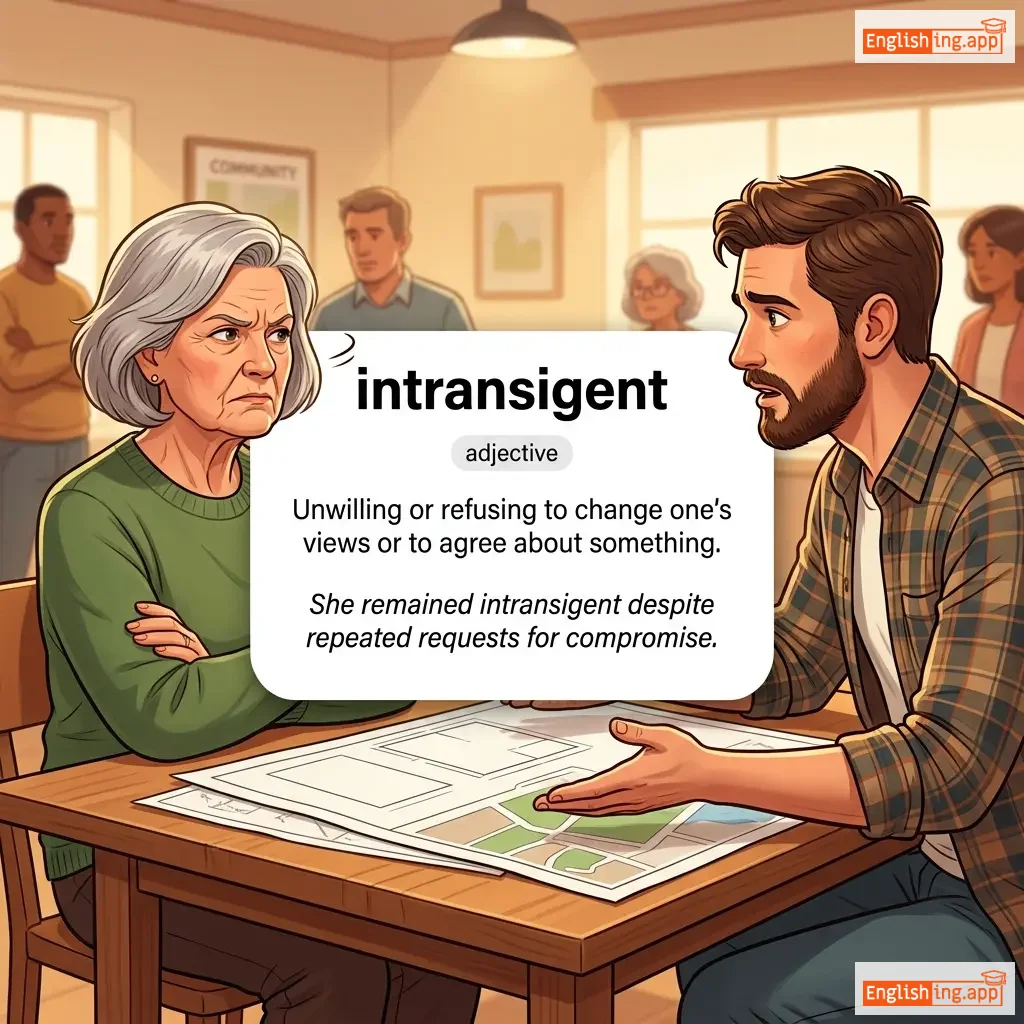
intransigent definition card — visual illustration of the meaning
adjective
/ɪnˈtræn.sɪ.dʒənt/
непоколебимый (nepokolebimy)

Unwilling or refusing to change one's views or to agree about something.

"She remained intransigent despite repeated requests for compromise."

"Она осталась непоколебимой, несмотря на многочисленные просьбы о компромиссе." (Ona ostalas' nepokolebimoy, nesmotrya na mnogochislennyye pros'by o kompromisse.)
adjective
/ɪnˈtrɛpɪd/
бесстрашный (besstrashny)

fearless and adventurous, often used humorously

"The intrepid traveler explored the jungle alone."

"Бесстрашный путешественник исследовал джунгли в одиночку." (Bessstrashnyy puteshestvennik issledoval dzhungli v odinochku.)
noun
/ˈɪntrɪkəsi/
сложность (slozhnost)

the quality of being very detailed or complicated

"The intricacy of the design impressed everyone."

"Сложность дизайна поразила всех." (Slozhnost' dizajna porazila vsekh.)
adjective
/ˈɪntrɪkət/
сложный (slozhny)

very detailed, complex, and difficult to understand

"The artist created an intricate pattern on the wall."

"Художник создал сложный узор на стене." (Khodozhnik sozdal slozhny uzor na stene.)
verb
/ɪnˈtriːɡ/
интриговать (intrigovat)

to arouse curiosity or interest; to make someone fascinated

"The mystery novel will intrigue any reader."

"Мистический роман интригует любого читателя." (Mistikieskiy roman intriguyet lyubogo chitatelya.)
adjective
/ɪnˈtriːɡɪŋ/
очень интересный и необычный; вызывающий любопытство (ochen' interesnyy i neobychnyy; vyzyvayushchiy lyubopytstvo)

very interesting and unusual; arousing curiosity

"The movie has an intriguing plot that keeps the audience hooked."

"У фильма есть интригующий сюжет, который держит зрителей в напряжении." (U fil'ma yest' intriguushchiy syuzhet, kotoryy derzhit zriteley v napryazhenii.)
intrinsic definition card — visual illustration of the meaning
adjective
/ɪnˈtrɪnzɪk/
внутренний (vnutrenniy)

belonging naturally; essential or inherent

"Honesty is an intrinsic part of good leadership."
"Честность - неотъемлемая часть хорошего лидерства." (Chestnost' - neot'emlemaya chast' khoroshego liderstva.)
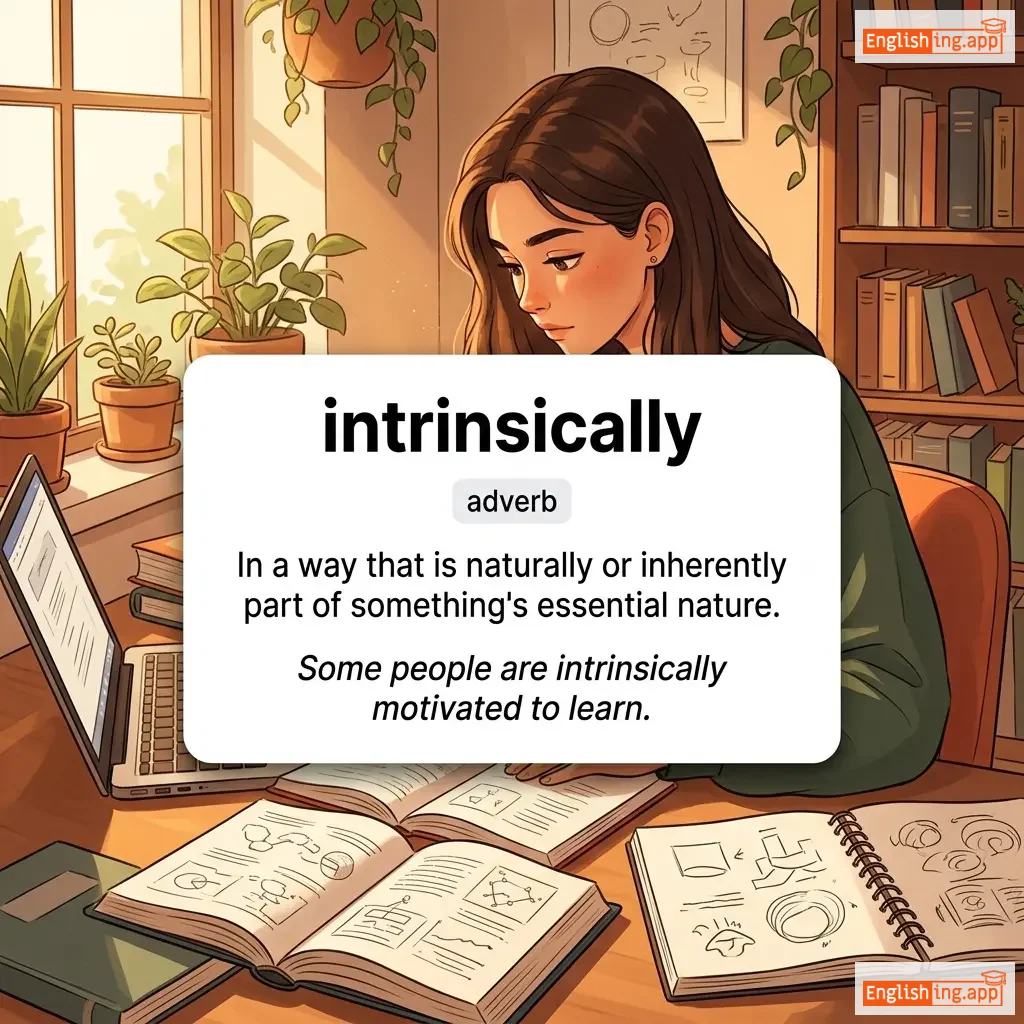
intrinsically definition card — visual illustration of the meaning
adverb
ɪnˈtrɪn.zɪ.kli
внутренне (vnutrenne)

In a way that is naturally or inherently part of something's essential nature.

"Some people are intrinsically motivated to learn."

"Некоторые люди интринсически мотивированы учиться." (Nekotorye lyudi intrinsicheski motivirovany uchit'sya.)
introduce definition card — visual illustration of the meaning
verb
/ˌɪntrəˈduːs/
представить (predstavit)

to present someone or something to another person or group

"He will introduce his new idea at the meeting."

"Он представит свою новую идею на встрече." (On predstavit svoyu novuyu ideyu na vstreche.)
noun
/ˌɪn.trəˈdʌk.ʃən/
введение (vvedenie)

the action of introducing something or someone; an opening or beginning part

"The professor gave a brief introduction before starting the lecture."

"Профессор сделал краткое введение перед началом лекции." (Professor sdelal kratkoe vvedenie pered nachalom lektsii.)
adjective
/ˌɪn.trəˈdʌk.tər.i/
вводный (vvodnyy)

Serving as an introduction; preliminary or preparatory.

"The professor gave an introductory lecture on economics."

"Профессор провел вводную лекцию по экономике." (Professor provel vvodnuyu lektsiyu po ekonomike.)
noun
/ˌɪn.trəˈɡreʃ.ən/
генетическая интрогрессия (geneticheskaya introgressiya)

The transfer of genetic information from one species to another through repeated backcrossing.

"Introgression plays a significant role in plant breeding."

"Интроцессия играет важную роль в селекции растений." (Introcessiya igraet vazhnuyu rol' v selektsii rasteniy.)
verb
/ˌɪn.trəˈmɪt/
вводить (vvodit)

To insert or introduce something into a place or body.

"The doctor carefully intromitted the instrument into the wound."

"Доктор аккуратно ввел инструмент в рану." (Doktor akkuratno vvel instrument v ranu.)
verb
/ˌɪn.trəˈspekt/
интроспектировать (introspektirovat)

To examine one's own thoughts, feelings, or mental state.

"He often introspects before making important decisions."
"Он часто интроспектирует перед принятием важных решений." (On chasto introspektiruet pered prinyatiem vazhnykh resheniy.)
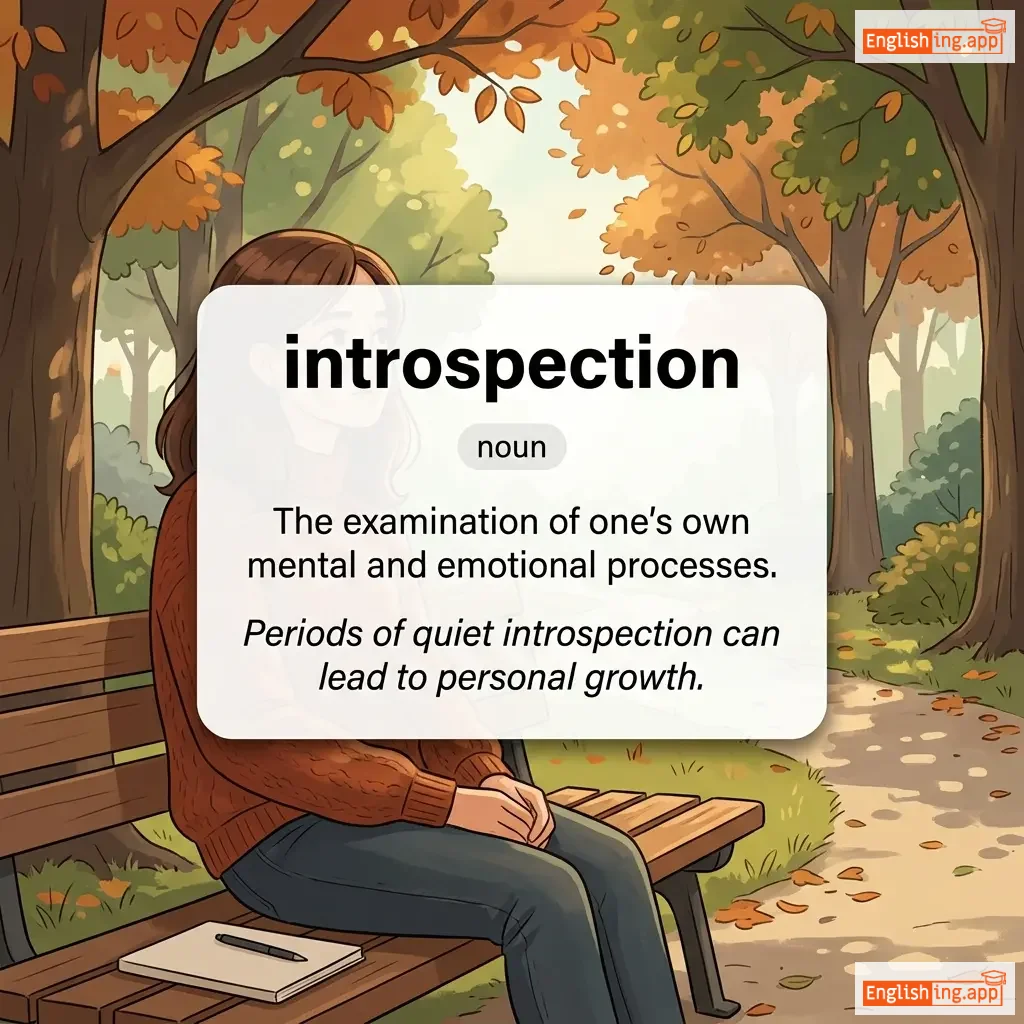
introspection definition card — visual illustration of the meaning
noun
/ˌɪn.trəˈspek.ʃən/
интроспекция (introspektsiya)

The examination of one's own mental and emotional processes.

"Periods of quiet introspection can lead to personal growth."

"Периоды спокойной интроспекции могут привести к личностному росту." (Periodi spokoynoy introspektsii mogut privesti k lichnostnomu rostu.)
introspective definition card — visual illustration of the meaning
adjective
/ˌɪn.trəˈspɛk.tɪv/
интроспективный (introspektivny)

Thoughtful and reflective, examining one's own thoughts and feelings.

"She became more introspective after moving to a new city."

"Она стала более интроспективной после переезда в новый город." (Ona stala boleye introspektivnoy posle pereyezda v novyy gorod.)
noun
/ˌɪn.trəˈvɜːr.ʒən/
интроверсия (introversiya)

The tendency to be inward-looking and shy, preferring solitary activities.

"Her introversion made it difficult for her to enjoy large parties."

"Её интроверсия затрудняла ей удовольствие от больших вечеринок." (Eyo introversiya zatrudnyala yey udovol'stvie ot bol'shikh vecherinok.)
noun
/ˈɪn.trə.vɜːrt/
интроверт (introvert)

A person who tends to be shy and prefers spending time alone rather than in groups.

"As an introvert, he preferred reading over attending parties."

"Как интроверт, он предпочитал читать, а не посещать вечеринки." (Kak introvert, on predpochital chitat', a ne poseschat' vecherinki.)
verb
/ɪnˈtruːd/
вмешиваться (vmeshivat'sya)

To enter a place or situation where one is not wanted or not invited.

"He felt embarrassed to intrude on their private conversation."
"Ему было неловко вмешиваться в их личный разговор." (Emu bylo nelovko vmeshivatsya v ikh lichnyy razgovor.)
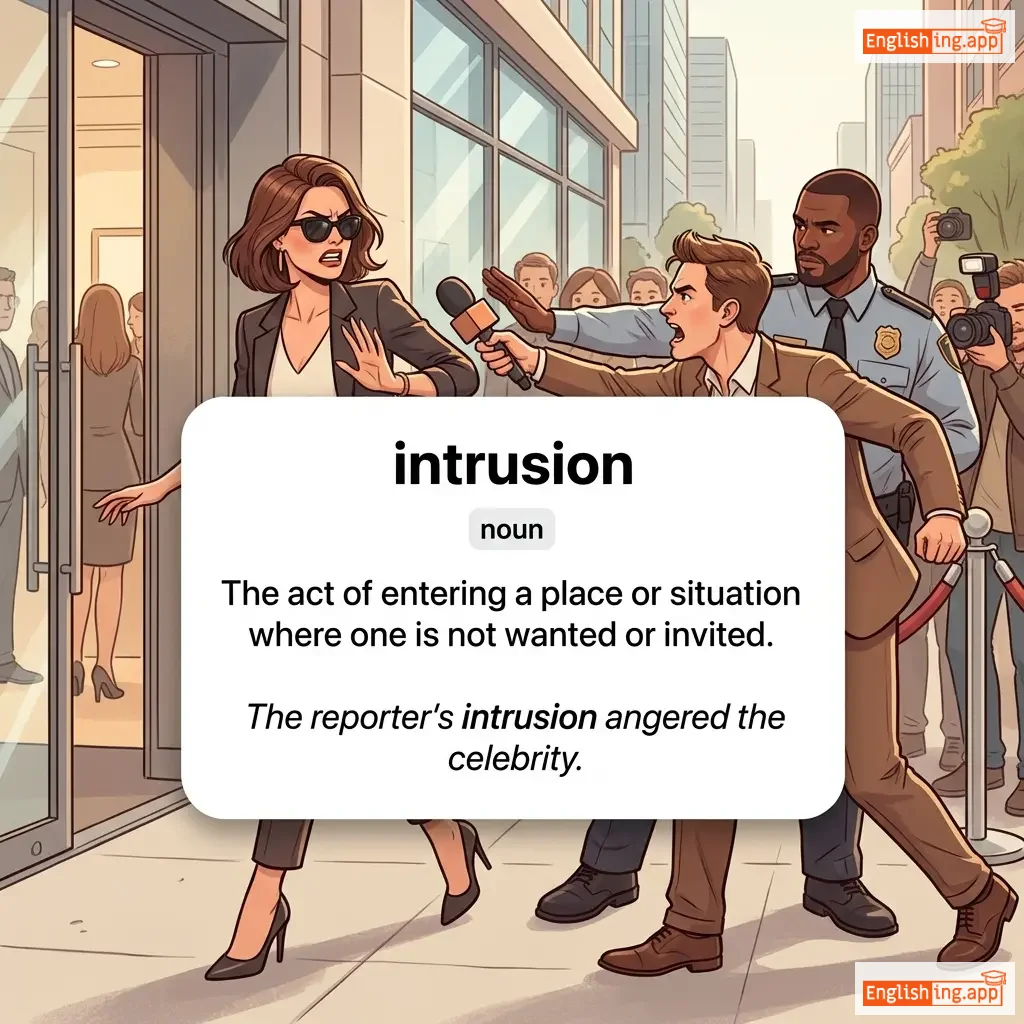
intrusion definition card — visual illustration of the meaning
noun
/ɪnˈtruː.ʒən/
нежелательное вторжение (neizhelatel'noye vtorzheniye)

The act of entering a place or situation where one is not wanted or invited.

"The reporter's intrusion angered the celebrity."

"Вторжение репортера разозлило знаменитость." (Vtorzheniye reportera razozyilo znamenitost'.)
intuition definition card — visual illustration of the meaning
noun
/ˌɪn.tjuˈɪʃ.ən/
интуиция (intuitsiya)

The ability to understand or know something immediately, without conscious reasoning.

"Her intuition told her that something was wrong."

"Ее интуиция подсказала ей, что что-то не так." (Eyo intuitsiya podskazala yey, chto chto-to ne tak.)
adjective
/ɪnˈtjuː.ɪ.tɪv/
интуитивный (intuitivny)

Based on instinctive understanding rather than reasoning.

"The software has an intuitive design that makes it easy to use."
"Программное обеспечение имеет интуитивно понятный интерфейс, который облегчает использование." (Programmnoe obespechenie imeet intuitivno ponyatnyy interfejs, kotoryy oblegchaet ispol'zovanie.)
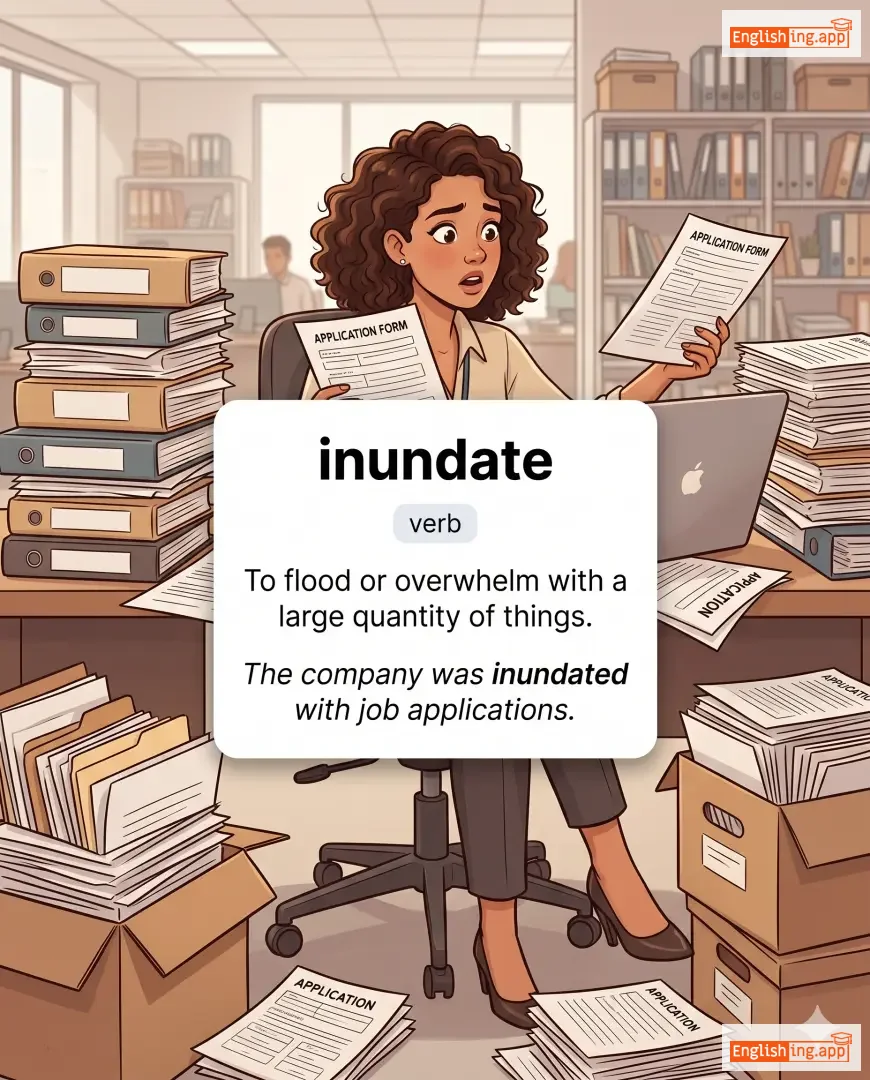
inundate definition card — visual illustration of the meaning
verb
/ˈɪn.ʌn.deɪt/
наводнять / переполнять (navodnyat' / perepolnyat')

To flood or overwhelm with a large quantity of things.

"The company was inundated with job applications."

"Компания была затоплена заявками на работу." (Kompaniya byla zatoplen a zayavkami na rabotu.)
noun
/ˌɪn.ʌnˈdeɪ.ʃən/
наводнение (navodnenie)

The act of flooding or overwhelming with water or things.

"The town suffered from a severe inundation after the heavy rains."

"Город пострадал от сильного наводнения после сильных дождей." (Gorod postradal ot sil'nogo navodneniya posle sil'nykh dozhdey.)
verb
/ɪˈnjʊər/
привыкать (privykat)

To become accustomed to something, especially something unpleasant.

"Soldiers quickly became inured to the harsh conditions."
"Солдаты быстро привыкли к суровым условиям." (Soldaty bystro privykli k surovym usloviyam.)
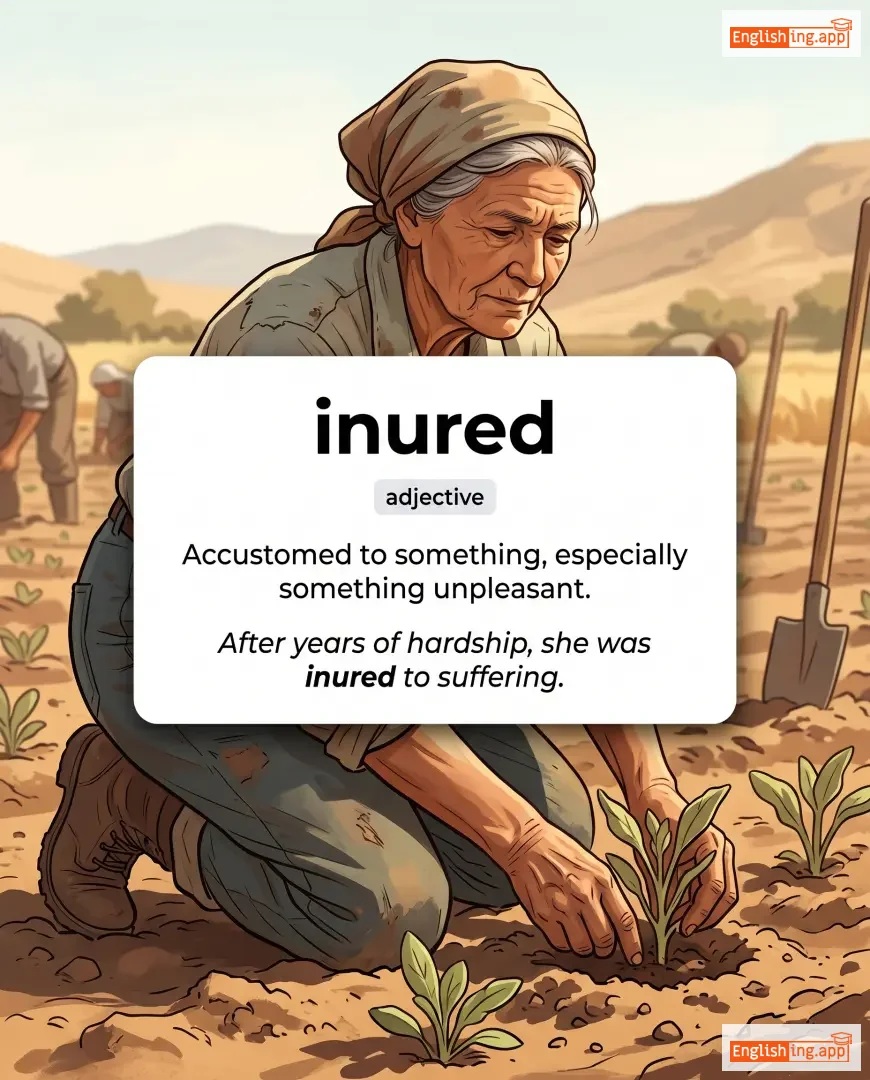
inured definition card — visual illustration of the meaning
adjective
/ɪˈnjʊərd/
привыкший (privikshiy)

Accustomed to something, especially something unpleasant.

"After years of hardship, she was inured to suffering."

"После лет страданий она привыкла к боли." (Posle let stradaniy ona privykla k boli.)
verb
/ɪnˈveɪd/
вторгнуться (vtorhnut'sya)

to enter a place or country forcefully, especially as an enemy

"The army invaded the neighboring country."

"Армия вторглась в соседнюю страну." (Armiya vtorglas' v sosednyuyu stranu.)
adjective, noun
/ˈɪnvəlɪd/ (adjective), /ɪnˈvælɪd/ (noun)
недействительный (nedeystvitel'nyy)

Not valid; having no force or effect. Also refers to a person too weak or ill to care for themselves.

"The court declared the contract invalid."

"Суд признал контракт недействительным." (Sud priznal kontrakt nedeystvitel'nym.)
verb
/ɪnˈvælɪdeɪt/
аннулировать (annulirovat)

To make something not valid or legally acceptable.

"The new evidence may invalidate the previous ruling."

"Новые доказательства могут аннулировать предыдущее решение." (Novye dokazyatel'stva mogut annulirovat' predydushchee reshenie.)
noun
/ˌɪnvəˈlɪdɪti/
недействительность (nedeistvitelnost)

the state of being invalid, legally void, or lacking force or validity

"The court ruled that the contract suffered from invalidity."

"Суд постановил, что договор был недействительным." (sud postanovil chto dogovor byl nedeistvitelnym)
adjective
/ɪnˈvæljʊəbl/
бесценный (bestsennyy)

Extremely useful or indispensable.

"Her advice proved invaluable to my success."

"Её совет оказался бесценным для моего успеха." (Eyo sovet okazalsya bestsennym dlya moyego uspekha.)
adjective
/ɪnˈvɛəriəbl/
неизменный (neizmenniy)

Not changing; constant and unchanging.

"His invariable kindness won him many friends."

"Его неизменная доброта принесла ему много друзей." (Yego neizmennaia dobrota prinesla yemu mnogo druzey.)
noun
/ɪnˈveɪʒən/
вторжение (vtorzhenie)

An instance of invading a country, region, or personal space with armed force or unwelcome presence.

"The army prepared for the possibility of an invasion."

"Армия подготовилась к возможности вторжения." (Armiya podgotovilas k vozmozhnosti vtorzheniya.)
adjective
/ɪnˈveɪsɪv/
инвазивный (invazivnyy)

Tending to spread harmfully, intruding aggressively, or encroaching beyond proper boundaries.

"The doctor explained that the procedure was minimally invasive."

"Врач объяснил, что процедура была минимально инвазивной." (Vrach ob'yasnil, chto protsedura byla minimal'no invazivnoy.)
invective definition card — visual illustration of the meaning
noun
/ɪnˈvɛktɪv/
оскорбительный язык (oskorbitel'nyy yazyk)

Insulting, abusive, or highly critical language.

"The politician’s speech was filled with invective against his opponents."

"Речь политика была полна оскорбительного языка против его оппонентов." (Rech' politika byla polna oskorbitelnogo yazyka protiv yego opponentov.)
verb
/ɪnˈveɪ/
жестоко критиковать (zhestoko kritikovat')

To speak or write about something with great hostility and criticism.

"He inveighed against the corruption in government."

"Он жестоко критиковал коррупцию в правительстве." (On zhestoko kritikoval korrupciyu v pravitel'stve.)
inveigle definition card — visual illustration of the meaning
verb
/ɪnˈveɪɡəl/
завлекать (zavlekat)

To persuade someone to do something by deception or flattery.

"She inveigled him into signing the contract."

"Она уговорила его подписать контракт." (Ona ugovorila ego podpisat' kontrakt.)
verb
/ɪnˈvɛnt/
изобретать (izobretat')

to create or design something that has not existed before

"Thomas Edison invented the electric bulb."
"Томас Эдисон изобрёл электрическую лампочку." (Tomas Edison izobrely elektricheskuyu lampochku.)
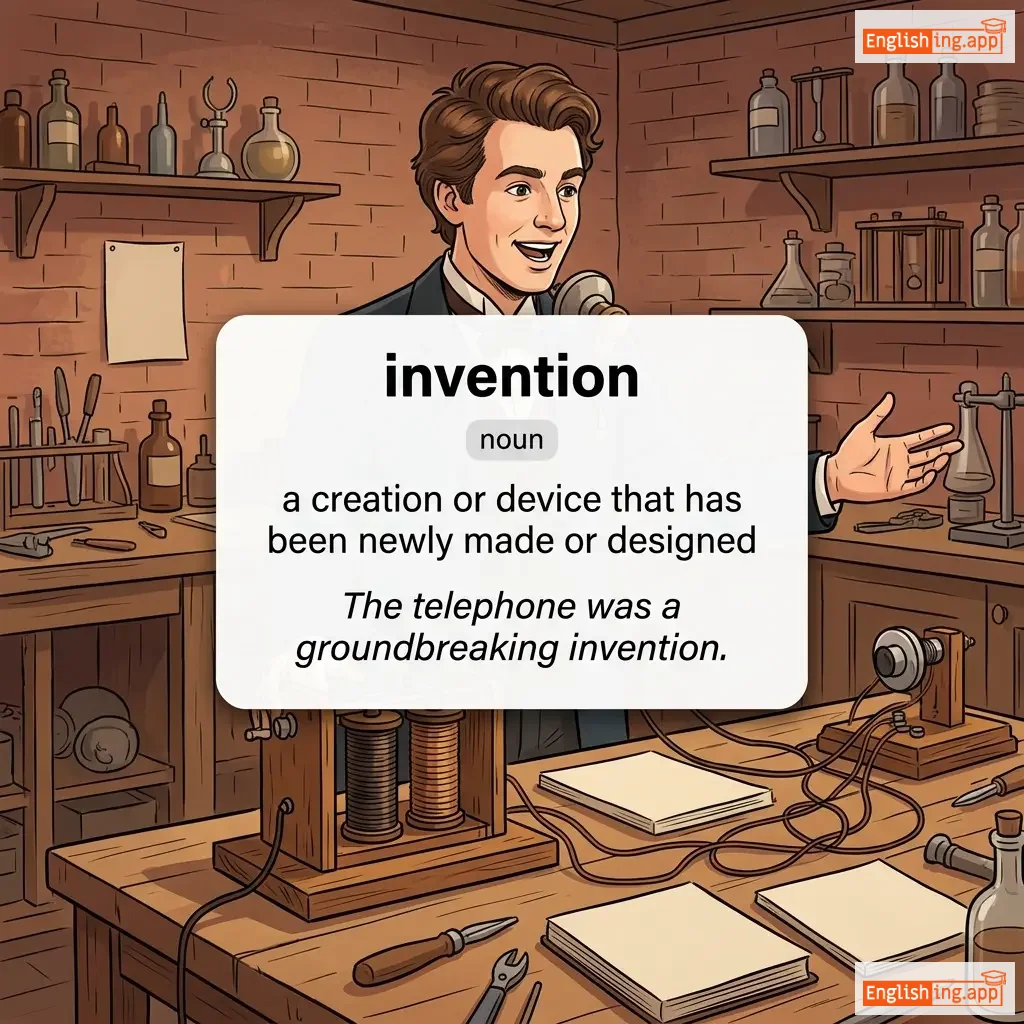
invention definition card — visual illustration of the meaning
noun
/ɪnˈvɛnʃən/
изобретение (izobretenie)

a creation or device that has been newly made or designed

"The telephone was a groundbreaking invention."

"Телефон был революционным изобретением." (Telefon byl revolyutsionnym izobreteniem.)
adjective
/ɪnˈvɛntɪv/
изобретательский (izobretatelskiy)

Having the ability to create or design new things or to think originally.

"The inventor was known for his inventive solutions to everyday problems."

"Изобретатель был известен своими изобретательскими решениями повседневных проблем." (Izobretatel' byl izvesten svoimi izobreterskimi resheniyami povsednevnykh problem.)
noun
/ɪnˈventər/
изобретатель (izobretatel)

a person who creates or designs something new, especially a device, method, or process

"The inventor patented her new medical device."

"Изобретатель запатентовал свое новое медицинское устройство." (Izobretatel zapatentoval svoe novoe meditsinskoe ustroistvo)
noun
/ˈɪnvənˌtɔːri/
инвентарь (inventar)

A complete list of items, such as goods in stock or property.

"The shopkeeper checked the inventory before opening the store."

"Продавец проверил инвентарь перед открытием магазина." (Prodavets proveril inventar' pered otkrytiyem magazina.)