Словари

Словарь английского языка | Значения слов, определения и примеры

adjective
/ˌɪnsəˈluːbriəs/
нездоровый (nezdorovyy)

Unhealthy or not conducive to well-being.

"They moved out of the insalubrious neighborhood for the sake of their health."

"Они переехали из нездорового района ради их здоровья" (Oni pereekhali iz nezdorovogo rayona radi ikh zdorov'ya)
adjective
/ɪnˈseɪn/
безумный (bezumniy)

mentally ill; extremely foolish or unreasonable

"The idea of jumping off the cliff seemed insane."

"Идея прыгнуть с утеса казалась безумной." (Ideya pryg'nut' s utesa kazalas' bezumnoy.)
noun
/ɪnˈsæn.ə.ti/
безумие; умственная болезнь (bezumie; umstvennaya bolezn)

the state of being seriously mentally ill; extreme foolishness or irrationality

"The defense lawyer argued that his client was not guilty by reason of insanity."

"Адвокат защиты утверждал, что его клиент не виновен по причине безумия." (Advokat zashchity utverzhdal, chto ego kliyent ne vinoven po prichine bezumiya.)
adjective
/ɪnˈseɪʃəbl̩/
неутолимый (neutolimy)

impossible to satisfy; always wanting more

"Her insatiable curiosity drove her to read every book in the library."

"Её неутолимое любопытство заставило её прочитать все книги в библиотеке." (Yeyo neutolimoe lyubopytstvo zastavilo yeyo prochitat' vse knigi v biblioteke.)
adjective
/ɪnˈseɪʃiət/
ненасытный (nenasytniy)

impossible to satisfy; always wanting more

"He had an insatiate desire for power."

"У него было ненасытное желание власти." (U nego bylo nenasytnoe zhelanie vlasti.)
verb
/ɪnˈskraɪb/
гравировать (gravirovat)

to write or carve words or symbols on a surface

"They inscribed her name on the trophy."

"Они выгравировали её имя на трофее." (Oni vygravirovali yeё imya na trofeje.)
adjective
/ɪnˈskruːtəbl̩/
счастье (schastye)

impossible to understand or interpret

"His inscrutable expression made it hard to know what he was thinking."

"Она не могла скрыть своего счастья, когда получила награду." (Ona ne mogla skryt' svoego schast'ya, kogda poluchila nagradu.)
noun
/ˈɪnsekt/
насекомое (nasekomoye)

a small animal with six legs and usually wings, such as a bee or an ant

"A butterfly is a beautiful type of insect."

"Бабочка — это красивый тип насекомого." (Babotchka — eto krasivyy tip nasekomogo.)
noun
/ɪnˈsek.tɪ.saɪd/
инсектицид (insektitsid)

a substance used for killing insects; a chemical pesticide that targets insects

"The farmer sprayed insecticide on his crops to protect them from harmful bugs."

"Фермер распылил инсектицид на свои посевы, чтобы защитить их от вредных насекомых." (Fermer raspyilil insektitsid na svoi posevy, chtoby zashchitit' ikh ot vrednykh nasekomykh.)
adjective
/ˌɪnsɪˈkjʊə/
неуверенный (neuverenny)

not confident or assured; uncertain and anxious

"She felt insecure about her performance in the exam."

"Она чувствовала себя неуверенной относительно своей работы на экзамене." (Ona chuvstvovala sebya neuverennoy otnositel'no svoey raboty na ekzamine.)
noun
/ˌɪnsɪˈkjʊərɪti/
неуверенность (neuverennost)

lack of confidence or assurance; a state of uncertainty or vulnerability

"Her insecurity made her doubt her abilities despite her experience."

"Её неуверенность заставила её сомневаться в себе." (eyo neuverennost zastavila eyo somnevatsya v sebe)
adjective
/ɪnˈsɛnseɪt/
бессердечный (besserdechniy)

lacking physical sensation or empathy; without feeling or sensitivity

"The dictator's insensate cruelty shocked the world."
"Безжалостная жестокость диктатора потрясла мир." (Bezzhalostnaya zhestokost' diktatora potryasla mir.)
insensible definition card — visual illustration of the meaning
adjective
/ɪnˈsɛnsəbl/
бессознательный (bessoznatel'nyy)

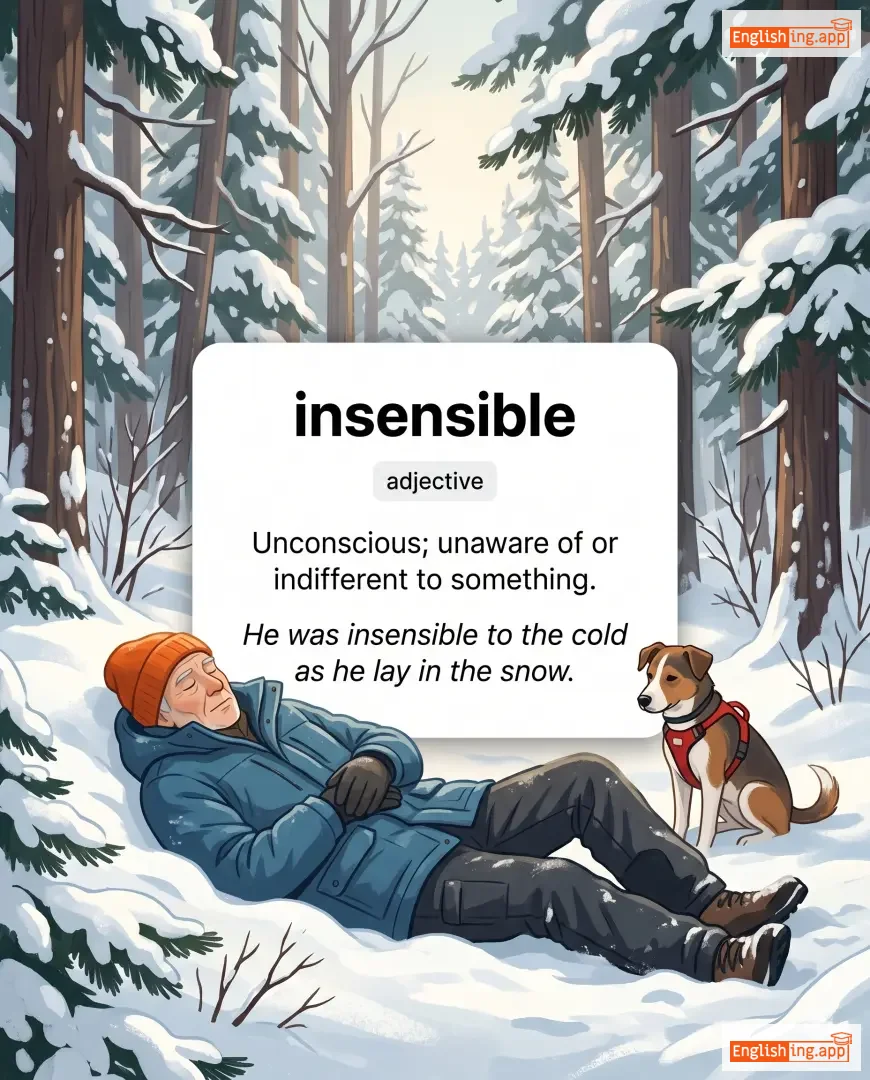
Unconscious; unaware of or indifferent to something.

"He was insensible to the cold as he lay in the snow."

"Он был бессознателен к холоду, когда лежал в снегу." (On byl bessoznatel'nыy k kholodu, kogda lezhал v snegu.)
adjective
/ɪnˈsɛnsətɪv/
бесчувственный (beshchuvstvennyy)

Showing or feeling no concern for others' feelings.

"His insensitive comment hurt her deeply."

"Его бесчувственный комментарий глубоко её ранил." (Ego beschuvstvennyy kommentariy gluboko yeyo ranil.)
adjective
/ɪnˈsɛnʃənt/
бессознательный (bessoznatel'nyy)

Lacking perception, consciousness, or sensation.

"The rock is an insentient object with no awareness."

"Камень — это бессознательный объект без сознания." (Kamen' — eto bessoznatel'nyy ob'yekt bez soznaniya.)
adjective
/ɪnˈsɛp(ə)rəbəl/
неразлучный (nerazluchnyj)

Unable to be separated or always together.

"The two friends have been inseparable since childhood."
"Эти два друга неразлучны с детства." (Ety dva druga nerazluchny s detstva.)
insert definition card — visual illustration of the meaning
verb
/ɪnˈsɜːt/
вставить (vstavit)

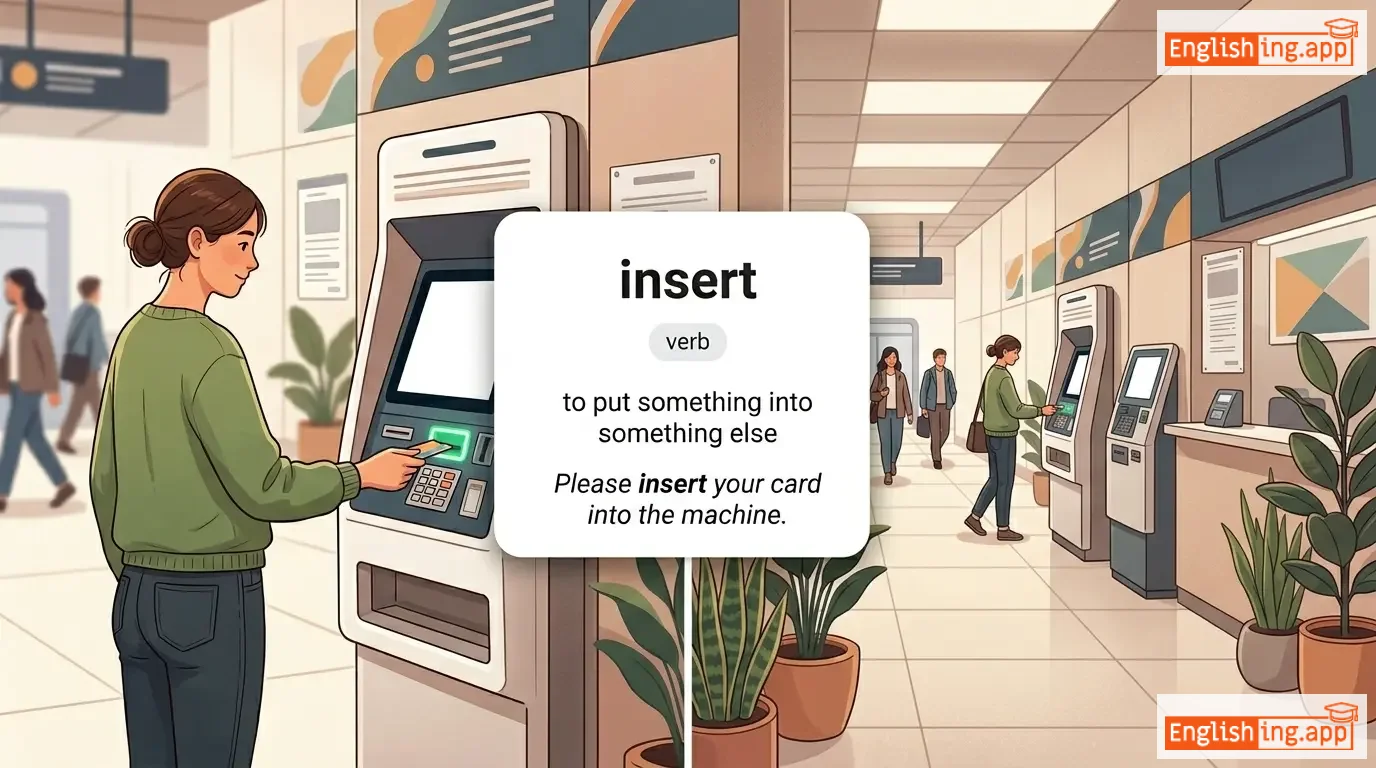
to put something into something else

"Please insert your card into the machine."

"Пожалуйста, вставьте вашу карту в машину." (Pozhaluysta, vstav'te vashu kartu v mashinu.)
noun
/ɪnˈsɜːʃən/
вставка (vstavka)

the action of inserting something into something else

"The insertion of the new data was completed successfully."

"Вставка новых данных была успешно завершена." (Vstavka novykh dannykh byla uspeshno zavershena.)
preposition/adverb/adjective/noun
/ˌɪnˈsaɪd/
счастье (schast'ye)

Situated within something; the inner part of something.

"She waited inside the house until the rain stopped."

"Она не могла скрыть своего счастья, когда получила награду." (Ona ne mogla skryt' svoego schast'ya, kogda poluchila nagradu.)
noun
/ɪnˈsaɪdə/
инсайдер (insayder)

a person within a group or organization who has access to confidential information

"He was an insider who knew all the company's secrets."

"Он был инсайдером, который знал все секреты компании." (On byl insayderom, kotoryy znal vse sekrety kompanii.)
adjective
/ɪnˈsɪdiəs/
коварный (kovarnyy)

Proceeding in a gradual, subtle way but with harmful effects.

"The insidious spread of misinformation can damage trust."

"Коварное распространение дезинформации может повредить доверие." (Kovarnoye rasprostraneniye dezinformatsii mozhet povredit' doverie.)
noun
/ˈɪnˌsaɪt/
проницательность (pritsytel'nost)

The ability to understand the true nature of something; deep understanding.

"Her insight into human behavior made her a successful psychologist."

"Её проницательность в области человеческого поведения сделала её успешным психологом." (Eyo pritsytel'nost' v oblasti chelovecheskogo povedeniya sdelala yeye uspeshnym psikhologom.)
adjective
/ˈɪnˌsaɪtfəl/
проницательный (pronitsatel'nyy)

Showing deep understanding or perceptiveness.

"The professor gave an insightful lecture on global economics."

"Профессор провел проницательную лекцию о глобальной экономике." (Professor provel pronitsatel'nuyu lekciyu o global'noy ekonomike.)
insightfulness definition card — visual illustration of the meaning
noun
ˌɪnˈsaɪtfʊlnɪs
проницательность, способность к анализу (pronicatel'nost', sposobnost' k analizu)

The capacity to gain an accurate and deep intuitive understanding of a person or thing.

"His insightfulness helped solve the complex problem."

"Его проницательность помогла решить сложную задачу." (Yego pronitsatel'nost' pomogla reshit' slozhnuyu zadachu.)
noun
/ɪnˈsɪɡniə/
знак (znak)

A badge or symbol that shows rank, position, or membership.

"The soldier proudly wore the insignia of his regiment."

"Солдат гордо носил знак своего полка." (Soldat gordo nosil znak svoego polka.)
noun
/ˌɪnsɪɡˈnɪfɪkəns/
незначительность (neznachitel'nost')

The quality of being unimportant or trivial.

"He felt a sense of insignificance in the vast universe."

"Он почувствовал чувство незначительности в безбрежной вселенной." (On pochuvstvoval chuvstvo neznachitel'nosti v bezbreshnoy vselennoi.)
adjective
/ˌɪnsɪɡˈnɪfɪkənt/
неважный (nevazhny)

Too small or unimportant to be worth considering.

"The cost was so insignificant that nobody noticed it."
"Затраты были настолько незначительными, что никто их не заметил." (Zatraty byli nastol'ko neznačitel'nymi, čto nikto ikh ne zameščil.)
insinuate definition card — visual illustration of the meaning
verb
/ɪnˈsɪnjueɪt/
намекать (namekat)

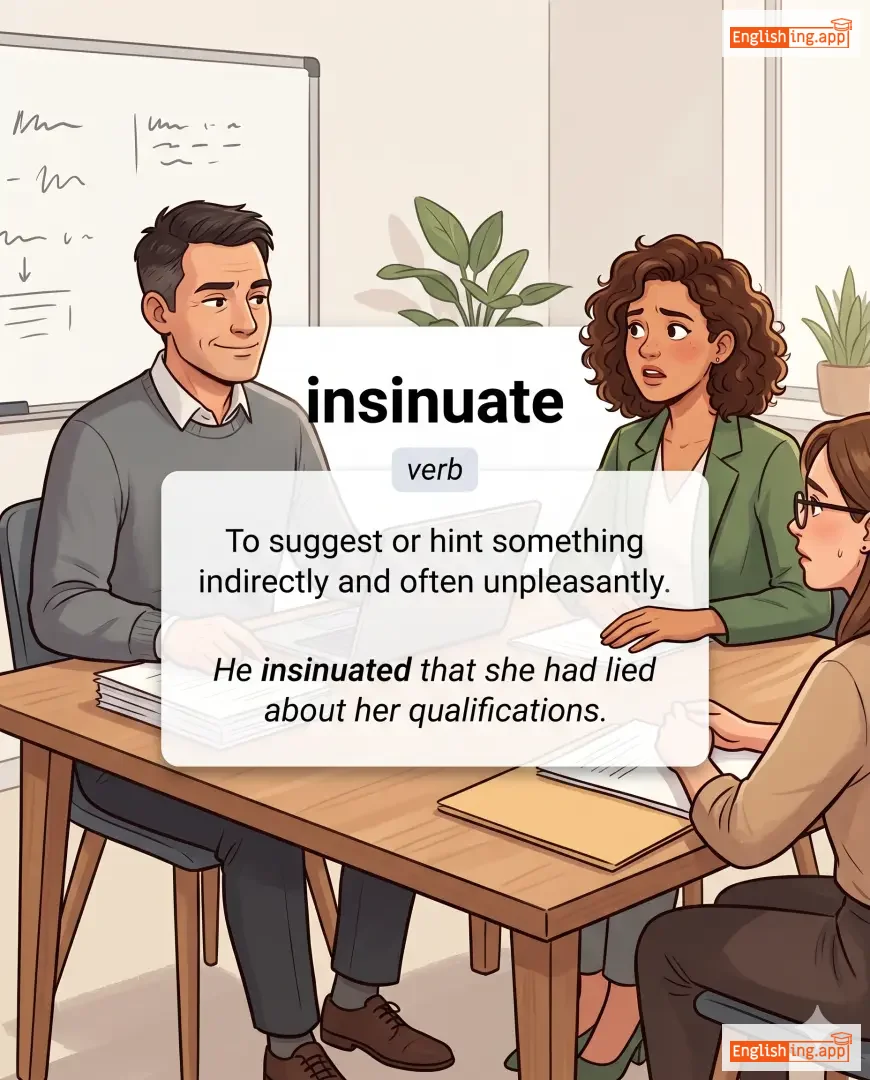
To suggest or hint something indirectly and often unpleasantly.

"He insinuated that she had lied about her qualifications."

"Он намекнул, что она соврала о своих квалификациях." (On nameknul, chto ona sovrala o svoikh kvalifikatsiyakh.)
insipid definition card — visual illustration of the meaning
adjective
/ɪnˈsɪpɪd/
безвкусный (bezvkusny)

lacking flavor, interest, or excitement; dull

"The soup was insipid and needed more seasoning."

"Суп был безвкусным и требовал больше приправ." (Sup byl bezvkusnym i trebyval bolshe prigrav.)
insist definition card — visual illustration of the meaning
verb
/ɪnˈsɪst/
настаивать (nastayivat)

to demand something forcefully or firmly

"She insisted on paying the bill."

"Она настояла на оплате счета." (Ona nastoyala na oplate scheta.)
noun
/ɪnˈsɪstəns/
настоящее требование (nastoyashchee trebovanie)

the act of demanding something firmly or repeatedly

"At his insistence, we stayed longer."

"По его настоянию мы остались дольше." (Po ego nastoyaniyu my ostalis' dol'she.)
adjective
/ɪnˈsɪstənt/
настоя́тельный (nastoyatel'nyy)

demanding something firmly and refusing to accept no

"The child was insistent on getting a new toy."

"Ребёнок был настойчив в получении новой игрушки." (Rebyonok byl nastoychiv v poluchenii novoy igrooshki.)
noun
/ˈɪnsələns/
наглость (naglost)

rude or disrespectful behavior

"The teacher was shocked by the student's insolence."

"Учитель был шокирован наглостью студента." (Uchitel' byl shokirovan naglost'yu studenta.)
adjective
/ˈɪnsələnt/
наглый, высокомерный (naglyj, vysokomernyj)

showing a rude and arrogant lack of respect

"The insolent student refused to follow the teacher's instructions."

"Наглый студент отказался следовать указаниям учителя." (Naglyj student otkazalsya sleduvat' ukazaniyam uchitelya.)
insolvency definition card — visual illustration of the meaning
noun
/ɪnˈsɒlvənsi/
банкротство (bankrotstvo)

the state of being unable to pay money owed; bankruptcy

"The company declared insolvency after years of financial struggles."

"Компания объявила о банкротстве после многих лет финансовых трудностей." (Kompaniya ob'yavila o bankrotstve posle mnogikh let finansovykh trudnostey.)
adjective
/ɪnˈsɒlvənt/
несостоятельный (nesostoyatel'nyy)

unable to pay debts owed

"The insolvent firm could not meet its financial obligations."

"Неспособная компания не смогла выполнить свои финансовые обязательства." (Nesposobnaya kompaniya ne smogla vypolnit' svoi finansovye obyazatel'stva.)
noun
/ɪnˈsɒmniə/
бессонница (bessonitsa)

the condition of being unable to sleep

"She suffered from insomnia due to stress at work."

"Она страдала от бессонницы из-за стресса на работе." (Ona stradala ot bessonnitsy iz-za stresa na rabote.)
adverb
/ˌɪnsəʊˈmʌtʃ/
настолько (nastol'ko)

to such an extent

"He was insomuch tired that he could hardly stand."

"Он был настолько уставшим, что едва мог стоять." (On byl nastol'ko ustavshim, chto edva mog stoyat'.)
noun
/ɪnˈsuːsiəns/
беспечность (bespechnost)

Casual lack of concern; indifference.

"She carried herself with an air of insouciance, unbothered by the challenges ahead."

"Она шла с видом беспечности, не беспокоясь о предстоящих трудностях." (Ona shla s vidom bespechnosti, ne bespokoyas' o predstoyashikh trudnostyakh.)
insouciant definition card — visual illustration of the meaning
adjective
/ɪnˈsuːsiənt/
беззаботный (bezzabotnyy)

Showing a casual lack of concern; carefree.

"He gave an insouciant shrug and walked away."

"Он беззаботно пожал плечами и ушел." (On bezzabotno pozhal plechami i ushel.)
inspect definition card — visual illustration of the meaning
verb
/ɪnˈspɛkt/
осматривать (osmatrivat)

To look at something carefully to check for problems or details.

"The engineer inspected the bridge for cracks."

"Инженер проверил мост на трещины." (Inzhener proveril most na treshchiny.)
noun
/ɪnˈspekʃən/
инспекция (inspektsiya)

a careful examination of something, especially to check that it is correct or safe

"The building passed the safety inspection last week."

"Здание прошло проверку безопасности на прошлой неделе." (Zdanije proshlo proverku bezopasnosti na proshloj nedele.)
noun
/ɪnˈspɛktər/
инспектор (inspektor)

An official employed to ensure regulations are obeyed or standards are met.

"The inspector carefully checked the restaurant's kitchen for hygiene standards."

"Инспектор тщательно проверил кухню ресторана на соответствие санитарным стандартам." (Inspektor tshchatel'no proveril kukhnyu restorana na sootvetstvie sanitar'nym standartam.)
inspiration definition card — visual illustration of the meaning
noun
/ˌɪnspəˈreɪʃən/
вдохновение (vdohnovenie)

the process of being mentally stimulated to do or feel something creative or positive

"Her courage was a great inspiration to others."

"Её мужество было большой вдохновляющей силой для других." (Yeyo muzhestvo bylo bol'shoy vdokhnovlyayushchey siloy dlya drugikh.)
inspire definition card — visual illustration of the meaning
verb
/ɪnˈspaɪər/
счастье (schastye)

To fill someone with the urge or ability to do or feel something.

"The teacher's words inspired the students to work harder."

"Она не могла скрыть своего счастья, когда получила награду." (Ona ne mogla skryt' svoego schast'ya, kogda poluchila nagradu.)
noun
/ˌɪnstəˈbɪləti/
нестабильность (nestabilnost)

lack of stability or balance; tendency to change, fail, or collapse easily

"Political instability has slowed economic growth in the region."

"Политическая нестабильность замедлила экономический рост в регионе." (Politicheskaya nestabilnost zamedlila ekonomicheskiy rost v regione)
adjective
/ɪnˈsteɪbəl/
нестабильный (nestabilnyi)

not stable; liable to change, collapse, or fail; lacking firmness or reliability

"The instable political situation worried foreign investors."

"Нестабильная политическая ситуация обеспокоила иностранных инвесторов." (Nestabilnaya politicheskaya situatsiya obespokoila inostrannykh investorov)
verb
/ɪnˈstɔːl/
устанавливать (ustanavlivat')

To place or fix equipment or software so it is ready for use.

"He installed the new software on his computer."

"Он установил новое программное обеспечение на свой компьютер." (On ustanovil novoe programnoe obespechenie na svoi komp'yuter.)
installation definition card — visual illustration of the meaning
noun
/ˌɪnstəˈleɪʃən/
инсталляция (installyatsiya)

the act or process of putting something in position and making it ready for use

"The installation of the new software took less than an hour."

"Установка нового программного обеспечения заняла меньше часа." (Ustanovka novogo programmnogo obespecheniya zanyala men'she chasa.)
noun
/ˈɪnstəns/
пример (primer)

An example or single occurrence of something.

"This is just one instance of his generosity."

"Это всего лишь пример его щедрости." (Eto vsego lish' primer ego shchedrosti.)