Словари

Словарь английского языка | Значения слов, определения и примеры

noun/verb
/hɛm/
подгибка ткани (podgibka tkani)

the edge of a piece of cloth that is folded and sewn; to fold and sew the edge of cloth

"She hemmed the dress to make it shorter."

"Она обработала край платья, чтобы укоротить его." (Ona obrabotala kraj plat'ya, chtoby ukorotit' ego.)
hemophilia definition card — visual illustration of the meaning
noun
ˌhiː.məˈfɪl.i.ə
гемофилия (gemofiliya)

A medical condition in which the ability of the blood to clot is severely reduced, causing the sufferer to bleed severely from even a slight injury.

"Hemophilia treatment benefits from genetic editing."

"Лечение гемофилии приносит пользу от генетического редактирования." (Lecheniye gemofilii prinosit pol'zu ot geneticheskogo redaktirovaniya.)
noun/verb
/ˈhɛmərɪdʒ/
геморрагия (gemorragija)

A significant loss of blood from a ruptured blood vessel, or to lose blood heavily.

"The patient suffered a severe brain hemorrhage."

"Пациент перенёс тяжёлую мозговую геморрагию." (Patsijent perenjos' tjazhëluju mozgovuju gemorragiju.)
noun
/hɛn/
курица (kuritsa)

female chicken

"The hen laid fresh eggs in the nest."

"Курица снесла свежие яйца в гнезде." (Kuritsa snesla svezhie yaytsa v gnezde.)
adverb
/hɛns/
поэтому (poetomu)

for this reason; as a result

"She was the best candidate, hence she was chosen for the job."

"Она была лучшим кандидатом, поэтому ее выбрали для этой работы." (Ona byla luchshim kandidatom, poetomu yejo vybrali dlya etoy raboty.)
noun
/ˈhen.ə/
хна (khna)

a reddish-brown dye made from the powdered leaves of a tropical shrub, used to color hair and decorate skin

"The bride's hands were beautifully decorated with intricate henna patterns for her wedding ceremony."

"Руки невесты были красиво украшены сложными узорами хны для ее свадебной церемонии." (Ruki nevesty byli krasivo ukrasheny slozhnymi uzorami khny dlya yeye svadebnoy tseremonii.)
verb
/ˈhɛnˌpɛk/

To continually criticize, nag, or dominate (especially a husband).

"He felt henpecked by his overly controlling wife."

noun
/ˈhɛptəˌɡɒn/
гептагон (geptagon)

A polygon with seven sides and seven angles.

"The math teacher drew a heptagon on the board."

"Учитель математики нарисовал гептагон на доске." (Uchitel' matematiki narisoval geptagon na doske.)
noun
/ˈhɛptɑːrki/
гептархия (geptarkhiya)

A group of seven rulers or governments, especially the seven Anglo-Saxon kingdoms in early England.

"The history book described the heptarchy of Anglo-Saxon England."

"Историческая книга описывала гептархию англосаксонской Англии." (Istoricheskaya kniga opisivala geptarkhiyu anglosaksonskoy Anglii.)
pronoun
/hɜːr/
её (eyo)

used to refer to a female person or animal already mentioned or easily identified

"I saw her at the park yesterday."

"Я видел её в парке вчера." (Ya videl yeyo v parke vchera.)
noun/verb
/ˈhɛrəld/
глашатай (glashatay)

A person or thing that announces or signals the approach of something; to announce or signal.

"The blooming flowers herald the arrival of spring."

"Цветущие цветы предвещают приход весны." (Tsvetushchie tsvety predveshchayut prikhod vesny.)
noun
/hɜːb/ (US) /hɜːb/ or /ɜːb/
травы (travy)

a plant used for flavoring food, medicine, or perfume

"Basil is a popular herb used in Italian cuisine."

"Базилик - популярная трава, используемая в итальянской кухне." (Bazilik - populyarnaya trava, ispol'zuyemaya v italyanskoy kukhne.)
adjective
/hɜːrˈbeɪʃəs/
травянистый (travyanistyy)

Relating to or resembling herbs; plants with soft, non-woody stems.

"The garden was filled with herbaceous plants that thrived in the summer."
"Сад был заполнен травянистыми растениями, которые процветали летом." (Sad byl zapolnen travyanistymi rasteniyami, kotorye protsvetali letom.)
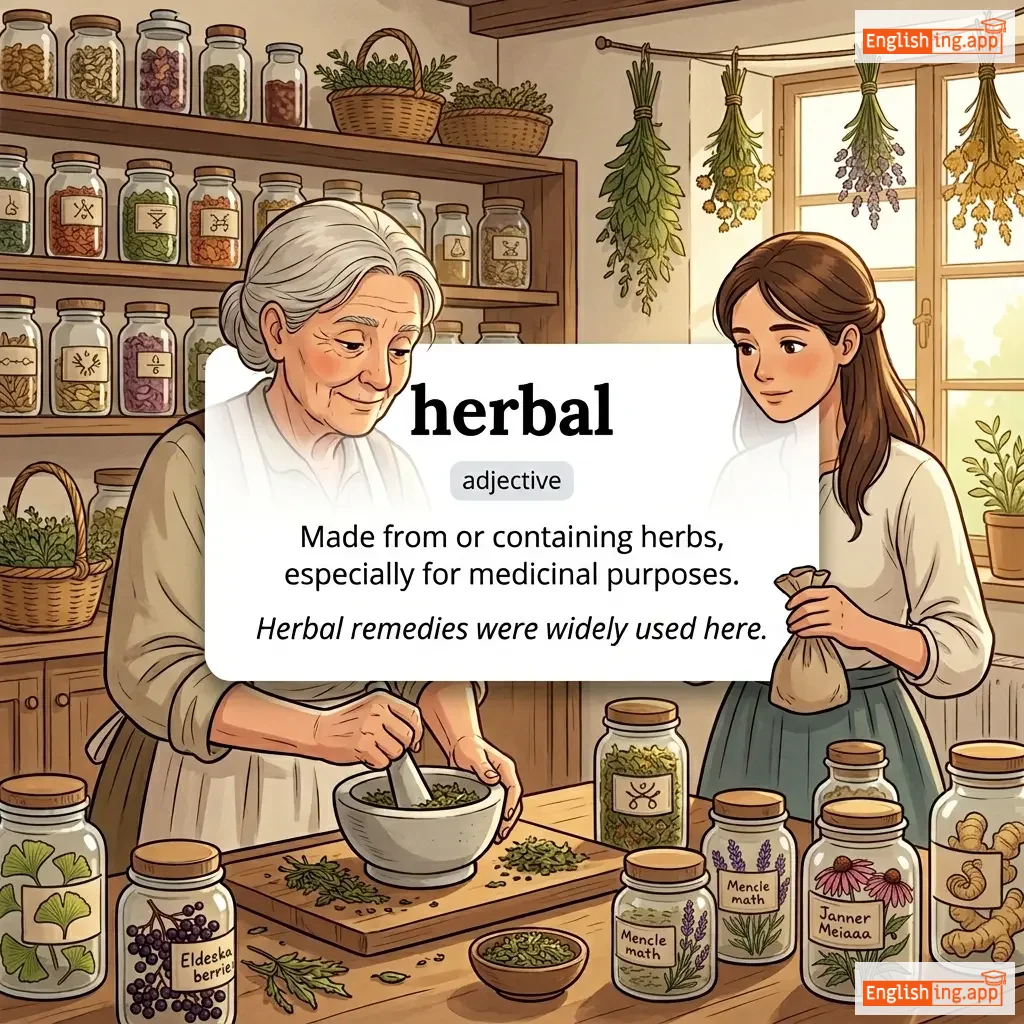
herbal definition card — visual illustration of the meaning
adjective
/ˈhɜː.bəl/
травяной (travyanoy)

Made from or containing herbs, especially for medicinal purposes.

"Herbal remedies were widely used here."

"Травяные средства широко использовались здесь." (Travyanye sredstva shiroko ispol'zovalis' zdes'.)
noun
/hɜːrˈbɛəriəm/
гербарий (gerbariy)

A collection of preserved plant specimens and associated data used for scientific study.

"The university maintains a large herbarium for research and education."

"Университет поддерживает большое гербарий для исследований и образования." (Universitet podderzhivayet bol'shoye gerbariy dlya issledovaniy i obrazovaniya.)
noun
/ˈhɜːrbɪsaɪd/
гербицид (gerbitsid)

A chemical substance used to kill unwanted plants, especially weeds.

"Farmers used herbicide to protect their crops from invasive weeds."
"Фермеры использовали гербициды, чтобы защитить свои культуры от вторгающихся сорняков." (Fermery ispol'zovali gerbitsidy, chtoby zashchitit' svoi kul'tury ot vtorzhayushchikhsya sornyakov.)
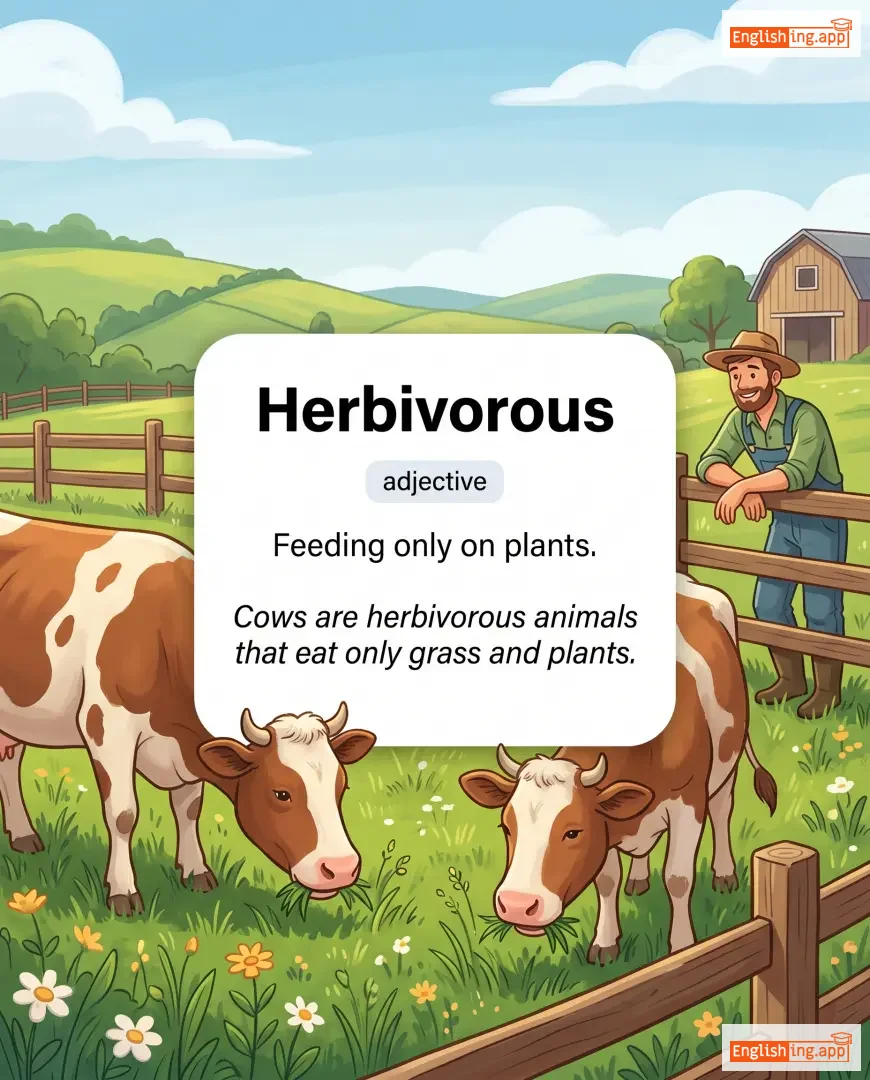
Herbivorous definition card — visual illustration of the meaning
adjective
/hɜːrˈbɪvərəs/
травоядное (travyodnoe)

Feeding only on plants.

"Cows are herbivorous animals that eat only grass and plants."

"Коровы — травоядные животные, которые едят только траву и растения." (Korovy — travyodnye zhivotnye, kotorye edyat tol'ko travu i rastenija.)
adjective
/ˌhɜːrkjʊˈliːən/
очень трудный (ochen' trudnyy)

Requiring great strength or effort; very difficult to perform.

"It was a herculean task to rebuild the city after the disaster."

"Это была очень трудная задача — восстановить город после катастрофы." (Eto byla ochen' trudnaya zadacha — vosstanovit' gorod posle katastrofy.)
noun/verb
/hɜːrd/
стадо (stado)

a large group of animals of the same type that live and feed together; or to gather animals into a group.

"The shepherd herded the sheep into the pen."

"Пастух загнал овец в загон." (Pastukh zagnal ovec v zagon.)
adverb
/hɪr/
здесь (zdes)

in, at, or to this place

"Please come here quickly."

"Пожалуйста, приходите сюда быстро." (Pozhaluysta, prikhodite syuda bystro.)
adverb/noun
/ˌhɪərˈæftər/
с этого момента / загробная жизнь (s etogo momenta / zagrobnaya zhizn)

from now on; in the future; also refers to life after death.

"Hereafter, all reports must be submitted electronically."

"С этого момента все отчеты должны быть отправлены электронным способом." (S etogo momenta vse otchety dolzhny byt' otpravleny elektronnyim sposobom.)
adjective
/həˈrɛdəˌtɛri/
наследственный (nasledstvenny)

passed from parents to their children through genes or by inheritance.

"Diabetes can be a hereditary condition."

"Диабет может быть наследственным заболеванием." (Diabet mozhet byt' nasledstvennym zabolevaniem.)
noun
/ˈhɛrəsi/
ересь (yeres)

belief or opinion that goes against established religious doctrine or accepted beliefs.

"In medieval times, heresy was often punished severely."

"В Средние века ересь часто строго наказывалась." (V Srednie veka eres' chasto strogo nakazyvalas'.)
noun
/ˈhɛrətɪk/
еретик (yeretik)

a person who holds beliefs that go against established religious teachings or accepted beliefs.

"The church declared him a heretic for his radical ideas."

"Церковь объявила его еретиком за его радикальные идеи." (Tserkov' ob'yavila ego yeretikom za ego radikal'nye idei.)
adjective
/həˈrɛtɪkəl/
еретический (yereticheskiy)

Relating to or characterized by departure from accepted beliefs or standards, especially in religion.

"The priest condemned the book as heretical."
"Священник осудил книгу как еретическую." (Svyashchennik osudil knigu kak yereticheskuyu.)
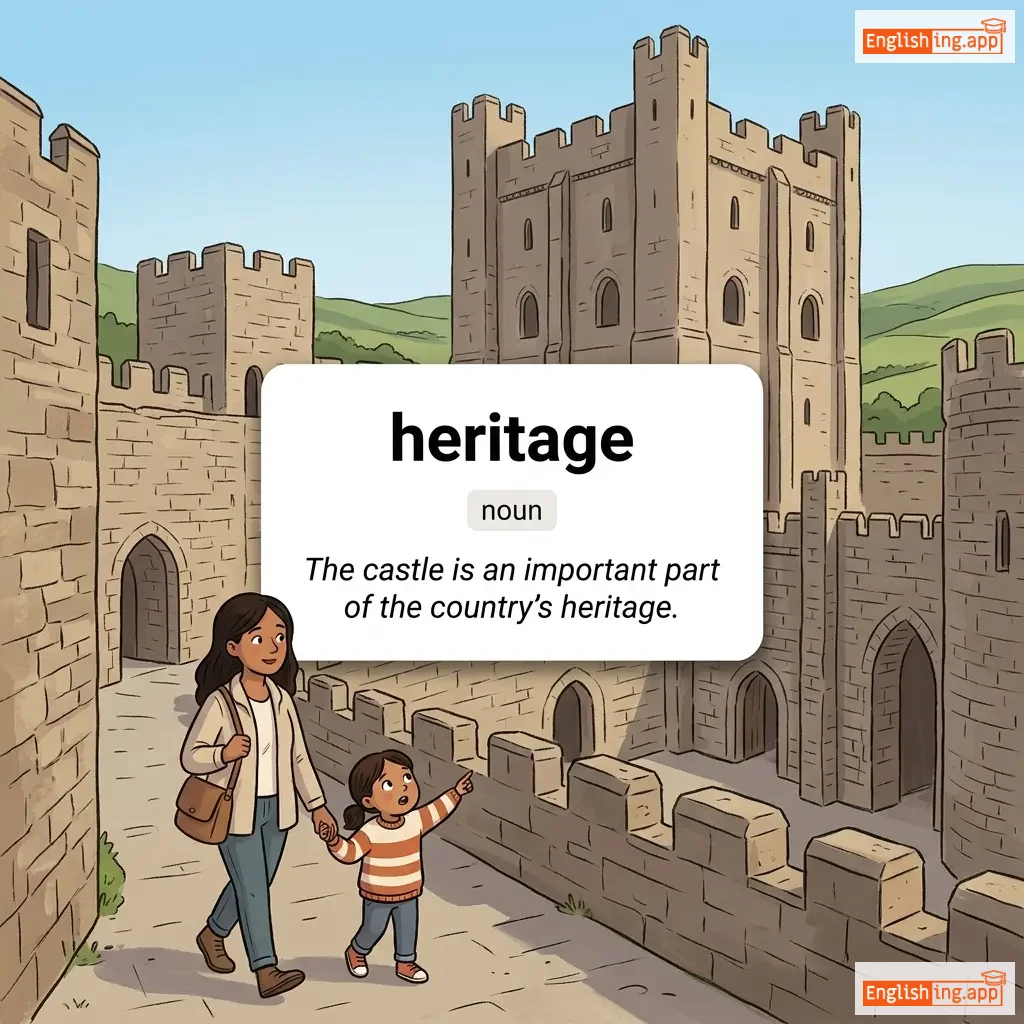
heritage definition card — visual illustration of the meaning
noun
/ˈhɛrɪtɪdʒ/
наследие (nasledie)

Valued objects and qualities such as historic buildings and cultural traditions passed down from previous generations.

"The castle is an important part of the country's heritage."

"Замок — важная часть наследия страны." (Zamok — vazhnaya chast' naslediya strany.)
hermetic definition card — visual illustration of the meaning
adjective
/hərˈmɛtɪk/
герметичный (germetichny)

Completely sealed, especially so that no air can enter or escape.

"The medicine was kept in a hermetic container."

"Лекарство хранилось в герметичном контейнере." (Lekarstvo khranilos' v germetichnom konteynerе.)
adverb
/hərˈmɛtɪkli/
герметично (germetichno)

In a way that is completely airtight or sealed off.

"The jars were hermetically sealed to preserve freshness."

"Банки были герметично закрыты, чтобы сохранить свежесть." (Banki byli germetichno zakryty, chtoby sokhranit' svezhest'.)
noun
/ˈhɜːrmɪt/
отшельник (otshelnik)

A person who lives alone and apart from society, often for religious or spiritual reasons.

"The old hermit lived in a cave for decades."

"Старый отшельник жил в пещере десятилетиями." (staryi otshelnik zhil v peshchere desyatiletiyami.)
noun
/ˈhɜːrmɪtɪdʒ/
пустынь (pustyn)

A secluded residence or retreat, often for a hermit or religious recluse.

"The monk spent years in a hermitage deep in the forest."

"Монах провёл годы в пустыне в глубине леса." (Monakh provyol gody v pustyni v glubine lesa.)
noun
/ˈhɜːrniə/
грыжа (gryzha)

A medical condition where an organ pushes through the muscle or tissue holding it in place.

"The doctor diagnosed him with an inguinal hernia."
"Доктор диагностировал у него паховую грыжу." (Doktor diagnostiroval u nego pakhovuyu gryzhyu.)
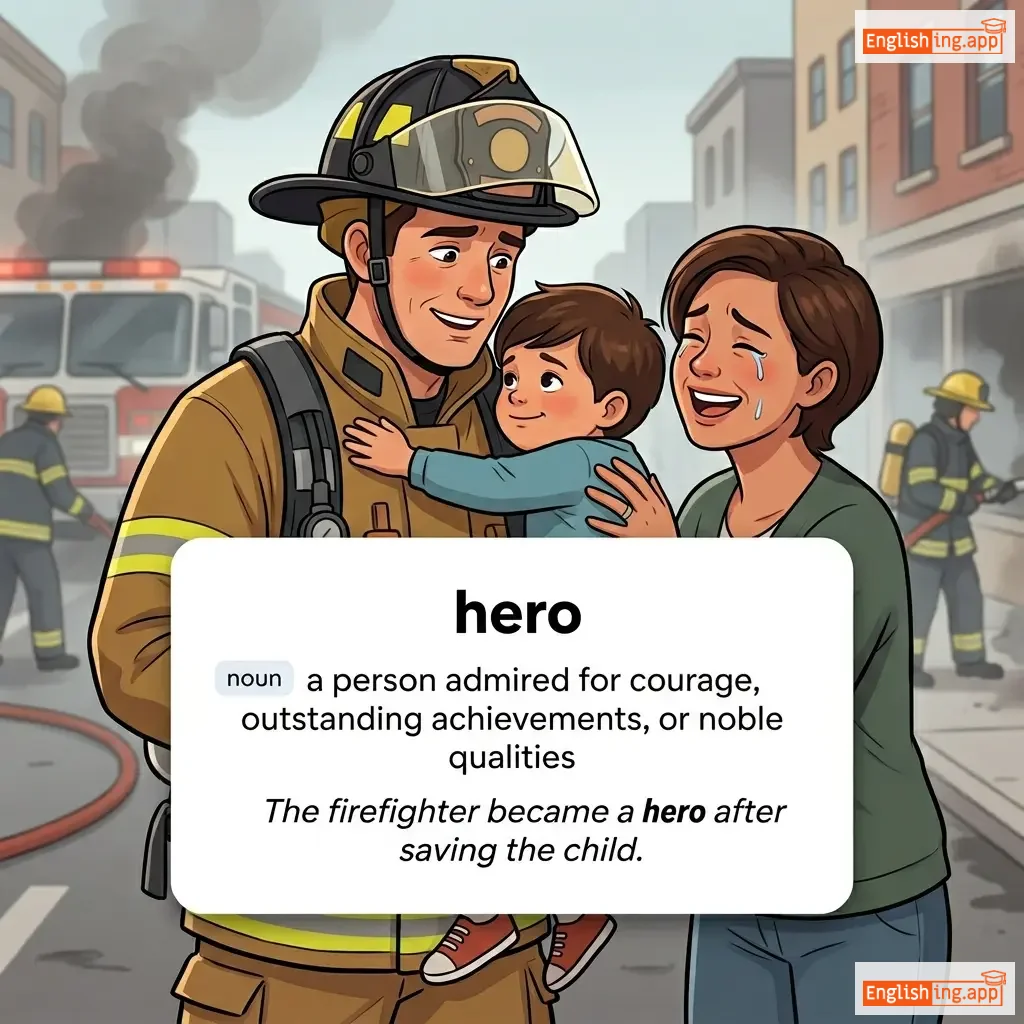
hero definition card — visual illustration of the meaning
noun
/ˈhɪəroʊ/
герой (geroy)

a person admired for courage, outstanding achievements, or noble qualities

"The firefighter became a hero after saving the child."

"Пожарный стал героем после того, как спас ребенка." (Pozharnyy stal geroyem posle togo, kak spas rebenka.)
adjective
/hɪˈroʊɪk/
героический (geroicheskiy)

showing great bravery or courage; relating to a hero or heroes

"The firefighter made a heroic effort to save the child."
"Пожарный совершил героическую попытку спасти ребёнка." (pozharnyy sovershil geroicheskuyu popytku spasti rebyonka)
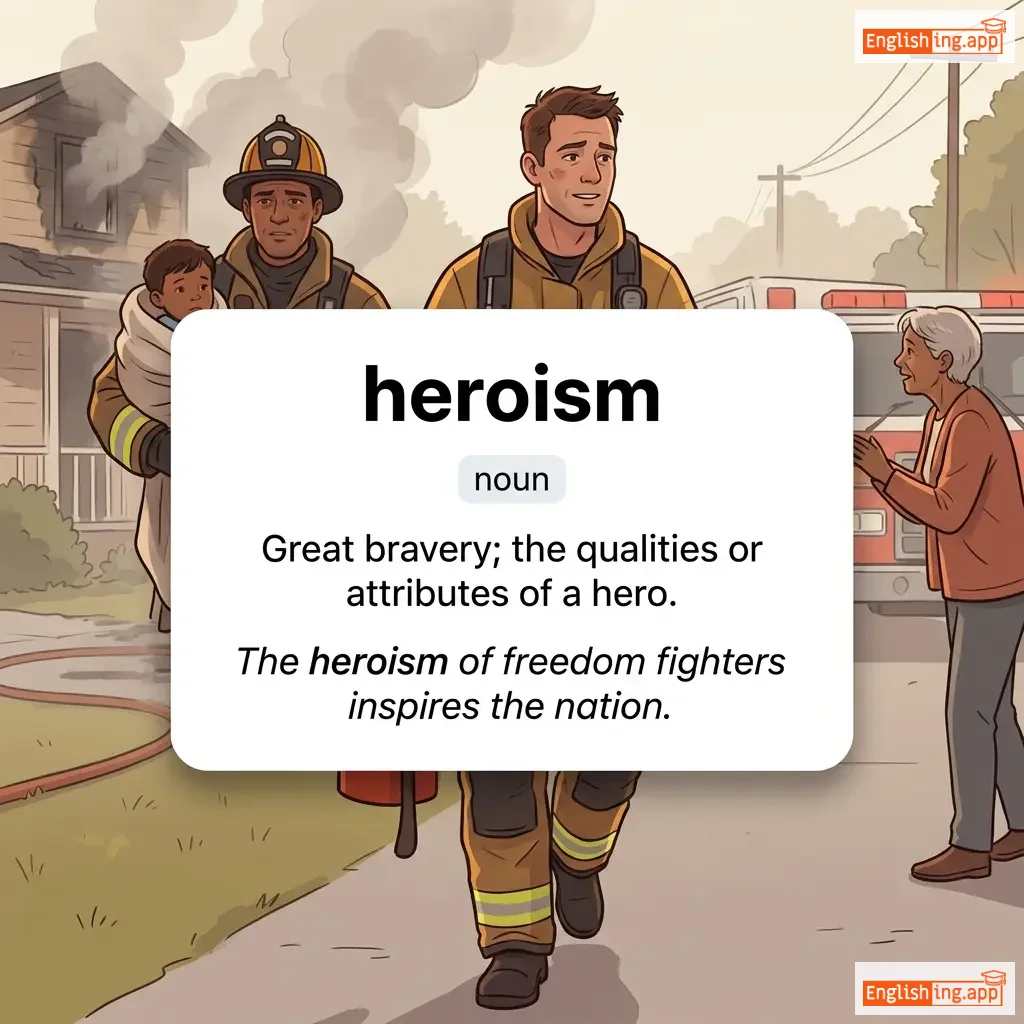
heroism definition card — visual illustration of the meaning
noun
ˈhɛroʊˌɪzəm
героизм (geroizm)

Great bravery; the qualities or attributes of a hero.

"The heroism of freedom fighters inspires the nation."

"Героизм борцов за свободу вдохновляет нацию." (Geroizm borcov za svobodu vdokhnovliaet natsiiu.)
noun
/ˈherən/
цуцикан (tsutsikan)

large wading bird with long legs and neck that feeds on fish

"The heron stood motionless by the water's edge, waiting for fish."

"Цуцикан стоял неподвижно у воды, ожидая рыбу." (Tsutsikan stoyal nepodvizhno u vody, ozhidaya rybu.)
noun
/ˌhɜːrpəˈtɒlədʒɪst/
герпетолог (gerpetolog)

A scientist who studies reptiles and amphibians.

"The herpetologist discovered a new species of frog in the rainforest."

"Герпетолог открыл новый вид лягушки в тропическом лесу." (Gerpetolog otkryl novyy vid lyagushki v tropicheskom lesu.)
👩‍👜

hers (херс)

pronoun
/hɜːrz/
её (вещь) (eyo (veshch'))

used to refer to something that belongs to or is associated with a female person previously mentioned or easily identified.

"That blue bag is hers."

"Та синяя сумка её." (Ta sinyaya sumka eyo.)
pronoun
/hɜːrˈsɛlf/
сама (sama)

used to refer to a female person as the object of a verb or preposition when she is the subject

"She prepared the meal all by herself."

"Она приготовила еду сама." (Ona prigotovila yedu sama.)
noun
/ˈhɛzɪtəns/
колебание (kolebanie)

The quality or state of being reluctant or uncertain.

"Her hesitance to speak up delayed the decision."

"Её колебания по поводу выступления задержали решение." (Eyo kolebaniya po povodu vystupleniya zaderzhali reshenie.)
noun
/ˈhɛzɪtənsi/
нерешительность (nereshitel'nost)

The tendency to pause or delay due to uncertainty or fear.

"His hesitancy in answering made everyone doubt his confidence."

"Его нерешительность при ответе заставила всех сомневаться в его уверенности." (Ego nereshel'nost' pri otvete zastavila vsekh somnevatsya v ego uverennosti.)
adjective
/ˈhɛzɪtənt/
нерешительный (nereshitel'nyj)

uncertain or unwilling to do something quickly; showing doubt or reluctance

"She was hesitant to accept the job offer without more information."

"Она была нерешительной, чтобы принять предложение о работе без дополнительной информации." (Ona byla nereshitel'noj, chtoby prinyat' predlozhenie o rabote bez dopolnitel'noj informatsii.)
verb
/ˈhezɪteɪt/
колебаться (kolebatsya)

to pause before saying or doing something because you are uncertain or nervous.

"She hesitated before answering the question."

"Она колебалась, прежде чем ответить на вопрос." (Ona kolebalsya, prezhde chem otvetit' na vopros.)
noun
/ˌhɛzɪˈteɪʃən/

the act of pausing or being uncertain before doing something

"After a moment’s hesitation, he answered the question."

noun
/ˈhɛʃ.ən/
ткань из джута (tkan' iz djuta)

a strong coarse fabric made from jute or hemp, used for sacks and wrapping

"The farmer stored grain in hessian sacks."

"Фермер хранил зерно в мешках из джутовой ткани." (Fermyer khranyl zerno v meshkakh iz djutovoy tkani.)
heterodox definition card — visual illustration of the meaning
adjective
/ˈhɛtərəˌdɒks/
гетеродоксальный (heterodoksalnyy)

not conforming with accepted or orthodox standards or beliefs

"The professor was known for his heterodox views on religion."

"Профессор был известен своими гетеродоксальными взглядами на религию." (Professor byl izvesten svoimi heterodoksal'nymi vzglyadami na religiyu.)
noun
/ˌhɛtərəʤəˈniːɪti/
гетерогенность (heterogennost)

the quality or state of being diverse in character or content

"The cultural heterogeneity of the city makes it vibrant and unique."

"Культурная гетерогенность города делает его ярким и уникальным." (Kul'turnaya heterogennost' goroda delayet ego yarkim i unikall'nym.)
adjective
/ˌhɛtərəˈʤiːniəs/
гетерогенный (heterogennyy)

consisting of different kinds or diverse elements

"The classroom was filled with a heterogeneous group of students."

"Класс был наполнен гетерогенной группой студентов." (Klass byl napolnen heterogennoy gruppoy studentov.)
adjective
/ˌhɛtərəʊˈmɔːrfɪk/
гетероморфный (geteromorfny)

Having different forms or shapes, especially in the same species or organism.

"Butterflies are heteromorphic during their life cycle, changing forms from larva to adult."

"Бабочки являются гетероморфными в течение их жизненного цикла, меняя форму от личинки до взрослой особи." (Babochki yavlyayutsya geteromorfnymi v techeniye ikh zhiznennogo tsikla, menyaya formu ot lichinki do vzrosloy osobi.)
heuristic definition card — visual illustration of the meaning
adjective
hjʊəˈrɪs.tɪk
эвристический (evristicheskiy)

Enabling a person to discover or learn something for themselves; using practical experience rather than theory.

"The scientist used a heuristic approach to solve the problem."

"Учёный использовал эвристический подход для решения проблемы." (Uchyoniy ispol'zoval evristicheskiy podkhod dlya resheniya problemy.)
verb
/hjuː/
резать (rezat)

To chop or cut something, especially wood or stone, with a tool.

"The workers hewed logs to build the cabin."

"Рабочие резали бревна, чтобы построить хижину." (Rabochie rezali brevna, chtoby postroit' khizhinu.)