Словари

Словарь английского языка | Значения слов, определения и примеры
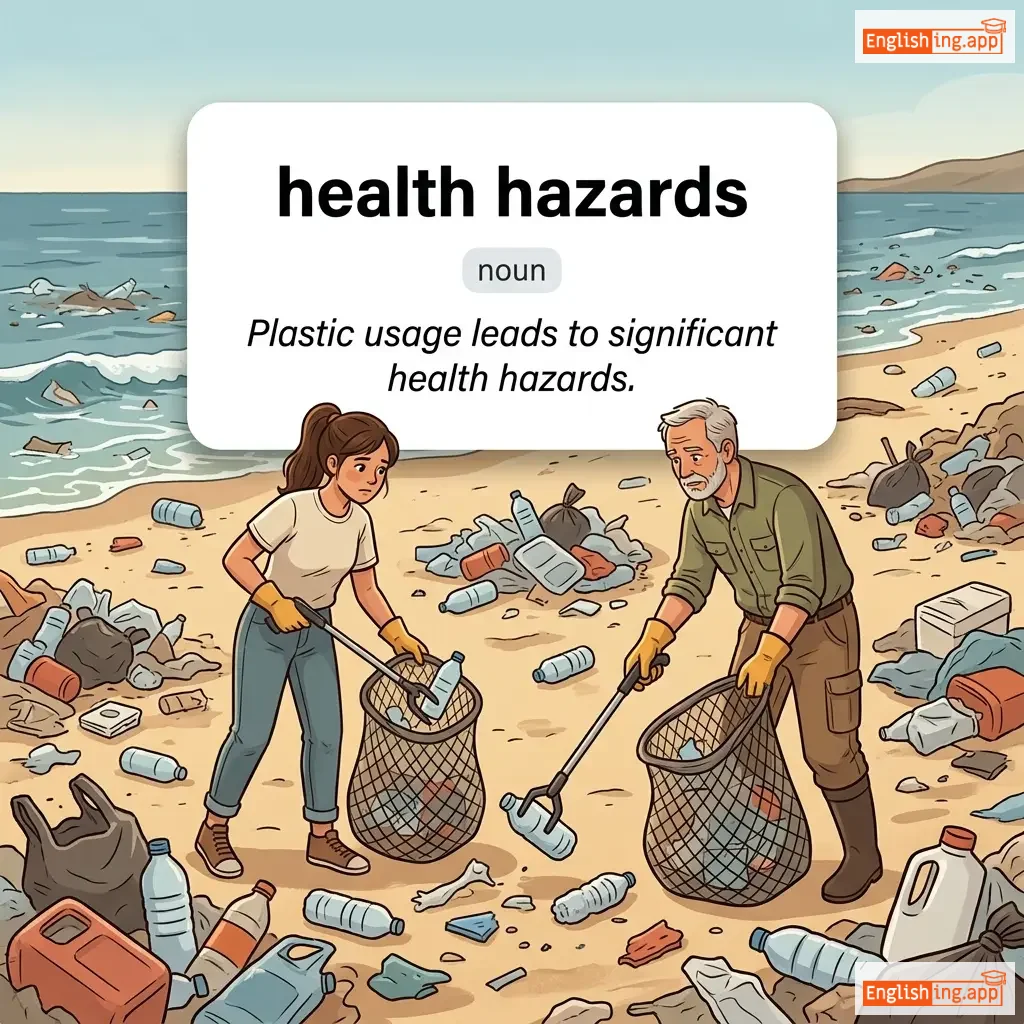
health hazards definition card — visual illustration of the meaning
noun
helθ ˈhæzərdz
риски для здоровья (riski dlya zdorov'ya)

Risks or dangers to physical health and well-being that can cause illness or injury.

"Plastic usage leads to significant health hazards."

"Использование пластика приводит к серьезным рискам для здоровья." (Ispol'zovaniye plastika privodyt k seryoznym riskam dlya zdorov'ya.)
noun
/ˈhɛlθˌkɛər/
счастье (schast'ye)

the organized provision of medical services to maintain or improve health

"Access to quality health-care is essential for every citizen."

"Она не могла скрыть своего счастья, когда получила награду." (Ona ne mogla skryt' svoego schast'ya, kogda poluchila nagradu.)
noun
/ˈhɛlθˌkɛər/
здравоохранение (zdravookhranenie)

the organized provision of medical care to people

"The country invested heavily in healthcare to improve public health."

"Страна вложила значительные средства в здравоохранение для улучшения общественного здоровья." (Strana vlozhila znachitelnye sredstva v zdravookhranenie dlya uluchsheniya obshchestvennogo zdorov'ya.)
adjective
/ˈhɛlθfəl/
оздоровительный (ozdorovitel'nyy)

Promoting good health; beneficial to health.

"A healthful diet includes fresh fruits and vegetables."

"Оздоровительная диета включает свежие фрукты и овощи." (Ozdorovitel'naya dieta vklyuchayet svezhiye frukty i ovoshchi.)
healthy definition card — visual illustration of the meaning
adjective
/ˈhɛlθi/
счастье (schastye)

Being in good physical or mental condition; promoting good health.

"She follows a healthy lifestyle by exercising regularly."

"Она не могла скрыть свое счастье, когда получила награду." (Ona ne mogla skryt' svoyo schast'ye, kogda poluchila nagradu.)
verb
/hɪr/
слышать (slyshat)

To perceive sound with the ear.

"I can hear birds singing outside."

"Я могу слышать птиц, поющих на улице." (Ya mogu slyshat' ptits, poyushchikh na ulitse.)
noun
/ˈhɪərɪŋ/
слушание / слух (slushanie / slukh)

the ability to perceive sounds or an official meeting to listen to arguments or evidence

"The judge scheduled a hearing for next week."

"Судья назначил слушание на следующую неделю." (Sudya naznachil slushanie na sleduyushchuyu nedelyu.)
verb
/ˈhɑːrkən/
слушать внимательно (slushat vnimatel'no)

To listen attentively; to give heed.

"He would hearken to his mentor’s advice before making decisions."

"Он бы внимательно слушал советы своего наставника, прежде чем принимать решения." (On by vnimatel'no slushal sovety svoego nastavnika, prezhde chem prinimat' resheniya.)
noun
/ˈhɪərseɪ/
слух (slukh)

Information received from other people that cannot be substantiated; rumor.

"The decision was based on hearsay, not evidence."

"Решение было основано на слухах, а не на доказательствах." (Reshenie bylo osnovano na slukhakh, a ne na dokazaetel'stvakh.)
noun
/hɜːrs/
катафалк; (katafalk)

a vehicle for conveying the coffin at a funeral; a funeral car

"The black hearse slowly made its way to the cemetery, followed by a procession of mourners."

"Черный катафалк медленно двигался к кладбищу, за ним шла процессия скорбящих." (Chernyy katafalk medlenno dvigalsya k kladbishchu, za nim shla protsessiya skorbyashchikh.)
noun
/hɑːrt/
сердце (serdtse)

the organ that pumps blood through the body; also the center of emotions

"Her heart was beating fast with excitement."

"Ее сердце билось быстро от волнения." (Eeyo serdtse bilos' bystro ot volneniya.)
heartbeat definition card — visual illustration of the meaning
noun
/ˈhɑːt.biːt/
сердечный ритм (serdetschny ritm)

A pulsation of the heart, especially as perceptible to the touch or audible with a stethoscope.

"Rubbing the eyes helps normalize the heartbeat."

"Потирание глаз помогает нормализовать сердечный ритм." (Potiranie glaz pomogaet normalizovat serdetschny ritm.)
adjective
/ˈhɑːrtˌbreɪkɪŋ/
сердцераздирающий; трагичный; душераздирающий (serdcerazdiraushchiy; tragichnyy; dusherazdiraushchiy)

causing overwhelming distress; very sad or disappointing

"The documentary showed heartbreaking scenes of children in poverty."

"Документальный фильм показал душераздирающие сцены детей в бедности." (Dokumental'nyy film pokazal dusherazdiraushchie stseny detey v bednosti.)
verb
/ˈhɑːrtən/
ободрить (obodrit)

To give courage, confidence, or hope.

"The teacher’s encouragement heartened the students."

"Вдохновение учителя дало студентам смелость." (Vdokhnovenie uchitelya dalo studentam smelost'.)
adverb
/ˈhɑr.tɪ.li/
от всей души; искренне (ot vsei dushi; iskrenne)

in a sincere and enthusiastic manner; wholeheartedly

"She heartily welcomed her guests to the party."

"Она с радостью поприветствовала своих гостей на вечеринке." (O-na s ra-do-st'yu po-priv-jet-stvo-va-la svo-ikh gos-tei na ve-che-rin-ke.)
adjective
/ˈhɑːrtˌrɛndɪŋ/
душераздирающий (dusherazdiraushchiy)

Causing great sadness or distress; very moving emotionally.

"The documentary showed heartrending scenes of war victims."

"Документальный фильм показал душераздирающие сцены жертв войны." (Dokumental'nyy film pokazal dusherazdyirayushchiye stseny zhertv voyny.)
adjective
/ˈhɑːrti/
энтузиастичный и дружелюбный; существенный и питательный (entuziasterniy i druzhelyubniy; suschestvenniy i pitanitelniy)

enthusiastic and friendly; substantial and nourishing

"He gave us a hearty welcome when we arrived at his home."

"Он дал нам сердечный прием, когда мы прибыли к нему домой." (On dal nam serdechnyy priyem, kogda my pribyli k nemu domoy.)
heat definition card — visual illustration of the meaning
noun/verb
/hiːt/
жара / тепло (zhara / teplo)

intensity of hotness; to make something warm or hot

"They heated the soup on the stove."

"Они разогрели суп на плите." (Oni razogreli sup na plite.)
adjective
/ˈhiːðənɪʃ/
дикарь (dikary)

Lacking culture or religion; barbaric or uncivilized.

"They considered the ancient tribe’s rituals heathenish."

"Они считали ритуалы древнего племени языческими." (Oni schitali ritualy drevnego plemeni yazicheskimi.)
noun
/ˈhɛvən/
небеса (nebesa)

the place believed to be the home of God and the afterlife of the good; a state of extreme happiness

"They believe that good people go to heaven after death."

"Они верят, что хорошие люди идут в небеса после смерти." (Oni veryat, chto khoroshie lyudi idut v nebeso posle smerti.)
adjective
/ˈhevənli/
небесный; божественный; приятный (nebesny; bozhestvenny; priyatny)

relating to heaven; extremely pleasant or beautiful

"The chocolate cake had a heavenly taste that melted in my mouth."

"Шоколадный торт имел небесный вкус, который таял во рту." (Shokoladnyj tort imel nebesnyj vkus, kotoryj tayal vo rtu.)
adverb
/ˈhɛvɪli/
тяжело / сильно (tyazhelo / sil'no)

to a great degree; with a lot of weight, intensity, or force

"It rained heavily all night."

"Шел сильный дождь всю ночь." (Shel sil'nyy dozhd' vsyu noch'.)
adjective
/ˈhɛvi/
тяжелый (tyazhely)

having great weight; difficult to lift or move

"The box was too heavy for her to carry alone."

"Коробка была слишком тяжелой, чтобы она могла поднять ее одна." (Korobka byla slishkom tyazheloy, chtoby ona mogla podnyat' yeye odna.)
noun
/ˈhɛklər/
нарушитель (narushitel)

A person who interrupts a speaker with rude or aggressive comments.

"The politician remained calm despite the heckler shouting from the crowd."

"Политик остался спокойным, несмотря на крикачащего нарушителя из толпы." (Politik ostalsya spokoynym, nesmotrya na krikacheshchego narushitelya iz tolpy.)
adjective
/ˈhek.tɪk/
суматошный; беспокойный; полный активности (sumatoshnyy; bespokoĭnyy; polnyĭ aktivnosti)

very busy and full of activity; frantic; characterized by intense activity or excitement

"My schedule has been hectic lately with back-to-back meetings."

"Мой график был суматошным в последнее время из-за встреч подряд." (Moy grafik byl sumatoshnym v poslednee vremya iz-za vstrech podryad.)
verb
/ˈhɛktər/
угрожать разговором (ugrozhat' razgovorom)

To talk to someone in a bullying or intimidating way.

"The manager hectored the staff into working overtime."

"Менеджер заставил сотрудников работать сверхурочно, угрожая им." (Menedzher zayavil sotrudnikov rabotat' sverkhurochno, ugrozhaya im.)
hedge definition card — visual illustration of the meaning
noun, verb
/hɛdʒ/
живая изгородь (zhivaya izgorod)

A fence or boundary formed by closely planted shrubs; also, to limit or qualify a statement.

"They planted a hedge around the garden for privacy."

"Они посадили изгородь вокруг сада для конфиденциальности." (Oni posadili izgorod' vokrug sada dlya konfidentsial'nosti.)
noun
/ˈhedʒhɒɡ/
ёж (yozh)

a small mammal with a spiny coat that can roll into a ball for defense

"The hedgehog rolled into a ball when it felt threatened."

"Ёж скатился в клубок, когда почувствовал угрозу." (Yozh skatilsya v klubok, kogda pochuvstvoval ugrozu.)
noun
/ˈhiːdəˌnɪzəm/
гедонизм (gedonizm)

The pursuit of pleasure and self-indulgence as the highest goal.

"The lifestyle of the rich is often criticized as pure hedonism."

"Образ жизни богатых часто критикуется как чистый гедонизм." (Obraz zhizni bogatykh chasto kritikuetsya kak chisty gedonizm.)
noun
/ˈhiːdənɪst/
гедонист (gedonist)

A person who believes that the pursuit of pleasure is the most important thing in life.

"She was called a hedonist because she always prioritized enjoyment over duty."

"Ее называли гедонистом, потому что она всегда ставила удовольствие выше долга." (Eyo nazyvali gedonistom, potomu chto ona vsegda stavila udovol'stviye vyshe dolga.)
verb
/hiːd/
обратить внимание (obratit vnimanie)

to pay attention to; to take notice of

"You should heed the teacher's advice."

"Ты должен обратить внимание на советы учителя." (Ty dolzhen obratit vnimanie na sovety uchitelya.)
adjective
/ˈhiːdləs/
беспечный (bespechnyy)

showing a reckless lack of care or attention

"He drove with heedless disregard for the rules."

"Он ехал с беспечным пренебрежением к правилам." (On yekhal s bespechnym prenebrazheniyem k pravilam.)
noun
/hiːl/
пятка (pyatka)

the back part of the human foot below the ankle

"Her shoe was rubbing against her heel."

"Её туфля терлась о её пятку." (Yeyo tuflya terlas' o yeyo pyatku.)
noun
/hɪˈdʒɛməni/ or /ˈhɛdʒəmoʊni/
гегемония (gehemoniya)

leadership or dominance, especially by one state or group over others

"The empire maintained its hegemony over neighboring states."

"Империя сохраняла свою гегемонию над соседними государствами." (Imperiya sokhranyala svoyu hegemoniyu nad sosednimi gosudarstvami.)
noun
/ˈhɛdʒɪrə/ or /hɪˈdʒaɪrə/
Исход, миграция (Iskhod, migratsiya)

a journey, especially when undertaken to escape from a dangerous or undesirable situation

"The refugees began their hegira across the desert."

"Беженцы начали свой исход через пустыню." (Bezhtsentsy nachali svoy iskhod cherez pustynyu.)
noun
/ˈhɛfər/
тёлка (tyolka)

a young cow that has not borne a calf

"The farmer raised a heifer for dairy production."

"Фермер вырастил телку для производства молока." (Fermyer vyrastil tyolku dlya proizvodstva moloka.)
noun
/haɪt/
высота (vysota)

the measurement of someone or something from base to top

"The height of the tower impressed the visitors."

"Высота башни впечатлила посетителей." (Vysota bashni vpechatlila posetiteley.)
verb
/ˈhaɪtən/
повышать (povyshat')

to make or become greater in intensity or degree

"The announcement served to heighten the excitement in the room."

"Объявление помогло повысить волнение в комнате." (Ob'yavlenie pomoglo povysit' volnenie v komnate.)
adjective
/ˈheɪ.nəs/
мерзкий (merzkiy)

extremely wicked, deeply offensive, or shockingly evil

"The dictator was condemned for his heinous crimes against humanity."

"Диктатор был осуждён за свои мерзкие преступления против человечности." (Diktator byl osuzhdyon za svoi merzkiye prestupleniya protiv chelovechnosti.)
noun
/er/
наследник (naslednik)

a person legally entitled to the property or rank of another on that person's death

"The young prince was the rightful heir to the throne and would become king someday."

"Юный принц был законным наследником престола и когда-нибудь станет королём." (Yunyy prints byl zakonnyy naslednikom prestola i kogda-nibud' stanet korolyom.)
noun
/ˈɛər.luːm/
наследие (naslediye)

a valuable object that has belonged to a family for several generations

"The ring is a family heirloom passed down from her grandmother."

"Кольцо — это семейное наследие, переданное от бабушки." (Kol'tso — eto semeynoye naslediye, peredannoye ot babushki.)
noun
/ˈhɛlɪˌkɒptər/
вертолет (vertolyot)

an aircraft with rotating blades that can take off and land vertically

"The helicopter landed safely on the hospital roof."

"Вертолет приземлился безопасно на крыше больницы." (Vertolyot prizemlilsya bezopasno na kryshe bol'nitsy.)
noun
/hɛl/
ад (ad)

a place or state of great suffering and torment, often in religious belief

"He feared that his sins would send him to hell."

"Он боялся, что его грехи отправят его в ад." (On boyalsya, chto ego grekhi otpravyat ego v ad.)
interjection
/həˈloʊ/
привет (privet)

a greeting or expression used when meeting someone or starting a conversation

"She answered the phone with a cheerful hello."

"Она ответила на звонок с радостным 'привет'." (Ona otvetila na zvonok s radostnym 'privet'.)
noun
/hɛlm/
руководство, штурвал (rukovodstvo, shturval)

a position of leadership or the steering apparatus of a ship

"After years of service, she finally took the helm of the company."

"После многих лет службы, она наконец взяла на себя руководство компанией." (Posle mnogikh let sluzhby, ona nakonec vzyala na sebya rukovodstvo kompaniy.)
noun
/ˈhɛl.mət/
шлем (shlem)

a hard protective hat worn to protect the head

"The rider put on his helmet before starting the motorcycle."

"Наездник надел шлем перед тем, как начать ехать на мотоцикле." (Naezdnik nadel shlem pered tem, kak nachat' yekhat' na motosikle.)
noun
/ˈhelmz.mən/
штурман; капитан (shturman; kapitan)

a person who steers a ship or boat; the person at the helm of a vessel

"The experienced helmsman skillfully guided the yacht through the narrow channel during the storm."

"Опытный штурман умело провел яхту через узкий канал во время шторма." (Opytniy shturman umelo provel yahtu cherez uzkiy kanal vo vremya shtorma.)
Help definition card — visual illustration of the meaning
verb
/hɛlp/
помогать (pomogat')

To make it easier for someone to do something by offering services or resources.

"She helped her friend with the homework."

"Она помогла своей подруге с домашним заданием." (Ona pomogla svoey podrugie s domashnim zadanijem.)
adjective
/ˈhɛlpfəl/
полезный (polezny)

giving help or being useful

"The guide was very helpful during our trip."

"Гид был очень полезен во время нашего путешествия." (Gid byl ochen' polezen vo vremya nashego puteshestviya.)
adjective
/ˈhelp.ləs/
беспомощный; powerless; уязвимый (bеспомощный; powerless; уязвимый)

unable to defend oneself or act without help; powerless; vulnerable

"The child felt helpless when lost in the crowded market."

"Ребёнок почувствовал себя беспомощным, когда заблудился на переполненном рынке." (Rebyonok pochuvstvoval sebya bespomoshchnym, kogda zabludilsya na perepovlennom rynke.)