Словари

Словарь английского языка | Значения слов, определения и примеры

noun/verb
/ˈɡlɪmər/
тусклый блеск (tuskly blesk)

A faint or wavering light; to shine with a faint light.

"A glimmer of hope shone in her eyes."

"В её глазах блеск надежды." (V yeye glazakh blesk nadezhdy.)
noun/verb
/ɡlɪmps/
взгляд (vzglyad)

A brief or quick view of something.

"She caught a glimpse of the actor as he left the stage."

"Она поймала взгляд актера, когда он покидал сцену." (Ona poymala vzglyad aktera, kogda on pokidal stsyenu.)
verb
/ˈɡlɪsən/
блестеть (blestyet)

To shine with a sparkling light, often when wet or polished.

"The grass glistened with morning dew."

"Трава блестела с утренней росой." (Trava blestela s utrennej rossoj.)
noun
/ɡlɪtʃ/
сбой (sboy)

A sudden, usually temporary fault or malfunction in a system or device.

"The computer crashed due to a minor glitch in the software."

"Компьютер вышел из строя из-за небольшой ошибки в программном обеспечении." (Kompyuter vishyel iz stroya iz-za nebol'shoy oshibki v programmnom obespechenii.)
noun/verb
/ˈɡlɪtər/
блестеть (blestet')

To shine with bright, shimmering light; or decorative sparkles.

"Her dress glittered under the stage lights."

"Ее платье блестело под светом сцены." (Eyo plat'ye blestelo pod svetom stseny.)
adjective
/ˈɡlɪt.ər.ɪŋ/
мерцающий; блестящий; искрящийся (mertsayushchiy; blestyashchiy; iskryashchijsya)

shining with bright light; sparkling; brilliant;

"The glittering stars filled the clear night sky."

"Мерцающие звезды заполнили чистое ночное небо." (Mertsayushchie zvezdy zapolnili chistoye nochnoye nebo.)
noun
/ˈɡloʊmɪŋ/
сумерки (sumerki)

The time of day after the sun has set and before it is completely dark; twilight.

"We walked home together in the quiet gloaming."

"Мы шли домой вместе в тихие сумерки." (My shli domoy vmeste v tikhie sumerki.)
verb
/ɡloʊt/
злорадствовать (zloradstvovat')

To take pleasure in someone else's misfortune or to show smug satisfaction.

"He couldn't help but gloat over his rival's failure."
"Он не мог не злорадствовать над неудачей своего соперника." (On ne mog ne zloradstvovat' nad neudachy svoego sopernika.)
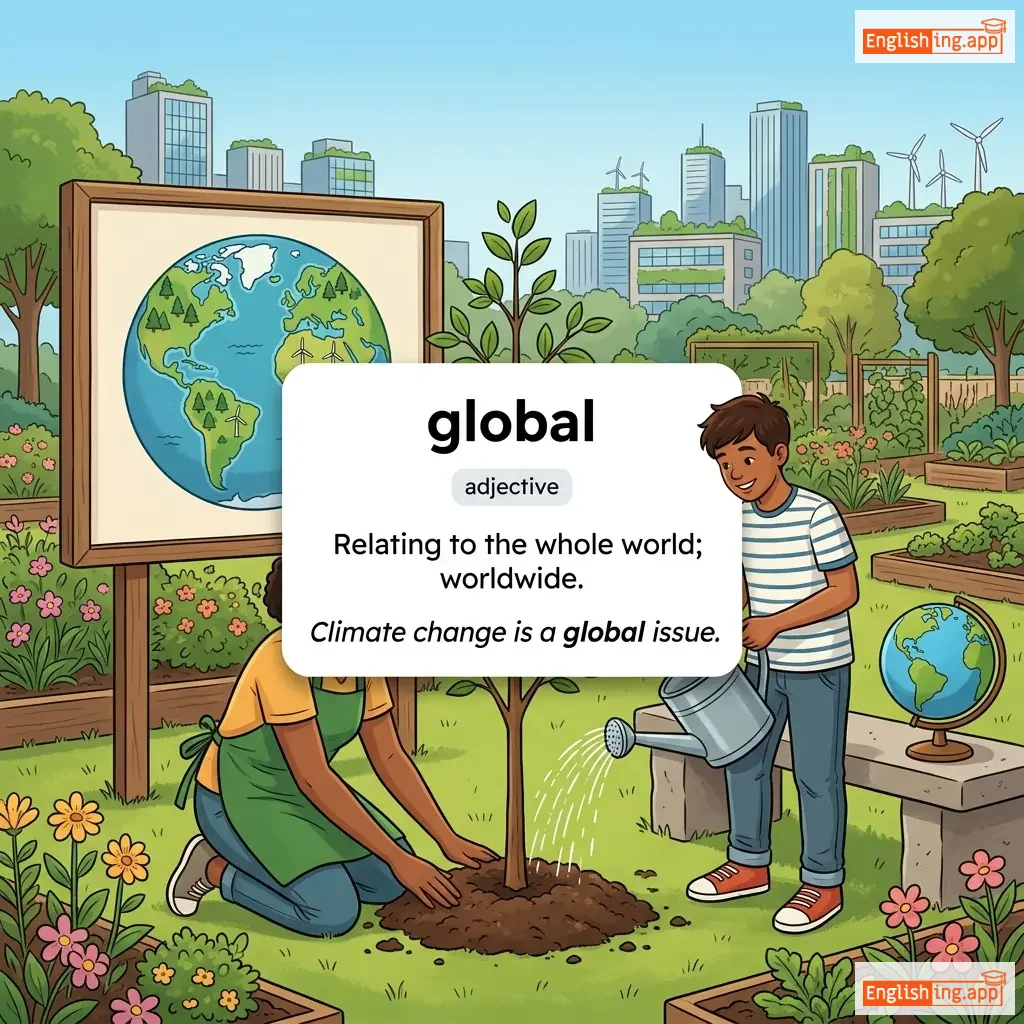
global definition card — visual illustration of the meaning
adjective
/ˈɡloʊbəl/
глобальный (global'nyi)

Relating to the whole world; worldwide.

"Climate change is a global issue."

"Изменение климата — это глобальная проблема." (Izmenenie klimata — eto global'naya problema.)
global awareness definition card — visual illustration of the meaning
noun
/ˈɡloʊbəl əˈwɛrnɪs/
глобальная осведомленность (global'naya osvedomlennost')

Worldwide consciousness and understanding of important issues that affect people globally, leading to informed action and policy changes.

"Global awareness of climate change is essential for policy changes."

"Глобальная осведомленность о климатических изменениях необходима для политических изменений." (Global'naya osvedomlennost' o klimatycheskikh izmeneniyakh neobkhodima dlya politicheskikh izmeneniy.)
global collaboration definition card — visual illustration of the meaning
noun
ˈɡloʊbəl kəˌlæbəˈreɪʃən
глобальное сотрудничество (globalnoe sotrudnichestvo)

Cooperation and partnership between countries or organizations worldwide to address common challenges.

"Global collaboration is necessary to address climate change."
"Глобальное сотрудничество необходимо для решения проблемы изменения климата." (Globalnoe sotrudnichestvo neobkhodimo dlya resheniya problemy izmeneniya klimata.)
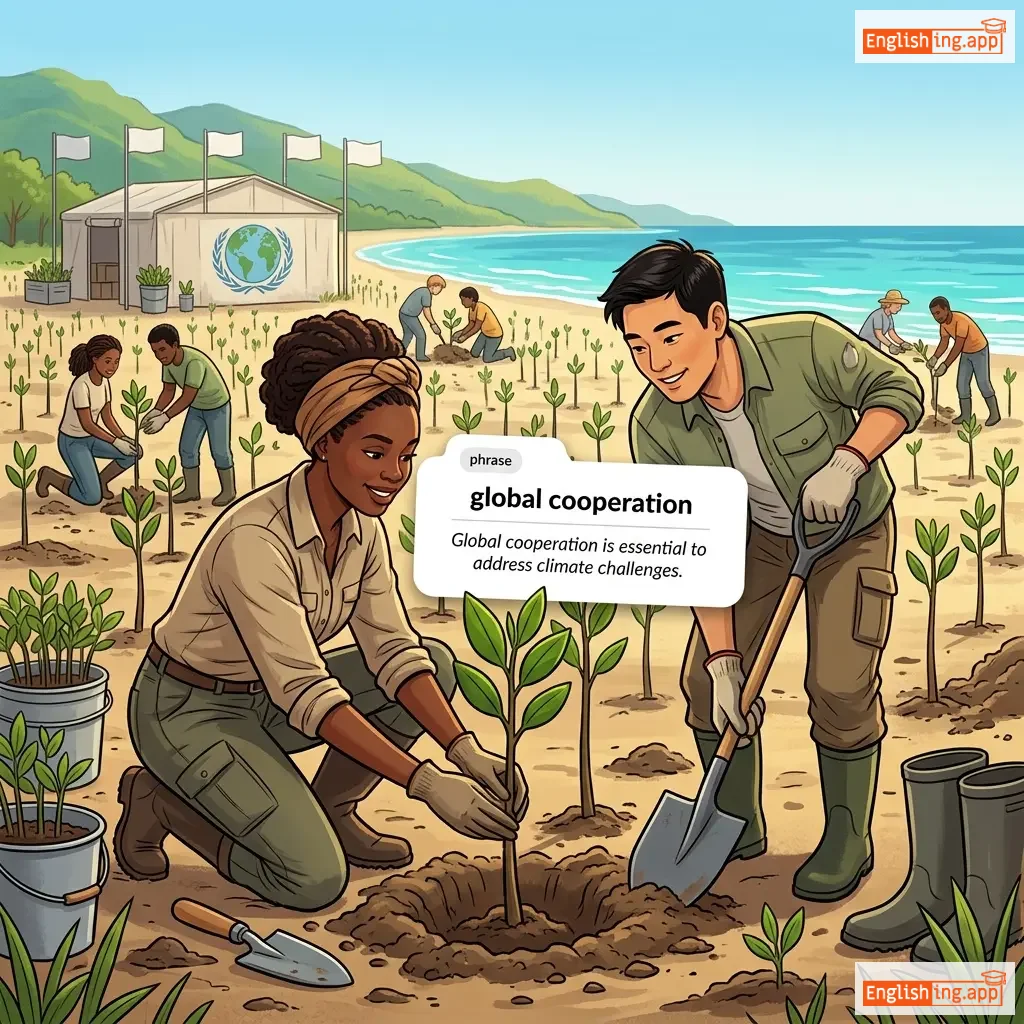
global cooperation definition card — visual illustration of the meaning
phrase
ˈɡləʊ.bəl ˌkəʊ.ɒp.əˈreɪ.ʃən
глобальное сотрудничество (globalnoe sotrudnichestvo)

International collaboration and working together across countries to address common challenges and goals.

"Global cooperation is essential to address climate challenges."
"Глобальное сотрудничество необходимо для решения климатических проблем." (Global'noe sotrudnichestvo neobkhodimo dlya resheniya klimatischeskikh problem.)
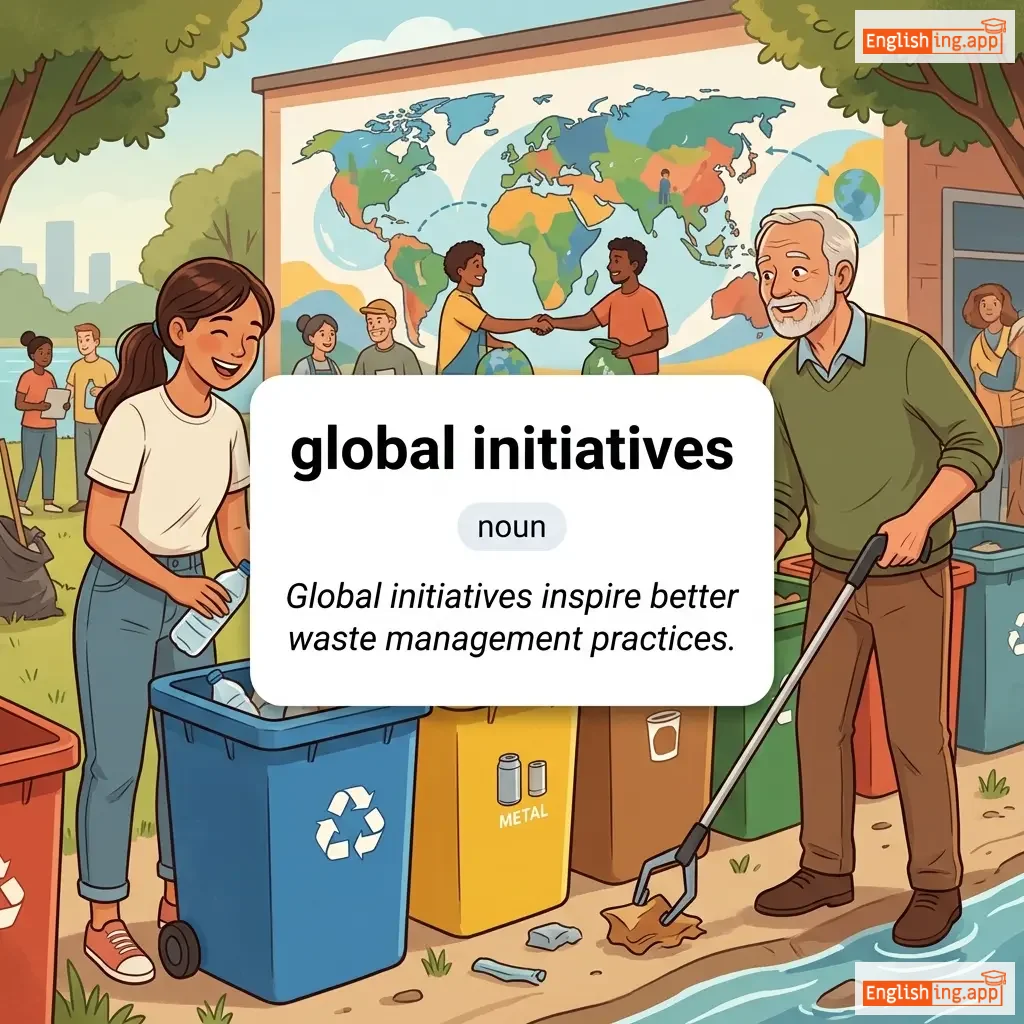
global initiatives definition card — visual illustration of the meaning
noun
ˈɡloʊbəl ɪˈnɪʃətɪvz
глобальные инициативы (global'nye initsiativy)

Worldwide efforts or programs aimed at addressing global challenges or achieving common goals.

"Global initiatives inspire better waste management practices."

"Глобальные инициативы вдохновляют на лучшие практики управления отходами." (Global'nye initsiativy vdokhnovlyayut na luchshiye praktiki upravleniya otkhodami.)
global peace definition card — visual illustration of the meaning
noun
/ˈɡləʊ.bəl piːs/
глобальный мир (global'nyy mir)

Worldwide harmony and absence of conflict between nations.

"Global peace requires collective efforts."

"Глобальный мир требует коллективных усилий." (Global'nyy mir trebuyet kollekivnykh usiliy.)
GlobalFoundries definition card — visual illustration of the meaning
proper noun
ˈɡləʊbəl ˈfaʊndriz
GlobalFoundries (global foundries)

A specific company in semiconductor manufacturing.

"GlobalFoundries is a leading semiconductor company."

"GlobalFoundries — это ведущая компания в области полупроводников." (GlobalFoundries — eto vedushchaya kompaniya v oblasti poluprovodnikov.)
globalization definition card — visual illustration of the meaning
noun
/ˌɡloʊbəlaɪˈzeɪʃən/
глобализация (globalizatsiya)

the process by which businesses or other organizations develop international influence or start operating on an international scale

"Globalization has led to increased trade between countries."

"Глобализация привела к росту торговли между странами." (Globalizatsiya privela k rostu torgovli mezhdu stranami.)
verb
/ˈɡloʊbəlaɪz/
глобализировать (globalizirovat)

to make something worldwide in scope or application; to integrate into a global system

"Many companies globalize their operations to reach international markets."

"Многие компании глобализируют свою деятельность, чтобы выйти на международные рынки." (Mnogie kompanii globaliziruyut svoyu deyatelnost chtoby vyiti na mezhdunarodnye rynki)
noun
/ɡloʊb/
глобус (globus)

a spherical model of Earth or another planet; the world itself

"Students used a globe to study the continents."

"Студенты использовали глобус, чтобы изучать континенты." (Studenty ispol'zovali globus, chtoby izuchat' kontinenty.)
adjective
/ˈɡloʊboʊs/
глобозный (globozny)

Spherical or nearly spherical in shape.

"The cactus has large globose fruits."

"Кактус имеет большие глобозные плоды." (Kaktus imeyet bol'shie globozy plody.)
adjective
/ˈɡlɑːbjələr/
сферический (sfericheskiy)

Having the shape of a globe; spherical.

"The scientist studied the globular cluster of stars."

"Учёный изучал глобулярное скопление звёзд." (Uchonyy izuchal globulyarnoye skopleniye zvezd.)
noun
/ɡluːm/
мрак; грусть; меланхолия (mrak, grust, melankholiya)

partial or total darkness; a state of dejection or despondency

"The thick clouds cast a gloom over the valley, making everything appear dark and dreary."

"Толстые облака бросили мрак на долину, делая все темным и мрачным." (Tolstye oblaka brosili mrak na dolinu, delaya vse temnym i mrachhnym.)
gloomy definition card — visual illustration of the meaning
adjective
/ˈɡluːmi/
мрачный (mrachny)

Dark or poorly lit, making it hard to see; also refers to being sad or pessimistic.

"The room was gloomy after the storm."

"Комната была мрачной после шторма." (Komnata byla mrachnoy posle shtorma.)
glorify definition card — visual illustration of the meaning
verb
/ˈɡlɔːrɪfaɪ/
прославлять (proslavlyat)

to praise or honor someone or something; to make something seem better than it is

"The movie glorifies war heroes."

"Фильм прославляет героев войны." (Film proslavlyaet geroev voyny.)
adjective
/ˈɡlɔː.ri.əs/
великолепный (velikolepny)

having great beauty, magnificence, or deserving admiration and praise

"It was a glorious day filled with sunshine and joy."

"Это был великолепный день, наполненный солнцем и радостью." (Eto byl velikolepnyy den', napolnennyy solntsem i radost'yu.)
noun
/ˈɡlɔːri/
слава (slava)

great honor, praise, or fame achieved by doing something remarkable

"The athlete won glory for his country with his performance."

"Атлет завоевал славу для своей страны своим выступлением." (Atlet zaveoval slavu dlya svoei strany svoim vystupleniem.)
noun
/ɡlɒs/
блестящая поверхность / объяснение (blestyashchaya poverkhnost / ob'yasneniye)

a shiny surface or an explanation of a word or phrase

"The table had a beautiful gloss after polishing."

"На столе был красивый блеск после полировки." (Na stole byl krasivyy blesk posle polirovki.)
phrasal verb
/ɡlɒs ˈoʊ.vər/
обходить / уменьшать важность (obkhodit' / umenshat' vazhnost')

to avoid discussing something unpleasant or make it seem less important

"The report glossed over the company's financial problems."

"Отчет обошел финансовые проблемы компании." (Otchet oboshel finansovye problemy kompanii.)
noun
/ˈɡlɒs.ər.i/
глоссарий (glossariy)

an alphabetical list of terms with definitions, often found at the end of a book

"The textbook includes a glossary of key terms at the back."

"Учебник включает в себя глоссарий ключевых терминов в конце." (Uchebnik vklyuchayet v sebya glossariy klyuchevykh terminov v kontse.)
verb
/ˈɡlɒs.oʊ.vər/
игнорировать (ignorirovat')

an informal or non-standard variant of 'gloss over', meaning to ignore or minimize something

"He tried to glossover his mistakes during the meeting."

"Он пытался скрыть свои ошибки на встрече." (On pytalsya skryt' svoi oshibki na vstreche.)
adjective
/ˈɡlɒsi/
блестящий (blestyashchiy)

Shiny and smooth in appearance; attractive on the surface but sometimes lacking depth.

"She bought a glossy magazine from the store."

"Она купила блестящий журнал в магазине." (Ona kupila blestyashchiy zhurnal v magazine.)
noun
/ɡlʌv/
перчатка (perchatka)

A covering for the hand with separate parts for the fingers and thumb.

"She wore gloves to protect her hands from the cold."

"Она надела перчатки, чтобы защитить свои руки от холода." (Ona nadela perchatki, chtoby zashchitit' svoi ruki ot kholoda.)
noun
/ɡlʌvz/
перчатки (perchatki)

coverings for the hands with separate parts for each finger

"She wore warm gloves to protect her hands from the cold."

"Она надела теплые перчатки, чтобы защитить свои руки от холода." (Ona nadela teplye perchatki, chtoby zashchitit' svoi ruki ot kholoda.)
verb
/ɡloʊ/
светиться (svetit'sya)

To shine with a steady light, often softly; to radiate warmth or happiness.

"The lanterns glowed softly in the dark."

"Фонари светились мягко в темноте." (Fonari svetilis' myagko v temnote.)
verb
/ˈɡlaʊ.ər/
смотреть с гневом (smotret' s gnevom)

To look at someone with an angry or sullen expression.

"He glowered at his rival across the room."

"Он посмотрел на своего соперника через комнату с гневом." (On posmotrel na svoego sopernika cherez komnatu s gnevom.)
noun
/ɡluː/
клей (kley)

a sticky substance used for sticking objects or materials together; an adhesive

"The children used white glue to attach the colorful paper pieces to their art project."

"Дети использовали белый клей, чтобы приклеить разноцветные кусочки бумаги к своему художественному проекту." (Deti ispol'zovali belyy kley, chtoby prikleit' raznotsvetnye kusochki bumagi k svoemu khudozhestvennomu proyektu.)
adjective
/ɡlʌm/
тоскливый (tosklivyy)

Looking or feeling sad, gloomy, or dejected.

"She felt glum after hearing the bad news."

"Она почувствовала себя тоскливой после плохих новостей." (Ona pochuvstvovala sebya tosklivoy posle plokhikh novostey.)
noun
/ɡlʌt/
излишек поставок (izlishek postavok)

An excessive supply of something; more than is needed.

"There was a glut of cheap smartphones in the market."

"На рынке было излишек дешевых смартфонов." (Na rynke bylo izlishek deshevykh smartfonov.)
adjective
/ˈɡluː.tɪ.nəs/
клейкий (kleikiy)

Having a sticky or glue-like texture.

"The glutinous rice stuck together in the pot."

"Клейкий рис слипся в кастрюле." (Kleykiy ris slipsya v kastryule.)
noun
/ˈɡlʌt.ən/
обжора (obzhora)

A person who eats or consumes excessively.

"He was called a glutton for eating so much at the party."

"Его называли обжорой, потому что он съел так много на вечеринке." (Ego nazyvali obzhoroj, potomu chto on s'yel tak mnogo na vecherinke.)
adjective
/ˈɡlʌt.ən.əs/
обжора (obzhora)

Excessively greedy in eating or consuming.

"His gluttonous appetite shocked everyone at the dinner table."

"Его обжорский аппетит шокировал всех за столом." (Ego obzhorskiy appetit shokiroval vsekh za stolom.)
noun
/ˈɡlʌtəni/
обжорство (obzhorstvo)

Excessive eating or drinking; overindulgence in food or drink.

"His gluttony during the festival left him feeling sick."

"Его обжорство на празднике привело его к болезни." (Ego obzhorstvo na prazdnike privelo ego k bolezni.)
glycemic definition card — visual illustration of the meaning
adjective
/ɡlaɪˈsiː.mɪk/
связано с глюкозой (svyazano s glyukozoy)

Relating to the presence of glucose in the blood and how foods affect blood sugar levels.

"High-glycemic foods cause a rapid increase in blood sugar."

"Продукты с высоким гликемическим индексом вызывают быстрое повышение уровня сахара в крови." (Produkty s vysokim glykemicheskim indeksom vyzyvayut bystrye povysheniya ulevela sakhar v krovi.)
verb
/nɑːrl/
искажать (iskazhat')

To twist into a knotted or distorted form.

"The tree roots began to gnarl around the stones."

"Корни дерева начали искажаться вокруг камней." (Korni dereva nachali iskazhat'sya vokrug kamney.)
adjective
/nɑːrld/
искривленный (iskrivlennyy)

Twisted, rough, and knotted, especially with age.

"The old man had gnarled hands from years of hard work."

"У старика были искривленные руки от многих лет тяжелого труда." (U starika byli iskrivlennye ruki ot mnogikh let tyazhyologo truda.)
verb
/næʃ/
скрежетать зубами (skrezhetat' zubami)

to grind or strike the teeth together, often in anger or frustration

"He began to gnash his teeth in rage."

"Он начал скрежетать зубами от ярости." (On nachal skrezhetat' zubami ot yarosti.)
noun
/næt/
мошка (moshka)

a small flying insect that bites people and animals

"The gnat buzzed around my head while I was reading."

"Мошка жужжала вокруг моей головы, пока я читал." (Moshka zhuzhzhalo vokrug moyey golovy, poka ya chital.)
noun
/noʊm/
гном (gnom)

a small mythical creature, often depicted as a bearded man living underground; also a figurine used in gardens

"The garden was decorated with a gnome statue."
"Сад был украшен статуей гнома." (Sad byl ukrashen statuej gnoma.)
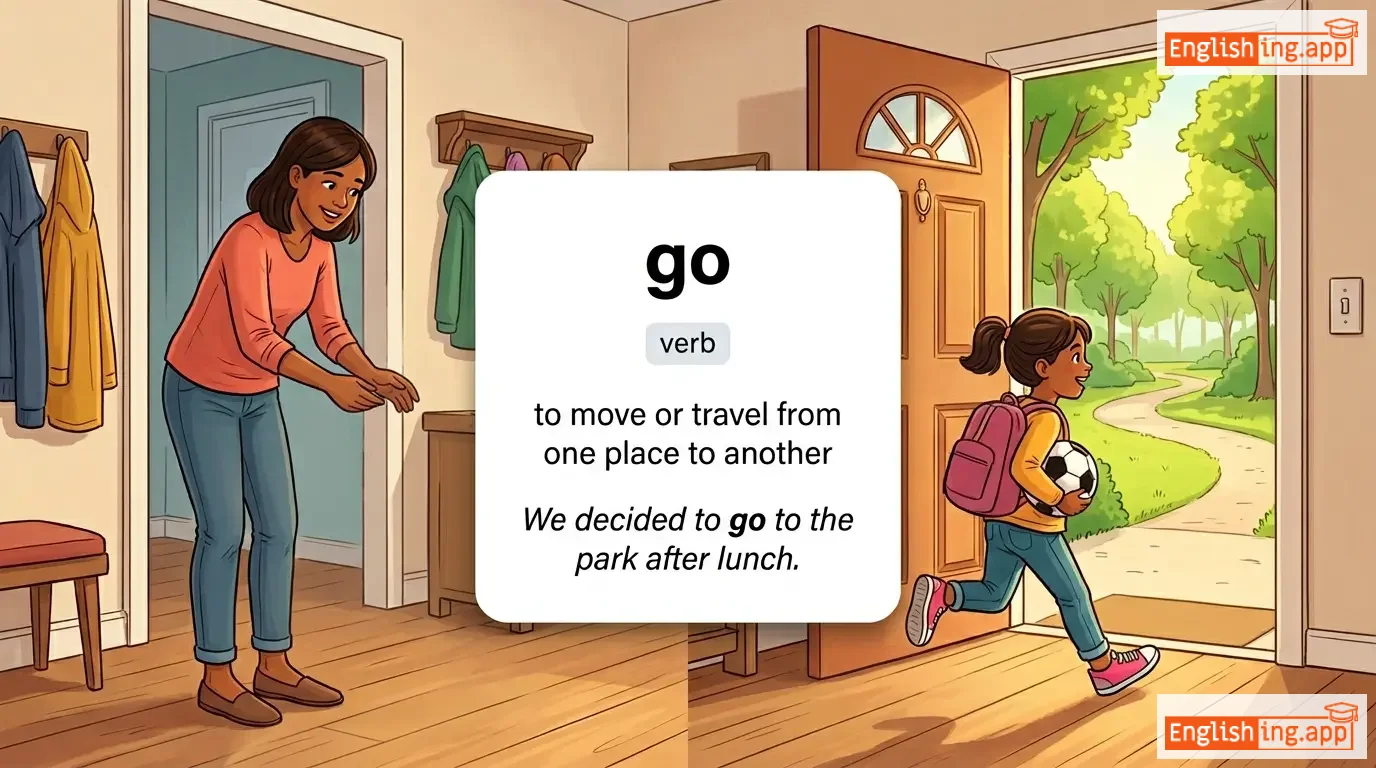
go definition card — visual illustration of the meaning
verb
/ɡoʊ/
идти (idti)

to move or travel from one place to another

"We decided to go to the park after lunch."

"Мы решили пойти в парк после обеда." (My reshilI poyti v park posle obeda.)
goad definition card — visual illustration of the meaning
verb
/ɡoʊd/
провоцировать (provotsirovat)

to provoke, annoy, or urge someone to take action

"He tried to goad his opponent into making a mistake."

"Он пытался спровоцировать своего оппонента на ошибку." (On pytalsya sprovozirovat' svoego oponenta na oshibku.)
noun
/ɡoʊl/
цель (tsely)

an aim or desired result; a point scored in a game

"Her main goal is to become a doctor."

"Её основная цель — стать врачом." (Yeyo osnovnaya tsely — stat' vrachom.)