Словари

Словарь английского языка | Значения слов, определения и примеры
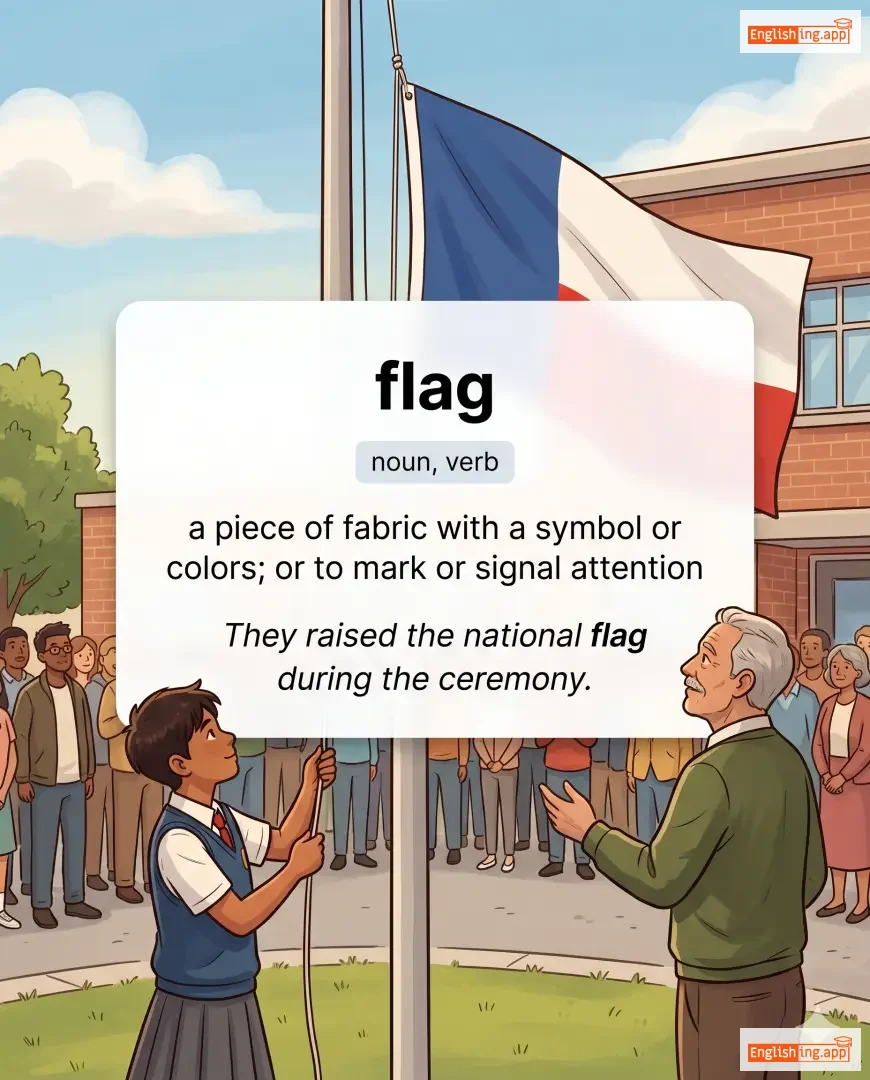
flag definition card — visual illustration of the meaning
noun, verb
/flæɡ/
флаг, знамена; или сигнал предупреждения (flag, znamena; ili signal preduprezhdeniya)

a piece of fabric with a symbol or colors; or to mark or signal attention

"They raised the national flag during the ceremony."

"Они подняли национальный флаг во время церемонии." (Oni podnyali natsional'nyy flag vo vremya tseremonii.)
noun
/ˈflæɡ ˌɒfɪsər/
флаг-офицер (flag-ofitser)

a senior naval officer entitled to fly a flag to mark the command

"The flag-officer reviewed the fleet before the ceremony."

"Флаг-офицер проверил флот перед церемонией." (Flag-ofitser proveryl flot pered tseremoniej.)
verb
/ˈflædʒəˌleɪt/
хлестать или флагелировать кого-то как форму наказания или самообучения (khlyestat' ili flagelirovat' kogoto kak formu nakazaniya ili samoobucheniya)

to whip or flog someone, either literally or as a form of punishment or self-discipline

"In history, some monks would flagellate themselves as penance."

"В истории некоторые монахи подвергались флагелляции как покаяние." (V istorii nekotorye monakhi podvergali flagellyatsii kak pokayanie.)
adjective
/ˈflæɡɪŋ/
ослабевать, устать или терять энтузиазм (oslabyevat, ustavat ili teryat entuziazm)

becoming tired, weaker, or less enthusiastic

"After hours of work, his energy was flagging."

"После часов работы его энергия угасала." (Posle chasov raboty ego energiya ugasala.)
adjective
/ˈfleɪɡrənt/
явно неправильный и заметный (yavno nepravil'nyy i zametnyy)

shockingly noticeable or evident; glaringly wrong

"It was a flagrant violation of the rules."
"Это было явное нарушение правил." (Eto bylo yavnoe narushenie pravil.)
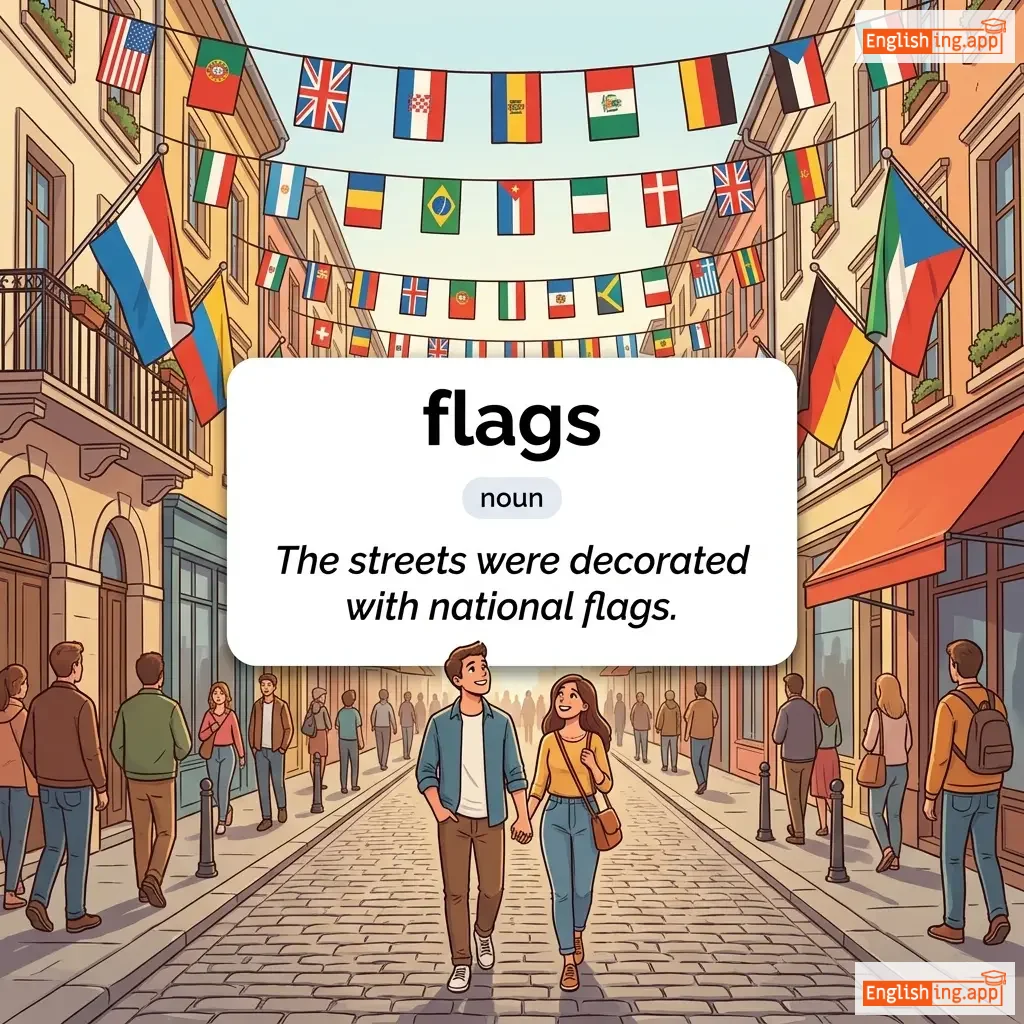
flags definition card — visual illustration of the meaning
noun
flæɡz
флаг (flag)

A piece of cloth or similar material, typically oblong or square, attachable by one edge to a pole or rope.

"The streets were decorated with national flags."

"Улицы были украшены национальными флагами." (Ulitsy byli ukrasheny natsional'nymi flagami.)
verb
/fleɪl/
махать или колебать что-то яростно; бороться (mahat' ili kolebat' chto-to yarostno; borot'sya)

to wave or swing something about wildly; to thrash about

"He flailed his arms to keep afloat in the water."

"Он махал руками, чтобы не утонуть в воде." (On mahal rukami, chtoby ne utonut' v vode.)
flair definition card — visual illustration of the meaning
noun
/flɛr/
естественный талант или способность; отличительная элегантность или стиль (yestestvennyy talant ili sposobnost; otlichitelnaya elegantsiya ili stil)

a natural talent or ability; distinctive elegance or style

"She has a flair for painting that sets her apart."

"У неё есть flair для живописи, который отличает её." (U nee yest' flair dlya zhivopisi, kotoryy otlichayet yeye.)
adjective
/flæmˈbɔɪənt/
яркий, красочный или уверенный (yarkiy, krasochnyy ili uverennyy)

showy, strikingly bold or colorful; confident and lively

"His flamboyant style drew everyone's attention at the party."

"Его яркий стиль привлек внимание всех на вечеринке." (Yego yarkiy stil' privlek vnimanie vsekh na vecherinke.)
noun
/fleɪm/
пламя (plamya)

A hot glowing body of ignited gas that is generated by something on fire.

"The flame from the candle lit up the dark room."

"Пламя свечи освещало темную комнату." (Plamya svechi osveshchalo temnuyu komnatu.)
noun
/ˈflæn.əl/
фланель (flanel)

a soft woven fabric, typically made of wool or cotton and slightly milled and raised

"He wore a warm flannel shirt in winter."

"Он носил теплую фланелевую рубашку зимой." (On nosil tepluyu flanelevuyu rubashku zimoy.)
verb
/flæʃ/
вспыхивать (vspykhivat')

to shine or appear suddenly and brightly for a short time

"Lightning flashed across the night sky."

"Молния вспыхнула в ночном небе." (Molniya vspyknula v nochnom nebe.)
flashcards definition card — visual illustration of the meaning
noun
ˈflæʃkɑːrdz
карты для обучения (karty dlya obucheniya)

Cards containing small amounts of information, held up for students to see, as an aid to learning.

"Flashcards help in quick memorization."

"Флешкарты помогают в быстром запоминании." (Fleshcharty pomogayut v bystrom zapominanii.)
adjective
/ˈflæʃi/
яркий, показной (yarkiy, pokaznoy)

ostentatious or showy in a way that attracts attention

"He drove a flashy sports car through the city streets."

"Он поехал на яркой спортивной машине по улицам города." (On poekhal na yarkoy sportivnoy mashine po ulitsam goroda.)
adjective
/flæt/
плоский (ploskiy)

Smooth and level, without raised areas or curves.

"The road ahead was completely flat."

"Дорога впереди была совершенно плоской." (Doroga vperedi byla sovershenno ploskoy.)
noun
/flæt fɪʃ/
камбала (kambala)

a type of fish with a flattened body that lives on the sea floor

"Flat fish like sole and flounder are excellent for grilling."

"Плоские рыбы, такие как камбала и палтус, отлично подходят для гриля." (ploskie ryby takie kak kambala i paltus otlichno podkhodyat dlya grilya)
verb
/ˈflætər/
преувеличивать похвалу или лесть, чтобы получить выгоду (preuvelichivat' pokhvalu ili lesty', chtoby poluchit' vygodu)

to praise excessively or insincerely to gain favor

"He tried to flatter his boss to get a promotion."

"Он пытался льстить своему начальнику, чтобы получить повышение." (On pytalsya l'stit' svoemu nachal'niku, chtoby poluchit' povyshenie.)
noun
/ˈflæt.ər.ər/
льстец (lystets)

a person who lavishes praise, often insincerely and in order to gain advantage

"The king was surrounded by flatterers who only told him what he wanted to hear."

"Царь был окружен льстецами, которые говорили ему только то, что он хотел услышать." (Tsar' byl okruzhen l'stetsami, kotorye govoryli emu tol'ko to, chto on khotel uslyshat'.)
noun
/ˈflæt.ər.i/
ласкательство (laskatel'stvo)

excessive and insincere praise, given especially to further one's own interests

"His constant flattery made everyone suspicious of his true motives."

"Его постоянное ласкательство заставило всех сомневаться в его настоящих мотивах." (Ego postoyannoe laskatel'stvo zastavilo vsekh somnevatsya v ego nastoyashchikh motivakh.)
noun
/ˈflætʃələns/
скопление газа в пищеварительной системе (skoplenie gaza v pishchevaritelnoy sisteme)

the accumulation of gas in the digestive system; excessive gas in the stomach or intestines

"Eating beans can sometimes cause flatulence."

"Поедание фасоли иногда может вызвать метеоризм." (Poyedanie fasoli inogda mozhet vyzvat meteorizm.)
verb
/flɔːnt/
показуха (pokazukha)

to show off something proudly, often to attract attention

"She likes to flaunt her new jewelry at parties."

"Она любит показывать свои новые украшения на вечеринках." (Ona lyubit pokazivat' svoi novye ukrasheniya na vecherinkakh.)
flavor definition card — visual illustration of the meaning
noun
/ˈfleɪvər/
вкус (vkus)

The distinctive taste of a food or drink.

"This ice cream has a delicious mango flavor."

"Это мороженое имеет вкусный манговый вкус." (Eto morozhenoe imeyet vkusnyy mangovyy vkus.)
noun
/ˈfleɪ.vər/
вкус (vkus)

the distinctive taste of a food or drink; a particular quality or atmosphere

"The soup had a rich flavour of herbs and spices from the garden."

"В супе был насыщенный вкус трав и специй из сада." (V supe byl nasyshchennyy vkus trav i spetsiy iz sada.)
noun
/flɔː/
дефект (defekt)

a defect or imperfection in something

"The diamond had a small flaw that was barely visible."

"В алмазе был небольшой дефект, который едва было видно." (V almaze byl nebolshoy defekt, kotoryy yedva bylo vidno.)
adjective
/flɔːd/
дефектный (defektny)

having a mistake or fault that reduces its value or quality

"The flawed design of the car led to a recall."

"Неисправный дизайн автомобиля привел к отзыву." (Neispravnyy dizayn avtomobilya privyol k otzyvu.)
adjective
/ˈflɔː.ləs/
совершенный; без дефектов (flawless)

perfect; without any defects or faults; immaculate

"Her flawless performance earned her a standing ovation."

"Её безупречное выступление принесло ей стоячие аплодисменты." (Yeyo bezuprechnoe vystuplenie prineslo yey stoyachie aplodismenty.)
noun
/flæks/
лён (lyon)

a plant whose fibers are used to make linen and whose seeds are edible

"Flax is often used in making linen fabrics."

"Лён часто используется для изготовления льняных тканей." (Lyon chasto ispol'zuyetsya dlya izgotovleniya l'nianykh tkanei.)
verb
/fleɪ/
снимать кожу/критиковать строго (snimat' kozhu/kritikovat' strogo)

to strip off the skin of something or criticize severely

"The chef flayed the fish before cooking it."

"Шеф снял кожу с рыбы перед тем, как приготовить её." (Shef snjal kozhu s ryby pered tem, kak prigotovit' yeë.)
noun
/flɛk/
маленькое пятнышко (malen'koye pyatnyshko)

a small spot or mark, often of a different color

"There was a fleck of paint on the floor."

"На полу была маленькая пятнышка краски." (Na polu byla malen'kaya pyatnyshka kraski.)
noun
/ˈflɛkʃən/
сгибание (sgibanie)

The act of bending or the state of being bent, especially of a limb or joint.

"The doctor tested the patient's knee flection during the examination."
"Доктор проверил сгибание колена пациента во время осмотра." (Doktor proveril sgibanie kolena patsiyenta vo vremya osmotra.)
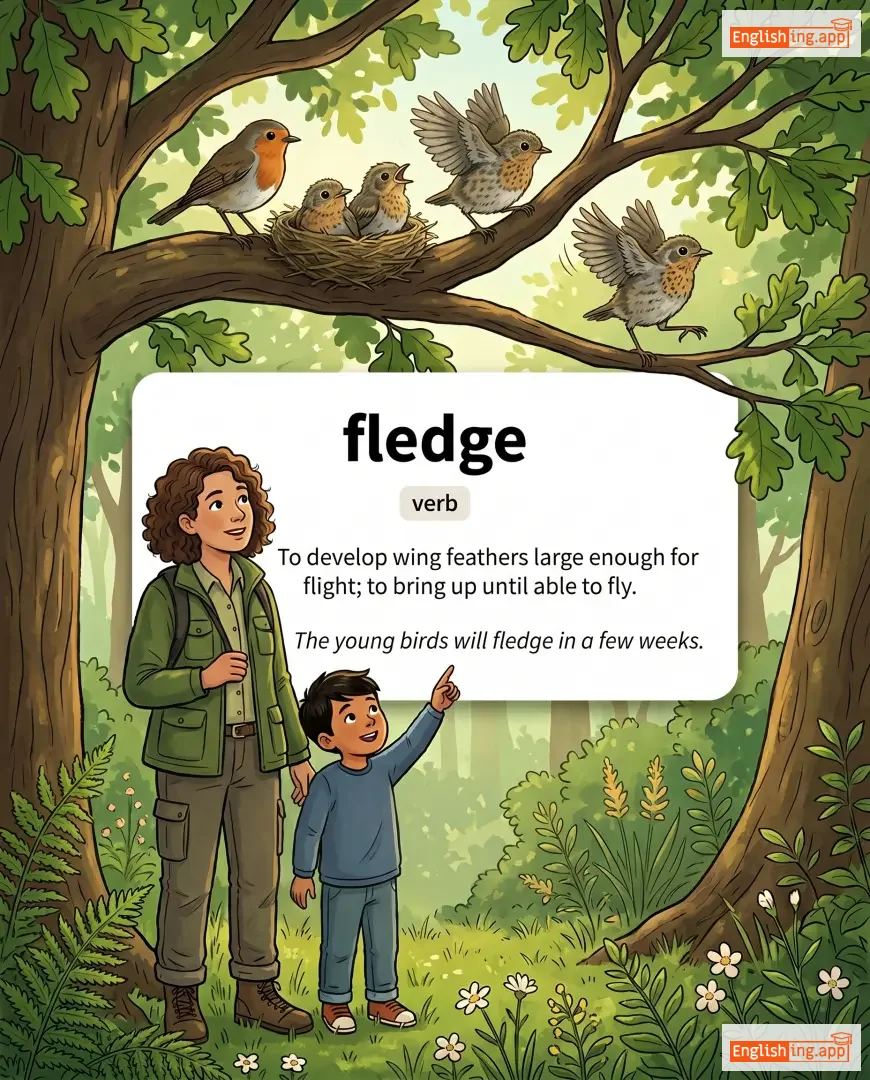
fledge definition card — visual illustration of the meaning
verb
/flɛdʒ/
становиться летным (stanovitsya letnym)

To develop wing feathers large enough for flight; to bring up until able to fly.

"The young birds will fledge in a few weeks."

"Молодые птицы начнут летать через несколько недель." (Molodye ptitsy nachnut letat' cherez neskol'ko nedel'.)
noun
/ˈflɛdʒlɪŋ/
молодая птица (molodaya ptitsa)

A young bird that has just developed its feathers and is learning to fly; a beginner.

"The fledgeling was trying hard to take its first flight."
"Молодая птица пыталась сделать свой первый полет." (Molodaya ptitsa pytalas' sdelat' svoi pervyi polet.)
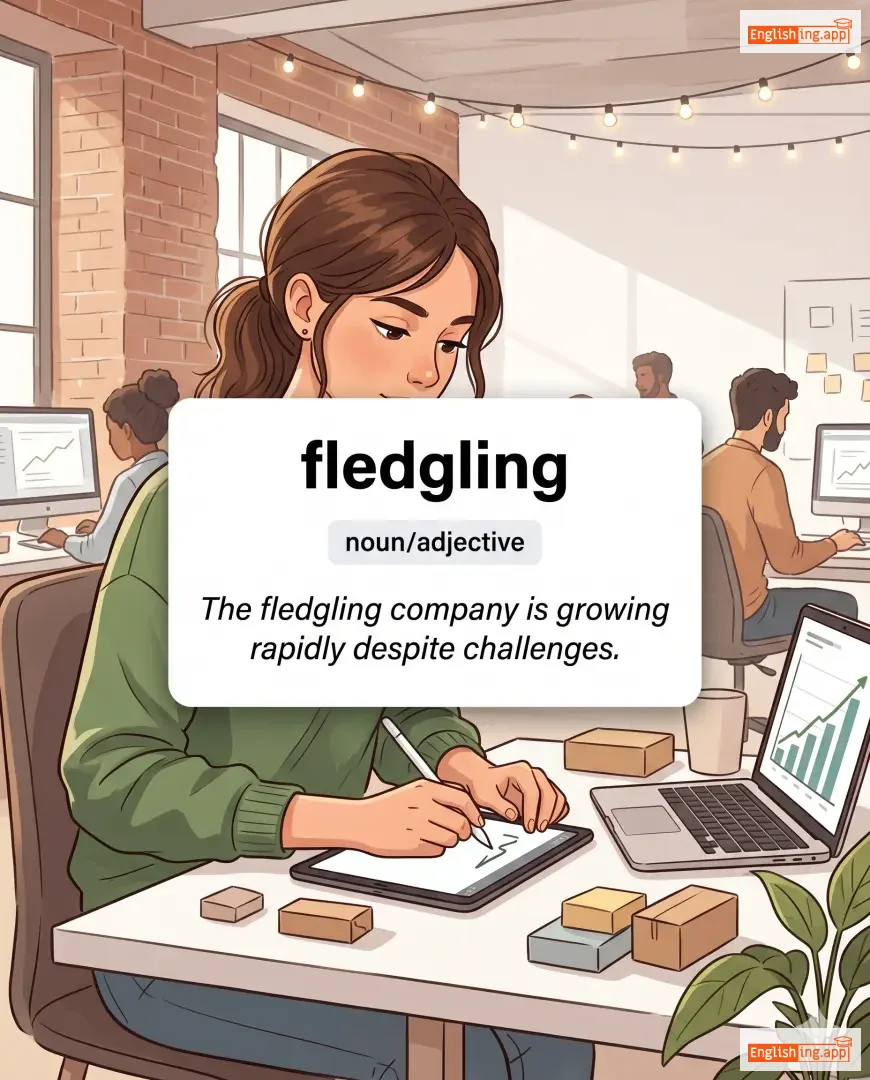
fledgling definition card — visual illustration of the meaning
noun/adjective
/ˈflɛdʒlɪŋ/
новичок (novichok)

A young bird just learning to fly; also used for a person or organization that is inexperienced or new.

"The fledgling company is growing rapidly despite challenges."

"Новая компания быстро растет, несмотря на вызовы." (Novaya kompaniya bystro rastet, nesmotrya na vyzovy.)
🏃‍♂️

flee (фли)

verb
/fliː/
убегать (ubegat)

To run away from danger or a threatening situation.

"The villagers had to flee during the flood."

"Жители деревни должны были убежать во время наводнения." (Zhiteli derevni dolzhny byli ubezhat vo vremya navodneniya.)
noun/verb
/fliːs/
овечья шерсть (ovech'ya sherst')

The woolly covering of a sheep; as a verb, to swindle or cheat someone.

"The farmer sheared the sheep’s fleece carefully."

"Фермер осторожно срезал шерсть с овцы." (Fermyer ostorozhno srezal sherst' s ovtsy.)
noun
/fliːt/
флотилия (flotiliya)

a group of ships, vehicles, or aircraft operating together under one command

"The navy deployed its entire fleet for the exercise."

"ВМС развернули весь свой флот для учений." (VMS razvernuty ves' svoy flot dlya ucheniy.)
fleeting definition card — visual illustration of the meaning
adjective
/ˈfliː.tɪŋ/
мимолетный (mimoletnyj)

lasting for a very short time

"She had a fleeting smile before she left."

"У неё была мимолётная улыбка перед тем, как она ушла." (U neyo byla mimolyotnaya ulybka pered tem, kak ona ushla.)
noun
/flɛʃ/
плоть (plot)

the soft substance consisting of muscle and fat that is found between the skin and bones of animals or humans

"The wound cut deep into the flesh of his arm."

"Рана прорезала плоть его руки." (Rana prorezala plot' yego ruki.)
flexibility definition card — visual illustration of the meaning
noun
/ˌflɛksəˈbɪləti/
гибкость (gibkost)

the ability to bend easily without breaking or to adapt to new situations

"Flexibility is essential for success in a changing work environment."

"Гибкость необходима для успеха в изменяющейся рабочей среде." (Gibkost' neobkhodima dlya uspekha v izmenyayushcheysya rabochey srede.)
adjective
/ˈfleks.ə.bəl/
гибкий (gibkiy)

able to bend easily without breaking; adaptable to change

"Yoga helps to make the body more flexible."

"Йога помогает сделать тело более гибким." (Yoga pomogaet sdelat' telo bolee gibkim.)
verb
/flɪk/
щелкать (shchelat)

to move or cause to move with a sudden quick motion

"He flicked the switch to turn on the light."

"Он фликал выключатель, чтобы включить свет." (On flikal vyklyuchatel, chtoby vklyuchit svet.)
verb
/ˈflɪk.ər/
мерцать (mertsat)

to shine unsteadily or waver between light and dark

"The candle flickered in the wind."

"Свеча мерцала на ветру." (Svecha mertsala na vetru.)
noun
/flaɪt/
полет / полет (polet / polet)

the act of flying, typically through the air; or a scheduled trip by an aircraft

"Our flight to London was delayed due to bad weather."

"Наш рейс в Лондон был задержан из-за плохой погоды." (Nash reys v London byl zaderzhan iz-za plokhoy pogody.)
adjective
/ˈflaɪti/
неустойчивый (neustoychivyy)

unstable, impulsive, or easily distracted; lacking seriousness or stability

"She’s too flighty to stick with one job for long."

"Она слишком неустойчива, чтобы долго задерживаться на одной работе." (Ona slishkom neustoychivaya, chtoby dolgo zaderzhivatsya na odnoj rabote.)
adjective
/ˈflɪmzi/
хрупкий (khrupkiy)

weak, fragile, or lacking in strength; not convincing

"The chair was too flimsy to support his weight."

"Стул был слишком хрупким, чтобы выдержать его вес." (Stul byl slishkom khrupkim, chtoby vyderzhat ego ves.)
verb
/flɪntʃ/
отступить (otstupit)

to suddenly move back or away due to fear or pain

"He didn’t flinch when the doctor gave him the injection."

"Он не отступил, когда доктор сделал ему укол." (On ne otstupil, kogda doktor sdelal emu ukol.)
verb
/flɪp/
перевернуть (perevernut)

to turn over quickly or suddenly; to toss lightly

"She flipped the pancake in the pan."

"Она перевернула блин в сковороде." (Ona perevernula blin v skovorode.)
noun
/ˈflɪpənsi/
легкомыслие (legkomyslie)

lack of seriousness; showing a disrespectful or trivial attitude

"His flippancy during the meeting offended his colleagues."

"Его легкомыслие на собрании оскорбило его коллег." (Ego legkomyslie na sobranii oskorbilo ego kolleg.)
adjective
/ˈflɪpənt/
неуважительный (neuvazhitel'ny)

not showing a serious or respectful attitude

"His flippant remarks annoyed the teacher."

"Его неуважительные замечания раздражали учителя." (Yego neuvazhitel'nye zamechaniya razdrazhali uchitelya.)
verb
/flɜːrt/
флиртовать (flirtovat)

to behave as if you are attracted to someone, but not in a serious way

"She often flirts with her colleagues at work."

"Она часто флертует с коллегами на работе." (Ona chasto flertuyet s kollegami na rabote.)