Словари

Словарь английского языка | Значения слов, определения и примеры

noun, verb
/ˈfaɪ.næns/ or /fəˈnæns/
финансы (finansy)

the management of money and investments, or to provide funds for something

"The company secured finance from a major bank."

"Компания получила финансирование от крупного банка." (Kompaniya poluchila finansirovanie ot krupnogo banka.)
adjective
/faɪˈnænʃəl/
финансовый (finansovyy)

relating to money, banking, or finance

"He made a sound financial decision by investing wisely."

"Он принял обоснованное финансовое решение, мудро инвестируя." (On prinyal obosnovannoe finansovoe reshenie, mudro investiruia.)
financial responsibility definition card — visual illustration of the meaning
noun
/faɪˈnæn.ʃəl rɪˌspɒn.sɪˈbɪl.ə.ti/
финансовая ответственность (finansovaya otvetstvennost)

The practice of managing money and other financial resources in a responsible and effective manner.

"Financial responsibility ensures long-term economic stability."

"Финансовая ответственность обеспечивает долгосрочную экономическую стабильность." (Finansovaya otvetstvennost obespechivayet dolgosrochnuyu ekonomicheskuyu stabil'nost.)
noun
/fɪˈnænʃɪər/
финансист (finansist)

a person who manages large amounts of money or investments

"The financier advised the company on its investments."

"Финансист проконсультировал компанию по ее инвестициям." (Finansist prokonsul'tiroval kompaniyu po ee investiciyam.)
noun
/fɪntʃ/
финч (маленькая поющая птица) (finch (malyenkaya poyushchaya ptitsa))

a small songbird with a short, stout bill

"A colorful finch perched on the branch singing sweetly."
"Яркий финч сидел на ветке и пел сладко." (Yarkiy finch sidel na vetke i pel sladko.)
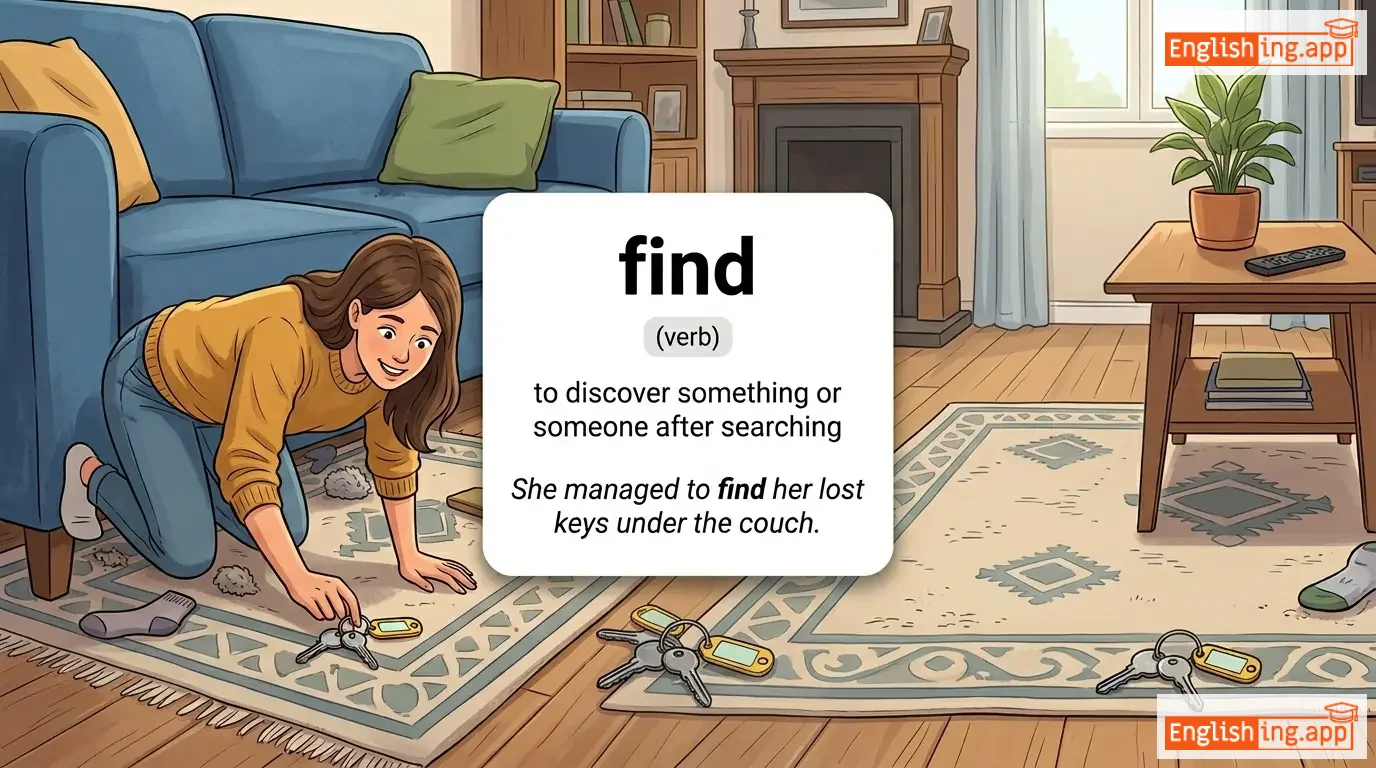
find definition card — visual illustration of the meaning
verb
/faɪnd/
находить (nakhodit)

to discover something or someone after searching

"She managed to find her lost keys under the couch."

"Она смогла найти свои потерянные ключи под диваном." (Ona smogla nayti svoi poteryannye kliuchi pod divanom.)
noun
/ˈfaɪn.dɪŋ/
открытие, вывод или результат, полученный после расследования (otkrytie, vyvod ili rezultat, poluchenny posle rassledovaniya)

a discovery, conclusion, or result reached after investigation

"The scientist published her findings in a leading journal."

"Учёный опубликовал свои открытия в ведущем журнале." (Uchyonyy opublikoval svoi otkrytiya v vedushchem zhurnale.)
adjective, noun, verb
/faɪn/
счастье (schastye)

of high quality; very good, or a penalty for breaking a law

"She paid a fine for parking in the wrong place."

"Она не могла скрыть своего счастья, когда получила приз." (Ona ne mogla skryt' svoego schast'ya, kogda poluchila priz.)
noun
/ˈfaɪnəri/
дорогая или изысканная одежда (dorogaya ili izyskannaya odezhda)

expensive or elaborate clothes, decorations, or accessories

"She attended the party in her finest finery."

"Она пришла на вечеринку в своем лучшем наряде." (Ona prishla na vecherinku v svoem luchshem naryade.)
finesse definition card — visual illustration of the meaning
noun
/fɪˈnɛs/
умение, утонченность (umeniye, utonchennost)

skillful and subtle handling of a situation

"She handled the negotiations with great finesse."

"Она с большим мастерством вела переговоры." (Ona s bol'shim masterstvom vela peregovory.)
noun
/ˈfɪŋ.ɡər/
палец (palets)

one of the five long parts of the hand

"He wore a gold ring on his finger."

"Он носил золотое кольцо на пальце." (On nosil zolotoe kol'tso na pal'tse.)
noun
/ˈfɪŋ.ɡər.prɪnt/
отпечаток пальца (otpechatok pal'tsa)

an impression or mark made on a surface by a person's fingertip; unique identification pattern

"The police found his fingerprints on the door handle at the crime scene."

"Полиция нашла его отпечатки пальцев на дверной ручке на месте преступления." (Politsiya nashla ego otpechatki pal'tsev na dvernoj ruchke na meste prestupleniya.)
adjective
/ˈfɪnɪki/
трудно угодить; очень привередлив по поводу деталей (trudno ugodit; ochen privyredliv po povodu detalei)

difficult to please; very particular about details

"He is so finicky about his food that he only eats organic vegetables."

"Он такой привередливый по поводу еды, что ест только органические овощи." (On takoi priveredlivyi po povodu edy, chto yest tol'ko organicheskie ovoshchi.)
finish definition card — visual illustration of the meaning
verb
/ˈfɪnɪʃ/
завершить (zavershit)

to complete or bring to an end

"She will finish her homework before dinner."

"Она завершит домашнюю работу до ужина." (Ona zavershit domashnyuyu rabotu do uzhina.)
noun
/ˈfɪnɪʃ laɪn/
финишная черта (finishnaya cherta)

The line or point at the end of a race or competition where participants complete it.

"She sprinted towards the finish line and won the race."

"Она побежала к финишной линии и выиграла гонку." (Ona pobezhala k finishnoy linii i vyigrala gonku.)
adjective
/ˈfɪnɪʃt/
завершён, законченный (zavershyon, zakonchenny)

completed or brought to an end

"The painting is finished and ready to display."

"Картина завершена и готова к展示." (Kartina zavershena i gotova k vystavke.)
adjective
/ˈfaɪnaɪt/
ограниченный, конечный (ogranichennyi, konechnyi)

having limits or bounds; not infinite

"Our resources are finite, so we must use them wisely."

"Наши ресурсы ограничены, поэтому мы должны использовать их разумно." (Nashi resursy ogranicheny, poetomu my dolzhny ispol'zovat' ikh razumno.)
noun/verb
/ˈfaɪər/
огонь / уволить (ogon' / uvolit')

the phenomenon of combustion, or to dismiss someone from a job

"The company decided to fire two employees last week."

"Компания решила уволить двоих сотрудников на прошлой неделе." (Kompaniya reshil uvolit' dvoikh sotrudnikov na proshloy nedele.)
noun
/ˈfaɪərɑːm/
огнестрельное оружие (ognestrel'noe oruzhie)

a weapon capable of firing a projectile using gunpowder or other propellant

"The police found a hidden firearm during the investigation."

"Полиция обнаружила скрытое огнестрельное оружие в ходе расследования." (Politsiya obnaruzhila skrytoe ognestrel'noe oruzhie v khode rassledovaniya.)
noun
/ˈfaɪər.brænd/
поджигатель (podzhigatel)

a person who is passionate about a cause, often inciting change or action

"The activist was a true firebrand, inspiring everyone around him to join the protest."

"Активист был настоящим поджигателем, вдохновляя всех вокруг себя присоединиться к протесту." (Aktivist byl nastoyashchim podzhigatelem, vdokhnovlyaya vsekh vokrug sebya prisoedinit'sya k protestu.)
noun
/ˈfaɪəˌfaɪtə/
пожарный (pozharnyy)

a person whose job is to put out fires

"The firefighter saved the family from the burning building."

"Пожарный спас семью из горящего здания." (Pozharnyy spas sem'yu iz goryashchego zdaniya.)
noun
/ˈfaɪər.mən/
пожарный (pozharnyy)

a person whose job is to extinguish fires and rescue people

"The brave fireman rescued the family from the burning building."

"Отважный пожарный спас семью из горящего здания." (Otvazhnyy pozharnyy spas sem'yu iz goryashchego zdaniya.)
firewall definition card — visual illustration of the meaning
noun
/ˈfaɪər.wɔːl/
межсетевой экран (mezhsetevoj ekran)

A network security system that monitors and controls incoming and outgoing network traffic based on predetermined security rules.

"A firewall protects networks from cyber-attacks."

"Межсетевой экран защищает сети от кибератак." (Mezhsetevoj ekran zashchishchayet seti ot kiberatak.)
noun
/ˈfaɪəˌwɜːk/
фейерверк (feyerverk)

a device that explodes or creates a display of lights and sounds, often used in celebrations

"The fireworks lit up the sky during the New Year's Eve celebration."

"Фейерверки озарили небо во время празднования Нового года." (Feyerverki ozarili nebo vo vremya prazdnovaniya Novogo goda.)
noun/adjective
/fɜːrm/
фирма / твердый (firma / tverdyi)

a business organization, or solid and steady

"She works at a law firm in the city."

"Она работает в юридической фирме в городе." (Ona rabotayet v yuridicheskoy firme v gorode.)
adverb
/ˈfɜːmli/
крепко (krepko)

in a strong, steady, or determined way

"She held his hand firmly as they crossed the road."

"Она крепко держала его за руку, когда они переходили дорогу." (Ona krepko derzhala ego za ruku, kogda oni perehodili dorogu.)
adjective
/fɜːrst/
первый (pervyy)

coming before all others in time, order, or importance

"She was the first to arrive at the meeting."

"Она была первой, кто пришел на встречу." (Ona byla pervoy, kto prishel na vstrechu.)
noun
/ˌfɜːrst ˈeɪd/
первая помощь (pervaya pomoshch)

Immediate assistance given to a sick or injured person until full medical treatment is available

"He gave first aid to the injured cyclist before the ambulance arrived."

"Он оказал первую помощь пострадавшему велосипедисту до приезда скорой помощи." (On okazal pervuyu pomoshch postradavshemu velosipedistu do priezda skoroy pomoshchi)
noun
/ˌfɜːrst eɪd kɪt/
аптечка первой помощи (aptečka pervoj pomoshchi)

A collection of medical supplies for giving initial treatment in emergencies

"I always keep a first aid kit in my car for emergencies."

"Я всегда держу аптечку первой помощи в машине на случай чрезвычайных ситуаций." (Ya vsegda derzhu aptechku pervoj pomoshchi v mashine na sluchay chrezvychaynykh situatsiy)
adverb
/ˈfɜ:rst hænd/
из первых уст; напрямую (iz pervykh ust; napryamuyu)

directly experienced or obtained; from the original source

"I experienced the earthquake first-hand."

"Я пережил землетрясение из первых уст." (Ya perezhil zemletryasenie iz pervykh ust.)
adverb
/ˈfɜːrstli/
во-первых (vo-pervykh)

used to introduce the first point or reason in a discussion or argument

"Firstly, we need to address the budget issue before proceeding."

"Во-первых, нам нужно решить проблему бюджета, прежде чем продолжить." (Vo-pervykh, nam nuzhno reshit problemu byudzheta, prezhde chem prodolzhit.)
fiscal definition card — visual illustration of the meaning
adjective
/ˈfɪs.kəl/
фискальный (fiskal'nyy)

relating to government revenue, taxes, or financial matters

"The government announced new fiscal policies to boost the economy."

"Правительство объявило о новых фискальных мерах для стимулирования экономики." (Pravitel'stvo ob'yavilo o novykh fiskal'nykh merakh dlya stimulyirovaniya ekonomiki.)
noun/verb
/fɪʃ/
счастье (schastye)

an aquatic animal with gills, or to try to catch such animals

"He went to the lake to fish early in the morning."

"Она не смогла скрыть свою радость, когда получила награду." (Ona ne smogla skryt' svoju radost', kogda poluchila nagradu.)
noun
/ˈfɪʃəmən/
рыбак (rybak)

a person who catches fish for a living or as a hobby

"The fisherman went out to sea early in the morning."

"Рыбак вышел в море рано утром." (Rybak vyshel v more rano utrom)
noun/verb
/ˈfɪʃɪŋ/
рыбалка (rybalka)

the activity of catching fish

"Fishing is a popular activity in coastal villages."

"Рыболовство - популярное занятие в прибрежных деревнях." (Rybaloivstvo - populyarnoye zanyatiye v pribrezhnykh derevnyakh.)
noun
/ˈfɪʃˌmʌŋ.ɡər/
рыбак (rybak)

a person or store that sells fish

"I bought fresh salmon from the local fishmonger."

"Я купил свежий лосось у местного рыбака." (Ya kupil svezhiy losos' u mestnogo rybaka.)
fissure definition card — visual illustration of the meaning
noun
/ˈfɪʃ.ər/
тресина (tresina)

a long, narrow opening or crack in a surface or object

"The earthquake caused a deep fissure in the road."

"Землетрясение вызвало глубокую трещину на дороге." (Zemletryasenie vyzvalo glubokuyu treshchinu na doroge.)
noun
/fɪst/
кулак (kulak)

a hand with the fingers clenched tightly into the palm

"He punched the wall with his fist in anger."

"Он ударил по стене своим кулаком в гневе." (On udaril po stene svoim kulakom v gneve.)
verb, adjective, noun
/fɪt/
подходить, быть подходящим (podkhodit, byt' podkhodyashchim)

to be of the right size, shape, or type; suitable or healthy

"These shoes fit me perfectly."

"Эти туфли идеально подходят для моих ног." (Etye tufli ideal'no podkhodyat dlya moikh nog.)
adjective
/ˈfɪt.fəl/
нерегулярный (neregulyarnyy)

occurring in irregular bursts; not continuous or steady

"He had a fitful sleep due to the storm."
"Он спал нерегулярно из-за шторма." (On spal neregulyarno iz-za shtorma.)
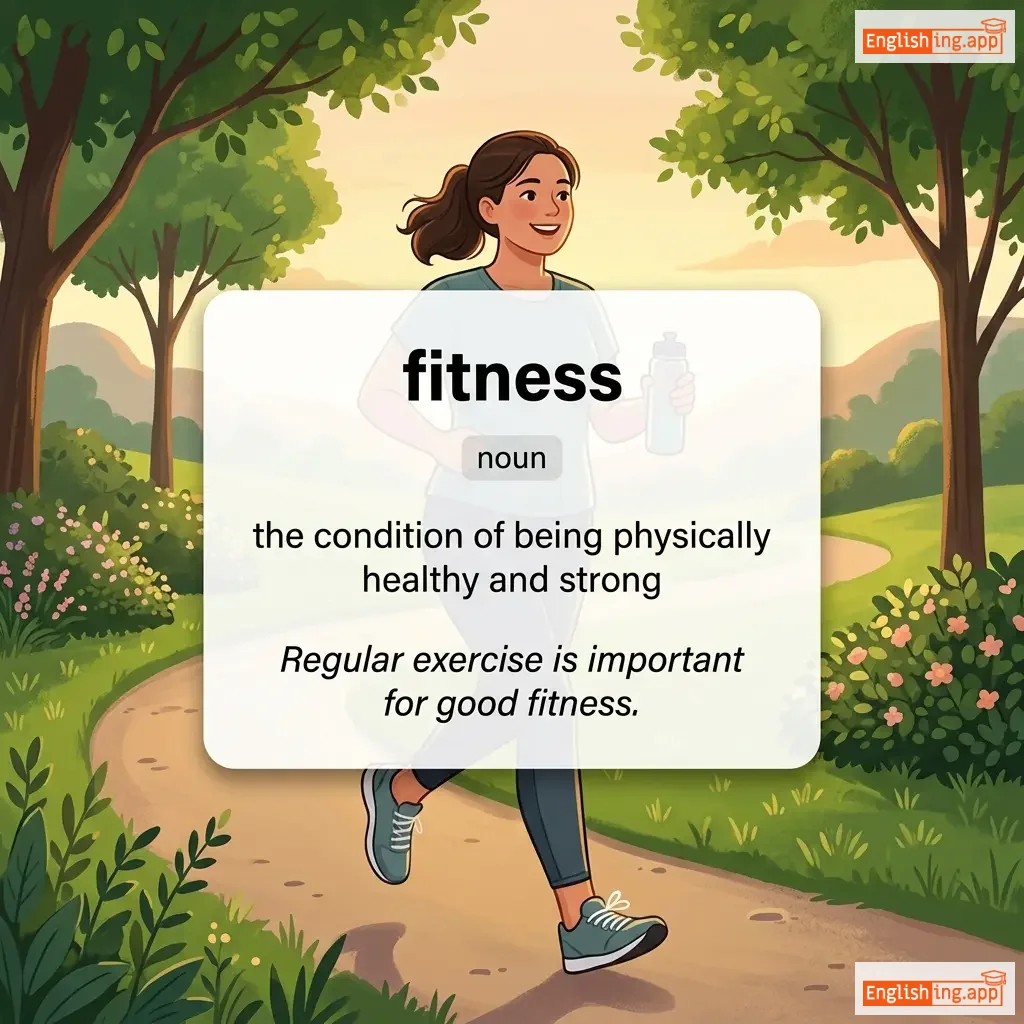
fitness definition card — visual illustration of the meaning
noun
/ˈfɪtnəs/
физическая подготовка (fizicheskaya podgotovka)

the condition of being physically healthy and strong

"Regular exercise is important for good fitness."

"Регулярные физические упражнения важны для хорошей физической подготовки." (Regulyarnye fizicheskie uprazhneniya vazhny dlya khoroshej fizicheskoj podgotovki.)
noun
/faɪv/
пять (pyat)

The number 5; one more than four and one less than six.

"She bought five apples from the market."

"Она купила пять яблок на рынке." (Ona kupila pyat' yablok na rynke.)
verb
/fɪks/
чинить (chinit)

To repair or make something work again.

"The mechanic fixed the broken car."

"Механик починил сломавшуюся машину." (Mekhanik pochinyil slomavshuyusya mashinu.)
fixation definition card — visual illustration of the meaning
noun
/fɪkˈseɪ.ʃən/
фиксированность или навязчивый интерес к чему-то или кому-то (fiksirovannost' ili nav'yazchivyy interes k chemu-to ili komu-to)

An obsessive interest in or feeling about someone or something.

"His fixation on perfectionism delayed project completion."

"Его фиксация на перфекционизме задержала завершение проекта." (Yego fiksatsiya na perfektsionizme zaderzhala zavershenie proyektu.)
adjective
/fɪkst/
фиксированный, стабильный (fiksirovanniy, stabil'nyy)

firmly in place; not changing or movable

"The schedule for the meeting is fixed for Monday morning."

"Расписание встречи закреплено на понедельник утром." (Raspisanie vstrechi zakrepleno na ponedel'nik utrom.)
fixed income definition card — visual illustration of the meaning
noun
fɪkst ˈɪnkʌm
фиксированный доход (fiksirovanniy dokhod)

Investment that provides a return in the form of fixed periodic payments.

"Fixed income investments provide reliable returns."

"Инвестиции с фиксированным доходом обеспечивают надежную прибыль." (Investitsii s fiksirovannym dokhodom obespechivayut nadezhnuyu pribyl.)
adverb
/ˈfɪksɪdli/
неподвижно (nepodvizhno)

in a steady, unmoving manner; with intense concentration

"He stared fixedly at the painting."

"Он пристально смотрел на картину." (On pristal'no smotrel na kartinu.)
noun
/ˈfɪks.tʃər/
постоянный объект, установленное оборудование (postoyannyy ob'ekt, ustanovlennoe oborudovanie)

a permanent or fixed object, often in a house or building

"The bathroom fixture was installed yesterday."

"Сантехническое оборудование было установлено вчера." (Sanitekhnicheskoe oborudovanie bylo ustanovleno vchera.)
adjective
/ˈflæb.i/
мягкий и вялый; отсутствие упругости или мышечного тонуса; слабый (flabi)

soft and loose; lacking firmness or muscle tone; weak

"His flabby arms showed he needed to exercise more."

"Его дряблые руки показывали, что ему нужно больше упражняться." (Ego dryablye ruki pokazyvali, chto emu nuzhno bolshe uprazhnyatsya.)
adjective
/ˈflæks.ɪd/
мягкий, вялый или без твердости (myagkiy, vyalyi ili bez tverdosti)

soft, limp, or lacking firmness

"The fruit was overripe and flaccid."

"Фрукт был слишком перезрелым и вялым." (Frukt byl slishkom perezrelym i vyalyim.)