Словари

Словарь английского языка | Значения слов, определения и примеры

adjective
/ˈfræʤaɪl/
хрупкий (khrupkiy)

Easily broken or damaged; delicate.

"Be careful with that vase, it's very fragile."
"Будь осторожен с вазой, она очень хрупкая." (Bud' ostorozhen s vazoy, ona ochen' khrupkaya.)
fragility definition card — visual illustration of the meaning
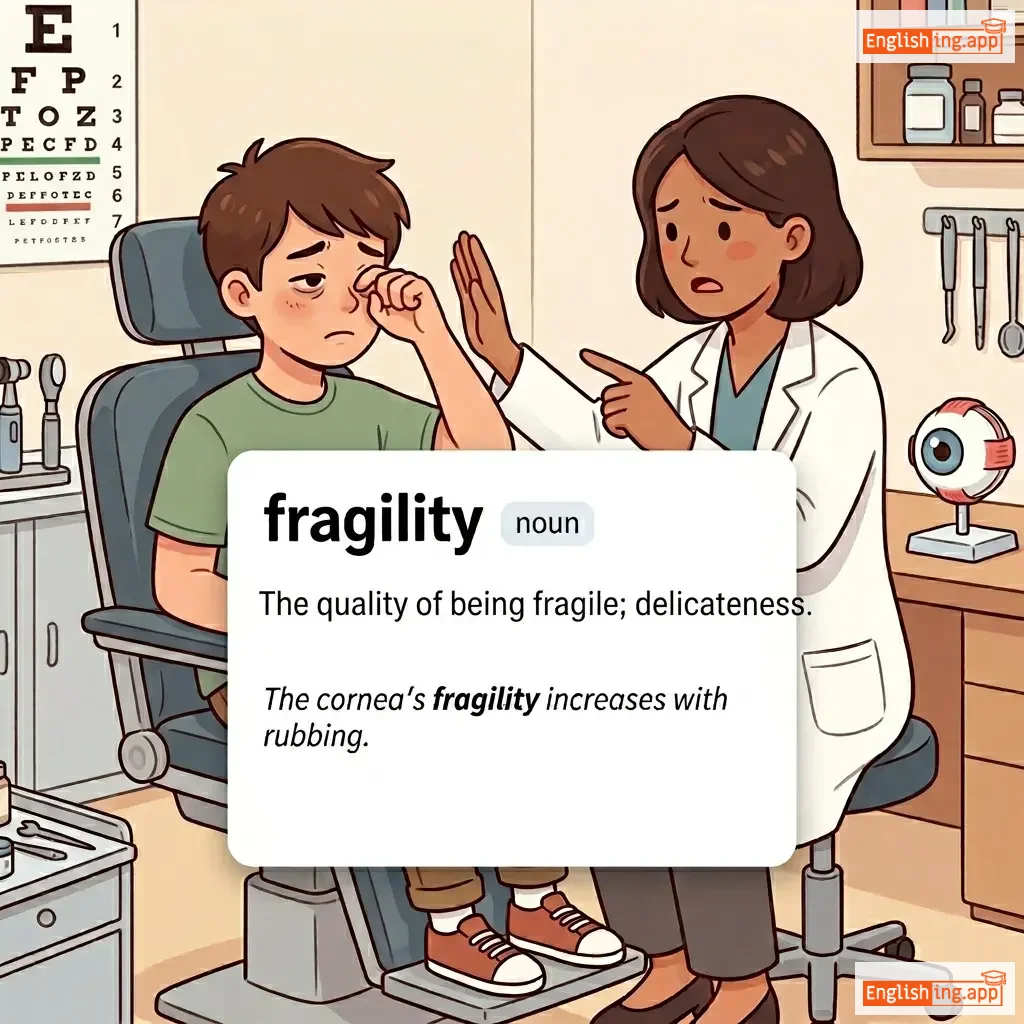
noun
/frəˈdʒɪl.ɪ.ti/
хрупкость (khrupkost)

The quality of being fragile; delicateness.

"The cornea's fragility increases with rubbing."

"Хрупкость роговицы увеличивается при трении." (khrupkost rogovitsy uvelichivaetsya pri trenii)
noun
/ˈfræɡmənt/
фрагмент (fragment)

a small piece broken off something larger

"He found a fragment of ancient pottery near the river."
"Он нашел фрагмент древней посуды рядом с рекой." (On nashel fragment drevney posudy ryadom s rekoj.)
fragmentation definition card — visual illustration of the meaning
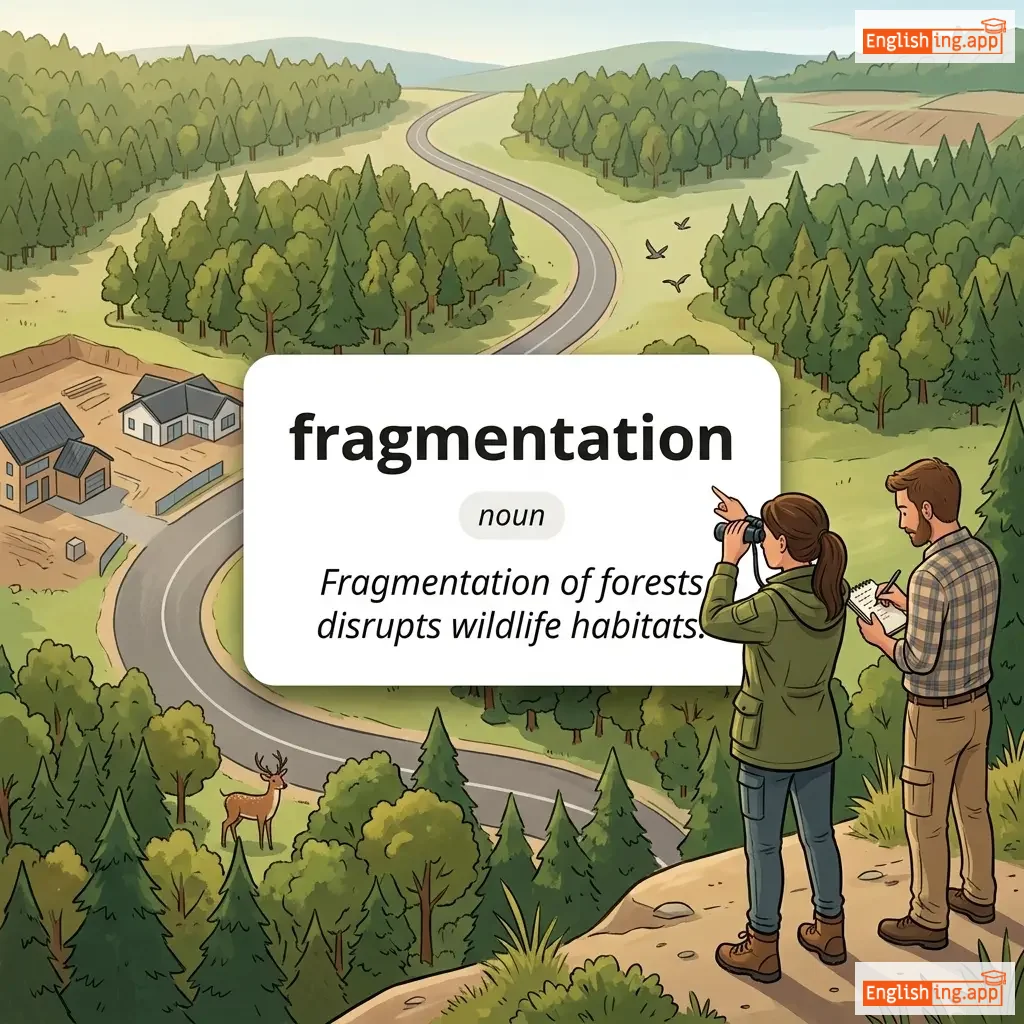
noun
/ˌfræɡ.mənˈteɪ.ʃən/
фрагментация (fragmentatsiya)

The process of breaking into fragments; division of habitat into isolated patches.

"Fragmentation of forests disrupts wildlife habitats."
"Фрагментация лесов нарушает среду обитания дикой природы." (Fragmentatsiya lesov narushayet sredu obitaniya dikoy prirody.)
fragmented definition card — visual illustration of the meaning
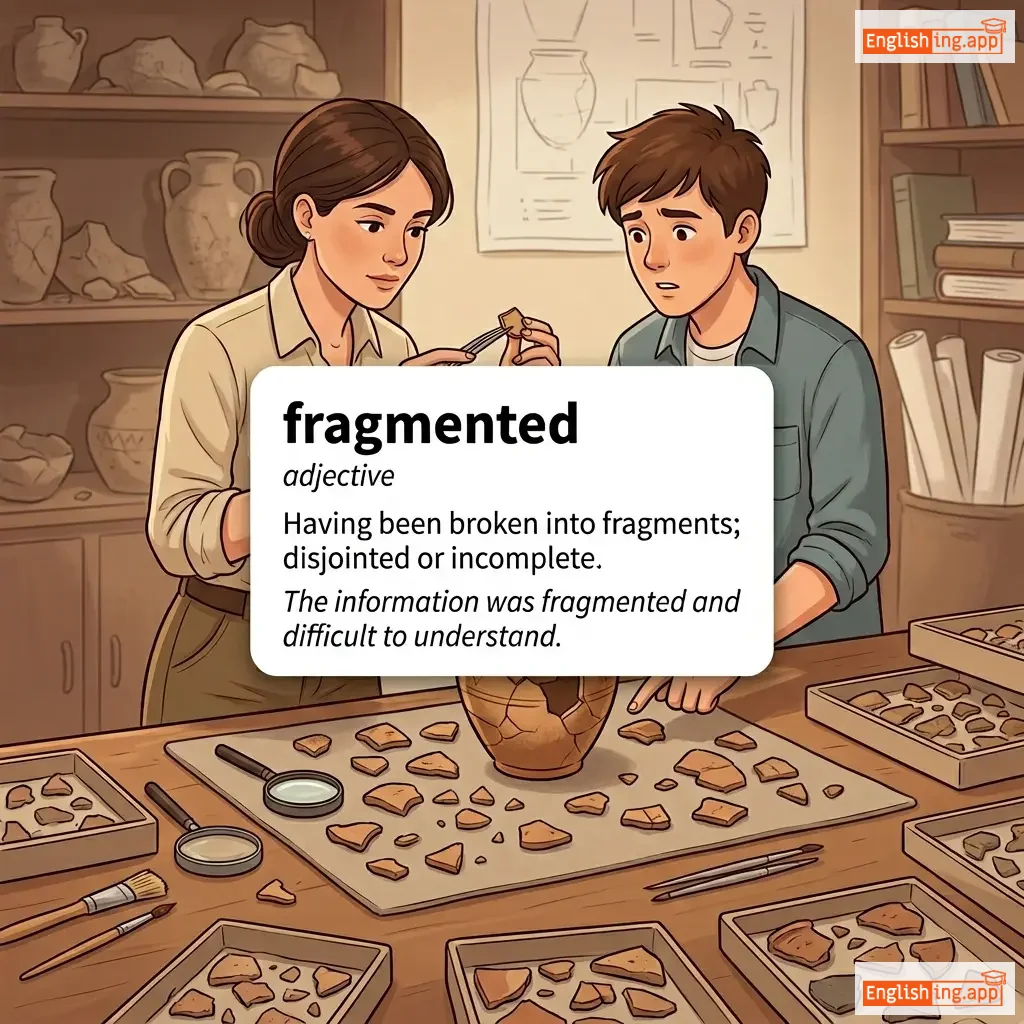
adjective
/ˈfræɡməntɪd/
фрагментированный, разделенный, неполный (fragmentirovannyy, razdelyonnyy, nepolnyy)

Having been broken into fragments; disjointed or incomplete.

"The information was fragmented and difficult to understand."

"Информация была фрагментирована и трудно было понять." (Informatsiya byla fragmentirovanna i trudno bylo ponyat.)
noun
/ˈfreɪɡrəns/
аромат (aromat)

A pleasant, sweet smell.

"The fragrance of fresh flowers filled the room."

"Аромат свежих цветов наполнил комнату." (Aromat svezhikh tsvetov napolnil komnatu.)
adjective
/freɪl/
хрупкий (khrupkiy)

Physically weak and delicate.

"The old man was too frail to walk without help."

"Пожилой человек был слишком хрупким, чтобы ходить без помощи." (Pozhiloy chelovek byl slishkom khrupkim, chtoby khodit' bez pomoshchi.)
noun
/ˈfreɪlti/
хрупкость (khrupkost)

The condition of being weak, delicate, or easily broken.

"Old age often comes with physical frailty."
"Старость часто сопровождается физической хрупкостью." (Starost' chasto soprovozhdaetsya fizicheskoy khrupkost'yu.)
Frame definition card — visual illustration of the meaning
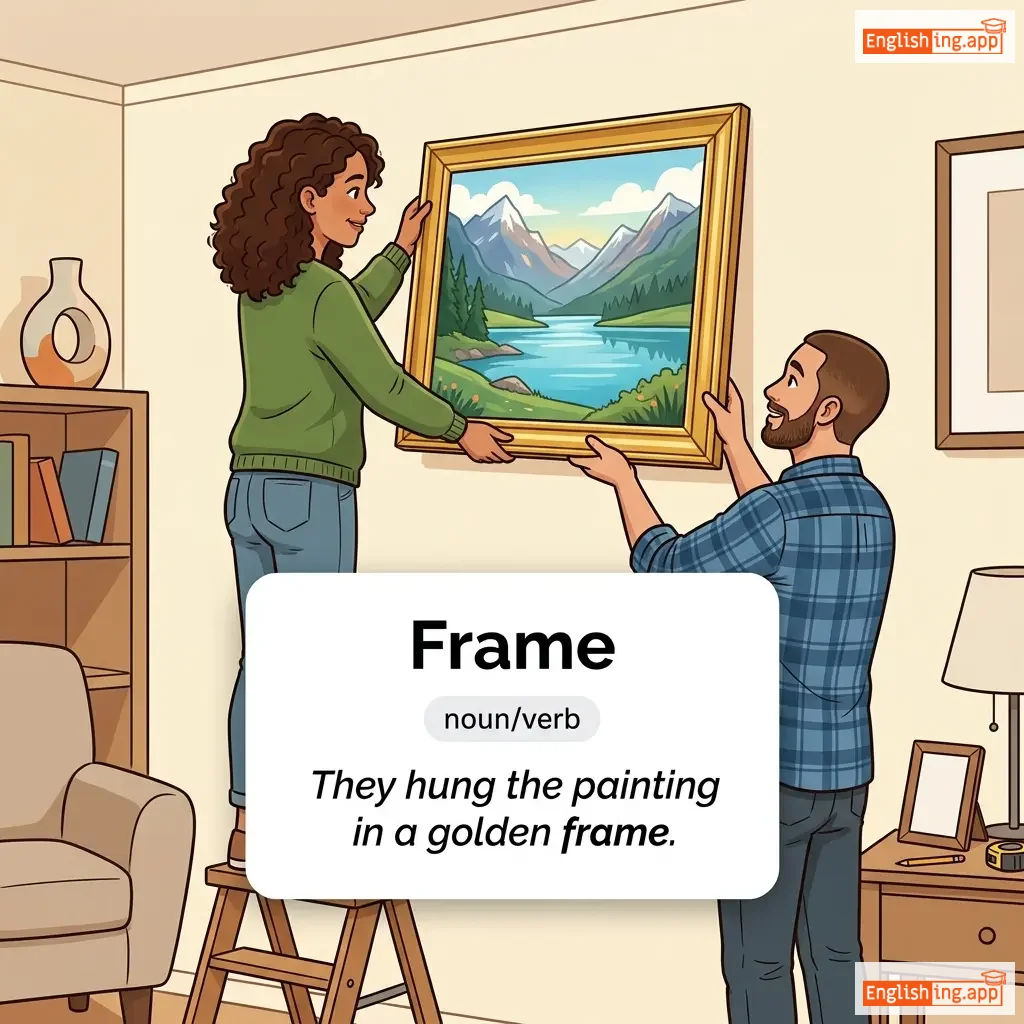
noun/verb
/freɪm/
рамка (freym)

A rigid structure that surrounds or encloses something; to construct or formulate.

"They hung the painting in a golden frame."
"Они повесили картину в золотую рамку." (Oni povesili kartinu v zolotuyu ramku.)
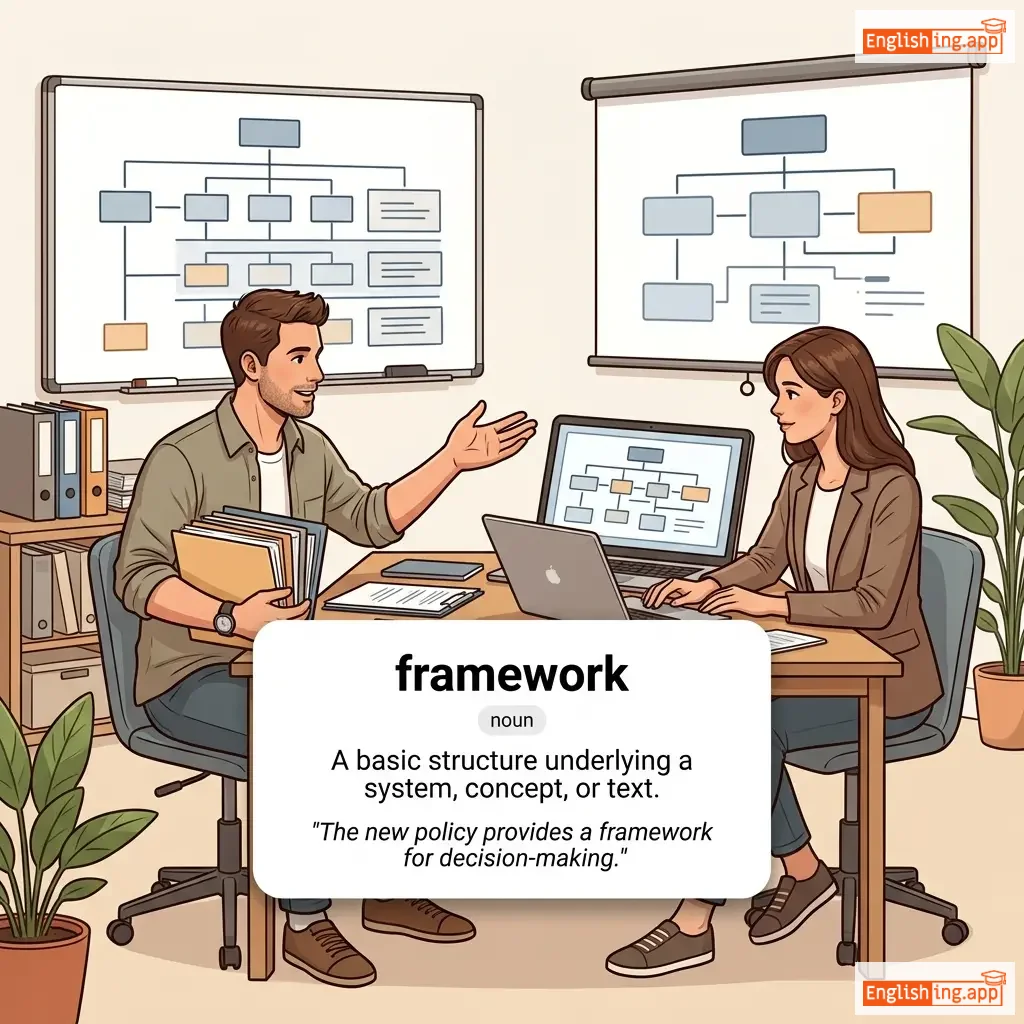
framework definition card — visual illustration of the meaning
noun
/ˈfreɪmˌwɜːrk/
рамка (ramka)

A basic structure underlying a system, concept, or text.

"The new policy provides a framework for decision-making."
"Новая политика предоставляет основу для принятия решений." (Novaya politika predostavlyaet osnovu dlya prinyatiya resheniy.)
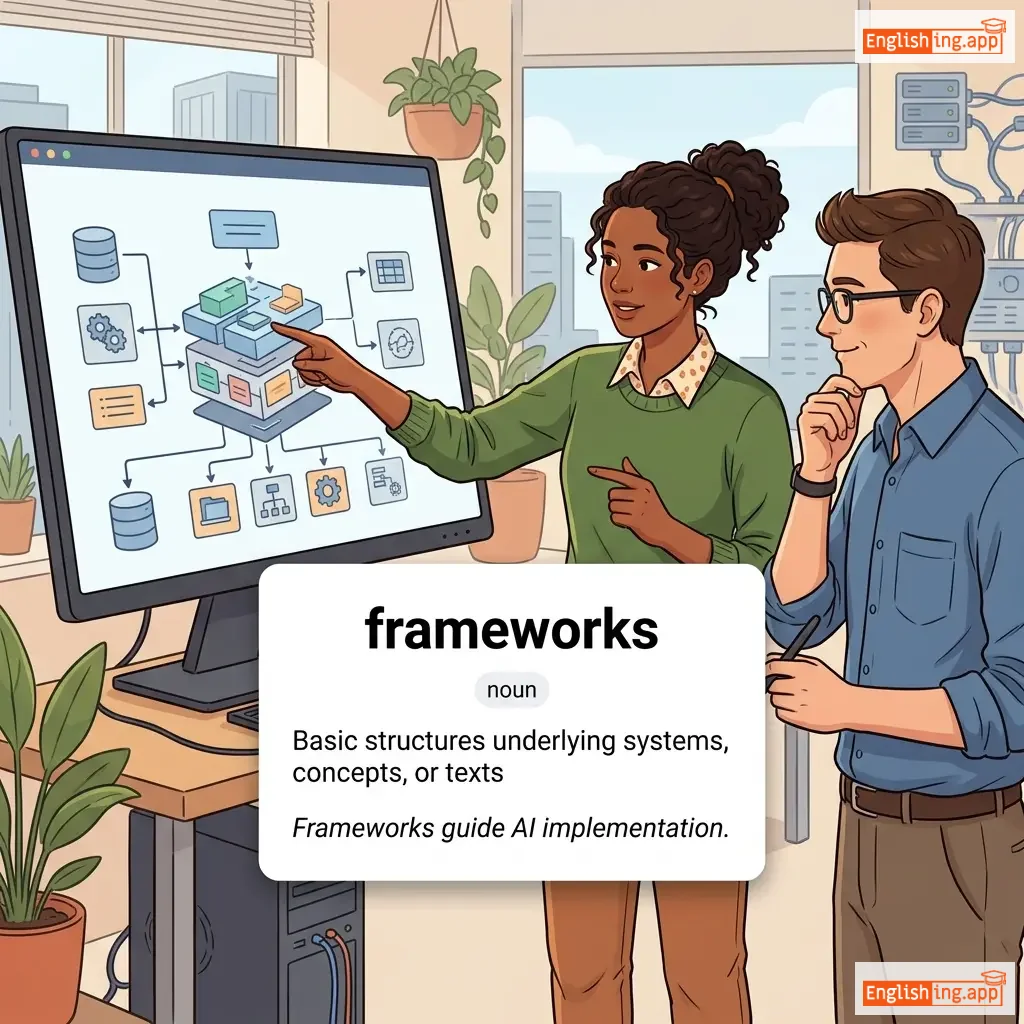
frameworks definition card — visual illustration of the meaning
noun
ˈfreɪm.wɜːks
рамки (ramki)

Basic structures underlying systems, concepts, or texts

"Frameworks guide AI implementation."

"Рамки направляют внедрение ИИ." (Ramki napravlyayut vnedrenie II.)
noun, verb
/ˈfrænʧaɪz/
франшиза (franshiza)

A legal right to sell or distribute goods or services in a specific area; to grant such a right.

"He opened a new fast-food franchise in the city."

"Он открыл новый франшизный ресторан быстрого питания в городе." (On otkryl novyy franshiznyy restorann bystrogo pitaniya v gorode.)
adjective
/fræŋk/
открытый (otkrytyy)

open, honest, and direct in speech or expression

"She was frank about her feelings on the matter."

"Она была откровенна относительно своих чувств по этому поводу." (Ona byla otkrovenna otnositelno svoikh chuvstv po etomu povodu.)
noun
/ˈfræŋkɪnsɛns/
ладан (ladan)

An aromatic gum resin used in incense and perfumes, often in religious ceremonies.

"The temple was filled with the sweet smell of burning frankincense."

"Храм был наполнен сладким запахом горящего ладана." (Khram byl napolnen sladkim zapakhom goryashchego ladana.)
adverb
/ˈfræŋkli/
откровенно (otkrovenno)

in an honest and direct way

"Frankly, I don’t think this plan will work."

"Откровенно говоря, я не думаю, что этот план сработает." (Otkrovenno govorya, ya ne dumayu, chto etot plan srabotayet.)
adjective
/ˈfræntɪk/
френетичный (frenetichnyy)

Extremely anxious, hurried, or out of control due to fear or excitement.

"She made a frantic call to her family after the accident."

"Она сделала отчаянный звонок своей семье после аварии." (Ona sdelala otchayannyy zvonok svoey sem'ye posle avarii.)
adjective
/frəˈtɜːrnəl/
братский (bratskiy)

Relating to brothers or brotherhood; friendly and supportive.

"The two nations maintain a fraternal relationship."

"Две нации поддерживают братские отношения." (Dve natsii podderzhivayut bratskie otnosheniya.)
noun
/frɔːd/
мошенничество (moshennichestvo)

A wrongful or criminal deception intended to result in financial or personal gain.

"The company collapsed due to massive accounting fraud."

"Компания обанкротилась из-за массового бухгалтерского мошенничества." (Kompaniya obankrotilas' iz-za massovogo buhgalterskogo moshennichestva.)
noun
/ˈfrɔːdjʊləns/
мошенничество (moshennichestvo)

The quality or state of being fraudulent; deceitfulness.

"The audit revealed fraudulence in the financial statements."

"Аудит выявил мошенничество в финансовых отчетах." (Audit vyyavil moshenichestvo v finansovykh otchetakh.)
adjective
/ˈfrɔːdjʊlənt/
мошеннический (moshennicheskiy)

Involving or using deceit, especially criminal deception.

"He was arrested for making fraudulent insurance claims."

"Его арестовали за подачу мошеннических страховых заявлений." (Ego arestovali za podachu mosshennicheskikh strakhovykh zayavleniy.)
adjective
/frɔːt/
наполненный (napolnennyi)

Filled with or likely to result in something undesirable.

"The negotiations were fraught with tension and uncertainty."

"Переговоры были наполнены напряжением и неопределенностью." (Peregovory byli napolneny napryazheniem i neopredelennost'yu.)
noun/verb
/freɪ/
борьба, изнашиваться (bor'ba, iznashivatsya)

As a noun, a fight or heated dispute; as a verb, to unravel or wear out through friction.

"He tried to stay calm, but his nerves began to fray during the argument."

"Он пытался оставаться спокойным, но его нервы начали изнашиваться во время спора." (On pytalsya ostavat'sya spokoynym, no ego nervy nachali iznashivatsya vo vremya spora.)
noun
/ˈfrek.əl/
веснушка (vesnushka)

a small brownish spot on the skin, often becoming more pronounced through exposure to the sun

"Her face was covered with cute freckles that appeared every summer."

"Ее лицо было покрыто милыми веснушками, которые появлялись каждое лето." (Eyo litso bylo pokryto milymi vesnushkami, kotoryye poyavlyalis' kazhdoye leto.)
🕊️

free (fri)

adjective/verb/adverb
/friː/
свободный (svobodny)

Not under the control or in the power of another; able to act or be done as one wishes.

"The children are free to play outside."

"Дети могут играть на улице свободно." (Deti mogut igrat' na ulitse svobodno.)
noun
/ˈfriː taɪm/
свободное время (svobodnoe vremya)

time when a person is not working or occupied and can do activities they enjoy

"She likes to read books in her free time."

"Она любит читать книги в свободное время." (Ona lyubit chitat knigi v svobodnoe vremya)
noun
/ˈfriːˌbuːtər/
фрибутер (fributer)

A pirate or plunderer who roams freely in search of wealth.

"The freebooter raided the merchant ships along the coast."
"Фрибутер напал на торговые корабли вдоль побережья." (Fributer napal na torgovye korabli v doline poberizhiya.)
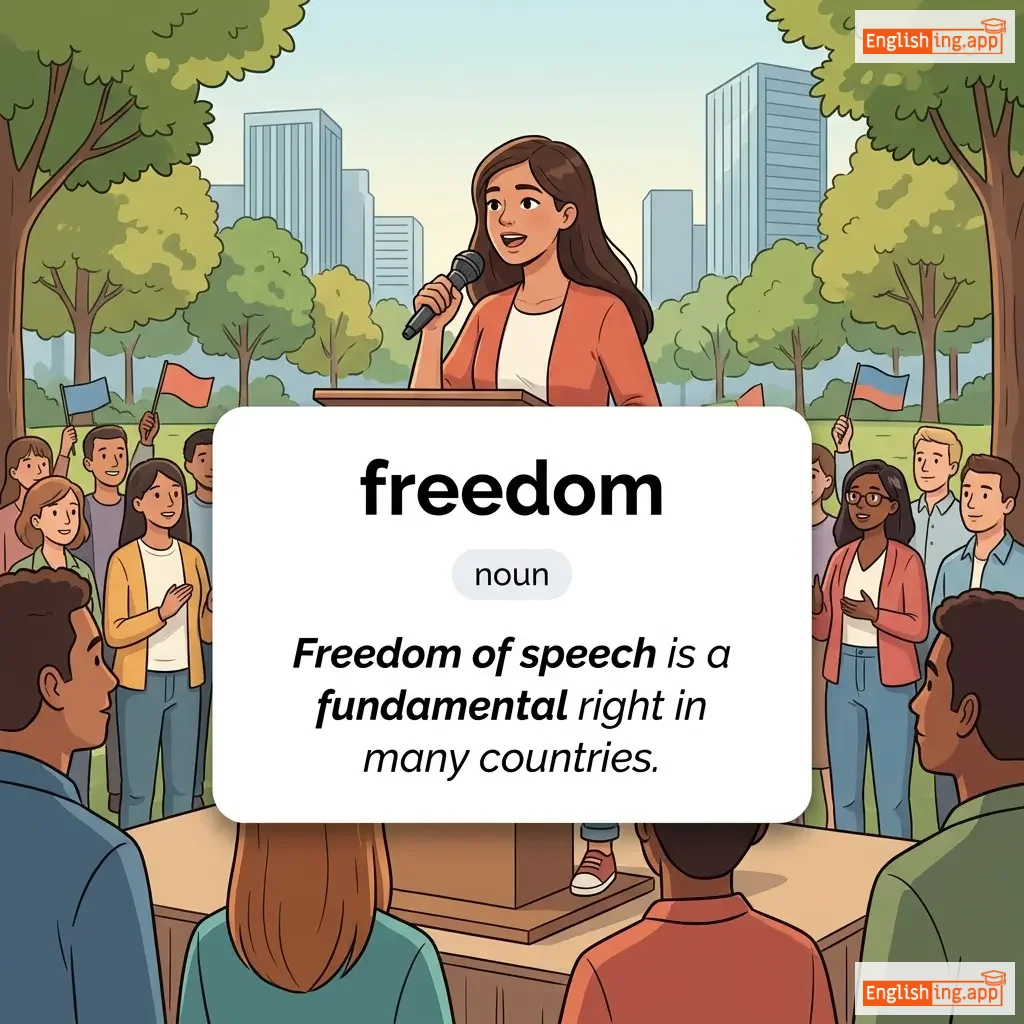
freedom definition card — visual illustration of the meaning
noun
/ˈfriːdəm/
свобода (svoboda)

The state of being free; the power or right to act, speak, or think without hindrance or restraint.

"Freedom of speech is a fundamental right in many countries."

"Свобода слова является основным правом во многих странах." (Svoboda slova yavlyaetsya osnovnym pravom vo mnogikh stranakh.)
noun
/ˈfriːdəm ˌfaɪtər/
борец за свободу (borets za svobodu)

a person who takes part in an armed or political struggle to achieve freedom or independence for their people or country

"The freedom fighter dedicated his life to the liberation of his homeland."

"Борец за свободу посвятил свою жизнь освобождению своей страны." (Borets za svobodu posvyatil svoyu zhizn osvobozhdeniyu svoey strany)
noun
/ˈfriːˌlænsər/
фрилансер (frilanser)

A person who works independently without being permanently employed by one organization.

"She works as a freelancer designing websites for different clients."

"Она работает фрилансером, создавая сайты для разных клиентов." (Ona rabotayet frilanserom, sozdavaya saity dlya raznykh klientov.)
adverb
/ˈfriːli/
свободно (svobodno)

without restriction or control; willingly

"Information should flow freely in a democratic society."

"Информация должна свободно циркулировать в демократическом обществе." (Informatsiya dolzhna svobodno tsirkulirovat' v demokraticheskom obshchestve.)
noun
/ˈfriːˌmeɪsən/
франкмасон член (frankmason chlen)

A member of an international fraternity known as Freemasonry, focused on moral and spiritual values.

"His grandfather was a respected freemason in the community."

"Его дедушка был уважаемым франкмасоном в сообществе." (Ego dedushka byl uvazhaemym frankmasonom v soobshchestve.)
noun
/ˈfriːˌθɪŋkər/
свободомыслящий человек (svobodomyishlyushchiy chelovek)

A person who forms opinions based on reason and independent thought rather than tradition or authority.

"Voltaire was considered a great freethinker of his time."

"Вольтер был признан великим свободомыслящим человеком своего времени." (Vol'ter byl priznan velikim svobodomyshlyushchim chelovekom svoego vremeni.)
verb
/friːz/
замерзать (zamerzat)

To turn into ice or cause to become hard due to extreme cold.

"The water in the lake will freeze during winter."

"Вода в озере замерзнет зимой." (Voda v ozerе zamerznet zimoy.)
adjective
/frɛntʃ/
французский (frantsuzskiy)

Relating to France, its people, or their language.

"We enjoyed delicious French cuisine on our trip to Paris."

"Мы наслаждались вкусной французской кухней в нашем путешествии в Париж." (My naslazhdalis' vkusnoy frantsuzskoy kukhney v nashem puteshestvii v Parizh.)
adjective
/frəˈnɛtɪk/
нервный (nervnyy)

Fast and energetic in a wild or uncontrolled way.

"The stock market experienced frenetic trading after the announcement."

"Рынок акций пережил нервную торговлю после объявления." (Rynok aktsiy perezhil nervnuyu torgovlyu posle ob'yavleniya.)
adjective
/ˈfrɛn.zid/
бешеный (beshanyy)

Wildly excited or uncontrolled

"The frenzied crowd cheered as the band took the stage."

"Бешеная толпа аплодировала, когда группа вышла на сцену." (Beshennaya tolpa aplaudirovala, kogda gruppa vyshla na stsenu.)
noun
/ˈfrɛn.zi/
бешенство (beshentvo)

A state of uncontrolled excitement or wild behavior

"The news of the sale caused a shopping frenzy."

"Новости о распродаже вызвали бешенство покупок." (Novosti o rasprodazhe vyzvali beshentvo pokupok.)
noun
/ˈfriː.kwən.si/
частота (chastota)

The rate at which something occurs or is repeated over a period of time

"The frequency of bus services has been increased during rush hours."

"Частота автобусных маршрутов была увеличена в часы пик." (Chastota avtobusnykh marshrutov byla uvelichena v chasy pik.)
adjective, verb
/ˈfriː.kwənt/ (adj.), /friːˈkwent/ (verb)
частый (chasty)

Adjective: happening often; Verb: to visit a place regularly

"He is a frequent visitor to the library."

"Он часто посещает библиотеку." (On chasto poseshchayet biblioteku.)
adverb
/ˈfriːkwəntli/
часто (chasto)

Happening often or at short intervals.

"He frequently visits his grandparents on weekends."
"Он часто навещает своих бабушку и дедушку по выходным." (On chasto naveshchaet svoikh babushku i dedushku po vykhodnym.)
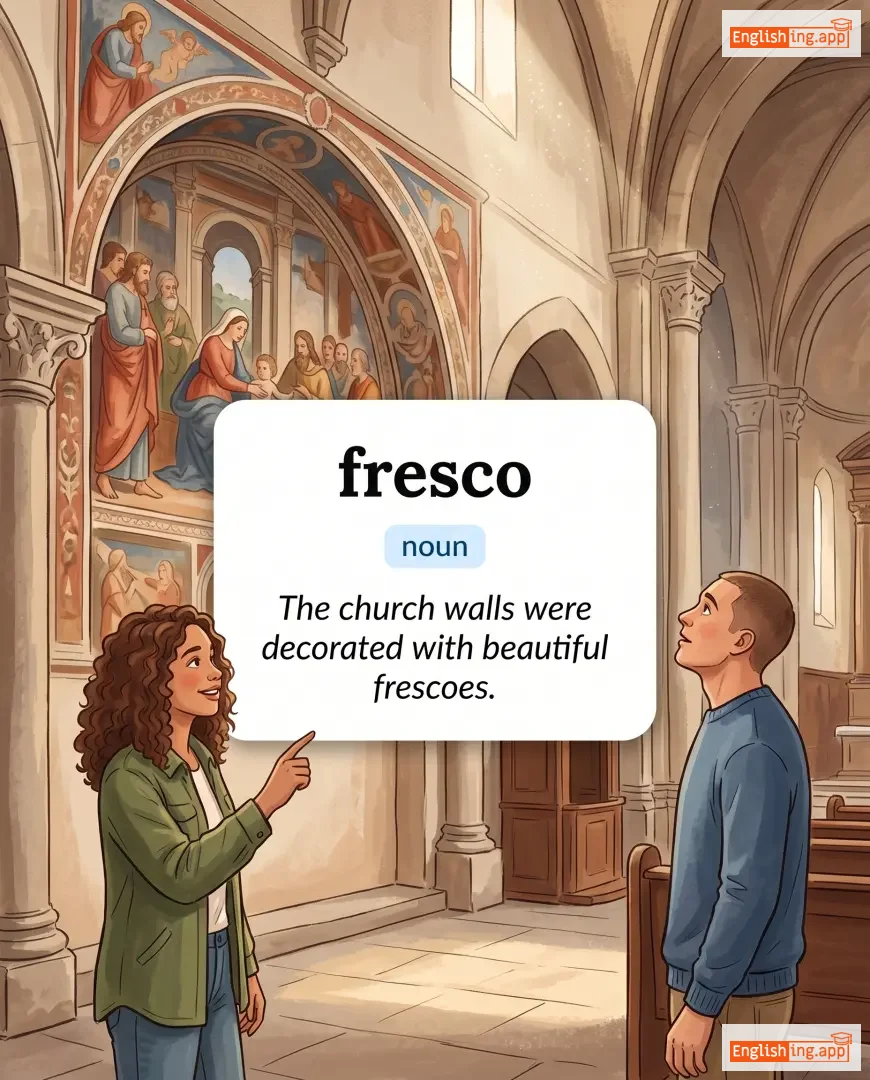
fresco definition card — visual illustration of the meaning
noun
/ˈfrɛs.koʊ/
фреска (freska)

A painting done rapidly in watercolor on wet plaster so that the colors penetrate the surface

"The church walls were decorated with beautiful frescoes."

"Стены церкви были украшены красивыми фресками." (Steny tserkvi byli ukrasheny krasivymi freskami.)
adjective
/frɛʃ/
свежий (svezhiy)

new, recently made, or clean and pure

"The bread is still fresh from the oven."

"Хлеб ещё свежий из печи." (Khleb eshcho svezhiy iz pechi.)
noun
/ˈfrɛʃɪt/
внезапное наводнение реки (vnezapnoe navodnenie reki)

A sudden overflow of a stream or river caused by heavy rain or melting snow.

"After the storm, the river turned into a raging freshet."

"После шторма река превратилась в бурный фрешет." (Posle shtorma reka prevratilas' v burnyj freshet.)
noun
/ˈfreʃmən/
первокурсник (pervokursnik)

a first-year student at a high school, college, or university

"The freshman felt nervous on his first day at university."

"Первокурсник почувствовал себя нервно в свой первый день в университете." (Pervokursnik pochuvstvoval sebya nervno v svoy pervyy den v universitete.)
noun
/ˈfrɛʃnəs/
свежесть (svezhest')

The quality of being new, clean, and full of energy.

"The freshness of the morning air made everyone feel alive."
"Свежесть утреннего воздуха заставила всех почувствовать себя живыми." (Svezhest' utretnyego vozdukha zastavila vsekh pochuvstvovat' sebya zhivymi.)
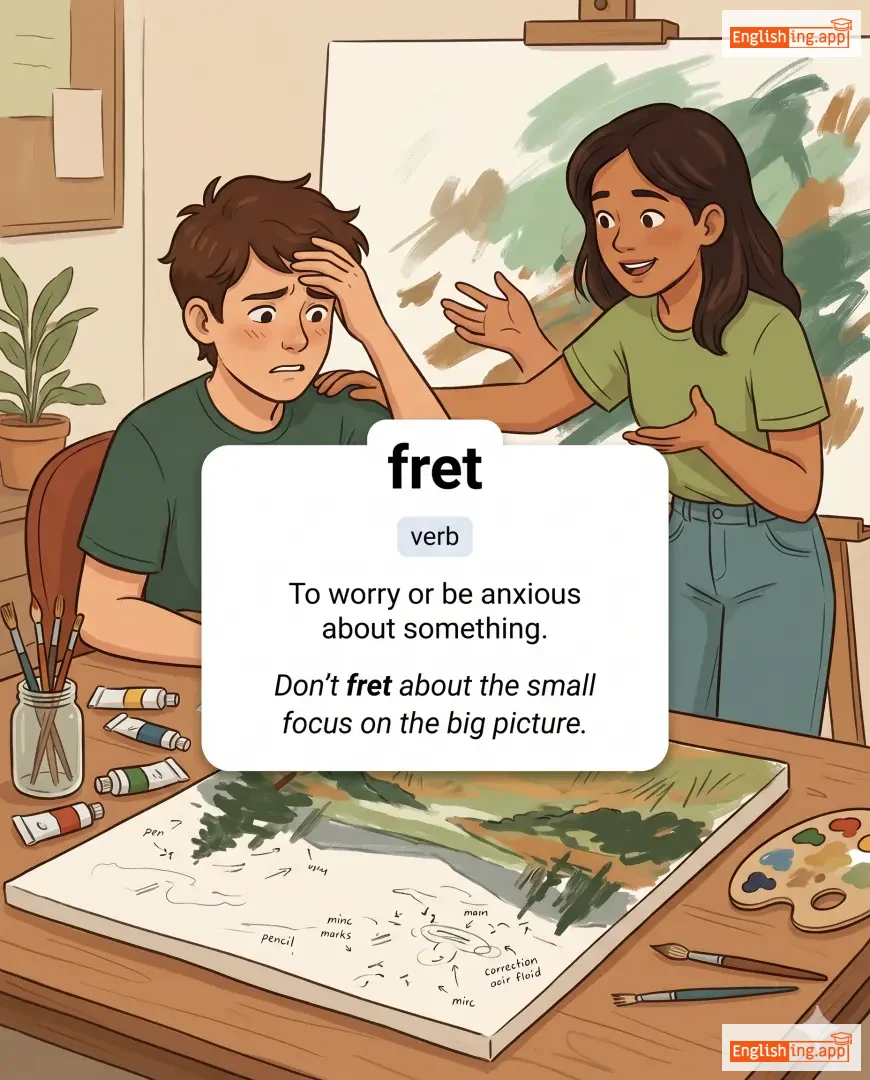
fret definition card — visual illustration of the meaning
😟

fret

verb
/frɛt/

To worry or be anxious about something.

"Don't fret about the small mistakes; focus on the big picture."

adjective
/ˈfrɛtfəl/
беспокойный (bespokoĭnyĭ)

Feeling or showing distress or irritation.

"The baby was fretful all night and could not sleep."

"Ребёнок был беспокойным всю ночь и не мог заснуть." (Rebyonok byl bespokoĭnym vsyu noch' i ne mog zasnut'.)
adjective
/ˈfraɪəbl/
хрупкий (khrupkiy)

Easily crumbled or reduced to powder.

"The old brick wall was friable and broke apart at a touch."

"Старая кирпичная стена была хрупкой и ломалась при малейшем прикосновении." (Staraya kirpichnaya stena byla khrupkoy i lomalas' pri malejshhem prikosnovenii.)
noun
/ˈfrɪkʃən/
трение (trenije)

the resistance that one surface or object encounters when moving over another; conflict or tension between people or groups

"There was friction between the two departments over resource allocation."

"Между двумя отделами был конфликт из-за распределения ресурсов." (Mezhdu dvumya otdelami byl konflikt iz-za raspredeleniya resursov.)
noun
/ˈfraɪ.deɪ/
пятница (pyatnitsa)

the day of the week following Thursday and preceding Saturday

"We have a team meeting every Friday afternoon."

"У нас командное собрание каждую пятницу днем." (u nas komandnoye sobraniye kazhduyu pyatnitsu dnem)