Словари

Словарь английского языка | Значения слов, определения и примеры

noun
/ˌɛkspɛkˈteɪʃən/
ожидание (ozhidanie)

a strong belief that something will happen or be the case

"The students had high expectations for their exam results."
"Студенты имели высокие ожидания от своих результатов экзаменов." (Studenty imeli vysokiye ozhidaniya ot svoikh rezul'tatov ekzamenov.)
expected definition card — visual illustration of the meaning
adjective
/ɪkˈspɛktɪd/
ожидаемый (ozhidayemyy)

regarded as likely to happen; anticipated

"The expected results were better than we thought."

"Ожидаемые результаты были лучше, чем мы думали." (Ozhidayemyye rezul'taty byli luchshe, chem my dumali.)
verb
/ɪkˈspɛktəreɪt/
отхаркивать (otharkivat)

to cough up and spit out mucus from the throat or lungs

"The patient began to expectorate thick mucus."

"Пациент начал отхаркивать густую слизь." (Patsiyent nachal otharkivat' gustuyu sliz'.)
noun
/ɪkˈspiːdiənsi/
оппортунизм (opportunizm)

the quality of being convenient and practical despite possibly being improper or immoral

"He acted out of political expediency rather than principle."

"Он действовал из политического оппортунизма, а не из принципа." (On deystvoval iz politicheskogo opportunizma, a ne iz printsipa.)
adjective
/ɪkˈspiːdiənt/
целесообразный (tselesoobrazny)

suitable or convenient for achieving a particular end, sometimes at the expense of morality

"It was expedient to take the shortcut despite the risks."

"Было целесообразно воспользоваться коротким путем, несмотря на риски." (Bylo tselesobrno vospol'zovatsya korotkim putyom, nesmotrya na riski.)
expedite definition card — visual illustration of the meaning
verb
/ˈɛkspəˌdaɪt/
ускорить (uskorit)

to make a process or action happen more quickly

"The company promised to expedite the delivery of the package."

"Компания пообещала ускорить доставку посылки." (Kompanija poobeshchala uskorit dostavku posylki.)
noun
/ˌɛkspəˈdɪʃən/
экспедиция (ekspeditsiya)

a journey made for a particular purpose, often exploration or research

"They went on a scientific expedition to the Arctic."
"Они отправились в научную экспедицию в Арктику." (Oni otpravilis' v nauchnuyu ekspeditsiyu v Arktiku.)
expeditious definition card — visual illustration of the meaning
adjective
/ˌɛkspəˈdɪʃəs/
быстрый и эффективный (bystryy i effektivnyy)

done with speed and efficiency

"The investigation was carried out in an expeditious manner."

"Расследование было проведено быстро и эффективно." (Rassledovanie bylo provedeno bystro i effektivno.)
adverb
/ˌɛkspəˈdɪʃəsli/
быстро и эффективно (bystro i effektovno)

in a quick and efficient manner

"The application was processed expeditiously."

"Заявка была обработана быстро и эффективно." (Zayavka byla obrabotana bystro i effektovno.)
verb
/ɪkˈspɛl/
исключить (isklyuchit)

to officially force someone to leave a place or organization

"The student was expelled from school for misconduct."

"Студент был исключен из школы за плохое поведение." (Student byl is-lyuchyon iz shkoly za plokhoje povy-denie.)
expend definition card — visual illustration of the meaning
verb
/ɪkˈspɛnd/
тратить (tratit)

to use up or spend resources such as time, money, or energy

"She expended a lot of energy preparing for the presentation."
"Она потратила много энергии, готовясь к презентации." (Ona potratila mnogo energii, gotovias' k prezentatsii.)
expenditure definition card — visual illustration of the meaning
noun
/ɪkˈspɛndɪtʃər/
расходы (raskhody)

the act of spending money or using resources

"The government reduced its expenditure on defense."

"Правительство сократило свои расходы на оборону." (Pravitel'stvo sokratilo svoi raskhody na oboronu.)
noun
/ɪkˈspɛns/
расход (rakhod)

the cost of something; money spent

"Traveling abroad can be a major expense."

"Путешествия за границу могут быть значительными расходами." (Puteshestviya za granitsu mogut byt' znachitelnymi raskhodami.)
adjective
/ɪkˈspɛnsɪv/
дорогой (ekspensiv)

costing a lot of money

"That car is too expensive for me to buy."

"Эта машина слишком дорогая, чтобы я мог её купить." (Eta mashina slishkom dorogaya chtoby ya mog eyo kupit)
noun/verb
/ɪkˈspɪəriəns/
счастье (schastye)

knowledge or skill gained through involvement in or exposure to something over time

"She gained valuable experience while working abroad."

"Она не могла скрыть своего счастья, когда получила награду." (Ona ne mogla skryt' svoego schast'ya, kogda poluchila nagradu.)
adjective
/ɪkˈspɪəriənst/
опытный (opytnyy)

having knowledge or skill in a particular field gained through experience

"She is an experienced teacher who knows how to handle difficult students."

"Она опытный учитель, который знает, как справляться с трудными студентами." (Ona opytnyy uchitel', kotoryy znayet, kak spravlyat'sya s trudnymi studentami.)
experiencing definition card — visual illustration of the meaning
verb
/ɪkˈspɪəriənsɪŋ/
переживать (perezhivat)

Encountering or undergoing an event or occurrence.

"The travelers are experiencing the thrill of adventure."

"Путешественники переживают острые ощущения от приключений." (Puteshestvenniki perezhivayut ostryye oshchushcheniya ot priklyucheniy.)
noun/verb
/ɪkˈsperɪmənt/
эксперимент (eksperiment)

a test or trial carried out to discover something or prove an idea

"The scientist conducted an experiment on plant growth."

"Učenyy provodil eksperiment po rostu rastenij." (Uchenyy provodil eksperiment po rostu rastenij.)
adjective
/ɪkˌsperɪˈmentl/
экспериментальный (eksperimiental'nyi)

based on untested ideas or techniques; relating to experiments or testing

"The scientists developed an experimental drug to treat cancer."
"Учёные разработали экспериментальное лекарство для лечения рака." (Uchyonye razrabotali eksperimental'noye lekarstvo dlya lecheniya raka.)
experimentally definition card — visual illustration of the meaning
adverb
ɪkˌsperɪˈmentəli
экспериментально (eksperimental'no)

In a way that is based on or derived from experiment and observation rather than theory.

"Bose demonstrated findings experimentally."
"Бозе продемонстрировал результаты экспериментально." (Boze proyemonstiroval rezul'taty eksperimental'no.)
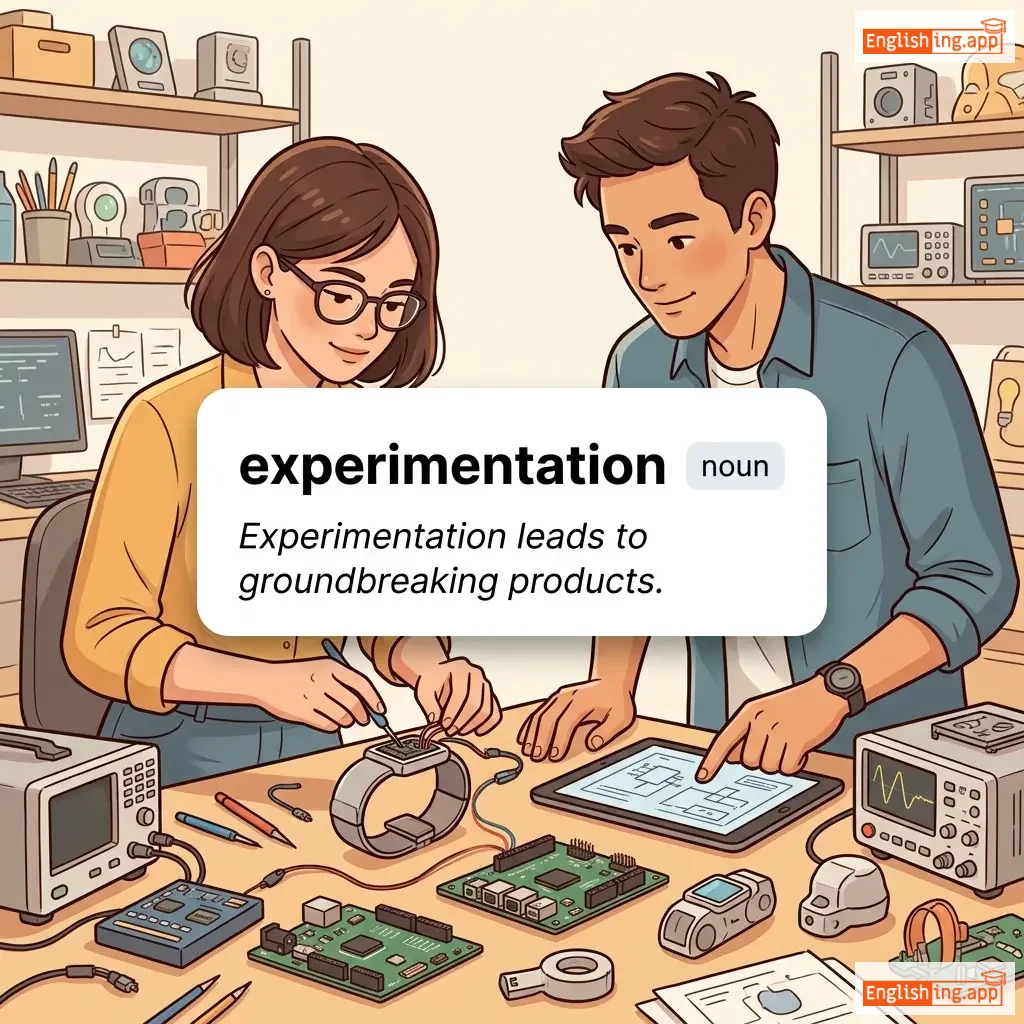
experimentation definition card — visual illustration of the meaning
noun
/ɪkˌsperɪˈmɛnteɪʃən/
экспериментирование (eksperimentirovanie)

The process of performing a scientific procedure to make a discovery, test a hypothesis, or demonstrate a known fact.

"Experimentation leads to groundbreaking products."

"Экспериментация ведет к революционным продуктам." (Eksperimentatsiya vedet k revolyutsionnym produktam.)
noun/adjective
/ˈekspɜːt/
эксперт (ekspert)

a person who has a lot of knowledge or skill in a particular area

"He is an expert in computer programming."

"Он эксперт в программировании компьютеров." (On ekspert v programmirovanii komp'yuterov.)
expertise definition card — visual illustration of the meaning
noun
/ˌɛkspərˈtiːz/
экспертиза (ekspertiza)

specialized knowledge or skill in a particular field

"Her expertise in data analysis is highly valued."
"Её экспертиза в анализе данных высоко ценится." (Yeyo ekspertiza v analize dannykh vysoko tsenitsya.)
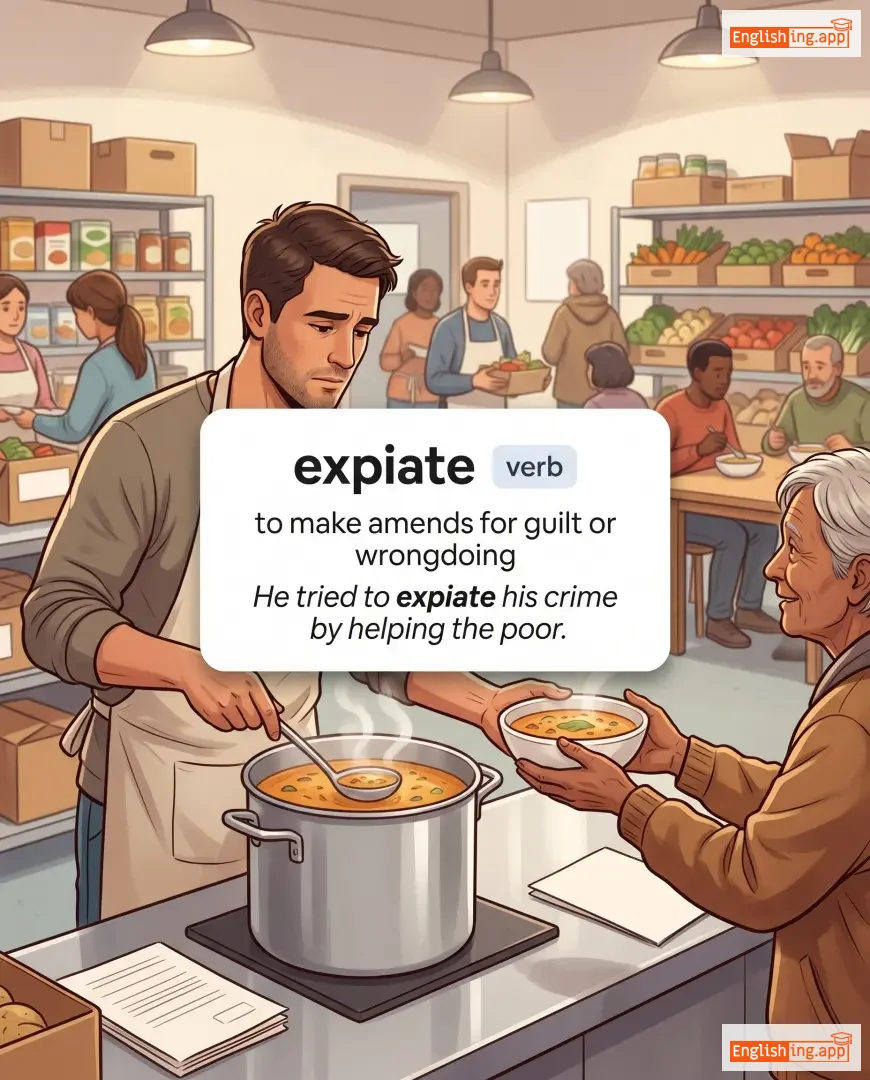
expiate definition card — visual illustration of the meaning
verb
/ˈɛkspieɪt/

to make amends for guilt or wrongdoing

"He tried to expiate his crime by helping the poor."

verb
/ɪkˈspaɪər/
истечь (istech)

to come to an end, especially a period of validity or life

"My passport will expire next month."
"Мой паспорт истечет в следующем месяце." (Moy pasport istechet v sleduyushchem mesyatse.)
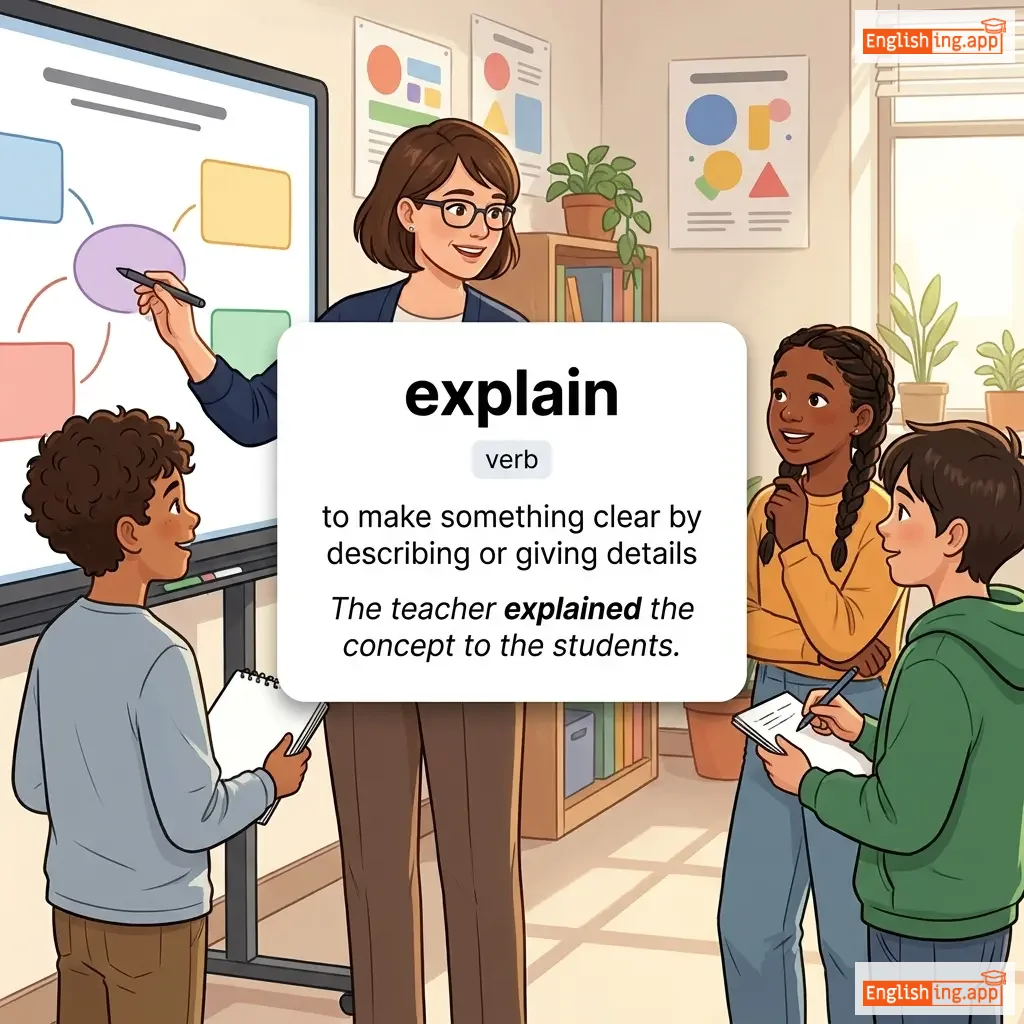
explain definition card — visual illustration of the meaning
verb
/ɪkˈspleɪn/
объяснять (ob'yasnyat')

to make something clear by describing or giving details

"The teacher explained the concept to the students."

"Учитель объяснил концепцию студентам." (Uchitel' ob'yasnil kontseptsiyu studentam.)
noun
/ˌekspləˈneɪʃən/
объяснение (ob'yasneniye)

a statement or account that makes something clear

"The teacher gave a clear explanation of the theory."

"Учитель дал четкое объяснение теории." (Uchitel' dal chetkoye ob'yasneniye teoryi.)
noun
/ˈɛksplətɪv/
ругательство (rugatel'stvo)

a word or phrase used as an exclamation, often offensive or profane

"He shouted an expletive when he dropped the hammer on his foot."

"Он выкрикнул ругательство, когда уронил молоток на ногу." (On vykriknul rugatel'stvo, kogda uronil molotok na nogu.)
adjective
/ˈɛksplɪkəbəl/
объяснимый (obyasnimyy)

able to be explained or understood

"His sudden anger was explicable given the stressful situation."
"Его внезапный гнев был объясним, учитывая стрессовую ситуацию." (Ego vnezapnyy gnev byl ob'yasnim, uchityvaya stressovuyu situatsiyu.)
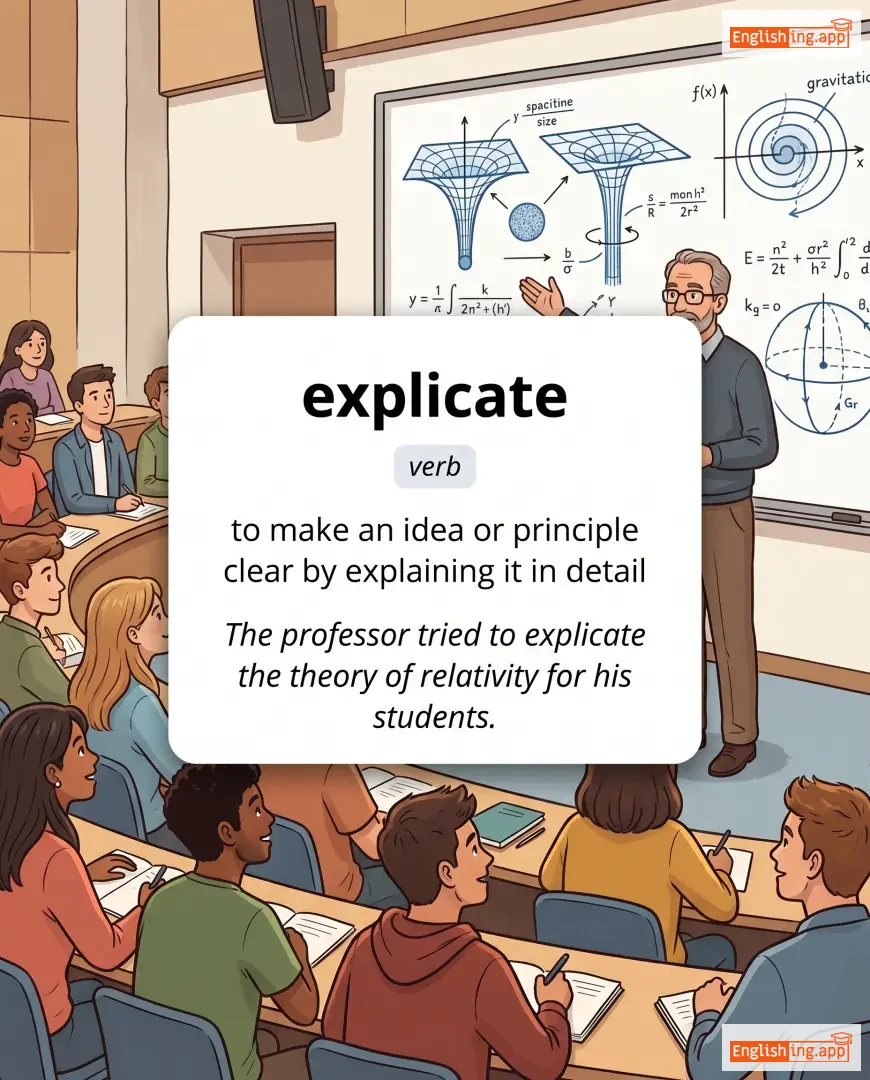
explicate definition card — visual illustration of the meaning
verb
/ˈɛksplɪkeɪt/
объяснять (ob'yasnyat')

to make an idea or principle clear by explaining it in detail

"The professor tried to explicate the theory of relativity for his students."

"Профессор попытался объяснить теорию относительности своим студентам." (Professor popytalsya ob'yasnit' teoryu otnositel'nosti svoim studentam.)
noun
/ˈɛksplɪkeɪtər/
толкователь (tolkovatel)

a person who explains or interprets something in detail

"The critic served as an explicator of the poet’s complex works."
"Критик выступал в роли объяснителя сложных работ поэта." (Kritik vystupal v roli ob'yasnitelya slozhnykh rabot poet.)
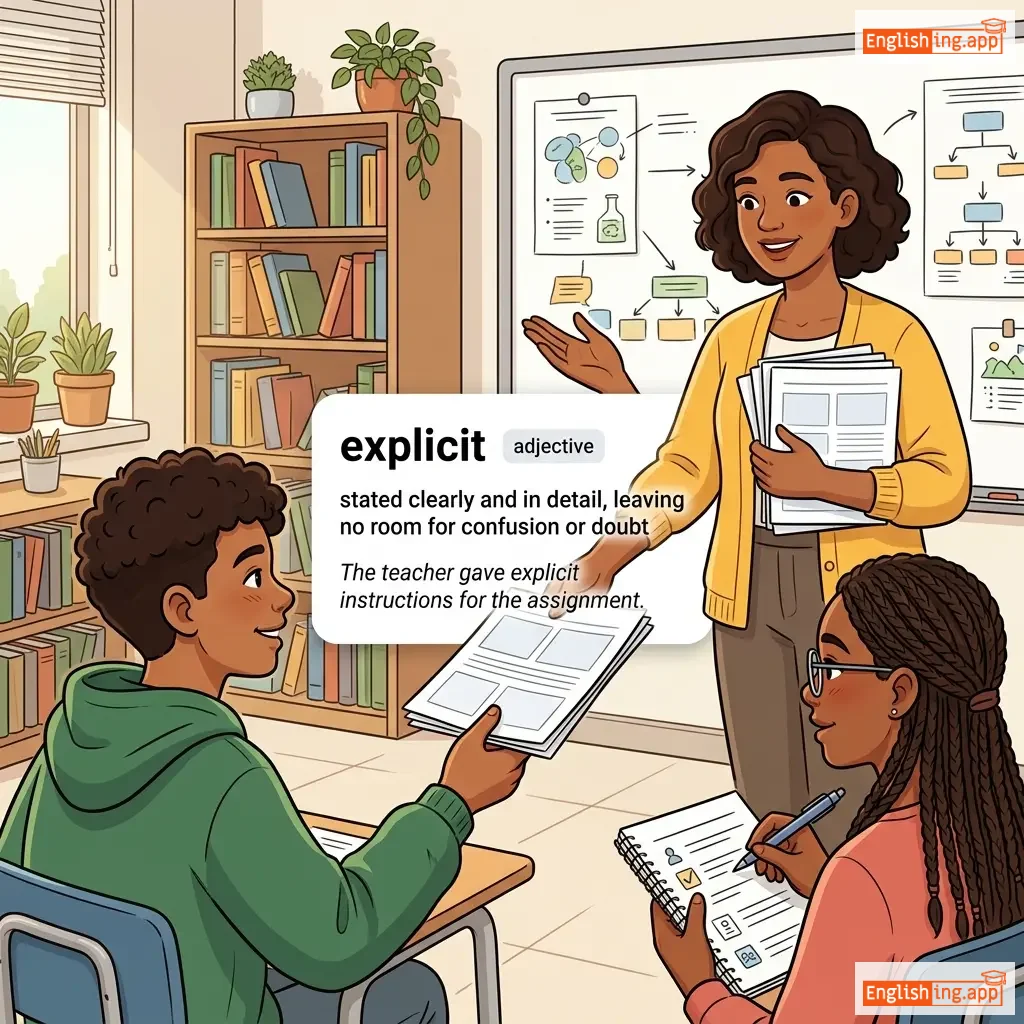
explicit definition card — visual illustration of the meaning
adjective
/ɪkˈsplɪsɪt/
явный (yavny)

stated clearly and in detail, leaving no room for confusion or doubt

"The teacher gave explicit instructions for the assignment."

"Учитель дал явные указания для задания." (Uchitel' dal yavnye ukazaniya dlya zadaniya.)
adverb
/ɪkˈsplɪsɪtli/
явно (yavno)

in a clear and detailed manner, leaving no room for confusion or doubt

"The instructions were explicitly written to avoid any confusion."

"Инструкции были написаны явно, чтобы избежать путаницы." (Instruktsii byli napisheny yavno, chtoby izbezhat' putanitsy.)
verb
/ɪkˈsploʊd/
взрываться (vzryvatsya)

to burst or shatter violently and noisily as a result of rapid combustion or pressure

"The bomb exploded in the middle of the street."

"Бомба взорвалась посреди улицы." (Bomba vzorvalas' posredi ulitsy.)
verb, noun
/ɪkˈsplɔɪt/
эксплуатировать / использовать (ekspluatirovat' / ispol'zovat')

to make full use of and derive benefit from (a resource); to use someone unfairly for one’s own advantage

"The company was accused of exploiting child labor."

"Компания была обвинена в эксплуатации детского труда." (Kompaniya byla obvinenna v ekspluatatsii detskogo truda.)
exploitation definition card — visual illustration of the meaning
noun
/ˌeksplɔɪˈteɪʃən/
эксплуатация (ekspluatatsiya)

the action or fact of treating someone unfairly in order to benefit from their work; the use of resources for profit

"The exploitation of workers is a serious issue."

"Эксплуатация работников — это серьезная проблема." (Ekspluatatsiya rabotnikov — eto seryoznaya problema.)
adjective
/ɪkˈsplɔɪtətɪv/
эксплуататорский (eksploitatorskiy)

making use of a situation or people unfairly and unethically for one's own advantage

"The workers protested against the exploitative practices of the factory."

"Рабочие протестовали против эксплуатационных практик фабрики." (Rabochiye protestovali protiv eksployatatsionnykh praktiki fabbriki.)
noun
/ˌekspləˈreɪʃən/
исследование (issledovaniye)

the action of traveling through or studying an area to learn more about it

"Space exploration has expanded our understanding of the universe."

"Космическое исследование расширило наше понимание Вселенной." (Kosmicheskoe issledovaniye rasshirilo nashe ponimaniye Vselennoj.)
verb
/ɪkˈsplɔːr/
исследовать (issledovat)

to travel through or study something in order to learn more about it

"They decided to explore the forest together."
"Они решили исследовать лес вместе." (Oni reshili issledovat' les vmeste.)
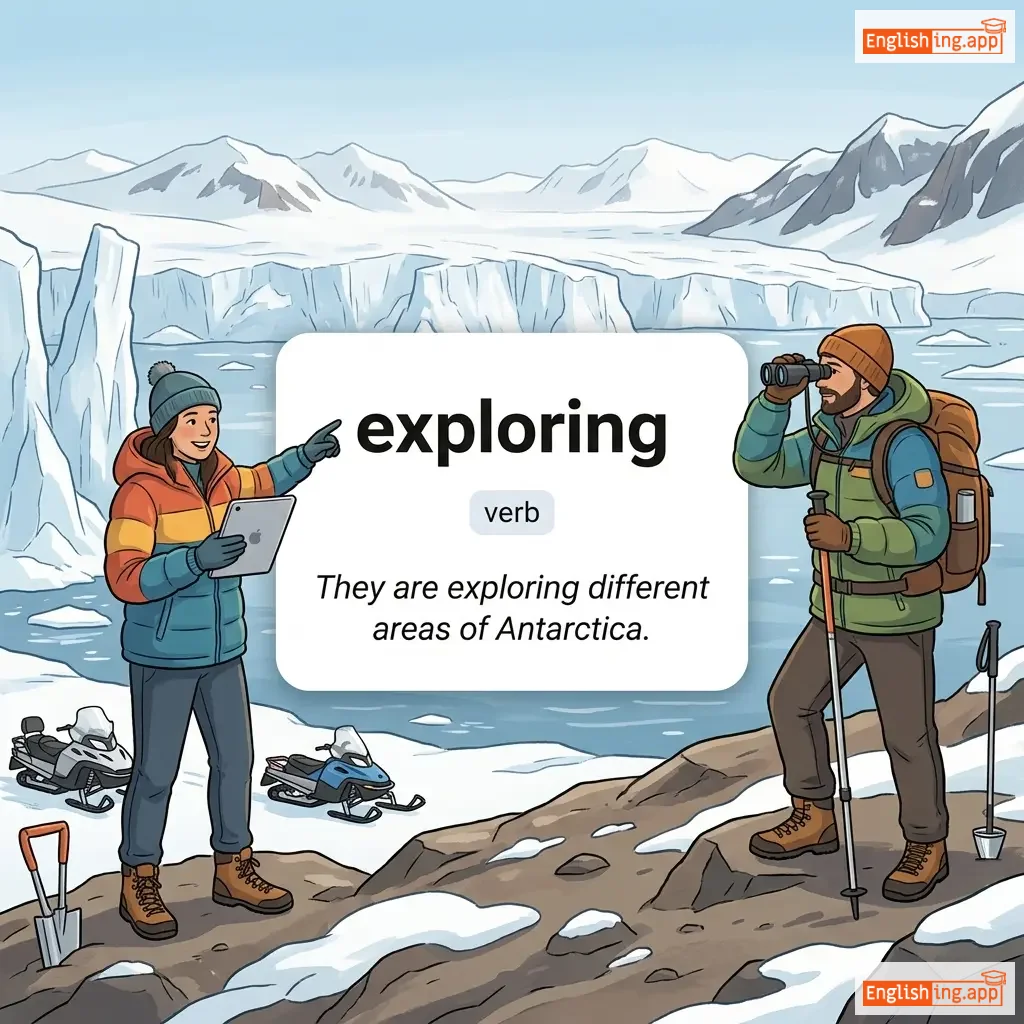
exploring definition card — visual illustration of the meaning
verb
/ɪkˈsplɔːrɪŋ/
исследовать (issledovat)

Investigating or studying thoroughly; searching into or ranging over for the purpose of discovery.

"They are exploring different areas of Antarctica."

"Они исследуют различные области Антарктиды." (Oni issleduyut razlichnye oblasti Antarktidy.)
noun
/ɪkˈsploʊʒən/
взрыв (vzryv)

a violent burst or release of energy, often causing damage and noise

"The explosion shook the entire neighborhood."

"Взрыв потряс весь район." (Vzryv potryas ves' rayon.)
adjective
/ɪkˈsploʊsɪv/
взрывчатый (vzrivchaty)

able to cause an explosion; likely to burst out suddenly

"The situation became explosive after the argument."

"Ситуация стала взрывчатой после спора." (Situatsiya stala vzryvchatoy posle spora.)
noun
/ɪkˈspoʊnənt/
экспонент (eksponent)

a person who supports, promotes, or explains an idea; in math, a symbol denoting power

"She is a leading exponent of modern dance."
"Она ведущий экспонент современного танца." (Ona vedushchij eksponent sovremennogo tantsa.)
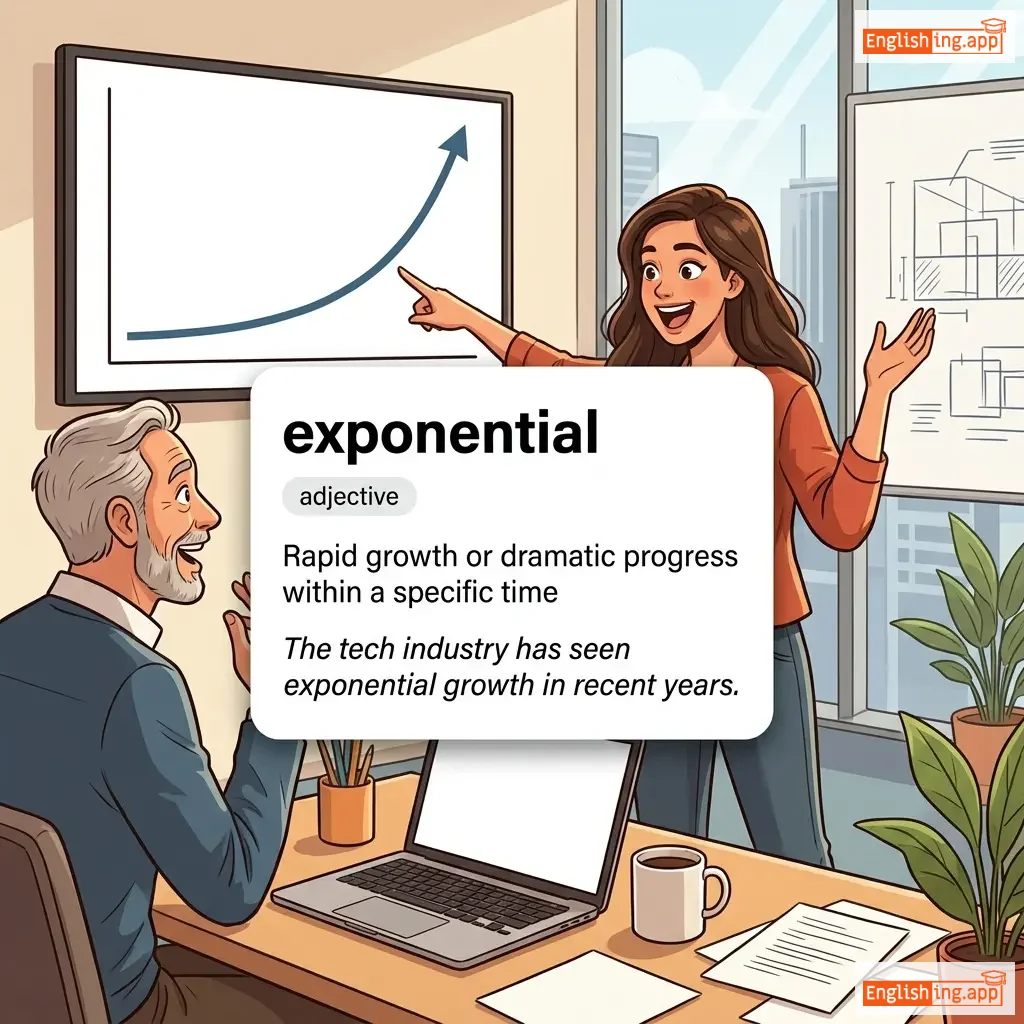
exponential definition card — visual illustration of the meaning
adjective
/ˌɛk.spəˈnɛn.ʃəl/
экспоненциальный (eksponentsial'nyy)

Rapid growth or dramatic progress within a specific time

"The tech industry has seen exponential growth in recent years."

"Технологическая отрасль пережила экспоненциальный рост в последние годы." (Tekhnologicheskaya otrasl' perezhila eksponentsial'nyy rost v poslednie gody.)
exponentially definition card — visual illustration of the meaning
adverb
ˌekspəˈnenʃəli
экспоненциально (eksponentsial'no)

At a rapidly increasing rate; growing or expanding very quickly and intensely.

"Internet adoption is growing exponentially worldwide."

"Принятие интернета растет экспоненциально по всему миру." (Priyatie interneta rastet eksponentsial'no po vsemu miru.)
export definition card — visual illustration of the meaning
verb
/ˈekspɔːt/
экспортировать (eksportirovat')

to send goods or services to another country for sale

"Bangladesh exports garments to many countries."

"Бангладеш экспортирует текстиль в многие страны." (Bangladesh eksportiruet tekstil' v mnogie strany.)
expose definition card — visual illustration of the meaning
verb
/ɪkˈspoʊz/
раскрывать (raskryvat)

to reveal or uncover something hidden

"The journalist tried to expose the corruption scandal."

"Журналист попытался раскрыть коррупционный скандал." (Zhurnalist popytalsya raskryt' korrupcionnyj skandal.)
noun
/ˌekspəˈzɪʃən/
объяснение / выставка (ob'yasneniye / vystavka)

a detailed explanation or a large public exhibition

"The scientist gave a clear exposition of the theory."
"Учёный дал ясное объяснение теории." (Uchyonnyy dal yasnoye ob'yasneniye teorii.)
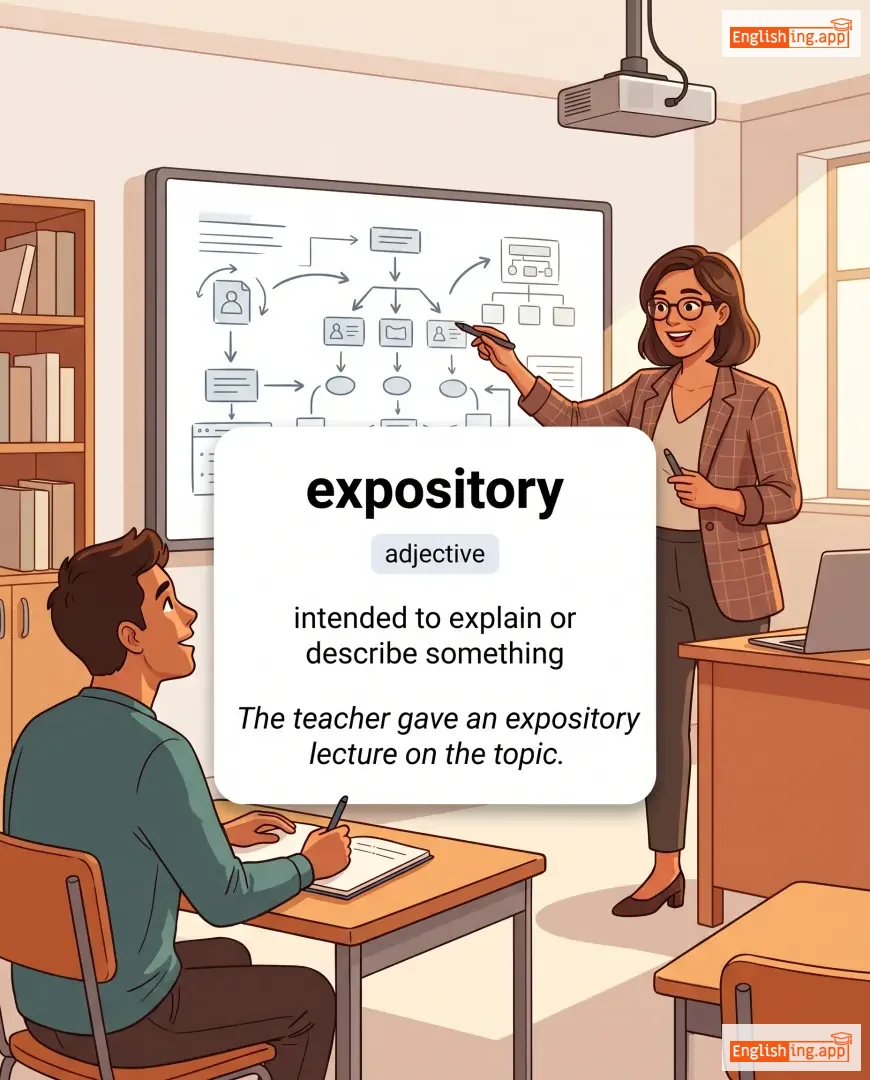
expository definition card — visual illustration of the meaning
adjective
/ɪkˈspɒzɪtəri/
пояснительный (poyasnitel'nyy)

intended to explain or describe something

"The teacher gave an expository lecture on the topic."

"Учитель дал пояснительную лекцию по этой теме." (Uchitel' dal poyasnitel'nuyu lektsiyu po etoy teme.)
verb
/ɪkˈspɒstjʊleɪt/
выражать несогласие (vyrʐatʲ nesoglasije)

to express strong disapproval or disagreement

"She expostulated with her friend about the risky decision."

"Она выразила недовольство своим другом по поводу рискованного решения." (Ona vyrazil nedovol'stvo svoim drugom po povodu riskovannogo resheniya.)