Словари

Словарь английского языка | Значения слов, определения и примеры

adjective
/ɛsˈθɛtɪk/
эстетический (esteticheskiy)

Concerned with beauty or the appreciation of beauty.

"The building’s esthetic design attracted many visitors."

"Эстетический дизайн здания привлек много посетителей." (Esteticheskiy dizayn zdaniya privlek mnogo posetiteley.)
estimable definition card — visual illustration of the meaning
adjective
/ˈɛstɪməbl/
достойный (dostoyny)

Worthy of great respect.

"Her estimable achievements inspired the whole community."

"Её достойные достижения вдохновили всё сообщество." (Eyo dostoynye dostizheniya vdokhnovili vsyo soobshchestvo.)
verb
/ˈɛstɪˌmeɪt/
оценивать (otsenivat)

To roughly calculate or judge the value, number, quantity, or extent of something.

"The engineer estimated the cost of the project at $5 million."

"Инженер оценил стоимость проекта в 5 миллионов долларов." (Inzhener otsenil stoimost' proekta v 5 millionov dollarov.)
adjective
/ˈɛstɪmeɪtɪd/
оцененный (otsenennyy)

roughly calculated or judged; an approximate value or amount

"The estimated cost of the project is five million dollars."

"Оценочная стоимость проекта составляет пять миллионов долларов." (Otsenochnaya stoimost' proyekte sostavlyaet pyat' millionov dollarov.)
verb
/ɪˈstreɪndʒ/

to cause someone to no longer be close or affectionate; to alienate

"His constant criticism began to estrange him from his friends."

adjective
/ɪˈstreɪndʒd/
отчужденный (otchuzhdennyj)

no longer close or affectionate with someone; alienated

"She felt estranged from her family after the long dispute."

"Она чувствовала себя отчужденной от своей семьи после долгого спора." (Ona chuvstvovala sebya otchuzhdennoj ot svoej sem'i posle dolgogo spora.)
noun
/ˈɛstjʊəri/
устье реки (ust'e reki)

the tidal mouth of a large river, where the tide meets the stream

"The city is located near the estuary of the river."

"Город находится рядом с устьем реки." (Gorod nakhoditsya ryadom s ust'em reki.)
abbreviation
/ɛtˈsɛtərə/
и так далее (i tak dalee)

Used to indicate additional, similar items in a list that are not mentioned.

"The shop sells fruits, vegetables, dairy, etc."

"Магазин продает фрукты, овощи, молочные продукты и так далее." (Magazin prodayot frukty, ovochi, molochnye produkty i tak dalee.)
adverb
/ɛtˈsɛtərə/
и так далее (i tak daleye)

used at the end of a list to indicate that other similar items are included

"She bought apples, oranges, bananas, etcetera from the market."

"Она купила яблоки, апельсины, бананы и так далее на рынке." (Ona kupila yabloki, apelsiny, banany i tak daleye na rynke.)
verb
/ɛtʃ/
гравировать (gravirovat')

to cut or carve a design onto a surface

"The artist etched her initials into the glass."

"Художник выгравировал свои инициалы на стекле." (Khudozhnik vyggraviroval svoi initsialy na stekle.)
adjective
/ɪˈtɜːrnəl/
вечный (vechnyy)

lasting or existing forever; without end

"They pledged their eternal love for each other."
"Они поклялись в своей вечной любви друг другу." (Oni poklyalis' v svoey vechnoy lyubvi drug drugu.)
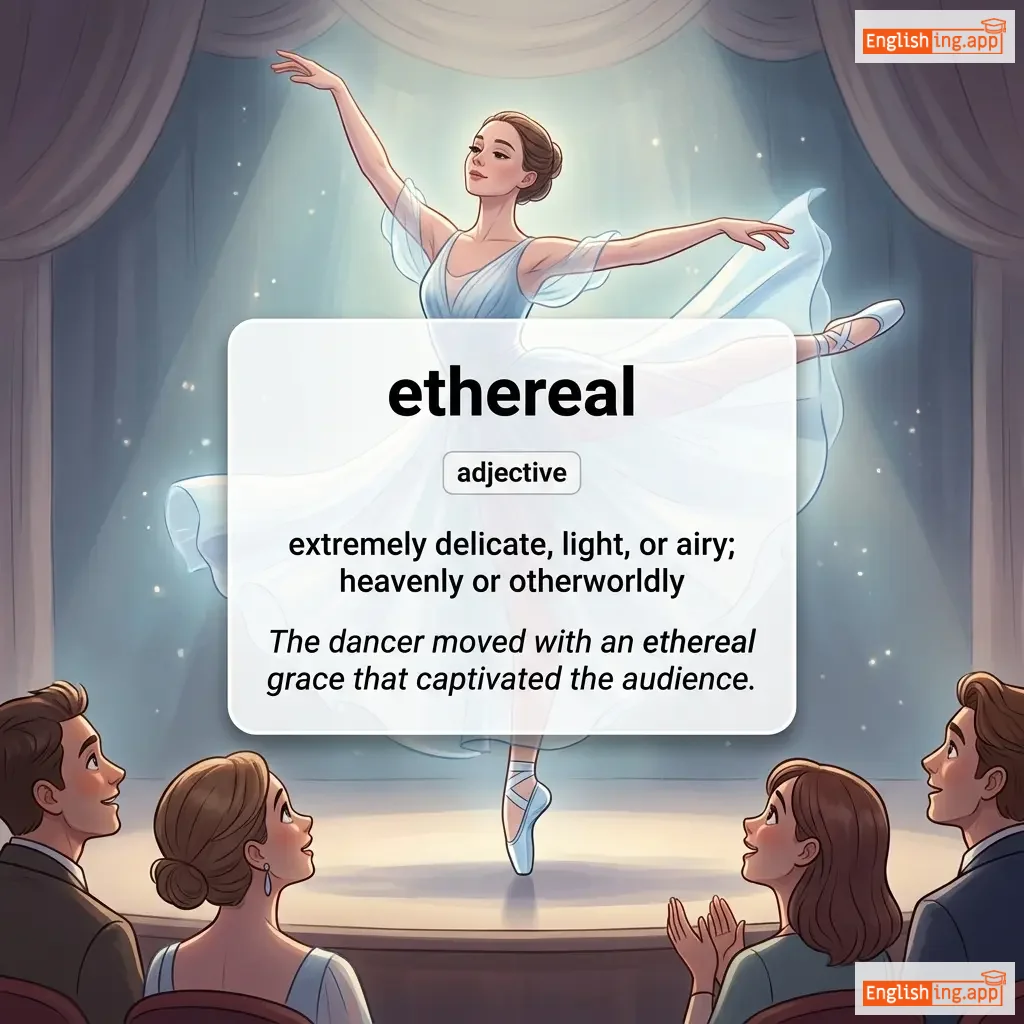
ethereal definition card — visual illustration of the meaning
adjective
/ɪˈθɪəriəl/
эфирный (efirny)

extremely delicate, light, or airy; heavenly or otherworldly

"The dancer moved with an ethereal grace that captivated the audience."

"Танцовщица двигалась с эфемерной грацией, которая захватывала аудиторию." (Tantsovshchitsa dvigalas' s efemernoy gratsiyey, kotoraya zakhvatyvala auditoriyu.)
noun
/ˈɛθɪk/
этика (etika)

a set of moral principles, especially ones relating to a particular group, system, or profession

"He has a strong work ethic and always meets deadlines."

"У него сильная трудовая этика, и он всегда выполняет сроки." (U nego sil'naya trudovaya etika, i on vsegda vypolnyaet sroki.)
ethical definition card — visual illustration of the meaning
adjective
/ˈɛθɪkəl/
этический (eticheskiy)

relating to moral principles or the right and wrong behavior

"The company follows strict ethical standards in its business practices."

"Компания придерживается строгих этических норм в своей коммерческой практике." (Kompaniya priderzhivayetsya strogykh eticheskikh norm v svoey kommercheskoy praktike.)
noun
/ˈɛθɪks/
этика (etika)

moral principles that govern a person's behavior or the conduct of an activity

"Business ethics require companies to act fairly and responsibly."

"Деловая этика требует от компаний действовать честно и ответственно." (Delovaya etika trebuyet ot kompaniy deystvovat' chestno i otvetstvenno.)
adjective
/ˈɛθnɪk/
этнический (etnicheskij)

relating to a population subgroup with a common national or cultural tradition

"The festival celebrated the city's diverse ethnic communities."

"Фестиваль отметил разнообразие этнических общин города." (Festival otmetil raznoobrazie etnicheskikh obshchin goroda.)
ethnocentric definition card — visual illustration of the meaning
adjective
/ˌeθ.noʊˈsen.trɪk/
этноцентричный (etnocentrichnyy)

evaluating other cultures according to the standards of one's own culture

"His ethnocentric attitude made it hard for him to appreciate foreign traditions."

"Его этноцентричный взгляд мешал ему оценить традиции других стран." (Yego etnocentrichnyy vzglyad meshal emu otsenit' traditsii drugikh stran.)
noun
/ɛθˈnɒlədʒi/
этнология (etnologia)

the study of the characteristics of different peoples and the differences and relationships between them

"She specialized in ethnology to better understand cultural diversity."

"Она специализировалась по этнологии, чтобы лучше понять культурное разнообразие." (Ona spetsializirovalas' po etnologii, chtoby luchshe ponyat' kul'turnoe raznoobrazie.)
ethos definition card — visual illustration of the meaning
noun
/ˈiːθɒs/
этос (etos)

the characteristic spirit, values, or beliefs of a community, culture, or organization

"The company’s ethos emphasizes innovation and customer service."

"Этос компании подчеркивает инновации и обслуживание клиентов." (Etos kompanii podcherkivayet innovatsii i obsluzhivanie klientov.)
etiology definition card — visual illustration of the meaning
noun
/ˌiː.tiˈɒ.lə.dʒi/
этиология (etilogiya)

the cause or origin of a disease or condition

"Doctors are studying the etiology of the new virus."

"Врачи изучают этиологию нового вируса." (Vrachi izuchayut etiologyu novogo virusa.)
noun
/ˈet.ɪ.kət/
этикет (etiket)

the customary code of polite behavior in society or among members of a particular profession

"Proper etiquette requires standing when a lady enters the room."
"Правильный этикет требует вставать, когда дама входит в комнату." (Pravil'nyy etiketa trebuyet vstavat', kogda dama vkhodit v komnatu.)
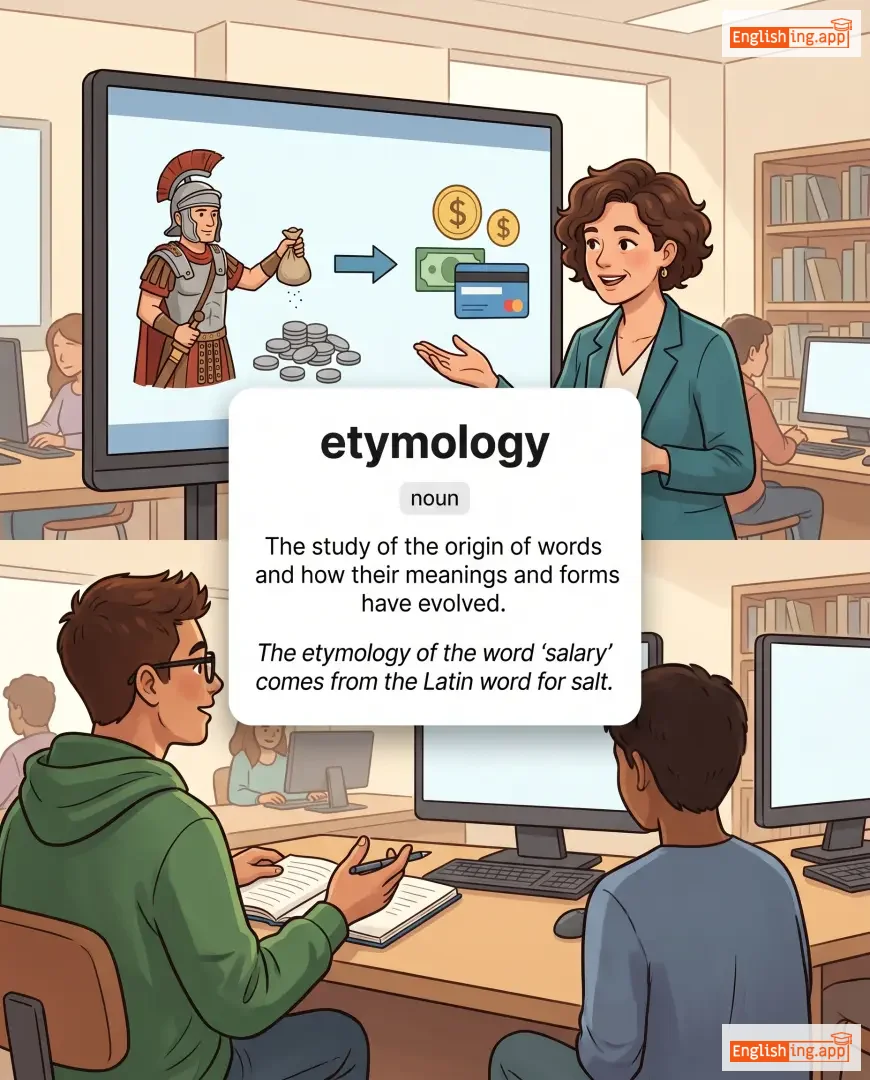
etymology definition card — visual illustration of the meaning
noun
/ˌɛtɪˈmɒlədʒi/
этимология (etimologiya)

The study of the origin of words and how their meanings and forms have evolved.

"The etymology of the word 'salary' comes from the Latin word for salt."

"Этимология слова 'зарплата' происходит от латинского слова для соли." (Etimologiya slova 'zarplata' proiskhodit ot latinskogo slova dlya soli.)
adjective
/juːˈdʒɛnɪk/
евгенический (evgenicheskiy)

Relating to or aiming at improving the genetic quality of a population.

"In the early 20th century, some scientists supported eugenic policies."

"В начале 20-го века некоторые ученые поддерживали евгеническую политику." (V nachale 20-go veka nekotorye uchenye podderzhivali evgenicheskuyu politiku.)
eugenics definition card — visual illustration of the meaning
noun
/juːˈdʒen.ɪks/
евгеника (evgenika)

the study or practice of improving the genetic quality of the human population

"Eugenics has been criticized for its unethical applications in history."

"Евгеника была подвергнута критике за свои неэтичные применения в истории." (Yevgenika byla podvergnuta kritike za svoi neetichnye primeneniya v istorii.)
adjective
/ˌjuːləˈdʒɪstɪk/
хвалебный (khvalebny)

Expressing praise or admiration, often formally.

"The speaker gave a eulogistic account of the leader’s achievements."

"Оратор дал восхвалительный отчет о достижениях лидера." (Orator dal voskhvalitel'nyy otchet o dostizheniyakh lidera.)
verb
/ˈjuːləˌdʒaɪz/
хвалить (khalit)

To praise highly in speech or writing, especially in honor of someone who has died.

"They gathered to eulogize their beloved teacher."

"Они собрались, чтобы восхвалить своего любимого учителя." (Oni sobralis', chtoby voskhvalit' svoego lyubimogo uchitelya.)
eulogy definition card — visual illustration of the meaning
noun
/ˈjuːlədʒi/
похвальная речь (pohval'naya rech')

A speech or piece of writing that praises someone, especially after their death.

"Her brother delivered a heartfelt eulogy at the funeral."
"Её брат произнес трогательную похвальную речь на похоронах." (Yeyo brat proyaznës trogatelnuyu pokhval'nuyu rech' na pokhoronakh.)
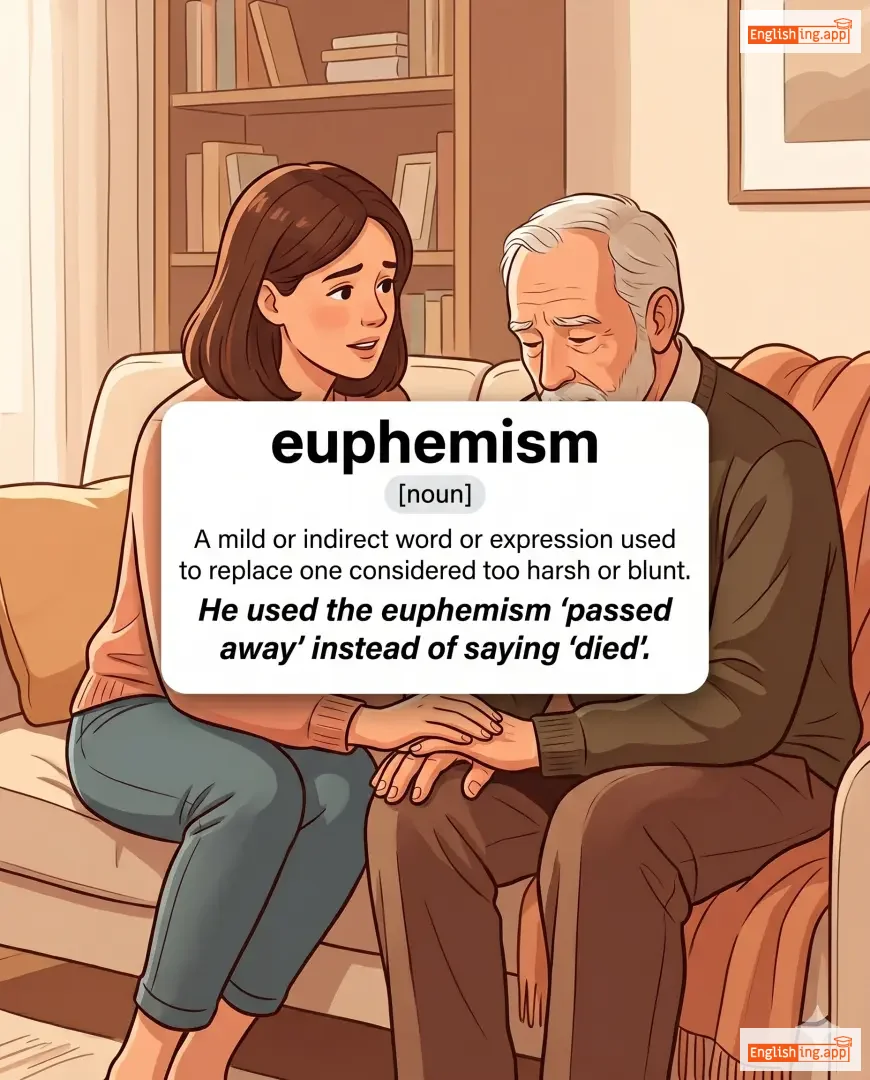
euphemism definition card — visual illustration of the meaning
noun
/ˈjuːfəmɪzəm/
эвфемизм (evfemizm)

A mild or indirect word or expression used to replace one considered too harsh or blunt.

"He used the euphemism 'passed away' instead of saying 'died'."

"Он использовал эвфемизм 'ушел' вместо того, чтобы сказать 'умер'." (On ispol'zoval evfemizm 'ushel' vmesto togo, chtoby skazat' 'umer'.)
adjective
/juːˈfoʊniəs/
звучащий гармонично (zvuchashchiy garmonichno)

Pleasing to the ear; having a sweet sound.

"The poet's euphonious language made the verse a delight to read."

"Эвфонический язык поэта сделал стихотворение приятным для чтения." (Evfonicheskiy yazyk poeta sdelal stikhotvoreniye priyatnym dlya chteniya.)
noun
/ˈjuːfəni/
эуфония (eufoniya)

The quality of being pleasing to the ear, especially through harmonious combination of words.

"The orator's speech was full of euphony and rhythm."
"Речь оратора была полна эйфонии и ритма." (Rech' oratora byla polna eufonii i ritma.)
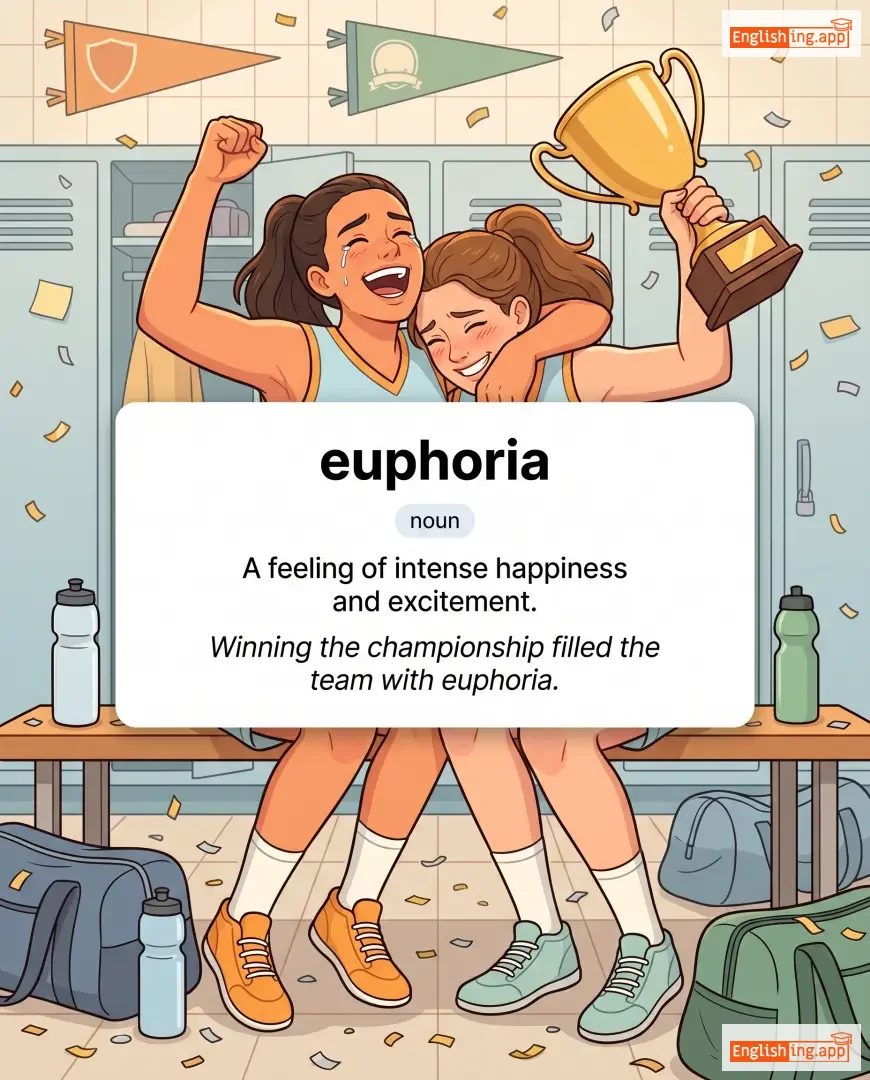
euphoria definition card — visual illustration of the meaning
noun
/juːˈfɔːriə/
эйфория (eyforiya)

A feeling of intense happiness and excitement.

"Winning the championship filled the team with euphoria."

"Победа в чемпионате наполнила команду эйфорией." (Pobeda v chempionate napolnila komandu eyforiey.)
adjective
/juːˈfɔːrɪk/
эйфорический (eyforicheskiy)

Characterized by or feeling intense excitement and happiness.

"The fans were euphoric after their team's victory."

"Фанаты были эйфоричны после победы своей команды." (Fanaty byli eyforichny posle pobedy svoey komandy.)
exclamation
/juˈriːkə/
Эврика! (Evrika!)

An exclamation used to express a sudden discovery or realization.

"When the solution finally came to him, he shouted, 'Eureka!'"

"Когда решение, наконец, пришло к нему, он закричал: 'Эврика!'" (Kogda reshenie, nakonec, prishlo k nemu, on zakrichal: 'Evrika!')
adjective
/ˌjʊərəˈpiːən/
европейский (yevropeyskiy)

Relating to Europe or its people.

"She studied European history at university."
"Она изучала европейскую историю в университете." (Ona izuchala yevropeyskuyu istoriya v universitete.)
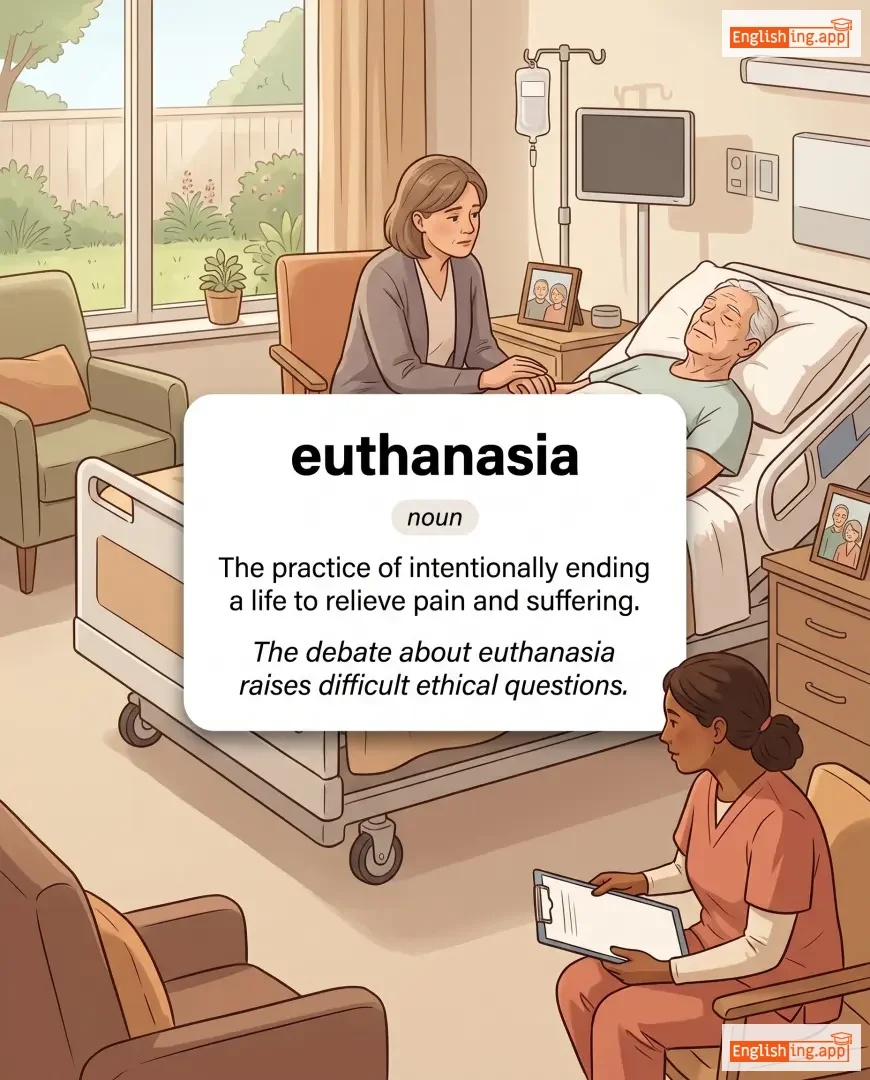
euthanasia definition card — visual illustration of the meaning
noun
/ˌjuːθəˈneɪʒə/
активное эвтаназия (aktivnoe evtanaziya)

The practice of intentionally ending a life to relieve pain and suffering.

"The debate about euthanasia raises difficult ethical questions."
"Дебаты об эвтаназии поднимают сложные этические вопросы." (Debaty ob evtanazii podnimayut slozhnye eticheskie voprosy.)
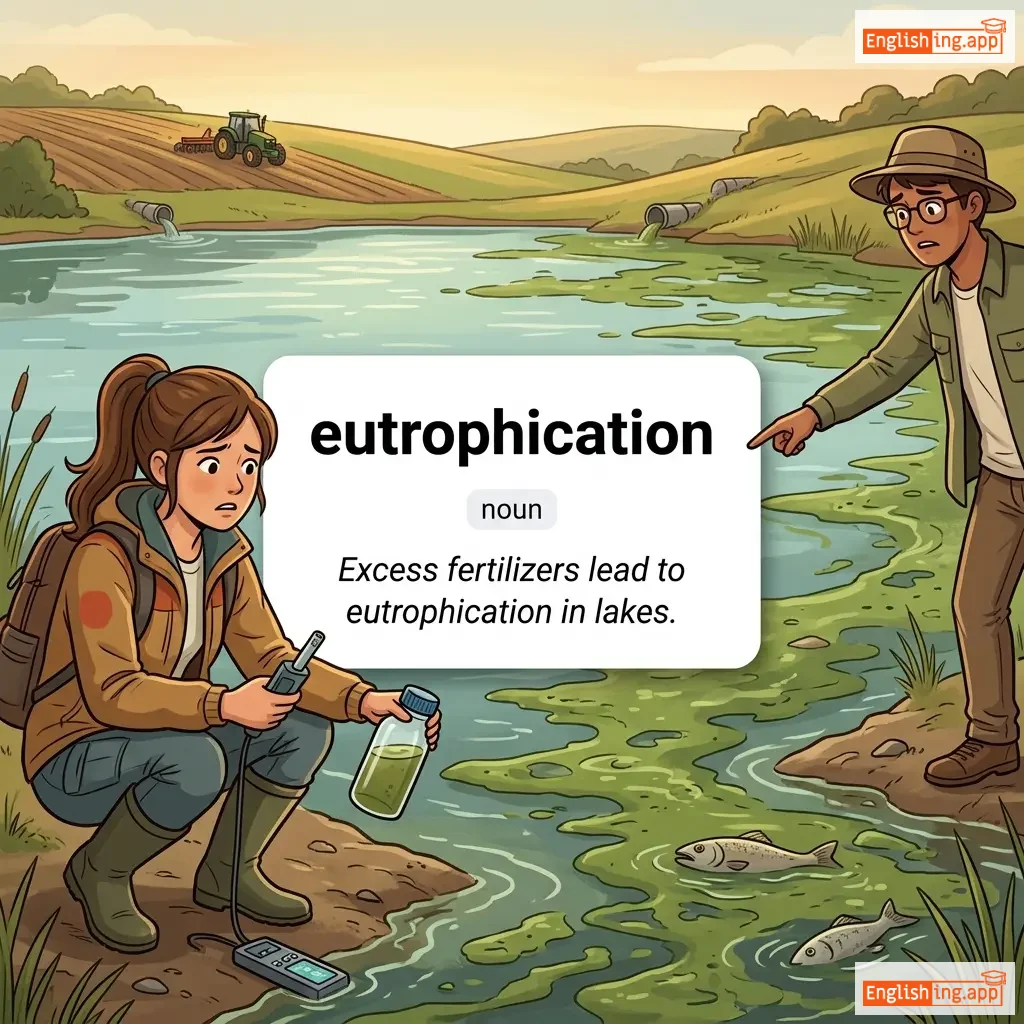
eutrophication definition card — visual illustration of the meaning
noun
/juːˌtrɑː.fɪˈkeɪ.ʃən/
избыточное содержание питательных веществ в озере или другом водоеме (izbytochnoe soderzhanie pitatel'nykh veshchestv v ozerie ili drugom vodoyeme)

Excessive richness of nutrients in a lake or other body of water, frequently due to runoff from the land, which causes a dense growth of plant life and death of animal life from lack of oxygen.

"Excess fertilizers lead to eutrophication in lakes."

"Избыточные удобрения приводят к эвтрофикации в озерах." (Izbytochnye udobreniya privodyat k eutfikatsii v ozerakh.)
verb
/ɪˈvækjueɪt/
эвакуировать (evakuirovat)

To remove people from a dangerous place to safety.

"The residents were ordered to evacuate the building after the fire alarm."

"Жителей попросили эвакуировать здание после срабатывания пожарной тревоги." (Zhiteley poprosili evakuirovat zdanije posle srabotki pozharnoy trevogi.)
verb
/ɪˈveɪd/
уклоняться (uklonyatsya)

To escape or avoid something, especially by cleverness or trickery.

"He tried to evade the question by changing the subject."

"Он пытался уклониться от вопроса, изменив тему." (On pytalsya uklonit'sya ot voprosa, izmeniv temu.)
verb
/ɪˈvæljueɪt/
оценить (otsenit)

To assess or judge the value, quality, or significance of something.

"The teacher will evaluate the students’ projects tomorrow."
"Учитель оценит проекты студентов завтра." (Uchitel' otsenit proekty studentov zavtra.)
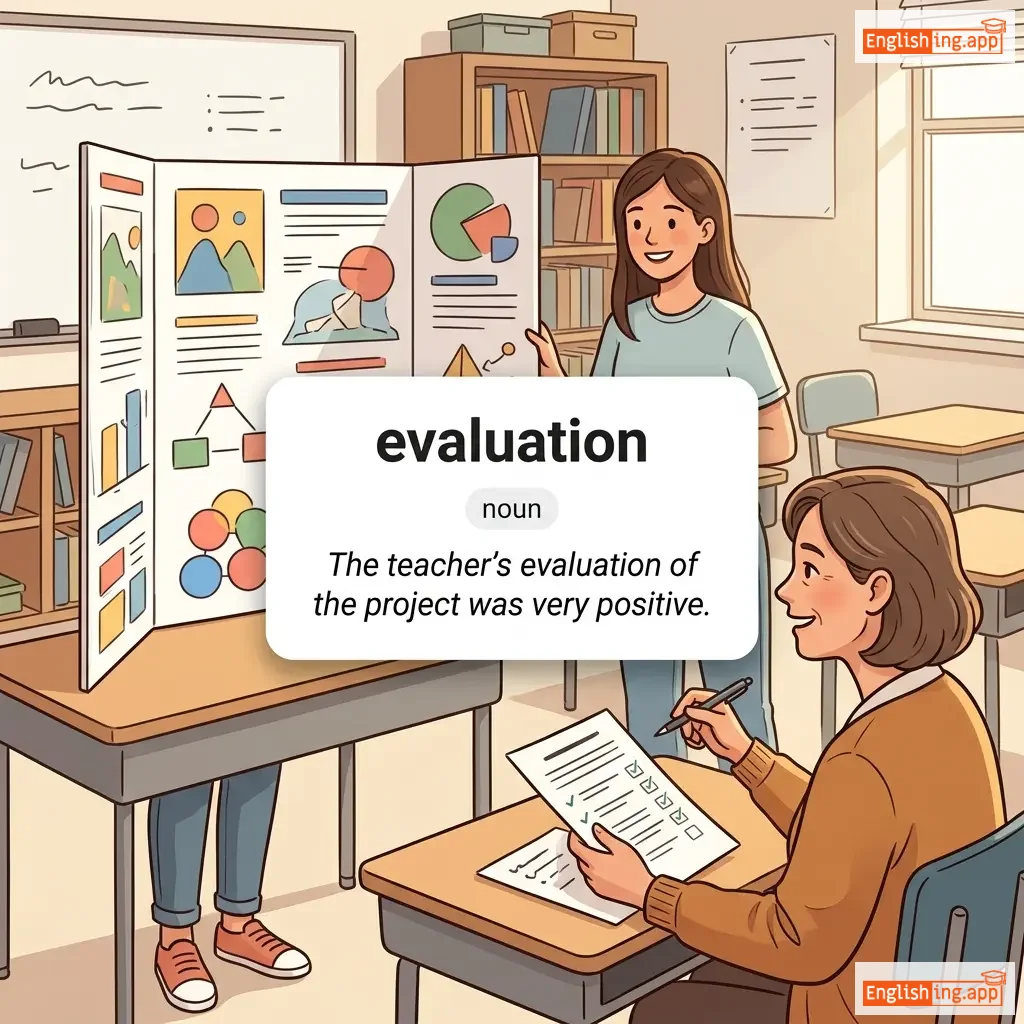
evaluation definition card — visual illustration of the meaning
noun
/ɪˌvæljʊˈeɪʃən/
оценка (otsenka)

The process of assessing or judging the value, quality, or importance of something.

"The teacher’s evaluation of the project was very positive."

"Оценка проекта учителем была очень положительной." (Otsenka proyektu uchitelem byla ochen' polozhitel'noy.)
evaluative definition card — visual illustration of the meaning
adjective
/ɪˈvæljʊətɪv/
оценочный (otsenochniy)

Relating to or involving evaluation or assessment.

"The evaluative phase of the project involves assessing its success."

"Оценочная фаза проекта включает в себя оценку его успеха." (Otsenochnaya faza proyeka vklyuchayet v sebya otsenku yego uspekha.)
verb
/ˌɛvəˈnɛs/
тускнеть (tusknet')

To disappear gradually; to fade away.

"The mist began to evanesce as the sun rose higher."

"Туман начал исчезать, когда солнце поднималось выше." (Tuman nachal ischezat', kogda solntse podnimalsya vyshe.)
adjective
/ˌɛvəˈnɛsənt/
мимолетный (mimoletnyj)

Quickly fading or disappearing; lasting for only a very short time.

"The beauty of the sunset was evanescent, fading within minutes."

"Красота заката была мимолетной, исчезнувшей через несколько минут." (Krasota zakata byla mimoletnoy, ischeznuvshey cherez neskol'ko minut.)
adjective
/ˌiːvænˈdʒɛlɪkəl/
евангельский (evangelskiy)

Relating to the Christian gospel, especially the teachings that emphasize personal faith and the authority of the Bible.

"She grew up in an evangelical church community."

"Она выросла в евангельской церковной общине." (Ona vyrosla v evangelskoj tserkovnoj obshchine.)
noun
/ɪˈvændʒəlɪst/
евангелист (evangelist)

A person who seeks to convert others to the Christian faith, especially by public preaching.

"The evangelist traveled across the country spreading his message."

"Евангелист путешествовал по всей стране, распространяя свое послание." (Evangelist puteshestvoval po vsei strane, rasprostranyaya svoe poslanie.)
noun
/ɪˈvæp.ər.ə.tɪv ˈkuː.lər/
испарительный охладитель (isparitelnyy okhladitel)

a cooling device that uses water evaporation to reduce air temperature

"The evaporative cooler works best in dry climates."

"Испарительный охладитель работает лучше всего в сухом климате." (Isparitel'nyy okhladitel' rabotayet luchshe vsego v sukhom klimaty)
evasion definition card — visual illustration of the meaning
noun
/ɪˈveɪʒən/
уклонение (uklonenie)

The act of avoiding something, especially by cleverness or trickery.

"He was arrested for tax evasion."
"Его арестовали за уклонение от уплаты налогов." (Ego arestovali za uklonenie ot uplaty nalogov.)
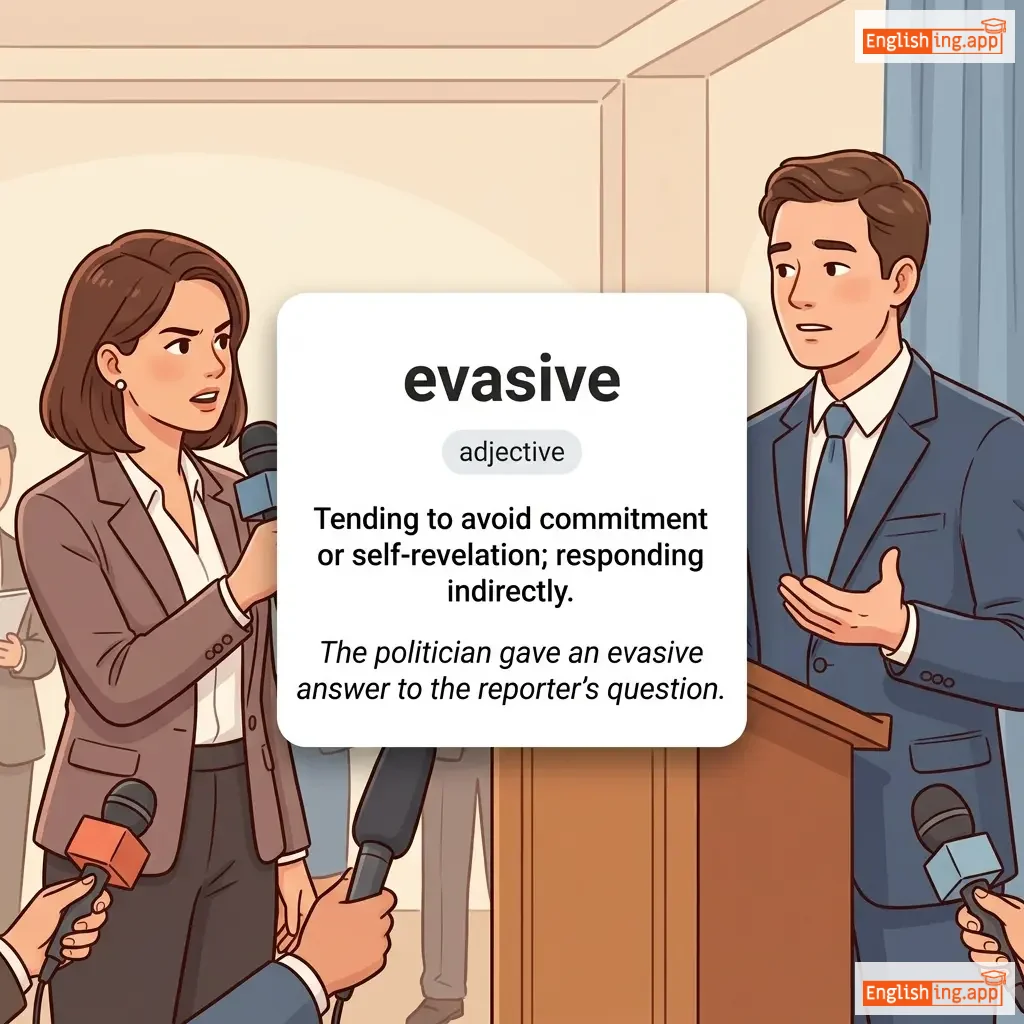
evasive definition card — visual illustration of the meaning
adjective
/ɪˈveɪsɪv/
уходящий от ответа (ukhodyashchiy ot otveta)

Tending to avoid commitment or self-revelation; responding indirectly.

"The politician gave an evasive answer to the reporter's question."

"Политик дал уклончивый ответ на вопрос репортера." (Politik dal uklonchivyy otvet na vopros reportera.)
adjective, adverb
/ˈiː.vən/
ровный (rovny)

flat or smooth; equal in degree or amount; used to emphasize something surprising

"The road was surprisingly even after the storm."

"Дорога была удивительно ровной после бури." (Doroga byla udivitel'no rovnoi posle buri.)
adjective
/ˌiːvənˈhændɪd/
беспристрастный (bespristrastny)

Fair and impartial; showing no bias or favoritism.

"The judge was praised for her evenhanded approach to the case."

"Судью похвалили за её беспристрастный подход к делу." (Sud'yu pokhvalili za yeye bespristrastnyy podkhod k delu.)