Словари

Словарь английского языка | Значения слов, определения и примеры

adjective
/ɪˈkwɪvələnt/
равный; эквивалентный (ravny; ekvivalentny)

Equal in value, function, meaning, or effect.

"One euro is roughly equivalent to one dollar."

"Один евро примерно эквивалентен одному доллару." (Odin evro primerno ekvivalenten odnomu dollaru.)
adjective
/ɪˈkwɪvəkəl/
неоднозначный (neodnoznachny)

Open to more than one interpretation; ambiguous.

"His equivocal answer confused everyone."
"Его неоднозначный ответ запутал всех." (Yego neodnoznachnyy otvet zaputal vsekh.)
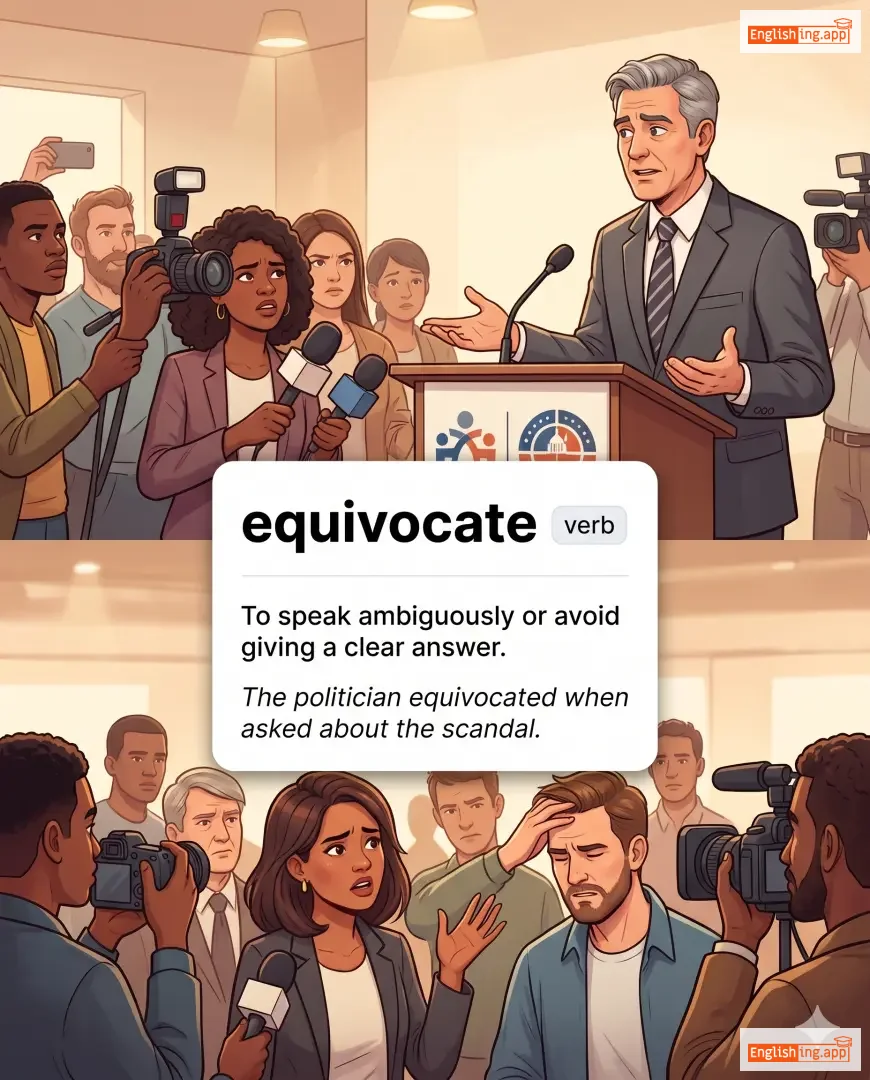
equivocate definition card — visual illustration of the meaning
verb
/ɪˈkwɪvəˌkeɪt/
говорить неясно (govorit' neyásno)

To speak ambiguously or avoid giving a clear answer.

"The politician equivocated when asked about the scandal."

"Политик эквивокировал, когда его спросили о скандале." (Politik ekvivokiroval, kogda ego sprosili o skandale.)
noun
/ɪˌkwɪvəˈkeɪʃən/
использование двусмысленного языка (ispol'zovanie dvusmyslennogo yazyka)

The use of ambiguous language to conceal the truth or to avoid committing oneself.

"The politician’s equivocation frustrated voters who wanted a clear answer."

"Экивокация политика разочаровала избирателей, которые хотели четкий ответ." (Ekivokatsiya politika razocharovala izbirateley, kotorye khoteli chetkiy otvet.)
noun
/ˈɪərə/
эра (era)

a long and distinct period of history with a particular feature or characteristic

"The invention of the internet marked a new era in communication."
"Изобретение интернета положило начало новой эре в коммуникациях." (Izobretenie interneta polozhilo nachalo novoj ere v kommunikatsiyakh.)
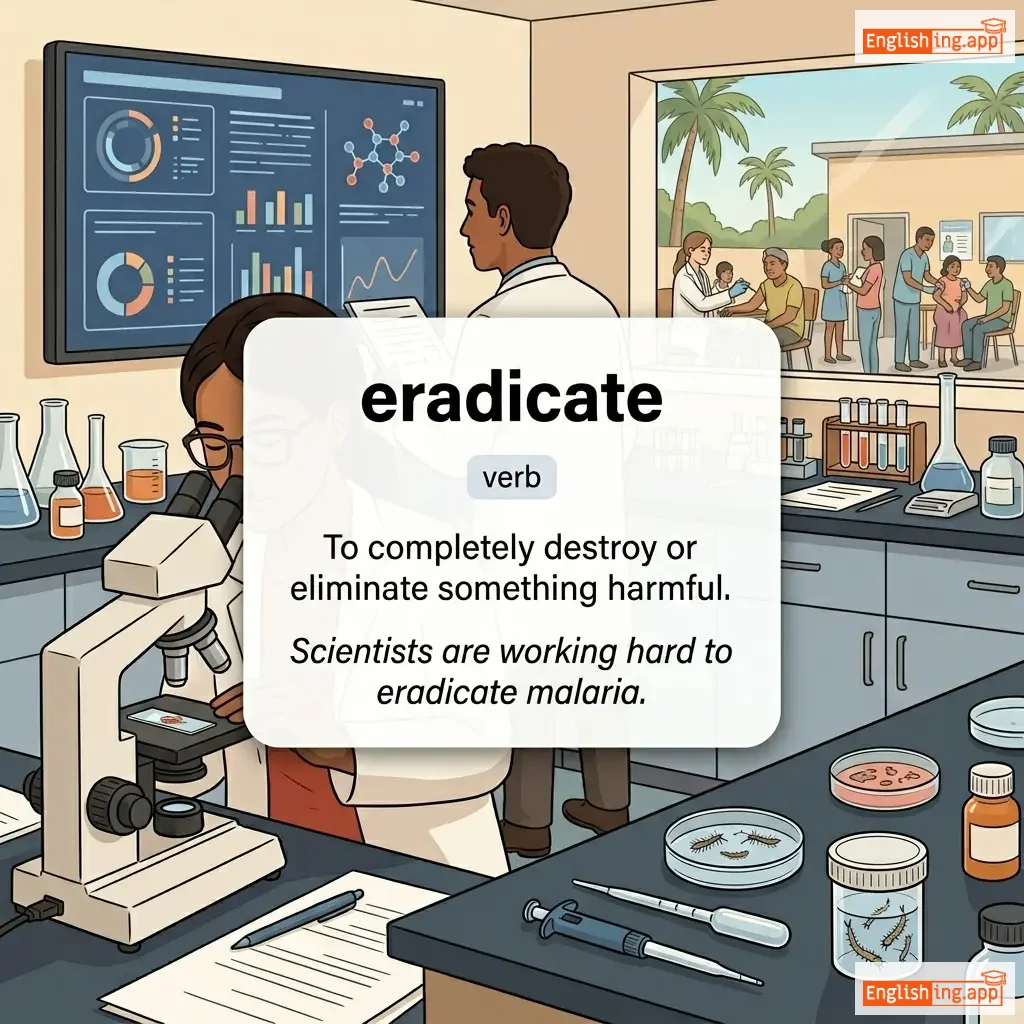
eradicate definition card — visual illustration of the meaning
verb
/ɪˈrædɪˌkeɪt/
ликвидировать; искоренить (likvidirovat'; iskorinit')

To completely destroy or eliminate something harmful.

"Scientists are working hard to eradicate malaria."
"Учёные работают над тем, чтобы искоренить малярию." (Uchyonye rabotayut nad tem, chtoby iskorinit' mal'ariyu.)
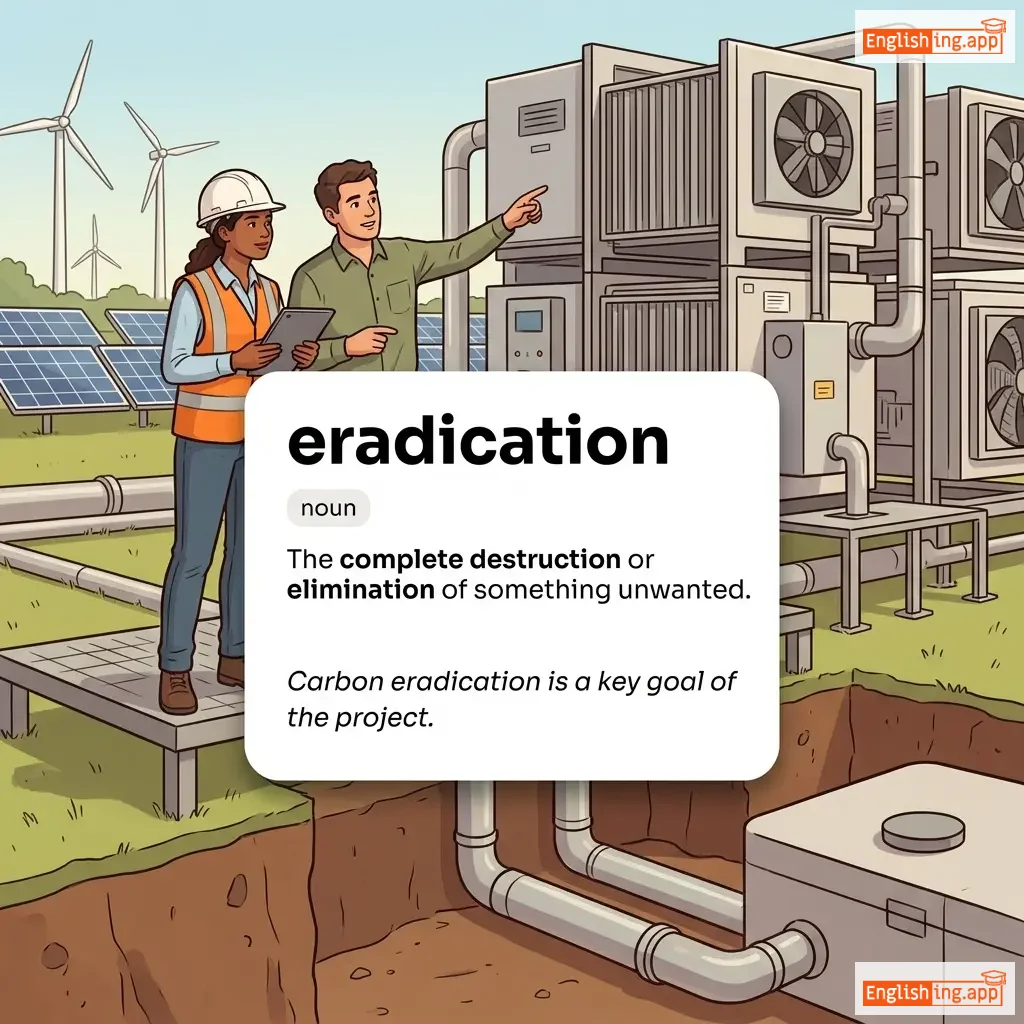
eradication definition card — visual illustration of the meaning
noun
ɪˌræd.ɪˈkeɪ.ʃən
ликвидация (likvidatsiya)

The complete destruction or elimination of something unwanted.

"Carbon eradication is a key goal of the project."
"Ликвидация углерода является важной целью проекта." (Likvidatsiya ugleroda yavyayetsya vazhnoy tseley proyekta.)
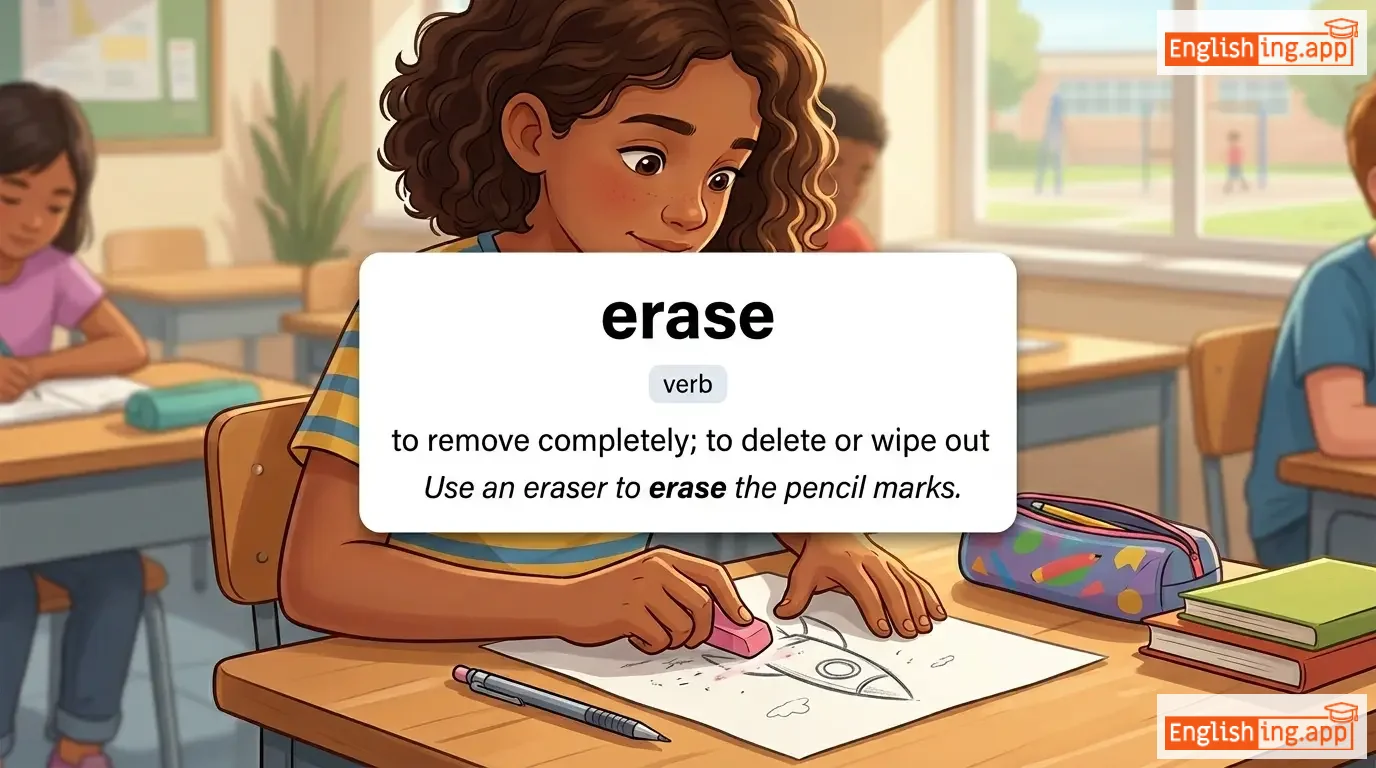
erase definition card — visual illustration of the meaning
verb
/ɪˈreɪs/
стёртый (styortyy)

to remove completely; to delete or wipe out

"Use an eraser to erase the pencil marks."

"Используйте ластик, чтобы стереть карандашные следы." (Ispol'zuyte lastik, chtoby steret' karandashnye sledy.)
erect definition card — visual illustration of the meaning
verb
/ɪˈrɛkt/
возводить (vozvodit)

to build or construct something upright

"The workers erected a new building in the city center."
"Рабочие возвели новое здание в центре города." (Rabochie vozveli novoe zdanie v tsentre goroda.)
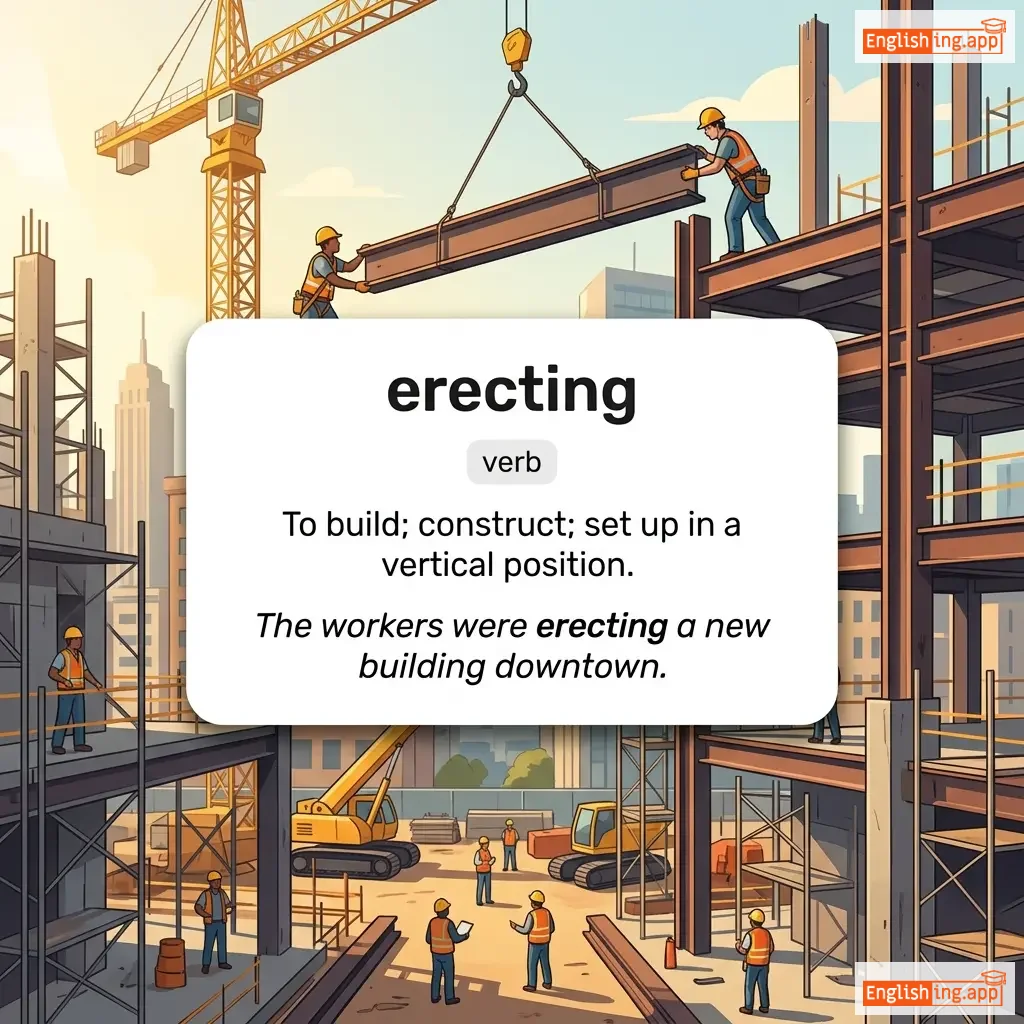
erecting definition card — visual illustration of the meaning
verb
ɪˈrɛktɪŋ
возводить (vozvodit)

To build; construct; set up in a vertical position.

"The workers were erecting a new building downtown."

"Рабочие возводили новое здание в центре города." (Rabochie vozvodili novoe zdanie v tsentre goroda.)
ergonomic definition card — visual illustration of the meaning
adjective
/ˌɜː.ɡəˈnɒm.ɪk/
эргономичный (ergonomichny)

Designed for efficiency and comfort in the working environment.

"The office chairs are designed to be ergonomic."

"Офисные стулья спроектированы так, чтобы быть эргономичными." (Ofisnye stul'ya sproyektirovany tak, chtoby byt' ergonomichnymi.)
verb
/ɪˈroʊd/
эрозия (eroziya)

to gradually wear away or destroy by natural forces such as water, wind, or chemical action

"The coastline has begun to erode due to constant waves."
"Береговая линия начала разрушаться из-за постоянных волн." (Beregovaya liniya nachala razrushatsya iz-za postoyannykh voln.)
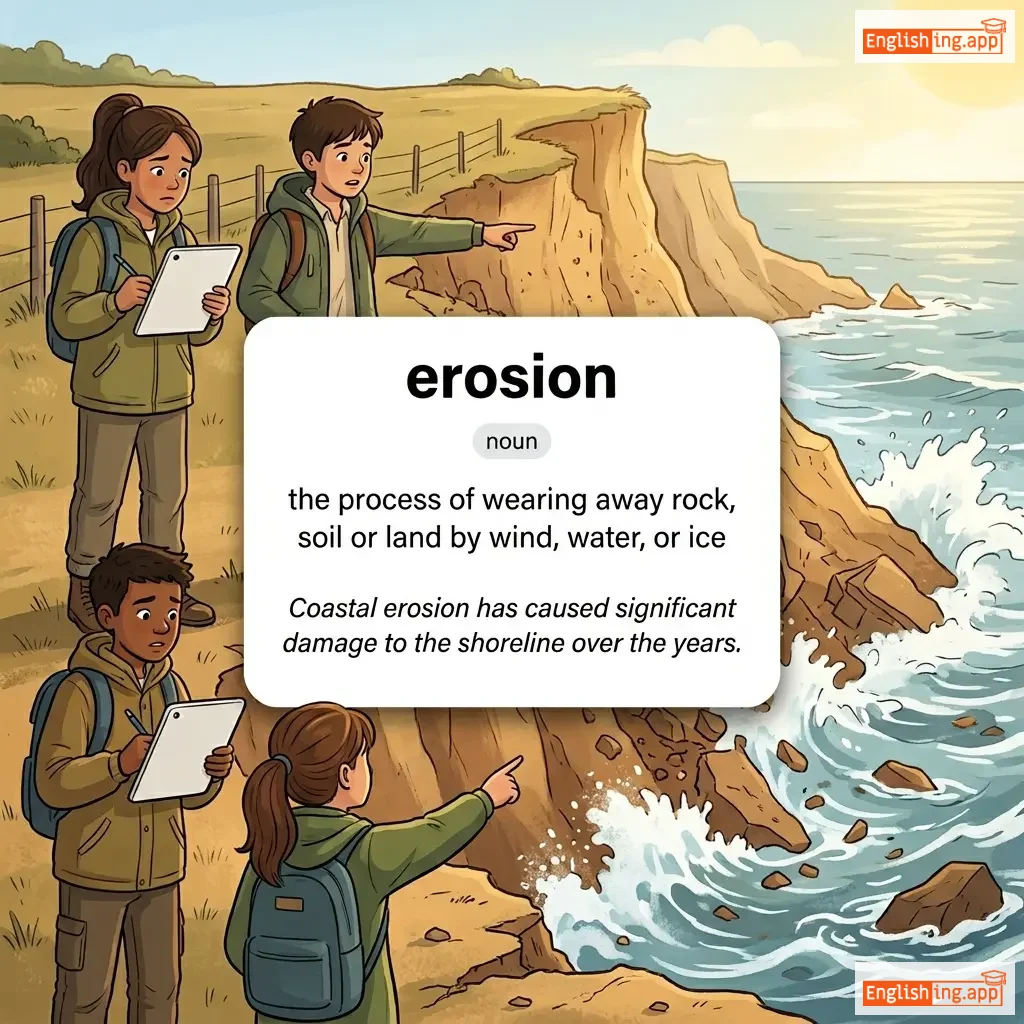
erosion definition card — visual illustration of the meaning
noun
/ɪˈroʊ.ʒən/
эрозия (eroziya)

the process of wearing away rock, soil, or land by wind, water, or ice

"Coastal erosion has caused significant damage to the shoreline over the years."

"Прибрежная эрозия за годы привела к значительным повреждениям прибрежной линии." (Pribrezhnaya eroziya za gody privela k znachitel'nym povrezhdeniyam pribrezhnoy linii.)
adjective
/ɪˈrɒtɪk/
эротический (eroticheskiy)

relating to or tending to arouse sexual desire or excitement

"The novel contained several erotic scenes."

"Роман содержал несколько эротических сцен." (Roman soderzhal neskol'ko eroticheskikh stsen.)
verb
/ɜːr/
ошибаться (oshibat'sya)

to make a mistake or be incorrect

"To err is human, to forgive divine."
"Ошибаться — это по-человечески, прощать — божественно." (Oshibat'sya — eto po-chelovecheski, proshchat' — bozhesveno.)
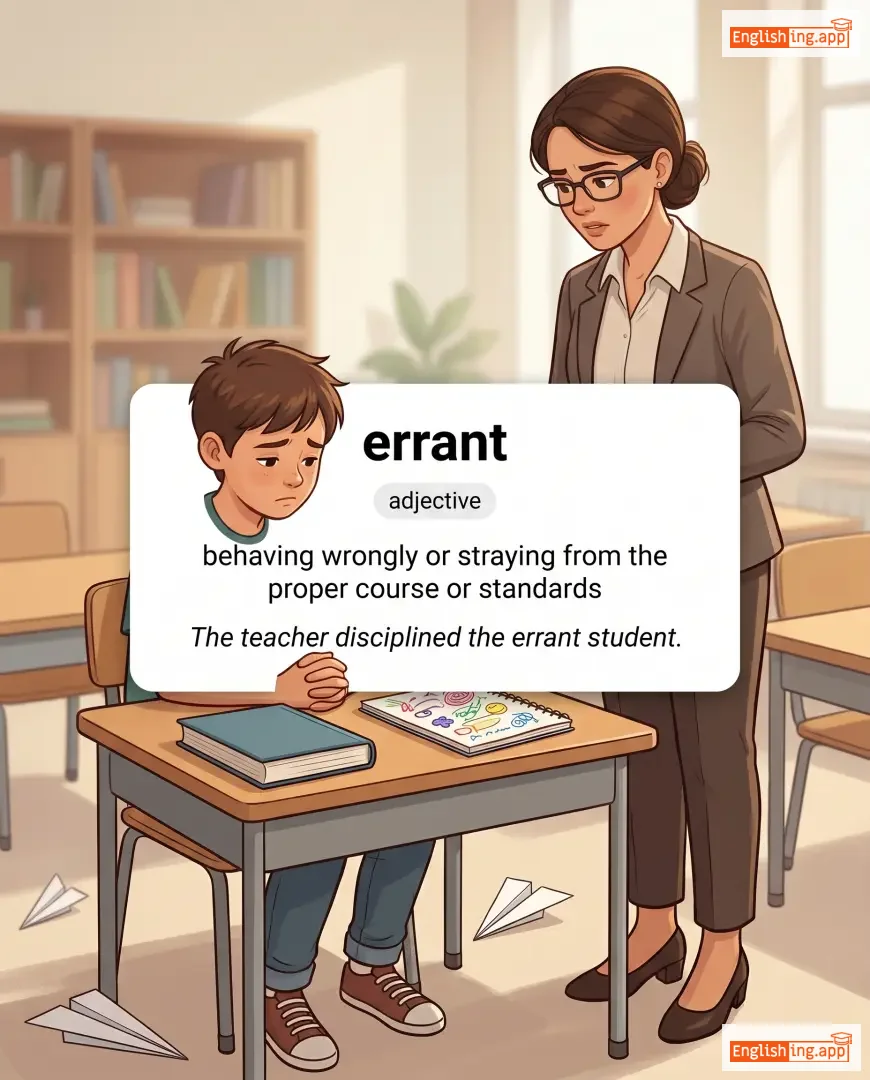
errant definition card — visual illustration of the meaning
adjective
/ˈɛrənt/
блуждающий (bluzhdayushchiy)

behaving wrongly or straying from the proper course or standards

"The teacher disciplined the errant student."
"Учитель дисциплинировал блуждающего студента." (Uchitel' distsipliniraval bluzhdayushchego studenta.)
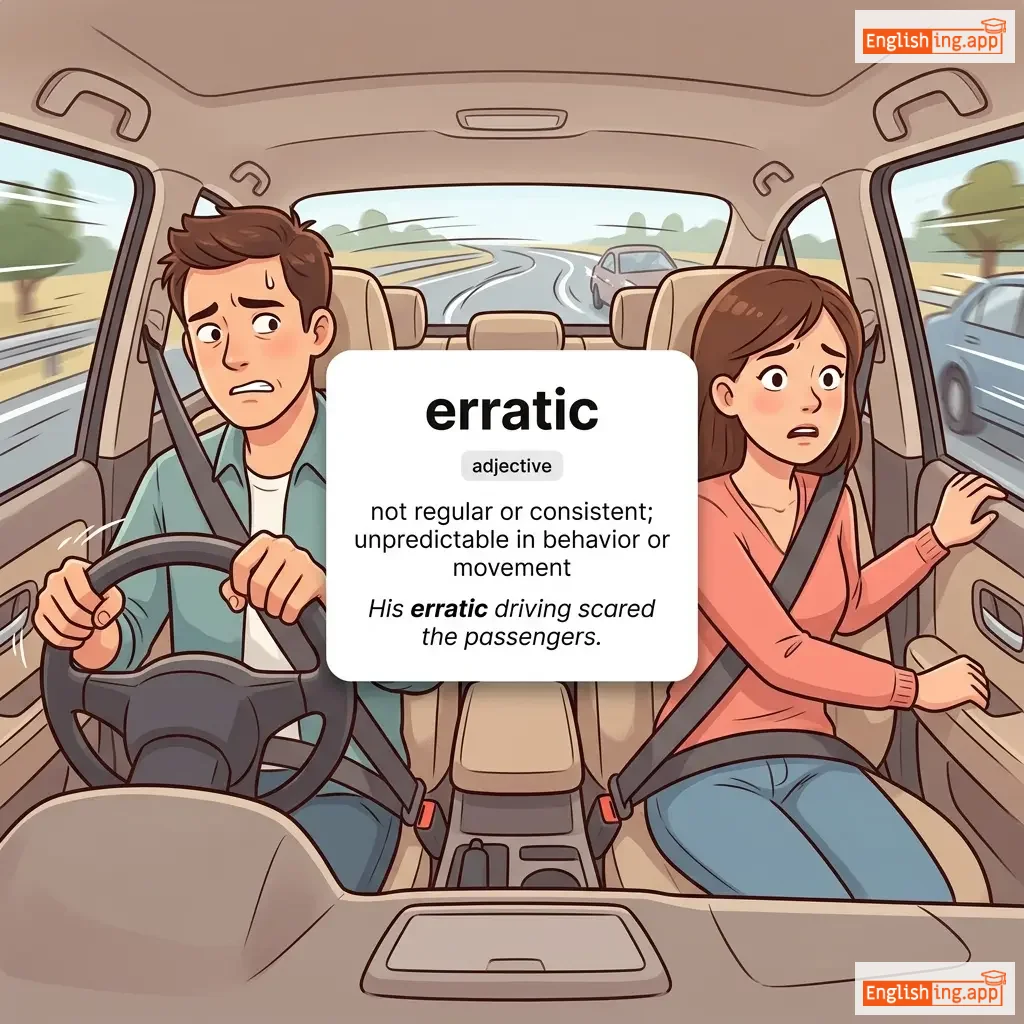
erratic definition card — visual illustration of the meaning
adjective
/ɪˈrætɪk/
неустойчивый (neustoychivyy)

not regular or consistent; unpredictable in behavior or movement

"His erratic driving scared the passengers."
"Его erratic вождение напугало пассажиров." (Ego erratic vozhdenie napugalo passazhirov.)
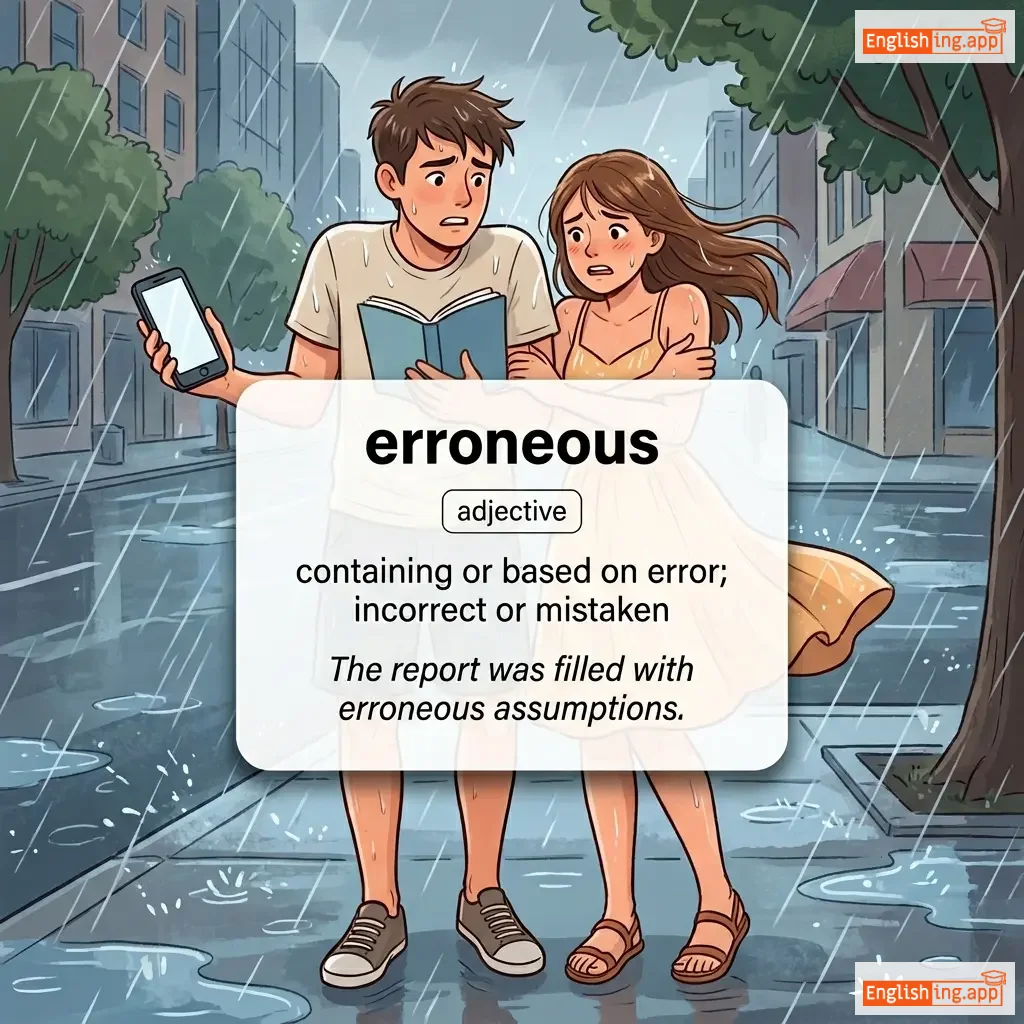
erroneous definition card — visual illustration of the meaning
adjective
/ɪˈrəʊniəs/
ошибочный (oshibochnyy)

containing or based on error; incorrect or mistaken

"The report was filled with erroneous assumptions."

"Отчет был полон ошибочных предположений." (Otchet byl polon oshibochnykh predpolozheniy.)
noun
/ˈɛrər/
ошибка (oshibka)

A mistake or inaccuracy in action, thought, or judgment.

"The report contained a major error in the data analysis."

"В отчете была серьезная ошибка в анализе данных." (V otchete byla seryoznaya oshibka v analize dannykh.)
adjective
/ˈɛrzæts/
заменитель (zamienitel)

made or used as a substitute, typically an inferior one

"The cheap shoes were made of ersatz leather."

"Дешевые туфли были сделаны из искусственной кожи." (Deshevye tufli byli sdelany iz iskusstvennoy kozhi.)
adjective
/ˈɜːrstwaɪl/
бывший (byvshiy)

former or in the past

"They were erstwhile friends but no longer speak."
"Они были бывшими друзьями, но теперь не разговаривают." (Oni byli byvshimi druz'yami, no teper' ne razgovarivayut.)
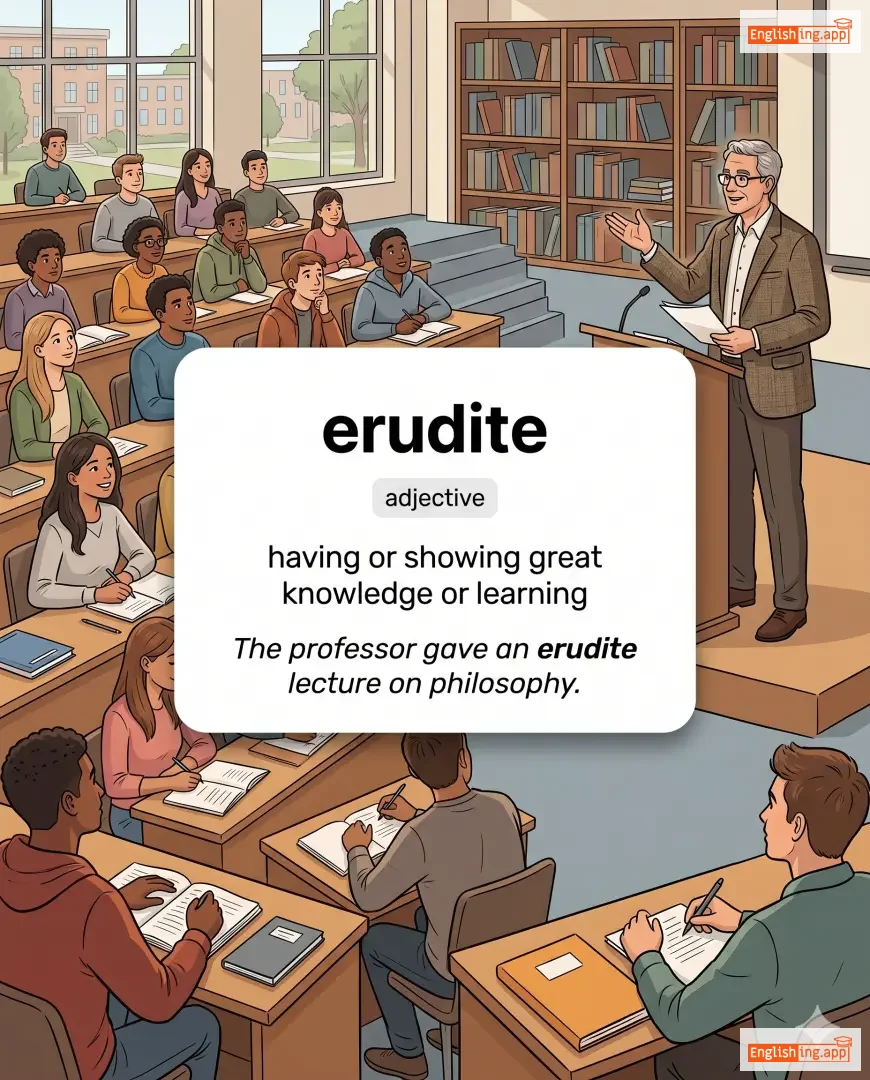
erudite definition card — visual illustration of the meaning
adjective
/ˈɛrjʊˌdaɪt/
эрудированный (erudirovannyy)

having or showing great knowledge or learning

"The professor gave an erudite lecture on philosophy."
"Профессор прочитал эрудированную лекцию по философии." (Professor prochital erudirovannuyu lektsiyu po filosofii.)
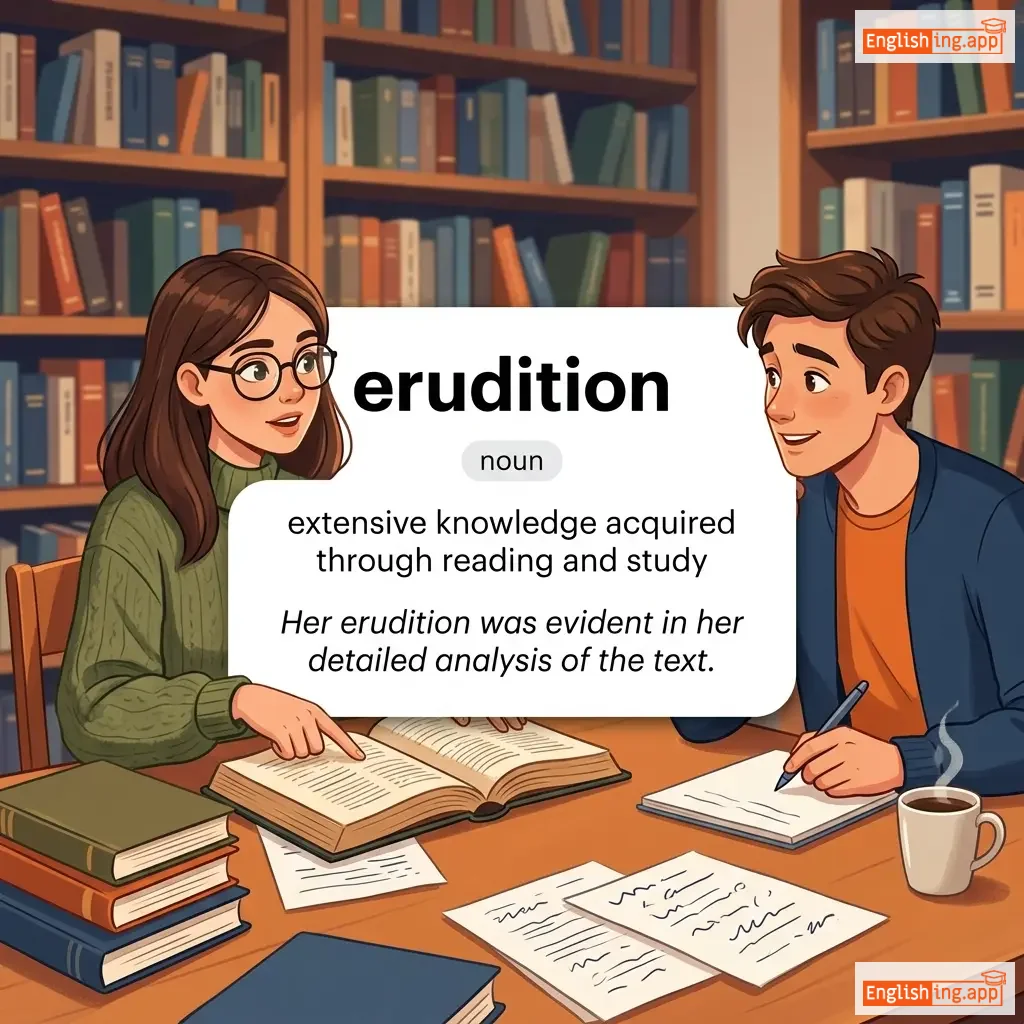
erudition definition card — visual illustration of the meaning
noun
/ˌɛrjʊˈdɪʃən/
эрудиция (eruditsiya)

extensive knowledge acquired through reading and study

"Her erudition was evident in her detailed analysis of the text."

"Ее эрудиция была очевидна в ее подробном анализе текста." (Eyo eruditsiya byla ochevidna v ee podrobnom analize teksta.)
verb
/ɪˈrʌpt/
взорваться (vzorvatsya)

to burst forth suddenly and violently

"The volcano erupted after centuries of dormancy."

"Вулкан извергся после столетий покоя." (Vulkan izvergsya posle stoletiy pokoya.)
noun
/ɪˈrʌp.ʃən/
вулканическое извержение (vulkanicheskoe izverzhenie)

a sudden violent occurrence or outburst; volcanic explosion

"The volcanic eruption forced thousands of people to evacuate the area."
"Вулканическое извержение заставило тысячи людей эвакуировать территорию." (Vulkanicheskoe izverzhenie zastavilo tysyachi lyudey evakuirovat' territoriyu.)
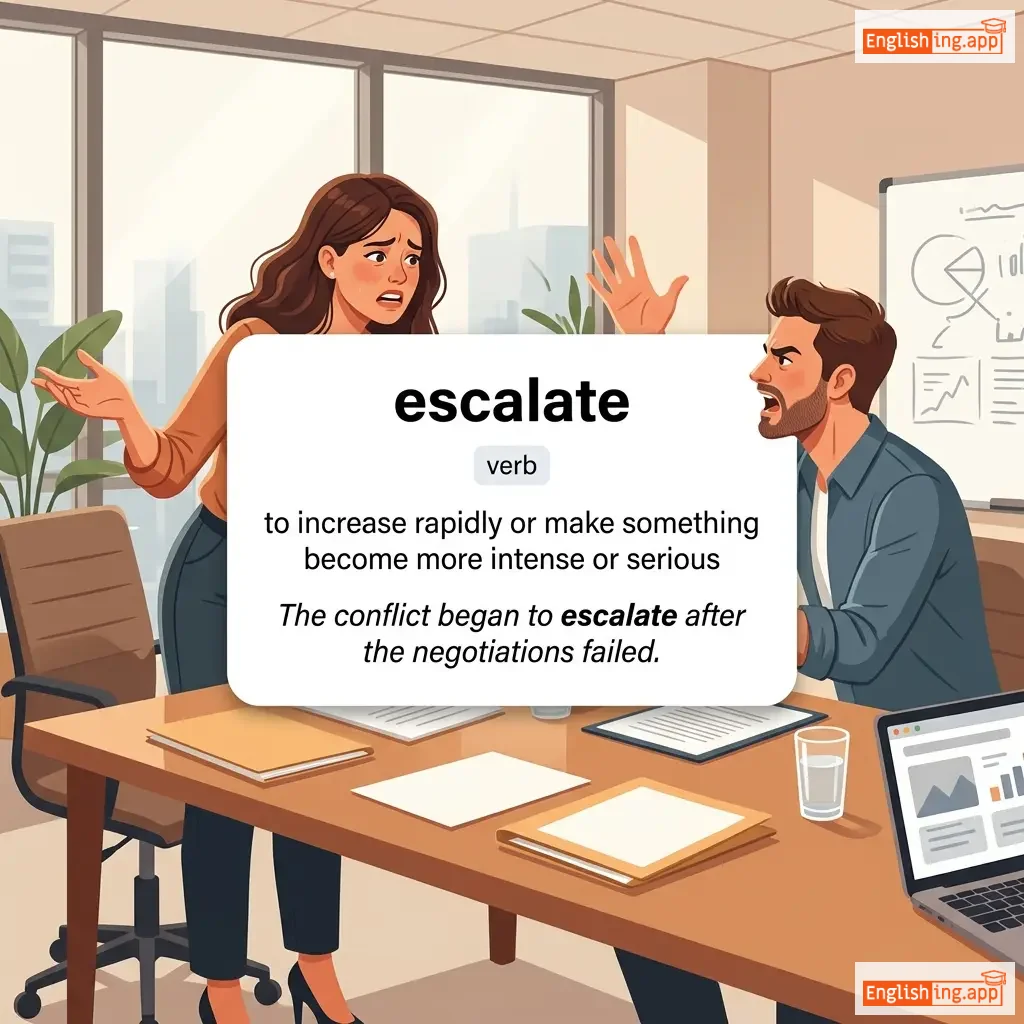
escalate definition card — visual illustration of the meaning
verb
/ˈɛskəleɪt/
эскалировать (eskalirovat)

to increase rapidly or make something become more intense or serious

"The conflict began to escalate after the negotiations failed."
"Конфликт начал эскалировать после неудачи переговоров." (Konflikt nachal eskalirovat' posle neudachi peregovorov.)
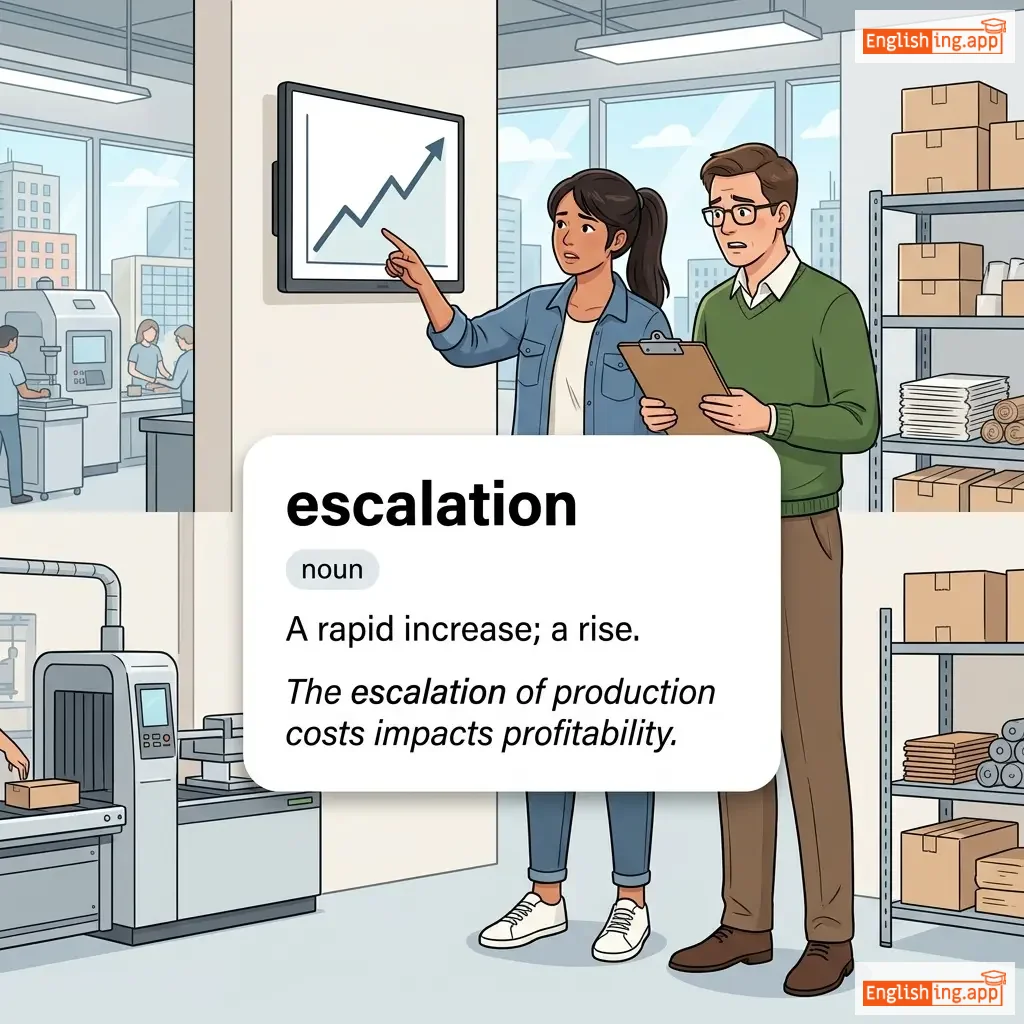
escalation definition card — visual illustration of the meaning
noun
ˌes.kəˈleɪ.ʃən
быстрое увеличение; рост. (bystroe uvelichenie; rost)

A rapid increase; a rise.

"The escalation of production costs impacts profitability."

"Эскалация производственных затрат влияет на прибыльность." (Eskalatsiya proizvodstvennykh zatrat vliyayet na pribylnost'.)
noun
/ˈɛskəpeɪd/
приключение (priklyuchenie)

an adventurous, exciting, or reckless act

"Their summer escapade included camping and mountain climbing."

"Их летние приключения включали кемпинг и восхождение на гору." (Ikh letnie priklyucheniya vklyuchali kemping i voskhozhdeniye na goru.)
🏃‍♂️

Escape (eskeip)

verb
/ɪˈskeɪp/
убегать (ubegat')

To break free from confinement or control; to get away.

"The prisoner tried to escape from jail."

"Uznik popytalsya ubezhat' iz tyur'my." (Uznik popytalsya ubezhat' iz tyur'my.)
verb
/ɪsˈtʃuː/
избегать (izbegat')

to deliberately avoid or abstain from something

"She chose to eschew junk food for a healthier diet."

"Она решила избегать фастфуда ради более здоровой диеты." (Ona reshila izbegat' fastfuda radi bolee zdorovoi diety.)
🚶‍♂️

escort (ɛskɔrt)

verb
/ˈɛskɔrt/
сопровождать (soprovozhdat)

to accompany someone; to guide or protect while going somewhere

"The guard escorted the visitor to the office."

"Охранник сопроводил посетителя в офис." (Okhrannik soprovodil posetitelia v ofis.)
noun
/ɪˈskʌtʃən/
щит с гербом или эмблемой (shchit s gerbom ili emblemoj)

a shield or emblem bearing a coat of arms

"The family crest was displayed on the escutcheon above the fireplace."
"Семейный герб был изображен на щите над камином." (Semejnyj gerb byl izobrazhen na shchite nad kaminom.)
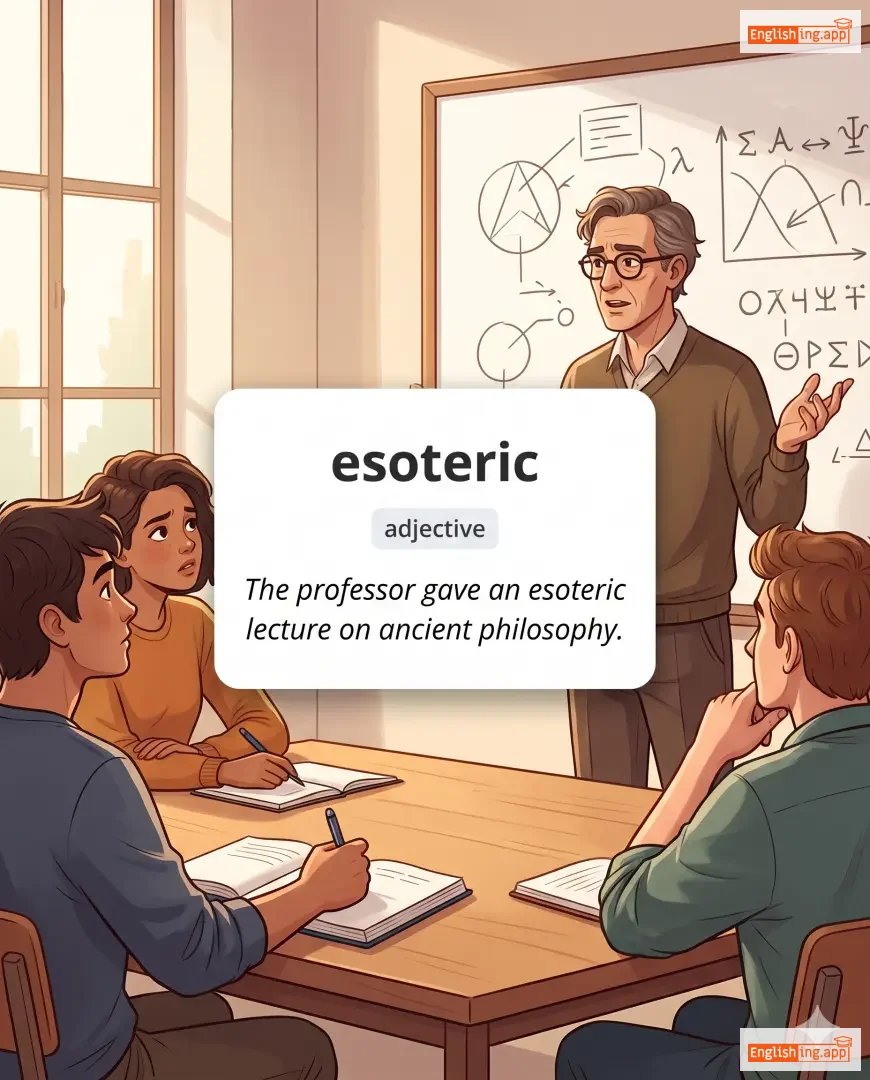
esoteric definition card — visual illustration of the meaning
adjective
/ˌɛsəˈtɛrɪk/
эзотерический (ezotericheskiy)

intended for or understood by only a small number of people with special knowledge

"The professor gave an esoteric lecture on ancient philosophy."

"Профессор прочитал эзотерическую лекцию по древней философии." (Professor prochital ezotericheskuyu lektsiyu po drevney filosofii.)
adjective
/ɪˈspeʃəl/
особенный (osobennyi)

Particularly remarkable or significant; distinguished from others

"This is an especial opportunity you should not miss."

"Это особая возможность, которую не следует упускать." (Eto osobaya vozmozhnost', kotoruyu ne sleduet upuskat'.)
adverb
/ɪˈspɛʃəli/
особенно (osobenno)

Used to single out one person, thing, or situation over all others.

"I love all kinds of fruit, especially mangoes."

"Я люблю все виды фруктов, особенно манго." (Ya lyublyu vse vidy fruktov, osobenno mango.)
noun
/ˈɛspiənɑːʒ/
шпионаж (shpionazh)

The practice of spying or using spies to gather secret information, usually for political or military purposes.

"The agent was arrested on charges of espionage against the state."

"Агент был арестован по обвинению в шпионаже против государства." (Agent byl arestovan po obvineniyu v shpionazhe protiv gosudarstva.)
verb
/ɪˈspaʊz/
поддерживать (podderzhivat')

To adopt or support a cause, belief, or way of life.

"She espoused the philosophy of nonviolence throughout her career."

"Она поддерживала философию ненасилия на протяжении всей своей карьеры." (Ona podderzhivala filosofiyu nenasiliya na protyazhenii vsey svoey kar'yery.)
noun
/ɛˌspriː də ˈkɔːr/
дух команды (dukh komandy)

A feeling of pride, fellowship, and loyalty shared by members of a group.

"The team's esprit de corps was evident in their cooperative effort."

"Дух команды был очевиден в их совместных усилиях." (Dukh komandy byl ocheviden v ikh sovmestnykh usiliyakh.)
verb
/ɪˈspaɪ/
увидеть (uvidet)

To catch sight of or notice something, especially from a distance.

"From the hilltop, she espied a small village in the valley."

"С вершины холма она увидела маленькую деревню в долине." (S vershiny kholma ona uvidela malen'kuyu derevnyu v doline.)
noun
/ˈɛskwaɪər/
Эсквайр (eskvayr)

A title of respect often used after a man's name, especially for lawyers in the United States.

"John Smith, Esquire, will be representing the client in court."
"Джон Смит, Эсквайр, будет представлять клиента в суде." (Dzhon Smit, Eskvayr, budet predstavlyat' kliyenta v sude.)
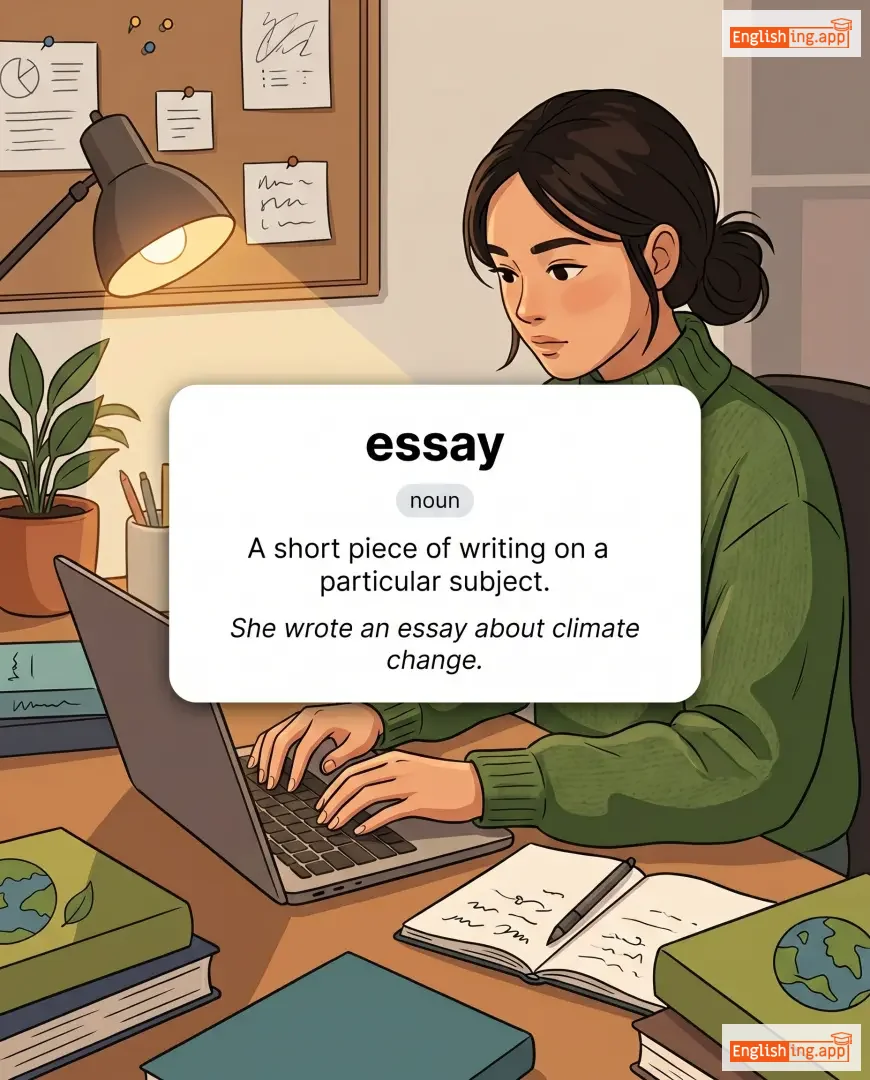
essay definition card — visual illustration of the meaning
noun
/ˈɛseɪ/
эссе (esse)

A short piece of writing on a particular subject.

"She wrote an essay about climate change."

"Она написала эссе о изменении климата." (Ona napisala esse o izmenenii klimata.)
noun
/ˈɛsəns/
суть (sut)

The intrinsic nature or indispensable quality of something that determines its character.

"The essence of democracy is freedom of speech."

"Суть демократии заключается в свободе слова." (Sut' demokratii zaklyuchayetsya v svobode slova.)
adjective
/ɪˈsɛnʃəl/
необходимый (neobkhodimy)

Absolutely necessary; extremely important.

"Water is essential for life."

"Вода необходима для жизни." (Voda neobkhodima dlya zhizni.)
adverb
/ɪˈsɛnʃəli/
существенно (sushchestvenno)

Used to emphasize the basic or fundamental nature of something.

"The two plans are essentially the same."

"Эти два плана по существу одинаковы." (Eti dva plana po sushchestvu odinakovy.)
verb
/ɪˈstæblɪʃ/
установить (ustanovit')

To set up, create, or bring into existence something on a firm basis.

"The company plans to establish a new office in Dhaka."
"Компания планирует открыть новый офис в Дакке." (Kompaniya planirovat otkryt' novyi ofis v Dakke.)
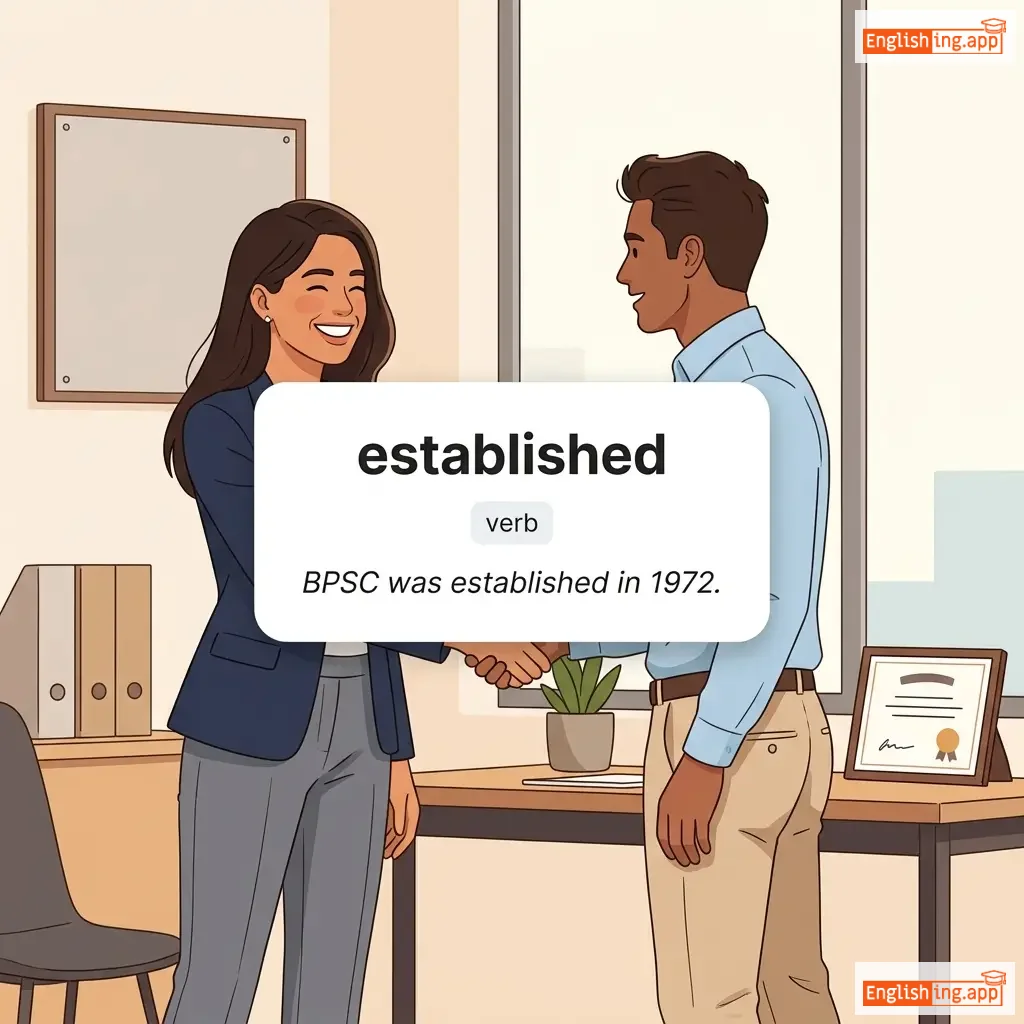
established definition card — visual illustration of the meaning
verb
ɪˈstæb.lɪʃt
учреждён (uchrezhdyon)

Set up on a firm or permanent basis; having existed for a long time and therefore recognized.

"BPSC was established in 1972."

"BPSC был учреждён в 1972 году." (BPSC byl uchrezhdyon v 1972 godu.)
noun
/ɪˈstæblɪʃmənt/
учреждение (uchrezhdenie)

An organization, business, or system; the act of setting something up.

"The restaurant is a new establishment in town."

"Ресторан — это новое учреждение в городе." (Restoran — eto novoe uchrezhdenie v gorode.)
noun
/ɪˈsteɪt/
имение (imenie)

A large area of land, property, or possessions owned by someone, often including a big house.

"The family owned a large estate in the countryside."

"Семья владела большим поместьем в сельской местности." (Semya vladela bolshim pomestem v selskoy mestnosti)
noun/verb
/ɪˈstiːm/
почтение (pochtienie)

Respect and admiration, typically for a person.

"She is held in high esteem by her colleagues."

"Она очень уважаема своими коллегами." (Ona ochen' uvajayema svoimi kollegami.)
adjective
/ɪˈstiːmd/
уважаемый (uvazhaemyy)

respected and admired; held in high regard

"He is an esteemed professor at the university."

"Он является уважаемым профессором в университете." (On yavyayetsya uvazhaemym professorom v universitete.)