Словари

Словарь английского языка | Значения слов, определения и примеры
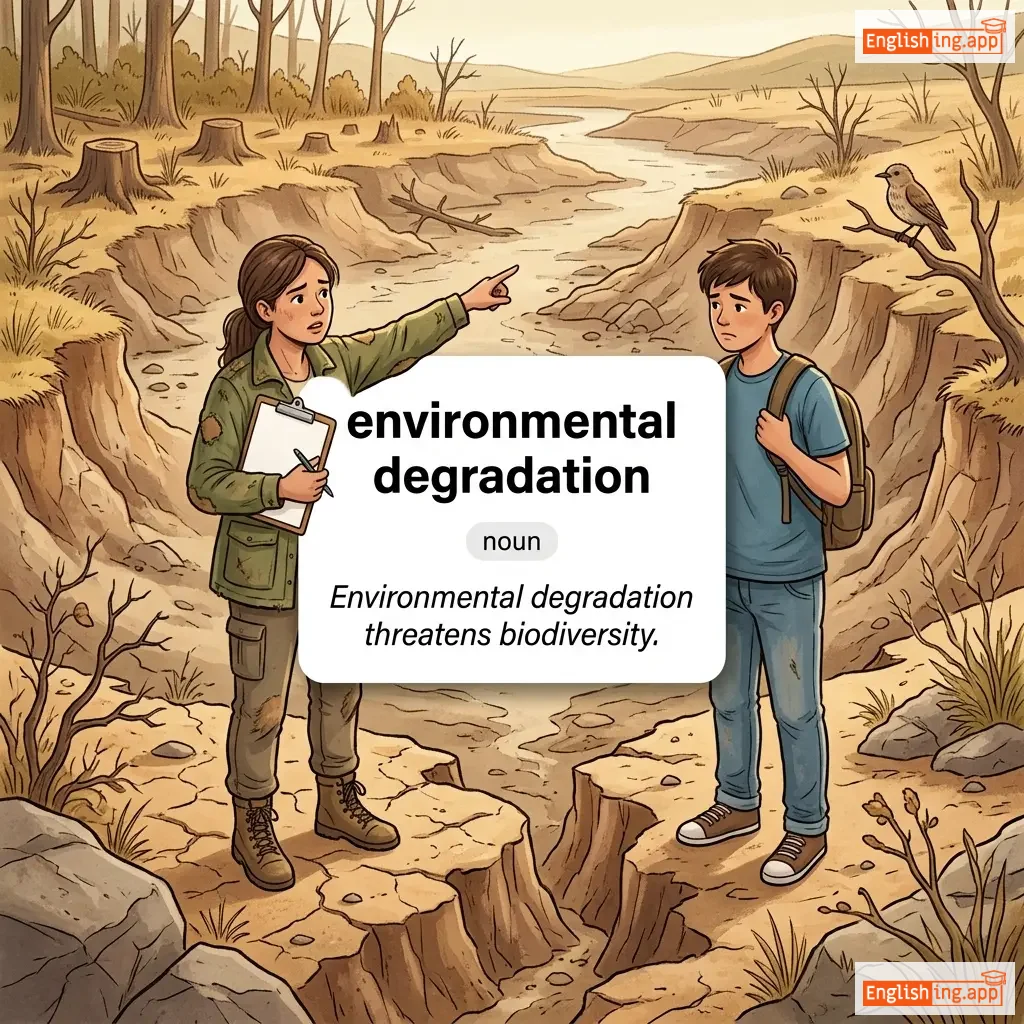
environmental degradation definition card — visual illustration of the meaning
noun
ɪnˌvaɪrənˈmɛntəl ˌdɛɡrəˈdeɪʃən
экологическое разрушение (ekologicheskoe razrushenie)

The deterioration of the environment through depletion of resources and destruction of ecosystems.

"Environmental degradation threatens biodiversity."
"Экологическое разрушение угрожает биологическому разнообразию." (Ekologicheskoe razrushenie ugrozhayet biologicheskomu raznoobraziyu.)
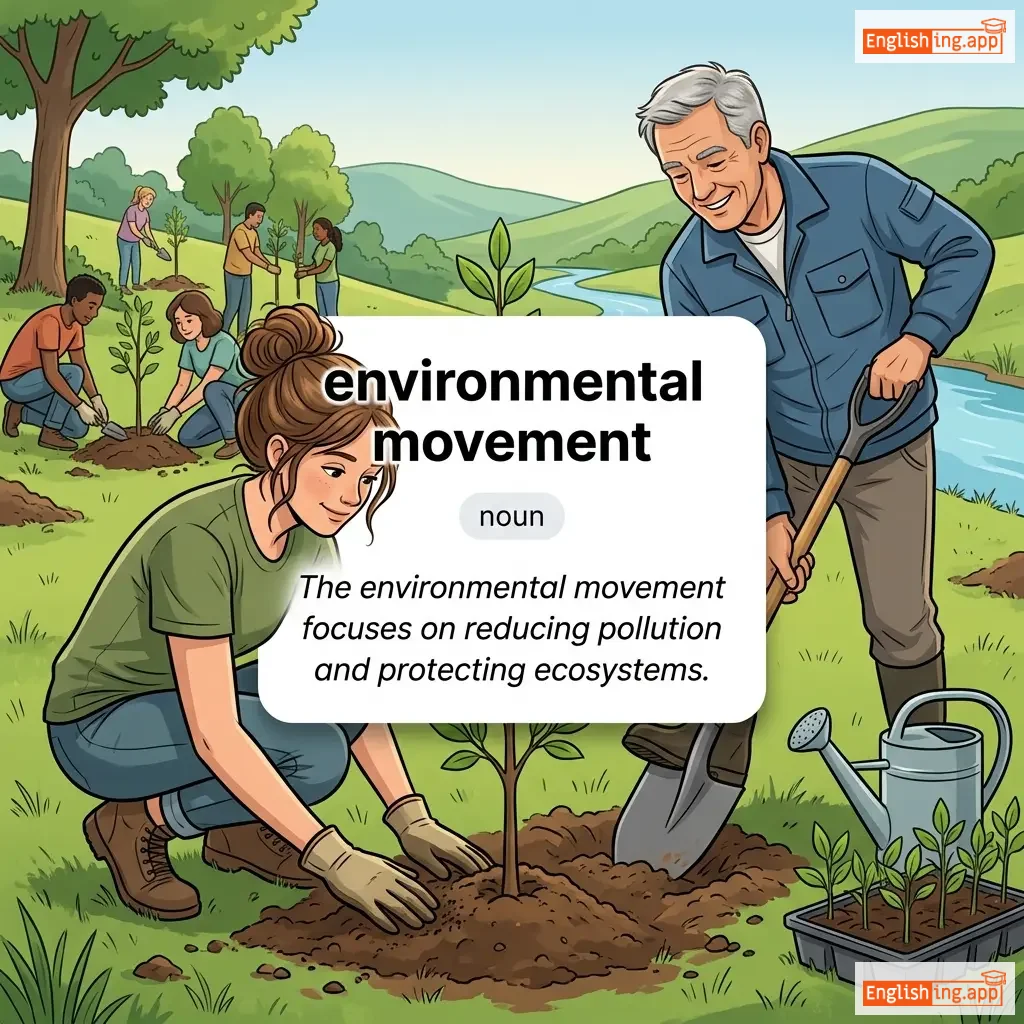
environmental movement definition card — visual illustration of the meaning
noun
/ɪnˌvaɪrənˈmɛntəl ˈmuːvmənt/
экологическое движение (ekologicheskoe dvizhene)

A social or political movement aimed at protecting the environment and promoting sustainable practices through advocacy, education, and policy changes.

"The environmental movement focuses on reducing pollution and protecting ecosystems."
"Экологическое движение сосредоточено на сокращении загрязнения и защите экосистем." (Ekologicheskoe dvizhene sosredotocheno na sokrashchenii zagriazneniya i zashchite ekosistem.)
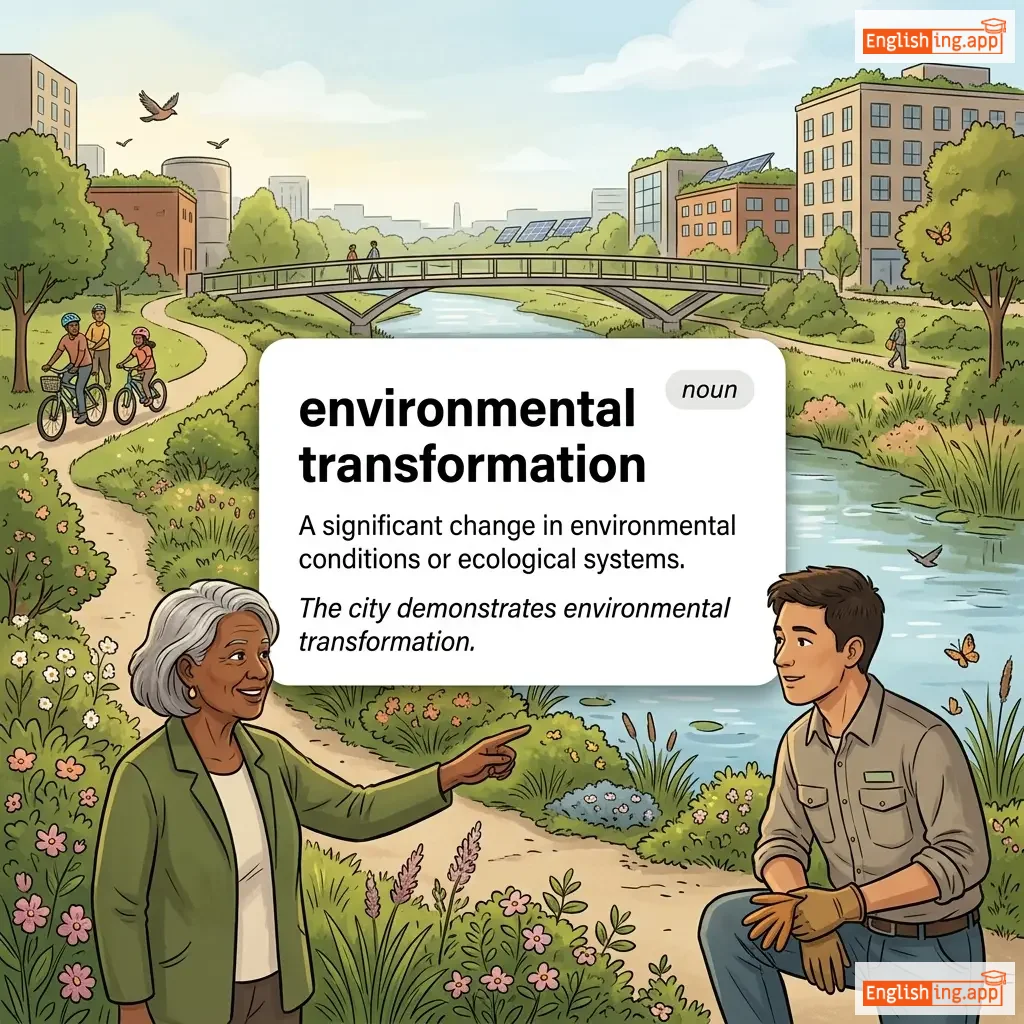
environmental transformation definition card — visual illustration of the meaning
noun
ɪnˌvaɪ.rənˈmen.təl ˌtræns.fəˈmeɪ.ʃən
экологическая трансформация (ekologicheskaya transformatsiya)

A significant change in environmental conditions or ecological systems.

"The city demonstrates environmental transformation."

"Город демонстрирует экологическую трансформацию." (Gorod demonstiruet ekologicheskuyu transformatsiyu.)
verb
/ɪnˈvɪʒən/
представлять (predstavlyat)

to imagine or picture something in the future; to visualize a possibility or goal

"She envisions a world where everyone has equal access to education."
"Она представляет мир, где каждый имеет равный доступ к образованию." (Ona predstavlyaet mir, gde kazhdyy imeyet ravnyy dostup k obrazovaniyu.)
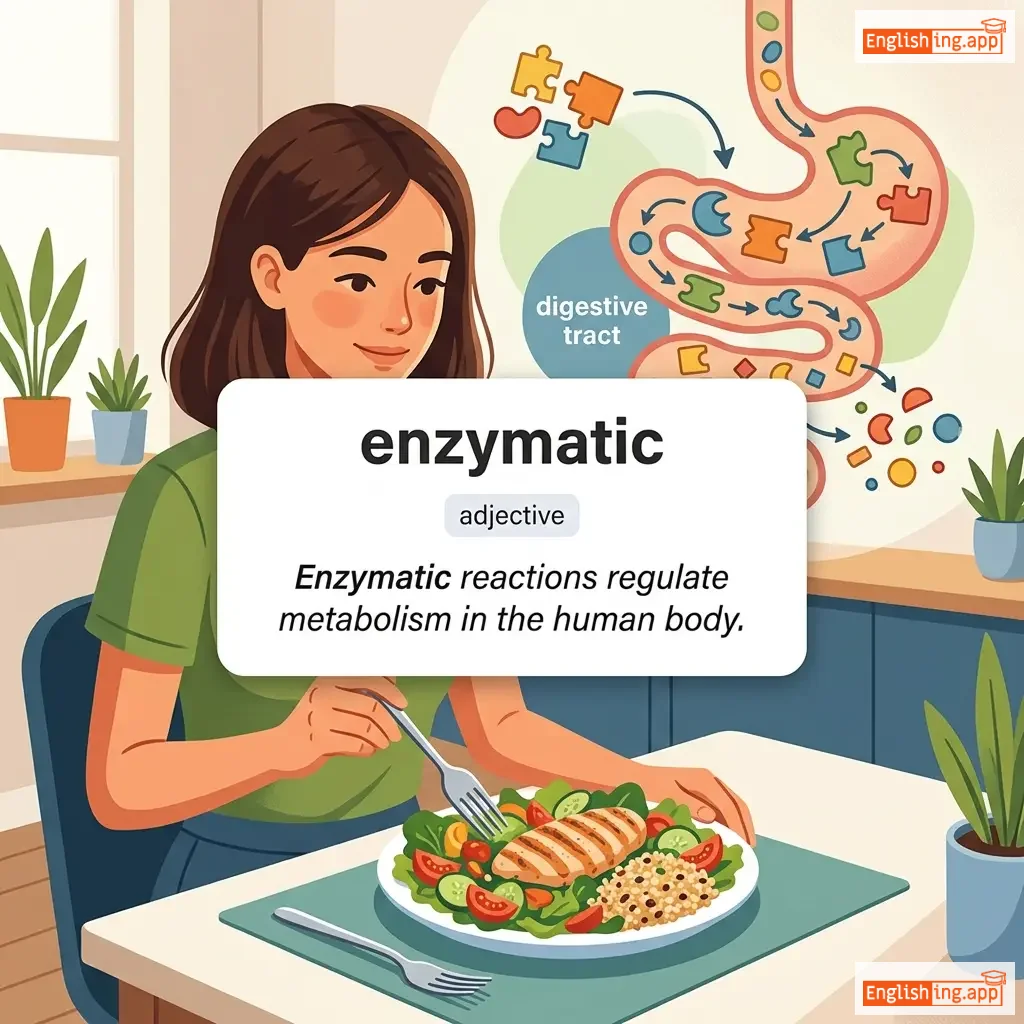
enzymatic definition card — visual illustration of the meaning
adjective
/ˌen.zɪˈmæt.ɪk/
связанный с ферментами (svyazannyy s fermentami)

Relating to or involving enzymes, which are proteins that catalyze biochemical reactions in living organisms.

"Enzymatic reactions regulate metabolism in the human body."

"Энзиматические реакции регулируют обмен веществ в человеческом теле." (Enzimaticheskiye reaktsii regulyuyut obmen veshchestv v chelovecheskom tele.)
noun
/ˈiːən/
эон (eon)

an indefinitely long period of time; an age

"Dinosaurs lived millions of years ago, in a different eon."

"Динозавры жили миллионы лет назад, в другой эоне." (Dinozavry zhili milliony let nazad, v drugom eone.)
noun
/ˈɛpəlɛt/
погоны (pogony)

An ornamental shoulder piece on a garment, especially on the coat or jacket of a military uniform.

"The general’s uniform had a golden epaulet on each shoulder."

"У униформы генерала были золотые погоны на каждом плече." (U uniformy generala byli zolotye pogony na kazhdom pleche.)
noun
/ˈɛpəlɛt/
наплечник (naplechkin)

A variant spelling of epaulet, also meaning a shoulder ornament, especially on military uniforms.

"The officer’s epaulette shone brightly under the sunlight."
"Эполет офицера ярко блестел на солнце." (Epolete ofitserа yarko blestel na solntse.)
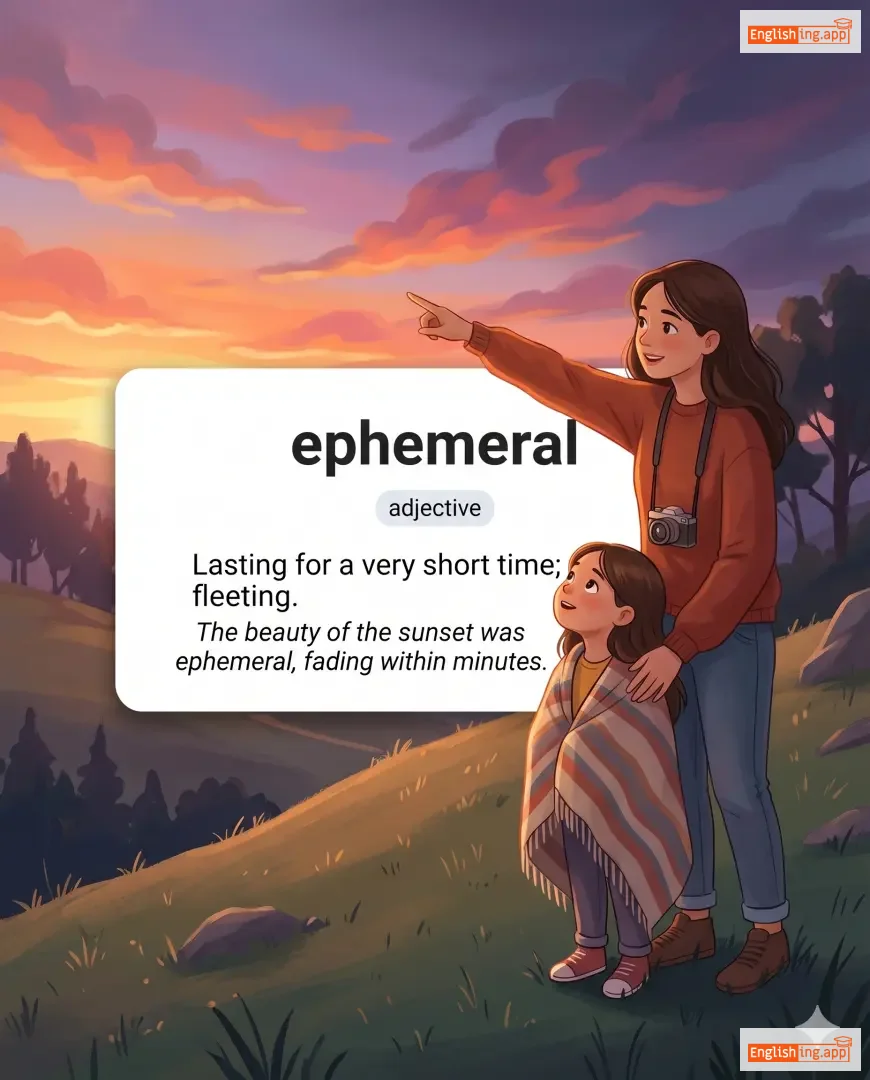
ephemeral definition card — visual illustration of the meaning
adjective
/ɪˈfɛmərəl/
мимолетный (mimoletnyy)

Lasting for a very short time; fleeting.

"The beauty of the sunset was ephemeral, fading within minutes."

"Красота заката была мимолетной, исчезнув за несколько минут." (Krasota zakata byla mimoletnoy, ischezla za neskol'ko minut.)
noun, adjective
/ˈɛpɪk/
эпопея (epopeya)

A long narrative poem or story about heroic deeds; also used to describe something grand or impressive.

"The Iliad is considered one of the greatest epics of ancient literature."

"Илиада считается одним из величайших эпосов древней литературы." (Iliada schitayetsya odnim iz velikikh eposov drevney literatury.)
noun
/ˈɛpɪkjʊr/
гурман (gurman)

A person who enjoys fine food and drink, often with refined taste.

"As an epicure, she always sought out the finest restaurants in the city."

"Как гурман, она всегда искала лучшие рестораны города." (Kak gurman, ona vsegda iskala luchshiye restorany goroda.)
adjective
/ˌɛpɪkjʊˈriːən/
эпикурейский (epikureyskiy)

relating to the enjoyment of fine food, drink, and luxury

"The chef prepared an epicurean feast for the guests."

"Шеф-повар приготовил эпикурейский банкет для гостей." (Shef-povar prigotovil epikureyskiy banket dlya gostey.)
noun
/ˈɛpɪˌsaɪkl/
эпициклический круг (epiciklicheskiy krug)

a small circle whose center moves around the circumference of a larger one, used in ancient astronomy

"The concept of the epicycle was used to explain planetary motion."

"Концепция эпицикла использовалась для объяснения движения планет." (Kontseptsiya epitsikla ispol'zovalas' dlya ob'yasneniya dvizheniya planet.)
noun
/ˌɛpɪˈsaɪklɔɪd/
эпициклоид (epicikloid)

a curve traced by a point on the circumference of a circle that rolls around the outside of another circle

"The mathematician demonstrated how to draw an epicycloid."

"Математик показал, как нарисовать эпициклоид." (Matematik pokazal, kak narisovat' epitsikloid.)
noun
/ˌɛpɪˈdɛmɪk/
счастье (schastye)

a widespread occurrence of an infectious disease in a community at a particular time

"The flu epidemic affected thousands of people in the city."

"Она не могла скрыть своего счастья, когда получила награду." (Ona ne mogla skryt' svoego schast'ya, kogda poluchila nagradu.)
noun
/ˌɛpɪˈdɜːrmɪs/
внешний слой кожи (vneshniy sloy kozhi)

the outer layer of cells covering the body of an organism, especially the skin

"The epidermis protects the body from harmful bacteria."

"Эпидермис защищает тело от вредных бактерий." (Epidermis zashchishchaet telo ot vrednykh bakteriy.)
noun
/ˈɛpɪɡræm/
эпиграмма (epigramma)

A short, witty saying or poem that expresses an idea in a clever way.

"Oscar Wilde was famous for his sharp epigrams."

"Оскар Уайлд был знаменит своими острыми эпиграммами." (Oscar Uayld byl znamenit svoimi ostryimi epigrammami.)
noun
/ˈɛpɪˌlɔːɡ/
эпилог (epilog)

A section at the end of a book, play, or speech that serves as a conclusion.

"The author included an epilogue to explain what happened to the characters later."

"Автор добавил эпилог, чтобы объяснить, что произошло с персонажами позже." (Avtor dobavil epilog, chtoby ob'yasnit', chto proizošlo s personazhami pozhe.)
epiphany definition card — visual illustration of the meaning
noun
/ɪˈpɪfəni/
озарение (ozareniye)

A sudden realization or insight into the essence of something.

"During meditation, she had an epiphany about her life purpose."

"Во время медитации она испытала озарение относительно цели своей жизни." (Vo vremya meditatsii ona ispyitala ozareniye otnositel'no tseli svoey zhizni.)
noun
/ˈɛpɪsoʊd/
эпизод (epizod)

An event or part of a story, or one installment in a series.

"The last episode of the drama was watched by millions."

"Последний эпизод драмы посмотрели миллионы." (Posledniy epizod dramy posmotreli milliony.)
adjective
/ˌɛpɪˈsɒdɪk/
эпизодический (epizodicheskiy)

Happening occasionally or in separate parts; related to episodes.

"Her interest in art was episodic, coming and going over the years."

"Её интерес к искусству был эпизодическим, он приходил и уходил с годами." (Eyo interes k iskusstvu byl epizodicheskim, on prikhodil i ukhodil s godami.)
noun
/ɪˌpɪstəˈmɒlədʒɪst/
эпистемолог (epistemolog)

A scholar or expert who studies the nature, sources, and limits of knowledge.

"The epistemologist debated how humans can truly know anything with certainty."
"Эпистемолог спорил о том, как люди могут действительно узнать что-то с уверенностью." (Epistemolog sporyl o tom, kak lyudi mogut deystvitel'no uznat' chto-to s uverennost'yu.)
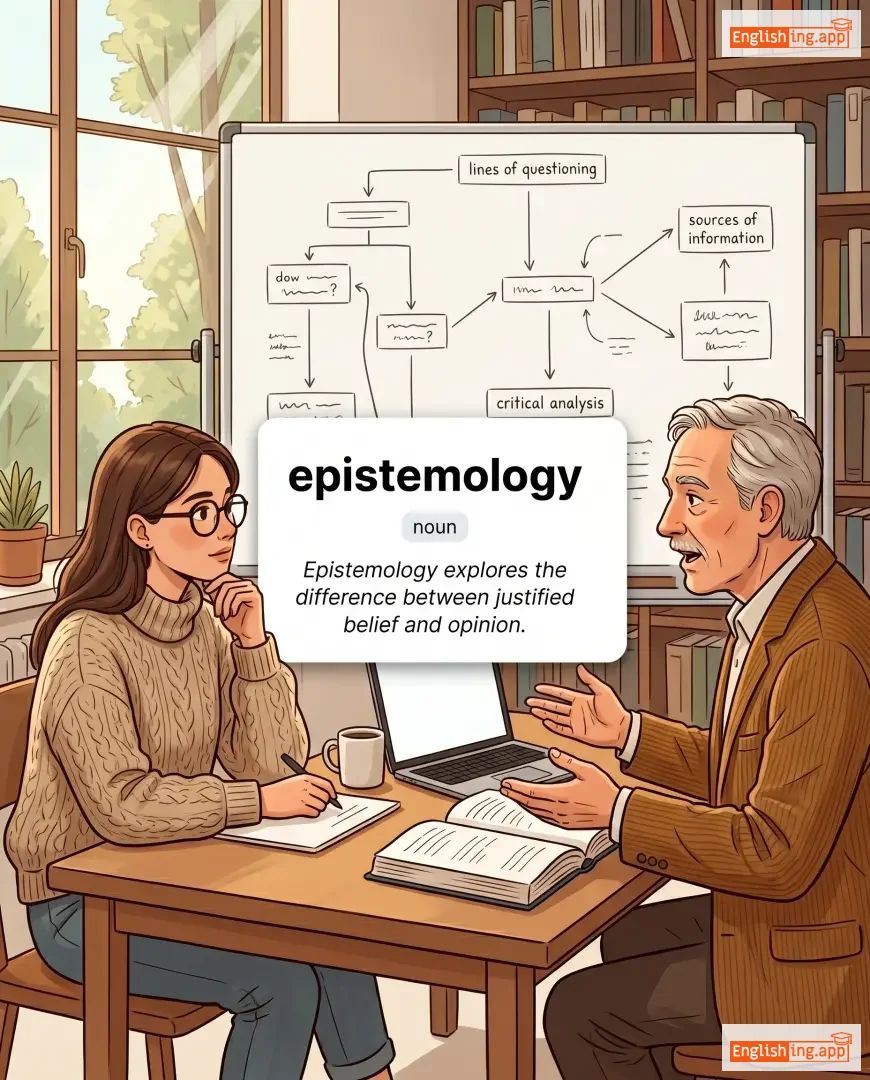
epistemology definition card — visual illustration of the meaning
noun
/ɪˌpɪstəˈmɒlədʒi/
эпистемология (epistemologiya)

The branch of philosophy that studies the nature, origin, and scope of knowledge.

"Epistemology explores the difference between justified belief and opinion."

"Эпистемология исследует различие между оправданной верой и мнением." (Epistemologiya issleduet razlichiye mezhdu opravdannoy veroy i mneniyem.)
noun
/ɪˈpɪsəl/
послание (poslanie)

A letter, especially a formal or didactic one; often used for letters in the New Testament.

"He wrote a long epistle to his friend about his travels."

"Он написал своему другу длинное послание о своих путешествиях." (On napisal svoemu drugu dlinnoe poslanie o svoikh puteshestviyakh.)
adjective
/ɪˈpɪstələri/
эпистолярный (epistoliarnyy)

Related to the writing of letters; expressed in or through letters.

"The novel is written in an epistolary style, consisting of letters between characters."

"Роман написан в эпистолярном стиле, состоящем из писем между персонажами." (Roman napisan v epistoljarnom stile, sostoyashchem iz pisej mezhdu personazhami.)
noun
/ˈɛpɪtɑːf/
эпитафия (epitafiya)

A short text written on a tombstone in memory of the deceased.

"The gravestone bore an epitaph honoring the soldier’s bravery."

"На надгробии была эпитафия, почитающая мужество солдата." (Na nadgrobiye byla epitafiya, pochitayushchaya muzhestvo soldata.)
noun
/ˈɛpɪθɛt/
эпитет (epitet)

A descriptive phrase or word used to characterize someone or something, often as a nickname.

"He earned the epithet ‘The Great’ for his remarkable achievements."
"Он заслужил эпитет ‘Великий’ за свои замечательные достижения." (On zasluzhil epitiet ‘Velikiy’ za svoi zamechatelnye dostizheniya.)
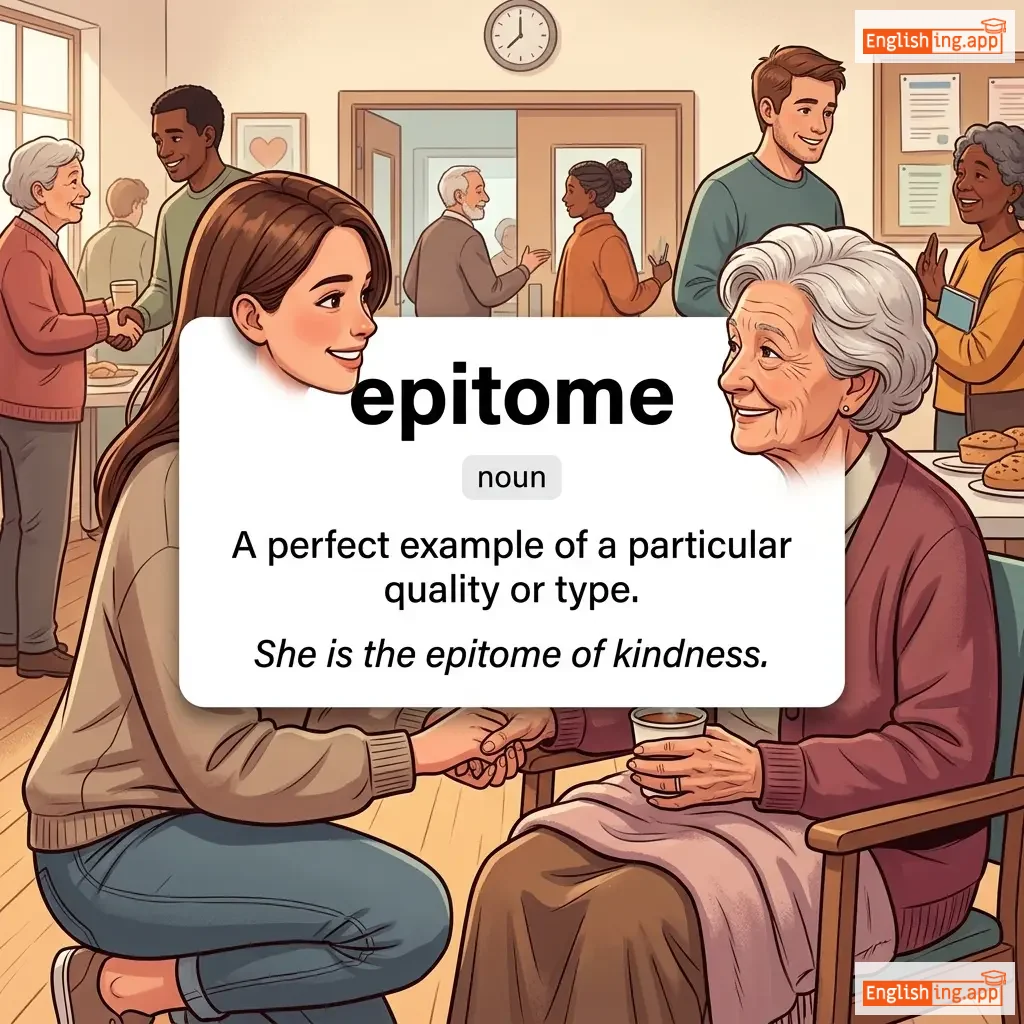
epitome definition card — visual illustration of the meaning
noun
/ɪˈpɪtəmi/
воплощение (voploshchenie)

A perfect example of a particular quality or type.

"She is the epitome of kindness."

"Она воплощение доброты." (Ona voploshchenie dobroty.)
noun
/ˌɛpɪzəʊˈɒtɪk/
эпизоотия (epizootiya)

An outbreak of disease affecting many animals of one kind at the same time.

"The farmer feared an epizootic might wipe out his cattle."
"Фермер боялся, что эпизоотия может уничтожить его скот." (Fermyer boyalsya, chto epizootiya mozhet unichtozhit' ego skot.)
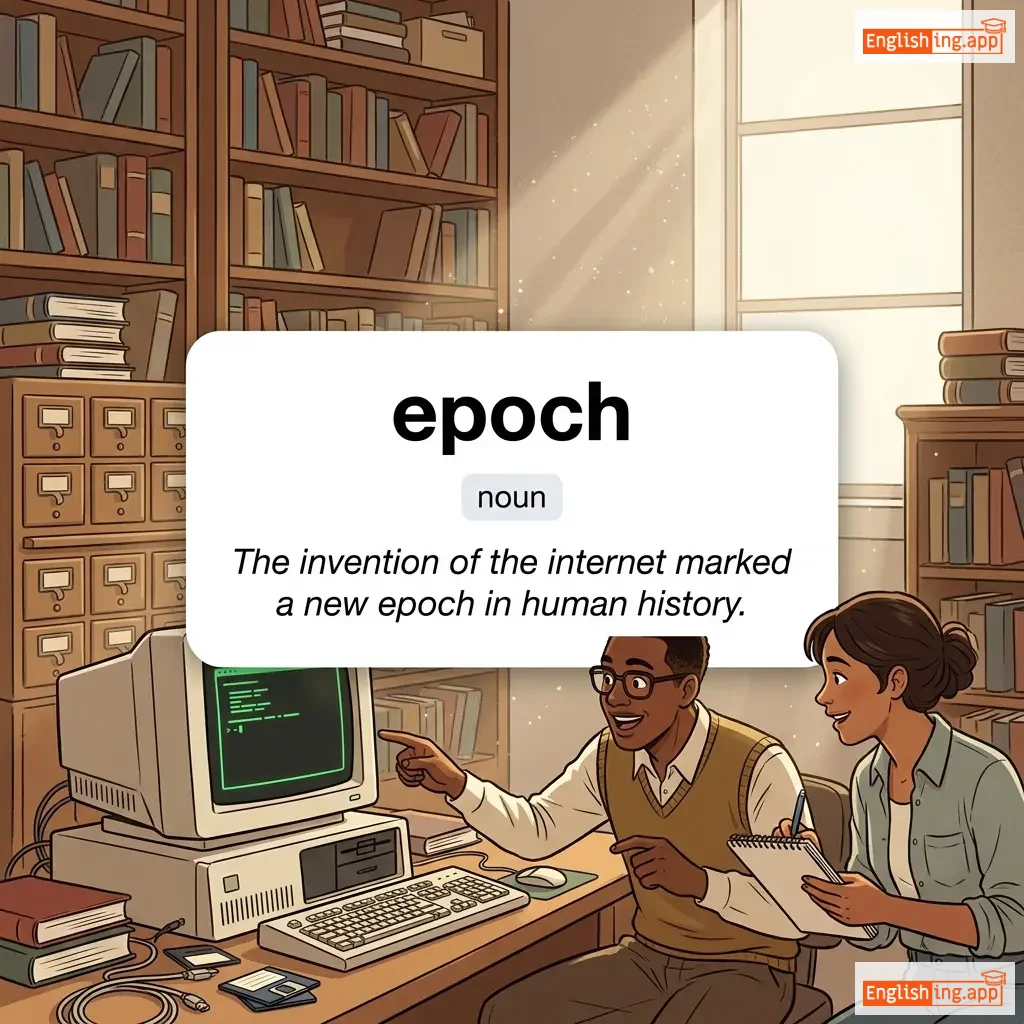
epoch definition card — visual illustration of the meaning
noun
/ˈiːpɒk/
эпоха (epokha)

A period of time in history or a person's life, typically one marked by notable events or characteristics.

"The invention of the internet marked a new epoch in human history."

"Изобретение интернета ознаменовало новую эпоху в истории человечества." (Izobretenie interneta oznamenovalo novuyu epokhu v istorii chelovechestva.)
noun
/ˈɛpəʊd/
форма лирической поэмы (forma liricheskoy poezy)

A form of lyric poem written in couplets, often following a strophe and antistrophe in classical Greek poetry.

"The poet concluded his ode with a striking epode."

"Поэт завершил свою оду ярким эподом." (Poet zavershil svoju odu yarkim epodom.)
noun
/ˈɛpənɪm/
персонаж, в честь которого названо открытие, изобретение или место (personazh, v chest' kotorogo nazvano otkrytie, izobretenie ili mesto)

A person after whom a discovery, invention, place, or other thing is named.

"Sandwich is an eponym named after the Earl of Sandwich."
"Сэндвич - это эпоним, названный в честь графа Сэндвича." (Sendvich - eto eponim, nazvannyj v chest' grafa Sendvicha.)
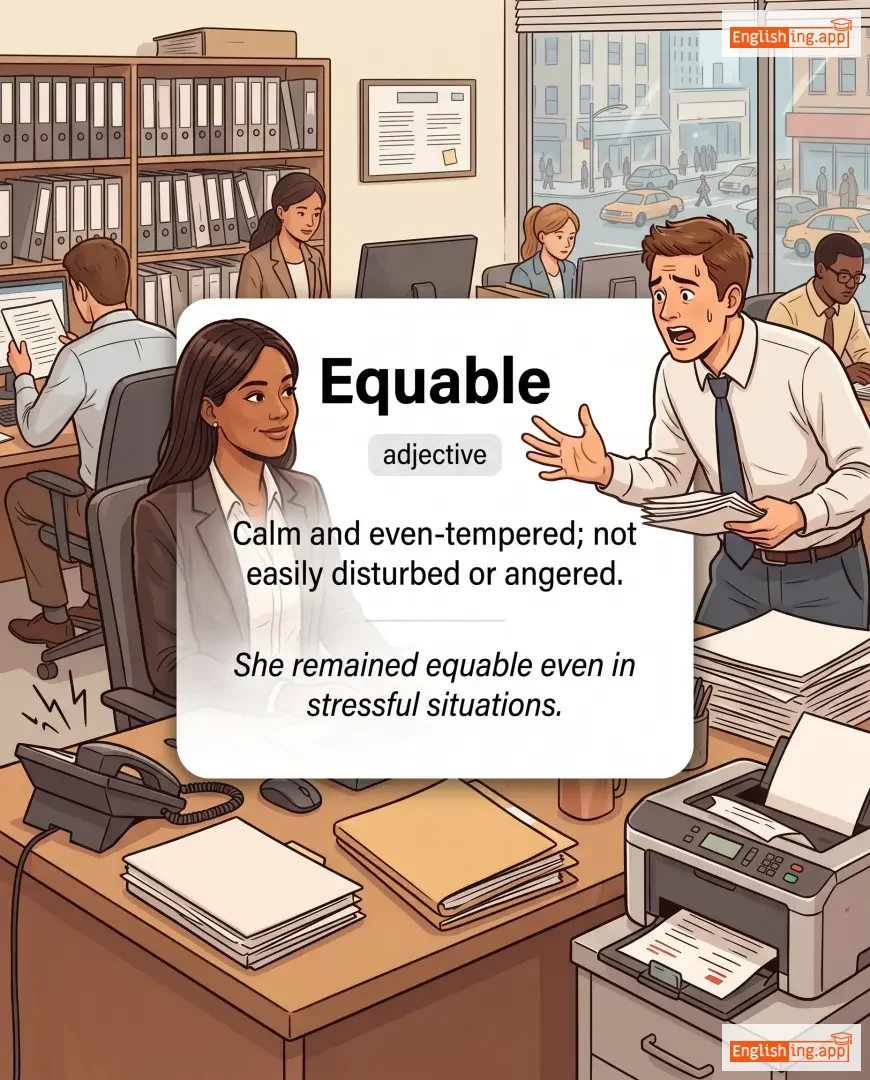
Equable definition card — visual illustration of the meaning
adjective
/ˈɛkwəbl̩/
спокойный (spokoynyy)

Calm and even-tempered; not easily disturbed or angered.

"She remained equable even in stressful situations."
"Она оставалась спокойной даже в стрессовых ситуациях." (Ona ostavalas' spokoynoy dazhe v stressovykh situatsiyakh.)
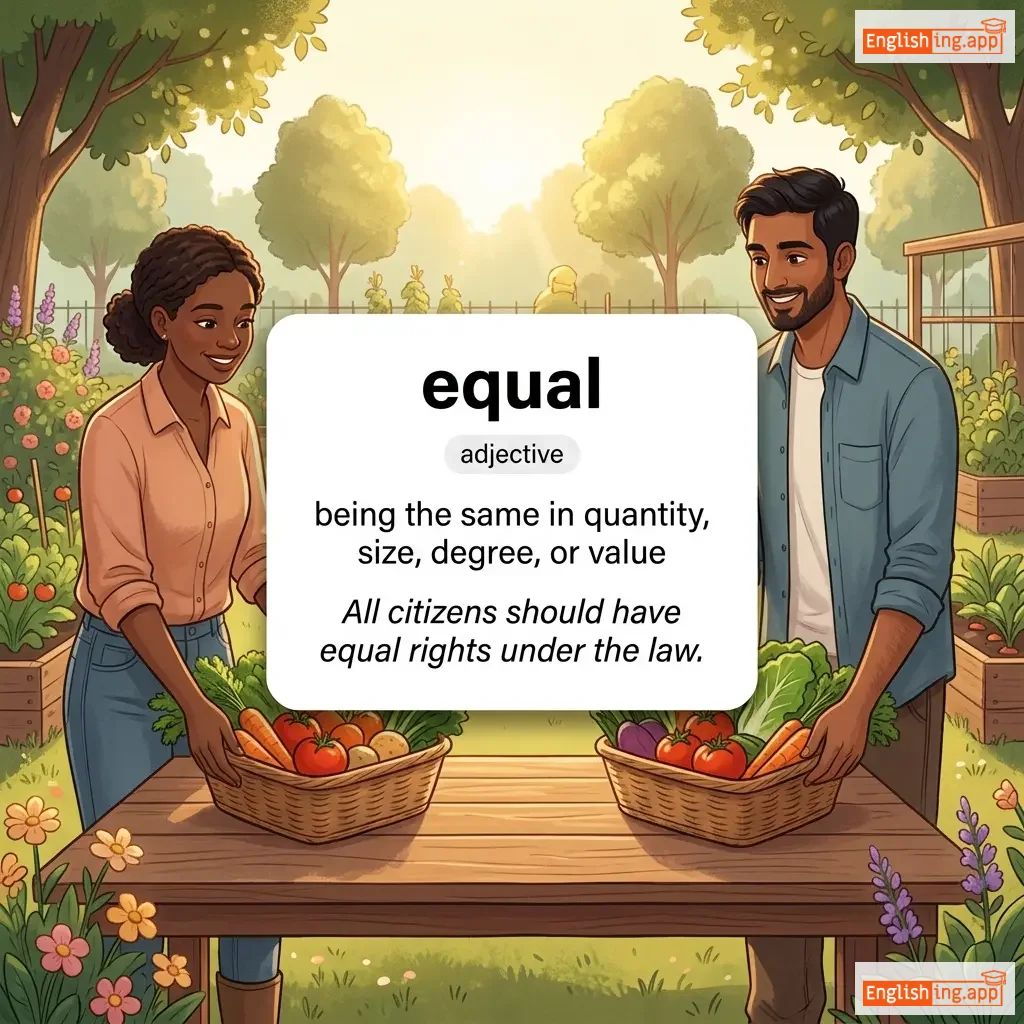
equal definition card — visual illustration of the meaning
adjective
/ˈiːkwəl/
равный (ravnyy)

being the same in quantity, size, degree, or value

"All citizens should have equal rights under the law."

"Все граждане должны иметь равные права согласно закону." (Vse grazhdane dolzhny imet' ravnye prava soglasno zakonu.)
equality definition card — visual illustration of the meaning
noun
/ɪˈkwɒləti/
равенство (ravenstvo)

the state of being equal, especially in rights, status, and opportunities

"The organization works to promote gender equality in the workplace."

"Организация работает над продвижением гендерного равенства на рабочем месте." (Organizatsiya rabotayet nad prodvizheniyem gendernogo ravenstva na rabochem meste.)
verb
/ˈiːkwəlaɪz/
сравнивать (sravnyat)

To make equal or level in status, value, or amount.

"The team equalized the score in the last minute."

"Команда сравняла счет в последнюю минуту." (Komanda sravnyala schet v poslednyuyu minutu.)
adverb
/ˈiːkwəli/
одинаково (odinakovo)

in an equal or fair way; to the same degree

"The prize money was equally divided among the winners."
"Призовой фонд был одинаково разделен между победителями." (Prizovoy fond byl odinakovo razdelen mezhdu pobeditelyami.)
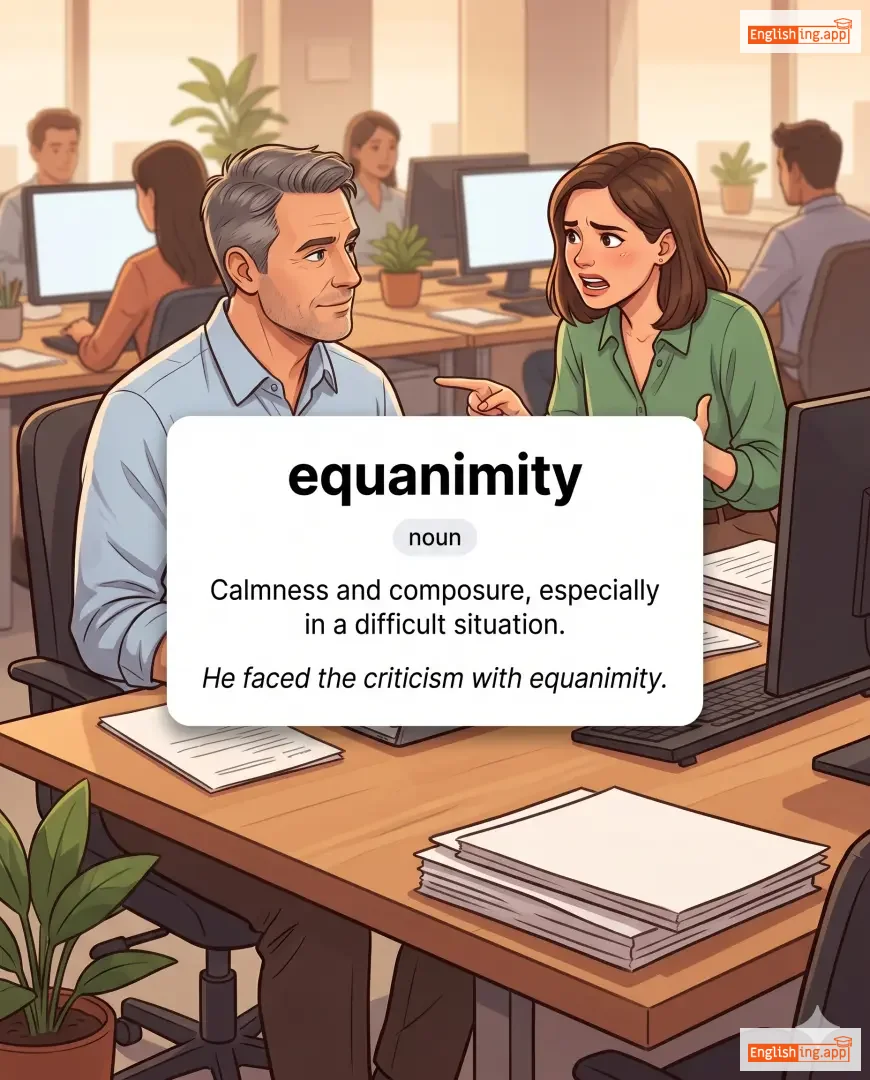
equanimity definition card — visual illustration of the meaning
noun
/ˌekwəˈnɪmɪti/
уравновешенность (uravnoveshennost)

Calmness and composure, especially in a difficult situation.

"He faced the criticism with equanimity."

"Он встретил критику с уравновешенностью." (On vstretil kritiku s uravnoveshennost'yu.)
verb
/ɪˈkweɪt/
приравнивать (priravnivat)

To consider as equal or equivalent.

"Many people equate wealth with success."

"Многие люди приравнивают богатство к успеху." (Mnogie lyudi priravnyvayut bogatstvo k uspekhu.)
noun
/ɪˈkweɪʒən/
уравнение (uravnenie)

a mathematical statement that shows the equality of two expressions

"He solved the equation to find the value of x."

"Он решил уравнение, чтобы найти значение x." (On reshil uravnenie, chtoby nayti znachenie x.)
adjective
/ɪˈkwɛstriən/
верховой (verkhovoy)

Relating to horse riding or horseback riders.

"She won several equestrian competitions."
"Она выиграла несколько верховых соревнований." (Ona vyigrala neskol'ko verkhovykh sorevnovaniy.)
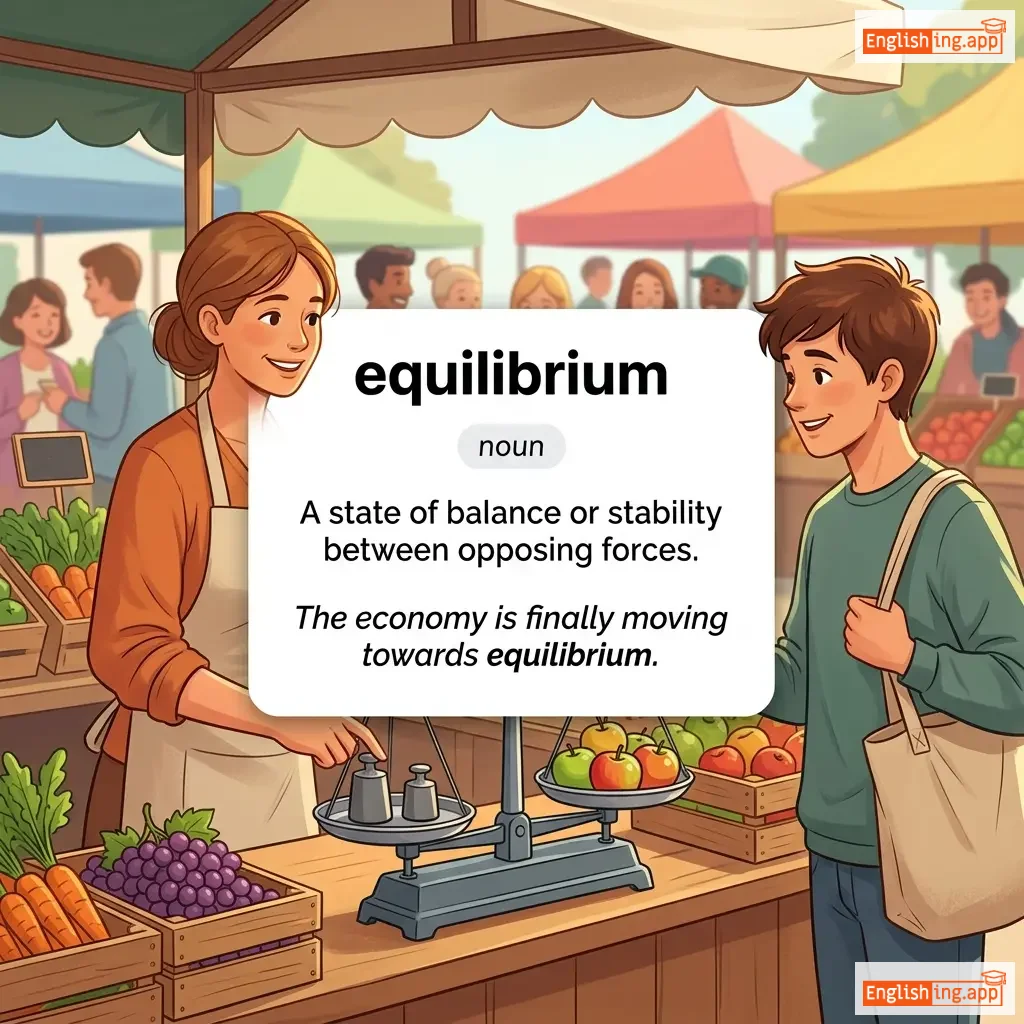
equilibrium definition card — visual illustration of the meaning
noun
/ˌiːkwɪˈlɪbriəm/
равновесие (ravnovesie)

A state of balance or stability between opposing forces.

"The economy is finally moving towards equilibrium."

"Экономика, наконец, движется к равновесию." (Ekonomika, nakonec, dvizhutsya k ravnovesiyu.)
adjective
/ˈiːkwaɪn/
связанный с лошадьми (svyazannyy s loshadyami)

Relating to or resembling a horse.

"The veterinarian specialized in equine medicine."

"Ветеринар специализировался на конной медицине." (Veterinar spetsializirovalsya na konnoy meditsine.)
noun
/ˈiːkwɪnɒks/
равенство дня и ночи (ravenstvo dnya i nochi)

The time or date when day and night are of equal length, occurring twice a year.

"The spring equinox marks the beginning of longer days."

"Весеннее равноденствие знаменует начало более длинных дней." (Vesenneye ravnodenstvie znamenuyet nachalo boleye dlinnykh dney.)
verb
/ɪˈkwɪp/
оснащать (osnaschat)

to provide someone or something with the necessary items or skills for a task

"The school equipped its students with modern technology."

"Школа оснастила своих студентов современными технологиями." (Shkola osnastila svoikh studentov sovremennymi tekhnologiyami.)
noun
/ˈɛkwɪpɪdʒ/
Оборудование или карета с аксессуарами (oborudovanie ili kareta s aksessuarami)

Equipment or a carriage with its accessories.

"The nobleman arrived in a grand equipage."

"Дворянин приехал на великолепной карете." (Dvoryanin priekhal na velikolepnoy karete.)
noun
/ɪˈkwɪpmənt/
оборудование (oborudovanie)

the necessary tools, machines, or other items needed for a particular purpose

"The laboratory bought new equipment for research."

"Лаборатория купила новое оборудование для исследований." (Laboratoriya kupila novoye oborudovaniye dlya issledovaniy.)
noun
/ˈɛkwɪpɔɪz/
равновесие (ravnovesie)

A state of balance or equilibrium.

"Her calmness created an equipoise in the heated debate."
"Её спокойствие создало равновесие в горячей дискуссии." (Eyo spokoystvie sozdalo ravnovesie v goryachey diskusii.)
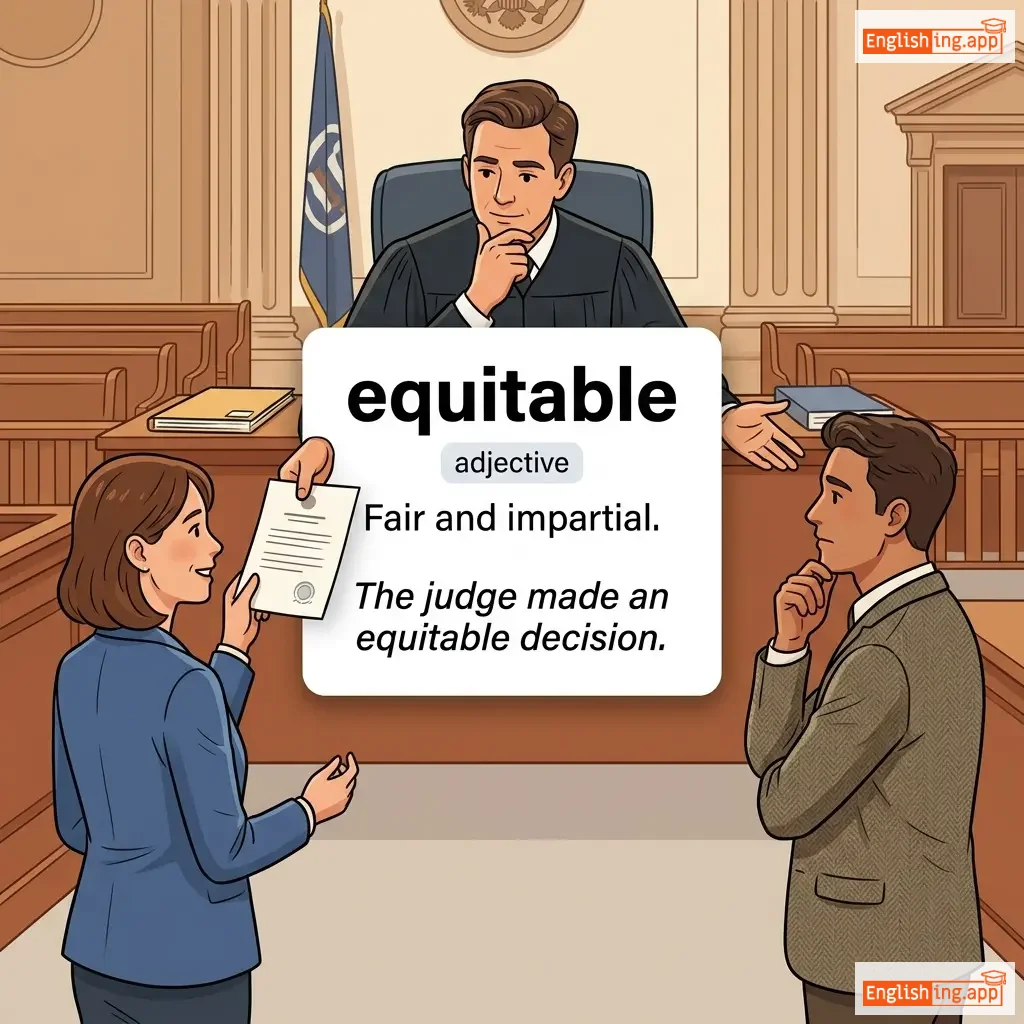
equitable definition card — visual illustration of the meaning
adjective
/ˈɛkwɪtəbl/
справедливый (spravedlivyy)

Fair and impartial.

"The judge made an equitable decision."

"Судья принял справедливое решение." (Sudiya prinyal spravedlivoe reshenie.)
equity definition card — visual illustration of the meaning
noun
/ˈɛkwɪti/
справедливость; доля в собственности (spravedlivost'; dolya v sobstvennosti)

The quality of being fair and impartial; ownership interest in a company or property.

"She invested in the company to gain equity."

"Она инвестировала в компанию, чтобы получить долю в собственности." (Ona investirovala v kompaniyu, chtoby poluchit' dolyu v sobstvennosti.)