Словари

Словарь английского языка | Значения слов, определения и примеры

adjective
/ˌdɛməˈnaɪəkəl/
демонический (demonicheskiy)

characteristic of or resembling a demon; wildly evil

"He gave a demoniacal laugh that terrified everyone."

"Он издал демонический смех, который напугал всех." (On izdal demonicheskiy smekh, kotoryy napugal vsekh.)
adjective
/dɪˈmɒnstrəbl/
доказуемый (dokazuyemyy)

clearly able to be shown or proven

"There was demonstrable evidence that he was innocent."

"Были доказательства, которые можно было продемонстрировать, что он был невиновен." (Byli dokazatel'stva, kotorye mozhno bylo prodemonstrirovat', chto on byl nevinoven.)
verb
/ˈdɛmənˌstreɪt/
демонстрировать (demonstrirovat)

to clearly show or prove something through evidence, explanation, or action

"The teacher demonstrated the experiment to the class."

"Учитель продемонстрировал эксперимент классу." (Uchitel' prodemonstriroval eksperiment klassu.)
noun
/ˌdɛmənˈstreɪʃən/
демонстрация, протест (demonstratsiya, protest)

the act of showing something clearly, or a public protest

"The workers organized a demonstration for better wages."
"Рабочие организовали демонстрацию за повышение зарплаты." (Rabochiye organizovali demonstratsiyu za povysheniye zarplaty.)
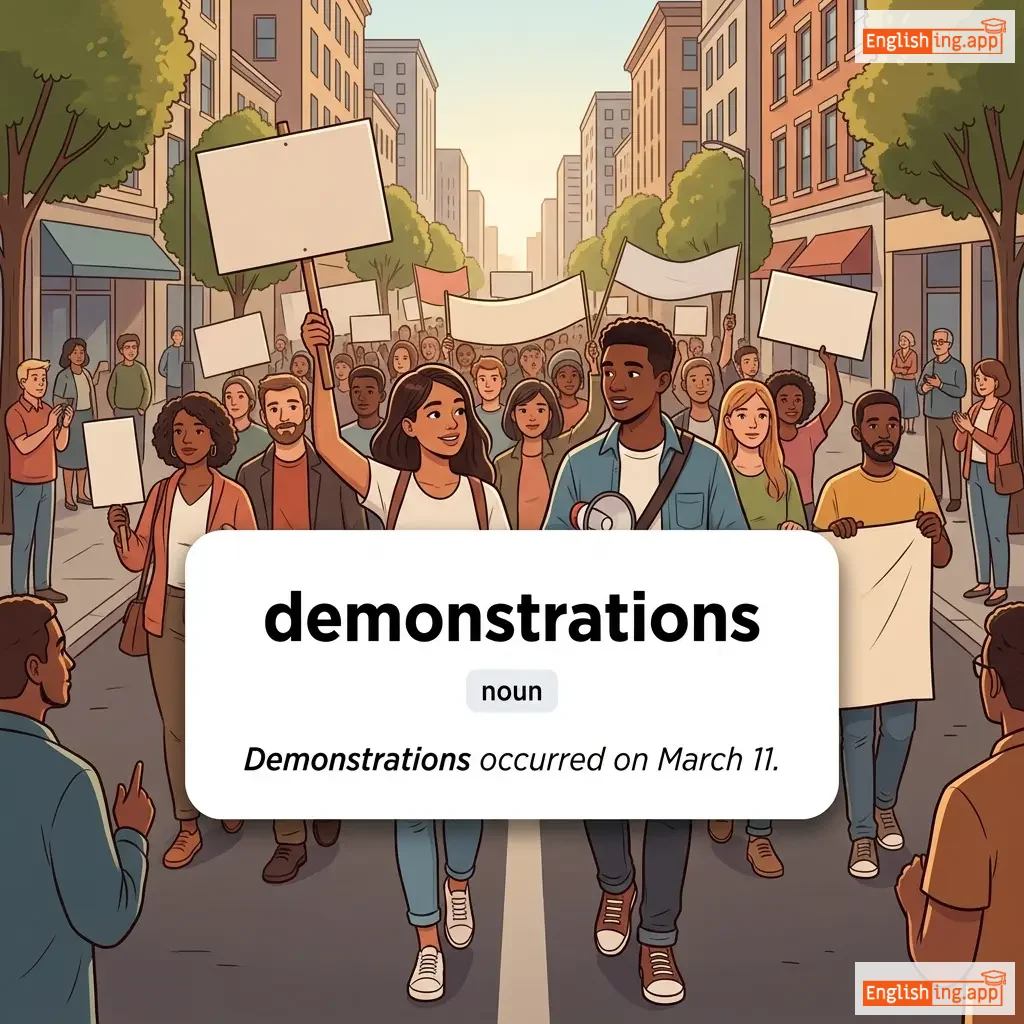
demonstrations definition card — visual illustration of the meaning
noun
ˌdemənˈstreɪʃənz
демонстрации (demonstratsii)

The action or process of showing the existence or truth of something by giving proof or evidence.

"Demonstrations occurred on March 11."

"Демонстрации произошли 11 марта." (Demonstratsii proizooshli 11 marta.)
adjective
/dɪˈmɒnstrətɪv/
выразительный (vyrazitel'nyy)

openly showing feelings, especially affection or emotion

"She was very demonstrative with her affection towards her friends."

"Она была очень выразительной в своих чувствах к своим друзьям." (Ona byla ochen' vyrazitel'noy v svoikh chuvstvakh k svoim druz'yam.)
noun
/ˈdɛmənˌstreɪtər/
демонстратор, протестующий (demonstrator, protestuyushchiy)

a person who shows how something works or takes part in a public protest

"The demonstrators marched peacefully through the city streets."

"Демонстранты мирно шли по улицам города." (Demonstranty mirno shli po ulitsam goroda.)
verb
/dɪˈmɔrəˌlaɪz/

to cause someone to lose confidence or hope

"The constant criticism demoralized the young athlete."

verb
/dɪˈmoʊt/
понижать (ponizhat)

to reduce to a lower rank or position

"The manager decided to demote the employee for poor performance."
"Менеджер решил понизить сотрудника за плохую работу." (Menedzher reshil ponizhit sotrudnika za plokhuyu rabotu.)
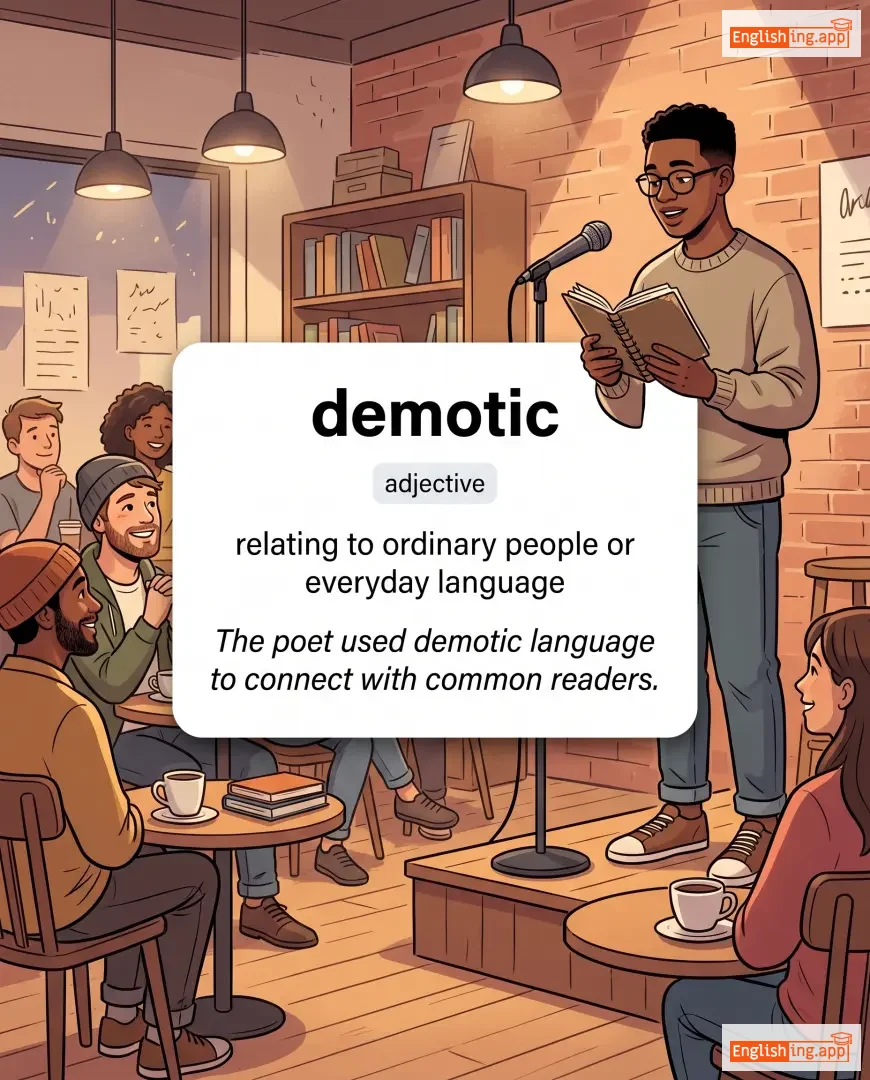
demotic definition card — visual illustration of the meaning
adjective
/dɪˈmɒtɪk/
относящийся к народному языку (otnosyashchijsya k narodnomu yazyku)

relating to ordinary people or everyday language

"The poet used demotic language to connect with common readers."
"Поэт использовал язык, относящийся к народному, чтобы соединиться с обычными читателями." (Poet ispol'zoval yazyk, otnosyashchijsya k narodnomu, chtoby soedinit'sya s obychnymi chitatel'yami.)
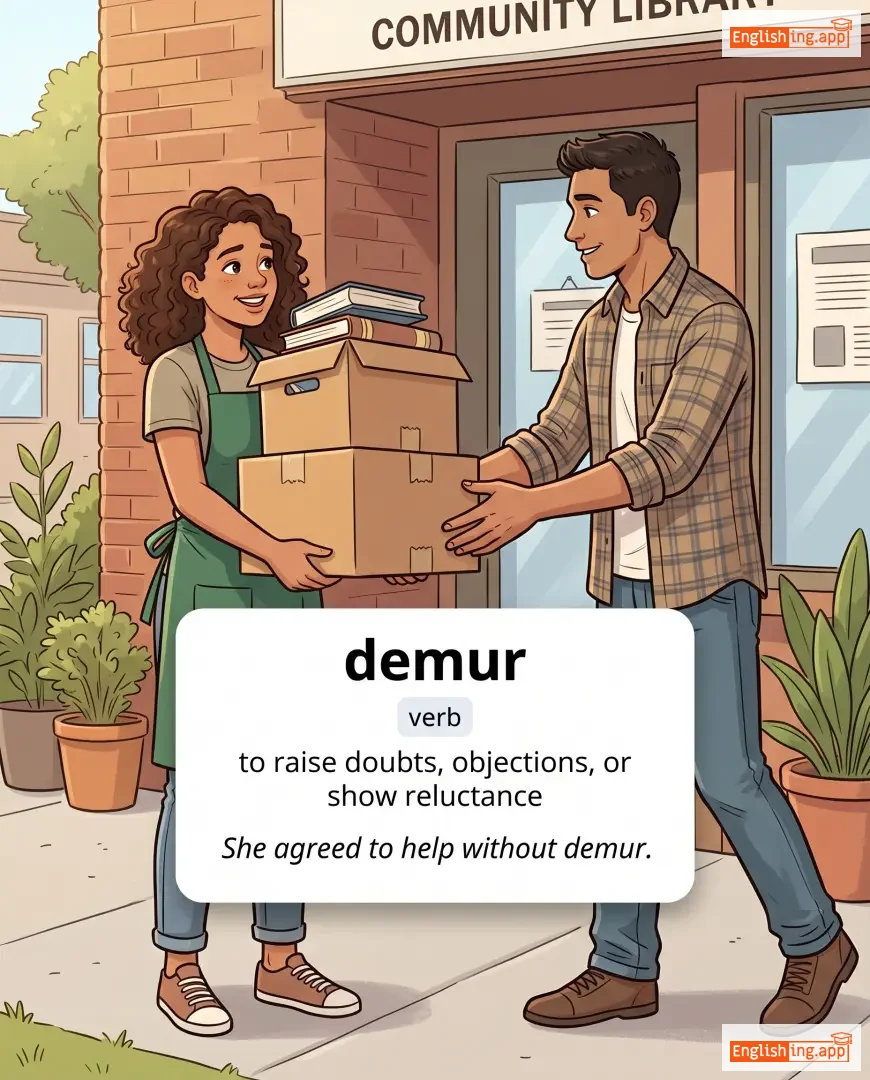
demur definition card — visual illustration of the meaning
verb
/dɪˈmɜːr/
возражать (vozrazhat)

to raise doubts, objections, or show reluctance

"She agreed to help without demur."

"Она согласилась помочь без возражений." (Ona soglasilas' pomoch' bez vozrazheniy.)
adjective
/dɪˈmjʊər/
скромный (skromnyy)

reserved, modest, and shy

"She gave him a demure smile."

"Она подарила ему скромную улыбку." (Ona podarila yemu skromnuyu ulybku.)
noun
/dɪˈmʌrɪdʒ/
демередж (demeredzh)

a charge payable to the owner of a ship or vehicle for not loading or unloading on time

"The company had to pay demurrage for delaying the unloading of goods."

"Компания должна была заплатить демередж за задержку разгрузки товаров." (Kompaniya dolzhna byla zaplatit' demeredzh za zaderzhku razgruzki tovarov.)
noun
/den/
берлога, логово (berloga, logovo)

a wild animal's lair or home; a small room used for relaxation

"The bear returned to its den for winter hibernation."

"Медведь вернулся в свою берлогу для зимней спячки." (Medved' vernulsya v svoyu berlogu dlya zimney spyachki.)
verb
/diːˈnæʃənəlaɪz/
денатурализовать (denaturalizovat)

to transfer ownership from the government to private individuals or companies

"The government decided to denationalize the bank to encourage private investment."

"Правительство решило денатурализовать банк, чтобы стимулировать частные инвестиции." (Pravitel'stvo reshilo denaturalizovat' bank, chtoby stimulirovat' chastnye investitsii.)
adjective
/ˈdɛndrɔɪd/
деревоподобный (derevopodobnyy)

tree-shaped or branching like a tree

"The coral has a dendroid structure."

"Коралл имеет структуру дендроид." (Korall imeyet strukturu dendroid.)
noun
/dɛnˈdrɒlədʒi/

the scientific study of trees and woody plants

"He is studying dendrology at the university."

noun
/dɪˈnaɪəl/
отрицание (otritsanie)

a statement that something is not true; the refusal to accept or believe something

"His denial of the accusations surprised everyone."
"Его отрицание обвинений удивило всех." (ego otnitsanie obvineniy udivilo vsekh.)
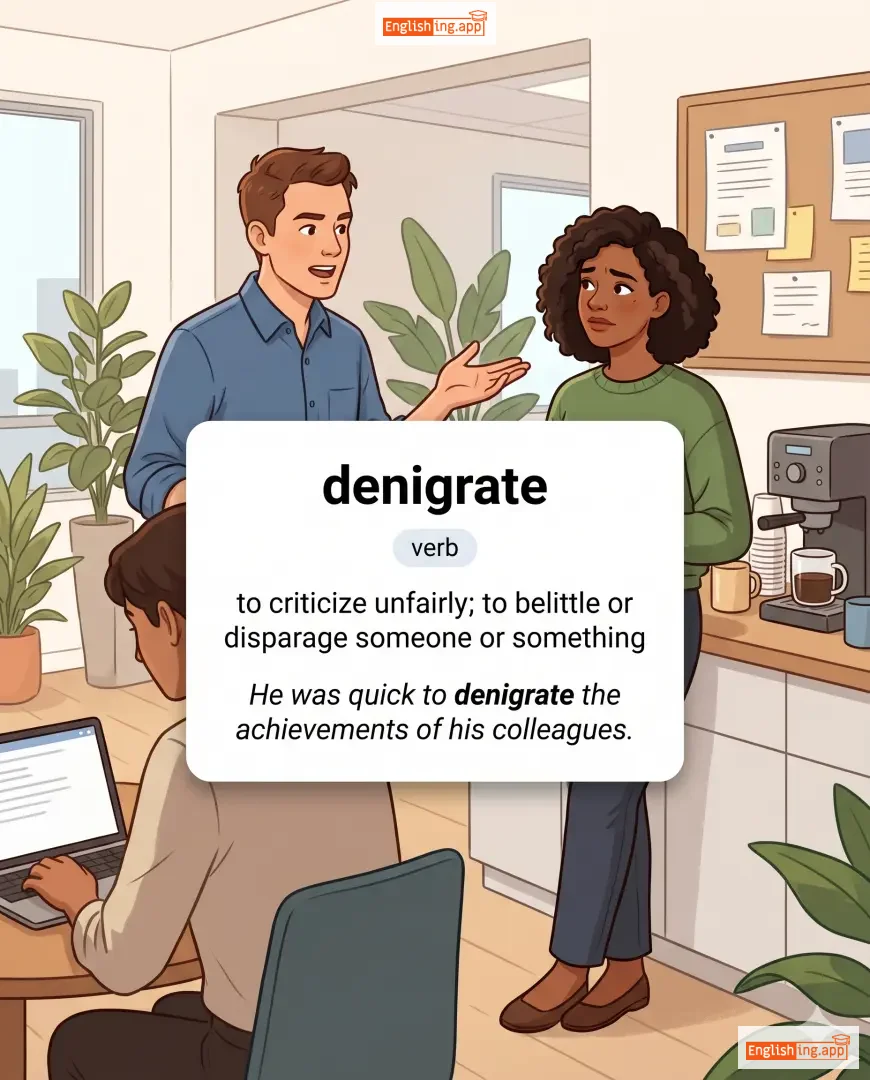
denigrate definition card — visual illustration of the meaning
verb
/ˈdɛnɪˌɡreɪt/
унижать (unizhat)

to criticize unfairly; to belittle or disparage someone or something

"He was quick to denigrate the achievements of his colleagues."

"Он быстро стал унижать достижения своих коллег." (On bystro stal unizhat' dostizheniya svoikh kolleg.)
noun
/ˈdɛnɪmz/
джинсы из денима (dzhinsy iz denima)

pants or clothes made from denim fabric, usually jeans

"He wore blue denims with a white shirt."
"Он носил синие джинсы с белой рубашкой." (On nosil sinie dzhinsy s bieloi rubashkoi.)
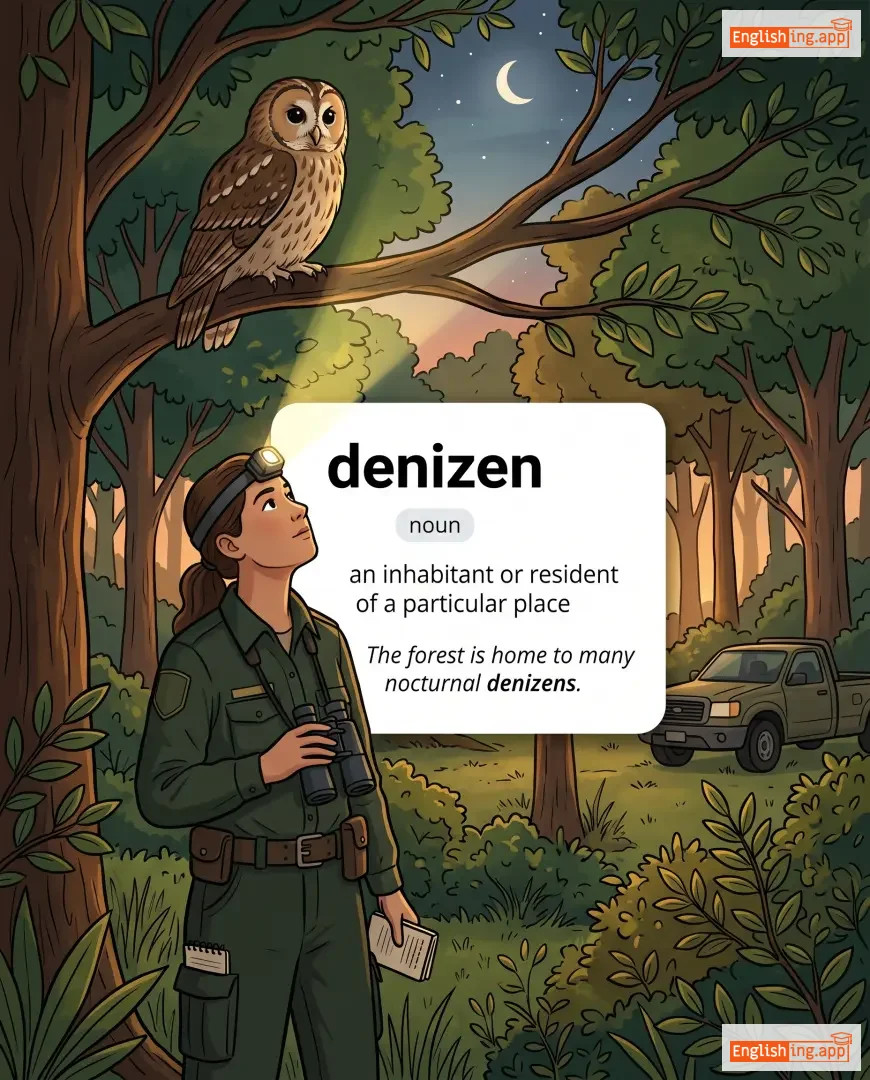
denizen definition card — visual illustration of the meaning
noun
/ˈdɛnɪzən/
житель (zhitel)

an inhabitant or resident of a particular place

"The forest is home to many nocturnal denizens."

"Лес является домом для многих ночных жителей." (Les yavylyaetsya domom dlya mnogikh nochnykh zhiteley.)
verb
/dɪˈnɒmɪˌneɪt/
деноминировать (denominirovat)

to give a name or designation to something

"The currency was denominated in dollars."

"Валюта была деноминирована в долларах." (Valyuta byla denominirovana v dollarakh.)
noun
/dɪˌnɒmɪˈneɪʃən/
деноминация, стоимость (denominasia, stoimost)

a recognized autonomous branch of the Christian Church; a unit of value or currency

"The church belongs to a Protestant denomination."

"Церковь принадлежит протестантской деноминации." (Tserkov' prinadlezhit protestantskoy denominatsii.)
noun
/dɪˈnɒmɪˌneɪtər/
знаменатель (znamenatel)

the number below the line in a fraction; a common factor in a situation

"In the fraction 3/4, the number 4 is the denominator."

"В дроби 3/4 число 4 - знаменатель." (V drobi 3/4 chislo 4 - znamenatel.)
noun
/ˌdiːnəʊˈteɪʃən/
денотация (denotatsiya)

The literal or primary meaning of a word, in contrast to the feelings or ideas that the word suggests.

"The denotation of the word 'rose' is a type of flower."

"Денотация слова 'роза' - это вид цветка." (Denotatsiya slova 'roza' - eto vid tsvetka.)
verb
/dɪˈnəʊt/
означать (oznachat)

To be a sign of; to indicate or mean something.

"A red flag denotes danger."
"Красный флаг означает опасность." (Krasnyy flag oznachaet opasnost'.)
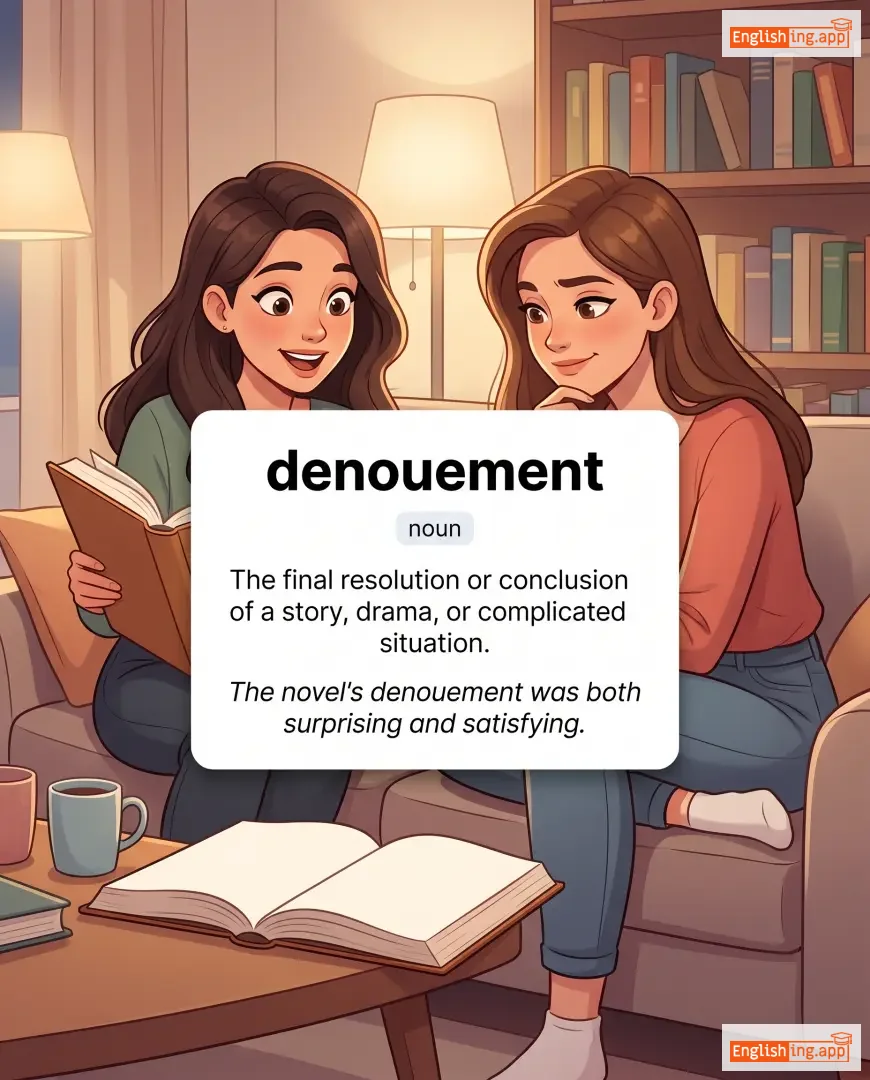
denouement definition card — visual illustration of the meaning
noun
/ˌdeɪnuːˈmɒ̃/
развязка (razvyazka)

The final resolution or conclusion of a story, drama, or complicated situation.

"The novel's denouement was both surprising and satisfying."

"Развязка романа была как удивительной, так и удовлетворительной." (Razvyazka romana byla kak udivitel'noy, tak i udovletvoritel'noy.)
verb
/dɪˈnaʊns/
осуждать (osuzhdat)

To publicly declare something to be wrong, evil, or condemn strongly.

"The leader denounced corruption in his speech."

"Лидер осудил коррупцию в своей речи." (Lider osudil korruptsiyu v svoey rechi.)
adjective
/dɛns/
плотный (plotny)

Closely compacted in substance; having parts crowded together.

"The forest was so dense that little sunlight reached the ground."
"Лес был таким плотным, что мало солнечного света достигало земли." (Les byl takim plotnym, chto malo solnechnogo sveta doshchalo zemli.)
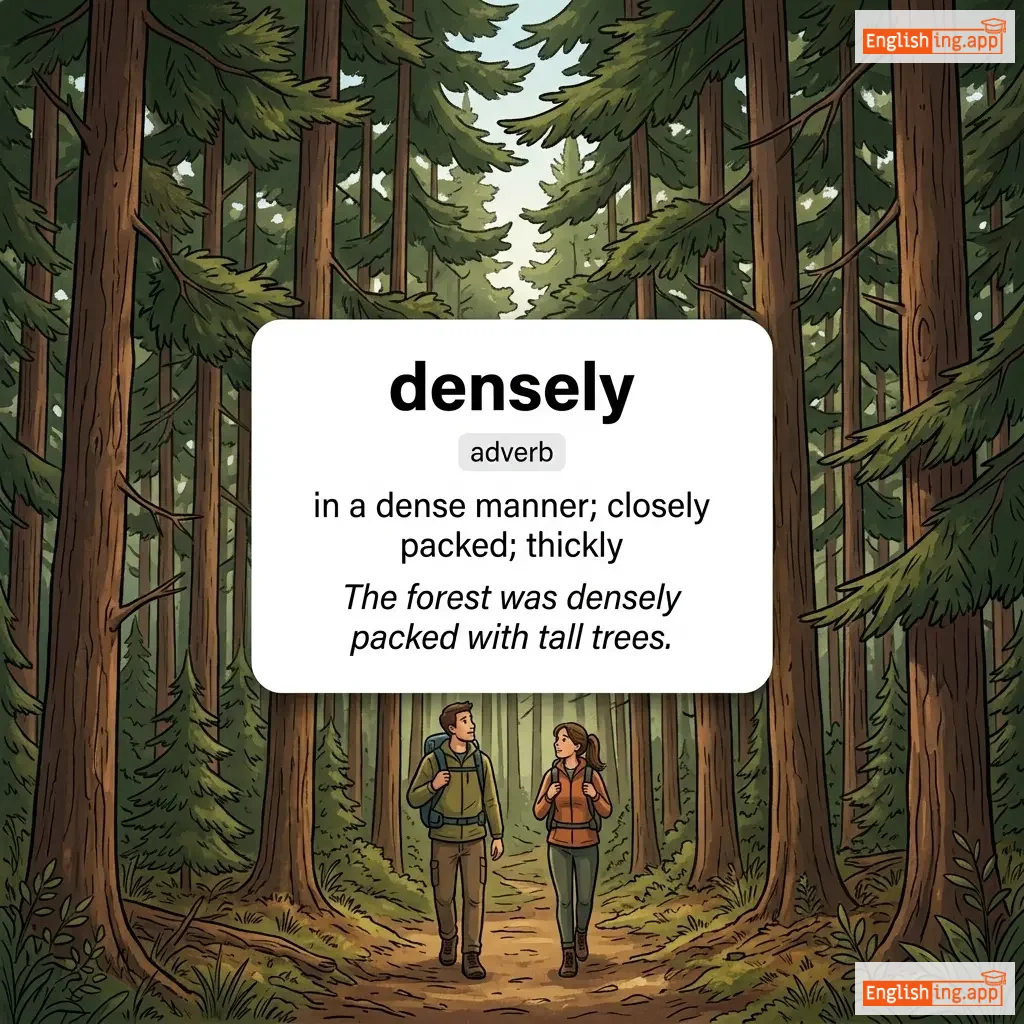
densely definition card — visual illustration of the meaning
adverb
/ˈdens.li/
плотно; в плотной манере; густо (plotno; v plotnoy manere; gusto)

in a dense manner; closely packed; thickly

"The forest was densely packed with tall trees."

"Лес был плотно заполнен высокими деревьями." (Les byl plotno zapolnen vysokimi derevyami)
noun
/ˈdɛnsɪti/
плотность (plotnost)

the degree of compactness or thickness of a substance or object

"The density of water is higher than that of air."

"Плотность воды выше, чем плотность воздуха." (Plotnost' vody vyshe, chem plotnost' vozdukha.)
noun/verb
/dɛnt/
вмятина (vmyatina)

a small hollow mark on the surface of something; to make a small hollow mark

"The accident left a dent in the car door."

"Авария оставила вмятину на двери машины." (Avariya ostavila vmyatinu na dveri mashiny.)
adjective
/ˈdɛntəl/
стоматологический (stomatologicheskiy)

relating to teeth or dentistry

"She goes for a dental checkup every six months."

"Она проходит стоматологический осмотр каждые шесть месяцев." (ona prokhodit stomatologicheskiy osmotr kazhdye shest mesyatsev)
noun
/ˈdɛntɪfrɪs/
зубная паста (zubnaya pasta)

a substance such as powder, paste, or liquid used to clean teeth

"He bought a new herbal dentifrice from the pharmacy."

"Он купил новый травяной зубной порошок в аптеке." (On kupil novyy travyanyy zubnoy poroshok v apteke.)
noun
/ˈden.tɪst/
стоматолог (stomatolog)

a medical professional who treats teeth and oral health

"I need to visit the dentist for a regular checkup."

"Мне нужно посетить стоматолога для регулярного осмотра." (Mne nuzhno posetit' stomatologa dlya regulyarnogo osmotra)
verb
/dɪˈnjuːd/
обнажать (obnazhat)

to strip something of its covering, possessions, or assets

"The forest was denuded of trees by illegal logging."

"Лес был лишён деревьев из-за незаконной вырубки." (Les byl lishyon derev'yev iz-za nelegal'noy vyrubki.)
noun
/dɪˌnʌnsiˈeɪʃən/
денунциация / публичное обвинение (denunciatsiya / publichnoe obvinenie)

the public condemnation or accusation of someone or something

"The journalist's article was a strong denunciation of corruption."

"Статья журналиста была сильной денунциацией коррупции." (Statya zhurnalista byla sil'noy denunciatsiyey korruptsii.)
verb
/dɪˈnaɪ/
отрицать (otritsatsya)

to refuse to accept or admit something; to declare something untrue

"He denied stealing the money."

"Он отрицал кражу денег." (On otritsal krazhu deneg.)
noun
/diˈoʊ.dər.ənt/
дезодорант (deodorant)

a substance that removes or conceals unpleasant smells, especially bodily odors

"She applied deodorant before going to the gym to stay fresh during workout."

"Она нанесла дезодорант перед тем, как пойти в спортзал, чтобы оставаться свежей во время тренировки." (Ona nanyesla dezodorant pered tem, kak poyti v sportzal, chtoby ostavat'sya svezhoy vo vremya trenirovki.)
verb
/dɪˈpɑːrt/
отправляться (depart)

to leave, especially to start a journey

"The train will depart at 9 a.m."

"Поезд отправится в 9 утра." (Poezd otpravitsya v nine utro)
noun
/dɪˈpɑːrtmənt/
отдел (otdel)

a division of a large organization such as a government, university, or company

"She works in the marketing department."

"Она работает в отделе маркетинга." (Ona rabotayet v otdele marketinga.)
noun
/dɪˈpɑːrtʃər/
отправление, уход (otpravljeniye, ukhod)

the act of leaving a place, especially to start a journey

"The plane’s departure was delayed due to fog."
"Отправление самолета было задержано из-за тумана." (Otpravleniye samolyota bylo zaderzhano iz-za tumana.)
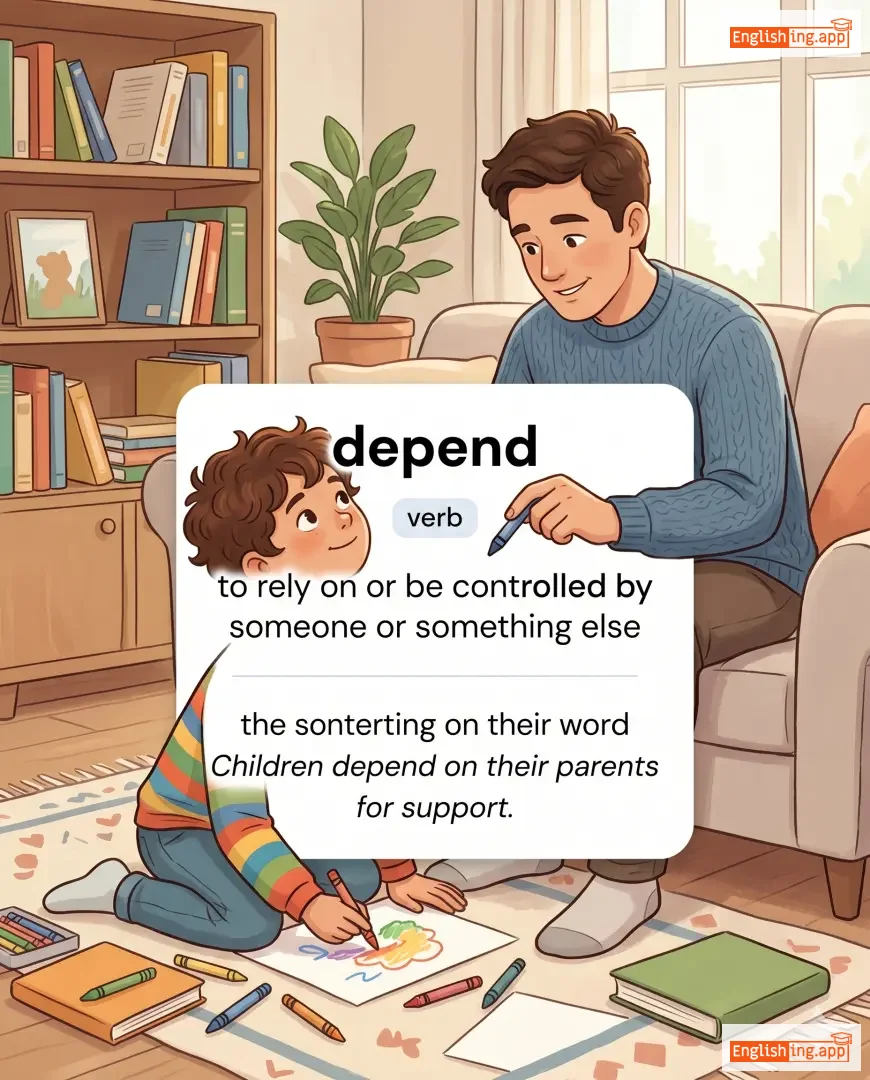
depend definition card — visual illustration of the meaning
verb
/dɪˈpɛnd/
зависеть (zavisit')

to rely on or be controlled by someone or something else

"Children depend on their parents for support."

"Дети зависят от своих родителей для поддержки." (Deti zavisyat ot svoikh roditeley dlya podderzhki.)
adjective
/dɪˈpɛndəbl/
надёжный (nadozhnyy)

able to be trusted or relied on; consistently reliable

"She is a dependable colleague who always meets deadlines."

"Она надёжный коллега, которая всегда соблюдает сроки." (ona nadozhnaya kollega kotoraya vsegda soblyudaet sroki)
noun
/dɪˈpɛndəns/
зависимость (zavisimost)

the state of relying on or needing someone or something

"His dependence on his parents was growing as he couldn't find a job."

"Его зависимость от родителей росла, так как он не мог найти работу." (Ego zavisimost' ot roditeley rosla, tak kak on ne mog nayti rabotu.)
adjective
/dɪˈpɛndənt/
зависимый (zavisimyy)

Relying on someone or something else for support or help.

"Children are dependent on their parents for care."

"Дети зависят от своих родителей в уходе." (Deti zavisyat ot svoikh roditeley v ukhode.)
verb
/dɪˈpɛndɪŋ/
зависеть (zaviset')

Being contingent on or influenced by something.

"The success of the plan is depending on the team's effort."

"Успех плана зависит от усилий команды." (Uspekh plana zavisit ot usiliy komandy.)
verb
/dɪˈpɪkt/
изображать (dipikt)

to represent or show something in a picture, story, or other art form

"The painting depicts a beautiful sunset over the sea."

"Картина изображает красивый закат над морем." (Kartina izobrazhaet krasivyy zakat nad morem)
verb
/ˈdɛpɪleɪt/
депилировать (depilirovat)

to remove hair from the skin, especially by mechanical or chemical means

"She decided to depilate her legs before the event."

"Она решила депилировать свои ноги перед мероприятием." (Ona reshilа depilirovat' svoi nogi pered meropriyatiem.)
verb
/dɪˈpliːt/
истощить (isto shchit)

to reduce the quantity or supply of something

"The long war has depleted the country's resources."

"Долгая война истощила ресурсы страны." (Dolgaya voyina isto shchila resursy strany.)