Словари

Словарь английского языка | Значения слов, определения и примеры

dynamic definition card — visual illustration of the meaning
adjective
/daɪˈnæmɪk/
динамичный (dinamichny)

Characterized by constant change, activity, or progress; energetic and forceful.

"She is a dynamic leader who inspires her team."

"Она динамичный лидер, который вдохновляет свою команду." (Ona dinamichnyy lider, kotoryy vdokhnovlyaet svoyu komandu.)
noun
/daɪˈnæmɪks/
динамика (dinamika)

the forces or properties that stimulate growth, development, or change within a system or process

"The dynamics of the team changed after the new manager joined."

"Динамика команды изменилась после того, как новый менеджер присоединился." (Dinamika komandy izmenilas' posle togo, kak novyy menedzher prisoyedinilsya.)
noun
/ˈdaɪnəˌmoʊ/
генератор электричества; человек с большой энергией и энтузиазмом (generator elektrichestva; chelovek s bolshoy energiyey i entuziazmom)

A machine that generates electricity; a person with great energy and enthusiasm.

"She is the real dynamo behind the success of the company."

"Она настоящая динамо за успехом компании." (Ona nastoyashchaya dynamo za uspekhom kompanii.)
dynasty definition card — visual illustration of the meaning
noun
/ˈdaɪ.nə.sti/
династия (dinastiya)

a sequence of rulers from the same family or line; a powerful family or group

"The Ming dynasty ruled China for nearly three centuries."

"Династия Мин правили Китаем почти три века." (Dinastiya Min pravili Kitayem pochti tri veka.)
noun
/daɪn/
единица силы (система cgs) (edinitsa sily (sistema cgs))

A unit of force in the centimeter-gram-second (cgs) system equal to 10⁻⁵ newtons.

"The physicist measured the force in dynes."

"Физик измерил силу в дайнах." (Fizik izmeril silu v dainakh.)
prefix
/dɪs-/
приставка, означающая аномальный, плохой, сложный или дефектный (pristavka, oznachayushchaya anomal'nyy, plokhoy, slozhnyy ili defektnyy)

A prefix meaning abnormal, bad, difficult, or impaired.

"Words like 'dysfunction' and 'dyslexia' use the prefix dys- to indicate difficulty or impairment."

"Слова, такие как 'дисфункция' и 'дислексия', используют приставку дис-, чтобы указать на трудности или недостатки." (Slova, takie kak 'disfunktsiya' i 'disleksiya', ispol'zuyut pristavku dis-, chtoby ukazat' na trudnosti ili nedostatki.)
noun
/ˈdɪsənˌtɛri/
кишечная болезнь (понос с кровью и слизью) (kishechnaya bolezn (ponos s krovyu i slizyu))

An infection of the intestines resulting in severe diarrhea with blood and mucus.

"Many soldiers suffered from dysentery during the war."
"Многие солдаты страдали от дизентерии во время войны." (Mnogie soldaty stradali ot dizenterii vo vremya voiny.)
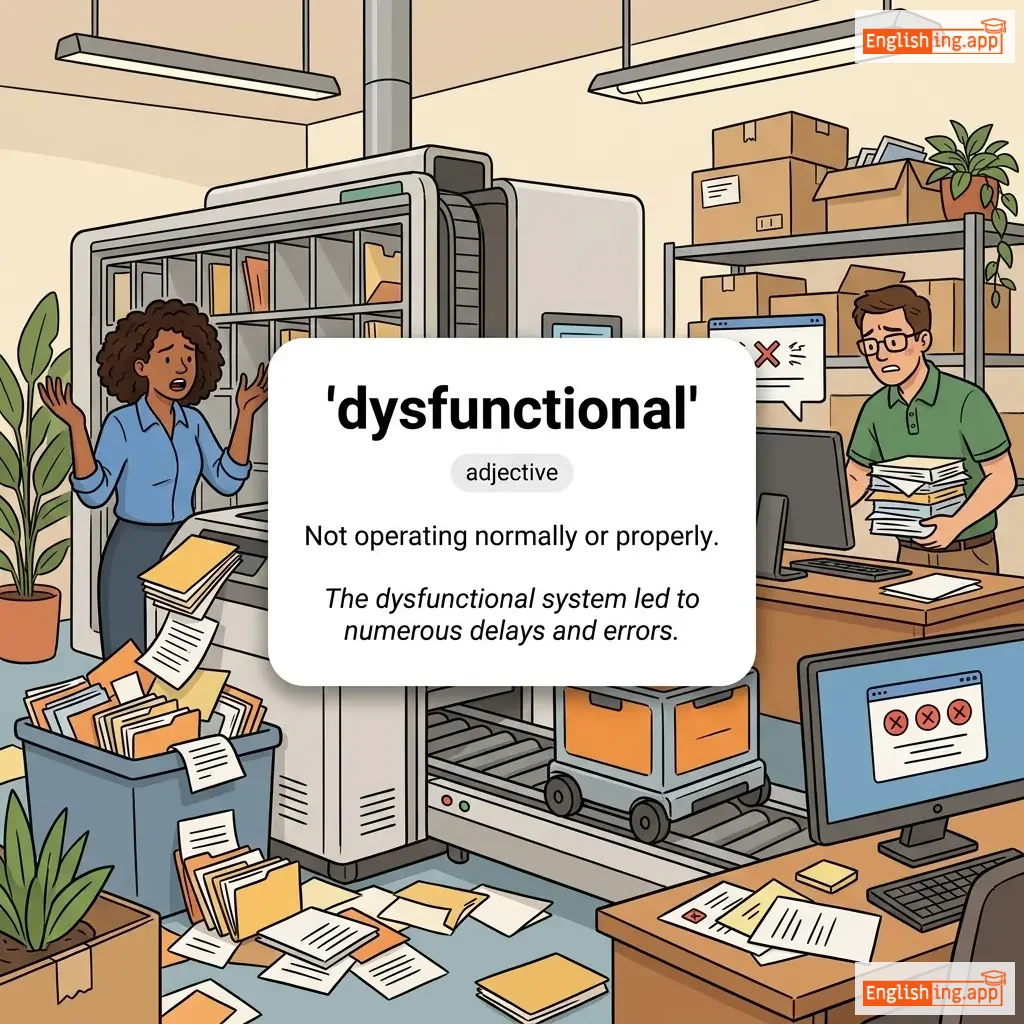
dysfunctional definition card — visual illustration of the meaning
adjective
dɪsˈfʌŋkʃənl
дисфункциональный (disfunktsionalny)

Not operating normally or properly.

"The dysfunctional system led to numerous delays and errors."

"Дисфункциональная система привела к многочисленным задержкам и ошибкам." (Disfunktsional'naya sistema privela k mnogochislennym zaderzhkam i oshibkam.)
noun
/dɪsˈlɛksiə/
дислексия (disleksiya)

A learning disorder characterized by difficulty reading due to problems identifying speech sounds and decoding words.

"The teacher used special methods to help the student with dyslexia."

"Учитель использовал специальные методы, чтобы помочь студенту с дислексией." (Uchitel ispol'zoval spetsial'nye metody, chtoby pomoch' studentu s disleksiey.)
adjective
/dɪsˈpɛptɪk/
диспепсия, раздражительный (dispepsiya, razdrazhitel'nyy)

Relating to indigestion or having a gloomy or irritable disposition.

"After the heavy meal, he felt dyspeptic and uncomfortable."

"После обильной трапезы он почувствовал себя диспептическим и некомфортным." (Posle obil'noy trapezy on pochuvstvoval sebya dispepticheskim i nekomfortnym.)