Словари

Словарь английского языка | Значения слов, определения и примеры

noun
/ˈdɔːrˌkiːpər/
привратник (privratnik)

A person whose job is to guard or manage the entrance of a building or room.

"The doorkeeper checked everyone’s passes before they entered the hall."

"Доркипер проверил пропуска всех перед тем, как они вошли в зал." (Dorkiper proveril propuska vsekh pered tem, kak oni voshli v zal)
noun
/ˈdɔː.weɪ/
дверной проем (dvernoi proem)

the space where a door opens into a room or building

"She stood in the doorway waiting for him to arrive."
"Она стояла в дверном проеме, ожидая его прихода." (Ona stoyala v dvernom proyeme, ozhidaya ego prikhoda.)
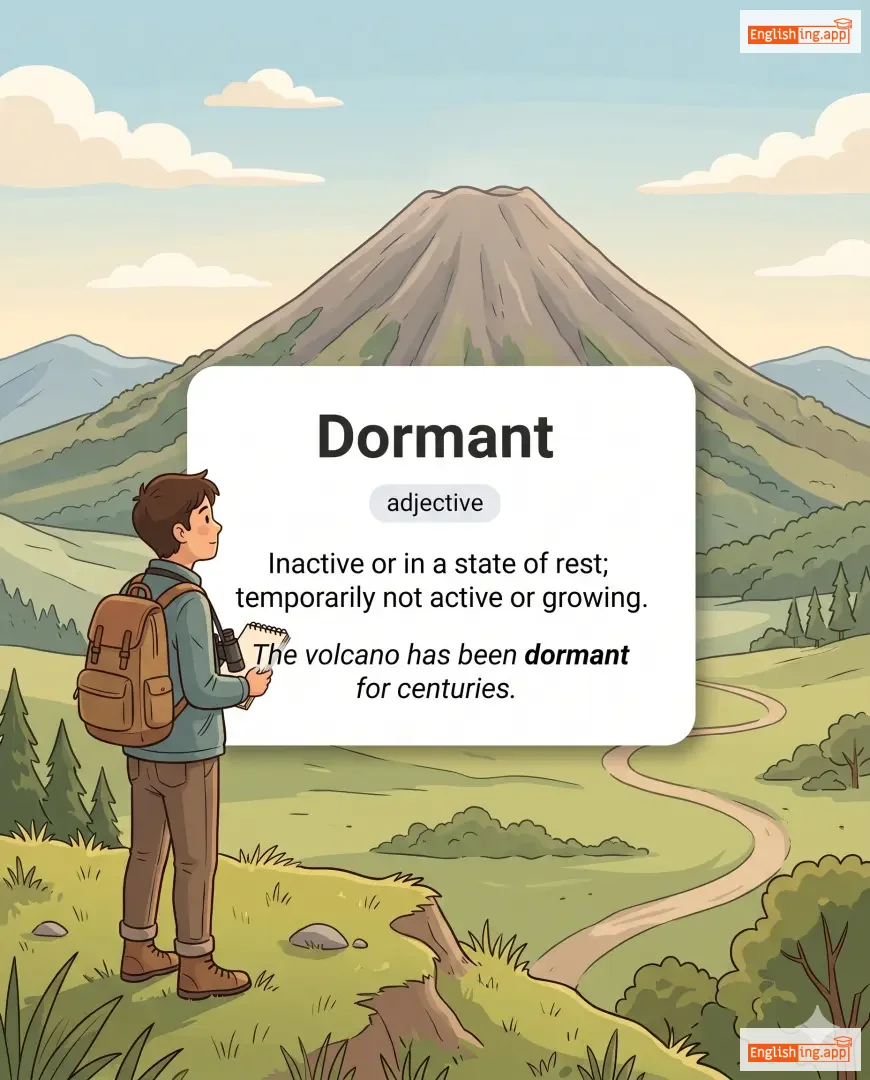
Dormant definition card — visual illustration of the meaning
adjective
/ˈdɔːrmənt/
неактивный (neaktivnyy)

Inactive or in a state of rest; temporarily not active or growing.

"The volcano has been dormant for centuries."

"Вулкан был неактивен на протяжении веков." (Vulkan byl neaktivyen na protyazhenii vekov.)
noun
/ˈdɔːrmər/
мансардное окно (mansardnoe okno)

A window that projects vertically from a sloping roof.

"The old house had a dormer overlooking the garden."

"Старый дом имел мансардное окно, выходящее в сад." (Staryi dom imel mansardnoe okno, vykhodyashchee v sad.)
adjective
/ˈdɔːrsəl/
дорсальный (dorsal'nyy)

Relating to the back or upper side of an animal or body part.

"Sharks have a prominent dorsal fin."

"У акул есть выдающийся дорсальный плавник." (U akul yest' vydaiushchiesia dorsal'nyi plavnik.)
noun
/doʊs/
доза (doza)

a measured amount of a medicine or drug taken at one time

"The doctor prescribed one dose of the medicine every six hours."

"Врач прописал одну дозу лекарства каждые шесть часов." (Vrach propisal odnu dozu lekarstva kazhdye shest' chasov.)
noun
/ˈdɑːsieɪ/
досье (dos'ye)

A collection of documents about a particular person, event, or subject.

"The lawyer presented a dossier of evidence to the court."

"Адвокат представил суду досье с доказательствами." (Advokat predstavil sudu dos'ye s dokazatel'stvami.)
noun
/dɒt/
точка (tochka)

a small round mark or spot

"She drew a red dot on the paper."

"Она нарисовала красную точку на бумаге." (Ona narisovala krasnuyu tochku na bumage.)
noun
/ˈdoʊtɪdʒ/
старость (starost)

The period of old age, especially when one is weak or senile.

"He spent his dotage reminiscing about his youth."

"Он провел свою старость, вспоминая свою молодость." (On provel svoyu starost, vspominaya svoyu molodost.)
verb
/doʊt/
баловать (balovat)

to show excessive love or fondness for someone or something

"She tends to dote on her grandchildren."

"Она склонна чрезмерно баловать своих внуков." (Ona sklonna chrezmerno balovat svoikh vnukov.)
verb
/ˈdʌbəl/
удваивать (udvaivat)

to make twice as much in size, number, or amount

"The company hopes to double its profits this year."

"Компания надеется удвоить свою прибыль в этом году." (Kompaniya nadeyetsya udvoit' svoyu pribyl' v etom godu.)
noun
/ˈdʌbəl ˈdekər/
двухэтажный автобус (dvukh-etazhnyy avtobus)

a bus with two levels or floors for passengers

"The red double decker bus is a famous symbol of London."

"Красный двухэтажный автобус — знаменитый символ Лондона." (Krasnyy dvukh-etazhnyy avtobus — znamenityy simvol Londona.)
noun
/ˈdʌblɪt/
даблет / обтягивающий жакет (doublet / obtyagivayushchiy zhaket)

a close-fitting jacket worn by men in the Renaissance; also, a pair of similar things

"The actor wore a velvet doublet for the Shakespearean play."

"Актёр надел бархатный даблет для шекспировского спектакля." (Aktor nadel barkhatnyy doublet dlya shekspirovskogo spektaklya.)
adverb
/ˈdʌbli/
вдвое (vdvoje)

in a twofold manner; to twice the degree

"She felt doubly fortunate after winning the prize and getting a promotion."

"Она почувствовала себя вдвое удачливее после того, как выиграла приз и получила повышение." (Ona pochuvstvovala sebya vdvoe udachliveye posle togo, kak vyigrala priz i poluchila povysheniye.)
Doubt definition card — visual illustration of the meaning
noun/verb
/daʊt/
сомнение (somnenie)

a feeling of uncertainty or lack of conviction; to be uncertain about something

"She had doubts about the success of the plan."

"Она сомневалась в успехе плана." (Ona somnevalas' v uspekhe plana.)
adjective
/ˈdaʊt.fəl/
сомнительный; неопределенный; чувствовать неуверенность по поводу чего-либо (somnitel'nyy; neopredelennyy; chuvstvovat' neuverennost' po povodu chego-libo)

uncertain; questionable; feeling uncertain about something

"I am doubtful about the success of this project."

"Я сомневаюсь в успехе этого проекта." (Ya somnevayus' v uspekhe etogo proyektu.)
noun
/doʊ/
тесто (testo)

a mixture of flour, water, and other ingredients used to make bread or pastries

"She kneaded the dough for ten minutes before baking."

"Она месила тесто десять минут, прежде чем его испечь." (Ona mesila testo desyat' minut, prezhde chem ego ispech'.)
adjective
/ˈdaʊti/
храбрый (khrabryy)

brave, valiant, courageous

"The doughty soldier never backed down from a challenge."

"Храбрый солдат никогда не отступал перед вызовом." (Khrabryy soldat nikogda ne otstupal pered vyzovom.)
adjective
/ˈdaʊ.ər/
суровый (surovyy)

relentlessly severe, stern, or gloomy in manner or appearance

"His dour expression made the meeting uncomfortable."

"Его суровое выражение сделало встречу неловкой." (Ego surovoe vyrazhenie sdelalo vstrechu nelovkoy.)
verb
/daʊs/
потушить / полить (potushit / polit)

to pour liquid over; to extinguish a fire or light

"Firefighters doused the flames with water."

"Пожарные потушили пламя водой." (Pozharnye potushili plamya vodoy.)
noun
/dʌv/
голубь (golu-by)

a small, gentle bird with soft cooing sounds, often white and symbolizing peace

"The white dove flew peacefully across the blue sky."

"Белый голубь мирно летел по голубому небу." (belyy golub' mirno letel po golubomu nebu)
verb
/ˈdʌv.teɪl/
совпадать идеально (sovpadat' ideal'no)

to fit or combine perfectly together

"Her plans dovetail perfectly with our goals."

"Ее планы идеально совпадают с нашими целями." (Eyo plany ideal'no sovpadayut s nashimi tsel'yami.)
adjective
/ˈdaʊ.di/
старомодный / неопрятный (staromodny / neopryatny)

unfashionable, dull, or shabby in appearance

"She wore a dowdy dress to the party."

"Она надела старомодное платье на вечеринку." (Ona nadela staromodnoe plat'e na vecherinku.)
adverb
/daʊn/
вниз (vnyz)

from a higher to a lower position

"He walked down the stairs slowly."

"Он медленно спустился по лестнице." (On medlenno spustilsya po lestnitse.)
adjective
/ˈdaʊn.kæst/
подавленный (daunkast)

feeling sad, dejected, or with lowered eyes

"He looked downcast after hearing the bad news."

"Он выглядел подавленным после того, как услышал плохие новости." (On vyglyadel podavlennym posle togo kak uslyshal plokhie novosti.)
noun
/ˈdaʊn.fɔːl/
падение; упадок; разрушение (padenie, upadok, razrushenie)

a loss of power, prosperity, or status; the cause of such a loss

"His arrogance and pride led to his eventual downfall in business."

"Его высокомерие и гордость привели к его окончательному падению в бизнесе." (Ego vysokomerie i gordost' priveli k ego okonchatel'nomu padeniyu v biznese.)
verb
/ˈdaʊn.pleɪ/
приуменьшать (priumenshat)

to make something seem less important than it really is

"The company tried to downplay the risks of the new product."

"Компания попыталась приуменьшить риски нового продукта." (Kompanija popytalas' priumenshit' riski novogo produkta.)
noun
/ˈdaʊnˌpɔːr/
ливень (liven')

A sudden and heavy fall of rain.

"We got caught in a sudden downpour on our way home."

"Нас застал сильный ливень на пути домой." (Nas zastal sil'nyy liven' na puti domoy.)
adverb
/ˌdaʊnˈsteəz/
вниз (vnyz)

on or to a lower floor of a building

"Please go downstairs and wait in the lobby."

"Пожалуйста, спуститесь вниз и подождите в лобби." (Pozhaluysta, spustites' vnyz i podozhdite v lobby.)
noun
/ˈdaʊnˌtaʊn/
центр города (tsentr goroda)

the central part of a city

"They spent the afternoon shopping downtown."

"Они провели послеобеденное время, покупая в центре города." (Oni proveli posleobedennoye vremya, pokupaya v tsentre goroda.)
adverb
/ˈdaʊnwədz/
вниз (vnis)

towards a lower place or position; in a downward direction

"The ball rolled downwards along the slope."

"Мяч покатился вниз по склону." (Myach pokatilsya vnis po sklony.)
noun
/ˈdaʊri/
приданое (pridanoe)

Property or money brought by a bride to her husband at marriage.

"The dowry tradition is still followed in some cultures."

"Традиция приданого до сих пор соблюдается в некоторых культурах." (Tradicija pridanogo do six por soblyudaetsya v nekotorykh kul'turakh.)
verb
/daʊz/
искать воду или минералы с помощью маятника; или орошать или тушить жидкостью. (iskat' vodu ili mineraly s pomoshch'yu mayatnika; ili oroshat' ili tushit' zhidkost'yu.)

To search for underground water or minerals using a divining rod; also to drench or extinguish with liquid.

"The farmer tried to dowse for water in the dry field."

"Фермер попытался найти воду в сухом поле." (Fermyer popytalsya nayti vodu v sukhom pole.)
noun
/ˈdɔɪən/
уважаемый человек (uvazhayemyy chelovek)

The most respected or prominent person in a particular field.

"He is regarded as the doyen of modern literature in the country."

"Он считается доyen'ом современной литературы в стране." (On schitayetsya doyen'om sovremennoy literatury v strane.)
verb
/doʊz/
дремать (dremat')

To sleep lightly for a short time.

"He dozed off while reading the book."

"Он задремал, читая книгу." (On zadremal, chitaya knigu.)
noun
/ˈdʌzən/
дюжина (düzhina)

a group of twelve

"She bought a dozen eggs from the market."

"Она купила дюжину яиц на рынке." (Ona kupila dyuzhinu yayts na rynke.)
adjective
/dræb/
тусклый (tuskly)

Dull, lacking brightness or interest; monotonous.

"The room looked drab with its gray walls and dim lighting."

"Комната выглядела тусклой с серыми стенами и тусклым освещением." (komnata vyglyadela tuskloy s serymi stenami i tusklym osveshcheniem)
noun
/ˈdrækmə/
драхма (drahma)

The basic monetary unit of Greece before the adoption of the euro.

"The old coin collection included a silver drachma."

"Старинная коллекция монет включала серебряную драхму." (Starinnaya kollektsiya monet vklyuchala serebryanuyu drahmu.)
adjective
/drəˈkoʊniən/
драконовский (drakonovskiy)

Extremely harsh and severe, especially laws or rules.

"The new regulations were criticized as draconian."

"Новые регуляции были раскритикованы как драконовские." (Novye regulyatsii byli raskritikovany kak drakonovskie.)
draft definition card — visual illustration of the meaning
noun/verb
/dræft/
черновик (chernovik)

A preliminary version of a piece of writing; to prepare a preliminary version of a document.

"She finished the first draft of her novel."
"Она закончила первый черновик своего романа." (Ona zakonchila pervyy chernovik svoego romana.)
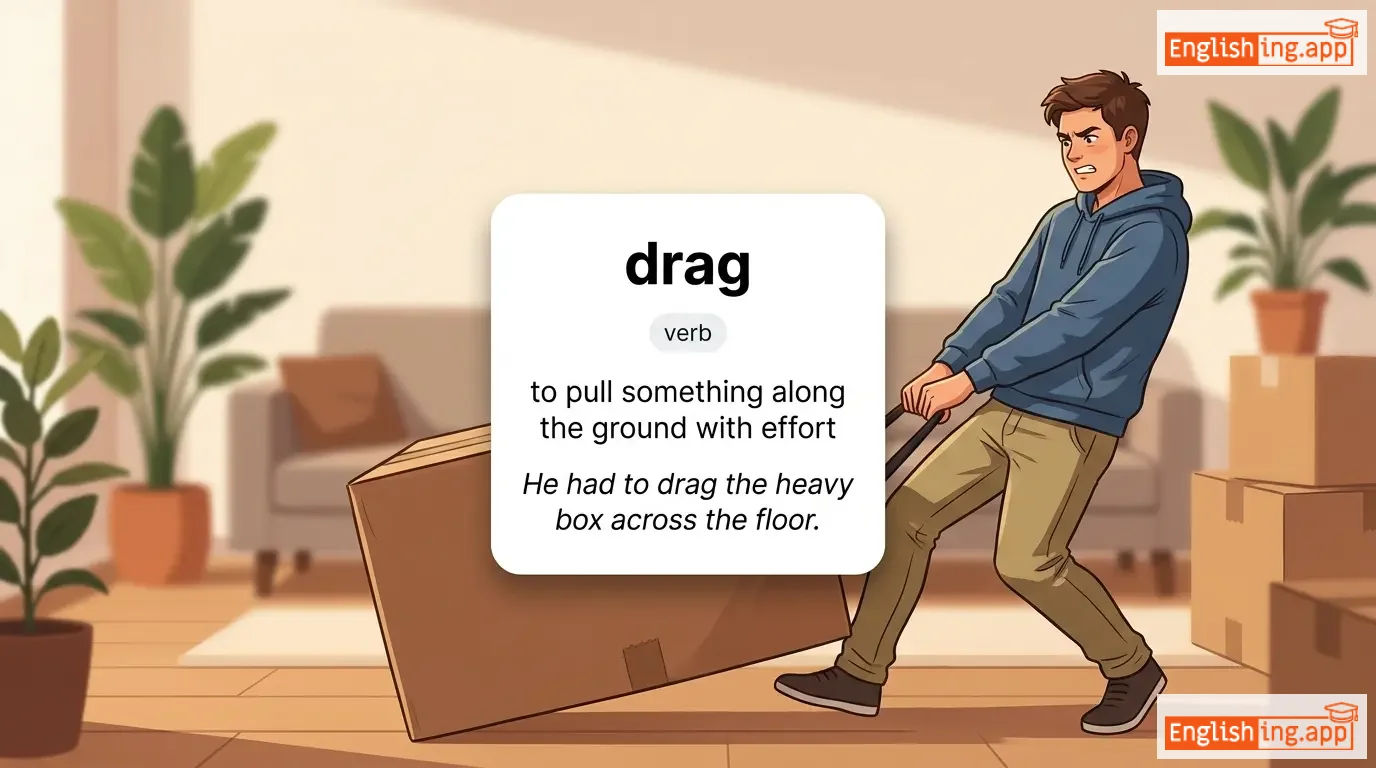
drag definition card — visual illustration of the meaning
verb
/dræɡ/
тащить (tashchit)

to pull something along the ground with effort

"He had to drag the heavy box across the floor."

"Ему пришлось тащить тяжёлую коробку по полу." (Yemu prishlos' tashchit' tyazholuyu korobku po polu.)
noun
/ˈdræɡˌnɛt/
облавы (oblavy)

A systematic search or investigation, often by police to catch criminals.

"The police launched a dragnet to capture the fugitives."

"Полиция начала облаву, чтобы поймать беглецов." (Politsiya nachala oblavu, chtoby poymat' begletsov.)
noun
/ˈdræɡ.ən.flaɪ/
стрекоза (strekoza)

a large insect with four transparent wings that lives near water

"The dragonfly hovered over the pond."

"Стрекоза парила над прудом." (Strekоza parila nad prudom)
verb
/drəˈɡuːn/
заставить (zastavit)

to force someone to do something through coercion or intimidation

"The manager tried to dragoon the team into working overtime."

"Менеджер пытался заставить команду работать сверхурочно." (Menedzher pytalsya zastavit komandу rabotat' sverkhoruchno.)
🚰

drain

verb
/dreɪn/

to cause liquid to flow away from something; to remove liquid

"He drained the pasta before adding the sauce."

noun
/ˈdreɪ.nɪdʒ/
дренаж (drenazh)

the system or process by which water or other liquids are drained away

"Poor drainage caused flooding in the neighborhood."

"Плохой дренаж вызвал наводнение в районе." (Plokhoj drenazh vyzval navodnenie v rajone.)
noun
/dreɪk/
самец утки (samec utki)

a male duck; a type of waterfowl

"The drake led his family of ducks across the pond."
"Дрейк повел свою семью уток через пруд." (Dreyk poyel svoiu sem'yu utok cherez prud.)
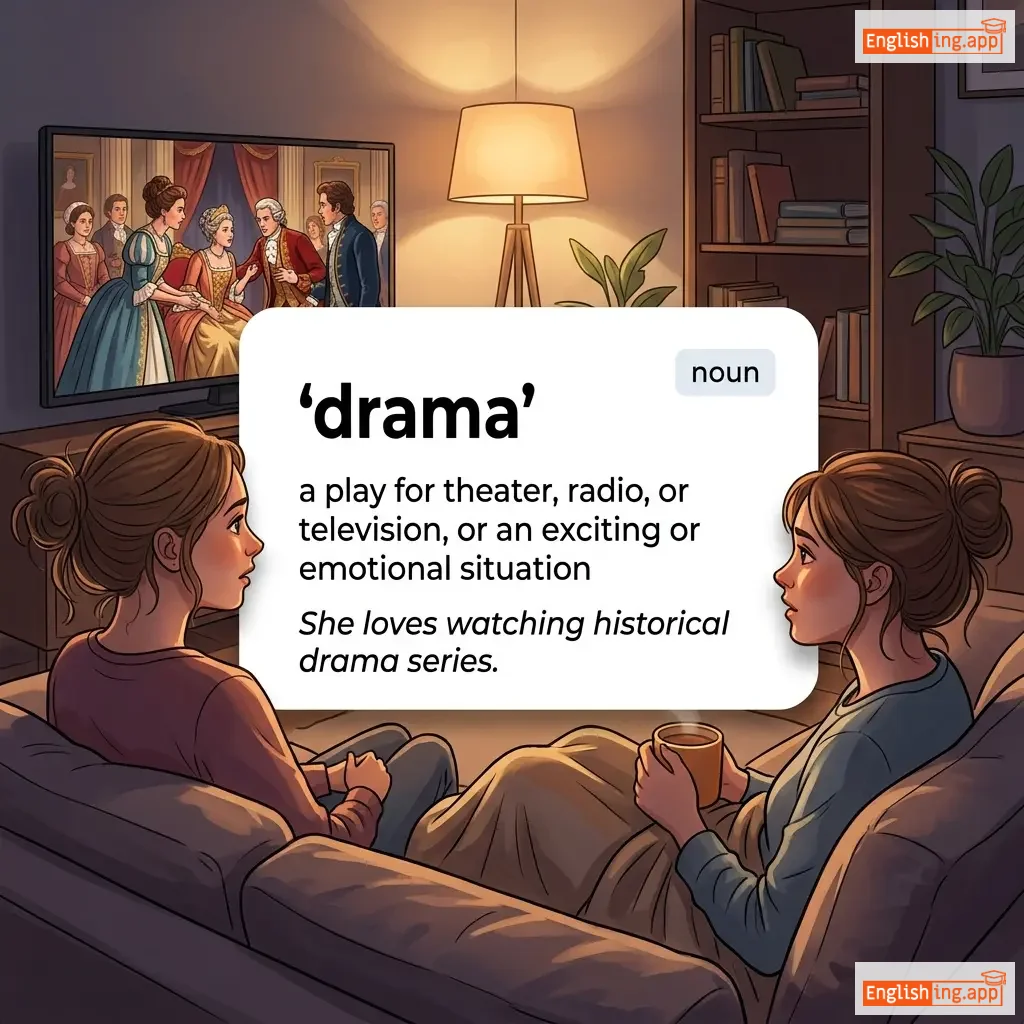
drama definition card — visual illustration of the meaning
noun
/ˈdrɑː.mə/
драма (drama)

a play for theater, radio, or television, or an exciting or emotional situation

"She loves watching historical drama series."

"Она любит смотреть исторические драмеди-сериалы." (Ona lyubit smotret' istoricheskiye dramedy-serialy.)
adjective
/drəˈmætɪk/
драматичный (dramatichny)

sudden and striking; relating to drama or theater

"The play ended with a dramatic twist."

"Пьеса закончилась драматическим поворотом." (P'yesa zakonchilas' dramaticheskim povorotom.)
adverb
/drəˈmætɪkli/
драматически (dramaticheski)

in a sudden, striking, or exaggerated way

"Sales increased dramatically after the campaign."

"Продажи значительно увеличились после кампании." (Prodazhi znachitel'no uvelichilis' posle kampanii.)