Словари

Словарь английского языка | Значения слов, определения и примеры

verb
/dɪˈsɛkt/

to cut apart an animal, plant, or other organism to study its internal parts; to analyze something in detail

"In biology class, students had to dissect a frog to learn about its anatomy."

noun
/daɪˈsɛkʃən/
диссекция (dissektsiya)

the act of cutting apart or analyzing something in detail, especially a body or structure

"The dissection of the specimen revealed important details about its structure."

"Диссекция образца выявила важные детали о его структуре." (Dissektsiya obraktsa vyyavila vazhnyye detali o yego strukture.)
dissemble definition card — visual illustration of the meaning
verb
/dɪˈsɛmbəl/
притворяться (pritvoryatsya)

to conceal one's true motives, feelings, or beliefs; to pretend

"He tried to dissemble his anger with a forced smile."

"Он пытался скрыть свой гнев с помощью натянутой улыбки." (On pytalsya skryt' svoi gnev s pomoshch'yu natyanutoy ulybki.)
noun
/dɪˈsɛmbələr/
лицемер (litsemer)

a person who conceals their real feelings or intentions; a hypocrite or pretender

"The politician was accused of being a dissembler who never revealed his true plans."
"Политик был обвинен в том, что он был лицемером, который никогда не раскрывал свои настоящие планы." (Politik byl obvinen v tom, chto on byl litsemerom, kotoryi nikogda ne raskryval svoi nastoyashchie plany.)
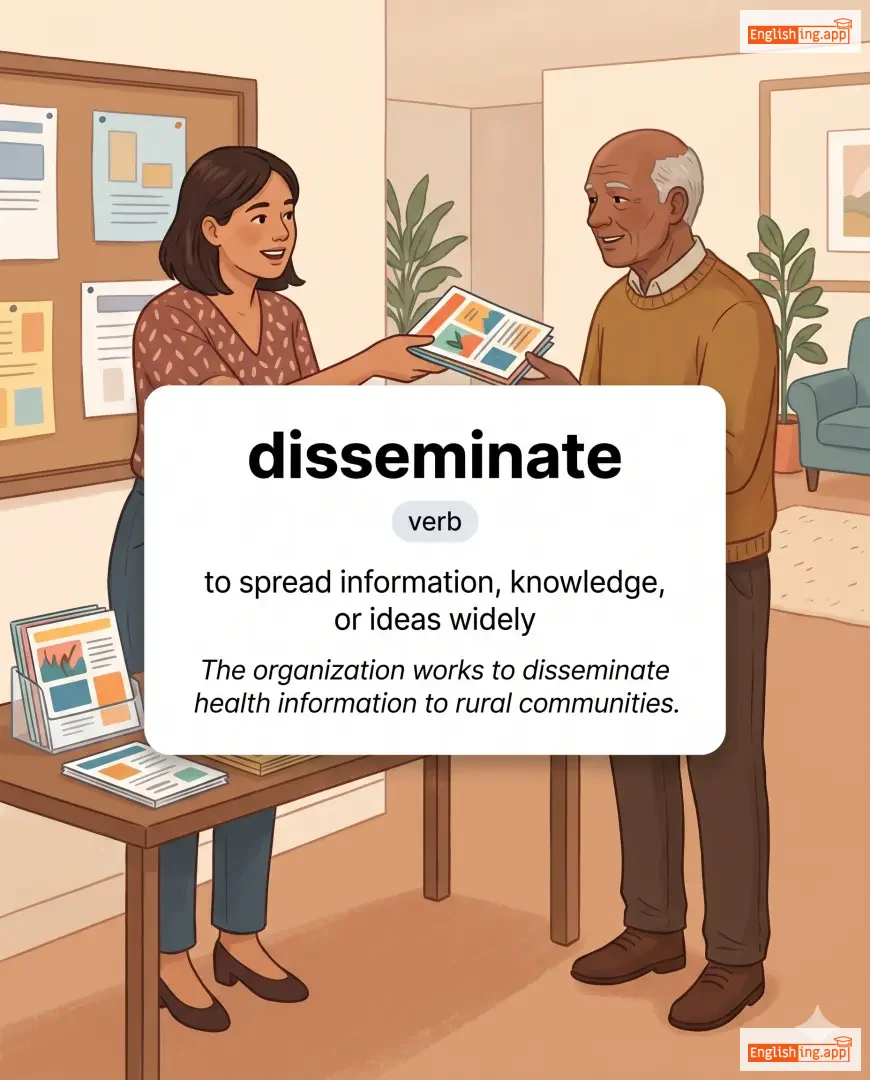
disseminate definition card — visual illustration of the meaning
verb
/dɪˈsɛmɪˌneɪt/
распространять (rasprostranyat')

to spread information, knowledge, or ideas widely

"The organization works to disseminate health information to rural communities."
"Организация работает над распространением информации о здоровье в сельских районах." (Organizatsiya rabotayet nad rasprostraneniem informatsii o zdorov'ye v selskih rayonah.)
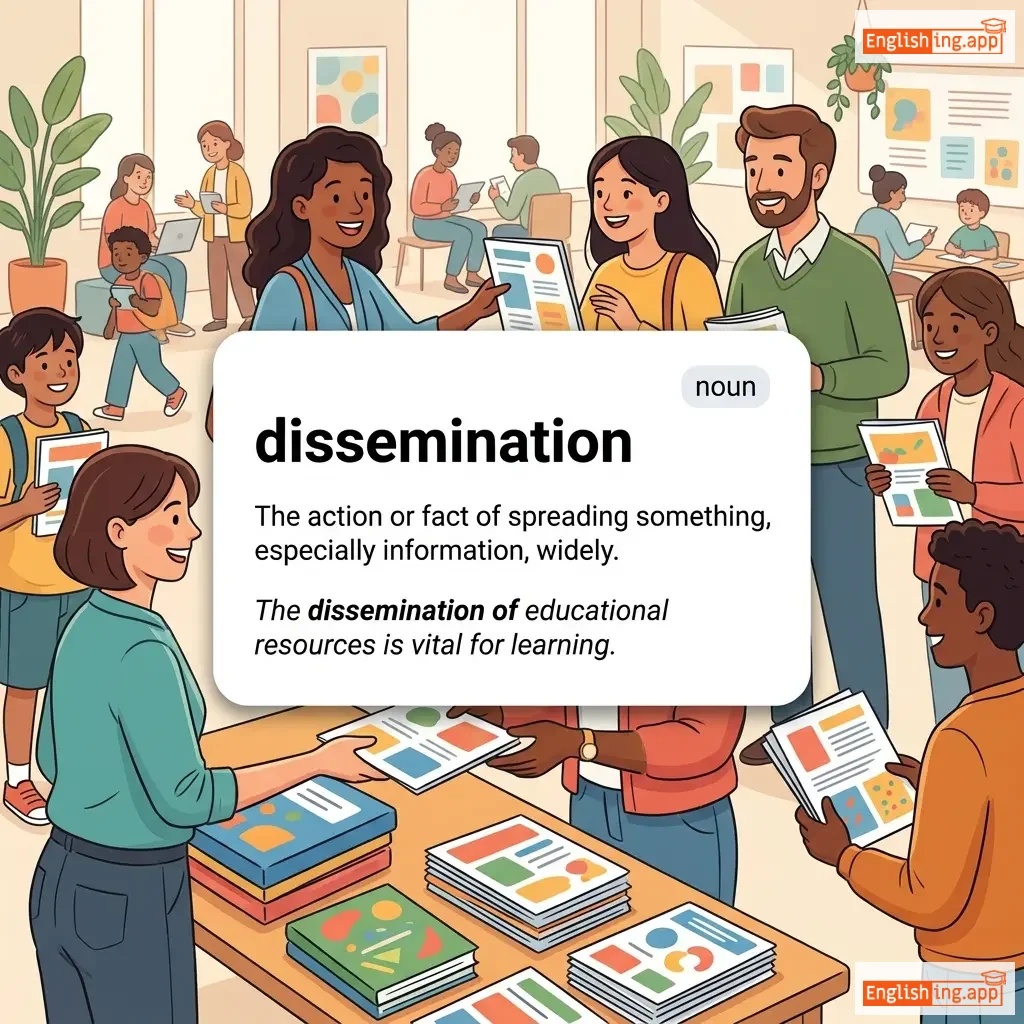
dissemination definition card — visual illustration of the meaning
noun
dɪˌsɛm.ɪˈneɪ.ʃən
распространение (rasprostranenie)

The action or fact of spreading something, especially information, widely.

"The dissemination of educational resources is vital for learning."

"Распределение образовательных ресурсов имеет важное значение для обучения." (Raspredeleniye obrazovatel'nykh resursov imeyet vazhnoe znacheniye dlya obucheniya.)
noun
/dɪˈsɛnʃən/
разногласие (raznoglasiya)

Strong disagreement or difference of opinion, especially leading to discord within a group.

"The meeting ended in dissension among the committee members."

"Встреча закончилась разногласием среди членов комитета." (Vstrecha zakonchilas' raznoglasiyaem sredi chlenov komiteta.)
verb
/dɪˈsɛnt/
возражать (dissent)

To hold or express opinions that are different from those officially accepted.

"Several members dissented from the majority decision."

"Несколько членов не согласились с решением большинства." (Neskolko chlenov ne soglasilis s resheniem bolshinstva.)
adjective
/dɪˈsɛnʃənt/
диссидент (dissident)

Expressing or holding opinions that are opposed to the majority or official view.

"Only a few dissentient voices were heard during the debate."

"Только несколько диссидентских голосов были слышны во время дебатов." (Tol'ko neskol'ko dissidentskikh golosov byli slyshny vo vremya debatov.)
adjective
/dɪˈsɛnʃəs/
разделяющий (razdelyayushchiy)

Causing or likely to cause disagreement and conflict.

"His dissentious remarks divided the group further."

"Его разделяющие замечания еще больше разделили группу." (Ego razdelyayushchie zamechaniya yeshchyo bol'she razdeli gruppu.)
noun
/ˌdɪsərˈteɪʃən/
диссертация (dissertatsiya)

A long piece of writing on a particular subject, usually written for a university degree.

"She spent two years writing her doctoral dissertation."

"Она потратила два года на написание своей докторской диссертации." (Ona potratila dva goda na napisanie svoey doktorskoj dissertatsii.)
noun
/dɪsˈsɜːrvɪs/
вред (vred)

A harmful action; something that does damage rather than help.

"Spreading false information is a disservice to the community."

"Распространение ложной информации — это вред для сообщества." (Raspredelenie lozhnoi informatsii - eto vred dlya soobshchestva.)
verb
/dɪˈsɛvər/
разделять (razdelyat')

To separate or cut apart.

"The treaty sought to dissever the two hostile regions."
"Договор попытался разделить две враждующие области." (Dogovor popytalsya razdelit' dve vrazhdushchiesya oblasti.)
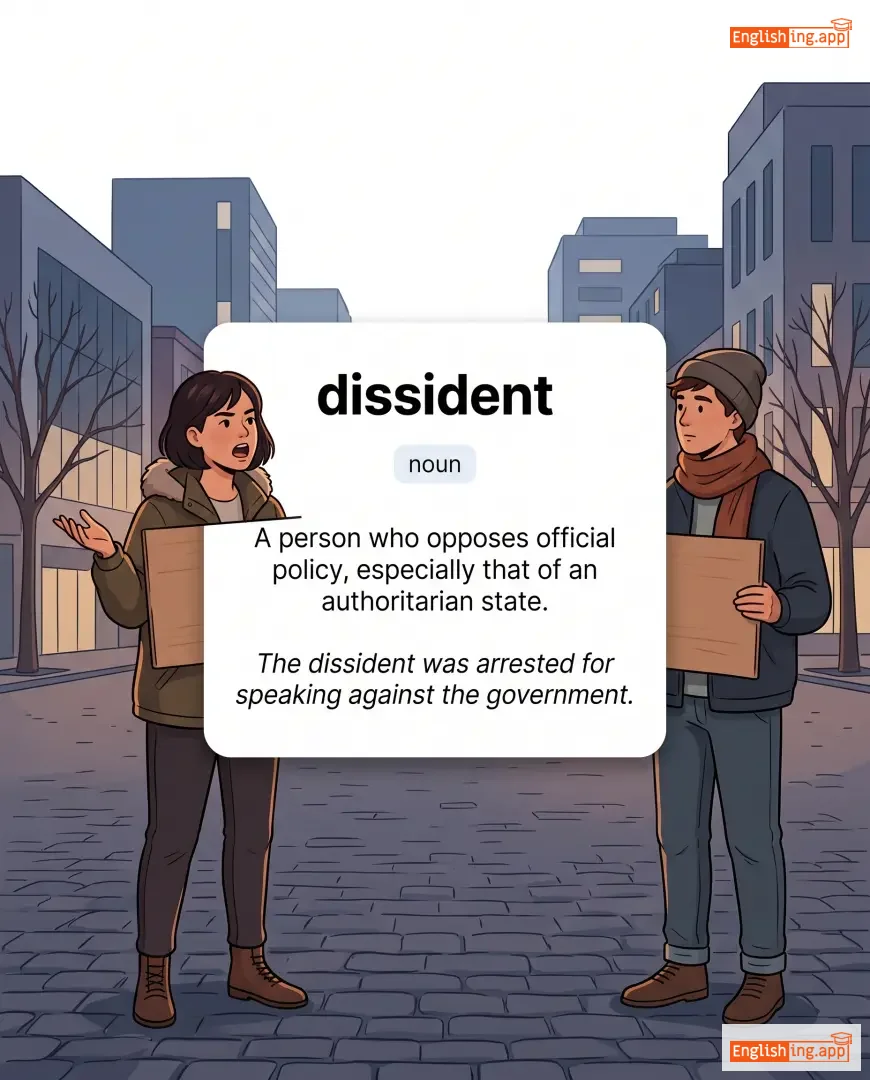
dissident definition card — visual illustration of the meaning
noun
/ˈdɪsɪdənt/
диссидент (dissident)

A person who opposes official policy, especially that of an authoritarian state.

"The dissident was arrested for speaking against the government."

"Диссидента арестовали за выступление против правительства." (Dissidenta arestovali za vystuplenie protiv pravitel'stva.)
adjective
/dɪsˈsɪmɪlər/
непохожий (nepokhozhi)

Not alike; different.

"Though they are twins, their personalities are dissimilar."

"Хотя они близнецы, их личности непохожи." (Khotya oni bliznetsy, ikh lichnosti nepokhozhi.)
verb
/dɪˈsɪmjʊˌleɪt/
скрывать (skryvat)

To disguise or conceal one's true feelings or intentions.

"He tried to dissimulate his fear with a smile."
"Он попытался скрыть свой страх улыбкой." (On popytalsya skryt svoi strakh ulybkoy.)
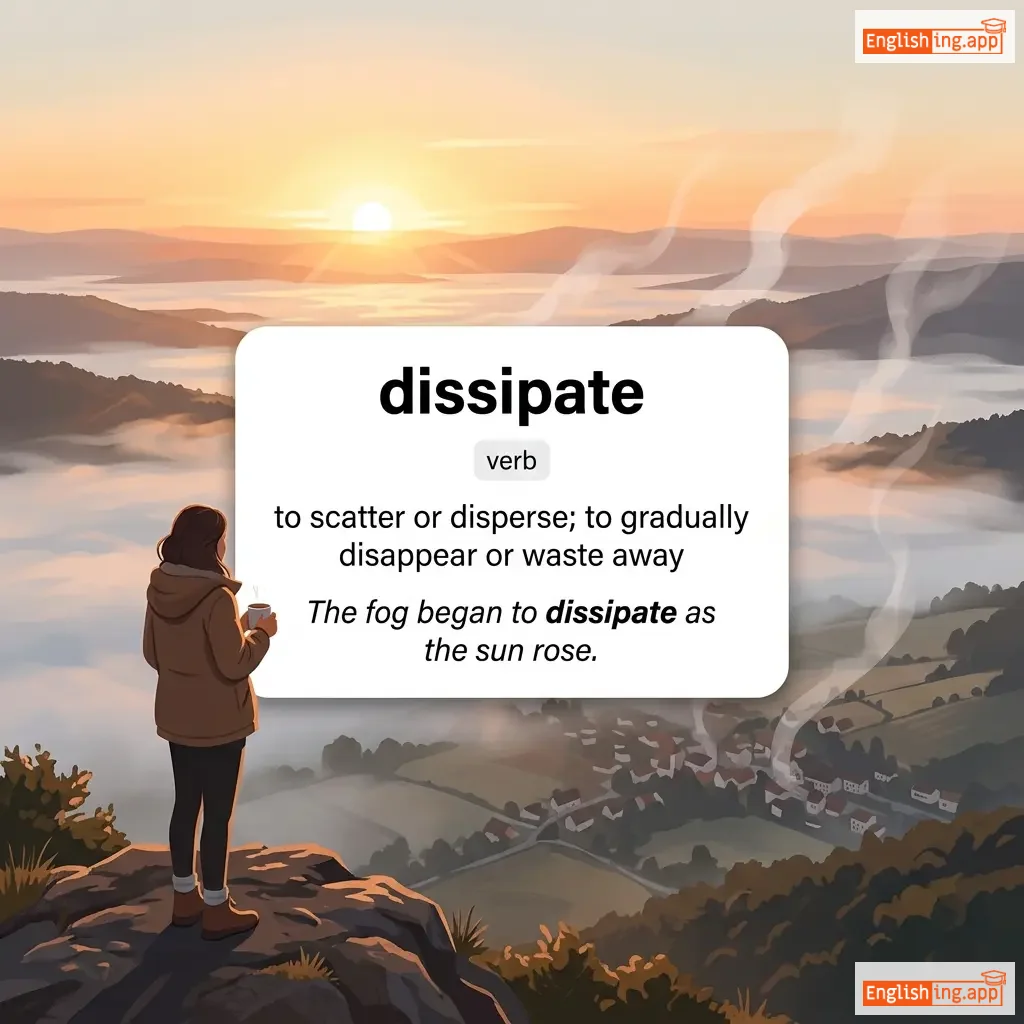
dissipate definition card — visual illustration of the meaning
verb
/ˈdɪsɪpeɪt/
распыляться (raspyljat'sja)

to scatter or disperse; to gradually disappear or waste away

"The fog began to dissipate as the sun rose."

"Туман начал рассеиваться, когда восходило солнце." (Tuman nachal rasseivatsja, kogda voskhodilo solntse.)
noun
/ˌdɪsɪˈpeɪʃən/
расточительство (rastochitel'stvo)

the process of disappearing or wasting; excessive indulgence in pleasure

"The dissipation of his fortune left him in poverty."

"Расточительство его состояния привело его к бедности." (Rastochitel'stvo yego sostoyaniya privedlo yego k bednosti.)
adjective
/ˈdɪsəluːt/
распутный (rasputny)

lacking moral restraint; indulging excessively in sensual pleasures

"He led a dissolute life filled with parties and gambling."
"Он вел распутную жизнь, наполненную вечеринками и азартными играми." (On vel rasputnuyu zhizn', napolnennuyu vecherinkami i azartnymi igrami.)
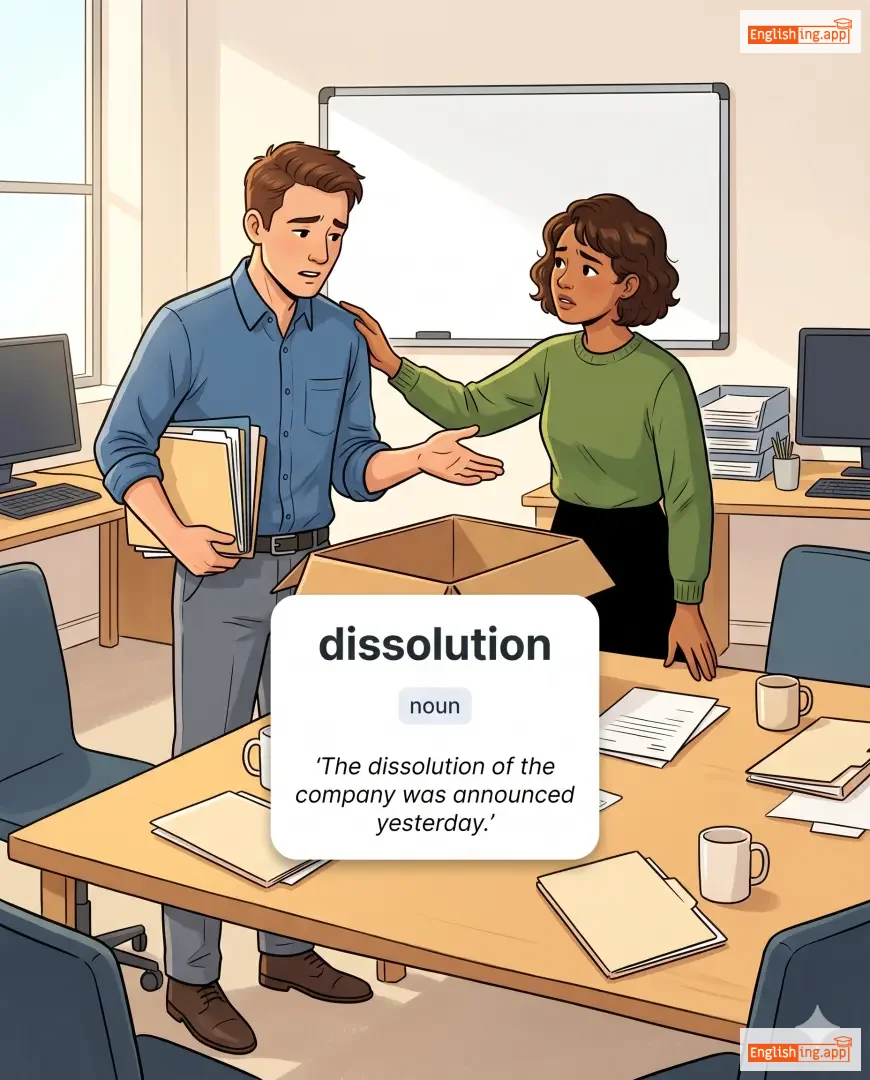
dissolution definition card — visual illustration of the meaning
noun
/ˌdɪsəˈluːʃən/
распад (raspad)

the act of formally ending or breaking apart something, such as an organization or marriage

"The dissolution of the company was announced yesterday."

"Распад компании был объявлен вчера." (Raspad kompanii byl obyavlen vchera.)
verb
/dɪˈzɒlv/

to melt or become liquid; to officially end or break up an agreement or organization

"The sugar will dissolve quickly in hot tea."
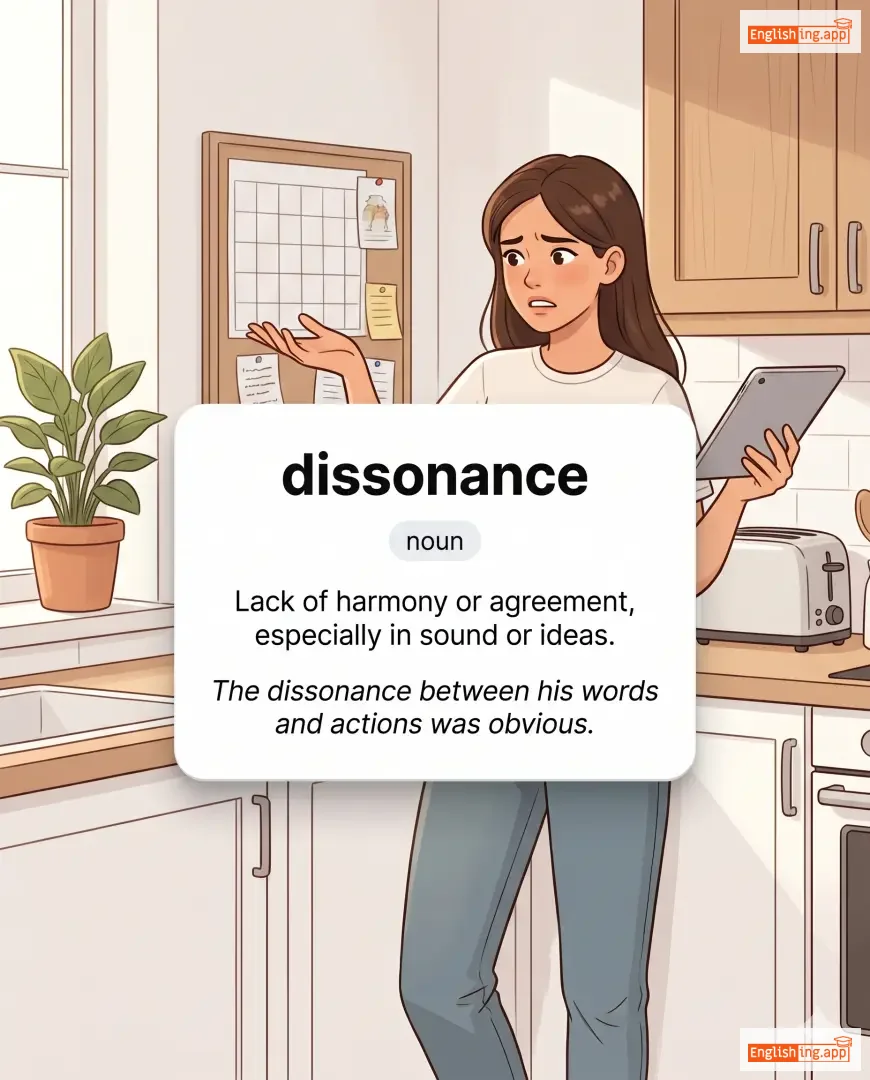
dissonance definition card — visual illustration of the meaning
noun
/ˈdɪsənəns/
диссонанс (dissonans)

Lack of harmony or agreement, especially in sound or ideas.

"The dissonance between his words and actions was obvious."

"Диссонанс между его словами и действиями был очевиден." (Dissonans mezhdu ego slovami i deystviyami byl ocheviden.)
adjective
/ˈdɪsənənt/
диссонансный (dissonansny)

Harsh and lacking harmony; conflicting.

"The orchestra produced a dissonant sound during rehearsal."

"Оркестр создал диссонантный звук во время репетиции." (Orkestr sozdal dissonantnyj zvuk vo vremya repetitsii.)
verb
/dɪˈsweɪd/
отговаривать (otgovarivat')

To persuade someone not to do something.

"She tried to dissuade him from quitting his job."

"Она пыталась отговорить его от увольнения с работы." (Ona pytalas' otgovorit' ego ot uvol'neniya s raboty.)
noun
/dɪˈsweɪʒən/
отговорка (otgovorka)

The act of persuading someone not to take a course of action.

"Her dissuasion prevented him from making a bad investment."

"Его отговорка предотвратила его от плохой инвестиции." (Ego otgovorka predotvratila ego ot plokhoy investitsii.)
noun/adjective
/ˈdɪstæf/
связанный с женщинами, материнская сторона (svyazannyy s zhenshchinami, materinskaya storona)

Relating to women or the maternal side of a family; also a tool for spinning thread.

"She came from the distaff side of a noble family."

"Она происходила с материнской стороны благородной семьи." (Ona proiskhodila s materinskoy storony blagorodnoy sem'i.)
verb
/dɪsˈteɪn/
презирать (prezirat)

to treat with scorn or contempt (archaic form of disdain)

"He would never distain those who had less fortune than him."

"Он никогда не презирал тех, кто был менее удачлив, чем он." (On nikogda ne preziral tekh, kto byl meneye udachliv, chem on.)
adjective
/ˈdɪstəl/
дистальный (distal'nyy)

situated away from the center of the body or from the point of attachment

"The doctor examined the distal end of the patient’s arm."
"Доктор осмотрел дистальный конец руки пациента." (Doktor osmotrel distal'nyy konets ruki patsiyenta.)
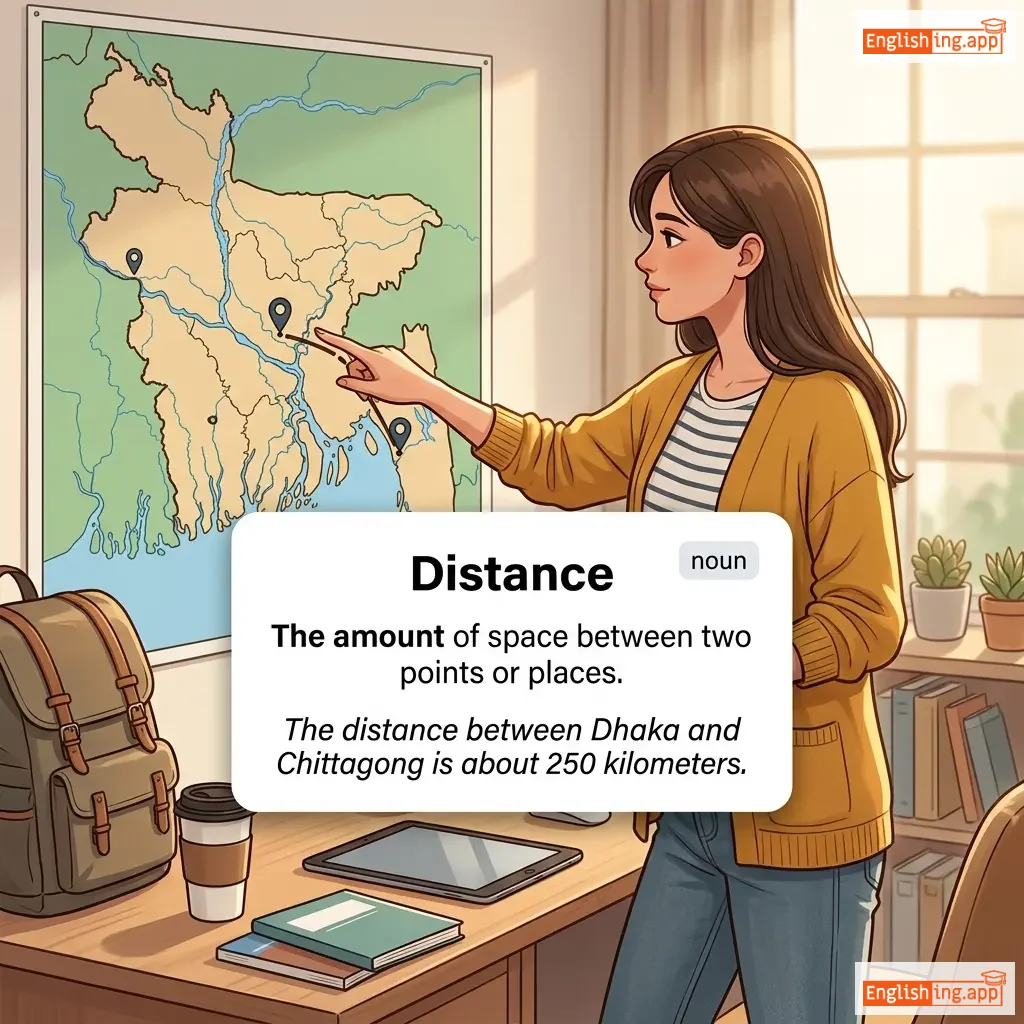
Distance definition card — visual illustration of the meaning
noun
/ˈdɪstəns/
расстояние (rasstoyanie)

The amount of space between two points or places.

"The distance between Dhaka and Chittagong is about 250 kilometers."

"Расстояние между Дакой и Читтагонгом составляет около 250 километров." (Rasstoyanie mezhdu Dakoj i Chittagongom sostavlyaet okolo 250 kilometrov.)
adjective
/ˈdɪstənt/
дальний (dalniy)

far away in space or time

"They could see the distant mountains from their home."

"Они могли видеть дальние горы из своего дома." (Oni mogli videt dalnie gory iz svoego doma.)
noun
/dɪsˈtɛmpər/
вирусное заболевание, поражающее животных, особенно собак (virusnoe zabolevanie, porazhayushchee zhivotnykh, osobenno sobak)

a viral disease affecting animals, especially dogs; also refers to a state of disorder

"The dog was diagnosed with distemper and needed immediate care."
"Собака была диагностирована с дистемпером и нуждалась в немедленной помощи." (Sobaka byla diagnostirovana s distemperom i nuzhdalas' v nemedlennoy pomoshchi.)
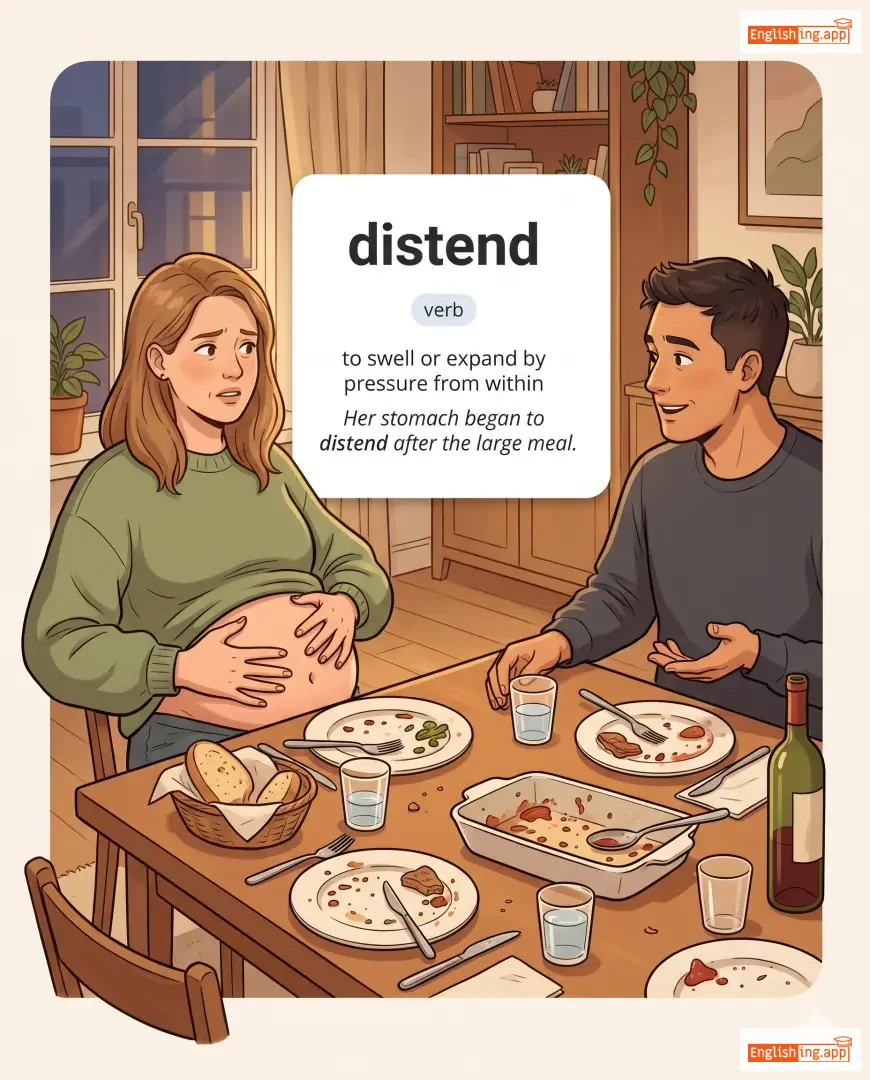
distend definition card — visual illustration of the meaning
verb
/dɪsˈtɛnd/
вздуваться (vzdavatsya)

to swell or expand by pressure from within

"Her stomach began to distend after the large meal."

"Ее живот начал вздуваться после большого обеда." (Eyo zhivot nachal vzdavatsya posle bol'shogo obeda.)
adjective
/dɪˈstɛnsəbl̩/
растяжимый (rastyazhimyy)

Capable of being stretched or expanded.

"The stomach is a distensible organ that can expand after eating."

"Желудок — это растяжимый орган, который может расширяться после еды." (Zheludok — eto rastyazhimyy organ, kotoryy mozhet rasshiryat'sya posle yedy.)
noun
/dɪˈstɛnʃən/
вздутие (vzdutie)

The state of being swollen due to internal pressure.

"The patient complained of abdominal pain and distention."
"Пациент пожаловался на боль в животе и вздутие." (Patsiyent pozhalovalsya na bol' v zhivote i vzdutie.)
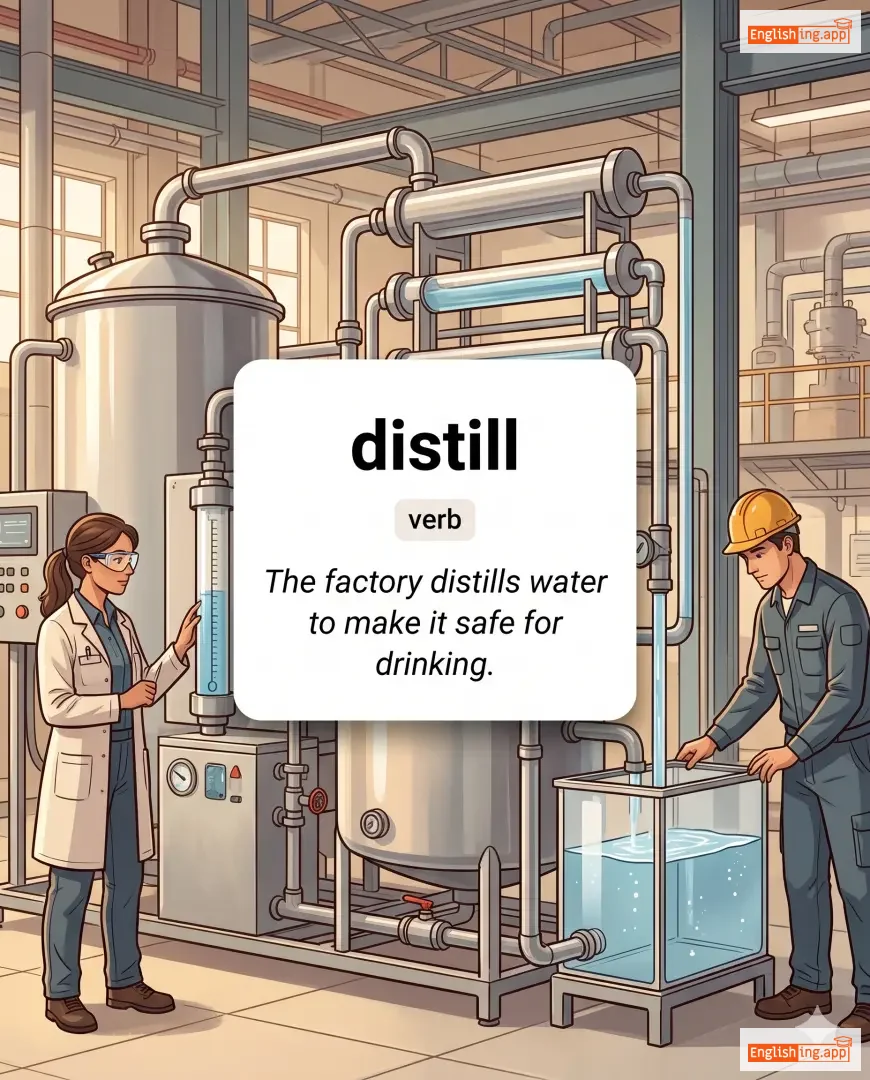
distill definition card — visual illustration of the meaning
verb
/dɪˈstɪl/
дистиллировать (distillirovat)

To purify a liquid by heating and cooling; to extract the essential meaning or most important aspects.

"The factory distills water to make it safe for drinking."

"Фабрика дистиллирует воду, чтобы сделать ее безопасной для питья." (Fabrika distilliruet vodu, chtoby sdelat' yeye bezopasnoi dlya pit'ya.)
noun
/ˌdɪstɪˈleɪʃən/
дистилляция (distillyatsiya)

The process of purifying a liquid by heating and cooling; the extraction of the essential meaning.

"Distillation is commonly used to produce alcoholic beverages."

"Дистилляция часто используется для производства алкогольных напитков." (Distillyatsiya chasto ispol'zuyetsya dlya proizvodstva alkogol'nykh napitkov.)
noun
/dɪˈstɪlər/
дистиллятор (distillyator)

A person or company that makes alcoholic drinks or purified liquids by distillation.

"The distiller introduced a new brand of whiskey last year."

"Дистиллятор представил новый бренд виски в прошлом году." (Distillyator predstavil novyy brend viski v proshlom godu.)
adjective
/dɪˈstɪŋkt/
отличительный (otlichitelny)

clearly different or separate from others of its kind

"The twins have distinct personalities."

"У близнецов разные, отличительные личности." (U bliznetsov raznye, otlichitel'nye lichnosti.)
noun
/dɪˈstɪŋkʃən/

a difference or contrast between similar things or people; excellence that sets someone apart

"She graduated with distinction from the university."

adjective
/dɪˈstɪŋktɪv/
характерный (kharakternyy)

having a quality or characteristic that makes something different and easily noticed

"The restaurant is known for its distinctive flavors."

"Ресторан известен своими характерными вкусами." (Restoran izvesten svoimi kharakternymi vkusami.)
verb
/dɪˈstɪŋɡwɪʃ/
различать (razlichat')

to recognize or show the differences between two or more things; to set apart as different

"It can be difficult to distinguish between truth and rumor."

"Бывает сложно различить правду и слухи." (Byvayet slozhno razlichit' pravdu i slukhi.)
adjective
/dɪˈstɪŋɡwɪʃt/
выдающийся; уважаемый; знаменитый; обладающий достойным видом или манерой (vydajushchijsja; uvažajemyj; znamenityj)

notable; honored; famous; having a dignified appearance or manner

"He is a distinguished professor at the university."

"Он выдающийся профессор в университете." (On vydajushchijsja professor v universitete.)
verb
/dɪˈstɔːrt/
искажать (distort)

to twist or change the shape, appearance, or meaning of something so it is not true or accurate

"The mirror distorted her reflection."

"Зеркало исказило её отражение." (Zerkalo iskazilo eyo otrazhenie.)
noun
/dɪˈstɔːrʃən/
искажение, неправильное представление (iskazhenie, nepravil'noe predstavlenie)

the action of twisting, changing, or misrepresenting the shape, sound, or truth of something

"There was a distortion in the radio signal."

"В радио сигнале было искажение." (V radio signe bylo iskazheniye.)
verb
/dɪˈstrækt/
отвлекать (otvlekat)

to take someone's attention away from what they are doing or focusing on

"The loud noise distracted her during the exam."
"Громкий шум отвлек ее во время экзамена." (Gromkiy shum otvlek yevo vo vremya eksamen)
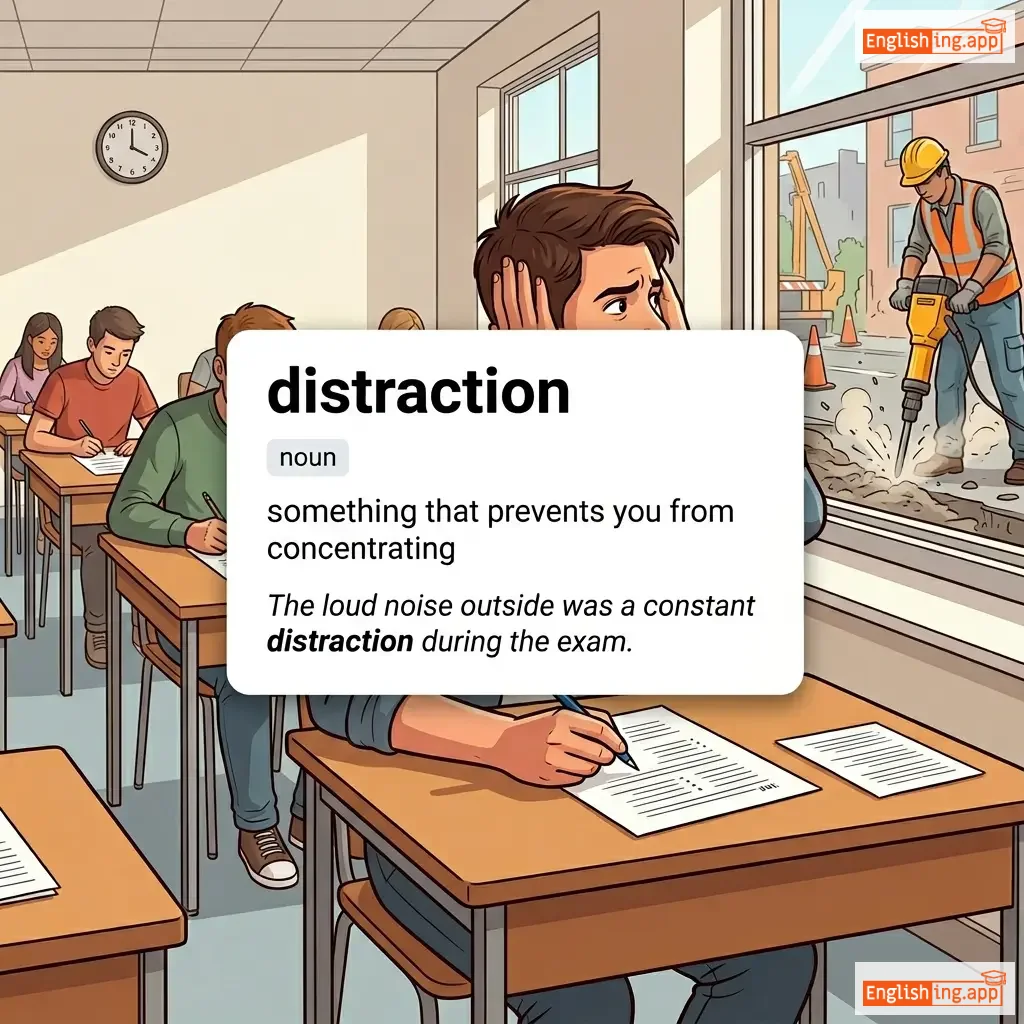
distraction definition card — visual illustration of the meaning
noun
/dɪˈstrækʃən/
отвлечение (otvlechenie)

something that prevents you from concentrating

"The loud noise outside was a constant distraction during the exam."
"Громкий шум снаружи был постоянным отвлечением во время экзамена." (Gromkiy shum snaruzhi byl postoyannym otvlecheniem vo vremya ekzamina.)
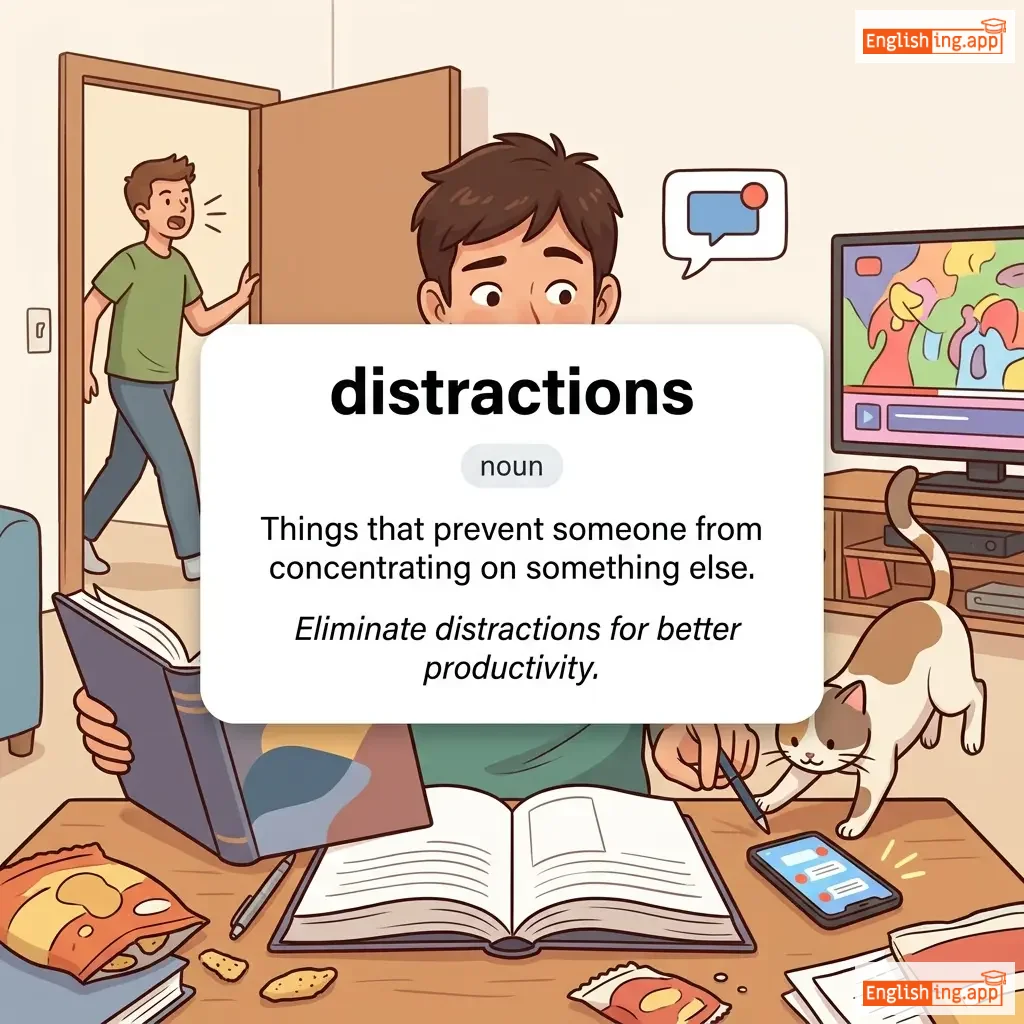
distractions definition card — visual illustration of the meaning
noun
/dɪˈstrækʃənz/
отвлекающие факторы (otvlekayushchie faktory)

Things that prevent someone from concentrating on something else.

"Eliminate distractions for better productivity."

"Устраните отвлекающие факторы для повышения продуктивности." (Ustranite otvlekayushchie faktory dlya povysheniya produktivnosti.)
verb
/dɪˈstreɪn/
арестовать (arestovat)

to seize someone's property in order to obtain payment of rent or other money owed

"The landlord distrained the tenant's furniture for unpaid rent."

"Арендодатель изъял мебель арендатора за неуплаченный аренду." (Arendodatel izyial mebel' arendatora za neuplachenny arendu.)
noun
/dɪˈstreɪnər/
изыматель имущества (izymatel' imushchestva)

a person, usually a landlord, who seizes another's property for unpaid debt or rent

"The distrainor took possession of the tenant's car until the debt was cleared."
"Изыматель имущества забрал машину арендатора, пока долг не был погашен." (Izymatel' imushchestva zabral mashinu arendatora, poka dolg ne byl pogashen.)
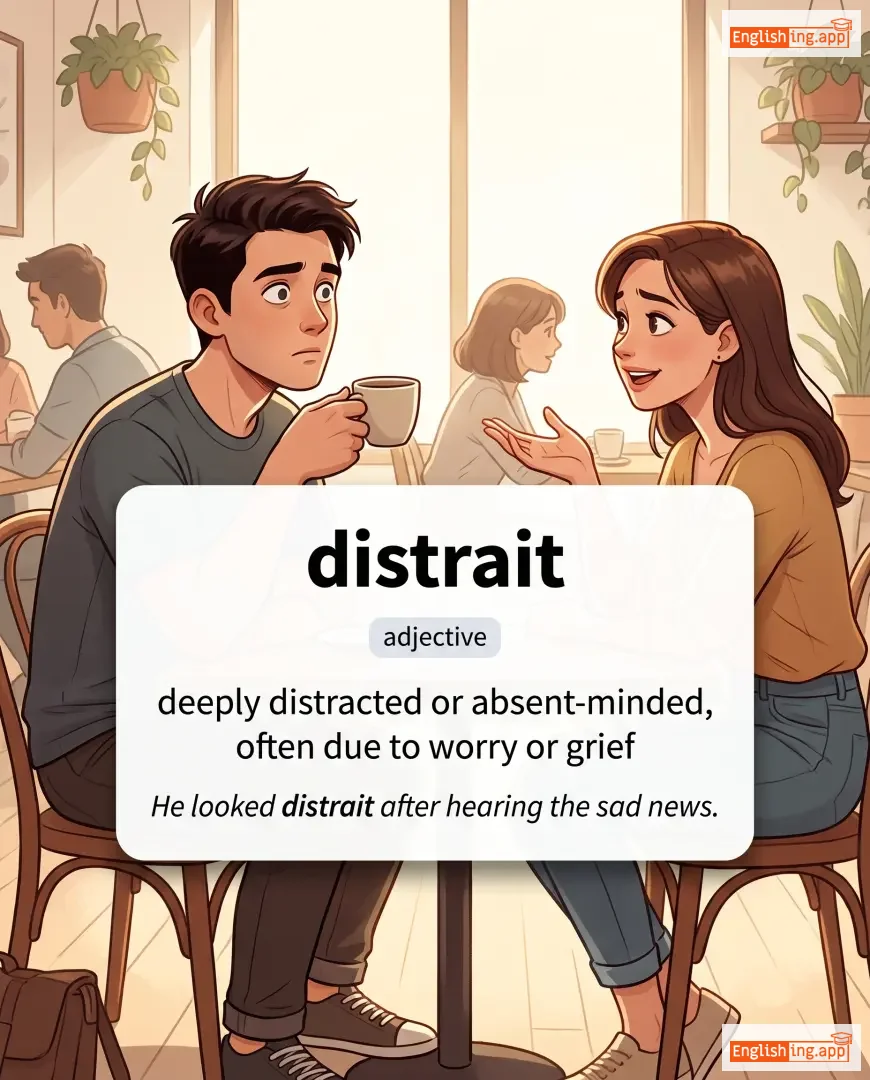
distrait definition card — visual illustration of the meaning
adjective
/dɪˈstreɪ/
рассеянный (rasseyannyy)

deeply distracted or absent-minded, often due to worry or grief

"He looked distrait after hearing the sad news."

"Он выглядел рассеянным после того, как услышал грустную новость." (On viglyadel rasseyannym posle togo, kak uslyshal grustnuyu novost'.)