Словари

Словарь английского языка | Значения слов, определения и примеры

verb
/ˌdɪfəˈrɛnʃieɪt/
дифференцировать (differentsirovat')

To recognize or make a distinction between things.

"It is important to differentiate between fact and opinion."

"Важно дифференцировать факты и мнения." (Vazhno differentsirovat' fakty i mneniya.)
differentiation definition card — visual illustration of the meaning
noun
/ˌdɪf.ə.ren.ʃiˈeɪ.ʃən/
дифференциация, различие, разграничение (differentsiatsiya, razlichiye, razgranichenie)

The action or process of differentiating or distinguishing between two or more things or people.

"Strong differentiation sets brands apart from competitors."

"Сильная дифференциация выделяет бренды среди конкурентов." (Sil'naya differentsiatsiya vydelyayet brendy sredi konkurentov.)
adverb
/ˈdɪfərəntli/
по-другому (po-drugomu)

in a way that is not the same as another or as expected

"She approached the problem differently than her colleagues."
"Она подошла к решению проблемы по-другому, чем её коллеги." (Ona podoshla k resheniyu problemy po-drugomu, chem yejo kollegi.)
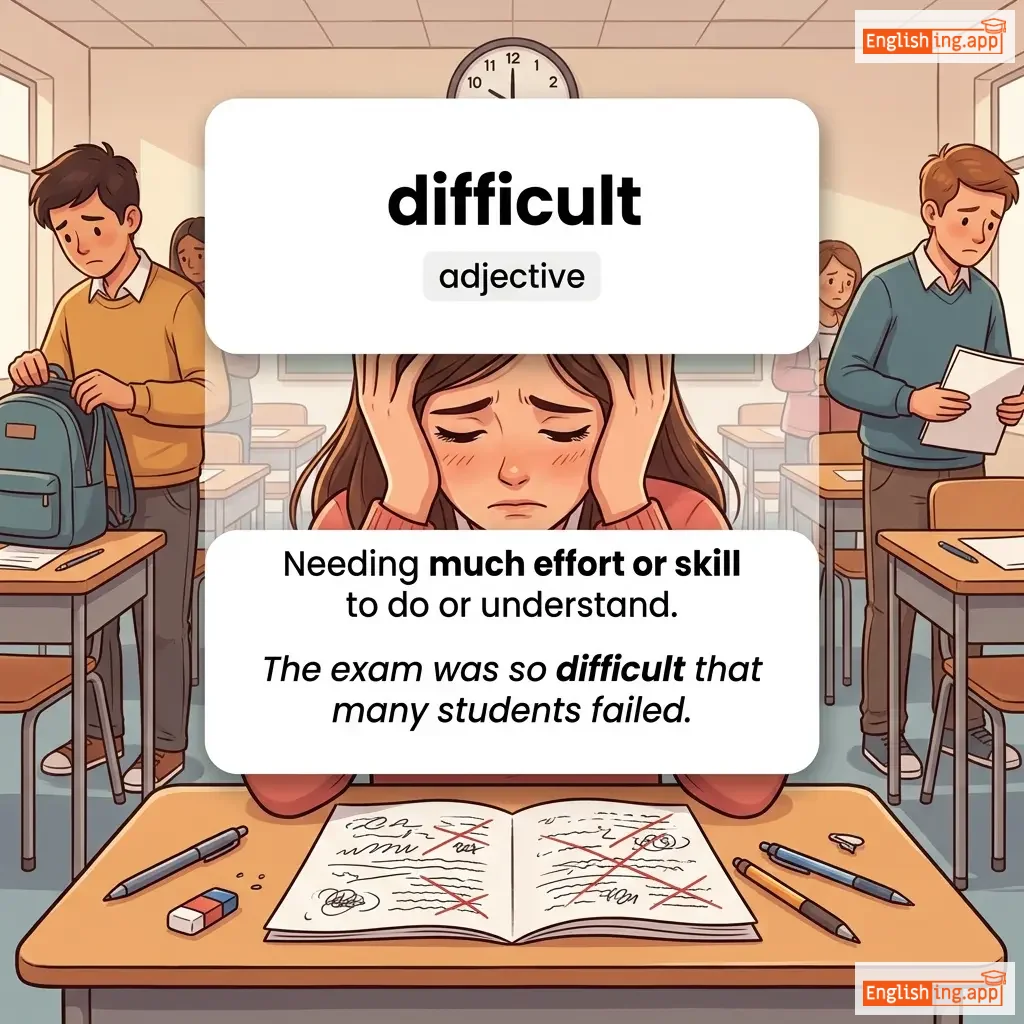
difficult definition card — visual illustration of the meaning
adjective
/ˈdɪf.ɪ.kəlt/
сложный (slozhny)

Needing much effort or skill to do or understand.

"The exam was so difficult that many students failed."

"Экзамен был настолько сложным, что многие студенты не сдали." (Ekzamen byl nastol'ko slozhnym, chto mnogie studenty ne sdali.)
noun
/ˈdɪfɪkəlti/

the state or condition of being hard to do, deal with, or understand

"He faced great difficulty in learning a new language."

diffidence definition card — visual illustration of the meaning
noun
/ˈdɪfɪdəns/
неуверенность в себе (neuverennost' v sebe)

Lack of self-confidence; shyness or modesty.

"Her diffidence made it hard for her to speak in public."

"Её неуверенность в себе затрудняла ей выступать на публике." (Yeyo neuverennost' v sebe zatrudnyala yey vystupat' na publike.)
adjective
/ˈdɪfɪdənt/

Shy or lacking confidence in one's own abilities.

"He was too diffident to ask a question in class."
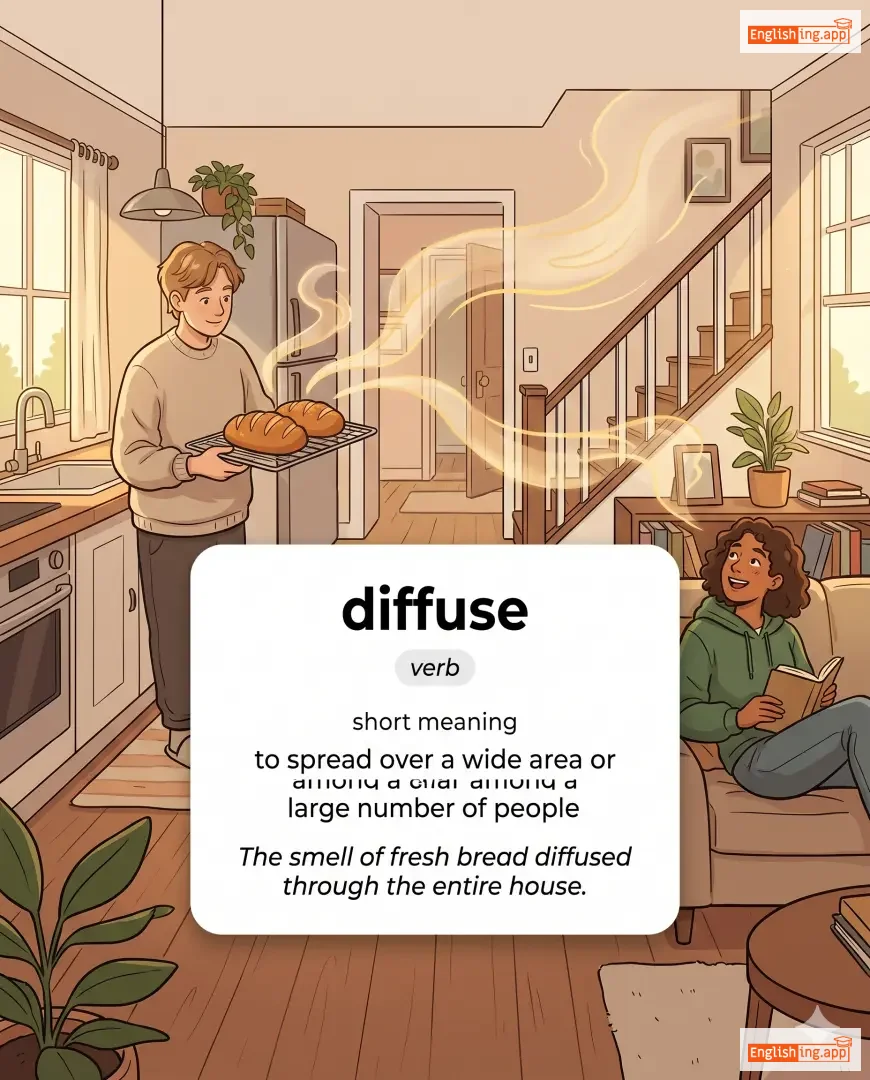
diffuse definition card — visual illustration of the meaning
verb
/dɪˈfjuːz/
распространять (rasprostranyat)

to spread over a wide area or among a large number of people

"The smell of fresh bread diffused through the entire house."

"Запах свежего хлеба распространился по всему дому." (Zapakh svezhago khleba rasprostranilsya po vsemu domu.)
adjective
/dɪˈfjuːzəbl/
распространяемый (rasprostranyayemyy)

able to spread or be spread through a medium

"Oxygen is diffusible through cell membranes."

"Кислород может распространяться через клеточные мембраны." (Kislorod mozhet rasprostranyatsya cherez kletochniye membrany.)
noun
/dɪˈfjuːʒən/
диффузия (diffyuzion)

the spreading of something more widely or the movement of particles from high to low concentration

"The diffusion of information on social media is rapid."
"Распространение информации в социальных сетях происходит быстро." (Rasprostranenie informatsii v sotsialnykh setyakh proiskhodit bystro)
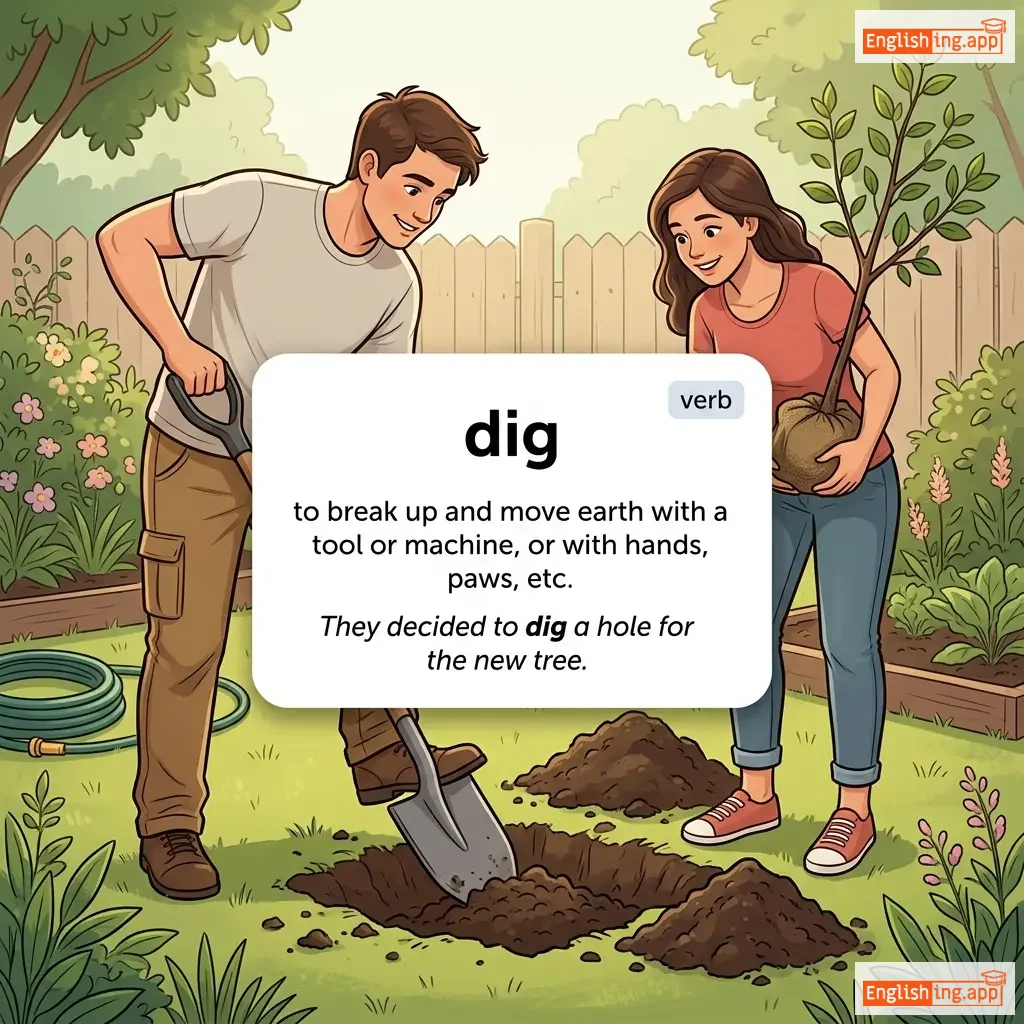
dig definition card — visual illustration of the meaning
verb
/dɪɡ/
копать (kopat)

to break up and move earth with a tool or machine, or with hands, paws, etc.

"They decided to dig a hole for the new tree."

"Они решили выкопать яму для нового дерева." (Oni reshilí vykopat' yamu dlya novogo dereva.)
digest definition card — visual illustration of the meaning
verb
/daɪˈdʒest/
переваривать (perevarivat)

to break down food in the body; to think about and understand

"It takes time to digest a heavy meal."

"Это занимает время, чтобы переварить тяжелую пищу." (Eto zanimaet vremya, chtoby perevarit' tyazholuyu pishchu.)
digestive definition card — visual illustration of the meaning
adjective
daɪˈdʒes.tɪv
пищеварительный (pishchevaritel'nyy)

Relating to the digestion of food.

"Digestive enzymes help break down food."

"Пищеварительные ферменты помогают разбирать пищу." (Pishchevaritel'nye fermenty pomogayut razbirat' pishchu.)
🔢

digit

noun
/ˈdɪdʒɪt/

a numeral from 0 to 9; also a finger or toe

"You must enter a four-digit code to unlock the phone."

digital definition card — visual illustration of the meaning
adjective
/ˈdɪdʒɪtl/
цифровой (tsifrovoj)

relating to technology that uses signals or data in the form of numbers (0s and 1s)

"She prefers digital books over printed ones."

"Она предпочитает цифровые книги бумажным." (Ona predpochitayet tsifrovye knigi bumazhnyim.)
digital detox definition card — visual illustration of the meaning
noun
/ˈdɪdʒɪtl ˈdɛtɒks/
цифровое очищение (tsifrovoe ochishchenie)

A period of time during which a person refrains from using electronic devices such as smartphones or computers, regarded as an opportunity to reduce stress or focus on social interaction in the physical world.

"A digital detox can help improve mental clarity and reduce stress."
"Цифровое очищение может помочь улучшить умственную ясность и снизить стресс." (Tsifrovoe ochishchenie mozhet pomoch' uluchshit' umstvennuyu yasnost' i snizit' stress.)
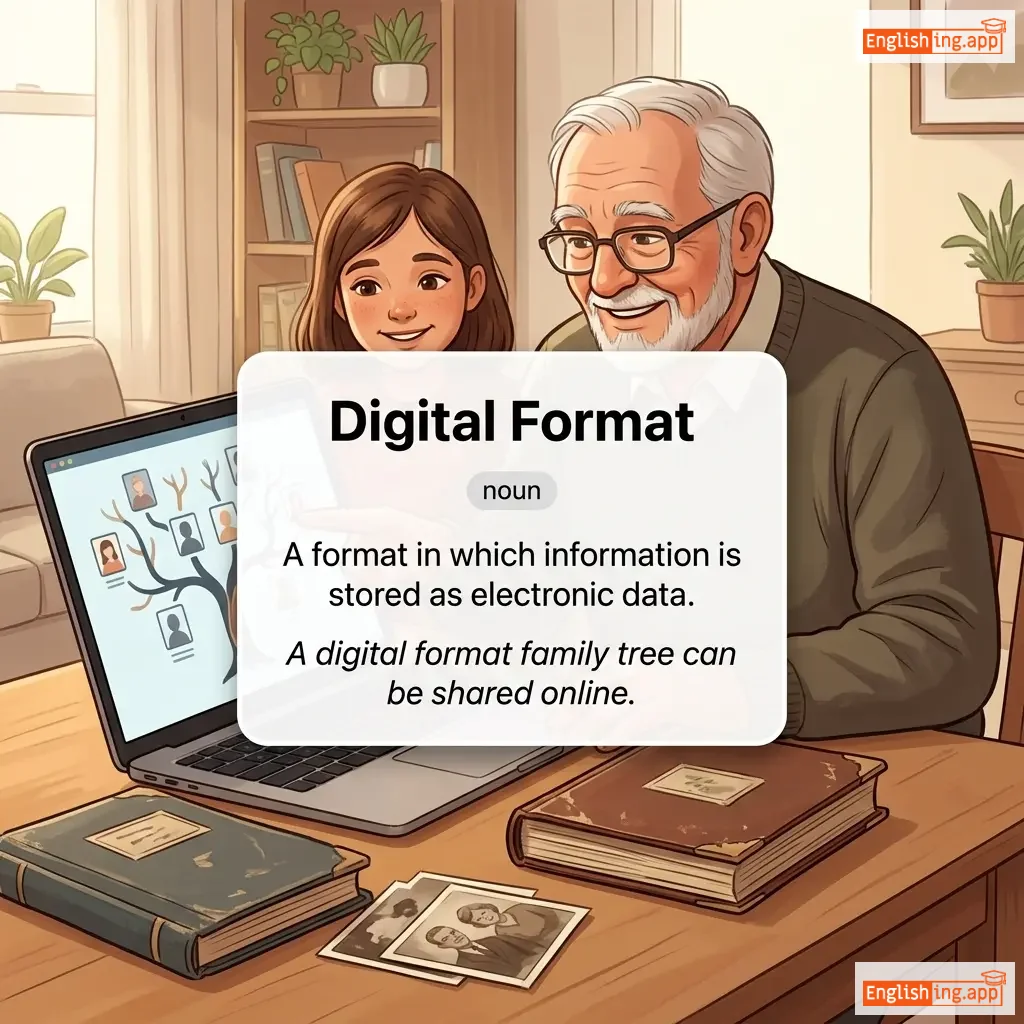
Digital Format definition card — visual illustration of the meaning
noun
ˈdɪdʒɪtəl ˈfɔːrmæt
цифровой формат (tsifrovoy format)

A format in which information is stored as electronic data.

"A digital format family tree can be shared online."

"Цифровое семейное древо можно поделиться онлайн." (Tsifrovoye semeynoye drevo mozhno podelit'sya onlayn.)
digital tools definition card — visual illustration of the meaning
noun
ˈdɪdʒ.ɪ.təl tuːlz
цифровые инструменты (tsifrovye instrumenty)

Electronic software and applications used for learning and educational purposes.

"Schools are integrating digital tools to enhance learning."

"Школы интегрируют цифровые инструменты для улучшения обучения." (Shkoly integriruyut tsifrovye instrumenty dlya uluchsheniya obucheniya.)
noun
/ˈdɪɡnɪˌtɛri/
важная персона (vazhnaia persona)

a person considered to be important because of high rank or office

"Several foreign dignitaries attended the state banquet."

"Несколько иностранных высокопоставленных лиц присутствовали на государственном банкете." (Neskol'ko inostrannykh vysokopostavlennykh lits prisutstvovali na gosudarstvennom bankete.)
noun
/ˈdɪɡnəti/
достоинство (dostoinstvo)

the state or quality of being worthy of respect or honor

"He faced the difficult situation with calm and dignity."

"Он столкнулся с трудной ситуацией с спокойствием и достоинством." (On stolknulsya s trudnoy situatsiey s spokoystviem i dostoinstvom.)
noun
/ˈdaɪɡræf/
диграф (digraf)

A pair of letters representing a single sound, such as 'sh' in 'ship'.

"In the word 'phone', the letters 'ph' form a digraph."

"В слове 'телефон' буквы 'ph' образуют диграф." (V slove 'telefon' bukvy 'ph' obrazyuyut digraf.)
verb
/daɪˈɡrɛs/
отклоняться от темы (digres)

To leave the main subject temporarily in speech or writing.

"The professor began to digress from the main topic of the lecture."
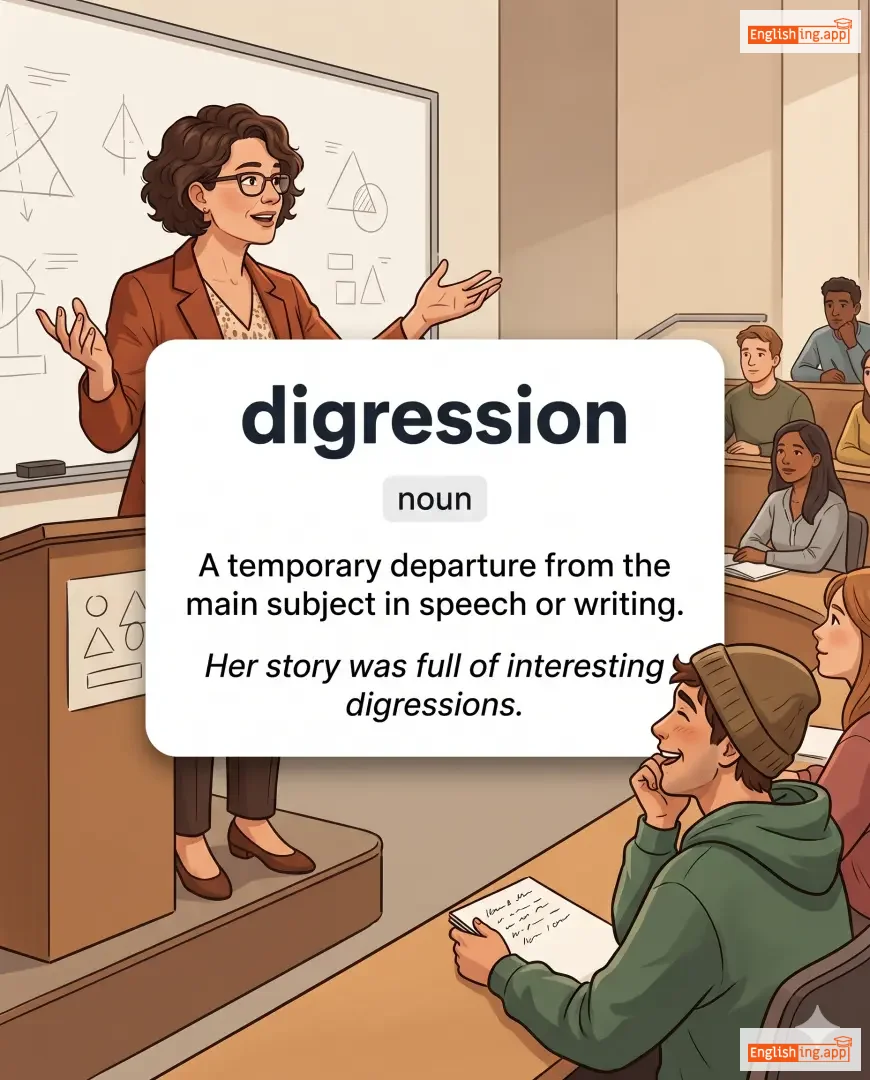
"Профессор начал отклоняться от основной темы лекции." (Professor nachal otklonyatsya ot osnovnoy temy lektsii.)
digression definition card — visual illustration of the meaning
noun
/daɪˈɡrɛʃən/
отступление (otstupleenie)

A temporary departure from the main subject in speech or writing.

"Her story was full of interesting digressions."

"Её история была полна интересных отступлений." (Yeyo istoriya byla polna interesnykh otstupleniy.)
adjective
/daɪˈɡrɛsɪv/
тенденция отклоняться от основной темы (tendentsiya otklonyatsya ot osnovnoy temy)

Tending to depart from the main subject in speech or writing.

"The speaker's digressive style made the lecture difficult to follow."

"Дигрессивный стиль лектора усложнил следование за лекцией." (Digressivnyy stil' lektora uslozhnil sleduyushcheye za lektsiyey.)
verb
/dɪˈlæpɪdeɪt/
разрушать (razrushat)

To cause something, especially a building, to fall into ruin or disrepair.

"The abandoned house began to dilapidate over the years."

"Покинутое здание начало разрушаться с годами." (Pokinutoe zdanie nachalo razrushatsya s godami.)
adjective
/dɪˈlæpɪˌdeɪtɪd/
обветшалый (obvetshalyy)

Fallen into disrepair or ruin due to neglect or age.

"The family lived in a dilapidated house at the edge of town."

"Семья жила в обветшавшем доме на окраине города." (Sem'ya zhila v obvetshavshom dome na okraine goroda.)
noun
/dɪˌlæpɪˈdeɪʃən/
упадок (upadok)

The state of disrepair or ruin as a result of neglect.

"The old temple was in a state of dilapidation."

"Старый храм был в состоянии упадка." (Staryi khram byl v sostoyanii upadka.)
verb
/daɪˈleɪt/
расширять (rasshiryat)

To make wider, larger, or more open.

"The doctor used drops to dilate the patient's pupils."

"Доктор использовал капли, чтобы расширить зрачки пациента." (Doktor ispol'zoval kapli, chtoby rasshirit' zrachki patsiyenta.)
adjective
/ˈdɪlətɔːri/
замедляющий (zamedlyayushchiy)

Tending to cause delay; slow to act.

"The committee was criticized for its dilatory response to the crisis."

"Комитет был раскритикован за его медленный ответ на кризис." (Komitet byl raskritikovann za ego medlennyy otvet na krizis.)
dilemma definition card — visual illustration of the meaning
noun
/daɪˈlɛmə/
дилемма (dilemma)

A situation in which a difficult choice has to be made between two or more alternatives.

"She faced a dilemma about whether to accept the job offer or continue her studies."

"Она столкнулась с дилеммой, стоит ли принять предложение о работе или продолжить учебу." (Ona stolknulas' s dilemmoy, stoit li prinimat' predlozhenie o rabote ili prodolzhit' uchebu.)
noun
/ˌdɪləˈtænt/
делетант (deletant)

A person who takes up an art, activity, or subject merely for amusement, especially in a superficial way.

"He was dismissed as a dilettante in the art world because he lacked formal training."

"Его отвергли как дилетанта в мире искусства, потому что ему не хватало формального образования." (Ego otvergli kak dilettanta v mire iskusstva, potomu chto emu ne khvatalo formal'nogo obrazovaniya.)
diligence definition card — visual illustration of the meaning
noun
/ˈdɪlɪdʒəns/
усердие (userdie)

Careful and persistent work or effort.

"Through diligence and determination, she completed her research on time."

"С помощью усердия и решимости она завершила своё исследование вовремя." (S pomoshch'yu userdiya i reshimosti ona zavershila svojo issledovanie vovremya.)
adjective
/ˈdɪlɪdʒənt/
старательный (staratelnyy)

Showing care and conscientiousness in one's work or duties.

"She is a diligent student who always finishes her assignments on time."

"Она старательная студентка, которая всегда вовремя заканчивает свои задания." (Ona staratel'naya studentka, kotoraya vsegda vovremya zakanchivayet svoi zadaniya.)
verb
/daɪˈluːt/
разбавить (razbavit')

To make a liquid thinner or weaker by adding water or another solvent.

"You should dilute the juice with water before serving it to children."

"Вы должны разбавить сок водой перед тем, как подавать его детям." (Vy dolzhny razbavit' sok vodoy pered tem, kak podavat' yego detyam.)
adjective
/dɪm/
тусклый (tuskly)

not bright; having little light; not clearly visible

"The room was dim because the curtains were closed."

"Комната была тусклой, потому что шторы были закрыты." (Komnata byla tuskloi, potomu chto shtory byli zakryty.)
noun
/daɪm/
монета в 10 центов (moneta v 10 tsentov)

a small coin, especially a U.S. coin worth ten cents

"He gave me a dime for the phone call."
"Он дал мне монету в 10 центов за телефонный звонок." (On dal mne monetu v 10 tsentov za telefonnыy zvonok.)
dimension definition card — visual illustration of the meaning
noun
/dɪˈmɛnʃən/
измерение (izmereniye)

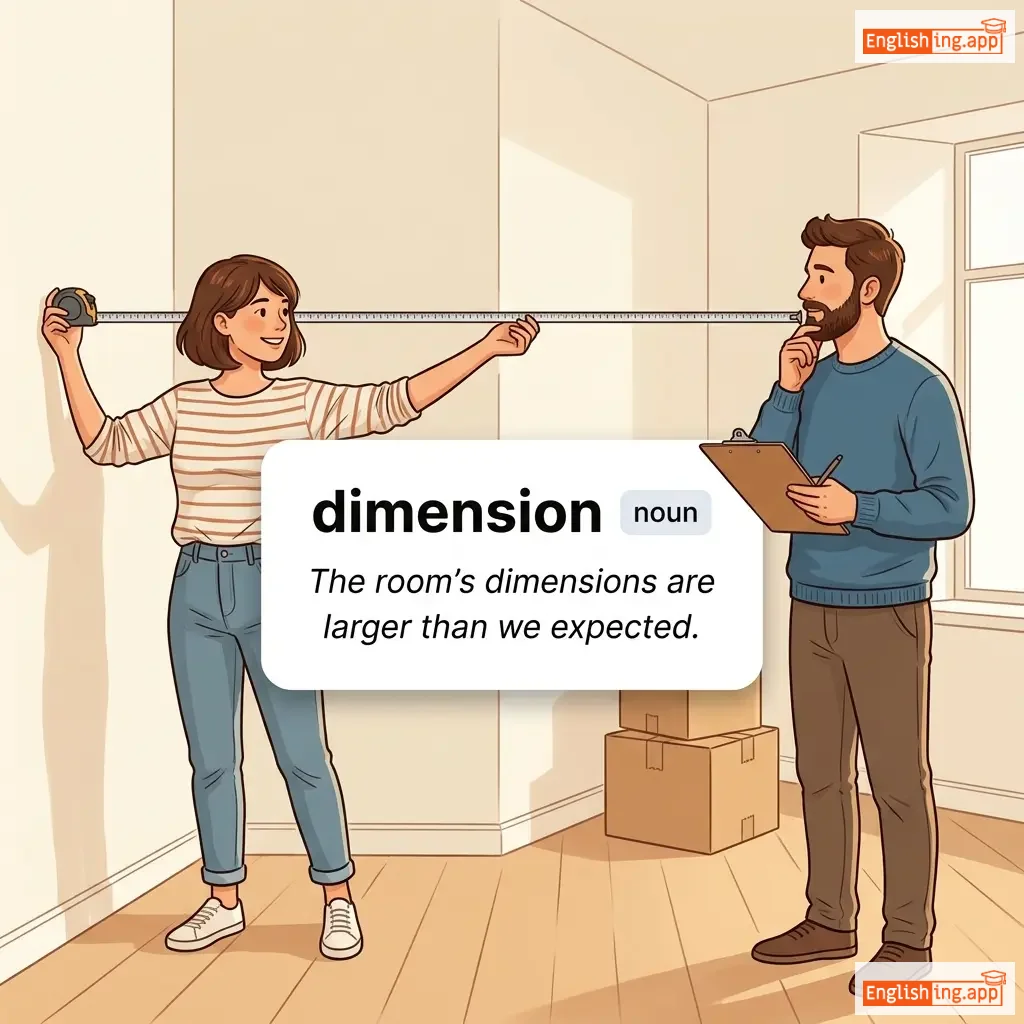
A measurable extent of a particular kind, such as length, breadth, depth, or height.

"The room’s dimensions are larger than we expected."
"Размеры комнаты больше, чем мы ожидали." (Razmery komnaty bol'she, chem my ozhidali.)
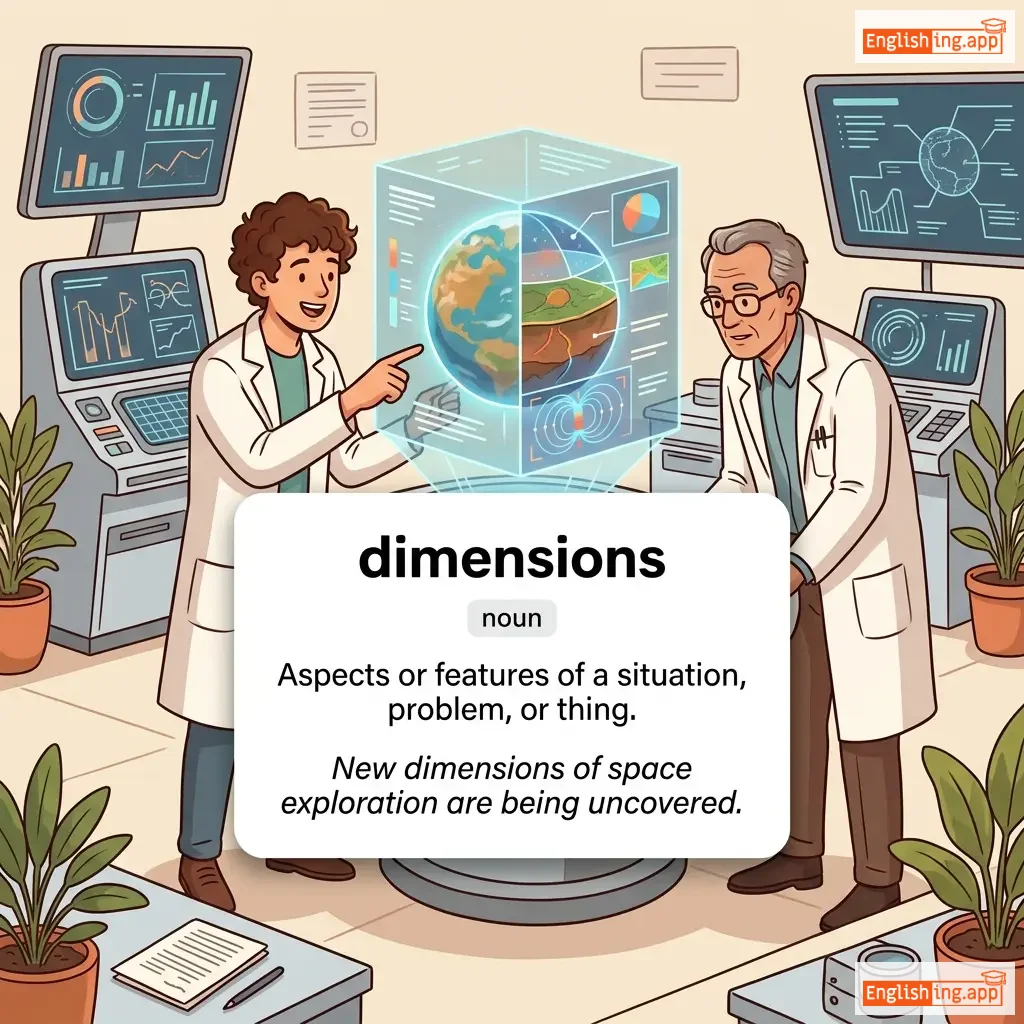
dimensions definition card — visual illustration of the meaning
noun
/daɪˈmen.ʃənz/
измерения (izmereniya)

Aspects or features of a situation, problem, or thing.

"New dimensions of space exploration are being uncovered."

"Открываются новые измерения в исследовании космоса." (Otkryvayutsya novye izmereniya v issledovanii kosmosa.)
⬇️

diminish

verb
/dɪˈmɪnɪʃ/

to make or become less; to reduce in size, importance, or value

"Over time, his influence in the company began to diminish."
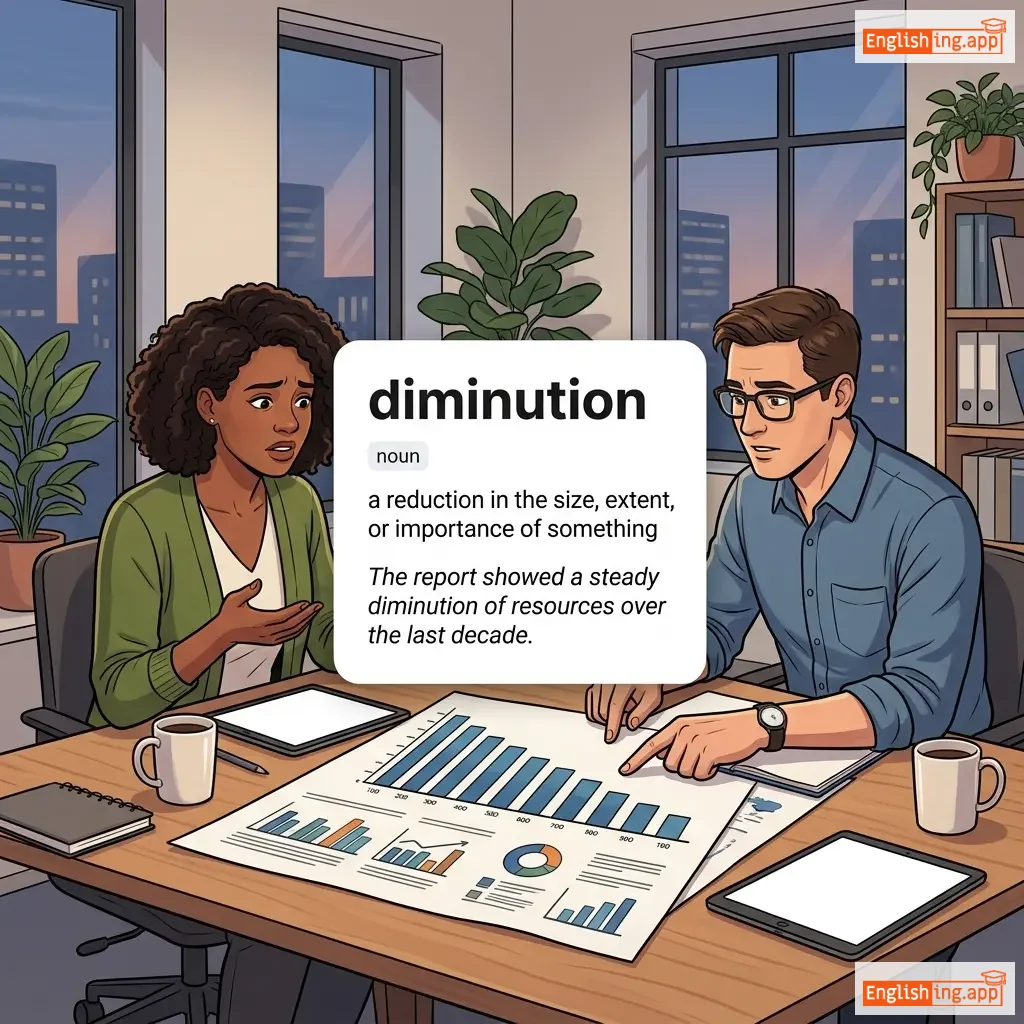
diminution definition card — visual illustration of the meaning
noun
/ˌdɪmɪˈnjuːʃən/
уменьшение (diminyushun)

a reduction in the size, extent, or importance of something

"The report showed a steady diminution of resources over the last decade."

"Доклад показал устойчивое уменьшение ресурсов за последнее десятилетие." (Doklad pokazal ustoychivoe umenchenie resursov za poslednee desyatiletiye.)
adjective
/dɪˈmɪnjətɪv/
крошечный (kroshechny)

extremely or unusually small

"Despite his diminutive size, he was a powerful leader."

"Несмотря на его крошечный размер, он был мощным лидером." (Nesmotrya na ego kroshichnyy razmer, on byl moschtym liderom.)
adverb
/ˈdɪmli/
тускло (tusklo)

in a faint or unclear way; with little light

"The room was dimly lit by a single candle."

"Комната была тускло освещена одной единственной свечой." (Komnata byla tusklo osveshchena odnoi edinstvennoi svechoy.)
noun
/ˈdɪm.pəl/
ямочка (yamochka)

a small depression in the flesh, either one that exists permanently or one that forms when smiling

"Her charming dimples appeared whenever she smiled at the children."

"Её очаровательные ямочки появлялись, когда она улыбалась детям." (eyo ocharovatel'nye yamochki poyavlyalis', kogda ona ulybalas' detyam.)
noun
/dɪn/
шум (shum)

a loud, unpleasant, and prolonged noise

"The din of traffic outside made it hard to concentrate."

"Шум от движения транспорта снаружи затруднял сосредоточение." (Shum ot dvizhiniya transporta snaruzi zatrudnyal sosredotochenie.)
verb
/daɪn/
ужинать (uzhinat)

to eat a meal, especially the main meal of the day

"We usually dine at seven o'clock in the evening."

"Мы обычно ужинаем в семь часов вечера." (My obychno uzhinaem v sem chasov vechera.)
noun
/ˈdɪŋɡi/
шлюпка (shlyupka)

a small boat, often carried or towed by a larger vessel, used for short trips or as a lifeboat

"They rowed the dinghy back to the yacht."

"Они гребли на шлюпке обратно к яхте." (Oni grebli na shlyupke obratno k yakhte.)
adjective
/ˈdɪndʒi/
грязный (gryaznyy)

gloomy and drab; dirty or discolored

"The old hotel room looked dark and dingy."

"Старая гостиничная комната выглядела тёмной и грязной." (Staraia gostinichnaia komnata vygliadela tyomnoy i gryaznoy.)
noun
/ˈdaɪnɪŋ/
ужин (uzhin)

the act of eating a meal, especially in a formal setting

"We enjoyed fine dining at the new restaurant."

"Мы наслаждались изысканным ужином в новом ресторане." (My naslazhdalis' izyskannym uzhinom v novom restorane.)
Dinner definition card — visual illustration of the meaning
noun
/ˈdɪnər/
ужин (uzhin)

the main meal of the day, usually eaten in the evening

"We had a lovely dinner at a new restaurant last night."

"Мы поужинали в новом ресторане прошлой ночью." (My poyuzhinayli v novom restorane proshloy noch'yu.)
noun
/dɪnt/
усилие, след от удара (usilie, sled ot udara)

an impression or hollow made by a blow; force or power

"By dint of hard work, he achieved success."

"Благодаря упорной работе он добился успеха." (Blagodarya upornoi rabote on dobylsya uspekha.)