Словари

Словарь английского языка | Значения слов, определения и примеры
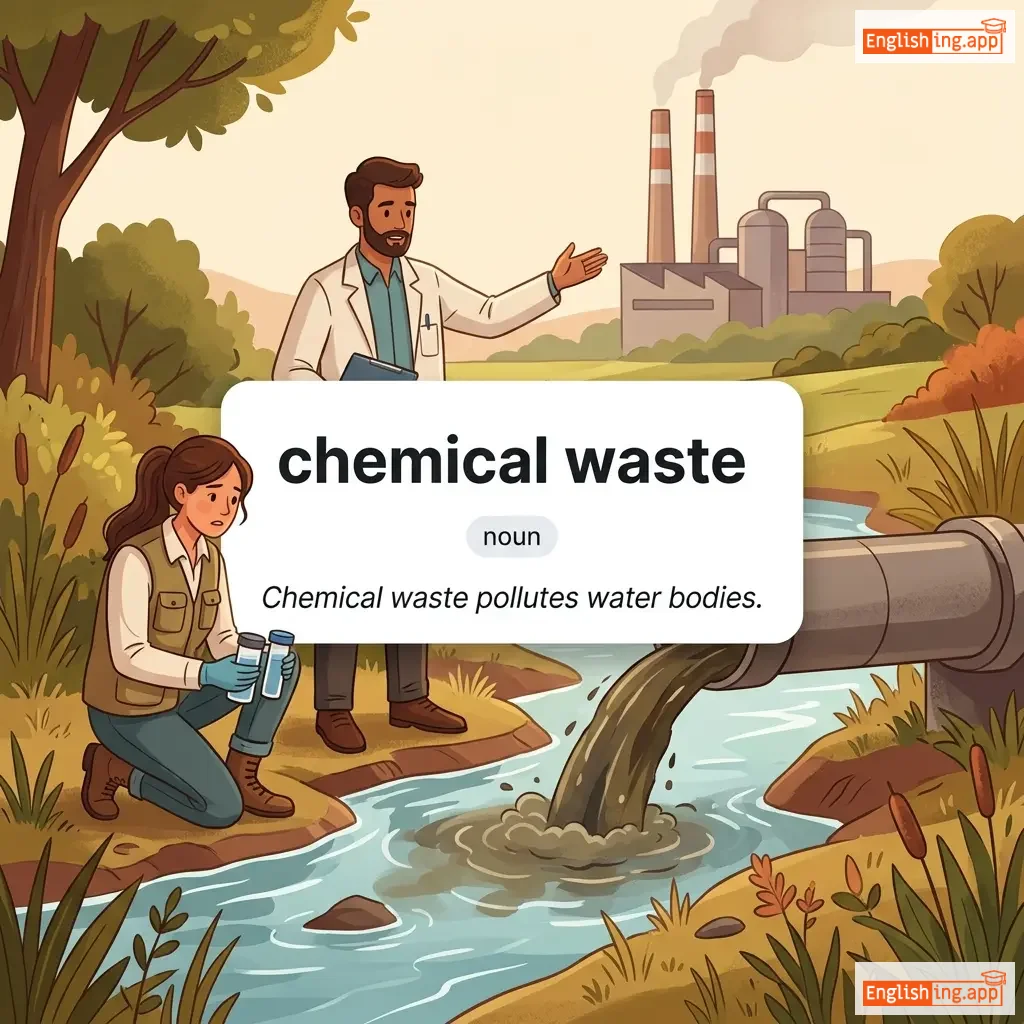
chemical waste definition card — visual illustration of the meaning
noun
ˈkɛmɪkəl weɪst
химические отходы (khimicheskiye otkhody)

Waste material from industrial or laboratory processes that contains harmful chemicals.

"Chemical waste pollutes water bodies."

"Химические отходы загрязняют водоемы." (Khimicheskiye otkhody zagrjaznyayut vodoemy.)
noun
/ʃəˈmiːz/
шемиза (shemeza)

a woman's loose-fitting undergarment or dress hanging straight from the shoulders

"The vintage chemise was made of delicate lace and silk."

"Винтажная шемиза была сделана из деликатного кружева и шелка." (Vintazhnaya shemeza byla sdelana iz delikatnogo kruzheva i shelka.)
noun
/ˈkemɪst/
химик; фармацевт (khimik; farmatsevt)

a scientist who studies chemistry; a person trained to prepare and dispense medicines

"The chemist analyzed the sample to determine its composition."

"Химик проанализировал образец, чтобы определить его состав." (Khimik proanaliziroval obrazets chtoby opredelit ego sostav)
noun
/ˈkɛmɪstri/
химия (khimiya)

the branch of science that studies substances and their interactions; also the emotional connection between people

"They have great chemistry and work well together."

"У них отличная химия, и они хорошо работают вместе." (U nikh otlichnaya khimiya, i oni khorosho rabotayut vmeste.)
adjective
/ˈtʃɛkərd/
в клетку (v kletku)

Having a pattern of squares, or marked by varied and contrasting experiences or periods.

"He had a chequered career with both great successes and failures."

"У него была карьера в клетку с большими успехами и неудачами." (U nego byla kariera v kletku s bol'shimi uspekhami i neudachami.)
verb
/ˈtʃɛrɪʃ/
беречь (berech)

To hold something dear, to love and protect, or to keep a hope or memory alive.

"She cherishes the memories of her childhood home."

"Она бережно хранит воспоминания о своем детстве." (Ona berezhno khranит vospominaniya o svoem detstve.)
noun
/ˈtʃer.i/
вишня (vishnya)

a small round red or black fruit with a hard seed inside

"She picked fresh cherries from the tree in her garden."

"Она сорвала свежие вишни с дерева в своем саду." (Ona sorvala svezhie vishny s dereva v svoem sadu.)
noun
/ˈtʃer.i ˌblɒs.əm/
цветок вишни (tsvetok vishni)

the pink or white flowers of a cherry tree that bloom in spring

"The cherry blossoms bloom beautifully in April."

"Цветы вишни красиво цветут в апреле." (Tsvety vishni krasivo tsvetut v aprele.)
adjective
/tʃəˈruːbɪk/
херувимский (kheruvimskiy)

Innocent, sweet, and angelic, like a cherub.

"The baby had a cherubic smile that melted everyone’s heart."

"У ребенка была херувимская улыбка, которая растопила сердца всех." (U rebenka byla kheruvimskaya ulybka, kotoraya rastopila serdtsa vsekh.)
noun
/tʃɛst/
грудь (grud')

the front part of the human body between the neck and the stomach

"He felt a pain in his chest after running."

"Он почувствовал боль в груди после бега." (On pochuvstvoval bol' v grudi posle bega.)
noun
/ˈʃɛvrən/
символ в форме V (simvol v forme V)

A V-shaped pattern, often used in military insignia or design.

"The sergeant’s uniform displayed three chevrons on the sleeve."

"На форме сержанта было три шеврона на рукаве." (Na forme serzhanta bylo tree shevrona na rukave.)
verb
/tʃuː/
счастье (schastye)

to bite food into smaller pieces with your teeth before swallowing it

"You should chew your food properly to help with digestion."

"Она не могла скрыть свое счастье, когда получила награду." (Ona ne mogla skryt' svoe schast'ye, kogda poluchila nagradu.)
noun
/kiˌɑːrəˈskjʊəroʊ/
драматический контраст между светом и тенью (dramaticheskiy kontrast mezhdu svetom i ten'yu)

The use of strong contrasts between light and dark in art or literature to create a dramatic effect.

"The artist's painting used chiaroscuro to highlight the figure's face."
"Картина художника использовала киароскуро, чтобы выделить лицо фигуры." (Kartina khudozhnika ispol'zovala kiaroskuro, chtoby vydelit' litso figury.)
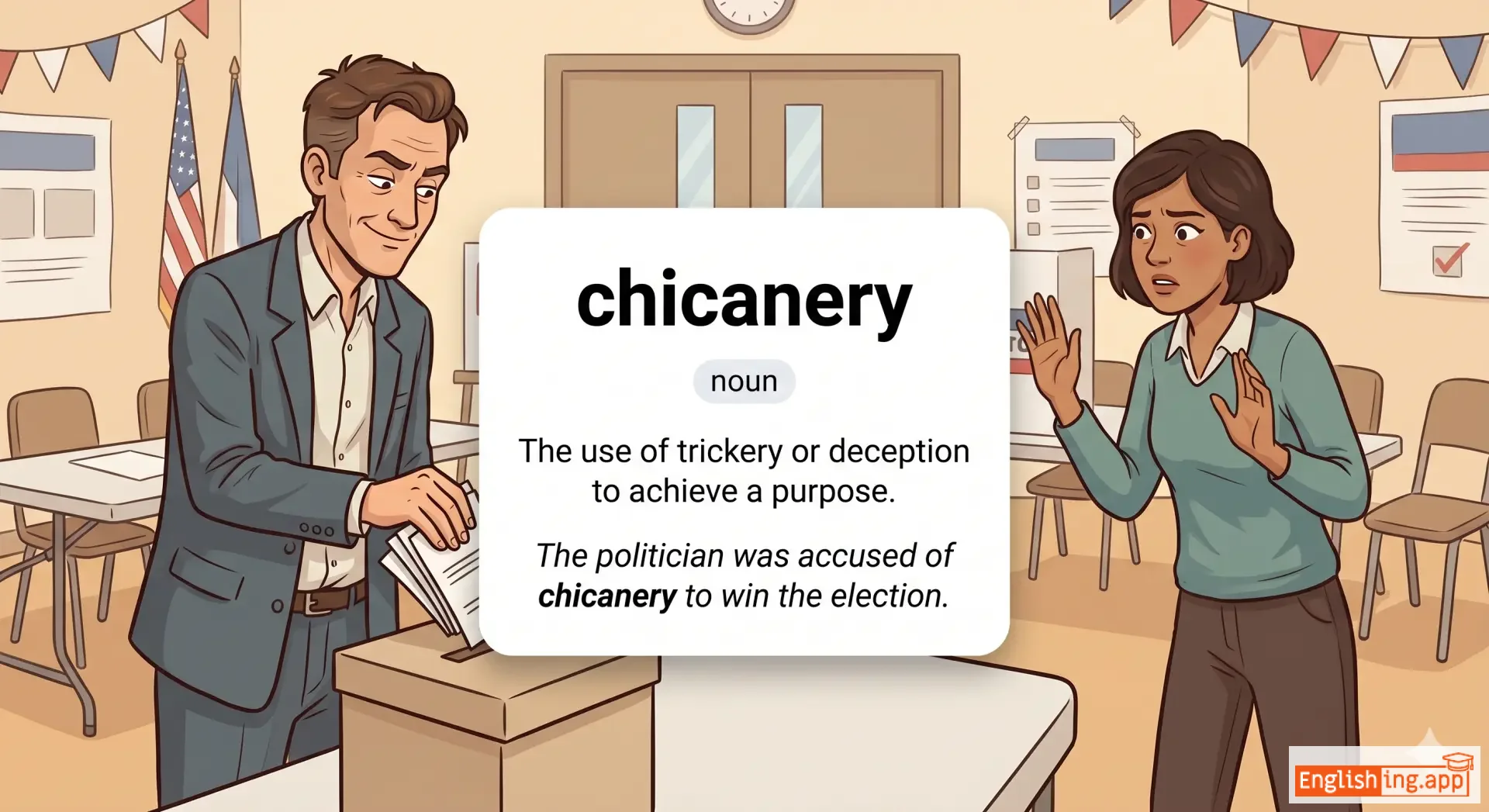
chicanery definition card — visual illustration of the meaning
noun
/ʃɪˈkeɪnəri/
обман (obman)

The use of trickery or deception to achieve a purpose.

"The politician was accused of chicanery to win the election."

"Политика обвинили в обмане с целью выиграть выборы." (Politika obvinili v obmane s tsel'yu viygrati vybory.)
noun
/ˈtʃɪk piː/
нут (nut)

round beige legume; protein-rich pulse used in various dishes

"Soak the chick peas overnight before cooking them for better digestion."

"Замочите нут на ночь перед тем, как готовить, чтобы улучшить пищеварение." (Zamochite nut na noch' pered tem, kak gotovit', chtoby uluchshit' pishchevarenie.)
noun
/ˈtʃɪkɪn/
курица (kuritsa)

a domestic bird kept for its eggs or meat

"We had fried chicken for dinner."
"Мы ели жареную курицу на ужин." (My yeli zharenuyu kuritsu na uzhin.)
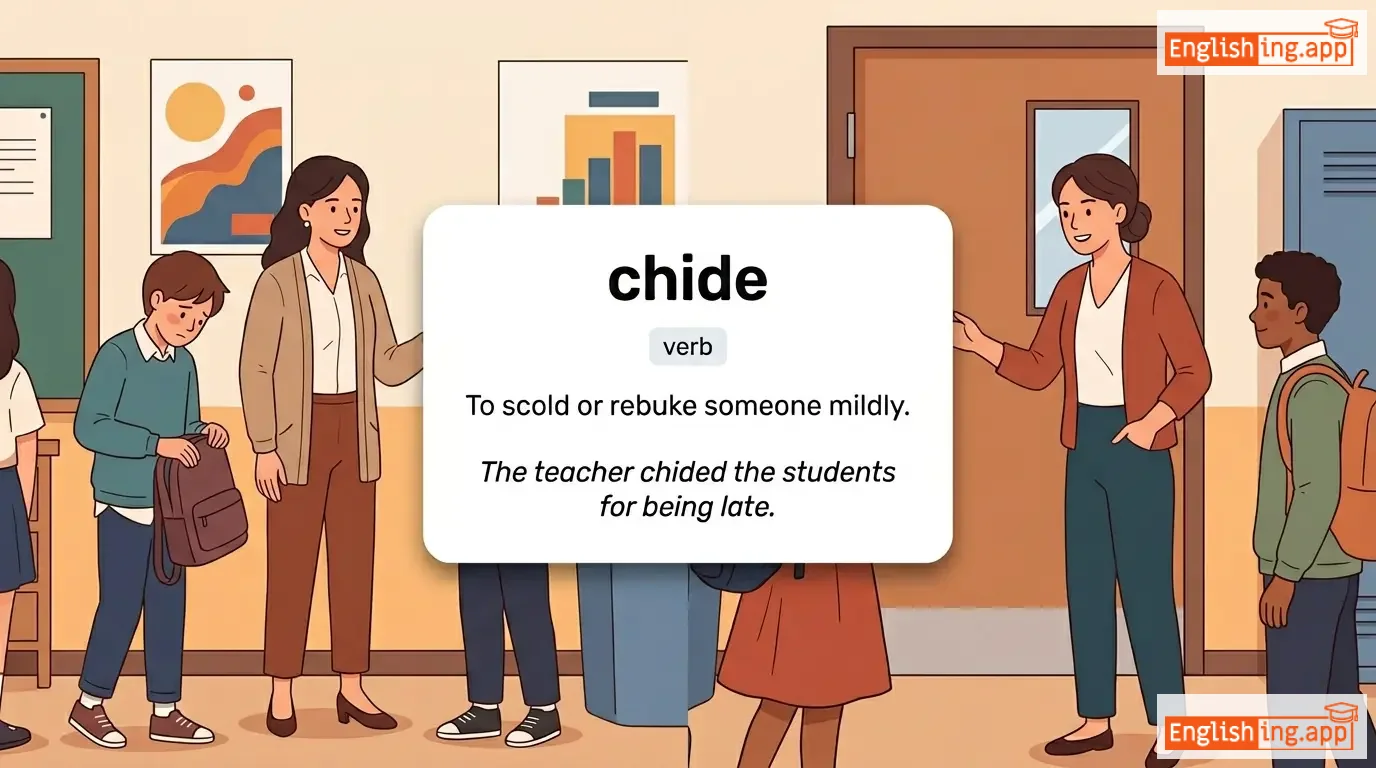
chide definition card — visual illustration of the meaning
👩‍🏫

chide

verb
/tʃaɪd/

To scold or rebuke someone mildly.

"The teacher chided the students for being late."

noun
/tʃiːf/
шеф (shef)

a leader or person in charge of a group or organization

"The chief of the village made an important decision."

"Шеф деревни принял важное решение." (Shef derevni prinyal vazhnoe reshenie.)
adverb
/ˈtʃiːfli/
главным образом (glavnym obrazom)

mainly; primarily

"The festival is celebrated chiefly by young people."

"Фестиваль празднуется главным образом молодыми людьми." (Festival prazdnuyetsya glavnym obrazom molodymi lyud'mi.)
noun
/ʃɪˈfɒn/
шифон (shifon)

A lightweight, sheer fabric often used in dresses or scarves.

"She wore a beautiful chiffon dress at the party."

"Она носила красивое шифоновое платье на вечеринке." (Ona nosila krasivoe shifonovoe plat'ye na vecherinke.)
noun
/tʃaɪld/
ребёнок (rebyonok)

a young human being below the age of puberty or below the legal age of majority

"The child played happily in the park."

"Ребёнок играл радостно в парке." (Rebyonok igral radostno v parke.)
noun
/ˈtʃaɪldhʊd/
детство (detstvo)

the period of being a child

"She spent her childhood in a small village."

"Она провела своё детство в маленькой деревне." (Ona provela svoe detstvo v malen'koy derevne.)
adjective
/ˈtʃaɪl.dɪʃ/
детский; поведение, характерное для ребенка, но неподобающее для взрослого (detskiy; povedeniye, kakhternoe dlya rebenka, no nepodobyushchee dlya vzroslogo)

immature and silly; behaving in a way that is typical of a child but inappropriate for an adult

"His childish behavior during the meeting was quite embarrassing."

"Его детское поведение на встрече было довольно неловким." (Yego detskoye povedeniye na vstreche bylo davol'no nelovkim.)
adjective
/ˈtʃaɪld.laɪk/
детский; невинный и доверчивый; чистый и простой (detskij; nevinnyj i doverchivyy; chistyj i prostoj)

innocent and trusting like a child; having the good qualities of a child; pure and simple

"She maintained a childlike wonder about the world around her."

"Она сохраняла детское изумление от мира вокруг нее." (Ona sokhranyala detskoe izumlenie ot mira vokrug nee.)
❄️

Chill

verb
/tʃɪl/

to make something cold or to relax and take it easy

"We decided to chill at home after a long day."

noun
/ˈtʃɪl.i ˈpaʊ.dər/
порошок чили (poroshok chili)

a spice made from ground dried chili peppers, used to add heat and flavor to food

"Add two teaspoons of chilli powder to make the dish spicier."

"Добавьте две чайные ложки порошка чили, чтобы сделать блюдо острее." (Dobav'te dve chaynye lozhki poroshka chili, chtoby sdelat' blyudo ostrye.)
adjective
/ˈtʃɪli/
холодный (kholodny)

uncomfortably or unpleasantly cold

"It was a chilly morning in December."

"Это было холодное утро в декабре." (Eto bylo kholodnoe utro v dekabre.)
noun
/ˈtʃɪl.i/
холодно; острый перец; (kholodno, ostryy perets)

noticeably cold; a hot-tasting pod of a variety of capsicum, used as a spice

"The chef added red chilli to make the curry spicier."

"Шеф-повар добавил красный чили, чтобы сделать карри острее." (Shef-povar dobavil krasnyy chili, chtoby sdelat' karri ostrye.)
noun
/kaɪˈmɪərə/
химера (khimera)

A mythical creature with parts from different animals; also used to mean a fanciful illusion or unattainable dream.

"The idea of a perfect society is often a chimera."

"Идея о совершенном обществе часто является химерой." (Ideya o sovershennom obshchestve chasto yavlyaetsya khimeroy.)
chimerical definition card — visual illustration of the meaning
adjective
/kaɪˈmɛrɪkəl/
химерный (khimernyy)

Imaginary, fanciful, or wildly unrealistic; existing only in the imagination.

"His chimerical plans for building a city on the moon fascinated the young engineers."

"Его химерные планы по строительству города на Луне очаровали молодых инженеров." (Ego khimernye plany po stroitel'stvu goroda na Lune ocharovali molodykh inzhenerov.)
noun
/tʃɪn/
подбородок (podborodok)

the part of the face below the mouth

"He rested his chin on his hand while thinking."

"Он положил подбородок на руку, думая." (On polozhil podborodok na ruku, dumaya.)
noun
/ˈtʃaɪ.nə bɑːks/
оранжевый жасмин (oranzhevyy zhasmin)

a small evergreen shrub with tiny white fragrant flowers

"The China box plant produced clusters of small white flowers."

"Растение оранжевый жасмин дало грозди мелких белых цветов." (Rastenie oranzhevyy zhasmin dalo grozdi melkikh belykh tsvetov.)
noun
/ˈtʃaɪ.nə roʊz/
гибискус (gibiskus)

a tropical flowering plant with large, showy flowers in various colors

"The bright red China-rose flowers decorated the entrance of the house."

"Ярко-красные цветы гибискуса украшали вход в дом." (Yarko krasnye tsvety gibiskusa ukrashali vhod v dom.)
noun
/ˈtʃaɪ.nə.weər/
фарфоровая посуда (farforovaya posuda)

dishes, plates, cups, and other tableware made of porcelain or fine ceramic

"The expensive china-ware was displayed in the cabinet."

"Дорогие фарфоровые изделия были выставлены в шкафу." (Dorogie farforovye izdeliya byli vystavleny v shkafu.)
adjective, noun
/tʃaɪˈniːz/
китайский (kitayskiy)

relating to China, its people, or its language

"We went to a Chinese restaurant last night."

"Мы пошли в китайский ресторан прошлой ночью." (My poshli v kitayskiy restoran proshloy noch'yu.)
🍟

chip

noun, verb
/tʃɪp/

A small piece broken off from something; or to cut or break a small piece from something.

"He accidentally chipped the edge of the table."

noun
/ˈkaɪrəˌmænsi/
хиромантия (kiromantiya)

The practice of predicting the future by interpreting the lines on the palms of hands; palmistry.

"The old woman practiced chiromancy and told fortunes for travelers."

"Старая женщина практиковала хиромантию и предсказывала будущее путешественникам." (Staraya zhenshchina praktikovala khiromantiyu i predskazyvala budushchee puteshestvennikam.)
noun
/kɪˈrɒpədɪst/
подиатр (podiatr)

A healthcare professional who diagnoses and treats foot problems.

"The chiropodist treated her painful corns and calluses."

"Подиатр лечил её болезненные мозоли и натоптыши." (Podiatr lechil yeyo boleznennye mozoli i natoptyshi.)
noun, verb
/ˈtʃɪzəl/
резец (rezyets)

A tool with a sharp edge used for cutting or shaping hard materials; or to cut or carve with such a tool.

"The sculptor chiseled the marble into a beautiful statue."

"Скульптор вырезал мрамор в красивую статую." (Skulptor vyrezal mramor v krasivuyu statuyu.)
noun
/tʃɪt/
заметка, квитанция (zametka, kvitantsiya)

a short note, typically a brief informal letter; a voucher for a sum owed

"She left a chit on the table asking him to call her back."

"Она оставила чиркут на столе, прося его перезвонить." (Ona ostavila chirkut na stole, prosya ego perezvonit'.)
adjective
/ˈʃɪvəlrəs/
рыцарский (rytsarskiy)

Behaving in a courteous, gallant, and honorable way, especially toward women.

"He was chivalrous, always opening doors for others."
"Он был рыцарским, всегда открывал двери для других." (On byl rytsarskim, vsegda otkryval dveri dlya drugikh.)
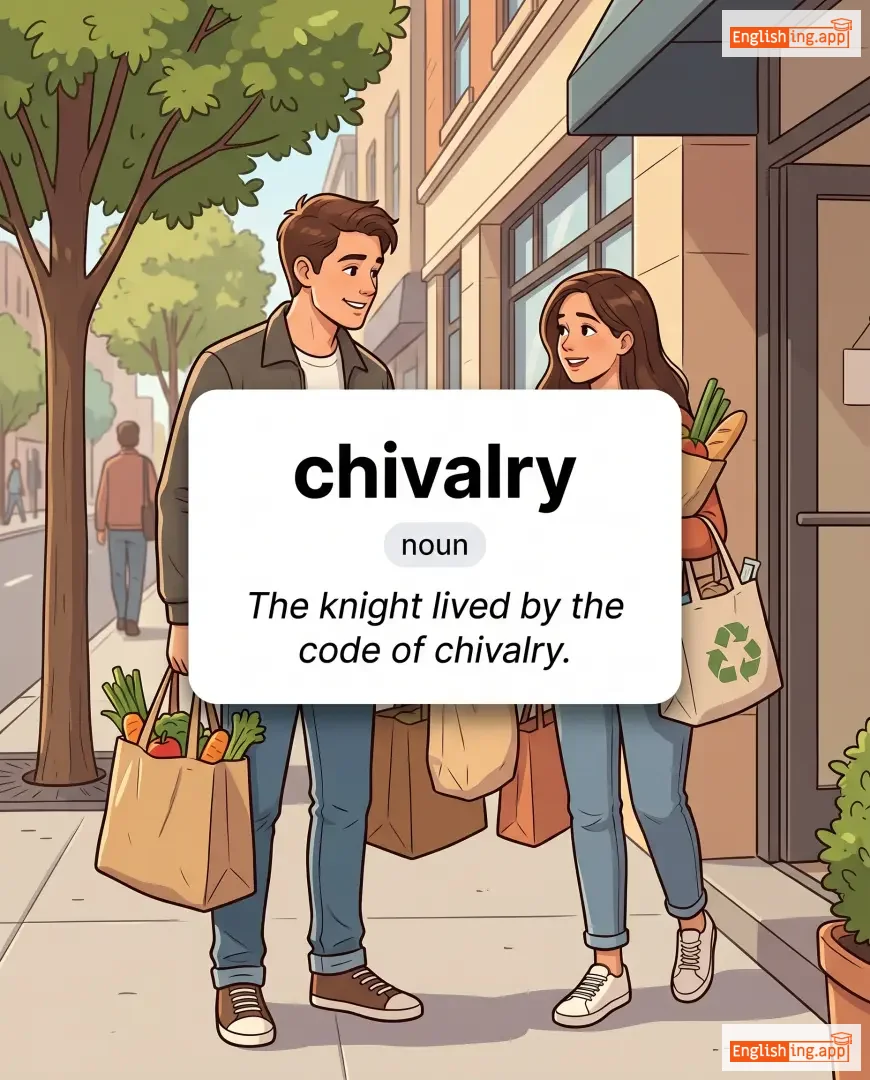
chivalry definition card — visual illustration of the meaning
noun
/ˈʃɪvəlri/
рыцарство (rytsarstvo)

The medieval knightly system with its moral, social, and religious code; courteous behavior, especially toward women.

"The knight lived by the code of chivalry."

"Рыцарь жил по кодексу рыцарства." (Rytsar' zhiv po kodeksu rytsarstva.)
noun
/ˈtʃɒklət/
шоколад (shokolad)

a sweet, brown food made from roasted cocoa beans

"She bought a bar of chocolate from the store."

"Она купила плитку шоколада в магазине." (Ona kupila plitku shokolada v magazine.)
choice definition card — visual illustration of the meaning
noun
/tʃɔɪs/
выбор (vybor)

An act of selecting between two or more possibilities.

"She had to make a difficult choice between two jobs."

"Ей пришлось сделать трудный выбор между двумя работами." (Yey prishlos' sdelat' trudnyy vybor mezhdu dvumya rabotami.)
noun
/ˈkwaɪər/
хор (khor)

An organized group of singers, typically performing in church services or concerts.

"The choir sang beautifully during the ceremony."

"Хор пел прекрасно во время церемонии." (Khor pel prekrasno vo vremya tseremonii.)
noun
/ˈkɒlərə/
холера (cholera)

An infectious disease of the small intestine causing severe vomiting and diarrhea.

"The village suffered an outbreak of cholera after the flood."

"В деревне после наводнения произошла вспышка холеры." (V derevne posle navodneniya proizoshla vspishka kholery.)
adjective
/ˈkɒlərɪk/
холерик (kholerik)

Easily angered; irritable and hot-tempered.

"His choleric nature often got him into arguments."

"Его холеричный характер часто приводил его к ссорам." (ego kholerichnyj kharakter chasto privodil ego k ssoram)
noun
/kəˈlɛstərɒl/
холестерин (kholesterin)

a fatty substance found in the blood, high levels of which can cause health problems

"High cholesterol can increase the risk of heart disease."

"Высокий уровень холестерина может увеличить риск сердечных заболеваний." (Vysokiy urovven' kholesterina mozhet uvelichit' risk serdchnykh zabolevaniy.)
choose definition card — visual illustration of the meaning
verb
/tʃuːz/

to select one option from a range of possibilities

"You must choose the right path for your future."

adjective
/ˈtʃuː.zi/
привередливый; очень выборочный; особенный в том, что ему нравится или что он принимает (priveredlivyi)

very careful in choosing; selective; particular about what one likes or accepts

"He's very choosy about the restaurants where he eats."

"Он очень привередлив в ресторанах, где он ест." (On ochen' priveredliv v restoranakh, gde on yest.)