Словари

Словарь английского языка | Значения слов, определения и примеры

noun/verb
/kɔːz/
причина / вызывать (prichina / vyzyvat)

a person or thing that gives rise to an action, phenomenon, or condition; to make something happen

"The heavy rain caused flooding in the city."
"Сильный дождь вызвал наводнение в городе." (Sil'nyy dozhd' vyzval navodneniye v gorode.)
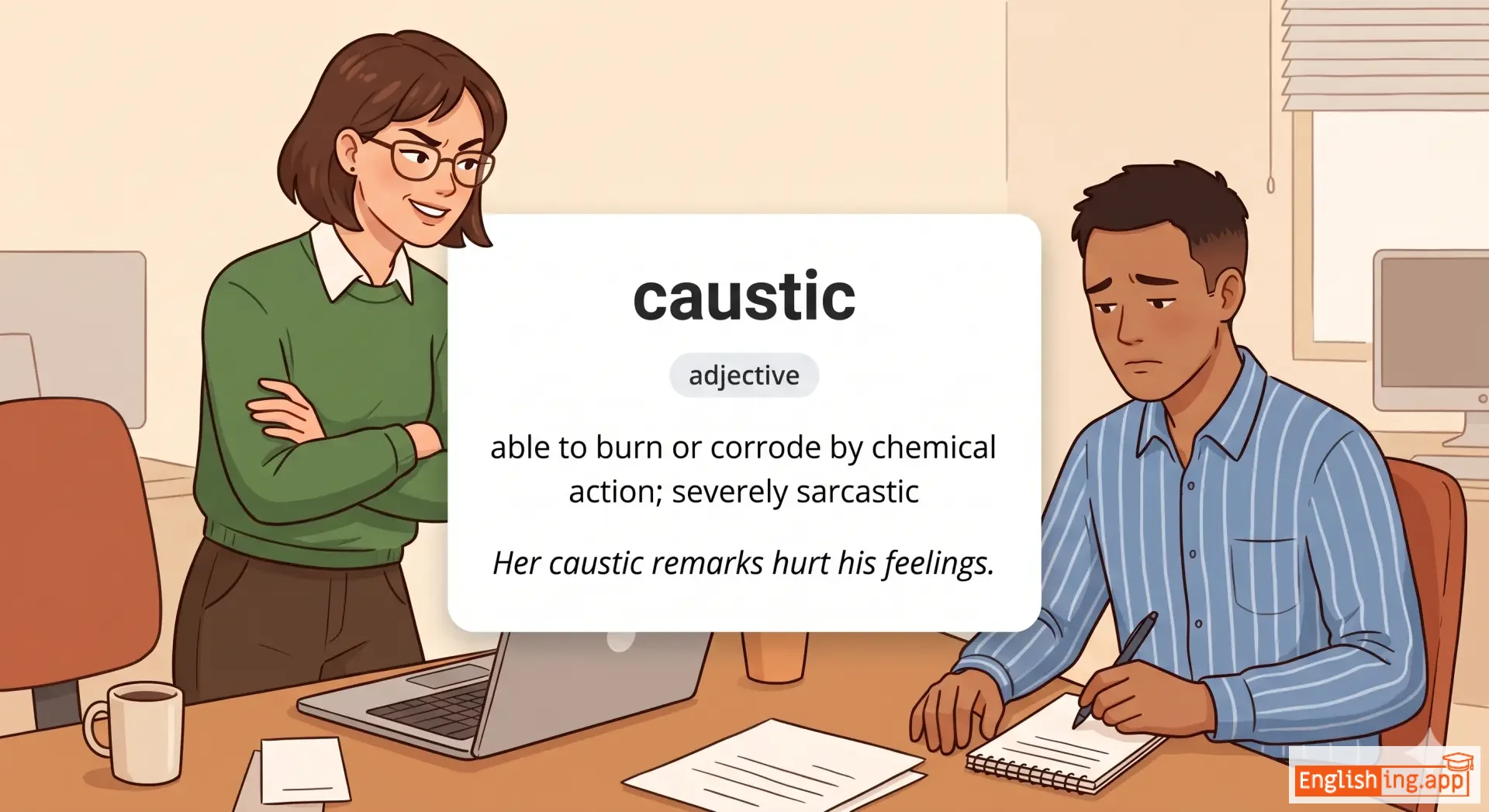
caustic definition card — visual illustration of the meaning
adjective
/ˈkɔː.stɪk/
едкий, саркастический (yedka, sarkasticheskiy)

able to burn or corrode by chemical action; severely sarcastic

"Her caustic remarks hurt his feelings."

"Её едкие замечания ранили его чувства." (Eyo yedkie zamechaniya ranili ego chuvstva.)
verb
/ˈkɔː.tə.raɪz/
калибрить (kalibrit)

to burn tissue to stop bleeding or prevent infection

"The doctor cauterized the wound to stop the bleeding."
"Врач прижег рану, чтобы остановить кровотечение." (Vrach prizhog ranu, chtoby ostanovit' krovotechienie.)
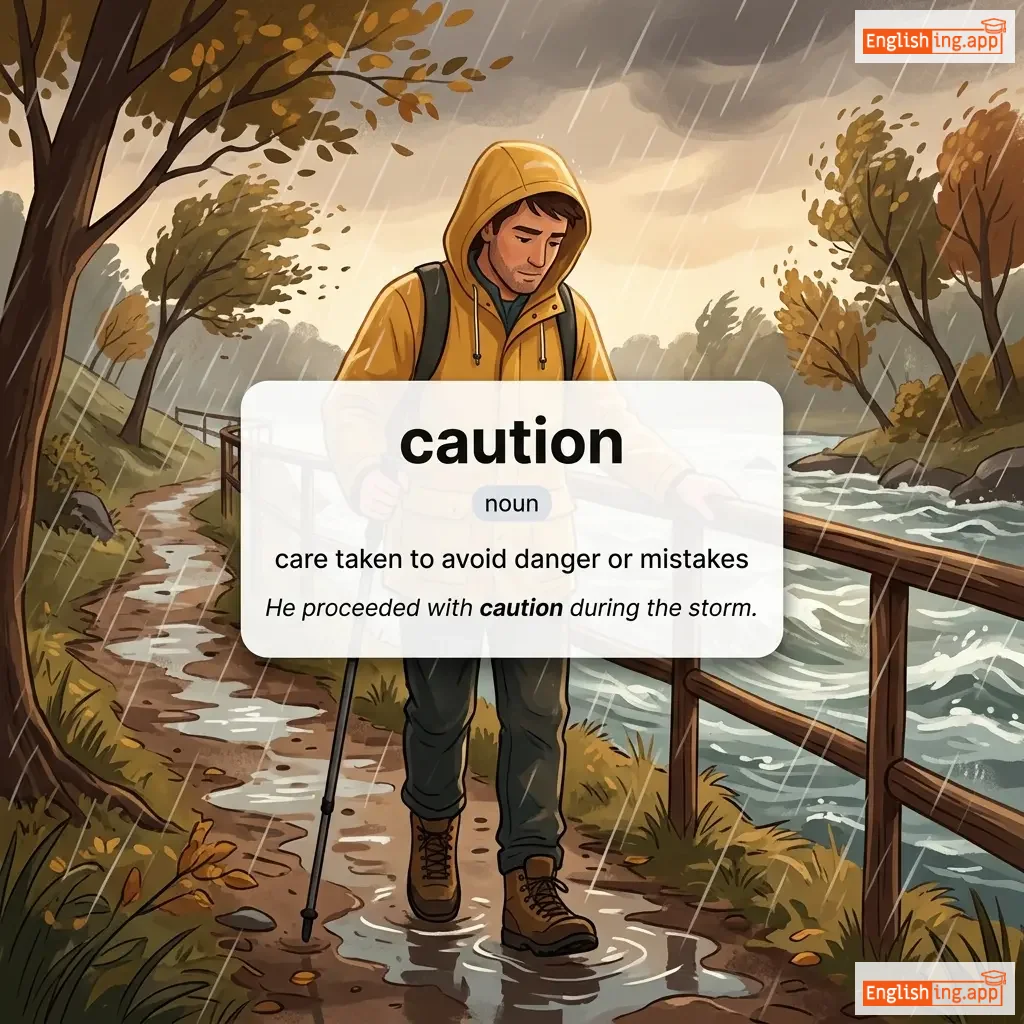
caution definition card — visual illustration of the meaning
noun
/ˈkɔːʃən/
осторожность (ostorozhnost)

care taken to avoid danger or mistakes

"He proceeded with caution during the storm."

"Он действовал с осторожностью во время шторма." (On deystvoval s ostorozhnost'yu vo vremya shtorma.)
adjective
/ˈkɔːʃənˌɛri/
предупредительный (predupreditelnyi)

serving as a warning; intended to prevent problems or mistakes by giving advice or examples

"The report offers a cautionary message about unchecked spending."

"Отчёт содержит предупредительное сообщение о неконтролируемых расходах." (Otchet soderzhit predupreditelnoe soobshchenie o nekontroliruemykh raskhodakh)
adjective
/ˈkɔːʃəs/
осторожный (ostorozhny)

careful to avoid potential problems or dangers

"She was cautious about trusting strangers."

"Она была осторожна, доверяя незнакомцам." (Ona byla ostorozhna, doveryaya neznakomtsam.)
noun
/ˌkæv.əlˈkeɪd/
кавалькада (kavalkada)

a formal procession of people riding on horses or in vehicles

"The king’s arrival was marked by a grand cavalcade."

"Прибытие короля было отмечено великой кавалькадой." (Pribytiye korolya bylo otmecheno velikoy kavalkadoy.)
adjective
/ˌkævəˈlɪər/
беспечный (bespechnyy)

showing a lack of proper concern; dismissive or offhand

"He had a cavalier attitude toward safety regulations."

"У него было беспечное отношение к правилам безопасности." (U nego bylo bespechnoe otnoshenie k pravilam bezopasnosti.)
noun
/ˈkæv.əl.ri/
кавалерия (kavalerija)

soldiers who fight on horseback; the part of an army formerly composed of troops on horseback

"The cavalry charged across the field with great speed."

"Кавалерия с большим ускорением атаковала поле." (Kavaleriya s bol'shim uskoreniem atakovala pole.)
noun
/keɪv/
пещера (peshchera)

a large natural underground space in a hill or cliff

"The explorers discovered paintings on the walls of the cave."

"Исследователи обнаружили картины на стенах пещеры." (Issledovateli obnaruzhili kartiny na stenakh peshchery.)
noun
/ˈkæviˌæt/
предупреждение (preduprezhdenie)

a warning or condition to be considered before taking action

"The proposal was accepted with one caveat."

"Предложение было принято с предупреждением." (Predlozhenie bylo prinyato s preduprezhdeniem.)
noun
/ˈkævərn/
пещера (peshchera)

a large cave or chamber in a cave

"The explorers entered a dark cavern beneath the mountain."

"Исследователи вошли в темную пещеру под горой." (Issledovateli voshli v temnuyu peshcheryu pod goroy.)
verb
/ˈkævəl/
возражать по мелочам (vozrazhat' po melocham)

to make petty or unnecessary objections

"She caviled at every detail of the plan."

"Она возражала по каждой детали плана." (Ona vozrazhala po kazhdoy detali plana.)
verb
/kəˈvɔrt/
прыгать с радостью (prygat' s radost'yu)

to jump or dance around excitedly

"The children cavorted happily in the garden."

"Дети прыгали с радостью в саду." (Deti prygali s radost'yu v sadu.)
verb
/siːs/
прекращать (prekrashchat)

to bring or come to an end; to stop doing something

"The noise ceased as soon as the children went inside."

"Шум прекратился, как только дети зашли внутрь." (Shum prekratilsya, kak tol'ko deti zashli vnutr'.)
adjective
/ˈsiːs.ləs/
непрерывный; постоянный (sisles)

continuing without pause or interruption; endless

"The ceaseless rain lasted for three days."

"Непрерывный дождь длился три дня." (Nepreryvnyy dozhd' dlilsya tree dnya.)
verb
/siːd/
уступать (ustupat)

to give up power, territory, or rights to another

"The country ceded territory after losing the war."

"Страна уступила территорию после проигрыша на войне." (Strana ustupila territoriyu posle proigrusha na voyne.)
noun
/ˈsiːlɪŋ/
потолок (potolok)

the upper interior surface of a room

"The ceiling of the hall was painted beautifully."
"Потолок зала был красиво покрашен." (Potolok zala byl krasivo pokrashen.)
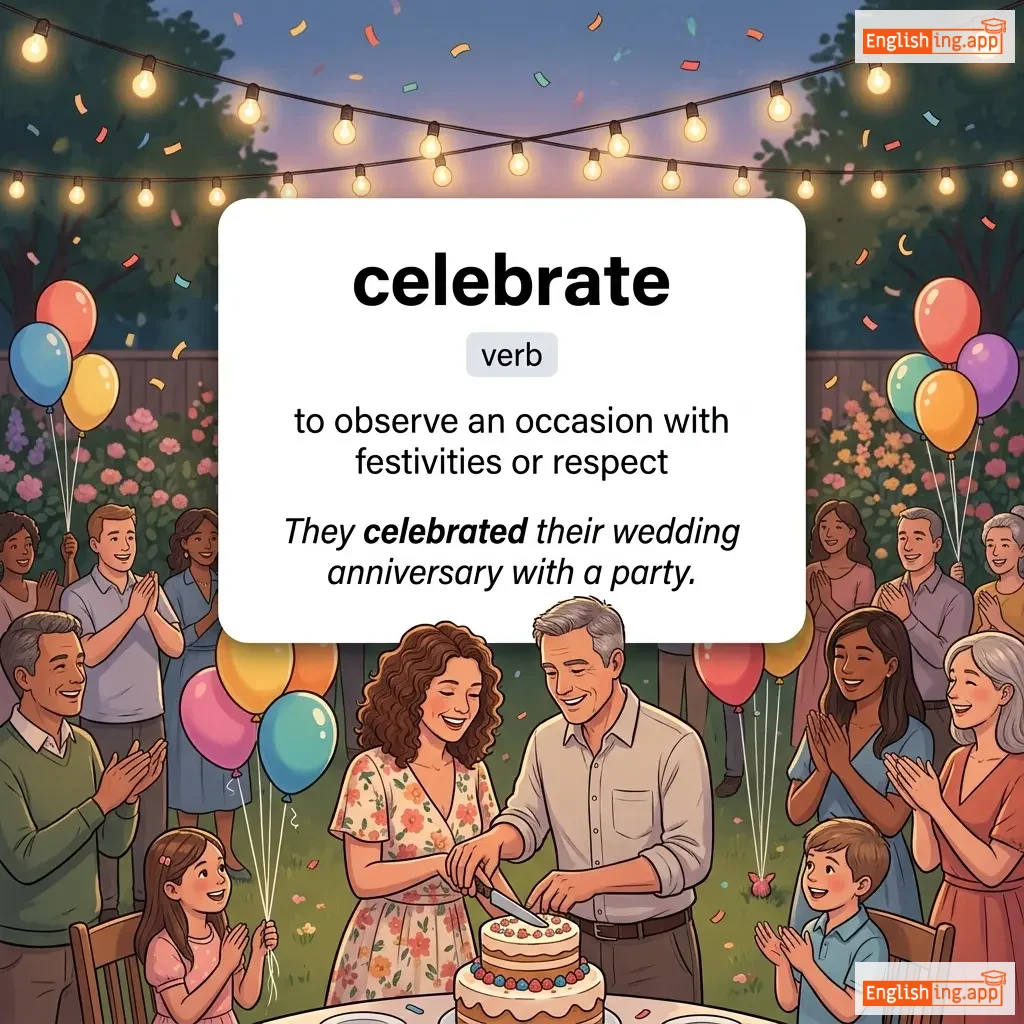
celebrate definition card — visual illustration of the meaning
verb
/ˈsɛlɪˌbreɪt/
праздновать (prazdnovat)

to observe an occasion with festivities or respect

"They celebrated their wedding anniversary with a party."

"Они отпраздновали свою годовщину свадьбы на вечеринке." (Oni otprazdnovali svoyu godovshchinu svad'by na vecherinke.)
adjective
/ˈsɛl.əˌbreɪ.tɪd/
знаменитый (znamenityy)

Widely known and praised; famous for an achievement.

"He is a celebrated author in the field of literature."

"Он знаменитый автор в области литературы." (On znamenityy avtor v oblasti literatury.)
celebrating definition card — visual illustration of the meaning
verb
ˈsɛləbreɪtɪŋ
праздновать (prazdnovat)

The act of acknowledging a significant or happy day or event with a social gathering or enjoyable activity.

"Celebrating awareness days helps spread important messages."

"Празднование дней осведомленности помогает распространять важные сообщения." (Prazdnovanie dney osvedomlennosti pomogaet rasprostranyat' vazhnyye soobshcheniya.)
noun
/ˌsɛlɪˈbreɪʃən/
празднование (prazdnovanie)

a festive event or activity to honor an occasion

"The city held a grand celebration on Independence Day."

"Город устроил грандиозное празднование в День независимости." (Gorod ustroil grandioznoe prazdnovanie v Den' nezavisimosti.)
noun
/səˈlɛbrɪti/
знаменитость (znamenitost)

a famous person, especially in entertainment or sports

"The celebrity was surrounded by fans at the airport."

"Знаменитость была окружена поклонниками в аэропорту." (Znamenitost' byla okruzhena poklonnikami v aeroporte.)
noun
/səˈlɛrɪti/
проворность (provorotnost)

swiftness of movement; speed

"The soldier moved with great celerity to deliver the message."

"Солдат двигался с большой проворностью, чтобы доставить сообщение." (Soldat dvigalsya s bol'shoy provornost'yu, chtoby dostavit' soobshcheniye.)
noun
/ˈsel.ər.i/
сельдерей (selderey)

a green vegetable with long crisp stems that can be eaten raw or cooked

"I added chopped celery to the soup for extra flavor."
"Я добавил нарезанный сельдерей в суп для дополнительного вкуса." (Ya dobavil narezannyy selderey v sup dlya dopolnitel'nogo vkusa.)
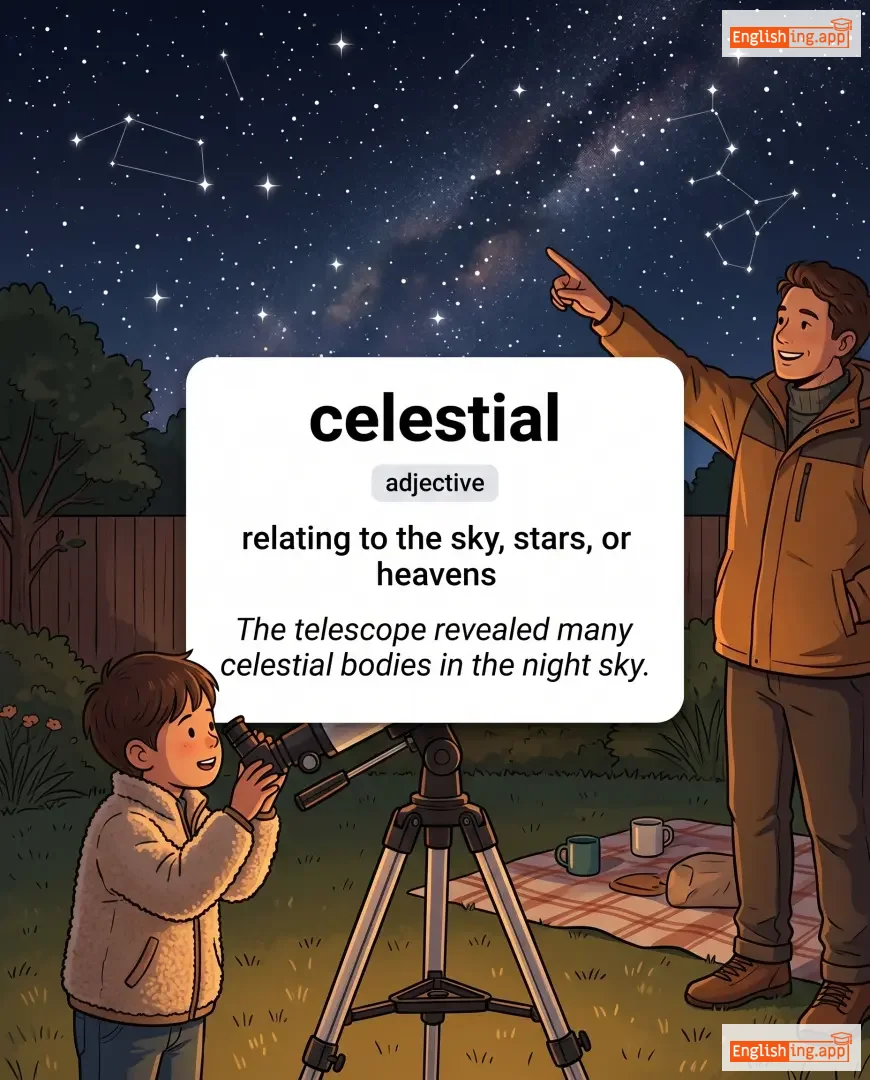
celestial definition card — visual illustration of the meaning
adjective
/səˈlɛstiəl/
небесный (nebesny)

relating to the sky, stars, or heavens

"The telescope revealed many celestial bodies in the night sky."

"Телескоп обнаружил много небесных тел на ночном небе." (Teleskop obnaruzhil mnogo nebesnykh tel na nochnom nebe.)
adjective, noun
/ˈsɛlɪbət/

abstaining from marriage and sexual relations; a person who does so

"He chose to remain celibate for religious reasons."

noun
/sɛl/
клетка / клетка (kletka / kletka)

a small basic unit of life; or a small enclosed space like a prison room

"The prisoner was locked in a small cell."

"Заключенного заперли в маленькой камере." (Zaklyuchennogo zaperyli v malen'koy kamere.)
noun
/ˈsɛlˌfoʊn/
мобильный телефон (mobilnyi telefon)

a portable telephone that uses a cellular network for wireless communication

"She forgot her cellphone at home and couldn’t call anyone."

"Она забыла свой мобильный телефон дома и не смогла никому позвонить." (ona zabyla svoi mobilnyi telefon doma i ne smogla nikomu pozvonit)
adjective
/ˈsel.jə.lər/
клеточный (kletocny)

relating to cells; consisting of cells; relating to mobile phone technology

"Cellular technology has revolutionized communication."

"Клеточные технологии революционизировали коммуникацию." (Kletocnye texnologii revoljucionizirovali kommunikaciyu.)
noun/verb
/sɪˈmɛnt/

a powdery substance that binds materials together; to make something strong or permanent

"The treaty helped cement the relationship between the two countries."
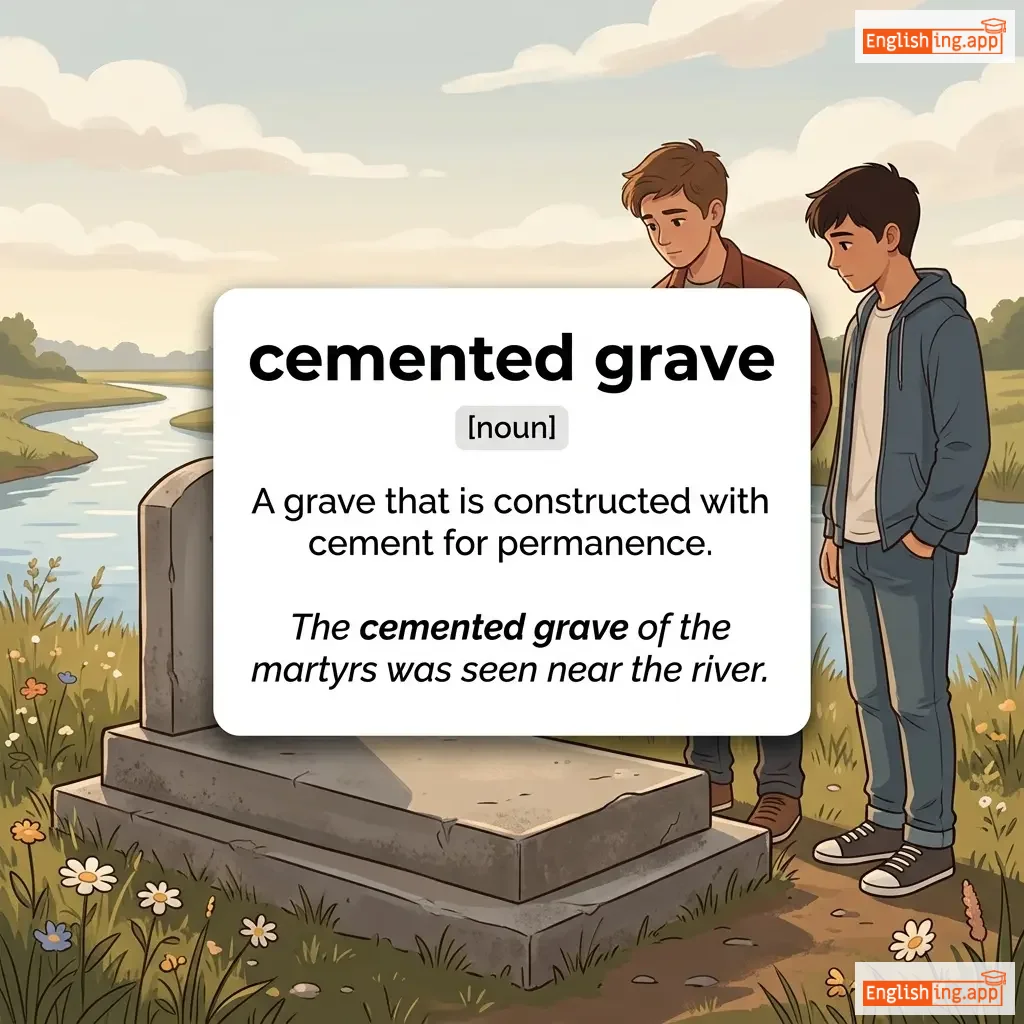
cemented grave definition card — visual illustration of the meaning
noun
sɪˈmɛntɪd ɡreɪv
цементированная могила (cementirovannaya mogila)

A grave that is constructed with cement for permanence.

"The cemented grave of the martyrs was seen near the river."

"Цементированная могила мучеников была замечена рядом с рекой." (Tsementirovannaya mogila muchenikov byla zamechena ryadom s rekoj.)
noun
/ˈsɛmɪˌtɛri/
кладбище (kladbishche)

a place where dead people are buried

"The old cemetery is located at the edge of the village."

"Старое кладбище находится на окраине деревни." (Staroye kladbishche nakhoditsya na okraine derevni.)
verb/noun
/ˈsɛnsər/
цензурировать (tsenzurirovat)

to suppress or remove parts of books, films, or information considered offensive or harmful; a person who does this

"The government tried to censor the controversial film."

"Правительство пыталось цензурировать спорный фильм." (Pravitel'stvo pytalos' tsenzurirovat' spornyy film.)
adjective
/sɛnˈsɔːriəs/
чересчур критичный (chereschur kritichny)

severely critical of others

"She was always censorious about her colleagues' mistakes."

"Она всегда была очень критична к ошибкам своих коллег." (Ona vsegda byla ochen' kritichna k oshibkam svoikh kolleg.)
censure definition card — visual illustration of the meaning
verb/noun
/ˈsɛnʃər/
осуждение (osuzhdenie)

to express severe disapproval, often formally; strong criticism or disapproval

"The senator was censured for his unethical behavior."

"Сенатор был осуждён за своё неэтичное поведение." (Senator byl osuzhdyon za svoe neehtichnoe povedenie.)
noun
/ˈsɛnsəs/
перепись населения (perepis' naseleniya)

An official count or survey of a population, typically recording various details of individuals.

"The government conducted a census to update demographic data."

"Правительство провело перепись населения, чтобы обновить демографические данные." (Pravitel'stvo provelo perepis' naseleniya, chtoby obnovit' demograficheskie dannye.)
noun
/ˈsɛntɔːr/
центавр (tsentavr)

A mythological creature with the upper body of a human and the lower body of a horse.

"The centaur is a well-known figure in Greek mythology."

"Центавр является известной фигурой в греческой мифологии." (Tsentavr yavylyayetsya izvestnoy figuroy v grecheskoy mifologii.)
noun, adjective
/ˈsɛntənəri/ or /sɛnˈtɛnəri/
столетие (stoletie)

The hundredth anniversary of a significant event; relating to a period of 100 years.

"The school celebrated its centenary with a grand event."
"Школа отметила свое столетие грандиозным событием." (Shkola otmetila svoe stoletie grandioznym sobytiyem.)
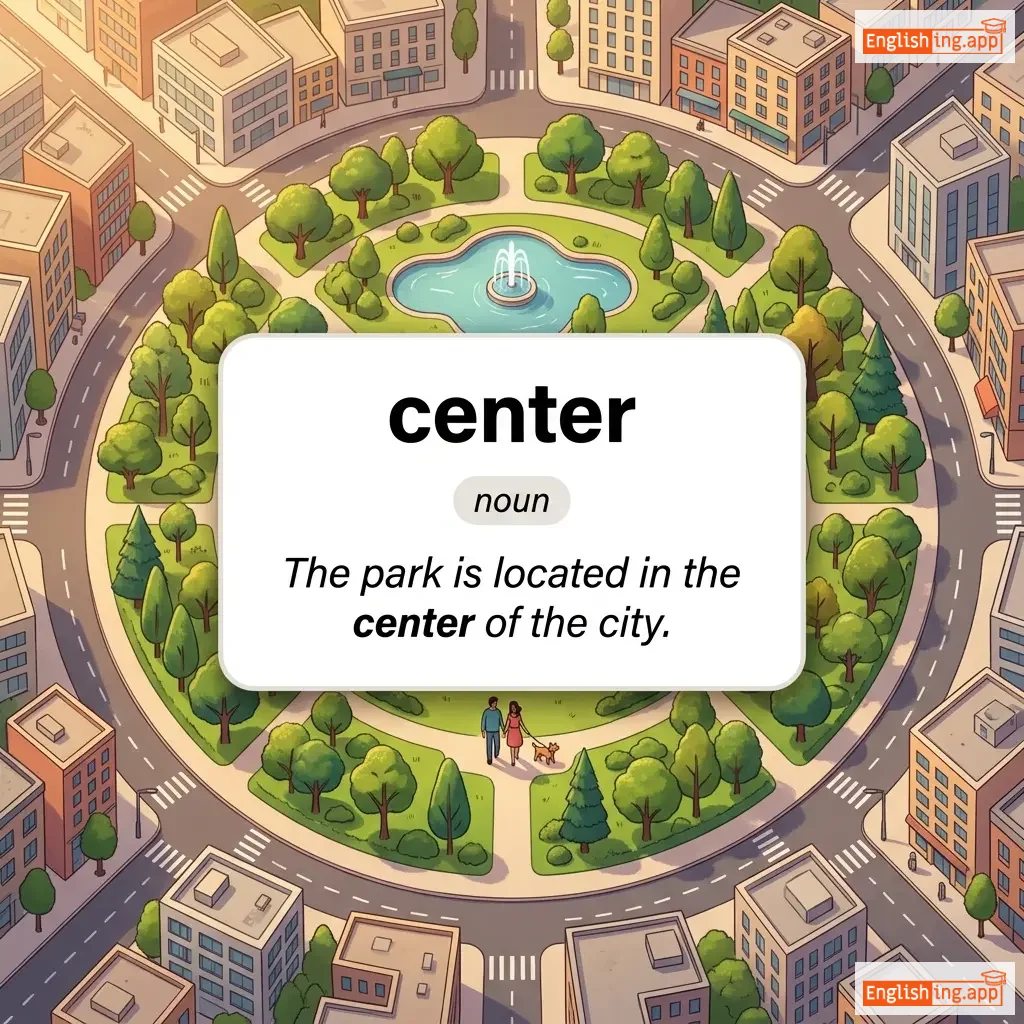
center definition card — visual illustration of the meaning
noun
/ˈsɛntər/
центр (tsentr)

The middle point or part of something; a place where a particular activity is concentrated.

"The park is located in the center of the city."

"Парк находится в центре города." (Park nakhoditsya v tsentre goroda.)
centers definition card — visual illustration of the meaning
noun
ˈsen.tərz
центры (tsentry)

The middle point of a circle or sphere, equidistant from every point on the circumference or surface; a place or group of buildings where a specified activity is concentrated.

"Centers drive regional development."

"Центры способствуют региональному развитию." (Tsentry sposobstvuyut regional'nomu razvitiyu.)
adjective
/ˈsɛntɪɡreɪd/
Цельсий (центиград) (tselysiy (tsentigrad))

Relating to the Celsius temperature scale, where water freezes at 0° and boils at 100°.

"The weather forecast predicted 30 degrees centigrade."

"Прогноз погоды предсказал 30 градусов Цельсия." (Prognoz pogody predskazal 30 gradusov tselysiya.)
noun
/ˈsɛntɪˌliːtər/

A metric unit of capacity equal to one hundredth of a liter.

"The recipe calls for 20 centiliters of milk."

noun
/ˈsɛntɪˌmiːtər/
сантиметр (santimetr)

A metric unit of length equal to one hundredth of a meter.

"The table is 120 centimeters long."

"Стол длиной 120 сантиметров." (Stol dlinoy 120 santimetrov.)
noun
/ˈsen.tɪ.piːd/
многоножка (mnogonozhka)

a long thin creature with many legs that lives in dark places

"I found a centipede crawling under the rock."

"Я нашел многоножку, ползающую под камнем." (Ya nashel mnogonozhku, polzayushchuyu pod kamnem.)
adjective
/ˈsɛntrəl/
центральный (tsentral'nyy)

Situated in the middle; of the greatest importance.

"Water is central to human survival."

"Вода центральна для выживания человека." (Voda tsentral'na dlya vyzhivaniya cheloveka.)
centralization definition card — visual illustration of the meaning
noun
ˌsɛn.trə.laɪˈzeɪ.ʃən
централизация (tsentralizatsiya)

The concentration of control and decision-making power in a central authority.

"Excessive centralization can slow down decision-making."

"Чрезмерная централизация может замедлить процесс принятия решений." (Chrezmernaia tsentralizatsiya mozhet zamedlit' protsess prinyatiya resheniy.)
centrifugal definition card — visual illustration of the meaning
adjective
/sɛnˈtrɪfjʊɡəl/
центрифугальный (tsentrifugal'nyy)

Moving or tending to move away from a center.

"The centrifugal force pushes the clothes to the sides of the washing machine."

"Центрифугальная сила отталкивает одежду к краям стиральной машины." (Tsentrifugal'naya sila ottalkivayet odezhdu k krayam stiral'noy mashiny.)
noun
/ˈsɛntrɪˌfjuːdʒ/
центрифуга (tsentrifuga)

A machine that spins substances at high speed to separate different components.

"The lab technician used a centrifuge to separate the blood cells from the plasma."
"Лаборант использовал центрифугу, чтобы отделить клетки крови от плазмы." (Laborant ispol'zoval tsentrifugu, chtoby otdelit' kletki krovi ot plazmy.)
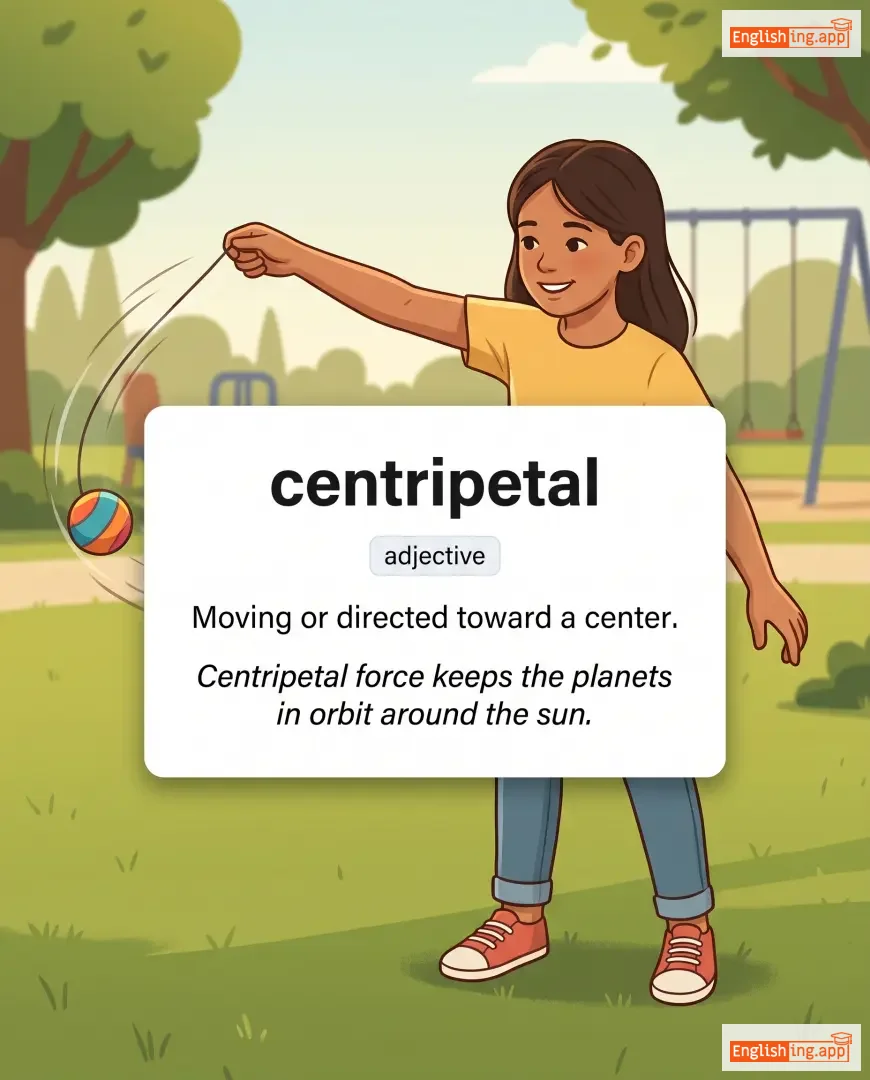
centripetal definition card — visual illustration of the meaning
adjective
/sɛnˈtrɪpɪtəl/
центрирующий (tsentriruyushchiy)

Moving or directed toward a center.

"Centripetal force keeps the planets in orbit around the sun."

"Центрирующая сила удерживает планеты на орбите вокруг солнца." (Tsentriruyushchaya sila uderzhivayet planety na orbite vokrug solnca.)