Словари

Словарь английского языка | Значения слов, определения и примеры

Consumption definition card — visual illustration of the meaning
noun
/kənˈsʌmpʃən/
потребление (potreblenie)

The act of using up resources, goods, or energy; also refers to the eating or drinking of something.

"The consumption of electricity increases during the summer."

"Потребление электричества увеличивается летом." (Potreblenie elektrichestva uvelichivaetsya letom.)
adjective
/kənˈsʌmptɪv/
потребительский (potrebitelskiy)

Relating to or characterized by consumption; historically used to describe someone suffering from tuberculosis.

"The doctor advised against consumptive habits."

"Врач посоветовал избегать потребительских привычек." (Vrach posovetoval izbegat' potrebitel'skikh privychek.)
contact definition card — visual illustration of the meaning
noun/verb
/ˈkɒntækt/
контакт (kontakt)

Communication or connection with someone.

"You should contact your doctor if symptoms persist."

"Вы должны связаться с вашим врачом, если симптомы сохраняются." (Vy dolzhny svyazat'sya s vashim vrachom, yesli simptyomy sokhranyayutsya.)
noun
/kənˈteɪdʒən/
заражение (zarazhenie)

The communication of disease from one person to another by close contact; also the spread of harmful ideas or behaviors.

"Fear spread like a contagion through the crowd."

"Страх распространился как заражение через толпу." (Strakh rasprostranilsya kak zarazhenie cherez tolpu.)
adjective
/kənˈteɪdʒəs/
заразный (zarazny)

Able to be transmitted from one person to another, typically by direct contact; also used for emotions or attitudes that spread quickly.

"Her laughter was so contagious that everyone started laughing."
"Её смех был настолько заразным, что все начали смеяться." (Eyo smekh byl nastol'ko zaraznym, chto vse nachali smeyat'sya.)
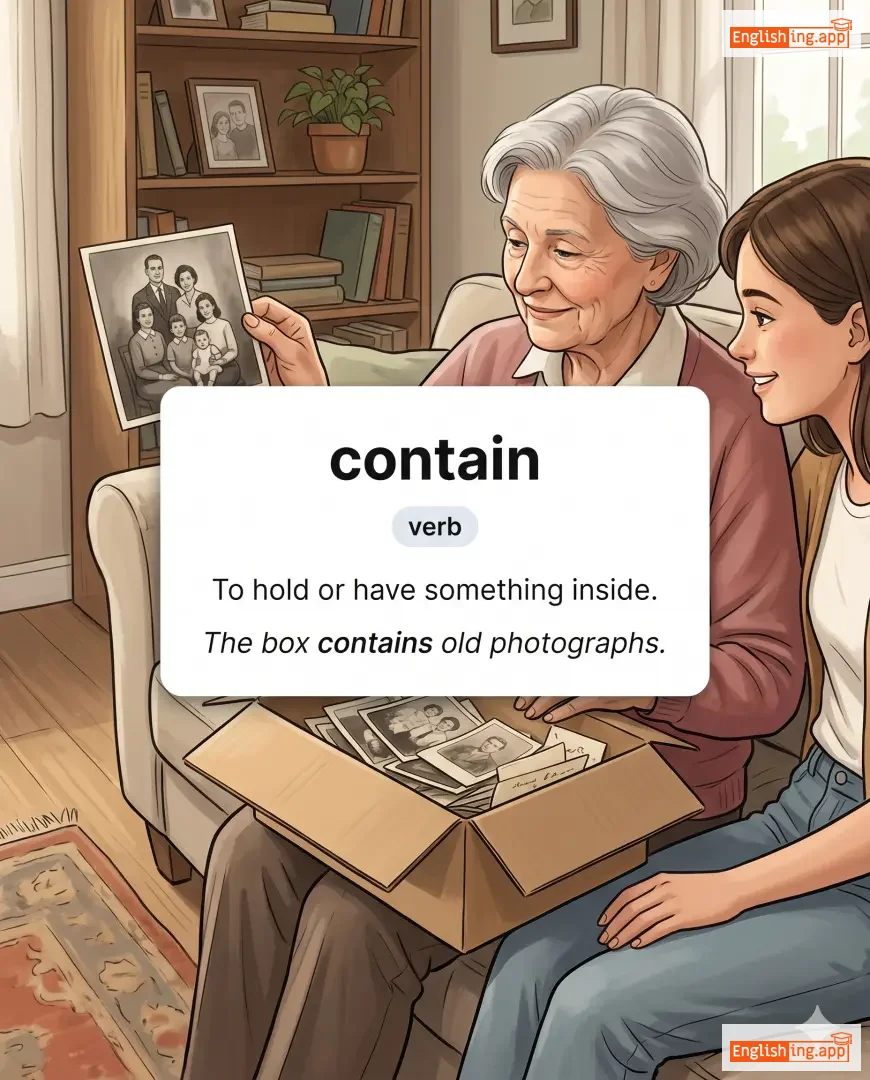
contain definition card — visual illustration of the meaning
verb
/kənˈteɪn/
содержать (soderzhat)

To hold or have something inside.

"The box contains old photographs."
"Коробка содержит старые фотографии." (Korobka soderzhit starye fotografii.)
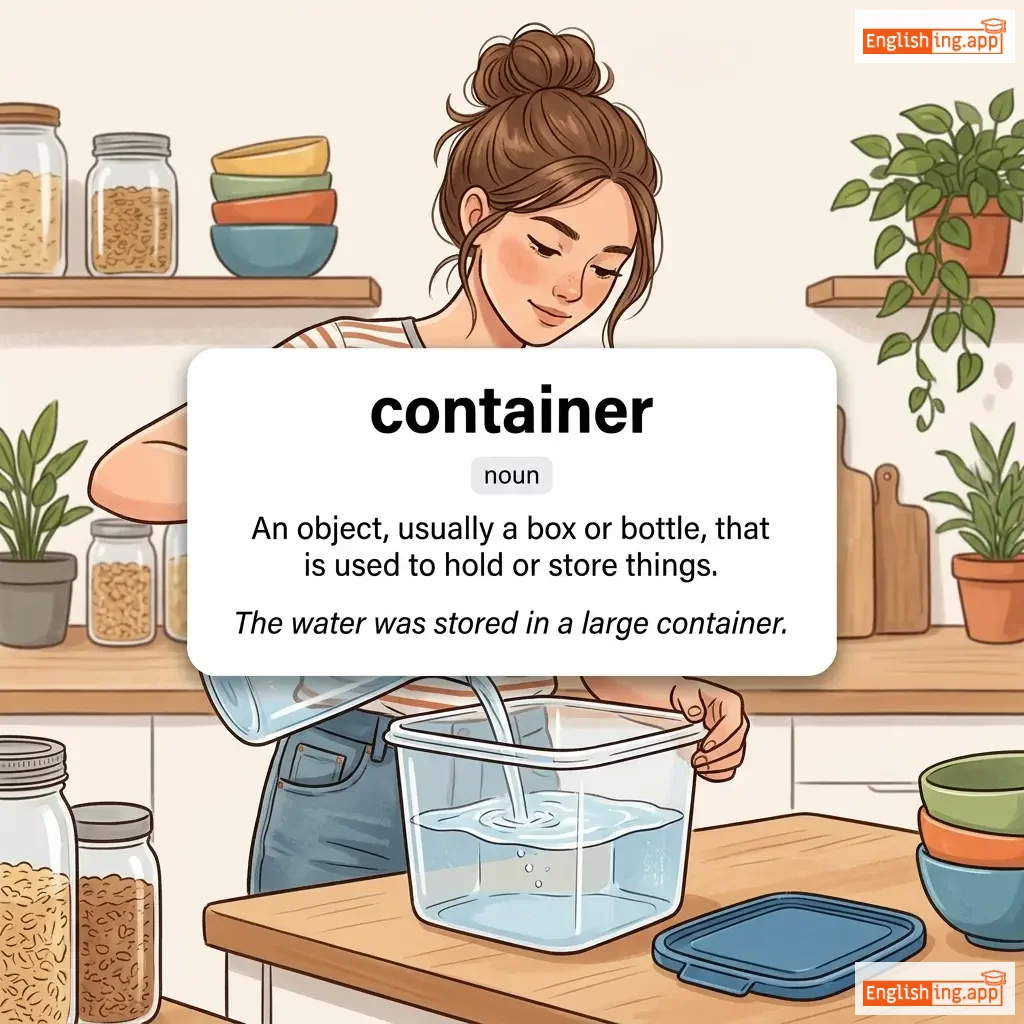
container definition card — visual illustration of the meaning
noun
/kənˈteɪnər/
контейнер (konteyner)

An object, usually a box or bottle, that is used to hold or store things.

"The water was stored in a large container."

"Вода хранилась в большом контейнере." (Voda khranilas' v bol'shom konteynerе.)
verb
/kənˈtæmɪneɪt/

To make something impure, dirty, or harmful by contact with a poisonous or polluting substance.

"The river was contaminated by industrial waste."
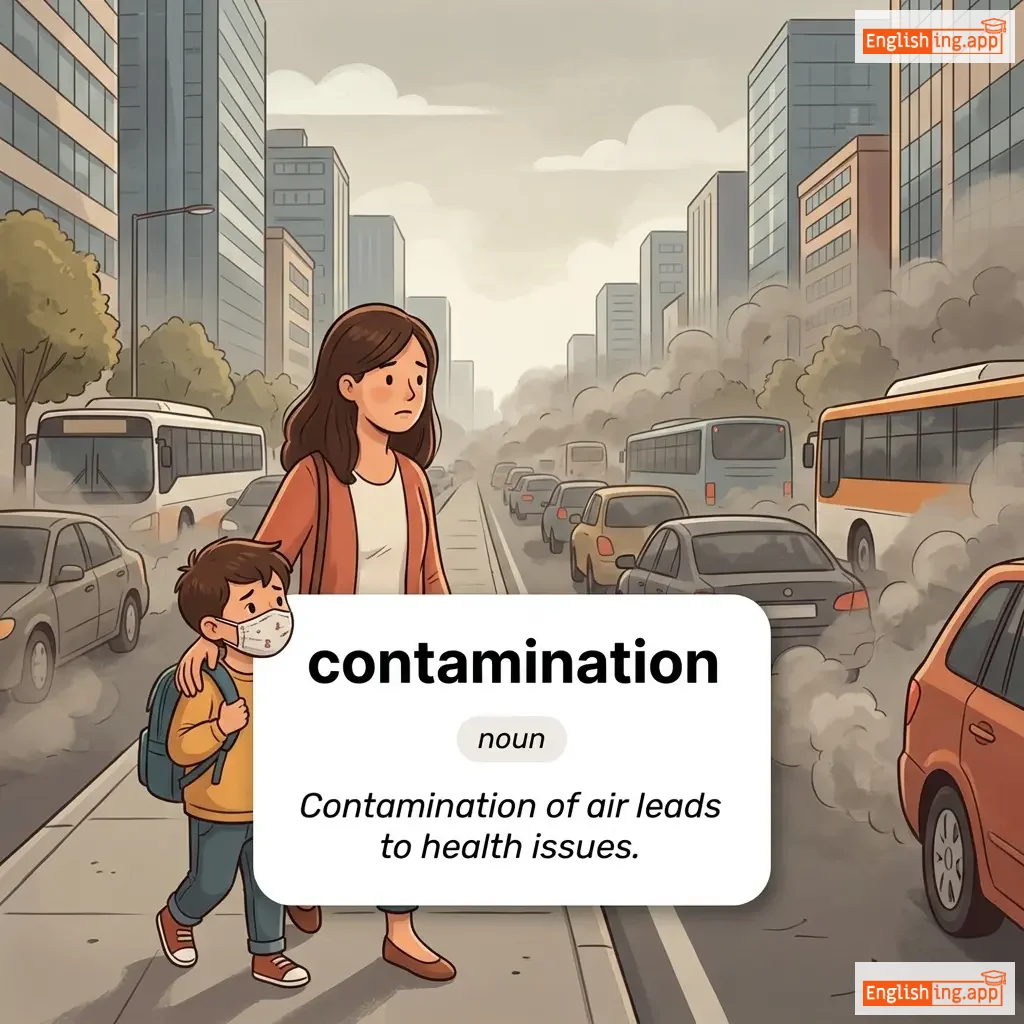
contamination definition card — visual illustration of the meaning
noun
kənˌtæm.ɪˈneɪ.ʃən
загрязнение (zagryaznenie)

The process of making something less pure by exposure to or addition of a poisonous or polluting substance.

"Contamination of air leads to health issues."

"Загрязнение воздуха вызывает проблемы со здоровьем." (Zagryaznenie vozdukha vyzyvaet problemy so zdorovem.)
verb
/kənˈtɛm/
презирать (prezirat)

to treat or regard with disdain, scorn, or contempt

"He would never contemn honest work, no matter how humble."

"Он никогда не стал бы презирать честную работу, независимо от того, насколько она скромна." (On nikogda ne stal by prezirat' chestnuyu rabotu, nezavisimo ot togo, naskol'ko ona skromna.)
verb
/ˈkɒntəmpleɪt/
размышлять (razmyshlyat)

to think deeply and carefully about something; to consider thoughtfully

"She sat quietly to contemplate her future plans."

"Она сидела тихо, чтобы обдумать свои будущие планы." (Ona sidelа tikho, chtoby obdumаt' svoi budushchie plany.)
contemplation definition card — visual illustration of the meaning
noun
ˌkɒn.təmˈpleɪ.ʃən
созерцание, глубокое размышление (sozyertsanie, glubokoye razmyshleniye)

The action of looking thoughtfully at something for a long time; deep reflective thought.

"He spent hours in contemplation about his future."

"Он провел часы в созерцании о своем будущем." (On provel chasy v sozyertsanii o svoem budushchem.)
contemplative definition card — visual illustration of the meaning
adjective
ˈkɒn.təm.plə.tɪv
размышляющий или медитативный (razmyshlyayushchiy ili meditativnyy)

Expressing or involving prolonged thought; meditative and reflective.

"He spent a contemplative evening reflecting on his decisions."

"Он провел созерцательный вечер, размышляя о своих решениях." (On provel sozyertchatel'nyy vecher, razmyshlyaya o svoikh resheniyakh.)
adjective
/kənˌtɛmpəˈreɪniəs/
современны́й (sovremennyy)

existing, happening, or occurring at the same time

"The two artists were contemporaneous and often influenced each other."

"Оба художника были современными и часто влияли друг на друга." (Oba khudozhnika byli sovremennymi i chasto vliyali drug na druga.)
adjective
/kənˈtɛmpərɛri/
современный, современный (sovremennyy, sovremennyy)

belonging to the same time period; modern

"She enjoys contemporary art exhibitions."

"Она наслаждается выставками современного искусства." (Ona naslazhdaetsya vystavkami sovremennogo iskusstva.)
noun
/kənˈtɛmpt/
презрение (prezrenie)

a strong feeling of dislike and lack of respect towards someone or something

"He spoke with contempt about the corrupt officials."

"Он говорил с презрением о коррумпированных чиновниках." (On govoril s prezreniem o korrumpirovannykh chinovnikakh.)
adjective
/kənˈtɛmptəbl/
презренный, достойный презрения (prezrenny, dostoyny prezreniya)

deserving of contempt; despicable

"His deceitful actions were truly contemptible."

"Его обманные действия были действительно презренными." (Ego obmannye deystviya byli deystvitel'no prezrennymi.)
adjective
/kənˈtɛmptʃuəs/
презрительный, пренебрежительный (prezritylnyy, prenebrezhitel'nyy)

showing or expressing contempt; scornful

"She gave him a contemptuous glance."

"Она посмотрела на него презрительным взглядом." (Ona posmotrela na nego prezritelnym vzglyadom.)
contend definition card — visual illustration of the meaning
verb
/kənˈtɛnd/
состязаться, утверждать (sostyazatsya, utverzhdat)

to strive or compete for something; to assert earnestly

"Athletes from around the world contend for the championship."

"Атлеты со всего мира борются за чемпионство." (Atlety so vsego mira boryutsya za chempionstvo.)
noun
/kənˈtɛndər/
конкурент, претендент (konkurent, pretendent)

a person or team competing for a title or prize

"She is a strong contender for the mayoral position."

"Она сильный претендент на пост мэра." (Ona sil'nyy pretendent na post mera.)
adjective
/ˈkɒntɛnt/
удовлетворённый, довольный (udovletvorjonnyj, dovol'nyj)

in a state of satisfaction; pleased

"He felt content after finishing his work."

"Он чувствовал себя удовлетворённым после того, как завершил свою работу." (On chuvstvoval sebya udovletvorjonnym posle togo, kak zavershil svoyu rabotu.)
adjective
/kənˈtɛntɪd/
удовлетворённый (udovletvorjonnyj)

Feeling or expressing happiness and satisfaction.

"She was contented with her simple life."
"Она была удовлетворена своей простой жизнью." (Ona byla udovletvorena svoey prostoy zhiznyu.)
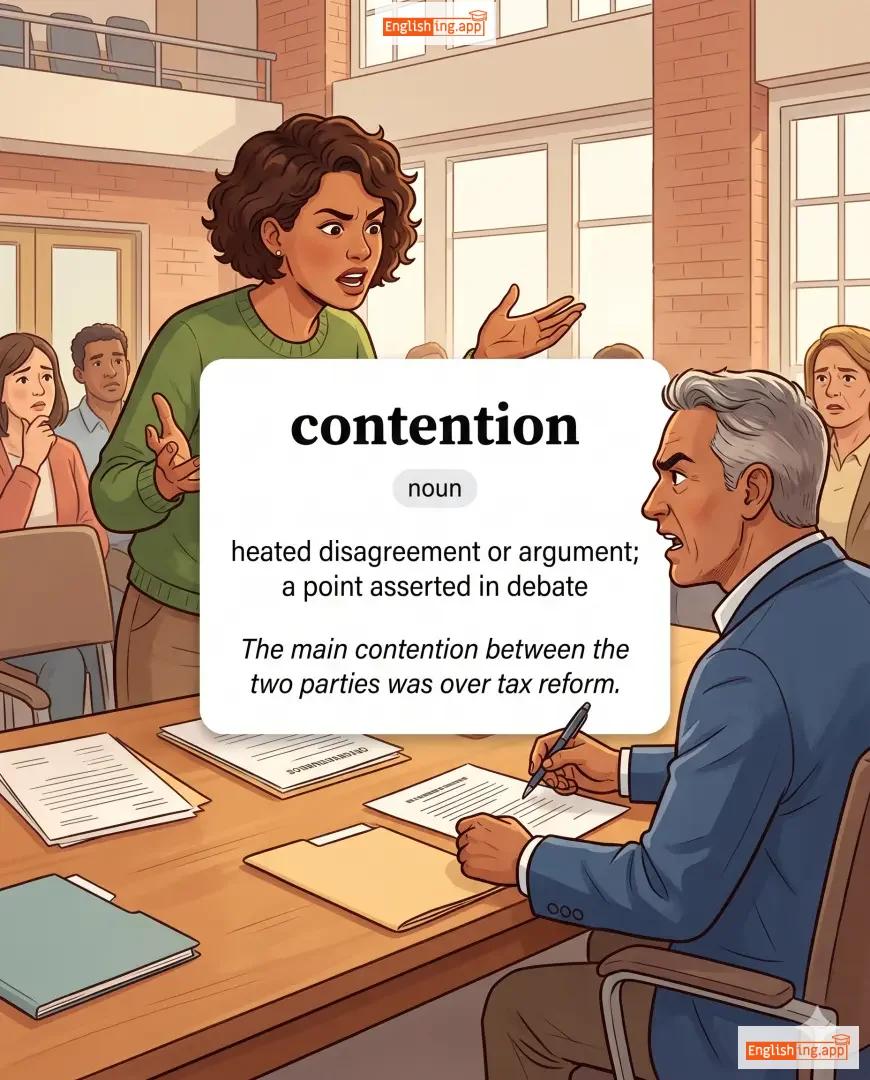
contention definition card — visual illustration of the meaning
noun
/kənˈtɛnʃən/
спор, разногласие (spor, raznoglasiye)

heated disagreement or argument; a point asserted in debate

"The main contention between the two parties was over tax reform."
"Основной спор между двумя партиями был связан с налоговой реформой." (Osnovnoy spor mezhdu dvumya partiyami byl svyazan s nalogovoy reformoy.)
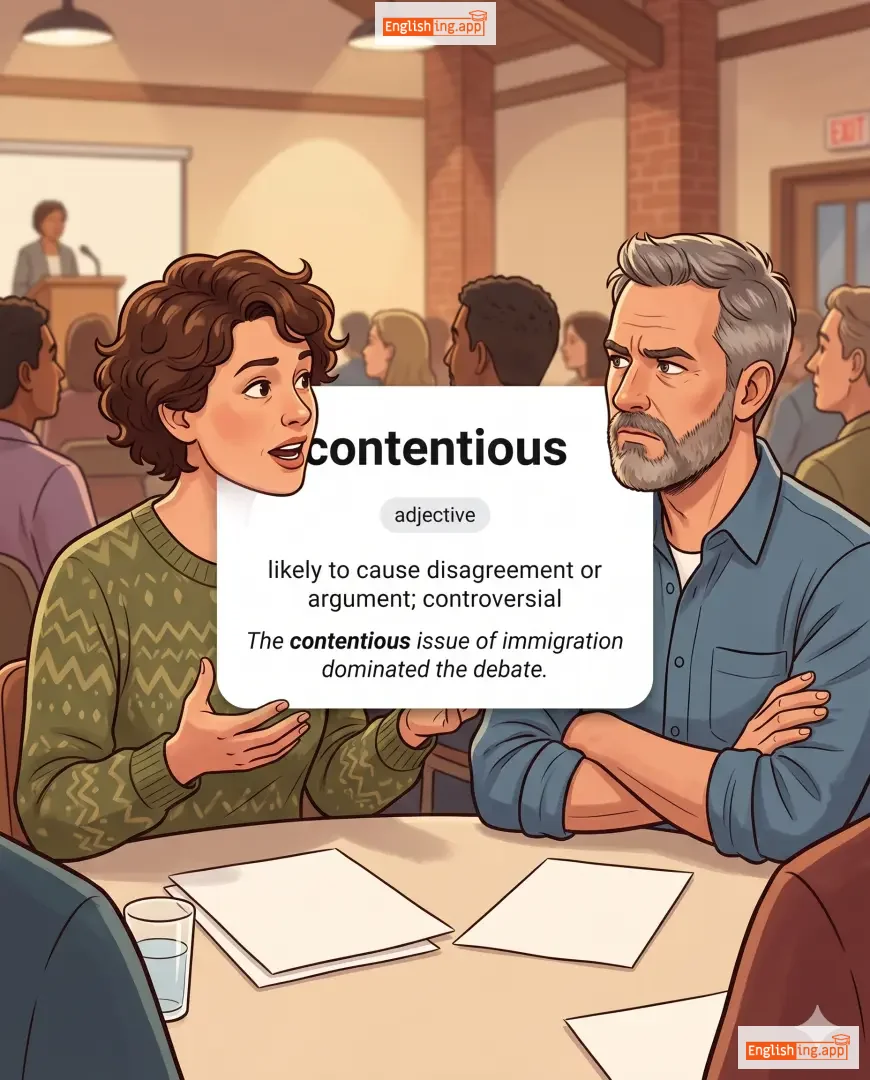
contentious definition card — visual illustration of the meaning
adjective
/kənˈtɛnʃəs/
спорный (spornyy)

likely to cause disagreement or argument; controversial

"The contentious issue of immigration dominated the debate."

"Спорный вопрос иммиграции доминировал в дебатах." (Spornyy vopros immigratsii dominirival v debatakh.)
noun
/kənˈtentmənt/
удовлетворение (udovletvorenie)

a state of happiness and satisfaction with what one has

"She felt a deep sense of contentment after helping others."

"Она почувствовала глубокое удовлетворение после помощи другим." (ona pochuvstvovala glubokoe udovletvorenie posle pomoshchi drugim)
verb, noun
/ˈkɒntɛst/
оспаривать, конкурс (osparivat', konkurs)

verb: to compete or challenge; noun: a competition or dispute

"She decided to contest the election against the incumbent."

"Она решила оспаривать выборы против действующего кандидата." (Ona reshila osparivat' vibory protiv deystvuyushchego kandidata.)
noun
/ˈkɒntɛkst/
контекст (kontekst)

the circumstances or background relevant to an event, statement, or idea

"To understand the quote, you need to know the context in which it was said."
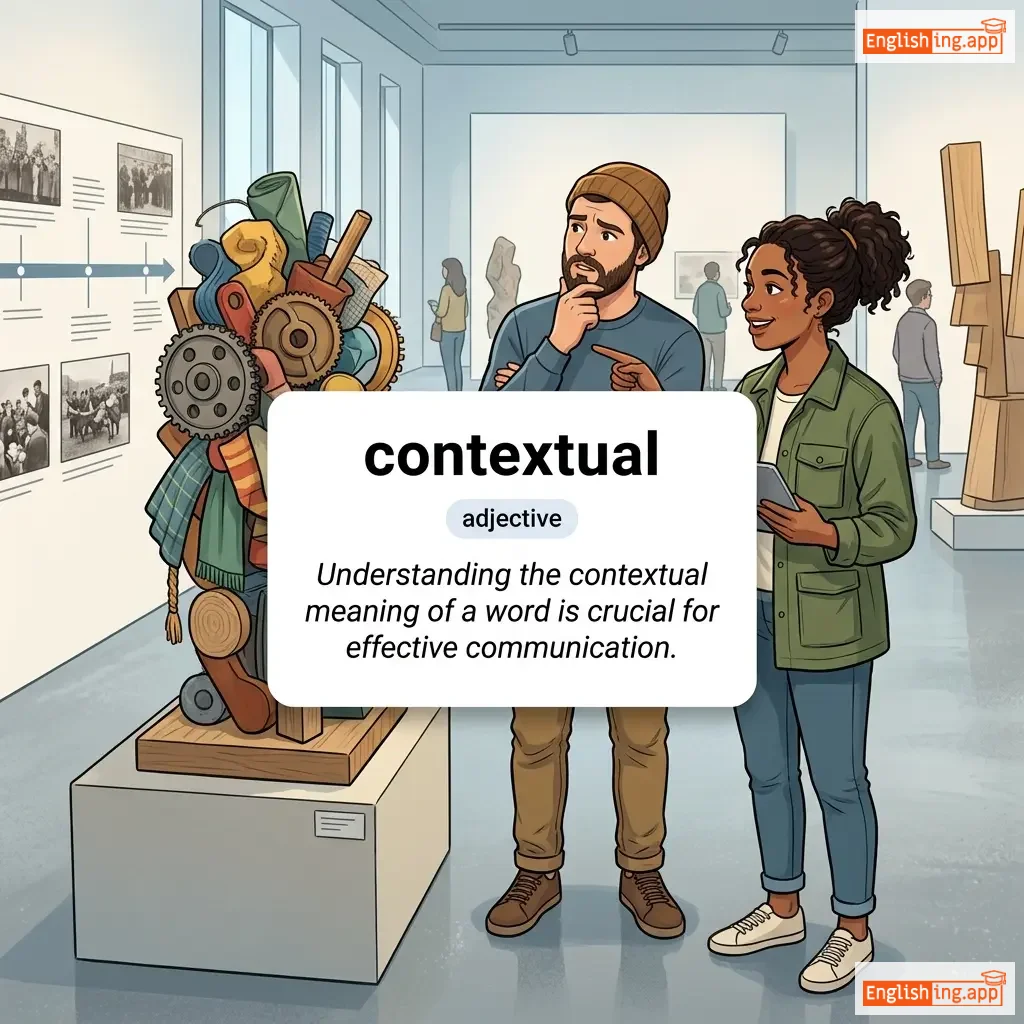
"Чтобы понять цитату, вам нужно знать контекст, в котором она была сказана." (Shtoby ponyat' tsitaty, vam nuzhno znat' kontekst, v kotorom ona byla skazana.)
contextual definition card — visual illustration of the meaning
adjective
/kənˈtɛkstʃʊəl/
контекстуальный, в зависимости от контекста (kontekstual'nyj, v zavisimosti ot konteksta)

Depending on or relating to the circumstances that form the setting for an event or statement.

"Understanding the contextual meaning of a word is crucial for effective communication."
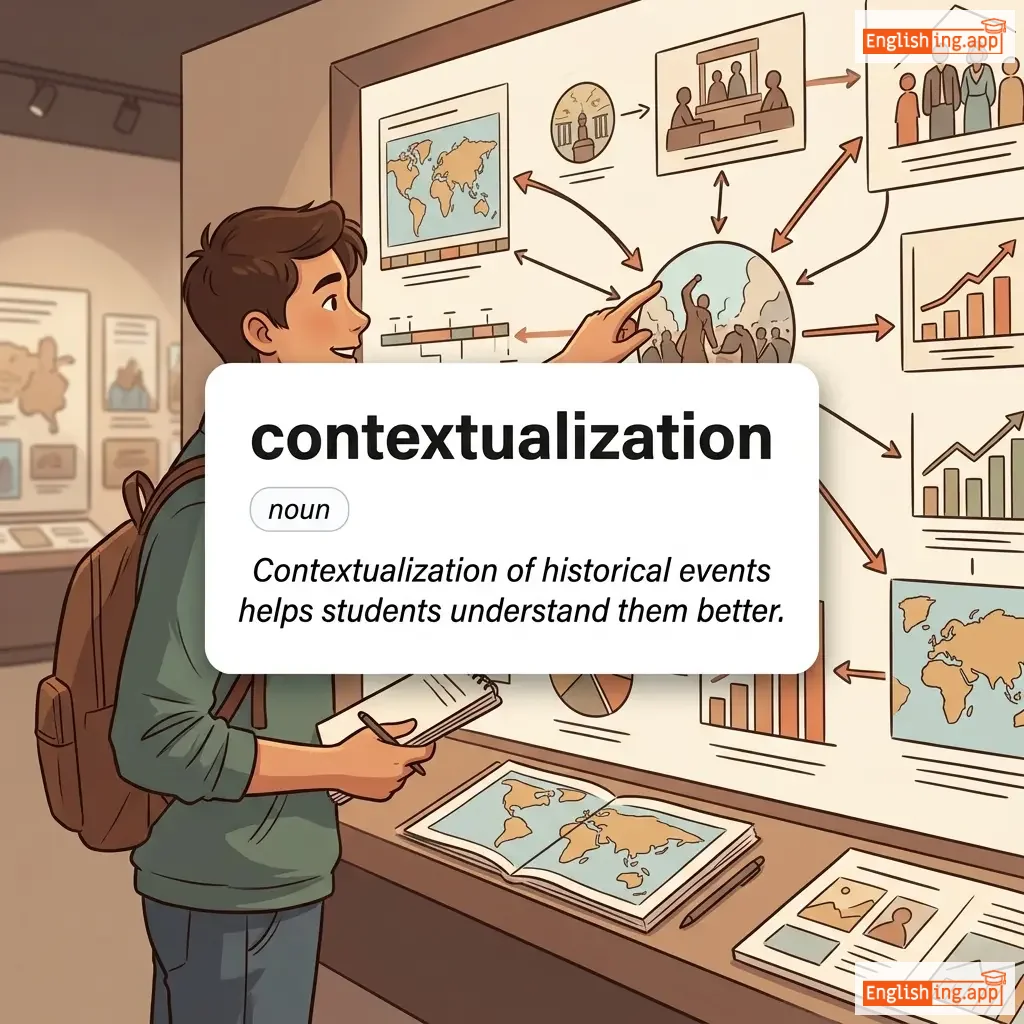
"Понимание контекстуального значения слова важно для эффективной коммуникации." (Ponimanie kontekstual'nogo znacheniya slova vazhno dlya effektivnoy kommunikatsii.)
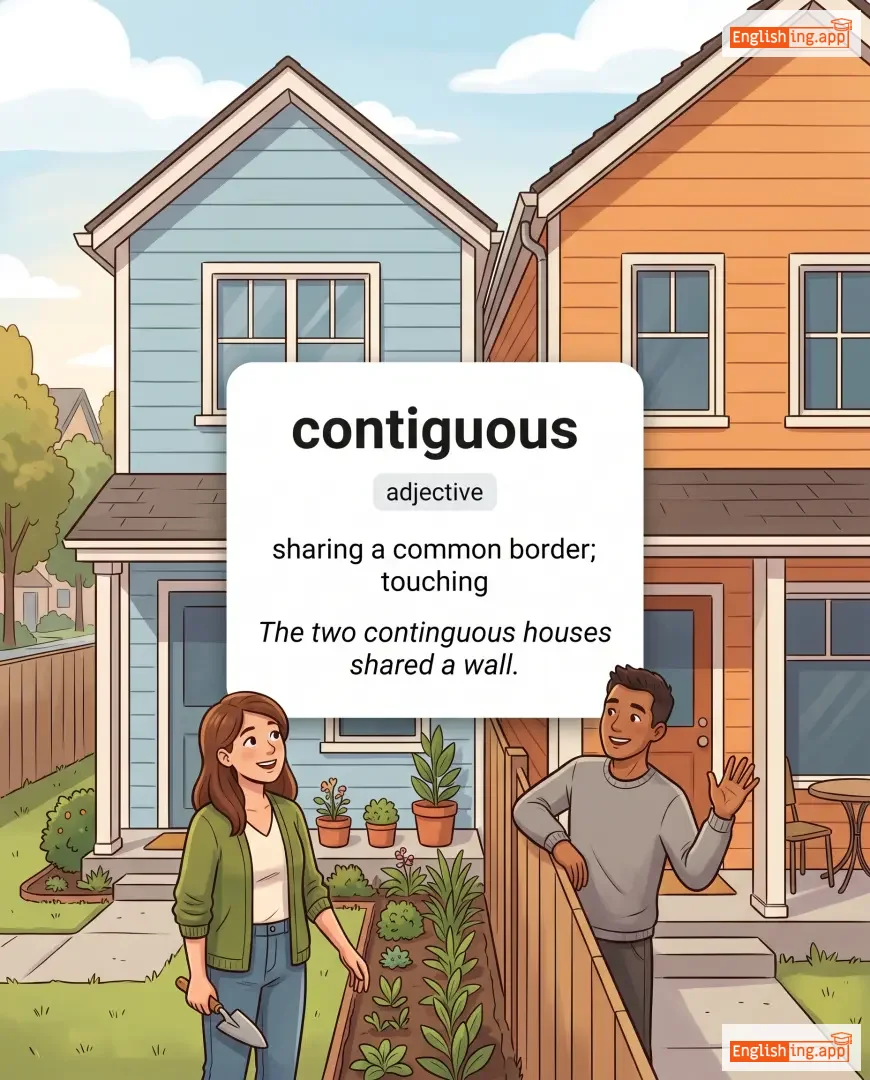
contextualization definition card — visual illustration of the meaning
noun
/kɒnˌtek.stʃu.ə.laɪˈzeɪ.ʃən/
контекстуализация (kontekstualizatsiya)

The process of placing something in its proper context or setting to understand it better.

"Contextualization of historical events helps students understand them better."

"Контекстуализация исторических событий помогает студентам лучше их понимать." (Kontekstualizatsiya istoricheskikh sobytiy pomogaet studentam luchshe ikh ponimat'.)
verb
/kənˈtɛkstʃuəlaɪz/
контекстуализировать (kontekstualizirovat)

to place something in a context or interpret it in relation to its surroundings

"The teacher contextualized the historical event to make it more relevant for students."

"Учитель контекстуализировал историческое событие, чтобы сделать его более актуальным для студентов." (Uchitel' kontekstualiziroval istoricheckoe sobytie, chtoby sdelat' ego bolee aktual'nym dlya studentov.)
noun
/kɒn.tɪˈɡjuː.ɪ.ti/
континуитет (kontiniut)

the state of being in direct contact or next to each other

"The contiguity of the two countries facilitates trade."
"Континуитет двух стран облегчает торговлю." (Kontiniutet dvukh stran oblegchaet torgovlyu.)
contiguous definition card — visual illustration of the meaning
adjective
/kənˈtɪɡ.ju.əs/
смежный (smezhnij)

sharing a common border; touching

"The two continguous houses shared a wall."

"Два смежных дома поделились стеной." (Dva smezhnykh doma podelilis' stenoy.)
continence definition card — visual illustration of the meaning
noun
/ˈkɒn.tɪ.nəns/
воздержание (vozderzhanie)

self-restraint, especially regarding bodily functions or desires

"He practiced continence to maintain focus on his studies."

"Он практиковал воздержание, чтобы сосредоточиться на учебе." (On praktikovav vozderzhanie, chtoby sosredotochit'sya na uchebe.)
noun
/ˈkɒntɪnənt/
континент (kontinent)

one of the large landmasses on Earth such as Asia, Africa, or Europe

"Asia is the largest continent in the world."
"Азия — крупнейший континент в мире." (Aziya — krupneyshiy kontinent v mire.)
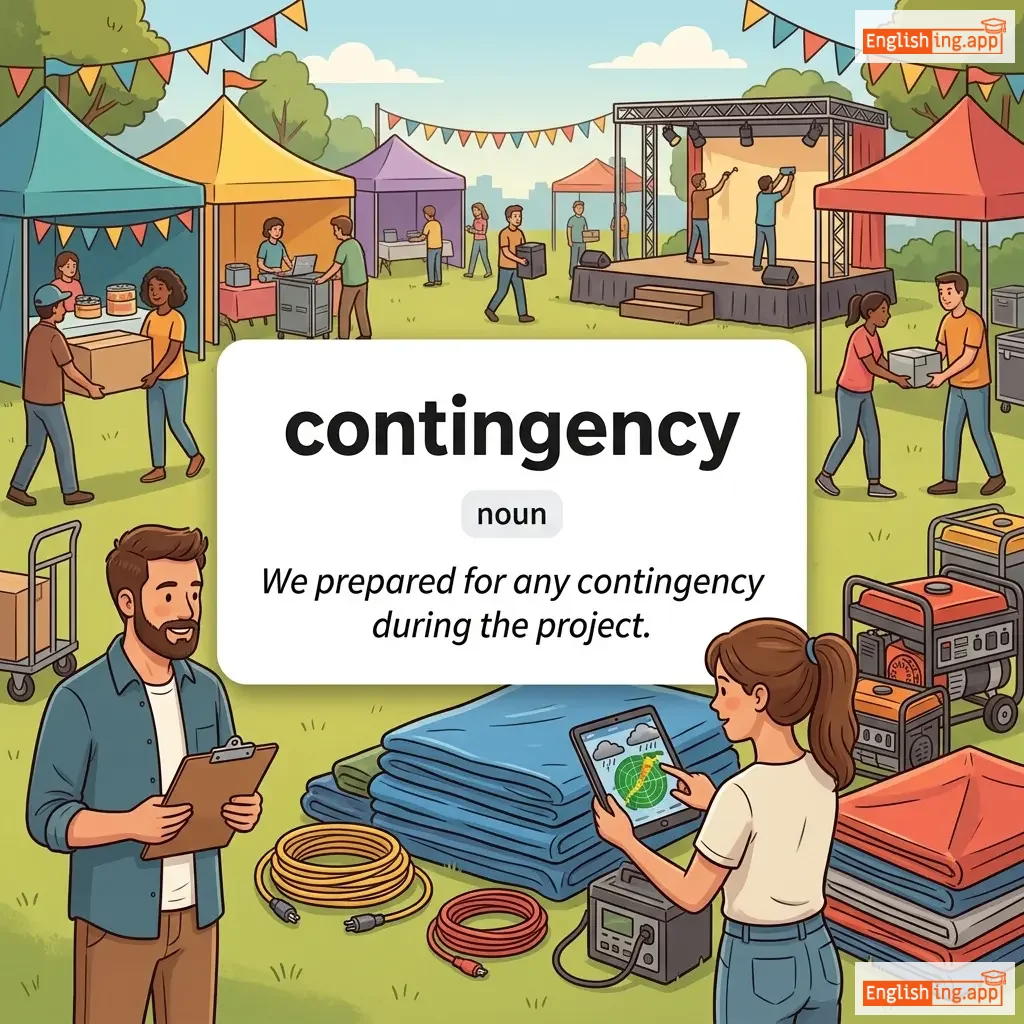
contingency definition card — visual illustration of the meaning
noun
/kənˈtɪn.dʒən.si/
непредвиденная ситуация (nepredvidennaya situatsiya)

a future event or circumstance that is possible but cannot be predicted with certainty

"We prepared for any contingency during the project."

"Мы подготовились к любой непредвиденной ситуации в ходе проекта." (My podgotovilis' k lyuboy nepredvidennoy situatsii v khode proyekt.)
adjective,noun
/kənˈtɪn.dʒənt/
зависимый / контингент (zavisimy / kontingent)

dependent on something else; a group of people representing an organization

"Attendance is contingent on prior registration. / A contingent of students attended the conference."

"Посещение зависит от предварительной регистрации. / Контингент студентов посетил конференцию." (Poseshchenie zavisit ot predvaritel'noy registratsii. / Kontingent studentov posetil konferentsiyu.)
adjective
/kənˈtɪn.ju.əl/
непрерывный; постоянный; (nepreryvnyy; postoyannyy;)

happening repeatedly over a long period of time; constant and uninterrupted

"The continual noise from the construction site was very annoying."

"Постоянный шум с строительного участка был очень раздражающим." (Postoyannyy shum s stroitel'nogo uchastka byl ochen' razdrazhayushchim.)
adverb
/kənˈtɪnjuəli/
непрерывно (nepreryvno)

in a continuous and uninterrupted way

"The rain has been falling continually for hours."

"Дождь идет непрерывно уже несколько часов." (Dozhd' idyot nepreryvno uzhe neskol'ko chasov.)
noun
/kənˈtɪn.ju.əns/
продолжение (prodolzhenie)

the state of continuing or being prolonged; persistence

"The continuance of the project depended on securing additional funding."

"Продолжение проекта зависело от обеспечения дополнительного финансирования." (Prodolzhenie proyeka zaviselo ot obespecheniya dopolnitel'nogo finansirovaniya.)
noun
/kənˌtɪn.juˈeɪ.ʃən/
продолжение (prodolzhenie)

the action of carrying something on over time; extension

"The continuation of the series was announced after the finale."

"Продолжение сериала было анонсировано после финала." (Prodolzhenie seriala bylo anonsirovano posle finala.)
verb
/kənˈtɪnjuː/
продолжать (prodolzhat)

To keep happening, existing, or doing something without stopping.

"The rain will continue throughout the night."

"Дождь будет продолжаться всю ночь." (Dozhd' budet prodolzhat'sya vsyu noch'.)
verb
/kənˈtɪn.juːd/
продолжено (prodolzheno)

Kept happening or carried on without stopping.

"She continued working despite the challenges."

"Она продолжала работать, несмотря на трудности." (Ona prodolzhala rabotat', nesmotrya na trudnosti.)
verb
/kənˈtɪnjuɪŋ/
продолжающийся (prodolzhayushchiesya)

to keep doing something without stopping

"They are continuing their journey despite the rain."

"Они продолжают свое путешествие, несмотря на дождь." (Oni prodolzhayut svoe puteshestvie, nesmotrya na dozhd'.)
noun
/ˌkɒn.tɪˈnjuː.ɪ.ti/
непрерывность (nepreryvnost)

the state of being continuous or connected; consistency over time

"Maintaining continuity in leadership is essential for organizational stability."

"Поддержание непрерывности в лидерстве важно для стабильности организации." (Podderzhanie nepreryvnosti v liderstve vazhno dlya stabil'nosti organizatsii.)
adjective
/kənˈtɪn.ju.əs/
непрерывный (nepreryvny)

forming an unbroken whole; without interruption

"The factory operates on a continuous 24-hour schedule."

"Фабрика работает по непрерывному графику 24 часа." (Fabrika rabotaet po nepreryvnomu grafikyu 24 chasa.)
adverb
/kənˈtɪnjuəsli/
непрерывно; постоянно; без перерыва (nepreryvno; postoyanno; bez pereryva)

without interruption; in an unbroken sequence

"The machine operates continuously for 24 hours."

"Машина работает непрерывно 24 часа." (Mashina rabotaet nepreryvno 24 chasa.)
noun
/kənˈtɪnjuəm/
непрерывность (nepreryvnost)

A continuous sequence in which adjacent elements are not perceptibly different from each other, but the extremes are quite distinct.

"Life and death are often seen as part of the same continuum."

"Жизнь и смерть часто воспринимаются как части одного и того же континуума." (Zhizn' i smert' chasto vosprinimayutsya kak chasti odnogi i togo zhe kontinuuma.)
verb
/kənˈtɔːrt/
искривлять (iskrivlyat)

to twist or bend out of the normal shape

"She contorted her face in pain after the injury."

"Она скривила свое лицо от боли после травмы." (Ona skrivila svoe litso ot boli posle travmy.)
noun
/kənˈtɔːrʃən/
искривленная или согнутая форма; действие, когда что-то изгибается или искажается (iskrivlennaya ili sognutaya forma; deystviye, kogda chto-to izgibayetsya ili iskazhdaetsya)

a twisted or bent shape; the act of twisting out of the normal shape

"The gymnast's contortion amazed the audience."

"Контортия гимнаста поразила зрителей." (Kontortiya gimnasta porazila zriteley.)
noun
/kənˈtɔːrʃənz/
множественное число от контурсия; несколько искривленных или изогнутых форм (mnozhestvennoe chislo ot kontursiya; neskol'ko iskryvlennykh ili izognutykh form)

plural form of contortion; multiple twisted or bent shapes

"The magician's contortions left the crowd in awe."

"Контортии мага оставили толпу в изумлении." (Kontortii maga ostavili tolpu v izumlenii.)