Словари

Словарь английского языка | Значения слов, определения и примеры

adjective
/kənˈsɪdərət/
внимательный (vnimatel'nyj)

showing concern for the needs and feelings of others

"He is always considerate of his neighbors."

"Он всегда внимателен к своим соседям." (On vsegda vnimatelen k svoim sosedyam.)
noun
/kənˌsɪdəˈreɪʃən/
счастье (schast'ye)

careful thought or attention to something before making a decision

"After much consideration, she accepted the job offer."

"Она не могла скрыть свое счастье, когда получила награду." (Ona ne mogla skryt' svoe schast'ye, kogda poluchila nagradu.)
verb
/kənˈsaɪn/
передавать (peredavat)

to deliver something to a person or place, often for selling or safekeeping

"He consigned the package to the shipping company."

"Он передал пакет транспортной компании." (On peredal paket transportnoy kompanii.)
noun
/ˌkɒnsaɪˈniː/
получатель (poluchatel)

the person or company to whom goods are delivered

"The consignee received the shipment on time."

"Получатель получил отправление вовремя." (Poluchatel poluchil otpravlenie vovremya.)
noun
/kənˈsaɪnər/
отправитель (otpravitel)

a person or company that sends goods to be sold or transported

"The consignor shipped the goods to the warehouse."

"Отправитель отправил товар на склад." (Otpravitel otpravil tovar na sklad.)
verb
/kənˈsɪst/
состоять (sostoyat)

to be made up or composed of certain parts or elements

"The committee consists of five members."

"Комитет состоит из пяти членов." (Komitet sostoyit iz pyati chlenov.)
consistency definition card — visual illustration of the meaning
noun
/kənˈsɪstənsi/
последовательность, стабильность (posledovatel'nost', stabil'nost')

the quality of always behaving or performing in a similar way; uniformity

"Her consistency in work earned her a promotion."

"Ее последовательность в работе принесла ей повышение." (Eyo posledovatel'nost' v rabote prinesla yey povyshenie.)
consistent definition card — visual illustration of the meaning
adjective
/kənˈsɪstənt/
последовательный (posledovatel'nyy)

acting or done in the same way over time; reliable or uniform

"He is very consistent in his work."

"Он очень последовательный в своей работе." (On ochen' posledovatel'nyy v svoey rabote.)
adverb
/kənˈsɪstəntli/
непрерывно (nepreryvno)

in a way that does not vary; regularly and dependably

"She has been performing consistently well in her studies."

"Она постоянно показывает хорошие результаты в учебе." (Ona postoyanno pokazyvayet khoroshie rezul'taty v uchebe.)
verb
/kənˈsoʊl/
утешать (uteshat)

to comfort someone at a time of grief or disappointment

"She tried to console him after his loss."

"Она попыталась утешить его после его потери." (Ona popytalas uteshit ego posle ego poteri.)
consolidate definition card — visual illustration of the meaning
verb
/kənˈsɑːlɪdeɪt/
консолидировать (konsolidirovat)

to combine into a single, more effective or coherent whole

"The company plans to consolidate its offices into one building."

"Компания планирует консолидацию своих офисов в одном здании." (Kompaniya planirovet konsolidatsiyu svoikh ofisov v odnom zdanii.)
Consolidation definition card — visual illustration of the meaning
noun
/kənˌsɑːlɪˈdeɪʃən/
консолидация (konsolidatsiya)

the act or process of combining into a single, stronger or more effective entity

"The consolidation of the two companies improved efficiency."

"Консолидация двух компаний улучшила эффективность." (Konsolidatsiya dvukh kompaniy uluchshila effektivnost'.)
noun
/ˈkɒnsənəns/
созвучие, гармония (sozvuchie, garmoniya)

Agreement or harmony among parts; a pleasing combination of sounds in music or words.

"The consonance between their ideas made the project successful."

"Созвучие между их идеями сделало проект успешным." (Sozvuchie mezhdu ikh ideyami sdelalo proyekt uspeshnym.)
noun
/ˈkɒnsənənt/
согласный (soglasny)

A speech sound produced by blocking air flow, or a letter representing such a sound.

"The word 'cat' has two consonants and one vowel."

"Слово 'кот' имеет два согласных и одну гласную." (Slovo 'kot' imeyet dva soglasnykh i odnu glasnuyu.)
verb
/ˈkɒnsɔːrt/

To associate with someone, typically with disapproval; also, a spouse of a reigning monarch.

"He was criticized for consorting with criminals."

consortium definition card — visual illustration of the meaning
noun
kənˈsɔː.ti.əm
консорциум (konsortsium)

An association of several companies or organizations formed to undertake an enterprise beyond the resources of any one member.

"The consortium worked collaboratively to build the cable."

"Консорциум работал совместно для строительства кабеля." (Konsortsium rabotal sovmestno dlya stroitel'stva kabyelya.)
adjective
/kənˈspɪkjuəs/
заметный (zametny)

Easily noticeable; attracting attention due to being unusual or prominent.

"Her red dress made her conspicuous at the party."

"Ее красное платье сделало ее заметной на вечеринке." (Eyo krasnoe plat'e sdelo eyo zametnoy na vecherinke.)
noun
/kənˈspɪrəsi/
заговор (zagovor)

A secret plan by a group to do something unlawful or harmful.

"The police uncovered a conspiracy to overthrow the government."

"Полиция раскрыла заговор по свержению правительства." (Politsiya raskryla zagovor po sverzheniyu pravitel'stva.)
noun
/kənˈspɪrə.tər/
заговорщик (zagogorshchik)

a person who secretly plans with others to do something unlawful or harmful

"The conspirator was arrested before the plan could be carried out."

"Заговорщик был арестован до того, как план мог быть осуществлен." (Zagovorščik byl arestovan do togo, kak plan mog byt' osushchestvlen.)
verb
/kənˈspaɪər/
заговорить (zagovorit)

to secretly plan with others to do something harmful or illegal

"They conspired to overthrow the government."

"Они сговорились, чтобы свергнуть правительство." (Oni sgovorilis', chtoby svergnut' pravitel'stvo.)
noun
/ˈkʌn.stə.bəl/
младший полицейский (mladshiy politseyskiy)

a police officer of the lowest rank

"The constable directed traffic at the busy intersection."

"Младший полицейский регулировал движение на оживленном перекрестке." (Mladshiy politseyskiy regu-liviroval dvizhene na ozhivlyonnom perekrestke.)
noun
/ˈkɒnstənsi/
постоянство (postoyanstvo)

the quality of being faithful and dependable

"Her constancy in friendship is admirable."

"Её постоянство в дружбе восхитительно." (Yeyo postoyanstvo v druzhbe voskhititelno.)
adjective
/ˈkɒn.stənt/
постоянный (postoyannyy)

happening all the time or staying the same without change

"She lived in constant fear of losing her job."

"Она жила в постоянном страхе потерять свою работу." (Ona zhila v postoyannom strake poteryat' svoyu rabotu.)
adverb
/ˈkɒnstəntli/
постоянно (postoyanno)

continuously over a period of time; always

"He is constantly improving his skills."

"Он постоянно улучшает свои навыки." (On postoyanno uluchshayet svoi navyki.)
noun
/ˌkɒn.stəˈleɪ.ʃən/
созвездие (sozvezdie)

a group of stars forming a recognizable pattern in the night sky

"Orion is one of the most famous constellations."

"Орион — одно из самых известных созвездий." (Orion — odno iz samykh izvestnykh sozyvezdiy.)
noun
/ˌkɒnstəˈneɪʃən/
беспокойство (bespokoystvo)

A feeling of anxiety, dismay, or confusion, often caused by something unexpected.

"The sudden announcement caused widespread consternation among the employees."

"Внезапное объявление вызвало широкое беспокойство среди сотрудников" (Vnezapnoe ob'yavlenie vyzvalo shirokoe bespokoystvo sredi sotrudnikov)
noun
/kənˈstɪtʃuənsi/
избирательный округ (izbiratel'nyy okrug)

A geographical area whose residents elect a representative to a legislative body.

"She campaigned tirelessly across her constituency."

"Она неустанно вела кампанию по своему избирательному округу." (Ona neustanno vela kampaniyu po svojemu izbiratel'nomu okrugu.)
noun/adjective
/kənˈstɪtʃuənt/
составная часть / избиратель (sostavnaya chast / izbiratel)

Noun: A member of a constituency or an essential part of something. Adjective: Being a necessary part of a whole.

"The senator met with his constituents to discuss local issues."
"Сенатор встретился со своими избирателями, чтобы обсудить местные проблемы." (Senator vstretilsya so svoimi izbiratelyami, chtoby obsudit' mestnye problemy.)
constituents definition card — visual illustration of the meaning
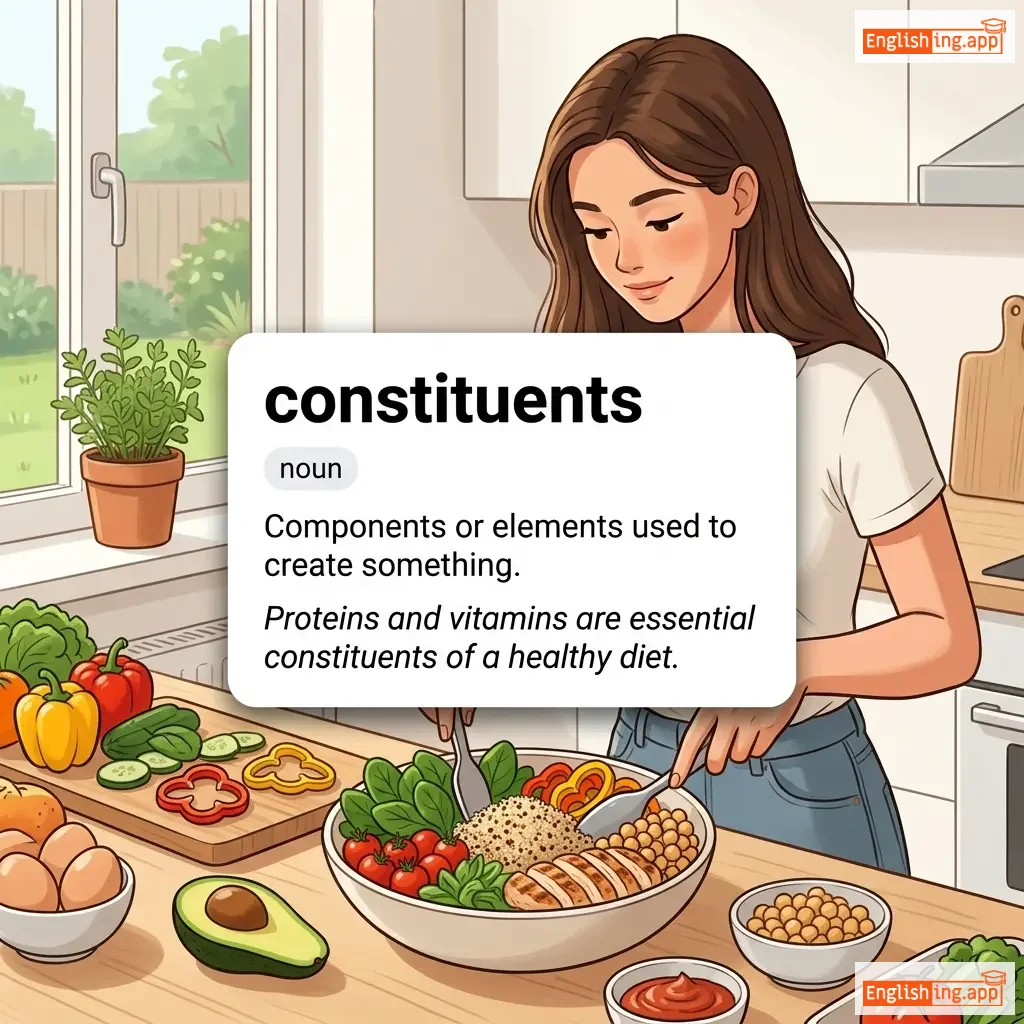
noun
/kənˈstɪtʃ.u.ənts/
составные части (sostavnye chasti)

Components or elements used to create something.

"Proteins and vitamins are essential constituents of a healthy diet."

"Белки и витамины являются важными составляющими здорового питания." (Belki i vitaminy yavyayutsya vazhnymi sostavlyayushchimi zdorovogo pitaniya.)
verb
/ˈkɒnstɪtjuːt/
составлять (sostavlyat')

To make up, form, or establish something.

"These documents constitute the legal agreement between the two parties."
"Эти документы составляют юридическое соглашение между двумя сторонами." (Ety dokumenty sostavlyayut yuridicheskoe soglashenie mezhdu dvumya storonami.)
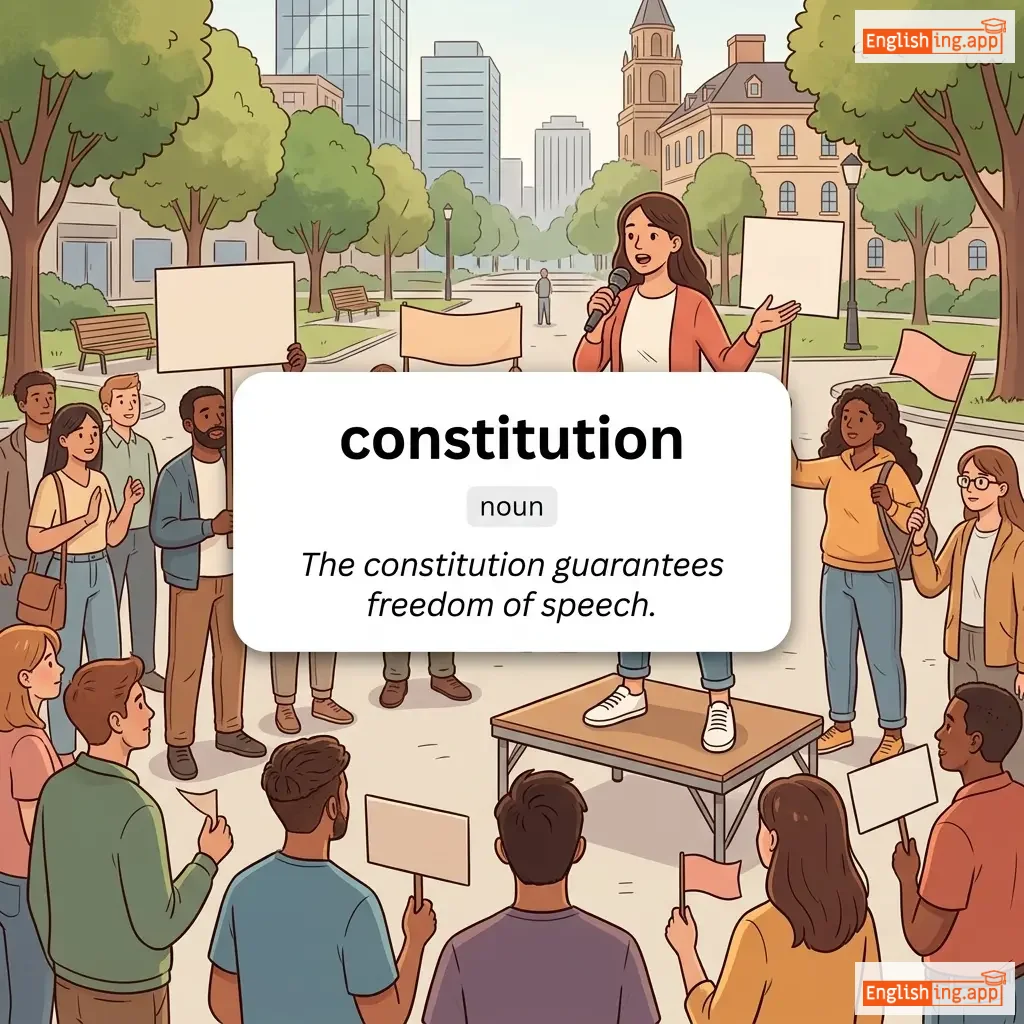
constitution definition card — visual illustration of the meaning
noun
/ˌkɒnstɪˈtjuːʃən/
конституция (konstituciya)

The system of fundamental principles according to which a nation or organization is governed.

"The constitution guarantees freedom of speech."
"Конституция гарантирует свободу слова." (Konstituciya garantiruet svobodu slova.)
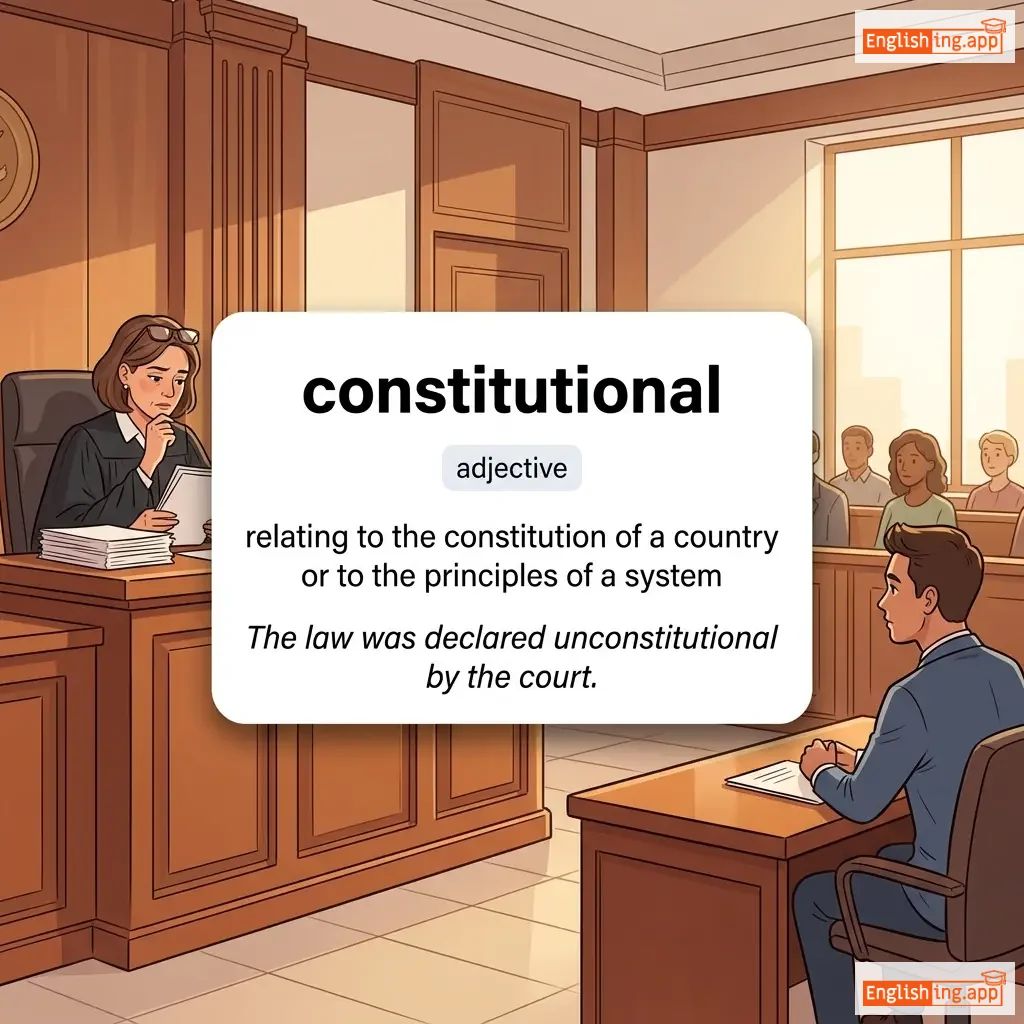
constitutional definition card — visual illustration of the meaning
adjective
/ˌkɒnstɪˈtjuːʃənəl/
конституционный (konstitutsionny)

relating to the constitution of a country or to the principles of a system

"The law was declared unconstitutional by the court."

"Закон был признан неконституционным судом." (Zakon byl prizan nekonstitutsionnym sudom.)
verb
/kənˈstreɪn/
ограничить (ogranichit)

to limit or restrict someone or something; to force or compel

"The new regulations constrain businesses from polluting the environment."

"Новые правила ограничивают компании от загрязнения окружающей среды." (Novye pravila ogranichivayut kompanii ot zagryazneniya okruzhayushchey sredy.)
adjective
/kənˈstreɪnd/
ограниченный, искусственный (ogranichennyy, iskusstvennyy)

appearing forced, unnatural, or restricted

"He gave a constrained smile during the awkward meeting."

"Он сделал принужденную улыбку во время неловкой встречи." (On sdelal prinuzhdennuyu ulybku vo vremya nelovkoy vstrechi.)
noun
/kənˈstreɪnt/
ограничение (ogranichenie)

a limitation or restriction

"Time is the biggest constraint in completing the project."

"Время - это самое большое ограничение при завершении проекта." (Vremya - eto samoe bol'shoe ogranichenie pri zavershenii proekta.)
verb
/kənˈstrɪkt/
сжимать (szhimat)

to make narrower or tighter; to shrink or compress

"The snake constricted its prey before swallowing."

"Змея сжала свою добычу, прежде чем проглотить её." (Zmeyas zhzhalo svoiu dobychu prezhde chem proglotit ee.)
verb
/kənˈstrɪndʒ/
сжимать (szhimat)

to cause to shrink or contract; to constrict

"The medicine helped constringe the swollen tissues."

"Лекарство помогло сжать опухшие ткани." (Lekarstvo pomoglo szhat' opukhshiye tkani.)
verb
/kənˈstrʌkt/
строить (stroyt)

to build or form something by putting parts together

"They plan to construct a new bridge over the river."

"Они планируют построить новый мост через реку." (Oni planiroiut postroit' novyi most cherez reku.)
construction definition card — visual illustration of the meaning
noun
/kənˈstrʌkʃən/
строительство (stroitel'stvo)

The process of building something, typically large structures such as houses, roads, or bridges.

"The construction of the new bridge will take two years."

"Строительство нового моста займет два года." (Stroitel'stvo novogo mosta zaymet dva goda.)
verb
/kənˈstruː/
интерпретировать (interpretirovat')

to interpret or understand the meaning of something in a particular way

"His words could be construed as a threat."

"Его слова могут быть интерпретированы как угроза." (Ego slova mogut byt' interpretirovany kak ugroza.)
noun
/ˈkɒnsəl/
консул / посол (konsul / posol)

an official appointed by a government to live in a foreign city and protect its citizens and interests there

"The consul assisted travelers who lost their passports."

"Консул помог путешественникам, которые потеряли свои паспорта." (Konsul pomog puteshestvennikam, kotorye poteryali svoi pasporty.)
noun
/ˈkɒnsjʊlət/
консульство (konsul'stvo)

the building or office where a consul works

"He went to the consulate to renew his visa."

"Он пошел в консульство, чтобы продлить свою визу." (On poshel v konsul'stvo, chtoby prodlit' svoiu vizu.)
verb
/kənˈsʌlt/
консультироваться (konsul'tirovatsya)

To seek advice or information from someone with expertise.

"You should consult a doctor before starting the treatment."

"Вы должны проконсультироваться с врачом перед началом лечения." (Vy dolzhny prokonsul'tirovat'sya s vrachom pered nachalom lecheniya.)
noun
/kənˈsʌltənt/
консультант (konsul'tant)

A professional who provides expert advice in a particular area.

"The company hired a consultant to improve its marketing strategy."

"Компания наняла консультанта для улучшения своей маркетинговой стратегии." (Kompaniya nanyala konsul'tanta dlya uluchsheniya svoey marketingovoy strategii.)
consultation definition card — visual illustration of the meaning
noun
/ˌkɒnsʌlˈteɪʃən/
консультация (konsultatsiya)

a meeting with an expert or professional to seek advice

"The doctor scheduled a consultation with the patient."

"Доктор назначил консультацию с пациентом." (Doktor naznachil konsultatsiyu s patsiyentom.)
consume definition card — visual illustration of the meaning
verb
/kənˈsjuːm/
потреблять (potrebljat')

To use up, eat, drink, or take in.

"People consume a large amount of information daily."

"Люди потребляют большое количество информации ежедневно." (Ljudи potrebljajut bol'šoe količestvo informacii ežednevno.)
noun
/kənˈsjuːmər/
потребитель (potrebitel)

A person who buys and uses goods and services.

"The company focuses on understanding consumer needs."

"Компания сосредоточена на понимании потребностей потребителей." (Kompaniya sosredotochena na ponimanii potrebnostey potrebitelya.)
consumerism definition card — visual illustration of the meaning
noun
kənˈsjuː.mə.rɪ.zəm
потребительский капитализм (potrebitelskiy kapitalizm)

The tendency to increase consumption of goods and the importance given to consuming products.

"Modern consumerism leads to increased demand for luxury goods."
"Современный потребительский капитализм ведет к увеличению спроса на товары класса люкс." (Sovremennyy potrebitelskiy kapitalizm vedyot k uvelicheniyu sprosa na tovarы klassa lyuks.)
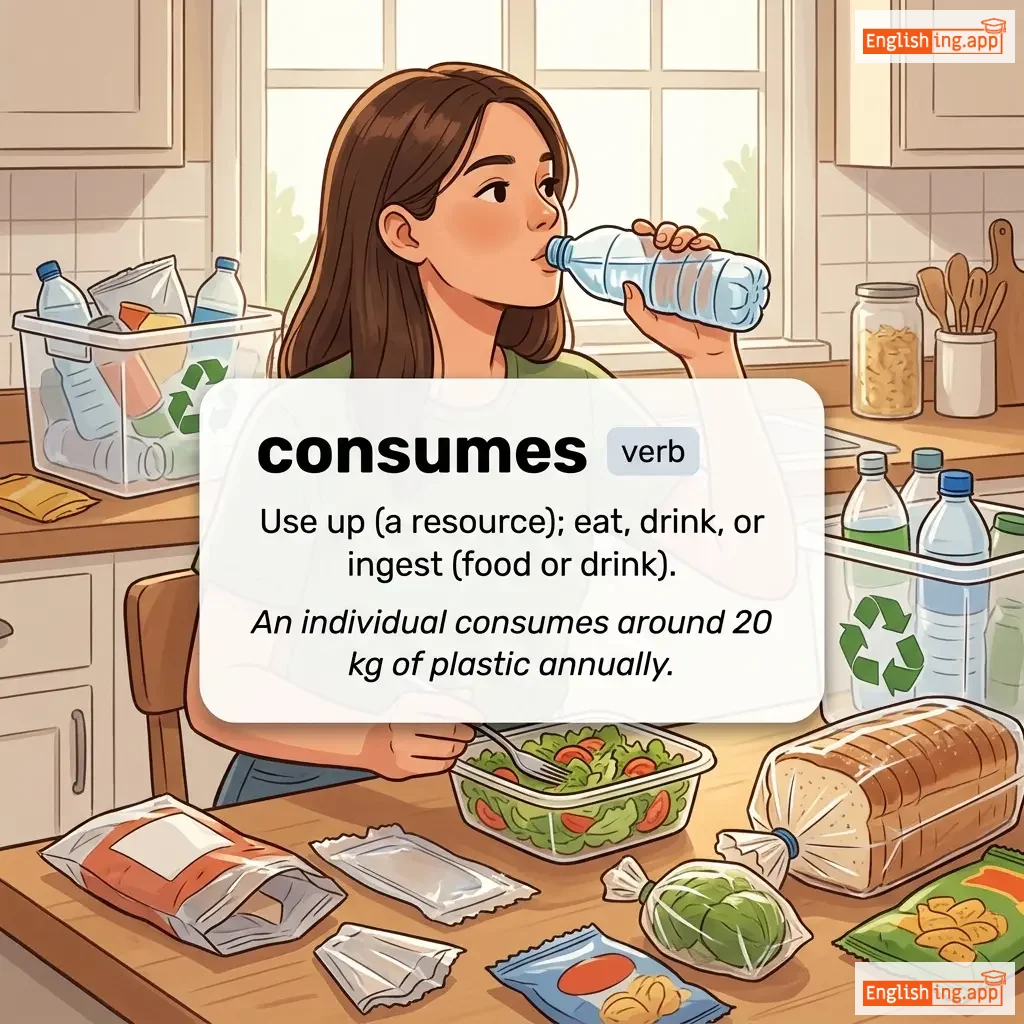
consumes definition card — visual illustration of the meaning
verb
kənˈsjuːmz
потреблять (potrebljat')

Use up (a resource); eat, drink, or ingest (food or drink).

"An individual consumes around 20 kg of plastic annually."

"Человек потребляет около 20 кг пластика ежегодно." (Chelovek potrebljaet okolo 20 kg plastika ezhednevno.)
consummate definition card — visual illustration of the meaning
adjective, verb
/ˈkɒnsəmət/ (adj), /ˈkɒnsəmeɪt/ (verb)
совершить / полный (sovershit / polny)

to complete or perfect something; showing great skill or excellence

"She is a consummate professional in her field."

"Она совершенный профессионал в своей области." (Ona sovershennyy professional v svoey oblasti.)