Словари

Словарь английского языка | Значения слов, определения и примеры
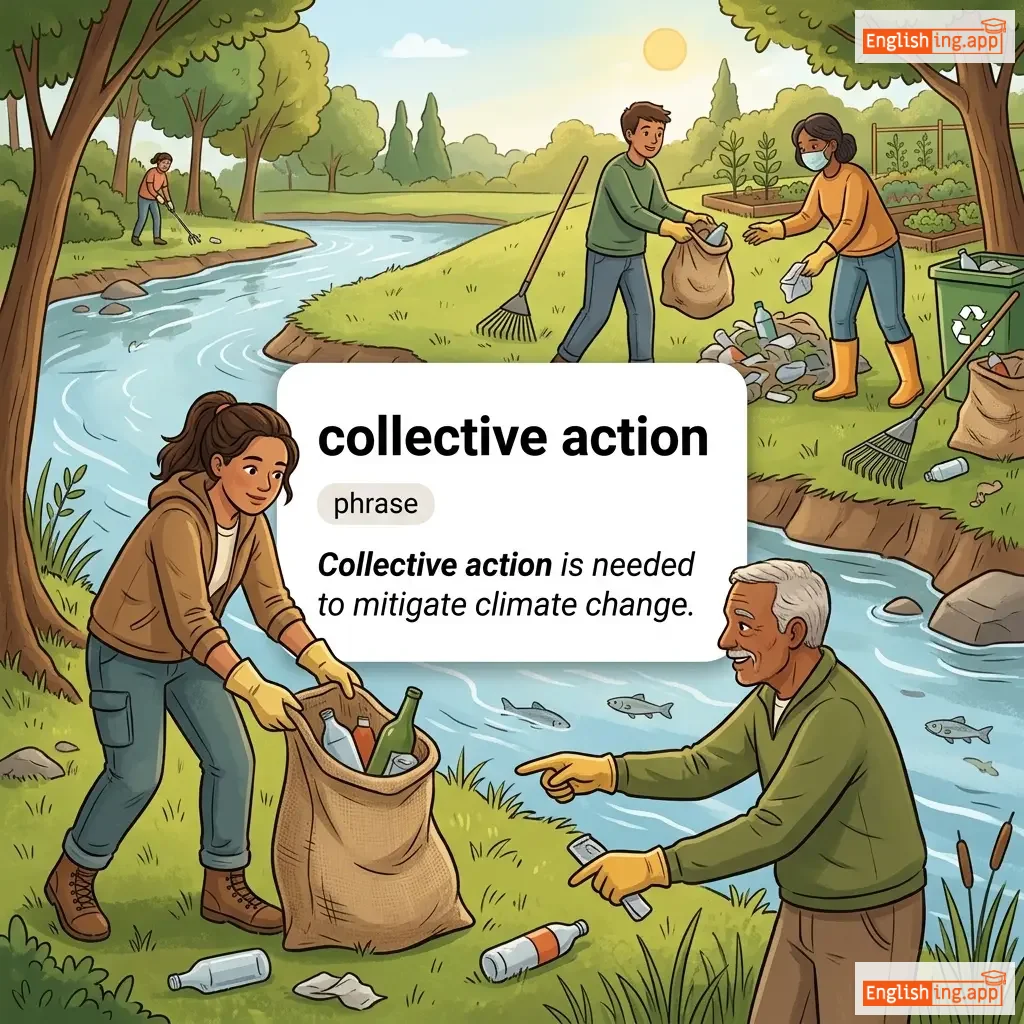
collective action definition card — visual illustration of the meaning
phrase
kəˈlek.tɪv ˈæk.ʃən
коллективное действие (kollektive akshn)

Action taken by a group of people working together toward a common goal or purpose.

"Collective action is needed to mitigate climate change."
"Необходимо коллективное действие, чтобы смягчить последствия изменения климата." (Collective action is needed to mitigate climate change.)
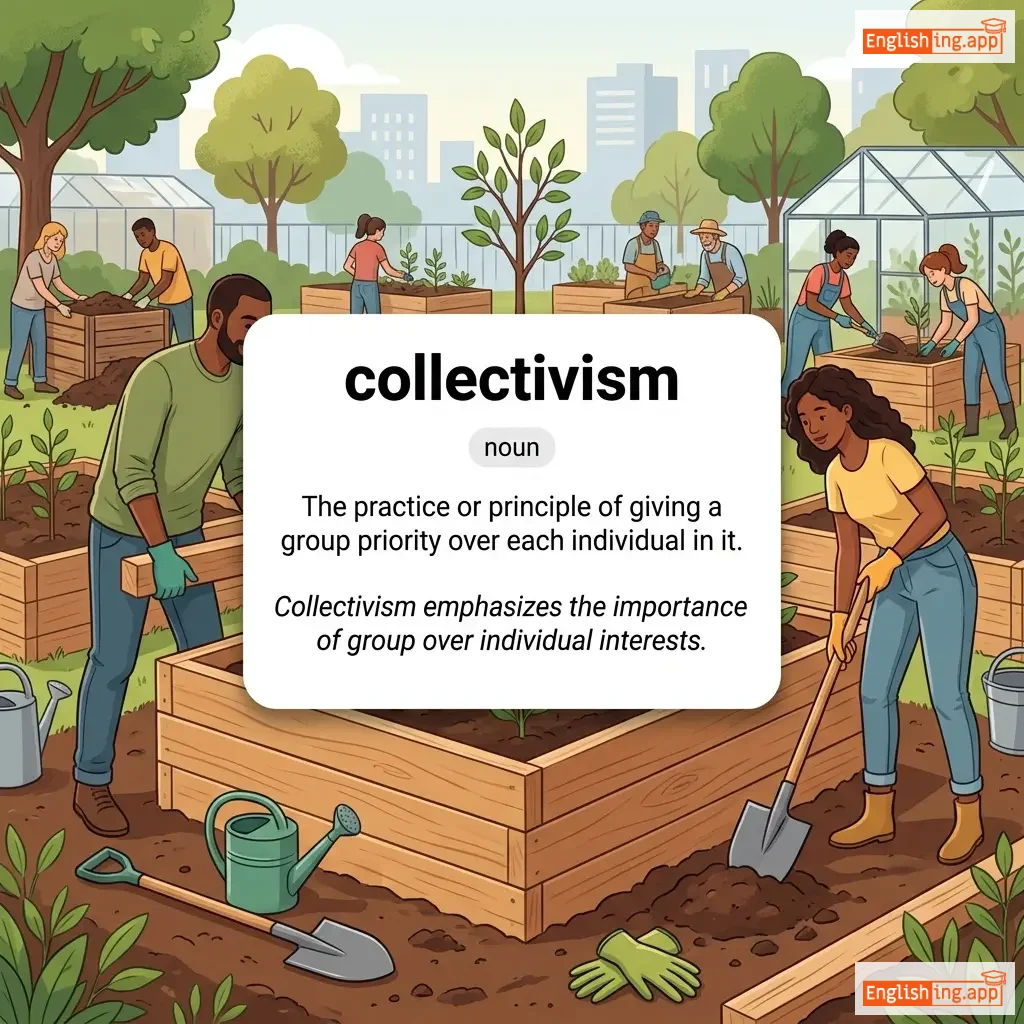
collectivism definition card — visual illustration of the meaning
noun
kəˈlɛktɪvɪzəm
коллективизм (kollektivizm)

The practice or principle of giving a group priority over each individual in it.

"Collectivism emphasizes the importance of group over individual interests."

"Коллективизм подчеркивает важность группы над личными интересами." (Kollektivizm podcherkivayet vazhnost' gruppy nad lichnymi interesami.)
noun
/kəˈlɛktər/
коллекционер (kollektsioner)

a person who collects things as a hobby or job

"He is a stamp collector with thousands of rare items."

"Он коллекционер марок с тысячами редких предметов." (On kollektsioner marok s tysyachami redkikh predmetov.)
noun
/ˈkɒlɪdʒ/
колледж (kolledzh)

An educational institution where students study for degrees or professional qualifications.

"She hopes to attend college in the city next year."

"Она надеется поступить в колледж в городе в следующем году." (Ona nadeyetsya postupit' v kolledzh v gorode v sleduyushchem godu.)
noun
/kəˈliːdʒən/
студент колледжа (student kolledzha)

a student of a college

"The collegians were preparing for the cultural festival."
"Колледжиане готовились к культурному фестивалю." (Kolledzhiane gotovilis' k kul'turnomu festivalyu.)
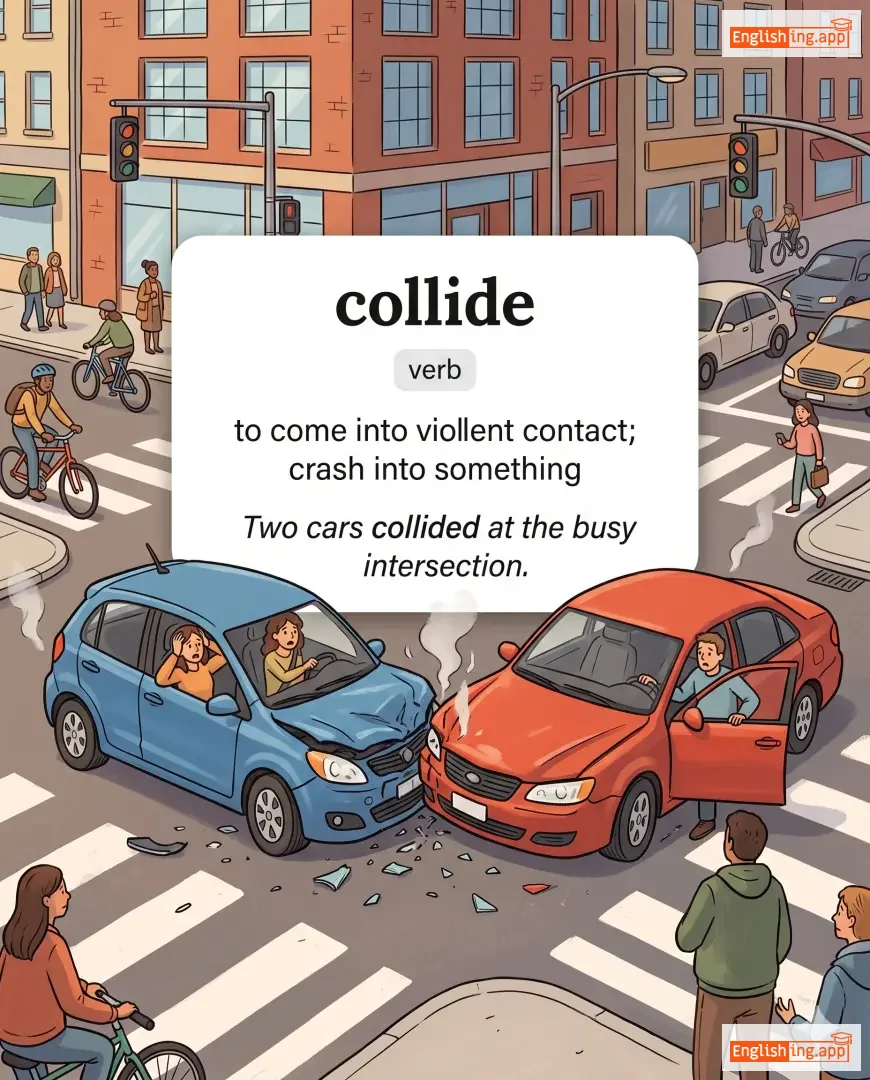
collide definition card — visual illustration of the meaning
verb
/kəˈlaɪd/
столкнуться (stolknut'sya)

to come into violent contact; crash into something

"Two cars collided at the busy intersection."

"Два автомобиля столкнулись на оживленном перекрестке." (Dva avto stolk-nulis' na ozhivlyonnom perekryostke.)
noun
/ˈkɒliər/
угольный шахтер (ugol'nyy shakhtyor)

a person who works in coal mines or a ship carrying coal

"The collier spent long hours underground extracting coal."

"Угольный шахтер провел долгие часы под землей, добывая уголь." (Ugol'nyy shakhtyor provel dolgiy chasy pod zemley, dobyvaya ugol'.)
noun
/kəˈlɪʒən/
столкновение (stolknoveniye)

an instance of two or more objects crashing into each other

"The collision on the highway caused a major traffic jam."
"Столкновение на шоссе вызвало большую пробку." (Stolknoveniye na shosse vyzvalo bol'shuyu probku.)
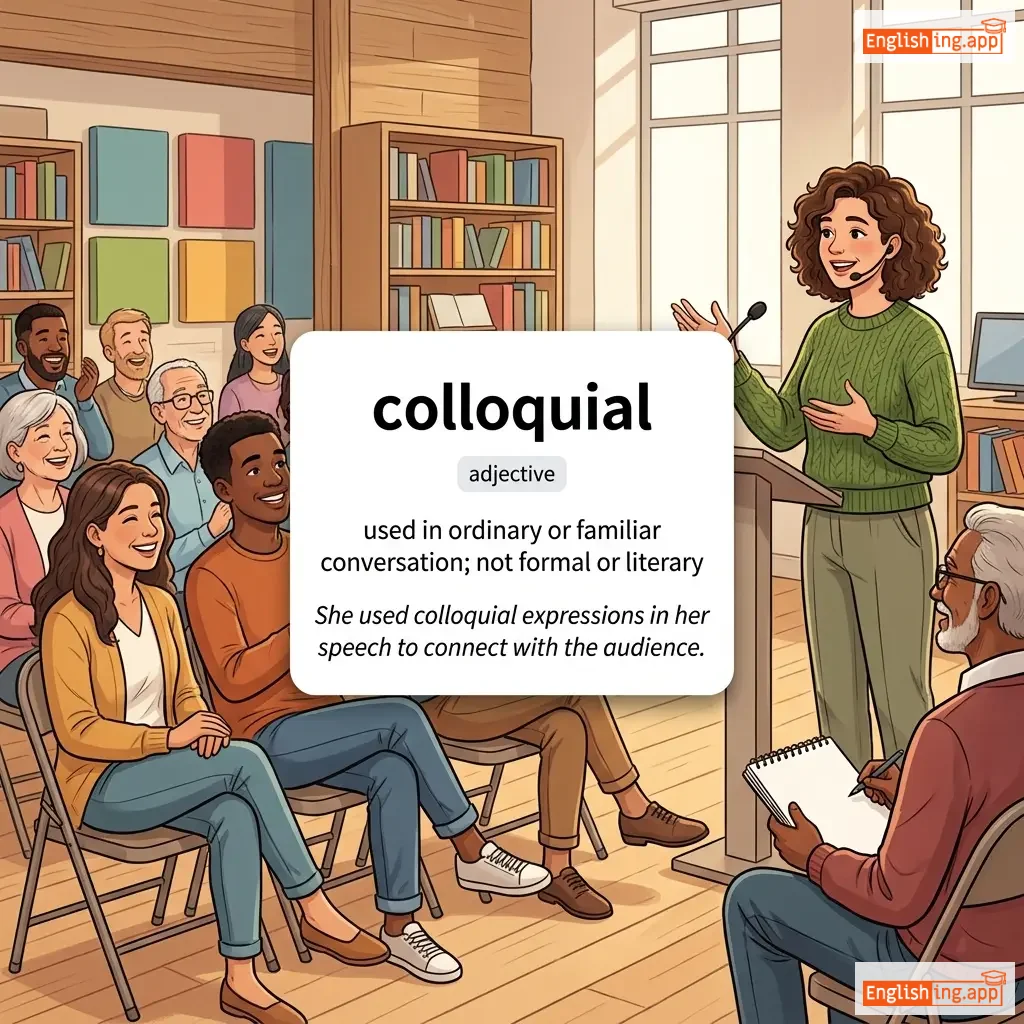
colloquial definition card — visual illustration of the meaning
adjective
/kəˈloʊkwiəl/
разговорный (razgovorny)

used in ordinary or familiar conversation; not formal or literary

"She used colloquial expressions in her speech to connect with the audience."

"Она использовала разговорные выражения в своей речи, чтобы установить связь с аудиторией." (Ona ispol'zovala razgovornye vyrazheniya v svoey rechi, chtoby ustanovit' svyaz' s auditoriey.)
noun
/kəˈloʊkwiəˌlɪzəm/
разговорный стиль (razgovornyy stil')

a word or phrase used in informal speech or writing

"The novel is full of regional colloquialisms."

"Роман наполнен региональными разговорными выражениями." (Roman napolnen regional'nymi razgovornymi vyrazheniyami.)
noun
/ˈkɒl.ə.kwi/
официальный разговор (ofitsial'nyy razgovor)

A formal conversation or dialogue, often on serious or academic topics.

"The professors engaged in a deep colloquy about the future of education."

"Профессора вели глубокую беседу о будущем образования." (Professora vели glubokuyu besedu o budushchem obrazovaniya.)
verb
/kəˈluːd/
сговариваться (sgovarivatsya)

To secretly cooperate or conspire with others, often for a deceitful purpose.

"The two companies colluded to fix prices in the market."

"Две компании сговорились, чтобы установить цены на рынке." (Dve kompanii sgovorylis', chtoby ustanovit' tseny na rynke.)
noun
/kəˈluːʒən/
коллюзия (kollyuziya)

A secret agreement or cooperation, especially for an illegal or dishonest purpose.

"There was evidence of collusion between the officials and the contractors."
"Существовали доказательства коллюзии между чиновниками и подрядчиками." (Sushchestvovali dokazy kollyuzii mezhdu chinovnikami i podryadchikami.)
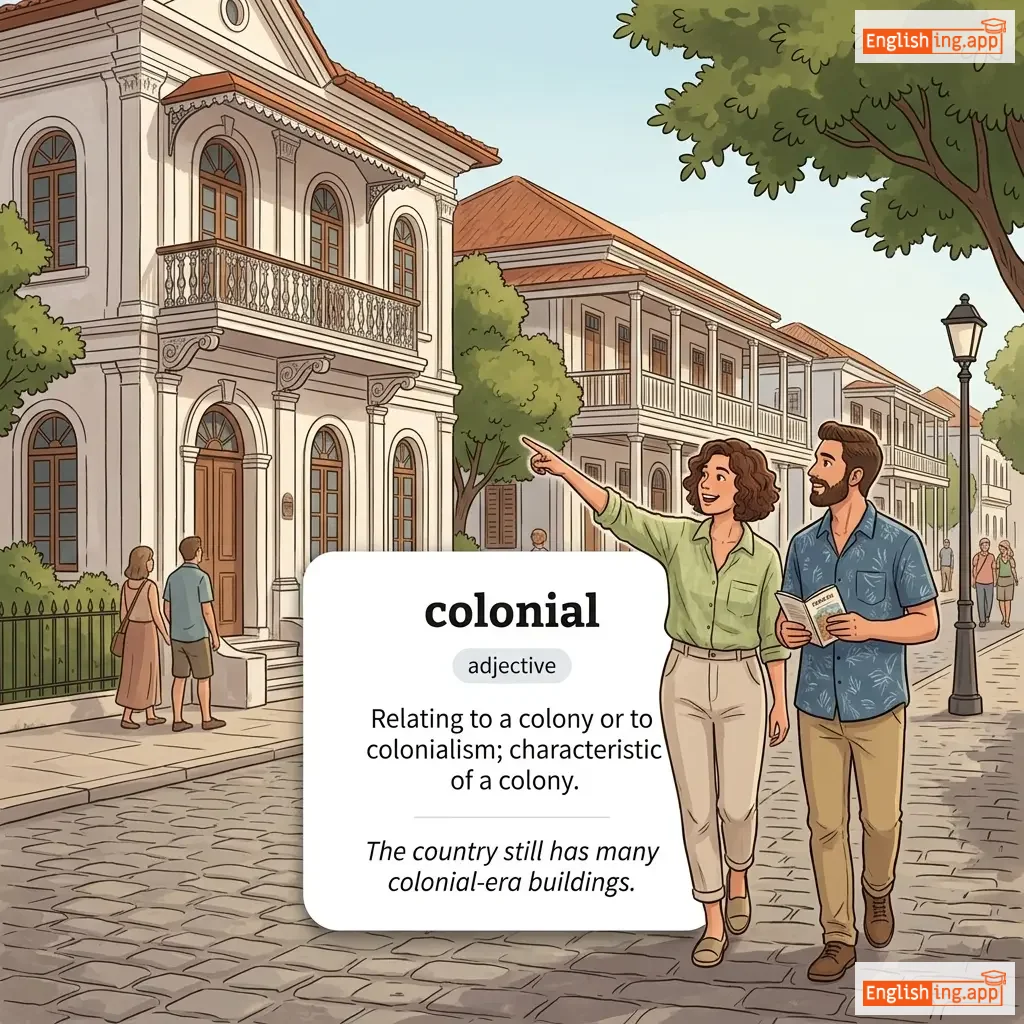
colonial definition card — visual illustration of the meaning
adjective
/kəˈloʊniəl/
колониальный (kolonialny)

Relating to a colony or to colonialism; characteristic of a colony.

"The country still has many colonial-era buildings."

"В стране все еще есть много колониальных зданий." (V strane vse eshche est' mnogo kolonial'nykh zdaniy.)
noun
/ˌkɒl.əˈneɪd/
колоннада (kolonnada)

A row of evenly spaced columns supporting a roof, often in classical architecture.

"The visitors admired the grand colonnade at the entrance of the temple."

"Посетители восхищались большой колоннадой у входа в храм." (Posetiteli voskhishchalis' bol'shoy kollonnadoy u vkhoda v khram.)
noun
/ˈkɒləni/
колония (koloniya)

a territory or community controlled by another country or group of people

"India was once a British colony."

"Индия когда-то была британской колонией." (Indiya kogda-to byla britanskoy koloniey.)
noun
/ˈkʌl.ər/
цвет (tsvet)

The property possessed by an object of producing different sensations on the eye as a result of the way it reflects or emits light.

"Blue is her favorite color."

"Синий — ее любимый цвет." (Siniy — yeye lyubimy tsfvet.)
adjective
/ˈkʌlərfəl/
яркий (yarkiy)

having bright colors; full of variety or interest

"The festival was full of colorful decorations."

"Фестиваль был полон ярких украшений." (Festival byl polon yarkikh ukrasheniĭ.)
Colossal definition card — visual illustration of the meaning
adjective
/kəˈlɒsəl/
колоссальный (kolossal'nyy)

Extremely large in size, extent, or degree; gigantic.

"The company made a colossal investment in renewable energy."

"Компания сделала колоссальные инвестиции в возобновляемую энергию." (Kompanija sdelala kolossal'nye investicii v vozobnovlyaemuyu energiyu.)
noun
/kəˈlɒsəs/
колосс (koloss)

A person or thing of enormous size, importance, or ability.

"Einstein was a colossus in the world of science."

"Эйнштейн был колоссом в мире науки." (Eynshteyn byl kolossom v mire nauki.)
noun
/ˈkʌl.ər/
цвет (tsvet)

the property possessed by an object of producing different sensations on the eye as a result of the way it reflects light; hue, tint, shade

"What is your favorite colour for painting the bedroom walls?"

"Какой твой любимый цвет для покраски стен в спальне?" (Kakoy tvoy lyubimyy tsvet dlya pokraski sten v spal'ne?)
noun
/koʊlt/
жеребенок (zherebyonok)

a young male horse, especially one under four years old

"The farmer trained the young colt to accept a saddle."

"Фермер обучал молодого жеребенка принимать седло." (Fermyer obuchal molodogo zherebyonka prinimat' sedlo.)
adjective
/ˈkoʊltɪʃ/

Playful, energetic, and not fully mature or disciplined.

"The coltish boy ran around the field without a care."

noun
/ˈkɒləm/
колонна (kolonna)

A vertical structure that supports a building; also a section of text arranged vertically in a newspaper or table.

"The ancient temple had tall marble columns."

"Древний храм имел высокие мраморные колонны." (Drevniy khram imel vysokie mramornye kolonni.)
noun
/ˈkɒləmnɪst/
колумнист (kolumnist)

a journalist who regularly writes articles or opinions for a newspaper or magazine

"The columnist wrote an article about climate change."

"Колумнист написал статью о изменении климата." (Kolumnist napisal stat'yu o izmenenii klimata.)
noun
/ˈkoʊmə/
кома (koma)

A deep state of prolonged unconsciousness caused by illness or injury.

"The patient remained in a coma for several weeks."

"Пациент находился в коме несколько недель." (Patsiyent nakhodilsya v kome neskol'ko nedel'.)
adjective
/ˈkoʊməˌtoʊs/
коматозный (komatozny)

In a state of deep unconsciousness, resembling or related to coma.

"The comatose patient was kept under constant observation."

"Коматозный пациент находился под постоянным наблюдением." (Komatoznyy patsiyent nakhodilsya pod postoyannym nablyudeniem.)
noun
/koʊm/
расческа (rascheska)

a toothed device for arranging or cleaning the hair

"She used a comb to style her hair before the party."

"Она использовала расческу, чтобы уложить волосы перед вечеринкой." (Ona ispol'zovala raschesku, chtoby ulozhit' volosy pered vecherinkoy)
verb
/ˈkɒmbæt/
сражаться (srazhat'sya)

to fight against something, especially to reduce or stop it

"The government is taking steps to combat corruption."

"Правительство принимает меры для борьбы с коррупцией." (Pravitel'stvo prinimayet mery dlya bor'by s korruptsiey.)
noun
/ˌkɒmbɪˈneɪʃən/
комбинация / смесь (kombinaciya / smes)

The act of joining or mixing two or more things together.

"This dish is a perfect combination of sweet and spicy flavors."

"Это блюдо - идеальная комбинация сладких и острых вкусов." (Eto blyudo - ideal'naya kombinaciya sladkikh i ostrykh vkuso.)
verb
/kəmˈbaɪn/
объединить (ob'edinyt')

To bring two or more things together to form a single unit.

"They decided to combine their resources for the project."

"Они решили объединить свои ресурсы для проекта." (Oni reshilі ob'yedinit' svoi resursy dlya proekta.)
adjective
/kəmˈbaɪnd/
совмещённый (sovmeshchennyi)

formed by bringing together separate parts or elements

"The combined effort of the team led to success."

"Совместные усилия команды привели к успеху." (Sovmestnye usiliya komandy privedi k uspekhu.)
adjective
/kəmˈbʌstɪbəl/
воспламеняемый (vospalnyayemy)

Capable of catching fire and burning easily.

"Dry leaves are highly combustible."

"Сухие листья чрезвычайно воспламеняемы." (Sukhie list'ya chrezvychaino vosplameniayemy.)
come definition card — visual illustration of the meaning
verb
/kʌm/
счастье (schastye)

to move or travel toward or into a place thought of as near or familiar

"She will come to the party later."

"Она не смогла скрыть свое счастье, когда получила награду." (Ona ne smogla skryt' svoe schast'ye, kogda poluchila nagradu.)
noun
/ˈkʌmbæk/
возвращение (vozvrashchenie)

A return to a former status or success after a period of decline.

"The singer made a remarkable comeback after years of silence."

"Певец сделал замечательное возвращение после лет молчания." (Pevets sdelal zamechatelnoe vozvrashchenie posle let molchaniya.)
noun
/ˈkɒmədi/
комедия (komediya)

A type of entertainment that is intended to make people laugh.

"We watched a hilarious comedy at the theater."

"Мы посмотрели веселую комедию в театре." (My posmotreli vesyoluyu komediyu v teatre.)
adjective
/ˈkʌmli/
красивый (krasivyy)

Attractive or pleasant in appearance.

"The actress was known for her comely features."

"Актриса была известна своими красивыми чертами." (Aktrisa byla izvestna svoimi krasivymi chertami.)
noun
/kəˈmɛstɪbəl/
съедобное (s'yedobnoye)

An item of food that can be eaten.

"The picnic basket was full of delicious comestibles."

"Корзина для пикника была полна вкусных съедобных вещей." (Korzina dlya piknika byla polna vkusnykh syedobnykh veshchey.)
noun
/ˈkɒm.ɪt/
комета (kometa)

a celestial object consisting of ice and dust that develops a tail when approaching the sun

"Halley's Comet appears in the sky every 76 years."

"Комета Галлея появляется на небе каждые 76 лет." (Kometa Galeya poyavlyayetsya na nebe kazhdye 76 let.)
noun
/ˌkʌmˈʌpəns/
заслуженное наказание (zasluzhennoe nakazanie)

A deserved punishment or fate; just deserts.

"The corrupt official finally got his comeuppance in court."

"Коррумпированный чиновник наконец-то получил свое заслуженное наказание в суде." (Korrumpirovannyi chinovnik nakonec-to poluchil svoe zasluzhennoe nakazanie v sude.)
noun
/ˈkʌmfərt/
комфорт (komfort)

a state of physical ease and freedom from pain or distress

"The soft chair gave him great comfort."

"Мягкое кресло принесло ему большое удобство." (Myagkoye kreslo prineslo yemu bol'shoye udobstvo.)
comfortable definition card — visual illustration of the meaning
adjective
/ˈkʌmf.tə.bəl/
удобный (udobnyj)

providing physical ease and relaxation; free from stress or worry

"This chair is so comfortable that I could sit here all day."

"Этот стул такой удобный, что я мог бы сидеть здесь весь день." (Etot stul takoy udobnyj, chto ya mog by sidet' zdes' ves' den'.)
adverb
/ˈkʌmftəbli/
удобно (udobno)

in a comfortable manner; without difficulty or effort; with ease

"She was sitting comfortably in her favorite chair."

"Она сидела удобно в своем любимом кресле." (Ona sidelа udobno v svoem lyubimom kresle.)
adjective
/ˈkɒmɪk/
комический (komicheskiy)

causing or meant to cause laughter

"The movie had several comic scenes."

"В фильме было несколько комических сцен." (V filme bylo neskol'ko komicheskikh stsene.)
adjective
/ˈkɒmɪkəl/
комичный (komichnyy)

Funny in a strange or silly way; amusing.

"His comical expressions made everyone laugh."

"Его комичные выражения заставили всех смеяться." (Ego komichnye vyyrazheniya zastavili vsekh smeyat'sya.)
adjective
/ˈkʌmɪŋ/
предстоящий (predstoyashchiy)

approaching or happening soon

"We are preparing for the coming festival."

"Мы готовимся к предстоящему фестивалю." (My gotovimsya k predstoyashchemu festivalyu.)
noun
/ˈkɒmɪti/
вежливость, взаимное уважение (vezhlivost', vzayimnoe uvaženie)

Courtesy and considerate behavior towards others; mutual respect.

"The meeting was conducted with comity and respect."

"Встреча была проведена с вежливостью и уважением." (Vstrecha byla provedena s vezhlivost'yu i uvaženiem.)
verb
/kəˈmænd/
приказ (prikaz)

to give an order authoritatively; to control or direct

"The general commanded the soldiers to move forward."

"Генерал приказал солдатам двигаться вперёд." (General prikazal soldatam dvizhatsya vpered.)
command economy definition card — visual illustration of the meaning
noun
kəˈmɑːnd ɪˈkɒn.ə.mi
командная экономика (komandnaya ekonomika)

An economic system where economic activities are controlled by the government.

"In a command economy, the government controls production and prices."

"В командной экономике государство контролирует производство и цены." (V komandnoy ekonomike gosudarstvo kontroliroet proizvodstvo i tseny.)
verb
/ˌkɒmənˈdɪə/
захватывать (zakhvatyvat)

To take control or possession of something, often by force or authority.

"The soldiers commandeered the villagers’ homes during the war."

"Во время войны солдаты захватили дома жителей деревни." (Vo vremya voyny soldaty zakhvatili doma zhiteley derevni.)