Словари

Словарь английского языка | Значения слов, определения и примеры

noun, verb
/klɒt/
тромб (tromb)

a thick mass of coagulated liquid, especially blood; to form such a mass.

"The doctor removed a blood clot from the patient."

"Доктор удалил тромб из крови пациента." (Doktor udalil tromb iz krovi patsiyenta.)
noun
/klɒθ/
ткань (tkan')

fabric or material made by weaving or knitting fibers

"The table was covered with a white cloth."
"Стол был покрыт белой тканью." (Stol byl pokryt beloy tkan'yu.)
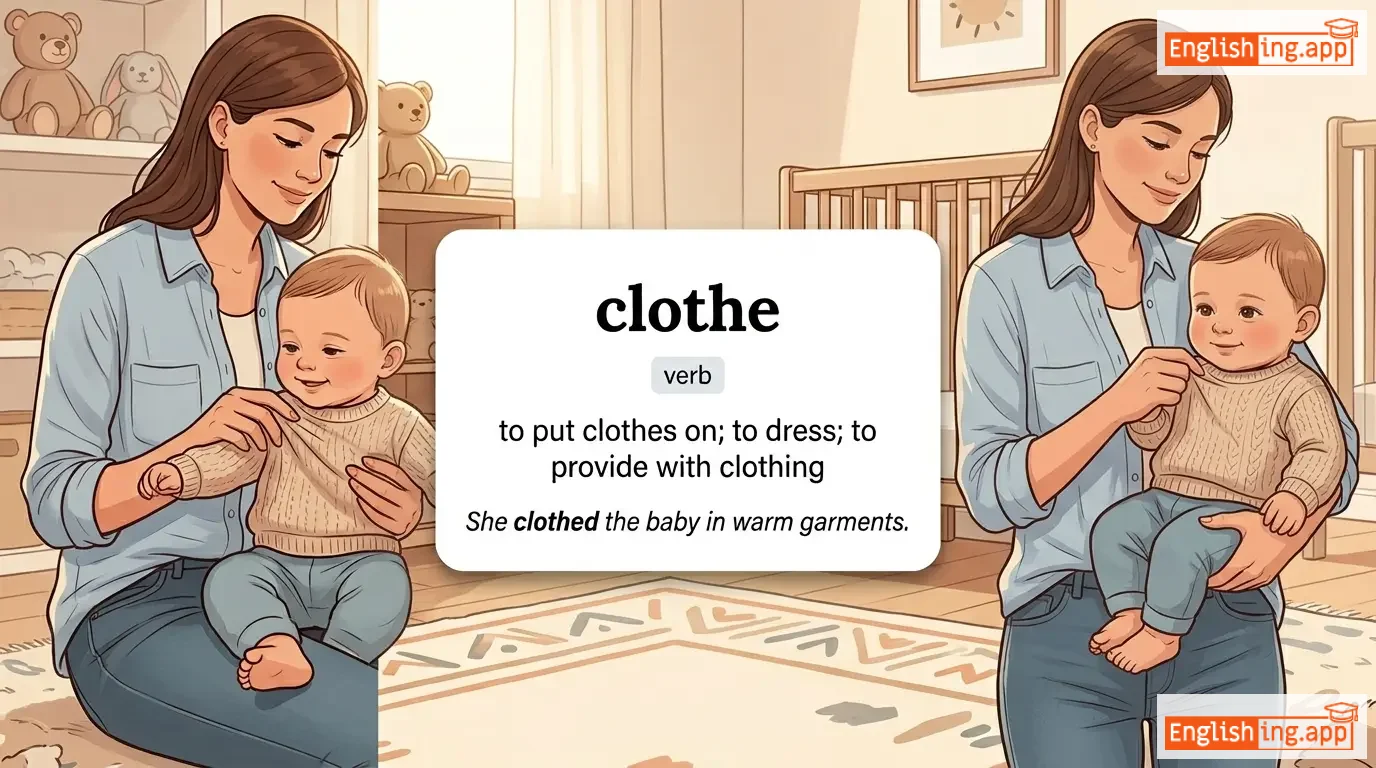
clothe definition card — visual illustration of the meaning
verb
/kloʊð/
одевать (odevat)

to put clothes on; to dress; to provide with clothing

"She clothed the baby in warm garments."

"Она одела ребенка в теплую одежду." (Ona odela rebenka v tepluyu odezhdu.)
noun
/kloʊðz/
одежда (odezhda)

garments worn on the body

"She bought new clothes for the party."

"Она купила новую одежду для вечеринки." (Ona kupila novuyu odezhdu dlya vecherinki.)
noun
/kloʊðz ˈaɪərn/
утюг (utyug)

An electric appliance used to remove wrinkles from clothes by applying heat and pressure

"I need to use the clothes iron to make my shirt look neat for the meeting."

"Мне нужно использовать утюг, чтобы привести мою рубашку в порядок для встречи." (Mne nuzhno ispol'zovat' utyug, chtoby privedti moyu rubashku v poryadok dlya vstrechi.)
noun
/ˈkloʊðiər/
продавец одежды (prodavets odezhdy)

a person or company that makes, sells, or deals in clothes.

"The town’s clothier displayed fine suits in his shop window."

"Продавец одежды города выставил красивые костюмы в витрине своего магазина." (Prodavets odezhdy goroda vystavil krasivye kostyumy v vitriny svoego magazina.)
noun
/ˈkloʊðɪŋ/
одежда (odezhda)

items worn to cover the body; apparel collectively

"Warm clothing is essential in winter."

"Теплая одежда необходима зимой." (Teplaya odezhda neobkhodima zimoy.)
noun
/ˈkloʊtʃər/
процедура завершения (protsedura zaversheniya)

a procedure for ending a debate and taking a vote.

"The Senate invoked cloture to end the lengthy debate."

"Сенат призвал к процедуре завершения, чтобы закончить длительные дебаты." (Senat prizval k protsedure zaversheniya, chtoby zakonchit dlitelnye debaty.)
noun, verb
/klaʊd/
облако (oblako)

a visible mass of condensed water vapor in the sky; to make something less clear

"Dark clouds gathered before the storm."

"Тёмные облака собрались перед бурей." (Tyomnye oblaka sobralis' pered burey.)
noun
/ˈklaʊdˌbɜːrst/
внезапный сильный дождь (vnezapny sil'nyj dozhd')

a sudden and very heavy rainfall

"The picnic was ruined by a sudden cloudburst."

"Пикник был разрушен внезапным сильным дождем." (Piknik byl razrushen vnezapnym sil'nym dozhdem.)
noun
/klaʊt/
влияние (vliyanie)

influence or power, especially in politics or business

"The businessman has a lot of political clout."

"У бизнесмена есть большое политическое влияние." (U biznesmena yest' bol'shoe politicheskoe vliyanie.)
noun
/kloʊv/
гвоздика (gvozdika)

aromatic flower buds of a tree in the family Myrtaceae, used as a spice

"She added a few cloves to the mulled wine for extra flavor."

"Она добавила несколько гвоздик в глинтвейн, чтобы придать ему больше вкуса." (Ona dobavila neskol'ko gvozdik v glintveyn, chtoby prydat' yemu bol'she vkusa.)
noun
/klaʊn/
клоун (kloun)

a comic entertainer who wears funny clothes and makeup

"The clown made the children laugh with his tricks."

"Клоун заставил детей смеяться своими трюками." (Kloun zastavil detey smeyat'sya svoimi tryukami.)
adjective
/ˈklɔɪ.ɪŋ/
слащавый (slashavyj)

too sweet, rich, or sentimental, making it unpleasant

"The dessert was so cloying that I couldn't finish it."

"Десерт был настолько слащавым, что я не смог его доесть." (Desert byl nastol'ko slashavym, chto ya ne smog ego doest')
noun
/klʌb/
клуб (klub)

an organization of people with a common interest; also a place for social gatherings or entertainment

"He joined the local tennis club to meet new people."

"Он присоединился к местному теннисному клубу, чтобы встретить новых людей." (On prisoyedinilsya k mestnomu tennisnomu klubu, chtoby vstrechit' novykh lyudey.)
🕵️

clue (klu)

noun
/kluː/
улика (ulika)

a piece of evidence or information used in the detection of a crime or solving a puzzle

"The detective found a clue near the window."

"Детектив нашел улику рядом с окном." (Detektiv nashel uliku ryadom s oknom.)
adjective
/ˈklʌm.zi/
неловкий (nelovkiy)

awkward in movement or lacking skill

"He is so clumsy that he drops things all the time."

"Он такой неуклюжий, что постоянно роняет вещи." (On takoy neuklyuzhiy, chto postoyanno ronyaet veshchi.)
noun
/ˈklʌstər/
гроздь (grozd)

a group of similar things or people positioned close together

"The grapes grew in a tight cluster."

"Виноград вырос в плотной грозди." (Vinograd vyros v plotnoy grozdi.)
noun
/ˌkovuːɪɡˈzɪs.təns/
сосуществование (sosushchestvovanie)

the state of existing together at the same time or in the same place; peaceful cohabitation

"The peaceful co-existence of different cultures makes this city unique."

"Мирное сосуществование различных культур делает этот город уникальным." (Mirnoe sosushchestvovanie razlichnykh kultur delayet etot gorod unikal'nym.)
coach definition card — visual illustration of the meaning
noun/verb
/koʊtʃ/
тренер (trener)

a person who trains or instructs others in a sport or skill; or to give training to someone

"The coach helped the players improve their skills."

"Тренер помог игрокам улучшить их навыки." (Trener pomog igrokam uluchshit' ikh navyki.)
🚗👨‍💼

Coachman (ˈkotʃmən)

noun
/ˈkoʊtʃ.mən/
кочер (kochér)

a person who drives a horse-drawn carriage or coach

"The coachman skillfully guided the horses through the busy streets."

"Кочер умело вел лошадей через оживленные улицы." (Kochér umelo vel loshadej cherez ozhivlyonnye ulitsy.)
noun
/koʊˈædʒətər/
помощник (pomoshchnik)

a person who helps or assists another, especially in a religious or official capacity

"The bishop appointed a coadjutor to assist him with his duties."

"Епископ назначил помощника, чтобы тот помогал ему с его обязанностями." (Episkop naznachil pomoshchnika, chtoby tot pomogal emu s ego obyazannostyami.)
noun
/koʊˈæɡjələnt/
коагулянт (koagulyant)

a substance that causes blood or another liquid to clot

"The doctor applied a coagulant to stop the bleeding quickly."
"Врач применил коагулянт, чтобы быстро остановить кровотечение." (Vrach primenil koagulyant, chtoby bystro ostanovit' krovotecheniye.)
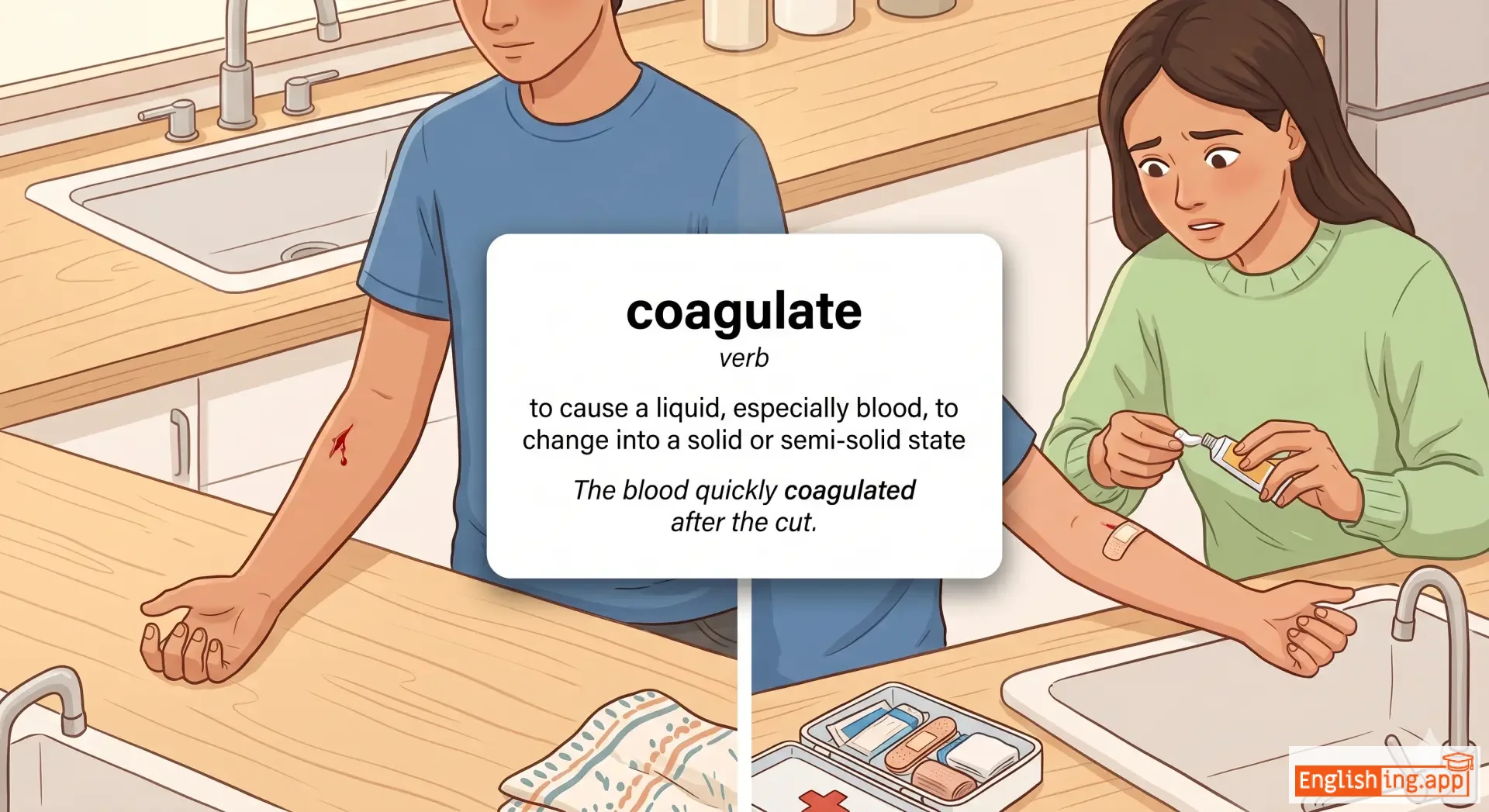
coagulate definition card — visual illustration of the meaning
verb
/koʊˈæɡjəˌleɪt/
сворачиваться (svorachivatsya)

to cause a liquid, especially blood, to change into a solid or semi-solid state

"The blood quickly coagulated after the cut."

"Кровь быстро свернулась после пореза." (Krov' bystro svernylas' posle poreza.)
noun
/koʊl/
уголь (ugol)

a black or dark brown rock used as fuel, formed from decomposed plant matter

"The factory still uses coal as its main source of energy."
"Фабрика все еще использует уголь в качестве основного источника энергии." (Fabrika vse eshchyo ispol'zuyet ugol v kachestve osnovnogo istochnika energii.)
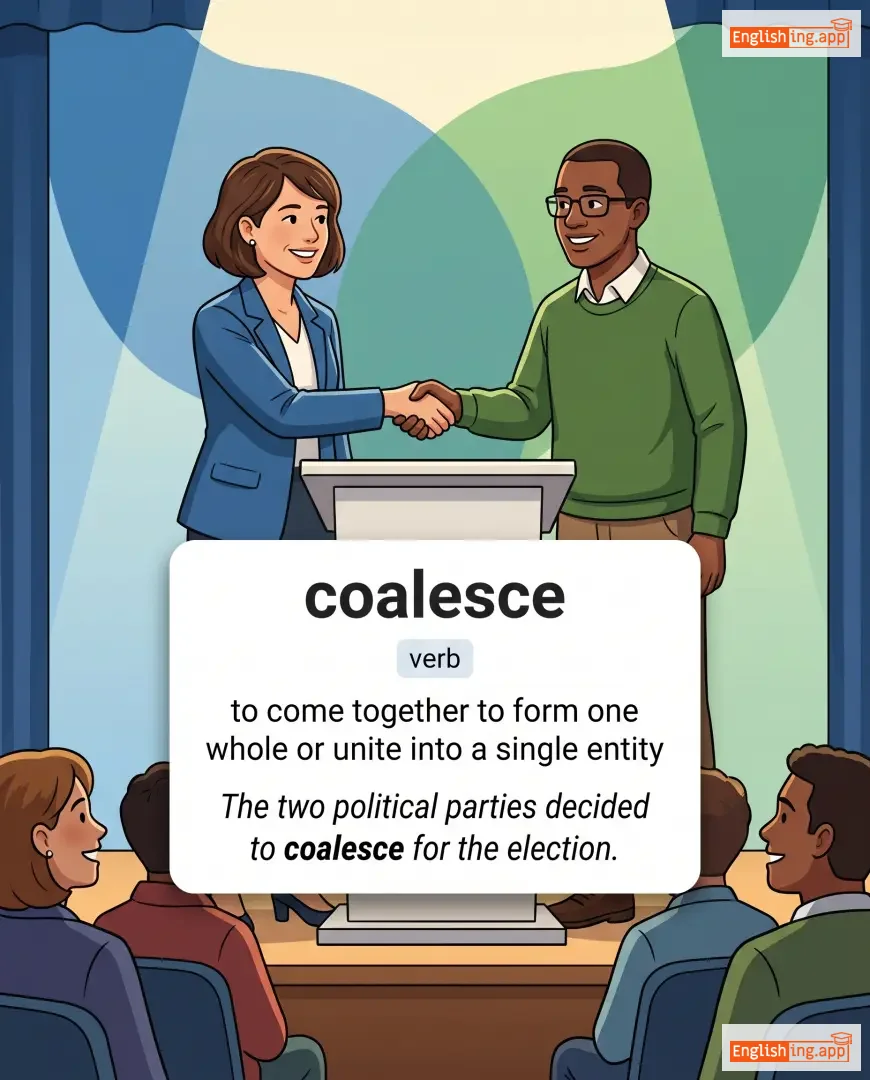
coalesce definition card — visual illustration of the meaning
verb
/ˌkoʊəˈlɛs/
объединяться (ob'yedinyat'sya)

to come together to form one whole or unite into a single entity

"The two political parties decided to coalesce for the election."
"Две политические партии решили объединиться для выборов." (Dve politicheskie partii reshili ob'yedinit'sya dlya vyborov.)
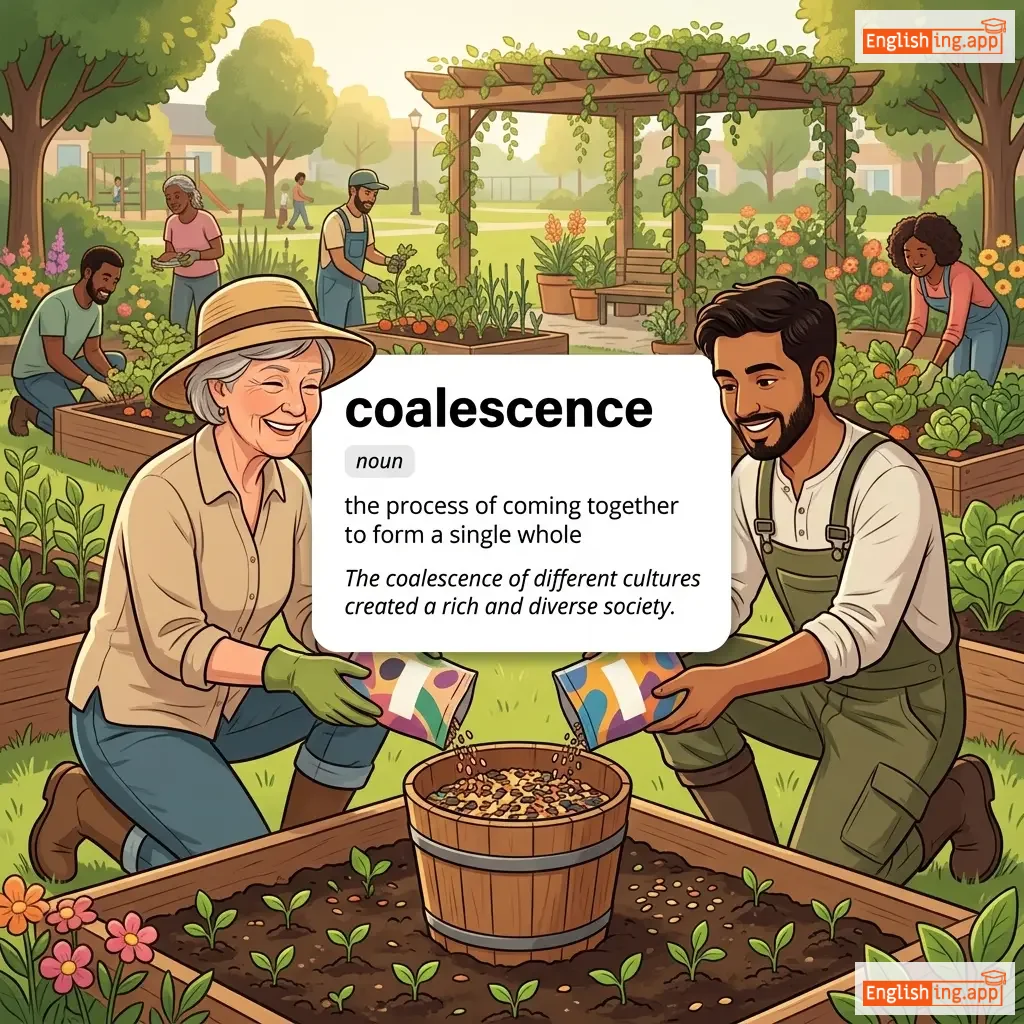
coalescence definition card — visual illustration of the meaning
noun
/ˌkoʊəˈlɛsəns/
слияние (sliyaniye)

the process of coming together to form a single whole

"The coalescence of different cultures created a rich and diverse society."

"Слияние разных культур создало богатое и разнообразное общество." (Sliyaniye raznykh kul'tur sozdalo bogatoye i raznoobraziye obshchestvo.)
noun
/ˌkoʊəˈlɪʃən/
коалиция (koalitsiya)

a temporary alliance of distinct parties, persons, or states for joint action

"Several parties formed a coalition to pass the new law."

"Несколько партий образовали коалицию для принятия нового закона." (Neskol'ko partiy obrazovali koalitsiyu dlya prinyatiya novogo zakona.)
adjective
/kɔːrs/
шероховатый, грубый (sherokhvatyy, gruby)

Rough in texture or manner; not smooth or refined.

"The fabric felt coarse to the touch."

"Ткань была шероховатой на ощупь." (Tkan' byla sherokhvatoy na oshchupy.)
noun, verb
/koʊst/
побережье (poberezhye)

noun: the land along the edge of the sea; verb: to move easily without effort or power

"They walked along the coast enjoying the sea breeze."

"Они шли вдоль побережья, наслаждаясь морским бризом." (Oni shli vdol' poberezhiya, naslazhdayas' morskimi brizami.)
adjective
/ˈkəʊstəl/
прибрежный (pribrezhny)

relating to or near a coast or shoreline

"They built a resort in a coastal area."

"Они построили курорт в прибрежной зоне." (Oni postroili kurort v pribrezhnoy zone.)
noun/verb
/koʊt/
счастье (schastye)

an outer garment worn outdoors, or a layer covering something

"She wore a red coat to keep warm in the winter."
"Она не могла скрыть своего счастья, когда получила награду." (Ona ne mogla skryt' svoego schast'ya, kogda poluchila nagradu.)
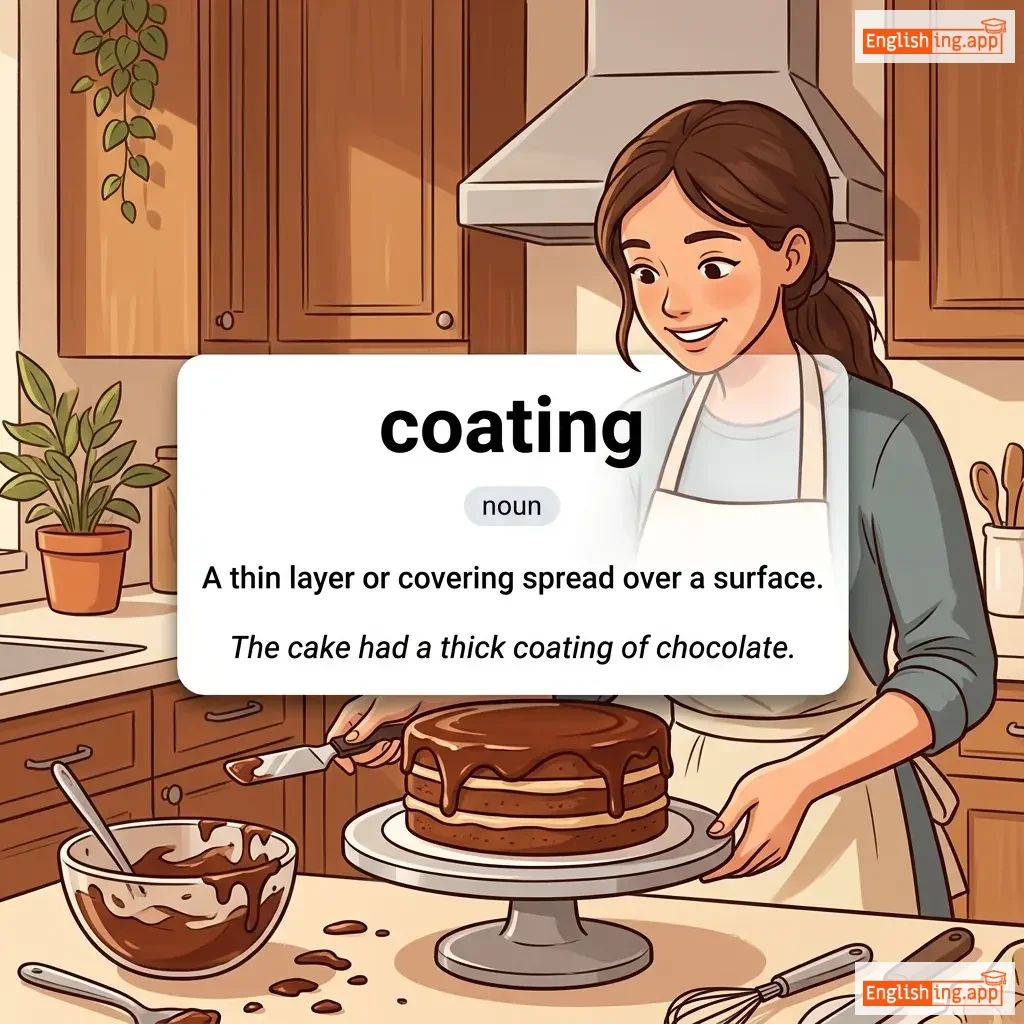
coating definition card — visual illustration of the meaning
noun
/ˈkoʊ.tɪŋ/
покрытие (pokrytie)

A thin layer or covering spread over a surface.

"The cake had a thick coating of chocolate."

"На торте была толстая шоколадная оболочка." (Na torte byla tolstaya shokoladnaya obolochka.)
verb
/koʊks/
уговорить (ugovority)

to persuade someone gently or gradually to do something

"She managed to coax the cat out of the tree with some food."

"Ей удалось уговорить кошку спуститься с дерева с помощью еды." (Eй udalos' ugovorit' koshku spustit'sya s dereva s pomoshch'yu yedy.)
noun
/ˈkɒb.lər/
сапожник (sapozhnik)

a person who repairs shoes and other leather goods

"The cobbler fixed my broken shoes perfectly."

"Сапожник починил мои сломанные туфли идеально." (Sapozhnik pochinyil moi slomannye tufli ideal'no.)
noun
/ˈkoʊ.brə/
кобра (kobra)

a venomous snake with a hood that can be spread when threatened

"The cobra raised its hood and hissed at the intruder."

"Кобра подняла свою капюшон и зашипела на нарушителя." (Kobra podnyala svoyu kapyushon i zashipela na narushitelya)
noun
/kəˈkeɪn/
кокаин (наркотик) (kokain)

a powerful and addictive illegal drug made from coca leaves

"He was arrested for possessing cocaine."

"Его арестовали за хранение кокаина." (Ego arestovali za khranenie kokaina.)
noun
/kɒk/
петух (petukh)

an adult male chicken

"The cock crowed loudly at dawn to wake everyone up."

"Петух крикнул громко на рассвете, чтобы разбудить всех." (Petukh kriknul gromko na rassvete, chtoby razbudit' vsekh.)
noun
/kɒˈkeɪd/
ленточная розетка (lentoochnaya rozetka)

a rosette or knot of ribbon, usually worn on a hat as a badge of office or party

"The soldier wore a red cockade on his cap."

"Солдат носил красную ленточную розетку на своей кепке." (Soldat nosil krasnuyu lentoochnuyu rozetku na svoey kepke.)
noun
/ˌkɒk.əˈtuː/
какаду (kakadu)

a large parrot with a prominent crest that can be raised or lowered

"The white cockatoo raised its beautiful crest."

"Белый какаду поднял свой красивый хохолок." (Belyy kakadu podnyal svoy krasivyy khokholok.)
noun
/ˈkɒk.roʊtʃ/
таракан (tarakan)

a flat brown insect that is commonly found in kitchens and other warm places

"A cockroach ran across the kitchen floor quickly."

"Таракан быстро побежал по кухонному полу." (Tarakan bystro pobezhal po kukhonnomu polu.)
noun
/ˈkɒkskoʊm/
цветок петушиного гребня (tsvetok petushinogo grebnya)

a tropical plant with bright, velvety flowers that resemble a rooster's comb

"The bright red cockscomb flowers added vibrant color to the garden bed."

"Яркие красные цветы петушиного гребня добавили яркие цвета в клумбу." (Yarkie krasnye tsvety petushinogo grebnya dobavili yarkie tsveta v klumbu)
noun
/ˈkɒkˌteɪl/
коктейль (kokteyl)

a mixed drink typically containing alcohol and other ingredients.

"She ordered a cocktail at the bar."

"Она заказала коктейль в баре." (Ona zakazala kokteyl' v bare.)
noun
/ˈkoʊkənʌt/
кокос (kokonut)

a large brown seed with hard shell containing white flesh and coconut water

"We drank coconut water directly from the coconut."

"Мы пили кокосовую воду прямо из кокоса." (My pili kokosovuyu vodu pryamo iz kokosa.)
noun
/kɒd fɪʃ/
треска (treska)

A large marine fish with white flesh, commonly used for food

"The fisherman caught a large cod fish in the North Atlantic."
"Рыбак поймал большую треску в Северной Атлантике." (rybak poimal bolshuyu tresku v severnoy atlantike)
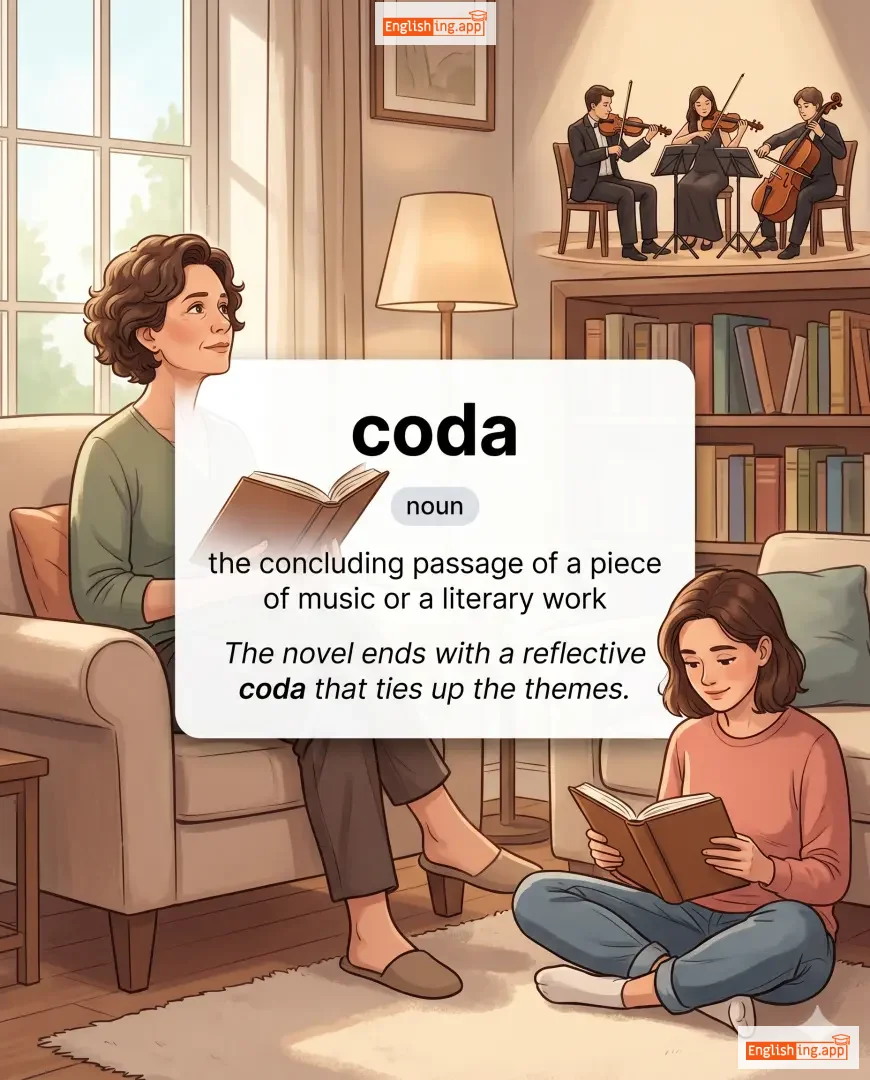
coda definition card — visual illustration of the meaning
noun
/ˈkoʊdə/
кода (koda)

the concluding passage of a piece of music or a literary work

"The novel ends with a reflective coda that ties up the themes."

"Роман заканчивается рефлексивной кодой, которая связывает темы." (Roman zakanchivayetsya reflekciyernoy kodoy, kotoraya svyazyvayet temy.)
verb
/ˈkɒd.l̩/
баловать чрезмерно (balovat chrezmerno)

to treat someone with excessive care or kindness, often in a way that is overprotective

"Parents should support their children without coddling them."

"Родители должны поддерживать своих детей, не балуя их." (Roditeli dolzhny podderzhivat' svoikh detey, ne baluya ikh.)
noun/verb
/koʊd/
код (kod)

a system of words, letters, or symbols used to represent information or instructions

"He wrote a code to solve the problem on the computer."

"Он написал код, чтобы решить проблему на компьютере." (On napisal kod, chtoby reshit' problemu na kompyutere.)
noun
/ˈkɒd.ɪ.sɪl/
дополнение к завещанию (dopolnenie k zaveshchaniyu)

a legal document that makes changes or additions to an existing will

"He added a codicil to his will to include his granddaughter."

"Он добавил кодисил в свое завещание, чтобы включить свою внучку." (On dobavil kodisil v svoe zaveshchanie, chtoby vklyuchit' svoiu vnuchku.)
codify definition card — visual illustration of the meaning
verb
/ˈkəʊ.dɪ.faɪ/
кодифицировать (kodifitsirovat)

to arrange laws, rules, or ideas into a clear and systematic code

"The committee worked to codify the existing laws."

"Комитет работал над кодификацией существующих законов." (Komitet rabotal nad kodifikatsiyey suschestvuyushchikh zakonov.)