Словари

Словарь английского языка | Значения слов, определения и примеры

noun
/klɔː/
коготь (kogot)

sharp curved nail on the foot of an animal or bird

"The cat extended its sharp claws to climb the tree."

"Кошка вытянула свои острые когти, чтобы взобраться на дерево." (Koshka vityanula svoi ostryye kogti, chtoby vzobrat'sya na derevo.)
noun
/kleɪ/
глина (glina)

a natural material made of fine earth that becomes hard when baked, used for making pottery

"The artist molded the wet clay into a beautiful vase."

"Художник слепил из влажной глины красивую вазу." (Kudozhnik slepil iz vlazhnoi gliny krasivuyu vazu.)
verb
/kliːn/
чистить (chistit')

To make something free from dirt, marks, or mess.

"She cleaned the kitchen before the guests arrived."
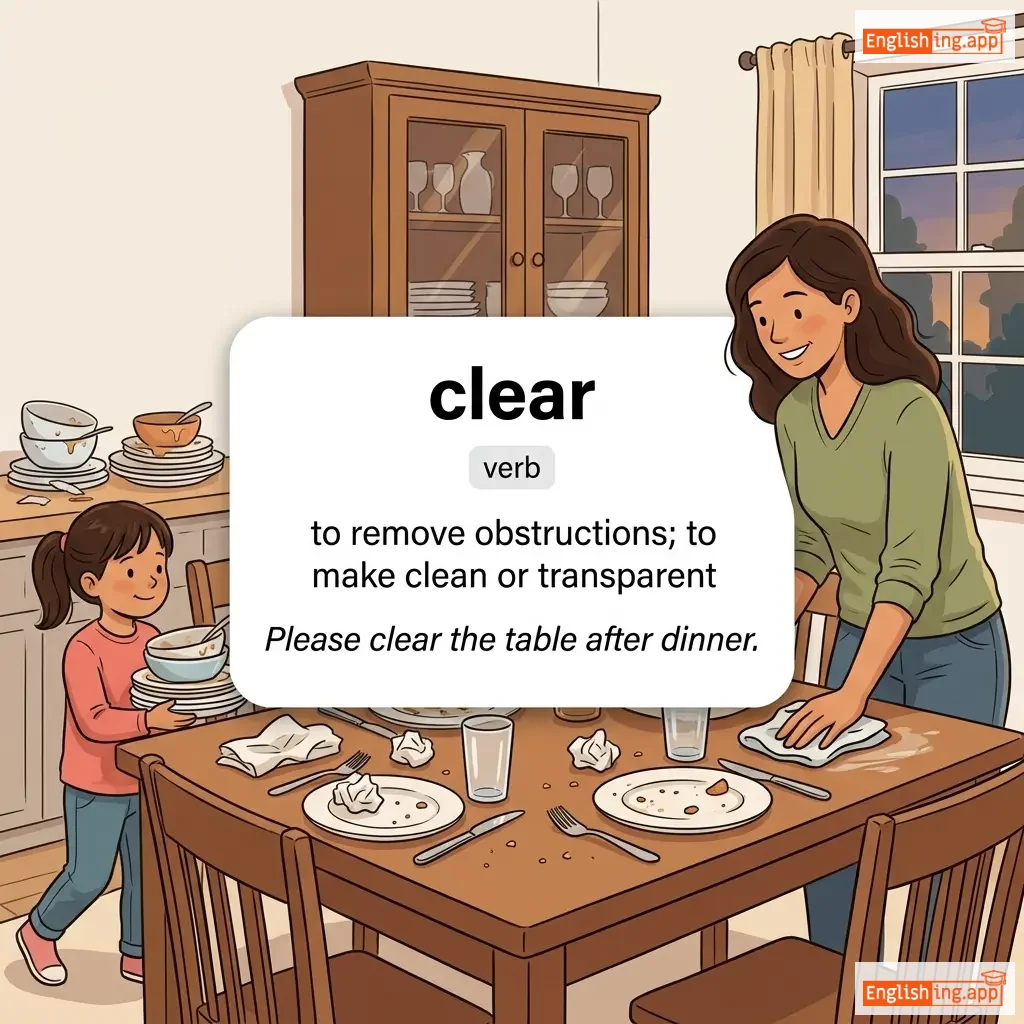
"Она убрала кухню перед тем, как пришли гости." (Ona ubrala kukhnyu pered tem, kak prishli gosti.)
clear definition card — visual illustration of the meaning
adjective
/klɪr/
ясный (yasnyy)

Easy to perceive, understand, or see through.

"It was a clear day with no clouds in the sky."

"Это был ясный день без облаков в небе." (Eto byl yasnyy den' bez oblakov v nebe.)
noun
/ˈklɪərəns/
разрешение / санкция (razreshenie / sanktsiya)

official permission or authorization; the removal of something unwanted; the distance between two objects

"The pilot received clearance to land the plane."

"Пилот получил разрешение на посадку." (Pilot poluchil razresheniye na posadku.)
adverb
/ˈklɪrli/
ясно (yasno)

In a way that is easy to perceive, understand, or see.

"She spoke clearly so that everyone could understand."
"Она говорила ясно, чтобы все могли понять." (Ona govoryla yasno, chtoby vse mogli ponyat'.)
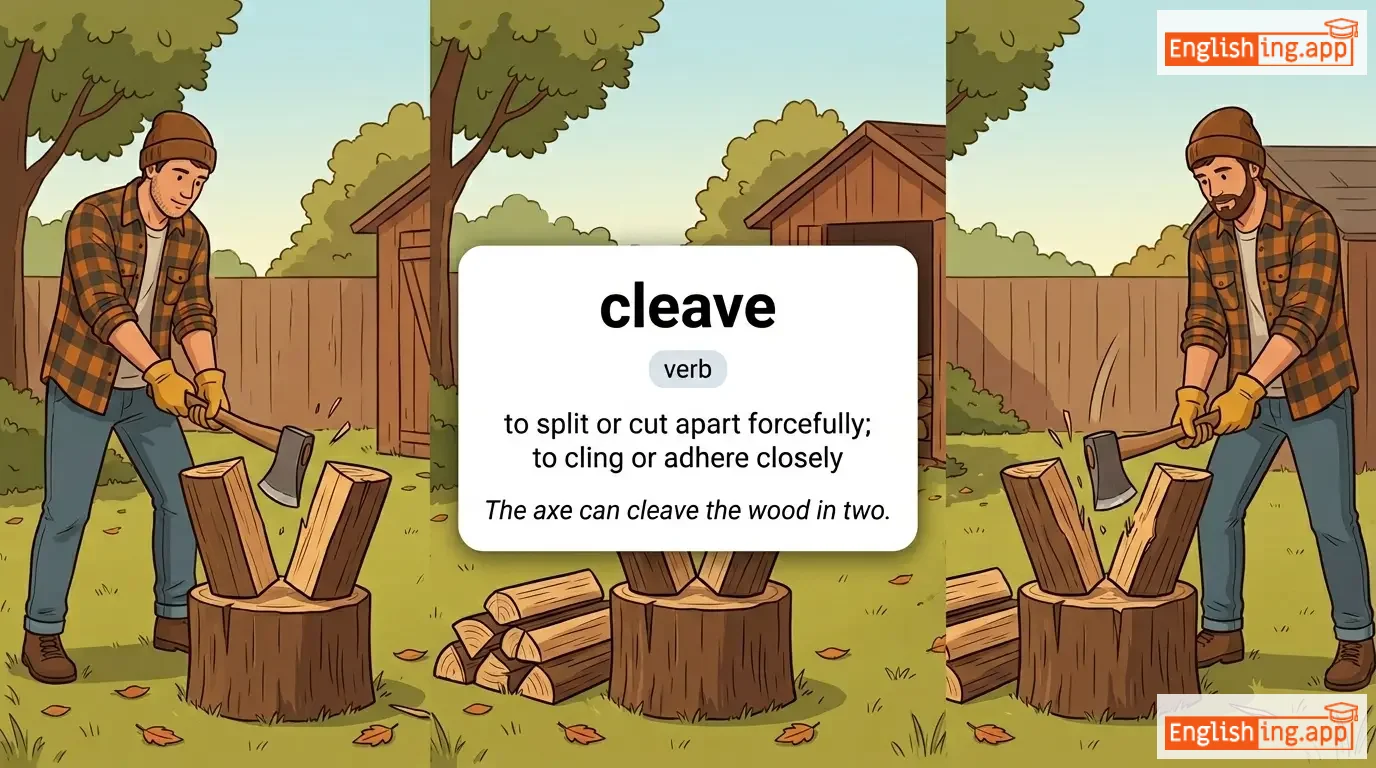
cleave definition card — visual illustration of the meaning
verb
/kliːv/
раскалывать / цепляться (raskalyvat / tseplyatsya)

to split or cut apart forcefully; to cling or adhere closely

"The axe can cleave the wood in two."

"Топор может расколоть дерево на две части." (Topor mozhet raskolot' derevo na dve chasti.)
noun
/ˈkliː.vər/
топорный нож (topornyj nozh)

a heavy knife with a broad blade used for chopping meat or vegetables

"The chef used a cleaver to chop the chicken bones."

"Повар использовал топорный нож, чтобы разрубить кости курицы." (Povar ispol'zoval topornyj nozh, chtoby razrubit' kosti kuritsy.)
noun/adjective
/klɛft/
тресина (tresina)

a split or crack; a space or opening made by cleavage

"The goat disappeared into a cleft in the rocks."

"Коза исчезла в тресине на скалах." (Koza ischezla v tresine na skalah.)
noun
/ˈklɛmənsi/
помилование (pomilovaniye)

mercy, leniency, or forgiveness shown towards someone

"The judge showed clemency and reduced his sentence."

"Судья проявил помилование и смягчил его приговор." (Sud'ya proyavil pomilovaniye i smyagchil ego prigovor.)
adjective
/ˈklɛmənt/
милостивый / мягкий (milostivyy / myagkiy)

mild or merciful; describing weather as mild and pleasant

"The prisoners hoped for a clement judge."

"Заключенные надеялись на милостивого судью." (Zaklyuchennyye nadeyalis' na milostivogo sud'yu.)
noun
/klɑːrk/
клерк (klerk)

A person employed in an office or bank to keep records, accounts, and undertake other routine administrative duties.

"The clerk helped me find the correct form."

"Клерк помог мне найти правильную форму." (Klerk pomog mne nayti pravil'nuyu formu.)
adjective
/ˈklɛvər/
умный, сообразительный (umnyj, soobrazitel'nyj)

Quick to understand, learn, and devise ideas or solutions; intelligent.

"She is clever enough to solve the puzzle quickly."

"Она достаточно умна, чтобы быстро решить головоломку." (Ona dostatochno umna, chtoby bystro reshit' golovolomku.)
noun
/kliːˈʃeɪ/
клише (klishe)

An overused expression or idea that has lost its originality or impact.

"The speech was filled with old clichés that failed to inspire the audience."

"Речь была наполнена старыми клише, которые не смогли вдохновить аудиторию." (Rech' byla napolnena starymi klishye, kotorye ne smogli vdokhnovit' auditoriyu.)
verb
/klɪk/
кликать (klikati)

to press a button on a computer mouse or similar device

"She clicked the link to open the website."

"Она кликнула по ссылке, чтобы открыть сайт." (Ona kliknula po ssylke, chtoby otkryt' sayt.)
noun
/ˈklaɪənt/
клиент (klient)

A person or organization using the services of a professional or company.

"The lawyer met with her client to discuss the case."

"Адвокат встретился с её клиентом, чтобы обсудить дело" (Advokat vstretilsya s yeё klientom, chtoby obsluzhivat' delo)
clientele definition card — visual illustration of the meaning
noun
/ˌklaɪənˈtɛl/
клиентура (klientura)

The group of customers who regularly patronize a business or service.

"The restaurant attracts an upscale clientele."

"Ресторан привлекает состоятельную клиентуру." (Restoran privlekaet sostoyatelnuyu klienturu.)
noun
/klɪf/
обрыв (obryv)

a high, steep face of rock or earth

"The waves crashed against the bottom of the cliff."

"Волны ударили о дно обрыва." (Volny udarili o dno obryva.)
adjective
/klaɪˈmæktɪk/
климактический (klimakticheskiy)

Relating to the most exciting or important moment of something.

"The film ended with a climactic battle scene."
"Фильм завершился кульминационной сценой битвы." (Film zavershilsya kul'minatsionnoj stsenoj bitvy.)
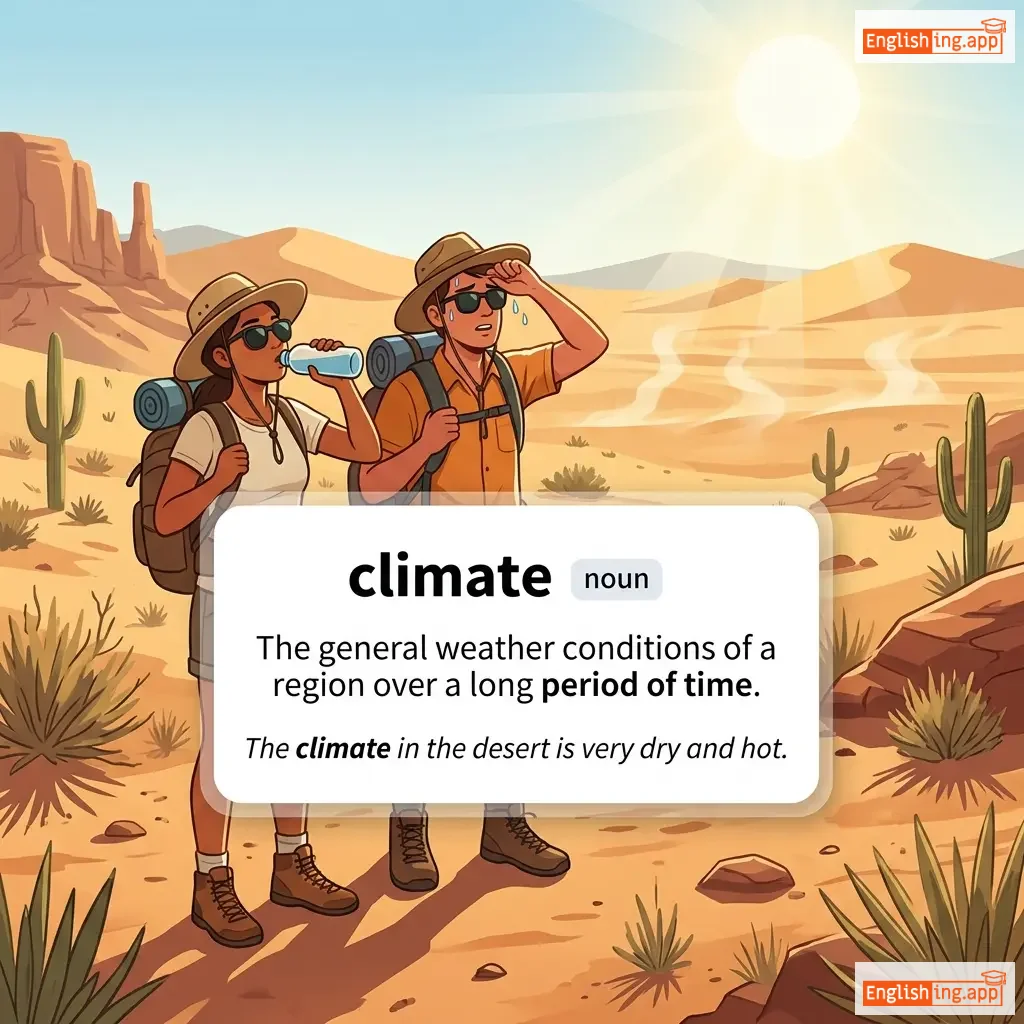
climate definition card — visual illustration of the meaning
noun
/ˈklaɪ.mət/
климат (klimat)

The general weather conditions of a region over a long period of time.

"The climate in the desert is very dry and hot."
"Климат в пустыне очень сухой и жаркий." (Klimat v pustyne ochen' sukhoy i zharkiy.)
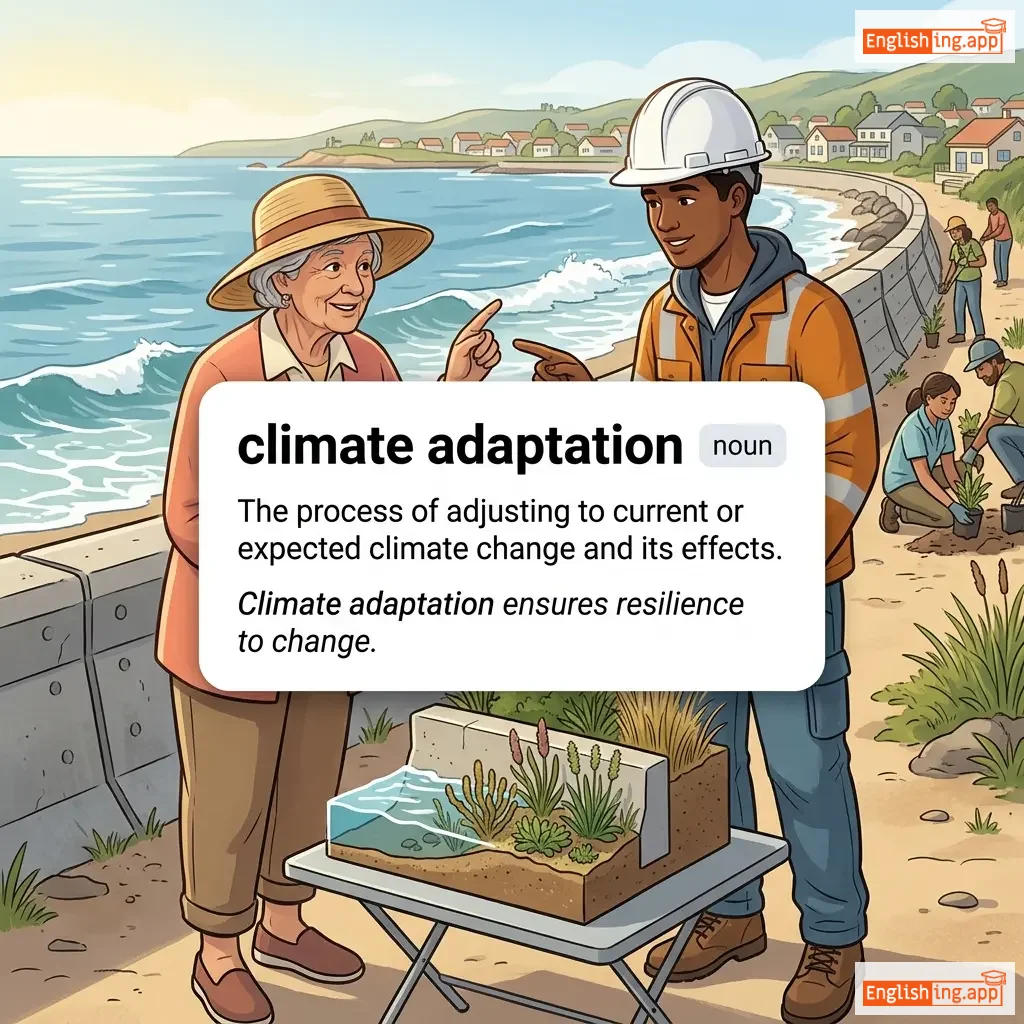
climate adaptation definition card — visual illustration of the meaning
noun
/ˈklaɪ.mət əˌdæp.teɪ.ʃən/
климатическая адаптация (klimaticheskaya adaptatsiya)

The process of adjusting to current or expected climate change and its effects.

"Climate adaptation ensures resilience to change."
"Климатическая адаптация обеспечивает устойчивость к изменениям." (Klimaticheskaya adaptatsiya obespechivaet ustoichivost k izmeneniyam.)
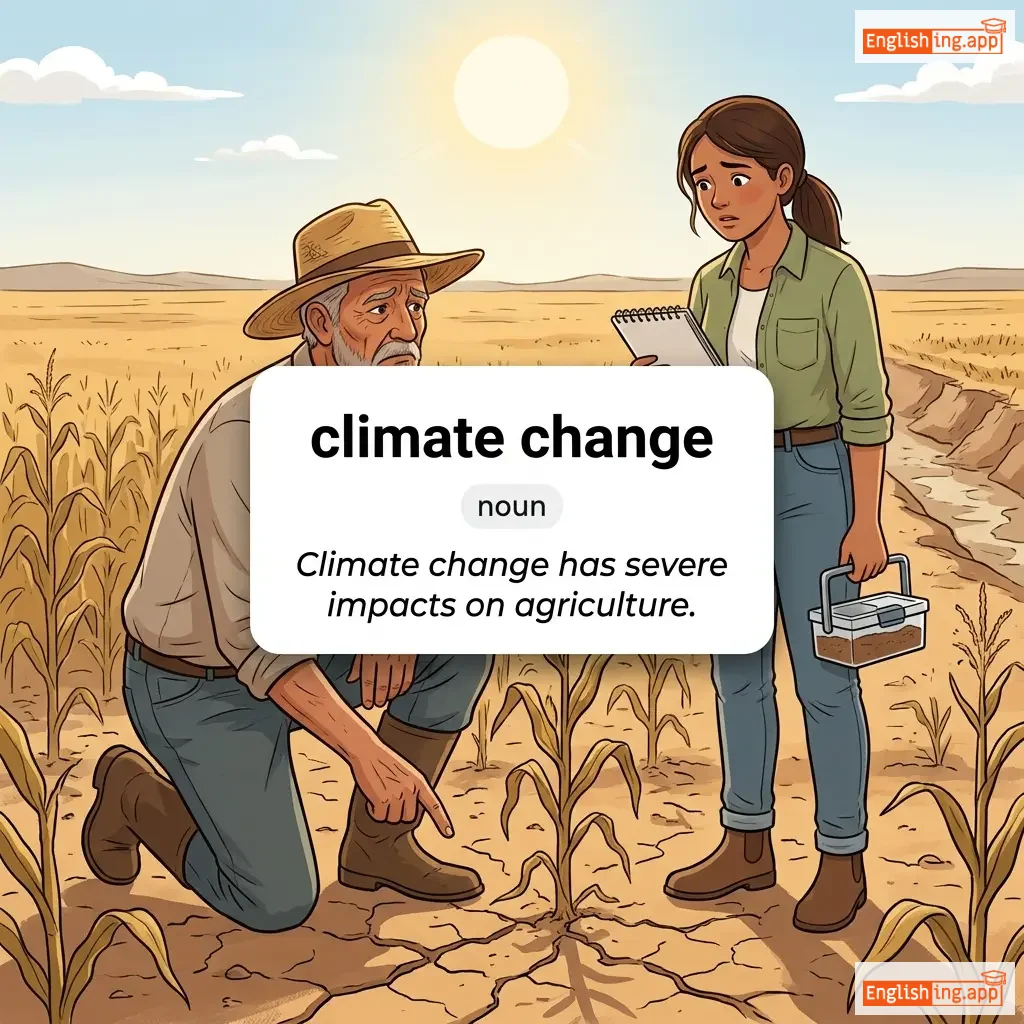
climate change definition card — visual illustration of the meaning
noun
ˈklaɪ.mət tʃeɪndʒ
изменение климата (izmenenie klimata)

Long-term changes in global or regional climate patterns, primarily caused by human activities.

"Climate change has severe impacts on agriculture."
"Изменение климата оказывает серьезное влияние на сельское хозяйство." (Izmenenie klimata okazyvayet ser'yeznoe vliyanie na selskoe khozyaystvo.)
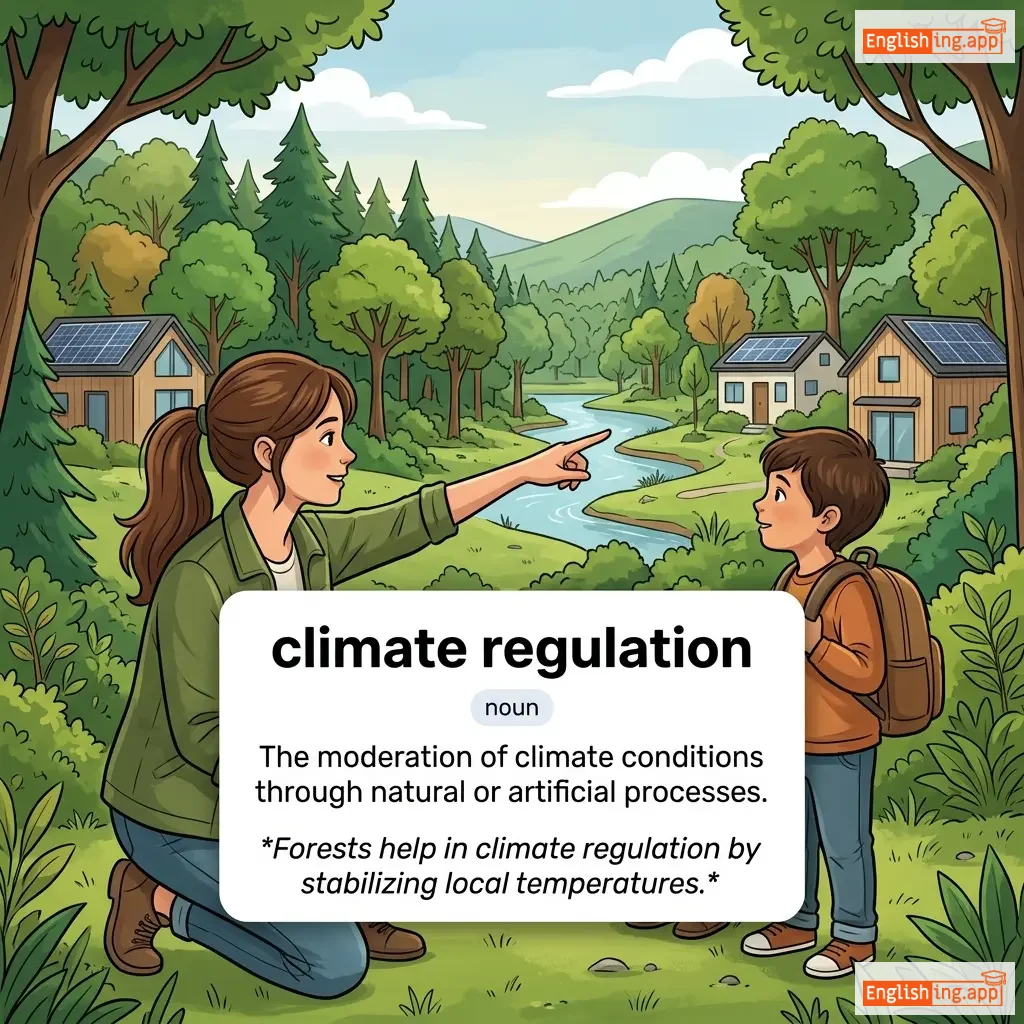
climate regulation definition card — visual illustration of the meaning
noun
ˈklaɪmət ˌrɛɡjʊˈleɪʃən
климатическая регуляция (klimaticheskaya regulyatsiya)

The moderation of climate conditions through natural or artificial processes.

"Forests help in climate regulation by stabilizing local temperatures."
"Леса помогают в климатической регуляции, стабилизируя местные температуры." (Lesa pomogayut v klimaticheskoy regulyatsii, stabiliziruya mestnye temperatury.)
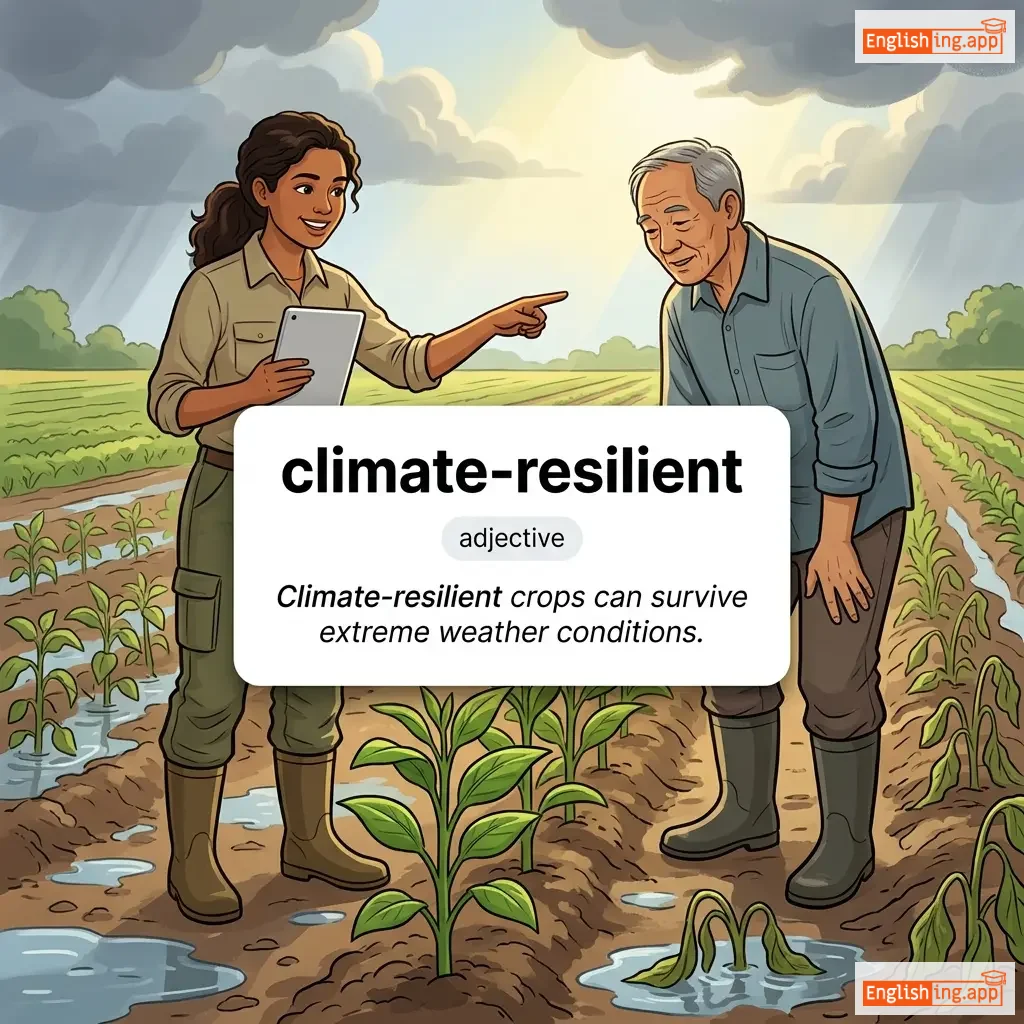
climate-resilient definition card — visual illustration of the meaning
adjective
ˈklaɪ.mət rɪˈzɪl.i.ənt
устойчивый к климату (ustoychivyy k klimatu)

Able to cope with the adverse effects of climate change; sustainable and adaptable.

"Climate-resilient crops can survive extreme weather conditions."
"Климатически устойчивые культуры могут выжить в экстремальных погодных условиях." (Klimaticheski ustoychivye kultury mogut vyzhit v ekstremalnykh pogodnykh usloviyakh)
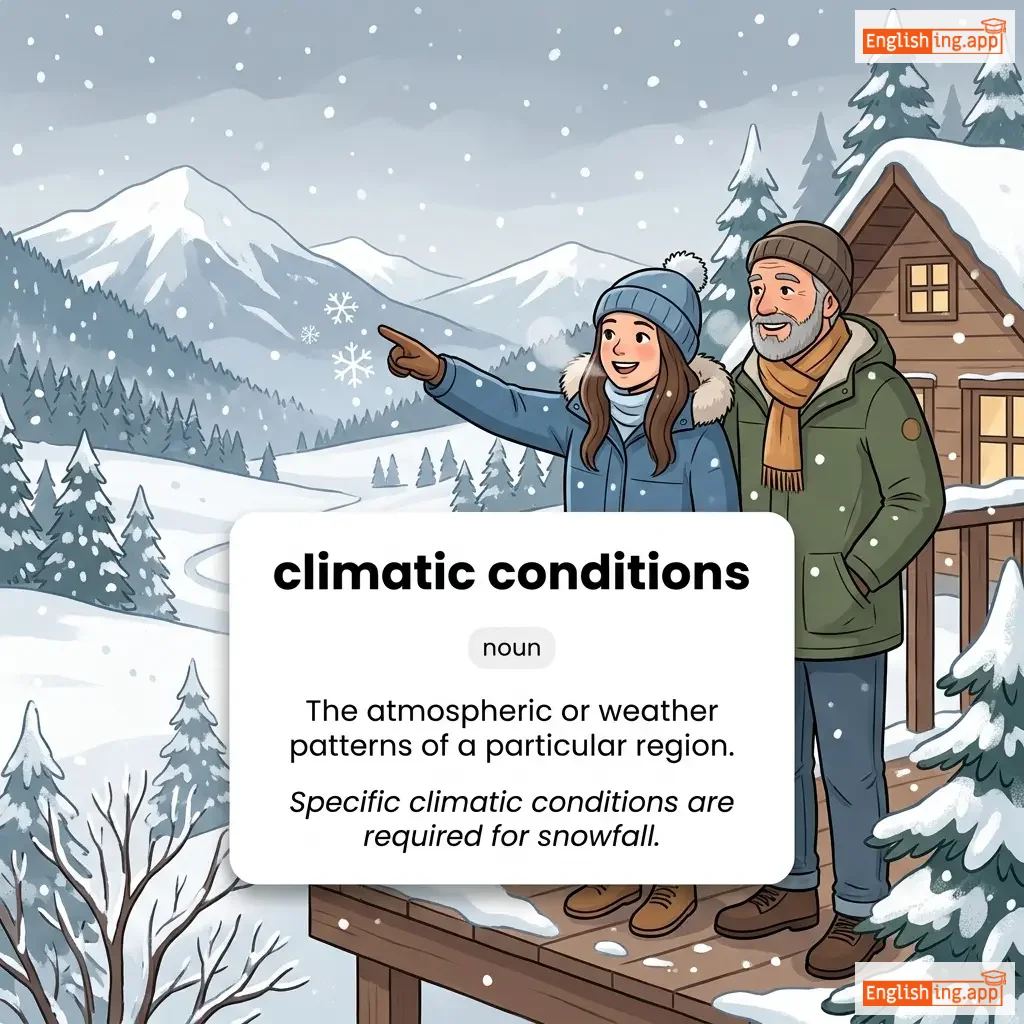
climatic conditions definition card — visual illustration of the meaning
noun
ক্লাইম্যাটিক কন্ডিশন্স
климатические условия (klimaticheskie usloviya)

The atmospheric or weather patterns of a particular region.

"Specific climatic conditions are required for snowfall."

"Для снега необходимы специфические климатические условия." (Dlya snega neobkhodimy spetsificheskie klimaticheskie usloviya.)
noun
/ˈklaɪ.mæks/
кульминационный момент (kul'minatsionnyy moment)

the most intense, exciting, or important point of something; the highest or most intense point in a process

"The movie reached its climax during the final battle scene."
"Фильм достиг кульминационного момента во время последней сцены битвы." (Film dostig kul'minatsionnogo momenta vo vremya posledney stseny bitvy.)
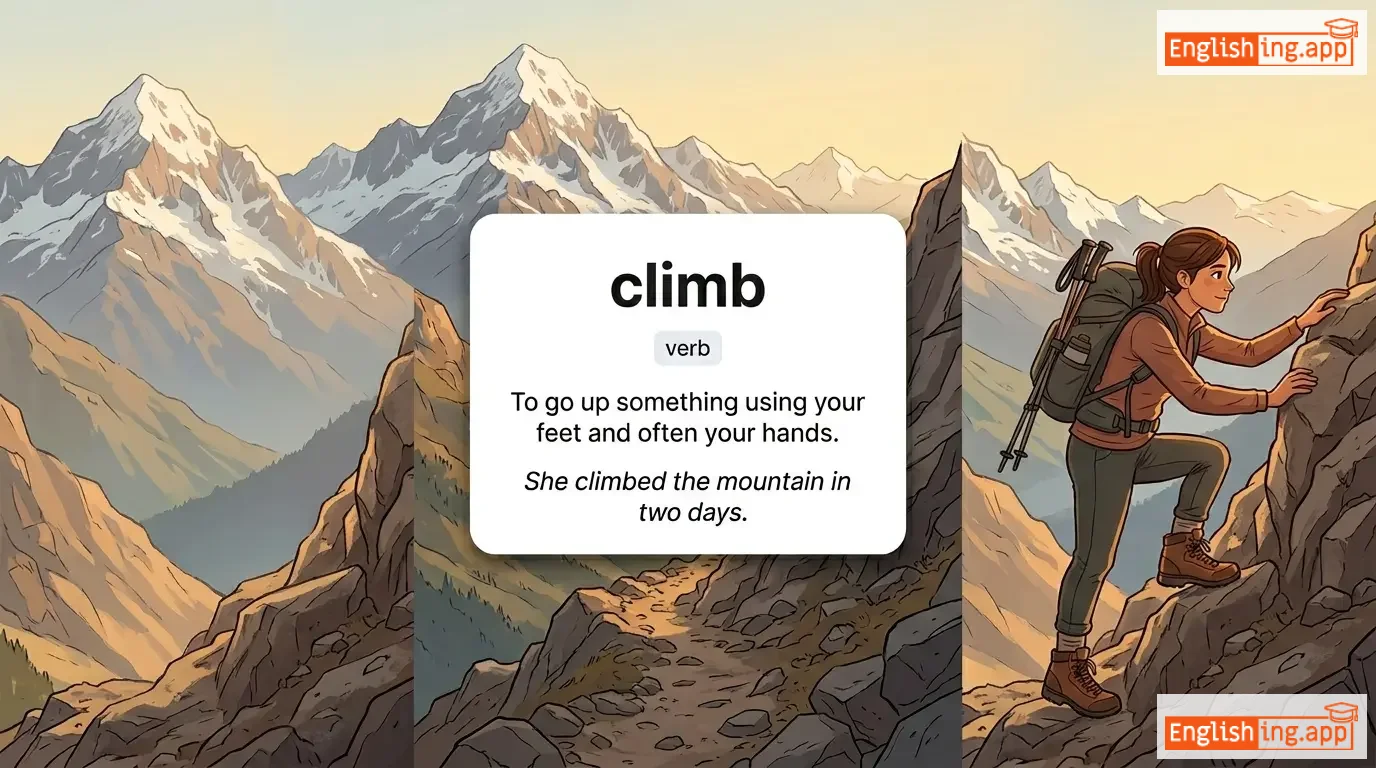
climb definition card — visual illustration of the meaning
verb
/klaɪm/
подниматься (podnimatsya)

To go up something using your feet and often your hands.

"She climbed the mountain in two days."

"Она взобралась на гору за два дня." (Ona vzobralas' na goru za dva dnya.)
noun
/ˈklaɪ.mɪŋ læŋ læŋ/
вьющееся растение ланг ланг (vyushchiesya rastenie lang lang)

a climbing plant with fragrant flowers native to tropical regions

"The climbing lang lang vine produces beautiful fragrant flowers."

"Вьющееся растение ланг ланг производит красивые ароматные цветы." (Vyushchiesya rastenie lang lang proizvodit krasivye aromatnye tsvety.)
noun
/ˈklaɪmɪŋ fɪʃ/
лезущий рыб (lezushchiy ryb)

a type of fish that can climb trees and survive out of water for short periods

"The climbing-fish can move from one pond to another by climbing trees."

"Лезущая рыба может перемещаться с одного пруда в другой, забираясь на деревья." (Lezyushchaya ryba mozhet peremeshchat'sya s odnogo pruda v drugoy, zabirayas' na derev'ya)
noun
/klaɪm/
климатическая зона (klimaticheskaya zona)

A region defined by its climate.

"He traveled to warmer climes during the winter."

"Он путешествовал в более теплые климатические зоны зимой." (On puteshestvoval v boleye teplye klimaticheskiye zony zimoy.)
verb
/klɪntʃ/

To secure or settle something decisively; to grasp tightly.

"The team clinched the championship with a last-minute goal."

verb
/klɪŋ/
счастье (schastye)

to hold on tightly to someone or something

"The child clung to his mother in fear."

"Она не могла скрыть своего счастья, когда получила награду." (Ona ne mogla skryt' svoego schast'ya, kogda poluchila nagradu.)
noun
/ˈklɪn.ɪk/
клиника (klinika)

A place where people receive medical treatment without staying overnight.

"She went to the clinic for a health check-up."

"Она пошла в клинику для медицинского осмотра." (Ona poshla v kliniku dlya meditsinskogo osmotra.)
adjective
/ˈklɪn.ɪ.kəl/
клинический (klinicheskiy)

Related to the observation and treatment of patients rather than theoretical study.

"The doctor conducted a clinical examination."

"Доктор провел клиническое обследование." (Doktor provel klinicheskoe obsledovanie.)
✂️

clip

verb, noun
/klɪp/

to cut or trim something; a short extract from a film, broadcast, or recording

"She clipped the coupon from the newspaper."

noun
/ˈklɪpər/
машинка для стрижки / быстрое парусное судно XIX века (mashinka dlya strizhkи / bystroye parusnoye sudno XIX veka)

a tool used for cutting, or a fast sailing ship of the 19th century

"The barber used clippers to trim his hair."
"Парикмахер использовал машинку для стрижки, чтобы подстричь его волосы." (Parikmakher ispol'zoval mashinku dlya strizhki, chtoby podstrich' ego volosy.)
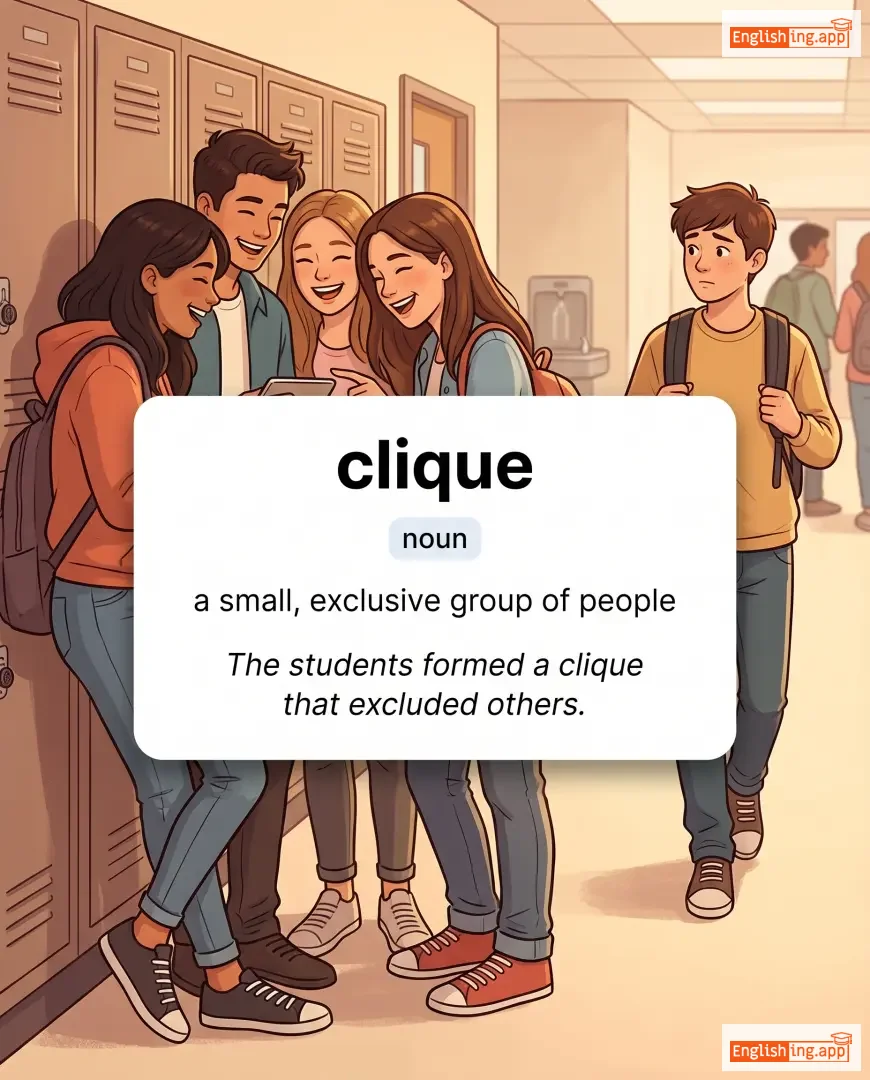
clique definition card — visual illustration of the meaning
noun
/kliːk/
клика (klika)

a small, exclusive group of people

"The students formed a clique that excluded others."

"Студенты создали клику, которая исключала других." (Studenty sozdali kliku, kotoraya isklyuchala drugikh.)
noun, verb
/kloʊk/
плащ (plashch)

a loose outer garment; to cover, hide, or disguise

"The spy cloaked his identity with a false name."

"Шпион скрыл свою личность под ложным именем." (Shpion skryl svoyu lichnost' pod lozhnym imenem.)
noun
/klɒk/
часы (chasy)

An instrument used to measure and show time.

"The clock on the wall shows the correct time."

"Часы на стене показывают правильное время." (Chasy na stene pokazyvayut pravil'noe vremya.)
adverb
/ˈklɒkwaɪz/
по часовой стрелке (po chasovoy strelke)

in the direction that clock hands move; in a circular direction from left to right

"Turn the valve clockwise to tighten it."

"Поверните вентиль по часовой стрелке, чтобы затянуть его." (Povernite ventyl po chasovoy strelke, chtoby zatyanut' ego.)
verb, noun
/klɑːɡ/
забивать / деревянный башмак (zabivat / derevyanny bashmak)

to block or become blocked; a type of heavy wooden shoe

"The sink was clogged with food waste."
"Раковина была забита пищевыми отходами." (Rakovina byla zabita pishchevymi otkhodami.)
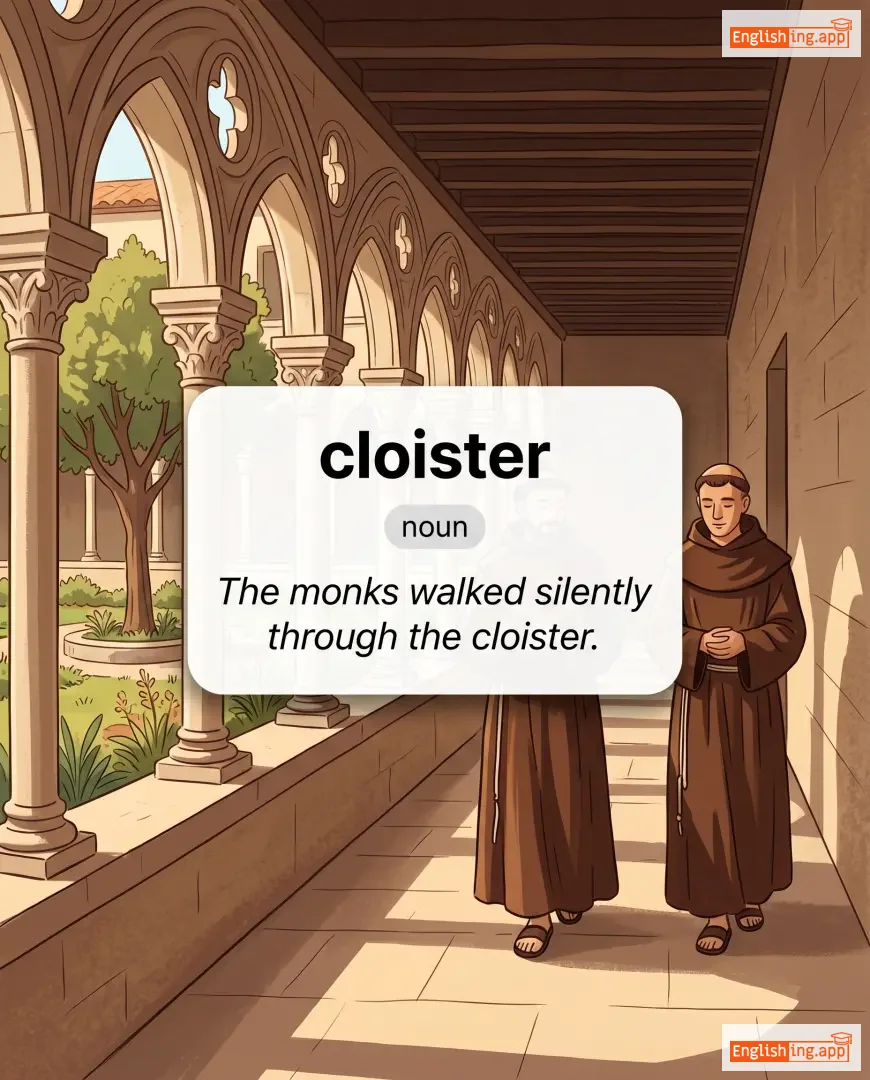
cloister definition card — visual illustration of the meaning
noun
/ˈklɔɪstər/
клуастер (klouster)

a covered walk in a convent, monastery, or cathedral, typically with a wall on one side and a colonnade open to a quadrangle on the other.

"The monks walked silently through the cloister."

"Монахи шли молча через клуастер." (Monakhi shli molcha cherez klouster.)
verb, adjective
/kloʊz/ (verb), /kloʊs/ (adjective)
закрыть, рядом (zakryt', ryadom)

To shut something (verb); near in space or relationship (adjective).

"Please close the door when you leave."

"Пожалуйста, закройте дверь, когда вы уходите." (pozhaluysta, zakroyte dver', kogda vy ukhodite.)
adjective
/ˌkloʊs ˈhɔːld/
идти по ветру как можно ближе (idti po vetru kak mozhno blizhe)

of a sailing ship, sailing as nearly as possible towards the direction from which the wind is blowing.

"The yacht was close-hauled as it cut through the waves."

"Яхта шла против ветра, прорезая волны." (Yakhta shla protiv vetra, prorezaya volny.)
adjective
/kloʊzd/
закрыт (zakryt)

not open; shut

"The store is closed on Fridays."

"Магазин закрыт по пятницам." (Magazin zakryt po pyatnitsam.)
adverb
/ˈkloʊsli/
счастье (schastye)

in a way that is very near in space, time, or relationship; carefully and attentively

"The detective examined the evidence closely."

"Она не могла скрыть своего счастья, когда получила награду." (Ona ne mogla skryt' svoego schast'ya, kogda poluchila nagradu.)
adjective, noun
/ˈkloʊsər/
ближе, завершитель (blizhe, zavershitel)

more near in distance or relationship; someone or something that concludes an activity

"She moved closer to the window."

"Она подошла ближе к окну." (Ona podoshla blizhe k oknu.)
adjective
/ˈkloʊ.sɪst/
ближайший (blizhayshiy)

nearest in distance or relationship

"He is my closest friend."

"Он мой ближайший друг." (On moy blizhayshiy drug.)
noun
/ˈklɒzɪt/
шкаф (shkaf)

a small room or enclosed space used for storing clothes or other things

"She keeps her winter coats in the closet near the door."

"Она хранит свои зимние пальто в шкафу рядом с дверью." (Ona khranit svoi zimnie pal'to v shkafu ryadom s dveryu.)
noun
/ˈkloʊʒər/
закрытие (zakrytiye)

the action or process of closing something, or the sense of finality or resolution.

"The closure of the company left many employees without jobs."

"Закрытие компании оставило многих сотрудников без работы." (Zakrytiye kompanii ostavilo mnogikh sotrudnikov bez raboty.)