Словари

Словарь английского языка | Значения слов, определения и примеры

noun
/ˈbɪldɪŋ/
здание (zdanie)

A structure with a roof and walls, such as a house, school, or office.

"The old building was renovated into a museum."

"Старое здание было отремонтировано и превращено в музей." (Staroe zdanie bylo otreparirovano i prevrashcheno v muzey.)
💡

bulb

noun
/bʌlb/

a rounded glass part of an electric lamp that produces light when lit; also an underground storage organ in some plants

"The light bulb burned out, so she replaced it with a new one."

adjective
/ˈbʌlbəs/
выпуклый / круглый (vypukliy / krugliy)

Bulging, round, or swollen in shape; resembling a bulb.

"The frog had a bulbous nose and big eyes."

"У лягушки был выпуклый нос и большие глаза." (U lyagushki byl vypukliy nos i bol'shie glaza.)
📦

bulge

noun, verb
/bʌldʒ/

A swelling or protruding part; to swell outward or protrude.

"The bag began to bulge with too many books inside."

noun, verb
/bʌlk/
оптовая покупка / масса (optovaya pokupka / massa)

The mass or large size of something; to gain mass or volume.

"He bought rice in bulk to save money."

"Он купил рис оптом, чтобы сэкономить деньги." (On kupil ris optom, chtoby sekonomit' dengi.)
noun
/bʊl/
бык (byk)

a male animal of the cattle family; sometimes refers to a strong or aggressive man

"The bull charged across the field towards the red flag."

"Бык помчался по полю к красному флагу." (Byk pomchalsya po polyu k krasnomu flagu.)
noun
/ˈbʊlɪt/
пуля (pulya)

A small, metal projectile fired from a gun.

"The soldier loaded a bullet into his rifle."

"Солдат зарядил пулю в свою винтовку." (Soldat zaryadil pul'yu v svoyu vintovku.)
noun
/ˈbʊljən/
золото или серебро в слитках (zoloto ili serebro v slitkakh)

Gold or silver in bulk before being coined or made into jewelry.

"The bank stores gold bullion in its vaults."

"Банк хранит золото в слитках в своих хранилищах." (Bank khranit zoloto v slitkakh v svoikh khranilishchakh.)
noun
/ˈbʊlək/
тягловый бык (tyaglovy byk)

A young bull, especially a castrated one, raised for work or meat.

"The farmer used a bullock to plow the field."

"Фермер использовал тяглового быка для пахоты поля." (Fermyer ispol'zoval tyaglovogo byka dlya pakhoty polya.)
noun, verb
/ˈbʊli/
травящий / тиран (travyashchiy / tiran)

A person who habitually seeks to harm or intimidate those weaker; to intimidate or mistreat someone weaker.

"The teacher stopped the older boy from trying to bully his classmates."

"Учитель остановил старшего мальчика от попытки запугать своих одноклассников." (Uchitel' ostanovil starshego mal'chika ot popytki zapugat' svoikh odnoklassnikov.)
noun
/ˈbʊlrʌʃ/
камыш (kamysh)

A tall plant with long leaves that grows in or near water, also known as a cattail.

"The pond was surrounded by tall bulrushes swaying in the wind."

"Пруд был окружен высокими камышами, колыхающимися на ветру." (Prud byl okruzhyon vysokimi kamyshami, kolykhayushchimisya na vetru)
noun
/ˈbʊlwərk/
вал (val)

A strong wall or defensive structure; something that provides protection or support.

"The fortress walls served as a bulwark against enemy attacks."

"Стены крепости служили валом против вражеских атак." (Steny kreposti sluzhili valom protiv vrazheskikh atak.)
noun
/bʌm/
задница (zadnitsa)

informal term for the buttocks; also a homeless or lazy person

"He sat on his bum all day doing nothing."

"Он сидел на своей заднице весь день, ничего не делая." (On sidel na svoey zadnitse ves' den', nichego ne delaya.)
adjective
/ˈbʌmblɪŋ/
неуклюжий (neuklyuzhiy)

Acting in a clumsy, awkward, or confused way.

"The bumbling waiter spilled the drinks on the table."

"Неуклюжий официант пролил напитки на стол." (Neuklyuzhiy ofitsiant prolyl napitki na stol.)
verb
/bʌmp/
удар (udar)

To hit something or someone by accident; to knock against something.

"He accidentally bumped into the door."

"Он случайно столкнулся с дверью." (On sluchayno stolknulsya s dveryu.)
noun/adjective
/ˈbʌmpər/
бампер (bamper)

A protective bar at the front or back of a vehicle; also used to describe something unusually large or successful.

"The farmer celebrated a bumper harvest this year."

"Фермер отпраздновал этот год как урожай рекордного размера." (Fermyer otprazdnoval etot god kak urozhay rekordnogo razmera.)
adjective
/ˈbʌmpʃəs/
самодовольный (samodovol'nyy)

Arrogantly self-assertive or conceited.

"The bumptious student interrupted the teacher several times."

"Самодовольный студент несколько раз перебил учителя." (Samodovol'nyy student neskol'ko raz perebil uchitelya.)
adjective
/ˈbʌmpi/
неровный; ухабистый (bumpy)

having an uneven surface; rough; jolting

"The bumpy road made the car ride very uncomfortable."

"Неровная дорога сделала поездку на машине очень неудобной." (Nerovnyaya doroga sdelala poezdku na mashine ochen' neudobnoj.)
noun
/bʌn/
булочка (bulochka)

a small round bread roll, often sweet

"I bought fresh buns from the bakery this morning."

"Я купил свежие булочки из пекарни этим утром." (Ya kupil svezhie bulochki iz pekarni etim utrom.)
noun
/bʌntʃ/
букет (bukyet)

a group of things that are fastened, held, or growing together

"She gave me a bunch of flowers for my birthday."

"Она подарила мне букет цветов на мой день рождения." (Ona podarila mne buket tsvetov na moy den' rozhdeniya.)
noun
/ˈbʌn.dəl/
пакет; связка (paket, svyazka)

a collection of things or quantity of material tied or wrapped up together

"The mailman delivered a bundle of letters to our house."

"Почтальон доставил пачку писем в наш дом." (Pochtalyon dostavil pachku pisem v nash dom.)
verb
/ˈbʌŋɡəl/
провалить (provalit')

To carry out a task clumsily or incompetently.

"He bungled the presentation and confused the audience."

"Он провалил презентацию и сбил с толку аудиторию." (On provalil prezentatsiyu i sbil s tolku auditoriyu.)
noun, verb
/ˈbʌŋkər/
бункер (bunker)

a reinforced underground shelter; to place or store something in a protected place

"They hid in a bunker during the air raid."

"Во время авиаудара они спрятались в бункере." (vo vremya avioudara oni spryatalis v bunkere)
noun/verb
/ˈbɔɪ/ or /ˈbuːi/
буй, поддерживать на плаву (buj, podderzhivat' na plavu)

A floating marker on water; to keep something afloat or encourage someone.

"The news buoyed their spirits after the loss."

"Новости подняли их дух после потери." (Novosti podnyali ikh dukh posle poteri.)
noun
/ˈbɔɪənsi/ or /ˈbuːjənsi/
плавучесть, жизнерадостность (plavuchest', zhizneradostnost')

The ability to float in a liquid; cheerfulness and optimism.

"Her natural buoyancy lifted the mood of the group."

"Её естественная жизнерадостность подняла настроение в группе." (Yeyo yestestvennaya zhizneradostnost' podnyala nastroenie v gruppe.)
adjective
/ˈbɔɪənt/ or /ˈbuːjənt/
плавучий, бодрый (plavuchiy, bodryy)

Able to float easily; cheerful and optimistic.

"She remained buoyant despite the difficulties."

"Она осталась бодрой, несмотря на трудности." (Ona ostalas' bodroy, nesmotrya na trudnosti.)
noun
/ˈbɜːrdn/
бремя (bremya)

a heavy load, especially one that is difficult to carry

"The financial burden was too heavy for him to bear."

"Финансовое бремя было слишком тяжёлым для него." (Finansovoye bremya bylo slishkom tyazhyolym dlya nego.)
noun
/ˈbjʊəroʊ/
бюро/агентство (byuro/agentsvo)

An office or agency that provides services or manages specific duties.

"The travel bureau helped them plan their vacation."

"Туристическое бюро помогло им спланировать отпуск." (Turisticheskoe byuro pomoglo im splanirovat' otpusk.)
bureaucracy definition card — visual illustration of the meaning
noun
/bjʊˈrɒkrəsi/
бюрократия (byurokratiya)

A system of administration marked by official rules, procedures, and hierarchy.

"Starting a new business often involves dealing with a lot of bureaucracy."
"Начало нового бизнеса часто связано с множеством бюрократических процедур." (Nachalo novogo biznesa chasto svyazano s mnozhestvom byurokraticheskikh protsedur.)
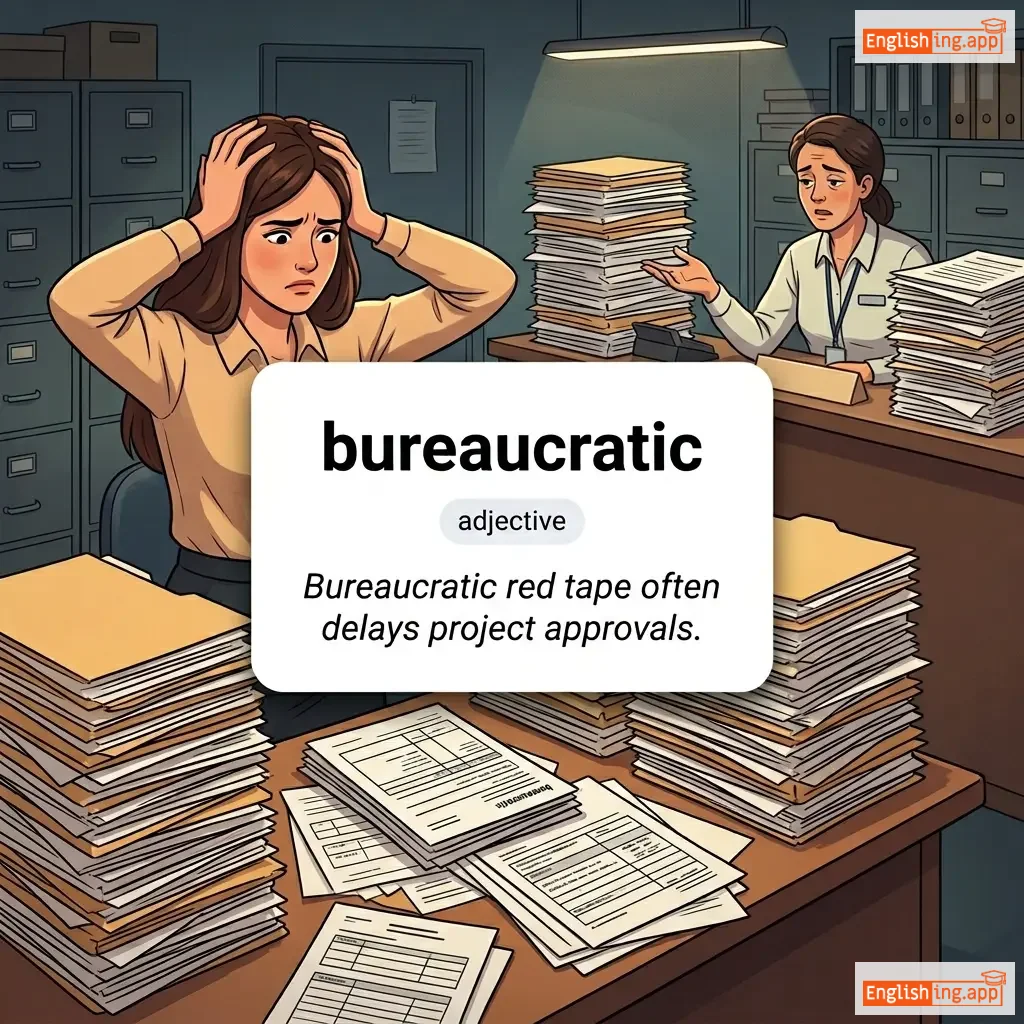
bureaucratic definition card — visual illustration of the meaning
adjective
ˌbjʊə.rəˈkræt.ɪk
бюрократический (byurokraticheskiy)

Involving or characterized by complex rules and procedures that can delay the achievement of goals.

"Bureaucratic red tape often delays project approvals."
"Бюрократическая волокита часто задерживает утверждение проектов." (byurokraticheskaya volokita chasto zaderzhivaet utverzhdenie proektov.)
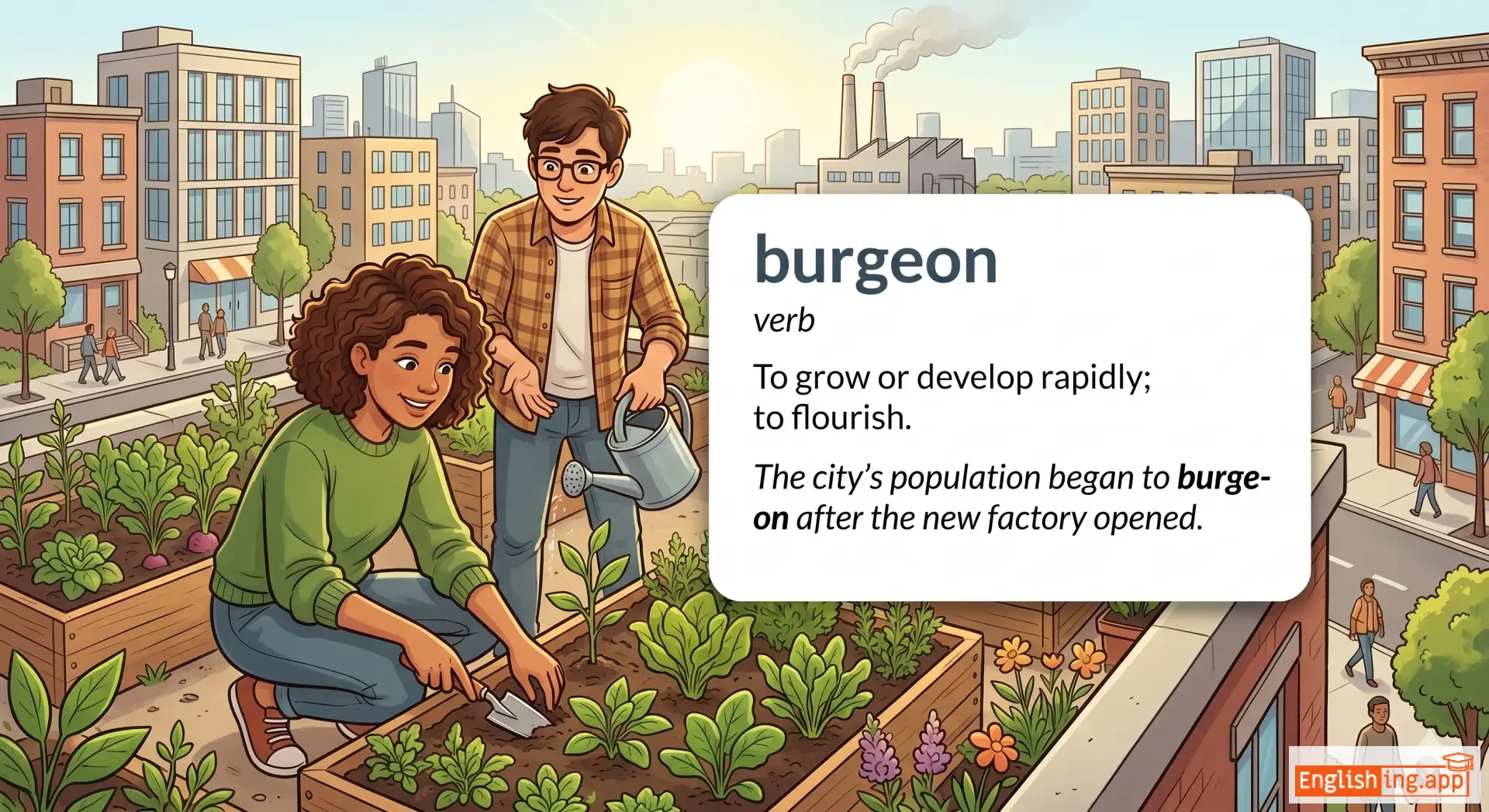
burgeon definition card — visual illustration of the meaning
verb
/ˈbɜːrdʒən/
расти быстро (rasti bystro)

To grow or develop rapidly; to flourish.

"The city's population began to burgeon after the new factory opened."

"Население города начало быстро расти после открытия нового завода." (Naselenie goroda nachalo bystro rasti posle otkrytiya novogo zavoda.)
burgeoning definition card — visual illustration of the meaning
adjective
ˈbɜːdʒənɪŋ
растущий (rastushchiy)

Beginning to grow or increase rapidly; flourishing.

"The burgeoning tech industry has attracted many investors."

"Технологическая отрасль, набирающая обороты, привлекла много инвесторов." (Tekhnologicheskaya otrasl, nabirayushchaya oboroty, privlekla mnogo investirov.)
🧑‍🤝‍🧑

burgess (бёрджис)

noun
/ˈbɜːrdʒɪs/
гражданин города (grazhdanin goroda)

A citizen of a town or borough with full rights of citizenship.

"In medieval times, a burgess had the right to vote and hold property."

"В средние века гражданин города имел право голосовать и владеть собственностью." (V srednie veka grazhdanin goroda imel pravo golosovat' i vladet' sobstvennost'yu.)
noun
/ˈbɜːrɡər/
горожанин (средний класс) (gorozhanin (sredniy klass))

A citizen of a town, typically a member of the wealthy middle class.

"The burgher was respected as a prosperous merchant in the city."

"Бюргер пользовался уважением как процветающий торговец в городе." (Byurger pol'zovalsya uvaženiem kak protsvetayushchiy torgovets v gorode.)
noun
/ˈbɛriəl/
погребение (pogrebenie)

the act of placing a dead body into the ground.

"The burial ceremony took place in the afternoon."
"Церемония погребения состоялась днем." (Tseremoniya pogrebeniya sostoyalas dnyom.)
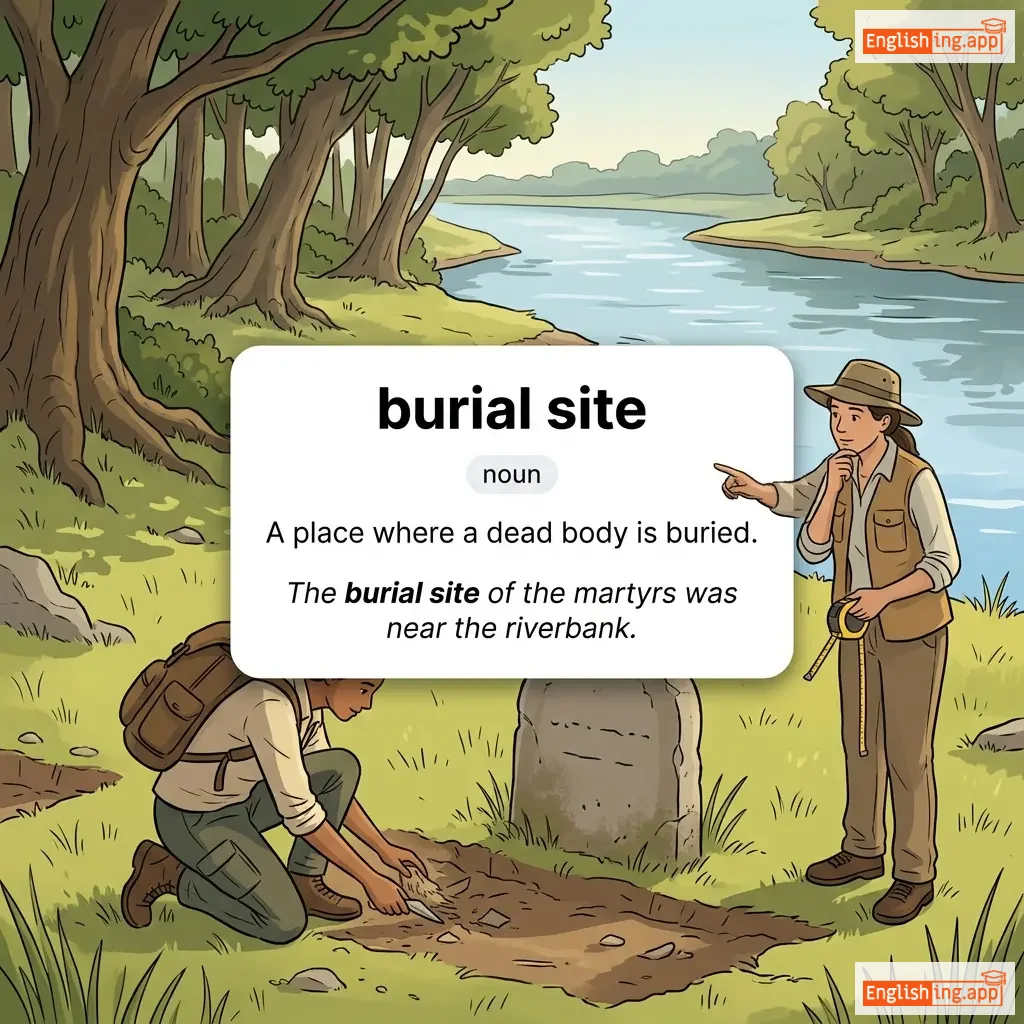
burial site definition card — visual illustration of the meaning
noun
ˈbɛriəl saɪt
место захоронения (mesto zakhoroneniya)

A place where a dead body is buried.

"The burial site of the martyrs was near the riverbank."

"Место захоронения мучеников было рядом с берегом реки." (Mesto zakhoroneniya muchenikov bylo ryadom s beregom reki.)
noun
/bɜːrˈlɛsk/
бурлеск (burlesk)

A humorous and exaggerated imitation of a serious work; a type of theatrical entertainment involving comedy and parody.

"The play was a clever burlesque of traditional opera."

"Спектакль был остроумным бурлеском традиционной оперы." (Spektakl' byl ostroumnym burleskom traditsionnoy opery.)
burn definition card — visual illustration of the meaning
verb
/bɜːrn/
сжигать (szhigat)

to destroy or damage by fire

"He accidentally burned the toast in the kitchen."
"Он случайно сжег тост в кухне." (On sluchayno szhog toost v kukhne.)
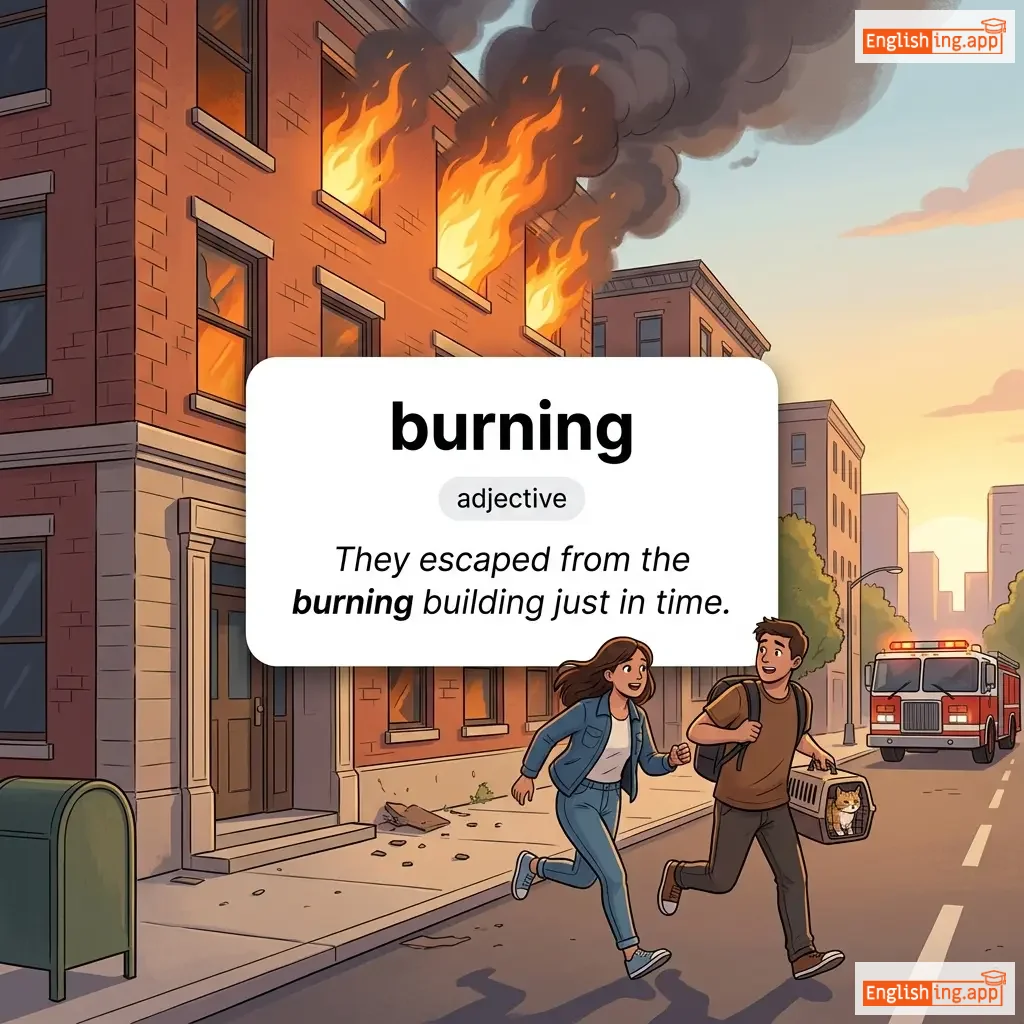
burning definition card — visual illustration of the meaning
adjective
/ˈbɜːnɪŋ/
горящий (goryashchiy)

producing flames or intense heat; also used metaphorically for intense emotions or urgency

"They escaped from the burning building just in time."

"Они выбежали из горящего здания как раз вовремя." (Oni vyybeshali iz goryashchego zdaniya kak raz vovremya.)
burnish definition card — visual illustration of the meaning
verb
/ˈbɜːrnɪʃ/
полировать (polirovat)

To polish something by rubbing; to enhance or improve.

"He burnished the old table until it shone."

"Он отполировал старый стол, пока тот не заблестел." (On otpoliroval staryy stol, poka tot ne zablestel.)
noun
/ˈbɜːrsər/
казначей (kaznachey)

An official in a school or college responsible for financial affairs.

"The bursar approved the budget for the new library."
"Казначей утвердил бюджет для новой библиотеки." (Kaznachey utverdil byudzhet dlya novoy biblioteki.)
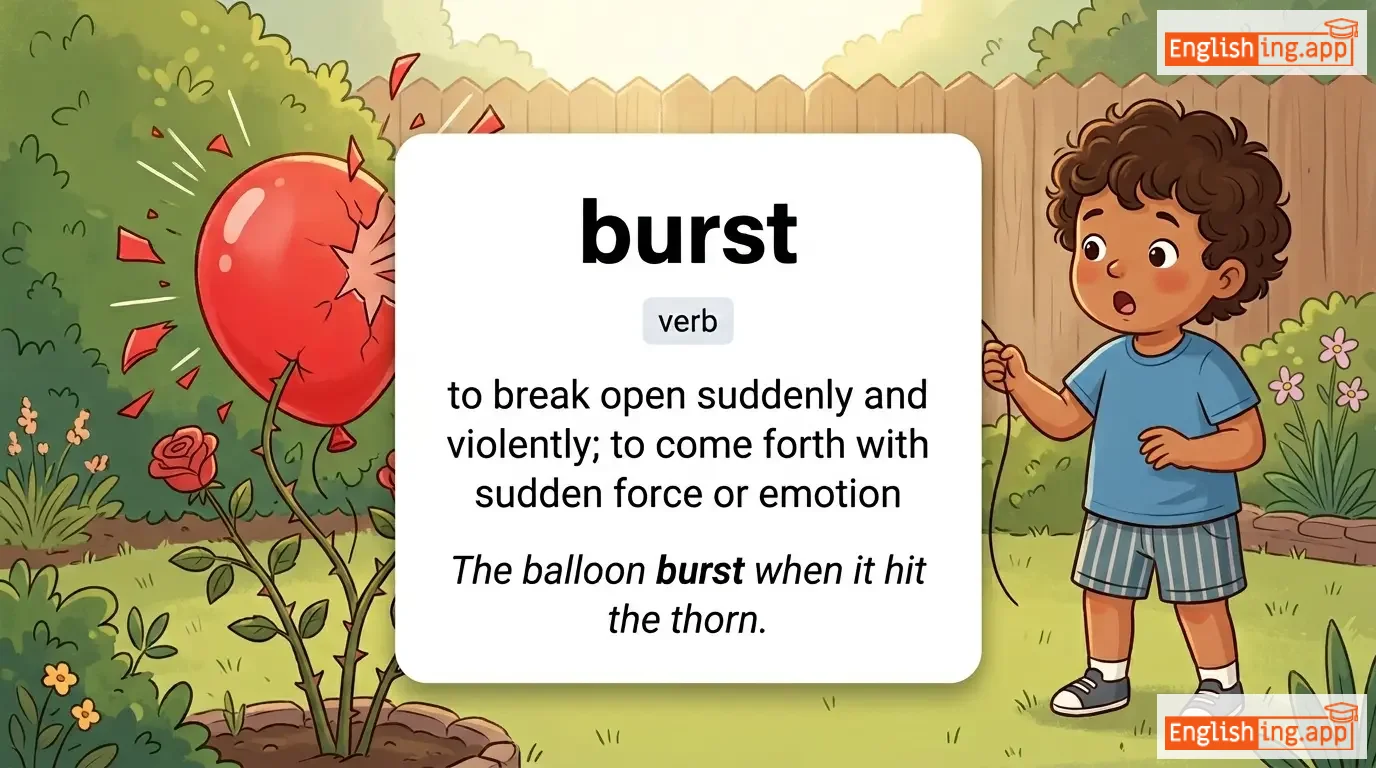
burst definition card — visual illustration of the meaning
verb
/bɜːst/
лопаться (lopat'sya)

to break open suddenly and violently; to come forth with sudden force or emotion

"The balloon burst when it hit the thorn."
"Шарик лопнул, когда он ударил шип." (Sharik lopnul, kogda on udaril ship.)
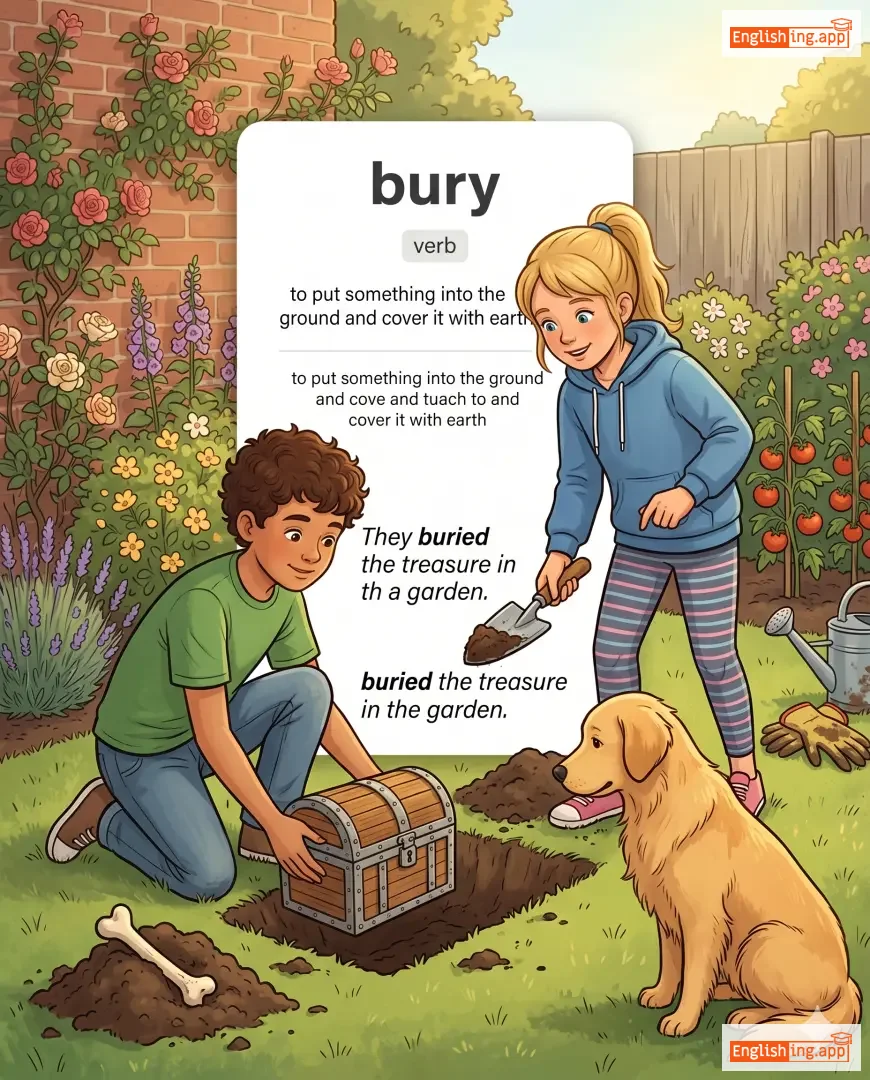
bury definition card — visual illustration of the meaning
verb
/ˈberi/
похоронить (pokhoronit')

to put something into the ground and cover it with earth

"They buried the treasure in the garden."

"Они похоронили сокровища в саду." (Oni pokhoronili sokrovishcha v sadu.)
noun
/bʌs/
автобус (avtobus)

a large motor vehicle carrying passengers by road

"We waited for the bus at the station."

"Мы ждали автобус на станции." (My zhhdali avtobus na stantsii.)
noun
/bʊʃ/
кустарник (kustarnik)

a plant with many small branches growing close to the ground; a shrub

"A rabbit was hiding under the bush."

"Кролик прятался под кустарником." (Krolik prjatalsya pod kustarnikom.)
noun
/ˈbɪznəs/
бизнес (biznes)

the practice of making money by producing or buying and selling goods or services

"She started her own business last year."

"Она начала свой бизнес в прошлом году." (Ona nachala svoi biznes v proshlom godu.)
business finance definition card — visual illustration of the meaning
noun
ˈbɪz.nɪs ˈfaɪ.næns
финансовое управление бизнесом (finansovoe upravlenie biznesom)

The area of finance that deals with sources of funding and the capital structure of corporations.

"Effective business finance enhances profitability."

"Эффективное финансовое управление бизнесом увеличивает прибыльность." (Effektivnoe finansovoe upravlenie biznesom uvelichivaet pribylnost'.)
business success definition card — visual illustration of the meaning
noun
/bɪzˈnɛs sʌˈsɛs/
деловой успех (delovoy uspekh)

The achievement of desired outcomes in business operations, typically measured by profitability, growth, and sustainability.

"Innovation drives business success."

"Инновации способствуют деловому успеху." (Innovatsii sposobstvuyut delovomu uspekhu.)
noun
/ˈbɪznəsmæn/
бизнесмен (biznesmen)

a person engaged in commercial or industrial business activities

"The businessman invested heavily in new technology."

"Бизнесмен значительно инвестировал в новые технологии." (Biznesmen znachitel'no investiroval v novye tekhnologii.)
noun
/ˈbɪznəsˌwʊmən/
бизнесвумен (biznesvumen)

a woman who works in business, especially one who owns or manages a company

"The businesswoman expanded her company into international markets."

"Бизнесвумен расширила свою компанию на международные рынки." (Biznesvumen rasshirila svoyu kompaniyu na mezhdunarodnye rynki)