Словари

Словарь английского языка | Значения слов, определения и примеры

adjective
/ˈbreɪsɪŋ/
освежающий (osvezhayushchiy)

Invigorating, refreshing, or providing strength and energy.

"The hikers enjoyed the bracing mountain air."

"Туристы наслаждались освежающим горным воздухом." (Turisty naslazhdalis' osvezhayushchim gornym vozdukham.)
noun/verb
/ˈbrækɪt/
металлическая скоба (metalliskaya skoba)

A support attached to a wall for holding something; also, to group things together.

"The shelf was held up by a strong metal bracket."

"Полка была удержана сильной металлической скобой." (Polka byla uderzhana sil'noy metalliskoy skoboy.)
adjective
/ˈbrækɪʃ/
солоноватый (solonovaty)

Slightly salty, often describing water that is a mix of fresh and seawater.

"The river estuary contained brackish water."

"В устье реки была солоноватая вода." (V ust'e reki byla solonovataja voda.)
noun
/breɪ/
склон (sklon)

A hillside or slope, especially in Scotland.

"They climbed up the grassy brae to see the sunset."
"Они поднялись по травянистому склону, чтобы увидеть закат." (Oni podnyalis po travyanyistomu sklony, chtoby uvidet' zakat.)
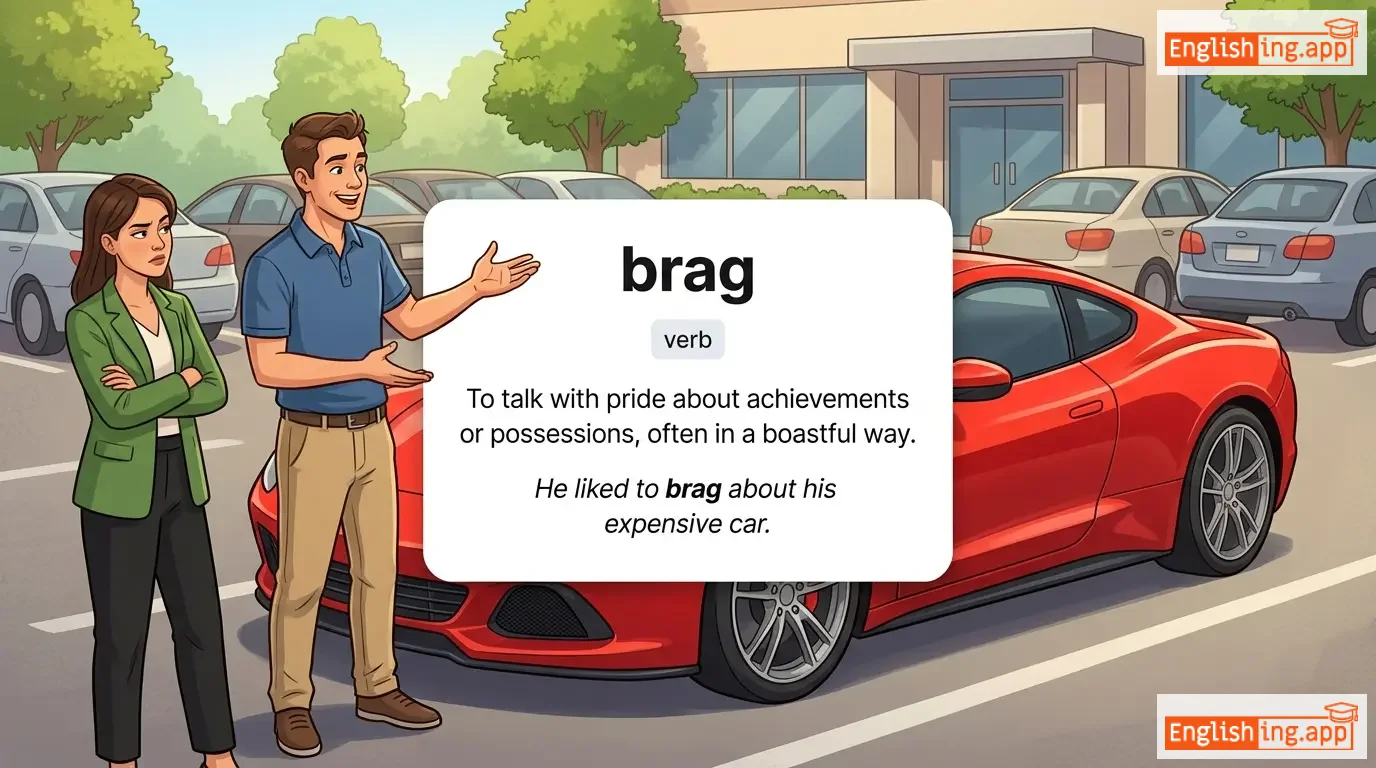
brag definition card — visual illustration of the meaning
verb
/bræɡ/
хвастаться (khvastat'sya)

To talk with pride about achievements or possessions, often in a boastful way.

"He liked to brag about his expensive car."

"Ему нравилось хвастаться своей дорогой машиной." (Emu nravilos' khvastat'sya svoey dorogoy mashinoy.)
noun
/ˌbræɡəˈdoʊʃioʊ/
хвастливое поведение (khvastlivoe povedenie)

boastful or arrogant behavior; empty boasting

"His endless braggadocio annoyed everyone at the party."

"Его бесконечное хвастливое поведение надоело всем на вечеринке." (Ego beskonechnoe khvastlivoe povedenie nadoelo vsem na vecherinke.)
noun
/ˈbræɡərt/
хвастун (khvastun)

a person who boasts about achievements or possessions

"No one liked him because he was such a braggart."

"Никто не любил его, потому что он был таким хвастуном." (Nikto ne lyubil ego, potomu chto on byl takim khvastunom.)
verb
/breɪd/
косичка (kosichka)

to weave together strands of hair or material

"She braided her hair before going to school."

"Она заплела свои волосы перед тем, как пойти в школу." (Ona zaplela svoi volosy pered tem, kak poiti v shkolu.)
brain definition card — visual illustration of the meaning
noun
/breɪn/
мозг (mozg)

the organ inside the head that controls thought, memory, feelings, and activity

"The human brain is incredibly complex."
"Человеческий мозг невероятно сложен." (Chelovecheskij mozg neveroyatno slozhen.)
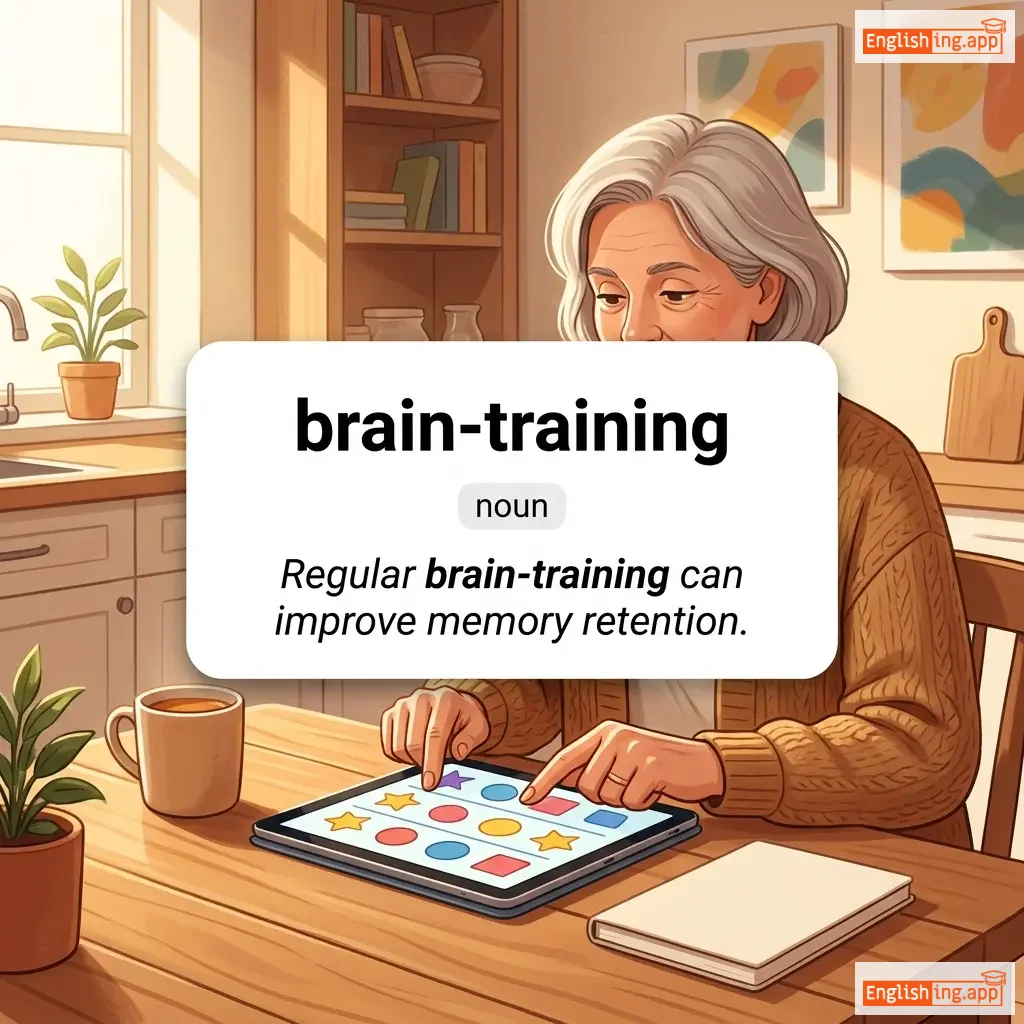
brain-training definition card — visual illustration of the meaning
noun
breɪn ˈtreɪ.nɪŋ
тренировка мозга (trenirovka mozga)

Mental exercises designed to improve cognitive functions, memory retention, and overall brain performance.

"Regular brain-training can improve memory retention."

"Регулярное тренировка мозга может улучшить запоминание." (Reguljarnoe trenirovka mozga mozhet uluchshit' zapominanie.)
verb, noun
/ˈbreɪnˌwɒʃ/
промывать мозги (promyvat mozgi)

to manipulate someone into adopting certain beliefs by repeated pressure or propaganda; the act or process of such manipulation

"The group tried to brainwash new members with constant propaganda."

"Группа пыталась промывать мозги новым участникам." (Gruppa pytalas promyvat mozgi novym uchastnikam)
verb
/breɪk/
тормозить (tormozit)

to slow down or stop a vehicle by applying a brake

"He braked suddenly to avoid hitting the dog."

"Он резко затормозил, чтобы не сбить собаку." (On rezko zatornozil, chtoby ne sbity sobaku.)
noun, verb
/bræntʃ/
ветка (vetka)

A part of a tree that grows out from the trunk; a division of an organization or subject.

"The company opened a new branch in Dhaka."
"Компания открыла новый филиал в Дакке." (Kompaniya otkryla novyy filial v Dakke.)
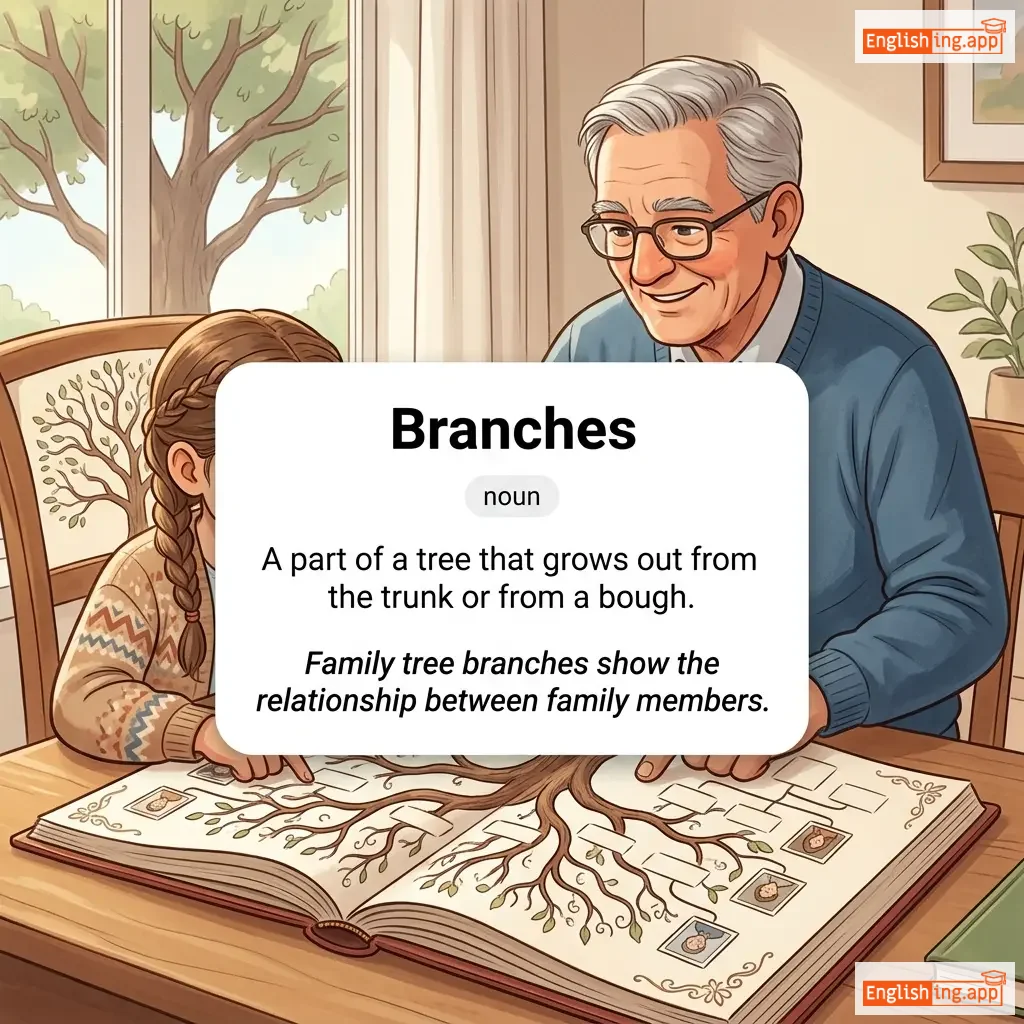
Branches definition card — visual illustration of the meaning
noun
ˈbræntʃɪz
ветви (vetvi)

A part of a tree that grows out from the trunk or from a bough.

"Family tree branches show the relationship between family members."

"Ветки родословного дерева показывают отношения между членами семьи." (Vetki rodoslovnogo dereva pokazyvayut otnosheniya mezhdu chlenami sem'i.)
noun
/brænd/
бренд (brend)

a type of product manufactured by a company under a particular name

"Nike is a popular brand of sportswear."

"Nike - популярный бренд спортивной одежды." (Nike - populyarnyy brend sportivnoy odezhdy.)
branding definition card — visual illustration of the meaning
noun
/ˈbræn.dɪŋ/
Брендинг (brending)

The process involved in creating a unique name and image for a product in the consumers' mind, mainly through advertising campaigns with a consistent theme.

"Strong branding helps build customer trust."

"Сильный брендинг помогает строить доверие клиентов." (Sil'nyy brending pomogaet stroit' doverie klientov.)
verb
/ˈbrændɪʃ/
махать (mahat)

to wave or flourish something, especially a weapon, in a threatening or showy way

"He brandished a sword to scare off the intruders."

"Он размахивал мечом, чтобы испугать нарушителей." (On razmakhival mechem, chtoby ispugat' narushiteley.)
adjective
/bræʃ/
наглый (nagly)

self-assertive in a rude, noisy, or overconfident way

"His brash comments offended many people at the meeting."

"Его наглые комментарии оскорбили многих людей на собрании." (Ego naglye kommentarii oskorbili mnogikh lyudey na sobranie.)
noun
/brəˈzɪər/
бюстгальтер (byustgalter)

a woman's undergarment designed to support the breasts

"She bought a comfortable brassiere for daily wear."

"Она купила удобный бюстгальтер для ежедневной носки." (Ona kupila udobnyy byustgalter dlya ezhednevnoj noski)
adjective
/ˈbræsi/
кричащий (krichashchiy)

loud and showy in a way that lacks good taste; resembling brass in color or sound

"She wore a brassy necklace that caught everyone’s attention."

"Она носила кричащее ожерелье, которое привлекло внимание всех." (Ona nosila krichashchee ozherele, kotoroe privelko vnimanie vsekh.)
adjective
/ˈbrætɪʃ/
испорченный (isporshchennyy)

acting like a spoiled child; behaving in an annoying, self-centered way

"The brattish boy threw a tantrum when he didn’t get his toy."
"Испорченный мальчик устроил истерику, когда не получил свою игрушку." (Isporshchennyy mal'chik ustroil isteriku, kogda ne poluchil svoyu igrooshku.)
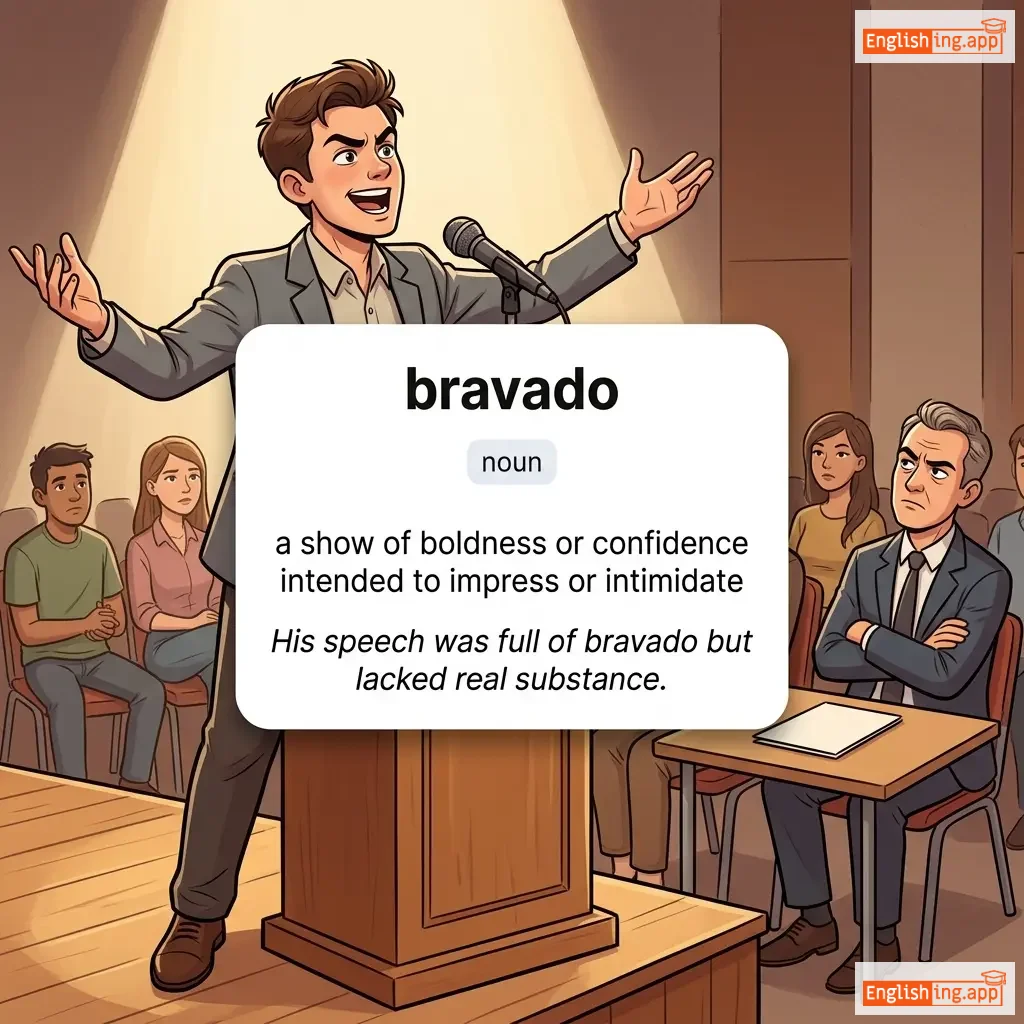
bravado definition card — visual illustration of the meaning
noun
/brəˈvɑːdoʊ/
бравада (bravado)

a show of boldness or confidence intended to impress or intimidate

"His speech was full of bravado but lacked real substance."

"Его речь была полна бравады, но не содержала реального содержания." (Ego rech byla polna bravady, no ne soderzhala realnogo soderzhaniya.)
adjective
/breɪv/
смелый (smelyj)

showing courage in the face of danger or difficulty

"The brave firefighter rushed into the burning building."

"Смелый пожарный бросился в горящее здание." (Smelyj pozharnyj brosilsya v goryashchee zdanie.)
adverb
/ˈbreɪv.li/
смело (smelo)

in a way that shows courage and determination

"The firefighter bravely entered the burning building."
"Пожарный смело вошел в горящее здание." (Pozharnyy smelo voshel v goryashchee zdanie.)
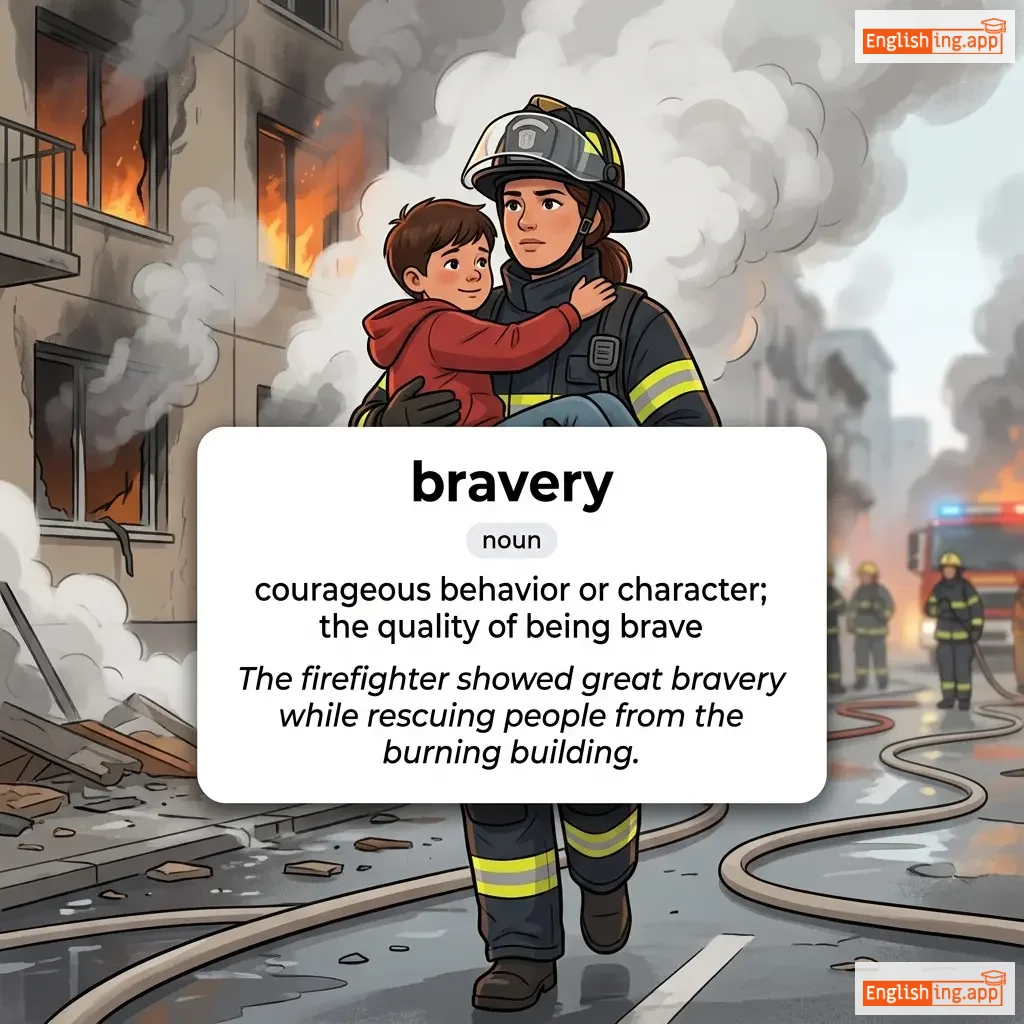
bravery definition card — visual illustration of the meaning
noun
/ˈbreɪ.vər.i/
храбрость (khrabrost)

courageous behavior or character; the quality of being brave

"The firefighter showed great bravery while rescuing people from the burning building."

"Пожарный проявил большую храбрость, спасая людей из горящего здания." (Pozharnyi proyavil bol'shuyu khrabrost', spasaya lyudey iz goryashchego zdaniya.)
interjection
/ˈbrɑː.voʊ/
браво (bravo)

used to express approval, admiration, or praise

"The audience shouted 'Bravo!' after the stunning performance."

"Зрители закричали 'Браво!' после потрясающего выступления." (Zriteli zakrichali 'Bravo!' posle potryasayushchego vystupleniya.)
noun
/brəˈvjʊrə/
бравура (bravura)

a display of great skill and brilliance, especially in music or performance

"The pianist delivered a bravura performance that left the audience spellbound."

"Пианист исполнил бравурное выступление, которое заворожило зал." (Pianist ispolnil bravurnoe vystuplenie, kotoroe zavorozhilo zal.)
noun
/brɔːl/
драка (draka)

a noisy fight in a public place

"A brawl broke out outside the bar late at night."

"Драка началась рядом с баром поздно ночью." (Draka nachalas' ryadom s barom pozdno noch'yu.)
noun
/brɔːn/
физическая сила (fizicheskaya sila)

physical strength in contrast to intelligence

"He used his brawn to lift the heavy box."

"Он использовал свою физическую силу, чтобы поднять тяжелую коробку." (On ispol'zoval svoyu fizicheskuyu silu, chtoby podnyat' tyazheluyu korobku.)
adjective
/ˈbrɔːni/
мускулистый (musculisty)

Physically strong and muscular.

"The brawny man lifted the heavy box with ease."

"Этот мускулистый человек легко поднял тяжёлую коробку." (Etot muskulyistyy chelovek legko podnyal tyazholuyu korobku.)
verb
/breɪ/
ржание (rzhaniye)

To make a loud, harsh sound like a donkey.

"The donkey began to bray loudly in the field."

"Осёл начал громко ржать на поле." (Os'yol nachal gromko rzhat' na pole.)
verb
/breɪz/
пайка (payka)

To join two pieces of metal by heating and melting a filler metal into the joint.

"The mechanic brazed the broken pipe to fix the leak."
"Механик припоил сломанный трубопровод, чтобы устранить утечку." (Mekhanik pripoil slomanny truboprovod, chtoby ustranit utechku.)
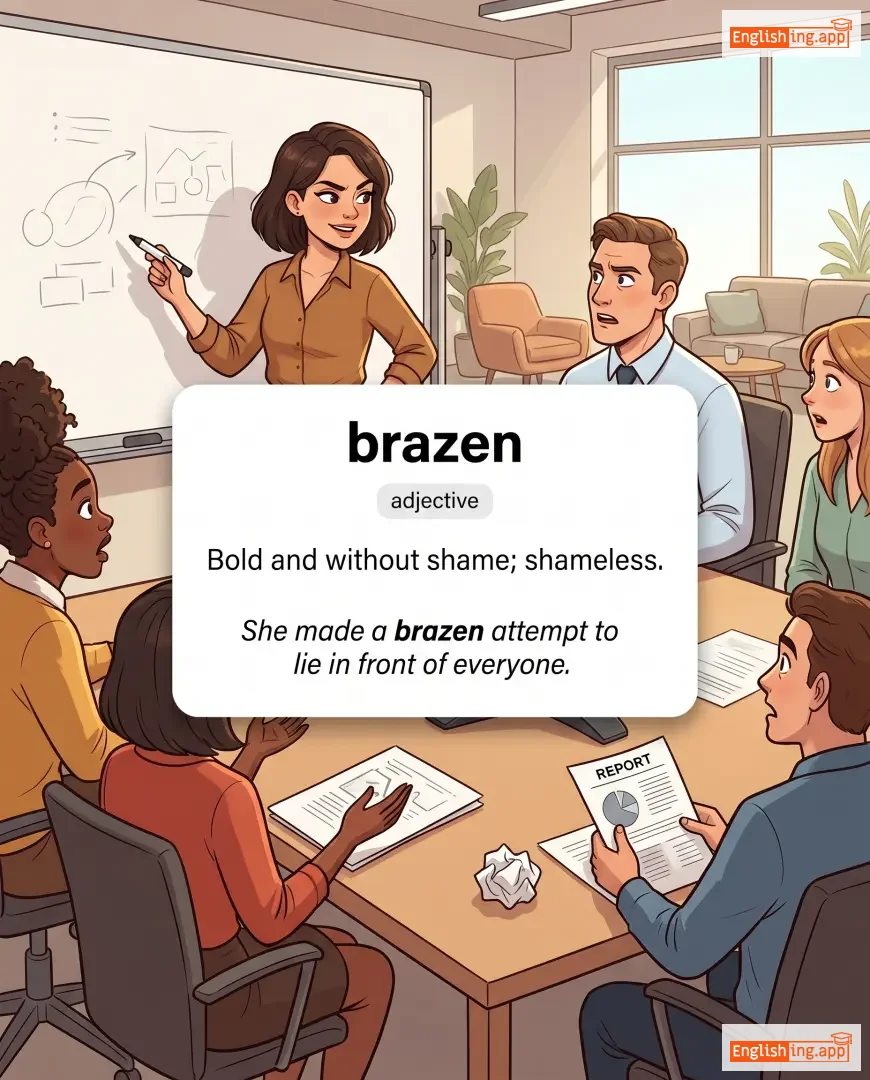
brazen definition card — visual illustration of the meaning
adjective
/ˈbreɪzən/
наглый (nagly)

Bold and without shame; shameless.

"She made a brazen attempt to lie in front of everyone."

"Она предприняла наглую попытку солгать перед всеми." (Ona predpriniala nagluyu popytku solgat pered vsemi)
noun
/ˈbreɪziər/
жаровня (zharovnya)

A container for holding burning coal or charcoal, used for heating or cooking.

"The street vendor cooked chestnuts on a brazier."

"Уличный торговец готовил каштаны на жаровне." (Ulichnyy torgovets gotovil kashtany na zharovne.)
breach definition card — visual illustration of the meaning
noun, verb
/briːtʃ/
нарушение (narushenie)

An act of breaking or failing to observe a law, agreement, or code of conduct; to break through.

"The company was fined for a breach of contract."

"Компания была оштрафована за нарушение контракта." (Kompaniya byla oshtrafovana za narushenie kontrakta.)
noun
/brɛd/
хлеб (khleb)

A type of food made from flour, water, and yeast, mixed and baked.

"She bought a loaf of bread from the bakery."

"Она купила буханку хлеба в пекарне." (Ona kupila bukhanku khleba v pekarne.)
noun
/brɛdθ/
ширина (shirina)

The distance or measurement from side to side; width; a wide range.

"The breadth of his knowledge impressed everyone."
"Ширина его знаний впечатлила всех." (Shirina ego znaniy vpechatlila vsekh.)
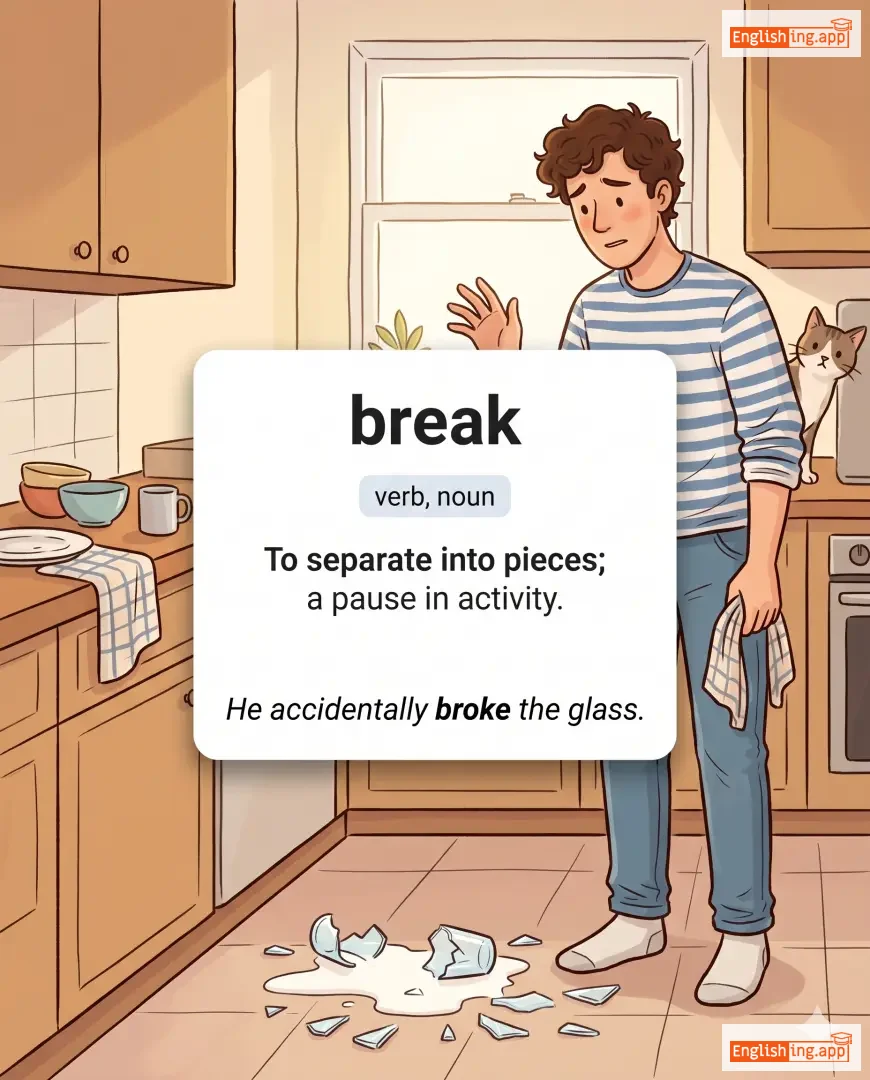
break definition card — visual illustration of the meaning
verb, noun
/breɪk/
ломать / пауза (lomat' / pauza)

To separate into pieces; a pause in activity.

"He accidentally broke the glass."

"Он случайно разбил стакан." (On sluchayno razbil stakan.)
noun
/ˈbrɛkdaʊn/
поломка (polomka)

a failure or collapse of a system or machinery

"The car had a breakdown on the highway."

"У машины произошла поломка на шоссе." (U mashiny proizoshla polomka na shosse.)
noun
/ˈbreɪkər/
автомат (человек или вещь, которая что-то ломает; большая морская волна, которая разбивается в пену у берега; устройство, которое прерывает электрическую цепь) (avtomat)

A person or thing that breaks something; a large sea wave that breaks into foam near the shore; a device that interrupts an electric circuit.

"The breaker tripped during the storm, cutting off electricity."

"Автомат сработал во время шторма, прервав подачу электроэнергии." (Avtomat srabotat vo vremya shtorma, preryvaya podachu ehlektronergii.)
noun
/ˈbrɛkfəst/
завтрак (zavtrak)

The first meal of the day, usually eaten in the morning.

"We had eggs and toast for breakfast."

"На завтрак у нас были яйца и тосты." (Na zavtrak u nas byli yaytsa i tosty.)
breakthrough definition card — visual illustration of the meaning
noun
/ˈbrɛkθruː/

a significant or sudden advance or discovery

"The scientist made a breakthrough in cancer research."

noun
/brɛst/
грудь (grud)

Either of the two soft, rounded parts on a woman’s chest that produce milk after childbirth.

"The baby was fed from his mother's breast."

"Ребенок был накормлен грудью своей матери." (Rebyonok byl nakormlen grudy svoey materi.)
noun
/brɛθ/
дыхание (dykhanie)

The air taken into or expelled from the lungs during breathing.

"He took a deep breath before speaking."

"Он сделал глубокий вдох перед тем, как заговорить." (On sdelal glubokiy vdokh pered tem, kak zagovorit'.)
😮‍💨

breathe (briid)

verb
/briːð/
дышать (dyshat')

To take air into the lungs and send it out again.

"It was hard to breathe in the smoky room."

"Было трудно дышать в дымном помещении." (Bylo trudno dyshat' v dymnom pomeshchenii.)
noun
/ˈbriːðɪŋ/
счастье (schastye)

the process of taking air into and expelling it from the lungs.

"Deep breathing can help you relax."

"Она не могла скрыть своего счастья, когда получила награду." (Ona ne mogla skryt' svoego schast'ya, kogda poluchila nagradu.)
breathing techniques definition card — visual illustration of the meaning
noun
/ˈbriː.ðɪŋ tɛkˌniːks/
дыхательные техники (dyhatelnye tekhniki)

Methods of controlling breathing to achieve relaxation and improve health.

"Breathing techniques help in reducing stress and anxiety."

"Дыхательные техники помогают снизить стресс и тревогу." (Dykhatelnye tekhniki pomogayut snizit' stress i trevogu.)
noun
/briːtʃ/
Задняя часть ствола оружия; положение ребенка в утробе, когда ягодицы или ноги выходят первыми при родах. (Zadnyaya chast' stvola oruzhiya; polozhenie rebenka v utrobe, kogda yagoditsy ili nogi vykhodyat pervymi pri rodakh.)

The back part of a gun barrel; a position of a baby in the womb where the buttocks or feet come out first at birth.

"The rifle was loaded through the breech."

"Винтовка была загружена через затвор." (Vintovka byla zagruzhena cherez zatvor.)
noun
/ˈbriːtʃɪz/
бриджи (bridzhi)

knee-length trousers; short pants

"He wore riding breeches for the equestrian event."
"Он носил бриджи для конного соревнования." (On nosil bridzhi dlya konnogo sorevnovaniya.)
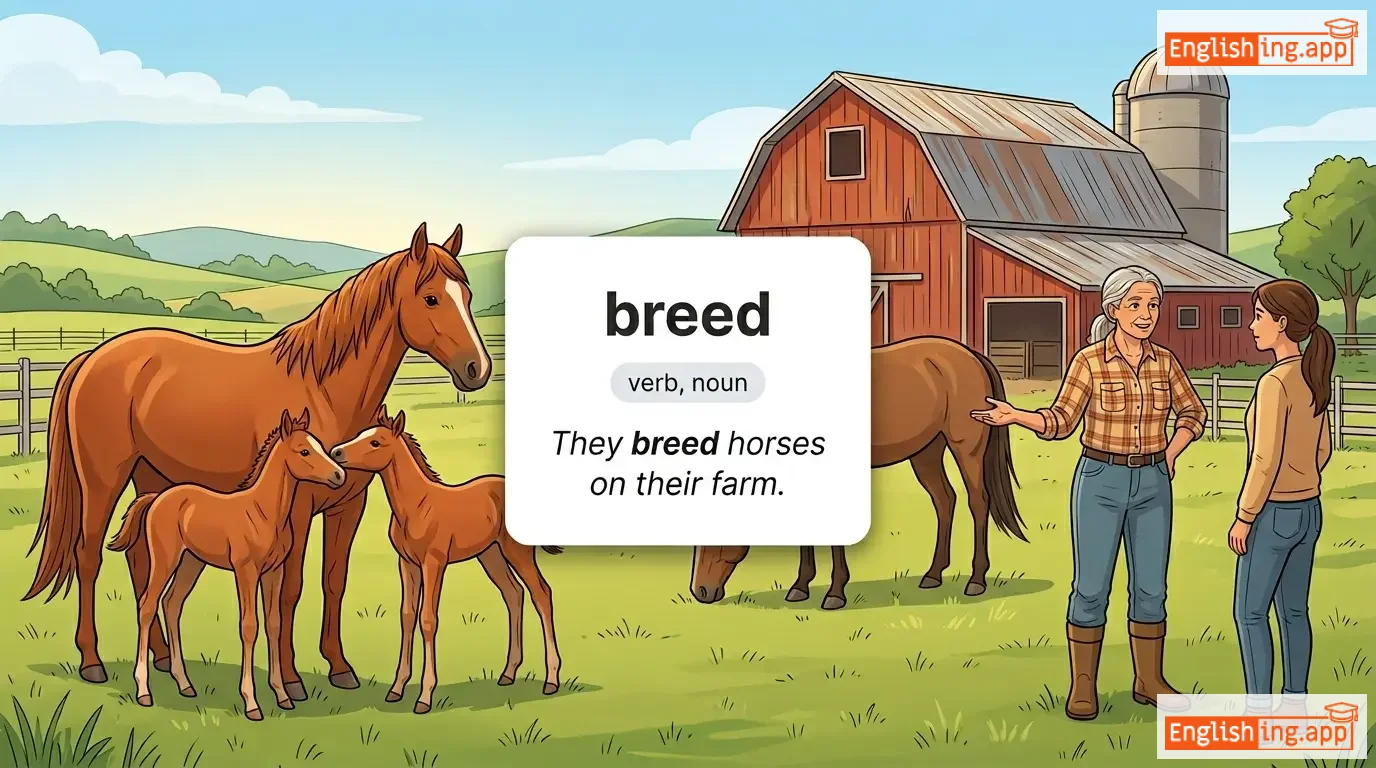
breed definition card — visual illustration of the meaning
verb, noun
/briːd/
разводить, порода (razvodit, poroda)

To cause an animal to reproduce; to raise or train; a type or variety of animal or plant.

"They breed horses on their farm."

"Они разводят лошадей на своей ферме." (Oni razvodjat loshadej na svojej ferme.)